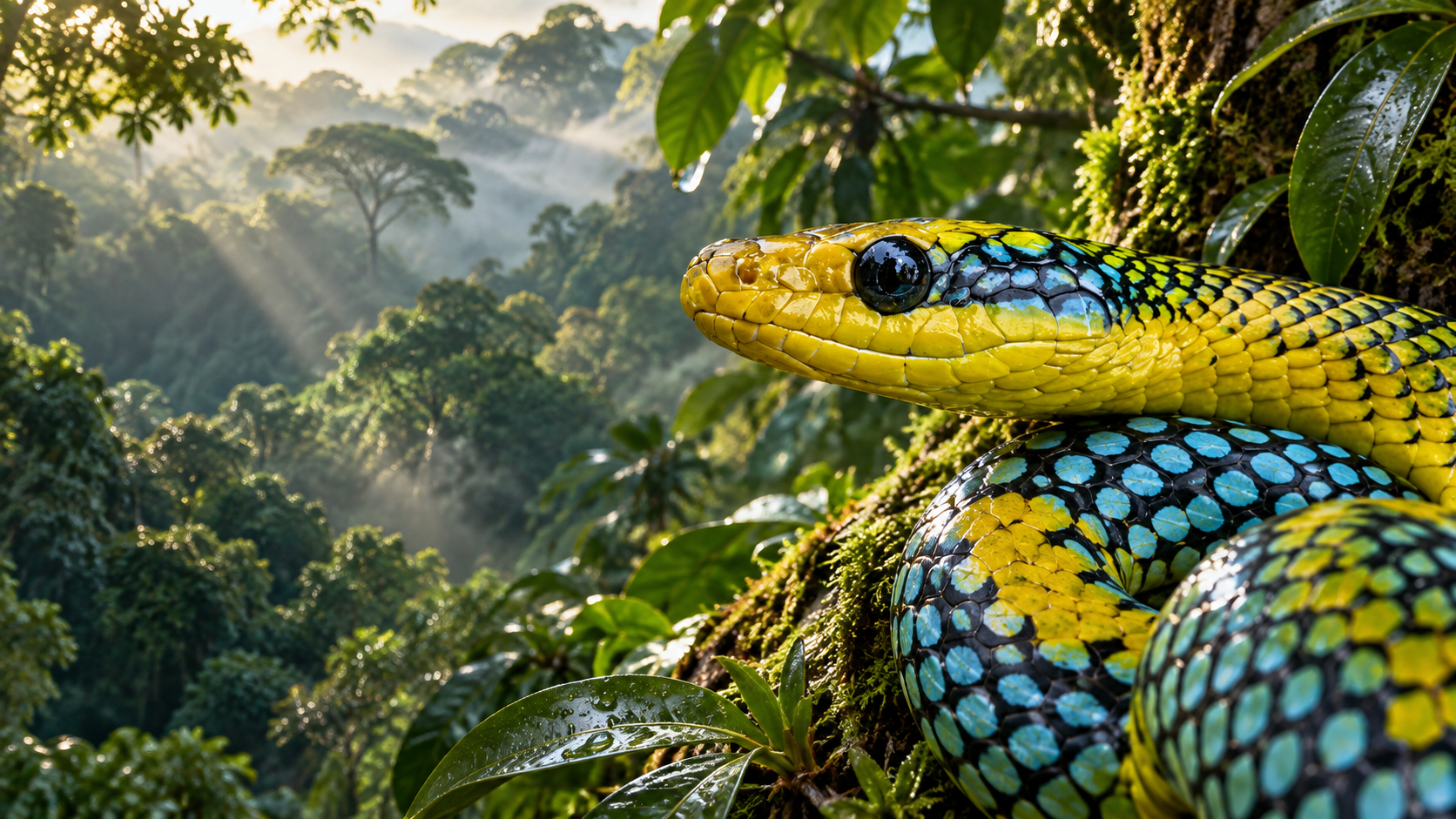
Serpents of the World · A living atlas
Understand snakes.
Discover their world.
Which snakes live where you call home or plan to travel?
Explore their lives, their habitats and our place alongside them.
Search the whole atlas. Try “Natrix tessellata” or “cobra”.
Royal tree snake · Gonyosoma margaritatum
Among the rainforest crowns
A shared world
Why snakes matter
to all of us.
Snakes are part of the places we call home.
As predators and prey, they belong to interconnected food webs. Some species eat rodents; snakes themselves can be prey for other animals. Protecting them means understanding those relationships and the habitats that sustain them.
Encounters can raise questions and fears. Reliable knowledge helps us understand these animals, take risks seriously and share the landscape more thoughtfully.
Serpents of the World connects species, habitats and scientific knowledge. Follow a name to its sources, explore a place through its documented wildlife, and see what is known—and what remains uncertain.
Sources behind these ideas
- Smithsonian: feeding ecology of the boa constrictor
- Smithsonian: snakes as prey for young Komodo dragons
- Cox et al. (2022): reptile conservation and habitat pressures
Species accounts describe particular animals; ecological effects vary by species and place.
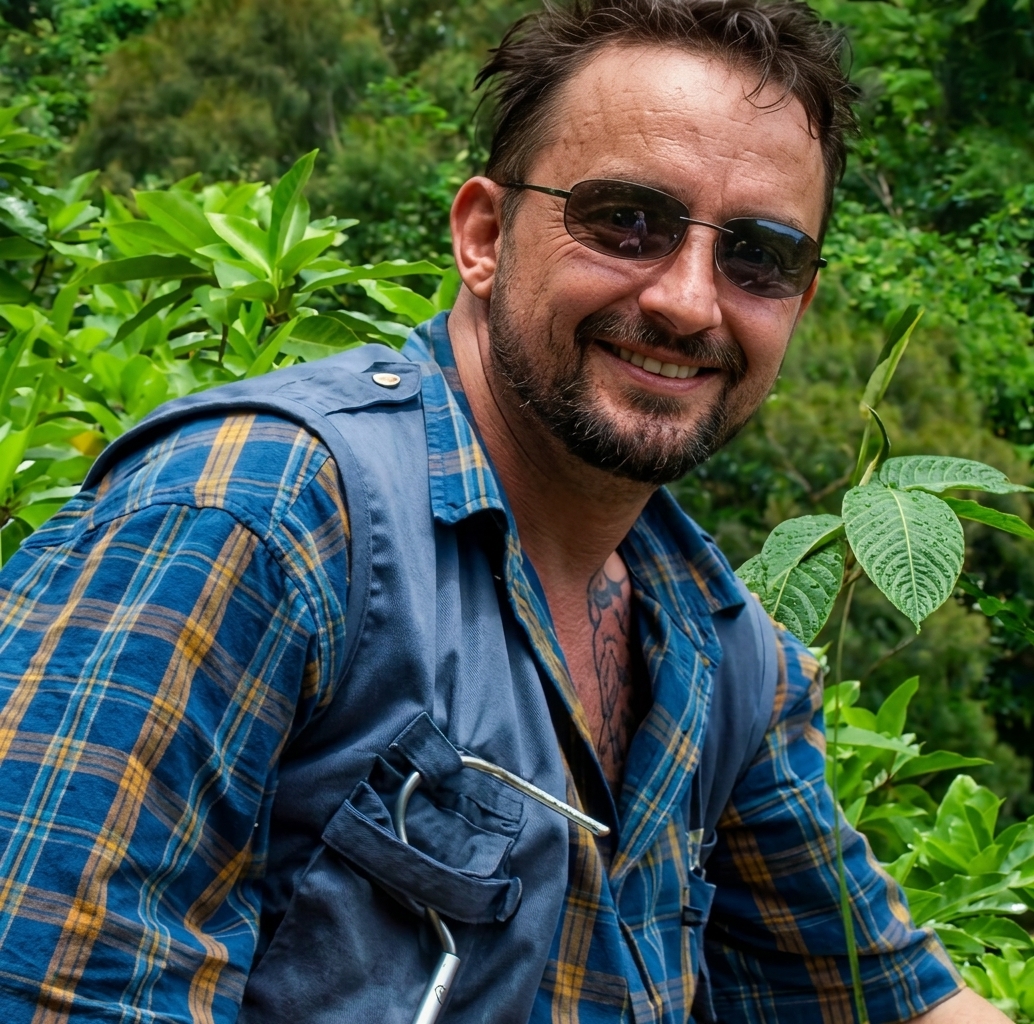
and Venomland
A founder’s note
Rooted in research.
Shaped by conservation.
For almost thirty years, I have lived and worked in the Philippines. Through HerpaWorld and the Paradise Reptile Zoo, my work has involved the study, care and conservation of reptiles, including breeding programmes, collaboration with authorities and the care of confiscated animals.
I have seen the damage caused by illegal wildlife trade and the vulnerability of species with small ranges. Those experiences shape my ambition for Serpents of the World: knowledge should be traceable and help people protect animals and their habitats.
The atlas connects species and distribution with habitats, biology and scientific sources. I also hope it can lay a foundation for researchers, experienced keepers and people working in conservation to exchange knowledge and connect.
Through Venomland, I have supported specialist discussion for many years. Serpents of the World carries that idea forward: making findings accessible, documenting experience as experience, keeping open questions visible and incorporating new research.
— Mario Lutz
Knowledge that supports conservation.
What habitats does a species need? What is known about its reproduction? Which threats are documented, and who is working locally to protect it?
The atlas brings these questions together. Scientific publications, traceable observations and practical experience should complement one another, with their different kinds of evidence clearly identified.
Explore the research library →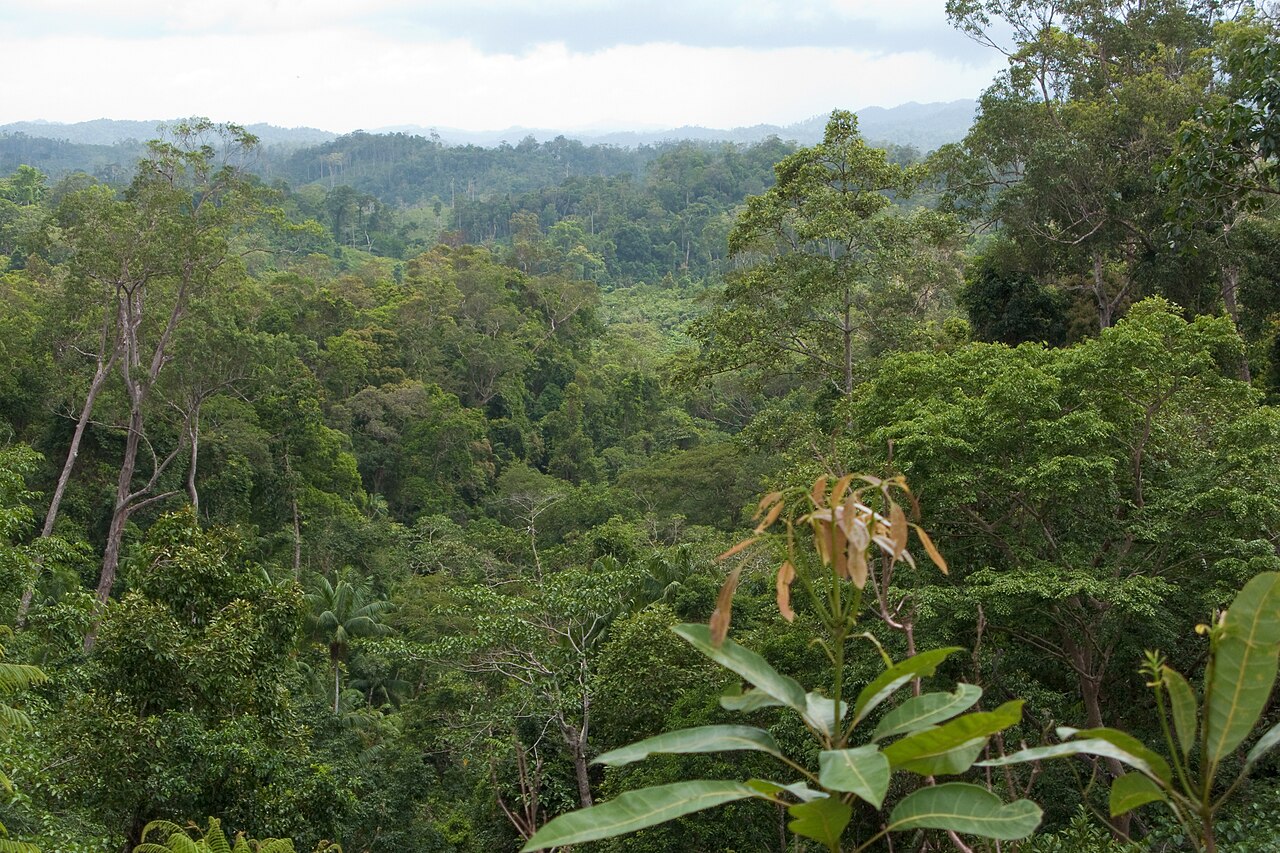
Start with a place · Palawan
A landscape.
The lives within it.
Begin with Palawan. Open its island guide, explore the landscapes and habitats, then follow the snakes documented there to their shared species profiles.
A name is only the beginning. Distribution records, photographs and scientific sources help connect an animal to the place it lives.
38species accounts currently linked to Palawan
A working collection, not a complete island inventory.
Choose your place in the world
Every landscape.
A different story.
Turn the globe or open a continent below to choose a country. Country chapters connect maps, habitat guides and shared species profiles. Coverage varies; each chapter shows its sources and the evidence currently recorded.
A field of knowledge
Not just names.
The lives behind them.
Six ways into the world of snakes. Read original introductions grounded in research, with sources and the limits of their claims kept in view.
How a lizard became a snake
Fossils, embryos and DNA reveal the making of an extraordinary body plan—and leave some beginnings unresolved.
Read the storyVenom, coils and the patient hunt
There is more than one way to subdue prey. Venom and constriction are adaptations within a branching history, not steps on a ladder.
Read the storyPredator. Prey. Part of a larger story.
Follow a meal through a food web and a snake becomes a connection between species, habitats and generations.
Read the storyFeared, revered, remembered
From Khmer protection to Mexica regalia and Ngalyod in Arnhem Land: serpent imagery has many meanings, never just one.
Read the storySharing the land, reducing the harm
Respect for snakes and protection for people belong together. Prevention, reliable care and local knowledge matter.
Read the storyA future with room for snakes
Protecting habitat begins with knowing what lives there—and being honest about what has not yet been measured.
Read the storyA growing atlas
One photograph.
One observation.
One piece of the story.
New regions, portraits and sources are added as the atlas grows. Missing knowledge and open questions remain visible: an incomplete record is a place to begin.
A photograph shared with permission, literature worth following or a carefully documented correction can help. Every contribution is reviewed before publication, with credit, sources and usage rights recorded.
Contribute to the atlas