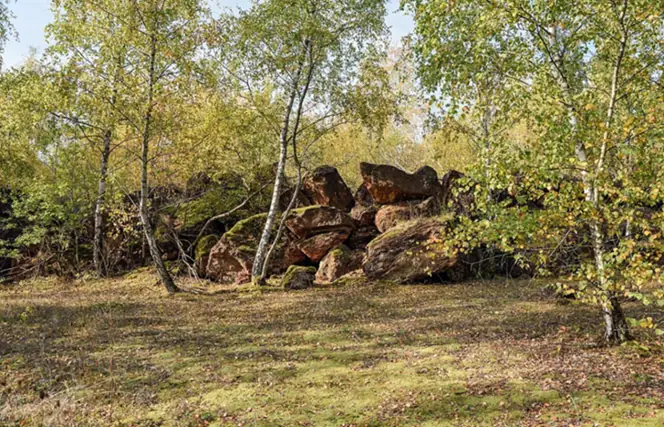
Woodland and exposed rock in the Haard former mining landscape, Luxembourg.

Luxembourg · The country atlas

Luxembourg

Varied geology and landforms create a diverse small-country landscape, with habitats influenced by agriculture, settlement and fragmentation. Explore the regional guides and country-scoped species records below.

2species with extracted evidence
1families
4region guides

Woodland and exposed rock in the Haard former mining landscape, Luxembourg.

Photograph: Cayambe · Image source · CC BY-SA 4.0. Cropped to fill the hero; darkened for text legibility.

Geography & biotopes

Discover Luxembourg.

Varied geology and landforms create a diverse small-country landscape, with habitats influenced by agriculture, settlement and fragmentation. Explore the regional guides and country-scoped species records below.

Regional groups retain the credited administrative snapshot. They are navigation areas, not ecological boundaries or claims of snake occurrence throughout each area.

Boundary provenance and regional grouping →

Convention on Biological Diversity - Luxembourg profile →

Geography is part of the record

Find your way through Luxembourg.

Select a named region to open its evidence page. The complete directory below keeps every guide accessible, including places where locality evidence has not yet been extracted.

2 of 2 listed species have at least one indexed region record. 0 remain country-only. Even a nonzero count is not a complete regional inventory.

Habitats & living landscapes

Explore the living
landscapes.

Explore 1 guides to the environments, places and conservation pressures that shape this country. Each guide connects to the regional map and shared species accounts.

Landscape photographs & credits

Woodland and exposed rock in the Haard former mining landscape, Luxembourg. — Cayambe. Original photograph · CC BY-SA 4.0. Cropped for the cards; photographs do not establish snake occurrence.

The species catalogue

Meet the snakes of Luxembourg.

Search scientific names, historical names, common names and families. Every card opens one shared account across its documented countries.

2 species · showing 2

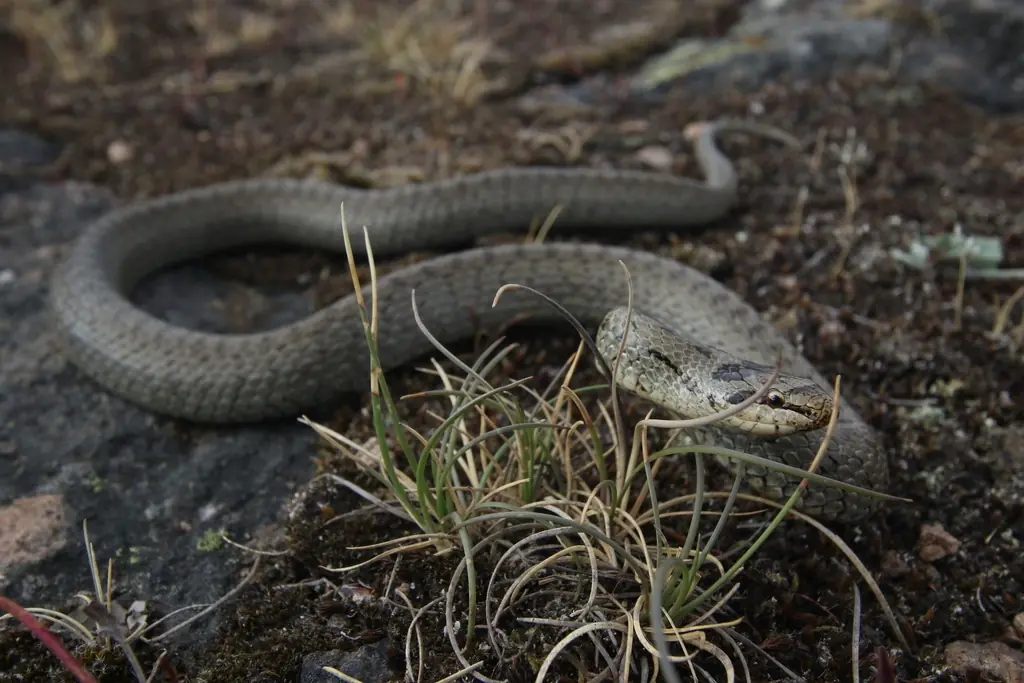
Coronella austriaca. Identification follows the linked source community.

001 · Colubridae

Smooth Snake

Coronella austriaca

LAURENTI, 1768

Venom unknownNot yet assessed

Country explicitly listed in the checked taxonomic treatment. The national action plan explicitly identifies rocky scrub in the Luxembourg Moselle vineyards as smooth-snake habitat and occurrence context. This supports the eastern valley guide, without assigning sites described only for the wall lizard. These are dated locality records, not evidence of…

Read the species account →

B. P. White · CC BY-SA 4.0 · https://creativecommons.org/licenses/by-sa/4.0/

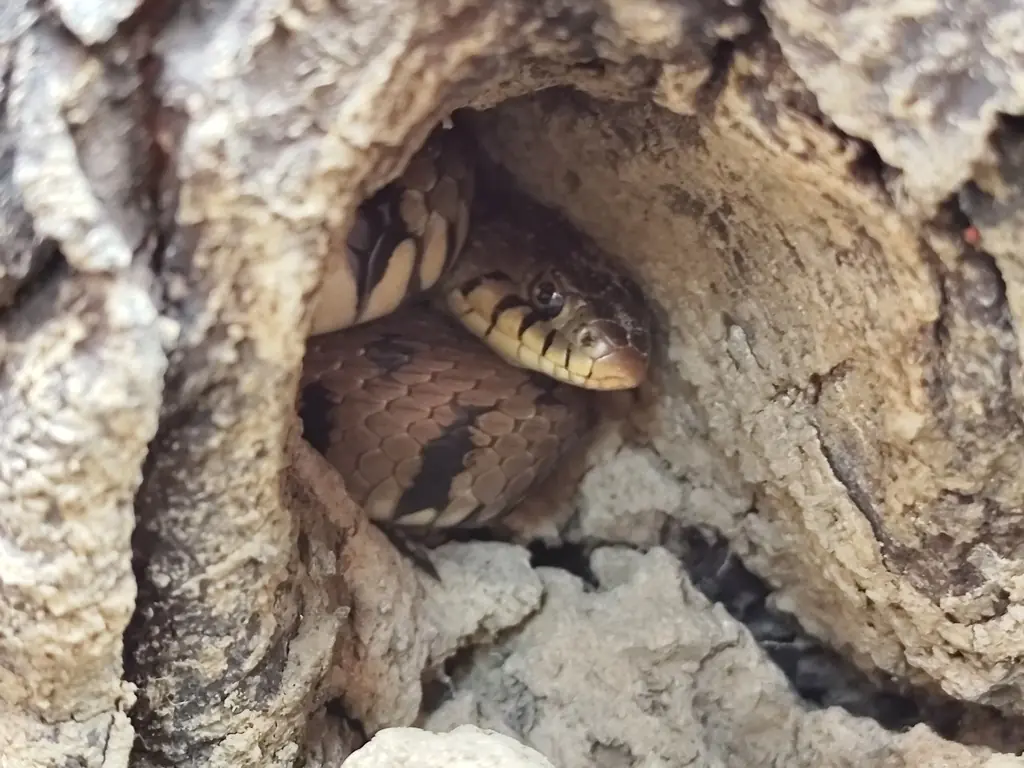
Natrix helvetica. Identification follows the linked source community.

002 · Colubridae

Banded Grass Snake

Natrix helvetica

(LACÉPÈDE, 1789)

Venom unknownNot yet assessed

Country explicitly listed in the checked taxonomic treatment. Northern cantons: observation GBIF 6413599717 (2026). The original iNaturalist entry was rechecked for research-grade identification, wild status and unrestricted coordinates; its reported uncertainty footprint lies within the mapped region. This is a community-reviewed observation, not a…

Read the species account →

Francesco Santoro · CC BY 4.0 · https://creativecommons.org/licenses/by/4.0/

The research library

Sources & the checklist.

This edition lists 2 species with supported country records from checked taxonomic treatments and cited field studies. It is not a claim of a complete national inventory. Each account retains its source and check date; individual evidence entries retain their own review dates.

Independent checklist comparison · 2026-10-11

2 documented current or explicitly qualified country records. This is a source-backed working inventory; recent national completeness and locality coverage remain under review.

Individually reviewed taxonomic treatments and cited primary records ↗

Review still open

Natrix natrix

Older broad grass-snake labels are not current-identity records; western populations require helvetica or astreptophora reconciliation.

Range and taxonomy review

Country links use a single accepted species identity. Revised names and disputed records are kept visible here; uncertain records do not enter the listed collection or regional totals.

Natrix natrix

Uncertain — excluded from the listed total

Older broad grass-snake labels are not current-identity records; western populations require helvetica or astreptophora reconciliation.

Source 1 ↗

Source 2 ↗

How the map and counts work

Search results were checked against distribution text and taxonomic qualifications. A geographic name alone does not establish a political country: New Guinea, the Solomon archipelago and Micronesia span more than one country or territory. Introduced and unresolved records require separate interpretation.

Place counts require explicit named localities, including valid type localities. Counts can overlap where sources name multiple places. Regional maps group historical boundary snapshots for navigation, while island outlines use Natural Earth; neither is a species range or an observation map. Small islands can be below the outline dataset’s resolution, so geographic reference markers and the directory remain available.

© OpenStreetMap contributors; OpenStreetMap, Wambacher; geoBoundaries gbOpen ADM1; 2017; Open Data Commons Open Database License 1.0. Generalised navigation outlines, not species ranges. Map provenance →
  1. Boundary provenance and regional grouping ↗
  2. Convention on Biological Diversity - Luxembourg profile ↗
  3. The Reptile Database

    Individual treatments and locality evidence are linked from each species account.

  4. Meiri (2024): SquamBase 1.0

    Species-level literature measurements and ecological traits. Exact-name matches only; imputed or ambiguous fields are omitted. These summaries are not local observations.

  5. Natural Earth: public-domain geographic data

Continue through the Europe atlas →