

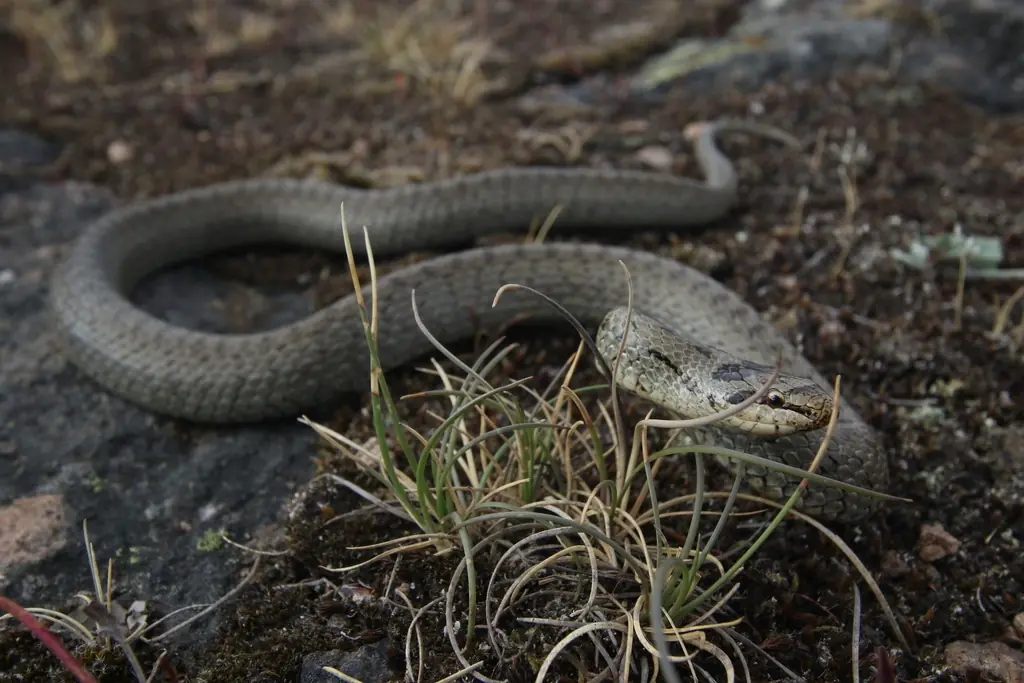
001 · Colubridae
Smooth Snake
Coronella austriaca
Venom unknownNot yet assessedCountry explicitly listed in the checked taxonomic treatment.
Read the species account →B. P. White · CC BY-SA 4.0 · https://creativecommons.org/licenses/by-sa/4.0/
Spain · The country atlas
Atlantic, Mediterranean, alpine and Macaronesian settings include dunes, wetlands, saline steppes, cliffs and wooded landscapes. Explore the regional guides and country-scoped species records below.
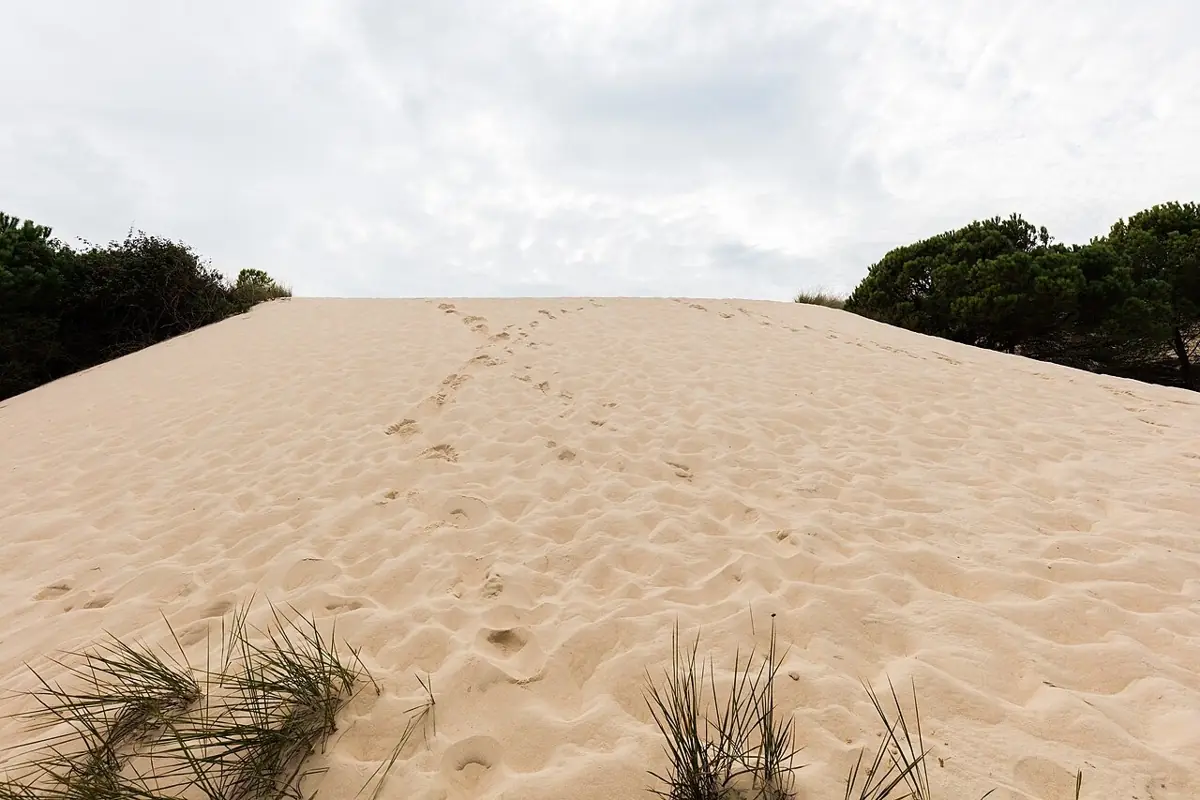
Dunes and vegetation in Doñana, Spain.
Geography & biotopes
Atlantic, Mediterranean, alpine and Macaronesian settings include dunes, wetlands, saline steppes, cliffs and wooded landscapes. Explore the regional guides and country-scoped species records below.
Regional groups retain the credited administrative snapshot. They are navigation areas, not ecological boundaries or claims of snake occurrence throughout each area.
Habitats & living landscapes
Explore 2 guides to the environments, places and conservation pressures that shape this country. Each guide connects to the regional map and shared species accounts.
Habitat · 01
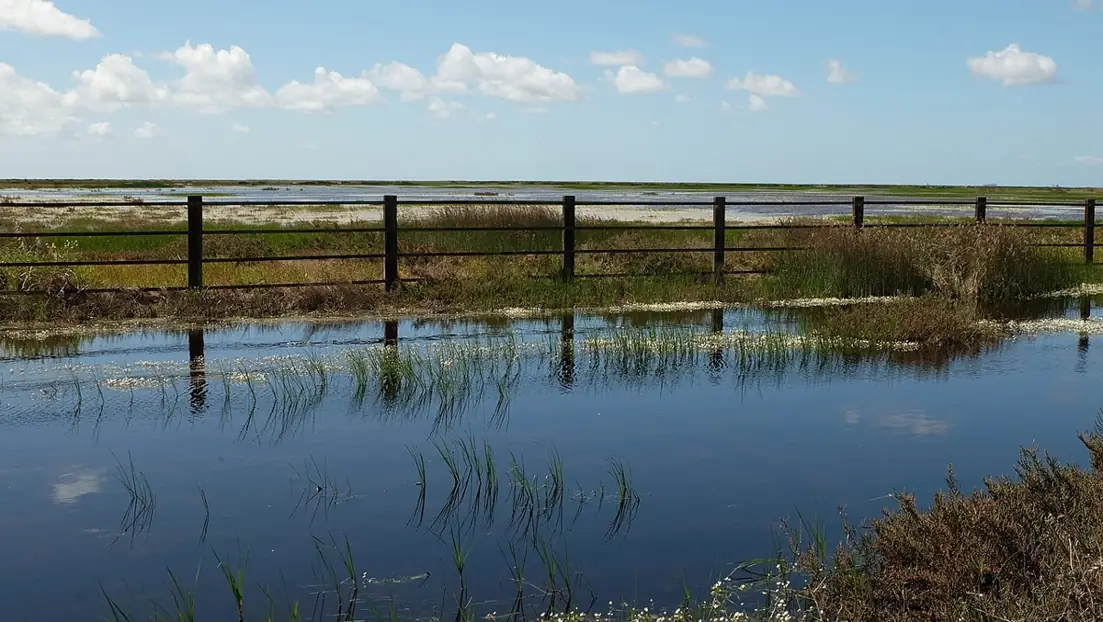
Explore Doñana marshes through the documented landscape and its visible structure. The named example anchors this guide; it does not represent every habitat in the country.
Explore the habitat ↗Habitat · 02
Explore Doñana through the documented landscape and its visible structure. The named example anchors this guide; it does not represent every habitat in the country.
Explore the habitat ↗Inundated marsh vegetation in Doñana, Spain. The photographer describes the scene as following spring rains; it is an archival view rather than a present water-level report. — Birding In Spain. Original photograph · CC BY-SA 4.0. Cropped for the cards; photographs do not establish snake occurrence.
Dunes and vegetation in Doñana, Spain. — Diego Delso. Original photograph · CC BY-SA 4.0. Cropped for the cards; photographs do not establish snake occurrence.
The species catalogue
Search scientific names, historical names, common names and families. Every card opens one shared account across its documented countries.
16 species · showing 16
001 · Colubridae
Smooth Snake
Country explicitly listed in the checked taxonomic treatment.
Read the species account →B. P. White · CC BY-SA 4.0 · https://creativecommons.org/licenses/by-sa/4.0/
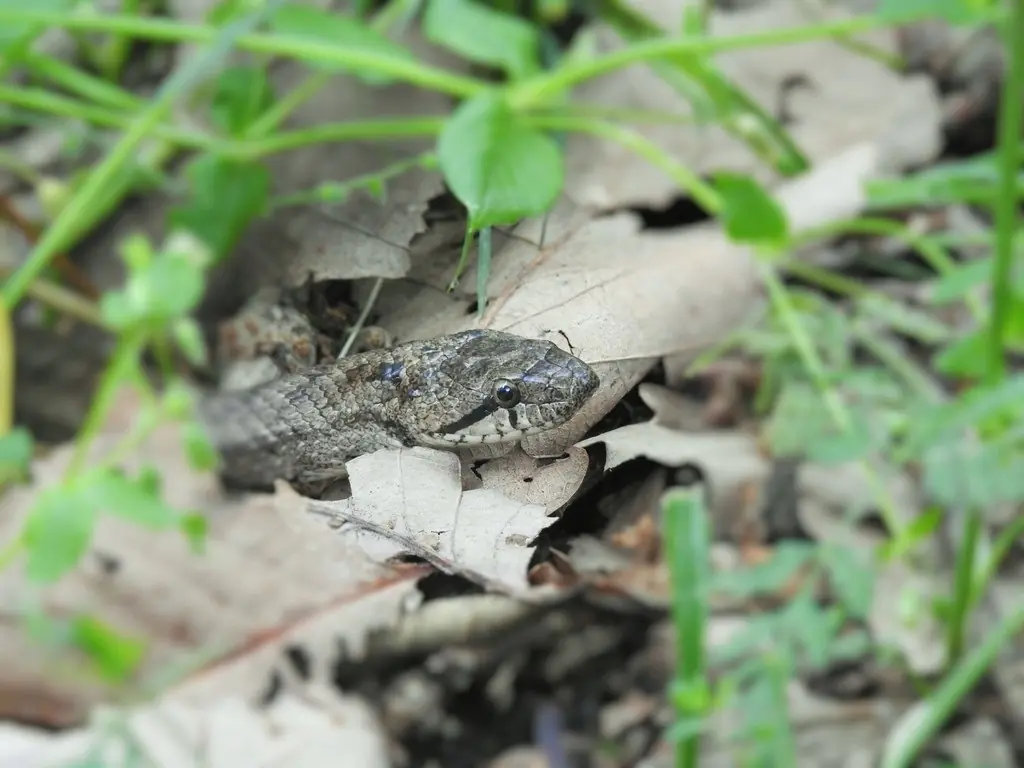
002 · Colubridae
Southern Smooth Snake
Country explicitly listed in the checked taxonomic treatment. Documented during the 2012–2021 Bardenas surveys; historical field evidence.
Read the species account →Karim Haddad · CC BY 4.0 · https://creativecommons.org/licenses/by/4.0/
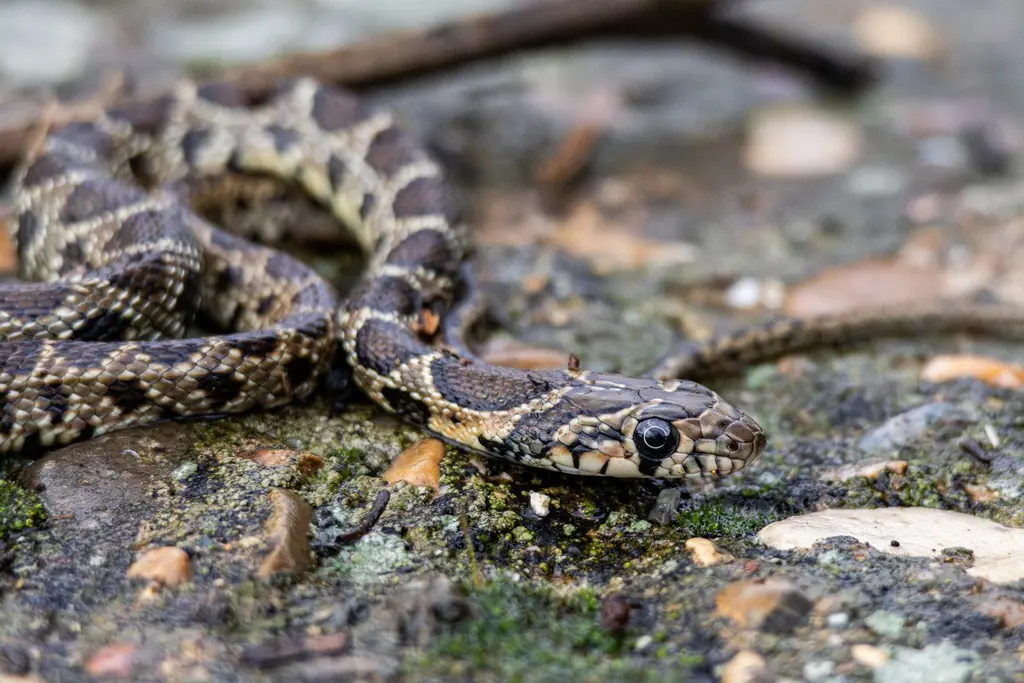
003 · Colubridae
Horseshoe Snake, Horseshoe Whip Snake
Country explicitly listed in the checked taxonomic treatment. Mainland native occurrence and island introductions must be distinguished. Native mainland records date to 2004 and 2008. The separate Ibiza locality is an introduced population documented by the 2015 monitoring report.
Read the species account →Diego González Dopico · CC BY 4.0 · https://creativecommons.org/licenses/by/4.0/
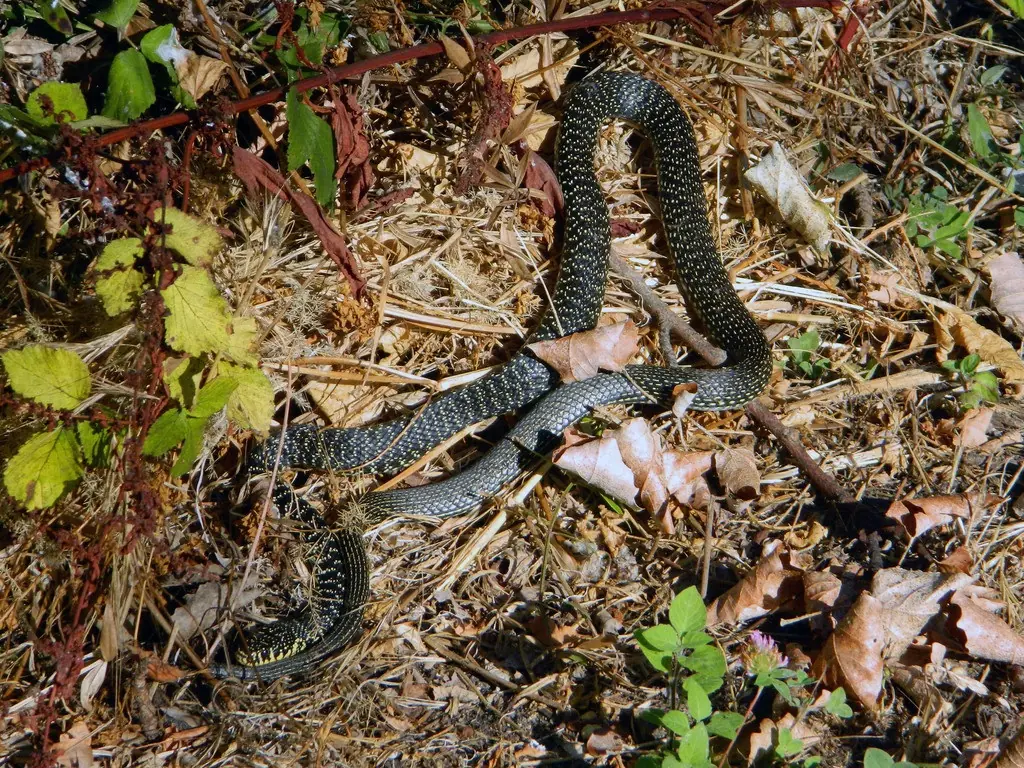
004 · Colubridae
Green Whip Snake, Western Whip Snake, Dark Green Snake
Country explicitly listed in the checked taxonomic treatment.
Read the species account →Louis Imbeau · CC BY 4.0 · https://creativecommons.org/licenses/by/4.0/
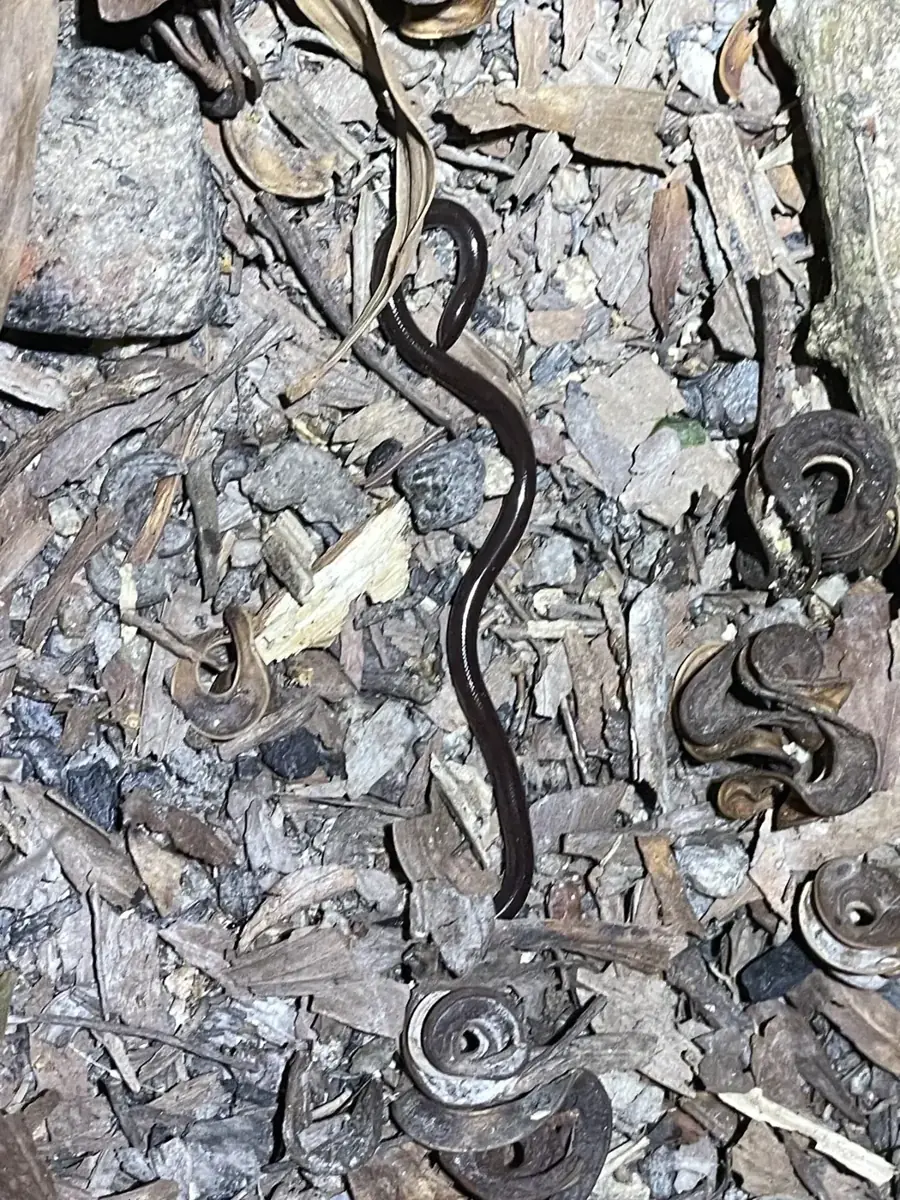
005 · Typhlopidae
Flowerpot Snake
Introduced populations; Portuguese evidence here is Madeira and Spanish evidence the Canary Islands, not mainland occurrence. A June 2015 questionnaire received 95 nursery responses, including three positive reports in Granada and Girona. These are dated manager-reported occurrences, not specimen-verified distribution boundaries or proof of persistence…
Read the species account →Cook-Price, Makchai & Suwanwaree (2026); photographs credited collectively to the author, James Covert and Vikas Kumar · CC BY 4.0 · https://creativecommons.org/licenses/by/4.0/
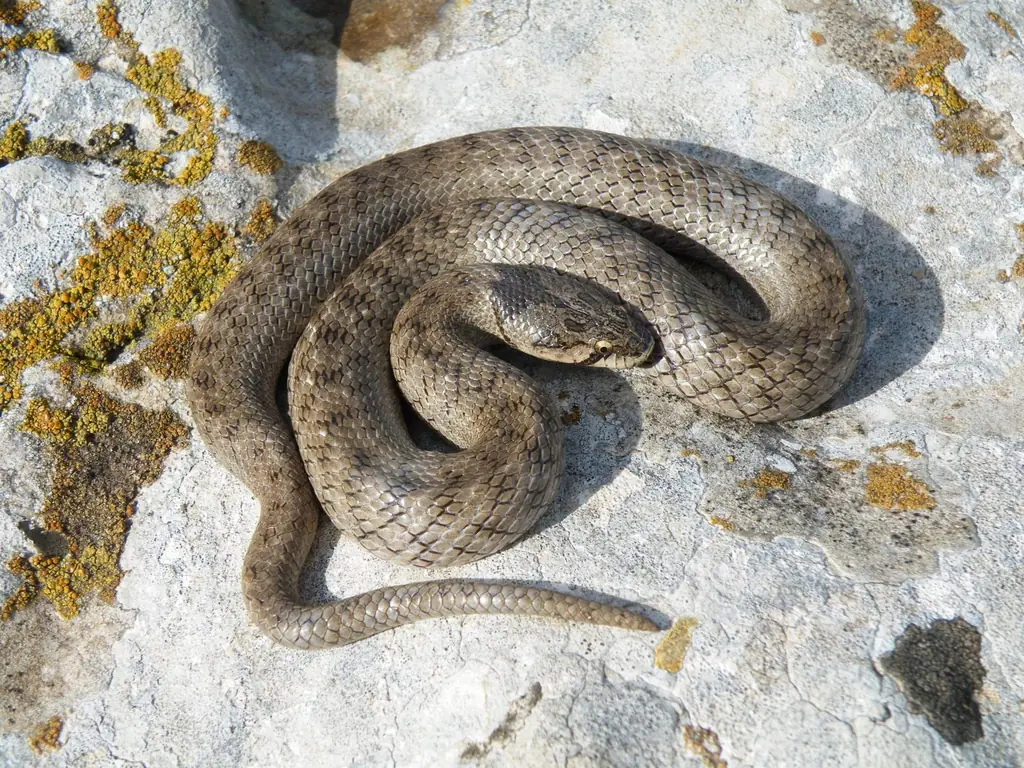
006 · Colubridae
Western False Smooth Snake, Iberian False Smooth Snake
Iberian populations are assigned to brevis in the molecular revision. A dated August 2008 field observation documents the species near Montefrío; this historical record is not a current census.
Read the species account →Wouter Beukema · CC BY 4.0 · https://creativecommons.org/licenses/by/4.0/
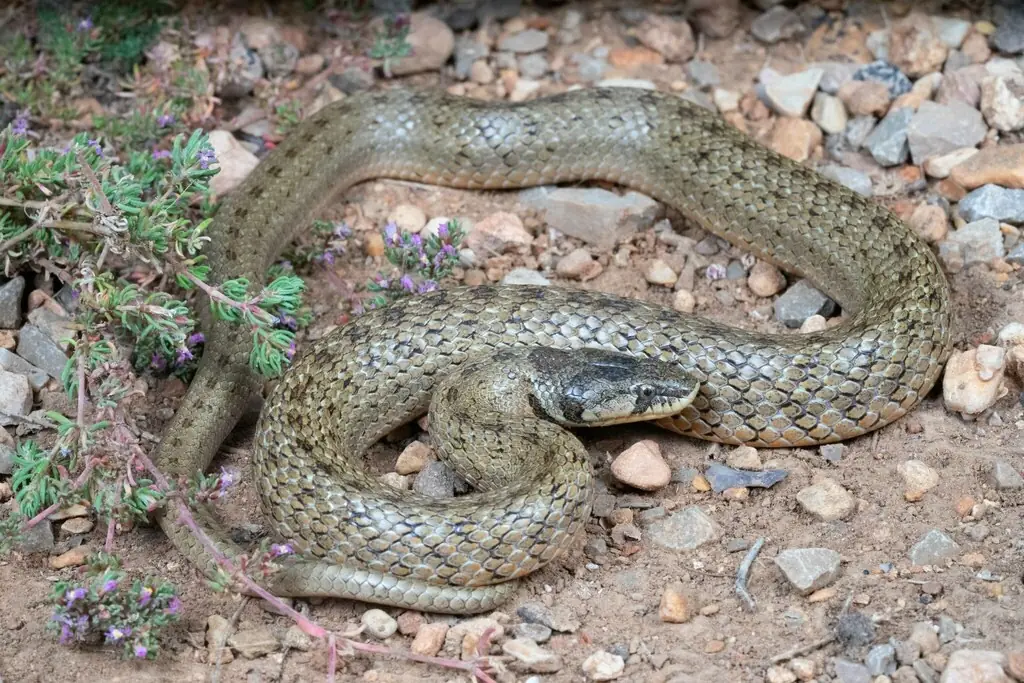
007 · Colubridae
Species account
Historical introduction to Mallorca and Menorca, with a North African genetic origin; not a native mainland record. A published observation documents the introduced Mallorca population in a suburban garden. The genetic study documents historical introductions on Mallorca and Menorca. A published observation documents the introduced Mallorca population in…
Read the species account →Wouter Beukema · CC BY 4.0 · https://creativecommons.org/licenses/by/4.0/
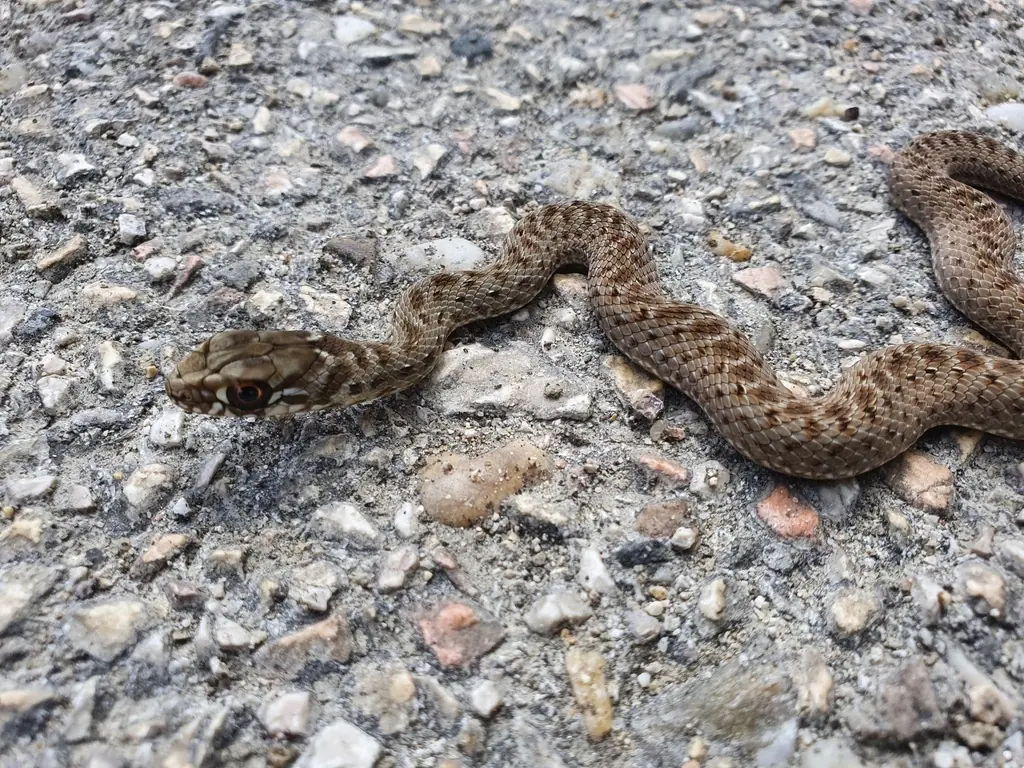
008 · Psammophiidae
Montpellier Snake
Country explicitly listed in the checked taxonomic treatment. Mainland native occurrence and island introductions must be distinguished. Documented during the 2012–2021 Bardenas surveys; historical field evidence.
Read the species account →João Valença · CC BY-SA 4.0 · https://creativecommons.org/licenses/by-sa/4.0/
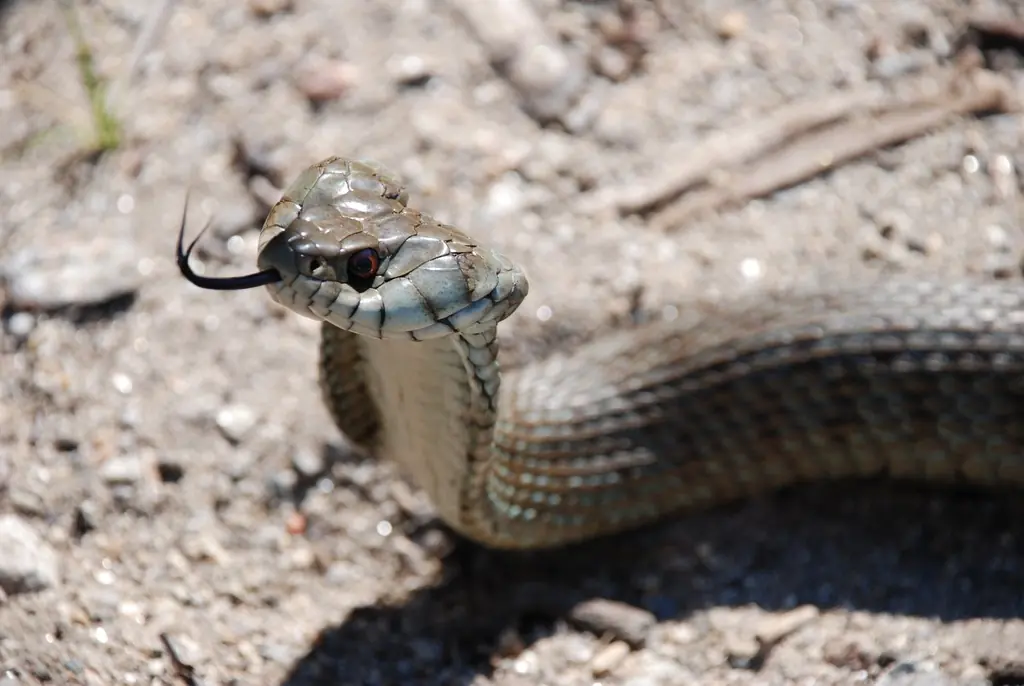
009 · Colubridae
Red-eyed grass snake
Country explicitly listed in the checked taxonomic treatment. Documented during the 2012–2021 Bardenas surveys; historical field evidence.
Read the species account →franciscodocampo · CC BY 4.0 · https://creativecommons.org/licenses/by/4.0/
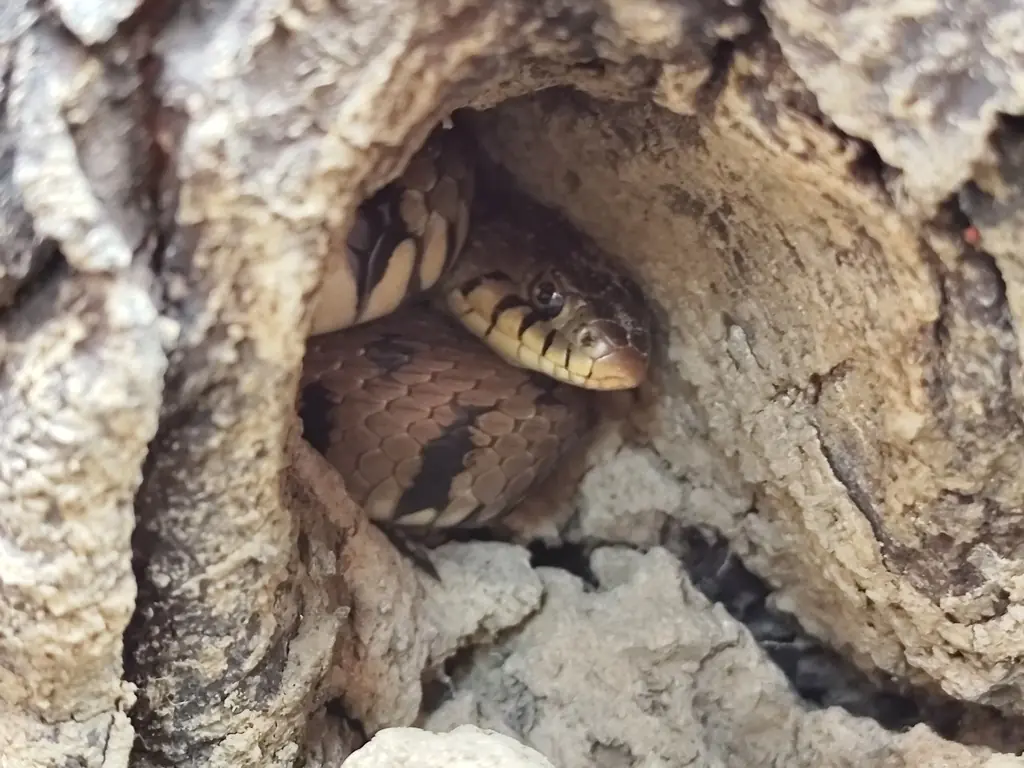
010 · Colubridae
Banded Grass Snake
Country explicitly listed in the checked taxonomic treatment.
Read the species account →Francesco Santoro · CC BY 4.0 · https://creativecommons.org/licenses/by/4.0/
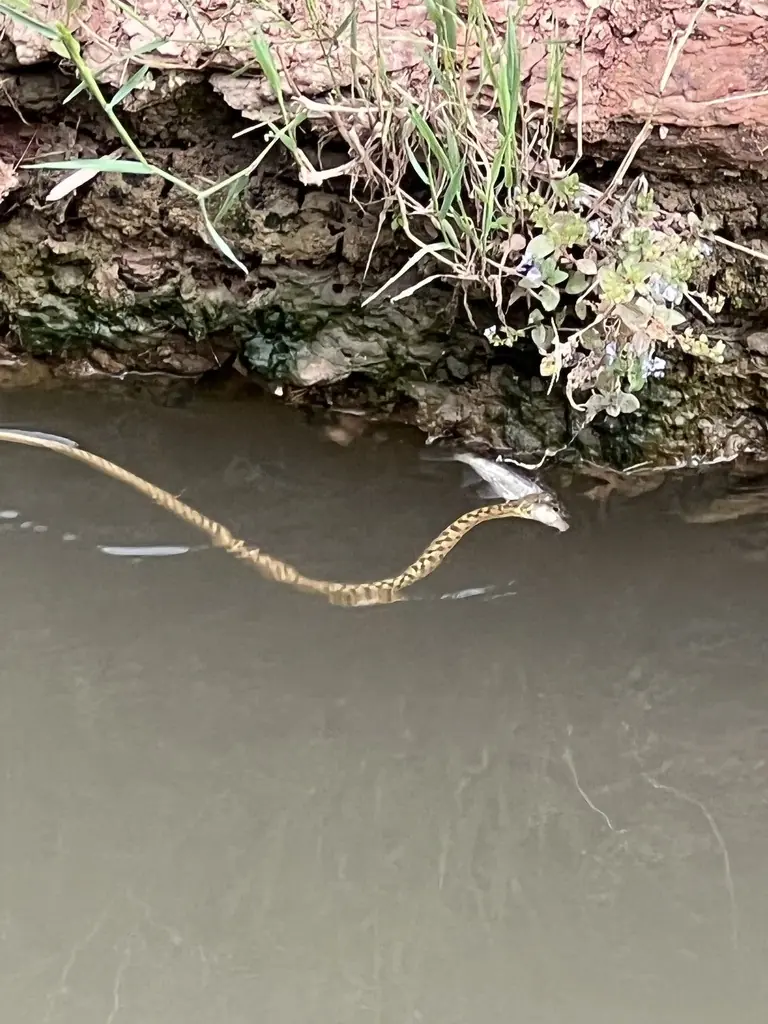
011 · Colubridae
Viperine Water Snake
Country explicitly listed in the checked taxonomic treatment. Mainland native occurrence and island introductions must be distinguished.
Read the species account →Naturalista · CC BY 4.0 · https://creativecommons.org/licenses/by/4.0/
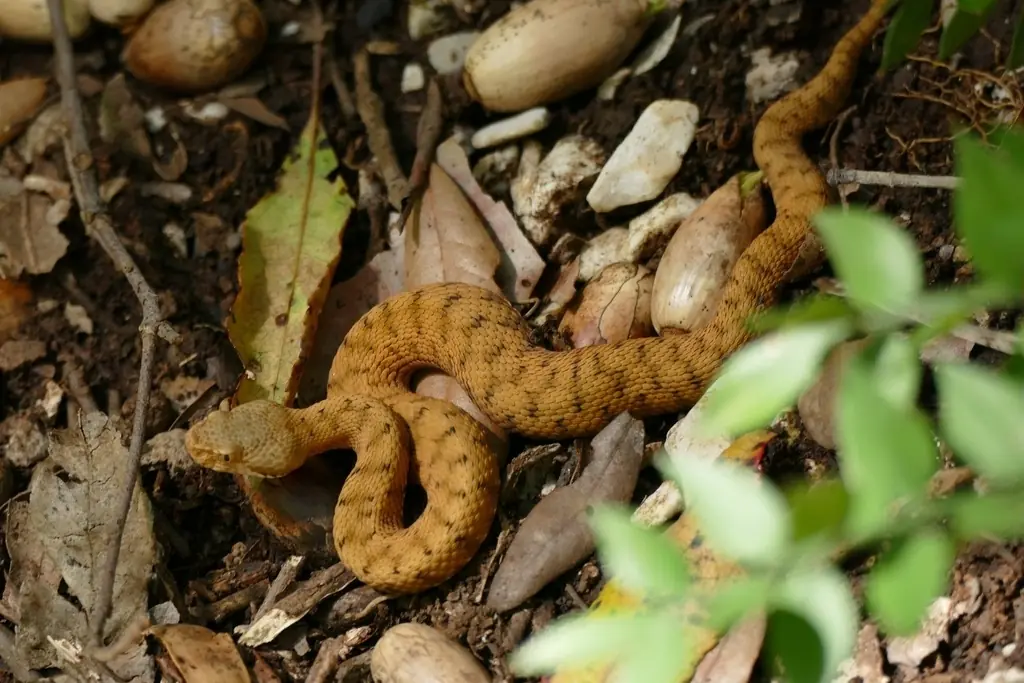
012 · Viperidae
Asp Viper
Country explicitly listed in the checked taxonomic treatment.
Read the species account →Paolo Giampaoletti · CC0 1.0 · https://creativecommons.org/publicdomain/zero/1.0/
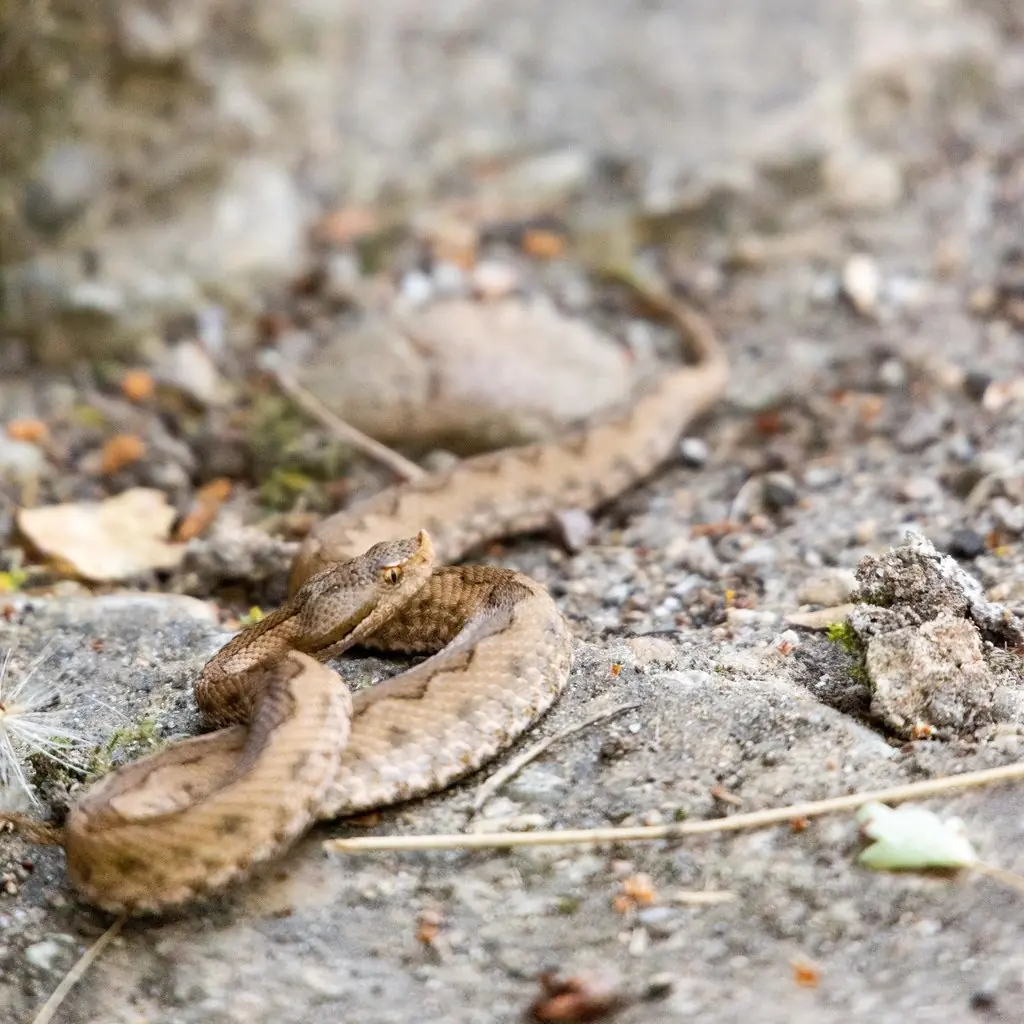
013 · Viperidae
Lataste’s Viper
Country explicitly listed in the checked taxonomic treatment. Documented during the 2012–2021 Bardenas surveys; historical field evidence.
Read the species account →euqirneto · CC BY 4.0 · https://creativecommons.org/licenses/by/4.0/
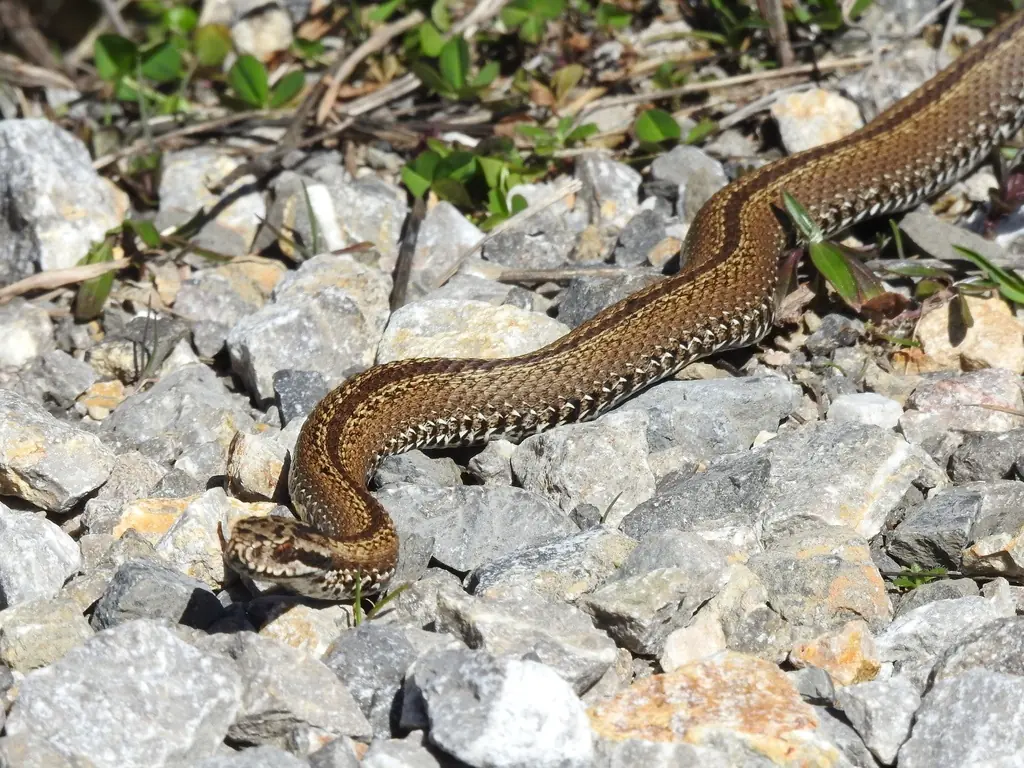
014 · Viperidae
Portugese Viper
Country explicitly listed in the checked taxonomic treatment.
Read the species account →Michael Bakker Paiva · CC BY 4.0 · https://creativecommons.org/licenses/by/4.0/
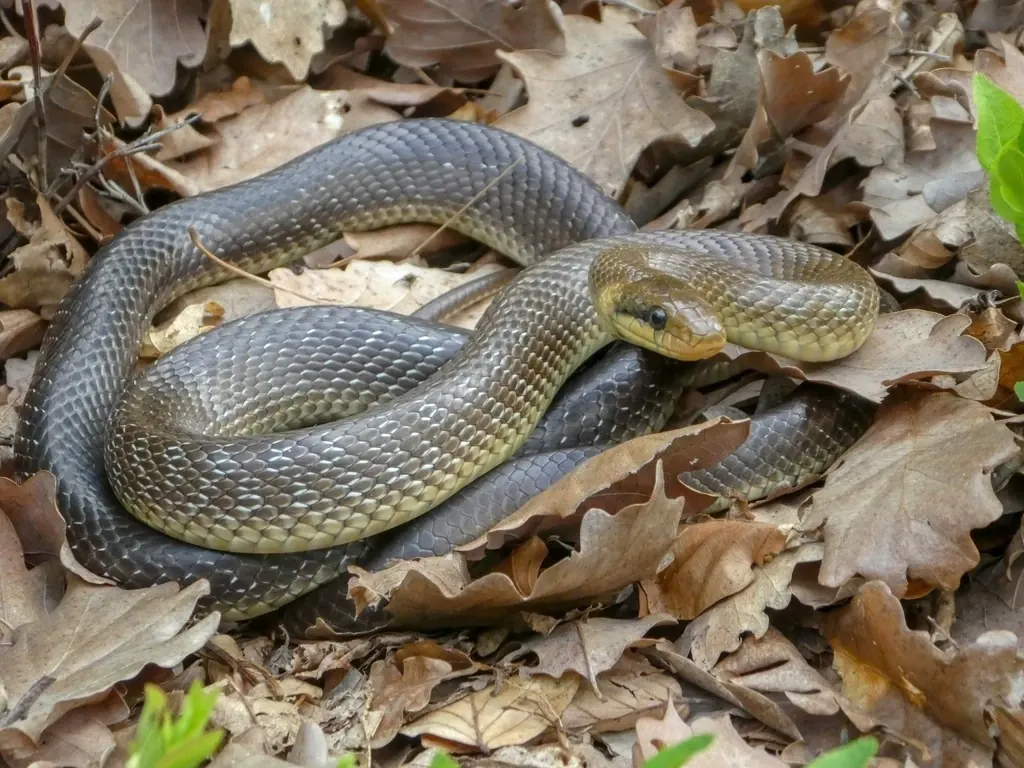
015 · Colubridae
Aesculapean Snake
Country explicitly listed in the checked taxonomic treatment.
Read the species account →Philipp Pavelka · CC BY 4.0 · https://creativecommons.org/licenses/by/4.0/
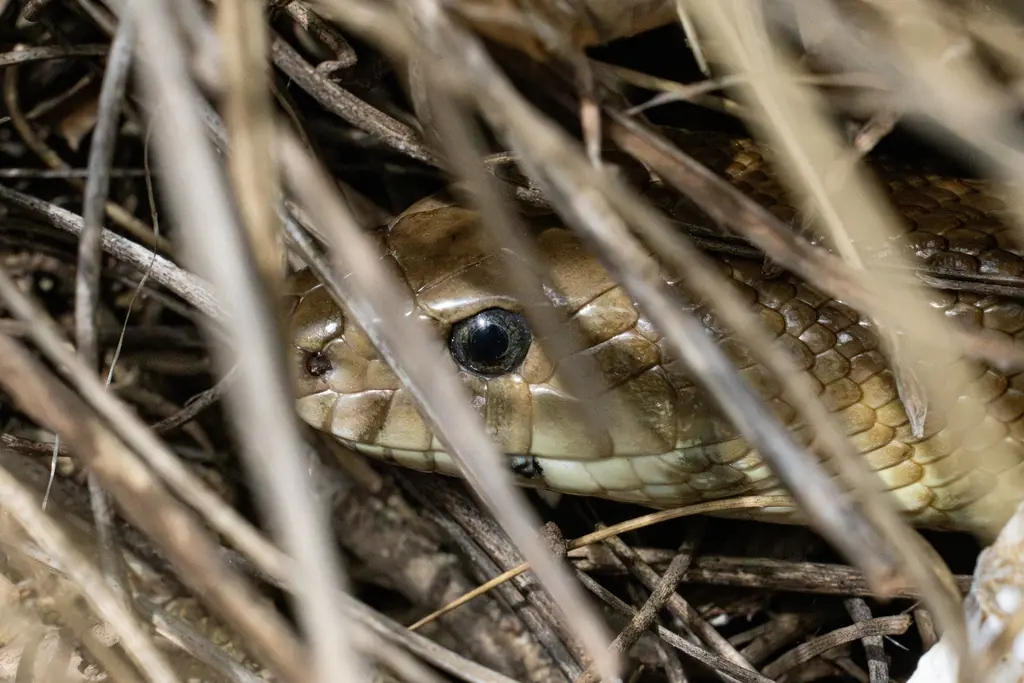
016 · Colubridae
Ladder Snakes
Country explicitly listed in the checked taxonomic treatment. Mainland native occurrence and island introductions must be distinguished.
Read the species account →Diego González Dopico · CC BY 4.0 · https://creativecommons.org/licenses/by/4.0/
The research library
This edition lists 16 species with supported country records from checked taxonomic treatments and cited field studies. This total includes 2 records marked as introduced; it is not a native-species total. It is not a claim of a complete national inventory. Each account retains its source and check date; individual evidence entries retain their own review dates.
16 documented current or explicitly qualified country records. This is a source-backed working inventory; recent national completeness and locality coverage remain under review. This European chapter does not transfer overseas-territory records to mainland Europe.
Individually reviewed taxonomic treatments and cited primary records ↗
The old broad distribution is explicitly unreconciled; Iberian/Balearic populations belong to other identities and Lampedusa remains taxonomically unresolved.
Older broad grass-snake labels are not current-identity records; western populations require helvetica or astreptophora reconciliation.
Country links use a single accepted species identity. Revised names and disputed records are kept visible here; uncertain records do not enter the listed collection or regional totals.
Introduced occurrence
Introduced populations; Portuguese evidence here is Madeira and Spanish evidence the Canary Islands, not mainland occurrence. A June 2015 questionnaire received 95 nursery responses, including three positive reports in Granada and Girona. These are dated manager-reported occurrences, not specimen-verified distribution boundaries or proof of persistence today.
Uncertain — excluded from the listed total
The old broad distribution is explicitly unreconciled; Iberian/Balearic populations belong to other identities and Lampedusa remains taxonomically unresolved.
Uncertain — excluded from the listed total
Older broad grass-snake labels are not current-identity records; western populations require helvetica or astreptophora reconciliation.
Introduced occurrence
Historical introduction to Mallorca and Menorca, with a North African genetic origin; not a native mainland record. A published observation documents the introduced Mallorca population in a suburban garden. The genetic study documents historical introductions on Mallorca and Menorca. A published observation documents the introduced Mallorca population in a suburban garden. The genetic study documents historical introductions on Mallorca and Menorca.
Search results were checked against distribution text and taxonomic qualifications. A geographic name alone does not establish a political country: New Guinea, the Solomon archipelago and Micronesia span more than one country or territory. Introduced and unresolved records require separate interpretation.
Place counts require explicit named localities, including valid type localities. Counts can overlap where sources name multiple places. Regional maps group historical boundary snapshots for navigation, while island outlines use Natural Earth; neither is a species range or an observation map. Small islands can be below the outline dataset’s resolution, so geographic reference markers and the directory remain available.
Instituto de Geografico Nacional; geoBoundaries gbOpen ADM1; 2017; Creative Commons Attribution 4.0 International (CC BY 4.0). Generalised navigation outlines, not species ranges. Map provenance →
Individual treatments and locality evidence are linked from each species account.
Species-level literature measurements and ecological traits. Exact-name matches only; imputed or ambiguous fields are omitted. These summaries are not local observations.