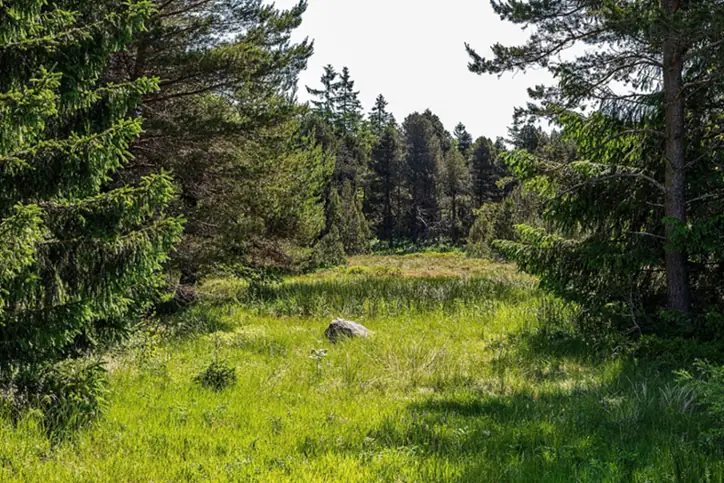
Wooded wetland clearing at Blindensee near Schönwald, Germany. This Black Forest example lies outside the guide's named southern biosphere-reserve anchor.

Germany · The country atlas

Germany

Lowlands, hills and mountains support different plant communities, alongside forests, agricultural land and extensive river networks. Explore the regional guides and country-scoped species records below.

7species with extracted evidence
2families
4region guides

Wooded wetland clearing at Blindensee near Schönwald, Germany. This Black Forest example lies outside the guide's named southern biosphere-reserve anchor.

Photograph: Dietmar Rabich · Image source · CC BY-SA 4.0. Cropped to fill the hero; darkened for text legibility.

Geography & biotopes

Discover Germany.

Lowlands, hills and mountains support different plant communities, alongside forests, agricultural land and extensive river networks. Explore the regional guides and country-scoped species records below.

Regional groups retain the credited administrative snapshot. They are navigation areas, not ecological boundaries or claims of snake occurrence throughout each area.

Boundary provenance and regional grouping →

Convention on Biological Diversity - Germany profile →

Geography is part of the record

Find your way through Germany.

Select a named region to open its evidence page. The complete directory below keeps every guide accessible, including places where locality evidence has not yet been extracted.

7 of 7 listed species have at least one indexed region record. 0 remain country-only. Even a nonzero count is not a complete regional inventory.

Habitats & living landscapes

Explore the living
landscapes.

Explore 2 guides to the environments, places and conservation pressures that shape this country. Each guide connects to the regional map and shared species accounts.

Landscape photographs & credits

Wooded wetland clearing at Blindensee near Schönwald, Germany. This Black Forest example lies outside the guide's named southern biosphere-reserve anchor. — Dietmar Rabich. Original photograph · CC BY-SA 4.0. Cropped for the cards; photographs do not establish snake occurrence.

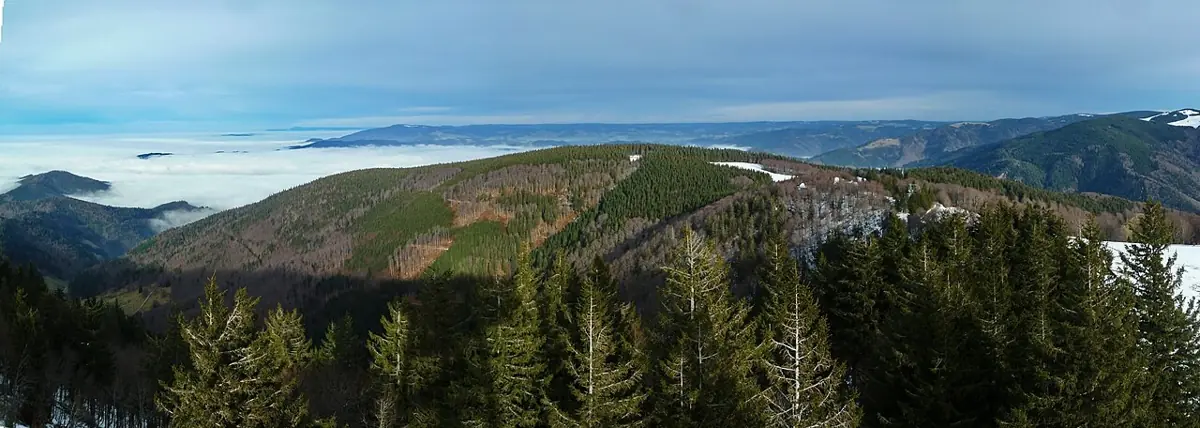
The view from the Schauinsland tower towards Freiburg and the Dreisam valley, Germany, January 2014; wooded uplands rise above low cloud. — St.egimai. Original photograph · CC BY-SA 3.0. Cropped for the cards; photographs do not establish snake occurrence.

The species catalogue

Meet the snakes of Germany.

Search scientific names, historical names, common names and families. Every card opens one shared account across its documented countries.

7 species · showing 7

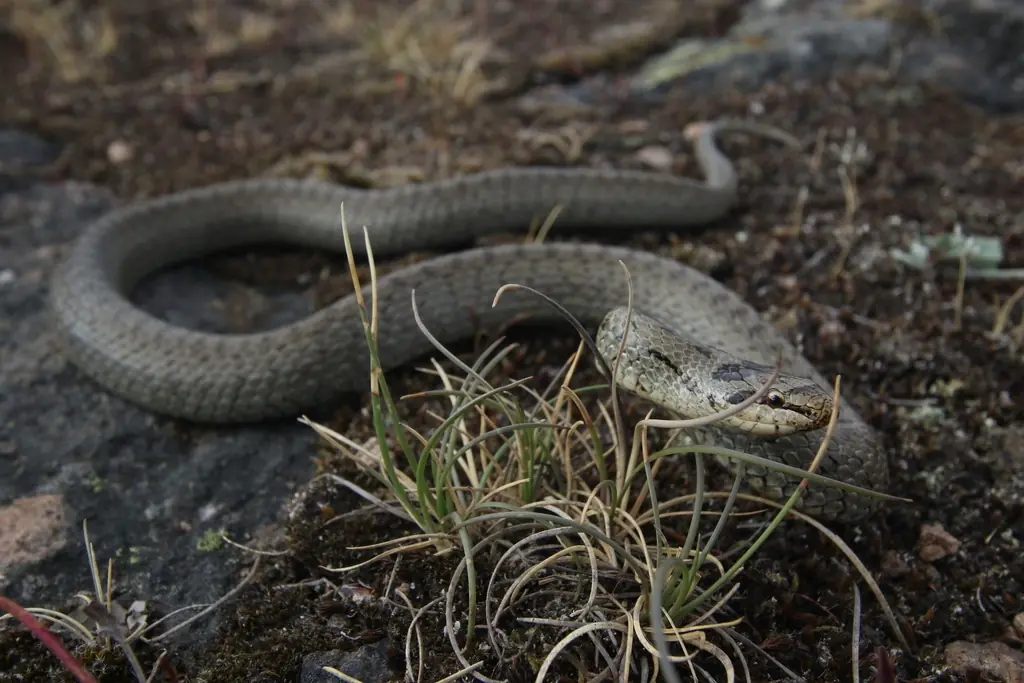
Coronella austriaca. Identification follows the linked source community.

001 · Colubridae

Smooth Snake

Coronella austriaca

LAURENTI, 1768

Venom unknownNot yet assessed

Country explicitly listed in the checked taxonomic treatment. LfU identifies these Bavarian concentration areas while noting incomplete detection; these are regional records, not precise observation coordinates. The state conservation agency lists this snake among the native reptiles of Lower Saxony.

Read the species account →

B. P. White · CC BY-SA 4.0 · https://creativecommons.org/licenses/by-sa/4.0/

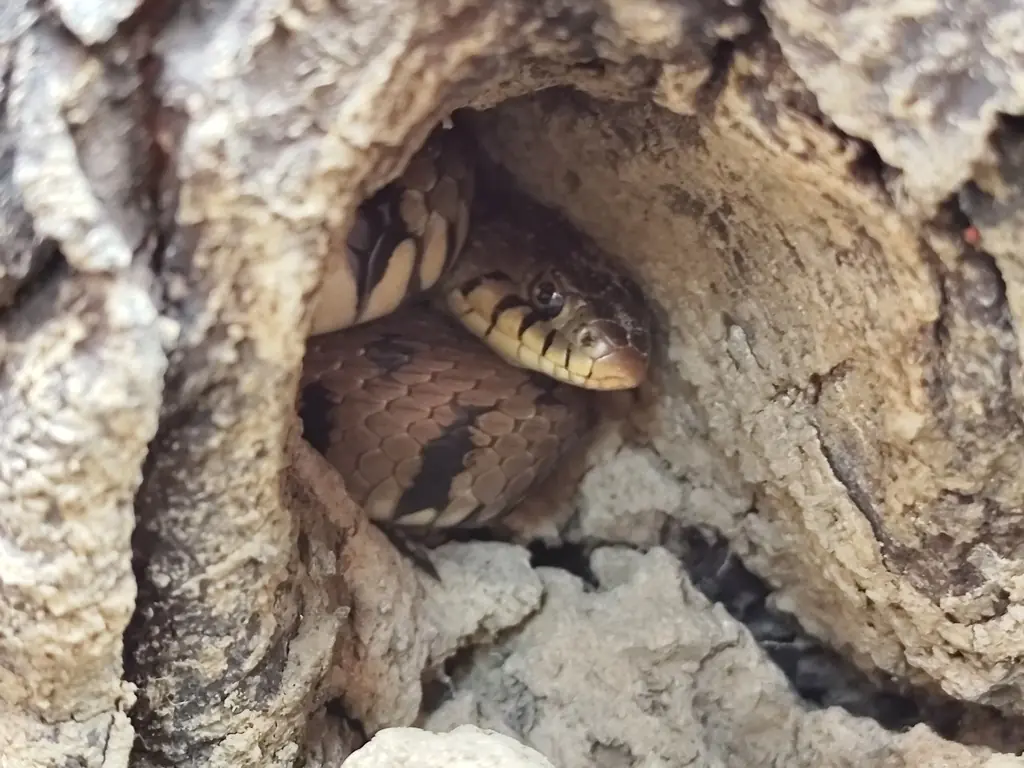
Natrix helvetica. Identification follows the linked source community.

002 · Colubridae

Banded Grass Snake

Natrix helvetica

(LACÉPÈDE, 1789)

Venom unknownNot yet assessed

Country explicitly listed in the checked taxonomic treatment. The 2019 study verified Alpine barred grass snakes genetically at these named Bavarian localities.

Read the species account →

Francesco Santoro · CC BY 4.0 · https://creativecommons.org/licenses/by/4.0/

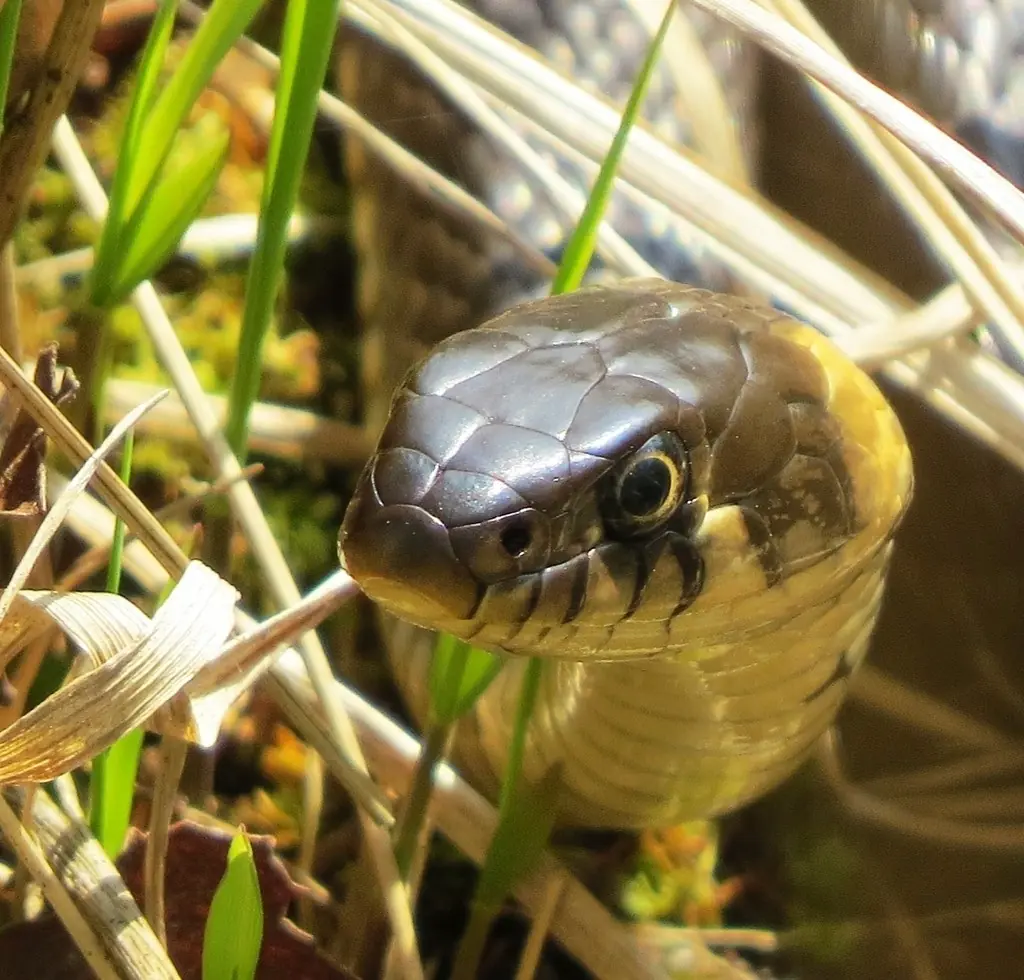
Natrix natrix. Identification follows the linked source community.

003 · Colubridae

Common Grass Snake

Natrix natrix

(LINNAEUS, 1758)

Venom unknownNot yet assessed

Country explicitly listed in the checked taxonomic treatment. The museum explicitly distinguishes Bavarian Natrix natrix from N. helvetica; its comparison record has state-level resolution only.

Read the species account →

Micha Baum · CC BY-SA 4.0 · https://creativecommons.org/licenses/by-sa/4.0/

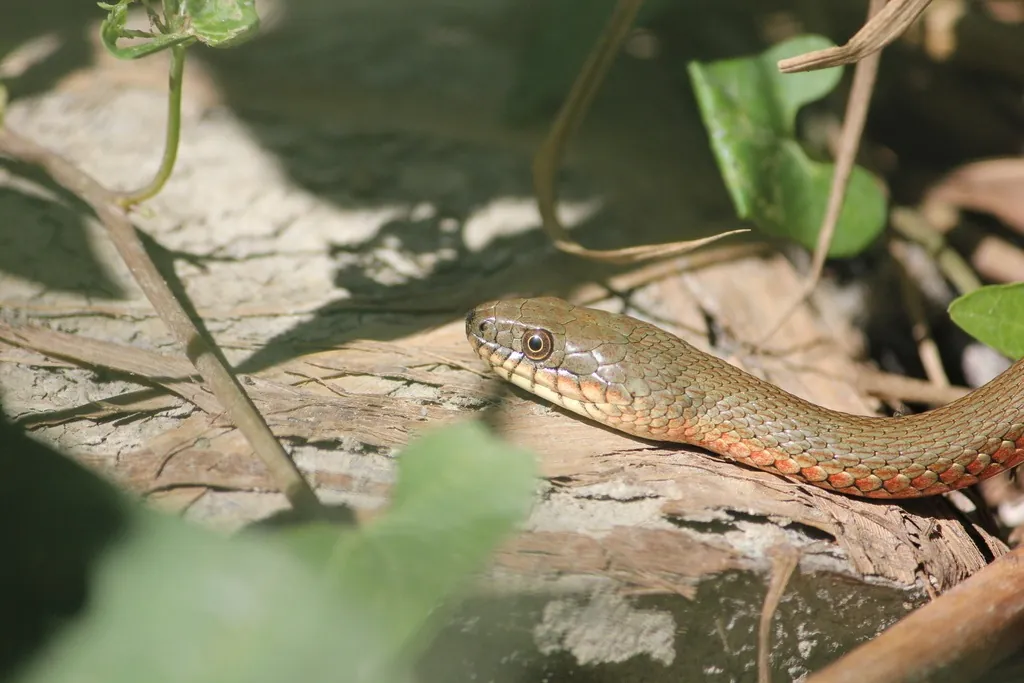
Unspotted dice snake photographed in Dagestan, Russia, in September 2026. Identification follows the linked source community.

004 · Colubridae

Dice Snake

Natrix tessellata

(LAURENTI, 1768)

Venom unknownNot yet assessed

Country explicitly listed in the checked taxonomic treatment. BfN identifies isolated German populations along the Mosel, Lahn and Nahe. It separately reports reintroduction to the Elbe near Meissen beginning in 1999; this record is not evidence of an uninterrupted natural population there. River names locate documented reaches, not continuous occupancy…

Read the species account →

KsenoSnake · CC0 1.0 · https://creativecommons.org/publicdomain/zero/1.0/

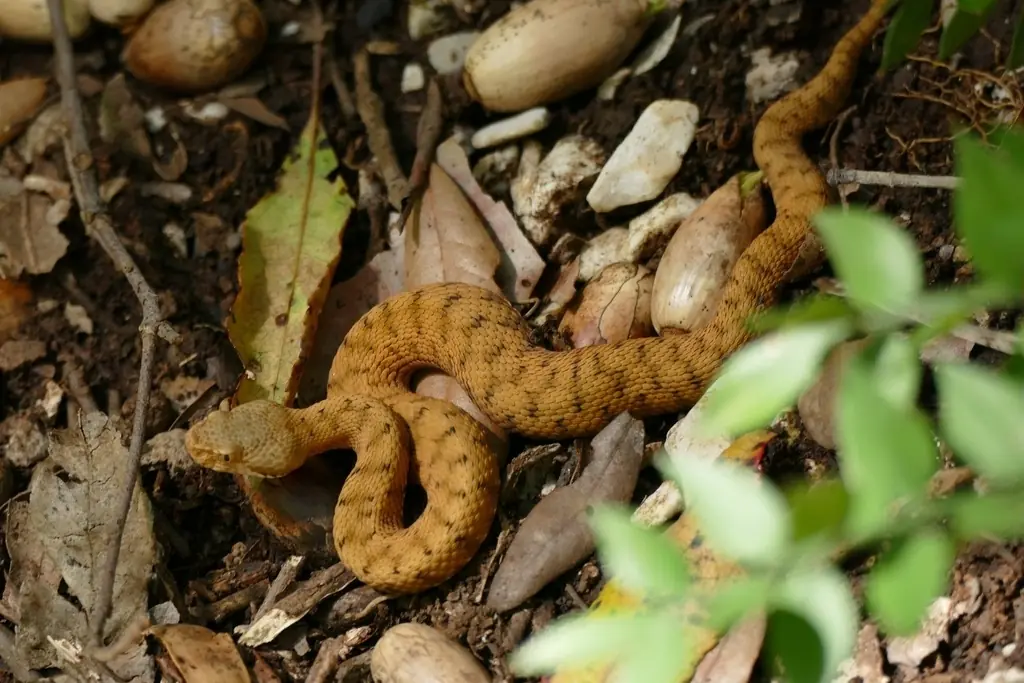
Vipera aspis. Identification follows the linked source community.

005 · Viperidae

Asp Viper

Vipera aspis

(LINNAEUS, 1758)

VenomousClinical severity not established

Country explicitly listed in the checked taxonomic treatment. FVA documents the surviving German population in the southern Black Forest. Historical Upper Rhine sites are not presented as current records.

Read the species account →

Paolo Giampaoletti · CC0 1.0 · https://creativecommons.org/publicdomain/zero/1.0/

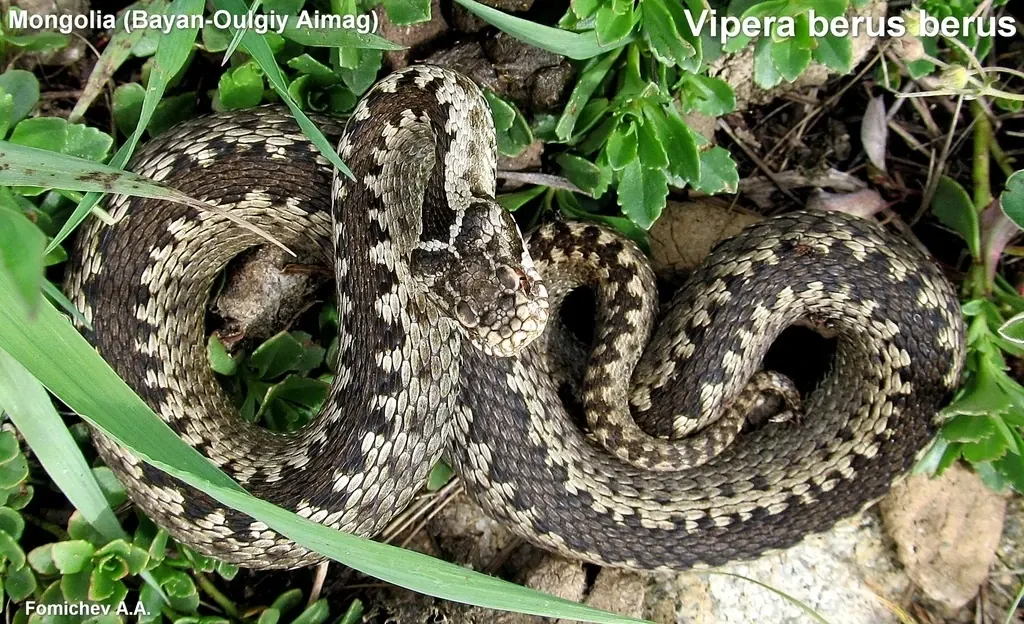
Vipera berus. Identification follows the linked source community.

006 · Viperidae

Adder, Northern Viper

Vipera berus

(LINNAEUS, 1758)

VenomousPotentially life-threatening

Country explicitly listed in the checked taxonomic treatment. The 2026 conservation report documents four individually recognised adders during the 2025 Anhauser Tal assessment. The state conservation agency lists this snake among the native reptiles of Lower Saxony.

Read the species account →

Alexander A. Fomichev · CC BY 4.0 · https://creativecommons.org/licenses/by/4.0/

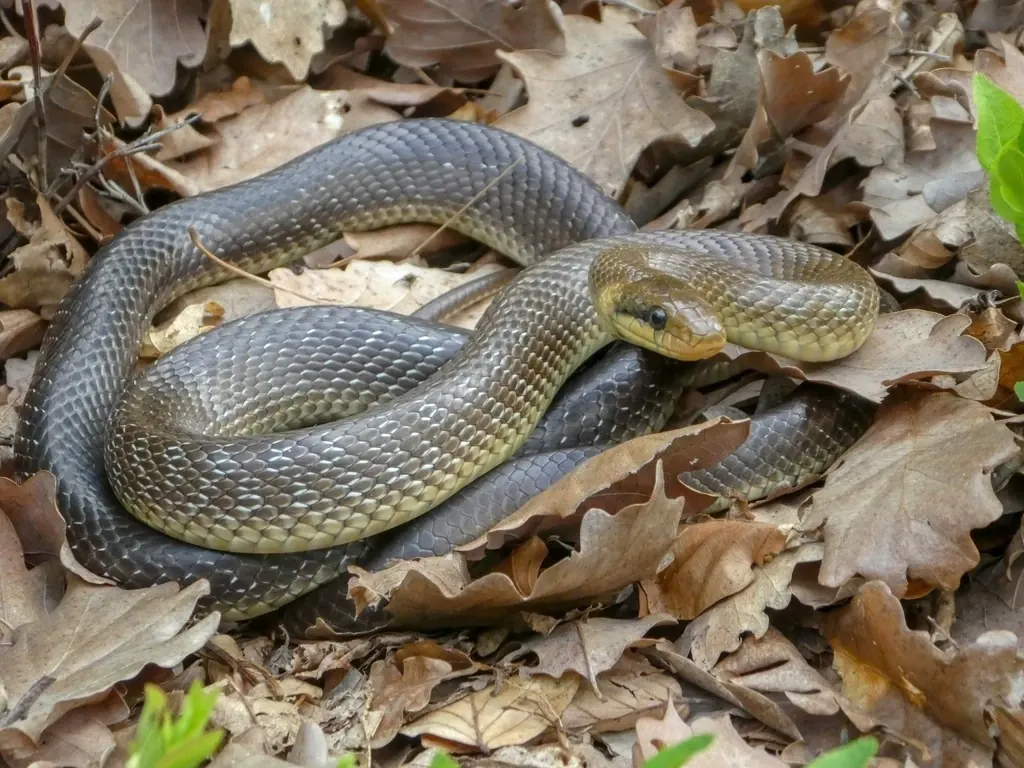
Zamenis longissimus. Identification follows the linked source community.

007 · Colubridae

Aesculapean Snake

Zamenis longissimus

(LAURENTI, 1768)

Venom unknownNot yet assessed

Country explicitly listed in the checked taxonomic treatment. The state account identifies these isolated German populations; the listed places do not imply occupancy throughout their navigation regions.

Read the species account →

Philipp Pavelka · CC BY 4.0 · https://creativecommons.org/licenses/by/4.0/

The research library

Sources & the checklist.

This edition lists 7 species with supported country records from checked taxonomic treatments and cited field studies. It is not a claim of a complete national inventory. Each account retains its source and check date; individual evidence entries retain their own review dates.

Independent checklist comparison · 2026-10-11

7 documented current or explicitly qualified country records. This is a source-backed working inventory; recent national completeness and locality coverage remain under review.

Individually reviewed taxonomic treatments and cited primary records ↗

Review still open

How the map and counts work

Search results were checked against distribution text and taxonomic qualifications. A geographic name alone does not establish a political country: New Guinea, the Solomon archipelago and Micronesia span more than one country or territory. Introduced and unresolved records require separate interpretation.

Place counts require explicit named localities, including valid type localities. Counts can overlap where sources name multiple places. Regional maps group historical boundary snapshots for navigation, while island outlines use Natural Earth; neither is a species range or an observation map. Small islands can be below the outline dataset’s resolution, so geographic reference markers and the directory remain available.

Federal Agency for Cartography and Geodesy; geoBoundaries gbOpen ADM1; 2021; Data license Germany - Attribution - Version 2.0. Generalised navigation outlines, not species ranges. Map provenance →
  1. Boundary provenance and regional grouping ↗
  2. Convention on Biological Diversity - Germany profile ↗
  3. The Reptile Database

    Individual treatments and locality evidence are linked from each species account.

  4. Meiri (2024): SquamBase 1.0

    Species-level literature measurements and ecological traits. Exact-name matches only; imputed or ambiguous fields are omitted. These summaries are not local observations.

  5. Natural Earth: public-domain geographic data

Continue through the Europe atlas →