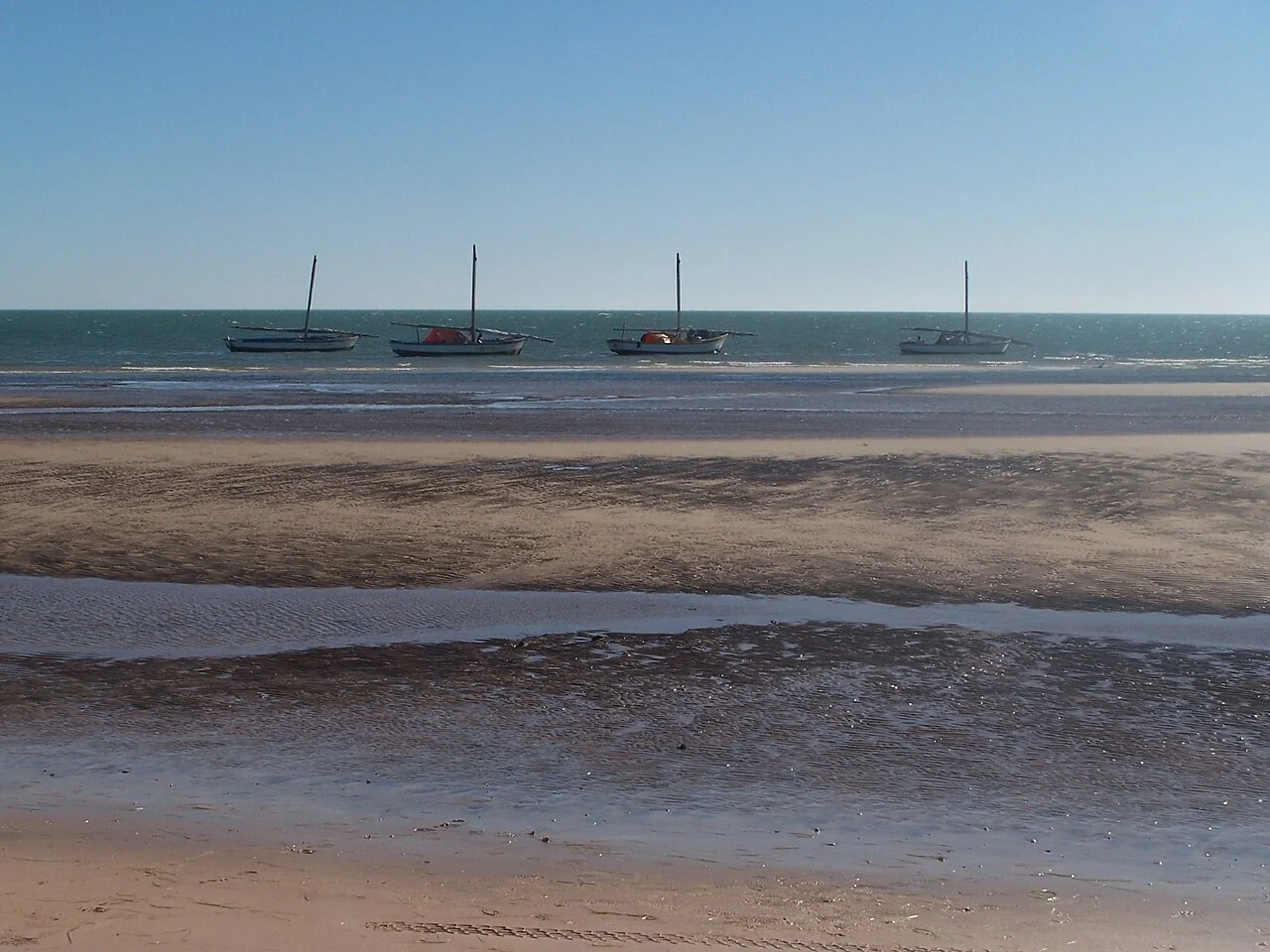
Fishing boats and tidal flats in Banc d Arguin National Park, Mauritania.

Mauritania · The country atlas

Mauritania

Mauritania links Sahel-Saharan country, the Senegal River valley and Atlantic wetlands.

32species with extracted evidence
11families
13region guides

Fishing boats and tidal flats in Banc d Arguin National Park, Mauritania.

Photograph: Kokopelado · Image source · CC BY-SA 3.0. Cropped to fill the hero; darkened for text legibility.

Geography & biotopes

Discover Mauritania.

Mauritania links Sahel-Saharan country, the Senegal River valley and Atlantic wetlands.

Historical administrative outlines are grouped for navigation. They are not ecological boundaries, species ranges or a statement of present administrative arrangements.

Map boundaries, snapshot and group membership →

Convention on Biological Diversity · Mauritania national profile →

Geography is part of the record

Find your way through Mauritania.

Select a named region to open its evidence page. The complete directory below keeps every guide accessible, including places where locality evidence has not yet been extracted.

6 of 32 listed species have at least one indexed region record. 26 remain country-only. Even a nonzero count is not a complete regional inventory.

Habitats & living landscapes

Explore the living
landscapes.

Explore 3 guides to the environments, places and conservation pressures that shape this country. Each guide connects to the regional map and shared species accounts.

Landscape photographs & credits

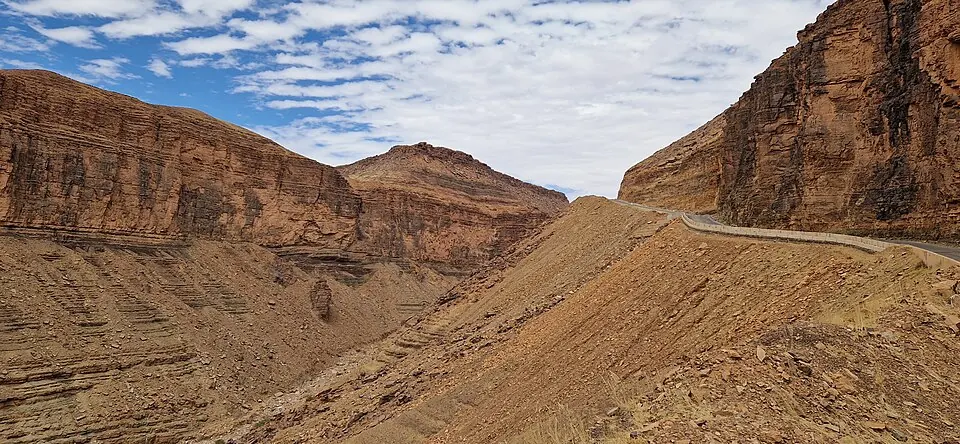
Bare rocky slopes and the road through the Nouatil pass, Mauritania. — Seriouslyfab. Original photograph · CC BY-SA 4.0. Cropped for the cards; photographs do not establish snake occurrence.

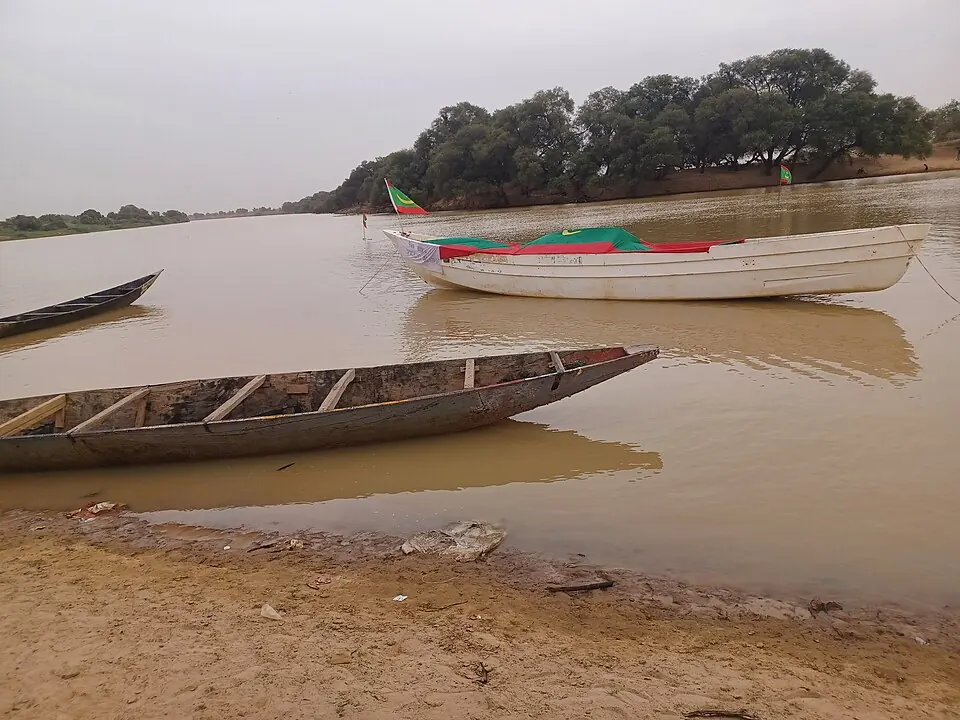
The Senegal River on the Senegal–Mauritania border, with wooded banks and small boats, photographed in February 2025. — Adjoajo. Original photograph · CC BY-SA 4.0. Cropped for the cards; photographs do not establish snake occurrence.

Fishing boats and tidal flats in Banc d Arguin National Park, Mauritania. — Kokopelado. Original photograph · CC BY-SA 3.0. Cropped for the cards; photographs do not establish snake occurrence.

The species catalogue

Meet the snakes of Mauritania.

Search scientific names, historical names, common names and families. Every card opens one shared account across its documented countries.

32 species · showing 24

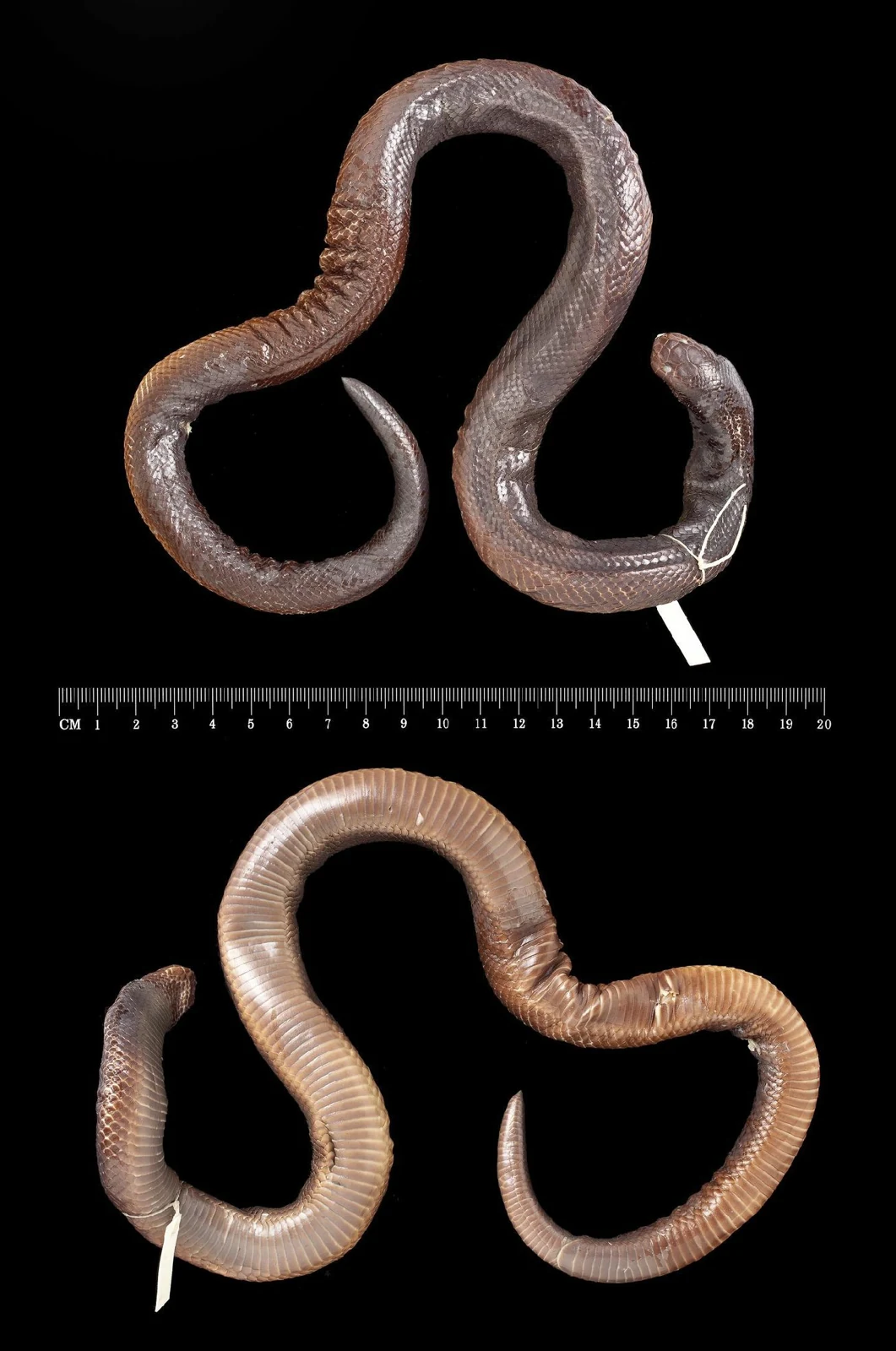
Atractaspis watsoni. Preserved museum specimen, Natural History Museum, London, 1946.1.18.5. Colours may have changed in preservative. This collection image adds no geographic occurrence record.

002 · Atractaspididae

Watson’s Burrowing Asp

Atractaspis watsoni

BOULENGER, 1908

VenomousClinical severity not established

The current taxonomic treatment explicitly lists this country. This is country-scale checklist evidence, not a claim of continuous occupancy or a complete regional inventory.

Read the species account →

Patrick Campbell / The Trustees of the Natural History Museum, London · CC BY 4.0 · https://creativecommons.org/licenses/by/4.0/

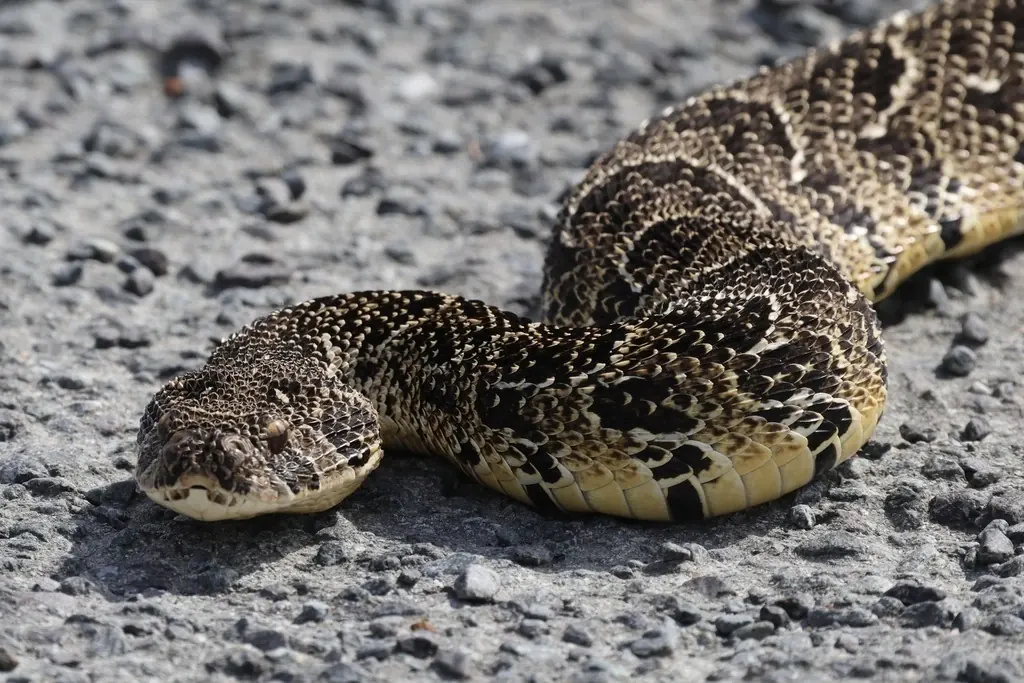
Bitis arietans. Identification follows the linked source community.

004 · Viperidae

Puff Adder

Bitis arietans

(MERREM, 1820)

VenomousClinical severity not established

Explicit country record in the current species treatment. The current taxonomic treatment explicitly lists this country. This is country-scale checklist evidence, not a claim of continuous occupancy or a complete regional inventory.

Read the species account →

Cricket Raspet · CC BY 4.0 · https://creativecommons.org/licenses/by/4.0/

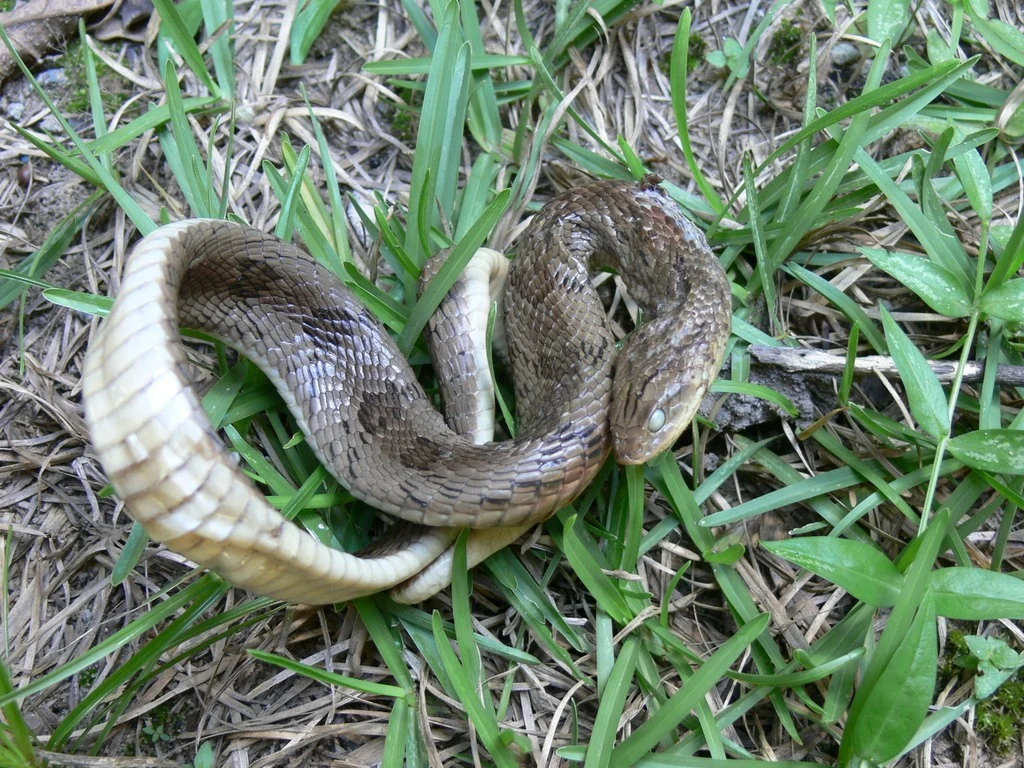
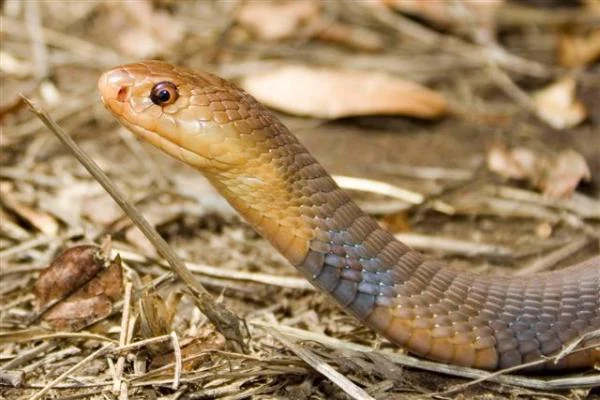
Boaedon fuliginosus, photographed 2020-08-12. Identification follows the linked research-grade observation.

005 · Lamprophiidae

Brown House Snake, African House Snake

Boaedon fuliginosus

(BOIE, 1827)

Non-venomous

Listed in the reviewed taxonomic treatment. The current taxonomic treatment explicitly lists this country. This is country-scale checklist evidence, not a claim of continuous occupancy or a complete regional inventory.

Read the species account →

Diossina · CC BY 4.0 · https://creativecommons.org/licenses/by/4.0/

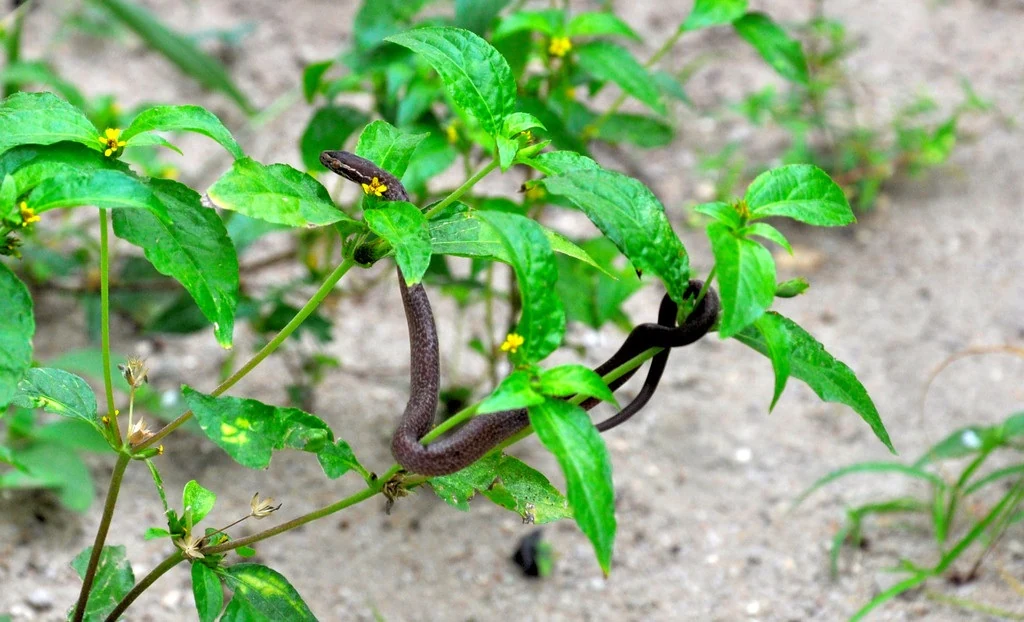
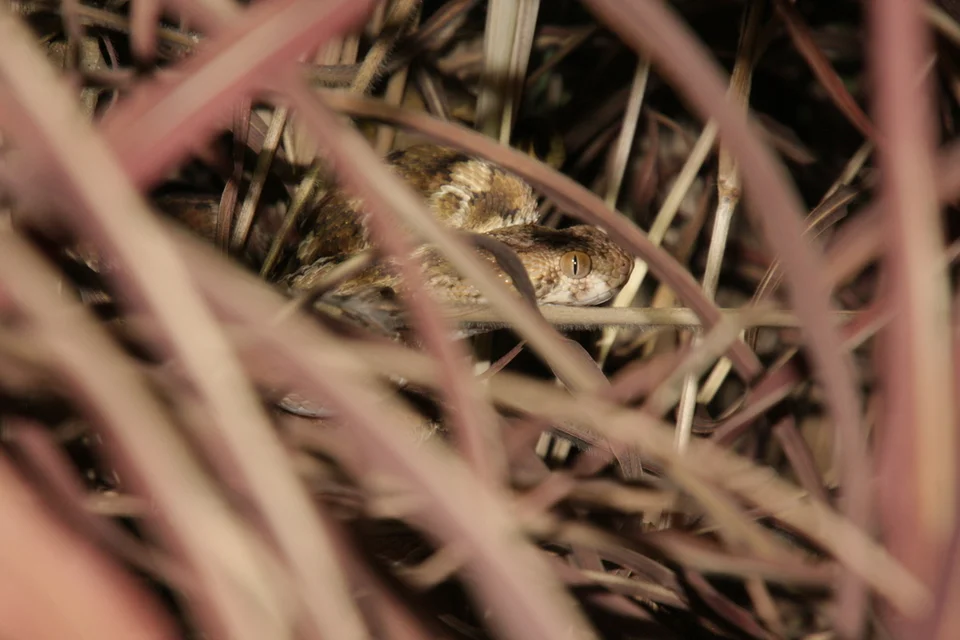
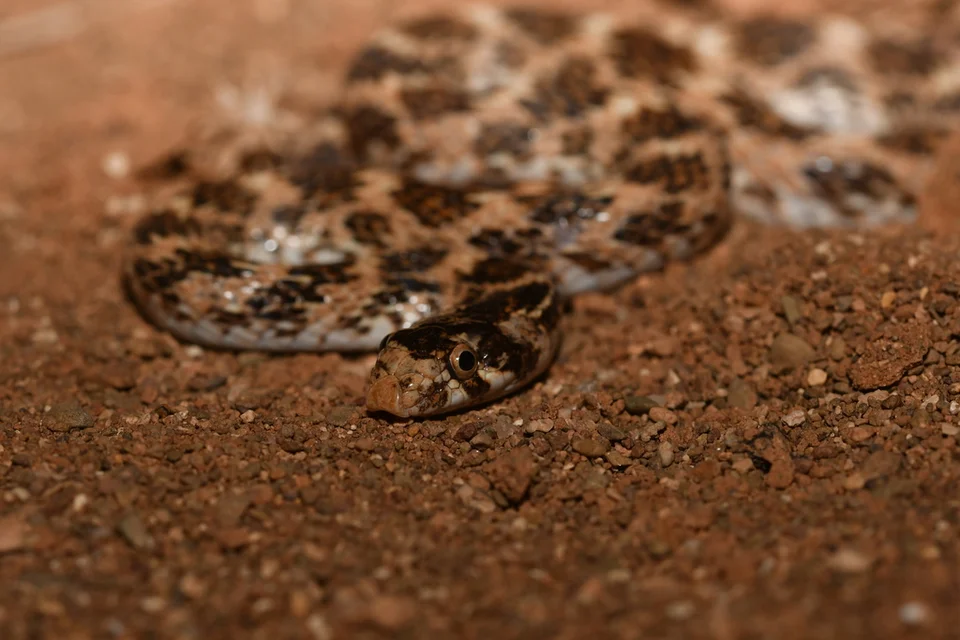
Causus maculatus; Lesio-Louna Reserve - Iboubikro, Republic of the Congo; photographed 2006-07-20.

006 · Viperidae

Spotted Night Adder, West-African Night Adder

Causus maculatus

(HALLOWELL, 1842)

VenomousClinical severity not established

The current taxonomic treatment explicitly lists this country. This is country-scale checklist evidence, not a claim of continuous occupancy or a complete regional inventory.

Read the species account →

Tony King · CC BY 4.0 · https://creativecommons.org/licenses/by/4.0/

Cerastes cerastes. Identification follows the linked source community.

007 · Viperidae

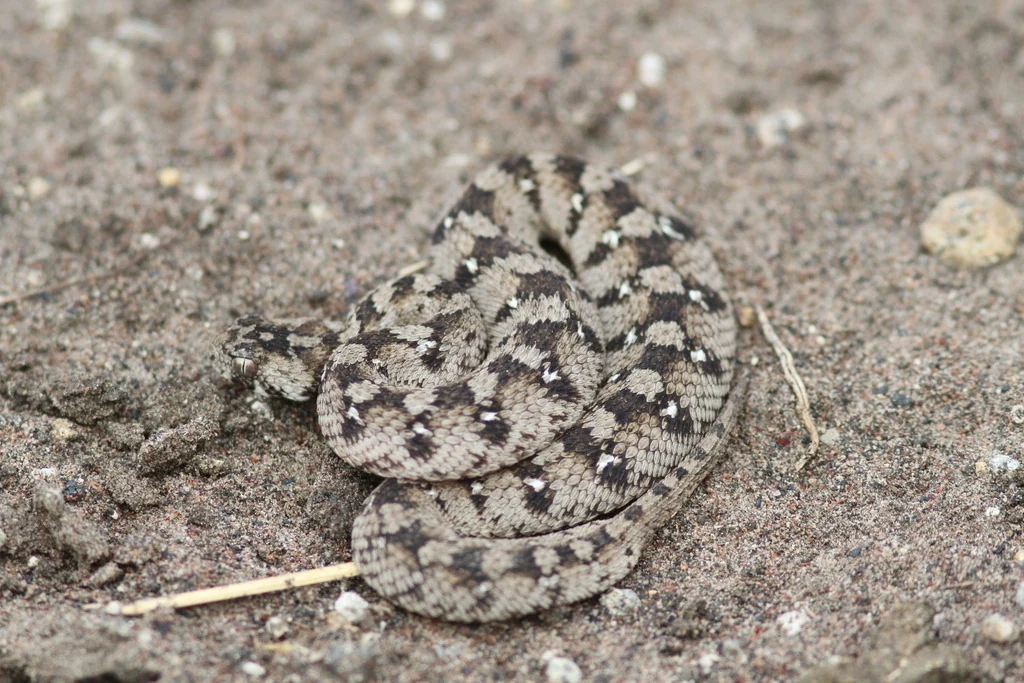
Desert Horned Viper

Cerastes cerastes

(LINNAEUS, 1758)

VenomousClinical severity not established

Explicit country record in the current species treatment. The current taxonomic treatment explicitly lists this country. This is country-scale checklist evidence, not a claim of continuous occupancy or a complete regional inventory. Nouakchott: museum voucher MVZ MVZ:Herp:235727 (2001). The museum record's reported coordinate uncertainty footprint lies…

Read the species account →

Julien Renoult · CC BY 4.0 · https://creativecommons.org/licenses/by/4.0/

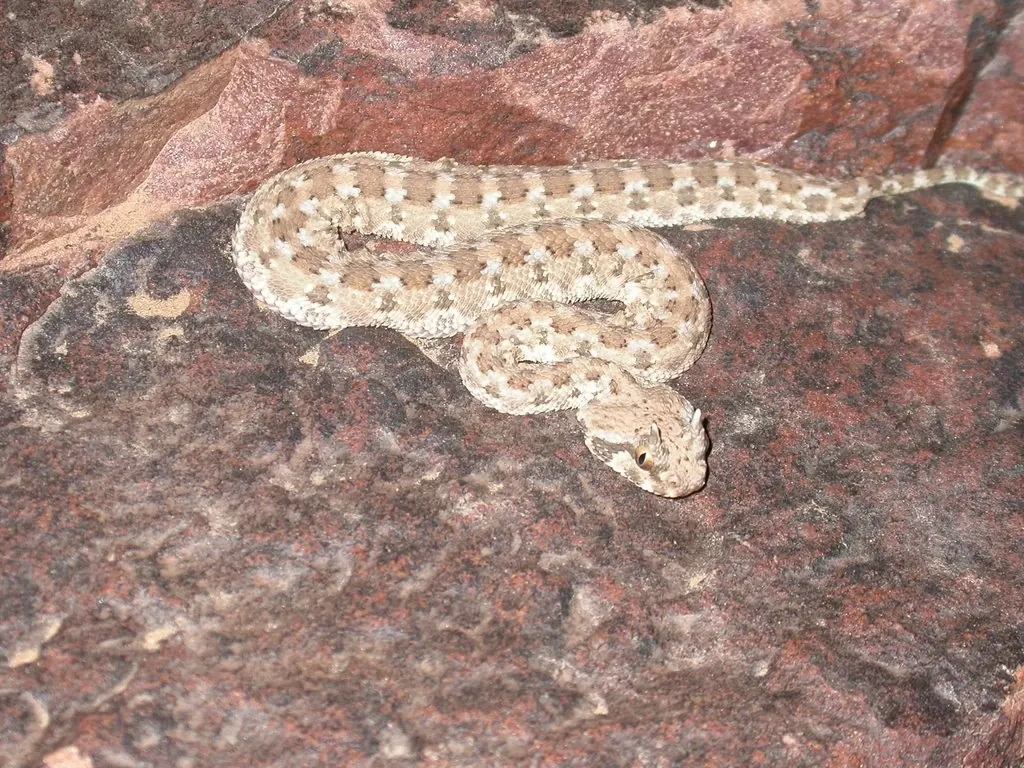
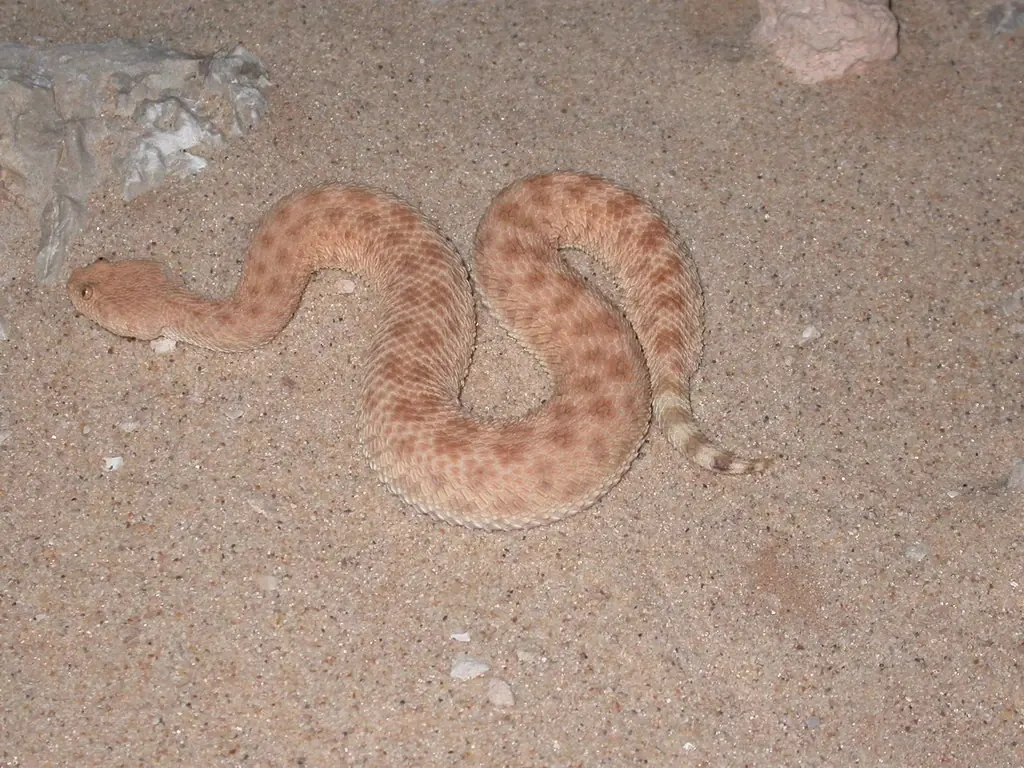
Cerastes vipera. Identification follows the linked source community.

008 · Viperidae

Sahara Sand Viper

Cerastes vipera

(LINNAEUS, 1758)

VenomousClinical severity not established

Explicit country record in the current species treatment. The current taxonomic treatment explicitly lists this country. This is country-scale checklist evidence, not a claim of continuous occupancy or a complete regional inventory. Nouakchott: museum voucher MVZ MVZ:Herp:235728 (2001). The museum record's reported coordinate uncertainty footprint lies…

Read the species account →

Julien Renoult · CC BY 4.0 · https://creativecommons.org/licenses/by/4.0/

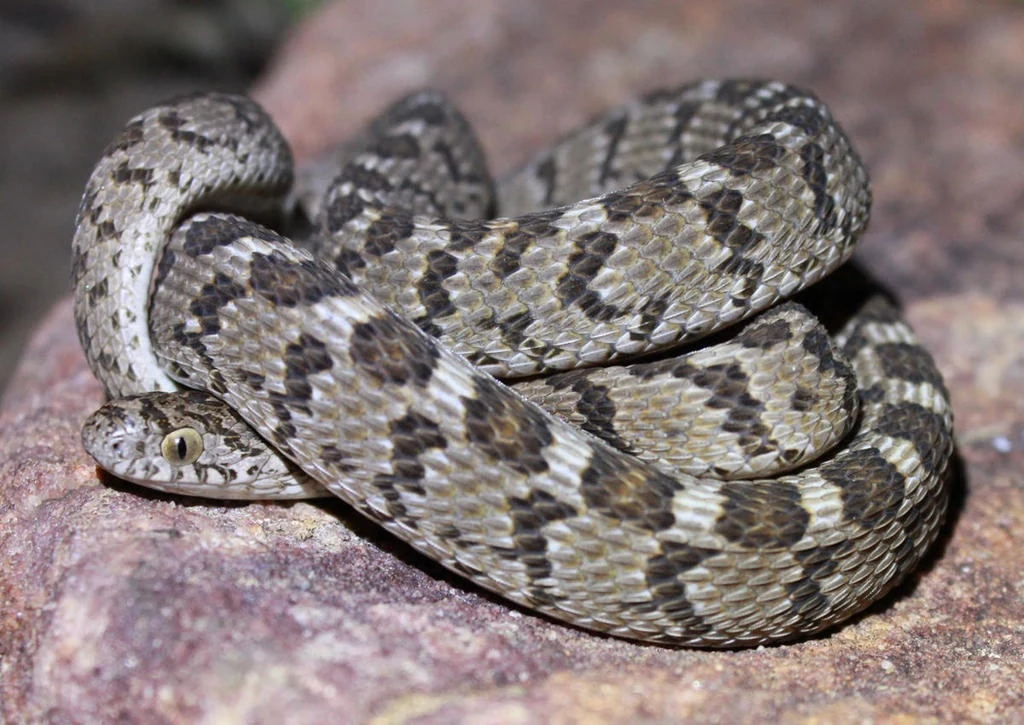
Dasypeltis sahelensis, Morocco (public location obscured); photographed 2024-04-20.

009 · Colubridae

Sahel Egg Eater

Dasypeltis sahelensis

TRAPE & MANÉ, 2006

Venom unknownNot yet assessed

Listed in the reviewed taxonomic treatment. The current taxonomic treatment explicitly lists this country. This is country-scale checklist evidence, not a claim of continuous occupancy or a complete regional inventory.

Read the species account →

Teddy Gilbert · CC BY 4.0 · https://creativecommons.org/licenses/by/4.0/

Dasypeltis scabra, photographed 2014-12-15. Identification follows the linked research-grade observation.

010 · Colubridae

Common Egg Eater, Rhombic Egg Eater

Dasypeltis scabra

(LINNAEUS, 1758)

Venom unknownNot yet assessed

The current taxonomic treatment explicitly lists this country. This is country-scale checklist evidence, not a claim of continuous occupancy or a complete regional inventory.

Read the species account →

Ryan van Huyssteen · CC BY 4.0 · https://creativecommons.org/licenses/by/4.0/

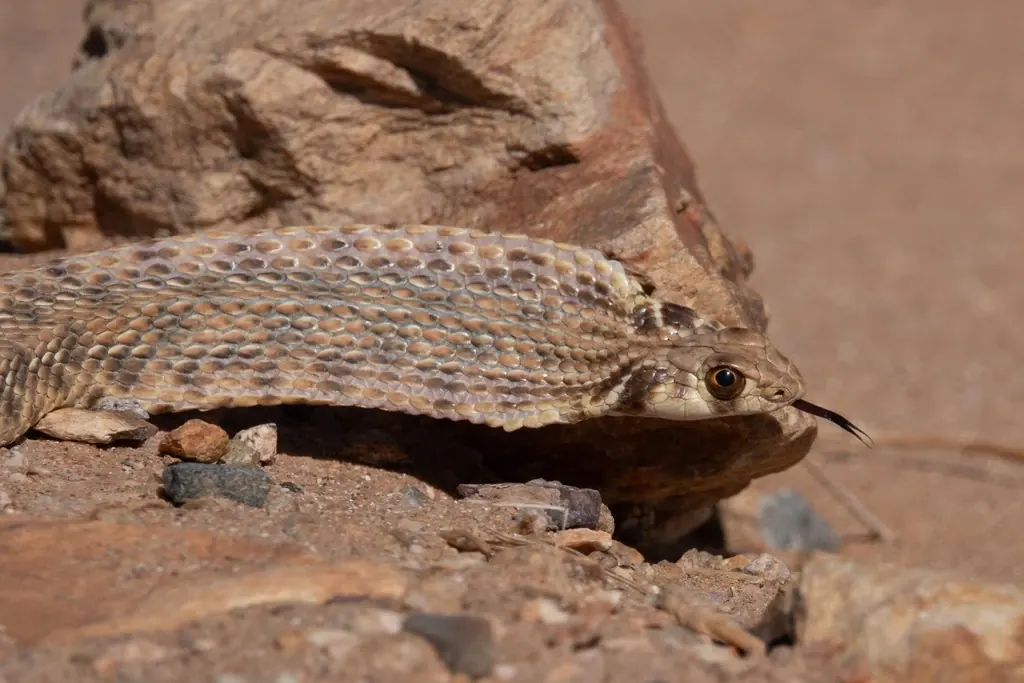
Echis leucogaster, Niamey, Niger; photographed 2016-10-31.

011 · Viperidae

Roman's Saw-scaled Viper

Echis leucogaster

ROMAN, 1972

VenomousClinical severity not established

Listed in the reviewed taxonomic treatment. The current taxonomic treatment explicitly lists this country. This is country-scale checklist evidence, not a claim of continuous occupancy or a complete regional inventory. Padial (2006), p.170: explicit localities; Hodh El Gharbi records are from the author’s 2002 fieldwork. Uncertain northern records and…

Read the species account →

B. P. White · CC BY-SA 4.0 · https://creativecommons.org/licenses/by-sa/4.0/

Echis ocellatus; Atwima Kwanwoma, Ghana; photographed 2013-12-03.

012 · Viperidae

African Saw-scaled Viper, West African carpet viper

Echis ocellatus

STEMMLER, 1970

VenomousClinical severity not established

The current taxonomic treatment explicitly lists this country. This is country-scale checklist evidence, not a claim of continuous occupancy or a complete regional inventory.

Read the species account →

no rights reserved · CC0 · https://creativecommons.org/publicdomain/zero/1.0/

Elapsoidea semiannulata; Yankari, Nigéria; photographed 2008-07-15.

013 · Elapidae

Angolan Garter Snake

Elapsoidea semiannulata

BOCAGE, 1882

VenomousClinical severity not established

The current taxonomic treatment explicitly lists this country. This is country-scale checklist evidence, not a claim of continuous occupancy or a complete regional inventory.

Read the species account →

Fábio Olmos · CC BY 4.0 · https://creativecommons.org/licenses/by/4.0/

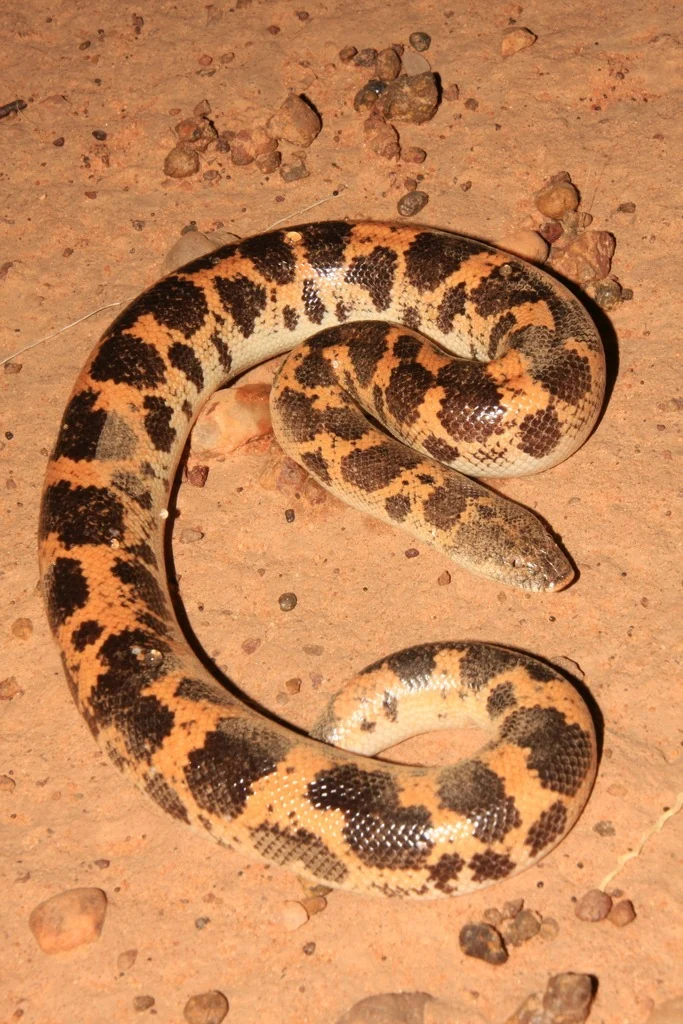
Eryx muelleri; Poudriere, Niamey, Niger; photographed 2016-11-24.

015 · Boidae

Müller’s sand boa

Eryx muelleri

(BOULENGER, 1892)

Non-venomous

The current taxonomic treatment explicitly lists this country. This is country-scale checklist evidence, not a claim of continuous occupancy or a complete regional inventory.

Read the species account →

B. P. White · CC BY-SA 4.0 · https://creativecommons.org/licenses/by-sa/4.0/

Hemorrhois algirus. Identification follows the linked source community.

016 · Colubridae

Algerian Whip Snake

Hemorrhois algirus

(JAN, 1863)

Venom unknownNot yet assessed

Explicit country record in the current species treatment. The current taxonomic treatment explicitly lists this country. This is country-scale checklist evidence, not a claim of continuous occupancy or a complete regional inventory.

Read the species account →

Mourad Harzallah · CC BY 4.0 · https://creativecommons.org/licenses/by/4.0/

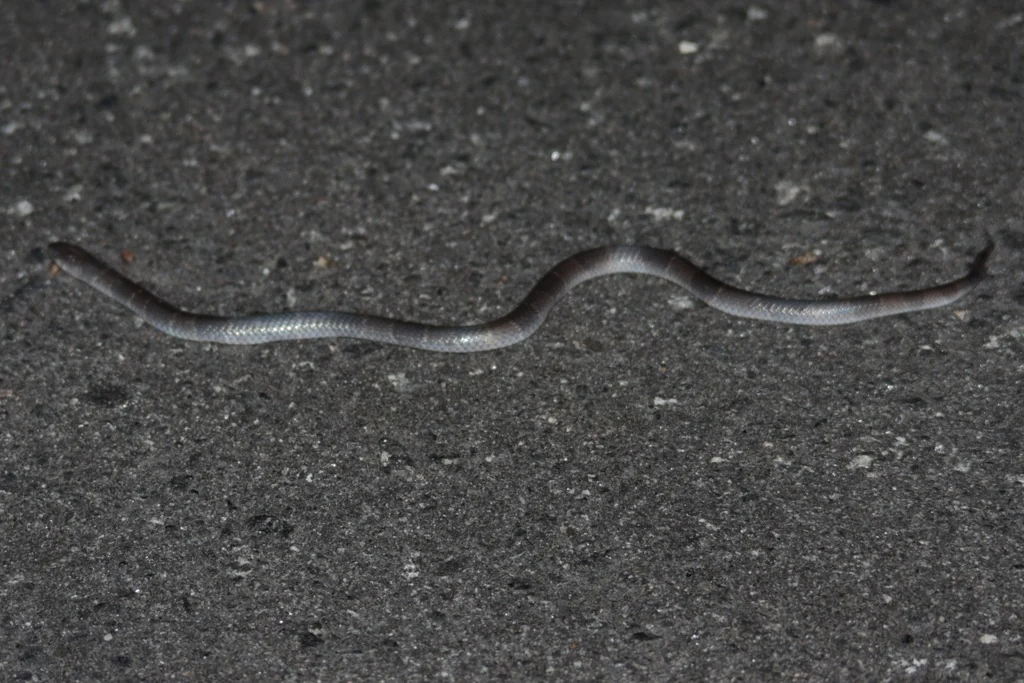
Indotyphlops braminus — photographed on Ko Pha-ngan, Thailand.

017 · Typhlopidae

Flowerpot Snake

Indotyphlops braminus

(DAUDIN, 1803)

Non-venomous

Cosmopolitan transported species: countries denotes supported occurrence, not a claim of native status. IntroducedCountries captures explicit source introductions; native/introduced status of the remaining localities is unresolved. Broad New Guinea and Micronesia are not converted to countries. The current taxonomic treatment explicitly lists this…

Read the species account →

Cook-Price, Makchai & Suwanwaree (2026); photographs credited collectively to the author, James Covert and Vikas Kumar · CC BY 4.0 · https://creativecommons.org/licenses/by/4.0/

Lytorhynchus diadema, Guelmim Province, Morocco; photographed 2023-06-08.

018 · Colubridae

Crowned Leafnose Snake, Diademed Sand Snake, Awl-headed Snake

Lytorhynchus diadema

(DUMÉRIL, BIBRON & DUMÉRIL, 1854)

Venom unknownNot yet assessed

The current taxonomic treatment explicitly lists this country. This is country-scale checklist evidence, not a claim of continuous occupancy or a complete regional inventory.

Read the species account →

Justin Philbois · CC0 1.0 · https://creativecommons.org/publicdomain/zero/1.0/

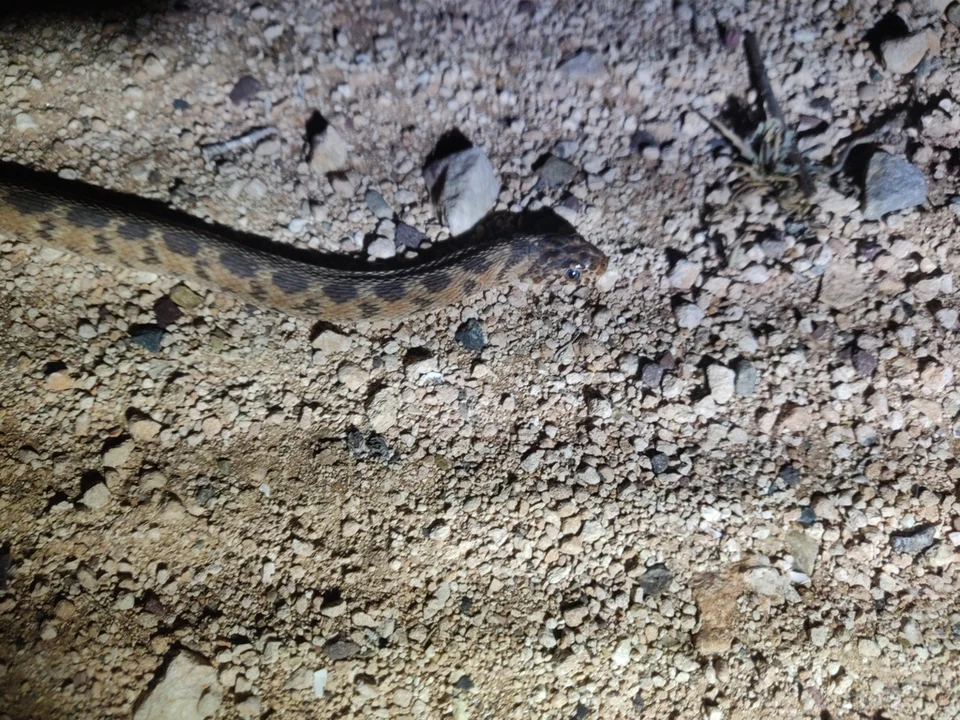
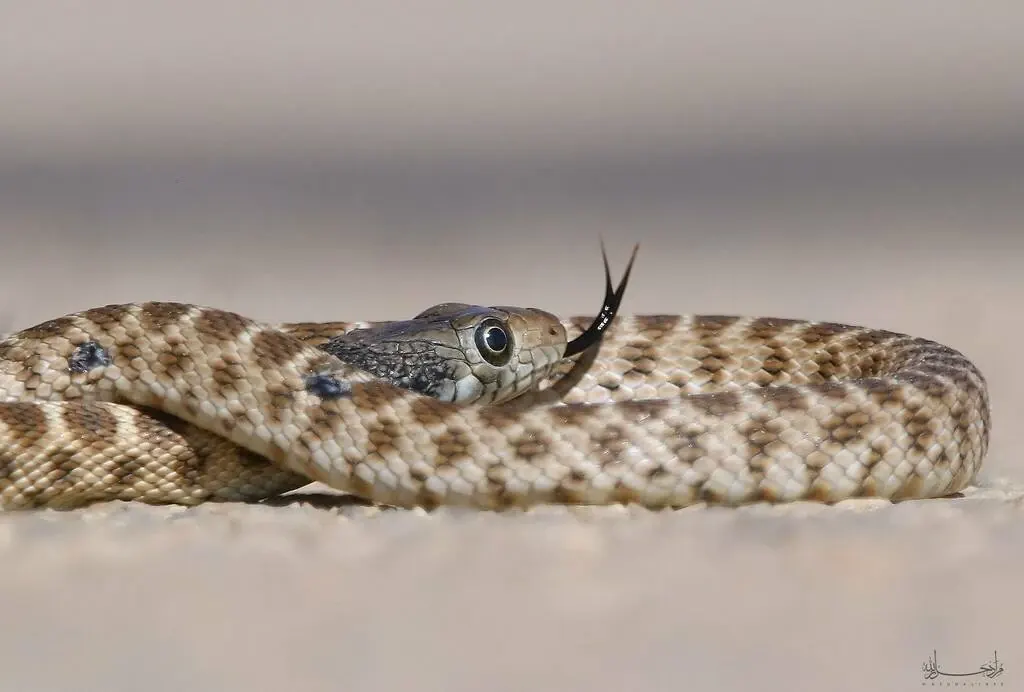
Malpolon moilensis. Identification follows the linked source community.

019 · Psammophiidae

Moila Snake

Malpolon moilensis

(REUSS, 1834)

Venom unknownNot yet assessed

Explicit country record in the current species treatment. The current taxonomic treatment explicitly lists this country. This is country-scale checklist evidence, not a claim of continuous occupancy or a complete regional inventory.

Read the species account →

Demian Hiß · CC BY 4.0 · https://creativecommons.org/licenses/by/4.0/

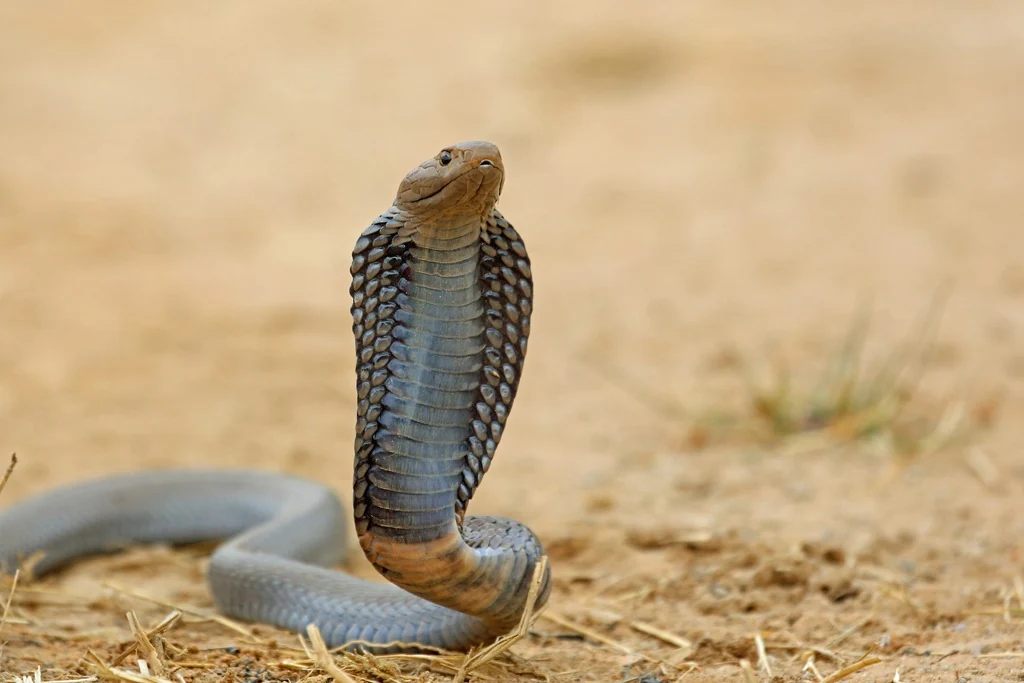
West African spitting cobra ( Naja Katiensis )

022 · Elapidae

Mali Cobra, Katian Spitting Cobra

Naja katiensis

ANGEL, 1922

VenomousClinical severity not established

The current taxonomic treatment explicitly lists this country. This is country-scale checklist evidence, not a claim of continuous occupancy or a complete regional inventory.

Read the species account →

Peter Engelen · CC BY-SA 3.0 · https://creativecommons.org/licenses/by-sa/3.0

Naja nigricollis; Katanga Province, Democratic Republic of Congo; photographed 2014-08-20.

023 · Elapidae

Black-necked Spitting Cobra

Naja nigricollis

REINHARDT, 1843

VenomousClinical severity not established

The current taxonomic treatment explicitly lists this country. This is country-scale checklist evidence, not a claim of continuous occupancy or a complete regional inventory.

Read the species account →

Nigel Voaden · CC BY 4.0 · https://creativecommons.org/licenses/by/4.0/

The research library

Sources & the checklist.

This edition lists 32 species with supported country records from checked taxonomic treatments and cited field studies. This total includes 1 record marked as introduced; it is not a native-species total. It is not a claim of a complete national inventory. Each account retains its source and check date; individual evidence entries retain their own review dates.

Range and taxonomy review

Country links use a single accepted species identity. Revised names and disputed records are kept visible here; uncertain records do not enter the listed collection or regional totals.

Indotyphlops braminus

Introduced occurrence

Cosmopolitan transported species: countries denotes supported occurrence, not a claim of native status. IntroducedCountries captures explicit source introductions; native/introduced status of the remaining localities is unresolved. Broad New Guinea and Micronesia are not converted to countries. The current taxonomic treatment explicitly lists this country. This is country-scale checklist evidence, not a claim of continuous occupancy or a complete regional inventory. This population is treated as introduced rather than native. Nouakchott: observation 26026180, 2019-05-29. Original records have agreeing research-grade identifications, wild status and open coordinates. Points and sampled reported uncertainty envelopes fall within the mapped region. These are dated community-reviewed observations, not museum vouchers or evidence of presence throughout the region. Exact coordinates are not republished.

Source 1 ↗

Source 2 ↗

Source 3 ↗

Afrotyphlops punctatus

Uncertain — excluded from the listed total

The checked treatment contains a conflicting, superseded or insufficiently corroborated country report. It is retained for review and excluded from positive counts; this is not an assertion of absence.

Source 1 ↗
Myriopholis boueti

Uncertain — excluded from the listed total

The checked treatment contains a conflicting, superseded or insufficiently corroborated country report. It is retained for review and excluded from positive counts; this is not an assertion of absence.

Source 1 ↗
Naja haje

Uncertain — excluded from the listed total

The checked treatment contains a conflicting, superseded or insufficiently corroborated country report. It is retained for review and excluded from positive counts; this is not an assertion of absence.

Source 1 ↗
Rhamphiophis oxyrhynchus

Uncertain — excluded from the listed total

The checked treatment contains a conflicting, superseded or insufficiently corroborated country report. It is retained for review and excluded from positive counts; this is not an assertion of absence.

Source 1 ↗
How the map and counts work

Search results were checked against distribution text and taxonomic qualifications. A geographic name alone does not establish a political country: New Guinea, the Solomon archipelago and Micronesia span more than one country or territory. Introduced and unresolved records require separate interpretation.

Place counts require explicit named localities, including valid type localities. Counts can overlap where sources name multiple places. Regional maps group historical boundary snapshots for navigation, while island outlines use Natural Earth; neither is a species range or an observation map. Small islands can be below the outline dataset’s resolution, so geographic reference markers and the directory remain available.

Princeton University Library; geoBoundaries gbOpen ADM1, 2015 snapshot; Creative Commons Attribution-ShareAlike 3.0 Unported. Map provenance →

Exclusions & qualifications (4)

Afrotyphlops punctatus

The checked treatment contains a conflicting, superseded or insufficiently corroborated country report. It is retained for review and excluded from positive counts; this is not an assertion of absence.

Read source 1 ↗

Myriopholis boueti

The checked treatment contains a conflicting, superseded or insufficiently corroborated country report. It is retained for review and excluded from positive counts; this is not an assertion of absence.

Read source 1 ↗

Naja haje

The checked treatment contains a conflicting, superseded or insufficiently corroborated country report. It is retained for review and excluded from positive counts; this is not an assertion of absence.

Read source 1 ↗

Rhamphiophis oxyrhynchus

The checked treatment contains a conflicting, superseded or insufficiently corroborated country report. It is retained for review and excluded from positive counts; this is not an assertion of absence.

Read source 1 ↗
  1. Map boundaries, snapshot and group membership ↗
  2. Convention on Biological Diversity · Mauritania national profile ↗
  3. The Reptile Database

    Individual treatments and locality evidence are linked from each species account.

  4. Meiri (2024): SquamBase 1.0

    Species-level literature measurements and ecological traits. Exact-name matches only; imputed or ambiguous fields are omitted. These summaries are not local observations.

  5. Natural Earth: public-domain geographic data

Continue through the Africa atlas →