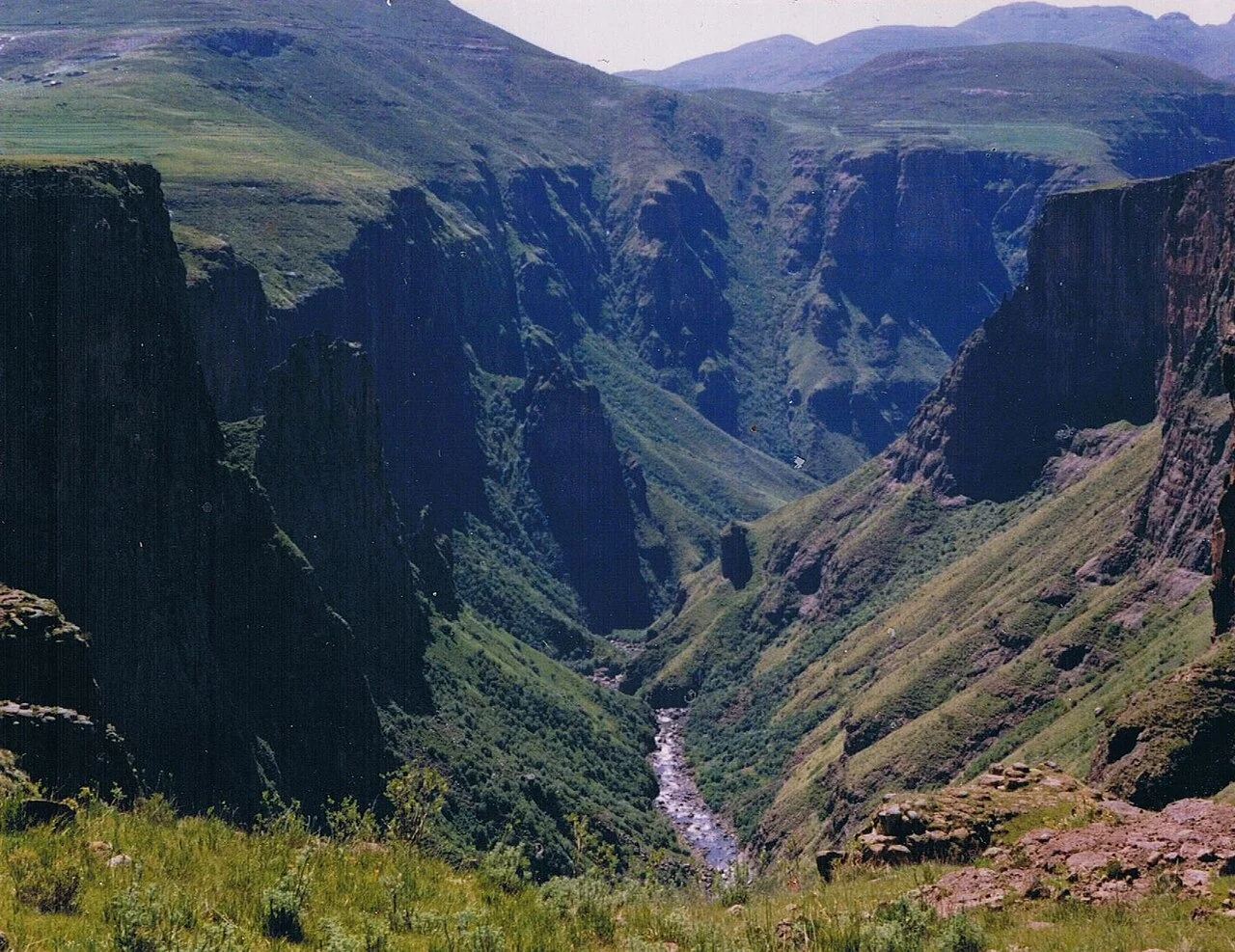
The Maletsunyane valley below the falls near Semonkong, Lesotho.

Lesotho · The country atlas

Lesotho

Lesotho’s Maloti landscapes combine high grassland, rocky slopes and steep river valleys.

24species with extracted evidence
11families
10region guides

The Maletsunyane valley below the falls near Semonkong, Lesotho.

Photograph: Vanellus Foto · Image source · CC BY-SA 3.0. Cropped to fill the hero; darkened for text legibility.

Geography & biotopes

Discover Lesotho.

Lesotho’s Maloti landscapes combine high grassland, rocky slopes and steep river valleys.

Historical administrative outlines are grouped for navigation. They are not ecological boundaries, species ranges or a statement of present administrative arrangements.

Map boundaries, snapshot and group membership →

UNESCO · Maloti–Drakensberg Park →

Geography is part of the record

Find your way through Lesotho.

Select a named region to open its evidence page. The complete directory below keeps every guide accessible, including places where locality evidence has not yet been extracted.

8 of 24 listed species have at least one indexed region record. 16 remain country-only. Even a nonzero count is not a complete regional inventory.

Habitats & living landscapes

Explore the living
landscapes.

Explore 2 guides to the environments, places and conservation pressures that shape this country. Each guide connects to the regional map and shared species accounts.

Landscape photographs & credits

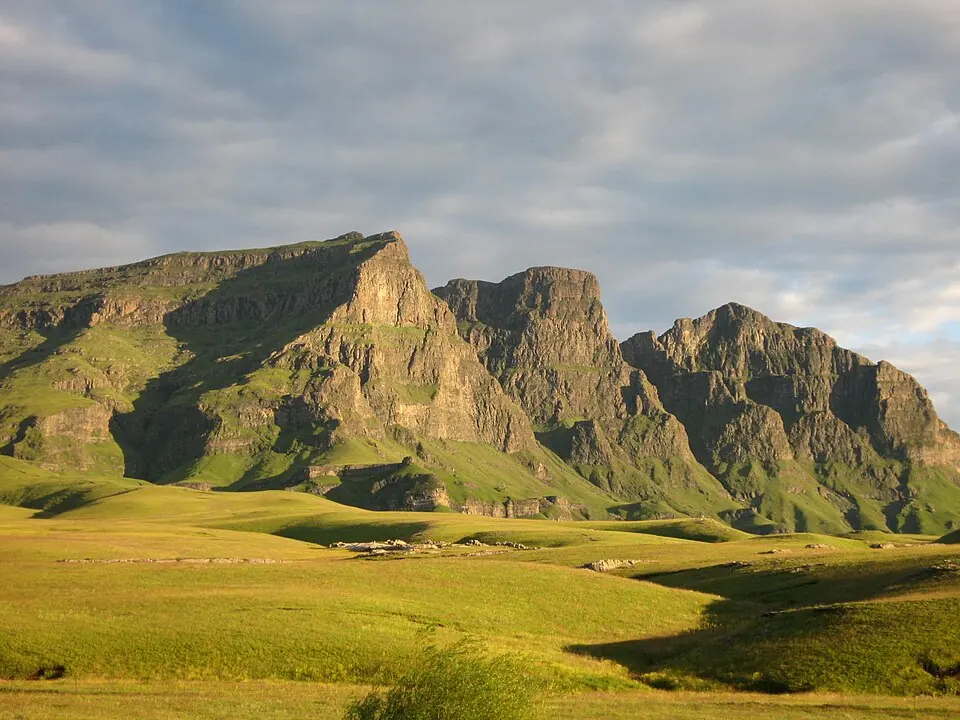
Highland grassland and rocky ridges seen from Sehlabathebe House, Lesotho. This upland scene is distinct from lowland tropical savanna. — Graham Maclachlan. Original photograph · CC BY-SA 3.0. Cropped for the cards; photographs do not establish snake occurrence.

The visible river channel in the steep-sided Maletsunyane valley below the falls near Semonkong, Lesotho. — Vanellus Foto. Original photograph · CC BY-SA 3.0. Cropped for the cards; photographs do not establish snake occurrence.

The species catalogue

Meet the snakes of Lesotho.

Search scientific names, historical names, common names and families. Every card opens one shared account across its documented countries.

24 species · showing 24

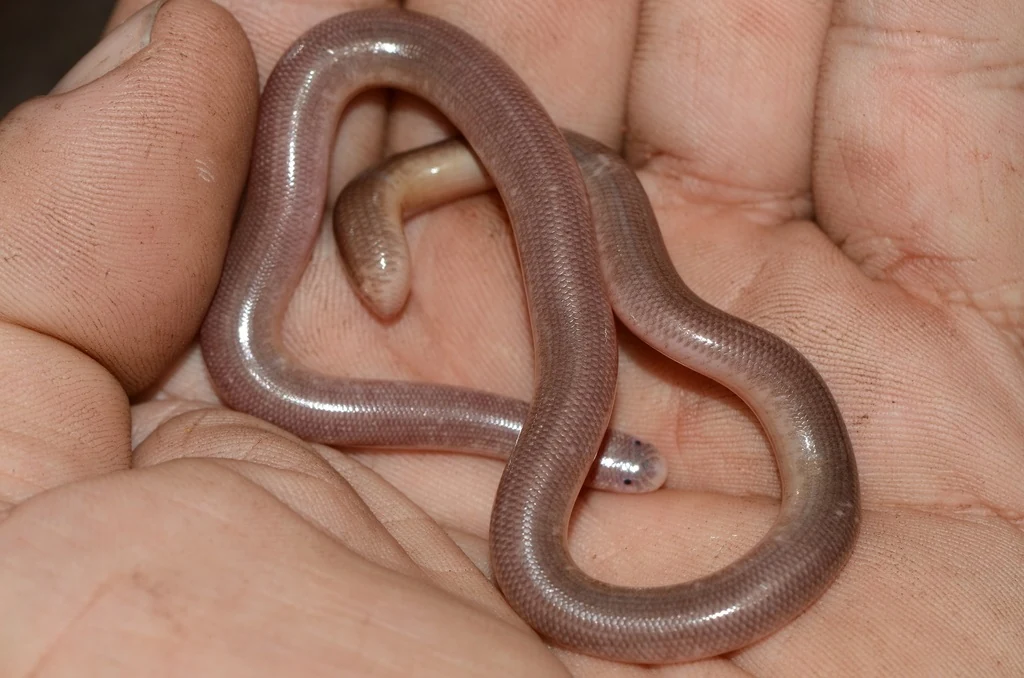
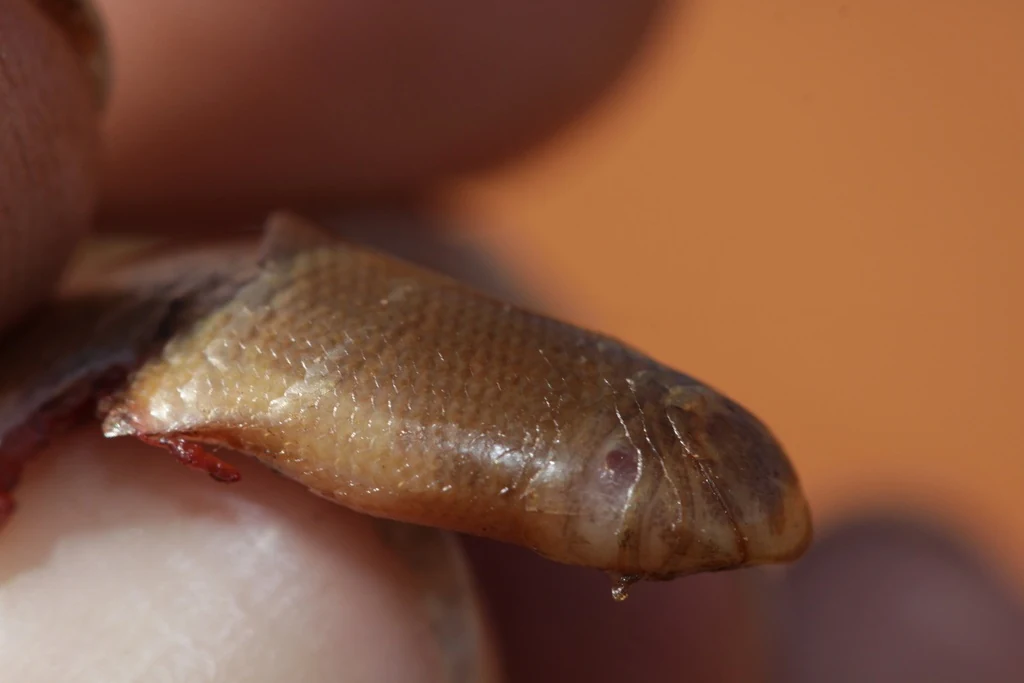
Afrotyphlops bibronii, photographed 2019-04-10. Identification follows the linked research-grade observation. The animal is temporarily held in the source photograph.

001 · Typhlopidae

Bibron's Blind Snake

Afrotyphlops bibronii

(SMITH, 1846)

Non-venomous

The current taxonomic treatment explicitly lists this country. This is country-scale checklist evidence, not a claim of continuous occupancy or a complete regional inventory.

Read the species account →

Marius Burger (iNaturalist contributor) · CC0 1.0 · https://creativecommons.org/publicdomain/zero/1.0/

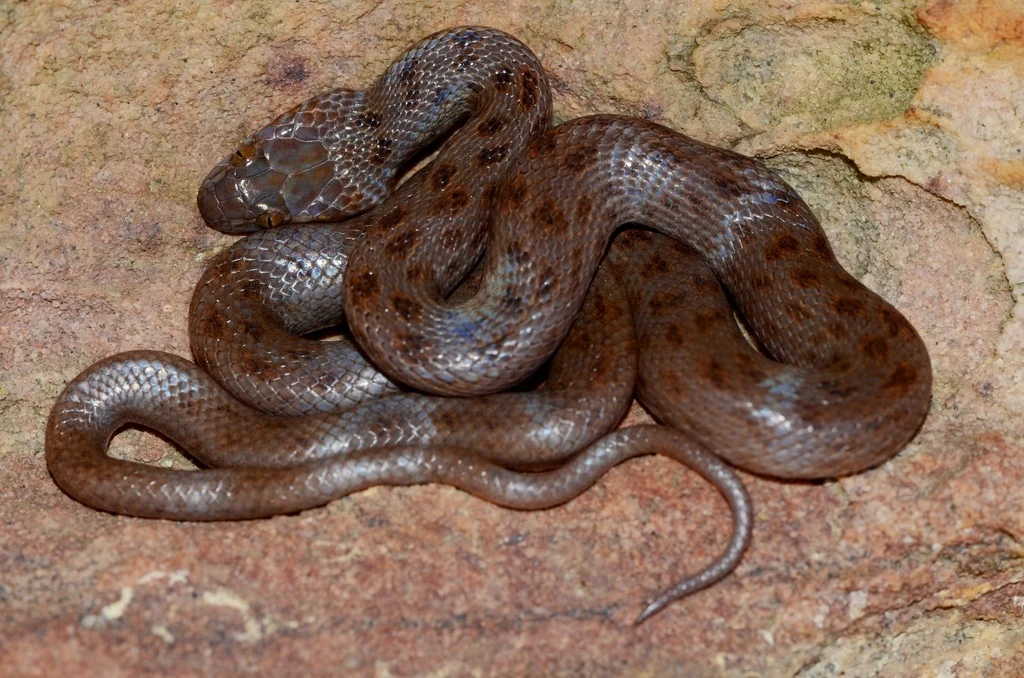
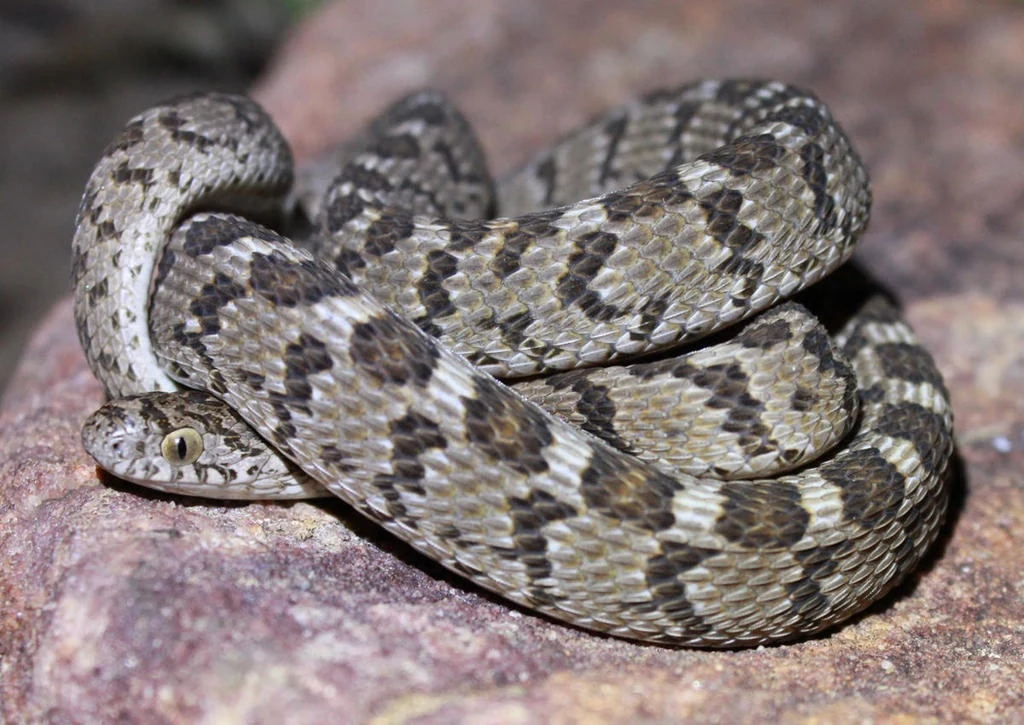
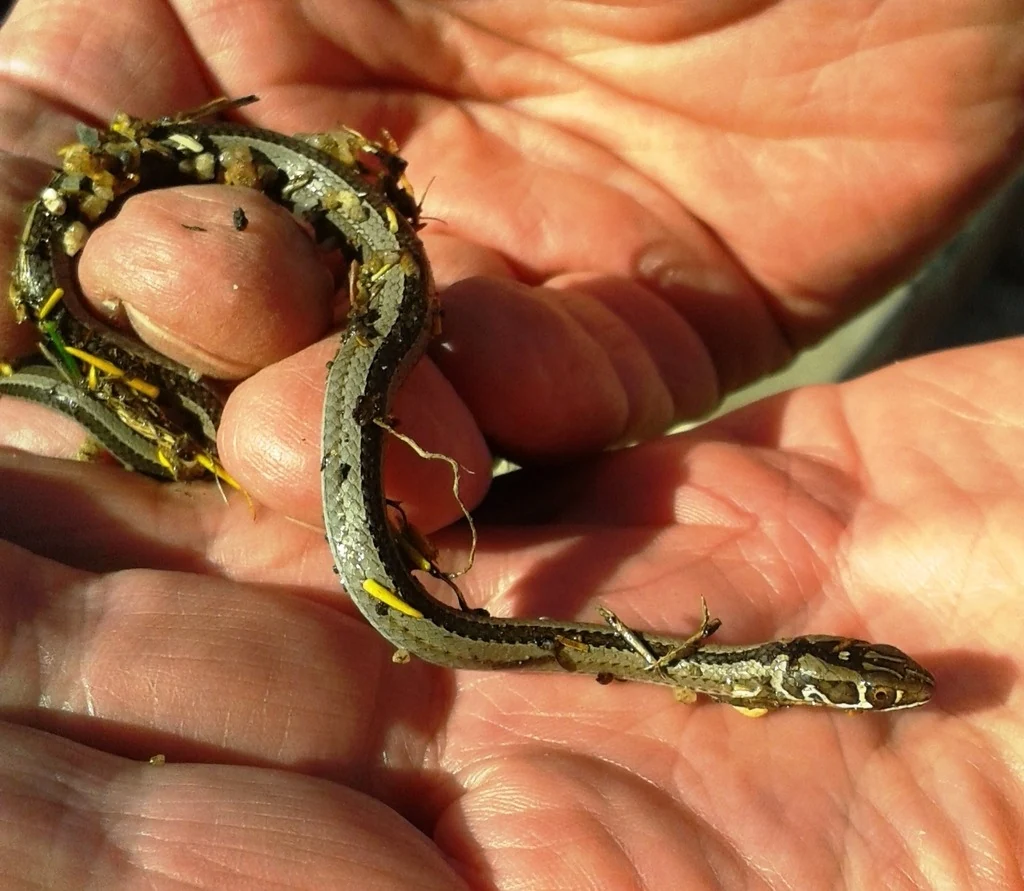
Alopecion guttatum, photographed 2013-10-06. Identification follows the linked research-grade observation.

002 · Lamprophiidae

Spotted Rock Snake, Spotted House Snake

Alopecion guttatum

(SMITH, 1843)

Non-venomous

The current taxonomic treatment explicitly lists this country. This is country-scale checklist evidence, not a claim of continuous occupancy or a complete regional inventory.

Read the species account →

Marius Burger (iNaturalist contributor) · CC0 1.0 · https://creativecommons.org/publicdomain/zero/1.0/

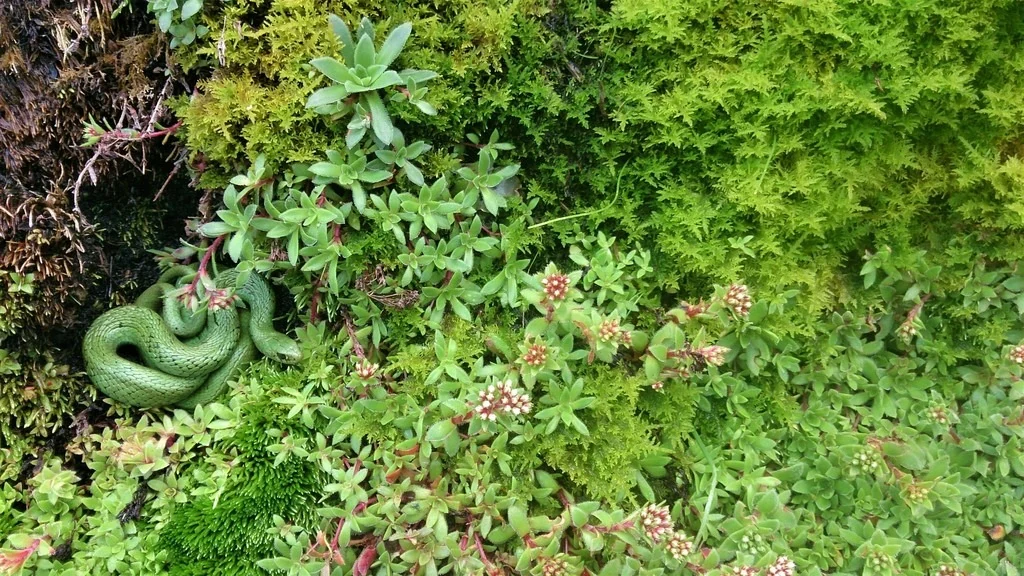
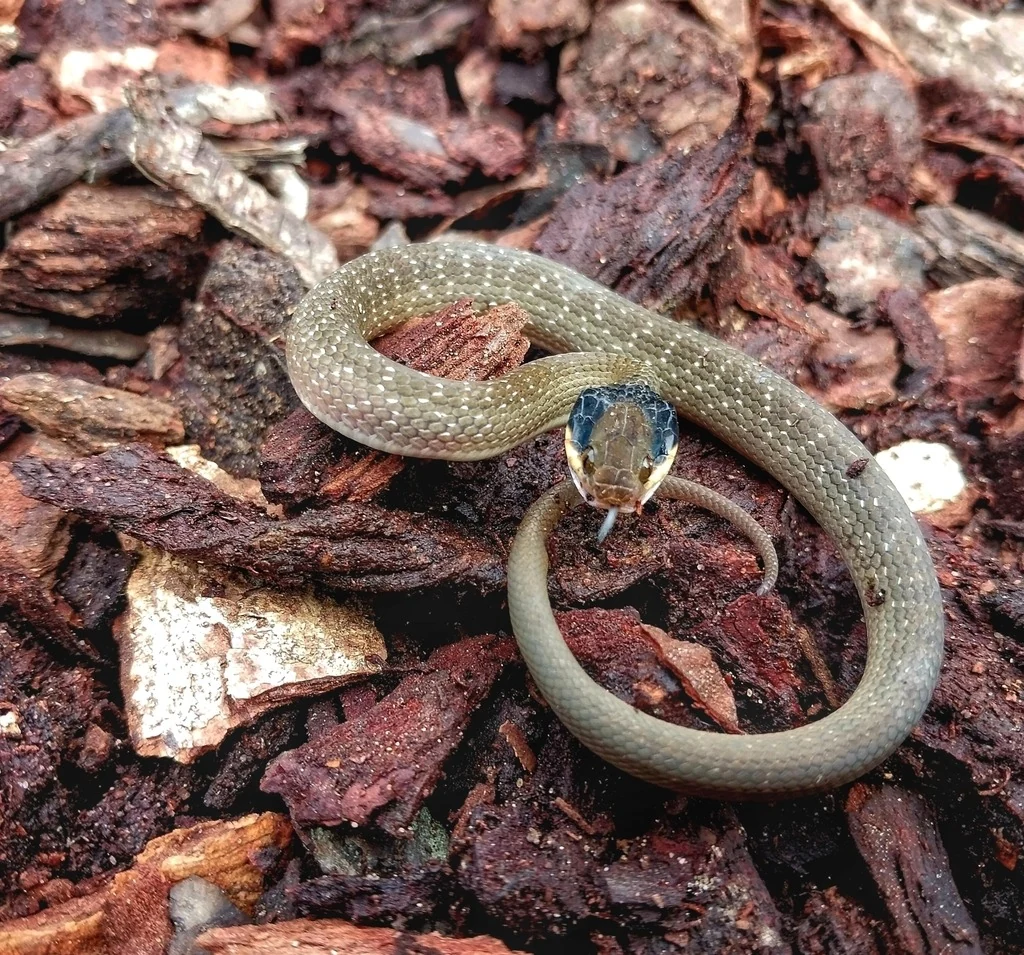
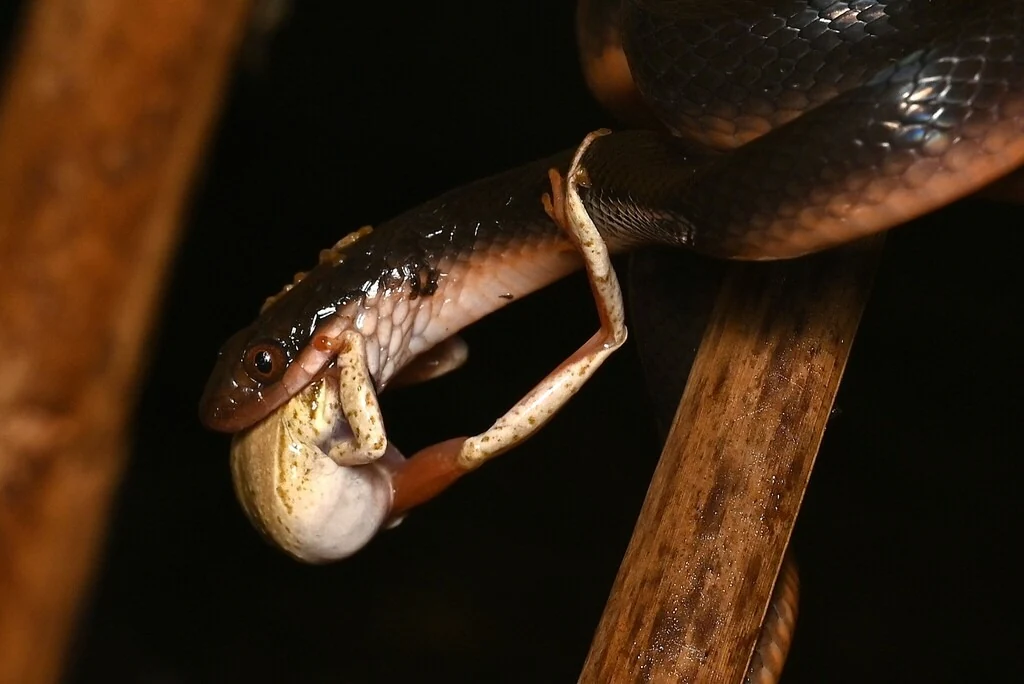
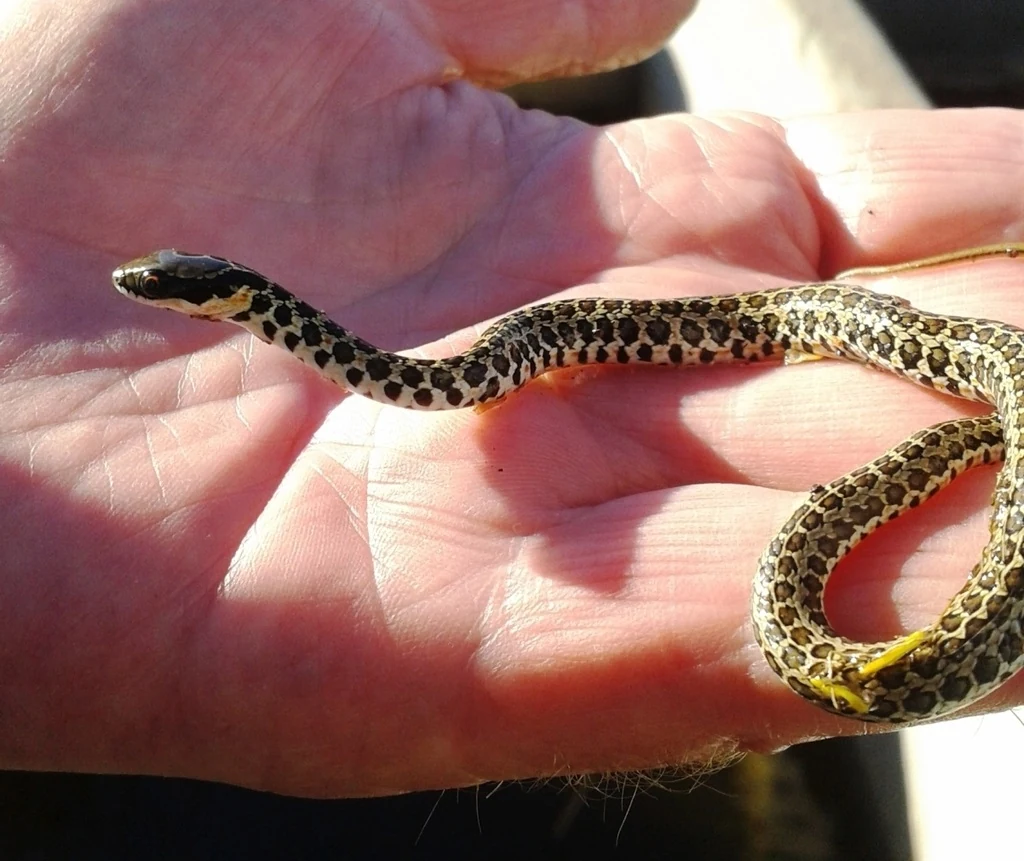
Amplorhinus multimaculatus; Ingula Pumped Storage Scheme; photographed 2015-01-27.

003 · Pseudoxyrhophiidae

Many-spotted Snake, Cape Reed Snake

Amplorhinus multimaculatus

SMITH, 1847

Venom unknownNot yet assessed

The current taxonomic treatment explicitly lists this country. This is country-scale checklist evidence, not a claim of continuous occupancy or a complete regional inventory. Mokhotlong District: observation GBIF 6188596646 (2026). The original iNaturalist entry was rechecked for research-grade identification, wild status and unrestricted coordinates;…

Read the species account →

no rights reserved · CC0 · https://creativecommons.org/publicdomain/zero/1.0/

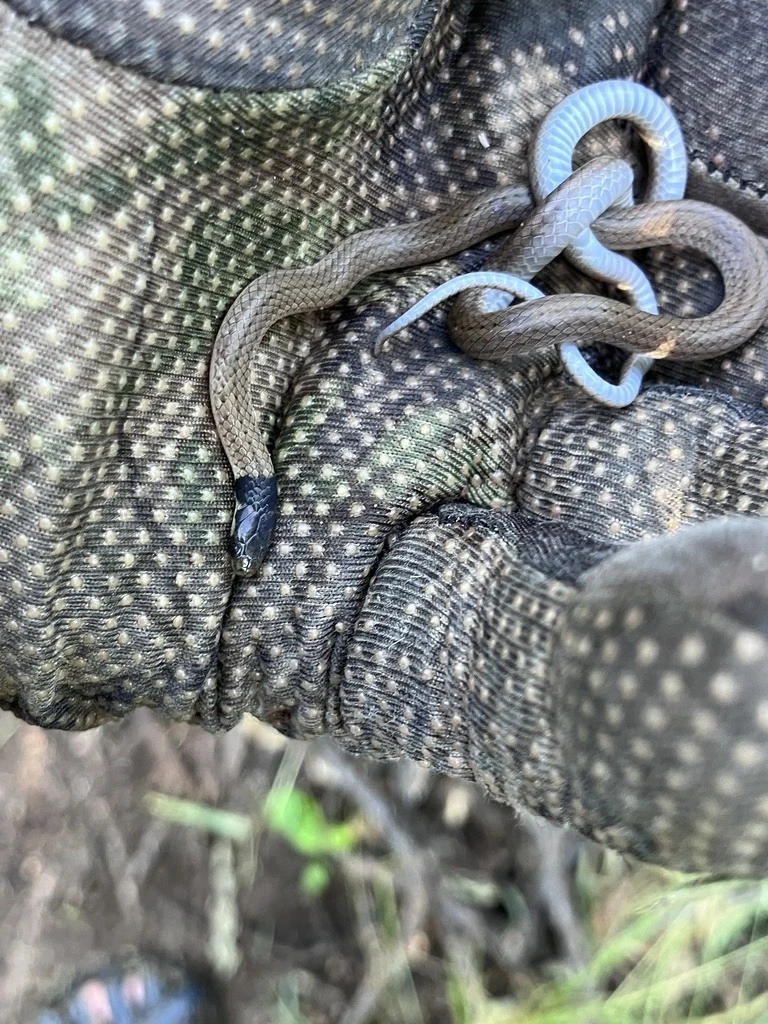
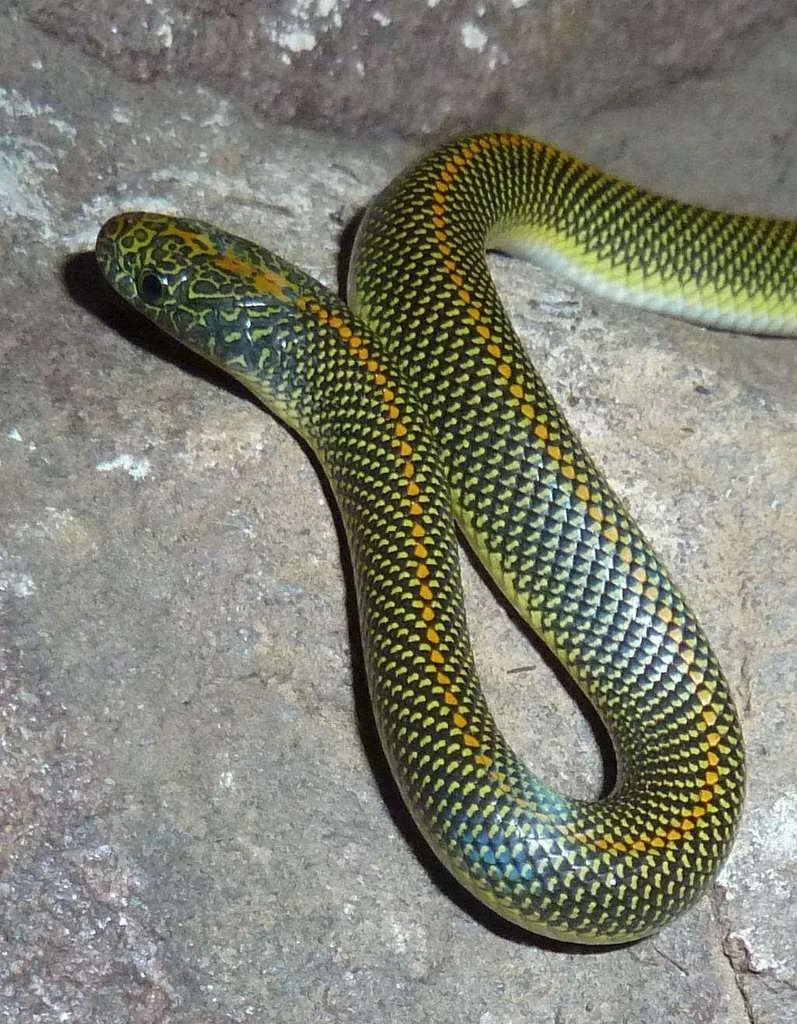
Aparallactus capensis; Kruger National Park, Musina, LP, ZA; photographed 2024-01-22.

004 · Atractaspididae

Black-headed Centipede Eater, Cape Centipede Eater

Aparallactus capensis

SMITH, 1849

VenomousClinical severity not established

The current taxonomic treatment explicitly lists this country. This is country-scale checklist evidence, not a claim of continuous occupancy or a complete regional inventory.

Read the species account →

no rights reserved · CC0 · https://creativecommons.org/publicdomain/zero/1.0/

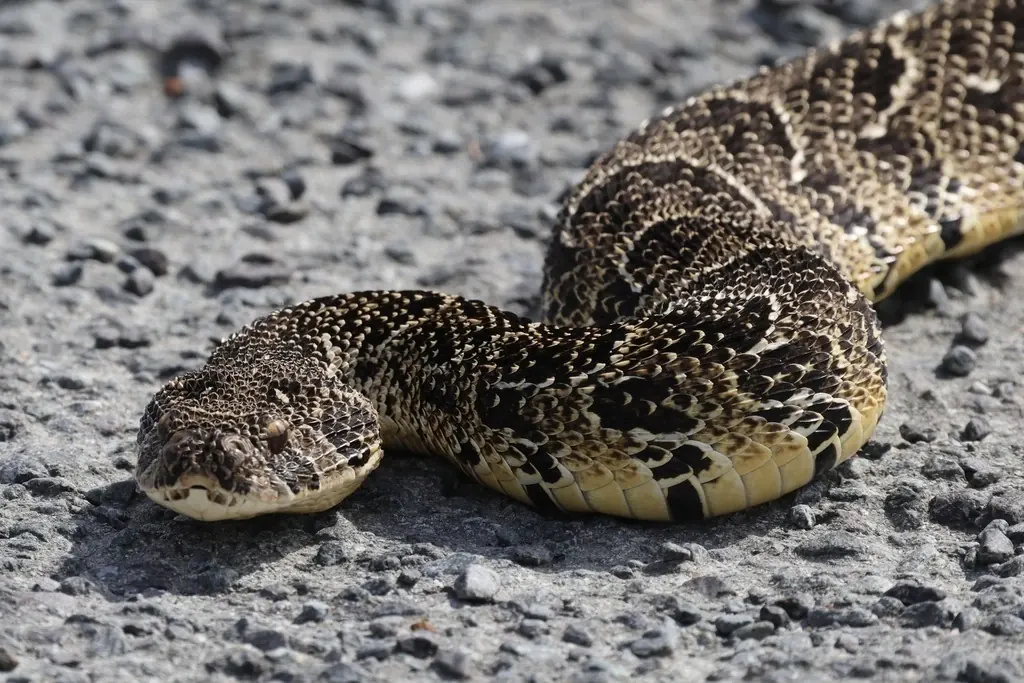
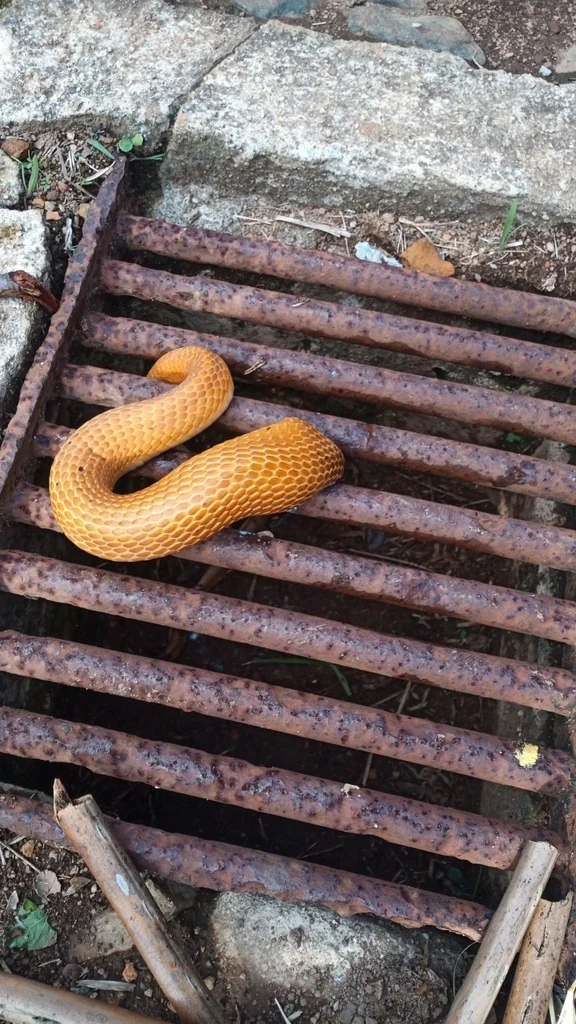
Bitis arietans. Identification follows the linked source community.

005 · Viperidae

Puff Adder

Bitis arietans

(MERREM, 1820)

VenomousClinical severity not established

Explicit country record in the current species treatment. The current taxonomic treatment explicitly lists this country. This is country-scale checklist evidence, not a claim of continuous occupancy or a complete regional inventory. Thaba-Tseka District: observation GBIF 5104737232 (2025). The original iNaturalist entry was rechecked for research-grade…

Read the species account →

Cricket Raspet · CC BY 4.0 · https://creativecommons.org/licenses/by/4.0/

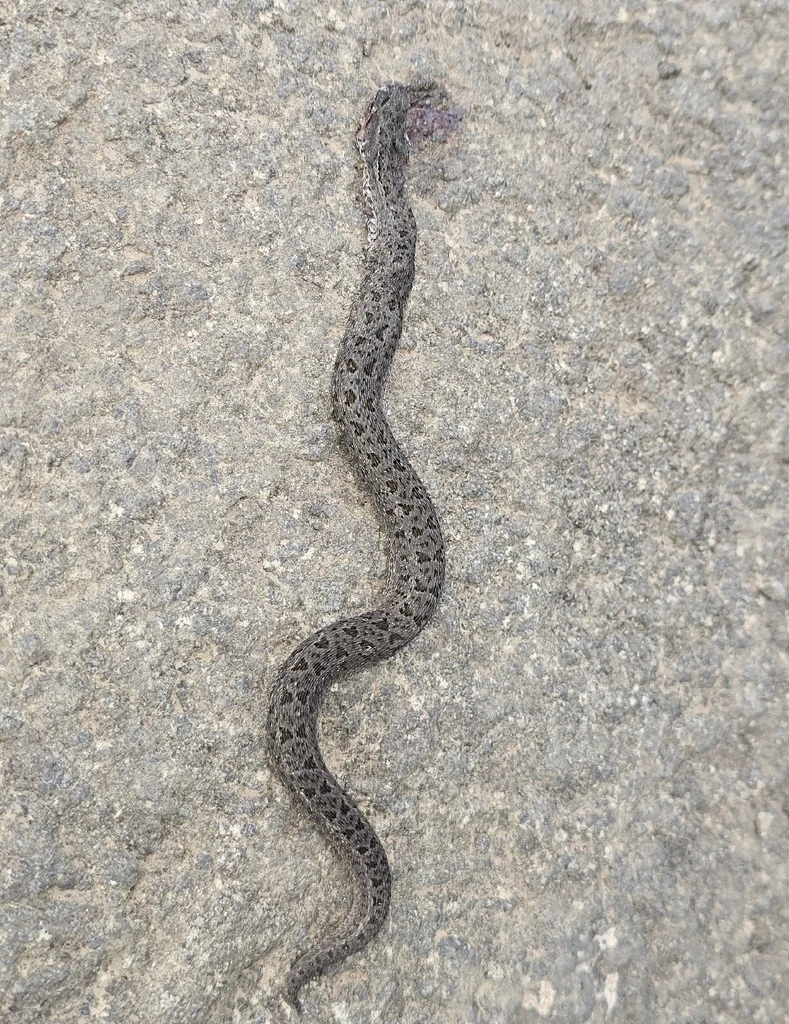
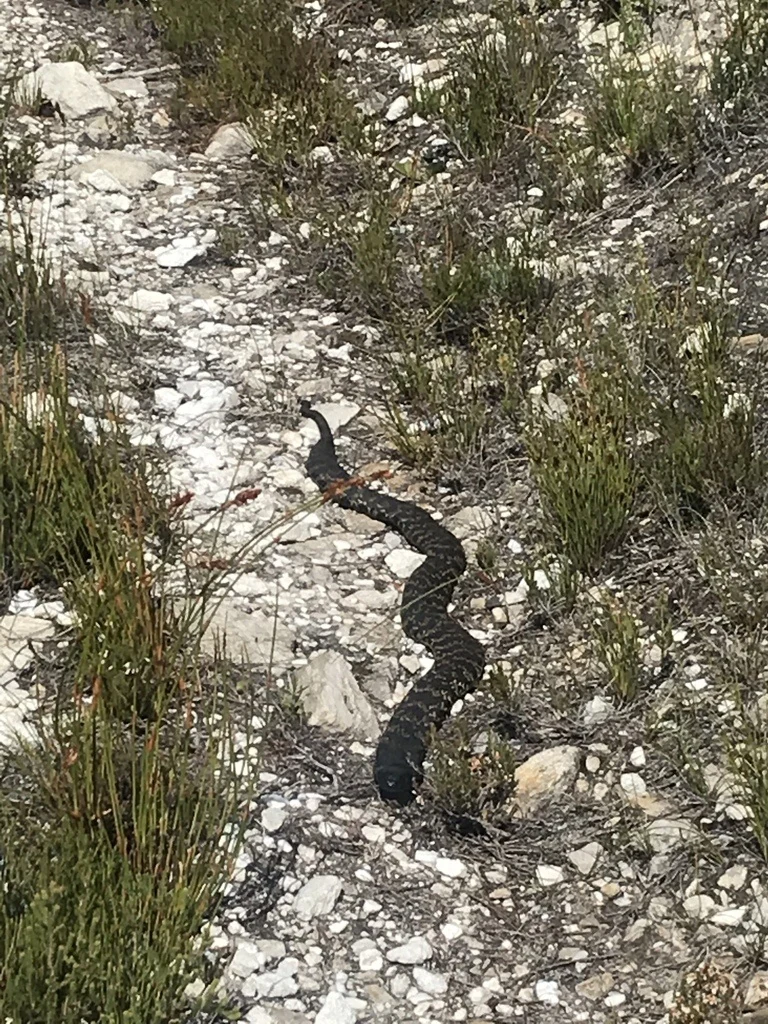
Bitis atropos, photographed 2025-11-23. Identification follows the linked research-grade observation.

006 · Viperidae

Mountain Adder

Bitis atropos

(LINNAEUS, 1758)

VenomousClinical severity not established

The current taxonomic treatment explicitly lists this country. This is country-scale checklist evidence, not a claim of continuous occupancy or a complete regional inventory. Leribe District: observation GBIF 4029062454 (2023). The original iNaturalist entry was rechecked for research-grade identification, wild status and unrestricted coordinates; its…

Read the species account →

Dylan Leonard · CC BY-SA 4.0 · https://creativecommons.org/licenses/by-sa/4.0/

Boaedon capensis; Mopani, South Africa; photographed 2018-11-23.

007 · Lamprophiidae

Common House Snake, Brown House Snake

Boaedon capensis

DUMÉRIL, BIBRON & DUMÉRIL, 1854

Non-venomous

The current taxonomic treatment explicitly lists this country. This is country-scale checklist evidence, not a claim of continuous occupancy or a complete regional inventory.

Read the species account →

Wynand Uys · CC BY 4.0 · https://creativecommons.org/licenses/by/4.0/

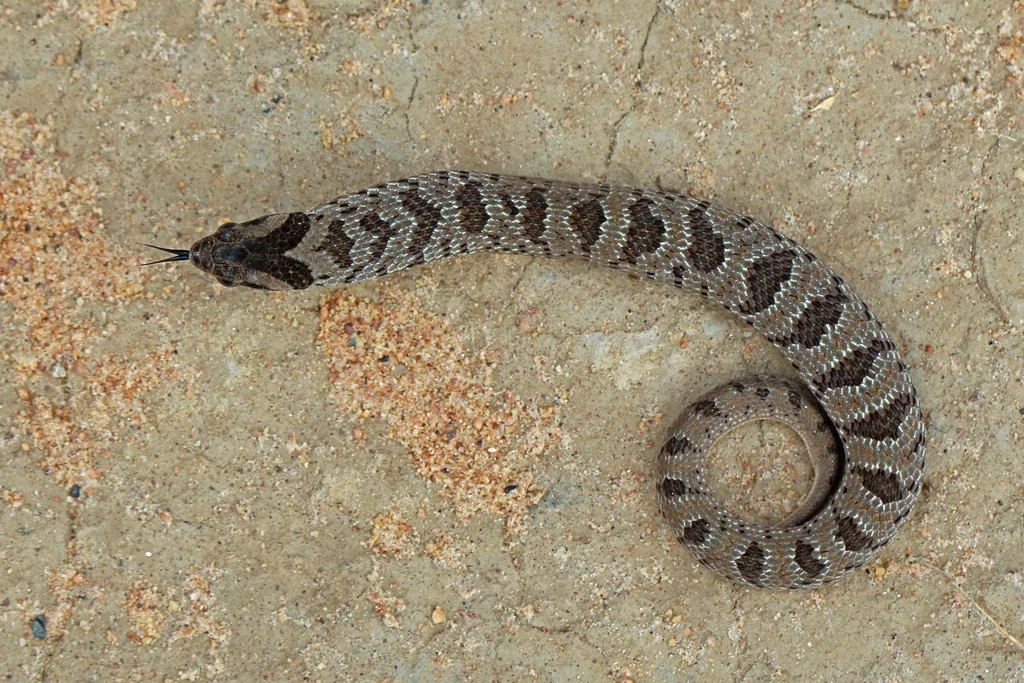
Causus rhombeatus, photographed 2014-11-21. Identification follows the linked research-grade observation.

008 · Viperidae

Common or Rhombic Night Adder

Causus rhombeatus

(LICHTENSTEIN, 1823)

VenomousClinical severity not established

The current taxonomic treatment explicitly lists this country. This is country-scale checklist evidence, not a claim of continuous occupancy or a complete regional inventory.

Read the species account →

Nigel Voaden · CC BY 4.0 · https://creativecommons.org/licenses/by/4.0/

Crotaphopeltis hotamboeia; Campher's Drift, George, 6529, South Africa; photographed 2023-10-13.

009 · Colubridae

White-lipped Herald Snake, Red-lipped Snake

Crotaphopeltis hotamboeia

(LAURENTI, 1768)

Venom unknownNot yet assessed

The current taxonomic treatment explicitly lists this country. This is country-scale checklist evidence, not a claim of continuous occupancy or a complete regional inventory. Mafeteng District: observation GBIF 2864855823 (2016). The original iNaturalist entry was rechecked for research-grade identification, wild status and unrestricted coordinates; its…

Read the species account →

no rights reserved · CC0 · https://creativecommons.org/publicdomain/zero/1.0/

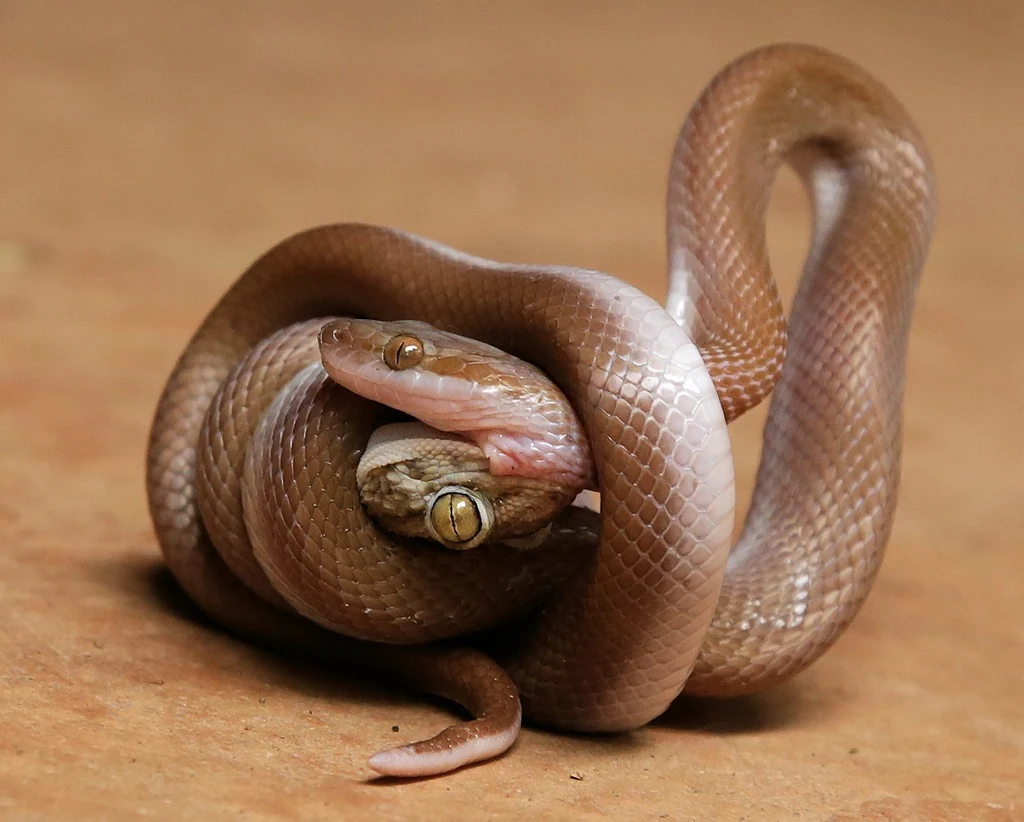
Dasypeltis scabra, photographed 2014-12-15. Identification follows the linked research-grade observation.

010 · Colubridae

Common Egg Eater, Rhombic Egg Eater

Dasypeltis scabra

(LINNAEUS, 1758)

Venom unknownNot yet assessed

The current taxonomic treatment explicitly lists this country. This is country-scale checklist evidence, not a claim of continuous occupancy or a complete regional inventory. Berea District: observation 250792929, 2024-11-07. Original records have agreeing research-grade identifications, wild status and open coordinates. Points and sampled reported…

Read the species account →

Ryan van Huyssteen · CC BY 4.0 · https://creativecommons.org/licenses/by/4.0/

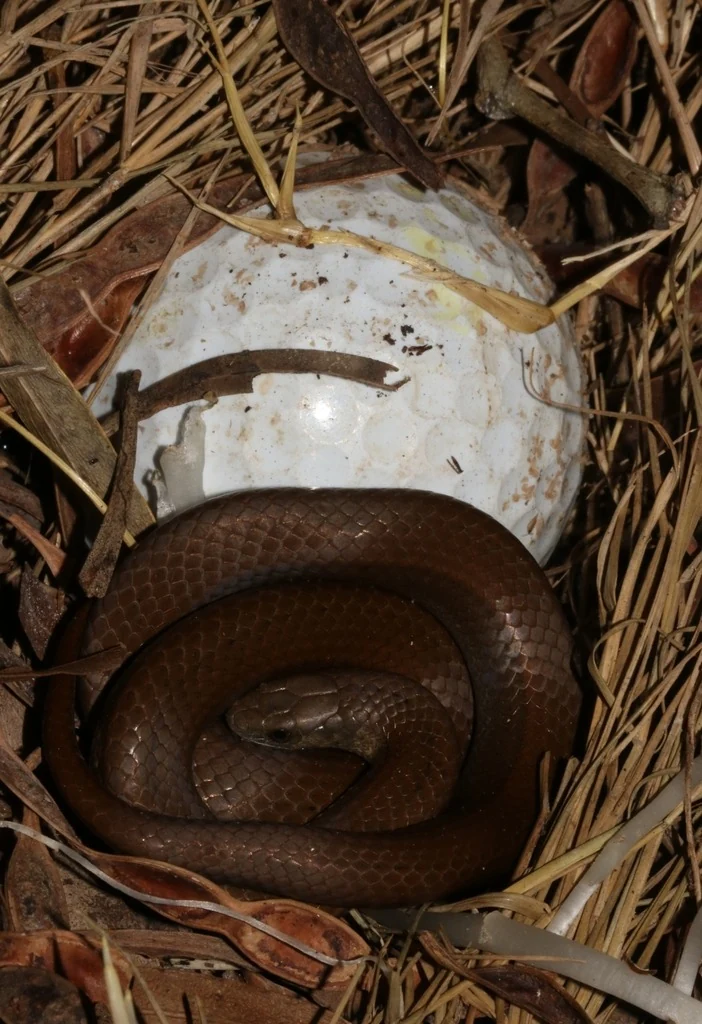
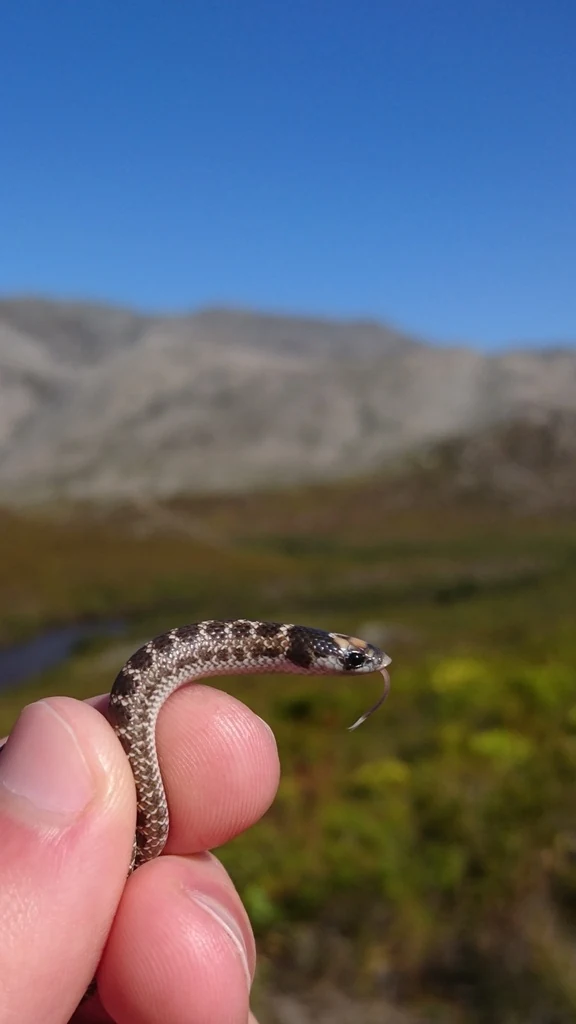
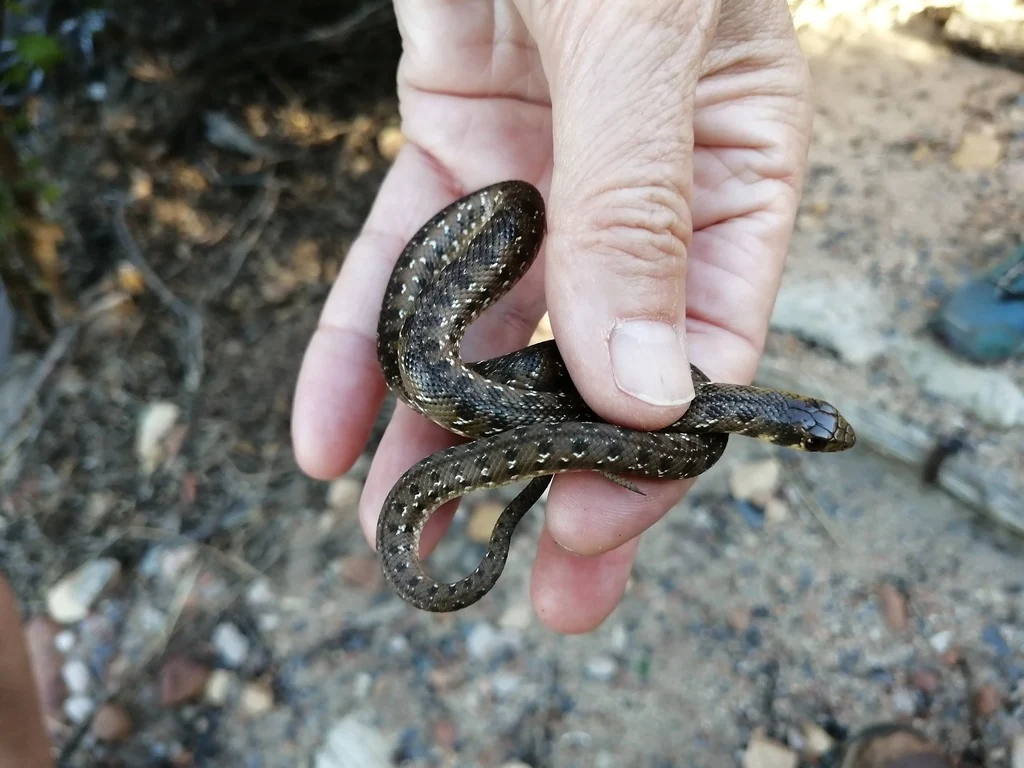
Duberria lutrix; Stonehurst Mountain Estate Entrance, Westlake, Cape Town, 7945, South Africa; photographed 2023-08-15.

011 · Pseudoxyrhophiidae

Common Slug Eater

Duberria lutrix

(LINNAEUS, 1758)

Venom unknownNot yet assessed

The current taxonomic treatment explicitly lists this country. This is country-scale checklist evidence, not a claim of continuous occupancy or a complete regional inventory.

Read the species account →

Ryan van Huyssteen · CC BY 4.0 · https://creativecommons.org/licenses/by/4.0/

Hemachatus haemachatus, photographed 2019-09-05. Identification follows the linked research-grade observation.

012 · Elapidae

Rinkhals, Ring-necked Spitting Cobra, Ringhals

Hemachatus haemachatus

(BONNATERRE, 1790)

VenomousClinical severity not established

The current taxonomic treatment explicitly lists this country. This is country-scale checklist evidence, not a claim of continuous occupancy or a complete regional inventory. Maseru District: observation 69403496, 2014-01-30. Original records have agreeing research-grade identifications, wild status and open coordinates. Points and sampled reported…

Read the species account →

Sam McCarren · CC BY 4.0 · https://creativecommons.org/licenses/by/4.0/

Lamprophis aurora, photographed 2012-02-28. Identification follows the linked research-grade observation.

013 · Lamprophiidae

Aurora House Snake

Lamprophis aurora

(LINNAEUS, 1758)

Non-venomous

The current taxonomic treatment explicitly lists this country. This is country-scale checklist evidence, not a claim of continuous occupancy or a complete regional inventory.

Read the species account →

Andrew Hankey · CC BY-SA 4.0 · https://creativecommons.org/licenses/by-sa/4.0/

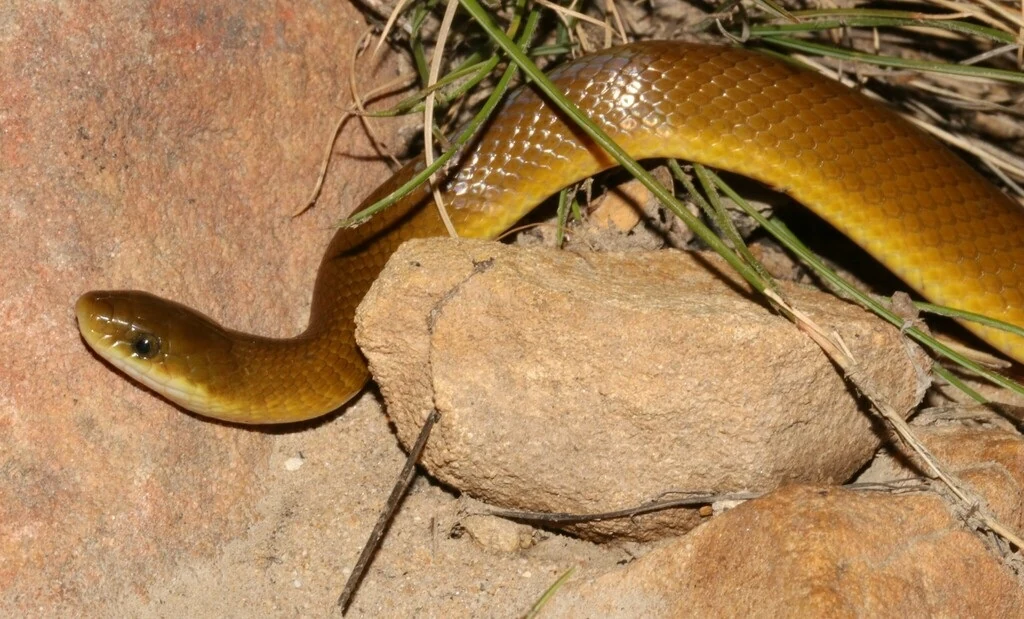
Lamprophis fuscus, photographed 2024-11-23. Identification follows the linked research-grade observation.

014 · Lamprophiidae

Yellow-bellied House Snake

Lamprophis fuscus

BOULENGER, 1893

Non-venomous

The current taxonomic treatment explicitly lists this country. This is country-scale checklist evidence, not a claim of continuous occupancy or a complete regional inventory.

Read the species account →

Ryan van Huyssteen · CC BY 4.0 · https://creativecommons.org/licenses/by/4.0/

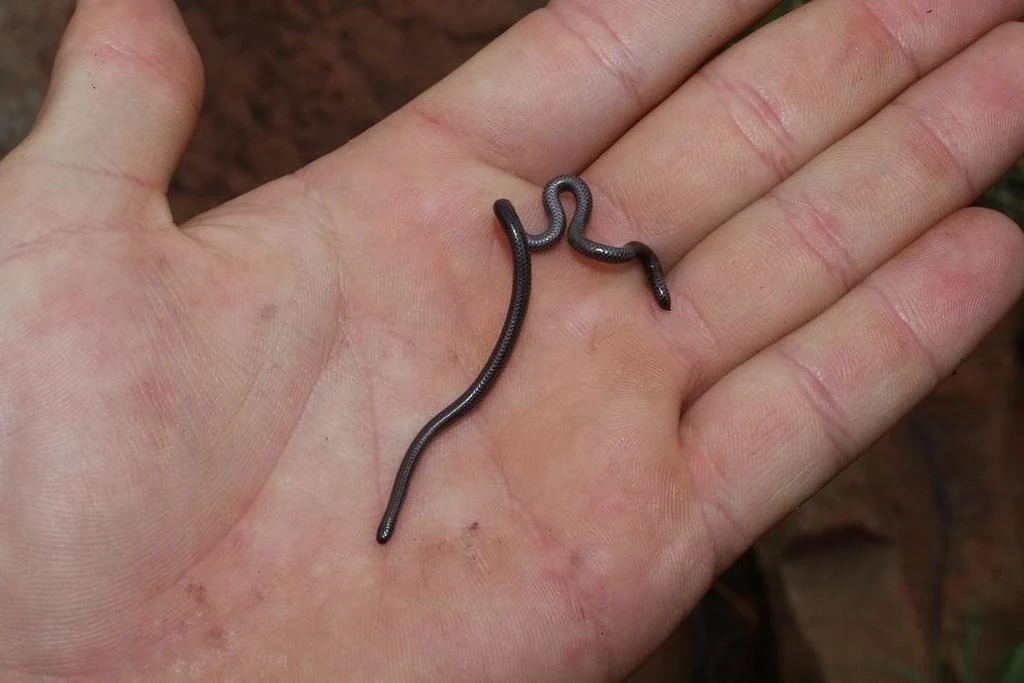
Leptotyphlops conjunctus, photographed 2014-12-06. Identification follows the linked research-grade observation. The animal is temporarily held in the source photograph.

015 · Leptotyphlopidae

Cape Thread Snake

Leptotyphlops conjunctus

(JAN, 1861)

Non-venomous

The current taxonomic treatment explicitly lists this country. This is country-scale checklist evidence, not a claim of continuous occupancy or a complete regional inventory.

Read the species account →

Brian du Preez · CC BY-SA 4.0 · https://creativecommons.org/licenses/by-sa/4.0/

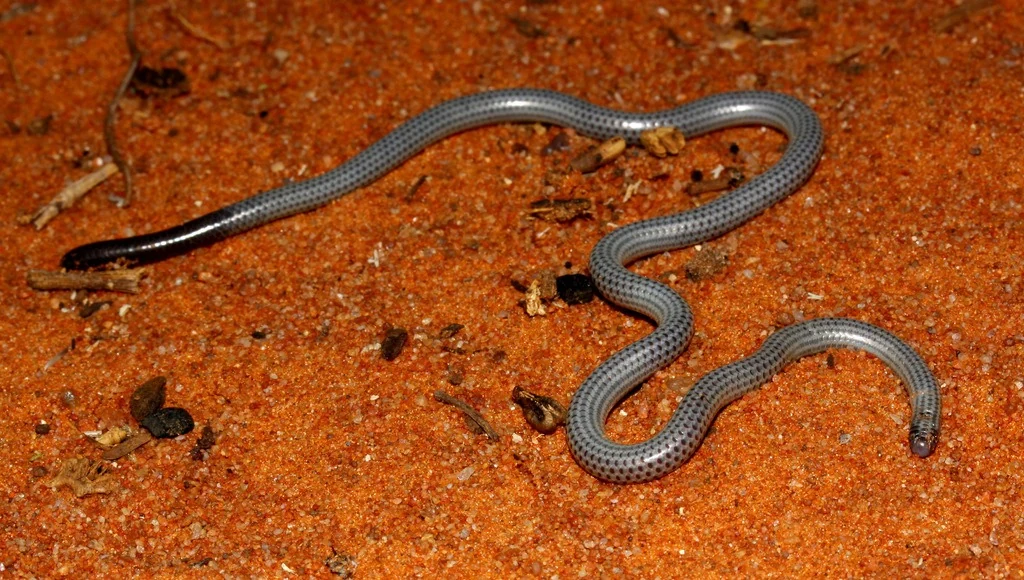
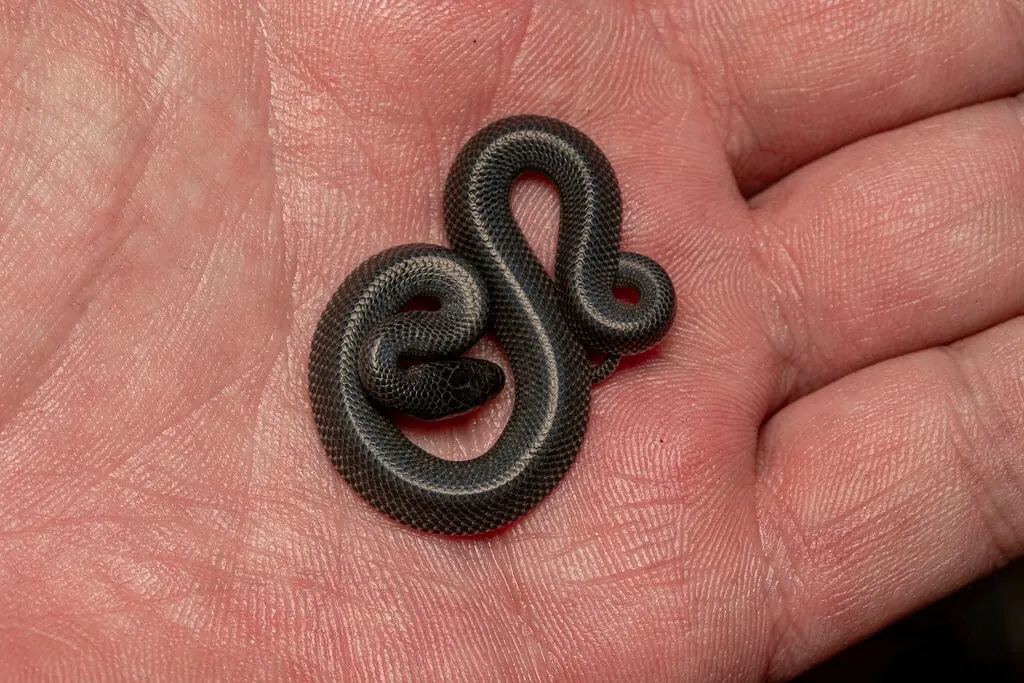
Leptotyphlops scutifrons; Tswalu2; photographed 2021-03-09.

016 · Leptotyphlopidae

Peter's Thread Snake

Leptotyphlops scutifrons

(PETERS, 1854)

Non-venomous

The current taxonomic treatment explicitly lists this country. This is country-scale checklist evidence, not a claim of continuous occupancy or a complete regional inventory.

Read the species account →

Ryan van Huyssteen · CC BY 4.0 · https://creativecommons.org/licenses/by/4.0/

Lycodonomorphus rufulus; 292G+5R Keurboomstrand, South Africa; photographed 2025-11-30.

017 · Lamprophiidae

Common Water Snake, Common Brown Water Snake, Olive-brown Water-Snake, South African Rufous Snake

Lycodonomorphus rufulus

(LICHTENSTEIN, 1823)

Non-venomous

The current taxonomic treatment explicitly lists this country. This is country-scale checklist evidence, not a claim of continuous occupancy or a complete regional inventory. MCZ catalogue R-157699: Butha-Buthe; collection date not supplied. Institution-published preserved-specimen record, rechecked through GBIF. Assignment uses the named locality and…

Read the species account →

no rights reserved · CC0 · https://creativecommons.org/publicdomain/zero/1.0/

Lycophidion capense. Identification follows the linked source community.

018 · Lamprophiidae

Cape Wolf Snake

Lycophidion capense

(SMITH, 1831)

Non-venomous

Explicit country record in the current species treatment. The current taxonomic treatment explicitly lists this country. This is country-scale checklist evidence, not a claim of continuous occupancy or a complete regional inventory.

Read the species account →

Rudolph Steenkamp · CC BY-SA 4.0 · https://creativecommons.org/licenses/by-sa/4.0/

Naja nivea; Wynberg NU (2), Cape Town, 7824, South Africa; photographed 2023-03-24.

019 · Elapidae

Cape Cobra

Naja nivea

(LINNAEUS, 1758)

VenomousClinical severity not established

The current taxonomic treatment explicitly lists this country. This is country-scale checklist evidence, not a claim of continuous occupancy or a complete regional inventory.

Read the species account →

Ryan van Huyssteen · CC BY 4.0 · https://creativecommons.org/licenses/by/4.0/

Prosymna sundevalli, photographed 2020-08-10. Identification follows the linked research-grade observation. The animal is temporarily held in the source photograph.

020 · Prosymnidae

lineata: Lineolate Shovel-snout

Prosymna sundevalli

(SMITH, 1849)

Venom unknownNot yet assessed

The current taxonomic treatment explicitly lists this country. This is country-scale checklist evidence, not a claim of continuous occupancy or a complete regional inventory.

Read the species account →

Nick Schaller · CC BY 4.0 · https://creativecommons.org/licenses/by/4.0/

Psammophis crucifer; Vergelegen Helderberg Rural, Sir Lowry's Pass, 7130, South Africa; photographed 2015-03-01.

021 · Psammophiidae

Cross-marked Grass Snake, Montane Grass Snake

Psammophis crucifer

(DAUDIN, 1803)

VenomousClinical severity not established

The current taxonomic treatment explicitly lists this country. This is country-scale checklist evidence, not a claim of continuous occupancy or a complete regional inventory.

Read the species account →

linkie · CC BY 4.0 · https://creativecommons.org/licenses/by/4.0/

Psammophylax rhombeatus, photographed 2015-03-01. Identification follows the linked research-grade observation. The animal is temporarily held in the source photograph.

022 · Psammophiidae

Spotted Grass Snake, Spotted Skaapsteker, Rhombic Skaapsteker

Psammophylax rhombeatus

(LINNAEUS, 1758)

Venom unknownNot yet assessed

The current taxonomic treatment explicitly lists this country. This is country-scale checklist evidence, not a claim of continuous occupancy or a complete regional inventory. MCZ catalogue R-154812: Butha-Buthe; collection date not supplied. Institution-published preserved-specimen record, rechecked through GBIF. Assignment uses the named locality and…

Read the species account →

linkie · CC BY 4.0 · https://creativecommons.org/licenses/by/4.0/

Pseudaspis cana; Lakeside, Cape Town, 7945, South Africa; photographed 2021-02-03.

023 · Pseudaspididae

Mole Snake

Pseudaspis cana

(LINNAEUS, 1758)

Venom unknownNot yet assessed

The current taxonomic treatment explicitly lists this country. This is country-scale checklist evidence, not a claim of continuous occupancy or a complete regional inventory.

Read the species account →

no rights reserved · CC0 · https://creativecommons.org/publicdomain/zero/1.0/

Rhinotyphlops lalandei, photographed 2011-11-26. Identification follows the linked research-grade observation. The animal is temporarily held in the source photograph.

024 · Typhlopidae

Delalande's Beaked Blind Snake

Rhinotyphlops lalandei

(SCHLEGEL, 1839)

Non-venomous

The current taxonomic treatment explicitly lists this country. This is country-scale checklist evidence, not a claim of continuous occupancy or a complete regional inventory.

Read the species account →

Marius Burger (iNaturalist contributor) · CC0 1.0 · https://creativecommons.org/publicdomain/zero/1.0/

The research library

Sources & the checklist.

This edition lists 24 species with supported country records from checked taxonomic treatments and cited field studies. It is not a claim of a complete national inventory. Each account retains its source and check date; individual evidence entries retain their own review dates.

Range and taxonomy review

Country links use a single accepted species identity. Revised names and disputed records are kept visible here; uncertain records do not enter the listed collection or regional totals.

Montaspis gilvomaculata

Uncertain — excluded from the listed total

The checked treatment contains a conflicting, superseded or insufficiently corroborated country report. It is retained for review and excluded from positive counts; this is not an assertion of absence.

Source 1 ↗

Python sebae

Uncertain — excluded from the listed total

The checked treatment contains a conflicting, superseded or insufficiently corroborated country report. It is retained for review and excluded from positive counts; this is not an assertion of absence.

Source 1 ↗

How the map and counts work

Search results were checked against distribution text and taxonomic qualifications. A geographic name alone does not establish a political country: New Guinea, the Solomon archipelago and Micronesia span more than one country or territory. Introduced and unresolved records require separate interpretation.

Place counts require explicit named localities, including valid type localities. Counts can overlap where sources name multiple places. Regional maps group historical boundary snapshots for navigation, while island outlines use Natural Earth; neither is a species range or an observation map. Small islands can be below the outline dataset’s resolution, so geographic reference markers and the directory remain available.

OpenStreetMap, Wambacher; geoBoundaries gbOpen ADM1, 2017 snapshot; Open Data Commons Open Database License 1.0. Map provenance →
Exclusions & qualifications (2)

Montaspis gilvomaculata

The checked treatment contains a conflicting, superseded or insufficiently corroborated country report. It is retained for review and excluded from positive counts; this is not an assertion of absence.

Read source 1 ↗

Python sebae

The checked treatment contains a conflicting, superseded or insufficiently corroborated country report. It is retained for review and excluded from positive counts; this is not an assertion of absence.

Read source 1 ↗
  1. Map boundaries, snapshot and group membership ↗
  2. UNESCO · Maloti–Drakensberg Park ↗
  3. The Reptile Database

    Individual treatments and locality evidence are linked from each species account.

  4. Meiri (2024): SquamBase 1.0

    Species-level literature measurements and ecological traits. Exact-name matches only; imputed or ambiguous fields are omitted. These summaries are not local observations.

  5. Natural Earth: public-domain geographic data

Continue through the Africa atlas →