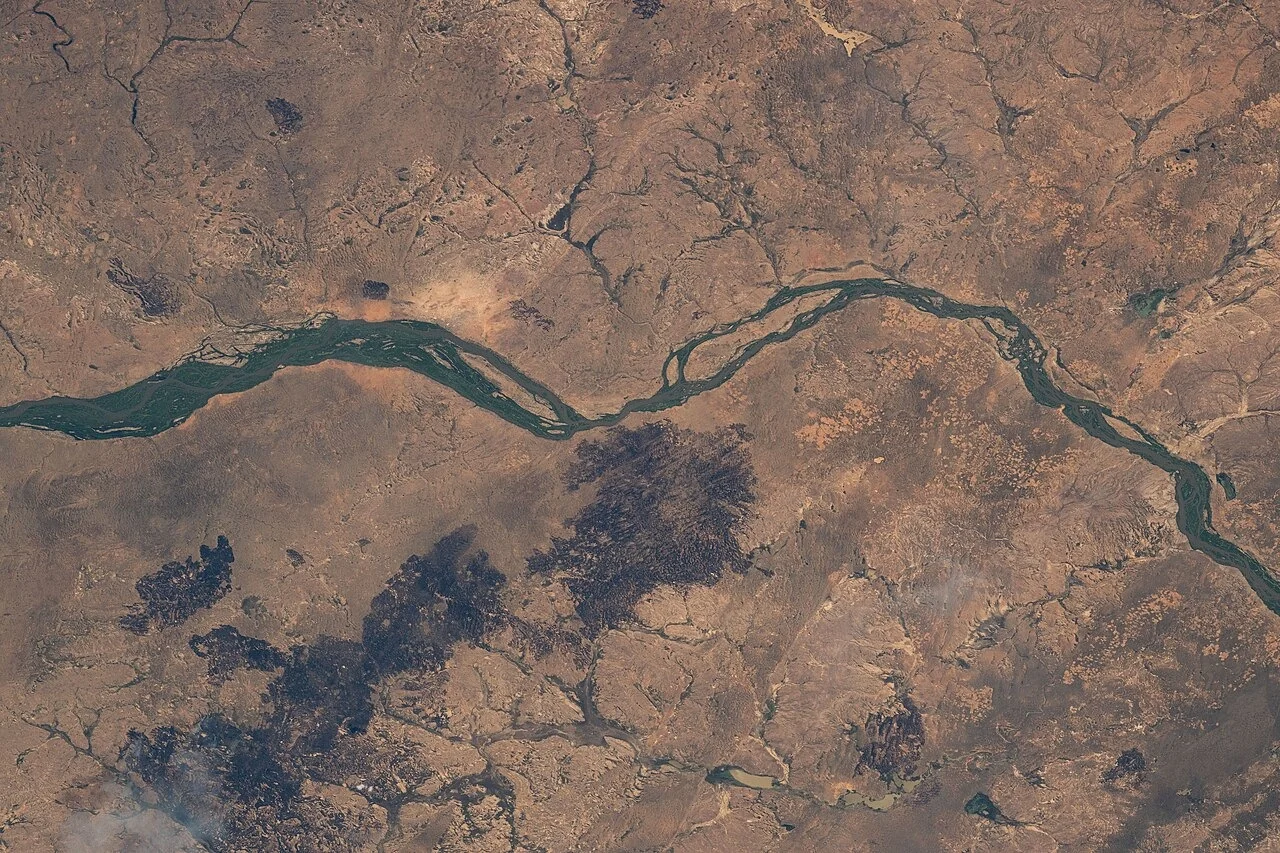
The Niger River in Mali, photographed from the International Space Station on 20 October 2024.

Mali · The country atlas

Mali

Mali’s dry landscapes and the inland Niger Delta offer sharply different settings for reading locality evidence.

65species with extracted evidence
11families
9region guides

The Niger River in Mali, photographed from the International Space Station on 20 October 2024.

Photograph: NASA Johnson Space Center · Image source · Public domain. Cropped to fill the hero; darkened for text legibility.

Geography & biotopes

Discover Mali.

Mali’s dry landscapes and the inland Niger Delta offer sharply different settings for reading locality evidence.

Historical administrative outlines are grouped for navigation. They are not ecological boundaries, species ranges or a statement of present administrative arrangements.

Map boundaries, snapshot and group membership →

Convention on Biological Diversity · Mali national profile →

Trape & Mané (2017) · The snakes of Mali · species accounts, locality tables and specimen appendix →

Geography is part of the record

Find your way through Mali.

Select a named region to open its evidence page. The complete directory below keeps every guide accessible, including places where locality evidence has not yet been extracted.

65 of 65 listed species have at least one indexed region record. 0 remain country-only. Even a nonzero count is not a complete regional inventory.

Habitats & living landscapes

Explore the living
landscapes.

Explore 2 guides to the environments, places and conservation pressures that shape this country. Each guide connects to the regional map and shared species accounts.

Landscape photographs & credits

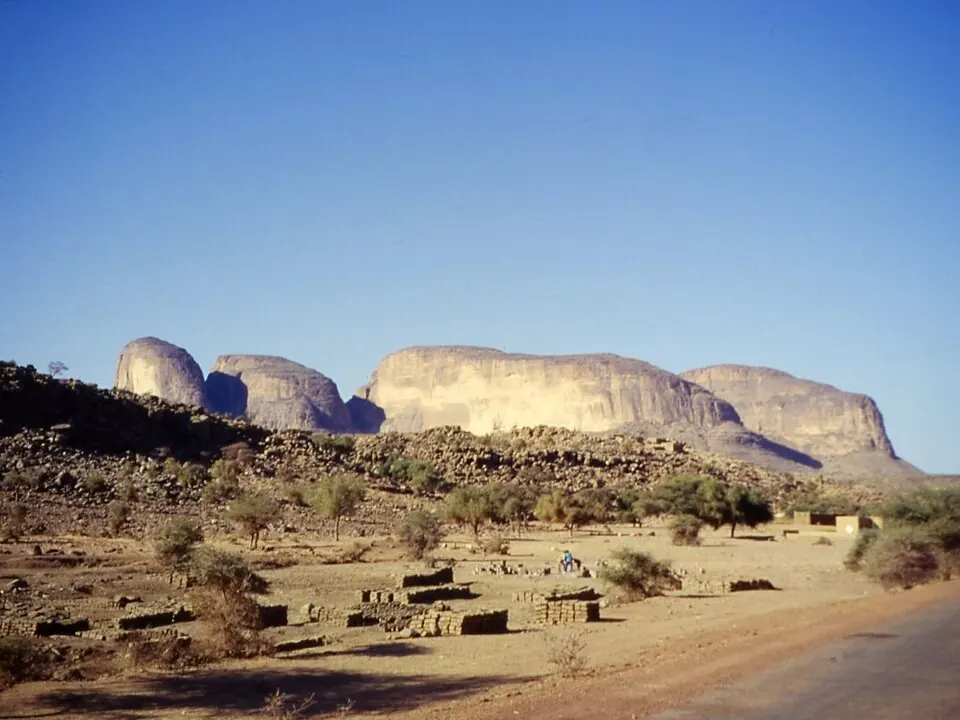
Rocky escarpments and sparsely vegetated dry ground in the Hombori Mountains, Gourma, Mali, in January 1997; a road and buildings mark human use. — Jeanne Menjoulet from Paris, France. Original photograph · CC BY 2.0. Cropped for the cards; photographs do not establish snake occurrence.

The Niger River in Mali, photographed from the International Space Station on 20 October 2024. — NASA Johnson Space Center. Original photograph · Public domain. Cropped for the cards; photographs do not establish snake occurrence.

The species catalogue

Meet the snakes of Mali.

Search scientific names, historical names, common names and families. Every card opens one shared account across its documented countries.

65 species · showing 24

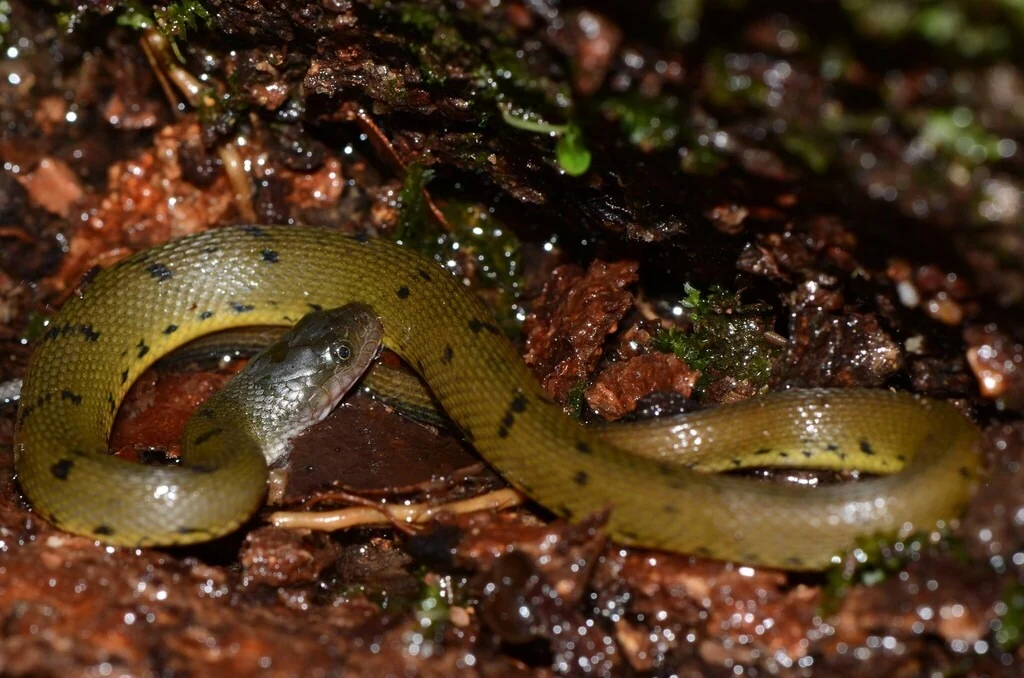
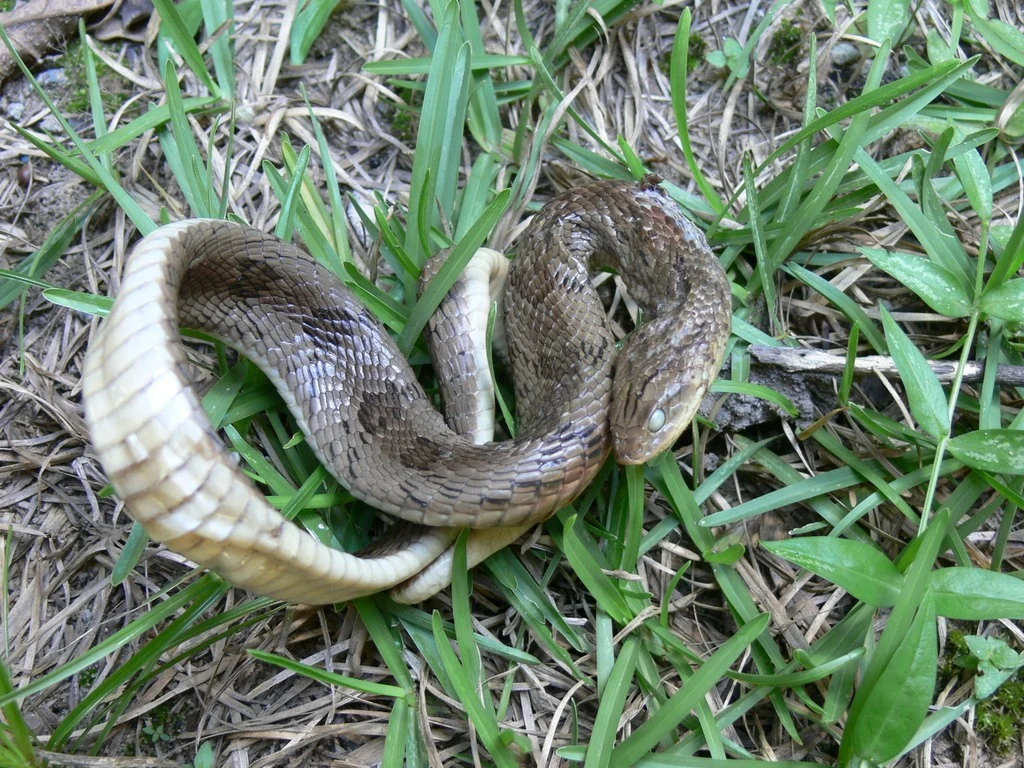
Afronatrix anoscopus; 3FJ6+JP Koakpo, Liberia; photographed 2021-05-13.

001 · Colubridae

African Brown Water Snake

Afronatrix anoscopus

(COPE, 1861)

Venom unknownNot yet assessed

The current taxonomic treatment explicitly lists this country. This is country-scale checklist evidence, not a claim of continuous occupancy or a complete regional inventory. Trape & Mané (2017), species account p. 115, locality coordinates in Tables 1–2 and specimen appendix: Mamoroubougou; Titiéna. Historical, explicitly named records mapped to the…

Read the species account →

no rights reserved · CC0 · https://creativecommons.org/publicdomain/zero/1.0/

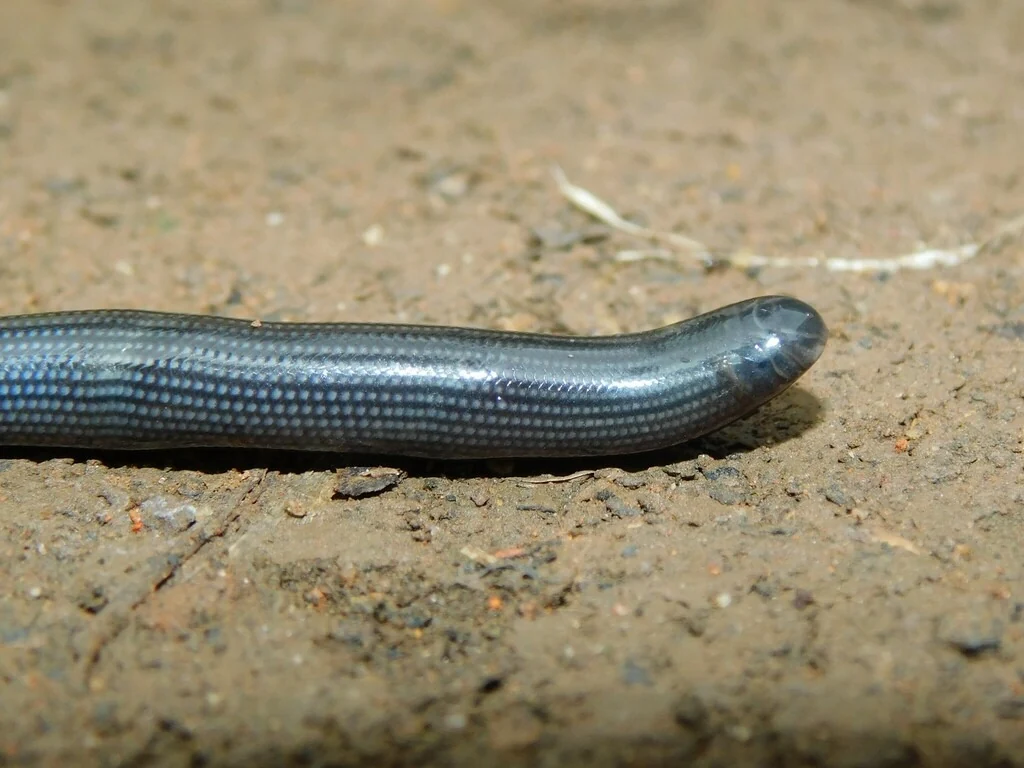
Afrotyphlops lineolatus; Hoima, Ouganda; photographed 2022-09-21.

002 · Typhlopidae

Common Lined Worm Snake, Lineolate Blind Snake

Afrotyphlops lineolatus

(JAN, 1864)

Non-venomous

The current taxonomic treatment explicitly lists this country. This is country-scale checklist evidence, not a claim of continuous occupancy or a complete regional inventory. Trape & Mané (2017), species account p. 109, locality coordinates in Tables 1–2 and specimen appendix: Npiébougou; Laminina. Historical, explicitly named records mapped to the…

Read the species account →

Tommy Andriollo · CC BY 4.0 · https://creativecommons.org/licenses/by/4.0/

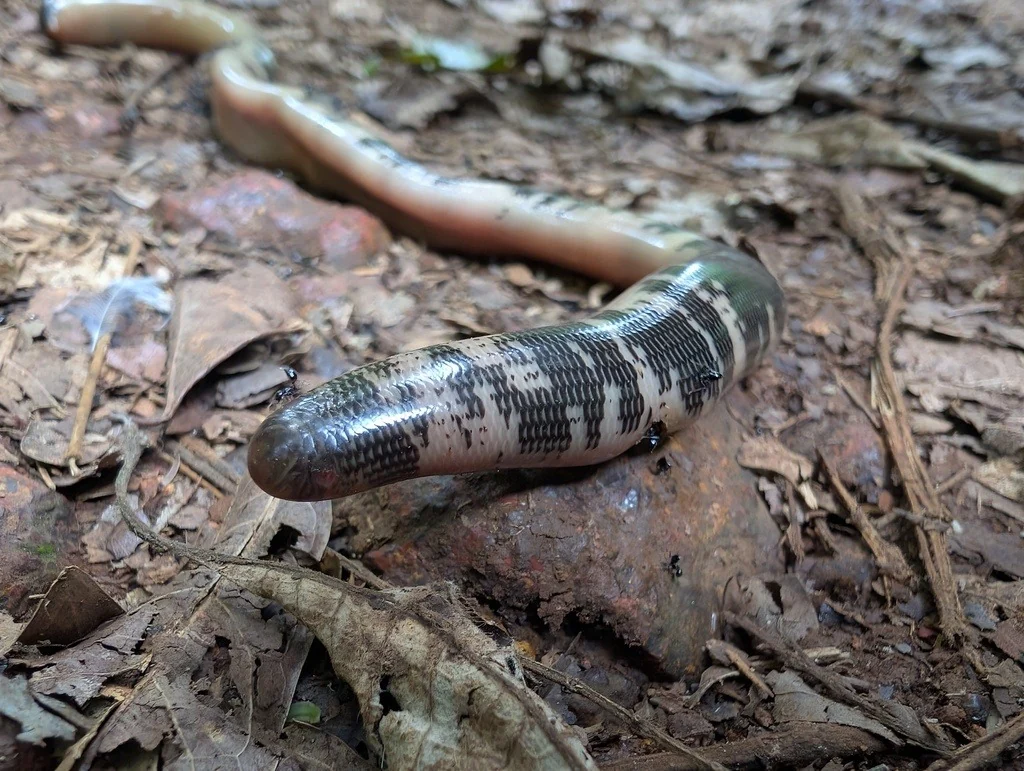
Afrotyphlops punctatus; Atiwa West, Ghana; photographed 2025-02-27.

003 · Typhlopidae

Spotted Blind Snake

Afrotyphlops punctatus

(LEACH, 1819)

Non-venomous

The current taxonomic treatment explicitly lists this country. This is country-scale checklist evidence, not a claim of continuous occupancy or a complete regional inventory. Trape & Mané (2017), species account p. 109, locality coordinates in Tables 1–2 and specimen appendix: Laminina; Mamoroubougou; Niamou; Npiébougou; Titiéna; Zamoko; Diafarabé.…

Read the species account →

Zac Peterson · CC BY 4.0 · https://creativecommons.org/licenses/by/4.0/

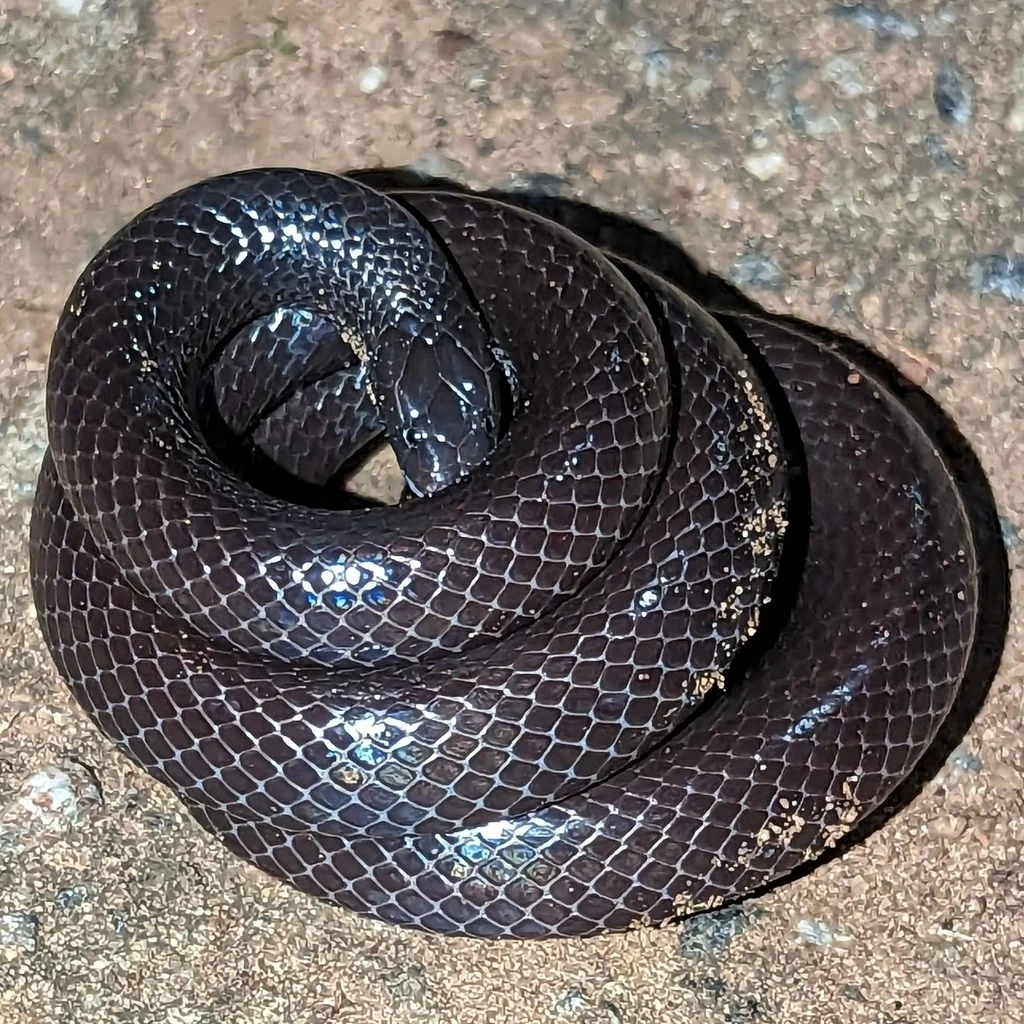
Amblyodipsas unicolor; Ayawaso West Municipal, Accra, Ghana; photographed 2023-09-04.

004 · Atractaspididae

Dull Purple-glossed Snake, Western Purple-glossed Snake

Amblyodipsas unicolor

(REINHARDT, 1843)

Venom unknownNot yet assessed

The current taxonomic treatment explicitly lists this country. This is country-scale checklist evidence, not a claim of continuous occupancy or a complete regional inventory. Trape & Mané (2017), species account p. 118, locality coordinates in Tables 1–2 and specimen appendix: Mamoroubougou. Historical, explicitly named records mapped to the chapter’s…

Read the species account →

biogeek · CC BY 4.0 · https://creativecommons.org/licenses/by/4.0/

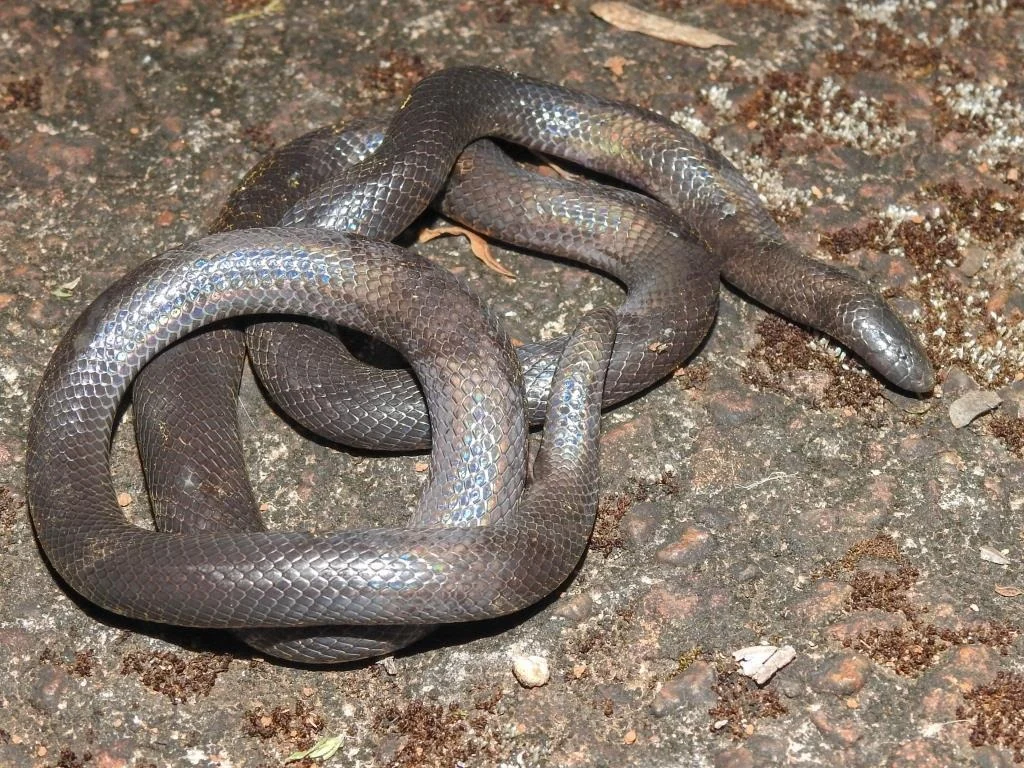
Atractaspis aterrima; Man, Côte d'Ivoire; photographed 2019-11-19.

005 · Atractaspididae

Mole Viper, Slender Burrowing Asp

Atractaspis aterrima

GÜNTHER, 1863

VenomousClinical severity not established

The current taxonomic treatment explicitly lists this country. This is country-scale checklist evidence, not a claim of continuous occupancy or a complete regional inventory. Trape & Mané (2017), species account p. 118, locality coordinates in Tables 1–2 and specimen appendix: Doussoudiana; Laminina; Mamoroubougou; Sadjouroubougou; Bougouni. Historical,…

Read the species account →

Dérozier Violette · CC BY 4.0 · https://creativecommons.org/licenses/by/4.0/

AtractaspididaeAtractaspisPhotograph not yet documented

006 · Atractaspididae

Mole Viper

Atractaspis dahomeyensis

BOCAGE, 1887

VenomousClinical severity not established

The current taxonomic treatment explicitly lists this country. This is country-scale checklist evidence, not a claim of continuous occupancy or a complete regional inventory. Trape & Mané (2017), species account p. 118, locality coordinates in Tables 1–2 and specimen appendix: Mamoroubougou; Npiébougou; Titiéna; Tabakoro. Historical, explicitly named…

Read the species account →
AtractaspididaeAtractaspisPhotograph not yet documented

007 · Atractaspididae

Sahelian Burrowing Asp

Atractaspis micropholis

GÜNTHER, 1872

VenomousClinical severity not established

The current taxonomic treatment explicitly lists this country. This is country-scale checklist evidence, not a claim of continuous occupancy or a complete regional inventory. Trape & Mané (2017), species account p. 119, locality coordinates in Tables 1–2 and specimen appendix: Niamou. Historical, explicitly named records mapped to the chapter’s 2021…

Read the species account →
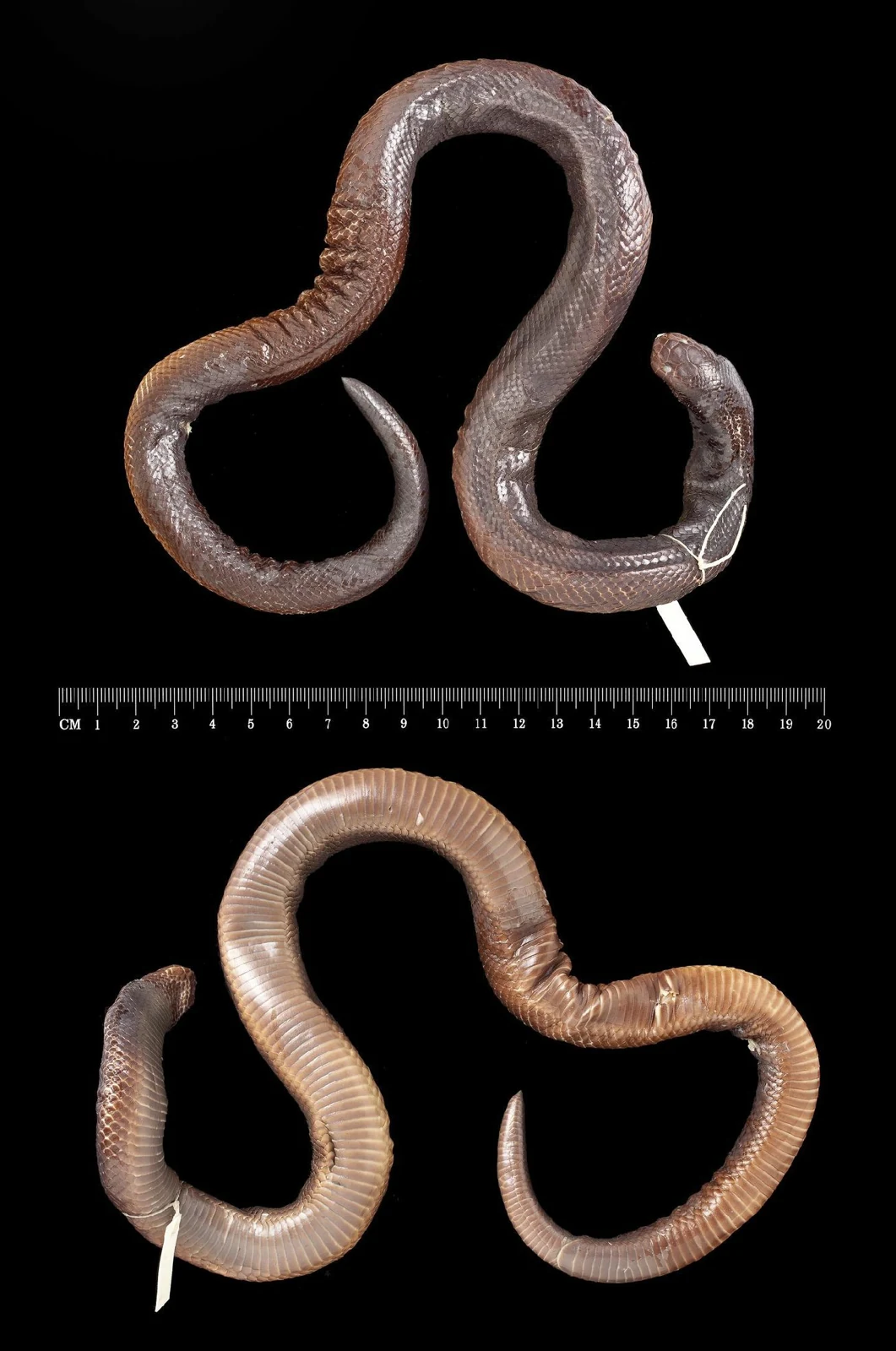
Atractaspis watsoni. Preserved museum specimen, Natural History Museum, London, 1946.1.18.5. Colours may have changed in preservative. This collection image adds no geographic occurrence record.

008 · Atractaspididae

Watson’s Burrowing Asp

Atractaspis watsoni

BOULENGER, 1908

VenomousClinical severity not established

The current taxonomic treatment explicitly lists this country. This is country-scale checklist evidence, not a claim of continuous occupancy or a complete regional inventory. Trape & Mané (2017), species account p. 119, locality coordinates in Tables 1–2 and specimen appendix: Diafarabé; Douentza; Samé Oulof; Séoulasso; Topokhoné. Historical, explicitly…

Read the species account →

Patrick Campbell / The Trustees of the Natural History Museum, London · CC BY 4.0 · https://creativecommons.org/licenses/by/4.0/

ColubridaeBamanophisPhotograph not yet documented

009 · Colubridae

Species account

Bamanophis dorri

(LATASTE, 1888)

Venom unknownNot yet assessed

The current taxonomic treatment explicitly lists this country. This is country-scale checklist evidence, not a claim of continuous occupancy or a complete regional inventory. Kayes: observation GBIF 4987433242 (2024). The original iNaturalist entry was rechecked for research-grade identification, wild status and unrestricted coordinates; its reported…

Read the species account →
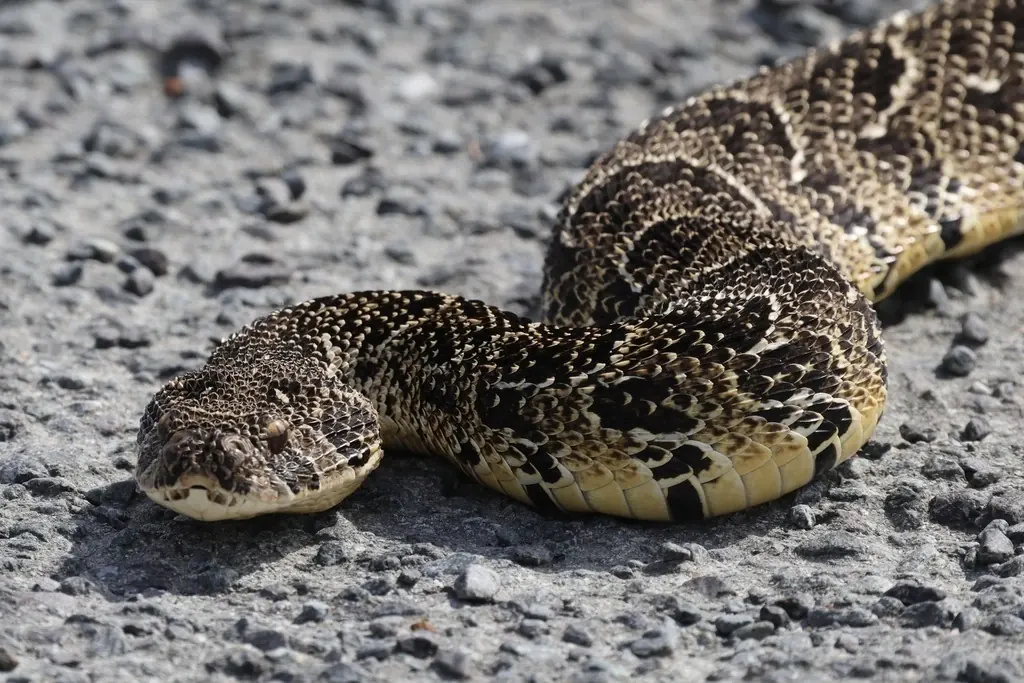
Bitis arietans. Identification follows the linked source community.

010 · Viperidae

Puff Adder

Bitis arietans

(MERREM, 1820)

VenomousClinical severity not established

Explicit country record in the current species treatment. The current taxonomic treatment explicitly lists this country. This is country-scale checklist evidence, not a claim of continuous occupancy or a complete regional inventory. Koulikouro: observation 9696658, 2018-02-01. Koulikouro: observation 9393025, 2017-12-26. Original records have agreeing…

Read the species account →

Cricket Raspet · CC BY 4.0 · https://creativecommons.org/licenses/by/4.0/

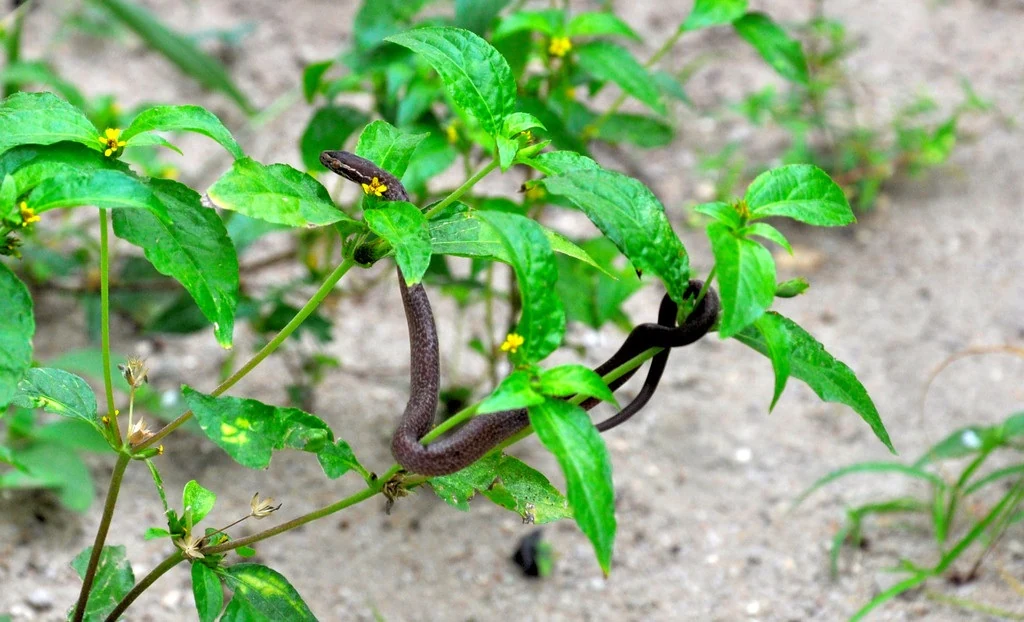
Boaedon fuliginosus, photographed 2020-08-12. Identification follows the linked research-grade observation.

011 · Lamprophiidae

Brown House Snake, African House Snake

Boaedon fuliginosus

(BOIE, 1827)

Non-venomous

Listed in the reviewed taxonomic treatment. The current taxonomic treatment explicitly lists this country. This is country-scale checklist evidence, not a claim of continuous occupancy or a complete regional inventory. Trape & Mané (2017), species account p. 119, locality coordinates in Tables 1–2 and specimen appendix: Bangaya; Bouyanga; Djinagué;…

Read the species account →

Diossina · CC BY 4.0 · https://creativecommons.org/licenses/by/4.0/

LamprophiidaeBoaedonPhotograph not yet documented

012 · Lamprophiidae

Striped House Snake

Boaedon lineatus

DUMÉRIL, BIBRON & DUMÉRIL, 1854

Non-venomous

The current taxonomic treatment explicitly lists this country. This is country-scale checklist evidence, not a claim of continuous occupancy or a complete regional inventory. Trape & Mané (2017), species account p. 119, locality coordinates in Tables 1–2 and specimen appendix: Bangaya; Djinagué; Doussoudiana; Koundian; Laminina; Mamoroubougou;…

Read the species account →
Causus maculatus; Lesio-Louna Reserve - Iboubikro, Republic of the Congo; photographed 2006-07-20.

013 · Viperidae

Spotted Night Adder, West-African Night Adder

Causus maculatus

(HALLOWELL, 1842)

VenomousClinical severity not established

The current taxonomic treatment explicitly lists this country. This is country-scale checklist evidence, not a claim of continuous occupancy or a complete regional inventory. Trape & Mané (2017), species account p. 121, locality coordinates in Tables 1–2 and specimen appendix: Bangaya; Djinagué; Doussoudiana; Koundian; Laminina; Mamoroubougou; Niamou;…

Read the species account →

Tony King · CC BY 4.0 · https://creativecommons.org/licenses/by/4.0/

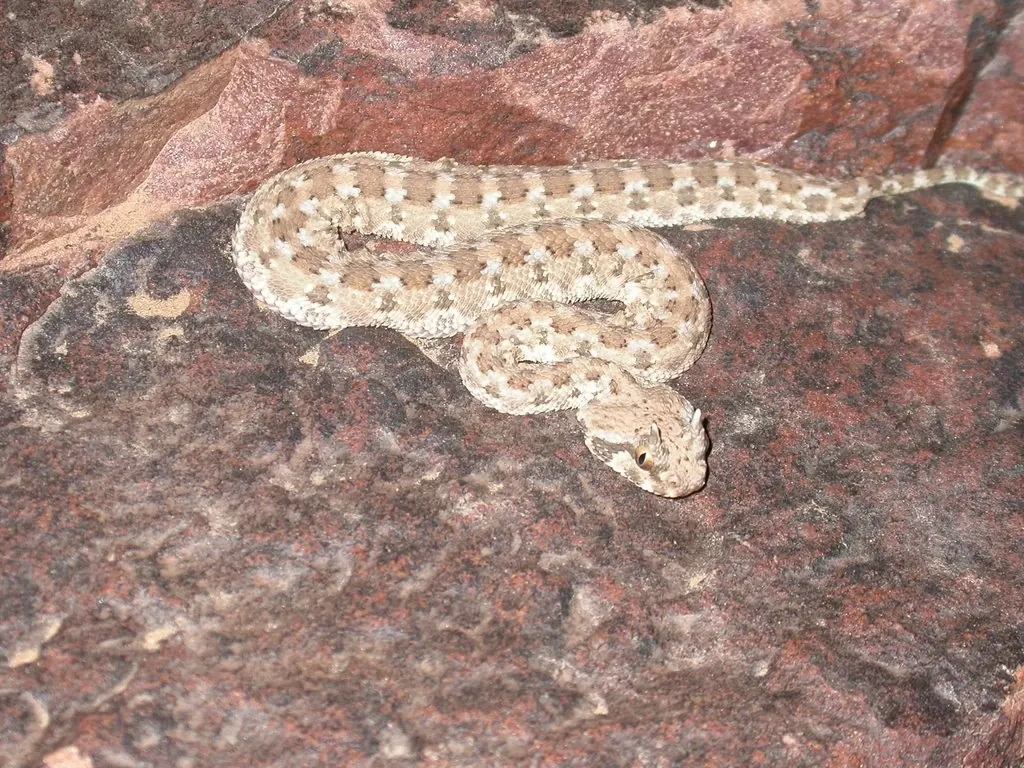
Cerastes cerastes. Identification follows the linked source community.

014 · Viperidae

Desert Horned Viper

Cerastes cerastes

(LINNAEUS, 1758)

VenomousClinical severity not established

Explicit country record in the current species treatment. The current taxonomic treatment explicitly lists this country. This is country-scale checklist evidence, not a claim of continuous occupancy or a complete regional inventory. Trape & Mané (2017), species account p. 121, locality coordinates in Tables 1–2 and specimen appendix: Timétrine; Tessalit…

Read the species account →

Julien Renoult · CC BY 4.0 · https://creativecommons.org/licenses/by/4.0/

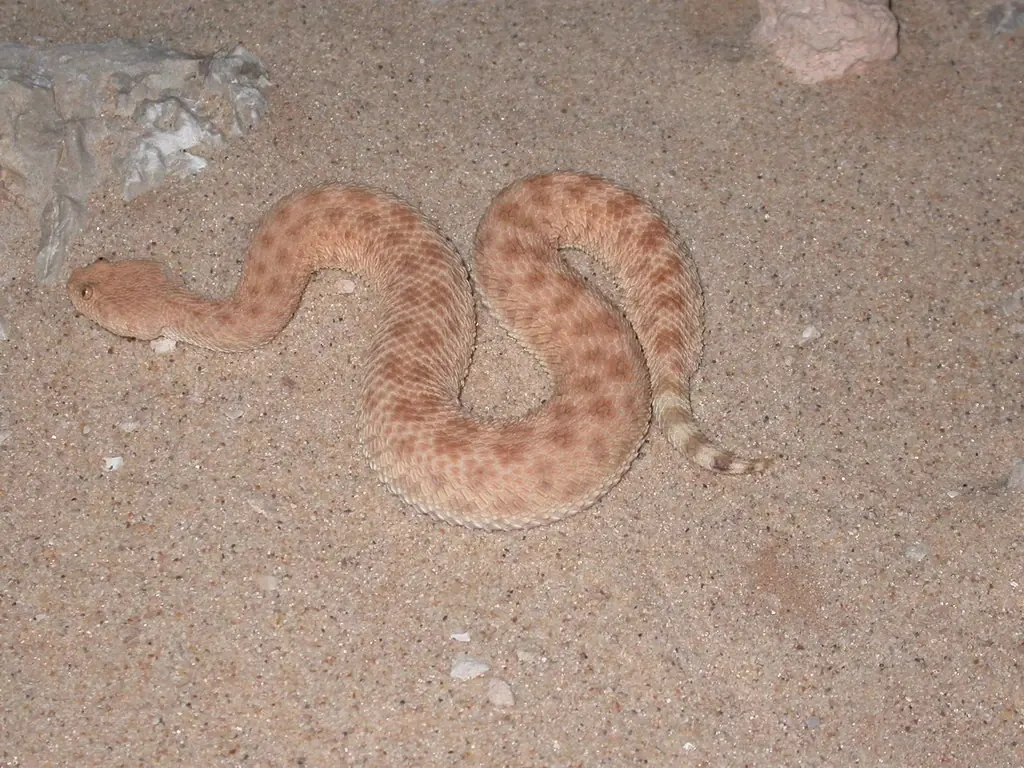
Cerastes vipera. Identification follows the linked source community.

015 · Viperidae

Sahara Sand Viper

Cerastes vipera

(LINNAEUS, 1758)

VenomousClinical severity not established

Explicit country record in the current species treatment. The current taxonomic treatment explicitly lists this country. This is country-scale checklist evidence, not a claim of continuous occupancy or a complete regional inventory. Trape & Mané (2017), species account p. 121, locality coordinates in Tables 1–2 and specimen appendix: Tisserlitine (toward…

Read the species account →

Julien Renoult · CC BY 4.0 · https://creativecommons.org/licenses/by/4.0/

ColubridaeCrotaphopeltisPhotograph not yet documented

016 · Colubridae

Species account

Crotaphopeltis hippocrepis

(REINHARDT, 1843)

Venom unknownNot yet assessed

The current taxonomic treatment explicitly lists this country. This is country-scale checklist evidence, not a claim of continuous occupancy or a complete regional inventory. Trape & Mané (2017), species account p. 116, locality coordinates in Tables 1–2 and specimen appendix: Doussoudiana; Mamoroubougou; Npiébougou. Historical, explicitly named records…

Read the species account →
Crotaphopeltis hotamboeia; Campher's Drift, George, 6529, South Africa; photographed 2023-10-13.

017 · Colubridae

White-lipped Herald Snake, Red-lipped Snake

Crotaphopeltis hotamboeia

(LAURENTI, 1768)

Venom unknownNot yet assessed

The current taxonomic treatment explicitly lists this country. This is country-scale checklist evidence, not a claim of continuous occupancy or a complete regional inventory. Koulikouro: observation 9493876, 2017-06-27. Original records have agreeing research-grade identifications, wild status and open coordinates. Points and sampled reported uncertainty…

Read the species account →

no rights reserved · CC0 · https://creativecommons.org/publicdomain/zero/1.0/

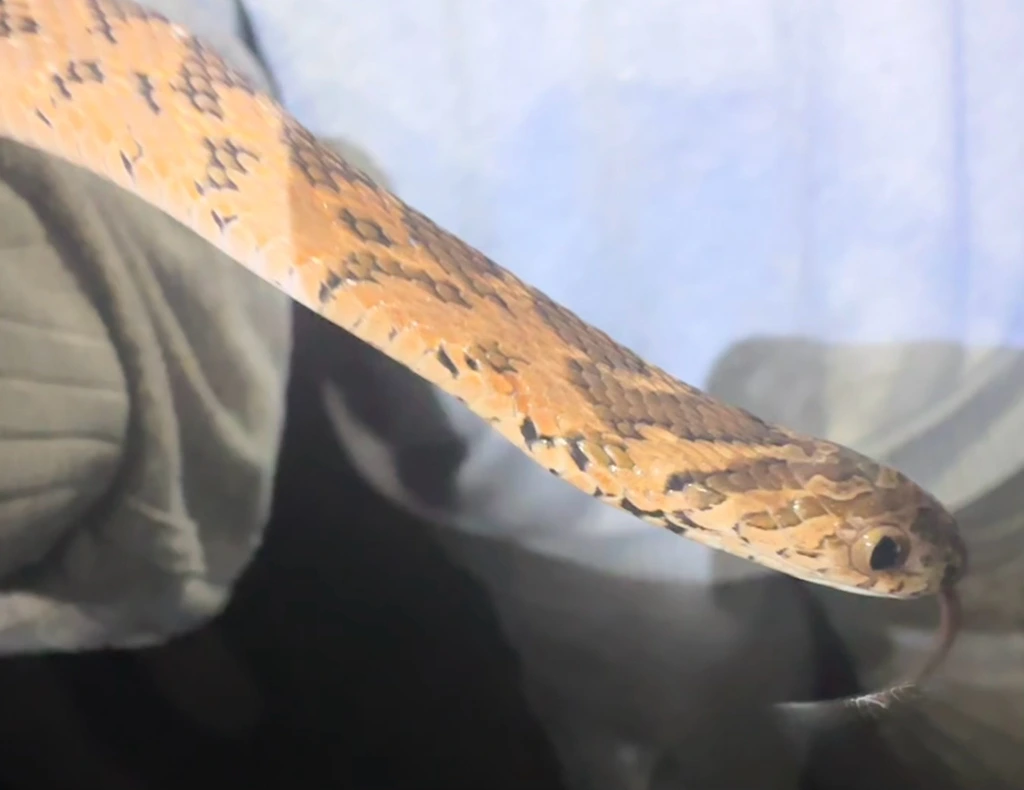
Dasypeltis confusa. Photographed through a transparent container in Angola; this is a handled specimen portrait. Original observation dated 2024-10-30; this portrait does not establish occurrence in other countries.

018 · Colubridae

Diamond-back Egg-eater, Confusing Egg Eater

Dasypeltis confusa

TRAPE & MANÉ, 2006

Venom unknownNot yet assessed

The current taxonomic treatment explicitly lists this country. This is country-scale checklist evidence, not a claim of continuous occupancy or a complete regional inventory. Trape & Mané (2017), species account p. 116, locality coordinates in Tables 1–2 and specimen appendix: Diafarabé; Mamoroubougou. Historical, explicitly named records mapped to the…

Read the species account →

Robert Taylor · CC BY 4.0 · https://creativecommons.org/licenses/by/4.0/

ColubridaeDasypeltisPhotograph not yet documented

019 · Colubridae

Gans’ Egg Eater

Dasypeltis gansi

TRAPE & MANÉ, 2006

Venom unknownNot yet assessed

The current taxonomic treatment explicitly lists this country. This is country-scale checklist evidence, not a claim of continuous occupancy or a complete regional inventory. Trape & Mané (2017), species account p. 116, locality coordinates in Tables 1–2 and specimen appendix: Ballabougou; Séoulasso. Historical, explicitly named records mapped to the…

Read the species account →
ColubridaeDasypeltisPhotograph not yet documented

020 · Colubridae

Species account

Dasypeltis latericia

TRAPE & MANÉ, 2006

Venom unknownNot yet assessed

The current taxonomic treatment explicitly lists this country. This is country-scale checklist evidence, not a claim of continuous occupancy or a complete regional inventory. Trape & Mané (2017), species account p. 117, locality coordinates in Tables 1–2 and specimen appendix: Bangaya; Koundian; Niamou; Npiébougou; Sébékourani; Séoulasso; Titiéna;…

Read the species account →
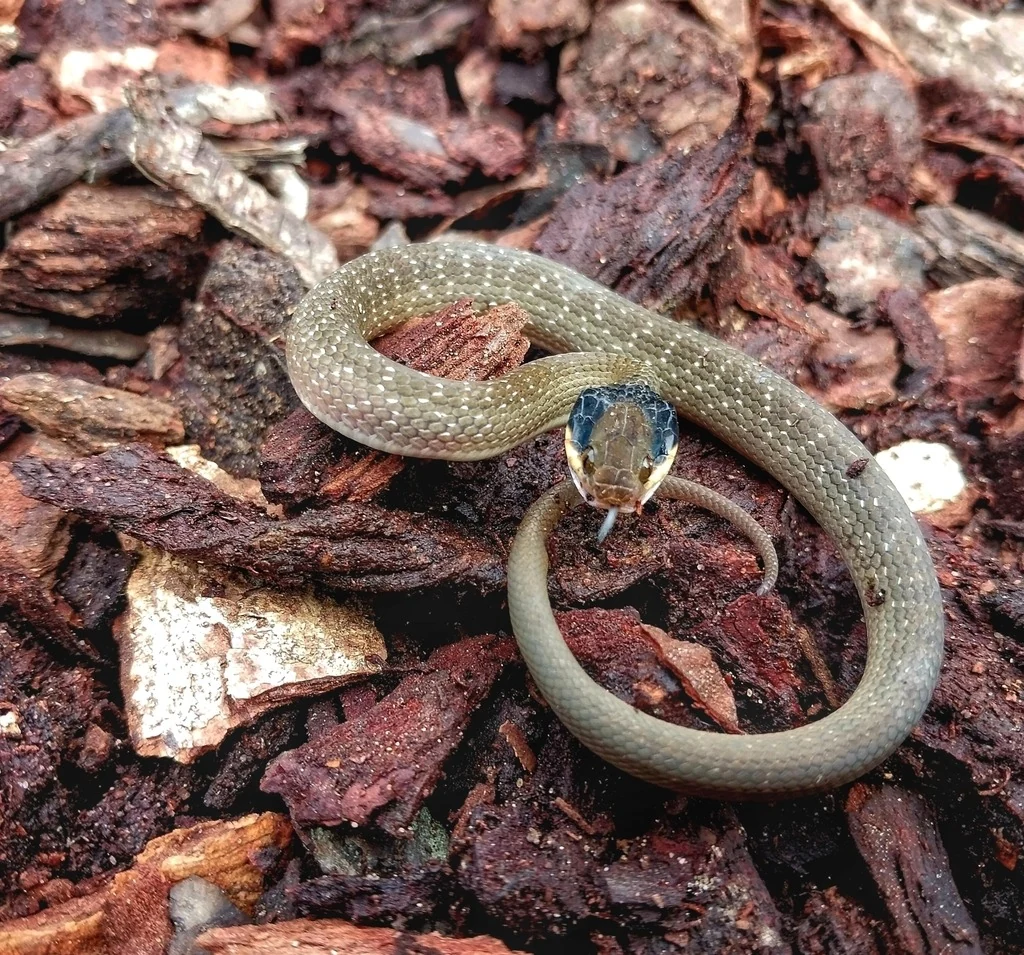
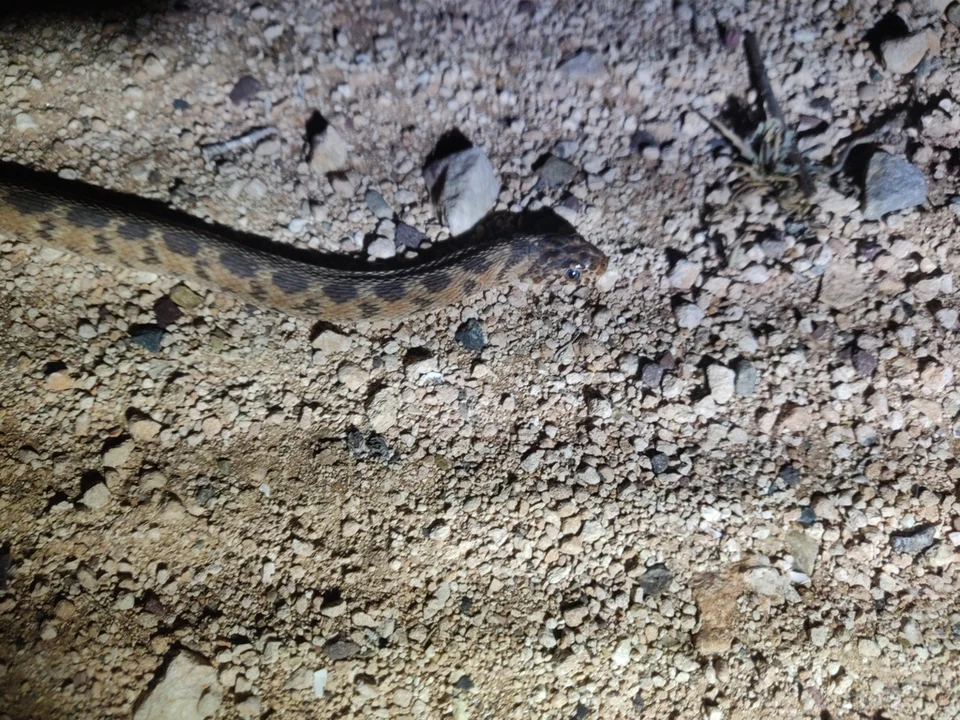
Dasypeltis sahelensis, Morocco (public location obscured); photographed 2024-04-20.

021 · Colubridae

Sahel Egg Eater

Dasypeltis sahelensis

TRAPE & MANÉ, 2006

Venom unknownNot yet assessed

Listed in the reviewed taxonomic treatment. The current taxonomic treatment explicitly lists this country. This is country-scale checklist evidence, not a claim of continuous occupancy or a complete regional inventory. Trape & Mané (2017), species account p. 117, locality coordinates in Tables 1–2 and specimen appendix: Bouyanga; Gaoudel; Koyretao;…

Read the species account →

Teddy Gilbert · CC BY 4.0 · https://creativecommons.org/licenses/by/4.0/

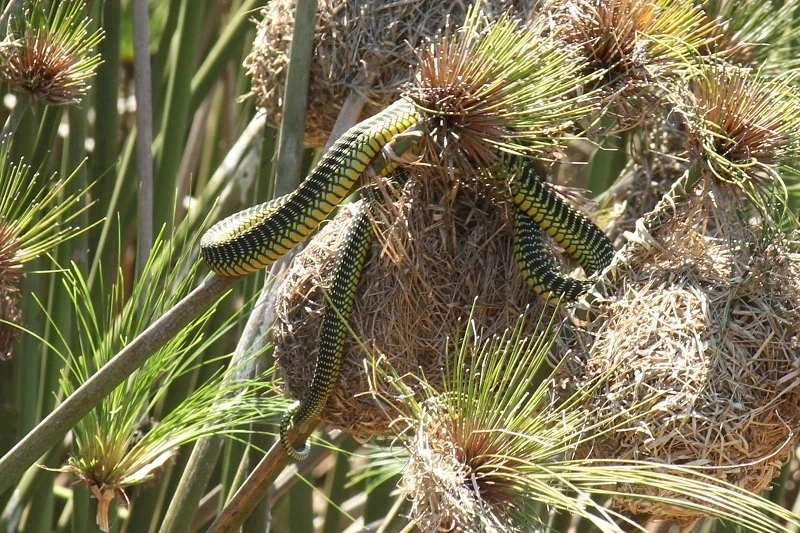
Dispholidus typus; South Cape DC, South Africa; photographed 2013-01-02.

022 · Colubridae

Boomslang

Dispholidus typus

(SMITH, 1828)

VenomousClinical severity not established

The current taxonomic treatment explicitly lists this country. This is country-scale checklist evidence, not a claim of continuous occupancy or a complete regional inventory. Trape & Mané (2017), species account p. 117, locality coordinates in Tables 1–2 and specimen appendix: Doussoudiana; Laminina; Mamoroubougou; Npiébougou; Titiéna; Zamoko.…

Read the species account →

Karen Eichholz · CC BY 4.0 · https://creativecommons.org/licenses/by/4.0/

ViperidaeEchisPhotograph not yet documented

023 · Viperidae

Joger's Saw-scaled Viper

Echis jogeri

CHERLIN, 1990

VenomousClinical severity not established

The current taxonomic treatment explicitly lists this country. This is country-scale checklist evidence, not a claim of continuous occupancy or a complete regional inventory. Trape & Mané (2017), species account p. 122, locality coordinates in Tables 1–2 and specimen appendix: Bangaya; Djinagué; Koundian; Sébékourani; Laminina; Niamou; Séoulasso;…

Read the species account →
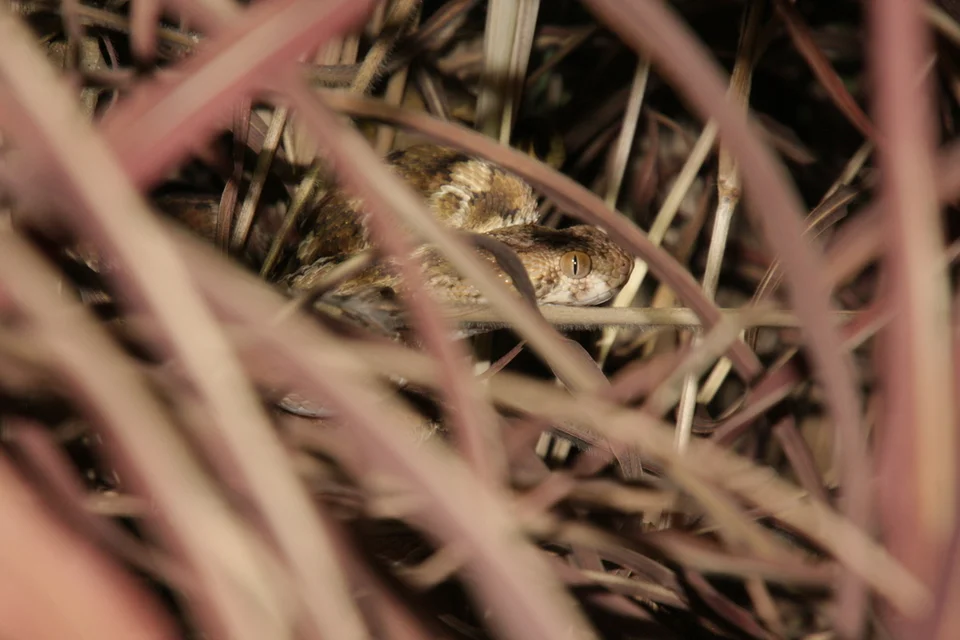
Echis leucogaster, Niamey, Niger; photographed 2016-10-31.

024 · Viperidae

Roman's Saw-scaled Viper

Echis leucogaster

ROMAN, 1972

VenomousClinical severity not established

Listed in the reviewed taxonomic treatment. The current taxonomic treatment explicitly lists this country. This is country-scale checklist evidence, not a claim of continuous occupancy or a complete regional inventory. Gao: observation 48517030, 2019-07-14. Original records have agreeing research-grade identifications, wild status and open coordinates.…

Read the species account →

B. P. White · CC BY-SA 4.0 · https://creativecommons.org/licenses/by-sa/4.0/

The research library

Sources & the checklist.

This edition lists 65 species with supported country records from checked taxonomic treatments and cited field studies. It is not a claim of a complete national inventory. Each account retains its source and check date; individual evidence entries retain their own review dates.

Locality coverage and records still awaiting resolution

The 2017 national study has been checked across all 65 species accounts, its locality tables and specimen appendix. 493 source entries now connect named records to the regional index. This includes historical literature and explicitly qualified sight reports as well as examined specimens. Repeated records and species occurring in several regions do not add new national species.

Every supported species has at least one indexed region. That does not make any region complete: the following source localities still need geographic or taxonomic clarification. They are retained here rather than assigned to every plausible region.

Atractaspis micropholis: Historical identification — Paper explicitly questions the identification as possible A. watsoni.

Atractaspis watsoni: Bandiagara — Printed longitude/approximate locality requires review.

Bamanophis dorri: between Négala and Kassaro — Broad or transect locality needs source-specific review; Bandiagara — Printed longitude/approximate locality requires review.

Bitis arietans: Sévaré — Historical locality not matched unambiguously to coordinate-table entry; between Bla and Bandiagara — Broad or transect locality needs source-specific review.

Causus maculatus: Sikasso — Historical locality not matched unambiguously to coordinate-table entry; see also map of Hughes . — Historical locality not matched unambiguously to coordinate-table entry.

Cerastes cerastes: 50 km N of Kidal; rocher d’Eguerer; SW Adrar Takabart — Imprecise named records retained for georeferencing, not mapped as Kidal town.

Cerastes vipera: Half way between Araouane and Taoudeni — Approximate sight report retained without precise placement.

Dispholidus typus: Sikasso . — Historical locality not matched unambiguously to coordinate-table entry.

Echis leucogaster: Adrar des Iforhas — Historical locality not matched unambiguously to coordinate-table entry; Léré — Printed longitude/approximate locality requires review; Bandiagara — Printed longitude/approximate locality requires review.

Elapsoidea semiannulata: southern Mali . — Broad or transect locality needs source-specific review.

Eryx muelleri: Léré — Printed longitude/approximate locality requires review; Bandiagara — Printed longitude/approximate locality requires review.

Limaformosa crossi: Sikasso . — Historical locality not matched unambiguously to coordinate-table entry.

Lycophidion semicinctum: Sikasso . — Historical locality not matched unambiguously to coordinate-table entry.

Malpolon moilensis: Adrar des Iforhas . — Historical locality not matched unambiguously to coordinate-table entry; Gogui — Printed minute-scale coordinates or 2 km envelope cross a navigation boundary.

Naja nigricollis: Sikasso . — Historical locality not matched unambiguously to coordinate-table entry.

Philothamnus irregularis: Sikasso — Historical locality not matched unambiguously to coordinate-table entry; Lobi — Printed longitude/approximate locality requires review.

Philothamnus semivariegatus: Bandiagara — Printed longitude/approximate locality requires review.

Prosymna collaris: Bamako . — Paper explicitly questions a possibly mislabelled museum specimen.

Prosymna greigerti: Soudan français — Broad or transect locality needs source-specific review.

Psammophis afroccidentalis: Sikasso — Historical locality not matched unambiguously to coordinate-table entry; between Ségou and Séwaré — Broad or transect locality needs source-specific review; 158 km SW Séwaré — Broad or transect locality needs source-specific review; between Séwaré and Mopti — Broad or transect locality needs source-specific review; between Sikasso and Sinndi . — Broad or transect locality needs source-specific review; Léré — Printed longitude/approximate locality requires review; Bandiagara — Printed longitude/approximate locality requires review; Fabiguine — Printed longitude/approximate locality requires review.

Psammophis elegans: Bandiagara — Printed longitude/approximate locality requires review.

Psammophis praeornatus: Sikasso . — Historical locality not matched unambiguously to coordinate-table entry.

Python regius: Southern Mali . — Broad or transect locality needs source-specific review.

Python sebae: Sikasso — Historical locality not matched unambiguously to coordinate-table entry; Bandiagara — Printed longitude/approximate locality requires review.

Trape & Mané (2017), locality tables and specimen accounts ↗

Range and taxonomy review

Country links use a single accepted species identity. Revised names and disputed records are kept visible here; uncertain records do not enter the listed collection or regional totals.

Atractaspis microlepidota

Uncertain — excluded from the listed total

The checked treatment contains a conflicting, superseded or insufficiently corroborated country report. It is retained for review and excluded from positive counts; this is not an assertion of absence.

Source 1 ↗

Elapsoidea trapei

Uncertain — excluded from the listed total

The checked distribution treatment qualifies the extreme western Mali occurrence as probable. The 2017 national review does not include this species. Retained as an unresolved country candidate, excluded from confirmed country and regional counts; geographic proximity is not a voucher.

Source 1 ↗

Source 2 ↗

How the map and counts work

Search results were checked against distribution text and taxonomic qualifications. A geographic name alone does not establish a political country: New Guinea, the Solomon archipelago and Micronesia span more than one country or territory. Introduced and unresolved records require separate interpretation.

Place counts require explicit named localities, including valid type localities. Counts can overlap where sources name multiple places. Regional maps group historical boundary snapshots for navigation, while island outlines use Natural Earth; neither is a species range or an observation map. Small islands can be below the outline dataset’s resolution, so geographic reference markers and the directory remain available.

DNCT - Direction Nationale des Collectivités Territoriales, United Nations Office for the Coordination of Humanitarian Affairs, Mali; geoBoundaries gbOpen ADM1, 2021 snapshot; Creative Commons Attribution 4.0 International (CC BY 4.0). Map provenance →
Exclusions & qualifications (1)

Atractaspis microlepidota

The checked treatment contains a conflicting, superseded or insufficiently corroborated country report. It is retained for review and excluded from positive counts; this is not an assertion of absence.

Read source 1 ↗
  1. Map boundaries, snapshot and group membership ↗
  2. Convention on Biological Diversity · Mali national profile ↗
  3. Trape & Mané (2017) · The snakes of Mali · species accounts, locality tables and specimen appendix ↗
  4. The Reptile Database

    Individual treatments and locality evidence are linked from each species account.

  5. Meiri (2024): SquamBase 1.0

    Species-level literature measurements and ecological traits. Exact-name matches only; imputed or ambiguous fields are omitted. These summaries are not local observations.

  6. Natural Earth: public-domain geographic data

Continue through the Africa atlas →