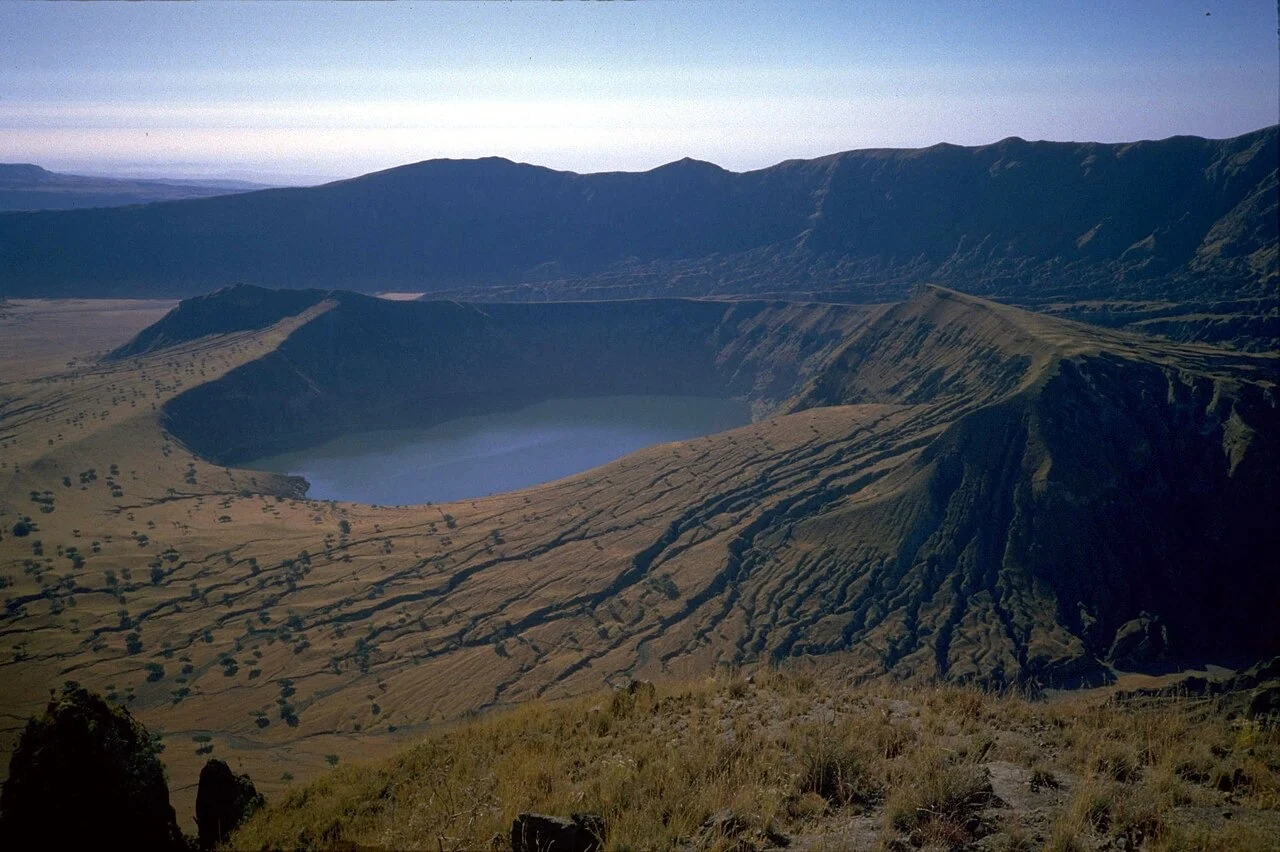
Deriba crater lakes in Jebel Marra, Darfur, Sudan.

Sudan · The country atlas

Sudan

Sudan’s Dinder landscape connects seasonal rivers, floodplain pools and savanna vegetation.

59species with extracted evidence
10families
5region guides

Deriba crater lakes in Jebel Marra, Darfur, Sudan.

Photograph: J Williams (= Hammy07 at en.wikipedia) · Image source · CC BY-SA 3.0. Cropped to fill the hero; darkened for text legibility.

Geography & biotopes

Discover Sudan.

Sudan’s Dinder landscape connects seasonal rivers, floodplain pools and savanna vegetation.

Historical administrative outlines are grouped for navigation. They are not ecological boundaries, species ranges or a statement of present administrative arrangements. Pre-2011 Sudan labels cannot alone establish occurrence in either present-day country. Abyei boundaries are geographic references only.

Map boundaries, snapshot and group membership →

Ramsar · Dinder National Park information sheet →

Geography is part of the record

Find your way through Sudan.

Select a named region to open its evidence page. The complete directory below keeps every guide accessible, including places where locality evidence has not yet been extracted.

11 of 59 listed species have at least one indexed region record. 48 remain country-only. Even a nonzero count is not a complete regional inventory.

Habitats & living landscapes

Explore the living
landscapes.

Explore 2 guides to the environments, places and conservation pressures that shape this country. Each guide connects to the regional map and shared species accounts.

Landscape photographs & credits

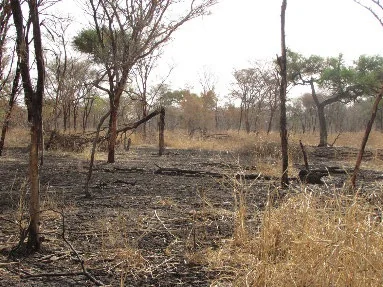
Fire-affected wooded savanna in Dinder National Park, Sudan. Field photograph from Elmardi et al. (2025), Appendix 1; the source does not give the exact capture date. — Mohaned E. M. Elmardi et al. (2025), Appendix 1, Journal of Geoscience and Environment Protection. Original photograph · CC BY 4.0. Cropped for the cards; photographs do not establish snake occurrence.

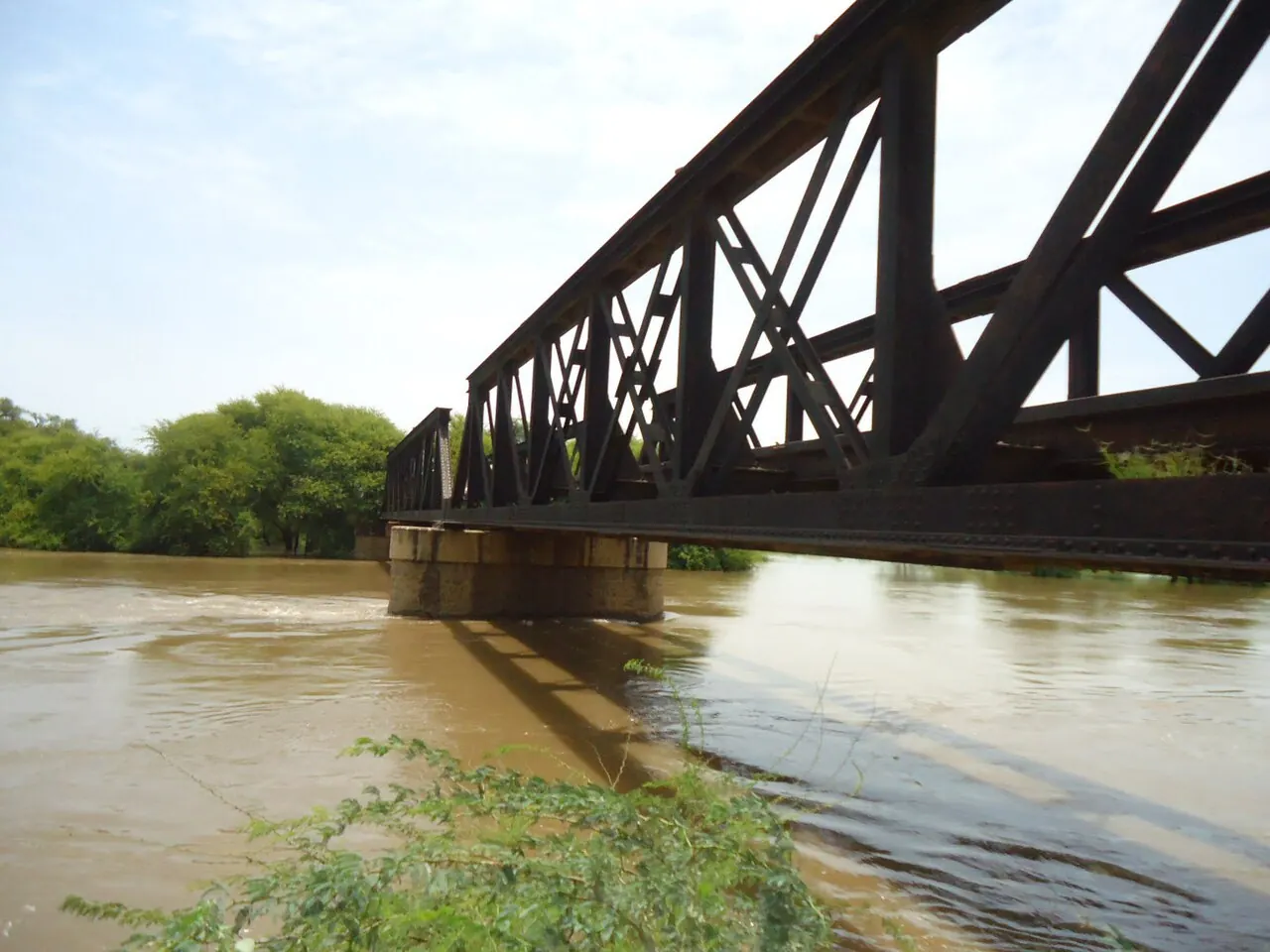
The Dinder River in Sudan beneath a bridge. River water and vegetated banks are visible; the source does not place this view inside the national park. — محسن الفكي. Original photograph · CC BY-SA 3.0. Cropped for the cards; photographs do not establish snake occurrence.

The species catalogue

Meet the snakes of Sudan.

Search scientific names, historical names, common names and families. Every card opens one shared account across its documented countries.

59 species · showing 24

AtractaspididaeAtractaspisPhotograph not yet documented

001 · Atractaspididae

Phillips’ Burrowing Asp

Atractaspis phillipsi

BARBOUR, 1913

VenomousClinical severity not established

The current taxonomic treatment explicitly lists this country. This is country-scale checklist evidence, not a claim of continuous occupancy or a complete regional inventory. Central Nile states: iNaturalist observation 201250450, recorded 2023-10-24. The current original record has agreeing research-grade identification, wild status and unrestricted…

Read the species account →
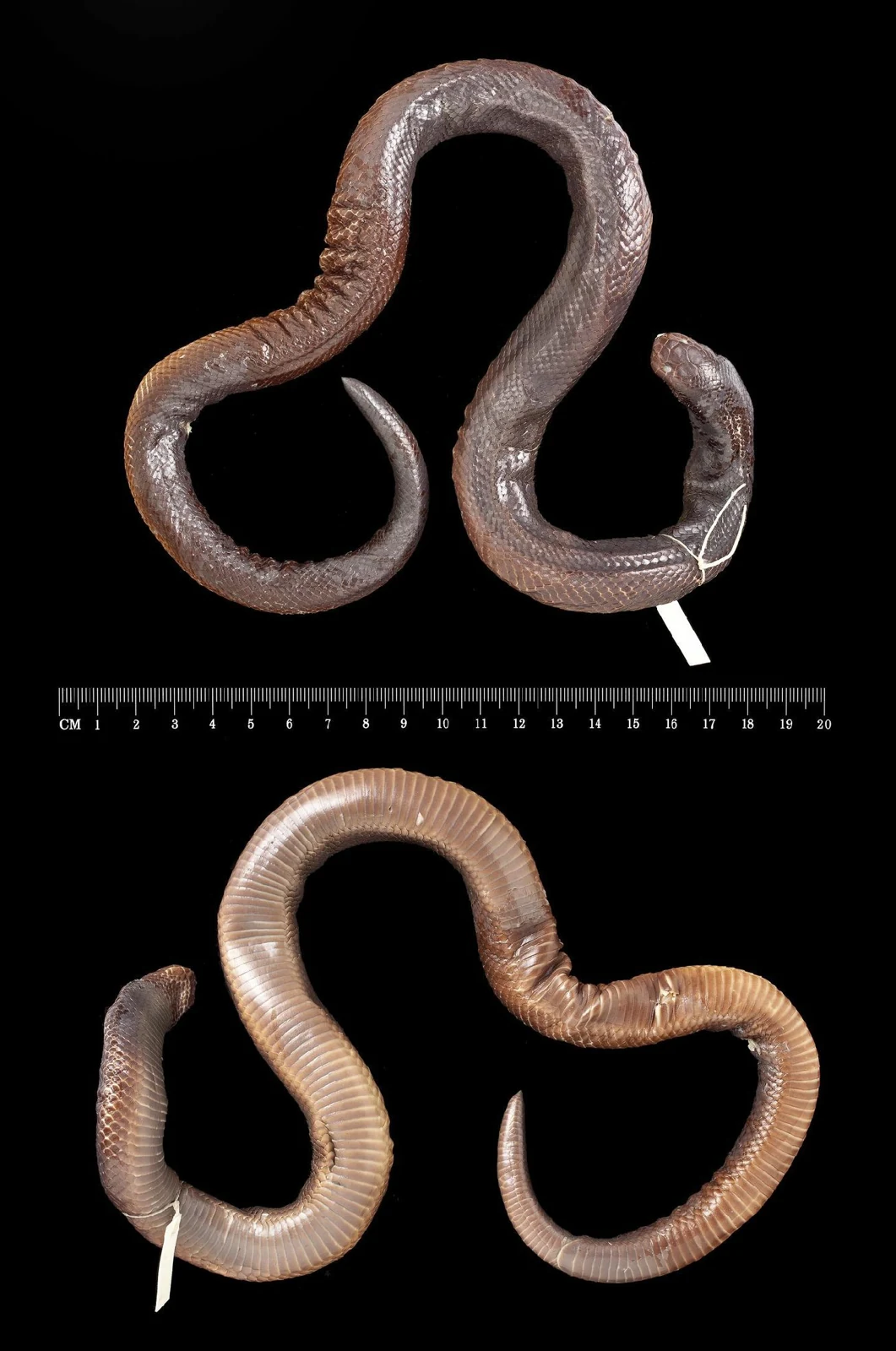
Atractaspis watsoni. Preserved museum specimen, Natural History Museum, London, 1946.1.18.5. Colours may have changed in preservative. This collection image adds no geographic occurrence record.

002 · Atractaspididae

Watson’s Burrowing Asp

Atractaspis watsoni

BOULENGER, 1908

VenomousClinical severity not established

The current taxonomic treatment explicitly lists this country. This is country-scale checklist evidence, not a claim of continuous occupancy or a complete regional inventory.

Read the species account →

Patrick Campbell / The Trustees of the Natural History Museum, London · CC BY 4.0 · https://creativecommons.org/licenses/by/4.0/

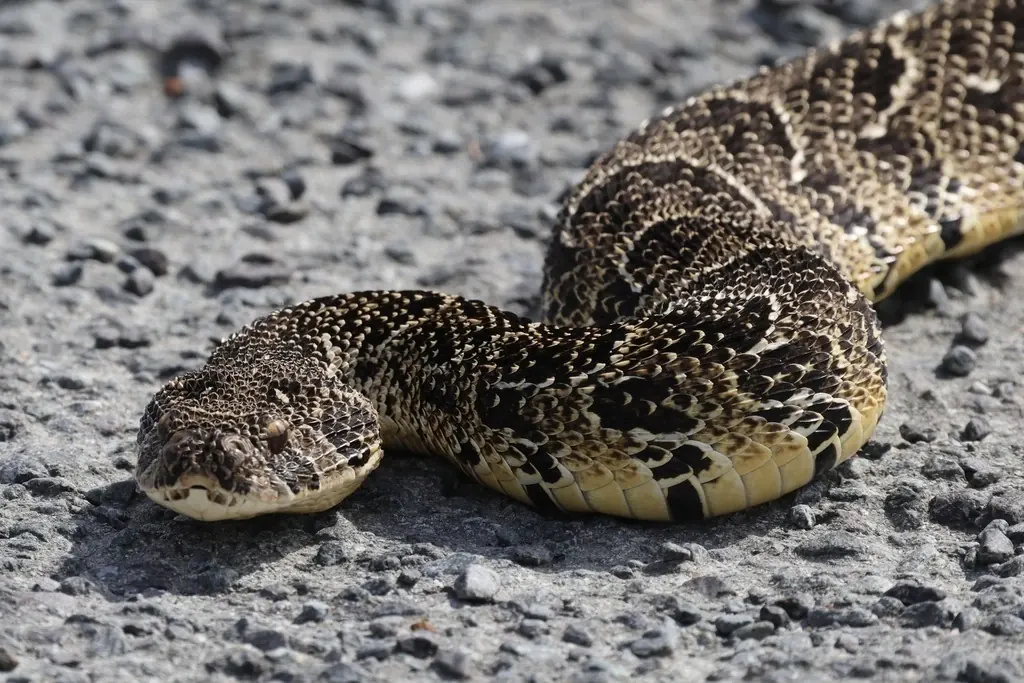
Bitis arietans. Identification follows the linked source community.

003 · Viperidae

Puff Adder

Bitis arietans

(MERREM, 1820)

VenomousClinical severity not established

Explicit country record in the current species treatment. The current taxonomic treatment explicitly lists this country. This is country-scale checklist evidence, not a claim of continuous occupancy or a complete regional inventory. Central Nile states: iNaturalist observation 201257162, recorded 2024-01-03. The current original record has agreeing…

Read the species account →

Cricket Raspet · CC BY 4.0 · https://creativecommons.org/licenses/by/4.0/

Causus maculatus; Lesio-Louna Reserve - Iboubikro, Republic of the Congo; photographed 2006-07-20.

006 · Viperidae

Spotted Night Adder, West-African Night Adder

Causus maculatus

(HALLOWELL, 1842)

VenomousClinical severity not established

The current taxonomic treatment explicitly lists this country. This is country-scale checklist evidence, not a claim of continuous occupancy or a complete regional inventory.

Read the species account →

Tony King · CC BY 4.0 · https://creativecommons.org/licenses/by/4.0/

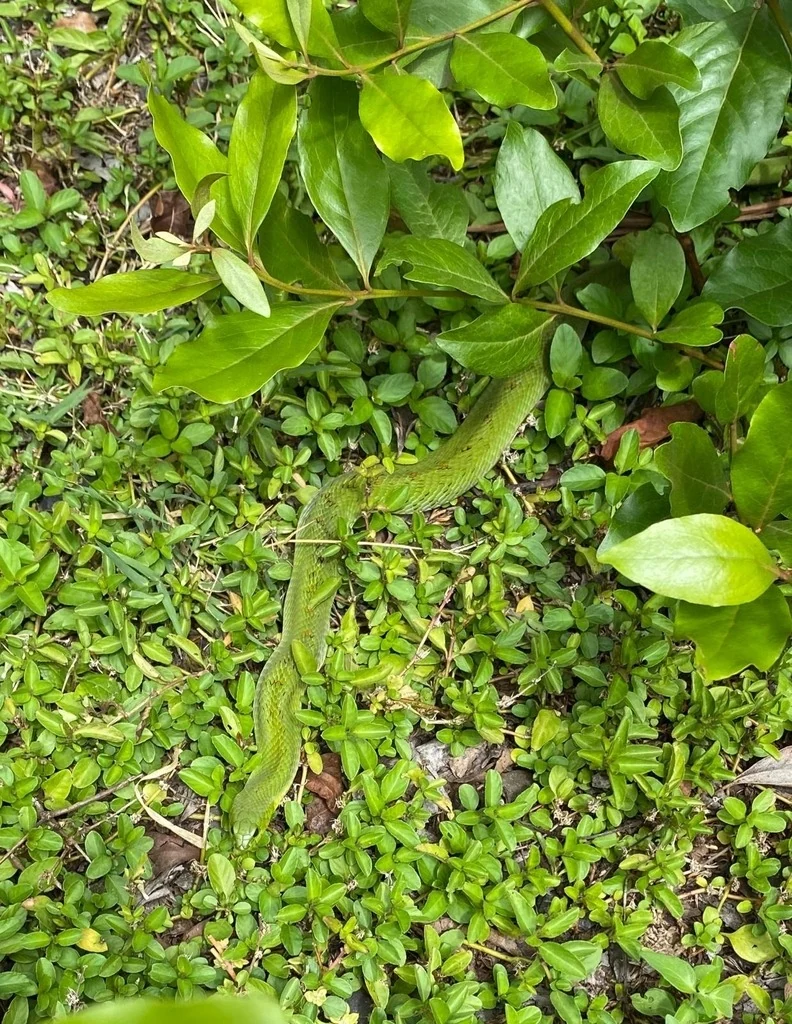
Causus resimus; C14, Kenia; photographed 2020-11-18.

007 · Viperidae

Green Night Adder

Causus resimus

(PETERS, 1862)

VenomousClinical severity not established

The current taxonomic treatment explicitly lists this country. This is country-scale checklist evidence, not a claim of continuous occupancy or a complete regional inventory.

Read the species account →

le0p0ld_d · CC BY 4.0 · https://creativecommons.org/licenses/by/4.0/

Causus rhombeatus, photographed 2014-11-21. Identification follows the linked research-grade observation.

008 · Viperidae

Common or Rhombic Night Adder

Causus rhombeatus

(LICHTENSTEIN, 1823)

VenomousClinical severity not established

The current taxonomic treatment explicitly lists this country. This is country-scale checklist evidence, not a claim of continuous occupancy or a complete regional inventory.

Read the species account →

Nigel Voaden · CC BY 4.0 · https://creativecommons.org/licenses/by/4.0/

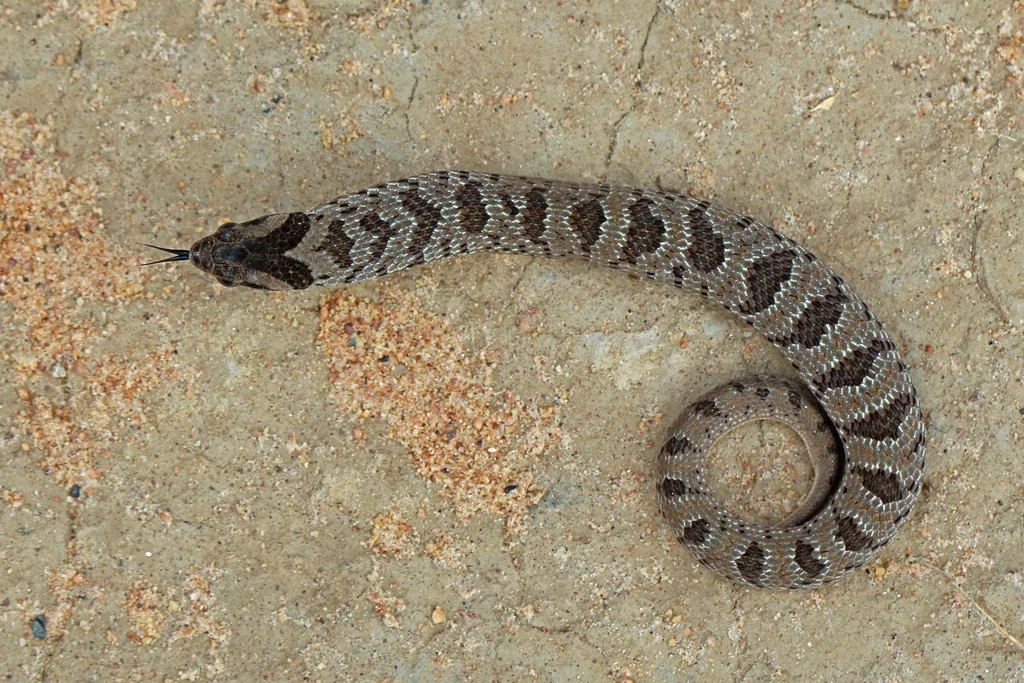
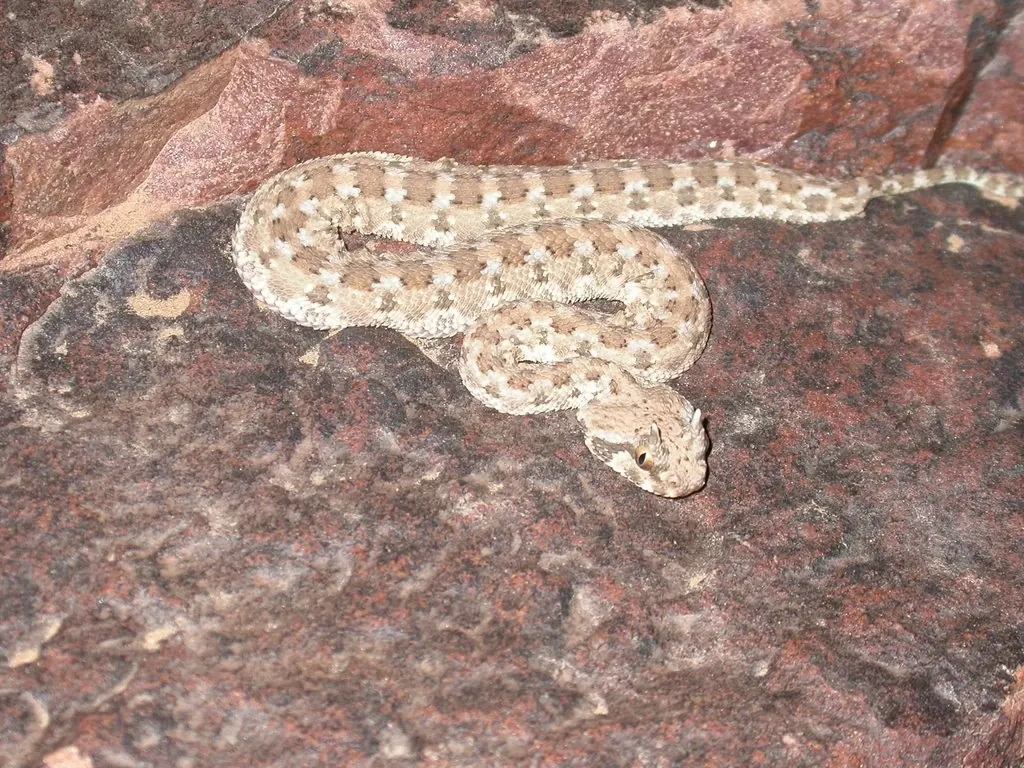
Cerastes cerastes. Identification follows the linked source community.

009 · Viperidae

Desert Horned Viper

Cerastes cerastes

(LINNAEUS, 1758)

VenomousClinical severity not established

Explicit country record in the current species treatment. The current taxonomic treatment explicitly lists this country. This is country-scale checklist evidence, not a claim of continuous occupancy or a complete regional inventory. Northern Nile & Khartoum: iNaturalist observation 372348261, recorded 2022-08-04. The current original record has agreeing…

Read the species account →

Julien Renoult · CC BY 4.0 · https://creativecommons.org/licenses/by/4.0/

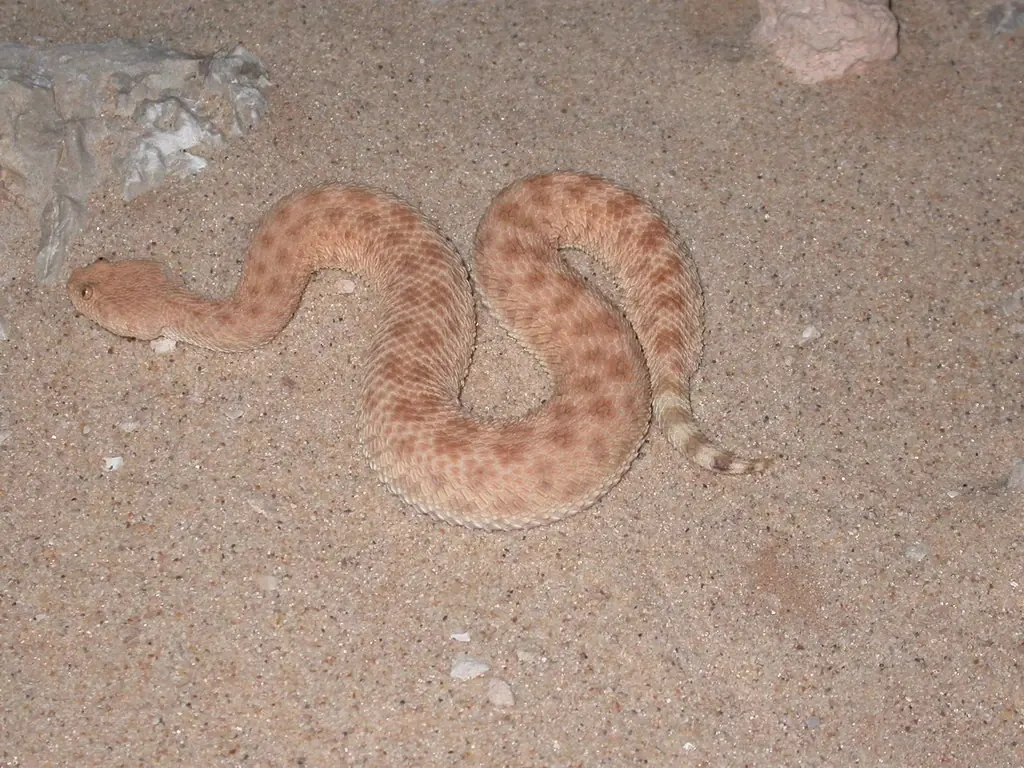
Cerastes vipera. Identification follows the linked source community.

010 · Viperidae

Sahara Sand Viper

Cerastes vipera

(LINNAEUS, 1758)

VenomousClinical severity not established

Explicit country record in the current species treatment. The current taxonomic treatment explicitly lists this country. This is country-scale checklist evidence, not a claim of continuous occupancy or a complete regional inventory.

Read the species account →

Julien Renoult · CC BY 4.0 · https://creativecommons.org/licenses/by/4.0/

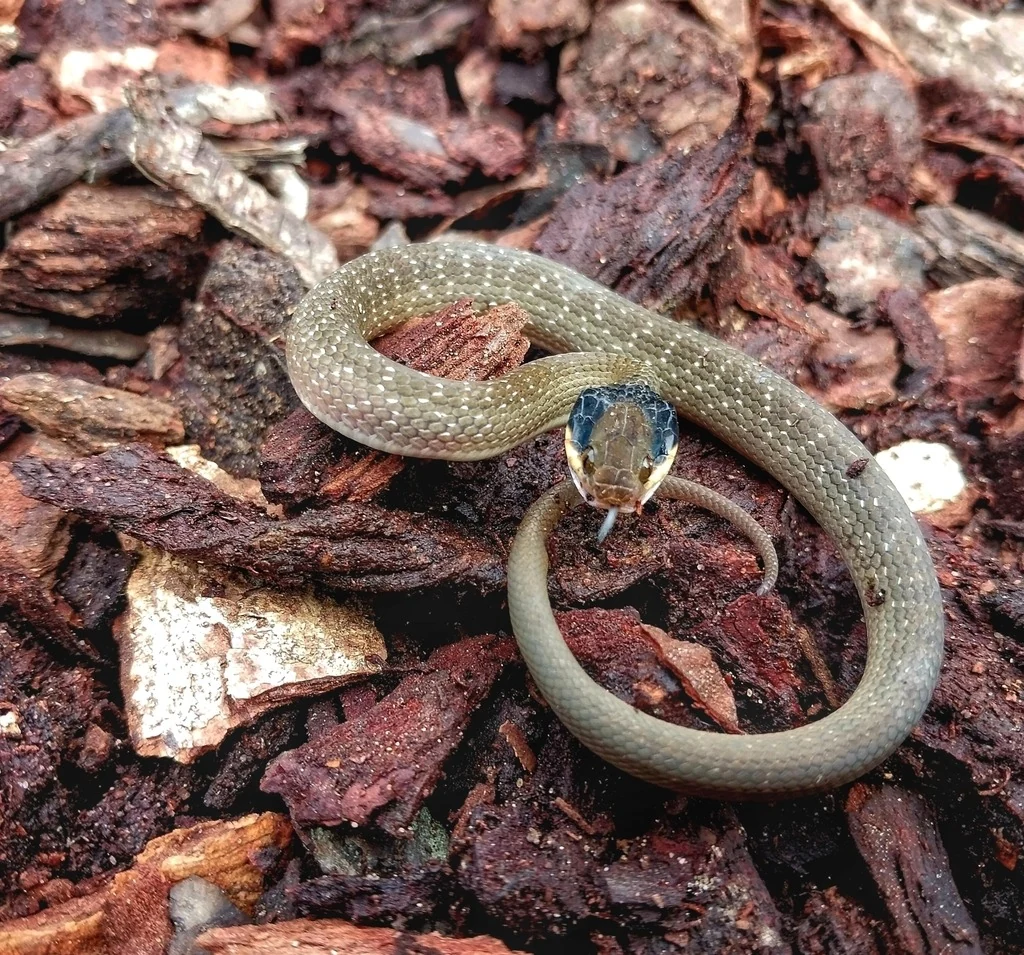
Crotaphopeltis hotamboeia; Campher's Drift, George, 6529, South Africa; photographed 2023-10-13.

012 · Colubridae

White-lipped Herald Snake, Red-lipped Snake

Crotaphopeltis hotamboeia

(LAURENTI, 1768)

Venom unknownNot yet assessed

The current taxonomic treatment explicitly lists this country. This is country-scale checklist evidence, not a claim of continuous occupancy or a complete regional inventory.

Read the species account →

no rights reserved · CC0 · https://creativecommons.org/publicdomain/zero/1.0/

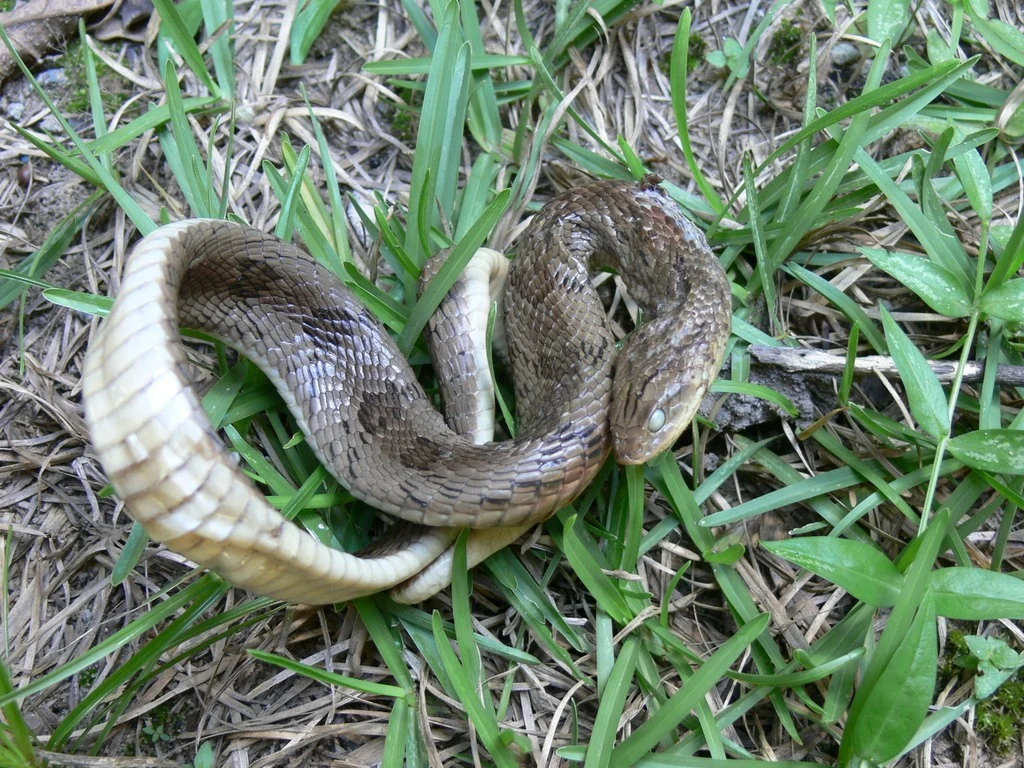
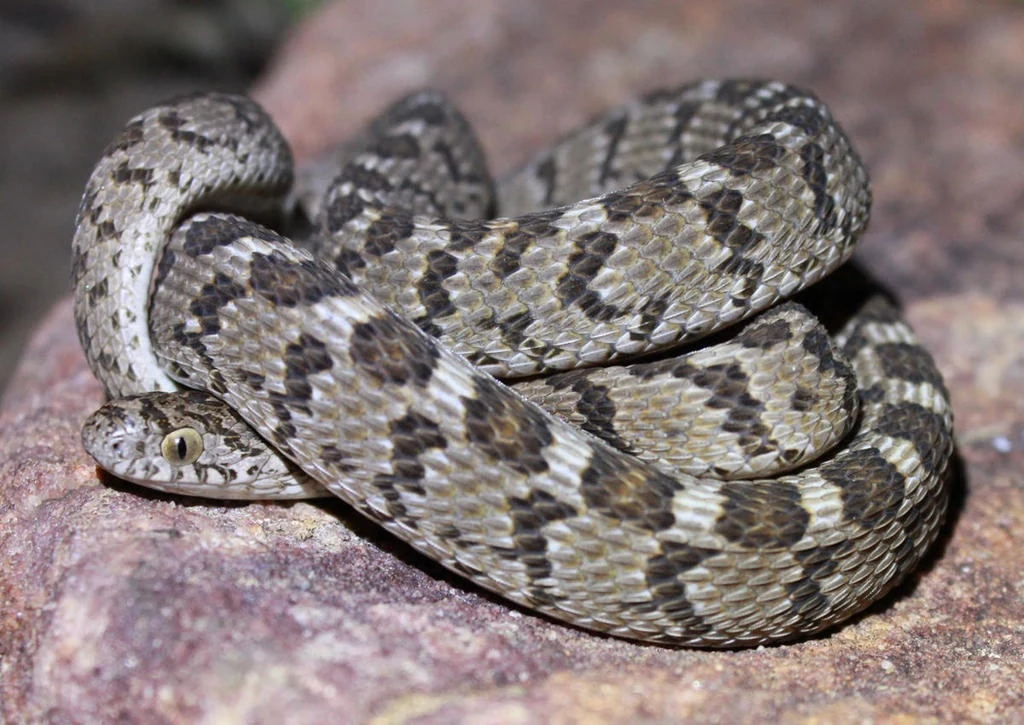
Dasypeltis scabra, photographed 2014-12-15. Identification follows the linked research-grade observation.

014 · Colubridae

Common Egg Eater, Rhombic Egg Eater

Dasypeltis scabra

(LINNAEUS, 1758)

Venom unknownNot yet assessed

The current taxonomic treatment explicitly lists this country. This is country-scale checklist evidence, not a claim of continuous occupancy or a complete regional inventory. Bates & Broadley (2018): 50 km north of Kutum, ZFMK 32479. Reviewed historical museum locality; no present-day population confirmation implied.

Read the species account →

Ryan van Huyssteen · CC BY 4.0 · https://creativecommons.org/licenses/by/4.0/

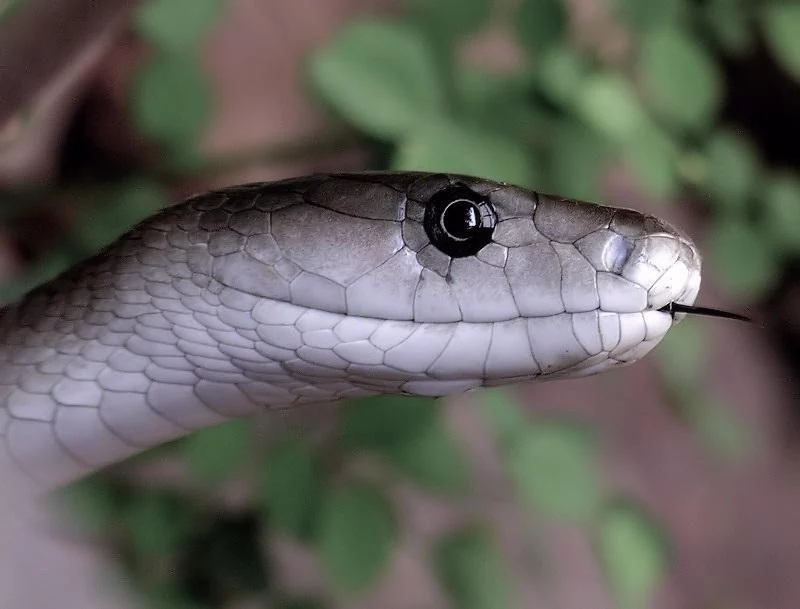
Dendroaspis polylepis; Blyde River bushveld and wetlands near Hoedspruit: Grassy woodland interspersed with seasonal pans, vleis and river channels.; photographed 2014-10-03.

015 · Elapidae

Black Mamba

Dendroaspis polylepis

GÜNTHER, 1864

VenomousPotentially life-threatening

The current taxonomic treatment explicitly lists this country. This is country-scale checklist evidence, not a claim of continuous occupancy or a complete regional inventory.

Read the species account →

Wynand Uys · CC BY 4.0 · https://creativecommons.org/licenses/by/4.0/

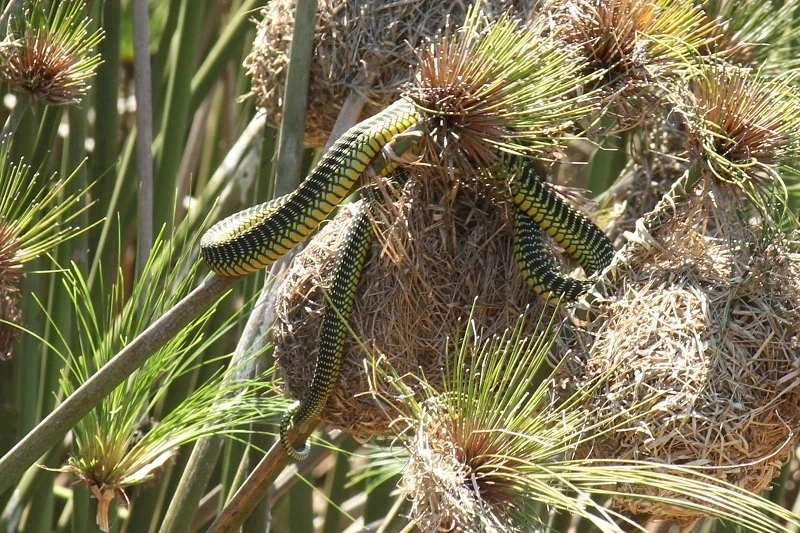
Dispholidus typus; South Cape DC, South Africa; photographed 2013-01-02.

016 · Colubridae

Boomslang

Dispholidus typus

(SMITH, 1828)

VenomousClinical severity not established

The current taxonomic treatment explicitly lists this country. This is country-scale checklist evidence, not a claim of continuous occupancy or a complete regional inventory.

Read the species account →

Karen Eichholz · CC BY 4.0 · https://creativecommons.org/licenses/by/4.0/

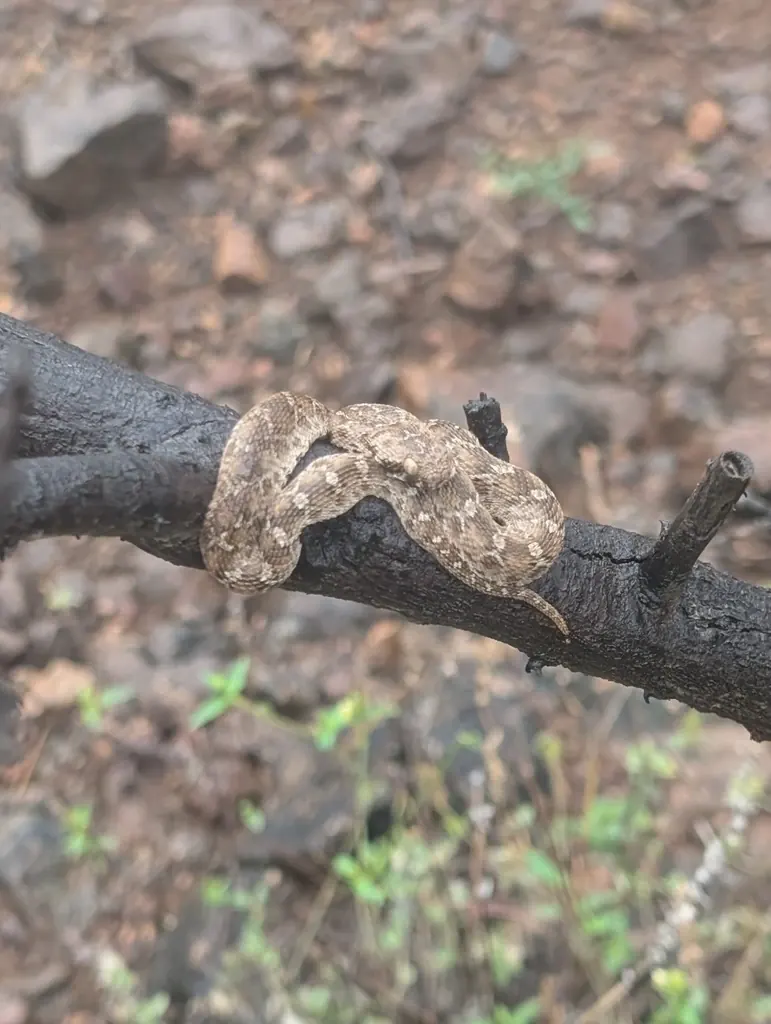
Echis pyramidum. Identification follows the linked source community.

017 · Viperidae

North-East African Carpet Viper, Egyptian Saw-scaled Viper

Echis pyramidum

(GEOFFROY SAINT-HILAIRE, 1827)

VenomousClinical severity not established

The current taxonomic treatment explicitly lists this country. This is country-scale checklist evidence, not a claim of continuous occupancy or a complete regional inventory. Red Sea & eastern states: iNaturalist observation 294146799, recorded 2025-06-30. The current original record has agreeing research-grade identification, wild status and…

Read the species account →

Elliot Kulakow · CC BY 4.0 · https://creativecommons.org/licenses/by/4.0/

ElapidaeElapsoideaPhotograph not yet documented

018 · Elapidae

Werner's Garter Snake

Elapsoidea laticincta

(WERNER, 1919)

VenomousClinical severity not established

The current taxonomic treatment explicitly lists this country. This is country-scale checklist evidence, not a claim of continuous occupancy or a complete regional inventory. The Reptile Database lists Kadugli, Kordofan as the type locality and NMW 19068 as the holotype. Kadugli lies in modern Sudan and the mapped Kordofan region; the source’s additional…

Read the species account →
Elapsoidea semiannulata; Yankari, Nigéria; photographed 2008-07-15.

019 · Elapidae

Angolan Garter Snake

Elapsoidea semiannulata

BOCAGE, 1882

VenomousClinical severity not established

The current taxonomic treatment explicitly lists this country. This is country-scale checklist evidence, not a claim of continuous occupancy or a complete regional inventory.

Read the species account →

Fábio Olmos · CC BY 4.0 · https://creativecommons.org/licenses/by/4.0/

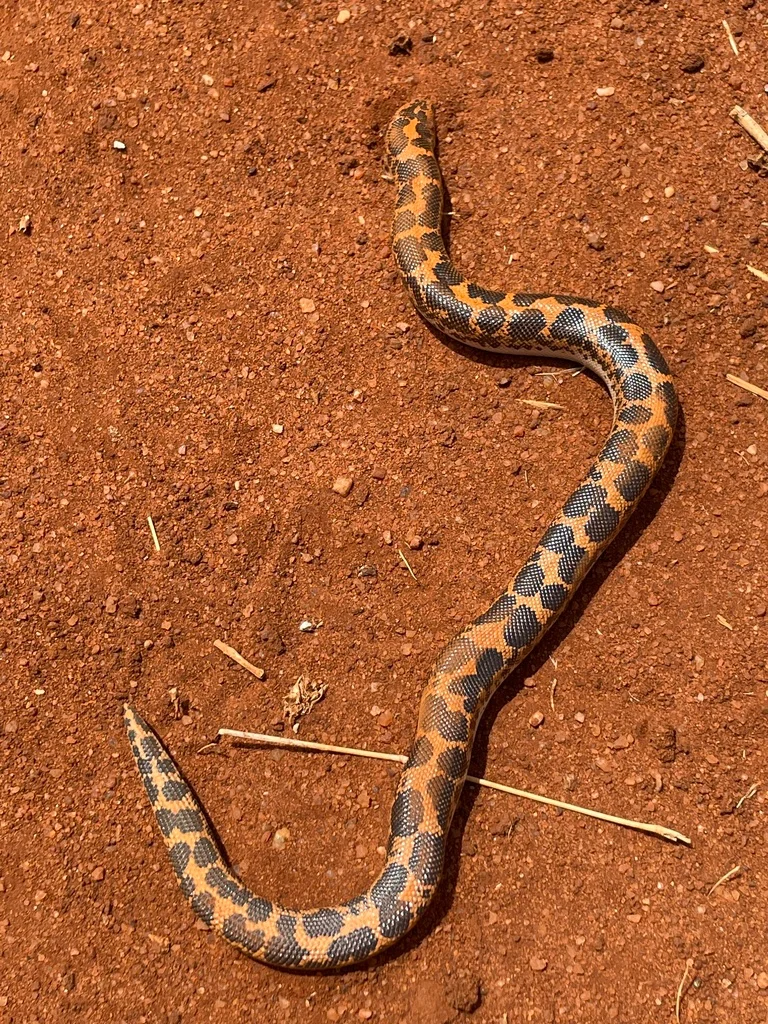
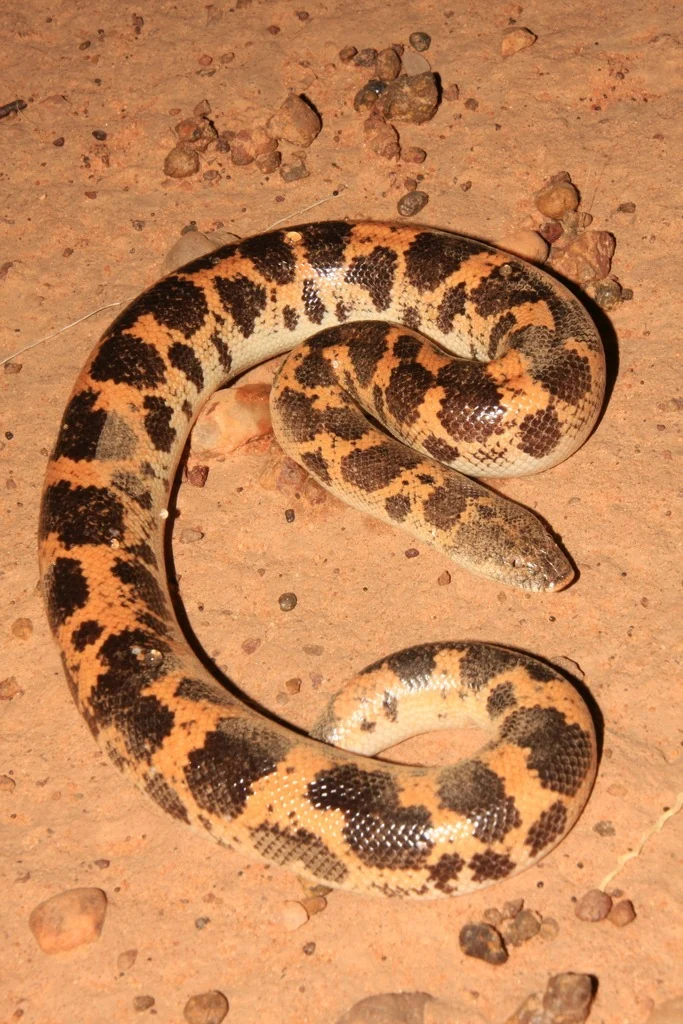
Eryx colubrinus, Kajiado, Kenya; photographed 2021-11-05.

020 · Boidae

Sand Boa

Eryx colubrinus

(LINNAEUS, 1758)

Non-venomous

The current taxonomic treatment explicitly lists this country. This is country-scale checklist evidence, not a claim of continuous occupancy or a complete regional inventory. Northern Nile & Khartoum: iNaturalist observation 201348705, recorded 2023-11-03. The current original record has agreeing research-grade identification, wild status and…

Read the species account →

Stephanie Dolrenry · CC BY-SA 4.0 · https://creativecommons.org/licenses/by-sa/4.0/

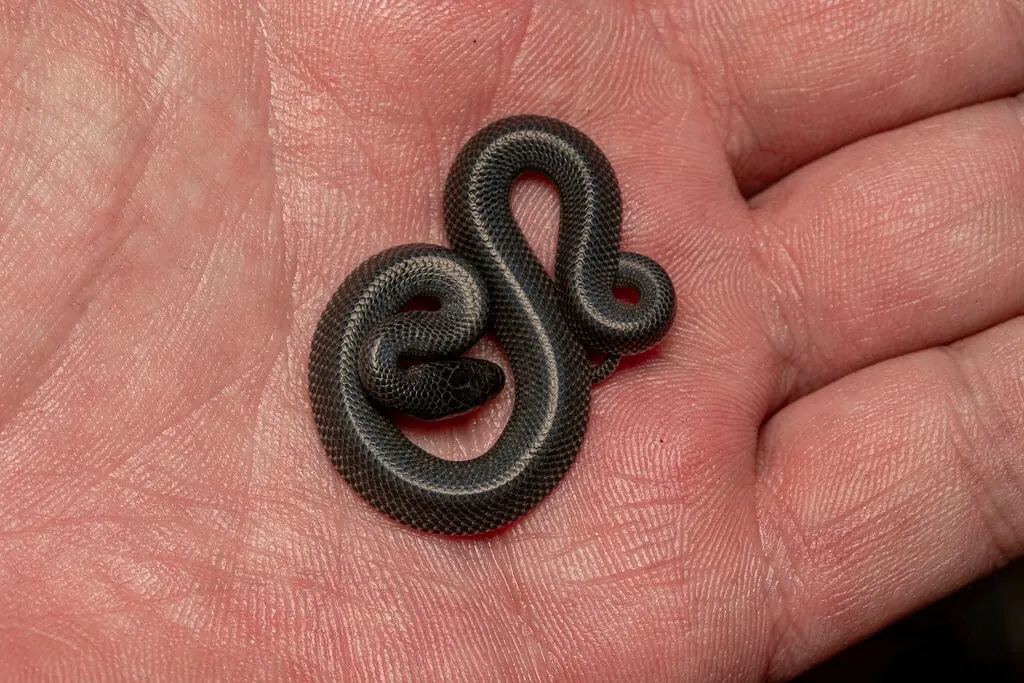
Eryx muelleri; Poudriere, Niamey, Niger; photographed 2016-11-24.

021 · Boidae

Müller’s sand boa

Eryx muelleri

(BOULENGER, 1892)

Non-venomous

The current taxonomic treatment explicitly lists this country. This is country-scale checklist evidence, not a claim of continuous occupancy or a complete regional inventory.

Read the species account →

B. P. White · CC BY-SA 4.0 · https://creativecommons.org/licenses/by-sa/4.0/

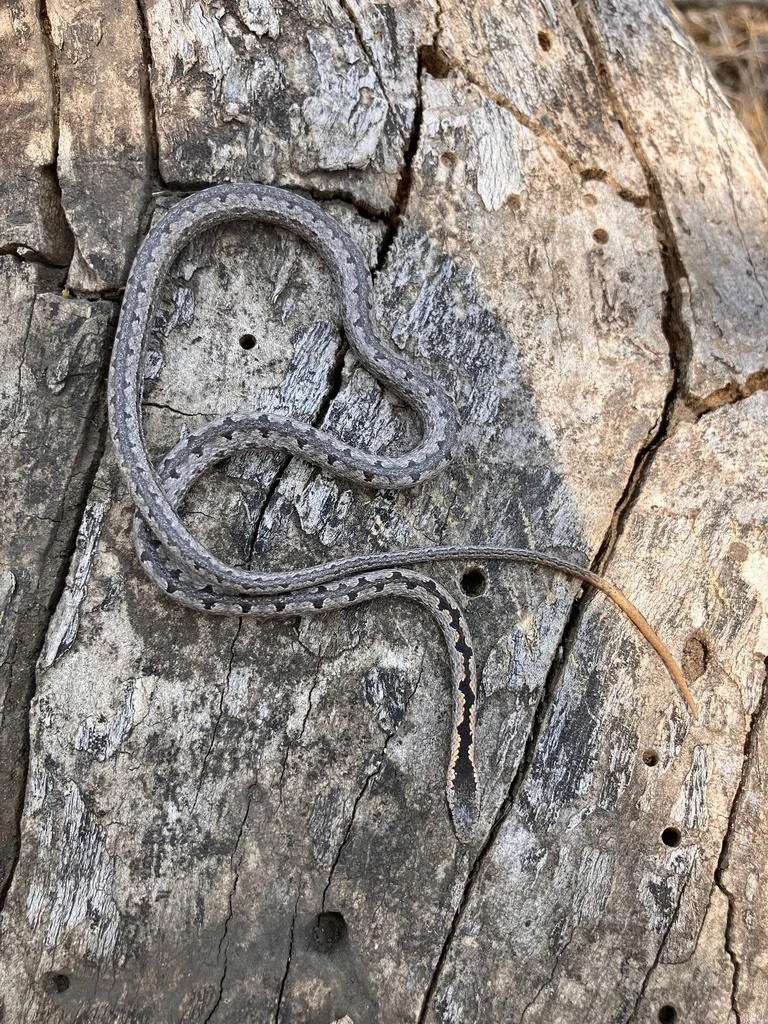
Hemirhagerrhis nototaenia; Kruger National Park, Musina, LP, ZA; photographed 2022-09-30.

023 · Psammophiidae

(South-) Eastern Bark Snake, Mopane Snake

Hemirhagerrhis nototaenia

(GÜNTHER, 1864)

Venom unknownNot yet assessed

The current taxonomic treatment explicitly lists this country. This is country-scale checklist evidence, not a claim of continuous occupancy or a complete regional inventory.

Read the species account →

no rights reserved · CC0 · https://creativecommons.org/publicdomain/zero/1.0/

Lycophidion capense. Identification follows the linked source community.

024 · Lamprophiidae

Cape Wolf Snake

Lycophidion capense

(SMITH, 1831)

Non-venomous

Explicit country record in the current species treatment. The current taxonomic treatment explicitly lists this country. This is country-scale checklist evidence, not a claim of continuous occupancy or a complete regional inventory.

Read the species account →

Rudolph Steenkamp · CC BY-SA 4.0 · https://creativecommons.org/licenses/by-sa/4.0/

The research library

Sources & the checklist.

This edition lists 59 species with supported country records from checked taxonomic treatments and cited field studies. It is not a claim of a complete national inventory. Each account retains its source and check date; individual evidence entries retain their own review dates.

Range and taxonomy review

Country links use a single accepted species identity. Revised names and disputed records are kept visible here; uncertain records do not enter the listed collection or regional totals.

Psammophis sibilans

Uncertain — excluded from the listed total

The checked treatment contains a conflicting, superseded or insufficiently corroborated country report. It is retained for review and excluded from positive counts; this is not an assertion of absence.

Source 1 ↗
Amblyodipsas unicolor

Uncertain — excluded from the listed total

The checked treatment contains a conflicting, superseded or insufficiently corroborated country report. It is retained for review and excluded from positive counts; this is not an assertion of absence.

Source 1 ↗
Atractaspis magrettii

Uncertain — excluded from the listed total

The source uses Sudan without independently resolving the pre-2011 geographic scope. A modern-country locality is still required.

Source 1 ↗

Dasypeltis fasciata

Uncertain — excluded from the listed total

The checked treatment contains a conflicting, superseded or insufficiently corroborated country report. It is retained for review and excluded from positive counts; this is not an assertion of absence.

Source 1 ↗
Eirenis africanus

Uncertain — excluded from the listed total

The source uses Sudan without independently resolving the pre-2011 geographic scope. A modern-country locality is still required.

Source 1 ↗

Lycophidion taylori

Uncertain — excluded from the listed total

The source uses Sudan without independently resolving the pre-2011 geographic scope. A modern-country locality is still required.

Source 1 ↗

Lytorhynchus diadema

Uncertain — excluded from the listed total

The source uses Sudan without independently resolving the pre-2011 geographic scope. A modern-country locality is still required.

Source 1 ↗

Myriopholis adleri

Uncertain — excluded from the listed total

The source uses Sudan without independently resolving the pre-2011 geographic scope. A modern-country locality is still required.

Source 1 ↗

Myriopholis boueti

Uncertain — excluded from the listed total

The source uses Sudan without independently resolving the pre-2011 geographic scope. A modern-country locality is still required.

Source 1 ↗

Naja subfulva

Uncertain — excluded from the listed total

The source uses Sudan without independently resolving the pre-2011 geographic scope. A modern-country locality is still required.

Source 1 ↗

Platyceps saharicus

Uncertain — excluded from the listed total

The source uses Sudan without independently resolving the pre-2011 geographic scope. A modern-country locality is still required.

Source 1 ↗

Psammophis orientalis

Uncertain — excluded from the listed total

The source uses Sudan without independently resolving the pre-2011 geographic scope. A modern-country locality is still required.

Source 1 ↗

Psammophis praeornatus

Uncertain — excluded from the listed total

The source uses Sudan without independently resolving the pre-2011 geographic scope. A modern-country locality is still required.

Source 1 ↗

Psammophis subtaeniatus

Uncertain — excluded from the listed total

The source uses Sudan without independently resolving the pre-2011 geographic scope. A modern-country locality is still required.

Source 1 ↗

Telescopus obtusus

Uncertain — excluded from the listed total

The source uses Sudan without independently resolving the pre-2011 geographic scope. A modern-country locality is still required.

Source 1 ↗

Telescopus variegatus

Uncertain — excluded from the listed total

The checked treatment contains a conflicting, superseded or insufficiently corroborated country report. It is retained for review and excluded from positive counts; this is not an assertion of absence.

Source 1 ↗
How the map and counts work

Search results were checked against distribution text and taxonomic qualifications. A geographic name alone does not establish a political country: New Guinea, the Solomon archipelago and Micronesia span more than one country or territory. Introduced and unresolved records require separate interpretation.

Place counts require explicit named localities, including valid type localities. Counts can overlap where sources name multiple places. Regional maps group historical boundary snapshots for navigation, while island outlines use Natural Earth; neither is a species range or an observation map. Small islands can be below the outline dataset’s resolution, so geographic reference markers and the directory remain available.

Information Management Working Group (IMWG), OCHA ROSEA; geoBoundaries gbOpen ADM1, 2020 snapshot; Creative Commons Attribution 3.0 Intergovernmental Organisations (CC BY 3.0 IGO). Map provenance →

Exclusions & qualifications (17)

Amblyodipsas unicolor

The checked treatment contains a conflicting, superseded or insufficiently corroborated country report. It is retained for review and excluded from positive counts; this is not an assertion of absence.

Read source 1 ↗

Atractaspis magrettii

The source uses Sudan without independently resolving the pre-2011 geographic scope. A modern-country locality is still required.

Read source 1 ↗

Dasypeltis fasciata

The checked treatment contains a conflicting, superseded or insufficiently corroborated country report. It is retained for review and excluded from positive counts; this is not an assertion of absence.

Read source 1 ↗

Eirenis africanus

The source uses Sudan without independently resolving the pre-2011 geographic scope. A modern-country locality is still required.

Read source 1 ↗

Lycophidion taylori

The source uses Sudan without independently resolving the pre-2011 geographic scope. A modern-country locality is still required.

Read source 1 ↗

Lytorhynchus diadema

The source uses Sudan without independently resolving the pre-2011 geographic scope. A modern-country locality is still required.

Read source 1 ↗

Myriopholis adleri

The source uses Sudan without independently resolving the pre-2011 geographic scope. A modern-country locality is still required.

Read source 1 ↗

Myriopholis boueti

The source uses Sudan without independently resolving the pre-2011 geographic scope. A modern-country locality is still required.

Read source 1 ↗

Naja subfulva

The source uses Sudan without independently resolving the pre-2011 geographic scope. A modern-country locality is still required.

Read source 1 ↗

Platyceps saharicus

The source uses Sudan without independently resolving the pre-2011 geographic scope. A modern-country locality is still required.

Read source 1 ↗

Psammophis orientalis

The source uses Sudan without independently resolving the pre-2011 geographic scope. A modern-country locality is still required.

Read source 1 ↗

Psammophis praeornatus

The source uses Sudan without independently resolving the pre-2011 geographic scope. A modern-country locality is still required.

Read source 1 ↗

Psammophis sibilans

The checked treatment contains a conflicting, superseded or insufficiently corroborated country report. It is retained for review and excluded from positive counts; this is not an assertion of absence.

Read source 1 ↗

Psammophis subtaeniatus

The source uses Sudan without independently resolving the pre-2011 geographic scope. A modern-country locality is still required.

Read source 1 ↗

Telescopus gezirae

The source uses Sudan without independently resolving the pre-2011 geographic scope. A modern-country locality is still required.

Read source 1 ↗

Telescopus obtusus

The source uses Sudan without independently resolving the pre-2011 geographic scope. A modern-country locality is still required.

Read source 1 ↗

Telescopus variegatus

The checked treatment contains a conflicting, superseded or insufficiently corroborated country report. It is retained for review and excluded from positive counts; this is not an assertion of absence.

Read source 1 ↗
  1. Map boundaries, snapshot and group membership ↗
  2. Ramsar · Dinder National Park information sheet ↗
  3. The Reptile Database

    Individual treatments and locality evidence are linked from each species account.

  4. Meiri (2024): SquamBase 1.0

    Species-level literature measurements and ecological traits. Exact-name matches only; imputed or ambiguous fields are omitted. These summaries are not local observations.

  5. Natural Earth: public-domain geographic data

Continue through the Africa atlas →