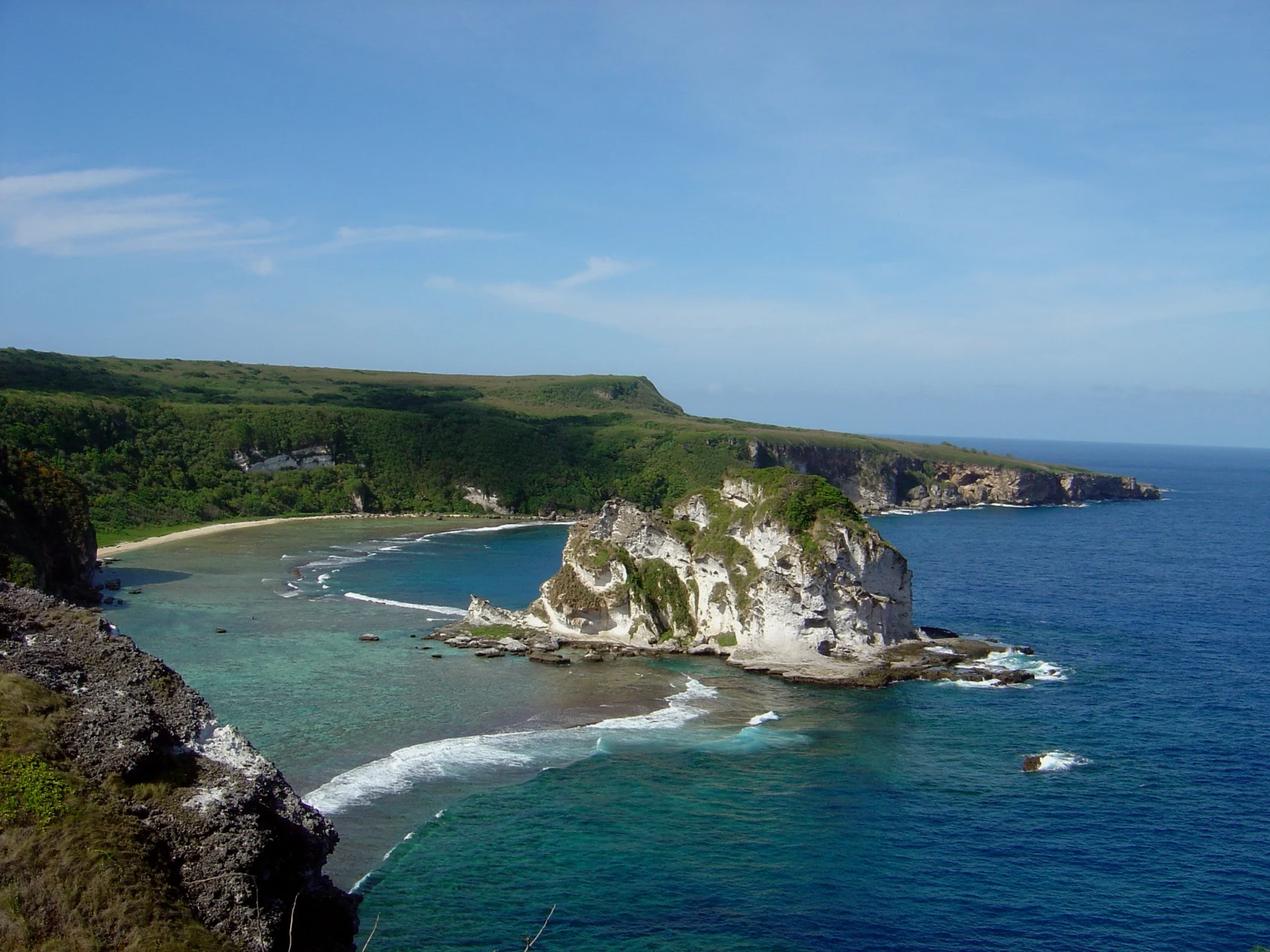
Bird Island and its surrounding coast, Saipan, Northern Mariana Islands.

Northern Mariana Islands · The country atlas

Northern Mariana Islands

Explore Northern Mariana Islands through its named islands and the snake records that can be traced to them.

2species with extracted evidence
2families
4island guides

Bird Island and its surrounding coast, Saipan, Northern Mariana Islands.

Photograph: David Burdick. · Image source · Public domain. Cropped to fill the hero; darkened for text legibility.

Geography & biotopes

Discover Northern Mariana Islands.

Explore Northern Mariana Islands through its named islands and the snake records that can be traced to them.

Start with the islands on the map, then read the source behind each record. Country-level evidence remains separate from island-level evidence. A small or empty collection describes the limits of this atlas, not the absence of snakes.

Geography is part of the record

Find your way through Northern Mariana Islands.

Select a named island to open its evidence page. The complete directory below keeps every guide accessible, including places where locality evidence has not yet been extracted.

2 of 2 listed species have at least one indexed island record. 0 remain country-only. Even a nonzero count is not a complete regional inventory.

Read the environment

Explore the habitat evidence.

Follow the environmental descriptions already indexed in species treatments. Missing habitat groups indicate gaps in the extracted evidence.

Images & licences

Bird Island and its surrounding coast, Saipan, Northern Mariana Islands. — David Burdick.. Original image · Public domain. Resized to WebP and cropped for display. Regional images do not establish snake occurrence.

Bird Island and its surrounding coast, Saipan, Northern Mariana Islands. — David Burdick.. Original image · Public domain. Resized to WebP and cropped for display. Regional images do not establish snake occurrence.

Palms grow above the frozen lava coastline of Agrihan, Northern Mariana Islands. The NOAA caption identifies Agrihan; its broad location field also mentions Saipan. — Allen Shimada, NOAA/NMFS/OST. Original image · CC BY 2.0. Resized to WebP and cropped for display. Regional images do not establish snake occurrence.

Rocky coastline, coastal vegetation and open sea on Rota, photographed in February 2006. — CT Snow from Hsinchu, Taiwan. Original image · CC BY 2.0. Resized to WebP and cropped for display. Regional images do not establish snake occurrence.

Pagan Island and a volcanic plume, photographed from orbit; Northern Mariana Islands. — NASA. Original image · Public domain. Resized to WebP and cropped for display. Regional images do not establish snake occurrence.

Unillustrated habitats retain a labelled image reserve. The global satellite composite, where used, is explicitly identified in the hero credit.
The species catalogue

Meet the snakes of Northern Mariana Islands.

Search scientific names, historical names, common names and families. Every card opens one shared account across its documented countries.

2 species · showing 2

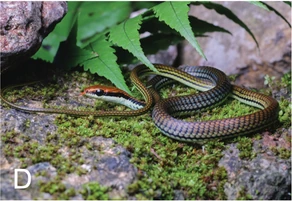
Dendrelaphis philippinensis. Photographed alive in Samar Island Natural Park, Philippines. Figure5D. Isolated source photograph; no new occurrence record is inferred.

001 · Colubridae

Philippine Bronze-back Tree Snakeweinell

Dendrelaphis philippinensis

(GÜNTHER, 1879)

Non-venomous

Northern Mariana Islands: Saipan.

Read the species account →

Diesmos, Mae Lowe L.; del Prado, Yñigo Luis C.; Kim, Paulo Miguel M.; Caguimbal, Niño Andree Louis E.; Venturina, Russell Evan L.; Lorenzo II, Antonio N.; Diesmos, Arvin C. · CC BY 4.0 · https://creativecommons.org/licenses/by/4.0/

Indotyphlops braminus — photographed on Ko Pha-ngan, Thailand.

002 · Typhlopidae

Flowerpot Snake

Indotyphlops braminus

(DAUDIN, 1803)

Non-venomous

Northern Marianas: records include Saipan and Rota; ancient origins remain debated.

Read the species account →

Cook-Price, Makchai & Suwanwaree (2026); photographs credited collectively to the author, James Covert and Vikas Kumar · CC BY 4.0 · https://creativecommons.org/licenses/by/4.0/

The research library

Sources & the checklist.

This edition lists 2 species with supported country records from checked taxonomic treatments and cited field studies. This total includes 1 record marked as introduced; it is not a native-species total. It is not a claim of a complete national inventory. Each account retains its source and check date; individual evidence entries retain their own review dates.

Reviewed occurrence evidence

Reviewed country and locality records

Range and taxonomy review

Country links use a single accepted species identity. Revised names and disputed records are kept visible here; uncertain records do not enter the listed collection or regional totals.

How the map and counts work

Search results were checked against distribution text and taxonomic qualifications. A geographic name alone does not establish a political country: New Guinea, the Solomon archipelago and Micronesia span more than one country or territory. Introduced and unresolved records require separate interpretation.

Place counts require explicit named localities, including valid type localities. Counts can overlap where sources name multiple places. Regional maps group historical boundary snapshots for navigation, while island outlines use Natural Earth; neither is a species range or an observation map. Small islands can be below the outline dataset’s resolution, so geographic reference markers and the directory remain available.

Natural Earth 1:10m · public domain. Island label positions are geographic references, not observations. Map provenance →

Exclusions & qualifications (1)

Chlorosoma laticeps

The checked distribution does not establish this political country or territory. A search match or broad ocean/archipelago name alone is insufficient.

Read source 1 ↗
  1. The Reptile Database

    Individual treatments and locality evidence are linked from each species account.

  2. Meiri (2024): SquamBase 1.0

    Species-level literature measurements and ecological traits. Exact-name matches only; imputed or ambiguous fields are omitted. These summaries are not local observations.

  3. Natural Earth: public-domain geographic data

Continue through the Oceania atlas →
