


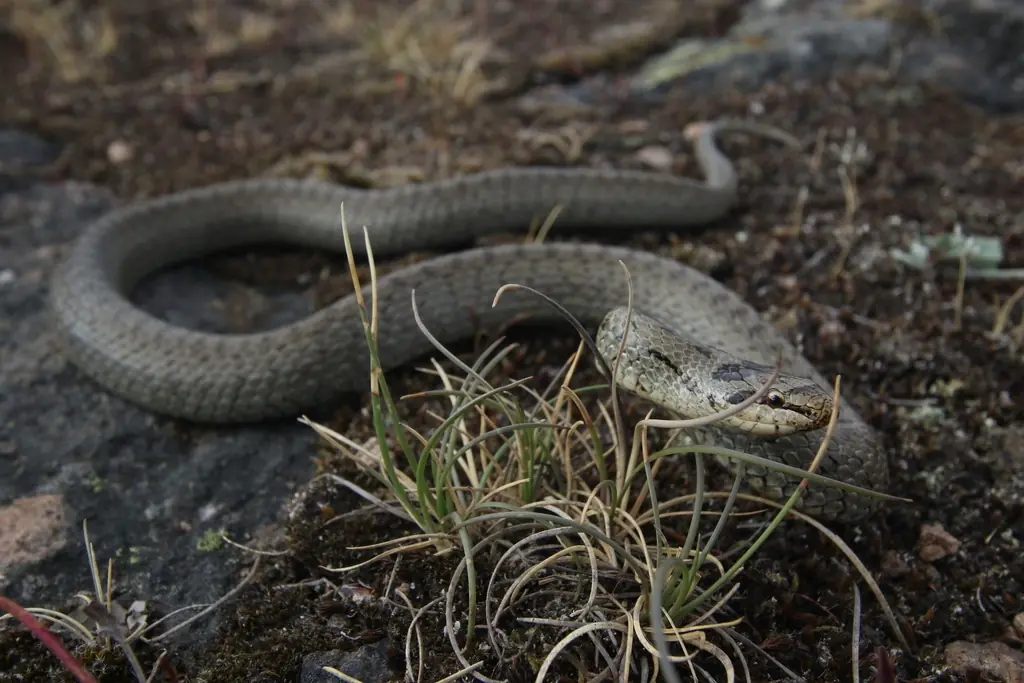
001 · Colubridae
Smooth Snake
Coronella austriaca
Venom unknownNot yet assessedExplicit country record in the checked taxonomic treatment.
Read the species account →B. P. White · CC BY-SA 4.0 · https://creativecommons.org/licenses/by-sa/4.0/
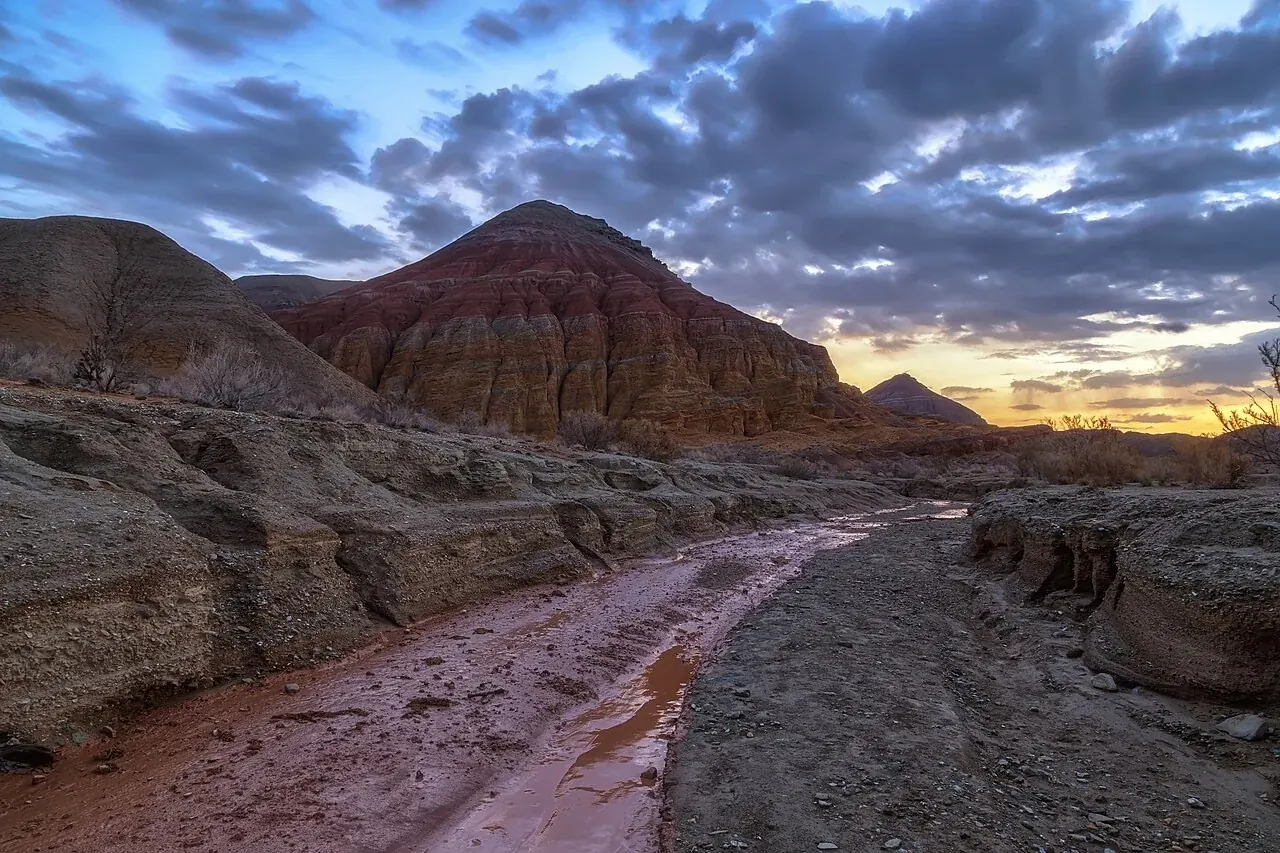
Kazakhstan · The country atlas
Steppe, desert, mountain belts and Caspian waters form a broad continental mosaic.
Aktau badlands in Altyn-Emel National Park, Kazakhstan.
Geography & biotopes
Steppe, desert, mountain belts and Caspian waters form a broad continental mosaic.
Regions group the administrative outlines in the credited historical snapshot; their names do not claim current administrative status. Each locality keeps its own country, island and habitat evidence. Country collections show supported atlas records, not an exhaustive national checklist.
geoBoundaries · ADM1 boundary provenance →
Kazakhstan - National Report to the Convention on Biological Diversity →
Habitats & living landscapes
Explore 4 guides to the environments, places and conservation pressures that shape this country. Each guide connects to the regional map and shared species accounts.
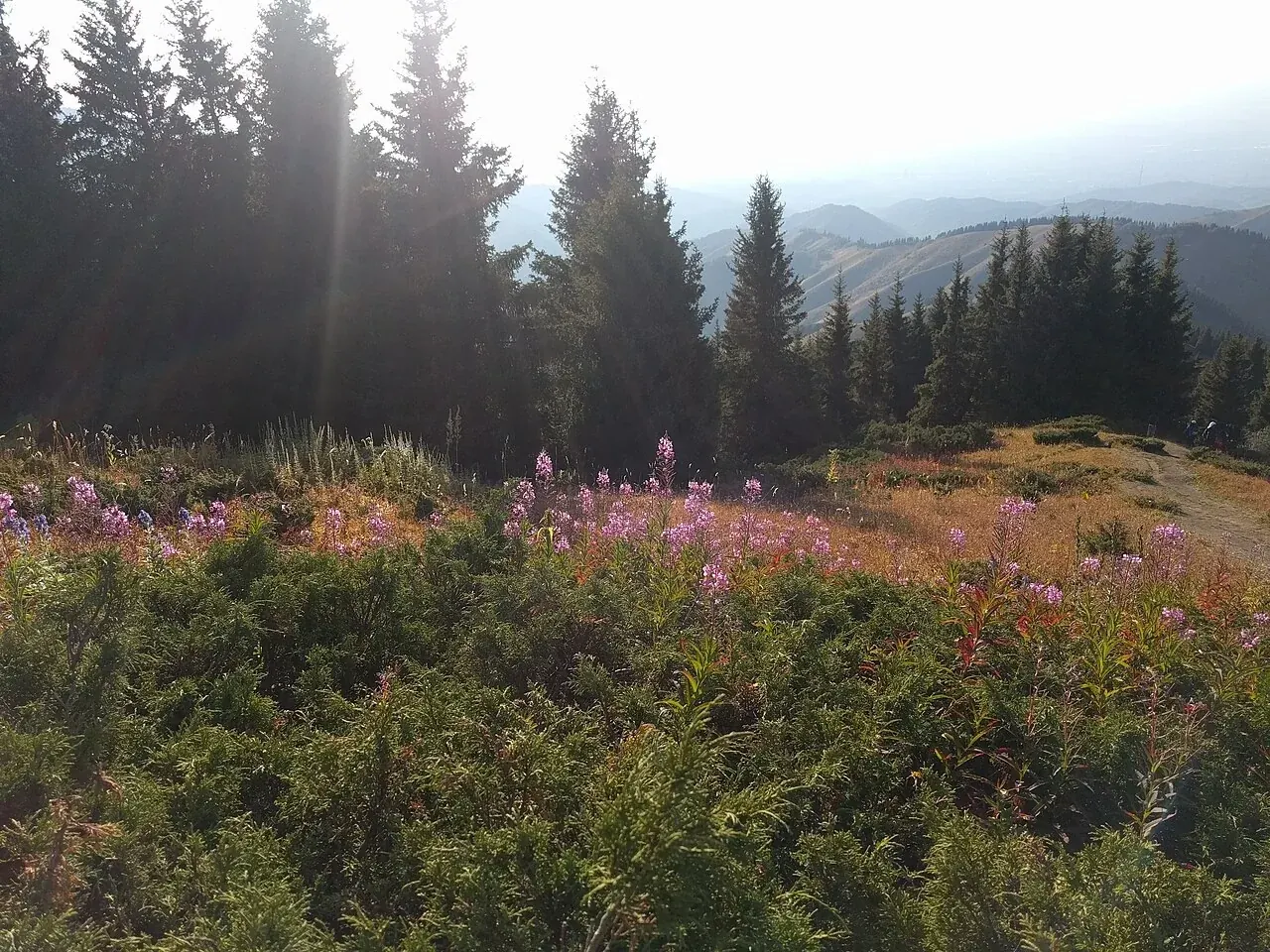
Habitat · 01
Explore the documented landscape around Western Tien Shan. The named example anchors this guide; the country map and separately sourced species accounts answer different questions.
Explore the habitat ↗Habitat · 02
Explore the documented landscape around Turan desert landscapes. The named example anchors this guide; the country map and separately sourced species accounts answer different questions.
Explore the habitat ↗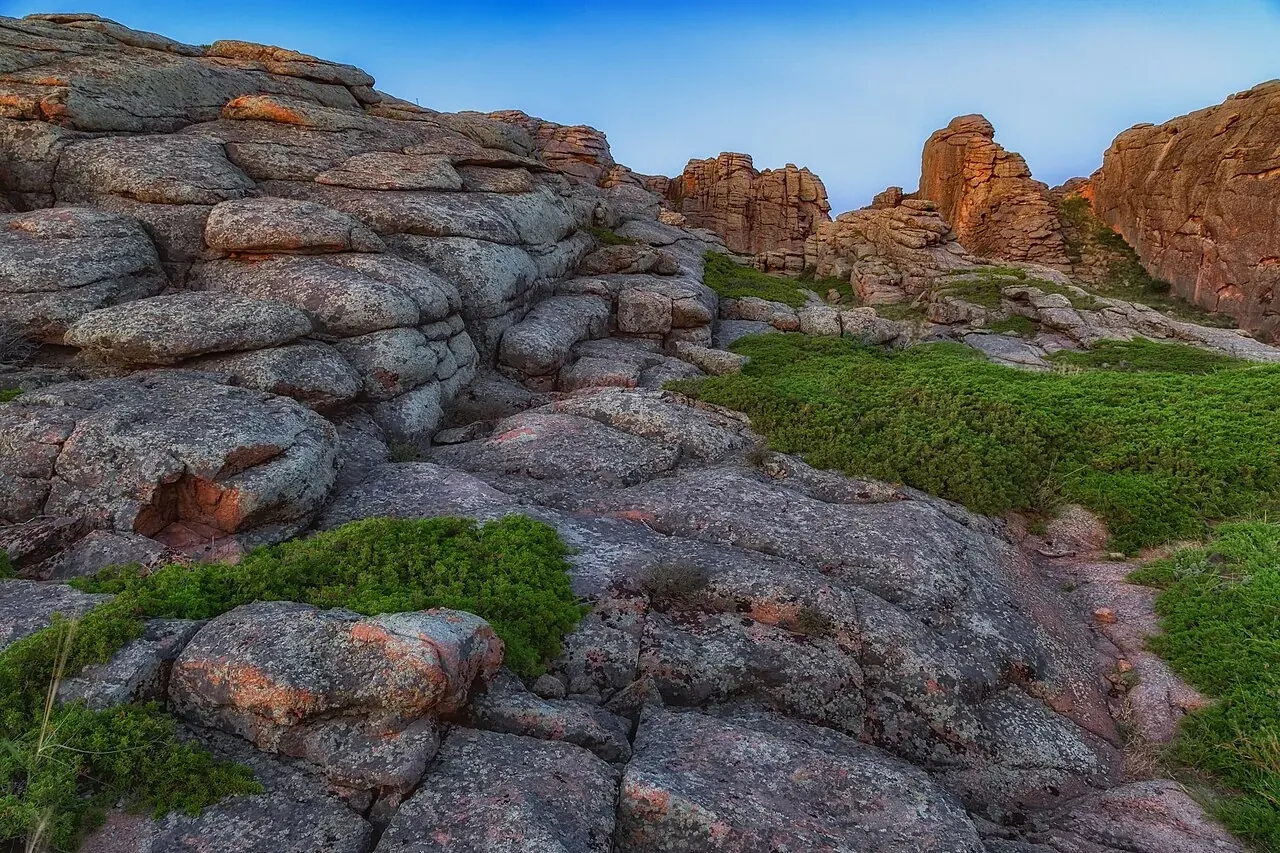
Habitat · 03
Explore the documented landscape around Saryarka steppe. The named example anchors this guide; the country map and separately sourced species accounts answer different questions.
Explore the habitat ↗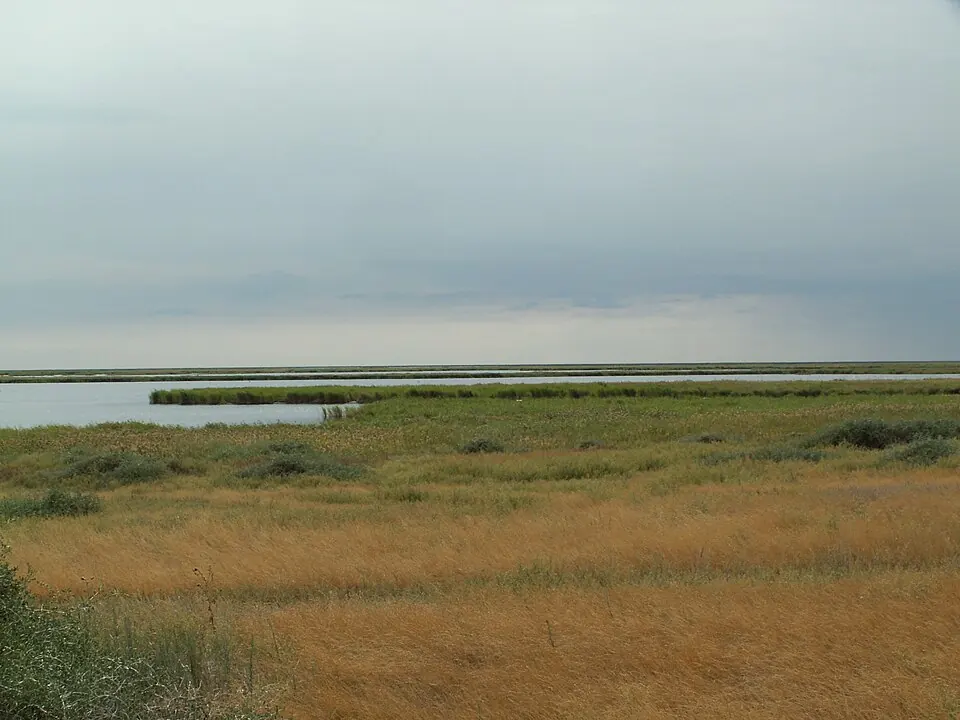
Habitat · 04
Explore the documented landscape around Korgalzhyn lakes. The named example anchors this guide; the country map and separately sourced species accounts answer different questions.
Explore the habitat ↗Late-summer vegetation and spruce at Ile-Alatau National Park, Kazakhstan. — Aidos.taibekuly. Original photograph · CC BY-SA 4.0. Cropped for the cards; photographs do not establish snake occurrence.
Aktau badlands in Altyn-Emel National Park, Kazakhstan. — Astrobond. Original photograph · CC BY-SA 4.0. Cropped for the cards; photographs do not establish snake occurrence.
Rock outcrops and grassy openings in the Edrey Mountains, Karaganda Region, Kazakhstan. — Astrobond. Original photograph · CC BY-SA 4.0. Cropped for the cards; photographs do not establish snake occurrence.
Open water and broad reed-fringed wetland margins in Korgalzhyn Nature Reserve, Kazakhstan. The source does not specify the individual lake or water salinity. — Tomiris. Original photograph · CC BY-SA 3.0. Cropped for the cards; photographs do not establish snake occurrence.
The species catalogue
Search scientific names, historical names, common names and families. Every card opens one shared account across its documented countries.
19 species · showing 19
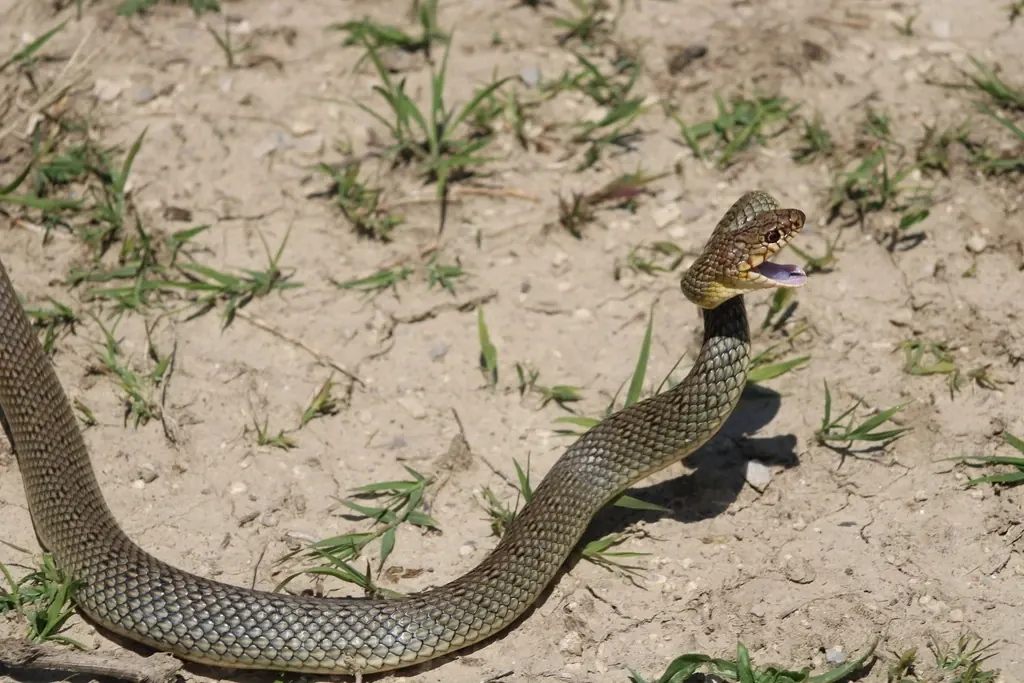
001 · Colubridae
Smooth Snake
Explicit country record in the checked taxonomic treatment.
Read the species account →B. P. White · CC BY-SA 4.0 · https://creativecommons.org/licenses/by-sa/4.0/
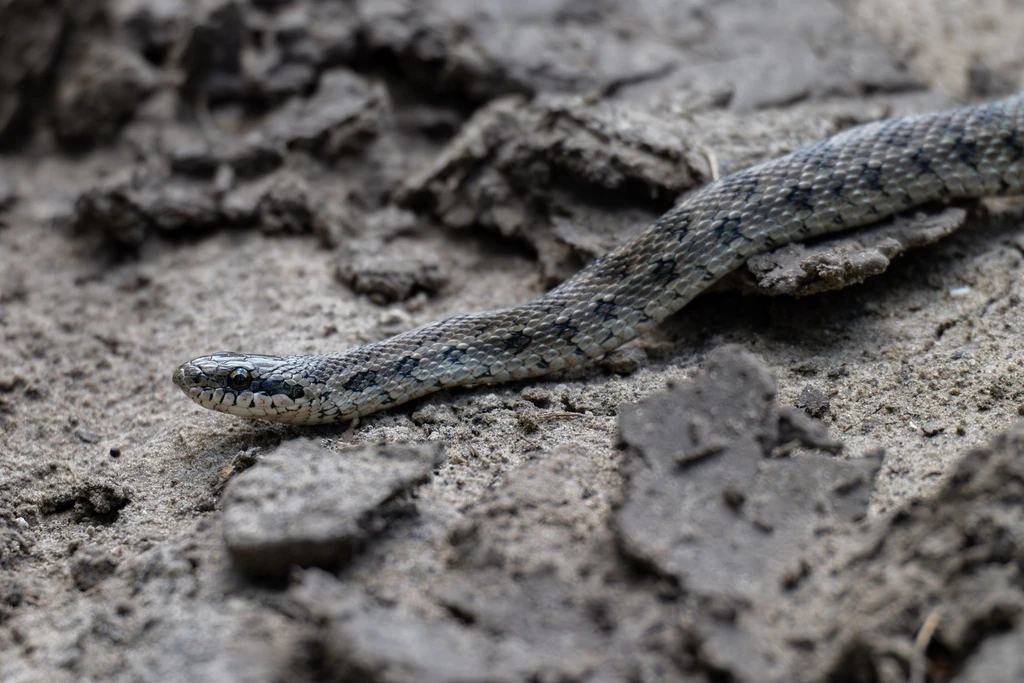
002 · Colubridae
Species account
Explicit country record in the checked taxonomic treatment.
Read the species account →Philip Schaffer · CC BY 4.0 · https://creativecommons.org/licenses/by/4.0/
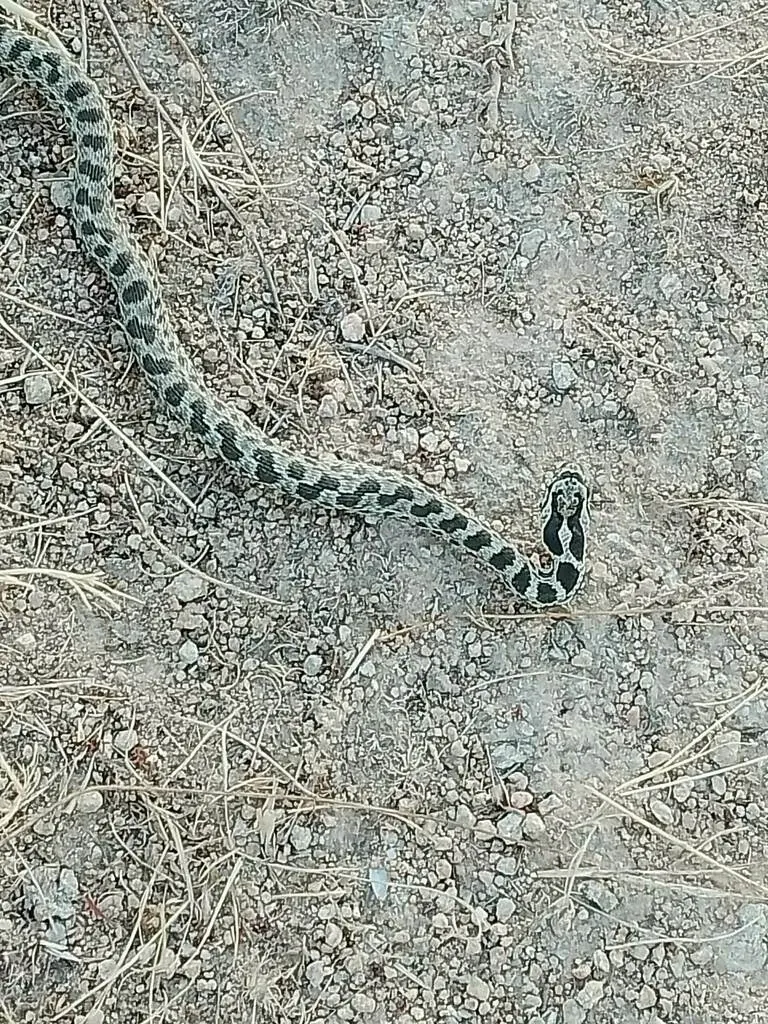
003 · Colubridae
Steppes Ratsnakes
Explicit country record in the checked taxonomic treatment. Southern plains & mountains: observation GBIF 6566900482 (2026). The original iNaturalist entry was rechecked for research-grade identification, wild status and unrestricted coordinates; its reported uncertainty footprint lies within the mapped region. This is a community-reviewed observation,…
Read the species account →Stanislav Murashkin · CC BY 4.0 · https://creativecommons.org/licenses/by/4.0/
004 · Colubridae
Blotched rat snake, Sarmatian Rat Snake, Eastern Four-lined Ratsnake
Explicit country record in the checked taxonomic treatment. Western basins & Caspian: observation GBIF 6273658860 (2026). The original iNaturalist entry was rechecked for research-grade identification, wild status and unrestricted coordinates; its reported uncertainty footprint lies within the mapped region. This is a community-reviewed observation, not…
Read the species account →SteveM4560 · CC BY 4.0 · https://creativecommons.org/licenses/by/4.0/
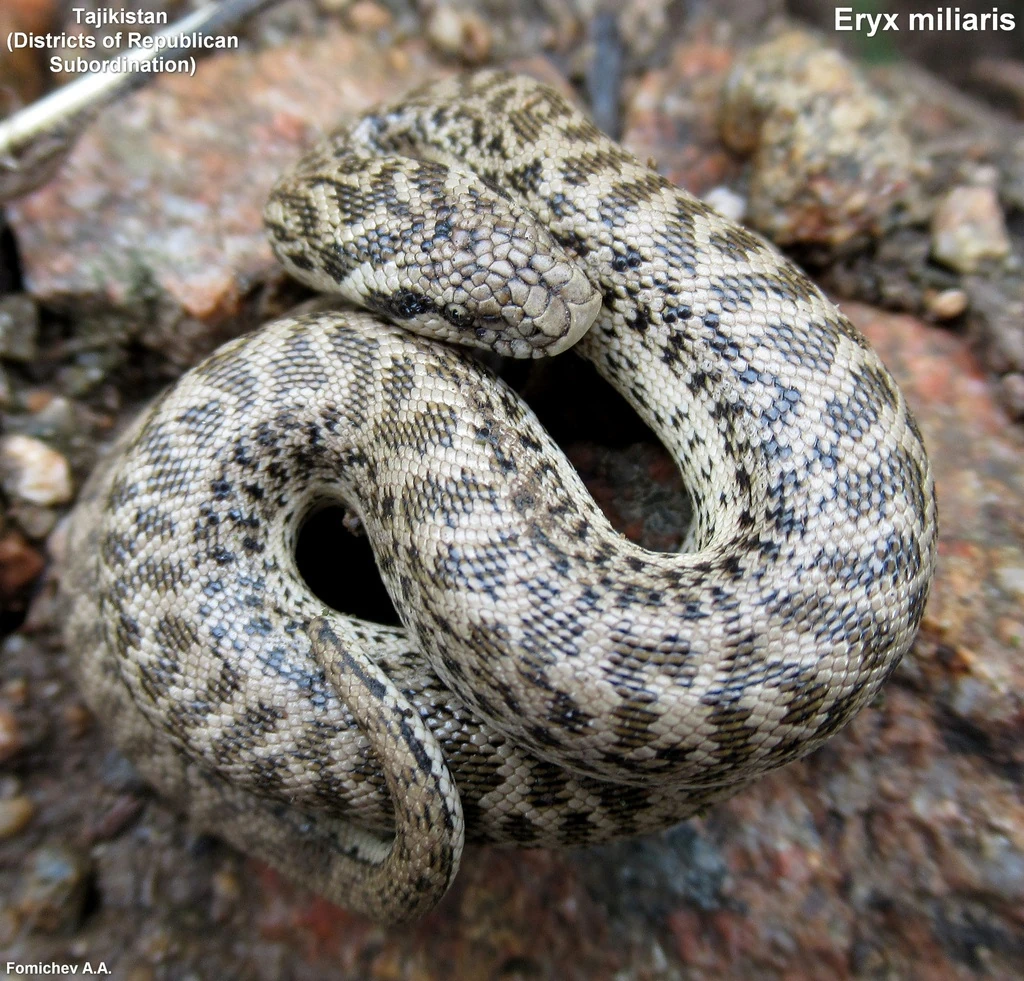
005 · Boidae
Dwarf Sand Boa, Desert Sand Boa, Tartar Sand Boa
Explicit country record in the checked taxonomic treatment. Western basins & Caspian: observation GBIF 6273587158 (2026). The original iNaturalist entry was rechecked for research-grade identification, wild status and unrestricted coordinates; its reported uncertainty footprint lies within the mapped region. This is a community-reviewed observation, not…
Read the species account →Alexander A. Fomichev · CC BY 4.0 · https://creativecommons.org/licenses/by/4.0/
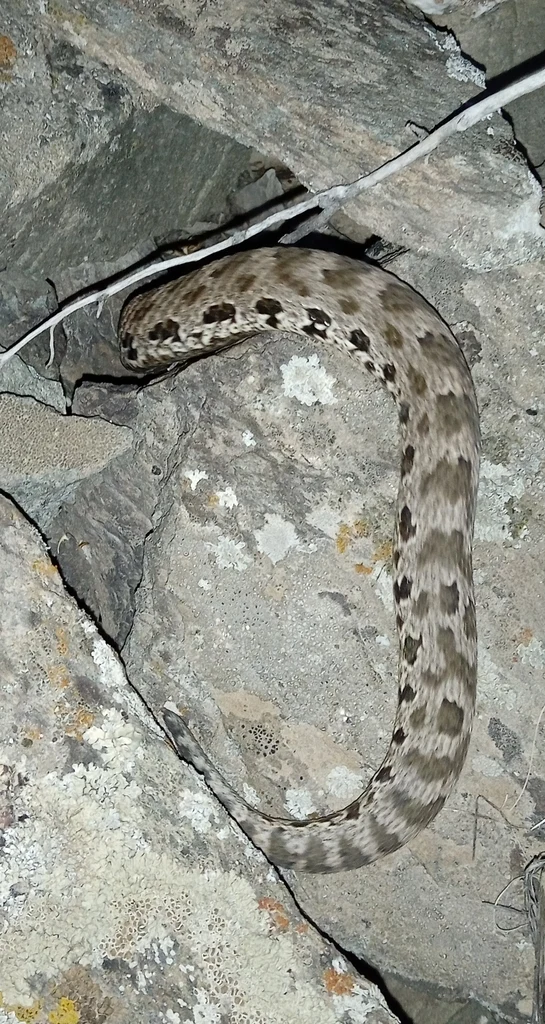
006 · Viperidae
Karaganda pitviper
Explicit country record in the checked taxonomic treatment. Southern plains & mountains: observation GBIF 6234307619 (2026). The original iNaturalist entry was rechecked for research-grade identification, wild status and unrestricted coordinates; its reported uncertainty footprint lies within the mapped region. This is a community-reviewed observation,…
Read the species account →Igor Karyakin · CC BY 4.0 · https://creativecommons.org/licenses/by/4.0/
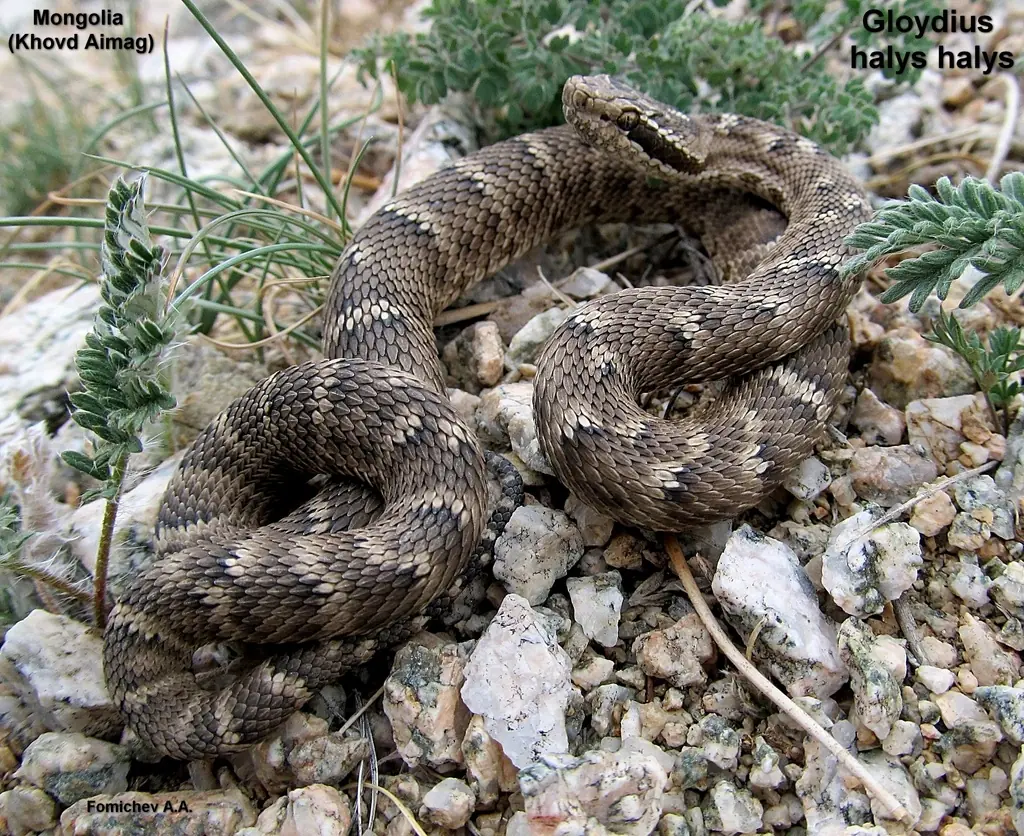
007 · Viperidae
Halys Pit Viper (halys: Siberian, boehmei: Böhme’s pitviper)
Explicit country record in the checked taxonomic treatment. Southern plains & mountains: observation GBIF 6251546845 (2026). The original iNaturalist entry was rechecked for research-grade identification, wild status and unrestricted coordinates; its reported uncertainty footprint lies within the mapped region. This is a community-reviewed observation,…
Read the species account →Alexander A. Fomichev · CC BY 4.0 · https://creativecommons.org/licenses/by/4.0/
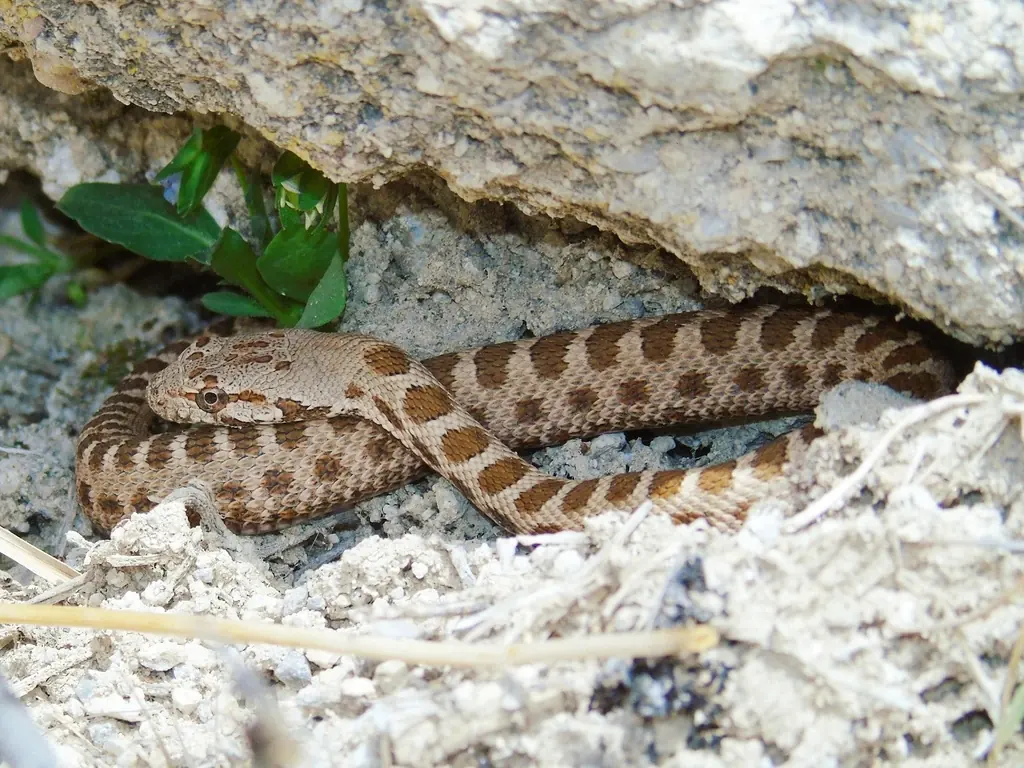
008 · Colubridae
Asian Racer, Coin-Marked Snake
Explicit country record in the checked taxonomic treatment.
Read the species account →Kseniia Marianna Prondzynska · CC BY 4.0 · https://creativecommons.org/licenses/by/4.0/
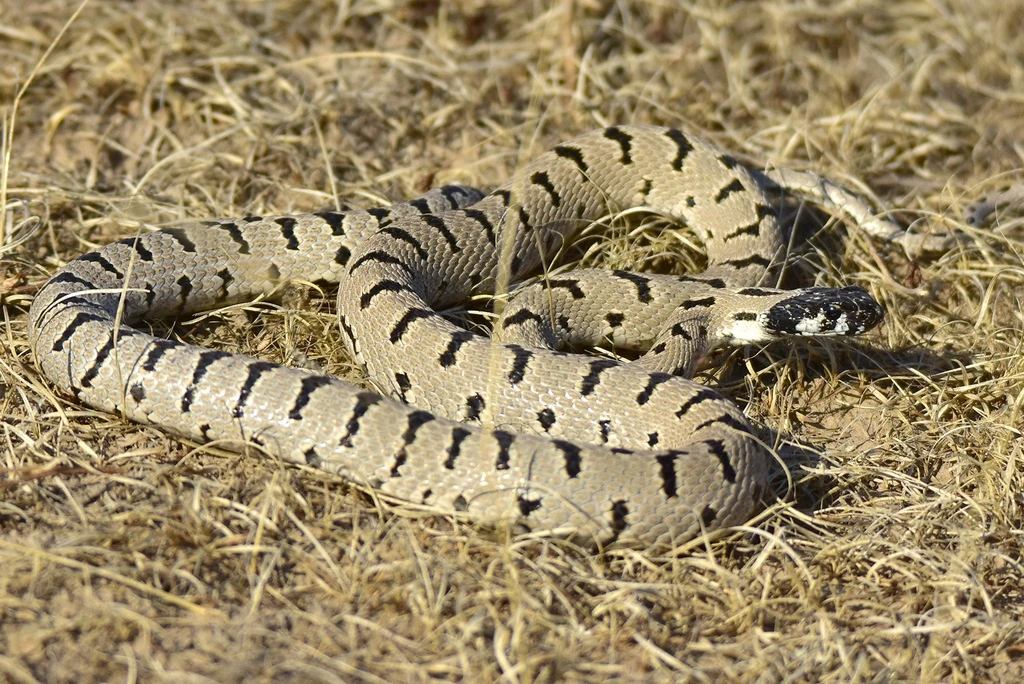
009 · Colubridae
Spotted Whip Snake
Explicit country record in the checked taxonomic treatment. Southern plains & mountains: observation GBIF 6550964863 (2026). The original iNaturalist entry was rechecked for research-grade identification, wild status and unrestricted coordinates; its reported uncertainty footprint lies within the mapped region. This is a community-reviewed observation,…
Read the species account →Kudaibergen Amirekul · CC BY-SA 4.0 · https://creativecommons.org/licenses/by-sa/4.0/
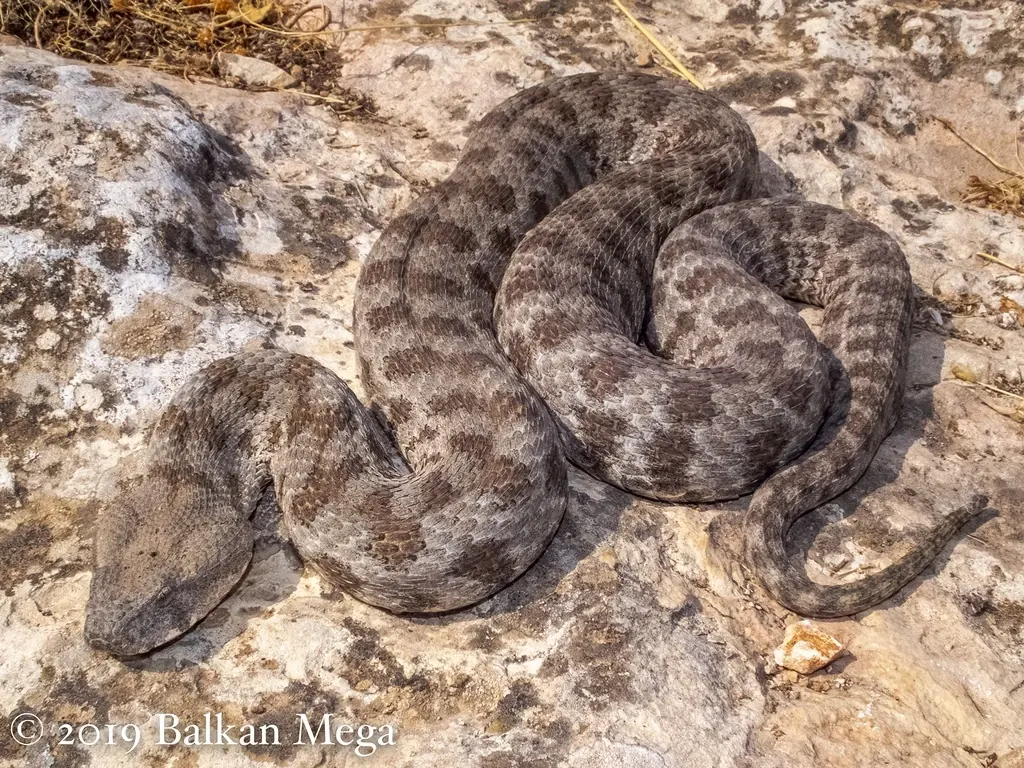
010 · Viperidae
Levantine Viper
Explicit country record in the checked taxonomic treatment.
Read the species account →Balkan Mega · CC BY 4.0 · https://creativecommons.org/licenses/by/4.0/
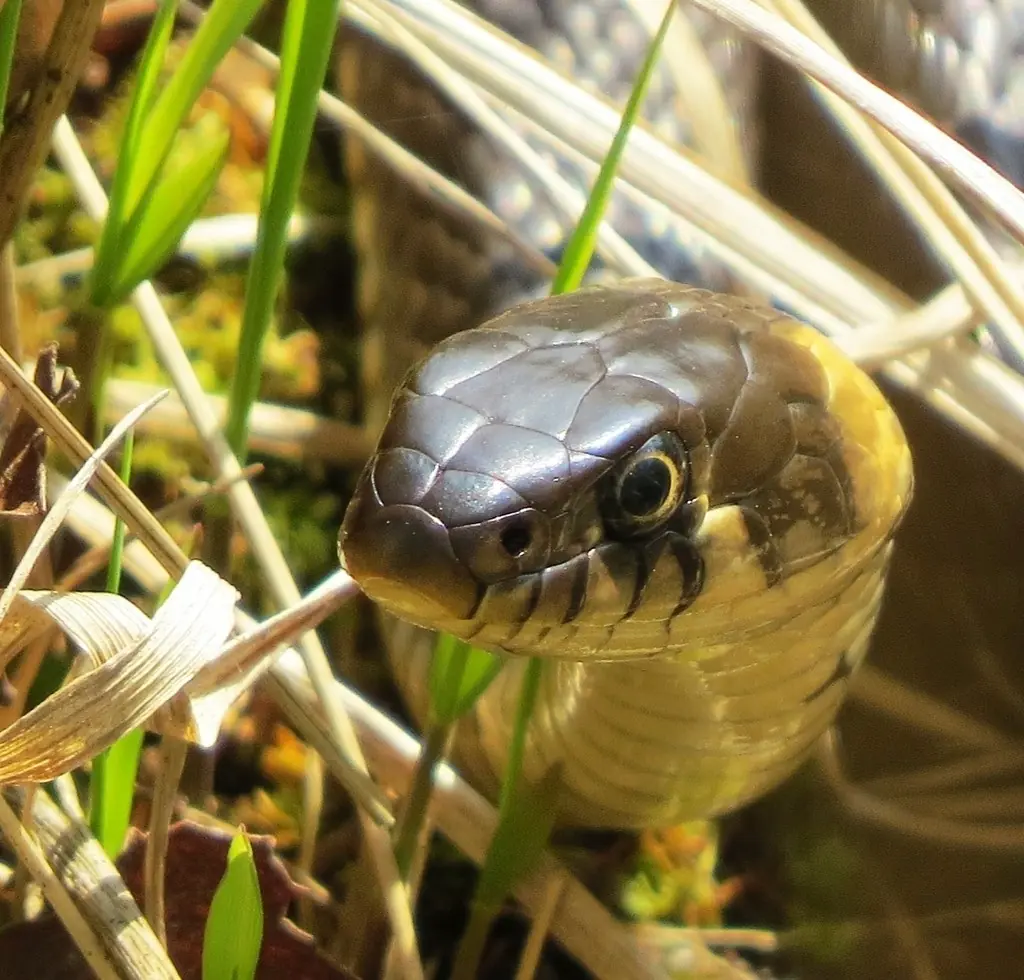
011 · Colubridae
Common Grass Snake
Explicit country record in the checked taxonomic treatment. Western basins & Caspian: observation GBIF 6273938078 (2026). The original iNaturalist entry was rechecked for research-grade identification, wild status and unrestricted coordinates; its reported uncertainty footprint lies within the mapped region. This is a community-reviewed observation, not…
Read the species account →Micha Baum · CC BY-SA 4.0 · https://creativecommons.org/licenses/by-sa/4.0/
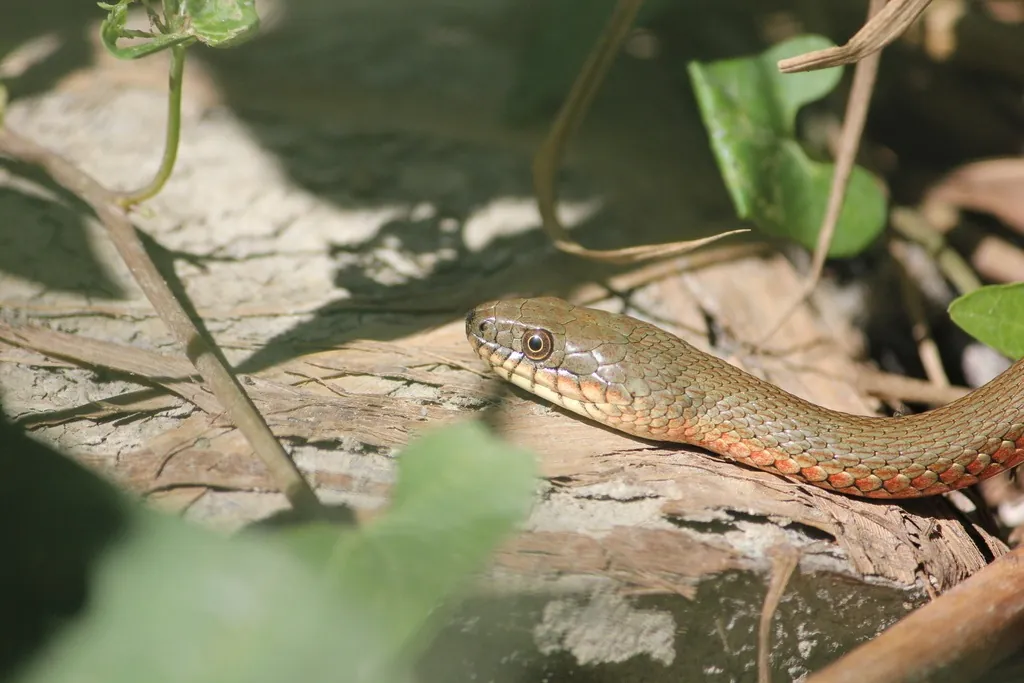
012 · Colubridae
Dice Snake
Explicit country record in the checked taxonomic treatment. Southern plains & mountains: observation GBIF 6352977822 (2026). The original iNaturalist entry was rechecked for research-grade identification, wild status and unrestricted coordinates; its reported uncertainty footprint lies within the mapped region. This is a community-reviewed observation,…
Read the species account →KsenoSnake · CC0 1.0 · https://creativecommons.org/publicdomain/zero/1.0/
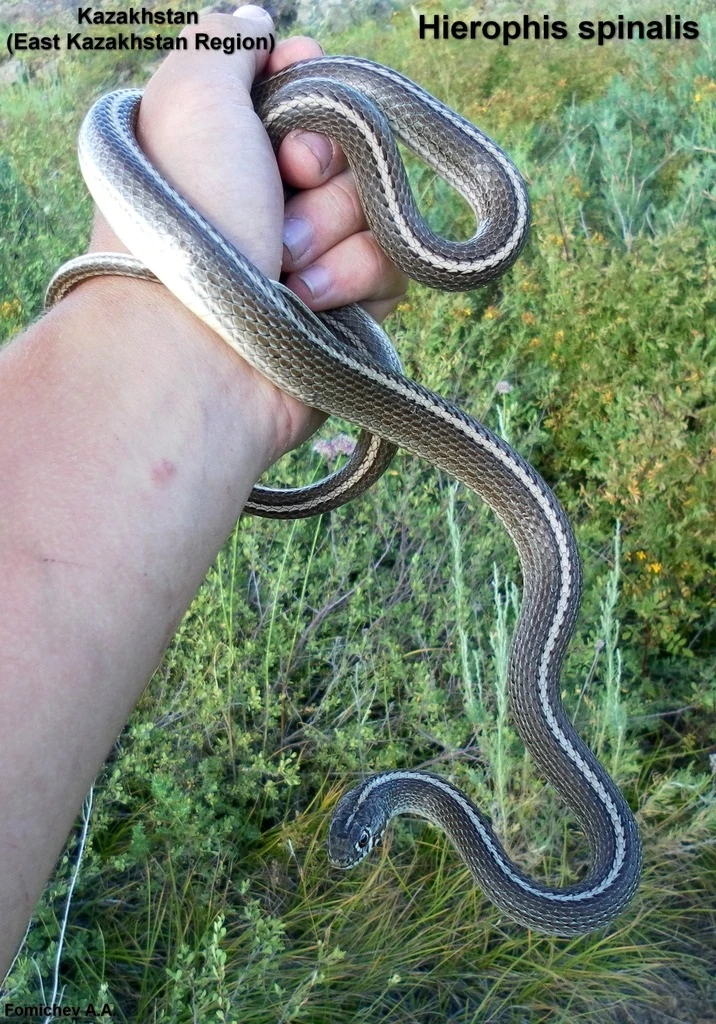
013 · Colubridae
Slender Racer
Explicit country record in the checked taxonomic treatment.
Read the species account →Alexander A. Fomichev · CC BY 4.0 · https://creativecommons.org/licenses/by/4.0/
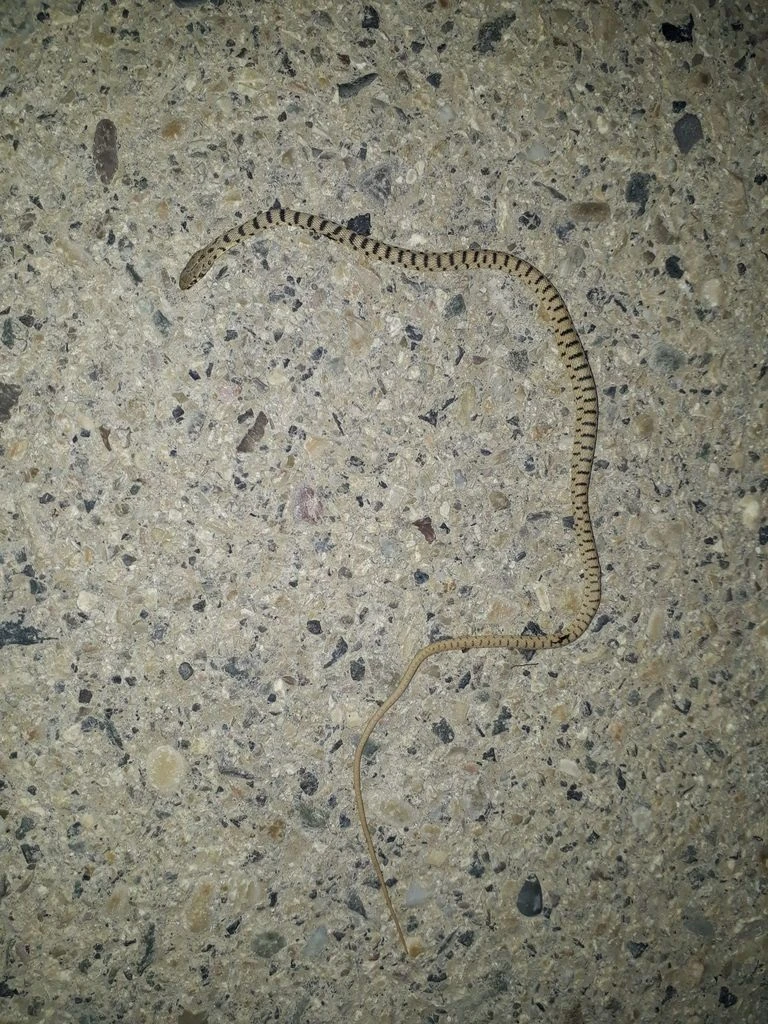
014 · Colubridae
Spotted Desert Racer
Explicit country record in the checked taxonomic treatment. Southern plains & mountains: observation GBIF 6321233449 (2026). The original iNaturalist entry was rechecked for research-grade identification, wild status and unrestricted coordinates; its reported uncertainty footprint lies within the mapped region. This is a community-reviewed observation,…
Read the species account →Dr. Nasser Halaweh · CC BY 4.0 · https://creativecommons.org/licenses/by/4.0/
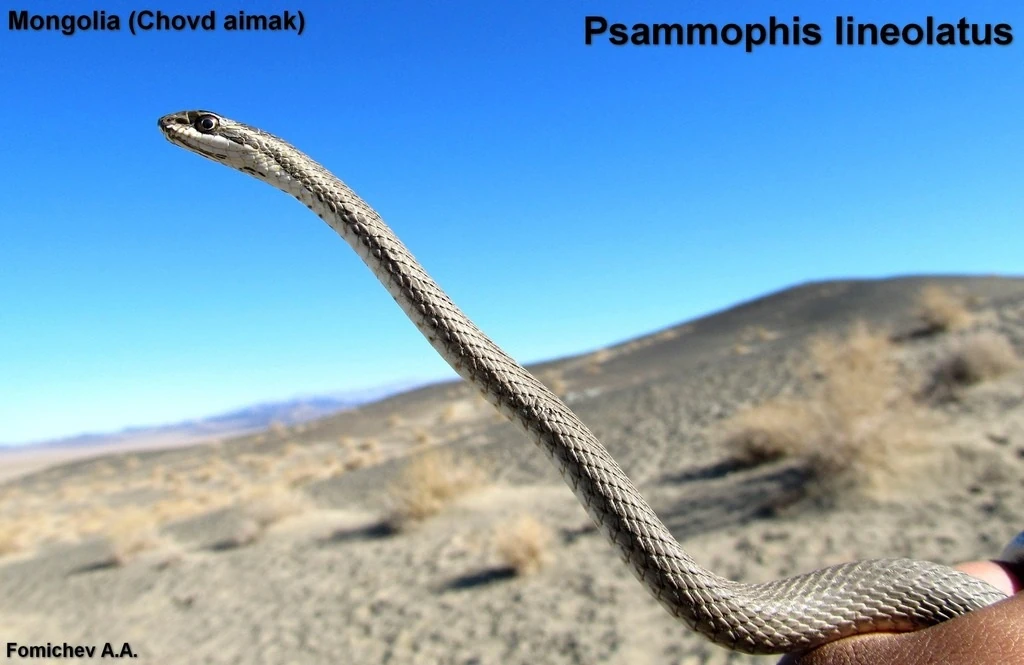
015 · Psammophiidae
Steppe Ribbon Racer
Explicit country record in the checked taxonomic treatment. Southern plains & mountains: observation GBIF 6320153496 (2026). The original iNaturalist entry was rechecked for research-grade identification, wild status and unrestricted coordinates; its reported uncertainty footprint lies within the mapped region. This is a community-reviewed observation,…
Read the species account →Alexander A. Fomichev · CC BY 4.0 · https://creativecommons.org/licenses/by/4.0/
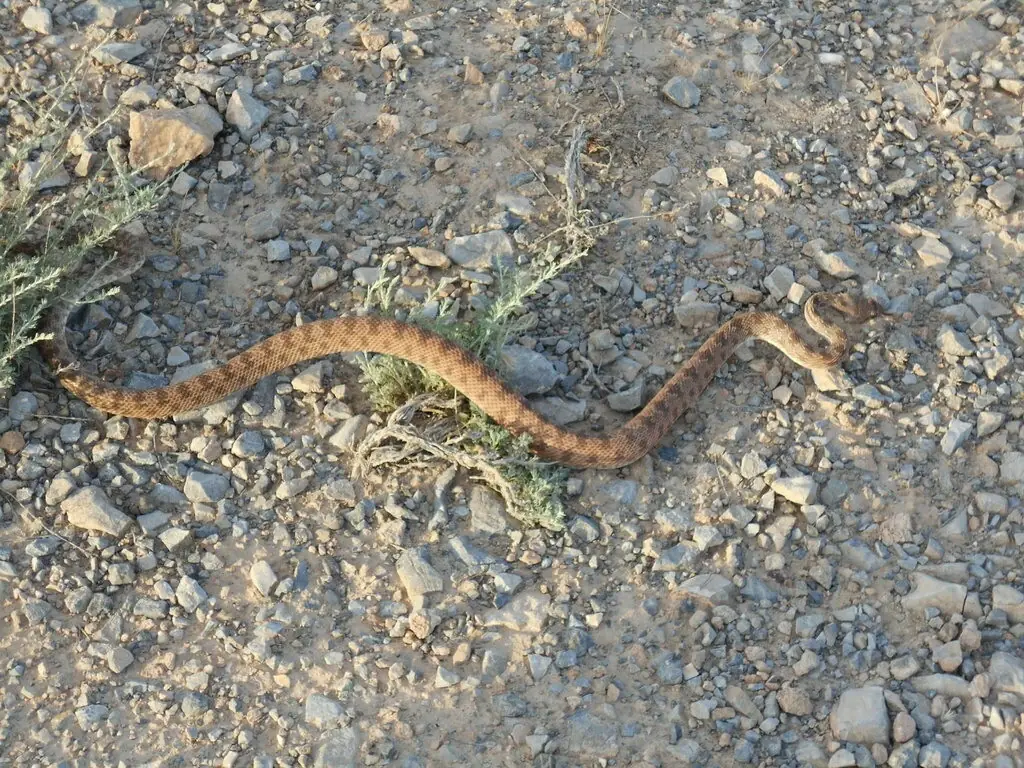
016 · Colubridae
Diadem Snake, Royal Snake
Explicit country record in the checked taxonomic treatment.
Read the species account →Askar Akhmedov · CC BY 4.0 · https://creativecommons.org/licenses/by/4.0/
017 · Viperidae
Species account
Explicit country record in the checked taxonomic treatment.
Read the species account →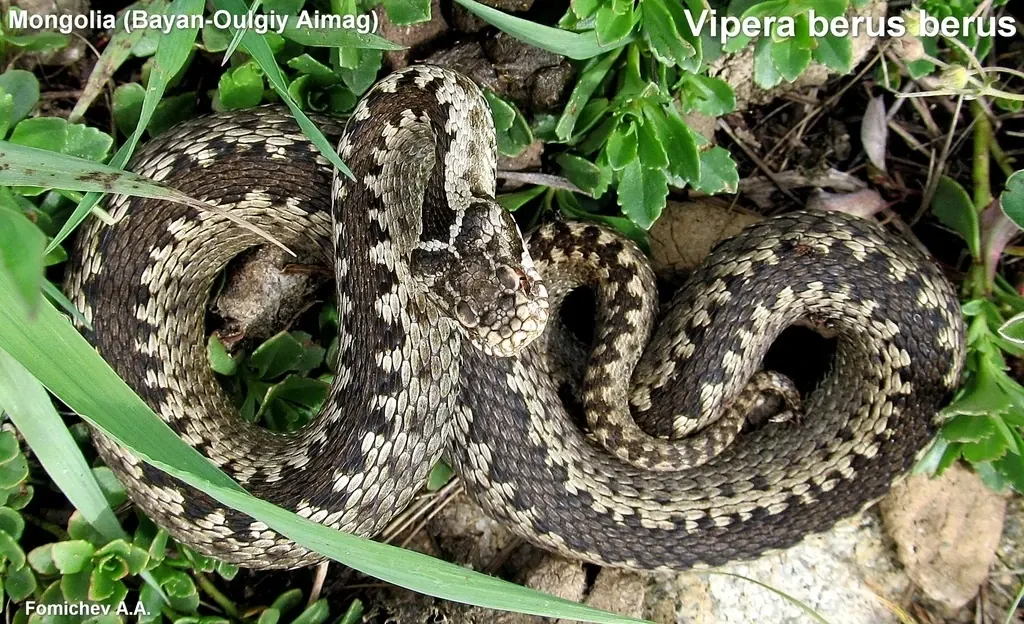
018 · Viperidae
Adder, Northern Viper
Explicit country record in the checked taxonomic treatment. Eastern mountains: observation GBIF 6519592484 (2026). The original iNaturalist entry was rechecked for research-grade identification, wild status and unrestricted coordinates; its reported uncertainty footprint lies within the mapped region. This is a community-reviewed observation, not a…
Read the species account →Alexander A. Fomichev · CC BY 4.0 · https://creativecommons.org/licenses/by/4.0/
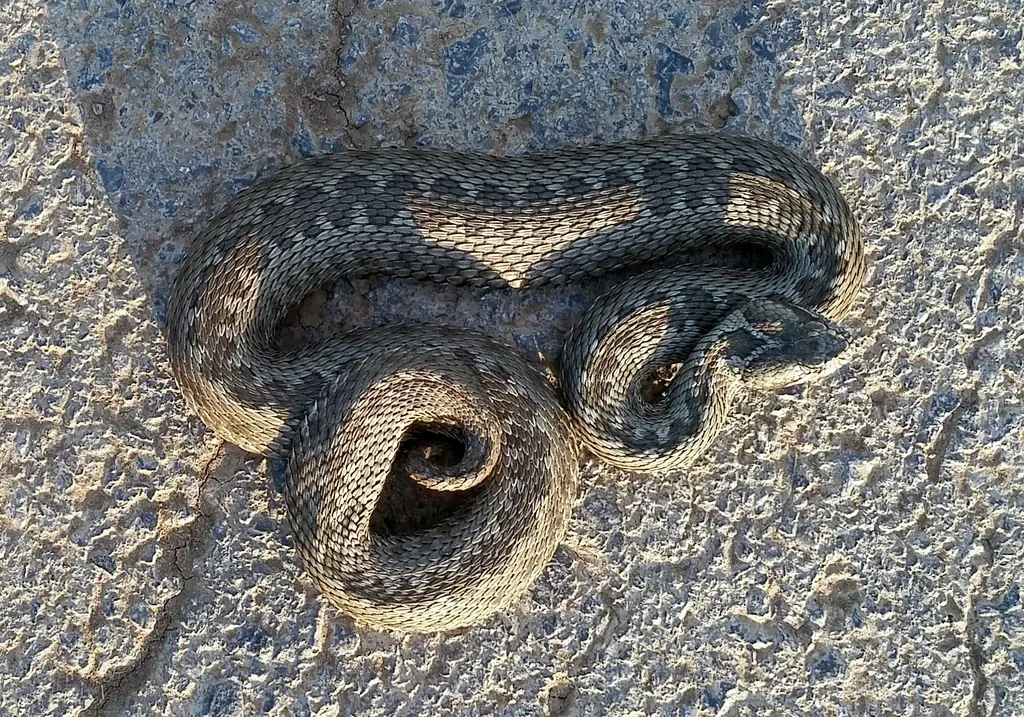
019 · Viperidae
Steppe Viper
Explicit country record in the checked taxonomic treatment. Southern plains & mountains: observation GBIF 6398653117 (2026). The original iNaturalist entry was rechecked for research-grade identification, wild status and unrestricted coordinates; its reported uncertainty footprint lies within the mapped region. This is a community-reviewed observation,…
Read the species account →Kristof Zyskowski · CC BY 4.0 · https://creativecommons.org/licenses/by/4.0/
The research library
This edition lists 19 species with supported country records from checked taxonomic treatments and cited field studies. It is not a claim of a complete national inventory. Each account retains its source and check date; individual evidence entries retain their own review dates.
19 confirmed, introduced or explicitly qualified occasional country records. The regional study lists sixteen identities from observations; it is not a national checklist. Sparse samples and modelled suitability do not establish unobserved localities. Its halys/caraganus labels remain separate and need specimen-level scrutiny.
Mizsei (2025): Western Kazakhstan snake diversity ↗
No unqualified country evidence in the current distribution; discovery hits and type localities alone do not establish occurrence.
The 2026 revision leaves Central Asian racers taxonomically unresolved; historical rhodorachis labels do not establish the current species.
Country links use a single accepted species identity. Revised names and disputed records are kept visible here; uncertain records do not enter the listed collection or regional totals.
Uncertain — excluded from the listed total
The 2026 revision leaves Central Asian racers taxonomically unresolved; historical rhodorachis labels do not establish the current species.
Search results were checked against distribution text and taxonomic qualifications. A geographic name alone does not establish a political country: New Guinea, the Solomon archipelago and Micronesia span more than one country or territory. Introduced and unresolved records require separate interpretation.
Place counts require explicit named localities, including valid type localities. Counts can overlap where sources name multiple places. Regional maps group historical boundary snapshots for navigation, while island outlines use Natural Earth; neither is a species range or an observation map. Small islands can be below the outline dataset’s resolution, so geographic reference markers and the directory remain available.
© OpenStreetMap contributors, via OpenStreetMap, Wambacher and geoBoundaries · gbOpen ADM1 · 2017 snapshot · Open Data Commons Open Database License 1.0. Generalised navigation boundaries, not snake ranges or territorial assertions. Map provenance →
Individual treatments and locality evidence are linked from each species account.
Species-level literature measurements and ecological traits. Exact-name matches only; imputed or ambiguous fields are omitted. These summaries are not local observations.