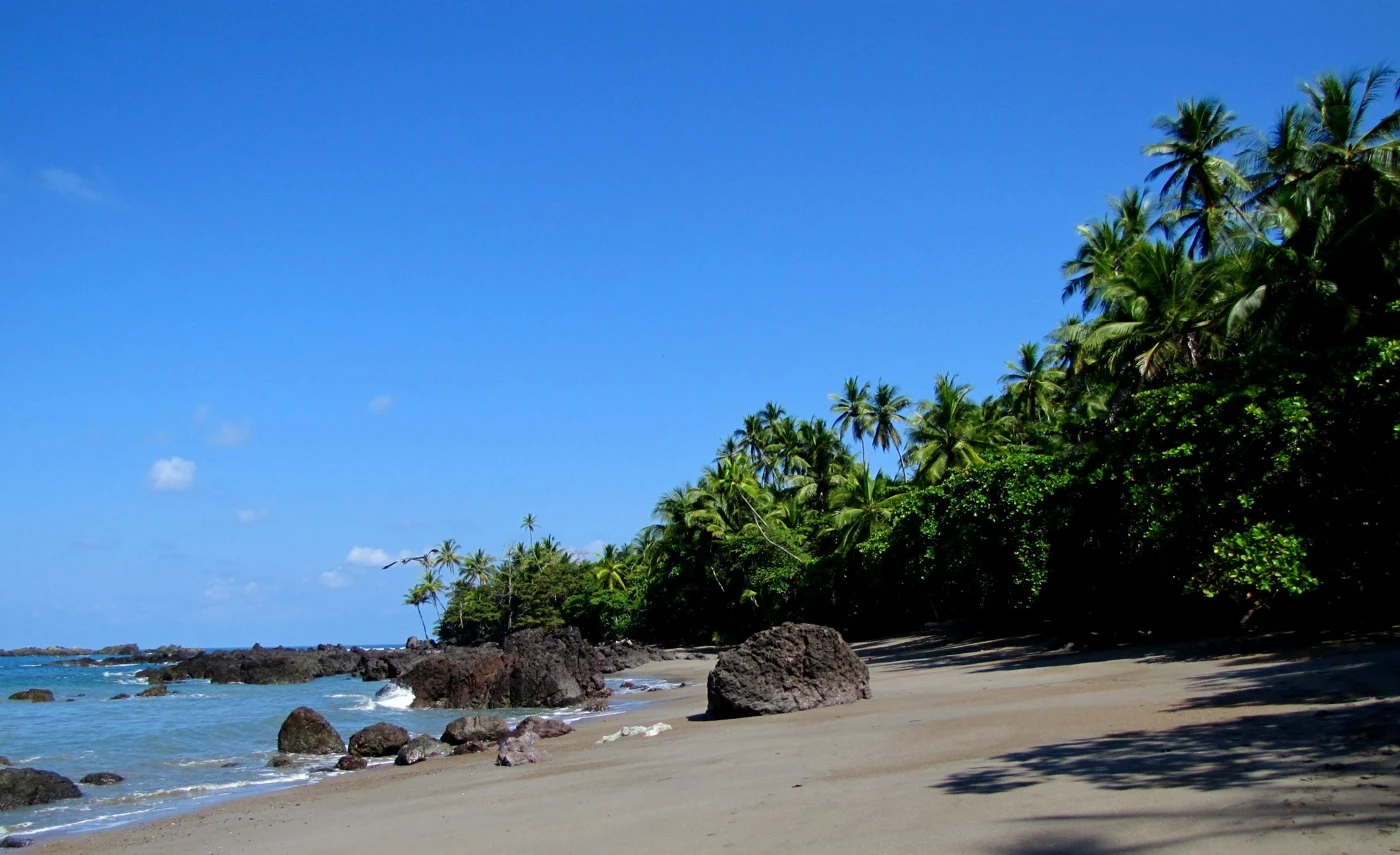
Beach, palms and coastal vegetation in Corcovado National Park, Costa Rica.

Costa Rica · The country atlas

Costa Rica

Navigate seven provinces across forests, wetlands, uplands and coastal environments, retaining the locality behind each species count.

143species with extracted evidence
8families
7region guides

Beach, palms and coastal vegetation in Corcovado National Park, Costa Rica.

Photograph: José R. · Image source · CC BY 3.0. Cropped to fill the hero; darkened for text legibility.

Geography & biotopes

Discover Costa Rica.

Navigate seven provinces across forests, wetlands, uplands and coastal environments, retaining the locality behind each species count.

Historical boundary snapshots are grouped for navigation, not ecological zones, species ranges or a statement of current administrative arrangements. Markers identify guide pages, not animal observations.

Map provenance and declared navigation groups →

Convention on Biological Diversity · Costa Rica national profile →

Geography is part of the record

Find your way through Costa Rica.

Select a named region to open its evidence page. The complete directory below keeps every guide accessible, including places where locality evidence has not yet been extracted.

5 of 143 listed species have at least one indexed region record. 138 remain country-only. Even a nonzero count is not a complete regional inventory.

Habitats & living landscapes

Explore the living
landscapes.

Explore 4 guides to the environments, places and conservation pressures that shape this country. Each guide connects to the regional map and shared species accounts.

Landscape photographs & credits

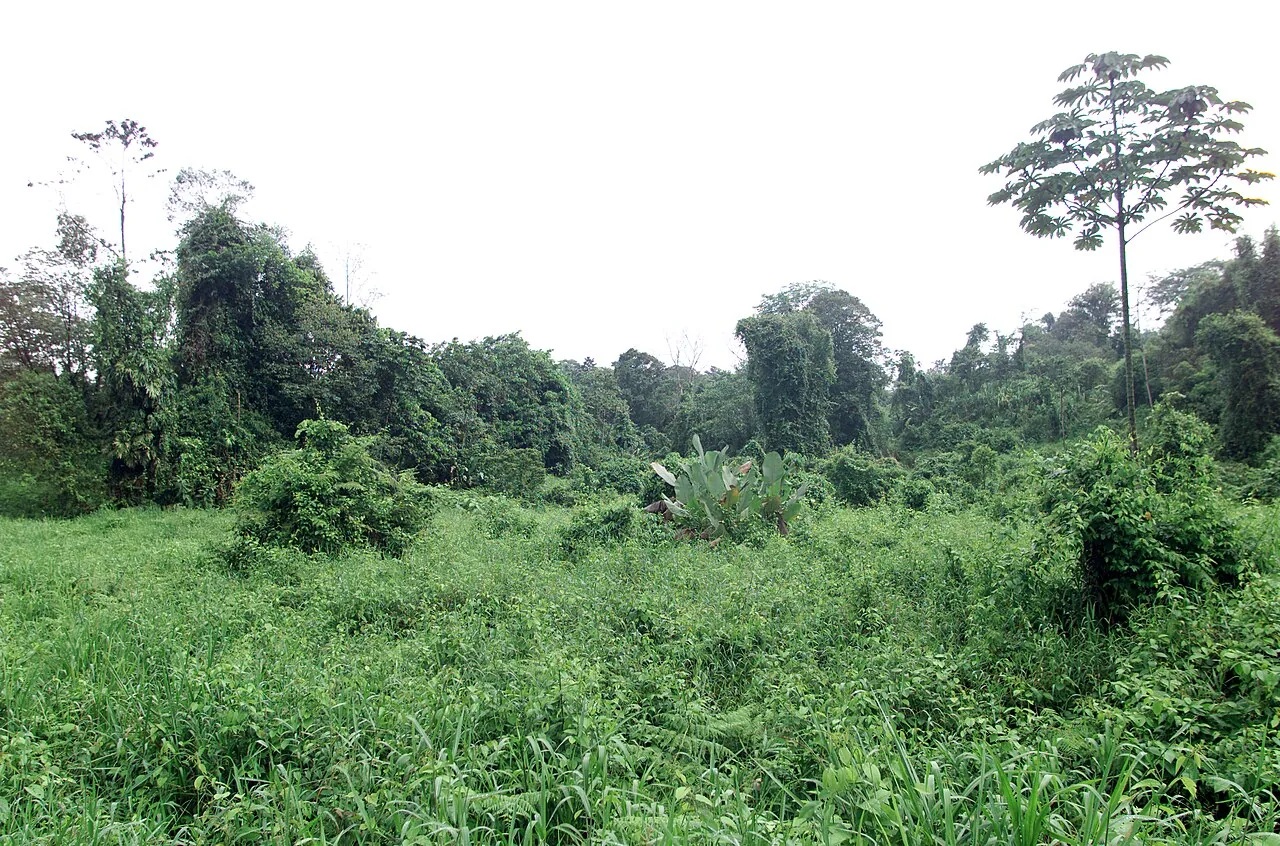
Dense vegetation at La Selva, Heredia, Costa Rica. — NASA Armstrong Flight Research Center / NASA/Jim Ross. Original photograph · Public domain. Cropped for the cards; photographs do not establish snake occurrence.

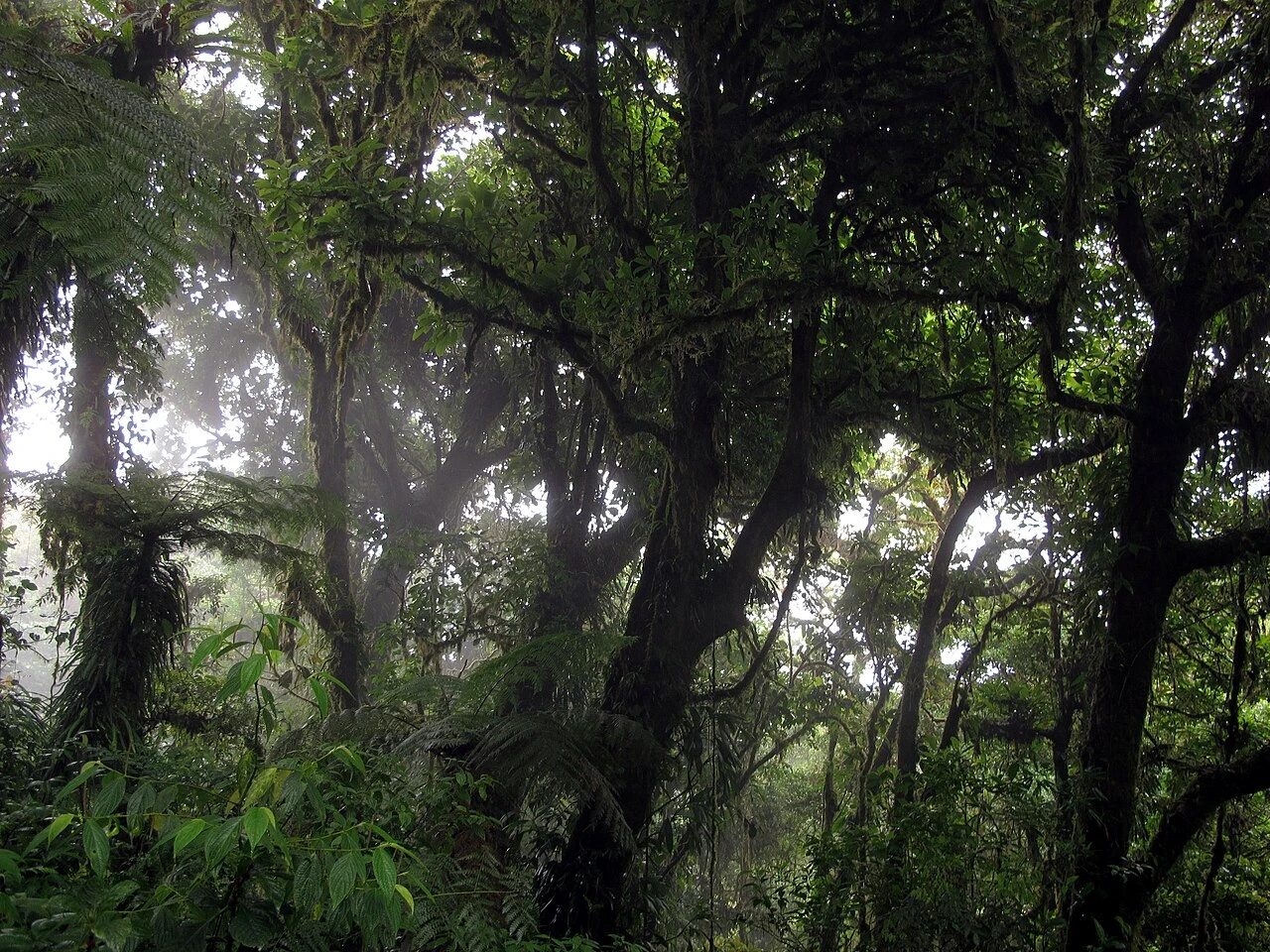
Mist beneath the canopy in Monteverde Cloud Forest Reserve, Costa Rica. — Haakon S. Krohn. Original photograph · CC BY-SA 3.0. Cropped for the cards; photographs do not establish snake occurrence.

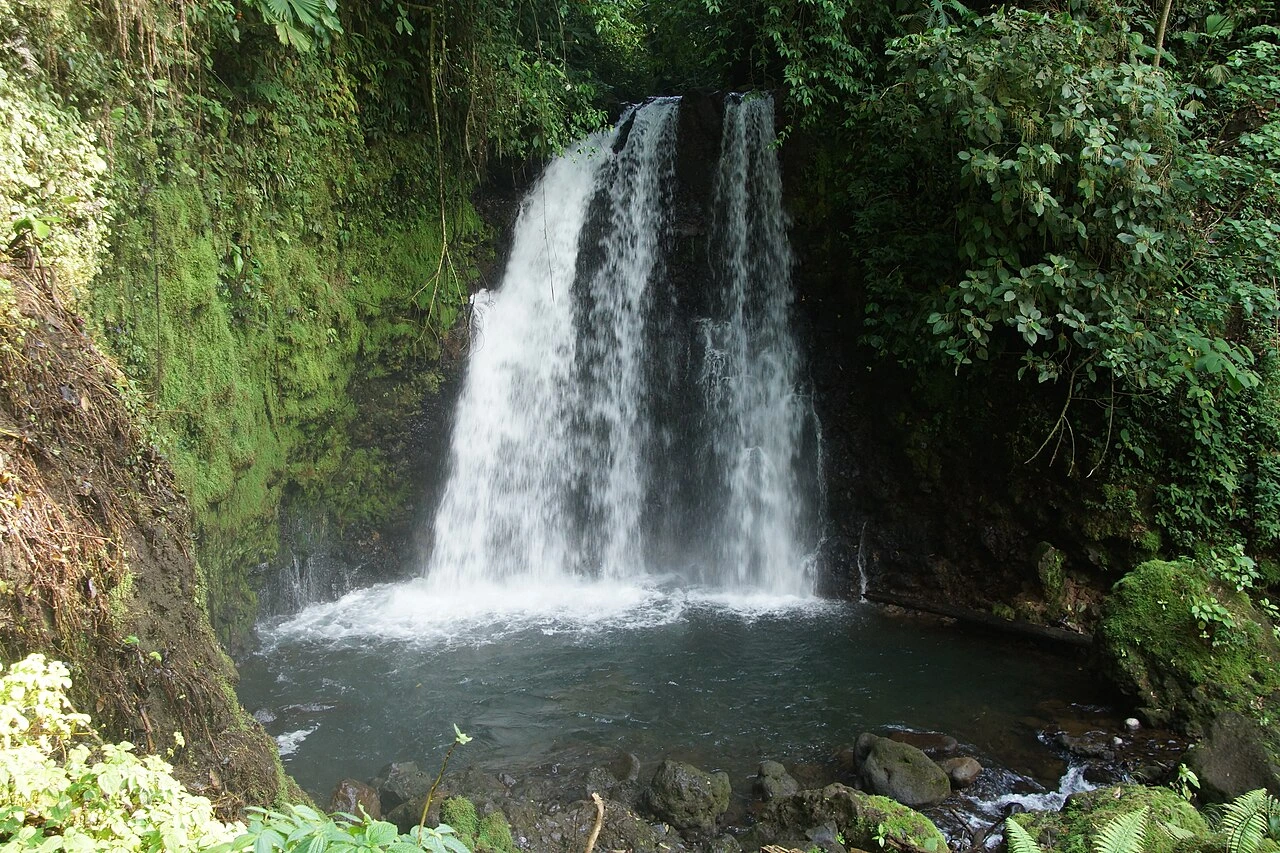
A forest waterfall on the Rio Celeste, Costa Rica. — rob Stoeltje from loenen, netherlands. Original photograph · CC BY 2.0. Cropped for the cards; photographs do not establish snake occurrence.

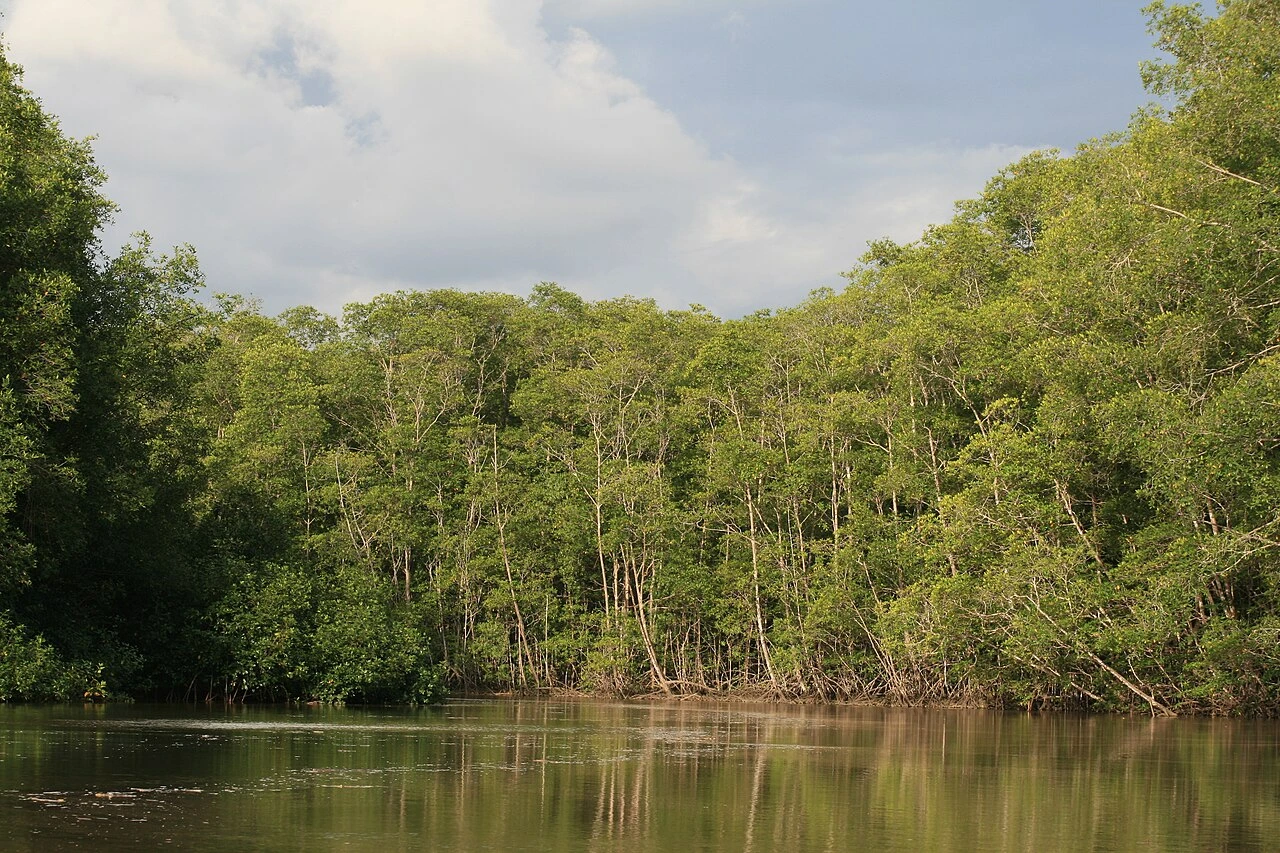
Mangrove woodland and water in Manuel Antonio National Park, Costa Rica. — Mark Whatmough. Original photograph · CC BY 2.0. Cropped for the cards; photographs do not establish snake occurrence.

The species catalogue

Meet the snakes of Costa Rica.

Search scientific names, historical names, common names and families. Every card opens one shared account across its documented countries.

143 species · showing 24

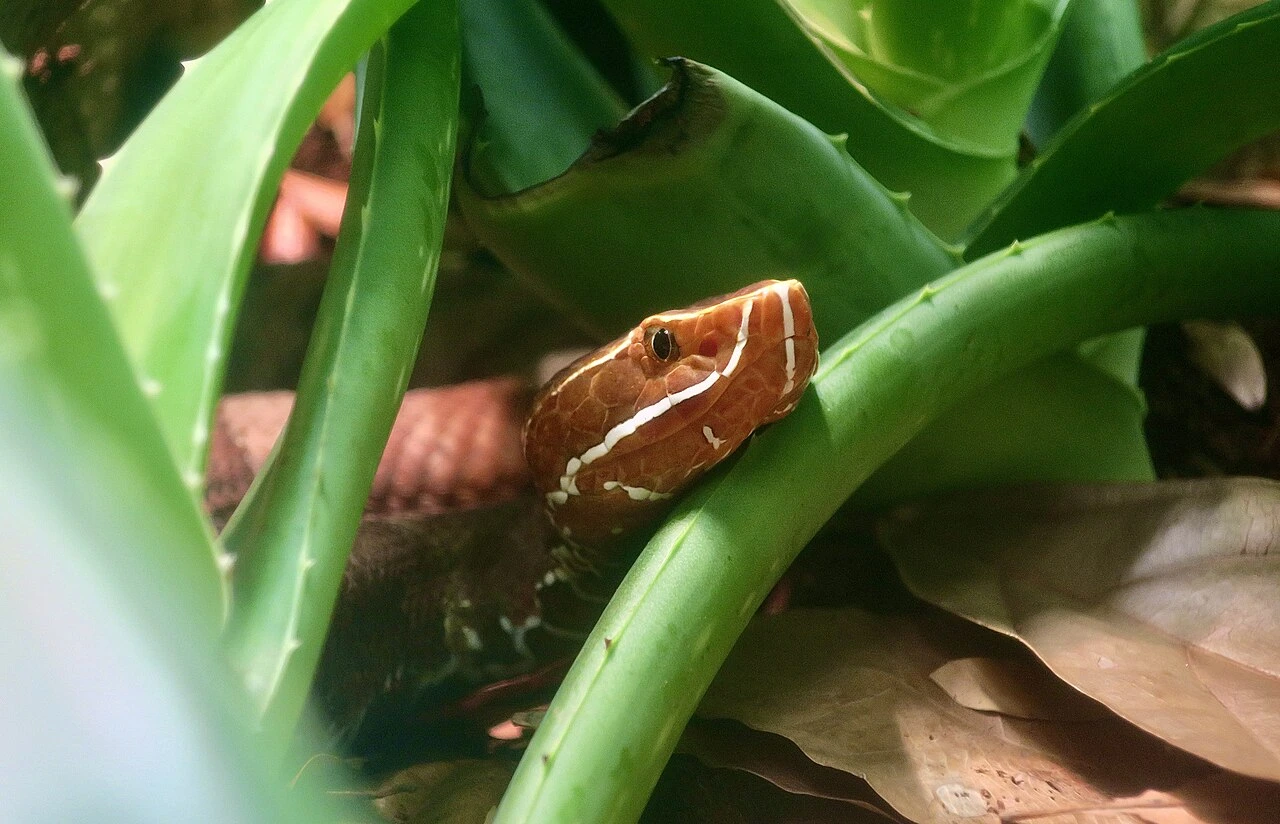
Agkistrodon howardgloydi. Captive individual at St. Louis Zoo. Portrait only; no wild locality or habitat record is inferred.

001 · Viperidae

Gloyd’s Moccasin

Agkistrodon howardgloydi

CONANT, 1984

VenomousClinical severity not established

The checked taxonomic distribution account explicitly lists Costa Rica. Country-level evidence does not establish continuous occupancy or a complete national inventory.

Read the species account →

RatioTile · CC BY-SA 4.0 · https://creativecommons.org/licenses/by-sa/4.0

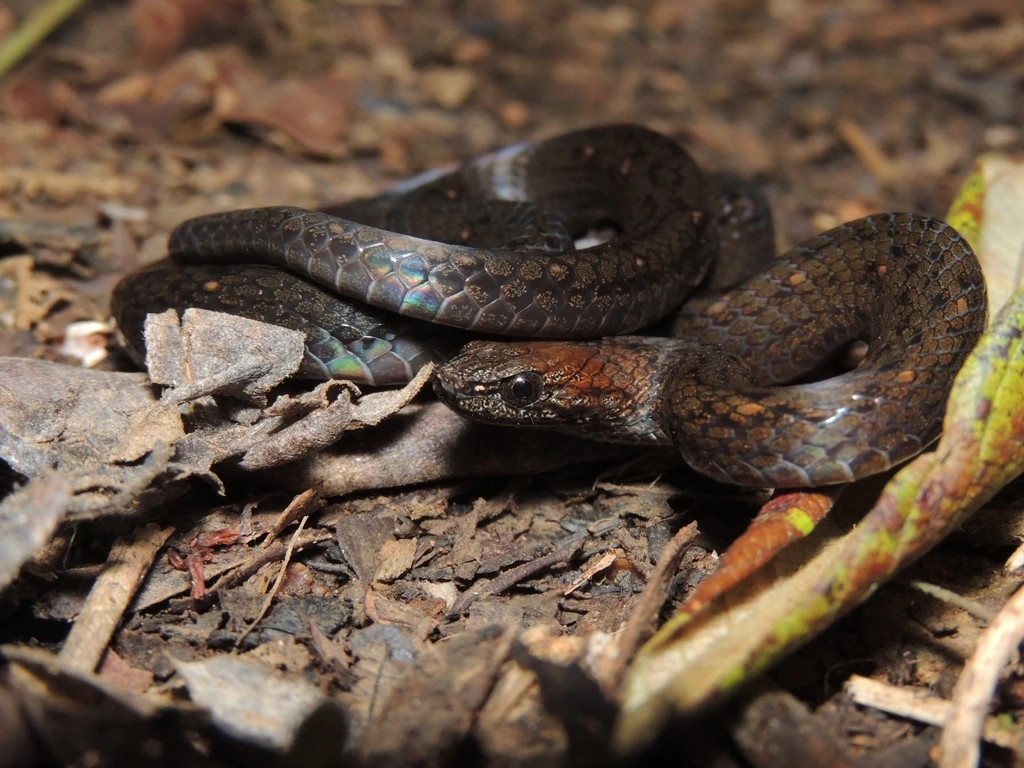
Amastridium veliferum. Coiled individual among leaf litter and twigs. Original observation dated 2025-01-18. No additional geographic occurrence is inferred.

002 · Colubridae

Rufous-headed snake, Rustyhead Snake

Amastridium veliferum

COPE, 1861

Venom unknownNot yet assessed

The checked taxonomic distribution account explicitly lists Costa Rica. Country-level evidence does not establish continuous occupancy or a complete national inventory.

Read the species account →

Anthony Mora Aguilar · CC BY 4.0 · https://creativecommons.org/licenses/by/4.0/

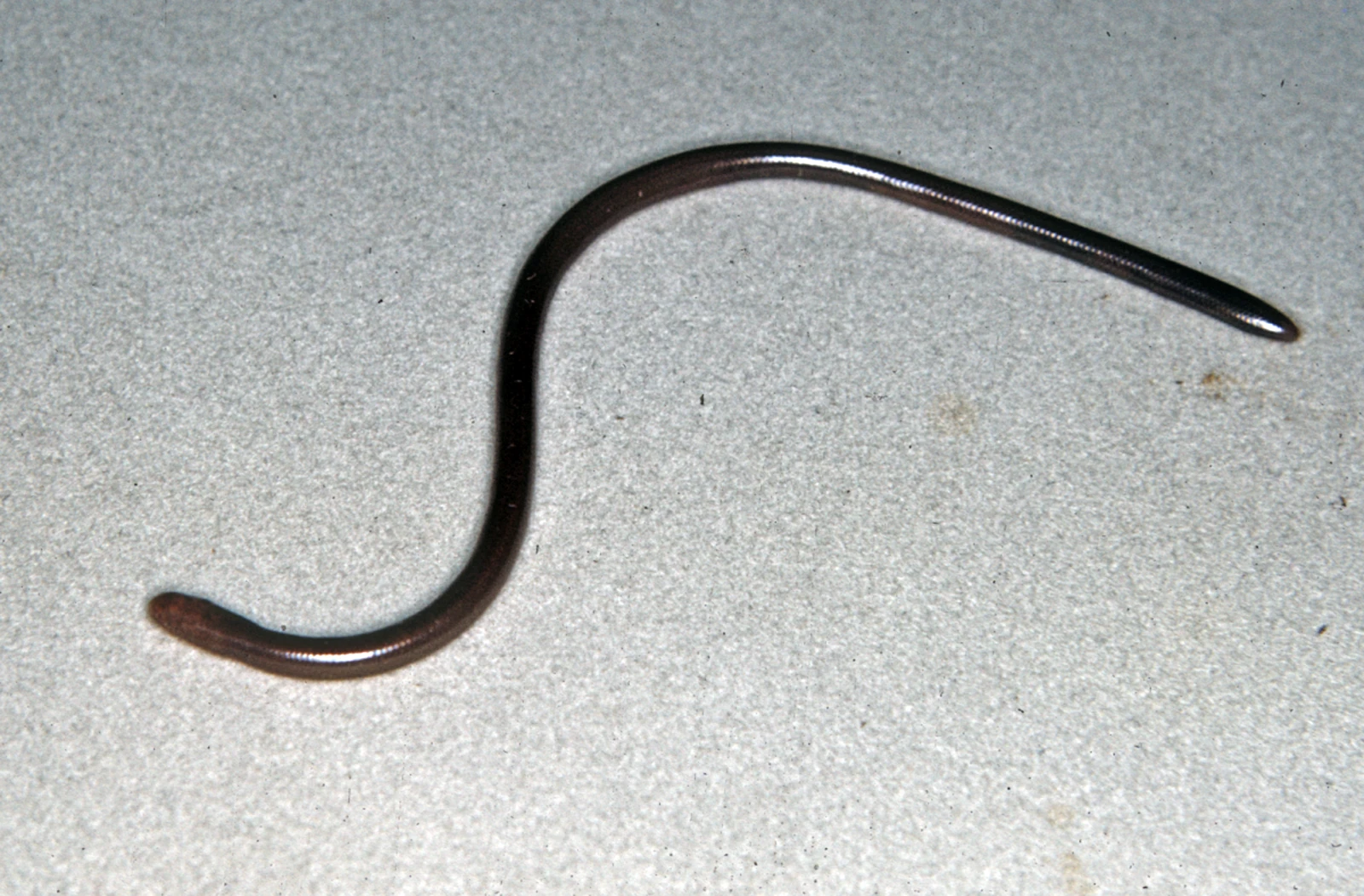
Anomalepis mexicana; historical photograph linked to KU 75663 from Barro Colorado Island, Panama. Catalogued as the historical synonym Anomalepis dentatus. KU Biodiversity Institute photographic archive.

004 · Anomalepididae

Mexican Blind Snake

Anomalepis mexicana

JAN, 1860

Non-venomous

The checked taxonomic distribution account explicitly lists Costa Rica. Country-level evidence does not establish continuous occupancy or a complete national inventory.

Read the species account →

University of Kansas Biodiversity Institute · CC BY 4.0 · https://creativecommons.org/licenses/by/4.0/

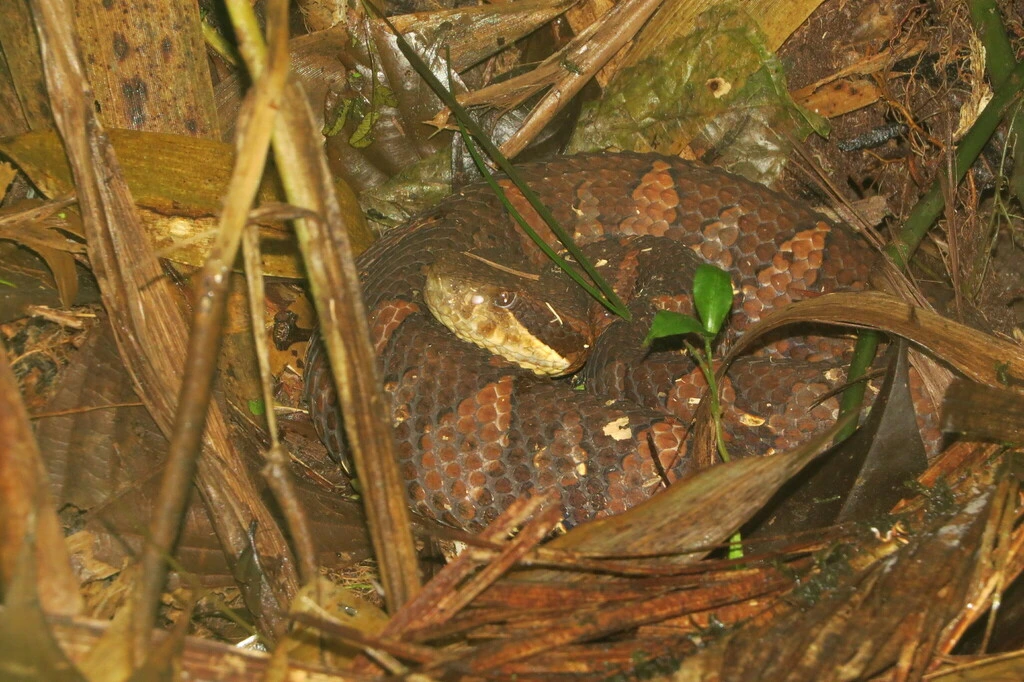
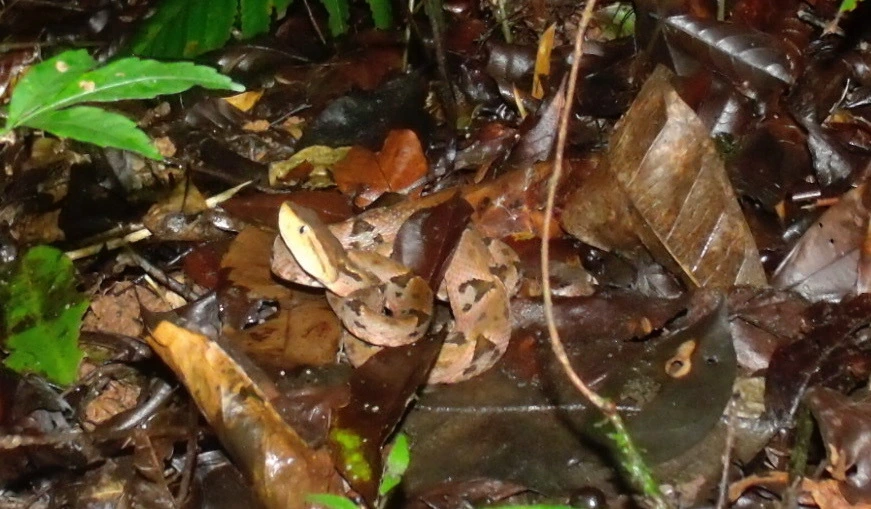
Atropoides picadoi. Brown patterned individual coiled among fallen leaves. Original observation dated 2018-01-17. Portrait only; no new locality record is inferred.

005 · Viperidae

Picado's Pit Viper

Atropoides picadoi

(DUNN, 1939)

VenomousClinical severity not established

The checked taxonomic distribution account explicitly lists Costa Rica. Country-level evidence does not establish continuous occupancy or a complete national inventory.

Read the species account →

Roger A. Morales-Flores · CC BY 4.0 · https://creativecommons.org/licenses/by/4.0/

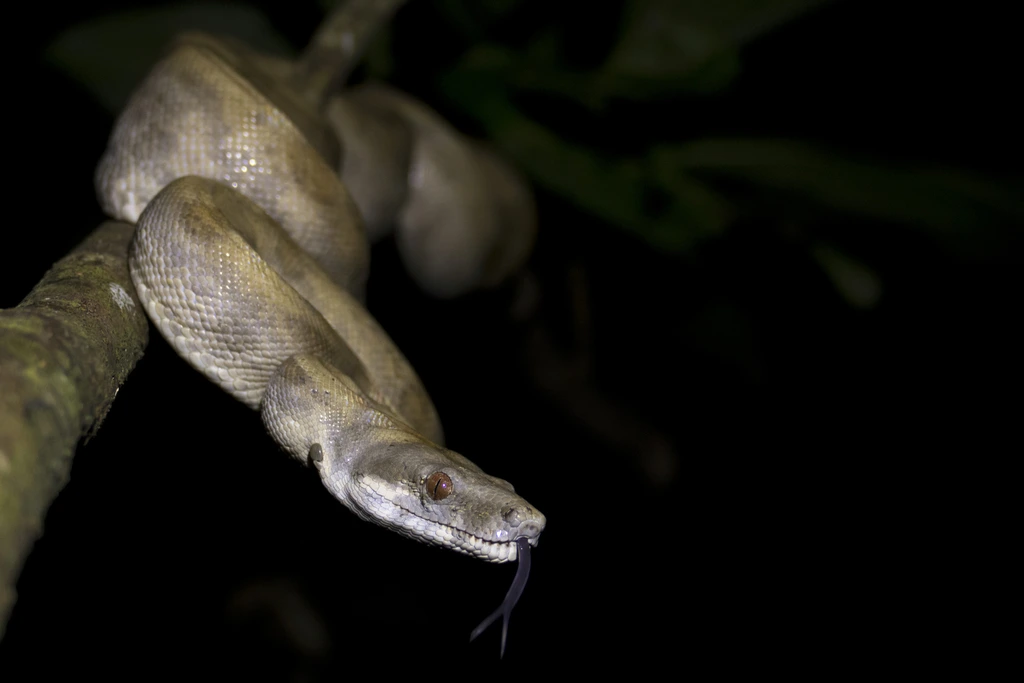
Boa imperator. Species portrait; the complete source frame is retained. Original observation dated 2021-09-28. This photograph does not establish occurrence in any additional state or province.

006 · Boidae

Central American Boa Constrictor

Boa imperator

DAUDIN, 1803

Non-venomous

The checked taxonomic distribution account explicitly lists Costa Rica. Country-level evidence does not establish continuous occupancy or a complete national inventory.

Read the species account →

Ewout Knoester · CC BY-SA 4.0 · https://creativecommons.org/licenses/by-sa/4.0/

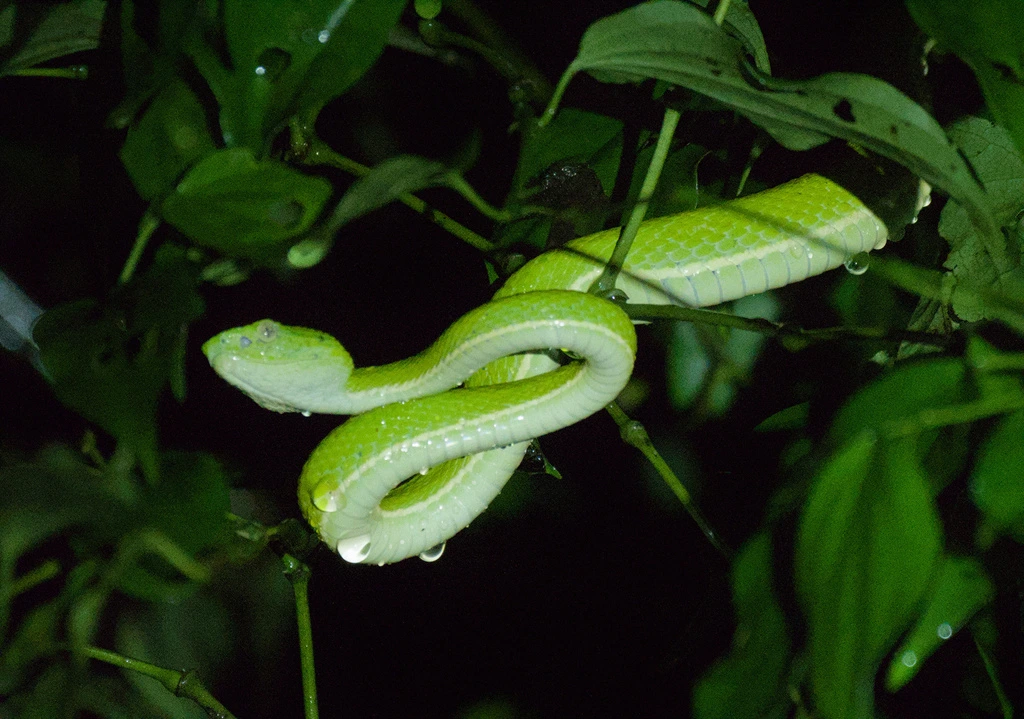
Bothriechis lateralis. Green animal resting on a branch. Original observation dated 2024-12-06. No additional geographic occurrence is inferred.

007 · Viperidae

Coffee Palm Viper

Bothriechis lateralis

PETERS, 1862

VenomousClinical severity not established

The checked taxonomic distribution account explicitly lists Costa Rica. Country-level evidence does not establish continuous occupancy or a complete national inventory.

Read the species account →

Blake Ross · CC BY 4.0 · https://creativecommons.org/licenses/by/4.0/

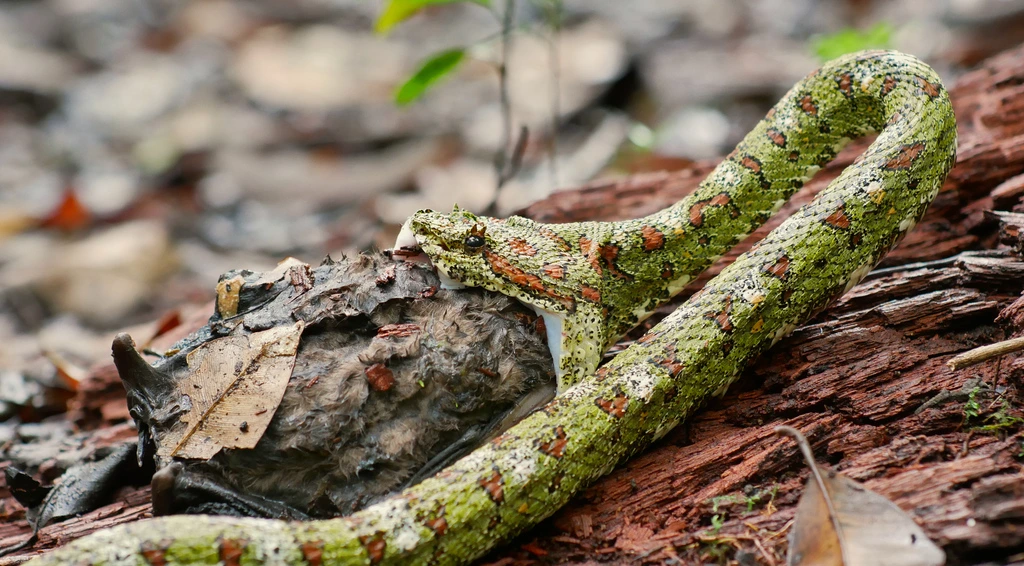
Bothriechis nigroadspersus. Species portrait; the complete source frame is retained. Original observation dated 2020-01-11. This photograph does not establish occurrence in any additional state or province.

008 · Viperidae

Central Ameri- can Eyelash-Pitviper

Bothriechis nigroadspersus

(STEINDACHNER, 1870)

VenomousClinical severity not established

The checked taxonomic distribution account explicitly lists Costa Rica. Country-level evidence does not establish continuous occupancy or a complete national inventory.

Read the species account →

iNaturalist contributor (CC0; creator not supplied) · CC0 1.0 · https://creativecommons.org/publicdomain/zero/1.0/

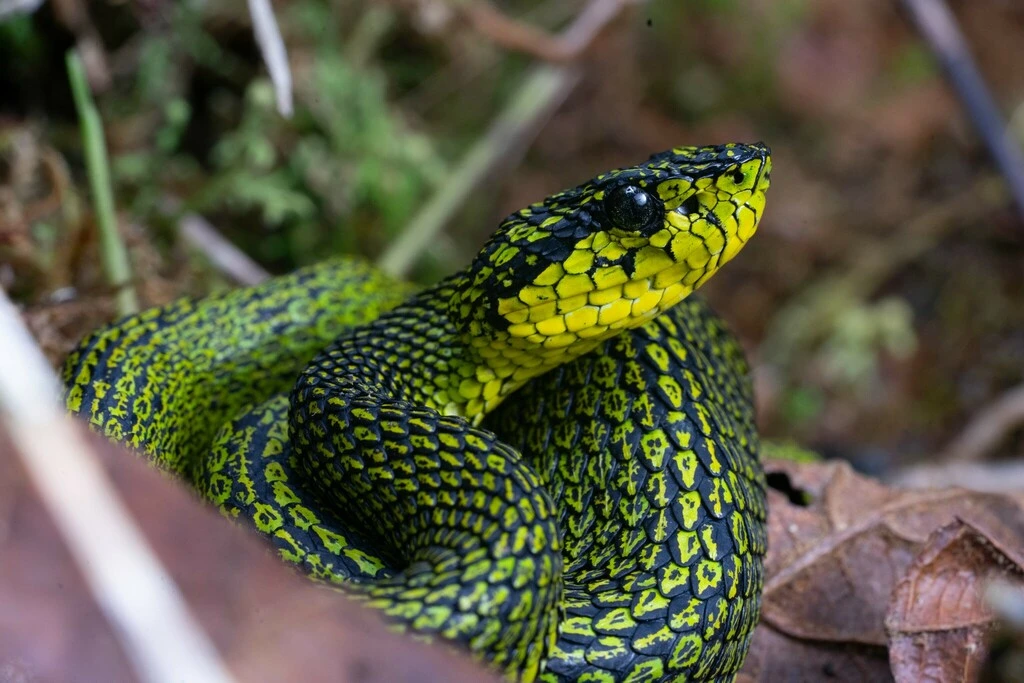
Bothriechis nigroviridis. Close view of a green and black patterned individual in coils. Original observation dated 2021-08-02. Portrait only; no new locality record is inferred.

009 · Viperidae

Black-speckled Palm Pit Viper

Bothriechis nigroviridis

PETERS, 1859

VenomousClinical severity not established

The checked taxonomic distribution account explicitly lists Costa Rica. Country-level evidence does not establish continuous occupancy or a complete national inventory.

Read the species account →

Wouter Beukema · CC BY 4.0 · https://creativecommons.org/licenses/by/4.0/

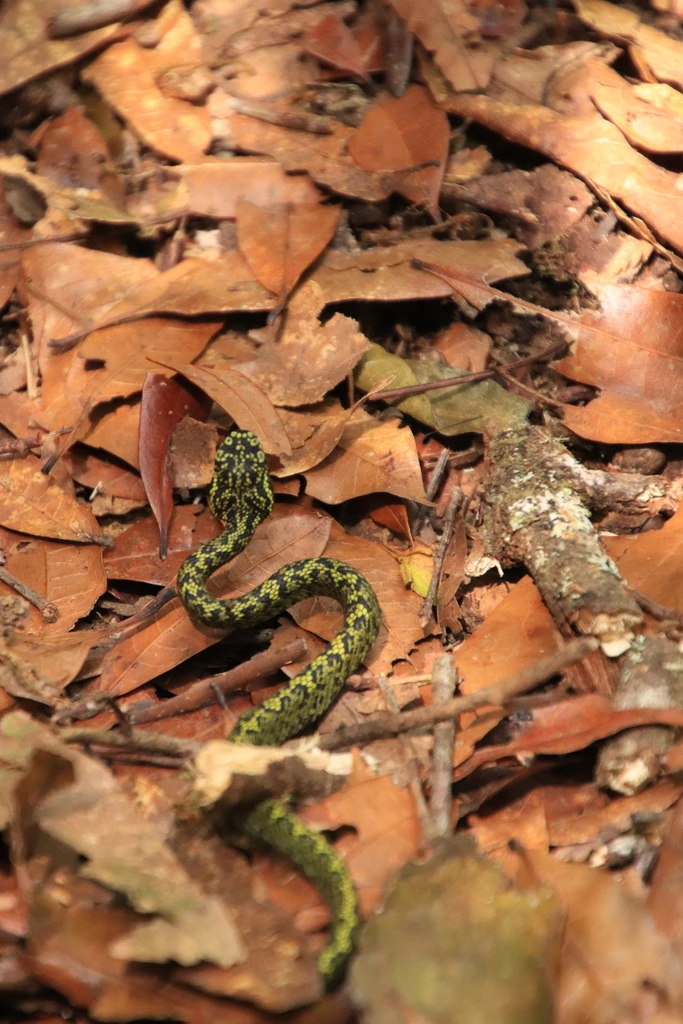
Bothriechis nubestris. Green individual on fallen leaves. Original observation dated 2018-03-25. Portrait only; no new locality record is inferred.

010 · Viperidae

Talamancan Palm-Pitviper

Bothriechis nubestris

DOAN, MASON, CASTOE, SASA & PARKINSON, 2016

VenomousClinical severity not established

The checked taxonomic distribution account explicitly lists Costa Rica. Country-level evidence does not establish continuous occupancy or a complete national inventory. The treatment names these subdivisions in its Costa Rica distribution clause: San José, San Jose. They are assigned to the declared atlas navigation groups; this is not a field…

Read the species account →

Ian Adams · CC BY 4.0 · https://creativecommons.org/licenses/by/4.0/

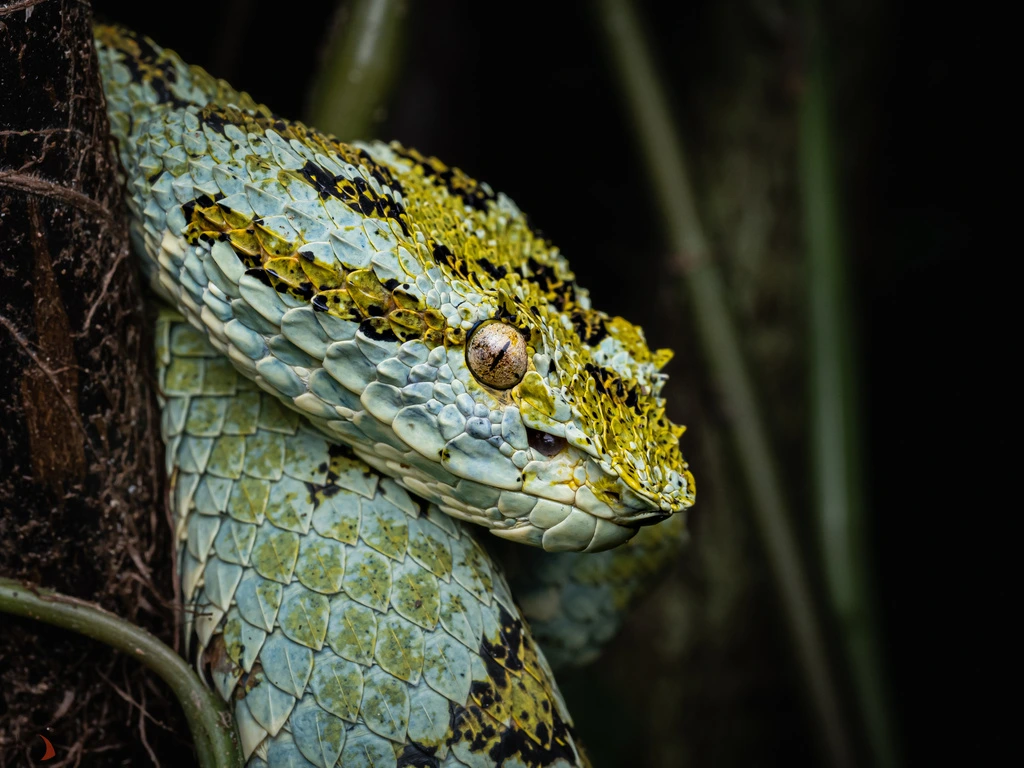
Bothriechis supraciliaris. Close view of the head. Original observation dated 2023-04-15. No additional geographic occurrence is inferred.

011 · Viperidae

Blotched Eyelash-Pitviper, Blotched Palm-pitviper

Bothriechis supraciliaris

(TAYLOR, 1954)

VenomousClinical severity not established

The checked taxonomic distribution account explicitly lists Costa Rica. Country-level evidence does not establish continuous occupancy or a complete national inventory.

Read the species account →

David A. Rodríguez Arias · CC BY 4.0 · https://creativecommons.org/licenses/by/4.0/

Bothrops asper. Species portrait; the complete source frame is retained. Original observation dated 2012-06-12. This photograph does not establish occurrence in any additional state or province.

012 · Viperidae

Terciopelo

Bothrops asper

(GARMAN, 1883)

VenomousClinical severity not established

The checked taxonomic distribution account explicitly lists Costa Rica. Country-level evidence does not establish continuous occupancy or a complete national inventory.

Read the species account →

John G. Phillips · CC BY 4.0 · https://creativecommons.org/licenses/by/4.0/

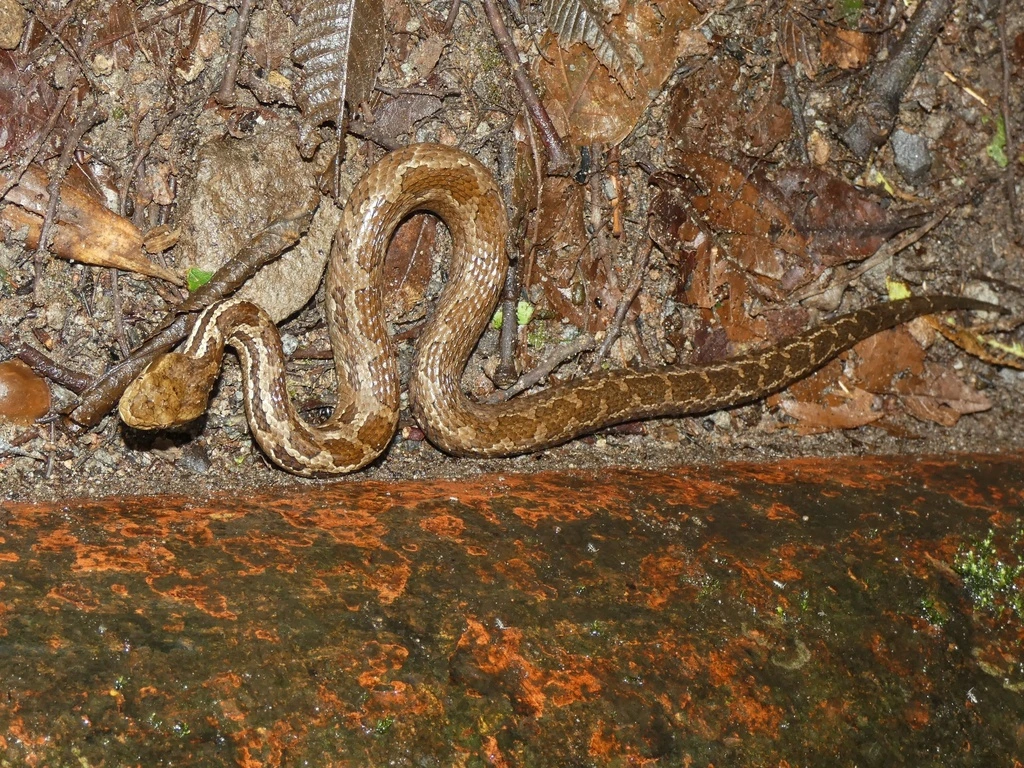
Cerrophidion sasai. Whole animal on rock and leaf litter. Original observation dated 2022-05-17. No additional geographic occurrence is inferred.

013 · Viperidae

Costa Rica Montane Pitviper

Cerrophidion sasai

JADIN, TOWNSEND, CASTOE & CAMPBELL, 2012

VenomousClinical severity not established

The checked taxonomic distribution account explicitly lists Costa Rica. Country-level evidence does not establish continuous occupancy or a complete national inventory.

Read the species account →

Kai Squires · CC BY 4.0 · https://creativecommons.org/licenses/by/4.0/

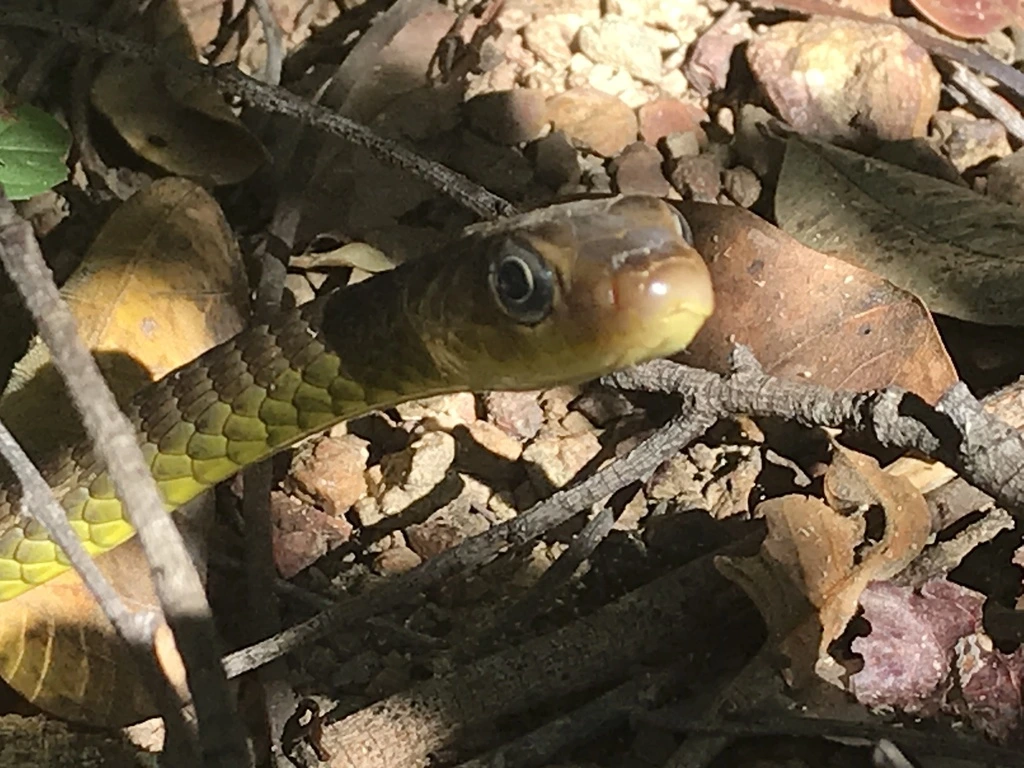
Chironius exoletus. The complete source frame is retained; this portrait is not locality or habitat evidence. Original observation dated 2020-06-14. No additional geographic occurrence is inferred.

014 · Colubridae

Linnaeus' Sipo

Chironius exoletus

(LINNAEUS, 1758)

Venom unknownNot yet assessed

The checked taxonomic distribution account explicitly lists Costa Rica. Country-level evidence does not establish continuous occupancy or a complete national inventory.

Read the species account →

Mario Barroso · CC BY 4.0 · https://creativecommons.org/licenses/by/4.0/

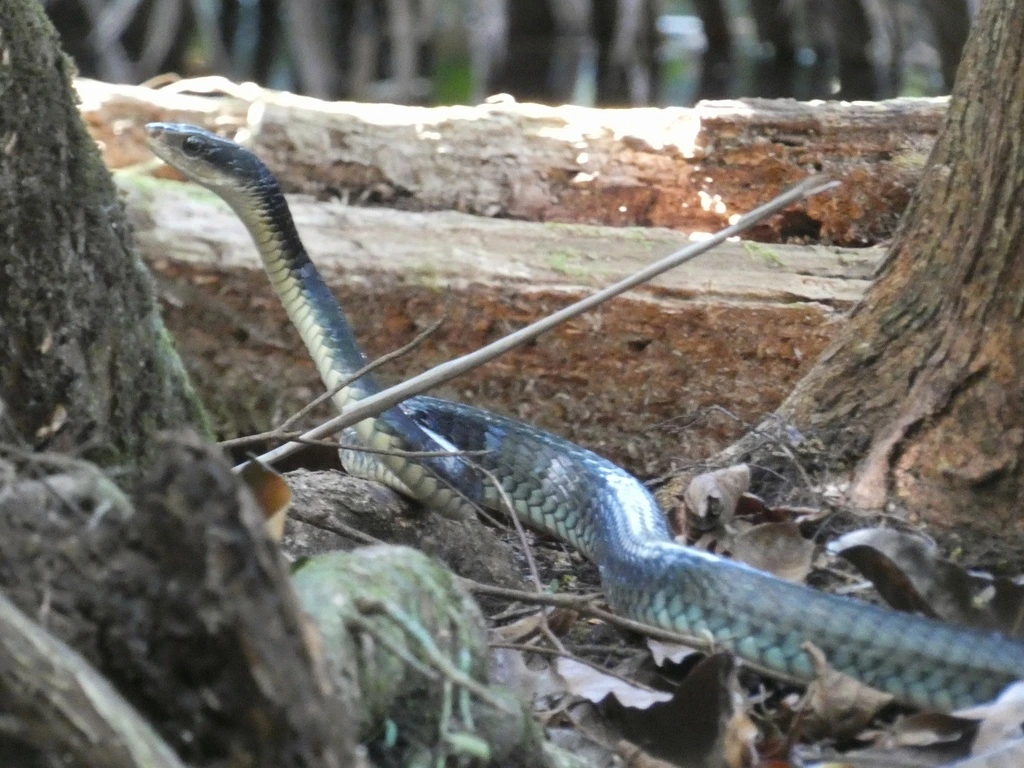
Chironius flavopictus. Blue-grey individual with the head raised among tree roots. Original observation dated 2022-12-21. Portrait only; no new locality record is inferred.

015 · Colubridae

Sipo

Chironius flavopictus

(WERNER, 1909)

Venom unknownNot yet assessed

The checked taxonomic distribution account explicitly lists Costa Rica. Country-level evidence does not establish continuous occupancy or a complete national inventory.

Read the species account →

Kai Squires · CC BY 4.0 · https://creativecommons.org/licenses/by/4.0/

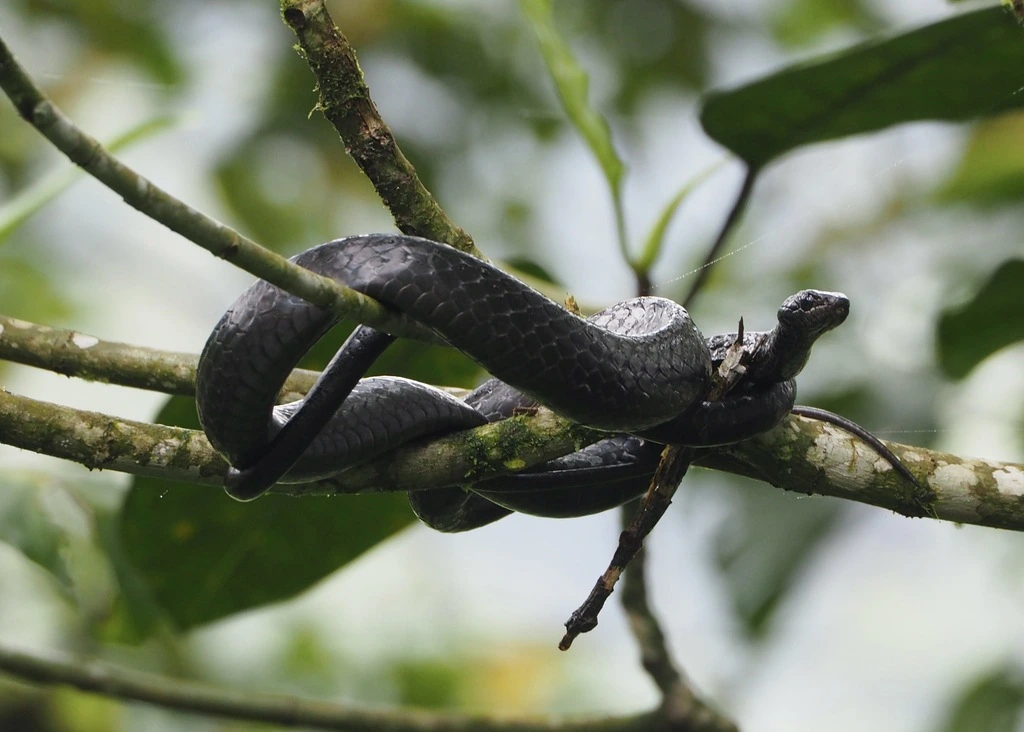
Chironius grandisquamis. The complete source frame is retained; this portrait is not locality or habitat evidence. Original observation dated 2025-11-11. No additional geographic occurrence is inferred.

016 · Colubridae

Ecuador Sipo

Chironius grandisquamis

(PETERS, 1869)

Venom unknownNot yet assessed

The checked taxonomic distribution account explicitly lists Costa Rica. Country-level evidence does not establish continuous occupancy or a complete national inventory.

Read the species account →

John G. Phillips · CC BY 4.0 · https://creativecommons.org/licenses/by/4.0/

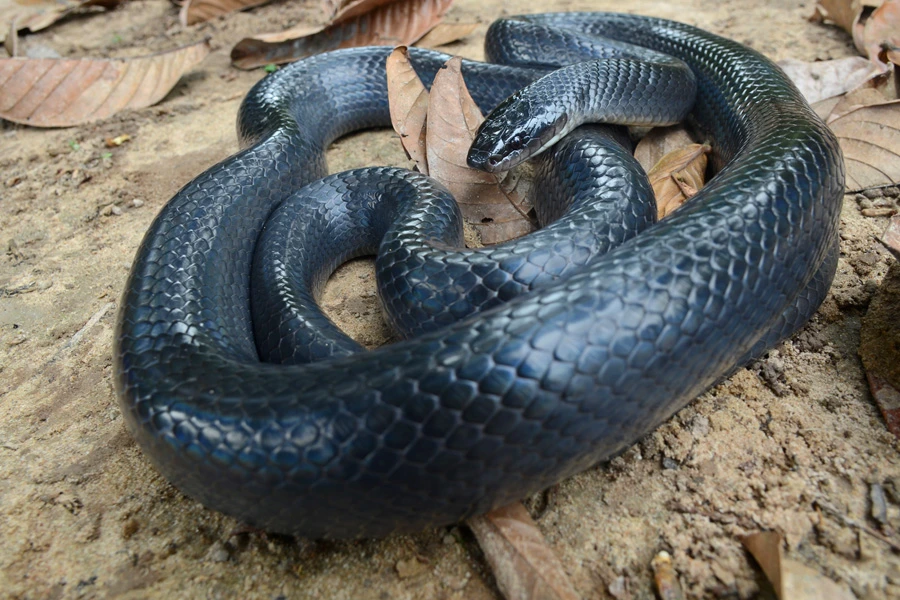
Clelia clelia. Glossy dark individual coiled on leaf litter. Portrait only; no wild locality or habitat record is inferred.

017 · Colubridae

Windward Cribo, Black Mussurana

Clelia clelia

(DAUDIN, 1803)

Venom unknownNot yet assessed

The checked taxonomic distribution account explicitly lists Costa Rica. Country-level evidence does not establish continuous occupancy or a complete national inventory.

Read the species account →

Geoff Gallice ( https://www.flickr.com/photos/dejeuxx/ ) · CC BY 2.0 · https://creativecommons.org/licenses/by/2.0

Coniophanes bipunctatus. Species portrait; the complete source frame is retained. Original observation dated 2016-12-22. This photograph does not establish occurrence in any additional state or province.

018 · Colubridae

Two-spotted Snake

Coniophanes bipunctatus

(GÜNTHER, 1858)

Venom unknownNot yet assessed

The checked taxonomic distribution account explicitly lists Costa Rica. Country-level evidence does not establish continuous occupancy or a complete national inventory.

Read the species account →

Neptalí Ramírez Marcial · CC BY 4.0 · https://creativecommons.org/licenses/by/4.0/

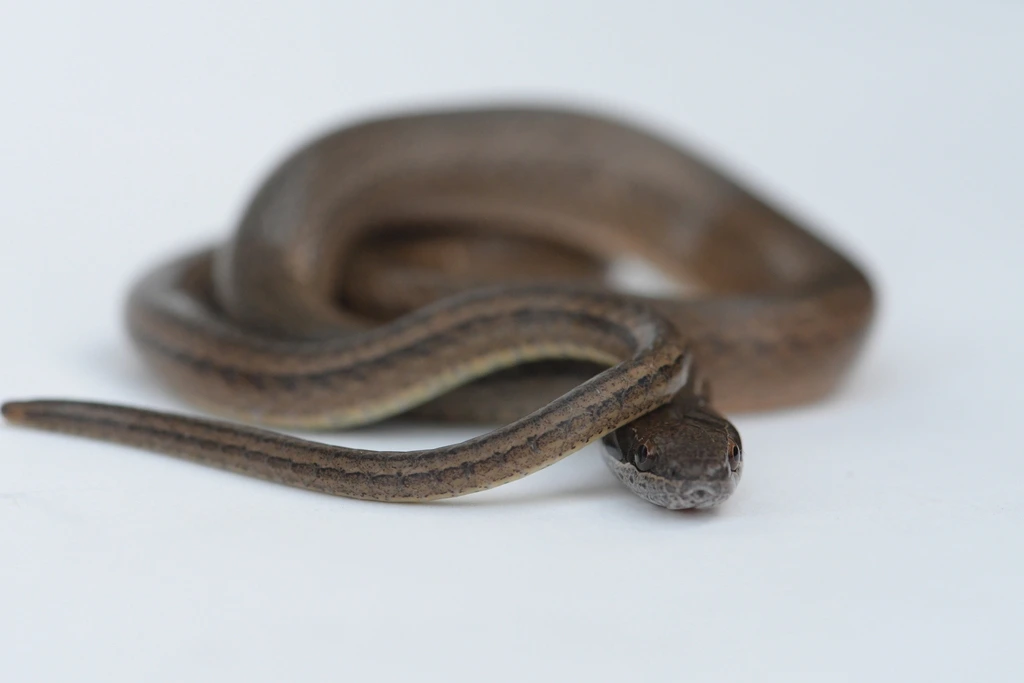
Coniophanes fissidens. Posed portrait on a plain surface. Original observation dated 2022-03-02. This photograph does not establish occurrence in any additional state or province.

019 · Colubridae

Yellowbelly Snake

Coniophanes fissidens

(GÜNTHER, 1858)

Venom unknownNot yet assessed

The checked taxonomic distribution account explicitly lists Costa Rica. Country-level evidence does not establish continuous occupancy or a complete national inventory.

Read the species account →

Diana Fuentes · CC BY-SA 4.0 · https://creativecommons.org/licenses/by-sa/4.0/

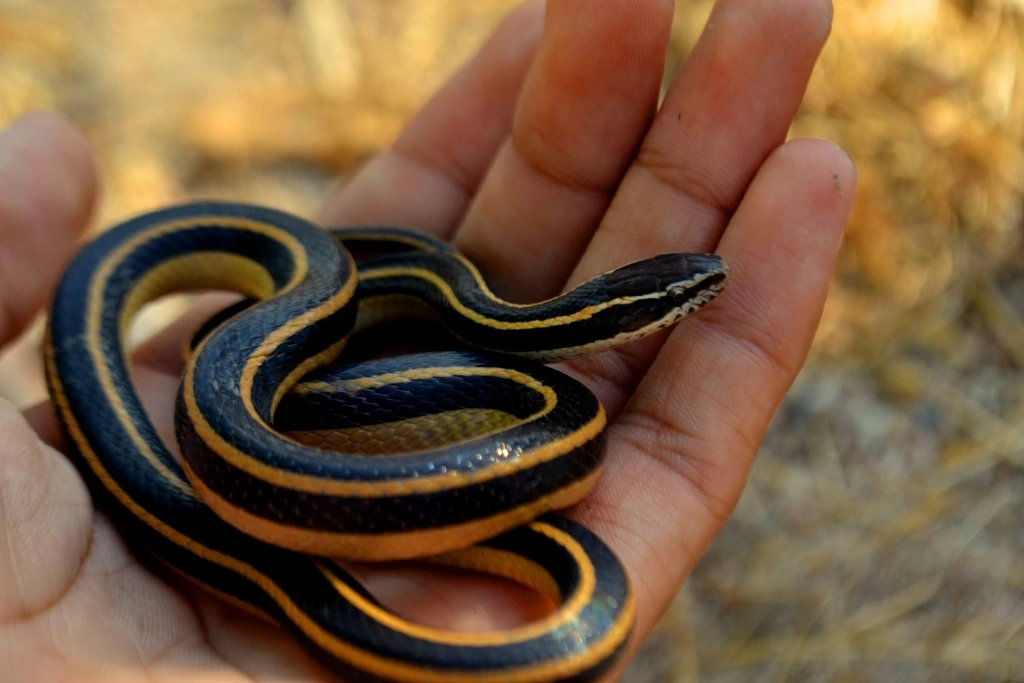
Coniophanes piceivittis. Photographed while held; this is a handled specimen portrait. Original observation dated 2014-10-13. This photograph does not establish occurrence in any additional state or province.

020 · Colubridae

Cope's Black-striped Snake

Coniophanes piceivittis

COPE, 1870

Venom unknownNot yet assessed

The checked taxonomic distribution account explicitly lists Costa Rica. Country-level evidence does not establish continuous occupancy or a complete national inventory.

Read the species account →

Daniel Pineda Vera · CC BY 4.0 · https://creativecommons.org/licenses/by/4.0/

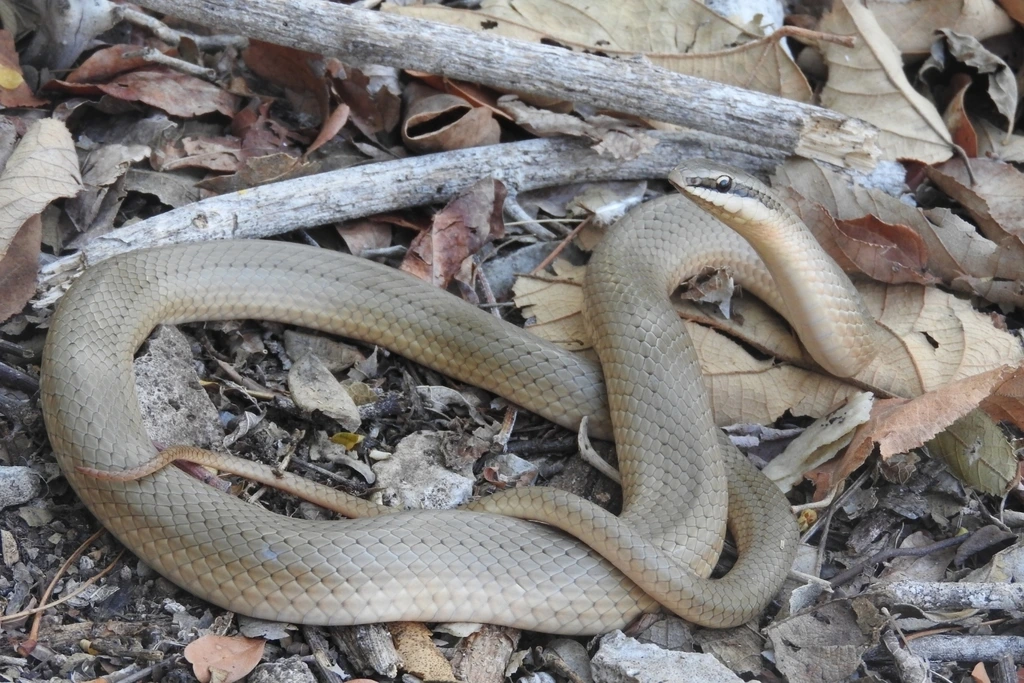
Conophis lineatus. Species portrait; the complete source frame is retained. Original observation dated 2021-04-18. This photograph does not establish occurrence in any additional state or province.

021 · Colubridae

Road Guarder

Conophis lineatus

(DUMÉRIL, BIBRON & DUMÉRIL, 1854)

Venom unknownNot yet assessed

The checked taxonomic distribution account explicitly lists Costa Rica. Country-level evidence does not establish continuous occupancy or a complete national inventory.

Read the species account →

Sebastián de Jesús Herrera Buenfil · CC BY 4.0 · https://creativecommons.org/licenses/by/4.0/

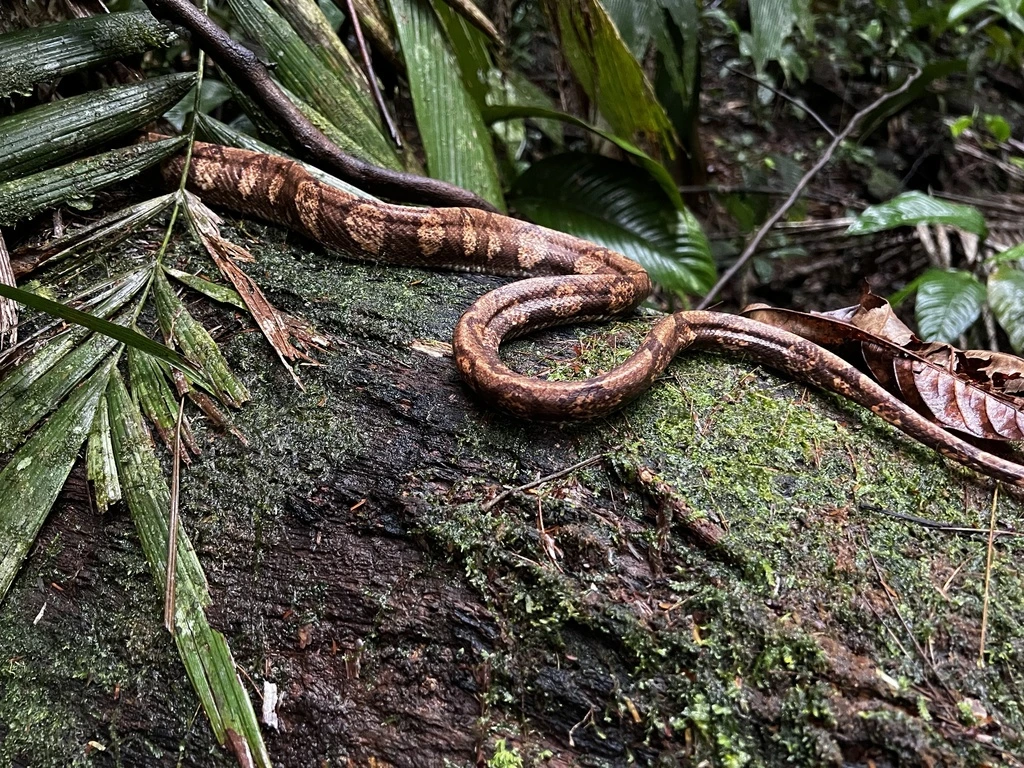
Corallus annulatus. Coiled individual resting on a moss-covered branch. Original observation dated 2025-05-13. Portrait only; no new locality record is inferred.

022 · Boidae

Ringed Tree Boa

Corallus annulatus

(COPE, 1875)

Non-venomous

The checked taxonomic distribution account explicitly lists Costa Rica. Country-level evidence does not establish continuous occupancy or a complete national inventory.

Read the species account →

Djibo Zanzot · CC BY-SA 4.0 · https://creativecommons.org/licenses/by-sa/4.0/

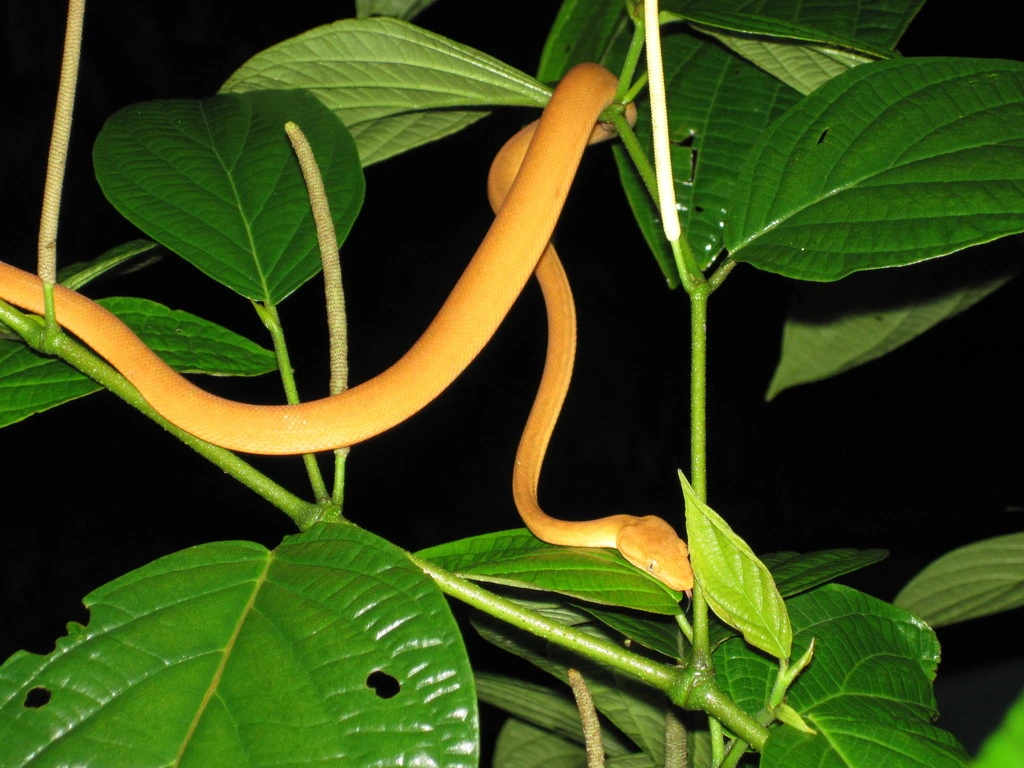
Corallus ruschenbergerii. Yellow individual moving through leafy branches. Original observation dated 2010-12-08. No additional geographic occurrence is inferred.

023 · Boidae

Mangrove Treeboa, Ruschenberger Tree Boa, False Manapare, Dormilona

Corallus ruschenbergerii

(COPE, 1875)

Non-venomous

The checked taxonomic distribution account explicitly lists Costa Rica. Country-level evidence does not establish continuous occupancy or a complete national inventory.

Read the species account →

Paul Prior · CC BY 4.0 · https://creativecommons.org/licenses/by/4.0/

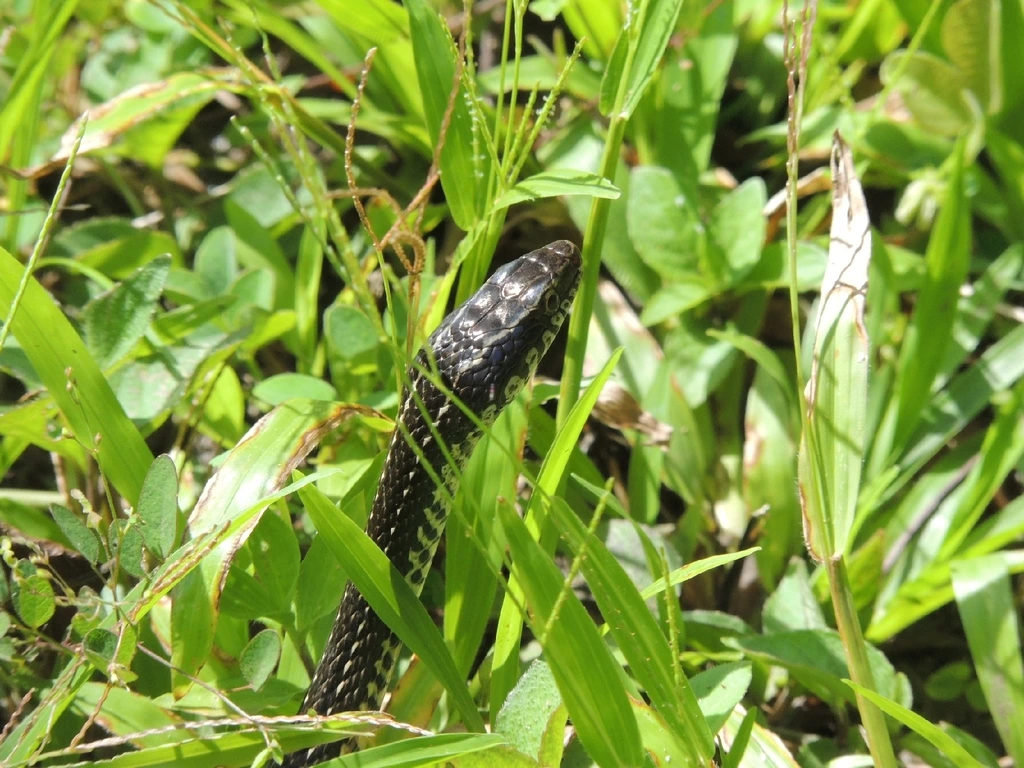
Crisantophis nevermanni. Head and neck visible among grasses. Original observation dated 2025-11-12. No additional geographic occurrence is inferred.

024 · Colubridae

Dunn's Road Guarder

Crisantophis nevermanni

(DUNN, 1937)

Venom unknownNot yet assessed

The checked taxonomic distribution account explicitly lists Costa Rica. Country-level evidence does not establish continuous occupancy or a complete national inventory.

Read the species account →

Anthony Mora Aguilar · CC BY 4.0 · https://creativecommons.org/licenses/by/4.0/

The research library

Sources & the checklist.

This edition lists 143 species with supported country records from checked taxonomic treatments and cited field studies. This total includes 1 record marked as introduced; it is not a native-species total. It is not a claim of a complete national inventory. Each account retains its source and check date; individual evidence entries retain their own review dates.

Range and taxonomy review

Country links use a single accepted species identity. Revised names and disputed records are kept visible here; uncertain records do not enter the listed collection or regional totals.

Indotyphlops braminus

Introduced occurrence

Explicitly introduced in the checked distribution source. The checked taxonomic distribution account explicitly lists Costa Rica. Country-level evidence does not establish continuous occupancy or a complete national inventory. The source population is treated as introduced.

Source 1 ↗

How the map and counts work

Search results were checked against distribution text and taxonomic qualifications. A geographic name alone does not establish a political country: New Guinea, the Solomon archipelago and Micronesia span more than one country or territory. Introduced and unresolved records require separate interpretation.

Place counts require explicit named localities, including valid type localities. Counts can overlap where sources name multiple places. Regional maps group historical boundary snapshots for navigation, while island outlines use Natural Earth; neither is a species range or an observation map. Small islands can be below the outline dataset’s resolution, so geographic reference markers and the directory remain available.

OpenStreetMap, Wambacher; geoBoundaries gbOpen ADM1, 2017 snapshot; Open Data Commons Open Database License 1.0. Map provenance →
Exclusions & qualifications (4)

Clelia scytalina

The treatment includes an explicit negative or conflicting country qualification. Resolve the cited revision before counting this report.

Read source 1 ↗

Lampropeltis abnorma

Qualified or negative distribution wording requires review. This report remains outside positive country and regional counts.

Read source 1 ↗

Mastigodryas alternatus

The treatment includes an explicit negative or conflicting country qualification. Resolve the cited revision before counting this report.

Read source 1 ↗

Oxybelis koehleri

The source flags a conflict between the published verbal range and mapped specimens, which do not reach Costa Rica. National occurrence needs independent locality evidence.

Read source 1 ↗
  1. Map provenance and declared navigation groups ↗
  2. Convention on Biological Diversity · Costa Rica national profile ↗
  3. The Reptile Database

    Individual treatments and locality evidence are linked from each species account.

  4. Meiri (2024): SquamBase 1.0

    Species-level literature measurements and ecological traits. Exact-name matches only; imputed or ambiguous fields are omitted. These summaries are not local observations.

  5. Natural Earth: public-domain geographic data

Continue through the North America atlas →