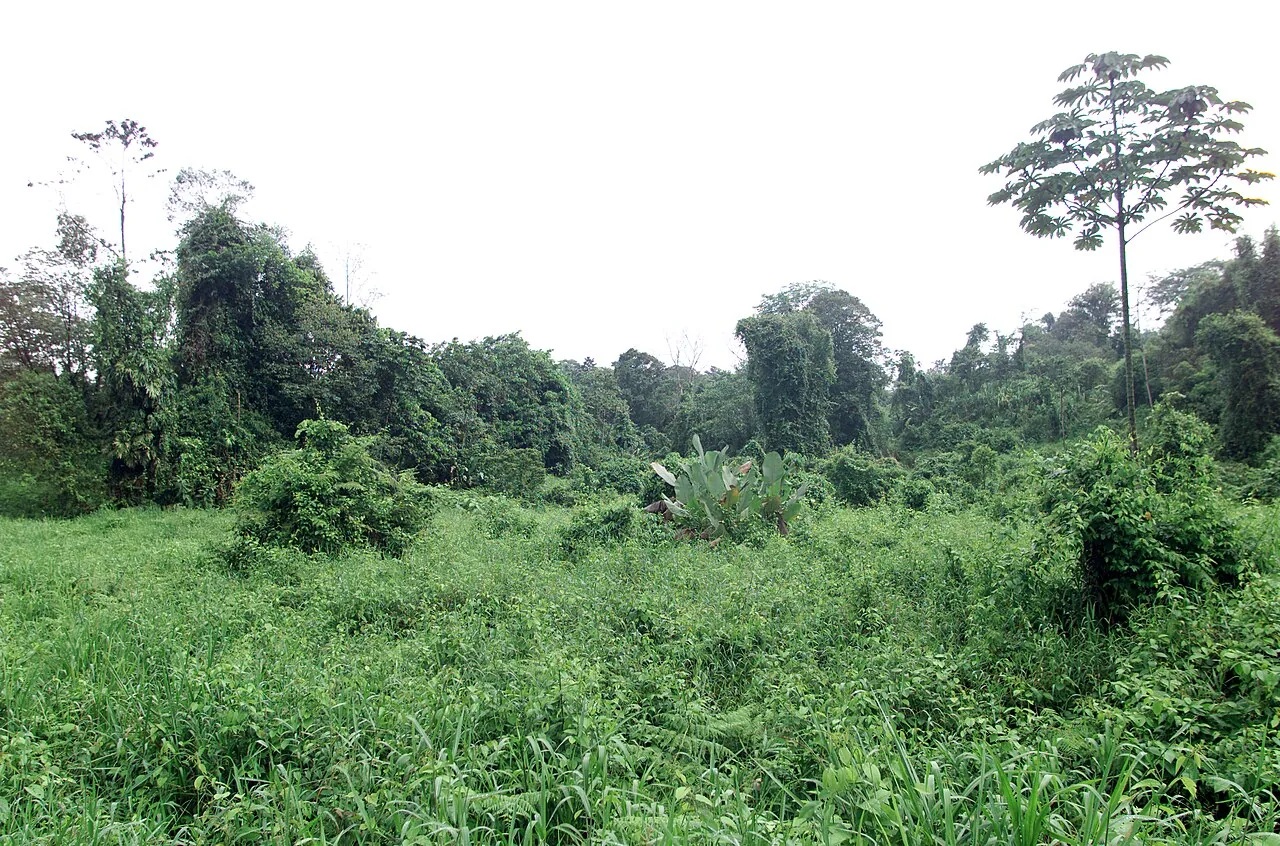
Dense vegetation at La Selva, Heredia, Costa Rica.

Costa Rica · Habitat field guide

Forest & woodland

Costa Rica’s profile distinguishes dry forests, cloud forests and other forest formations. Reported recovery in one forest type does not establish recovery in another.

Dense vegetation at La Selva, Heredia, Costa Rica.

Photograph: NASA Armstrong Flight Research Center / NASA/Jim Ross · Image source · Public domain. Cropped to fill the hero; darkened for text legibility.

Understanding the environment

A sense of the habitat.

Costa Rica’s profile distinguishes dry forests, cloud forests and other forest formations. Reported recovery in one forest type does not establish recovery in another.

Geographic scope
Costa Rica; source locality matters.
Evidence scale
Landscape descriptions are separate from species records.
Source date
Retain the cited publication date; reviewed 16 October 2026.

Explore the structure · Select a layer to compare details retained in a field record.

Read the locality in three layers.

Select a zone to see what changes.

Canopy

Canopy

Distinguish closed crowns, open woodland and planted trees.

Check this detail in the original record before assigning a species to the habitat.

These reading prompts are conceptual, not a transect or an occurrence map.

Sources: Convention on Biological Diversity · Costa Rica national profile

Field notes · 01

The documented setting

Costa Rica’s profile distinguishes dry forests, cloud forests and other forest formations. Reported recovery in one forest type does not establish recovery in another.

Sources: Convention on Biological Diversity · Costa Rica national profile

Field notes · 02

Connect the setting to a species

A habitat description and a country record answer different questions. Follow the linked species account for evidence of habitat use; an empty filtered collection indicates missing extracted evidence, not biological absence.

Pressures on Costa Rica’s habitats

What is at risk?

A site-specific assessment of pressures has not yet been extracted for this guide. The landscape sources below provide context; they do not establish a current threat level for each snake species.

What helps this habitat

Consult the source’s own conservation context and dates before interpreting habitat change. A broad landscape pressure does not establish a measured decline for every snake.

The connected collection

Snakes with habitat evidence.

These 52 species have supported country occurrence and an explicit habitat association in the shared account. The association may come from elsewhere in their range. This is not a complete local habitat inventory; the places above are landscape examples, not asserted collecting sites.

52 species · showing 24

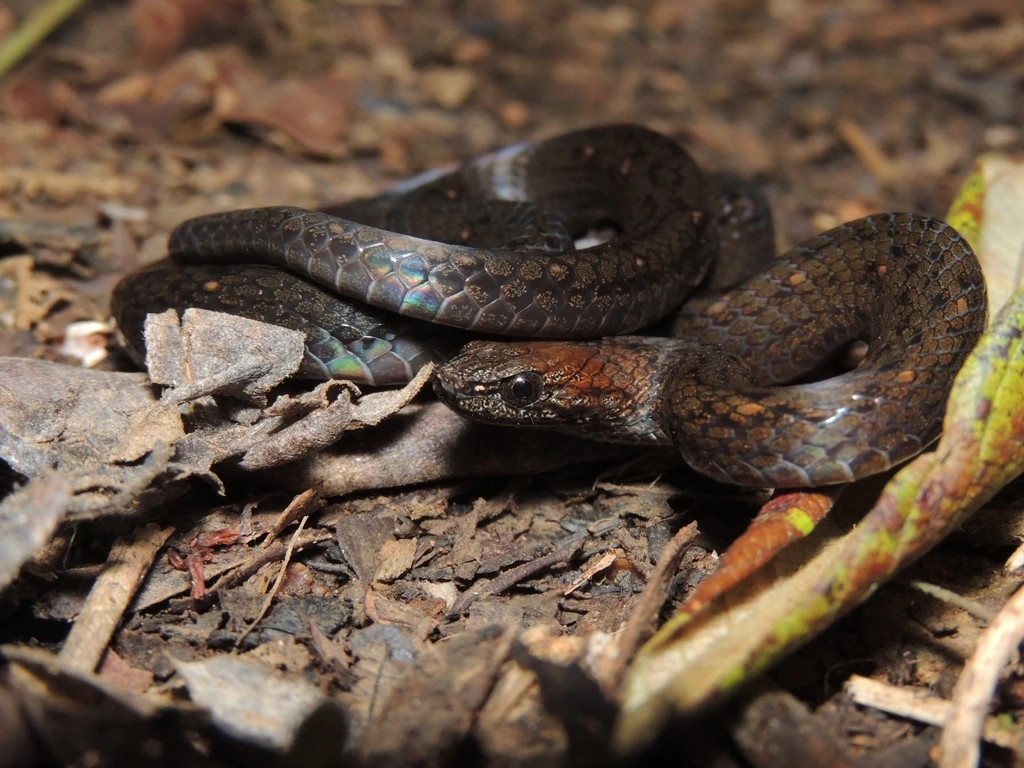
Amastridium veliferum. Coiled individual among leaf litter and twigs. Original observation dated 2025-01-18. No additional geographic occurrence is inferred.

001 · Colubridae

Rufous-headed snake, Rustyhead Snake

Amastridium veliferum

COPE, 1861

Venom unknownNot yet assessed

The checked taxonomic distribution account explicitly lists Costa Rica. Country-level evidence does not establish continuous occupancy or a complete national inventory.

Read the species account →

Anthony Mora Aguilar · CC BY 4.0 · https://creativecommons.org/licenses/by/4.0/
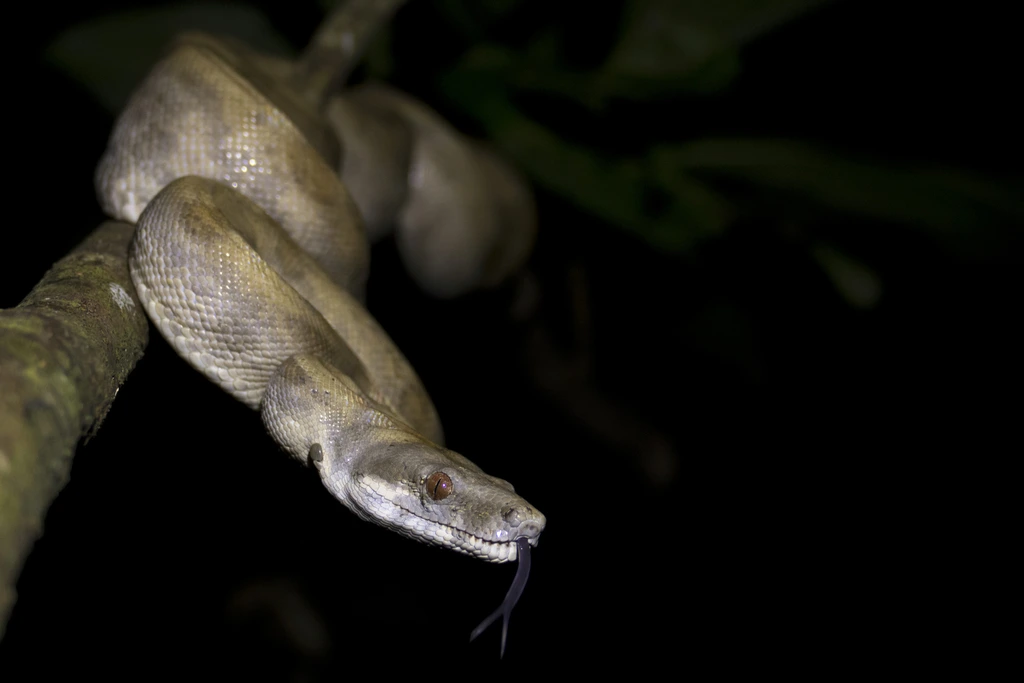
Boa imperator. Species portrait; the complete source frame is retained. Original observation dated 2021-09-28. This photograph does not establish occurrence in any additional state or province.

002 · Boidae

Central American Boa Constrictor

Boa imperator

DAUDIN, 1803

Non-venomous

The checked taxonomic distribution account explicitly lists Costa Rica. Country-level evidence does not establish continuous occupancy or a complete national inventory.

Read the species account →

Ewout Knoester · CC BY-SA 4.0 · https://creativecommons.org/licenses/by-sa/4.0/

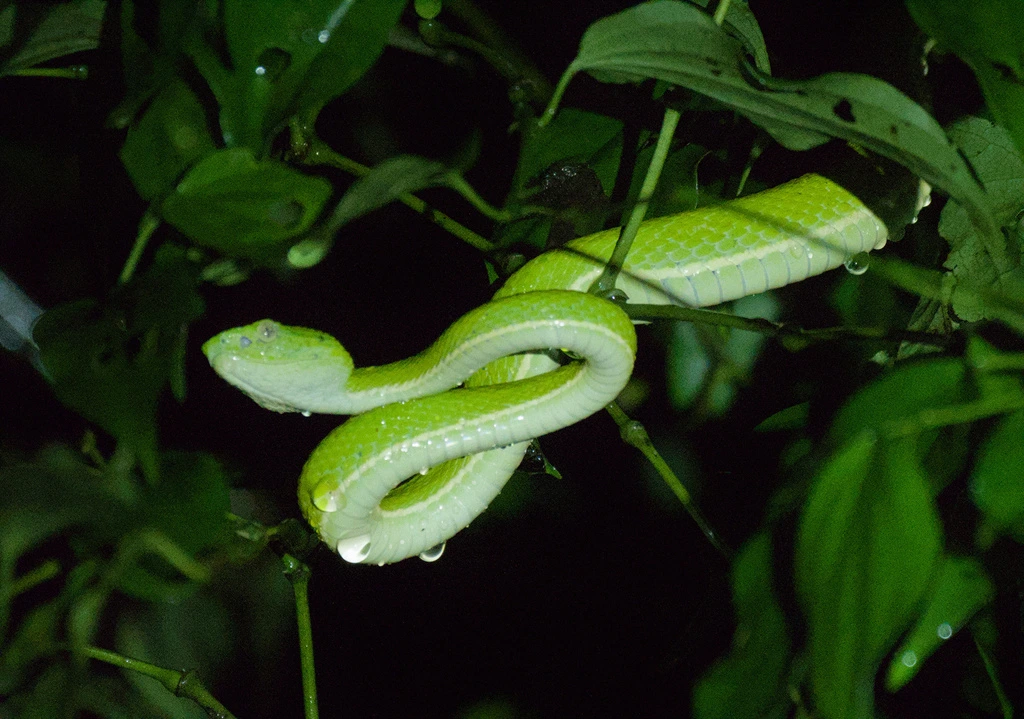
Bothriechis lateralis. Green animal resting on a branch. Original observation dated 2024-12-06. No additional geographic occurrence is inferred.

003 · Viperidae

Coffee Palm Viper

Bothriechis lateralis

PETERS, 1862

VenomousClinical severity not established

The checked taxonomic distribution account explicitly lists Costa Rica. Country-level evidence does not establish continuous occupancy or a complete national inventory.

Read the species account →

Blake Ross · CC BY 4.0 · https://creativecommons.org/licenses/by/4.0/
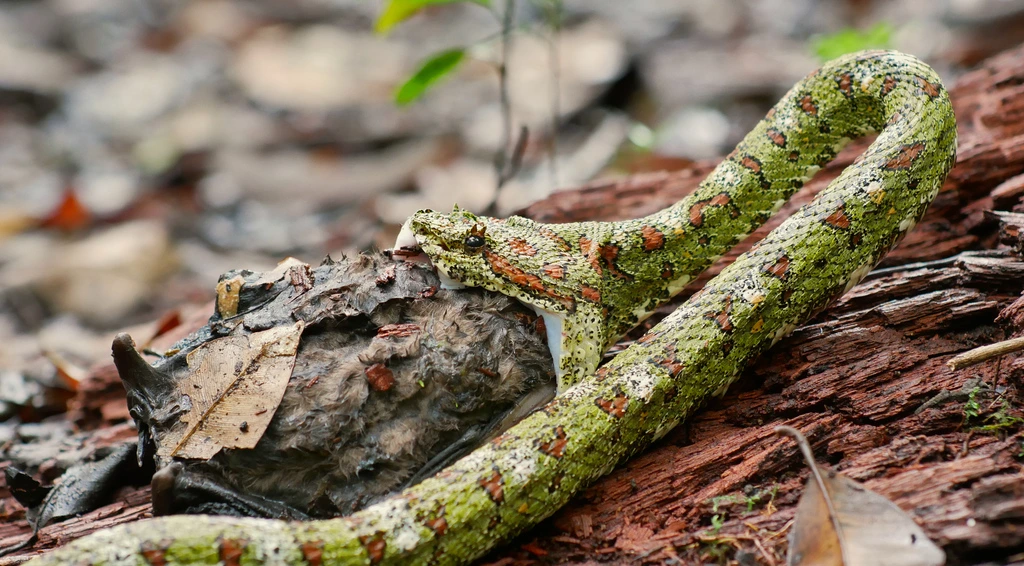
Bothriechis nigroadspersus. Species portrait; the complete source frame is retained. Original observation dated 2020-01-11. This photograph does not establish occurrence in any additional state or province.

004 · Viperidae

Central Ameri- can Eyelash-Pitviper

Bothriechis nigroadspersus

(STEINDACHNER, 1870)

VenomousClinical severity not established

The checked taxonomic distribution account explicitly lists Costa Rica. Country-level evidence does not establish continuous occupancy or a complete national inventory.

Read the species account →

iNaturalist contributor (CC0; creator not supplied) · CC0 1.0 · https://creativecommons.org/publicdomain/zero/1.0/

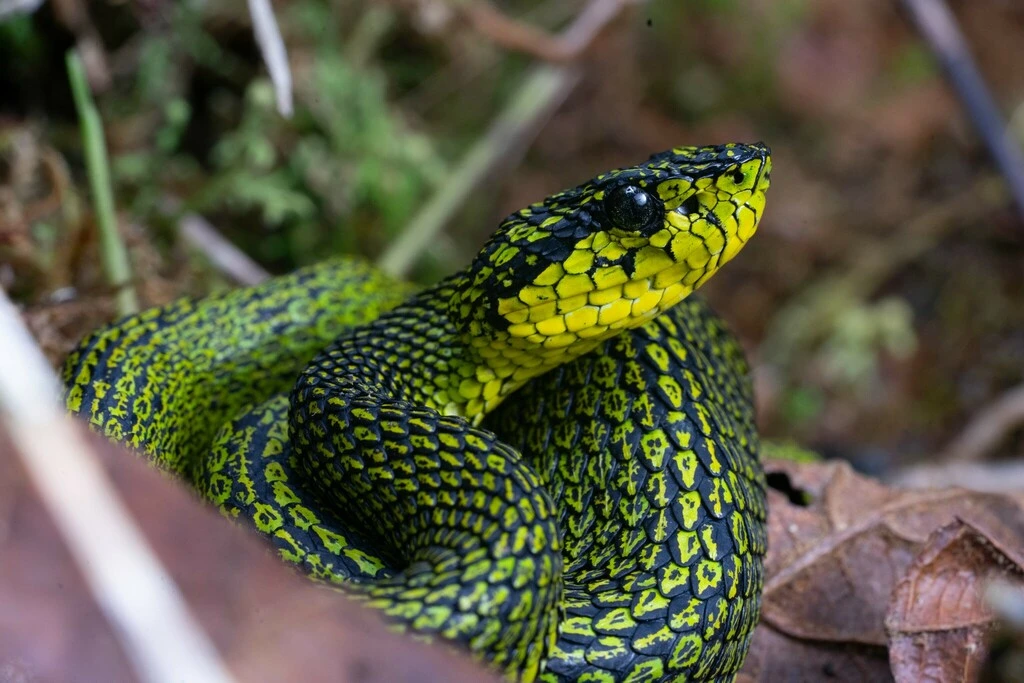
Bothriechis nigroviridis. Close view of a green and black patterned individual in coils. Original observation dated 2021-08-02. Portrait only; no new locality record is inferred.

005 · Viperidae

Black-speckled Palm Pit Viper

Bothriechis nigroviridis

PETERS, 1859

VenomousClinical severity not established

The checked taxonomic distribution account explicitly lists Costa Rica. Country-level evidence does not establish continuous occupancy or a complete national inventory.

Read the species account →

Wouter Beukema · CC BY 4.0 · https://creativecommons.org/licenses/by/4.0/
Bothriechis nubestris. Green individual on fallen leaves. Original observation dated 2018-03-25. Portrait only; no new locality record is inferred.

006 · Viperidae

Talamancan Palm-Pitviper

Bothriechis nubestris

DOAN, MASON, CASTOE, SASA & PARKINSON, 2016

VenomousClinical severity not established

The checked taxonomic distribution account explicitly lists Costa Rica. Country-level evidence does not establish continuous occupancy or a complete national inventory. The treatment names these subdivisions in its Costa Rica distribution clause: San José, San Jose. They are assigned to the declared atlas navigation groups; this is not a field…

Read the species account →

Ian Adams · CC BY 4.0 · https://creativecommons.org/licenses/by/4.0/
Bothrops asper. Species portrait; the complete source frame is retained. Original observation dated 2012-06-12. This photograph does not establish occurrence in any additional state or province.

007 · Viperidae

Terciopelo

Bothrops asper

(GARMAN, 1883)

VenomousClinical severity not established

The checked taxonomic distribution account explicitly lists Costa Rica. Country-level evidence does not establish continuous occupancy or a complete national inventory.

Read the species account →

John G. Phillips · CC BY 4.0 · https://creativecommons.org/licenses/by/4.0/
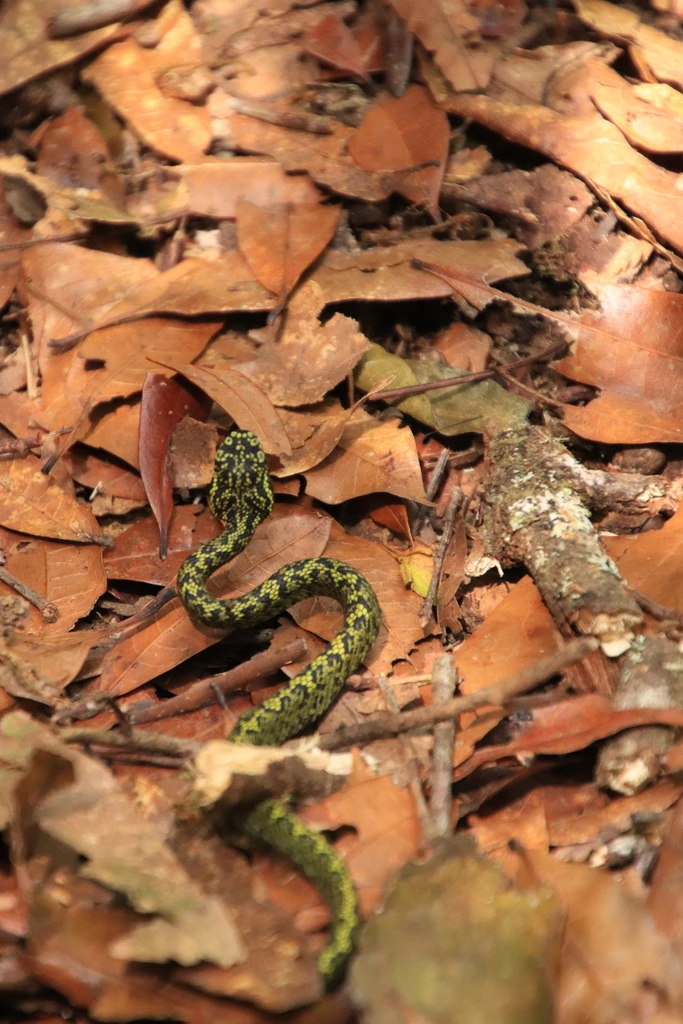
Chironius flavopictus. Blue-grey individual with the head raised among tree roots. Original observation dated 2022-12-21. Portrait only; no new locality record is inferred.

008 · Colubridae

Sipo

Chironius flavopictus

(WERNER, 1909)

Venom unknownNot yet assessed

The checked taxonomic distribution account explicitly lists Costa Rica. Country-level evidence does not establish continuous occupancy or a complete national inventory.

Read the species account →

Kai Squires · CC BY 4.0 · https://creativecommons.org/licenses/by/4.0/
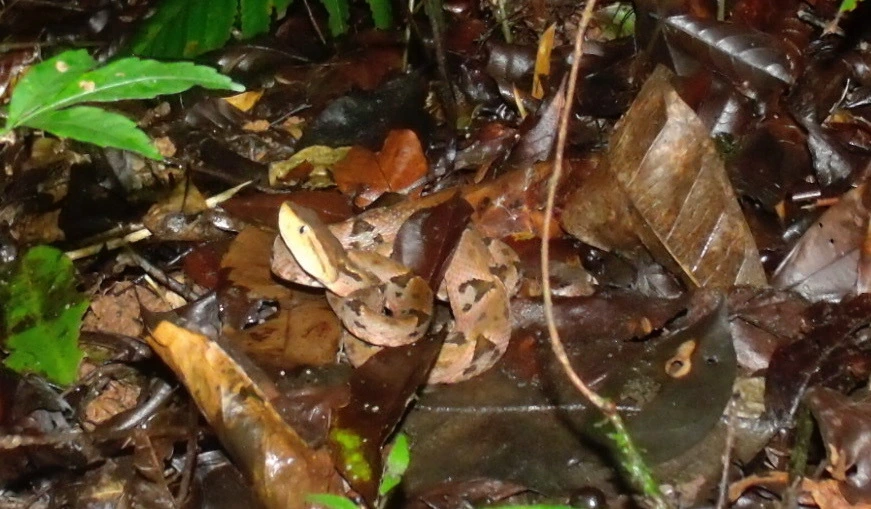
Chironius grandisquamis. The complete source frame is retained; this portrait is not locality or habitat evidence. Original observation dated 2025-11-11. No additional geographic occurrence is inferred.

009 · Colubridae

Ecuador Sipo

Chironius grandisquamis

(PETERS, 1869)

Venom unknownNot yet assessed

The checked taxonomic distribution account explicitly lists Costa Rica. Country-level evidence does not establish continuous occupancy or a complete national inventory.

Read the species account →

John G. Phillips · CC BY 4.0 · https://creativecommons.org/licenses/by/4.0/
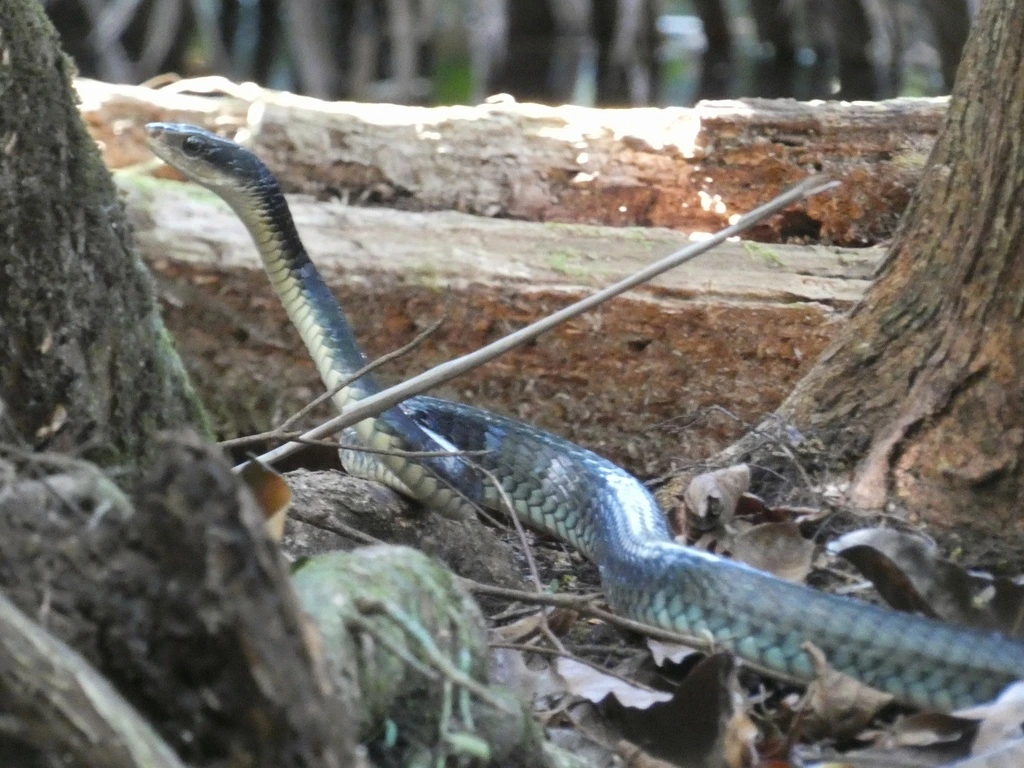
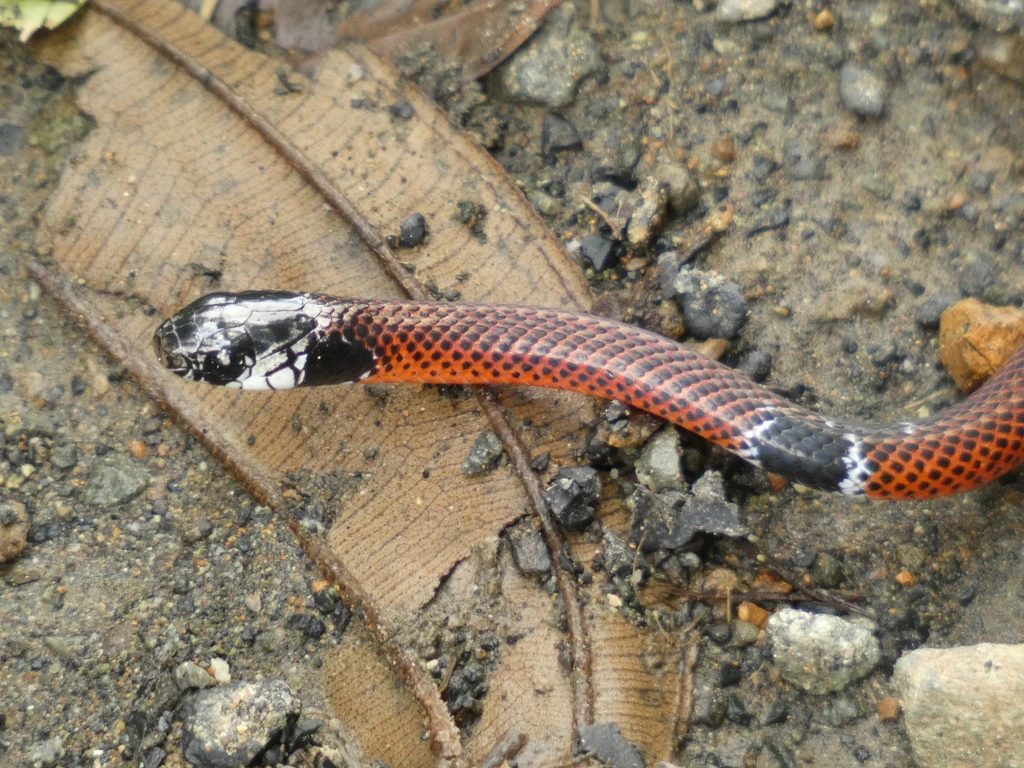
Clelia clelia. Glossy dark individual coiled on leaf litter. Portrait only; no wild locality or habitat record is inferred.

010 · Colubridae

Windward Cribo, Black Mussurana

Clelia clelia

(DAUDIN, 1803)

Venom unknownNot yet assessed

The checked taxonomic distribution account explicitly lists Costa Rica. Country-level evidence does not establish continuous occupancy or a complete national inventory.

Read the species account →

Geoff Gallice ( https://www.flickr.com/photos/dejeuxx/ ) · CC BY 2.0 · https://creativecommons.org/licenses/by/2.0

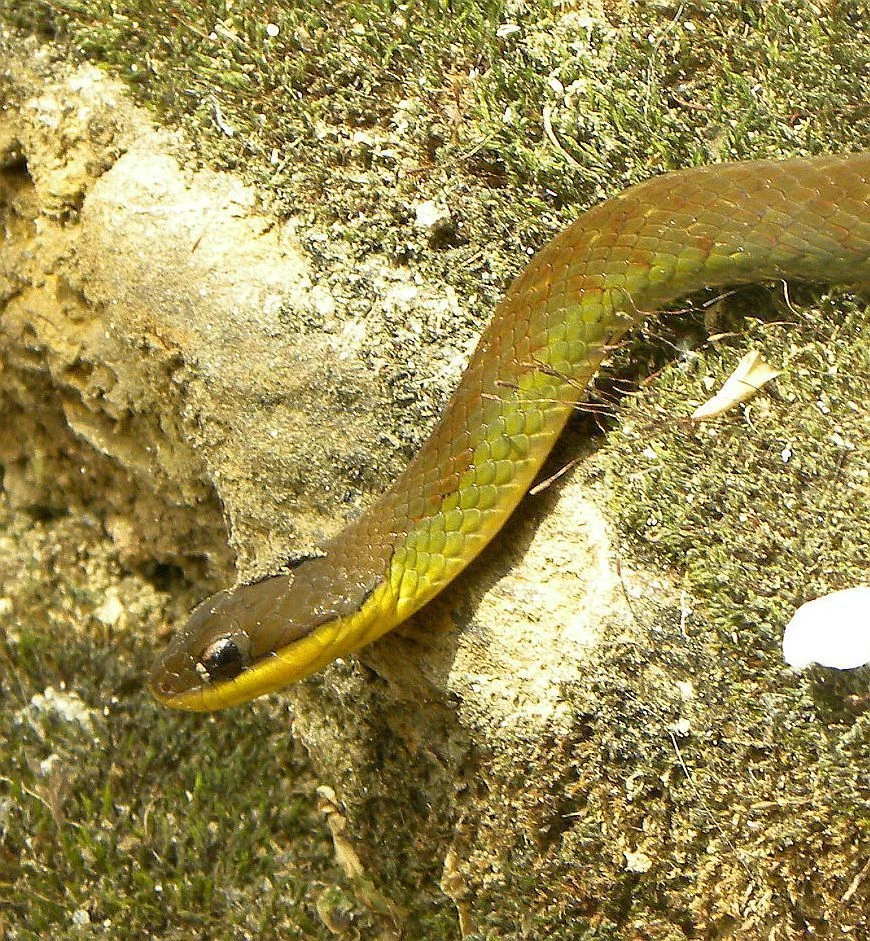
Coniophanes fissidens. Posed portrait on a plain surface. Original observation dated 2022-03-02. This photograph does not establish occurrence in any additional state or province.

011 · Colubridae

Yellowbelly Snake

Coniophanes fissidens

(GÜNTHER, 1858)

Venom unknownNot yet assessed

The checked taxonomic distribution account explicitly lists Costa Rica. Country-level evidence does not establish continuous occupancy or a complete national inventory.

Read the species account →

Diana Fuentes · CC BY-SA 4.0 · https://creativecommons.org/licenses/by-sa/4.0/

Corallus annulatus. Coiled individual resting on a moss-covered branch. Original observation dated 2025-05-13. Portrait only; no new locality record is inferred.

012 · Boidae

Ringed Tree Boa

Corallus annulatus

(COPE, 1875)

Non-venomous

The checked taxonomic distribution account explicitly lists Costa Rica. Country-level evidence does not establish continuous occupancy or a complete national inventory.

Read the species account →

Djibo Zanzot · CC BY-SA 4.0 · https://creativecommons.org/licenses/by-sa/4.0/

Dendrophidion apharocybe. Head and body among fallen leaves. Original observation dated 2022-04-02. No additional geographic occurrence is inferred.

013 · Colubridae

Species account

Dendrophidion apharocybe

CADLE, 2012

Venom unknownNot yet assessed

The checked taxonomic distribution account explicitly lists Costa Rica. Country-level evidence does not establish continuous occupancy or a complete national inventory.

Read the species account →

scott_young · CC0 1.0 · https://creativecommons.org/publicdomain/zero/1.0/

Dendrophidion percarinatum. The complete source frame is retained; this portrait is not locality or habitat evidence. Original observation dated 2021-03-02. No additional geographic occurrence is inferred.

014 · Colubridae

South American Forest Racer

Dendrophidion percarinatum

(COPE, 1893)

Venom unknownNot yet assessed

The checked taxonomic distribution account explicitly lists Costa Rica. Country-level evidence does not establish continuous occupancy or a complete national inventory.

Read the species account →

José Gabriel Julio Guzmán · CC BY 4.0 · https://creativecommons.org/licenses/by/4.0/
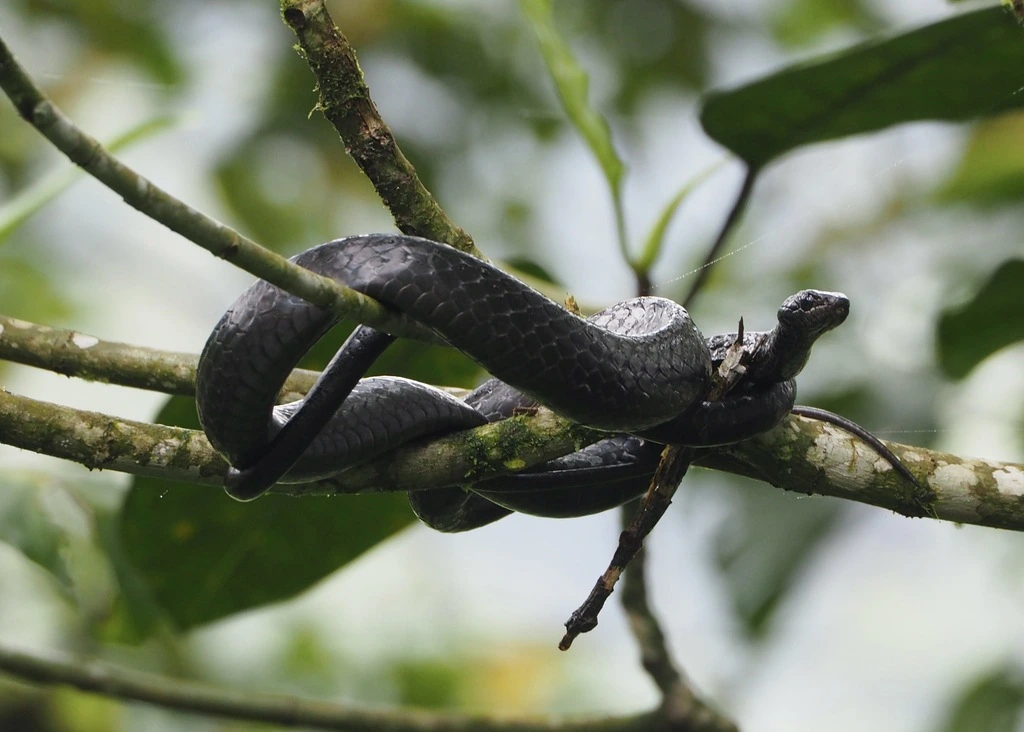
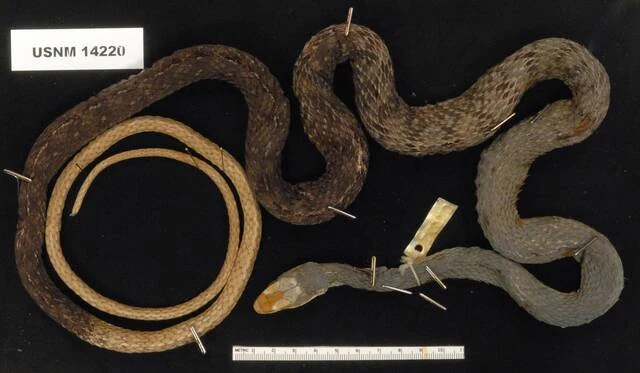
Dendrophidion rufiterminorum. Preserved museum specimen, Smithsonian National Museum of Natural History, USNM 14220. Colours may have changed in preservative. This collection image adds no geographic occurrence record.

015 · Colubridae

Species account

Dendrophidion rufiterminorum

CADLE & SAVAGE, 2012

Venom unknownNot yet assessed

The checked taxonomic distribution account explicitly lists Costa Rica. Country-level evidence does not establish continuous occupancy or a complete national inventory.

Read the species account →

James A. Poindexter II · CC0 1.0 · https://creativecommons.org/publicdomain/zero/1.0/

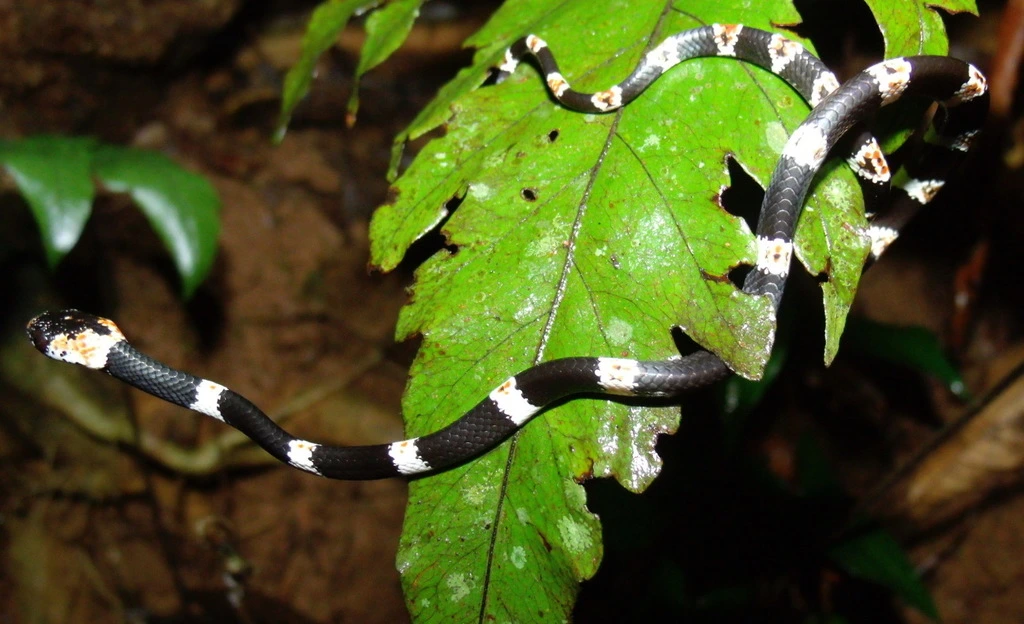
Dipsas articulata. Banded individual crossing a green leaf. Original observation dated 2012-06-24. No additional geographic occurrence is inferred.

016 · Colubridae

American Snail-eater

Dipsas articulata

(COPE, 1868)

Venom unknownNot yet assessed

The checked taxonomic distribution account explicitly lists Costa Rica. Country-level evidence does not establish continuous occupancy or a complete national inventory.

Read the species account →

John G. Phillips · CC BY 4.0 · https://creativecommons.org/licenses/by/4.0/
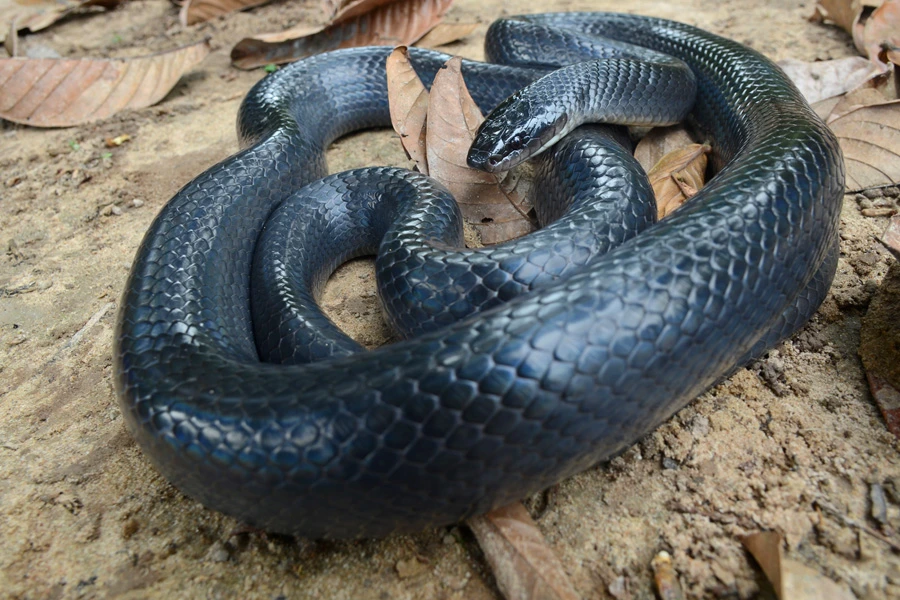
Drymobius margaritiferus. Species portrait; the complete source frame is retained. Original observation dated 2018-11-03. This photograph does not establish occurrence in any additional state or province.

017 · Colubridae

Northern Speckled Racer, margaritiferus: (Northern) Speckled Racer

Drymobius margaritiferus

(SCHLEGEL, 1837)

Venom unknownNot yet assessed

The checked taxonomic distribution account explicitly lists Costa Rica. Country-level evidence does not establish continuous occupancy or a complete national inventory.

Read the species account →

Wouter Beukema · CC BY 4.0 · https://creativecommons.org/licenses/by/4.0/
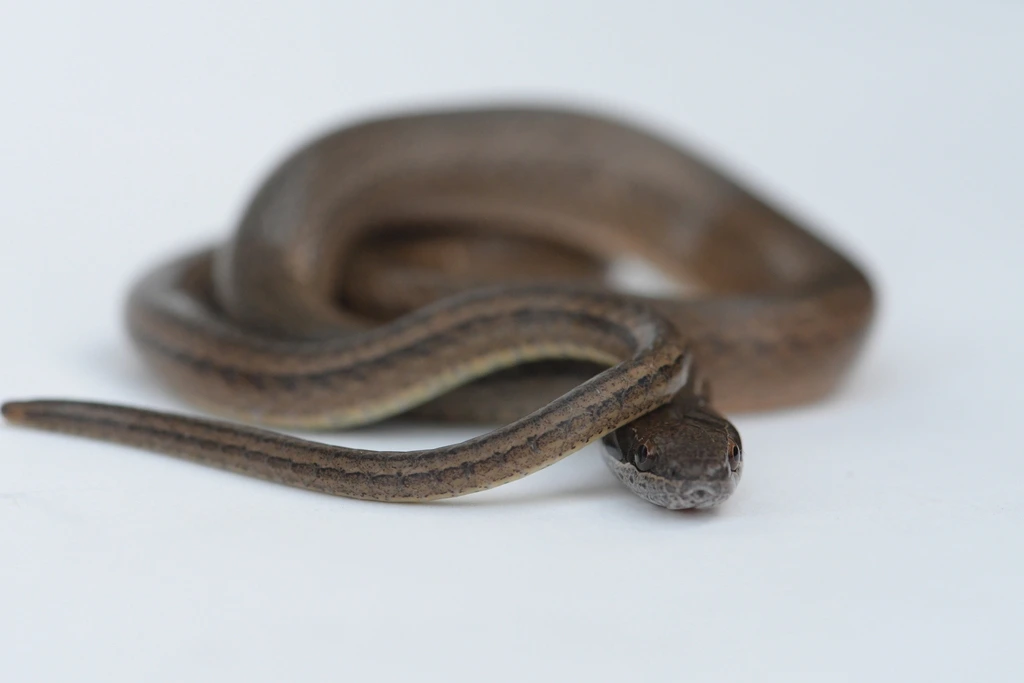
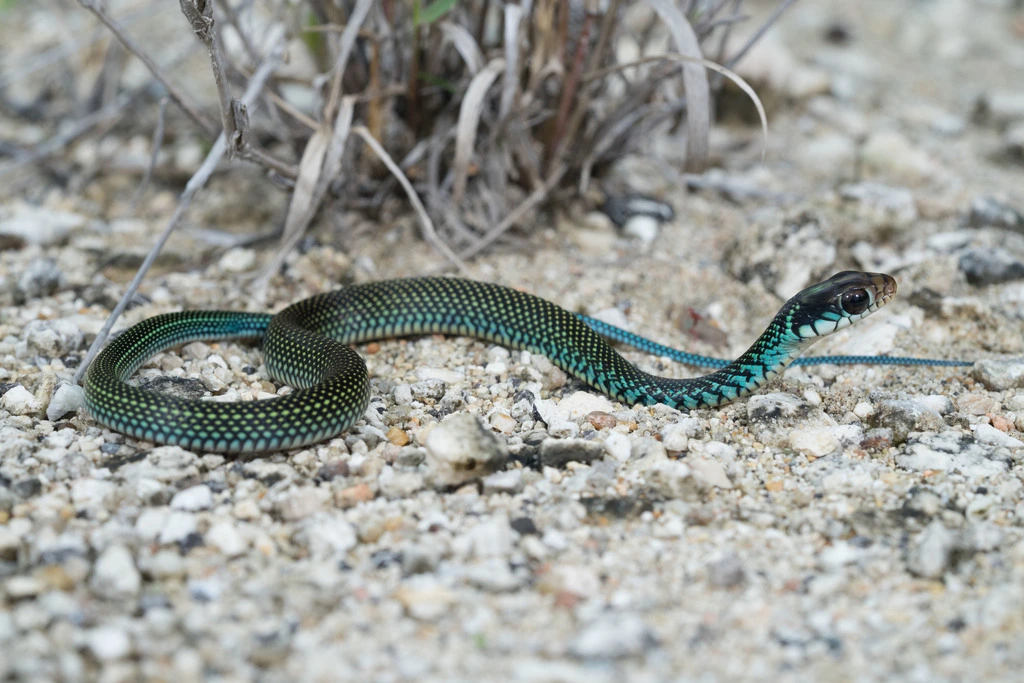
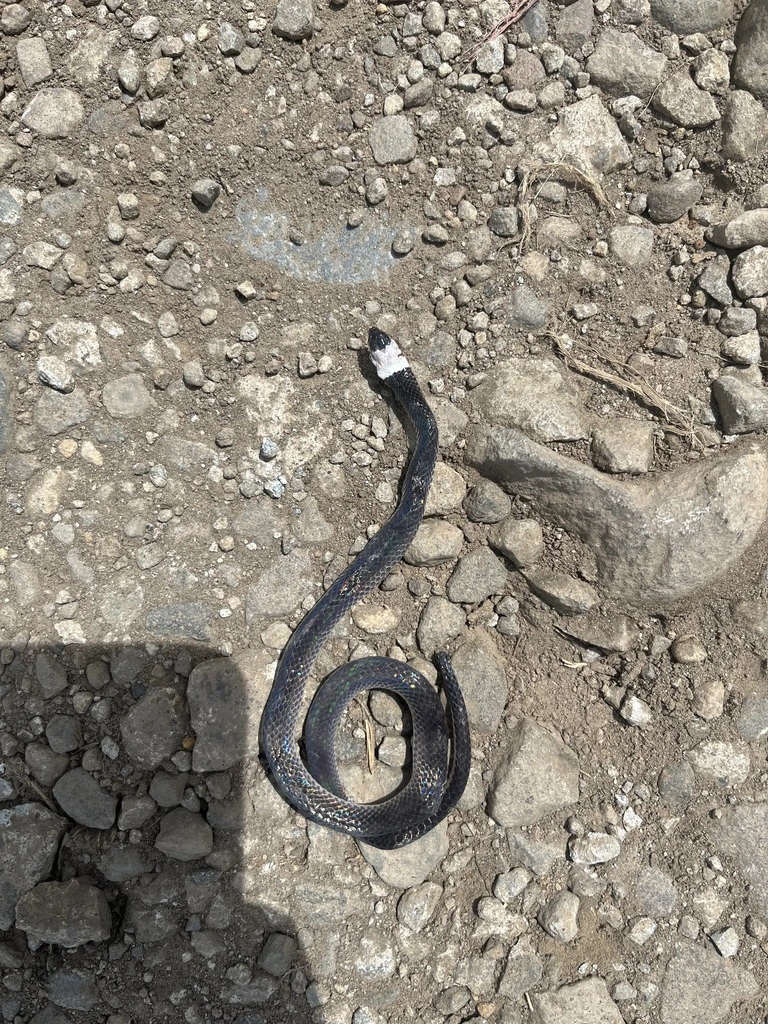
Enuliophis sclateri. Whole individual photographed on gravelly ground. Original observation dated 2025-07-20. No additional geographic occurrence is inferred.

018 · Colubridae

Colombian Longtail Snake

Enuliophis sclateri

(BOULENGER, 1894)

Venom unknownNot yet assessed

The checked taxonomic distribution account explicitly lists Costa Rica. Country-level evidence does not establish continuous occupancy or a complete national inventory.

Read the species account →

Bertis Y. Franco Pérez · CC BY 4.0 · https://creativecommons.org/licenses/by/4.0/
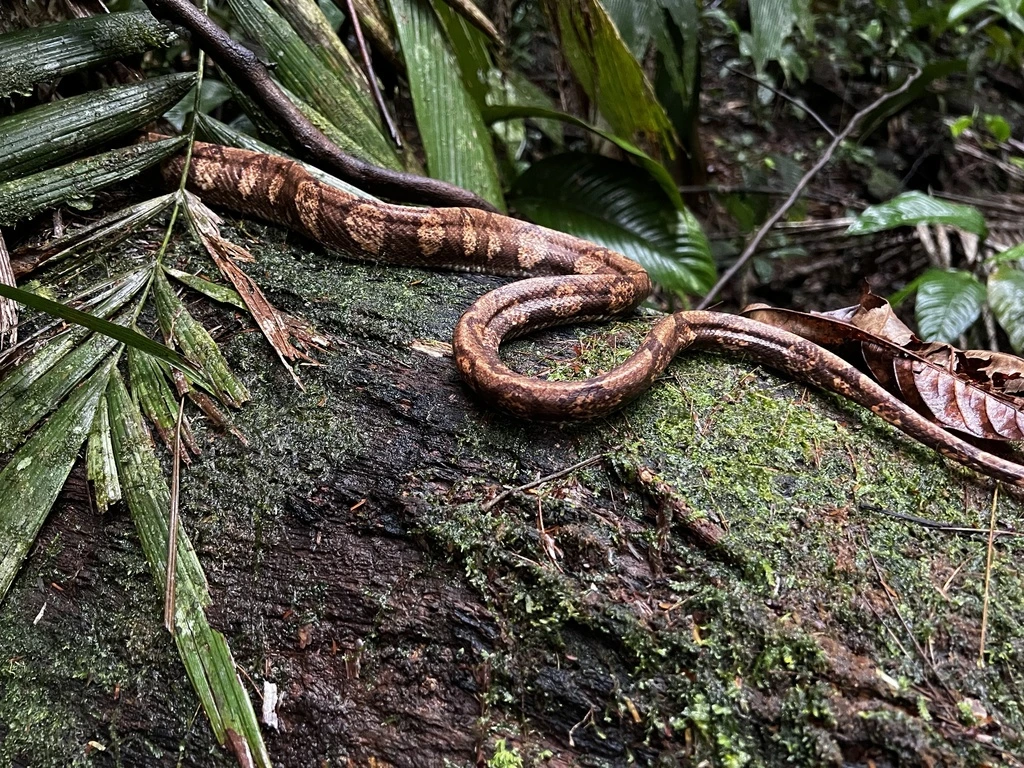
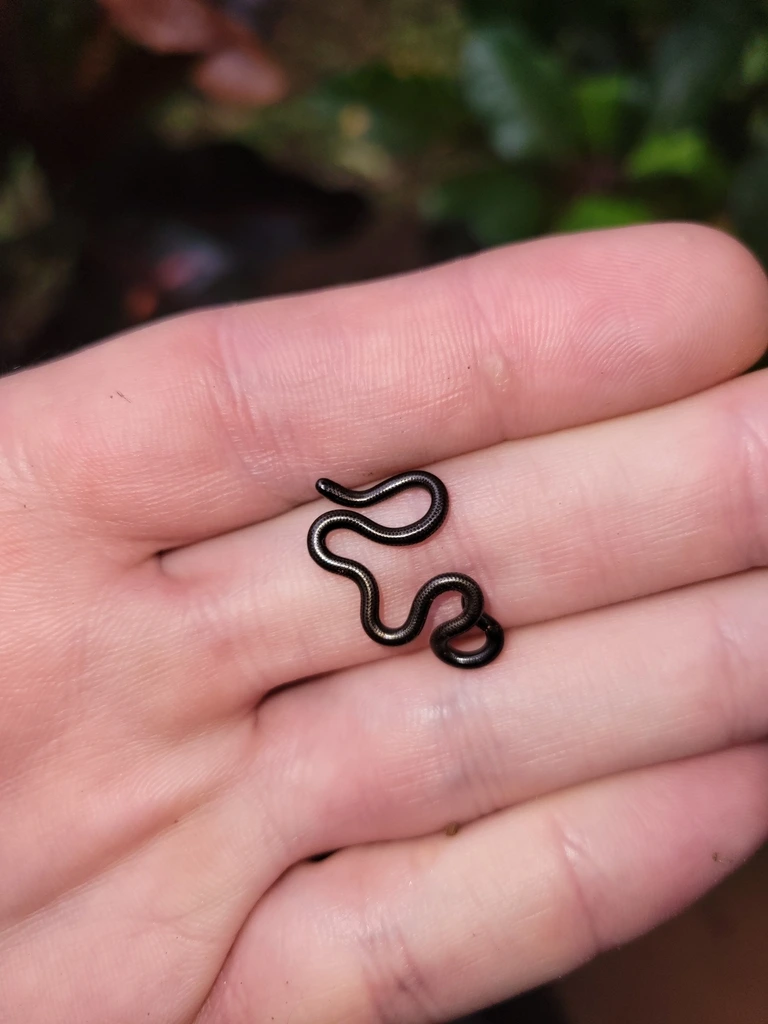
Epictia ater. Small individual photographed on an open hand; this is not a habitat illustration. Original observation dated 2024-10-11. No additional geographic occurrence is inferred.

019 · Leptotyphlopidae

Black Blind Snake

Epictia ater

(TAYLOR, 1940)

Non-venomous

The checked taxonomic distribution account explicitly lists Costa Rica. Country-level evidence does not establish continuous occupancy or a complete national inventory. The treatment names these subdivisions in its Costa Rica distribution clause: Guanacaste, Alajuela, San José, San Jose, Puntarenas. They are assigned to the declared atlas navigation…

Read the species account →

Jake Rehage · CC BY 4.0 · https://creativecommons.org/licenses/by/4.0/
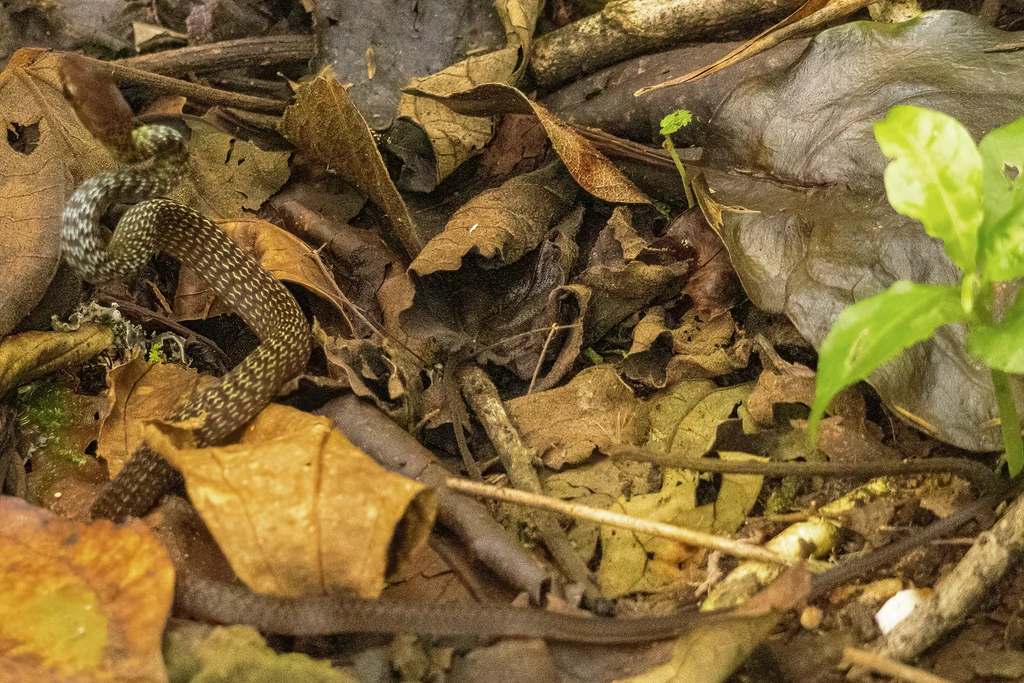
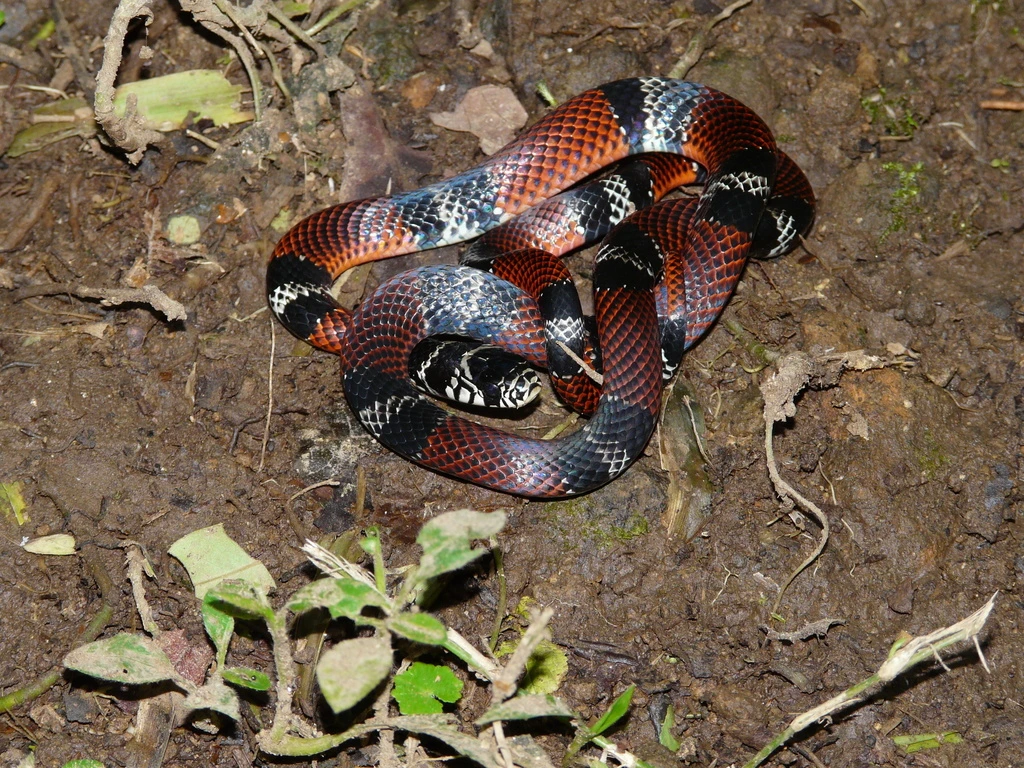
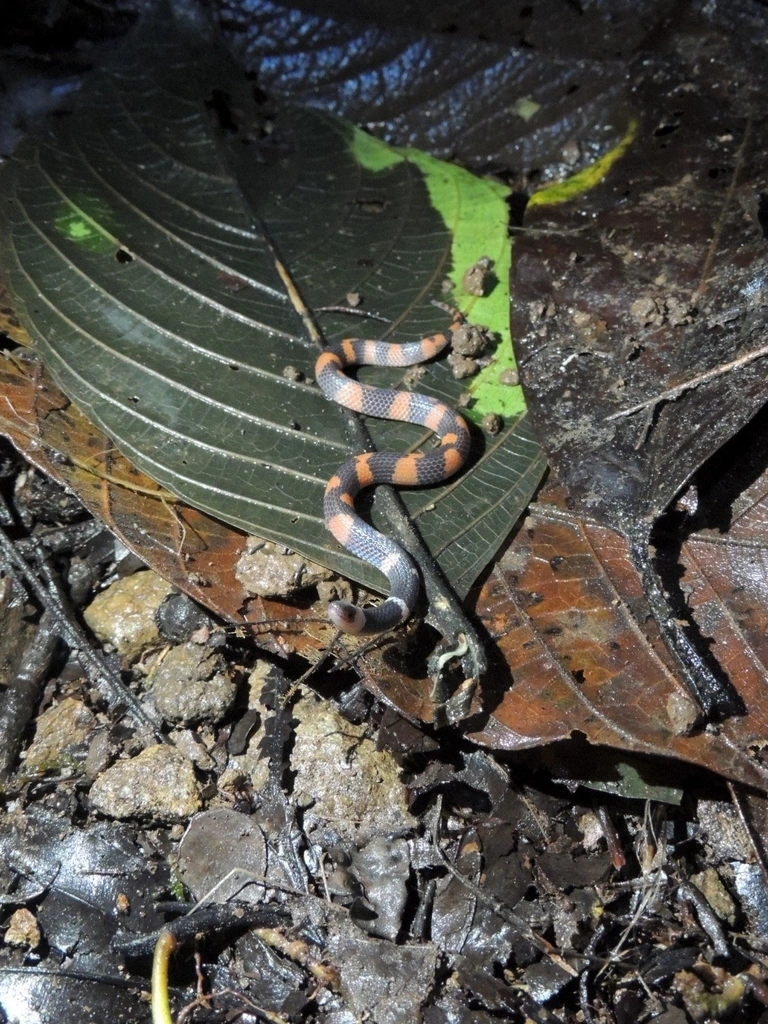
Erythrolamprus bizona. Banded individual coiled on soil and fallen leaves. Original observation dated 2010-04-05. Portrait only; no new locality record is inferred.

020 · Colubridae

False Coral Snake

Erythrolamprus bizona

JAN, 1863

VenomousClinical severity not established

The checked taxonomic distribution account explicitly lists Costa Rica. Country-level evidence does not establish continuous occupancy or a complete national inventory.

Read the species account →

Dan Riley · CC BY 4.0 · https://creativecommons.org/licenses/by/4.0/
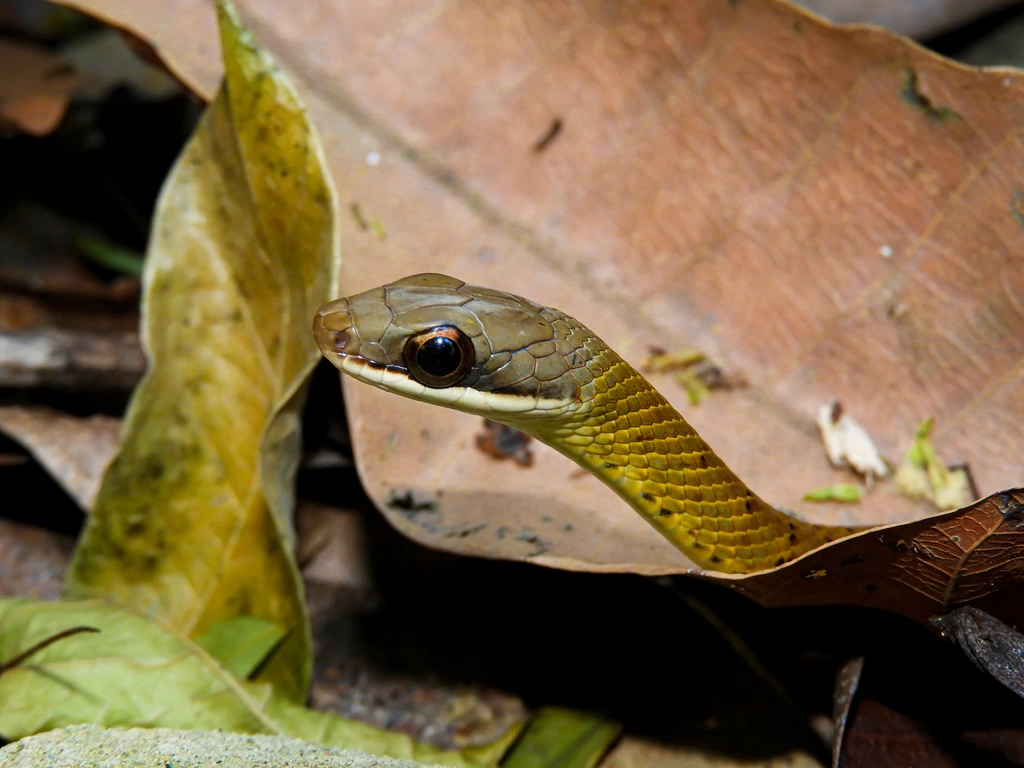
Erythrolamprus epinephelus. Head and anterior body photographed among mossy rocks. Original observation dated 2012-02-19. Photograph identification follows the cited observation; it adds no geographic occurrence record.

021 · Colubridae

Species account

Erythrolamprus epinephelus

(COPE, 1862)

Venom unknownNot yet assessed

The checked taxonomic distribution account explicitly lists Costa Rica. Country-level evidence does not establish continuous occupancy or a complete national inventory.

Read the species account →

jimeckert49 · CC BY 4.0 · https://creativecommons.org/licenses/by/4.0/
Erythrolamprus mimus. The complete source frame is retained; this portrait is not locality or habitat evidence. Original observation dated 2019-02-21. No additional geographic occurrence is inferred.

022 · Colubridae

Mimic False Coral Snake

Erythrolamprus mimus

(COPE, 1868)

Venom unknownNot yet assessed

The checked taxonomic distribution account explicitly lists Costa Rica. Country-level evidence does not establish continuous occupancy or a complete national inventory.

Read the species account →

Luis G Restrepo · CC BY 4.0 · https://creativecommons.org/licenses/by/4.0/
Geophis brachycephalus. Portrait only; no new locality or habitat record inferred.

023 · Colubridae

Costa Rican Earth Snake

Geophis brachycephalus

(COPE, 1871)

Venom unknownNot yet assessed

The checked taxonomic distribution account explicitly lists Costa Rica. Country-level evidence does not establish continuous occupancy or a complete national inventory.

Read the species account →

Anthony Mora Aguilar · CC BY 4.0 · https://creativecommons.org/licenses/by/4.0/
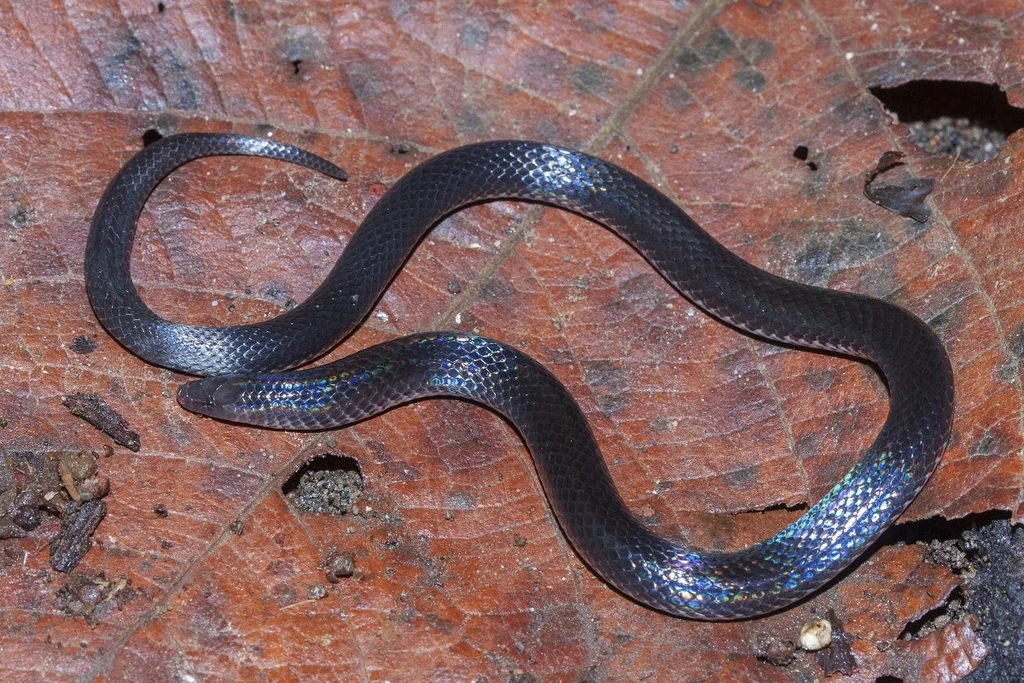
Geophis hoffmanni. Glossy dark individual resting on a fallen leaf. Original observation dated 2012-08-29. Portrait only; no new locality record is inferred.

024 · Colubridae

Hoffmann's Earth Snake

Geophis hoffmanni

(PETERS, 1859)

Venom unknownNot yet assessed

The checked taxonomic distribution account explicitly lists Costa Rica. Country-level evidence does not establish continuous occupancy or a complete national inventory.

Read the species account →

dhfischer · CC BY 4.0 · https://creativecommons.org/licenses/by/4.0/
All 143 species in the country collection →

Read further

Evidence & sources.

Guide reviewed 16 October 2026. Source dates and geographic scope matter; landscape photographs do not establish species occurrence.

  1. Convention on Biological Diversity · Costa Rica national profile

    Historical Secretariat draft, pending Party approval. Landscape context only; dated statistics and projections are not presented as current measurements. Checked 16 October 2026.

Continue through Costa Rica

Explore another habitat.

01

Highland environments

High-elevation paramo and cloud forest are separate environments in Costa Rican reporting. A landscape’s elevation does not by itself establish snake presence.

02

Rivers & wetlands

Wetland degradation and pesticide-driven eutrophication are discussed in the national profile. These are source-reported pressures; they do not describe the condition of every waterbody.

03

Mangroves & estuaries

Mangroves are documented as part of the coastal mosaic. Their tidal setting should be retained separately from adjacent terrestrial forest and offshore reefs.