Colubridae · Species account

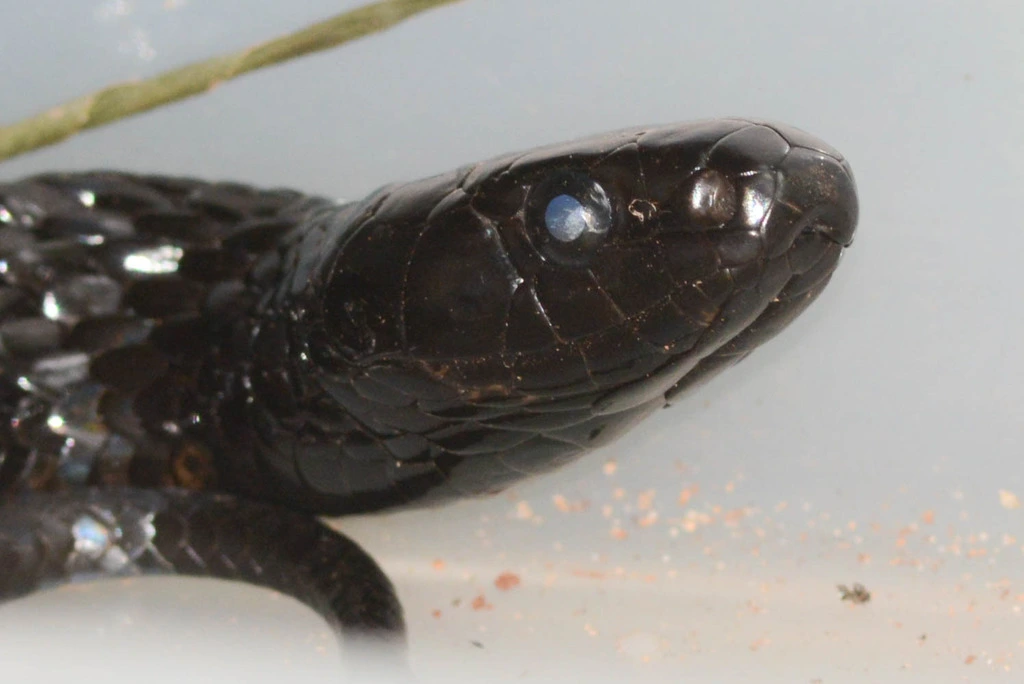
Tropical Chicken Snake, Chicken Snake, Yellow Rat Snake

Spilotes pullatus(LINNAEUS, 1758)

Venom unknownNot yet assessed

Rainforest and partly cleared landscapes are documented. Wooded edges and semi-open areas near large water bodies support the highest reported abundance. This is an authored habitat synthesis; it creates no additional occurrence or province assignment.

FamilyColubridae
ReproductionEgg-laying
Country chaptersMexico · Belize · Guatemala · El Salvador · Honduras · Nicaragua · Costa Rica · Panama · Trinidad and Tobago · Argentina · Bolivia · Brazil · Colombia · Ecuador · Guyana · Paraguay · Peru · Suriname · Venezuela
Evidence updated2026-10-19
Explore its biology ↓

Venom & human effects

What is documented?

Venom unknownNot yet assessed

Venom status has not yet been established from the reviewed evidence for this account.

Missing evidence is not a non-venomous classification or a statement of low risk.

How to read these badges
Limited documented effects
The cited human cases reported limited effects. Sparse observations cannot exclude a severe reaction.
Medically significant effects
The cited human cases document clinically important injury or illness. This is not an upper limit on severity.
Potentially life-threatening
Species-specific clinical evidence documents life-threatening illness or deaths after bites. The account explains the affected patients and any uncertainty about the cause.
Clinical severity not established
Venom presence is documented, but the reviewed evidence does not establish a clinical tier. When human effects are reported under an unresolved historical species name, the badge and account say so explicitly.
Venom status uncertain
The reviewed sources are inconclusive or conflicting about venom presence. The account explains the uncertainty.
Venom status not assessed
The atlas lacks a reviewed venom-presence classification for this species.

These are editorial summaries of the linked evidence, not toxicity rankings or WHO antivenom-priority categories. Effects vary with the bite and patient. Non-venomous does not mean safe to handle.

The scientific identity

Taxonomy & recognition

From observations & literature

Natural history

Size & measurements

At Etá Farm in southeastern Brazil, the largest measured snout–vent length in the sample of 15 individuals was 183 cm. This excludes the tail and is a local sample measurement, not the maximum adult size of the species.

Original observations from the Etá Farm region, Sete Barras, São Paulo. Counts and seasonal records describe this local sample.

Study & evidence

Fiorillo et al. (2020), ZooKeys 931:115–153, Natural history accounts, Spilotes pullatus; original observations in the species account.

Study source 1 ↗

Diet & feeding

At Etá Farm in southeastern Brazil, one specimen contained four rodent nestlings, all swallowed headfirst.

Original observations from the Etá Farm region, Sete Barras, São Paulo. Counts and seasonal records describe this local sample.

Study & evidence

Fiorillo et al. (2020), ZooKeys 931:115–153, Natural history accounts, Spilotes pullatus; original observations in the species account.

Study source 1 ↗

Identified stomach contents in the local sample included small mammals; Table 06 reports 1 individual with identifiable prey.

Original observations from Caxiuanã and adjacent areas, Pará, Brazil, reported in Maschio’s 2008 doctoral thesis. Local records do not establish species-wide preferences, breeding seasons or typical clutch sizes.

Study & evidence

Maschio (2008), printed p. 70 / PDF page 70, Table 06, row Spilotes pullatus; sample count in parentheses.

Study source 1 ↗

Study source 2 ↗

Activity & behaviour

Climbing activity

Arboreal activity is explicitly described in the treatment. This does not establish forest occupancy at every locality or imply that the species spends all its time above ground.

[1]

At Etá Farm in southeastern Brazil, handled individuals showed throat inflation, tail vibration, striking and mouth opening; responses differed among individuals.

Original observations from the Etá Farm region, Sete Barras, São Paulo. Counts and seasonal records describe this local sample.

Study & evidence

Fiorillo et al. (2020), ZooKeys 931:115–153, Natural history accounts, Spilotes pullatus; original observations in the species account.

Study source 1 ↗

Reproduction

At Etá Farm in southeastern Brazil, a mating pair was observed in September. Two females examined that month contained eight and eleven oviductal eggs respectively.

Original observations from the Etá Farm region, Sete Barras, São Paulo. Counts and seasonal records describe this local sample.

Study & evidence

Fiorillo et al. (2020), ZooKeys 931:115–153, Natural history accounts, Spilotes pullatus; original observations in the species account.

Study source 1 ↗

A female collected in November contained developed ovarian follicles.

Original observations from Caxiuanã and adjacent areas, Pará, Brazil, reported in Maschio’s 2008 doctoral thesis. Local records do not establish species-wide preferences, breeding seasons or typical clutch sizes.

Study & evidence

Maschio (2008), printed pp. 134, species account Spilotes pullatus; original observations, excluding separately attributed literature.

Study source 1 ↗

Study source 2 ↗

Habitat & ecology

Habitat & microhabitat · Ecuador

Rainforest and partly cleared landscapes are documented. Wooded edges and semi-open areas near large water bodies support the highest reported abundance. This is an authored habitat synthesis; it creates no additional occurrence or province assignment.

[2]

Habitat & microhabitat · Brazil

The account reports wooded and bushy Caatinga and forest enclaves, alongside its broader Brazilian forest association. Country-scoped literature evidence only; no regional occurrence is added.

[3][4]

Habitat & microhabitat · Peru

The Manu National Park and buffer-zone checklist records floodplain forest, terra firme forest. This broad habitat record is scoped to Peru; it does not establish a new regional occurrence or continuous occupancy.

[5][6]

Habitat & microhabitat · Panama

Dry through rain forest on both slopes. The Panama field-guide account supplies this broad country-scoped habitat evidence; no new regional occurrence is inferred.

[7][8]

Habitat & microhabitat · Trinidad and Tobago

John C. Murphy’s Trinidad and Tobago species account describes forest and forest edge, with an explicit Trinidad distribution discussion. Country-scoped literature evidence only; no new regional occurrence is created.

[9]

Habitat & microhabitat · Costa Rica

The Tirimbina survey records secondary forest, riparian forest. Country-scoped habitat evidence; no regional occurrence is inferred. Waterside records do not imply an aquatic lifestyle.

[10]

Habitat & microhabitat · Honduras

The Honduran rainforest inventory explicitly records forest habitats. Historical country-scoped habitat evidence; no present-day population assessment or new regional occurrence is inferred.

[11]

Habitat & microhabitat · Colombia

Collection habitat record: Bosque premontano; Bosque arbustivo o matorral inundable de madrevieja inactiva; Humedal. Country-scoped locality context; this is not a complete habitat range, and no regional occurrence or aquatic behaviour is inferred.

[12][13][14]

Habitat & microhabitat · Mexico

Collection habitat record: ACAHUAL DE SELVA MEDIANA. Country-scoped locality context; this is not a complete habitat range, and no regional occurrence or aquatic behaviour is inferred.

[15]

Habitat & microhabitat · Guatemala

Collection habitat record: bosque premontano de pino-encino y cipres. Country-scoped locality context; this is not a complete habitat range, and no regional occurrence or aquatic behaviour is inferred.

[16]

Habitat & microhabitat · Venezuela

Forest habitat is documented in the Orinoco Delta survey in Venezuela. Country-scoped evidence; no additional regional occurrence or continuous occupancy is inferred.

[17]

Habitat & microhabitat · Nicaragua

The 2018 expedition report documents the following specimen-based habitat observation: RAB3057 was found in a tall tree in a mosaic of dry forest and agricultural fields at Las Brisas de Mogoton; this is a forest-edge landscape association. Country-scoped evidence; no new regional occurrence or continuous occupancy is inferred.

[18]

Habitat & microhabitat · Guyana

The authors explicitly report the species from savanna and rocky hillsides above the Chiung River at Kato, voucher USNM 291152. Country-scoped evidence; no new regional occurrence or continuous occupancy is inferred.

[19]

At Etá Farm in southeastern Brazil, recorded in wood piles beside a house, banana and peach-palm plantations, forest edges, pasture, and roads through forest and pasture.

Original observations from the Etá Farm region, Sete Barras, São Paulo. Counts and seasonal records describe this local sample.

Study & evidence

Fiorillo et al. (2020), ZooKeys 931:115–153, Natural history accounts, Spilotes pullatus; original observations in the species account.

Study source 1 ↗

Further observations & source notes (7)

Documented localities · Mexico

The treatment names these subdivisions in its Mexico distribution clause: Campeche, Chiapas, Oaxaca, Queretaro, Quintana Roo, Tamaulipas, Yucatan. They are assigned to the declared atlas navigation groups; this is not a field observation, a whole-region range polygon or a complete local inventory.

[20]

Documented localities · Trinidad and Tobago

The treatment names these subdivisions in its Trinidad and Tobago distribution clause: Trinidad, Tobago. They are assigned to the declared atlas navigation groups; this is not a field observation, a whole-region range polygon or a complete local inventory.

[21]

Documented localities · Argentina

The treatment names these subdivisions in its Argentina distribution clause: Salta, Formosa, Misiones, Chaco. They are assigned to the declared atlas navigation groups; this is not a field observation, a whole-region range polygon or a complete local inventory.

[22]

Documented localities · Bolivia

The treatment names these subdivisions in its Bolivia distribution clause: Beni. They are assigned to the declared atlas navigation groups; this is not a field observation, a whole-region range polygon or a complete local inventory.

[23]

Documented localities · Brazil

The treatment names these subdivisions in its Brazil distribution clause: Roraima, Para, Ceara, Paraiba, Piaui, Pernambuco, Sergipe, Bahia, Goias, Minas Gerais, Espirito Santo, Rio de Janeiro, Rio Grande do Sul. They are assigned to the declared atlas navigation groups; this is not a field observation, a whole-region range polygon or a complete local inventory.

[24]

Documented localities · Colombia

The treatment names these subdivisions in its Colombia distribution clause: Valle del Cauca, Cauca. They are assigned to the declared atlas navigation groups; this is not a field observation, a whole-region range polygon or a complete local inventory.

[25]

Documented localities · Venezuela

The treatment names these subdivisions in its Venezuela distribution clause: Mérida, Merida. They are assigned to the declared atlas navigation groups; this is not a field observation, a whole-region range polygon or a complete local inventory.

[26]

A reported observation is not necessarily the full ecological range of a species. Where reproduction is inferred in a source dataset, the account identifies that limitation.

One species · Across borders

Global distribution

Explore the recorded countries and islands. Select a highlighted area to see its distribution evidence.

Recorded distribution
Spilotes pullatus — select a recorded country or island

Loading geographic boundaries…

ListedIntroducedUncertain

Click a highlighted country to zoom in and explore its records.

Shading identifies recorded countries or named islands, not continuous habitat coverage. Uncoloured areas do not establish absence.

Natural Earth · 1:50m · public domain; Gibraltar: geoBoundaries. Small islands may lack an outline.

Explore the distribution

Across borders

19 recorded countries & territories

Select a highlighted area to see its status, island records and sources. Each country and island links to the same shared species collection.

Use “Worldwide records” to include distant introduced and uncertain records in the map view.

Mexico · regional locality evidence

The checked taxonomic distribution account explicitly lists Mexico. Country-level evidence does not establish continuous occupancy or a complete national inventory. The treatment names these subdivisions in its Mexico distribution clause: Campeche, Chiapas, Oaxaca, Queretaro, Quintana Roo, Tamaulipas, Yucatan. They are assigned to the declared atlas navigation groups; this is not a field observation, a whole-region range polygon or a complete local inventory.

Campeche → · Campeche

Chiapas → · Chiapas

Oaxaca → · Oaxaca

Queretaro → · Queretaro

Quintana Roo → · Quintana Roo

Tamaulipas → · Tamaulipas

Yucatan → · Yucatan

Locality source 1 ↗
Belize · regional locality evidence

The checked taxonomic distribution account explicitly lists Belize. Country-level evidence does not establish continuous occupancy or a complete national inventory.

Locality source 1 ↗
Guatemala · regional locality evidence

The checked taxonomic distribution account explicitly lists Guatemala. Country-level evidence does not establish continuous occupancy or a complete national inventory.

Locality source 1 ↗
El Salvador · regional locality evidence

The checked taxonomic distribution account explicitly lists El Salvador. Country-level evidence does not establish continuous occupancy or a complete national inventory.

Locality source 1 ↗
Honduras · regional locality evidence

The checked taxonomic distribution account explicitly lists Honduras. Country-level evidence does not establish continuous occupancy or a complete national inventory.

Locality source 1 ↗
Nicaragua · regional locality evidence

The checked taxonomic distribution account explicitly lists Nicaragua. Country-level evidence does not establish continuous occupancy or a complete national inventory.

Locality source 1 ↗
Costa Rica · regional locality evidence

The checked taxonomic distribution account explicitly lists Costa Rica. Country-level evidence does not establish continuous occupancy or a complete national inventory.

Locality source 1 ↗
Panama · regional locality evidence

The checked taxonomic distribution account explicitly lists Panama. Country-level evidence does not establish continuous occupancy or a complete national inventory.

Locality source 1 ↗
Trinidad and Tobago · regional locality evidence

The checked taxonomic distribution account explicitly lists Trinidad and Tobago. Country-level evidence does not establish continuous occupancy or a complete national inventory. The treatment names these subdivisions in its Trinidad and Tobago distribution clause: Trinidad, Tobago. They are assigned to the declared atlas navigation groups; this is not a field observation, a whole-region range polygon or a complete local inventory.

Trinidad → · Trinidad

Tobago → · Tobago

Locality source 1 ↗
Argentina · regional locality evidence

The checked taxonomic distribution account explicitly lists Argentina. Country-level evidence does not establish continuous occupancy or a complete national inventory. The treatment names these subdivisions in its Argentina distribution clause: Salta, Formosa, Misiones, Chaco. They are assigned to the declared atlas navigation groups; this is not a field observation, a whole-region range polygon or a complete local inventory.

Salta → · Salta

Formosa → · Formosa

Misiones → · Misiones

Chaco → · Chaco

Locality source 1 ↗
Bolivia · regional locality evidence

The checked taxonomic distribution account explicitly lists Bolivia. Country-level evidence does not establish continuous occupancy or a complete national inventory. The treatment names these subdivisions in its Bolivia distribution clause: Beni. They are assigned to the declared atlas navigation groups; this is not a field observation, a whole-region range polygon or a complete local inventory.

Beni → · Beni

Locality source 1 ↗
Brazil · regional locality evidence

The checked taxonomic distribution account explicitly lists Brazil. Country-level evidence does not establish continuous occupancy or a complete national inventory. The treatment names these subdivisions in its Brazil distribution clause: Roraima, Para, Ceara, Paraiba, Piaui, Pernambuco, Sergipe, Bahia, Goias, Minas Gerais, Espirito Santo, Rio de Janeiro, Rio Grande do Sul. They are assigned to the declared atlas navigation groups; this is not a field observation, a whole-region range polygon or a complete local inventory.

Roraima → · Roraima

Para → · Para

Ceara → · Ceara

Paraiba → · Paraiba

Piaui → · Piaui

Pernambuco → · Pernambuco

Sergipe → · Sergipe

Bahia → · Bahia

Goias → · Goias

Minas Gerais → · Minas Gerais

Espirito Santo → · Espirito Santo

Rio de Janeiro → · Rio de Janeiro

Rio Grande do Sul → · Rio Grande do Sul

Locality source 1 ↗
Colombia · regional locality evidence

The checked taxonomic distribution account explicitly lists Colombia. Country-level evidence does not establish continuous occupancy or a complete national inventory. The treatment names these subdivisions in its Colombia distribution clause: Valle del Cauca, Cauca. They are assigned to the declared atlas navigation groups; this is not a field observation, a whole-region range polygon or a complete local inventory.

Valle del Cauca → · Valle del Cauca

Cauca → · Cauca

Locality source 1 ↗
Ecuador · regional locality evidence

The checked taxonomic distribution account explicitly lists Ecuador. Country-level evidence does not establish continuous occupancy or a complete national inventory.

Locality source 1 ↗
Guyana · regional locality evidence

The checked taxonomic distribution account explicitly lists Guyana. Country-level evidence does not establish continuous occupancy or a complete national inventory.

Locality source 1 ↗
Paraguay · regional locality evidence

The checked taxonomic distribution account explicitly lists Paraguay. Country-level evidence does not establish continuous occupancy or a complete national inventory.

Locality source 1 ↗
Peru · regional locality evidence

The checked taxonomic distribution account explicitly lists Peru. Country-level evidence does not establish continuous occupancy or a complete national inventory.

Locality source 1 ↗
Suriname · regional locality evidence

The checked taxonomic distribution account explicitly lists Suriname. Country-level evidence does not establish continuous occupancy or a complete national inventory.

Locality source 1 ↗
Venezuela · regional locality evidence

The checked taxonomic distribution account explicitly lists Venezuela. Country-level evidence does not establish continuous occupancy or a complete national inventory. The treatment names these subdivisions in its Venezuela distribution clause: Mérida, Merida. They are assigned to the declared atlas navigation groups; this is not a field observation, a whole-region range polygon or a complete local inventory.

Mérida → · Mérida, Merida

Locality source 1 ↗
Geographic scope of the source

Country entries supported by this Americas review: Mexico, Belize, Guatemala, El Salvador, Honduras, Nicaragua, Costa Rica, Panama, Trinidad and Tobago. These are reviewed atlas entries, not a complete global distribution. [1]

The text retains the source’s geographic qualifications. The map shows countries with atlas occurrence records; it is not a complete global range model. A type locality is a nomenclatural reference, not the only place the species occurs.

Status & its meaning

Conservation

No matching global assessment was verified for this account. This is an unresolved assessment link, not an IUCN “Not Evaluated” classification and not evidence that the species is secure.

Locality coverage in the atlas does not measure abundance, population trends or national legal protection.

Follow the evidence

Sources & further reading

Latest evidence added 2026-10-19. Taxonomic and distribution treatments may change.

  1. The Reptile Database · Spilotes pullatus
  2. Reptiles of Ecuador · Spilotes pullatus — authored natural-history account
  3. Guedes, Nogueira & Marques (2014), Diversity, natural history, and geographic distribution of snakes in the Caatinga, Northeastern Brazil
  4. Species account, printed page 33
  5. Catenazzi, Lehr & von May (2013), The amphibians and reptiles of Manu National Park and its buffer zone, Peru
  6. Table 2, printed page 9; habitat definitions and exclusion of predicted records in Methods
  7. Batista & Miranda (2020), Las serpientes de Panama: venenosas y mas comunes no venenosas
  8. Species account and Habitat section, printed page 164
  9. John C. Murphy, The Herpetology of Trinidad and Tobago: Spilotes pullatus (Tuesday, October 2, 2018)
  10. Hilje and colleagues (2020), Table 1, Check List 16(6), printed page 1637
  11. Wilson and Townsend (2006), Table 1, Caribbean Journal of Science 42(1):88-113, printed page 97; author-uploaded full text
  12. Universidad del Magdalena (UniMagdalena) · 00451 · original habitat field
  13. IAvH · Temp-AAO503 · original habitat field
  14. Instituto Amazónico de Investigaciones Científicas - SINCHI · 2527 · original habitat field
  15. ECOSUR · ECO-SCH-3421 · original habitat field
  16. UVG · UVGR003846 · original habitat field
  17. Molina, Senaris & Rivas (2004), Table 1, printed page 243
  18. Martinez-Fonseca, Holmes et al., An expeditionary collection and analysis of amphibians and reptiles from Nicaragua, species account, PDF p. 52
  19. MacCulloch and Reynolds (2012), p. 208 and Table 1
  20. The Reptile Database · Spilotes pullatus
  21. The Reptile Database · Spilotes pullatus
  22. The Reptile Database · Spilotes pullatus
  23. The Reptile Database · Spilotes pullatus
  24. The Reptile Database · Spilotes pullatus
  25. The Reptile Database · Spilotes pullatus
  26. The Reptile Database · Spilotes pullatus
  27. Photograph provenance — Spilotes pullatus (source 1)
  28. Photograph provenance — Spilotes pullatus (source 2)

The linked taxonomic treatment provides its original descriptions, revisions and bibliography. Observations from other countries are not relabelled as local field studies.