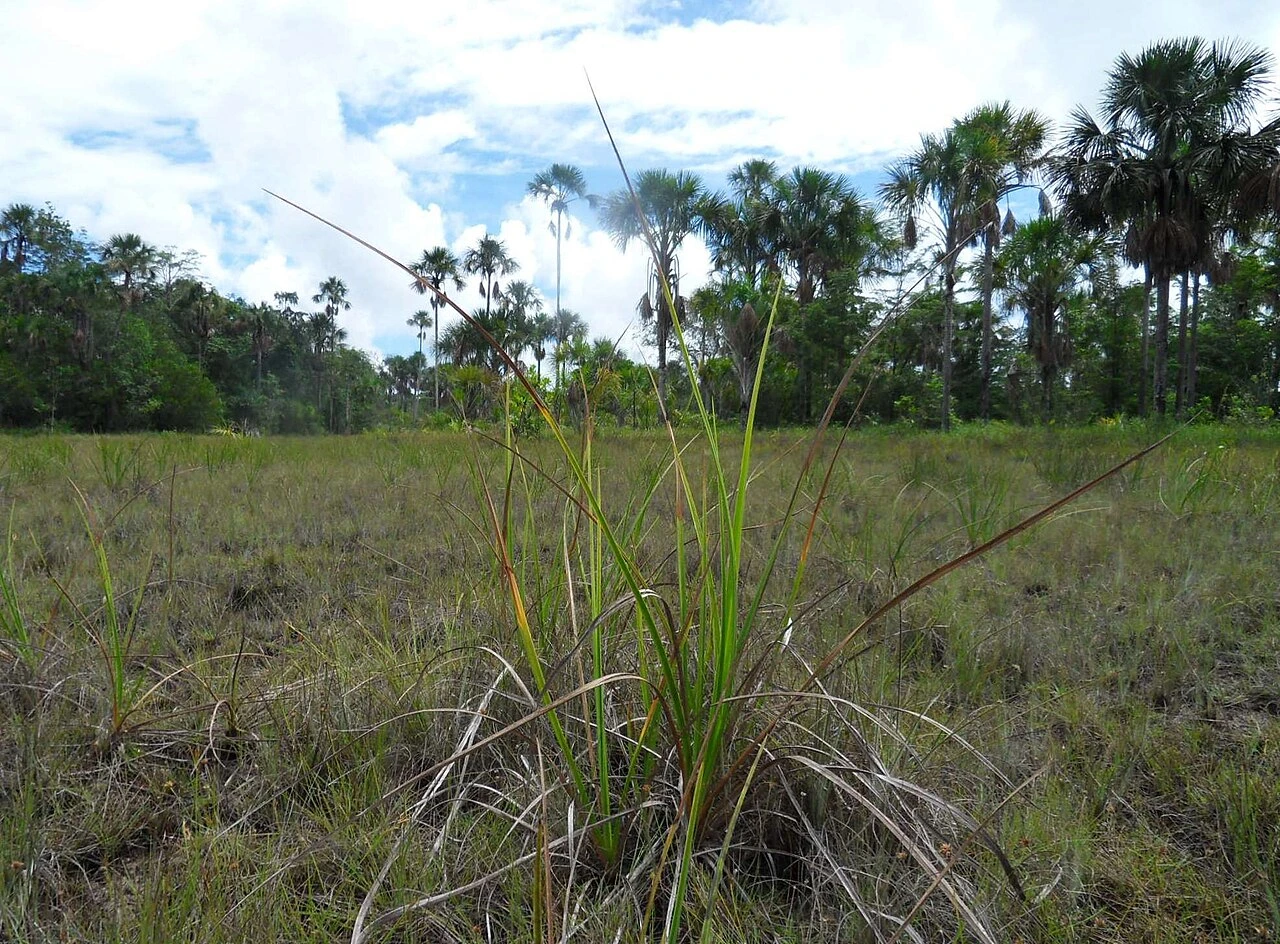
Grass and sedge savanna with adjoining palm and marsh forest at Aripo, Trinidad.

Trinidad and Tobago · Habitat field guide

Grassland & savanna

Savannas are part of the country’s documented habitat mosaic. An open-landscape description needs the local vegetation and water context before it can support a species association.

Grass and sedge savanna with adjoining palm and marsh forest at Aripo, Trinidad.

Photograph: Bakanae · Image source · CC BY-SA 3.0. Cropped to fill the hero; darkened for text legibility.

Understanding the environment

A sense of the habitat.

Savannas are part of the country’s documented habitat mosaic. An open-landscape description needs the local vegetation and water context before it can support a species association.

Geographic scope
Trinidad and Tobago; source locality matters.
Evidence scale
Landscape descriptions are separate from species records.
Source date
Retain the cited publication date; reviewed 16 October 2026.

Explore the structure · Select a layer to compare details retained in a field record.

Read the locality in three layers.

Select a zone to see what changes.

Open ground

Open ground

Separate grassland from recent clearing or farmland.

Check this detail in the original record before assigning a species to the habitat.

These reading prompts are conceptual, not a transect or an occurrence map.

Sources: Convention on Biological Diversity · Trinidad and Tobago national profile

Field notes · 01

The documented setting

Savannas are part of the country’s documented habitat mosaic. An open-landscape description needs the local vegetation and water context before it can support a species association.

Sources: Convention on Biological Diversity · Trinidad and Tobago national profile

Field notes · 02

Connect the setting to a species

A habitat description and a country record answer different questions. Follow the linked species account for evidence of habitat use; an empty filtered collection indicates missing extracted evidence, not biological absence.

Pressures on Trinidad and Tobago’s habitats

What is at risk?

A site-specific assessment of pressures has not yet been extracted for this guide. The landscape sources below provide context; they do not establish a current threat level for each snake species.

What helps this habitat

Consult the source’s own conservation context and dates before interpreting habitat change. A broad landscape pressure does not establish a measured decline for every snake.

The connected collection

Snakes with habitat evidence.

These 7 species have supported country occurrence and an explicit habitat association in the shared account. The association may come from elsewhere in their range. This is not a complete local habitat inventory; the places above are landscape examples, not asserted collecting sites.

7 species · showing 7

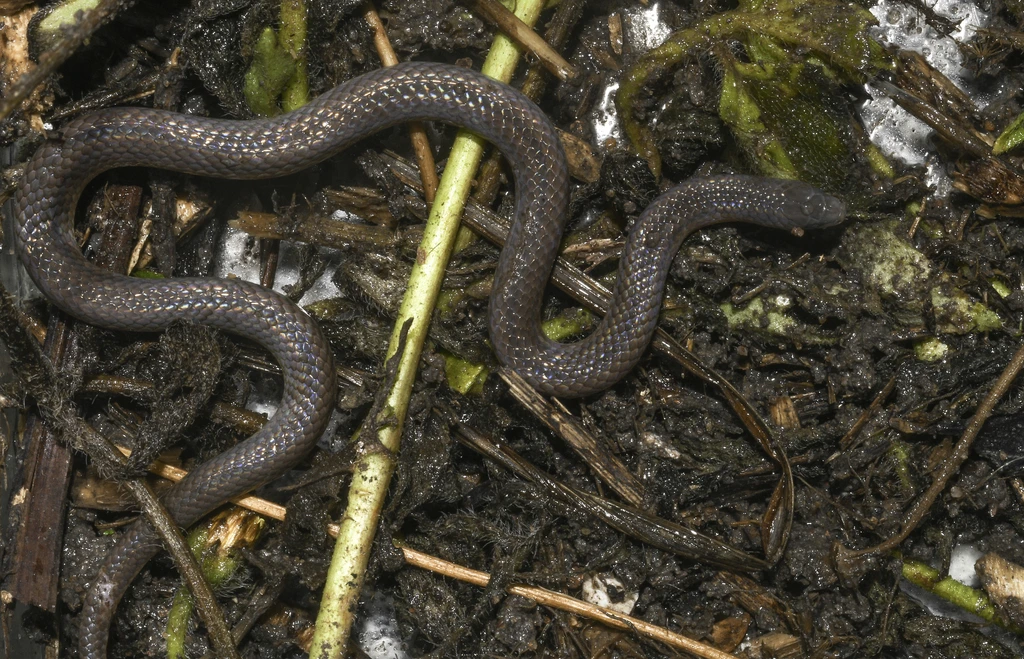
Atractus trilineatus. Small brown individual coiled among wet leaves and moss. Original observation dated 2025-06-14. Portrait only; no new locality record is inferred.

001 · Colubridae

Three-lined Groundsnake, Three-lined Ground Snake

Atractus trilineatus

WAGLER, 1828

Non-venomous

The checked taxonomic distribution account explicitly lists Trinidad and Tobago. Country-level evidence does not establish continuous occupancy or a complete national inventory. The treatment names these subdivisions in its Trinidad and Tobago distribution clause: Trinidad, Tobago. They are assigned to the declared atlas navigation groups; this is not a…

Read the species account →

Whaldener Endo · CC0 1.0 · https://creativecommons.org/publicdomain/zero/1.0/
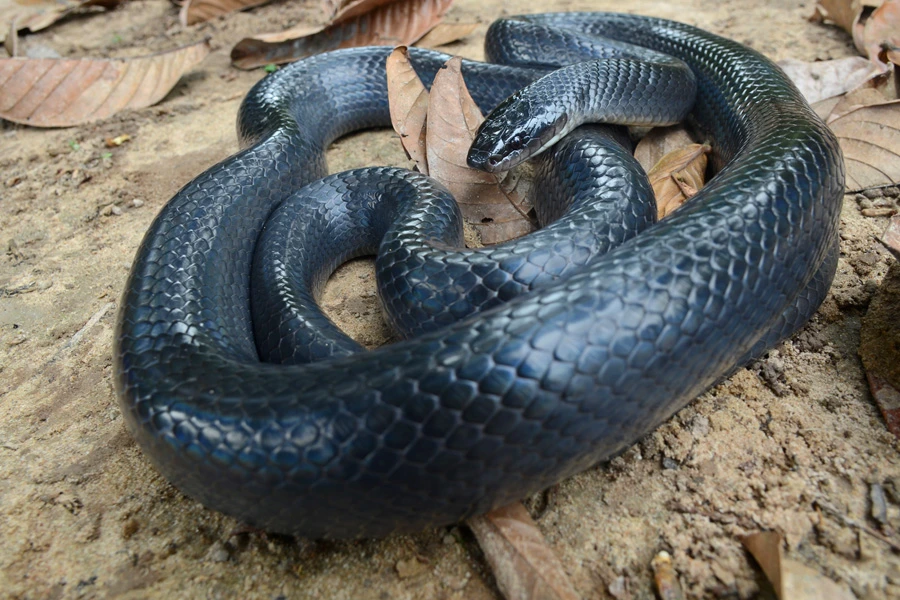
Clelia clelia. Glossy dark individual coiled on leaf litter. Portrait only; no wild locality or habitat record is inferred.

002 · Colubridae

Windward Cribo, Black Mussurana

Clelia clelia

(DAUDIN, 1803)

Venom unknownNot yet assessed

The checked taxonomic distribution account explicitly lists Trinidad and Tobago. Country-level evidence does not establish continuous occupancy or a complete national inventory. The treatment names these subdivisions in its Trinidad and Tobago distribution clause: Trinidad. They are assigned to the declared atlas navigation groups; this is not a field…

Read the species account →

Geoff Gallice ( https://www.flickr.com/photos/dejeuxx/ ) · CC BY 2.0 · https://creativecommons.org/licenses/by/2.0

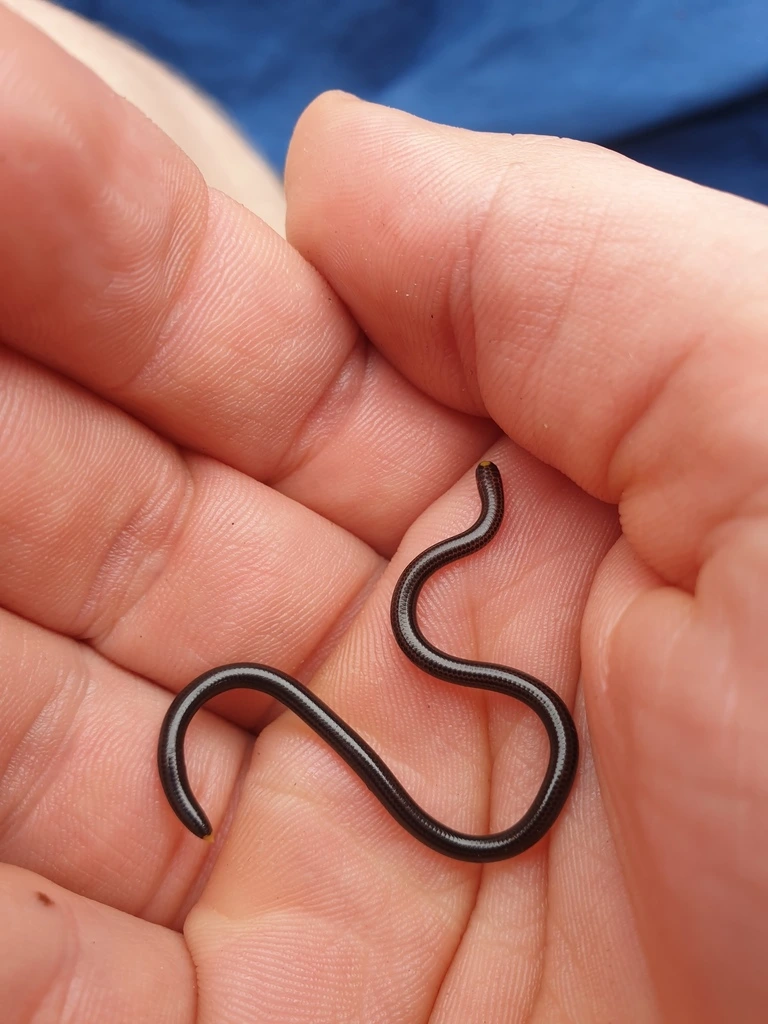
Epictia tenella. Photographed while held; the handling context is retained in the complete source frame. Original observation dated 2022-03-09. No additional geographic occurrence is inferred.

003 · Leptotyphlopidae

Guyana Threadsnake, Guyana Blind Snake, Wagler's Blind Snake

Epictia tenella

(KLAUBER, 1939)

Non-venomous

The checked taxonomic distribution account explicitly lists Trinidad and Tobago. Country-level evidence does not establish continuous occupancy or a complete national inventory. The treatment names these subdivisions in its Trinidad and Tobago distribution clause: Trinidad. They are assigned to the declared atlas navigation groups; this is not a field…

Read the species account →

Lennart Hudel · CC BY 4.0 · https://creativecommons.org/licenses/by/4.0/

ElapidaeMicrurusPhotograph not yet documented

004 · Elapidae

Trinidad Coralsnake, Trinidad Northern Coral Snake

Micrurus circinalis

(DUMÉRIL, BIBRON & DUMÉRIL, 1854)

VenomousClinical severity not established

The checked taxonomic distribution account explicitly lists Trinidad and Tobago. Country-level evidence does not establish continuous occupancy or a complete national inventory. The treatment names these subdivisions in its Trinidad and Tobago distribution clause: Trinidad. They are assigned to the declared atlas navigation groups; this is not a field…

Read the species account →
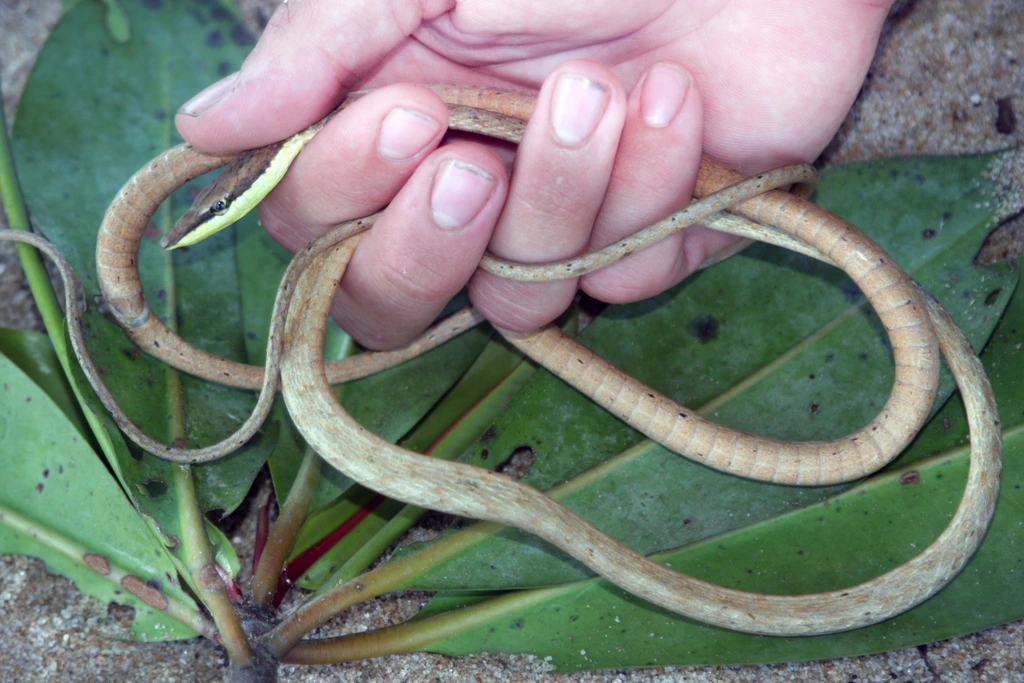
Oxybelis rutherfordi. Held animal with head visible; source discussion reconciles the revised identification. Original observation dated 2006-07-14. No additional geographic occurrence is inferred.

005 · Colubridae

Rutherford’s Vine Snake

Oxybelis rutherfordi

JADIN, BLAIR, ORLOFSKE, JOWERS, RIVAS, VITT, RAY, SMITH & MURPHY, 2020

Venom unknownNot yet assessed

The checked taxonomic distribution account explicitly lists Trinidad and Tobago. Country-level evidence does not establish continuous occupancy or a complete national inventory. The treatment names these subdivisions in its Trinidad and Tobago distribution clause: Trinidad. They are assigned to the declared atlas navigation groups; this is not a field…

Read the species account →

Kristof Zyskowski · CC BY 4.0 · https://creativecommons.org/licenses/by/4.0/

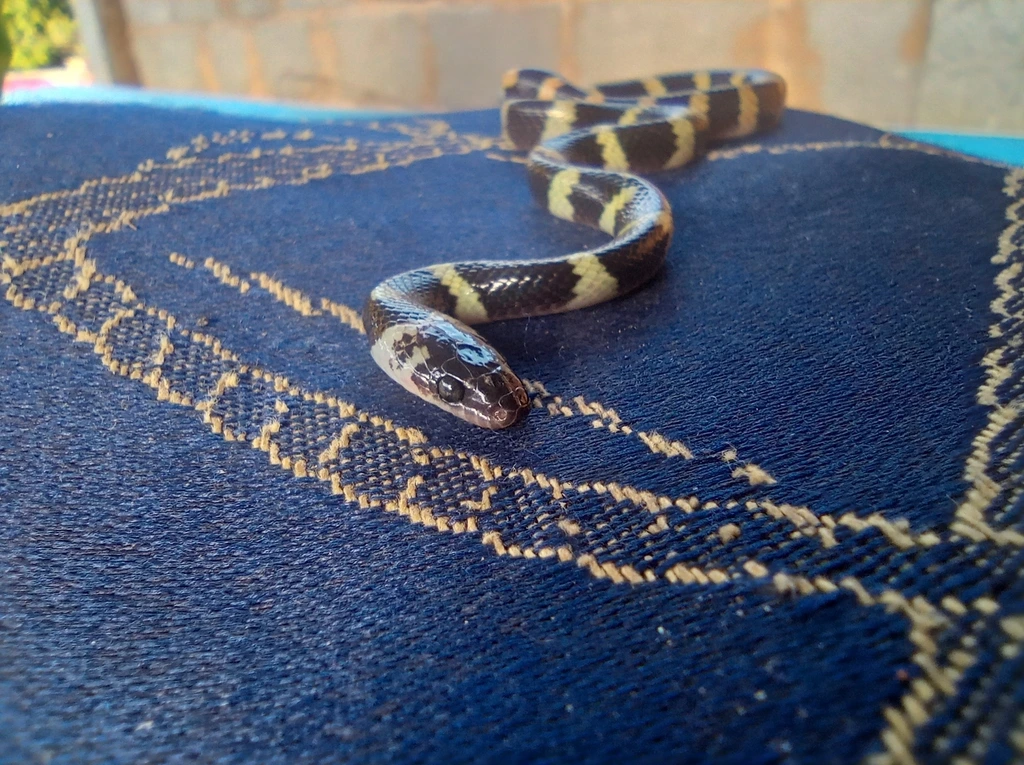
Oxyrhopus petolarius. Atypical colour pattern; photographed on fabric. Original observation dated 2021-05-12. This photograph does not establish occurrence in any additional state or province.

006 · Colubridae

Forest Flamesnake, Forest Flame Snake

Oxyrhopus petolarius

(LINNAEUS, 1758)

Venom unknownNot yet assessed

The checked taxonomic distribution account explicitly lists Trinidad and Tobago. Country-level evidence does not establish continuous occupancy or a complete national inventory. The treatment names these subdivisions in its Trinidad and Tobago distribution clause: Trinidad, Tobago. They are assigned to the declared atlas navigation groups; this is not a…

Read the species account →

Henrry · CC BY 4.0 · https://creativecommons.org/licenses/by/4.0/

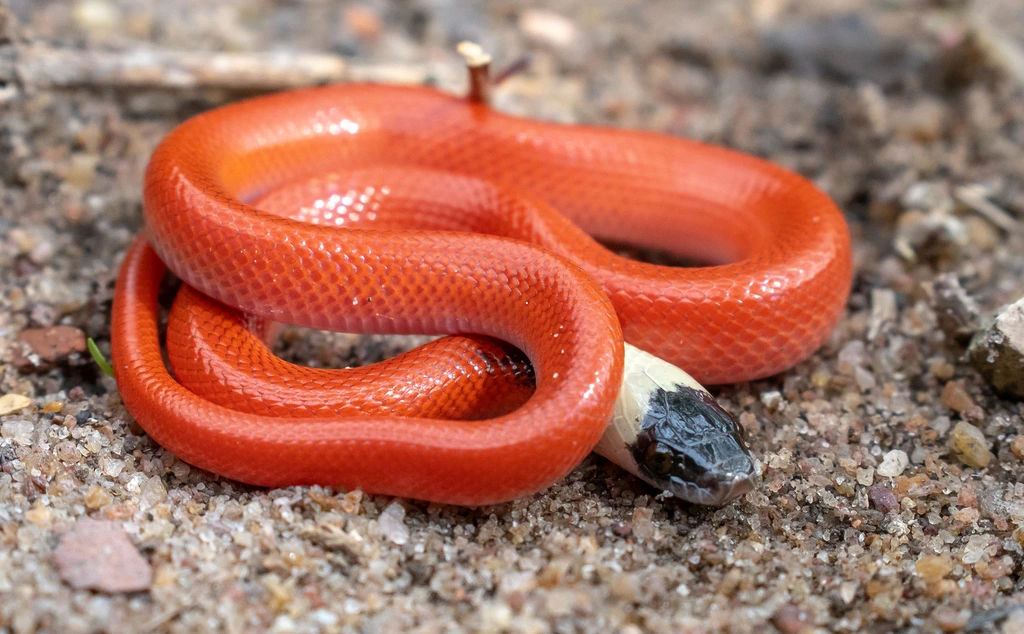
Pseudoboa neuwiedii. The complete source frame is retained; this portrait is not locality or habitat evidence. Original observation dated 2023-01-17. No additional geographic occurrence is inferred.

007 · Colubridae

Dark-headed Red Falseboa, Neuwied's False Boa

Pseudoboa neuwiedii

(DUMÉRIL, BIBRON & DUMÉRIL, 1854)

Venom unknownNot yet assessed

The checked taxonomic distribution account explicitly lists Trinidad and Tobago. Country-level evidence does not establish continuous occupancy or a complete national inventory. The treatment names these subdivisions in its Trinidad and Tobago distribution clause: Trinidad, Tobago. They are assigned to the declared atlas navigation groups; this is not a…

Read the species account →

Whaldener Endo · CC0 1.0 · https://creativecommons.org/publicdomain/zero/1.0/
All 47 species in the country collection →

Read further

Evidence & sources.

Guide reviewed 16 October 2026. Source dates and geographic scope matter; landscape photographs do not establish species occurrence.

  1. Convention on Biological Diversity · Trinidad and Tobago national profile

    Historical Secretariat draft, pending Party approval. Landscape context only; dated statistics and projections are not presented as current measurements. Checked 16 October 2026.

Continue through Trinidad and Tobago

Explore another habitat.

01

Forest & woodland

The national profile distinguishes seasonal evergreen woodland, littoral woodland, montane rainforest and swamp forest. These are separate environmental descriptions, not interchangeable labels.

02

Rivers & wetlands

Swamp forests and marshes occur in the profile’s terrestrial ecosystem account. Preserve the island and named wetland behind any species association.