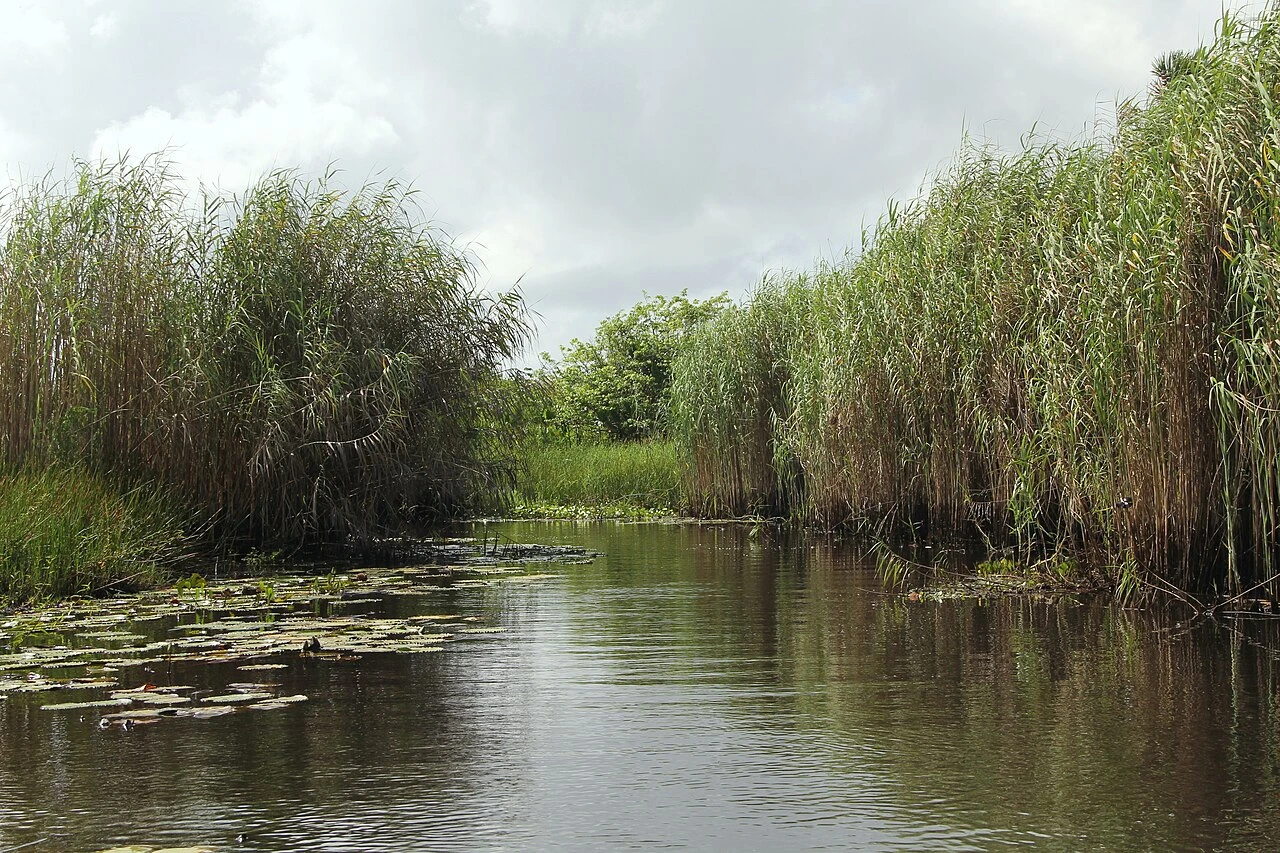
Open water, aquatic plants and marsh vegetation in Nariva Swamp, Trinidad.

Trinidad and Tobago · Habitat field guide

Rivers & wetlands

Swamp forests and marshes occur in the profile’s terrestrial ecosystem account. Preserve the island and named wetland behind any species association.

Open water, aquatic plants and marsh vegetation in Nariva Swamp, Trinidad.

Photograph: Shiv Trinidad Skey · Image source · CC BY 2.0. Cropped to fill the hero; darkened for text legibility.

Understanding the environment

A sense of the habitat.

Swamp forests and marshes occur in the profile’s terrestrial ecosystem account. Preserve the island and named wetland behind any species association.

Geographic scope
Trinidad and Tobago; source locality matters.
Evidence scale
Landscape descriptions are separate from species records.
Source date
Retain the cited publication date; reviewed 16 October 2026.

Explore the structure · Select a layer to compare details retained in a field record.

Read the locality in three layers.

Select a zone to see what changes.

Waterbody

Waterbody

Keep the name and distinguish stream, lake, marsh and channel.

Check this detail in the original record before assigning a species to the habitat.

These reading prompts are conceptual, not a transect or an occurrence map.

Sources: Convention on Biological Diversity · Trinidad and Tobago national profile

Field notes · 01

The documented setting

Swamp forests and marshes occur in the profile’s terrestrial ecosystem account. Preserve the island and named wetland behind any species association.

Sources: Convention on Biological Diversity · Trinidad and Tobago national profile

Field notes · 02

Connect the setting to a species

A habitat description and a country record answer different questions. Follow the linked species account for evidence of habitat use; an empty filtered collection indicates missing extracted evidence, not biological absence.

Pressures on Trinidad and Tobago’s habitats

What is at risk?

A site-specific assessment of pressures has not yet been extracted for this guide. The landscape sources below provide context; they do not establish a current threat level for each snake species.

What helps this habitat

Consult the source’s own conservation context and dates before interpreting habitat change. A broad landscape pressure does not establish a measured decline for every snake.

The connected collection

Snakes with habitat evidence.

These 4 species have supported country occurrence and an explicit habitat association in the shared account. The association may come from elsewhere in their range. This is not a complete local habitat inventory; the places above are landscape examples, not asserted collecting sites.

4 species · showing 4

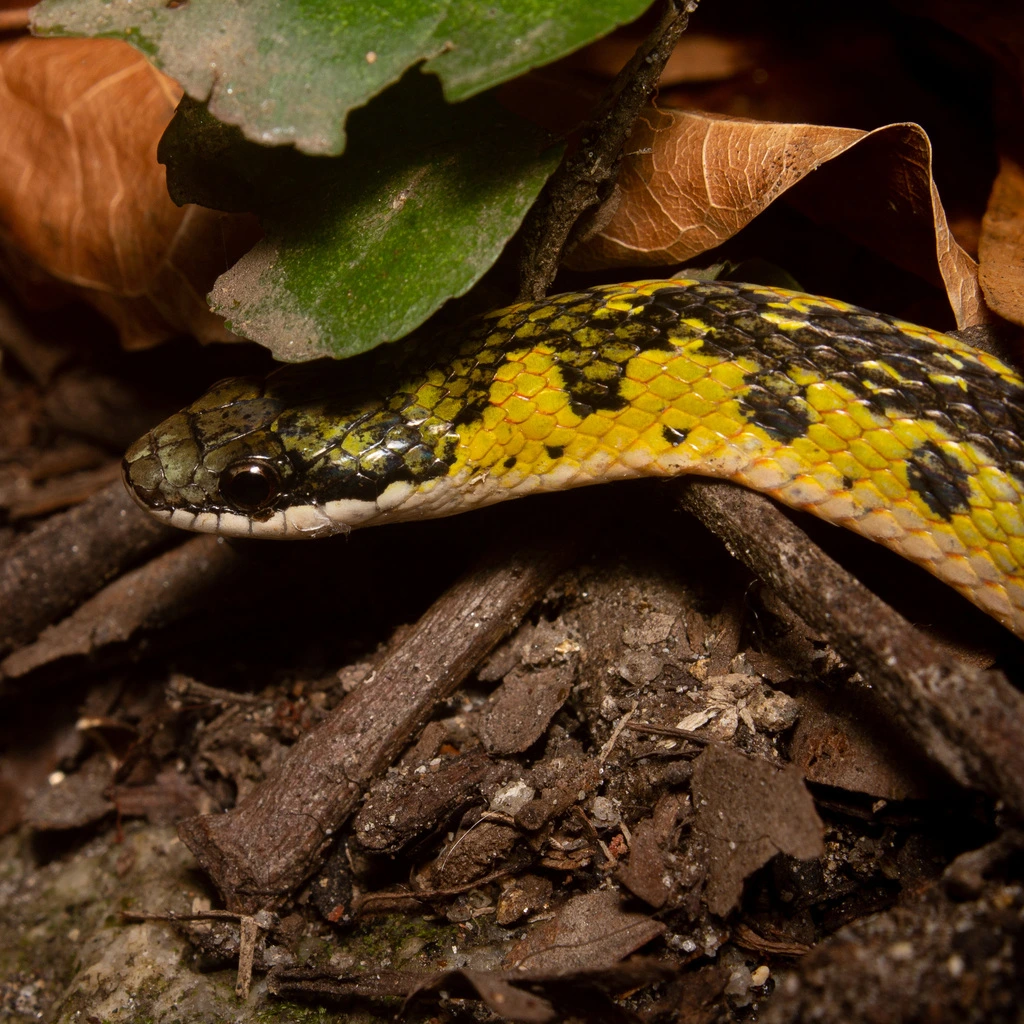
Erythrolamprus melanotus. Head and neck beside leaf litter. Original observation dated 2024-03-25. No additional geographic occurrence is inferred.

001 · Colubridae

Dark Groundsnake, Shaw's Dark Ground Snake

Erythrolamprus melanotus

(SHAW, 1802)

Venom unknownNot yet assessed

The checked taxonomic distribution account explicitly lists Trinidad and Tobago. Country-level evidence does not establish continuous occupancy or a complete national inventory. The treatment names these subdivisions in its Trinidad and Tobago distribution clause: Trinidad, Tobago. They are assigned to the declared atlas navigation groups; this is not a…

Read the species account →

Elkin Meriño Florez · CC BY 4.0 · https://creativecommons.org/licenses/by/4.0/
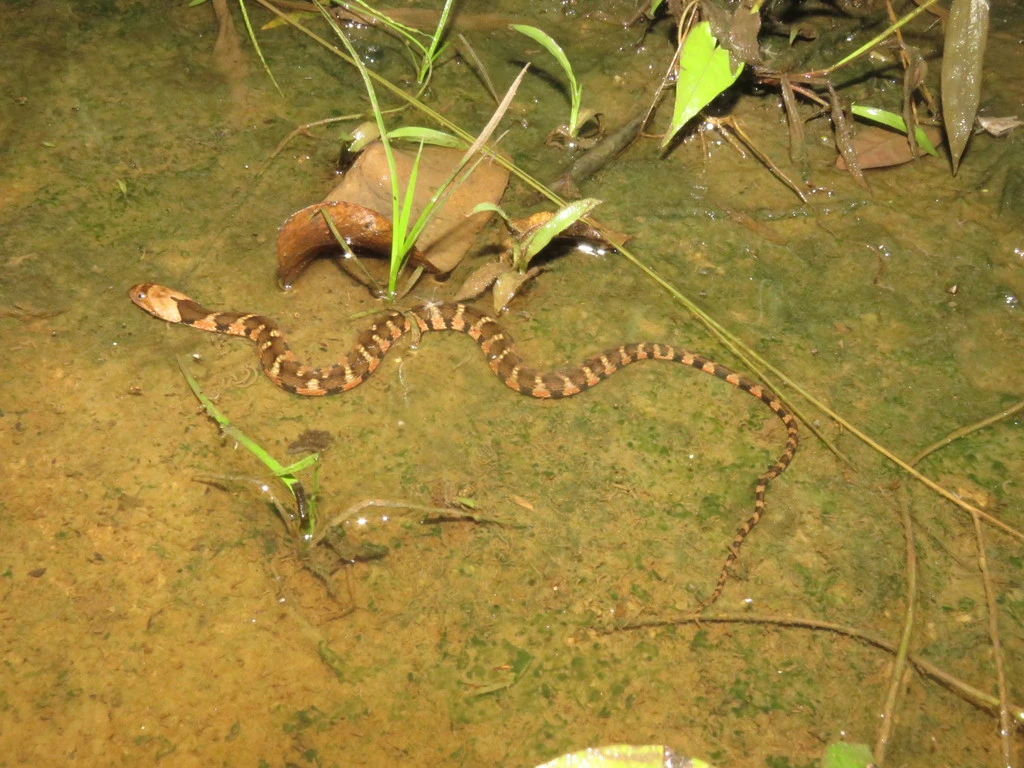
Helicops angulatus. Individual photographed in shallow water. Original observation dated 2020-02-29. Portrait only; no new locality or habitat record is inferred.

002 · Colubridae

Brown-banded watersnake, Mountain Keelback

Helicops angulatus

(LINNAEUS, 1758)

Venom unknownNot yet assessed

The checked taxonomic distribution account explicitly lists Trinidad and Tobago. Country-level evidence does not establish continuous occupancy or a complete national inventory. The treatment names these subdivisions in its Trinidad and Tobago distribution clause: Trinidad. They are assigned to the declared atlas navigation groups; this is not a field…

Read the species account →

Vincent A. Vos · CC BY 4.0 · https://creativecommons.org/licenses/by/4.0/
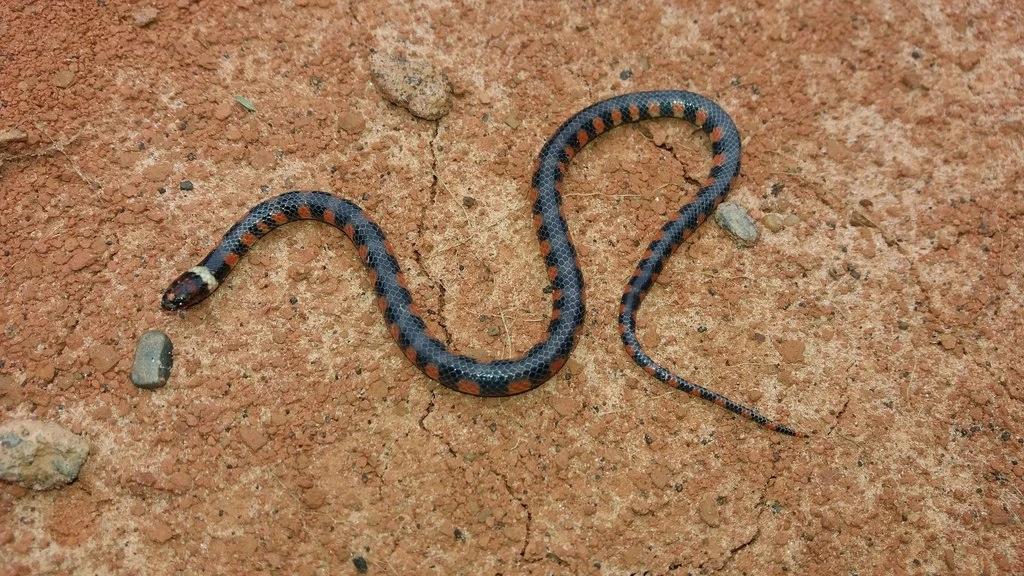
Hydrops triangularis. Blue-black and pale-banded body on reddish ground. Original observation dated 2017-12-16. Portrait only; no new locality record is inferred.

003 · Colubridae

Triangle Watersnake, Triangle Water Snake

Hydrops triangularis

(WAGLER, 1824)

Venom unknownNot yet assessed

The checked taxonomic distribution account explicitly lists Trinidad and Tobago. Country-level evidence does not establish continuous occupancy or a complete national inventory. The treatment names these subdivisions in its Trinidad and Tobago distribution clause: Trinidad. They are assigned to the declared atlas navigation groups; this is not a field…

Read the species account →

Rafael Bernhard · CC BY 4.0 · https://creativecommons.org/licenses/by/4.0/
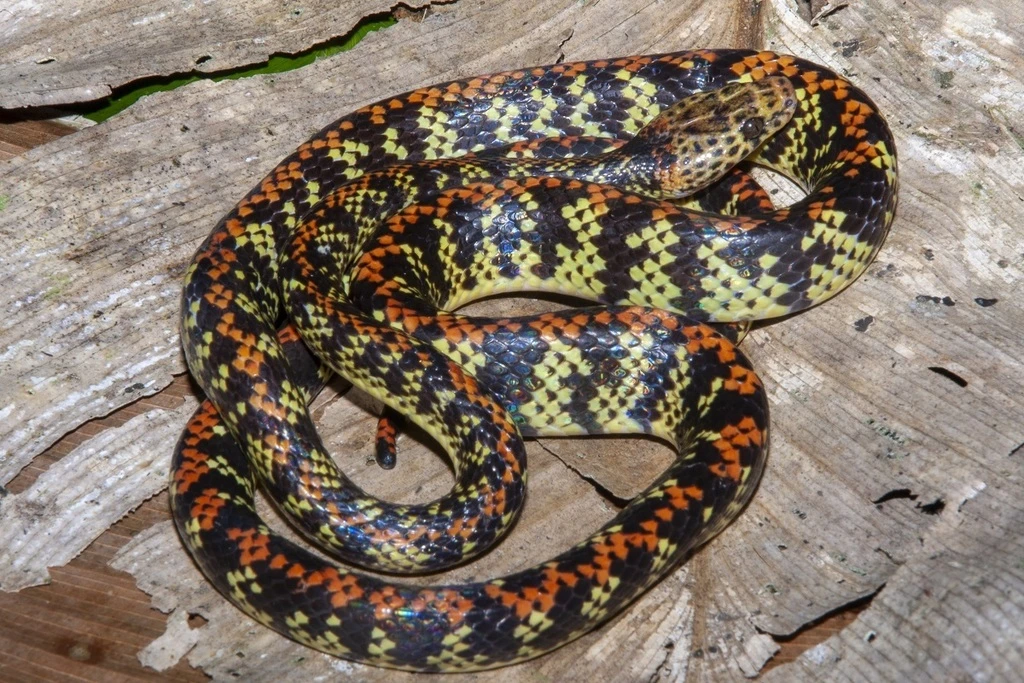
Siphlophis cervinus. Brightly patterned individual coiled on weathered wood. Original observation dated 2010-01-21. Portrait only; no new locality record is inferred.

004 · Colubridae

Panamanian Spotted Nightsnake, Panama Spotted Night Snake

Siphlophis cervinus

(LAURENTI, 1768)

Venom unknownNot yet assessed

The checked taxonomic distribution account explicitly lists Trinidad and Tobago. Country-level evidence does not establish continuous occupancy or a complete national inventory. The treatment names these subdivisions in its Trinidad and Tobago distribution clause: Trinidad. They are assigned to the declared atlas navigation groups; this is not a field…

Read the species account →

dhfischer · CC BY 4.0 · https://creativecommons.org/licenses/by/4.0/

All 47 species in the country collection →

Read further

Evidence & sources.

Guide reviewed 16 October 2026. Source dates and geographic scope matter; landscape photographs do not establish species occurrence.

  1. Convention on Biological Diversity · Trinidad and Tobago national profile

    Historical Secretariat draft, pending Party approval. Landscape context only; dated statistics and projections are not presented as current measurements. Checked 16 October 2026.

Continue through Trinidad and Tobago

Explore another habitat.

01

Forest & woodland

The national profile distinguishes seasonal evergreen woodland, littoral woodland, montane rainforest and swamp forest. These are separate environmental descriptions, not interchangeable labels.

02

Grassland & savanna

Savannas are part of the country’s documented habitat mosaic. An open-landscape description needs the local vegetation and water context before it can support a species association.