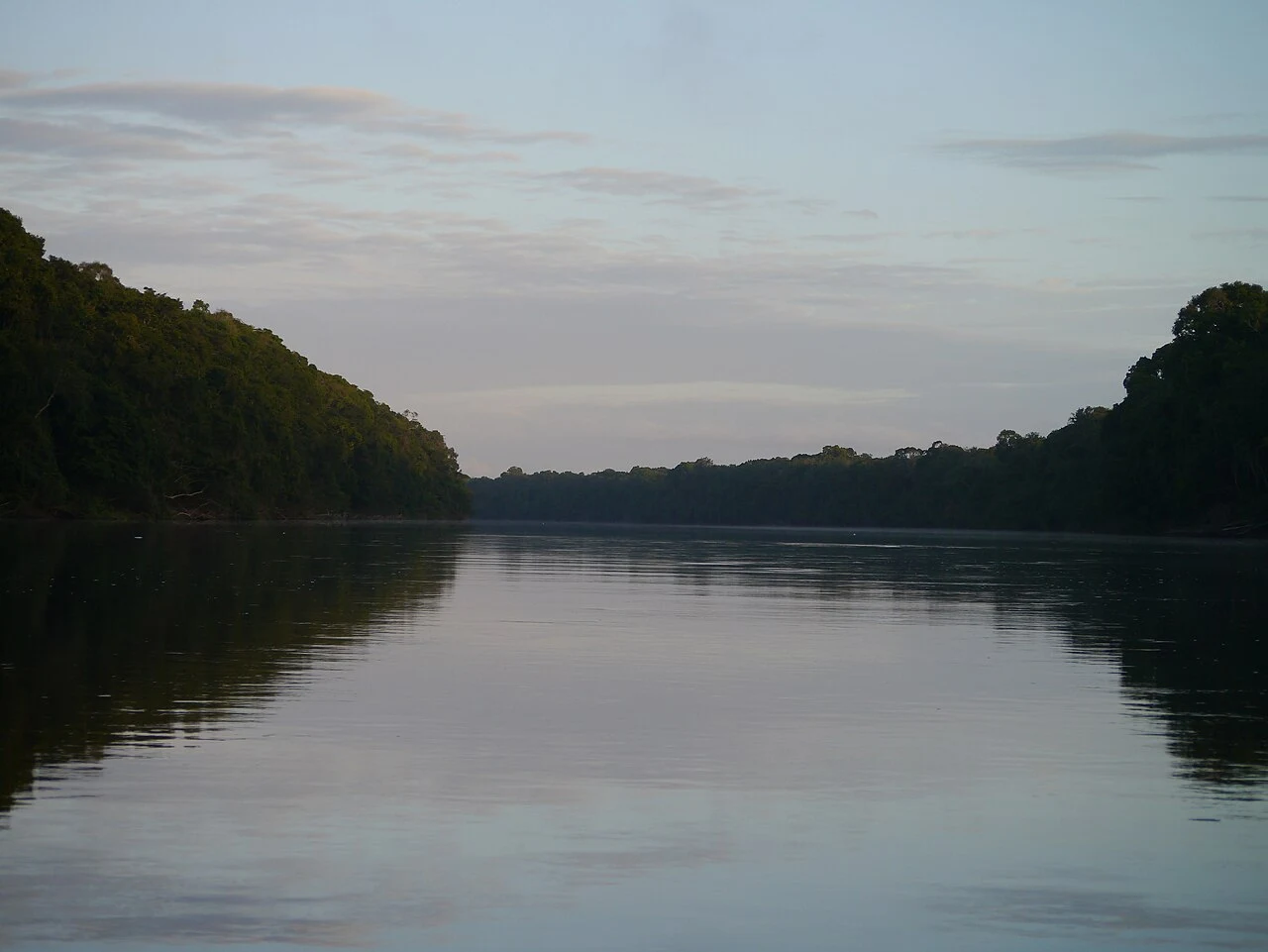
River and forested banks in the Iwokrama rainforest, Guyana.

Guyana · Habitat field guide

Forest & woodland

Guyana’s profile distinguishes rainforest, montane forest, dry evergreen and seasonal woodland. A general forest label should be narrowed to the formation actually described in the field record.

River and forested banks in the Iwokrama rainforest, Guyana.

Photograph: M M from Switzerland · Image source · CC BY-SA 2.0. Cropped to fill the hero; darkened for text legibility.

Understanding the environment

A sense of the habitat.

Guyana’s profile distinguishes rainforest, montane forest, dry evergreen and seasonal woodland. A general forest label should be narrowed to the formation actually described in the field record.

Geographic scope
Guyana; retain the named source locality.
Evidence scale
Landscape descriptions are separate from species records.
Source date
Retain the original publication date; reviewed 17 October 2026.

Explore the structure · Select a layer to compare details retained in a field record.

Read the locality in three layers.

Select a zone to see what changes.

Canopy

Canopy

Distinguish closed crowns, open woodland and planted trees.

Check the original species record before assigning habitat use.

These reading prompts are conceptual, not a transect or an occurrence map.

Sources: Convention on Biological Diversity · Guyana national profile

Field notes · 01

The documented setting

Guyana’s profile distinguishes rainforest, montane forest, dry evergreen and seasonal woodland. A general forest label should be narrowed to the formation actually described in the field record.

Sources: Convention on Biological Diversity · Guyana national profile

Field notes · 02

Connect the setting to a species

The country landscape and a species habitat association answer different questions. Follow the species account for direct habitat evidence. An empty collection indicates missing extracted evidence, not biological absence.

Pressures on Guyana’s habitats

What is at risk?

A site-specific assessment of pressures has not yet been extracted for this guide. The landscape sources below provide context; they do not establish a current threat level for each snake species.

What helps this habitat

Read conservation pressures with their source date and locality; a landscape-level pressure is not a measured decline for every snake.

The connected collection

Snakes with habitat evidence.

These 41 species have supported country occurrence and an explicit habitat association in the shared account. The association may come from elsewhere in their range. This is not a complete local habitat inventory; the places above are landscape examples, not asserted collecting sites.

41 species · showing 24

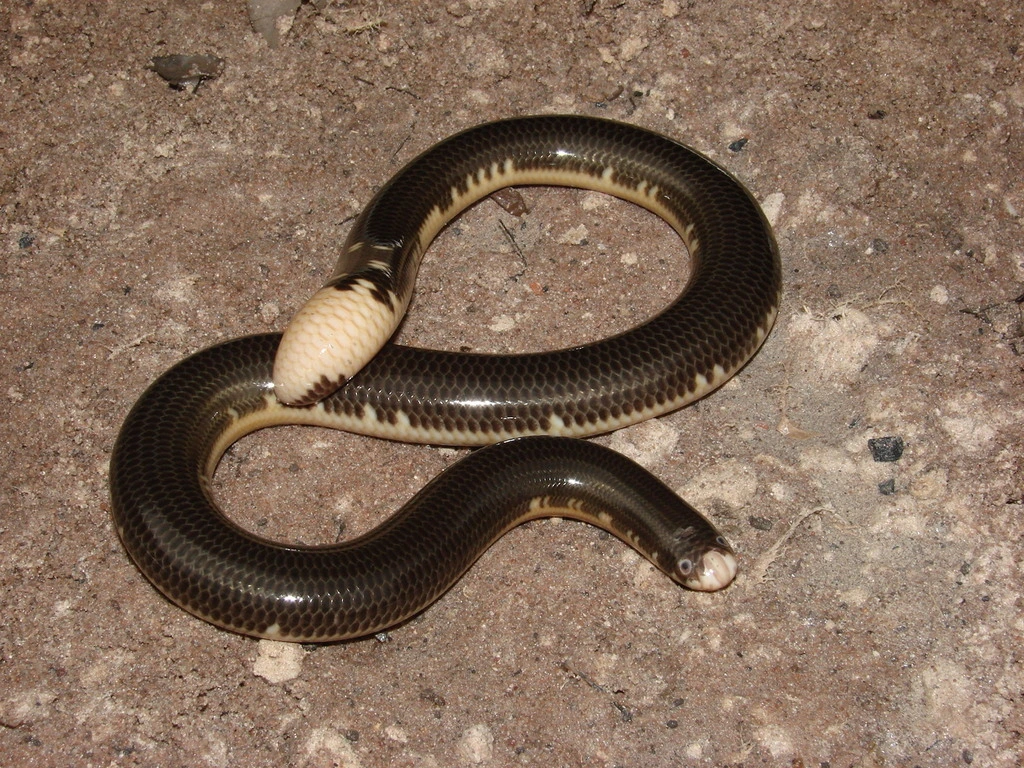
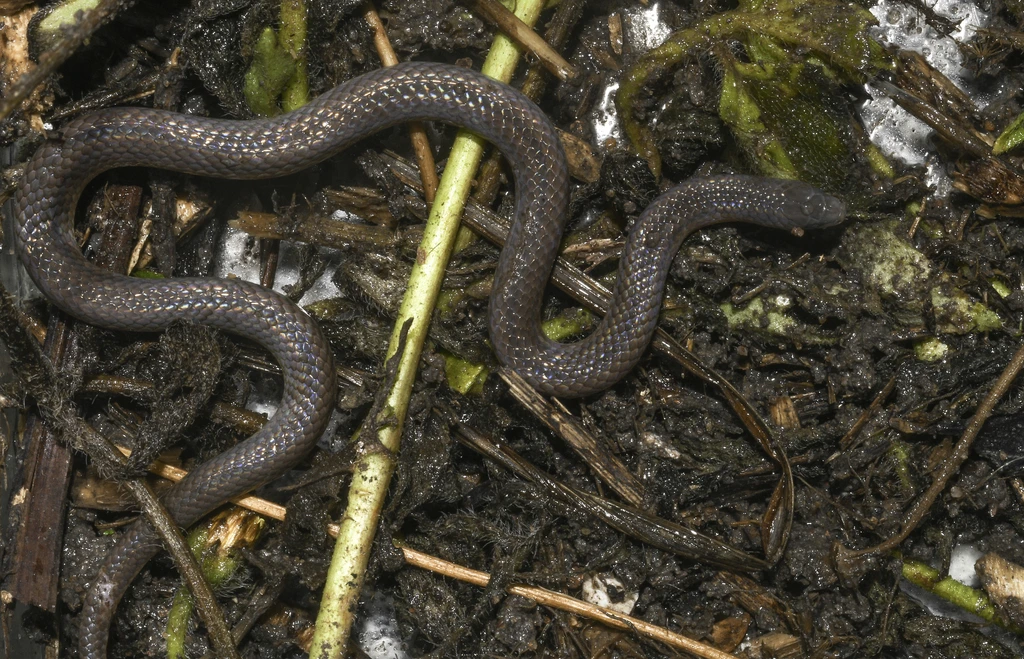
Amerotyphlops reticulatus. The complete source frame is retained; this portrait is not locality or habitat evidence. Original observation dated 2006-09-07. No additional geographic occurrence is inferred.

001 · Typhlopidae

Reticulate Worm Snake

Amerotyphlops reticulatus

(LINNAEUS, 1758)

Non-venomous

The checked taxonomic distribution account explicitly lists Guyana. Country-level evidence does not establish continuous occupancy or a complete national inventory.

Read the species account →

Reuber Brandão · CC BY 4.0 · https://creativecommons.org/licenses/by/4.0/
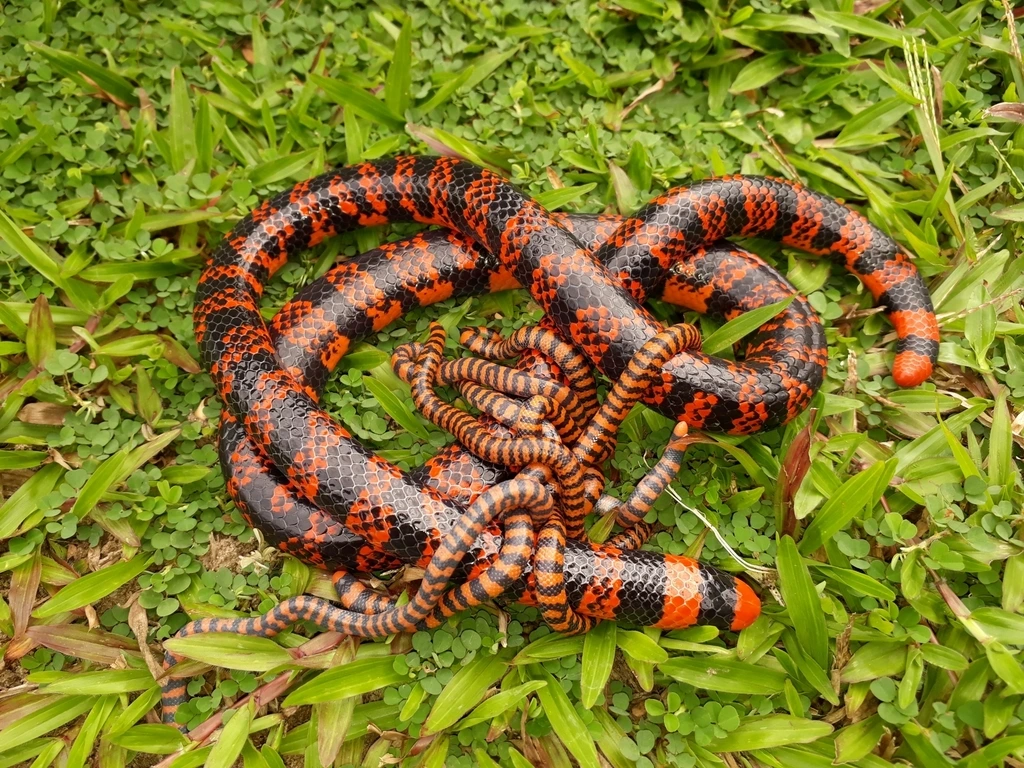
Anilius scytale. An adult and smaller individuals photographed together; full source frame retained. Original observation dated 2018-10-25. No additional geographic occurrence is inferred.

002 · Aniliidae

Coral Cylinder Snakes

Anilius scytale

(LINNAEUS, 1758)

Venom unknownNot yet assessed

The checked taxonomic distribution account explicitly lists Guyana. Country-level evidence does not establish continuous occupancy or a complete national inventory.

Read the species account →

Rafael Bernhard · CC BY 4.0 · https://creativecommons.org/licenses/by/4.0/
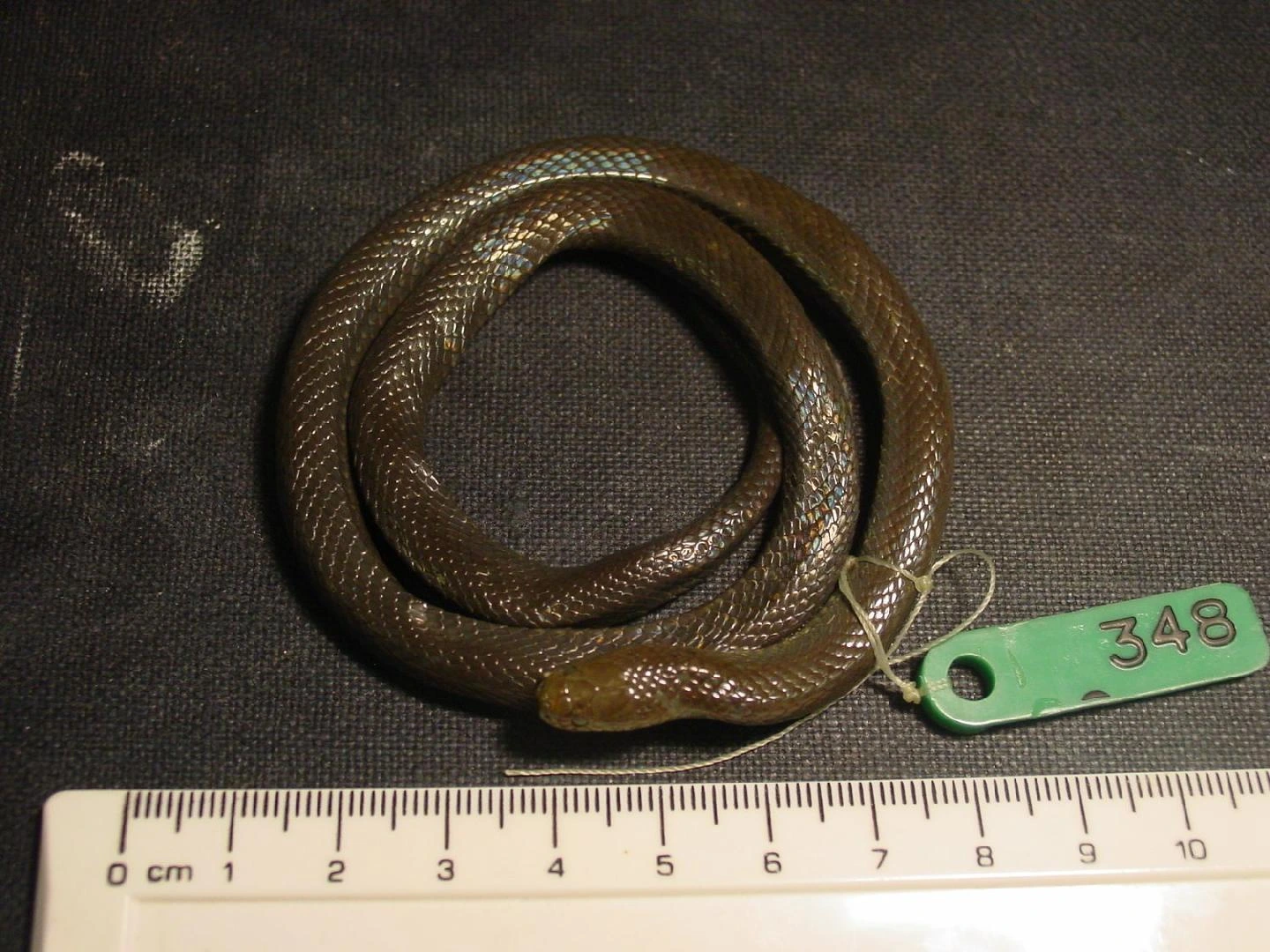
Atractus steyermarki. Preserved museum specimen; preservation may change natural colours. No new locality or habitat inferred. Portrait only.

003 · Colubridae

Species account

Atractus steyermarki

ROZE, 1958

Non-venomous

The checked taxonomic distribution account explicitly lists Guyana. Country-level evidence does not establish continuous occupancy or a complete national inventory. The treatment names these subdivisions in its Guyana distribution clause: Cuyuni-Mazaruni. They are assigned to the declared atlas navigation groups; this is not a field observation, a…

Read the species account →

Patrick Campbell · The Trustees of the Natural History Museum, London · CC BY 4.0 · https://creativecommons.org/licenses/by/4.0/
ColubridaeAtractusPhotograph not yet documented

004 · Colubridae

Species account

Atractus tamessari

KOK, 2006

Non-venomous

The checked taxonomic distribution account explicitly lists Guyana. Country-level evidence does not establish continuous occupancy or a complete national inventory. The treatment names these subdivisions in its Guyana distribution clause: Potaro-Siparuni. They are assigned to the declared atlas navigation groups; this is not a field observation, a…

Read the species account →
Atractus trilineatus. Small brown individual coiled among wet leaves and moss. Original observation dated 2025-06-14. Portrait only; no new locality record is inferred.

005 · Colubridae

Three-lined Groundsnake, Three-lined Ground Snake

Atractus trilineatus

WAGLER, 1828

Non-venomous

The checked taxonomic distribution account explicitly lists Guyana. Country-level evidence does not establish continuous occupancy or a complete national inventory.

Read the species account →

Whaldener Endo · CC0 1.0 · https://creativecommons.org/publicdomain/zero/1.0/

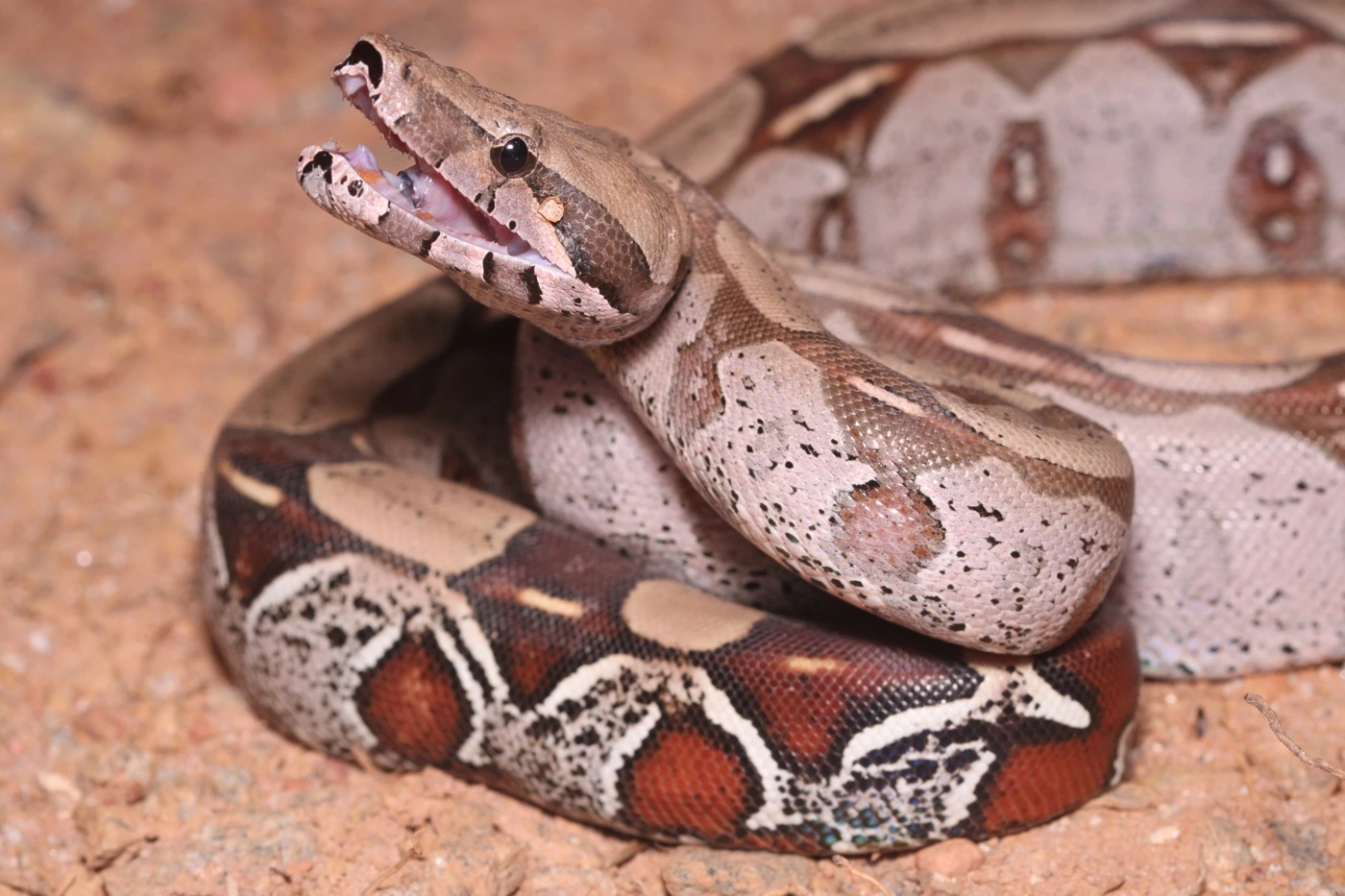
Boa constrictor. Species portrait from the credited source. No additional state, province or wild occurrence is inferred. Original watermarks, where present, are retained.

006 · Boidae

Boa Constrictor

Boa constrictor

LINNAEUS, 1758

Non-venomous

The checked taxonomic distribution account explicitly lists Guyana. Country-level evidence does not establish continuous occupancy or a complete national inventory.

Read the species account →

Arnaud Aury · CC BY 4.0 · https://creativecommons.org/licenses/by/4.0

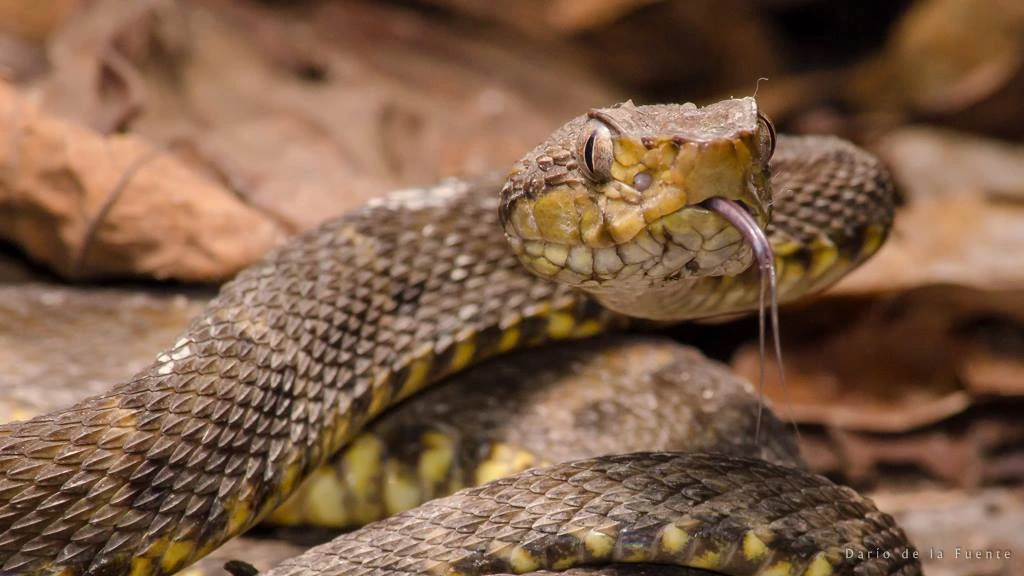
Bothrops atrox, photographed by Darío De la Fuente. Portrait only; no wild locality or habitat record is inferred.

007 · Viperidae

Barba Amarilla, Fer-de-Lance, common lancehead

Bothrops atrox

(LINNAEUS, 1758)

VenomousClinical severity not established

The checked taxonomic distribution account explicitly lists Guyana. Country-level evidence does not establish continuous occupancy or a complete national inventory.

Read the species account →

Darío De la Fuente · CC BY 4.0 · https://creativecommons.org/licenses/by/4.0

Bothrops bilineatus. The complete source frame is retained; this portrait is not locality or habitat evidence. Original observation dated 2018-11-30. No additional geographic occurrence is inferred.

008 · Viperidae

Green Jararaca

Bothrops bilineatus

(WIED-NEUWIED, 1821)

VenomousClinical severity not established

The checked taxonomic distribution account explicitly lists Guyana. Country-level evidence does not establish continuous occupancy or a complete national inventory.

Read the species account →

B. Phalan · CC BY 4.0 · https://creativecommons.org/licenses/by/4.0/
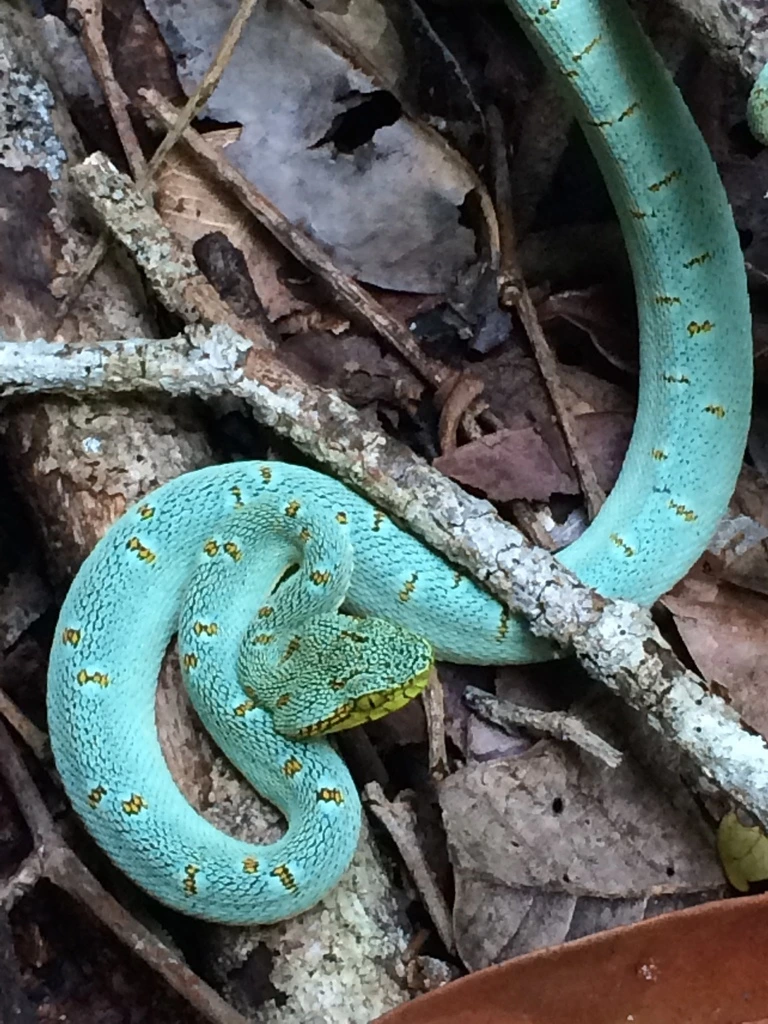
Bothrops taeniatus. Green mottled individual resting in coils among foliage. Portrait only; no wild locality or habitat record is inferred.

009 · Viperidae

Speckled Forest Pit Viper

Bothrops taeniatus

WAGLER, 1824

VenomousClinical severity not established

The checked taxonomic distribution account explicitly lists Guyana. Country-level evidence does not establish continuous occupancy or a complete national inventory.

Read the species account →

TimVickers · Public domain · https://commons.wikimedia.org/wiki/File:Bothriopsis_taeniata_(3).jpg#Licensing

Chironius exoletus. The complete source frame is retained; this portrait is not locality or habitat evidence. Original observation dated 2020-06-14. No additional geographic occurrence is inferred.

010 · Colubridae

Linnaeus' Sipo

Chironius exoletus

(LINNAEUS, 1758)

Venom unknownNot yet assessed

The checked taxonomic distribution account explicitly lists Guyana. Country-level evidence does not establish continuous occupancy or a complete national inventory.

Read the species account →

Mario Barroso · CC BY 4.0 · https://creativecommons.org/licenses/by/4.0/
Chironius scurrula. Photographed while held; the handling context is retained in the complete source frame. Original observation dated 2023-03-08. No additional geographic occurrence is inferred.

011 · Colubridae

Wagler's Sipo, harlequin snake

Chironius scurrula

(WAGLER, 1824)

Venom unknownNot yet assessed

The checked taxonomic distribution account explicitly lists Guyana. Country-level evidence does not establish continuous occupancy or a complete national inventory.

Read the species account →

Benjamin Hidalgo · CC BY 4.0 · https://creativecommons.org/licenses/by/4.0/
Clelia clelia. Glossy dark individual coiled on leaf litter. Portrait only; no wild locality or habitat record is inferred.

012 · Colubridae

Windward Cribo, Black Mussurana

Clelia clelia

(DAUDIN, 1803)

Venom unknownNot yet assessed

The checked taxonomic distribution account explicitly lists Guyana. Country-level evidence does not establish continuous occupancy or a complete national inventory.

Read the species account →

Geoff Gallice ( https://www.flickr.com/photos/dejeuxx/ ) · CC BY 2.0 · https://creativecommons.org/licenses/by/2.0

Dipsas catesbyi. The complete source frame is retained; this portrait is not locality or habitat evidence. Original observation dated 2022-03-23. No additional geographic occurrence is inferred.

013 · Colubridae

Catesby's Snail-eater

Dipsas catesbyi

(SENTZEN, 1796)

Venom unknownNot yet assessed

The checked taxonomic distribution account explicitly lists Guyana. Country-level evidence does not establish continuous occupancy or a complete national inventory.

Read the species account →

Andrew J. Crawford · CC0 1.0 · https://creativecommons.org/publicdomain/zero/1.0/

Dipsas indica. A patterned individual resting across green foliage and a slender branch; original watermark retained. Original observation dated 2020-03-07. Portrait only; no new locality record is inferred.

014 · Colubridae

Neotropical Snail-eater

Dipsas indica

LAURENTI, 1768

Venom unknownNot yet assessed

The checked taxonomic distribution account explicitly lists Guyana. Country-level evidence does not establish continuous occupancy or a complete national inventory.

Read the species account →

Ferhat Gundogdu · CC0 1.0 · https://creativecommons.org/publicdomain/zero/1.0/

Dipsas pavonina. The complete source frame is retained; this portrait is not locality or habitat evidence. Original observation dated 2023-12-01. No additional geographic occurrence is inferred.

015 · Colubridae

Northern Snail-eater

Dipsas pavonina

SCHLEGEL, 1837

Venom unknownNot yet assessed

The checked taxonomic distribution account explicitly lists Guyana. Country-level evidence does not establish continuous occupancy or a complete national inventory.

Read the species account →

Artur Alves · CC BY 4.0 · https://creativecommons.org/licenses/by/4.0/
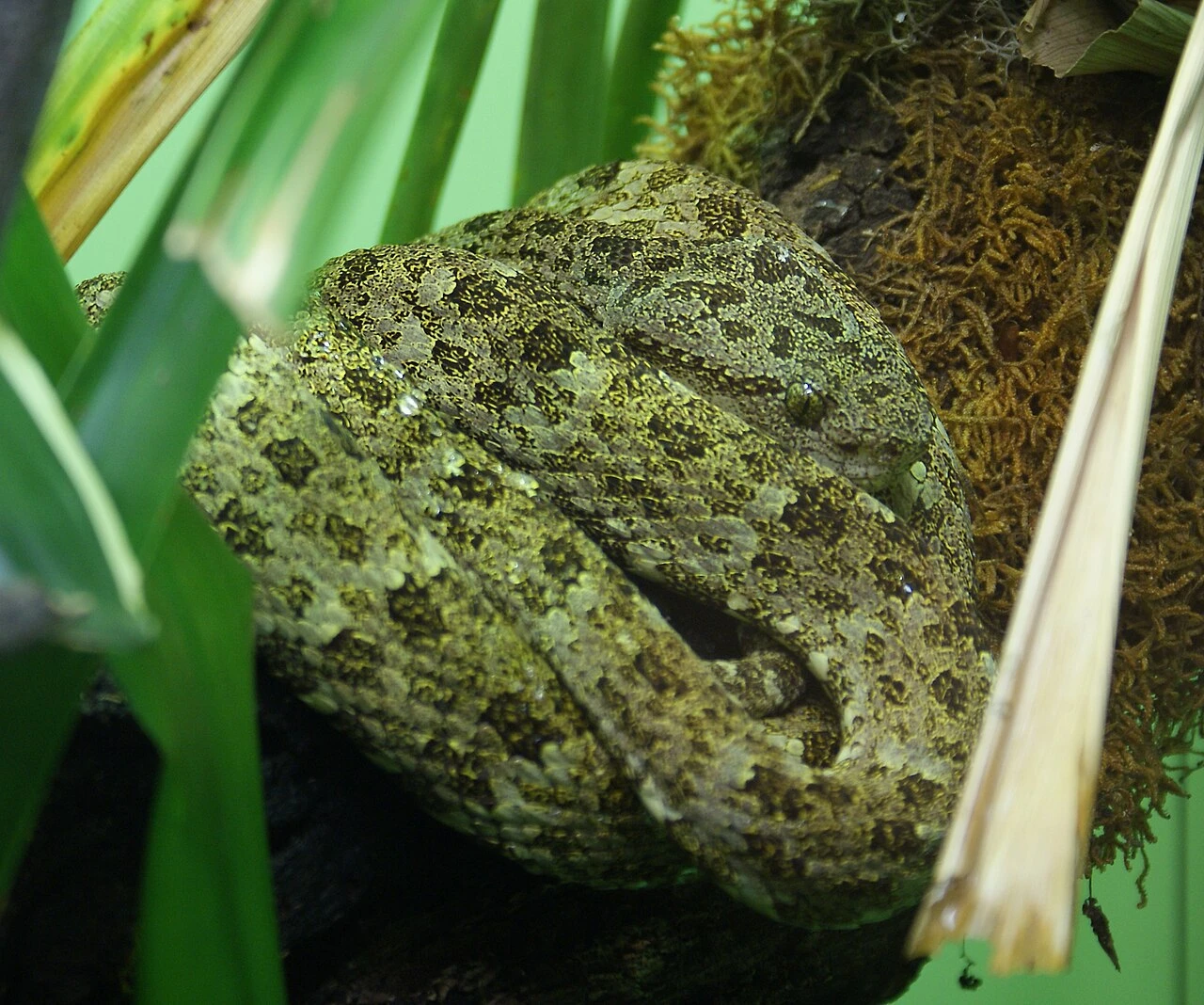
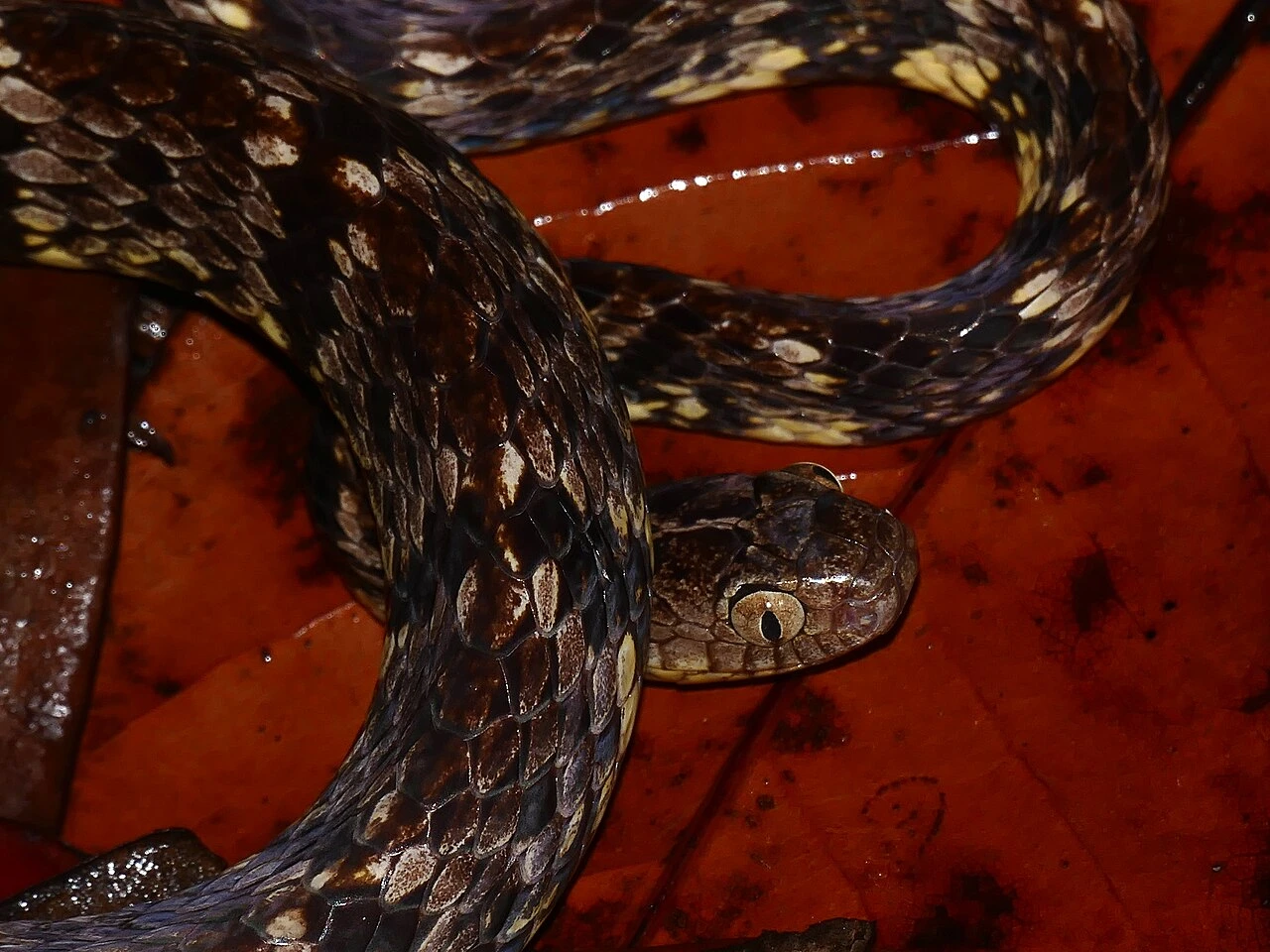
Dipsas variegata. Close view of the patterned head and body on a wet red surface. Portrait only; no wild locality or habitat record is inferred.

016 · Colubridae

Variegated Snail-eater

Dipsas variegata

(DUMÉRIL, BIBRON & DUMÉRIL, 1854)

Venom unknownNot yet assessed

The checked taxonomic distribution account explicitly lists Guyana. Country-level evidence does not establish continuous occupancy or a complete national inventory.

Read the species account →

Bernard DUPONT from FRANCE · CC BY-SA 2.0 · https://creativecommons.org/licenses/by-sa/2.0

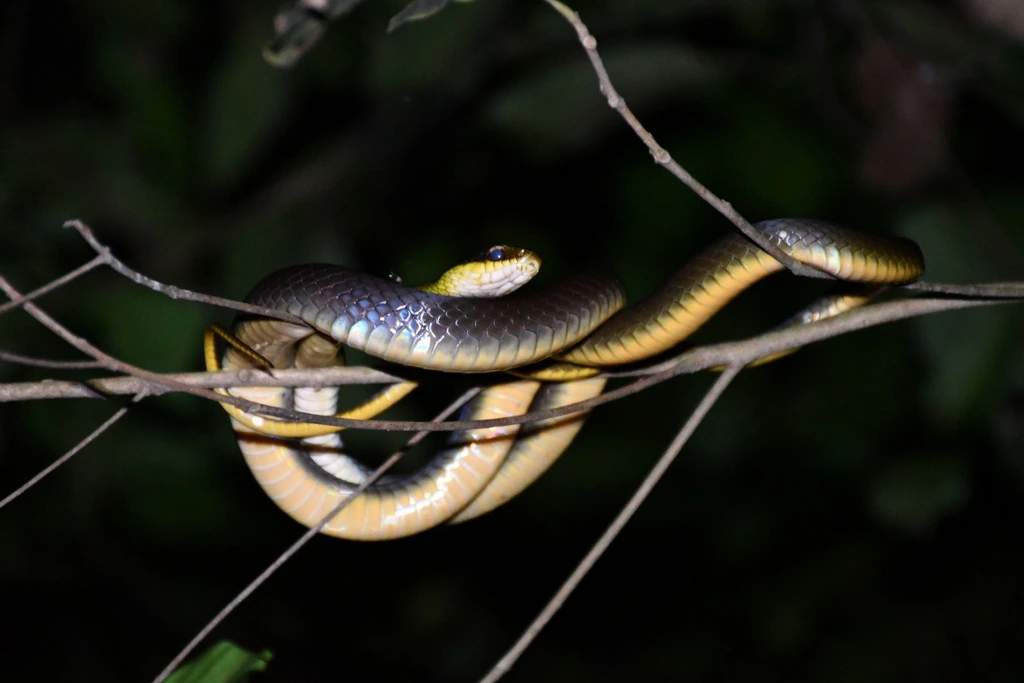
Drymoluber dichrous. The complete source frame is retained; this portrait is not locality or habitat evidence. Original observation dated 2023-12-29. No additional geographic occurrence is inferred.

017 · Colubridae

Northern Woodland Racer

Drymoluber dichrous

(PETERS, 1863)

Venom unknownNot yet assessed

The checked taxonomic distribution account explicitly lists Guyana. Country-level evidence does not establish continuous occupancy or a complete national inventory.

Read the species account →

Vincent A. Vos · CC BY 4.0 · https://creativecommons.org/licenses/by/4.0/
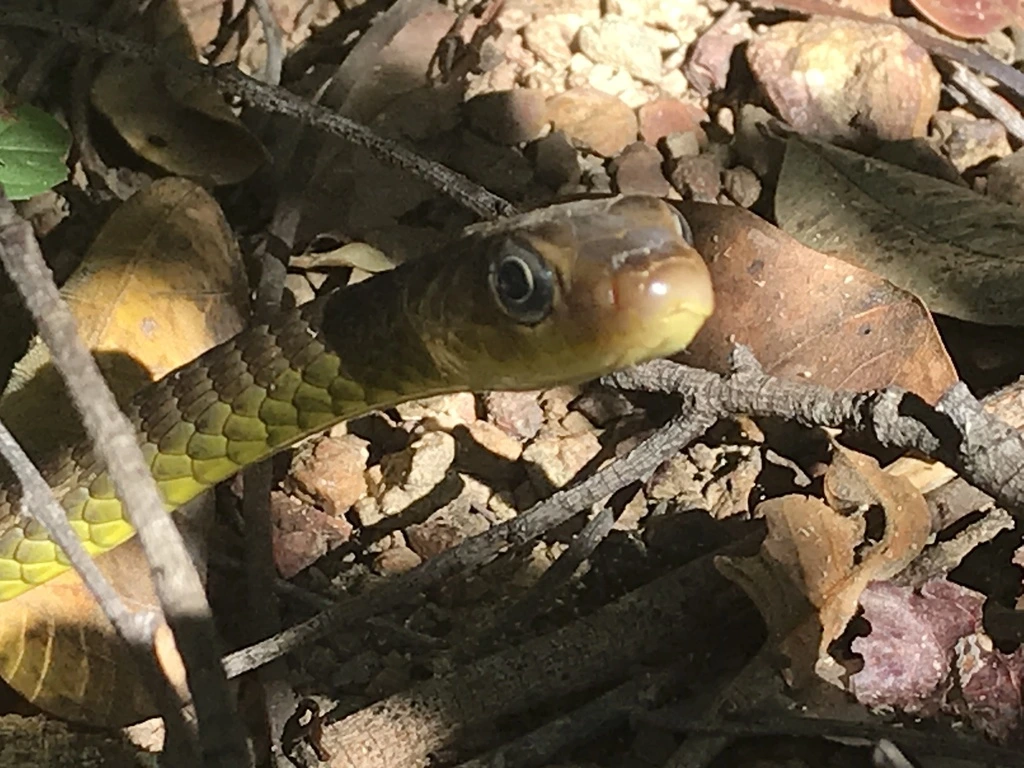
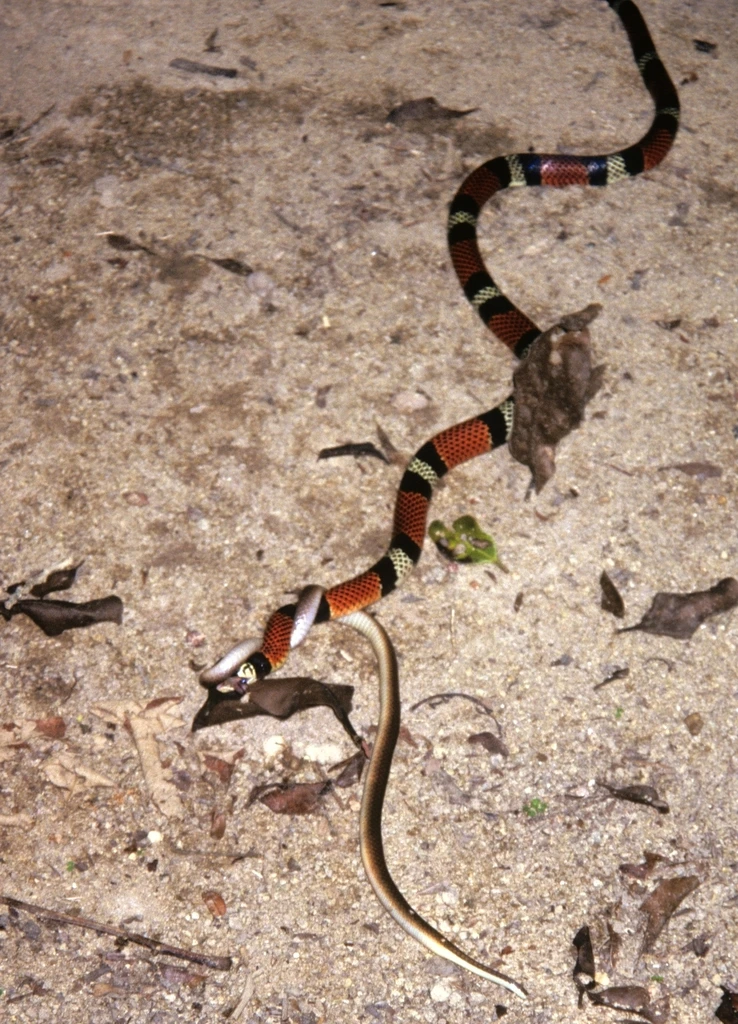
Erythrolamprus aesculapii. Banded individual moving across sandy ground and fallen leaves. Original observation dated 1999-02-23. Portrait only; no new locality record is inferred.

018 · Colubridae

South American False Coralsnake, Aesculapian False Coral Snake

Erythrolamprus aesculapii

(LINNAEUS, 1758)

VenomousMedically significant effects

The checked taxonomic distribution account explicitly lists Guyana. Country-level evidence does not establish continuous occupancy or a complete national inventory.

Read the species account →

desertnaturalist · CC BY 4.0 · https://creativecommons.org/licenses/by/4.0/
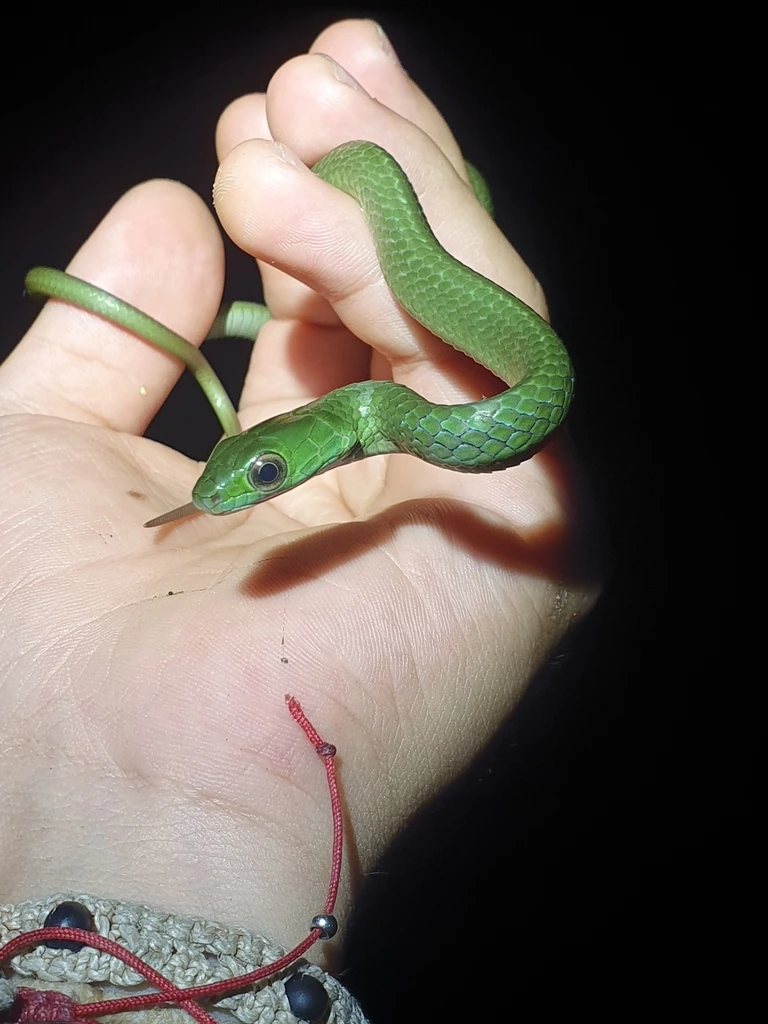
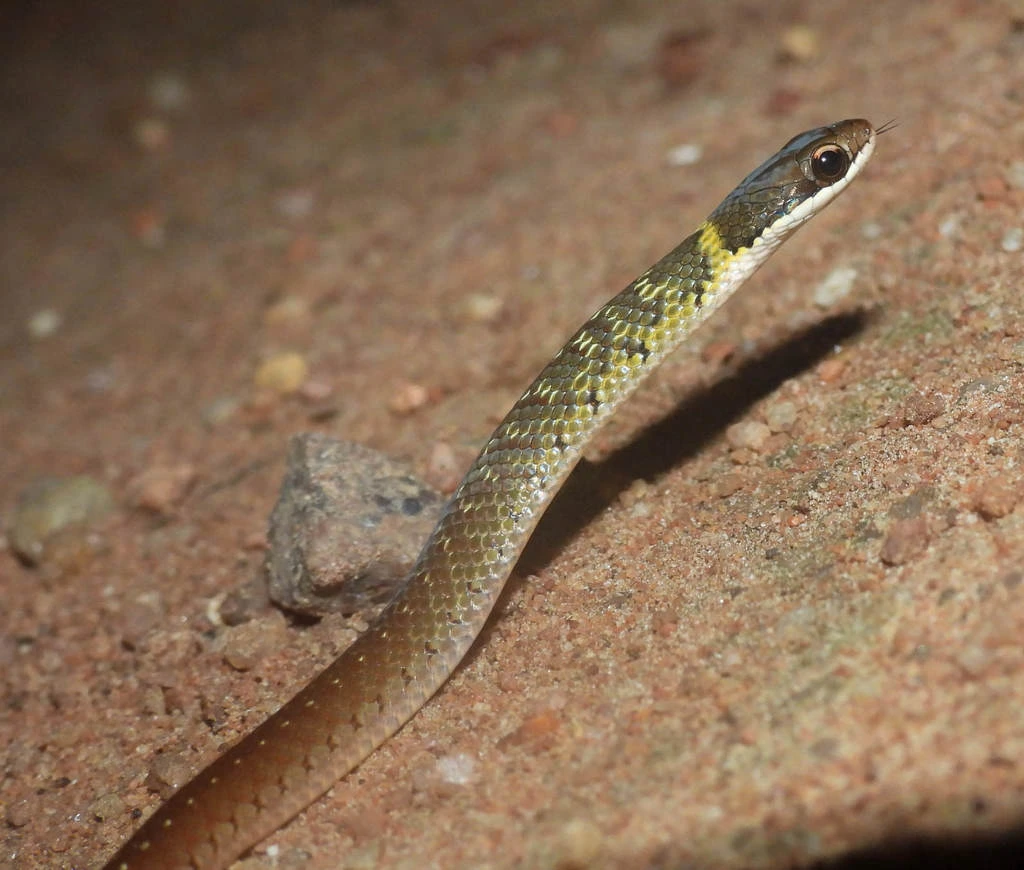
Erythrolamprus reginae. Raised head and forebody on reddish soil. Original observation dated 2022-05-08. Portrait only; no new locality record is inferred.

019 · Colubridae

Royal Ground Snake

Erythrolamprus reginae

(LINNAEUS, 1758)

Venom unknownNot yet assessed

The checked taxonomic distribution account explicitly lists Guyana. Country-level evidence does not establish continuous occupancy or a complete national inventory.

Read the species account →

Sidnei Dantas · CC BY-SA 4.0 · https://creativecommons.org/licenses/by-sa/4.0/

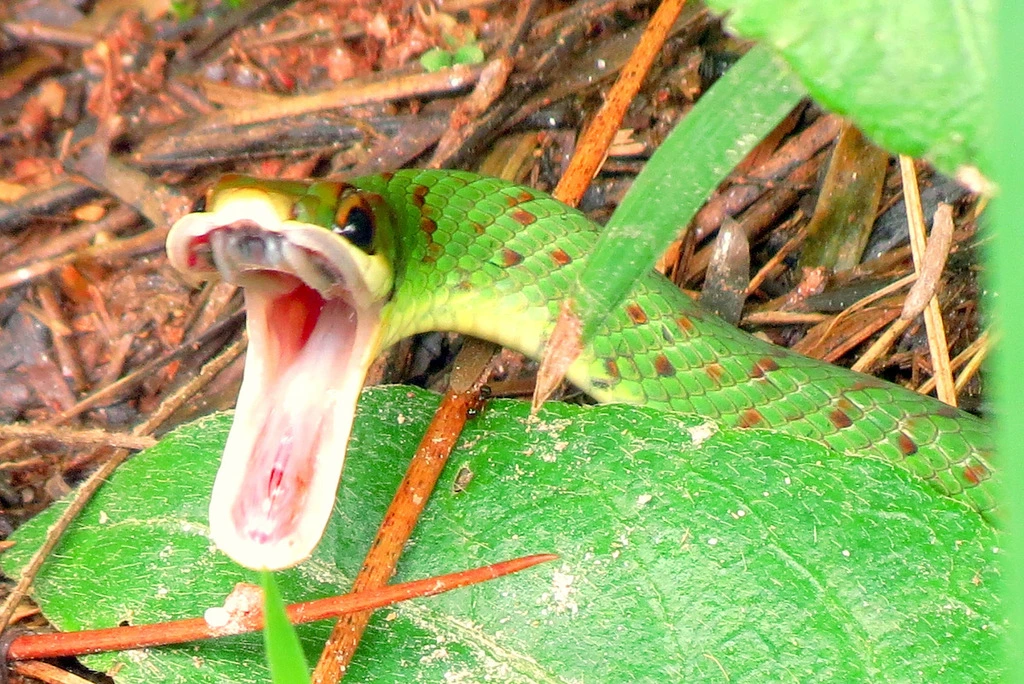
Erythrolamprus typhlus. Open-mouth portrait; the uploader describes the animal as yawning. Original observation dated 2022-02-08. No additional geographic occurrence is inferred.

020 · Colubridae

Blind Ground Snake, Velvet Swampsnake

Erythrolamprus typhlus

(LINNAEUS, 1758)

Venom unknownNot yet assessed

The checked taxonomic distribution account explicitly lists Guyana. Country-level evidence does not establish continuous occupancy or a complete national inventory.

Read the species account →

Rodrigo Paiva Lázaro · CC BY 4.0 · https://creativecommons.org/licenses/by/4.0/
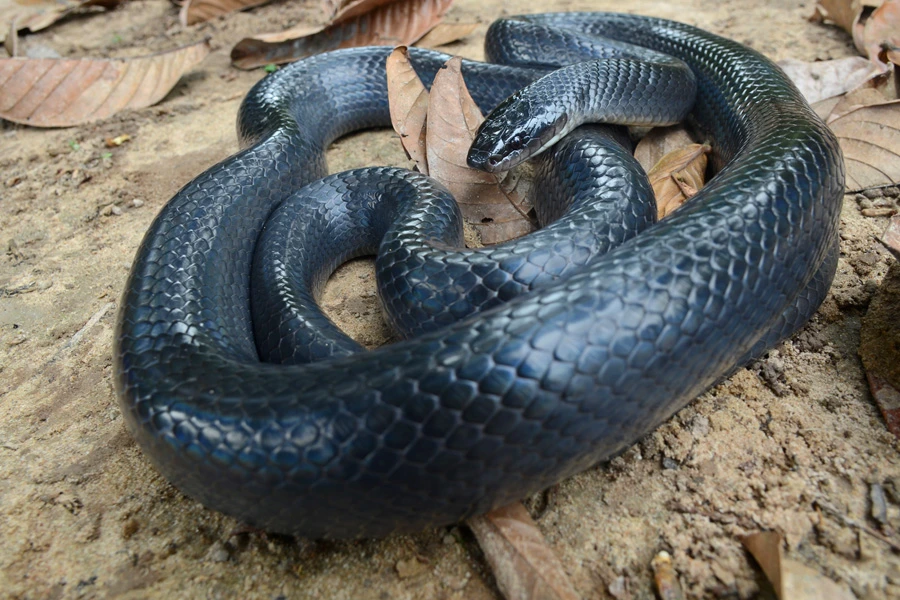
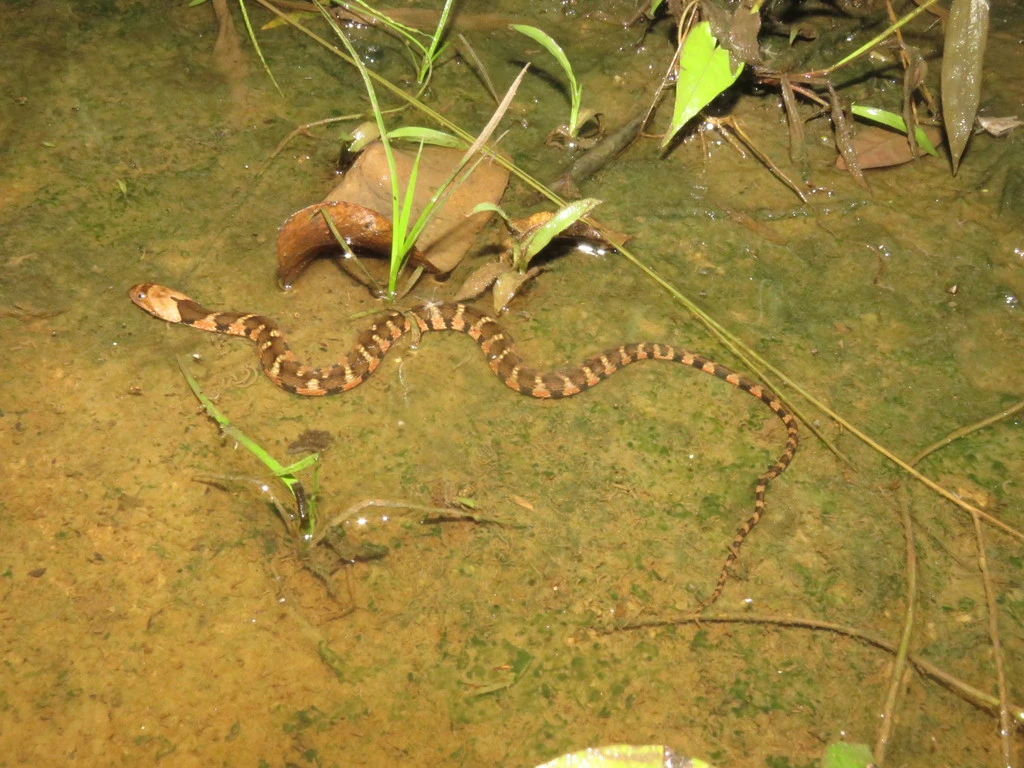
Helicops angulatus. Individual photographed in shallow water. Original observation dated 2020-02-29. Portrait only; no new locality or habitat record is inferred.

021 · Colubridae

Brown-banded watersnake, Mountain Keelback

Helicops angulatus

(LINNAEUS, 1758)

Venom unknownNot yet assessed

The checked taxonomic distribution account explicitly lists Guyana. Country-level evidence does not establish continuous occupancy or a complete national inventory.

Read the species account →

Vincent A. Vos · CC BY 4.0 · https://creativecommons.org/licenses/by/4.0/
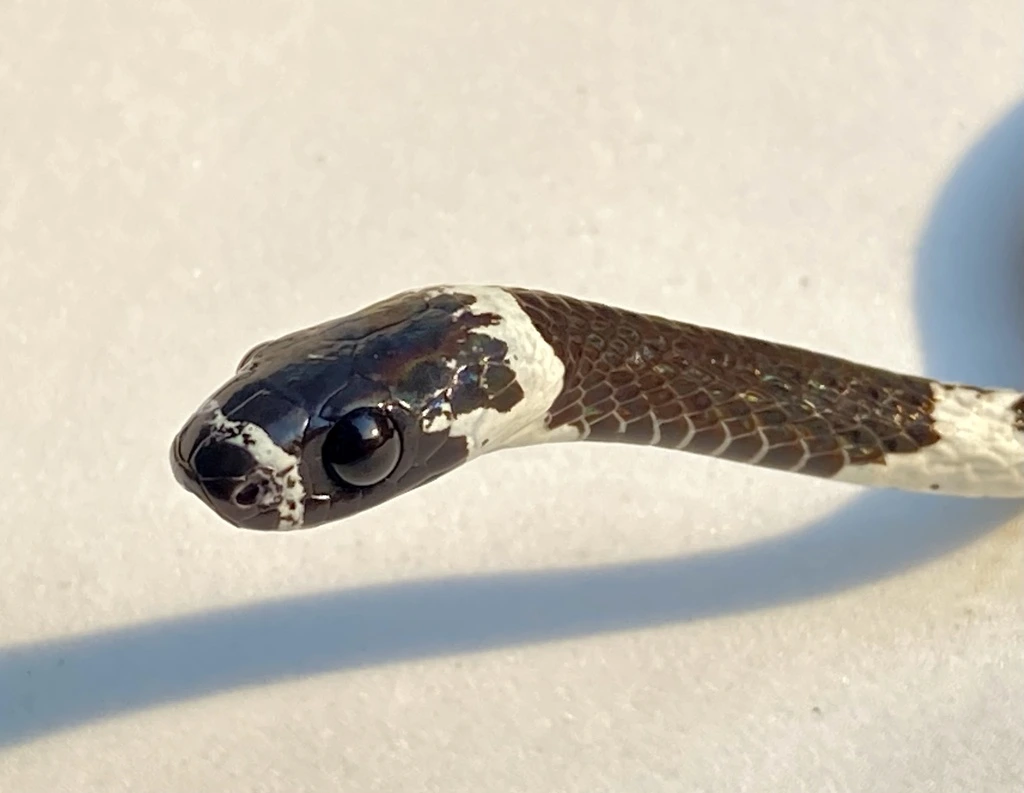
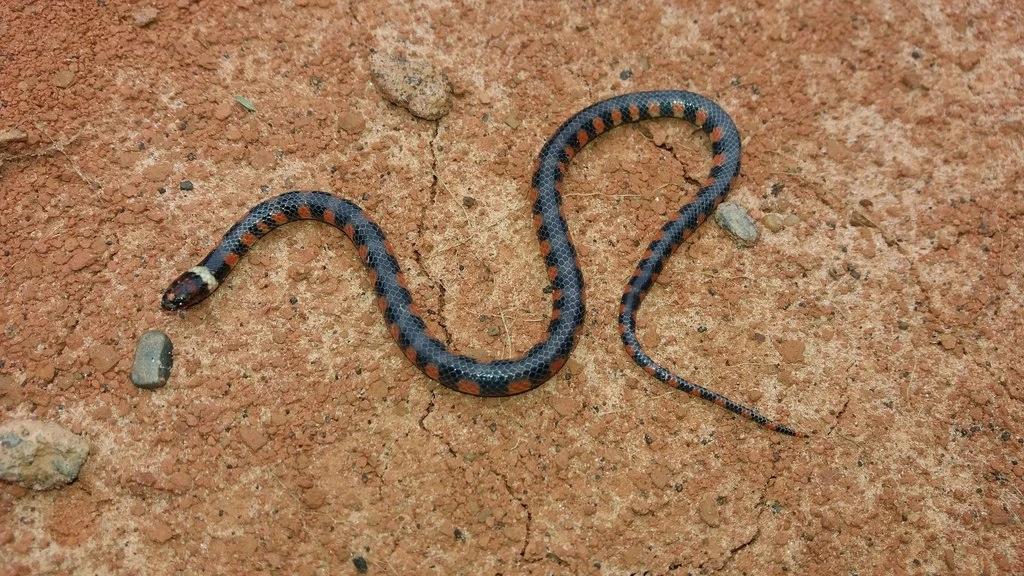
Hydrops triangularis. Blue-black and pale-banded body on reddish ground. Original observation dated 2017-12-16. Portrait only; no new locality record is inferred.

022 · Colubridae

Triangle Watersnake, Triangle Water Snake

Hydrops triangularis

(WAGLER, 1824)

Venom unknownNot yet assessed

The checked taxonomic distribution account explicitly lists Guyana. Country-level evidence does not establish continuous occupancy or a complete national inventory.

Read the species account →

Rafael Bernhard · CC BY 4.0 · https://creativecommons.org/licenses/by/4.0/
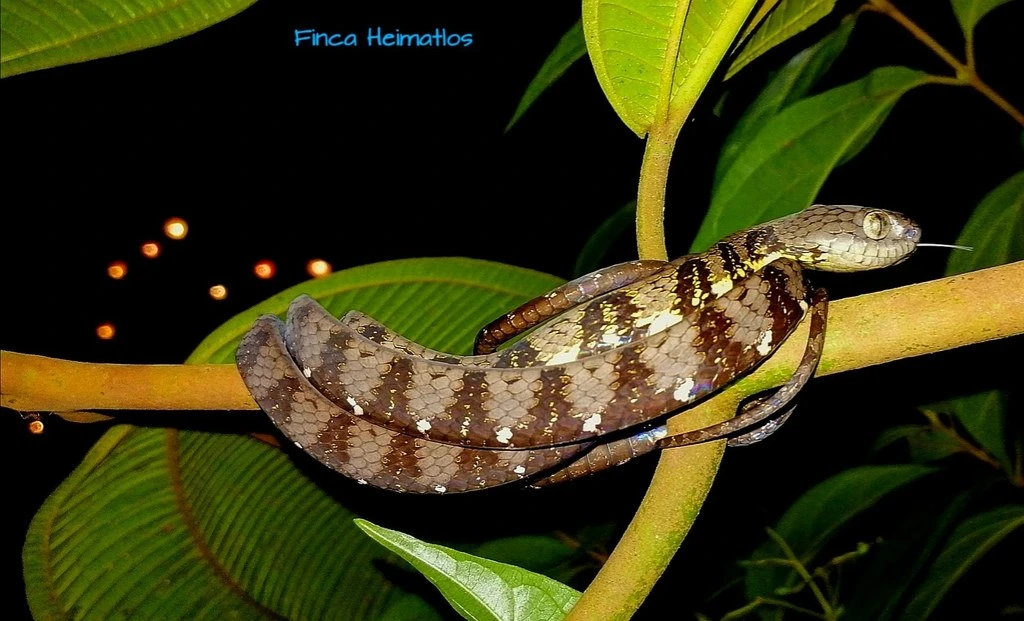
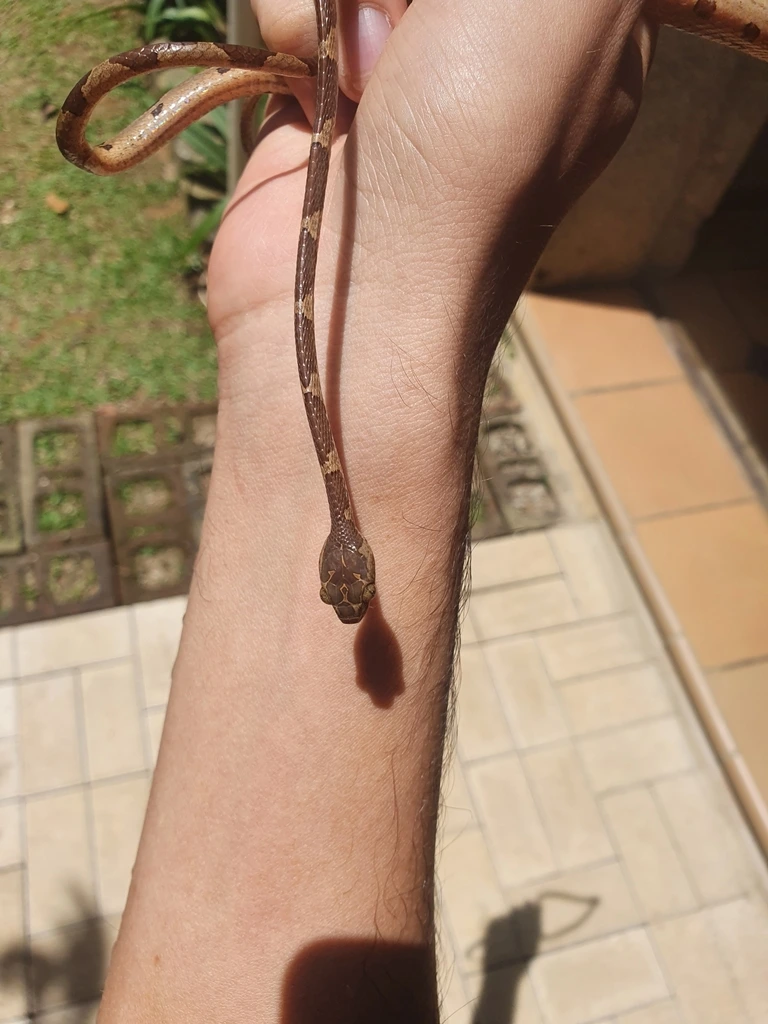
Imantodes cenchoa. Photographed while held; this is a handled specimen portrait. Original observation dated 2020-08-17. This photograph does not establish occurrence in any additional state or province.

023 · Colubridae

Neotropical Blunt-headed Treesnake, Blunthead Tree Snake

Imantodes cenchoa

(LINNAEUS, 1758)

Venom unknownNot yet assessed

The checked taxonomic distribution account explicitly lists Guyana. Country-level evidence does not establish continuous occupancy or a complete national inventory.

Read the species account →

Samuel Peláez Vélez · CC BY 4.0 · https://creativecommons.org/licenses/by/4.0/
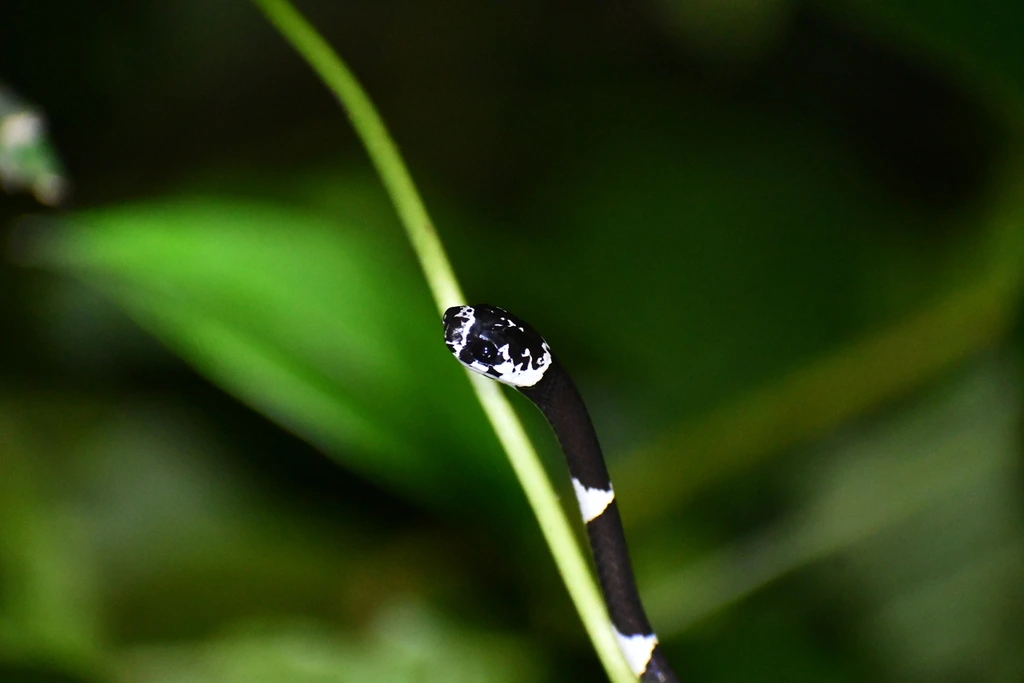
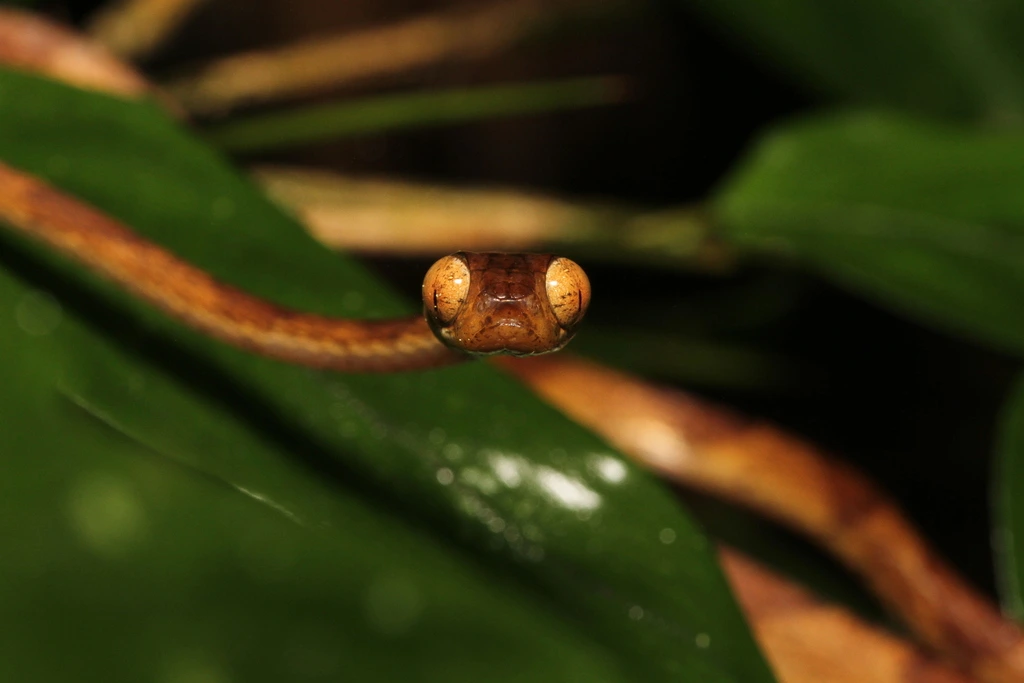
Imantodes lentiferus. The complete source frame is retained; this portrait is not locality or habitat evidence. Original observation dated 2026-02-16. No additional geographic occurrence is inferred.

024 · Colubridae

Amazon Basin Tree Snake

Imantodes lentiferus

(COPE, 1894)

Venom unknownNot yet assessed

The checked taxonomic distribution account explicitly lists Guyana. Country-level evidence does not establish continuous occupancy or a complete national inventory.

Read the species account →

Samuel GUIRAUDOU · CC BY 4.0 · https://creativecommons.org/licenses/by/4.0/
All 91 species in the country collection →

Read further

Evidence & sources.

Guide reviewed 17 October 2026. Source dates and geographic scope matter; landscape photographs do not establish species occurrence.

  1. Convention on Biological Diversity · Guyana national profile

    National biodiversity reporting synthesis. Landscape context only; historical statistics are not presented as current measurements. Reviewed 17 October 2026.

Continue through Guyana

Explore another habitat.

01

Highland environments

The profile identifies montane forest separately from other forest formations. A regional boundary does not supply an elevation range for the species recorded within it.

02

Rivers & wetlands

Swamp and marsh settings form a separate component of the documented forest mosaic. Distinguish flooded ground, a waterbody and surrounding vegetation when reading a species account.

03

Mangroves & estuaries

Mangrove forest is explicitly identified in the national profile. Its tidal coastal conditions should not be assigned to interior woodland or freshwater swamps.