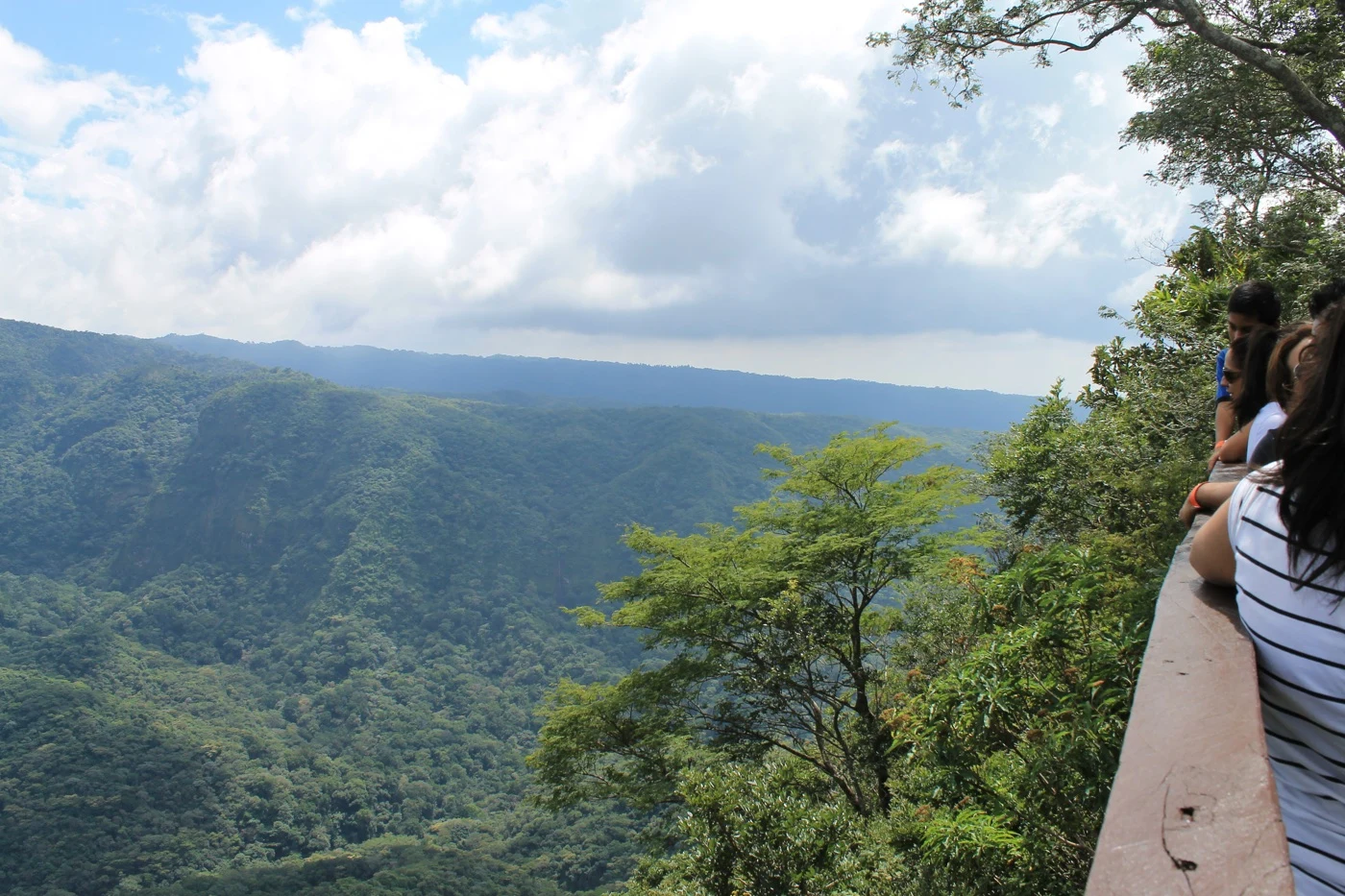
Forested hills seen from a viewpoint in El Imposible National Park, El Salvador.

El Salvador · Habitat field guide

Forest & woodland

The national profile distinguishes deciduous and semi-deciduous broadleaf forests, gallery forests, pine–oak forests and shade-grown coffee. A plantation record should not be silently relabelled as natural forest.

Forested hills seen from a viewpoint in El Imposible National Park, El Salvador.

Photograph: ElmerGuevara · Image source · CC BY-SA 3.0. Cropped to fill the hero; darkened for text legibility.

Understanding the environment

A sense of the habitat.

The national profile distinguishes deciduous and semi-deciduous broadleaf forests, gallery forests, pine–oak forests and shade-grown coffee. A plantation record should not be silently relabelled as natural forest.

Geographic scope
El Salvador; source locality matters.
Evidence scale
Landscape descriptions are separate from species records.
Source date
Retain the cited publication date; reviewed 16 October 2026.

Explore the structure · Select a layer to compare details retained in a field record.

Read the locality in three layers.

Select a zone to see what changes.

Canopy

Canopy

Distinguish closed crowns, open woodland and planted trees.

Check this detail in the original record before assigning a species to the habitat.

These reading prompts are conceptual, not a transect or an occurrence map.

Sources: Convention on Biological Diversity · El Salvador national profile

Field notes · 01

The documented setting

The national profile distinguishes deciduous and semi-deciduous broadleaf forests, gallery forests, pine–oak forests and shade-grown coffee. A plantation record should not be silently relabelled as natural forest.

Sources: Convention on Biological Diversity · El Salvador national profile

Field notes · 02

Connect the setting to a species

A habitat description and a country record answer different questions. Follow the linked species account for evidence of habitat use; an empty filtered collection indicates missing extracted evidence, not biological absence.

Pressures on El Salvador’s habitats

What is at risk?

A site-specific assessment of pressures has not yet been extracted for this guide. The landscape sources below provide context; they do not establish a current threat level for each snake species.

What helps this habitat

Consult the source’s own conservation context and dates before interpreting habitat change. A broad landscape pressure does not establish a measured decline for every snake.

The connected collection

Snakes with habitat evidence.

These 2 species have supported country occurrence and an explicit habitat association in the shared account. The association may come from elsewhere in their range. This is not a complete local habitat inventory; the places above are landscape examples, not asserted collecting sites.

2 species · showing 2

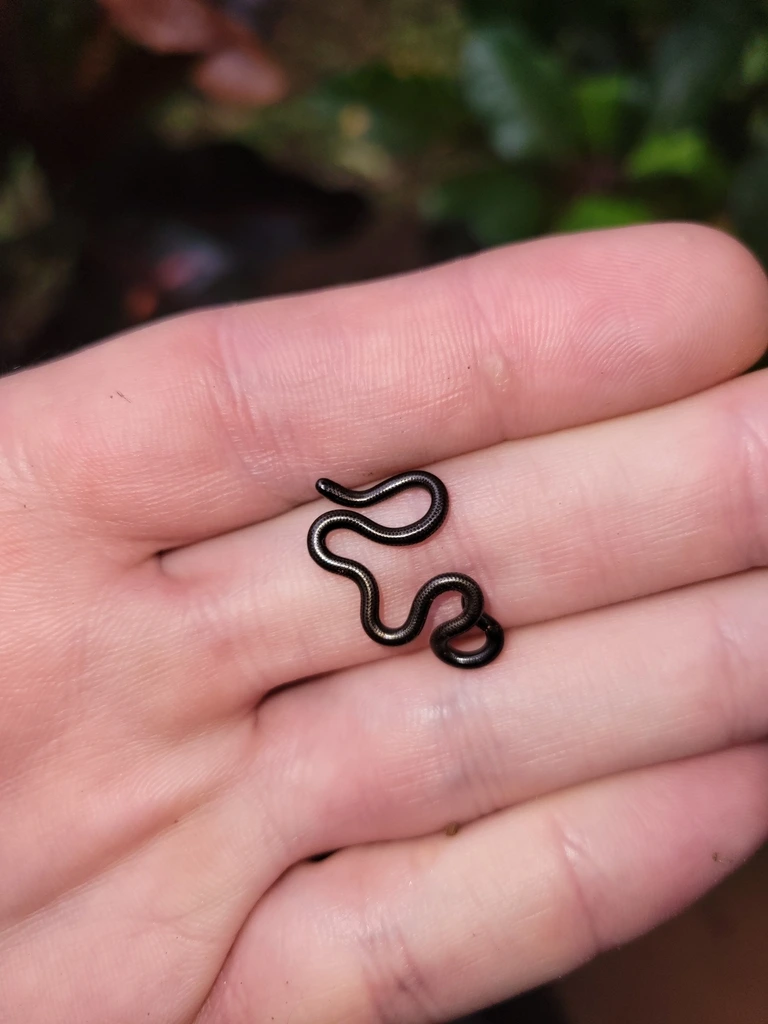
Epictia ater. Small individual photographed on an open hand; this is not a habitat illustration. Original observation dated 2024-10-11. No additional geographic occurrence is inferred.

001 · Leptotyphlopidae

Black Blind Snake

Epictia ater

(TAYLOR, 1940)

Non-venomous

The checked taxonomic distribution account explicitly lists El Salvador. Country-level evidence does not establish continuous occupancy or a complete national inventory. The treatment names these subdivisions in its El Salvador distribution clause: San Salvador, San Miguel, Morazán, Morazan. They are assigned to the declared atlas navigation groups; this…

Read the species account →

Jake Rehage · CC BY 4.0 · https://creativecommons.org/licenses/by/4.0/
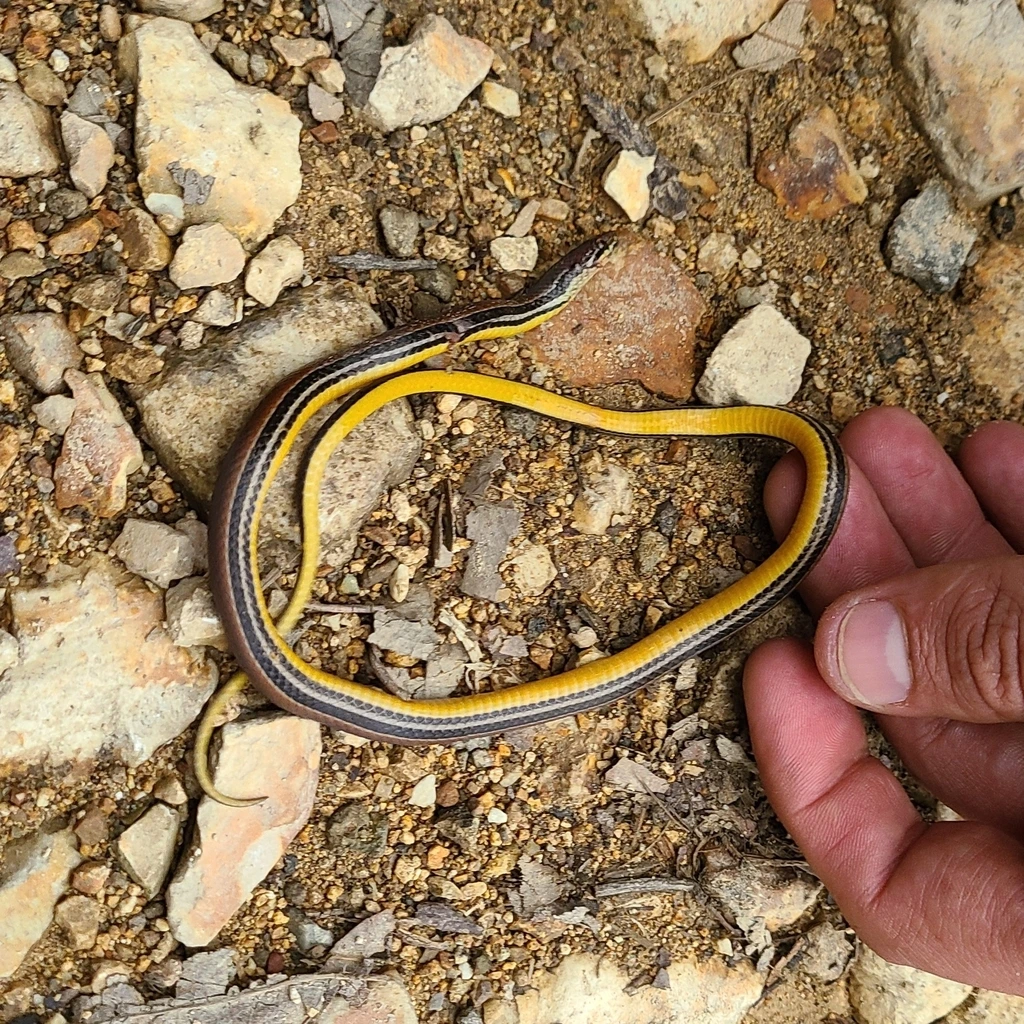
Rhadinella montecristi. Whole striped individual photographed while its tail is held. Original observation dated 2024-05-02. No additional geographic occurrence is inferred.

002 · Colubridae

Monte Cristi Graceful Brown Snake

Rhadinella montecristi

(MERTENS, 1952)

Venom unknownNot yet assessed

The checked taxonomic distribution account explicitly lists El Salvador. Country-level evidence does not establish continuous occupancy or a complete national inventory.

Read the species account →

Sobeida Morales · CC0 1.0 · https://creativecommons.org/publicdomain/zero/1.0/

All 63 species in the country collection →

Read further

Evidence & sources.

Guide reviewed 16 October 2026. Source dates and geographic scope matter; landscape photographs do not establish species occurrence.

  1. Convention on Biological Diversity · El Salvador national profile

    Historical Secretariat draft, pending Party approval. Landscape context only; dated statistics and projections are not presented as current measurements. Checked 16 October 2026.

Continue through El Salvador

Explore another habitat.

01

Rivers & wetlands

The profile discusses river flow and gallery-forest degradation. Water conditions are seasonal; historical anomalies in individual rivers are not national measurements for the current year.

02

Mangroves & estuaries

Pacific mangroves and transitional coastal zones are documented as affected by construction and extraction. A coastal habitat label alone does not identify a snake population.