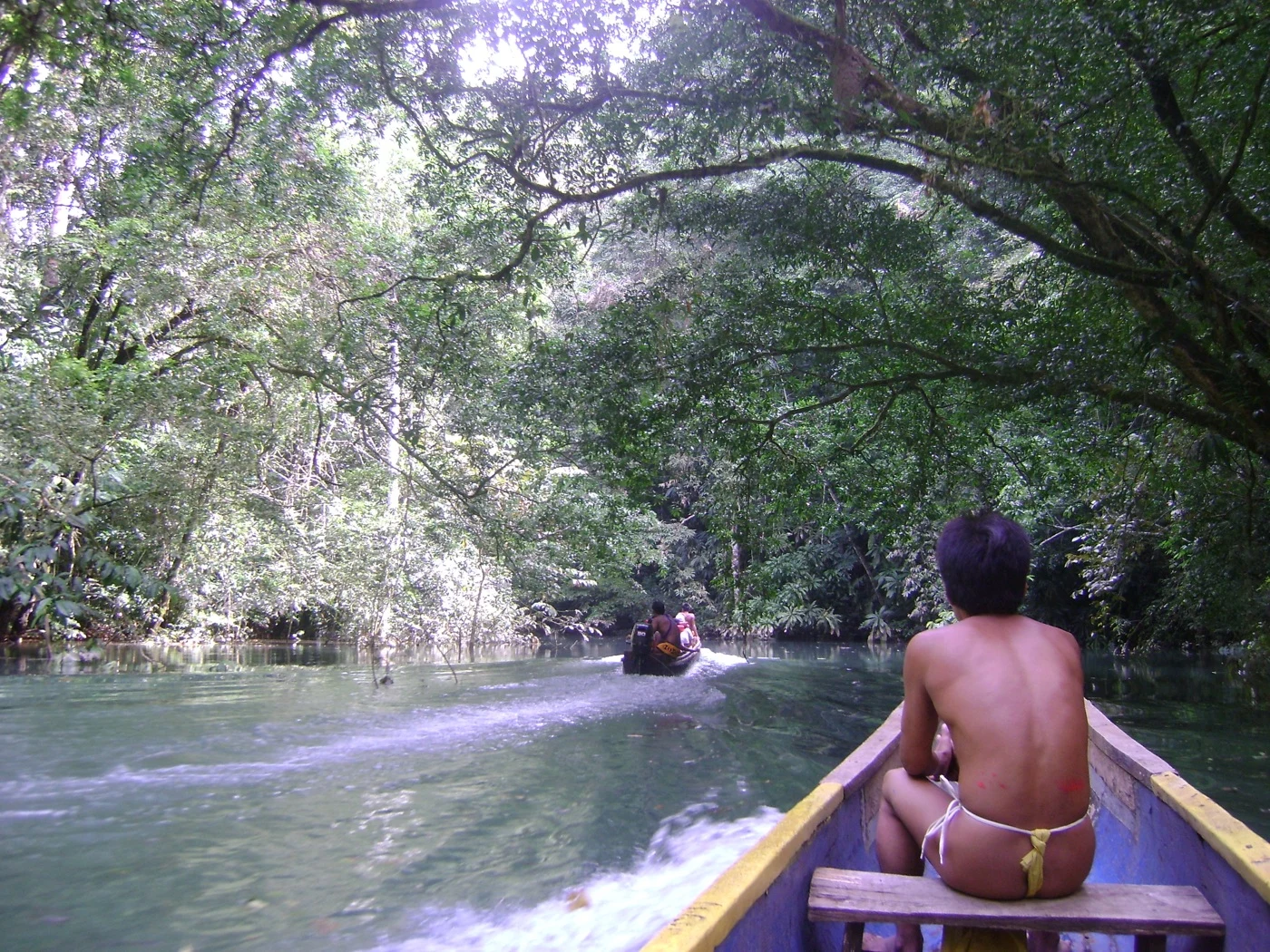
A river journey beneath riparian trees on the Chagres River, Panama.

Panama · Habitat field guide

Forest & woodland

The national profile describes Panamanian forests as a biological connection between Central and South America. Country and regional records still need their own evidence despite that geographic connection.

A river journey beneath riparian trees on the Chagres River, Panama.

Photograph: IsabellaKadoch · Image source · CC BY-SA 4.0. Cropped to fill the hero; darkened for text legibility.

Understanding the environment

A sense of the habitat.

The national profile describes Panamanian forests as a biological connection between Central and South America. Country and regional records still need their own evidence despite that geographic connection.

Geographic scope
Panama; source locality matters.
Evidence scale
Landscape descriptions are separate from species records.
Source date
Retain the cited publication date; reviewed 16 October 2026.

Explore the structure · Select a layer to compare details retained in a field record.

Read the locality in three layers.

Select a zone to see what changes.

Canopy

Canopy

Distinguish closed crowns, open woodland and planted trees.

Check this detail in the original record before assigning a species to the habitat.

These reading prompts are conceptual, not a transect or an occurrence map.

Sources: Convention on Biological Diversity · Panama national profile

Field notes · 01

The documented setting

The national profile describes Panamanian forests as a biological connection between Central and South America. Country and regional records still need their own evidence despite that geographic connection.

Sources: Convention on Biological Diversity · Panama national profile

Field notes · 02

Connect the setting to a species

A habitat description and a country record answer different questions. Follow the linked species account for evidence of habitat use; an empty filtered collection indicates missing extracted evidence, not biological absence.

Pressures on Panama’s habitats

What is at risk?

A site-specific assessment of pressures has not yet been extracted for this guide. The landscape sources below provide context; they do not establish a current threat level for each snake species.

What helps this habitat

Consult the source’s own conservation context and dates before interpreting habitat change. A broad landscape pressure does not establish a measured decline for every snake.

The connected collection

Snakes with habitat evidence.

These 58 species have supported country occurrence and an explicit habitat association in the shared account. The association may come from elsewhere in their range. This is not a complete local habitat inventory; the places above are landscape examples, not asserted collecting sites.

58 species · showing 24

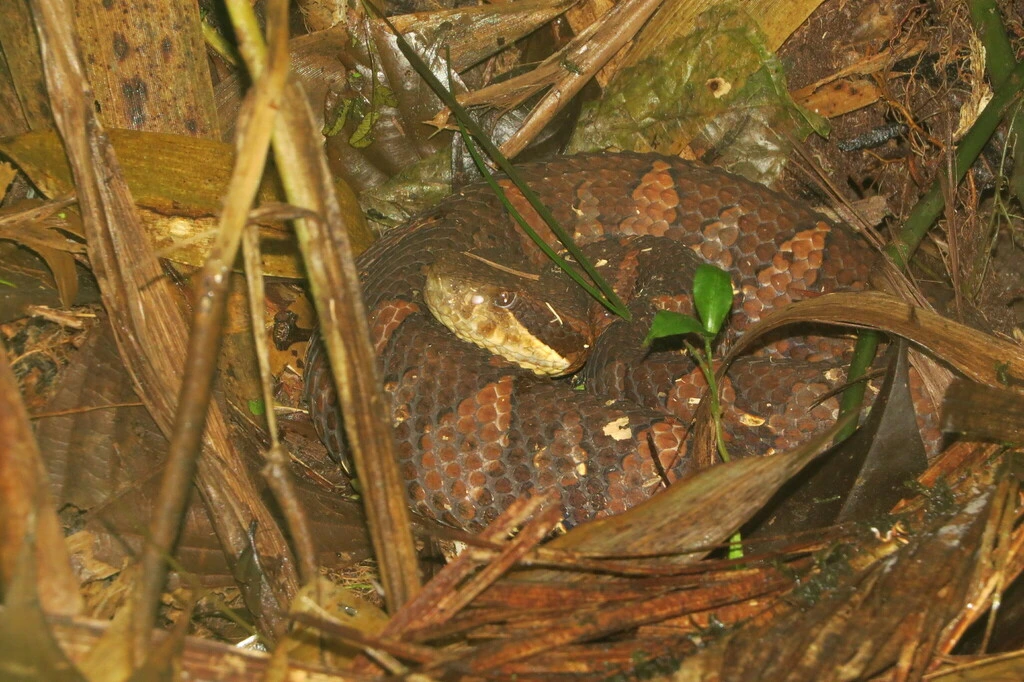
Atropoides picadoi. Brown patterned individual coiled among fallen leaves. Original observation dated 2018-01-17. Portrait only; no new locality record is inferred.

001 · Viperidae

Picado's Pit Viper

Atropoides picadoi

(DUNN, 1939)

VenomousClinical severity not established

The checked taxonomic distribution account explicitly lists Panama. Country-level evidence does not establish continuous occupancy or a complete national inventory.

Read the species account →

Roger A. Morales-Flores · CC BY 4.0 · https://creativecommons.org/licenses/by/4.0/
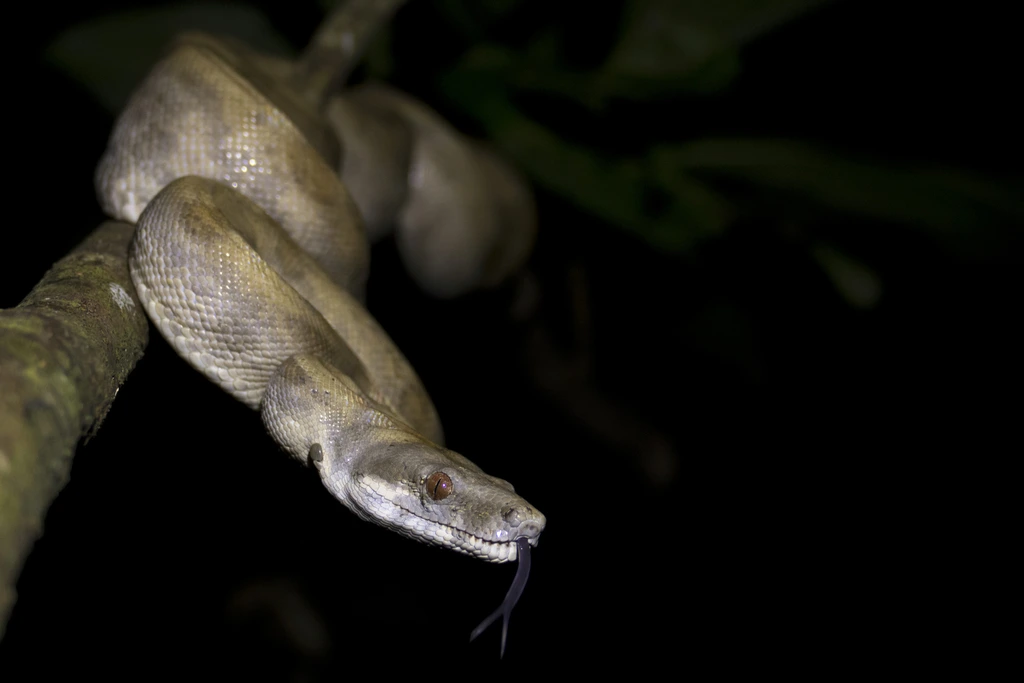
Boa imperator. Species portrait; the complete source frame is retained. Original observation dated 2021-09-28. This photograph does not establish occurrence in any additional state or province.

002 · Boidae

Central American Boa Constrictor

Boa imperator

DAUDIN, 1803

Non-venomous

The checked taxonomic distribution account explicitly lists Panama. Country-level evidence does not establish continuous occupancy or a complete national inventory.

Read the species account →

Ewout Knoester · CC BY-SA 4.0 · https://creativecommons.org/licenses/by-sa/4.0/

Bothriechis lateralis. Green animal resting on a branch. Original observation dated 2024-12-06. No additional geographic occurrence is inferred.

003 · Viperidae

Coffee Palm Viper

Bothriechis lateralis

PETERS, 1862

VenomousClinical severity not established

The checked taxonomic distribution account explicitly lists Panama. Country-level evidence does not establish continuous occupancy or a complete national inventory.

Read the species account →

Blake Ross · CC BY 4.0 · https://creativecommons.org/licenses/by/4.0/
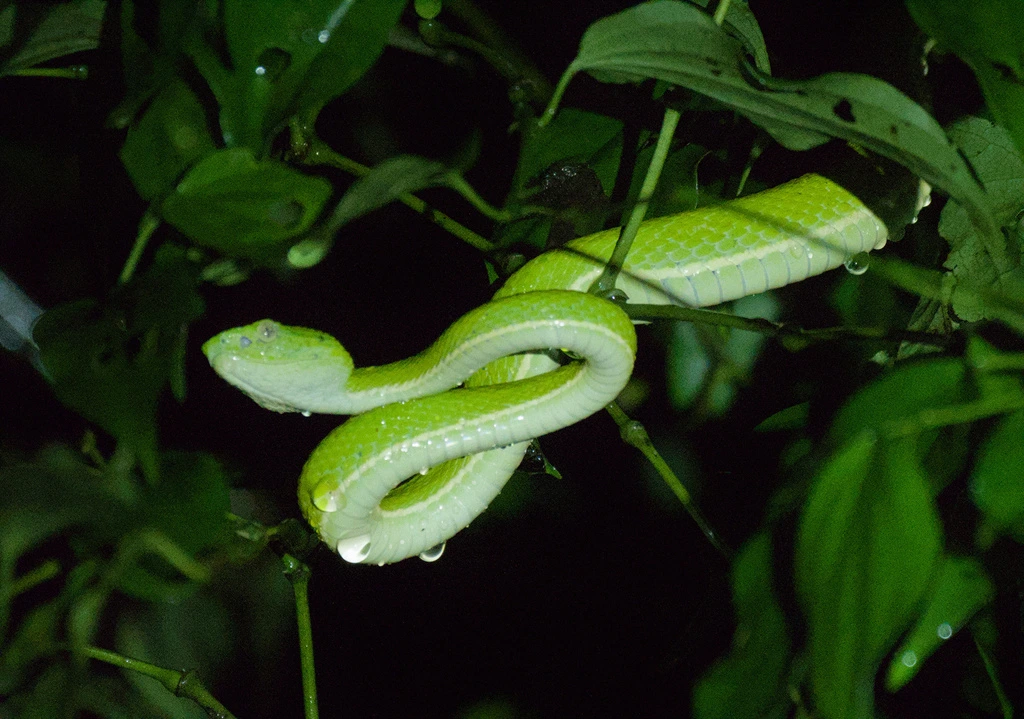
Bothriechis nigroadspersus. Species portrait; the complete source frame is retained. Original observation dated 2020-01-11. This photograph does not establish occurrence in any additional state or province.

004 · Viperidae

Central Ameri- can Eyelash-Pitviper

Bothriechis nigroadspersus

(STEINDACHNER, 1870)

VenomousClinical severity not established

The checked taxonomic distribution account explicitly lists Panama. Country-level evidence does not establish continuous occupancy or a complete national inventory.

Read the species account →

iNaturalist contributor (CC0; creator not supplied) · CC0 1.0 · https://creativecommons.org/publicdomain/zero/1.0/

Bothriechis nigroviridis. Close view of a green and black patterned individual in coils. Original observation dated 2021-08-02. Portrait only; no new locality record is inferred.

005 · Viperidae

Black-speckled Palm Pit Viper

Bothriechis nigroviridis

PETERS, 1859

VenomousClinical severity not established

The checked taxonomic distribution account explicitly lists Panama. Country-level evidence does not establish continuous occupancy or a complete national inventory.

Read the species account →

Wouter Beukema · CC BY 4.0 · https://creativecommons.org/licenses/by/4.0/
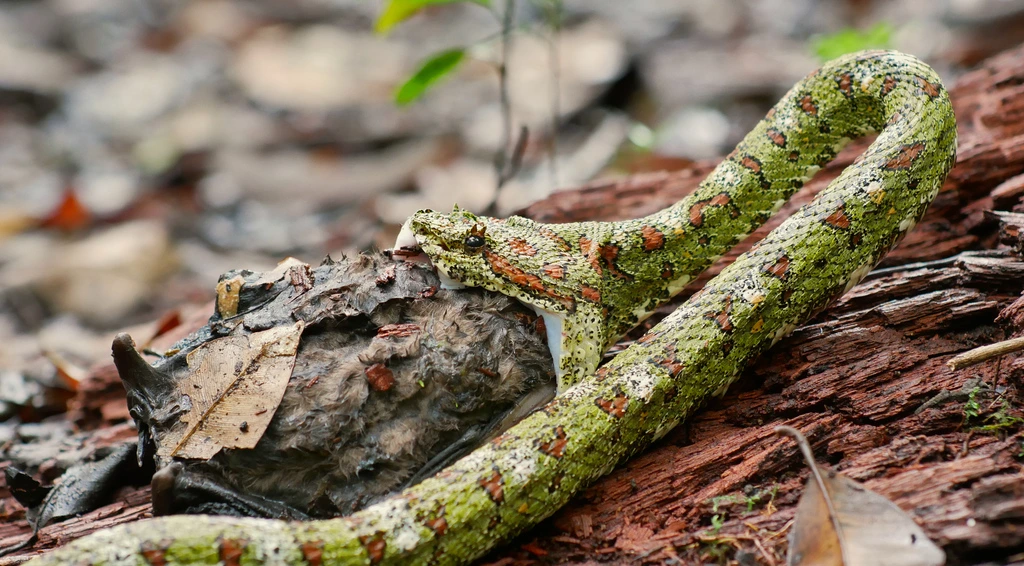
Bothriechis supraciliaris. Close view of the head. Original observation dated 2023-04-15. No additional geographic occurrence is inferred.

006 · Viperidae

Blotched Eyelash-Pitviper, Blotched Palm-pitviper

Bothriechis supraciliaris

(TAYLOR, 1954)

VenomousClinical severity not established

The checked taxonomic distribution account explicitly lists Panama. Country-level evidence does not establish continuous occupancy or a complete national inventory.

Read the species account →

David A. Rodríguez Arias · CC BY 4.0 · https://creativecommons.org/licenses/by/4.0/
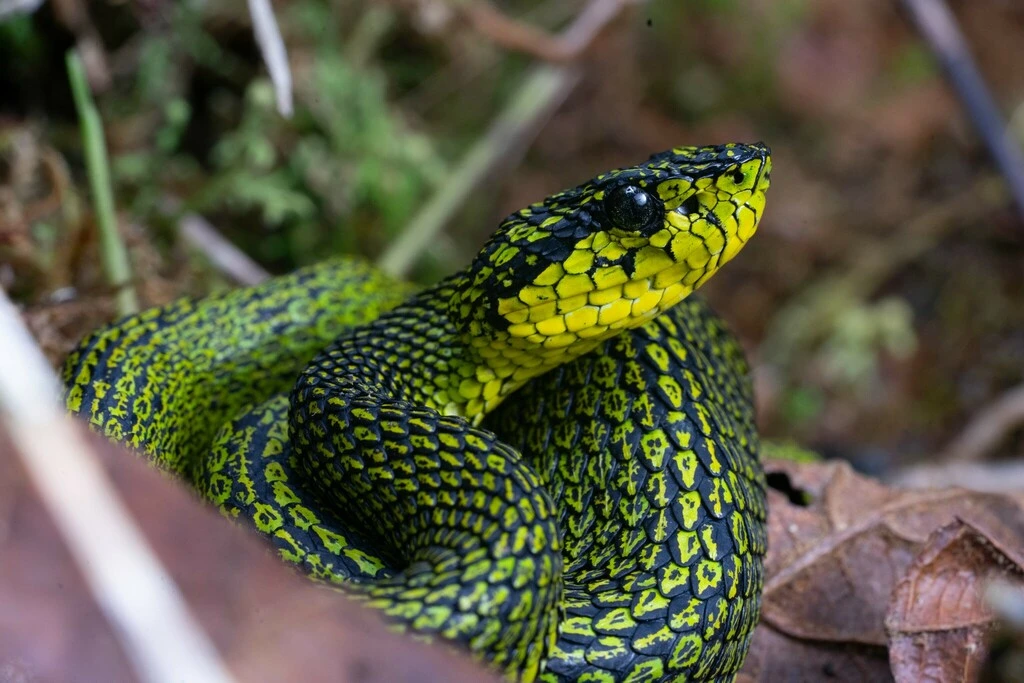
Bothriechis torvus. Published photographic plate showing adult and juvenile colour variation. Portrait only; no wild locality or habitat record is inferred.

007 · Viperidae

Birri Eyelash-Pitviper

Bothriechis torvus

(POSADA-ARANGO, 1889)

VenomousClinical severity not established

The checked taxonomic distribution account explicitly lists Panama. Country-level evidence does not establish continuous occupancy or a complete national inventory.

Read the species account →

Alejandro Arteaga, R. Alexander Pyron, Abel Batista, Jose Vieira, Elson Meneses Pelayo, Eric N. Smith, César L. Barrio Amorós, Claudia Koch, Stefanie Agne, Jorge H. Valencia, Lucas Bustamante, Kyle J. Harris · CC BY 4.0 · https://creativecommons.org/licenses/by/4.0

Bothrops asper. Species portrait; the complete source frame is retained. Original observation dated 2012-06-12. This photograph does not establish occurrence in any additional state or province.

008 · Viperidae

Terciopelo

Bothrops asper

(GARMAN, 1883)

VenomousClinical severity not established

The checked taxonomic distribution account explicitly lists Panama. Country-level evidence does not establish continuous occupancy or a complete national inventory.

Read the species account →

John G. Phillips · CC BY 4.0 · https://creativecommons.org/licenses/by/4.0/
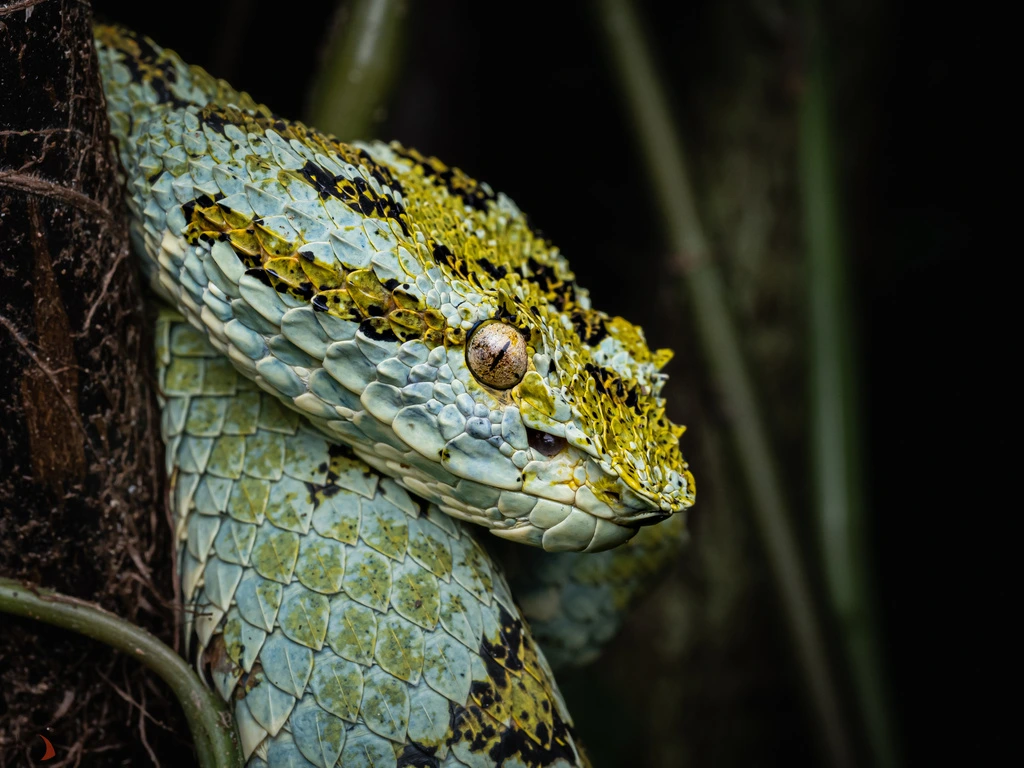
Bothrops punctatus. Coiled individual on a branch above moss. Original observation dated 2018-05-14. No additional geographic occurrence is inferred.

009 · Viperidae

Golden Lancehead or Opossum Tailed Lancehead, Chocoan Forest Pit Viper

Bothrops punctatus

(GARCIA, 1896)

VenomousClinical severity not established

The checked taxonomic distribution account explicitly lists Panama. Country-level evidence does not establish continuous occupancy or a complete national inventory.

Read the species account →

Philipp Hoenle · CC0 1.0 · https://creativecommons.org/publicdomain/zero/1.0/

Cerrophidion sasai. Whole animal on rock and leaf litter. Original observation dated 2022-05-17. No additional geographic occurrence is inferred.

010 · Viperidae

Costa Rica Montane Pitviper

Cerrophidion sasai

JADIN, TOWNSEND, CASTOE & CAMPBELL, 2012

VenomousClinical severity not established

The checked taxonomic distribution account explicitly lists Panama. Country-level evidence does not establish continuous occupancy or a complete national inventory.

Read the species account →

Kai Squires · CC BY 4.0 · https://creativecommons.org/licenses/by/4.0/
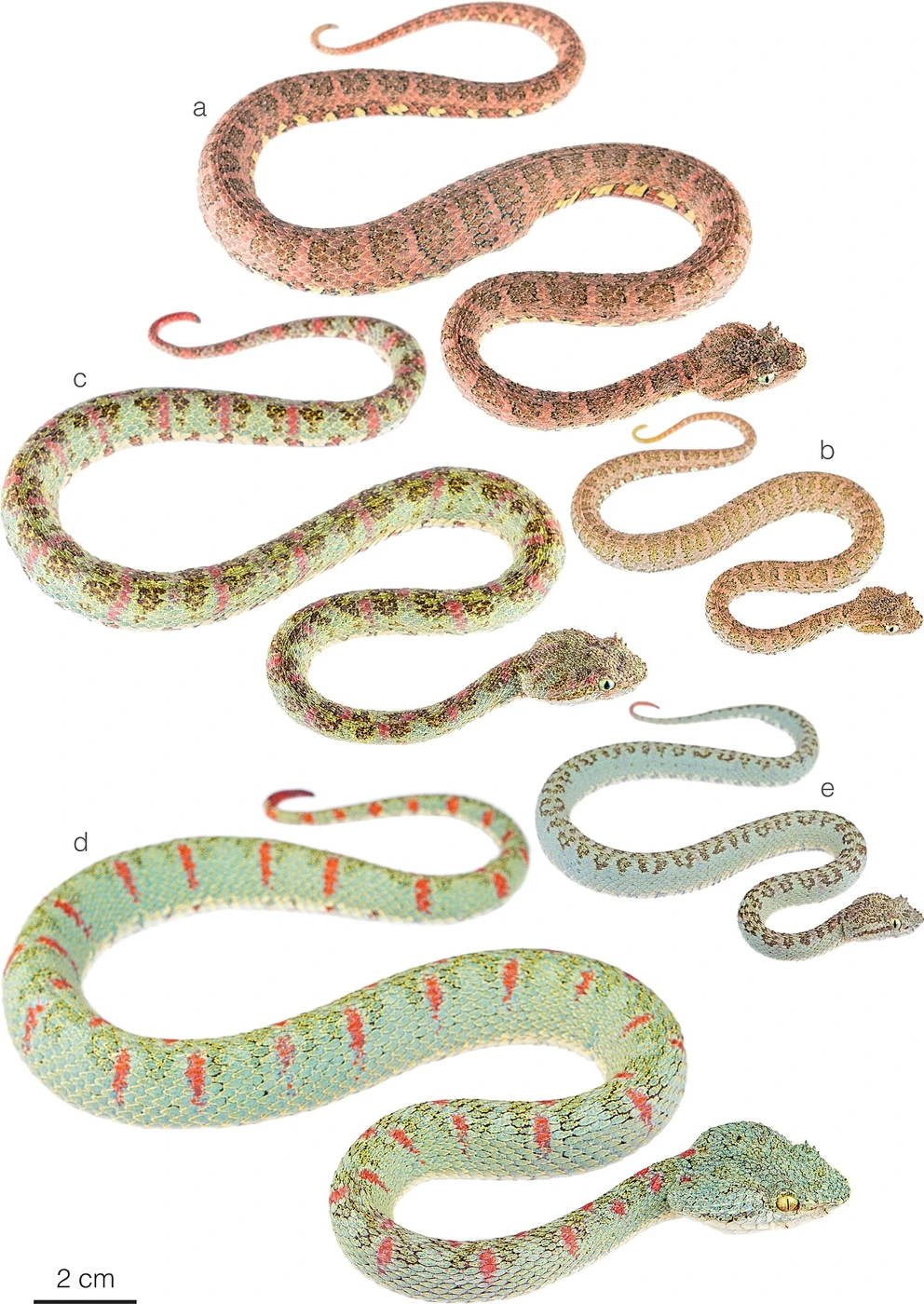
Chironius exoletus. The complete source frame is retained; this portrait is not locality or habitat evidence. Original observation dated 2020-06-14. No additional geographic occurrence is inferred.

011 · Colubridae

Linnaeus' Sipo

Chironius exoletus

(LINNAEUS, 1758)

Venom unknownNot yet assessed

The checked taxonomic distribution account explicitly lists Panama. Country-level evidence does not establish continuous occupancy or a complete national inventory.

Read the species account →

Mario Barroso · CC BY 4.0 · https://creativecommons.org/licenses/by/4.0/
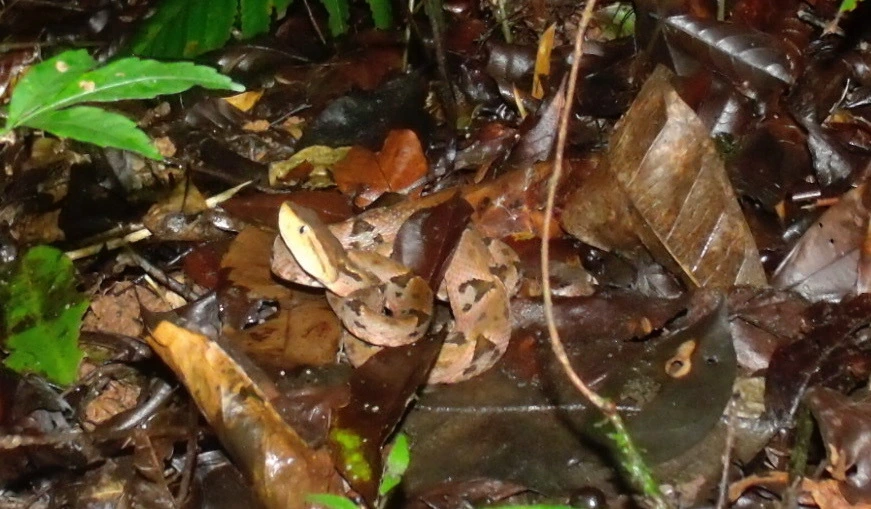
Chironius flavopictus. Blue-grey individual with the head raised among tree roots. Original observation dated 2022-12-21. Portrait only; no new locality record is inferred.

012 · Colubridae

Sipo

Chironius flavopictus

(WERNER, 1909)

Venom unknownNot yet assessed

The checked taxonomic distribution account explicitly lists Panama. Country-level evidence does not establish continuous occupancy or a complete national inventory.

Read the species account →

Kai Squires · CC BY 4.0 · https://creativecommons.org/licenses/by/4.0/
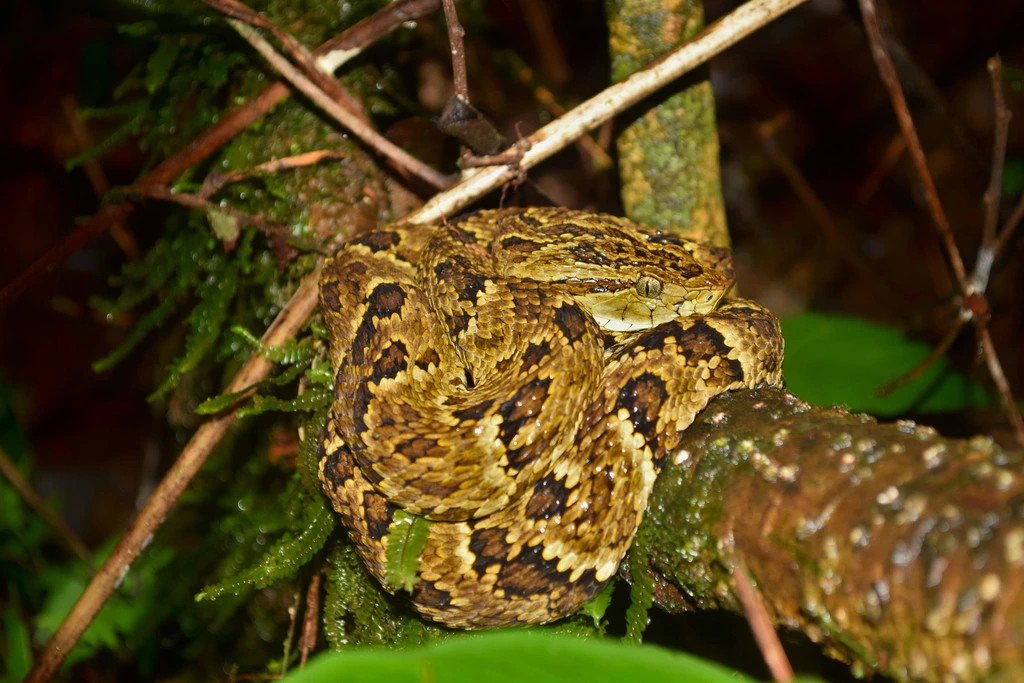
Chironius grandisquamis. The complete source frame is retained; this portrait is not locality or habitat evidence. Original observation dated 2025-11-11. No additional geographic occurrence is inferred.

013 · Colubridae

Ecuador Sipo

Chironius grandisquamis

(PETERS, 1869)

Venom unknownNot yet assessed

The checked taxonomic distribution account explicitly lists Panama. Country-level evidence does not establish continuous occupancy or a complete national inventory.

Read the species account →

John G. Phillips · CC BY 4.0 · https://creativecommons.org/licenses/by/4.0/
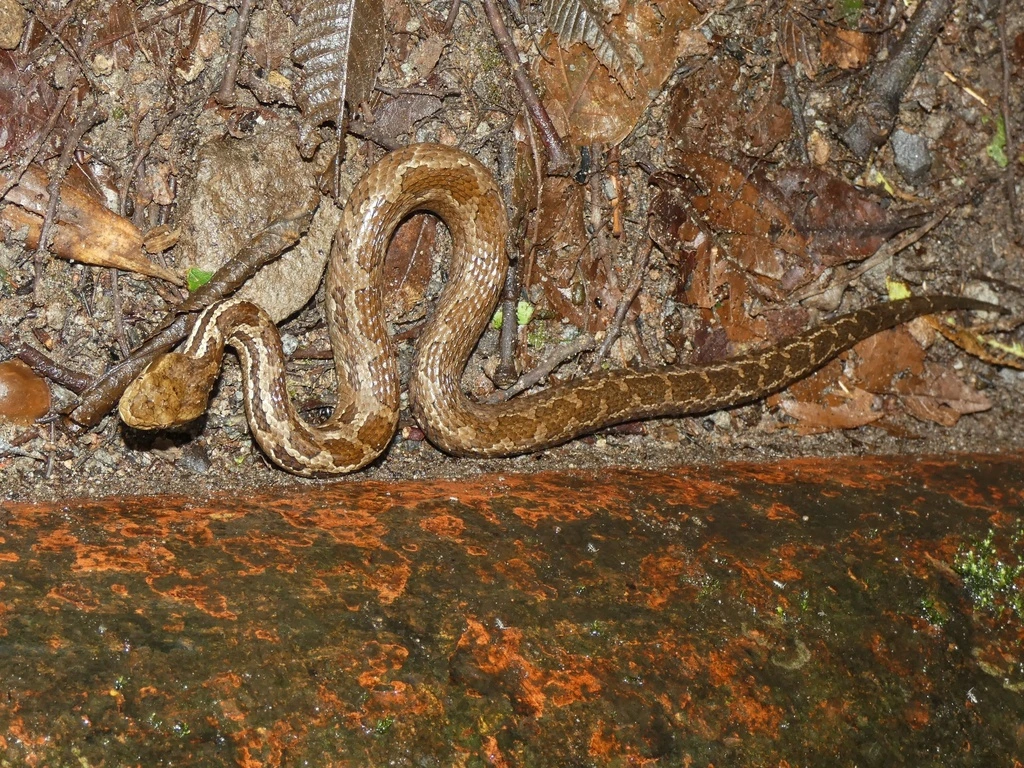
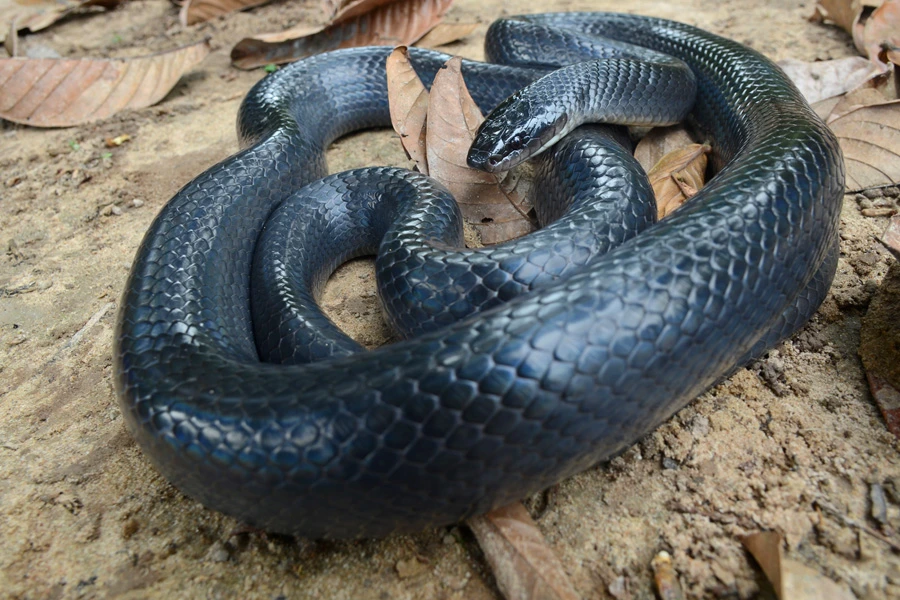
Clelia clelia. Glossy dark individual coiled on leaf litter. Portrait only; no wild locality or habitat record is inferred.

014 · Colubridae

Windward Cribo, Black Mussurana

Clelia clelia

(DAUDIN, 1803)

Venom unknownNot yet assessed

The checked taxonomic distribution account explicitly lists Panama. Country-level evidence does not establish continuous occupancy or a complete national inventory.

Read the species account →

Geoff Gallice ( https://www.flickr.com/photos/dejeuxx/ ) · CC BY 2.0 · https://creativecommons.org/licenses/by/2.0

Coniophanes fissidens. Posed portrait on a plain surface. Original observation dated 2022-03-02. This photograph does not establish occurrence in any additional state or province.

015 · Colubridae

Yellowbelly Snake

Coniophanes fissidens

(GÜNTHER, 1858)

Venom unknownNot yet assessed

The checked taxonomic distribution account explicitly lists Panama. Country-level evidence does not establish continuous occupancy or a complete national inventory.

Read the species account →

Diana Fuentes · CC BY-SA 4.0 · https://creativecommons.org/licenses/by-sa/4.0/

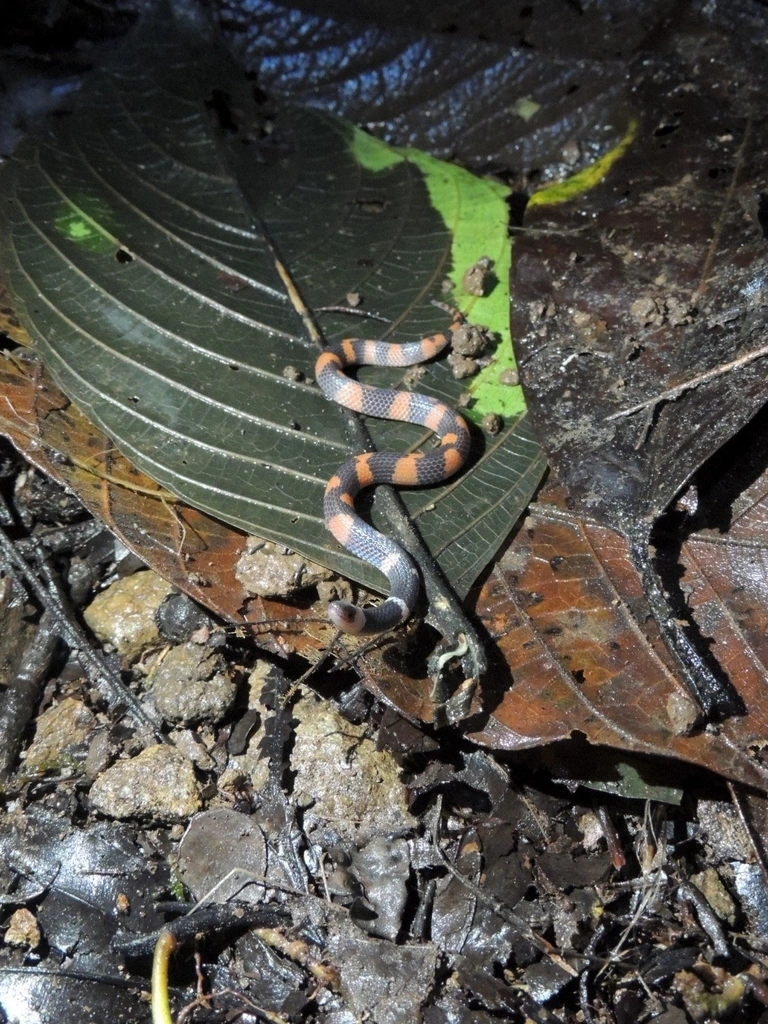
Dipsas aparatiritos. Close view of head and coiled body on a branch. Original observation dated 2018-05-30. No additional geographic occurrence is inferred.

016 · Colubridae

Hidden Snail-eating Snake

Dipsas aparatiritos

RAY, SÁNCHEZ-MARTÍNEZ, BATISTA, MULCAHY, SHEEHY III, SMITH, PYRON & ARTEAGA, 2023

Venom unknownNot yet assessed

The checked taxonomic distribution account explicitly lists Panama. Country-level evidence does not establish continuous occupancy or a complete national inventory.

Read the species account →

Roger A. Morales-Flores · CC BY 4.0 · https://creativecommons.org/licenses/by/4.0/
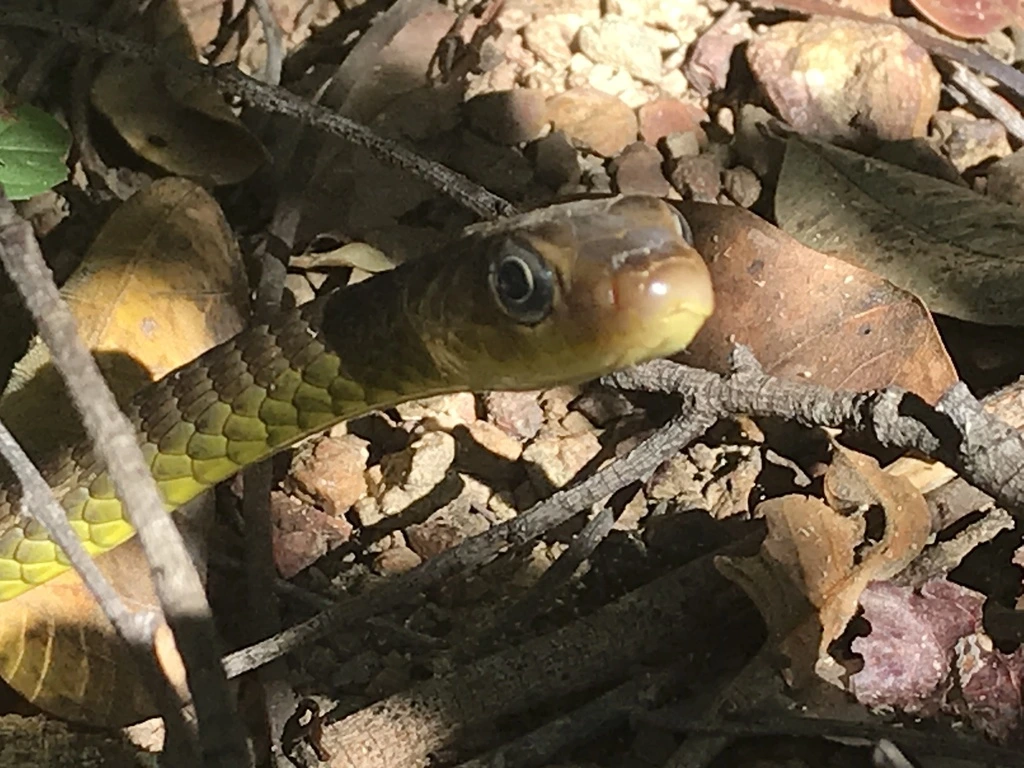
Dipsas nicholsi photographed in Madden Forest, Panama: relaxed and defensive postures, original Figure 1. No new occurrence inferred. Portrait only.

017 · Colubridae

Species account

Dipsas nicholsi

(DUNN, 1933)

Venom unknownNot yet assessed

The checked taxonomic distribution account explicitly lists Panama. Country-level evidence does not establish continuous occupancy or a complete national inventory.

Read the species account →

Harry W. Greene and Charles W. Myers; Cadle & Myers · CC BY 4.0 · https://creativecommons.org/licenses/by/4.0/
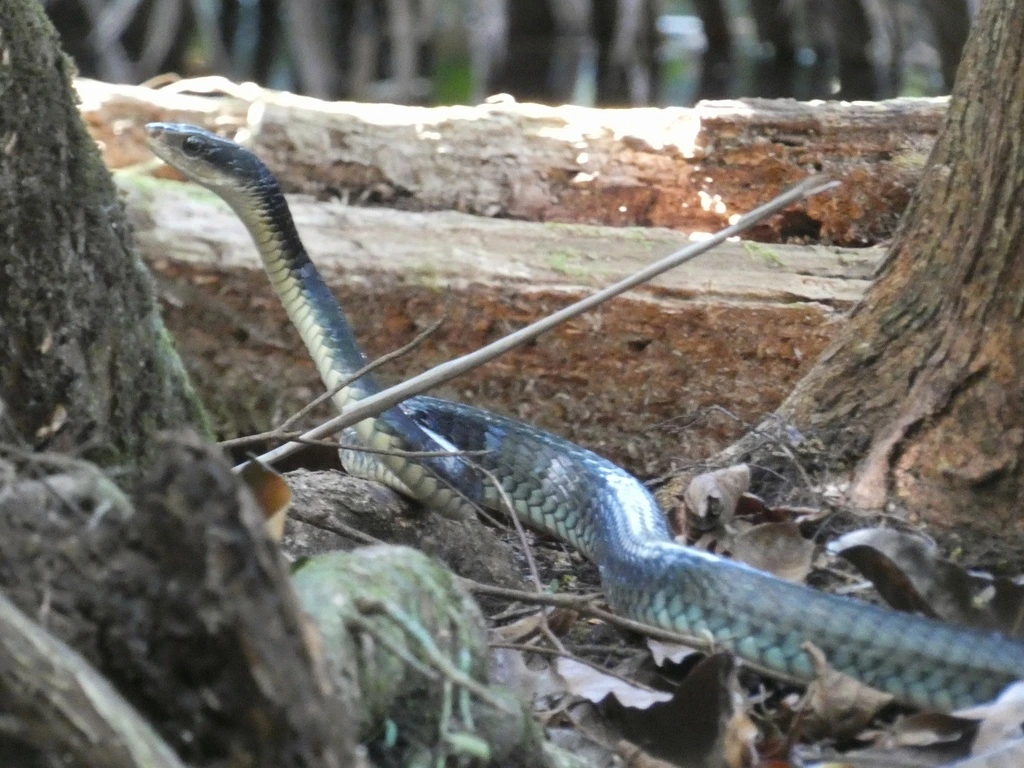
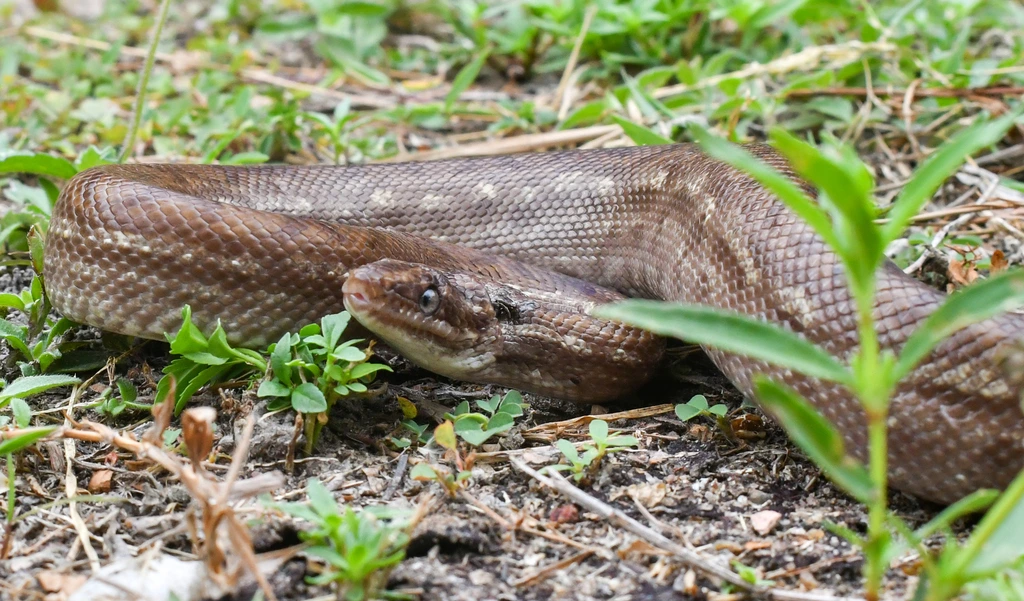
Epicrates maurus. The complete source frame is retained; this portrait is not locality or habitat evidence. Original observation dated 2023-02-06. No additional geographic occurrence is inferred.

018 · Boidae

Brown Rainbow Boa

Epicrates maurus

GRAY, 1849

Non-venomous

The checked taxonomic distribution account explicitly lists Panama. Country-level evidence does not establish continuous occupancy or a complete national inventory.

Read the species account →

Whaldener Endo · CC0 1.0 · https://creativecommons.org/publicdomain/zero/1.0/

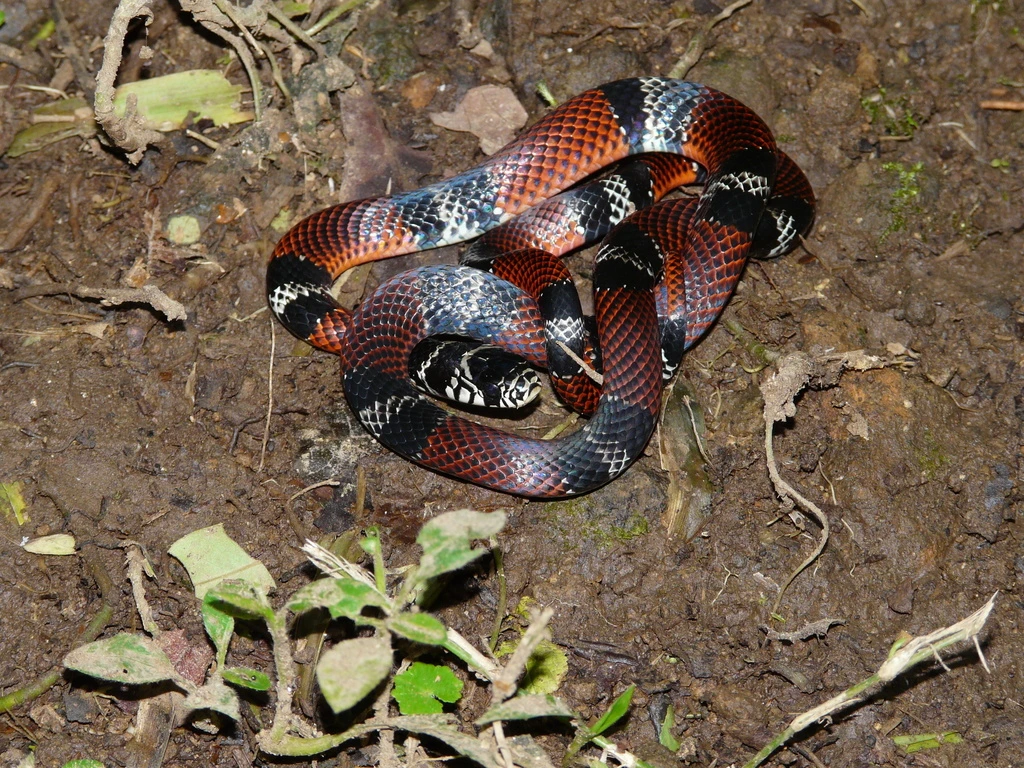
Erythrolamprus bizona. Banded individual coiled on soil and fallen leaves. Original observation dated 2010-04-05. Portrait only; no new locality record is inferred.

019 · Colubridae

False Coral Snake

Erythrolamprus bizona

JAN, 1863

VenomousClinical severity not established

The checked taxonomic distribution account explicitly lists Panama. Country-level evidence does not establish continuous occupancy or a complete national inventory.

Read the species account →

Dan Riley · CC BY 4.0 · https://creativecommons.org/licenses/by/4.0/
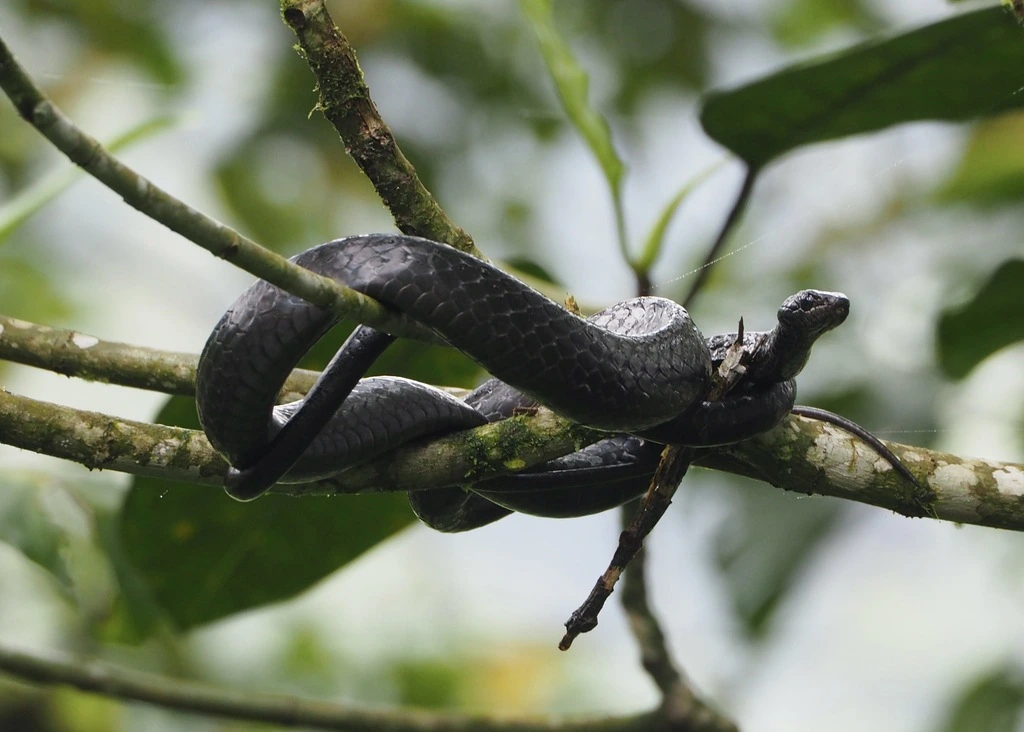
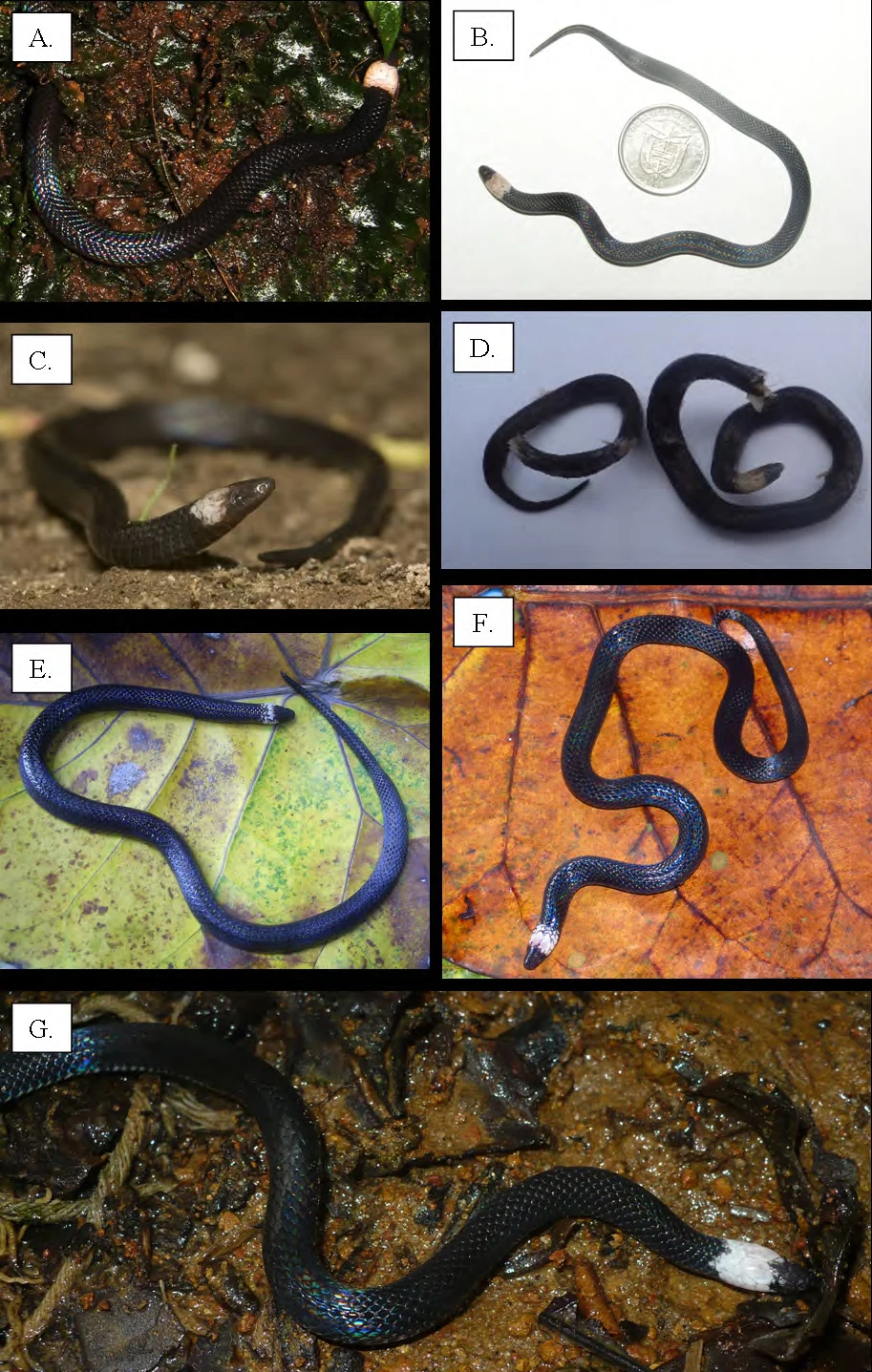
Geophis bellus, original Figure 2 with seven photographed specimens from Panama. Some individuals were subsequently preserved; the figure includes documented live field photographs. Portrait only; no new occurrence or habitat inferred.

020 · Colubridae

Species account

Geophis bellus

MYERS, 2003

Venom unknownNot yet assessed

The checked taxonomic distribution account explicitly lists Panama. Country-level evidence does not establish continuous occupancy or a complete national inventory.

Read the species account →

Luis C. Elizondo Lara, Ángel Sosa-Bartuano, Patty Ruback and Julie M. Ray · CC BY 4.0 · https://creativecommons.org/licenses/by/4.0/
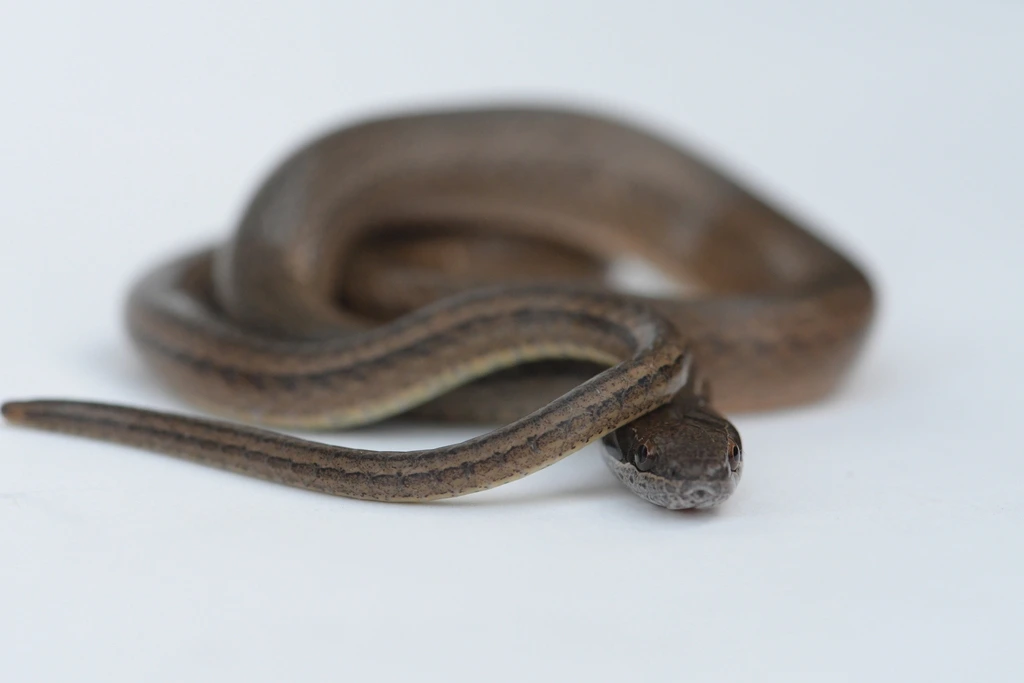
Geophis brachycephalus. Portrait only; no new locality or habitat record inferred.

021 · Colubridae

Costa Rican Earth Snake

Geophis brachycephalus

(COPE, 1871)

Venom unknownNot yet assessed

The checked taxonomic distribution account explicitly lists Panama. Country-level evidence does not establish continuous occupancy or a complete national inventory.

Read the species account →

Anthony Mora Aguilar · CC BY 4.0 · https://creativecommons.org/licenses/by/4.0/
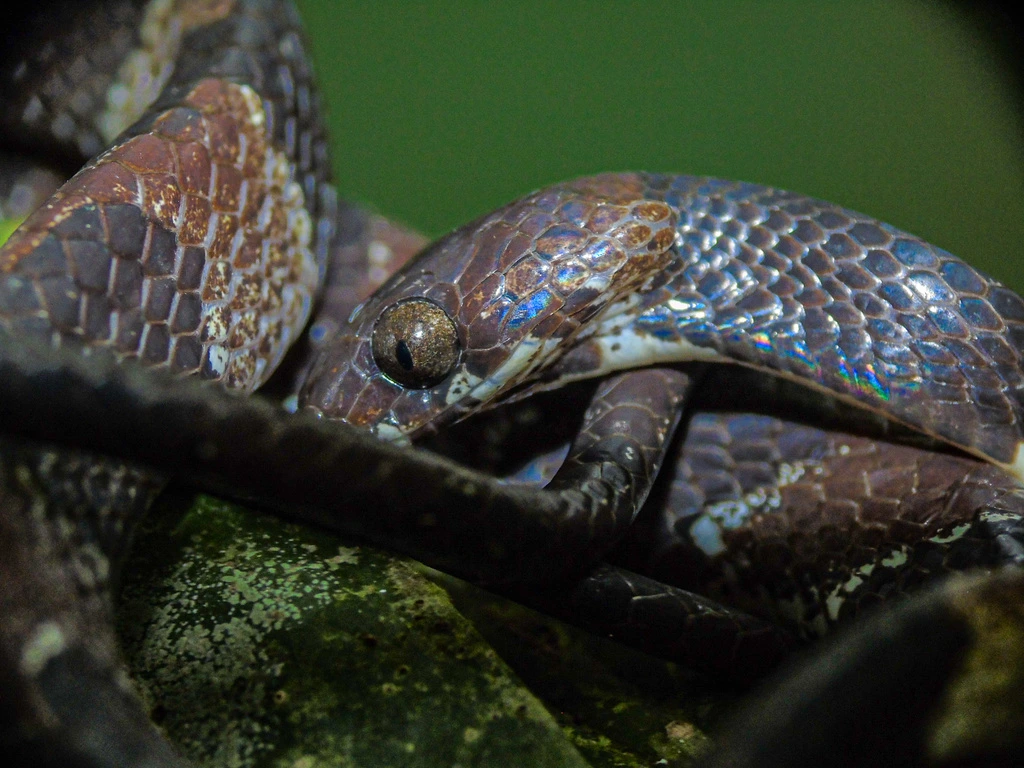
Geophis talamancae. Whole animal on mud and stone. Original observation dated 2021-02-10. No additional geographic occurrence is inferred.

022 · Colubridae

Species account

Geophis talamancae

LIPS & SAVAGE, 1994

Venom unknownNot yet assessed

The checked taxonomic distribution account explicitly lists Panama. Country-level evidence does not establish continuous occupancy or a complete national inventory.

Read the species account →

Kai Squires · CC BY 4.0 · https://creativecommons.org/licenses/by/4.0/
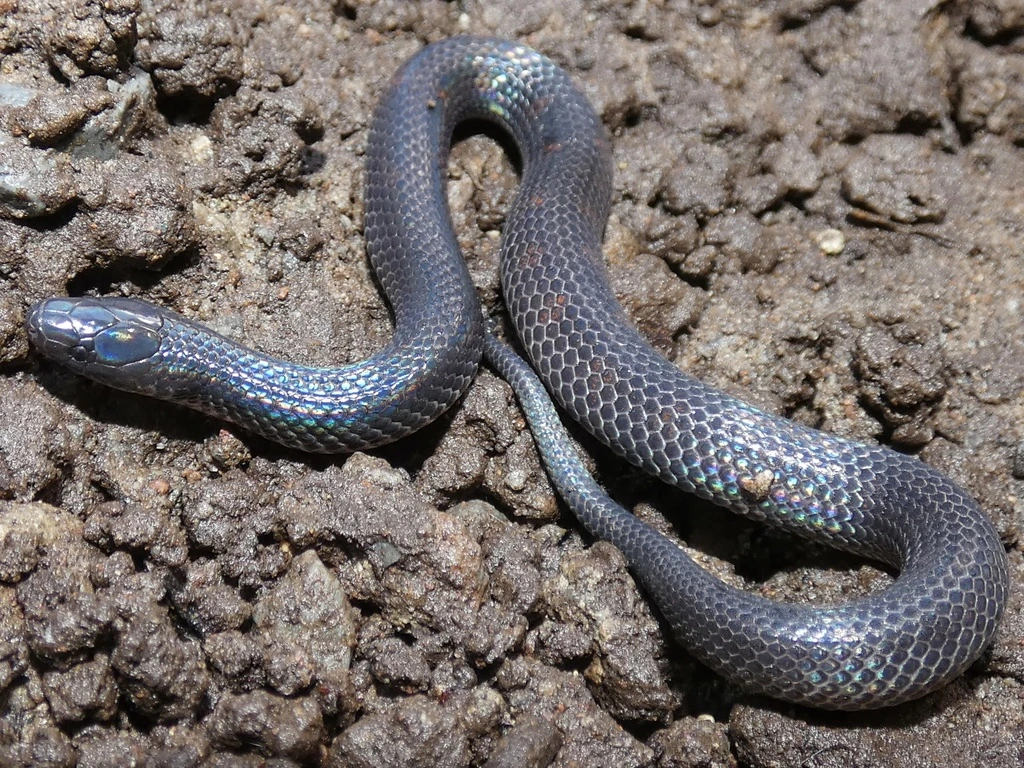
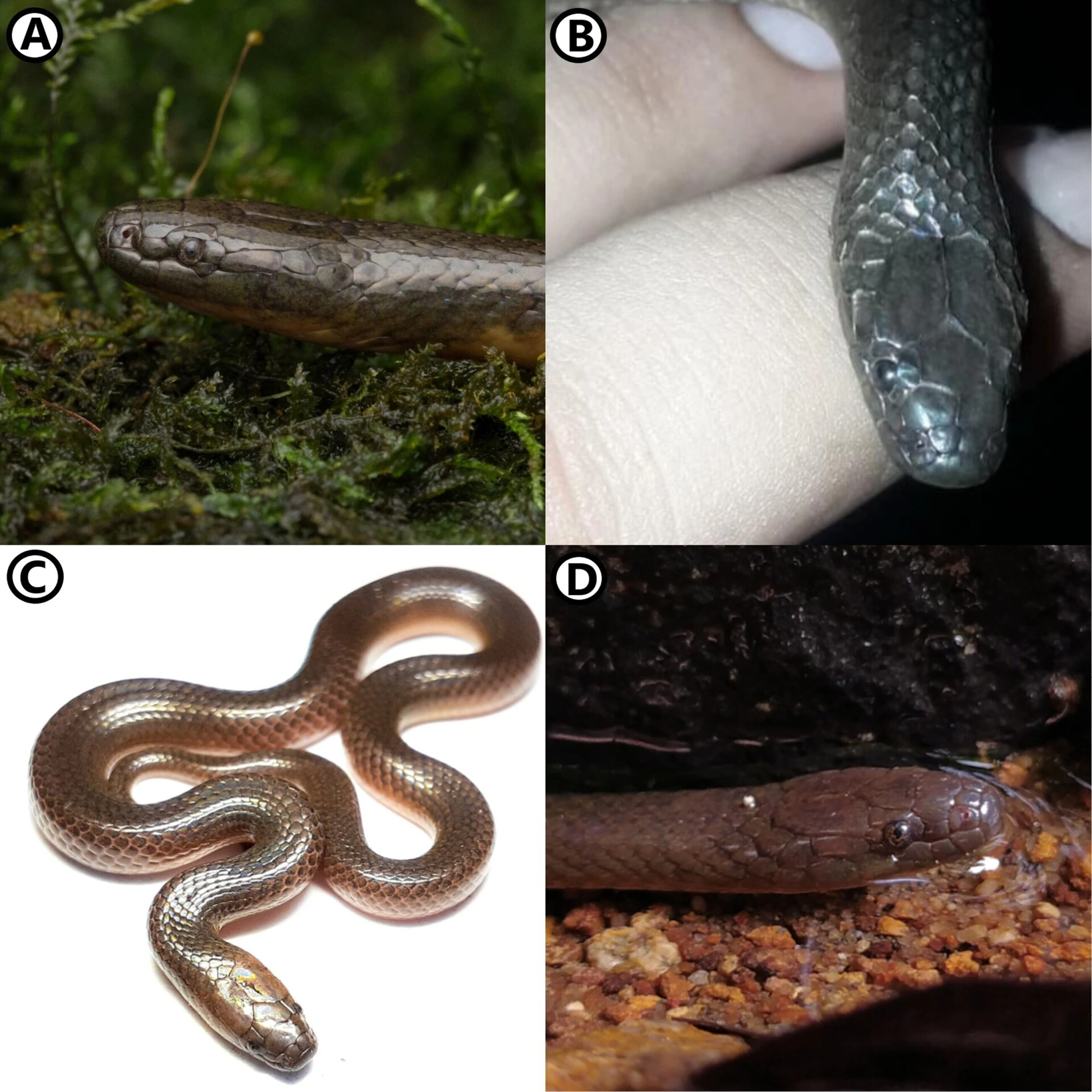
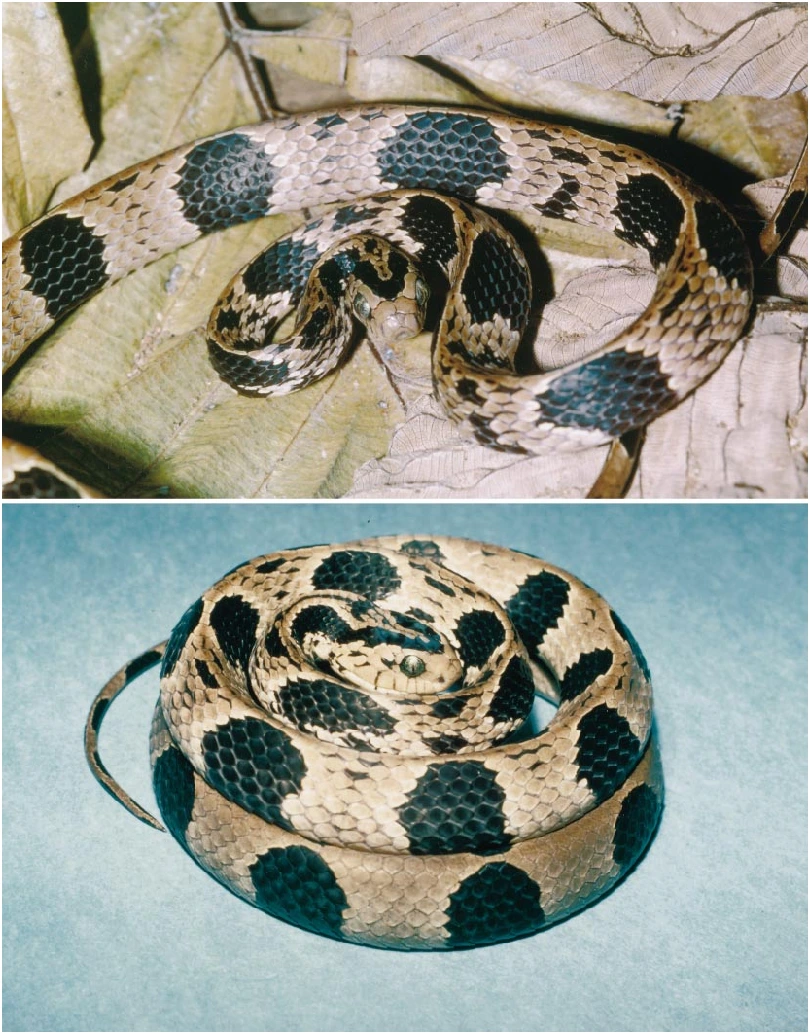
Hydromorphus dunni in Panama, original Figure 5 showing body and head variation. No new occurrence or habitat inferred. Portrait only.

024 · Colubridae

Dunn's Water Snake

Hydromorphus dunni

SLEVIN, 1942

Venom unknownNot yet assessed

The checked taxonomic distribution account explicitly lists Panama. Country-level evidence does not establish continuous occupancy or a complete national inventory.

Read the species account →

Rogemif Fuentes et al. · CC BY 4.0 · https://creativecommons.org/licenses/by/4.0/
All 154 species in the country collection →

Read further

Evidence & sources.

Guide reviewed 16 October 2026. Source dates and geographic scope matter; landscape photographs do not establish species occurrence.

  1. Convention on Biological Diversity · Panama national profile

    Historical Secretariat draft, pending Party approval. Landscape context only; dated statistics and projections are not presented as current measurements. Checked 16 October 2026.

Continue through Panama

Explore another habitat.

01

Highland environments

The profile identifies mountain ecosystems among landscapes affected by agricultural expansion. A broad mountain label should be narrowed to the original slope, valley or named site.

02

Coasts & marine settings

The Caribbean, Gulf of Chiriqui and Gulf of Panama form distinct coastal contexts in the national profile. A shoreline record must retain which side of the isthmus it concerns.