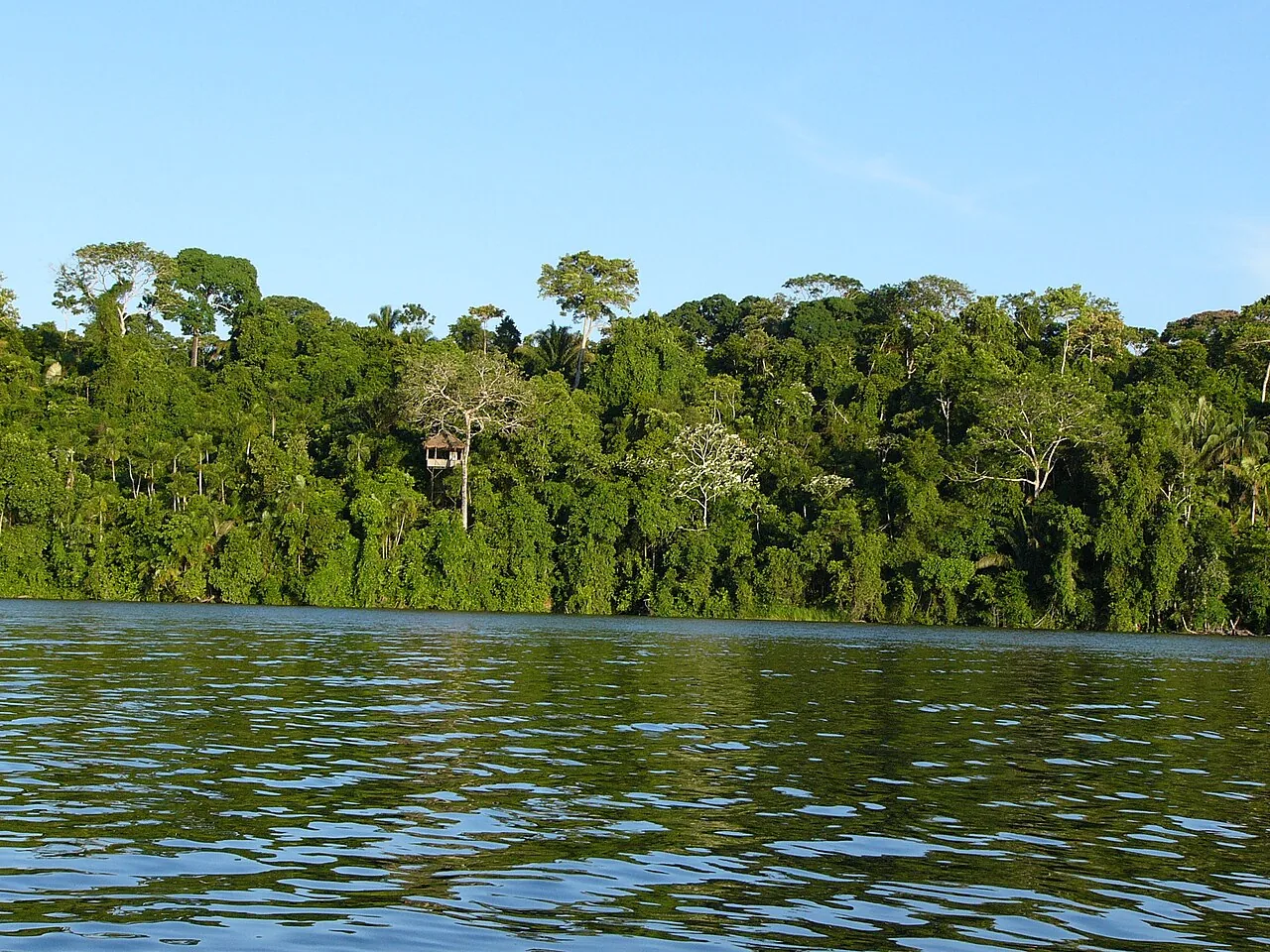
The forested shore of Lake Sandoval, Madre de Dios, Peru.

Peru · Habitat field guide

Rivers & wetlands

Wetlands are included among Peru’s principal ecosystems. A waterbody record must retain its name and setting; a river basin is not evidence that every species recorded there is aquatic.

The forested shore of Lake Sandoval, Madre de Dios, Peru.

Photograph: Namiac · Image source · CC BY-SA 3.0. Cropped to fill the hero; darkened for text legibility.

Understanding the environment

A sense of the habitat.

Wetlands are included among Peru’s principal ecosystems. A waterbody record must retain its name and setting; a river basin is not evidence that every species recorded there is aquatic.

Geographic scope
Peru; retain the named source locality.
Evidence scale
Landscape descriptions are separate from species records.
Source date
Retain the original publication date; reviewed 17 October 2026.

Explore the structure · Select a layer to compare details retained in a field record.

Read the locality in three layers.

Select a zone to see what changes.

Waterbody

Waterbody

Keep the name and distinguish stream, lake, marsh and channel.

Check the original species record before assigning habitat use.

These reading prompts are conceptual, not a transect or an occurrence map.

Sources: Convention on Biological Diversity · Peru national profile

Field notes · 01

The documented setting

Wetlands are included among Peru’s principal ecosystems. A waterbody record must retain its name and setting; a river basin is not evidence that every species recorded there is aquatic.

Sources: Convention on Biological Diversity · Peru national profile

Field notes · 02

Connect the setting to a species

The country landscape and a species habitat association answer different questions. Follow the species account for direct habitat evidence. An empty collection indicates missing extracted evidence, not biological absence.

Pressures on Peru’s habitats

What is at risk?

A site-specific assessment of pressures has not yet been extracted for this guide. The landscape sources below provide context; they do not establish a current threat level for each snake species.

What helps this habitat

Read conservation pressures with their source date and locality; a landscape-level pressure is not a measured decline for every snake.

The connected collection

Snakes with habitat evidence.

These 11 species have supported country occurrence and an explicit habitat association in the shared account. The association may come from elsewhere in their range. This is not a complete local habitat inventory; the places above are landscape examples, not asserted collecting sites.

11 species · showing 11

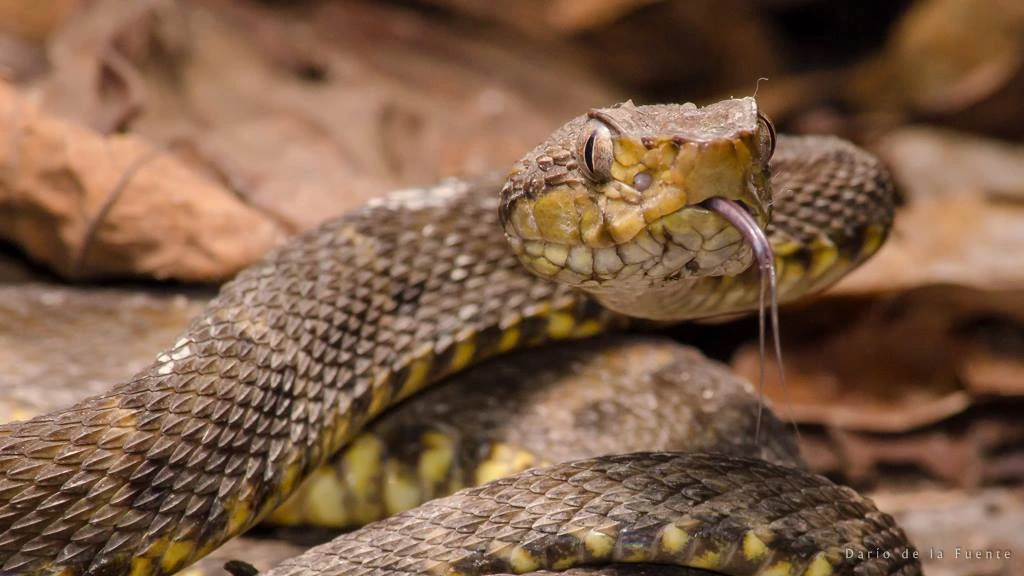
Bothrops atrox, photographed by Darío De la Fuente. Portrait only; no wild locality or habitat record is inferred.

001 · Viperidae

Barba Amarilla, Fer-de-Lance, common lancehead

Bothrops atrox

(LINNAEUS, 1758)

VenomousClinical severity not established

The checked taxonomic distribution account explicitly lists Peru. Country-level evidence does not establish continuous occupancy or a complete national inventory.

Read the species account →

Darío De la Fuente · CC BY 4.0 · https://creativecommons.org/licenses/by/4.0
ViperidaeBothropsPhotograph not yet documented

002 · Viperidae

Species account

Bothrops sonene

CARRASCO, GRAZZIOTIN, CRUZ-FARFÁN, KOCH, OCHOA, SCROCCHI, LEYNAUD & CHAPARRO, 2019

VenomousClinical severity not established

The checked taxonomic distribution account explicitly lists Peru. Country-level evidence does not establish continuous occupancy or a complete national inventory. The treatment names these subdivisions in its Peru distribution clause: Madre de Dios. They are assigned to the declared atlas navigation groups; this is not a field observation, a whole-region…

Read the species account →
Dipsas catesbyi. The complete source frame is retained; this portrait is not locality or habitat evidence. Original observation dated 2022-03-23. No additional geographic occurrence is inferred.

003 · Colubridae

Catesby's Snail-eater

Dipsas catesbyi

(SENTZEN, 1796)

Venom unknownNot yet assessed

The checked taxonomic distribution account explicitly lists Peru. Country-level evidence does not establish continuous occupancy or a complete national inventory. The treatment names these subdivisions in its Peru distribution clause: Pasco. They are assigned to the declared atlas navigation groups; this is not a field observation, a whole-region range…

Read the species account →

Andrew J. Crawford · CC0 1.0 · https://creativecommons.org/publicdomain/zero/1.0/

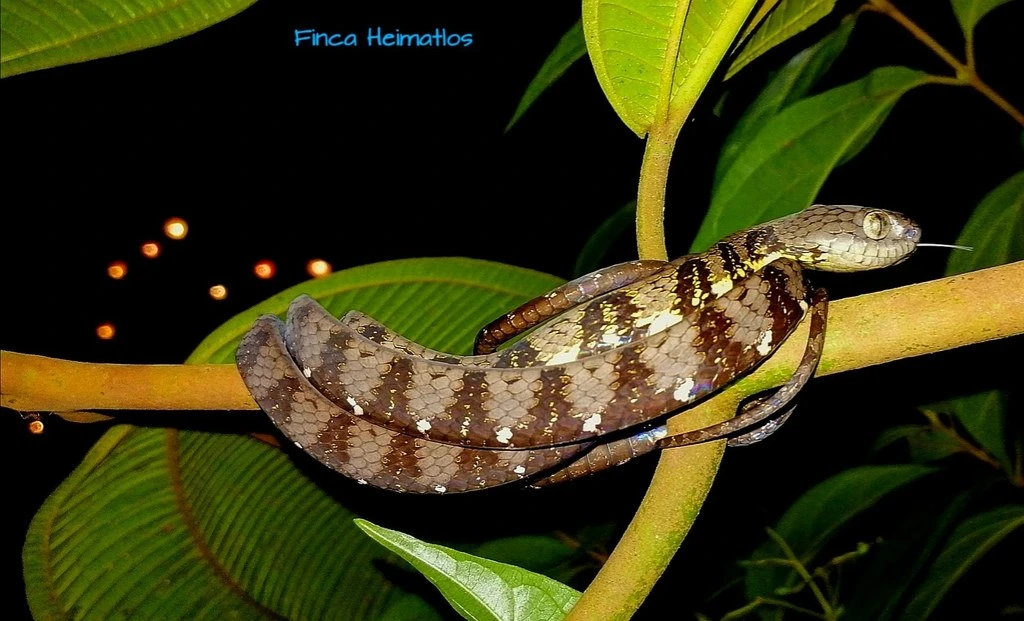
Dipsas indica. A patterned individual resting across green foliage and a slender branch; original watermark retained. Original observation dated 2020-03-07. Portrait only; no new locality record is inferred.

004 · Colubridae

Neotropical Snail-eater

Dipsas indica

LAURENTI, 1768

Venom unknownNot yet assessed

The checked taxonomic distribution account explicitly lists Peru. Country-level evidence does not establish continuous occupancy or a complete national inventory.

Read the species account →

Ferhat Gundogdu · CC0 1.0 · https://creativecommons.org/publicdomain/zero/1.0/

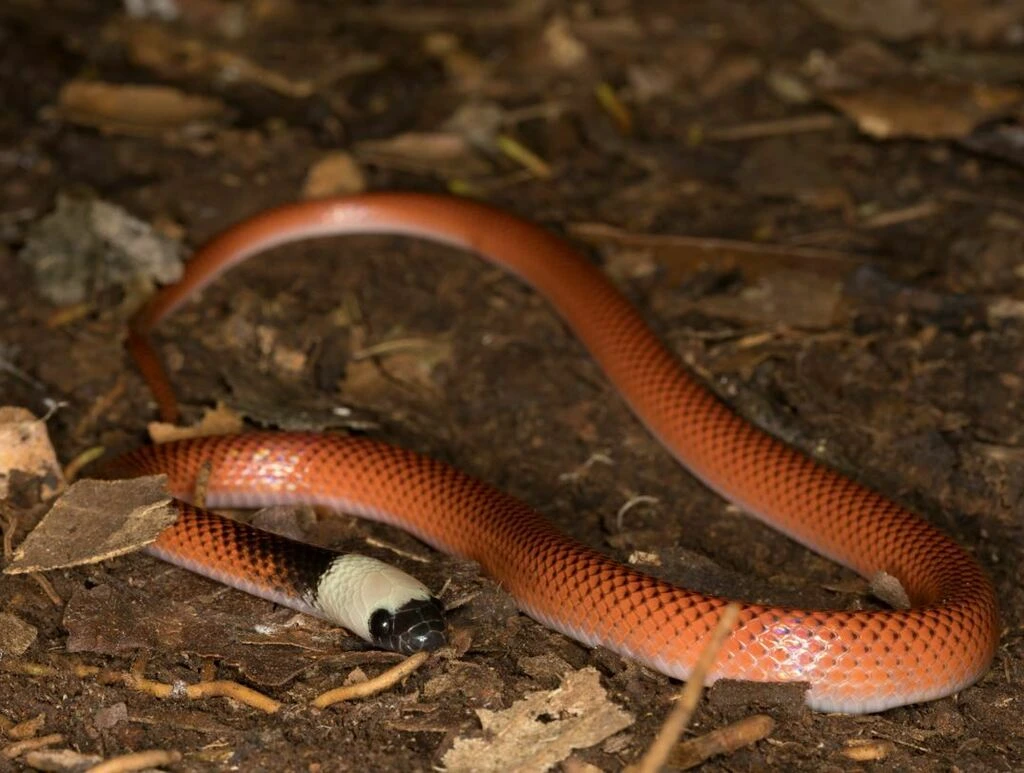
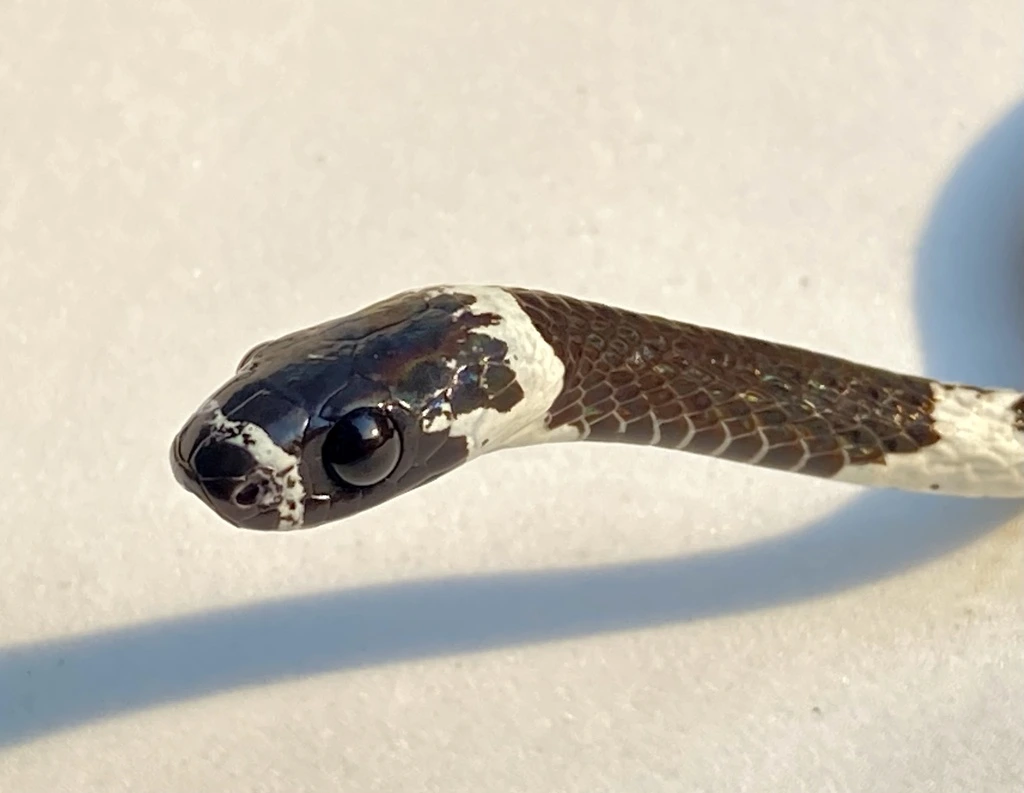
Drepanoides anomalus. Orange individual with a pale head band moving over leaf litter. Original observation dated 2023-08-15. Portrait only; no new locality record is inferred.

005 · Colubridae

Black-collared Snake

Drepanoides anomalus

(JAN, 1863)

Venom unknownNot yet assessed

The checked taxonomic distribution account explicitly lists Peru. Country-level evidence does not establish continuous occupancy or a complete national inventory.

Read the species account →

Claude Kolwelter · CC BY 4.0 · https://creativecommons.org/licenses/by/4.0/

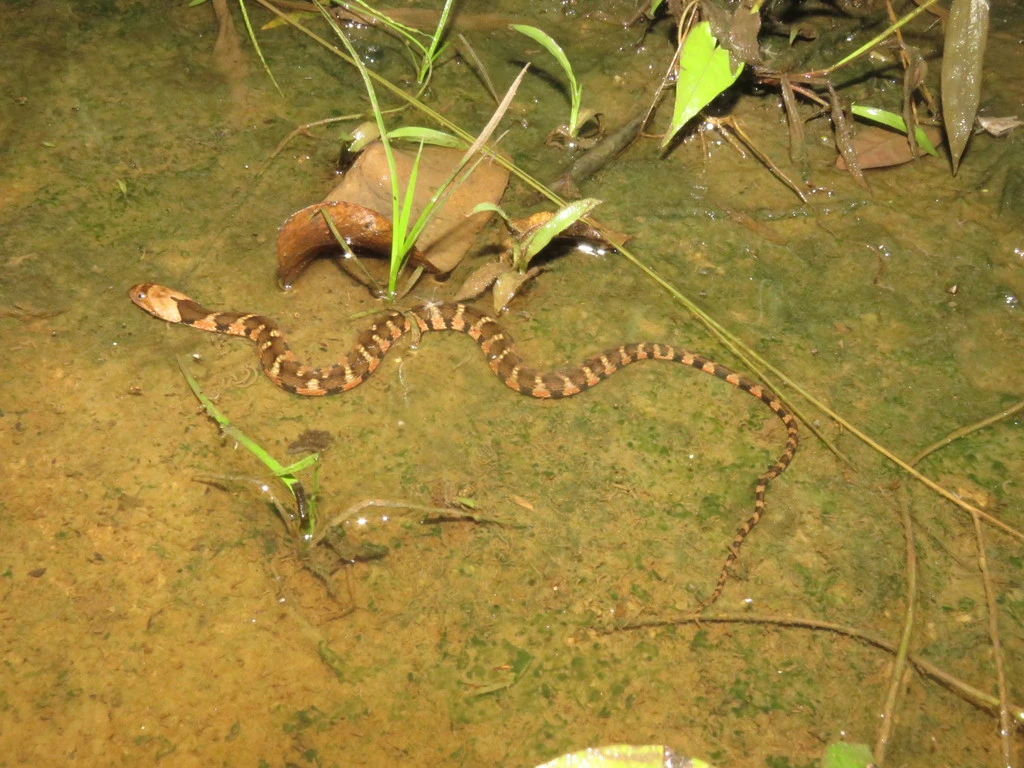
Helicops angulatus. Individual photographed in shallow water. Original observation dated 2020-02-29. Portrait only; no new locality or habitat record is inferred.

006 · Colubridae

Brown-banded watersnake, Mountain Keelback

Helicops angulatus

(LINNAEUS, 1758)

Venom unknownNot yet assessed

The checked taxonomic distribution account explicitly lists Peru. Country-level evidence does not establish continuous occupancy or a complete national inventory.

Read the species account →

Vincent A. Vos · CC BY 4.0 · https://creativecommons.org/licenses/by/4.0/

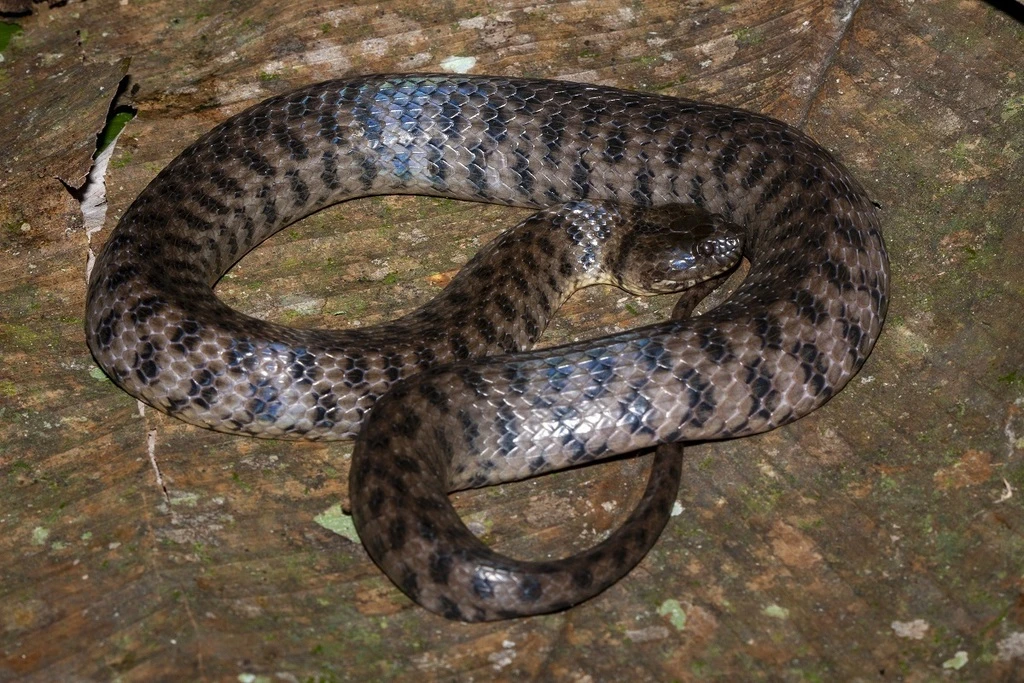
Helicops leopardinus. Dark, mottled individual coiled on a rock. Original observation dated 2010-01-21. Portrait only; no new locality record is inferred.

007 · Colubridae

Leopard Keelback

Helicops leopardinus

(SCHLEGEL, 1837)

Venom unknownNot yet assessed

The checked taxonomic distribution account explicitly lists Peru. Country-level evidence does not establish continuous occupancy or a complete national inventory.

Read the species account →

dhfischer · CC BY 4.0 · https://creativecommons.org/licenses/by/4.0/

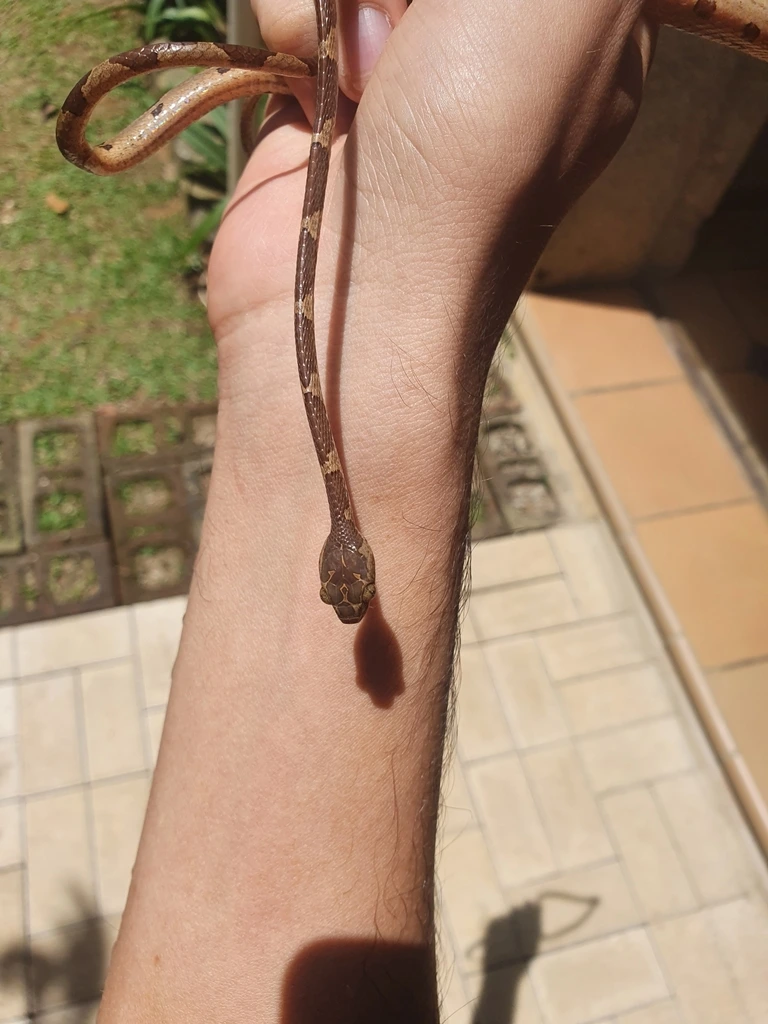
Imantodes cenchoa. Photographed while held; this is a handled specimen portrait. Original observation dated 2020-08-17. This photograph does not establish occurrence in any additional state or province.

008 · Colubridae

Neotropical Blunt-headed Treesnake, Blunthead Tree Snake

Imantodes cenchoa

(LINNAEUS, 1758)

Venom unknownNot yet assessed

The checked taxonomic distribution account explicitly lists Peru. Country-level evidence does not establish continuous occupancy or a complete national inventory.

Read the species account →

Samuel Peláez Vélez · CC BY 4.0 · https://creativecommons.org/licenses/by/4.0/

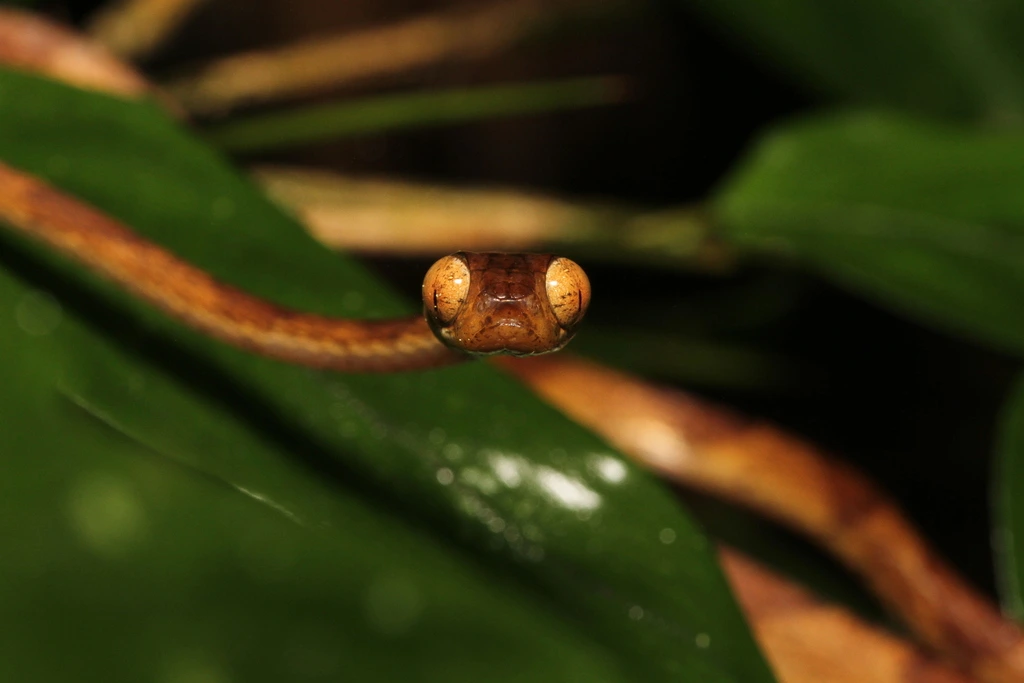
Imantodes lentiferus. The complete source frame is retained; this portrait is not locality or habitat evidence. Original observation dated 2026-02-16. No additional geographic occurrence is inferred.

009 · Colubridae

Amazon Basin Tree Snake

Imantodes lentiferus

(COPE, 1894)

Venom unknownNot yet assessed

The checked taxonomic distribution account explicitly lists Peru. Country-level evidence does not establish continuous occupancy or a complete national inventory.

Read the species account →

Samuel GUIRAUDOU · CC BY 4.0 · https://creativecommons.org/licenses/by/4.0/

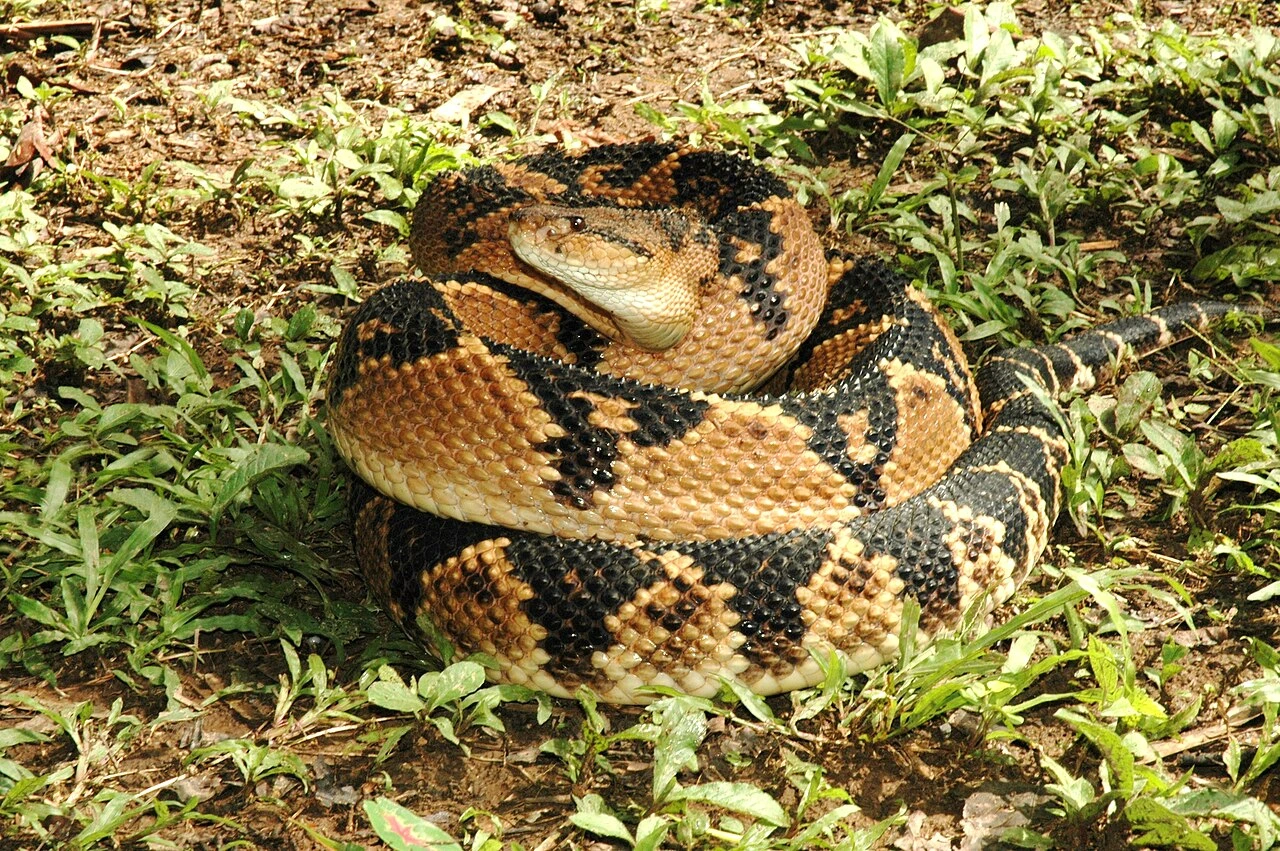
Lachesis muta. Patterned individual coiled on low vegetation. Portrait only; no wild locality or habitat record is inferred.

010 · Viperidae

South American Bushmaster

Lachesis muta

(LINNAEUS, 1766)

VenomousClinical severity not established

The checked taxonomic distribution account explicitly lists Peru. Country-level evidence does not establish continuous occupancy or a complete national inventory.

Read the species account →

Christopher Murray · Public domain · https://commons.wikimedia.org/wiki/File:Lachesis_muta_muta.jpg#Licensing

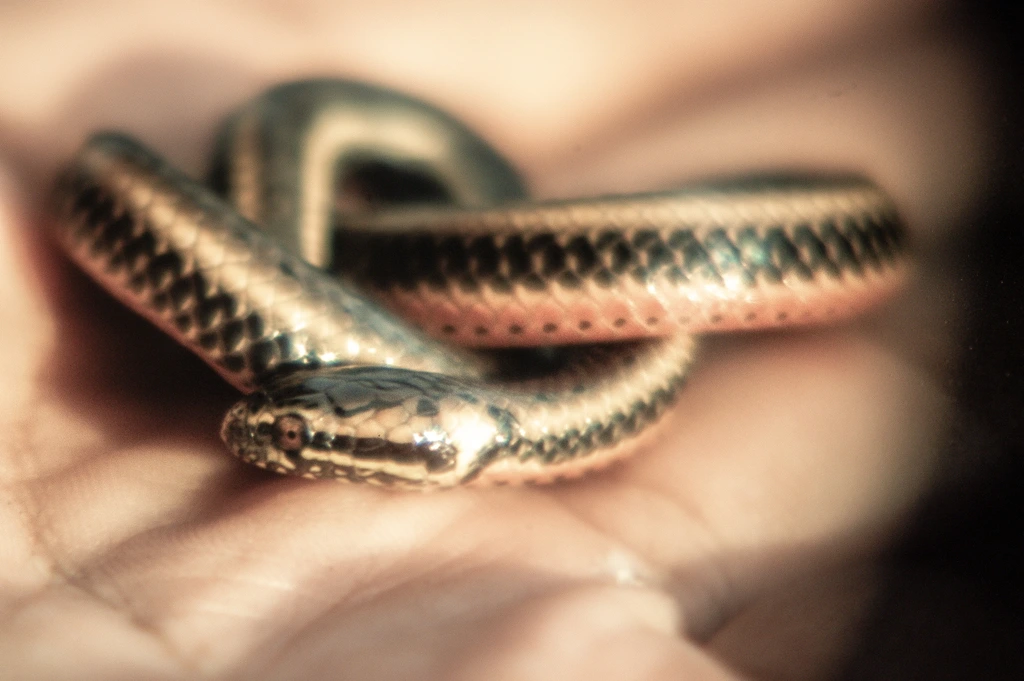
Pseudoeryx plicatilis. Photographed while held; the handling context is retained in the complete source frame. Original observation dated 2003-01-01. No additional geographic occurrence is inferred.

011 · Colubridae

South American Pond Snake

Pseudoeryx plicatilis

(LINNAEUS, 1758)

Venom unknownNot yet assessed

The checked taxonomic distribution account explicitly lists Peru. Country-level evidence does not establish continuous occupancy or a complete national inventory.

Read the species account →

Whaldener Endo · CC0 1.0 · https://creativecommons.org/publicdomain/zero/1.0/

All 229 species in the country collection →

Read further

Evidence & sources.

Guide reviewed 17 October 2026. Source dates and geographic scope matter; landscape photographs do not establish species occurrence.

  1. Convention on Biological Diversity · Peru national profile

    Historical Secretariat draft, pending Party approval. Landscape context only; historical statistics are not presented as current measurements. Reviewed 17 October 2026.

Continue through Peru

Explore another habitat.

01

Forest & woodland

The national profile distinguishes rainforest, dry forest and coastal carob woodland. Keep moisture regime and vegetation structure with the original locality instead of treating all tree cover as equivalent.

02

Highland environments

Mountains, coastal piedmont hills and highland moors are separate environments in the profile. Elevation alone cannot establish forest cover or snake presence.

03

Mangroves & estuaries

Mangroves are distinguished from dry coastal woodland in the national account. Coastal conversion for aquaculture is discussed as a pressure, without supporting a current loss rate for every locality.