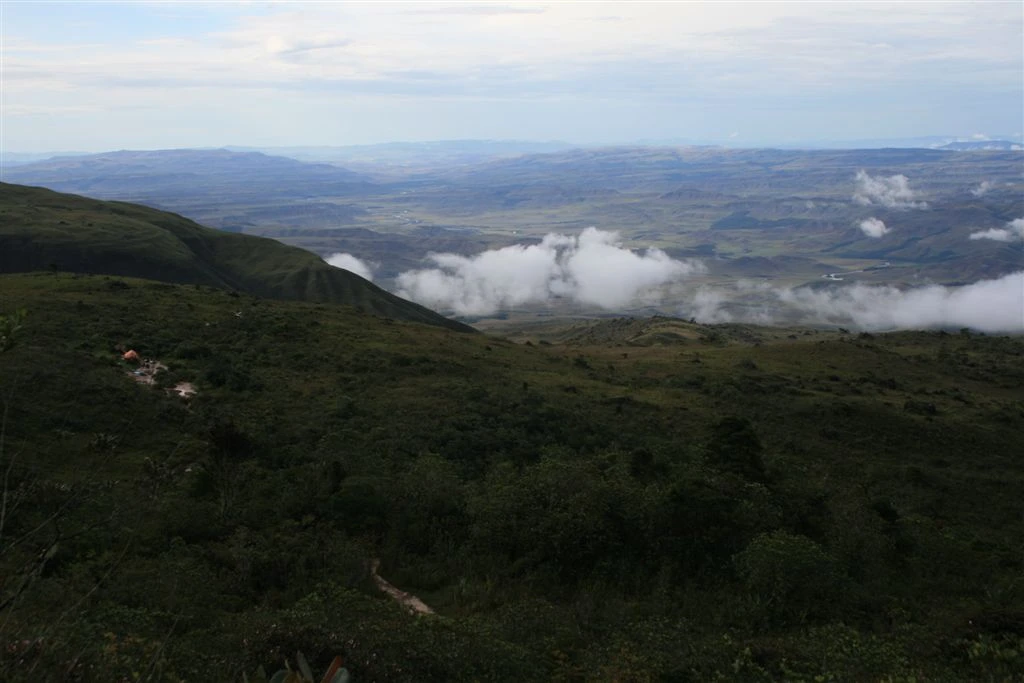
Open vegetation and the distant Gran Sabana seen from Mount Roraima, Venezuela.

Venezuela · Habitat field guide

Grassland & savanna

Savannas are distinguished from forest and scrub in Canaima’s management report. Their extent within the park does not establish that every regional species uses open vegetation.

Open vegetation and the distant Gran Sabana seen from Mount Roraima, Venezuela.

Photograph: Gérard Vigo · Image source · CC BY-SA 3.0. Cropped to fill the hero; darkened for text legibility.

Understanding the environment

A sense of the habitat.

Savannas are distinguished from forest and scrub in Canaima’s management report. Their extent within the park does not establish that every regional species uses open vegetation.

Geographic scope
Venezuela; retain the named source locality.
Evidence scale
Landscape descriptions are separate from species records.
Source date
Retain the original publication date; reviewed 17 October 2026.

Explore the structure · Select a layer to compare details retained in a field record.

Read the locality in three layers.

Select a zone to see what changes.

Open ground

Open ground

Separate grassland from recent clearing or farmland.

Check the original species record before assigning habitat use.

These reading prompts are conceptual, not a transect or an occurrence map.

Sources: INPARQUES / MINEC · Canaima management report 2024, submitted to UNESCO

Field notes · 01

The documented setting

Savannas are distinguished from forest and scrub in Canaima’s management report. Their extent within the park does not establish that every regional species uses open vegetation.

Sources: INPARQUES / MINEC · Canaima management report 2024, submitted to UNESCO

Field notes · 02

Connect the setting to a species

The country landscape and a species habitat association answer different questions. Follow the species account for direct habitat evidence. An empty collection indicates missing extracted evidence, not biological absence.

Pressures on Venezuela’s habitats

What is at risk?

A site-specific assessment of pressures has not yet been extracted for this guide. The landscape sources below provide context; they do not establish a current threat level for each snake species.

What helps this habitat

Read conservation pressures with their source date and locality; a landscape-level pressure is not a measured decline for every snake.

The connected collection

Snakes with habitat evidence.

These 4 species have supported country occurrence and an explicit habitat association in the shared account. The association may come from elsewhere in their range. This is not a complete local habitat inventory; the places above are landscape examples, not asserted collecting sites.

4 species · showing 4

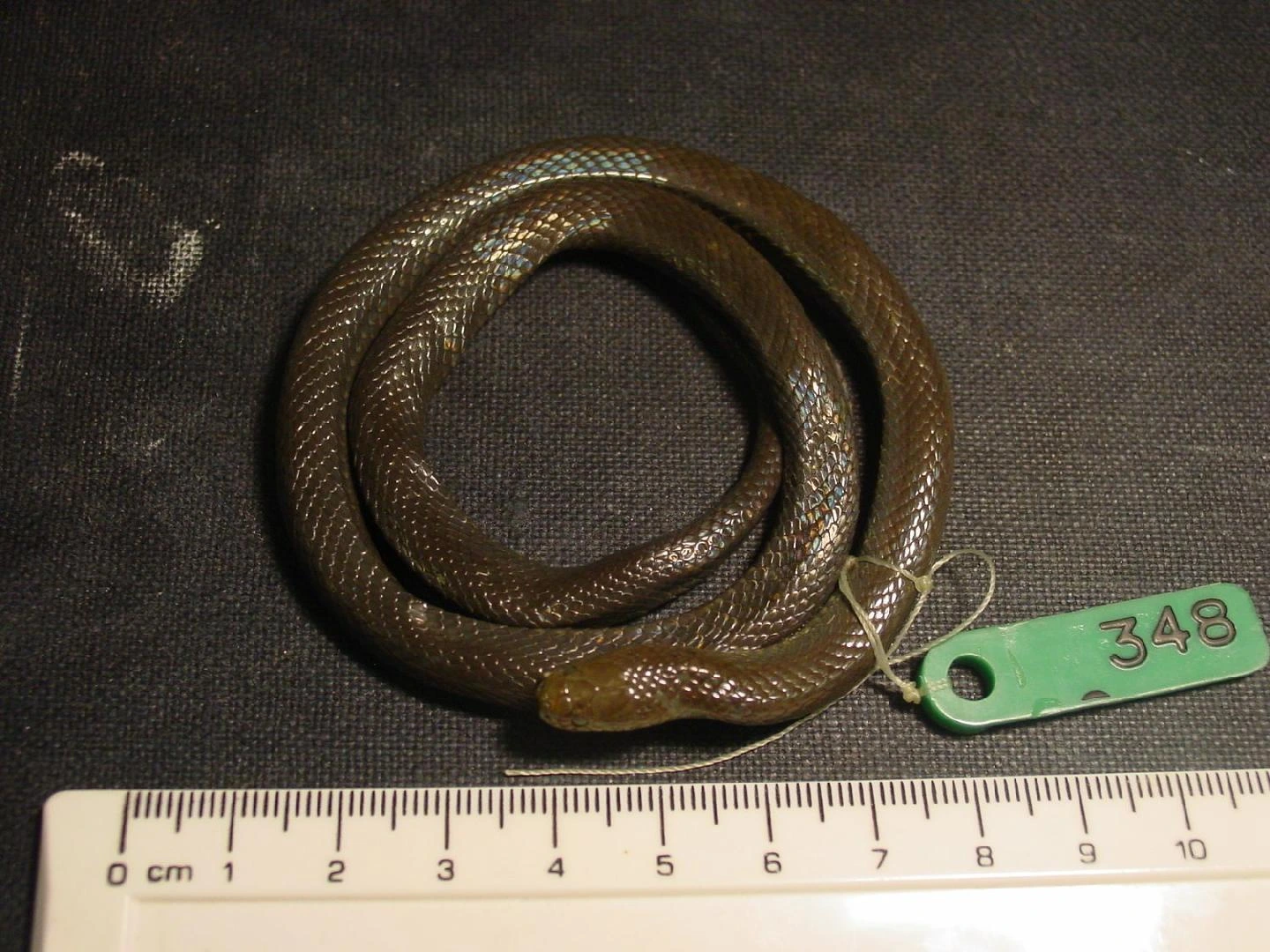
Atractus steyermarki. Preserved museum specimen; preservation may change natural colours. No new locality or habitat inferred. Portrait only.

001 · Colubridae

Species account

Atractus steyermarki

ROZE, 1958

Non-venomous

The checked taxonomic distribution account explicitly lists Venezuela. Country-level evidence does not establish continuous occupancy or a complete national inventory. The treatment names these subdivisions in its Venezuela distribution clause: Bolívar, Bolivar. They are assigned to the declared atlas navigation groups; this is not a field observation, a…

Read the species account →

Patrick Campbell · The Trustees of the Natural History Museum, London · CC BY 4.0 · https://creativecommons.org/licenses/by/4.0/
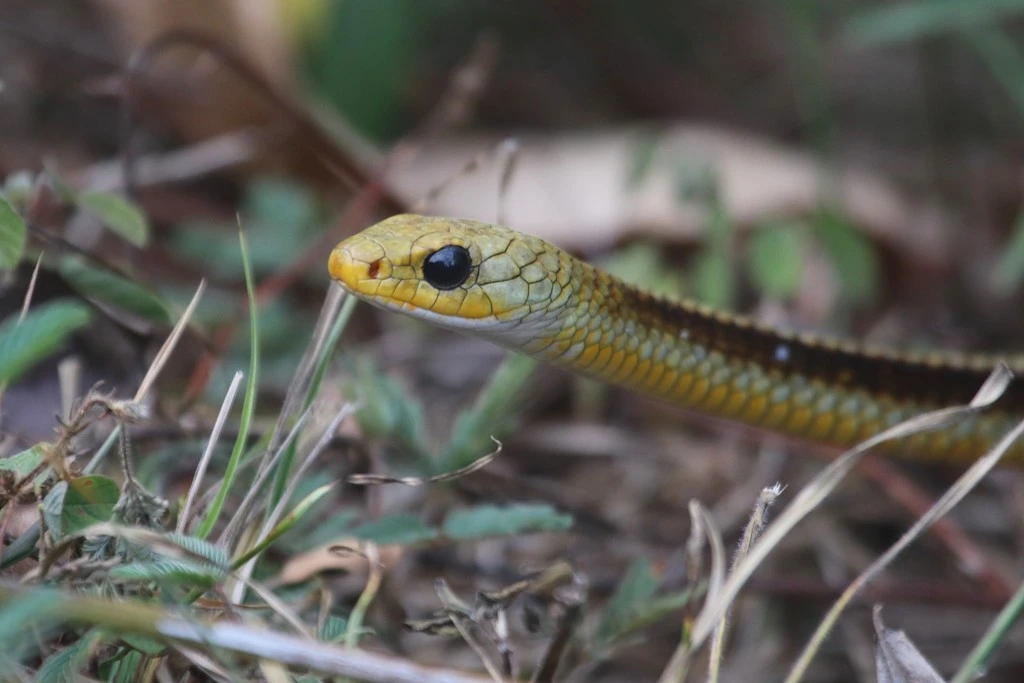
Chironius spixii. Close view of the yellow head and patterned neck among grass. Original observation dated 2017-03-05. Portrait only; no new locality record is inferred.

002 · Colubridae

Sipo

Chironius spixii

(HALLOWELL, 1845)

Venom unknownNot yet assessed

The checked taxonomic distribution account explicitly lists Venezuela. Country-level evidence does not establish continuous occupancy or a complete national inventory. The treatment names these subdivisions in its Venezuela distribution clause: Falcón, Falcon. They are assigned to the declared atlas navigation groups; this is not a field observation, a…

Read the species account →

scaup · CC BY 4.0 · https://creativecommons.org/licenses/by/4.0/
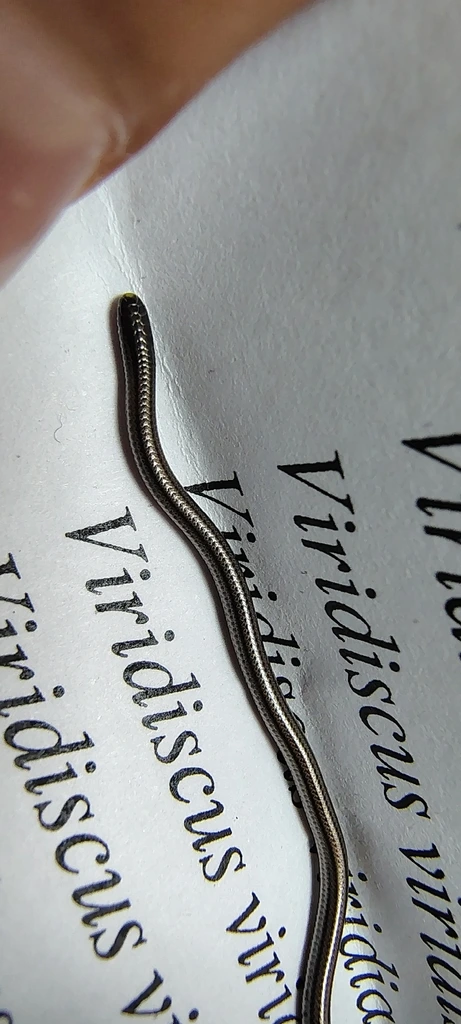
Epictia goudotii. Whole animal on a printed page beside a finger. Original observation dated 2026-01-15. No additional geographic occurrence is inferred.

003 · Leptotyphlopidae

Southern Caribbean Threadsnake, Black Blind Snake

Epictia goudotii

(DUMÉRIL & BIBRON, 1844)

Non-venomous

The checked taxonomic distribution account explicitly lists Venezuela. Country-level evidence does not establish continuous occupancy or a complete national inventory.

Read the species account →

Jorge I. Merchán Mayorga · CC BY-SA 4.0 · https://creativecommons.org/licenses/by-sa/4.0/

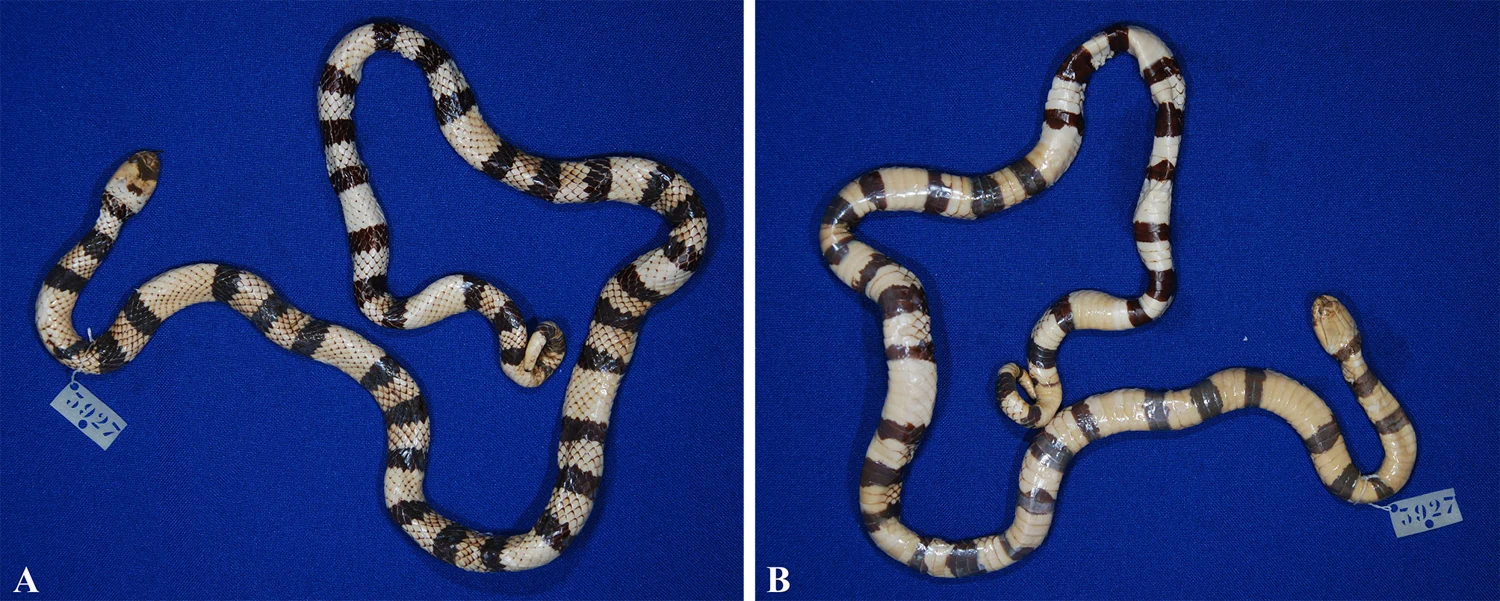
Micrurus isozonus, preserved museum specimen MNHN 0.3927 from Cartagena, Bolívar, Colombia. Dorsal and ventral views in original Figure 3. Portrait only; no new occurrence or habitat inferred.

004 · Elapidae

Equal-banded coral snake, Venezuela Coral Snake

Micrurus isozonus

(COPE, 1860)

VenomousClinical severity not established

The checked taxonomic distribution account explicitly lists Venezuela. Country-level evidence does not establish continuous occupancy or a complete national inventory.

Read the species account →

Darlan Tavares Feitosa · CC BY 4.0 · https://creativecommons.org/licenses/by/4.0/

All 191 species in the country collection →

Read further

Evidence & sources.

Guide reviewed 17 October 2026. Source dates and geographic scope matter; landscape photographs do not establish species occurrence.

  1. INPARQUES / MINEC · Canaima management report 2024, submitted to UNESCO

    Named Canaima vegetation units from the 2024 site report; not a nationwide landscape inventory.

Continue through Venezuela

Explore another habitat.

01

Forest & woodland

The 2024 Canaima management report identifies forest among the park’s principal vegetation units. This is a named protected-area example, not a national inventory of Venezuelan forest.

02

Rivers & wetlands

Canaima’s report distinguishes moriche palm swamps from other vegetation units. The wetland setting must remain attached to its locality; no aquatic behaviour is inferred from a regional species record.