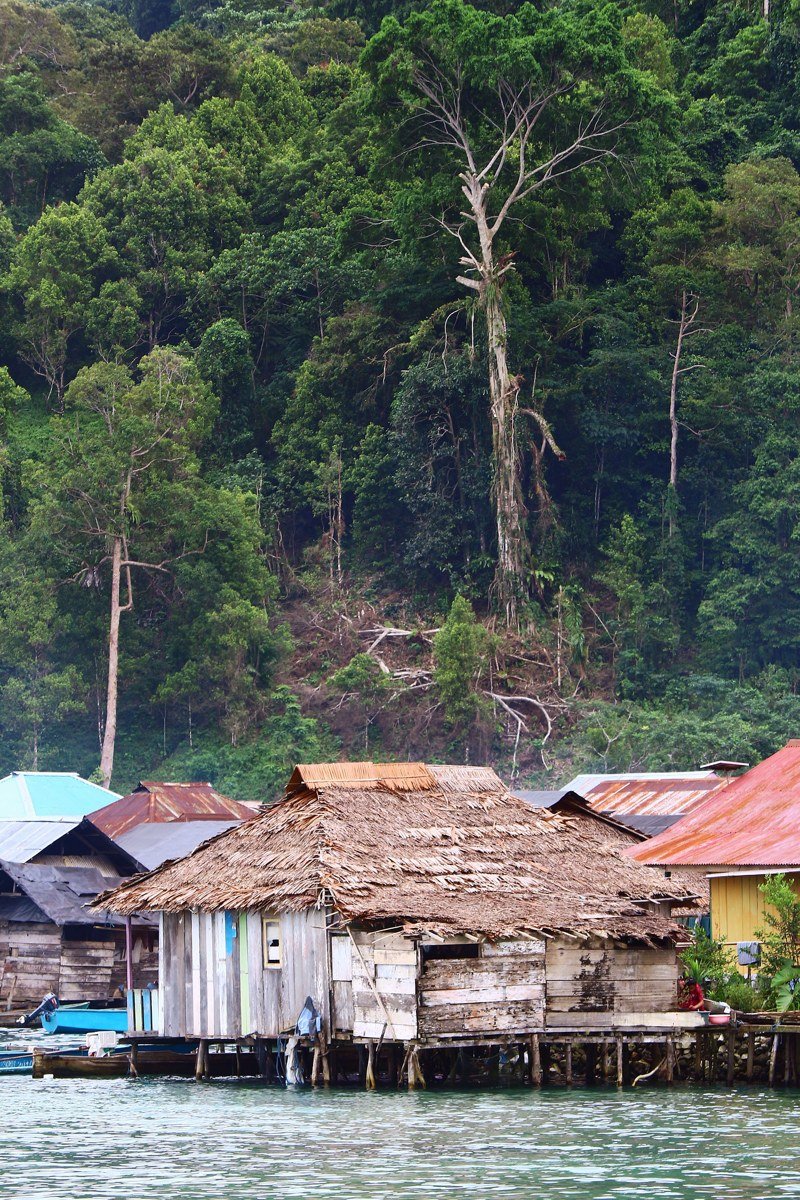
Sawai village on the coast of Seram.

Indonesia · Island atlas

Seram

Seram stretches along a high mountain spine above broad forest landscapes and deeply indented shores. Its central massif, limestone caves and north-coast bays create one of Maluku’s strongest gradients from sea level to high mountain habitats.

13species in the collection
6families represented

Sawai village on the coast of Seram.

landscape: Tiket2.com · Image source · CC BY 2.0. Cropped to fill the hero; darkened for text legibility.

Geography & landscape

A sense of Seram.

Ambon, Haruku and Saparua lie off the southwestern side, while the long main island continues far to the east. The central mountains rise above the lowlands on both coasts. Sawai lies on the northern shore below the limestone interior; the Huamual Peninsula projects from the western end.

Geographic unit
Island
Setting
Central Maluku, between the Seram and Banda seas
Explore terrain and street maps
Loading the geographic map…

Drag to explore. Use + / − or pinch to zoom. Terrain shows relief and contours; Street map shows detailed coastlines, settlements and roads. Markers locate islands, not snake sightings.

Open larger map

How the land took shape

Geology & relief.

Seram has a complex tectonic history involving deformation, uplift and movement among small crustal blocks around the Banda region. Limestone karst includes deep caves and underground drainage. Hatu Saka near Sawai and the Sapalewa underground river illustrate how water has sculpted the rock beneath the forest.
Across the seasons

Climate & vegetation.

Relief creates strong environmental contrasts. Warm coastal lowlands give way to cooler mountain forest, while rainfall varies with slope and exposure. High peaks support vegetation very different from the dense lowland canopy, making elevation essential to understanding the island.

Connections & isolation

Biogeographic setting.

Seram belongs to Wallacea, with an assemblage combining Asian and Australasian lineages and numerous island endemics. Its large mountain area supports species restricted to upland environments. Manusela National Park protects an important cross-section of the central landscape, while forest outside the park has experienced varying degrees of logging, cultivation and conversion.

Seram · Environments

Habitats of Seram.

Explore the environments described for Seram. Habitat descriptions do not assign every snake in the island list to each setting.

Lowland rainforest

Evergreen and semi-evergreen forests occur in the lower landscape. Accessible lowlands have also been cleared or modified, so forest condition differs between areas.

Read the habitat guide

Mountain forest

The central massif carries a sequence of upland forest communities, with distinctive vegetation extending toward the highest peaks.

Read the habitat guide

Karst forest and caves

Limestone terrain around the northern interior combines forested slopes, sinkholes, caves and underground streams.

Read the habitat guide

Coastal mangroves

Mangrove habitat is documented within Manusela’s coastal environments, linking the park’s terrestrial and tidal settings.

Read the habitat guide

River and estuary corridors

The Salawai River connects inland freshwater reaches with coastal brackish environments, adding a drainage corridor to the island’s mountain-to-sea landscape.

Managed forest and cultivation

Traditional tree management, gardens and more recent plantations contribute to Seram’s inhabited lowlands and foothills.

Bays and island shores

Northern Sawai Bay and the southern Banda-facing coast provide distinct marine margins below the central mountain spine.

Read the habitat guide

Around Seram

Places in the landscape.

Mount Binaiya

The central high massif is Seram’s dominant elevation landmark.

Sawai

The northern coastal village sits beside a bay beneath the forested limestone interior.

Manusela National Park

The park protects a substantial part of central Seram’s varied mountain landscape.

Read the original scope

Behind the occurrence.

Choose an account recorded in Seram. Its country-level evidence retains the named islands and qualifications; it is not a record of a sighting at an exact map point.

The shared collection

Snakes recorded here.

Each card opens the same species account used by the country lists. A shared island record does not imply occurrence in all countries sharing that island.

13 records
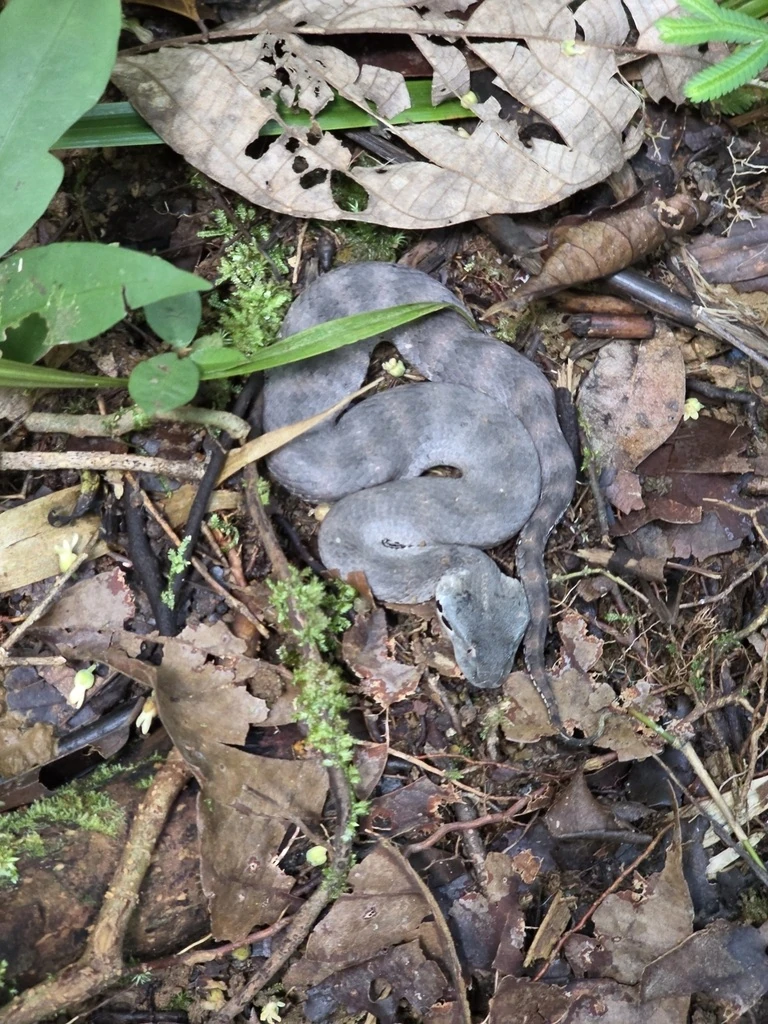
Acanthophis laevis photographed in Papua New Guinea. Identification follows the source community.001

Acanthophis laevis

MACLEAY, 1877

Length
Length not yet addedAtlas entry awaiting completion
Venom status
VenomousClinical severity not established
ElapidaeRead account
Image not yet added
002
Seram Short-tailed Snake

Brachyorrhos albus

(LINNAEUS, 1758)

Length
Length not yet addedAtlas entry awaiting completion
Venom status
Venom unknownNot yet assessed
HomalopsidaeRead account
Image not yet added
003

Brachyorrhos pygmaeus

MURPHY & VORIS, 2020

Length
Length not yet addedAtlas entry awaiting completion
Venom status
Venom unknownNot yet assessed
HomalopsidaeRead account
Image not yet added
004

Calamaria ceramensis

DE ROOIJ, 1913

Length
Length not yet addedAtlas entry awaiting completion
Venom status
Non-venomous
ColubridaeRead account
Image not yet added
005
O’Shea’s pipe snake

Cylindrophis osheai

KIECKBUSCH, MADER, KAISER & MECKE, 2018

Length
Length not yet addedAtlas entry awaiting completion
Venom status
Non-venomous
CylindrophiidaeRead account
Image not yet added
006

Dendrelaphis grismeri

VOGEL & VAN ROOIJEN, 2008

Length
Length not yet addedAtlas entry awaiting completion
Venom status
Non-venomous
ColubridaeRead account
Fordonia leucobalia — real specimen photograph; identification follows the linked source.007
Crab-eating (Water) Snake

Fordonia leucobalia

(SCHLEGEL, 1837)

Length
Length not yet addedAtlas entry awaiting completion
Venom status
VenomousClinical severity not established
BorneoMalaysia
HomalopsidaeRead account
Image not yet added
008
Moluccan groundsnake

Lielaphis modestus

(SCHLEGEL, 1837)

Length
Length not yet addedAtlas entry awaiting completion
Venom status
Venom unknownNot yet assessed
ColubridaeRead account
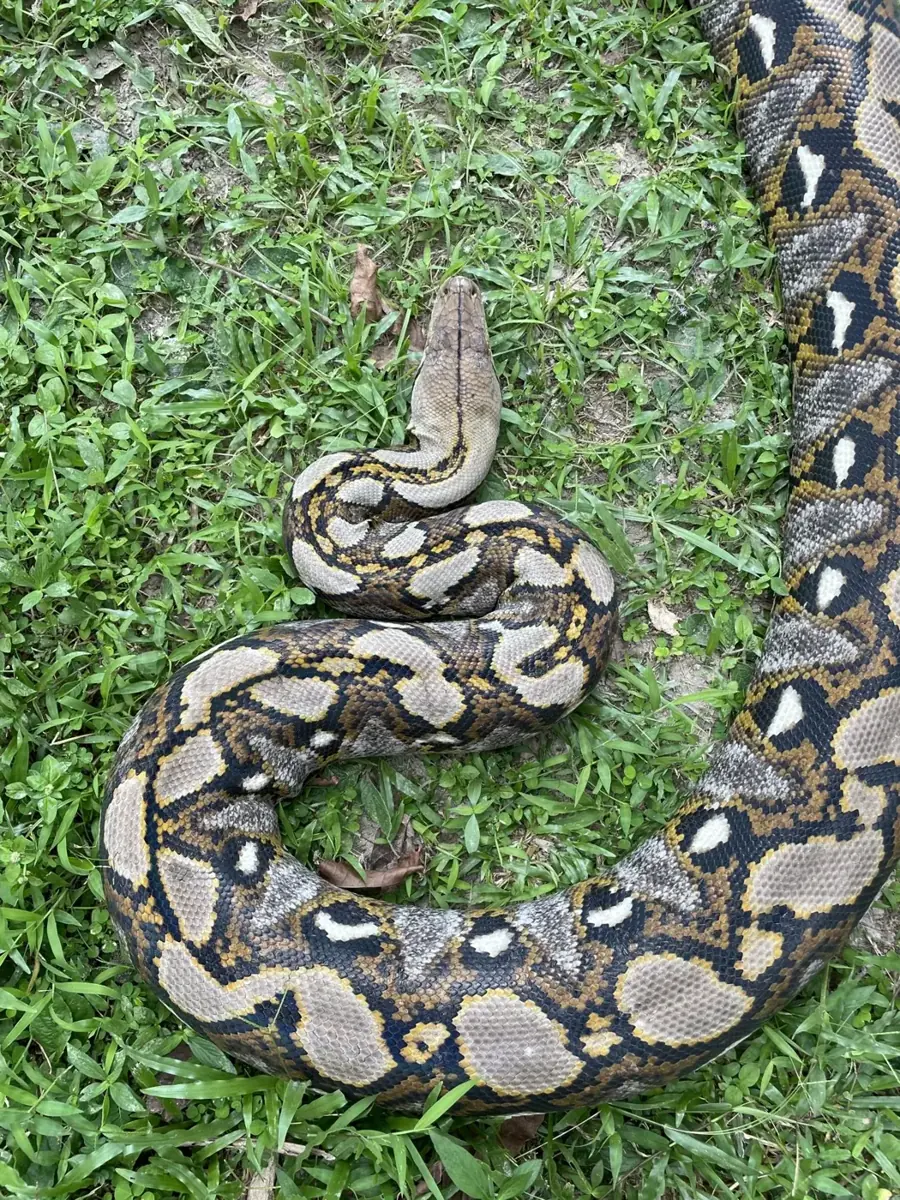
Malayopython reticulatus — photographed on Ko Pha-ngan, Thailand.009
Reticulated Python

Malayopython reticulatus

(SCHNEIDER, 1801)

Length
Length not yet addedAtlas entry awaiting completion
Venom status
Non-venomous
BorneoMalaysia
PythonidaeRead account
Image not yet added
010
Kei Island Worm Snake

Malayotyphlops kraalii

(DORIA, 1874)

Length
Length not yet addedAtlas entry awaiting completion
Venom status
Non-venomous
TyphlopidaeRead account
Image not yet added
011
Olive Blind Snake

Ramphotyphlops olivaceus

(GRAY, 1845)

Length
Length not yet addedAtlas entry awaiting completion
Venom status
Non-venomous
BorneoMalaysia
TyphlopidaeRead account
Image not yet added
012
Southern Moluccan python

Simalia clastolepis

(HARVEY, BARKER, AMMERMAN & CHIPPINDALE, 2000)

Length
Length not yet addedAtlas entry awaiting completion
Venom status
Non-venomous
PythonidaeRead account
Image not yet added
013
Moluccan keelback

Tropidonophis elongatus

(JAN, 1865)

Length
Length not yet addedAtlas entry awaiting completion
Venom status
Venom unknownNot yet assessed
ColubridaeRead account

Further reading · Checked 7 October 2026

Geographic sources.

Species-specific distribution evidence appears above and in each linked account.