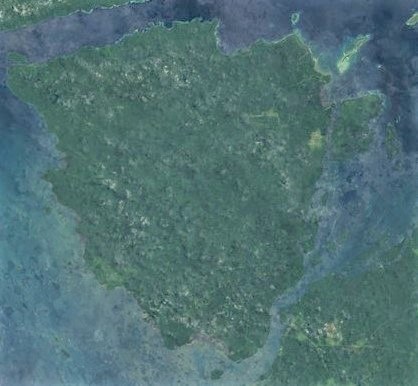
Salawati in a Copernicus Sentinel satellite composite, using imagery from 2016 and 2017.

Indonesia · Island atlas

Salawati

Salawati lies close to the Bird’s Head Peninsula, separated from mainland New Guinea by a narrow strait. Its northern forest landscape and southern settled shores occupy the southeastern corner of Raja Ampat’s four principal islands.

16species in the collection
4families represented

Salawati in a Copernicus Sentinel satellite composite, using imagery from 2016 and 2017.

satellite-alternative: EOX IT Services GmbH; modified Copernicus Sentinel data 2016 and 2017; upload by Zollwurf · Image source · CC BY-SA 4.0. Cropped to fill the hero; darkened for text legibility.

Geography & landscape

A sense of Salawati.

Sele Strait forms the southeastern boundary with New Guinea, while Sagewin or Pitt Strait separates Salawati from Batanta to the north. The island is divided administratively between Raja Ampat and Sorong regencies. Sailolof, on the southern side, is a long-established settlement associated with the island’s history.

Geographic unit
Island
Setting
Raja Ampat beside mainland New Guinea, Southwest Papua
Explore terrain and street maps
Loading the geographic map…

Drag to explore. Use + / − or pinch to zoom. Terrain shows relief and contours; Street map shows detailed coastlines, settlements and roads. Markers locate islands, not snake sightings.

Open larger map

How the land took shape

Geology & relief.

The geopark’s geological inventory records sedimentary, limestone and older rock formations on Salawati. Deformation around the Sorong fault system contributes to the wider setting. These layered rocks distinguish its terrain from the young, isolated volcanic cones of northern Maluku.
Across the seasons

Climate & vegetation.

Salawati shares the warm, humid climate of the western Papuan islands. Differences in relief and drainage separate better-drained forest from wet low ground, while coastal water introduces tidal and saline conditions around the island margin.

Connections & isolation

Biogeographic setting.

Its proximity to New Guinea is reflected in Papuan terrestrial affinities. Northern Salawati contains a nature reserve protecting native lowland rainforest. Published surveys across Raja Ampat include Salawati as a separate island, reinforcing the value of treating its terrestrial habitats individually.

Salawati · Environments

Habitats of Salawati.

Explore the environments described for Salawati. Habitat descriptions do not assign every snake in the island list to each setting.

Northern lowland rainforest

The Pulau Salawati Utara Nature Reserve protects a substantial forest area in the island’s north.

Read the habitat guide

Wet forest environments

Historical field observations describe swamp forest beyond the northern hills, documenting poorly drained woodland alongside the island’s better-drained rainforest.

Read the habitat guide

Strait-side coasts

The shores facing Batanta and the mainland border narrow marine passages rather than the open-ocean setting of Raja Ampat’s outer islands.

Read the habitat guide

Around Salawati

Places in the landscape.

Sele Strait

The channel between Salawati and the Bird’s Head coast.

Northern Salawati reserve

A protected lowland-forest area in the island’s northern portion.

Sailolof

A historical settlement on the southern side of Salawati.

Read the original scope

Behind the occurrence.

Choose an account recorded in Salawati. Its country-level evidence retains the named islands and qualifications; it is not a record of a sighting at an exact map point.

The shared collection

Snakes recorded here.

Each card opens the same species account used by the country lists. A shared island record does not imply occurrence in all countries sharing that island.

16 records
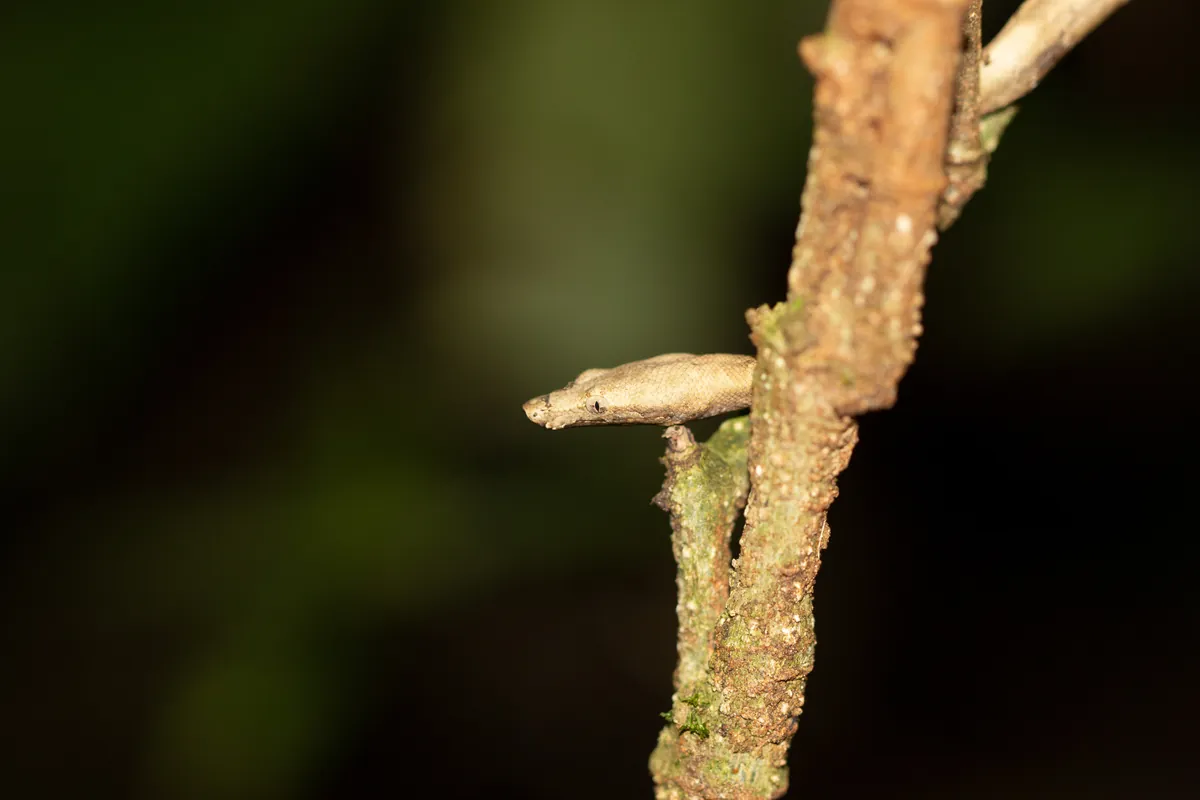
Living animal photographed in Talasea District, West New Britain Province, Papua New Guinea, on 10 November 2018; only the head and anterior body are visible.001
Pacific boa

Candoia carinata

(SCHNEIDER, 1801)

Length
Length not yet addedAtlas entry awaiting completion
Venom status
Non-venomous
BoidaeRead account
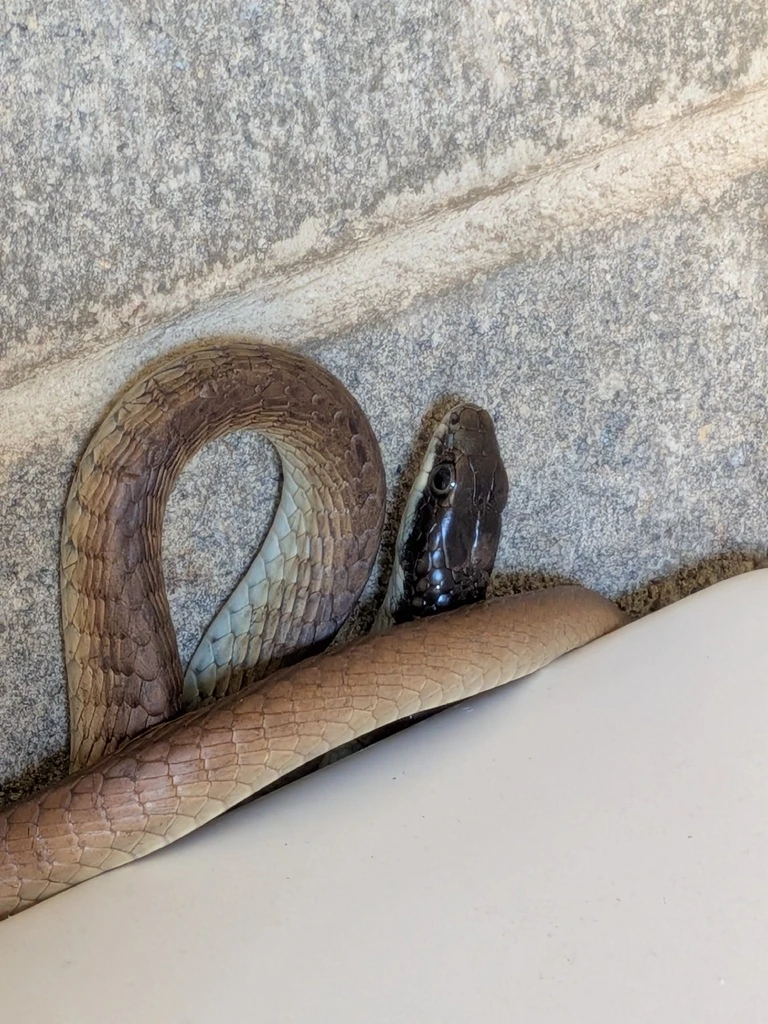
Dendrelaphis calligaster photographed in Australia. Identification follows the source community.002
Green treesnake

Dendrelaphis calligaster

(GÜNTHER, 1867)

Length
Length not yet addedAtlas entry awaiting completion
Venom status
Non-venomous
ColubridaeRead account
Image not yet added
003

Dendrelaphis lineolatus

(JACQUINOT & GUICHENOT, 1853)

Length
Length not yet addedAtlas entry awaiting completion
Venom status
Non-venomous
ColubridaeRead account
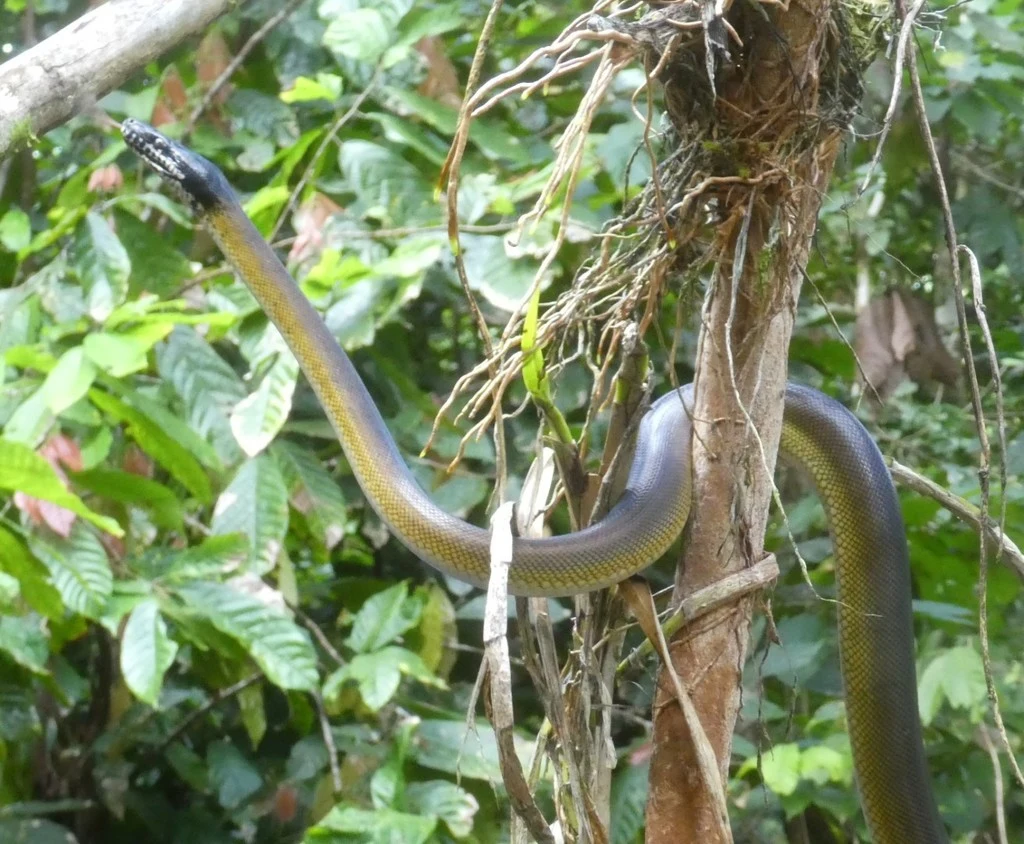
Leiopython albertisii. Northern white-lipped python in vegetation; source identifiers explicitly distinguish the Waigeo animal from southern white-lipped pythons. Original observation dated 2019-03-17. Photograph identification follows the cited observation; it adds no geographic occurrence record.004
D’Albertis python

Leiopython albertisii

(PETERS & DORIA, 1878)

Length
Length not yet addedAtlas entry awaiting completion
Venom status
Non-venomous
PythonidaeRead account
Image not yet added
005
De Rooij's groundsnake

Lielaphis derooijae

RUANE, RICHARDS, MCVAY, TJATURADI, KREY & AUSTIN, 2017

Length
Length not yet addedAtlas entry awaiting completion
Venom status
Venom unknownNot yet assessed
ColubridaeRead account
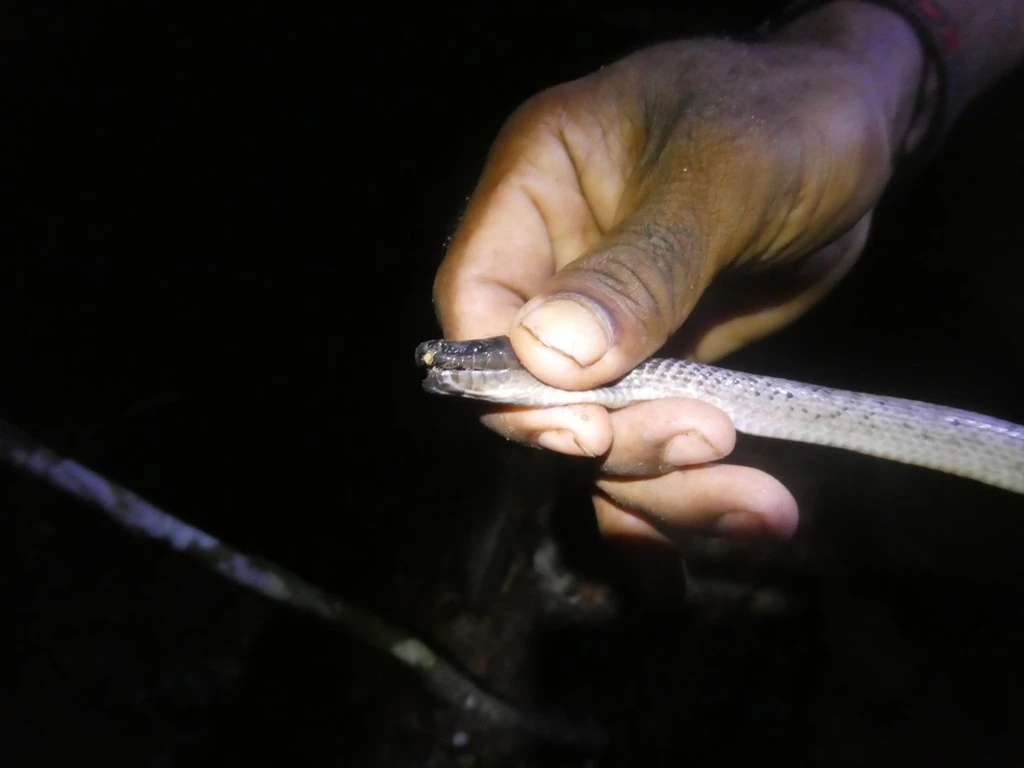
Lielaphis iridis. Photographed alive while being held; head portrait. Source community identification; no new geographic occurrence record is inferred.006
Iridescent groundsnake

Lielaphis iridis

RUANE, RICHARDS, MCVAY, TJATURADI, KREY & AUSTIN, 2017

Length
Length not yet addedAtlas entry awaiting completion
Venom status
Venom unknownNot yet assessed
ColubridaeRead account
Image not yet added
007

Ramphotyphlops depressus

PETERS, 1880

Length
Length not yet addedAtlas entry awaiting completion
Venom status
Non-venomous
TyphlopidaeRead account
Image not yet added
008
Yellow-bellied blindsnake

Ramphotyphlops flaviventer

(PETERS, 1864)

Length
Length not yet addedAtlas entry awaiting completion
Venom status
Non-venomous
TyphlopidaeRead account
Image not yet added
009
Hook-nosed blindsnake

Ramphotyphlops multilineatus

(SCHLEGEL, 1839)

Length
Length not yet addedAtlas entry awaiting completion
Venom status
Non-venomous
TyphlopidaeRead account
Image not yet added
010

Ramphotyphlops supranasalis

(BRONGERSMA, 1934)

Length
Length not yet addedAtlas entry awaiting completion
Venom status
Non-venomous
TyphlopidaeRead account
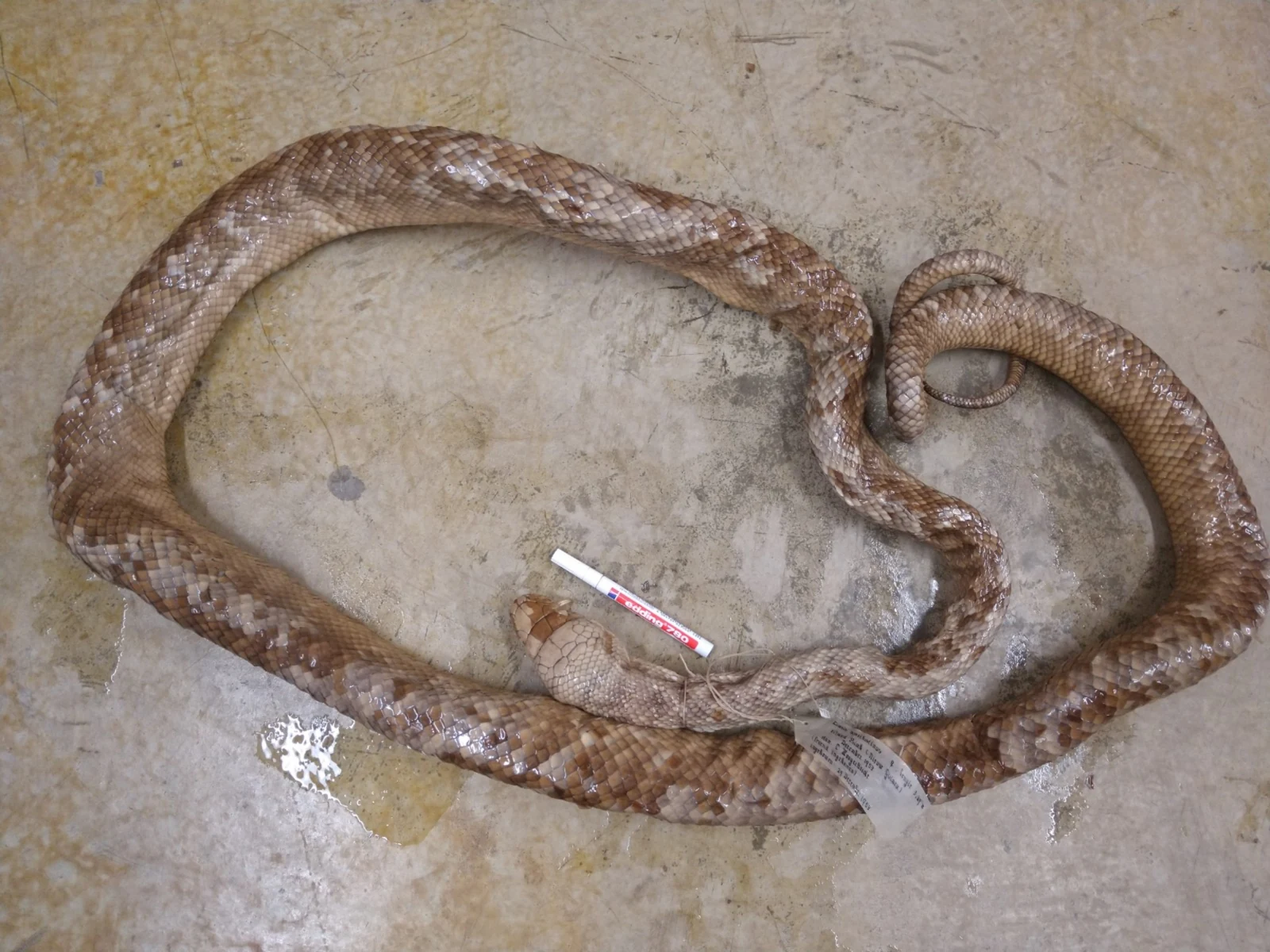
Simalia amethistina. Preserved museum specimen, Naturalis Biodiversity Center, RMNH.RENA.20708. Colours may have changed in preservative. This collection image adds no geographic occurrence record.011
Amethystine or scrub python

Simalia amethistina

(SCHNEIDER, 1801)

Length
Length not yet addedAtlas entry awaiting completion
Venom status
Non-venomous
PythonidaeRead account
Image not yet added
012
Bacan Island groundsnake

Stegonotus batjanensis

(GÜNTHER, 1865)

Length
Length not yet addedAtlas entry awaiting completion
Venom status
Venom unknownNot yet assessed
ColubridaeRead account
Image not yet added
013
Moluccan keelback

Tropidonophis elongatus

(JAN, 1865)

Length
Length not yet addedAtlas entry awaiting completion
Venom status
Venom unknownNot yet assessed
ColubridaeRead account
Image not yet added
014

Tropidonophis halmahericus

(BOETTGER, 1895)

Length
Length not yet addedAtlas entry awaiting completion
Venom status
Venom unknownNot yet assessed
ColubridaeRead account
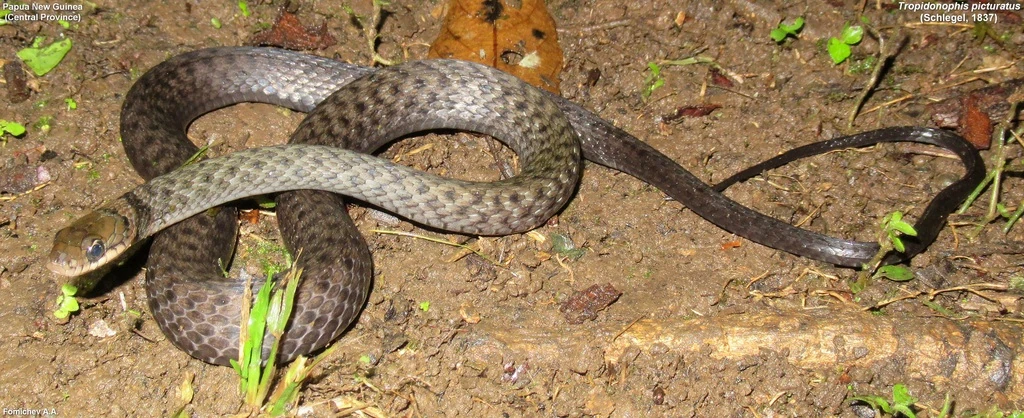
Tropidonophis picturatus photographed in Papua New Guinea. Identification follows the source community.015
Painted keelback

Tropidonophis picturatus

(SCHLEGEL, 1837)

Length
Length not yet addedAtlas entry awaiting completion
Venom status
Venom unknownNot yet assessed
ColubridaeRead account
Image not yet added
016

Tropidonophis truncatus

(PETERS, 1863)

Length
Length not yet addedAtlas entry awaiting completion
Venom status
Venom unknownNot yet assessed
ColubridaeRead account

Further reading · Checked 7 October 2026

Geographic sources.

Species-specific distribution evidence appears above and in each linked account.