All habitat guides

Habitat 05 / 05 · Coastal ecosystems · Across the tidal boundary

Mangrove to ocean

The coast is a transition, not one habitat: freshwater meets the tide, roots meet mud, and sheltered shores open into reef and sea.

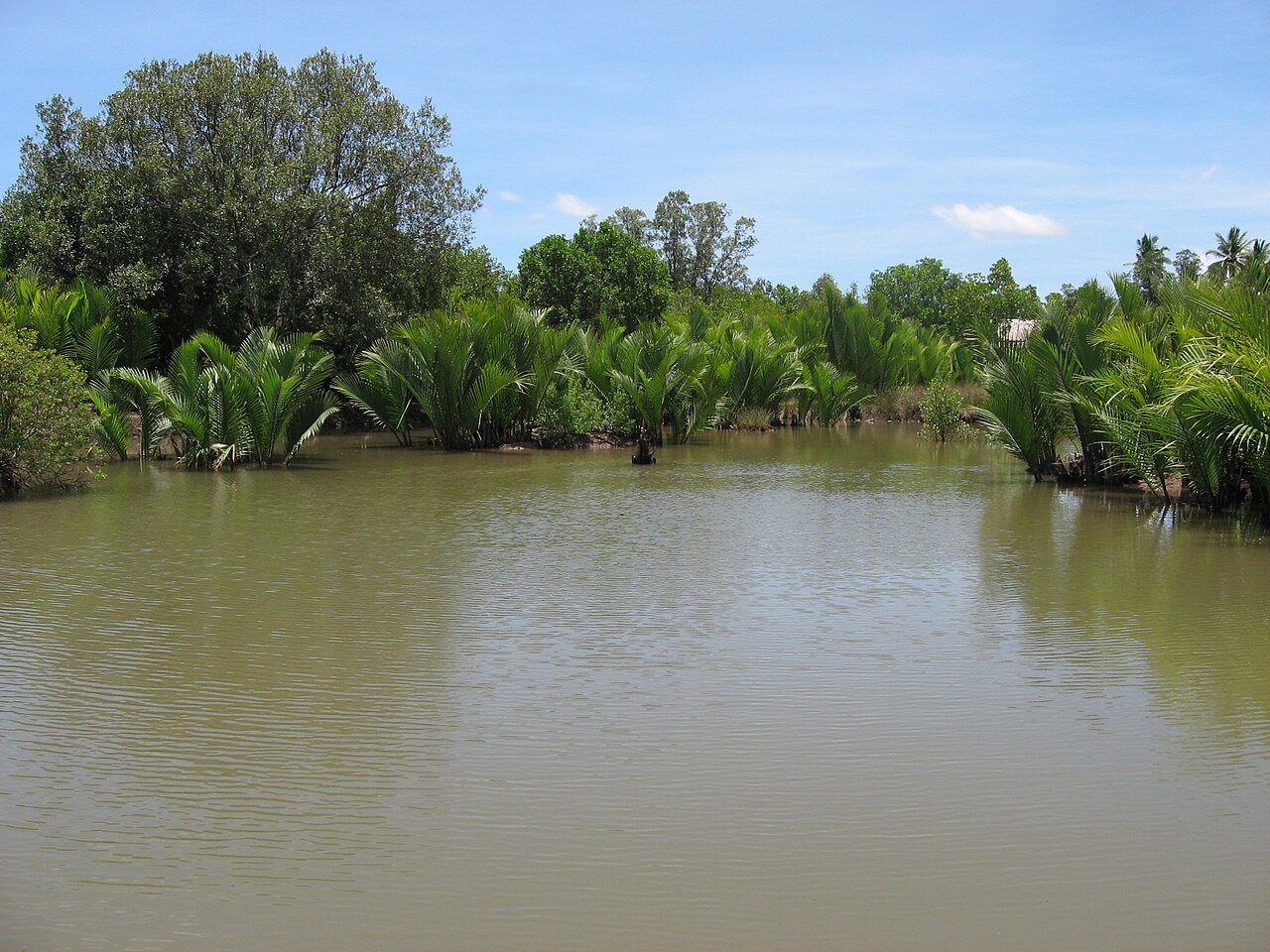
Mangrove wetland and nipa palms beside a calm tidal channel on Bohol
A mangrove wetland with nipa palms on Bohol. This is a view of a sheltered tidal landscape, not of coral reef or open-ocean habitat.Photo: Geomob · Original photograph · Public domain. Resized; full image retained.

Understanding the environment

A sense of the habitat.

Mangroves occupy tidal coastal settings; reefs, seagrass beds and open water offer different environments farther seaward. They may be connected, but they do not always occur side by side or in a fixed order. Freshwater input, tidal exposure, shoreline form and substrate make each coast distinctive.

Defining feature
Connected terrestrial, tidal and marine habitats
Main contrast
Sheltered estuary versus shore, reef and open water
Key rhythm
Tides, freshwater input and sea conditions

Explore the structure · Tidal forest to sea

Read the land–sea transition

Select a zone to see what changes.

Tidal channels

Mangrove & estuary

Flooded roots, mud and channels create a structurally complex coast. Rainfall and river input interact with tides, so “brackish” does not mean one constant salinity.

Notice tidal marks, root structure and the position of the channel.

A conceptual coastal sequence, not a map or a fixed salinity scale. Real shores may lack entire zones.

Sources: Ramsar · Del Carmen Mangrove Reserve (2024) · Heatwole et al. · The Laticauda colubrina complex (2005) · Lowe et al. · Coastal forest and sea-krait behaviour (2022)

Field notes · 01

A tidal forest is a habitat of its own

At Del Carmen on Siargao, the official Ramsar description documents a large mangrove reserve supporting wildlife, local livelihoods and coastal protection. Mangroves should be understood as living coastal systems, not simply as a narrow strip of trees or a convenient backdrop for a sea-snake photograph.

Sources: Ramsar · Del Carmen Mangrove Reserve (2024)

Field notes · 02

Sea kraits need two worlds

Sea kraits of the genus Laticauda forage in the sea and use land for resting, digestion and reproduction, including egg laying. The extent of terrestrial activity differs among species. Fully aquatic sea snakes have a different life history, so the two groups should not be treated as ecologically interchangeable.

Field research on yellow-lipped sea kraits in Fiji linked behaviour to small-scale differences in coastal forest conditions. It provides a useful comparison for understanding connected land and sea habitat; it is not a measurement of a Philippine population.

Sources: Heatwole et al. · The Laticauda colubrina complex (2005) · Lowe et al. · Coastal forest and sea-krait behaviour (2022)

Field notes · 03

Protect the connections

A protected marine feeding area alone may not provide the terrestrial refuges needed by an amphibious species. Clearing coastal vegetation or developing the shore can interrupt that connection. Conversely, maintaining mangroves does not protect every reef or offshore habitat. Conservation needs to match the particular environment and the species using it.

Sources: Lowe et al. · Coastal forest and sea-krait behaviour (2022) · Ramsar · Del Carmen Mangrove Reserve (2024)

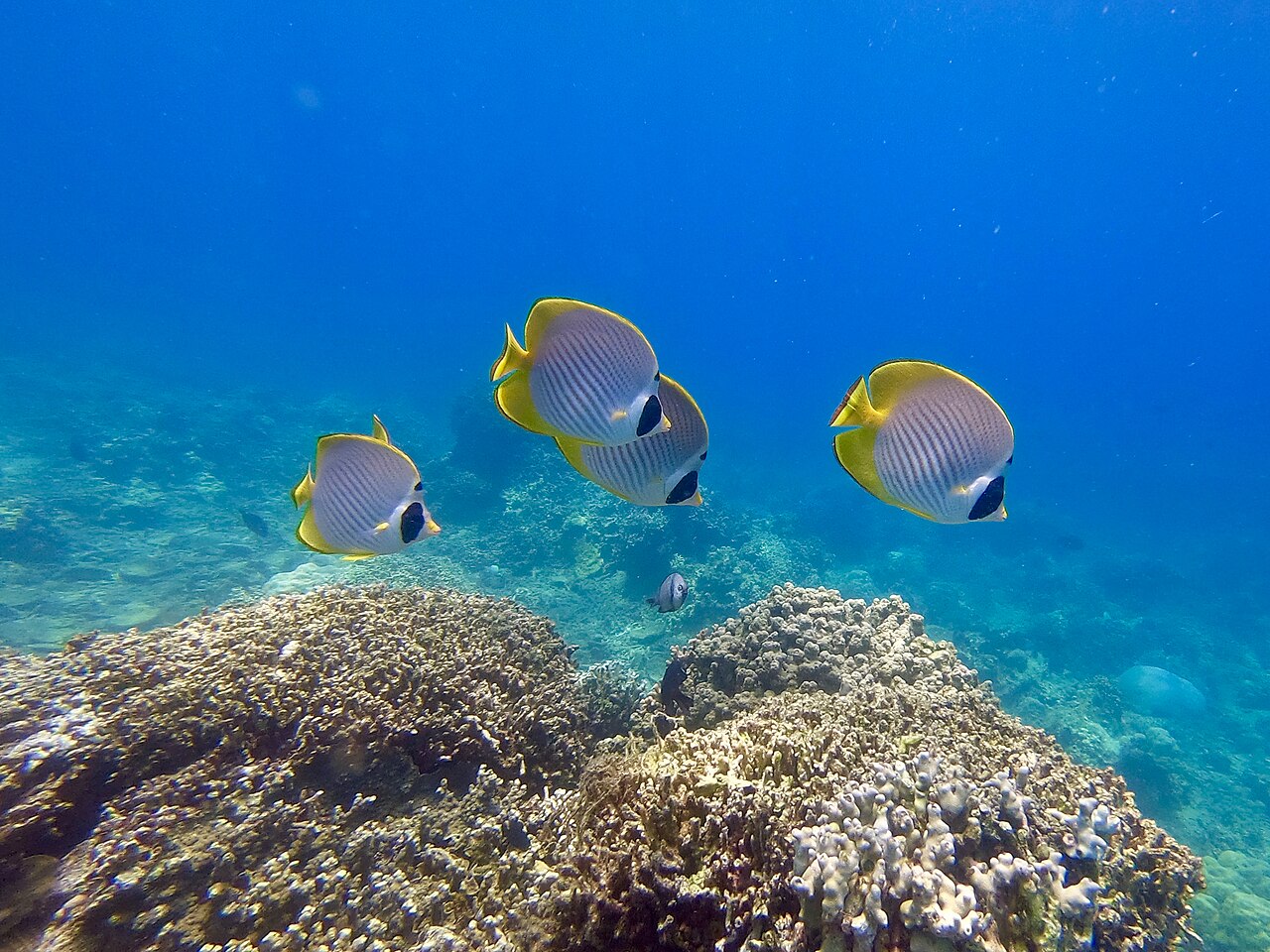
Butterflyfish swimming over a coral reef off Verde Island
Butterflyfish above a coral reef off Verde Island, Philippines. This marine setting differs from the tidal forest shown above.Photo: Dmitry Domrin · Original photograph · CC BY 4.0. Resized; full image retained.

Pressures on Philippine habitats

What is at risk?

Development, pollution and warming affect different parts of the coast. An amphibious animal can lose terrestrial shelter even while its marine feeding habitat remains.

A measured warning from Philippine reefs

Reef condition and habitat area are different measurements. This survey is a dated baseline, not a claim about every reef today.

Mangrove clearance and construction

The 2024 Masinloc–Oyon Bay monitoring report records conversion, cutting, waste and infrastructure or reclamation pressures at different sites. Even mangroves assessed as being in good condition can face threats around them.

Sources: DENR / SIBOL · Masinloc–Oyon Bay mangrove monitoring (2024)

Pollution, sediment and fishing pressure

DENR researchers identify sedimentation, nutrient contamination, reduced clarity and fishing pressure at studied Manila Bay reefs. Protecting mangroves alone does not address every pressure on adjacent marine habitat.

Sources: DENR / ERDB · Manila Bay coral-reef observations (2019)

Marine heat and coral bleaching

NOAA documented Philippine coral bleaching in 2024. Heat stress is a recorded pressure, not just a future possibility. Bleaching observations alone do not quantify mortality or prove an effect on a particular sea-snake population.

Sources: NOAA Coral Reef Watch · Heat-stress guidance, 5 June 2024

What helps this habitat

Retain shore vegetation and tidal connections, reduce pollution and destructive disturbance, and protect reef and seagrass habitats alongside mangroves. Use local surveys to choose restoration sites; tree planting cannot repair every coastal ecosystem.

Read further

Evidence & sources.

Guide checked 7 October 2026. Study dates and scope are retained below. Photographs illustrate habitats and do not establish snake occurrence at the photographed sites.

  1. Ramsar · Del Carmen Mangrove Reserve (2024)

    Official site description for Siargao; local mangrove, livelihood and coastal-protection context.

  2. Heatwole et al. · The Laticauda colubrina complex (2005)

    Marine foraging and terrestrial activity of sea kraits across their range, including the Philippines.

  3. Lowe et al. · Coastal forest and sea-krait behaviour (2022)

    Fieldwork in Fiji: comparative evidence for land–sea habitat connectivity, not a Philippine population study.

  4. DENR / SIBOL · Masinloc–Oyon Bay mangrove monitoring (2024)

    Observed local pressures: land conversion, solid waste, cutting and infrastructure or reclamation. Not a national mangrove-loss percentage.

  5. DENR / ERDB · Manila Bay coral-reef observations (2019)

    Local sedimentation, nutrient contamination, reduced clarity and fishing pressure; conditions vary between reefs.

  6. NOAA Coral Reef Watch · Heat-stress guidance, 5 June 2024

    Documents Philippine coral bleaching during 2024. An event record, not a current alert or national mortality estimate.

  7. Licuanan et al. · Nationwide coral-reef assessment (2017)

    166 stations across 31 provinces, 2015–2017. Area-weighted mean hard-coral cover 22%; 95% confidence interval 19.4–24.9%. Coral cover, not the percentage of reefs remaining.

Continue through the archipelago

Explore another habitat.

01

Rainforest canopy

Sunlit crowns, shaded branches and climbing vines form a vertical landscape. Explore how light, shelter and routes through the trees shape life above ground.

02

Forest floor

Leaf litter, roots, fallen wood and soil hold a mosaic of sheltered spaces. Discover the living ground layer and the secretive snakes that use it.

03

Montane forest

Mountain slopes reshape temperature, exposure and vegetation. Explore mossy trunks, cloud-influenced forest and the differences between isolated mountain habitats.

04

Rivers & wetlands

Forest streams, riverbanks, floodplains and lakes offer different kinds of freshwater habitat. Follow the water and discover how its margins change through the year.