
Philippines · Island atlas
Batanes
Batanes is the northern island group of the Philippines. The Balintang Channel separates it from the Babuyan Islands, and the Bashi Channel lies towards Taiwan. Batan, Sabtang and Itbayat are distinct islands within this group.
Vayang Rolling Hills on Batan, one of the islands of Batanes.
Beyond the species list
A sense of place.
Batanes is the northern island group of the Philippines. The Balintang Channel separates it from the Babuyan Islands, and the Bashi Channel lies towards Taiwan. Batan, Sabtang and Itbayat are distinct islands within this group.
Landscape & habitats
The rolling hills of Batan and the coastal scenery of Sabtang give a sense of the group’s exposed maritime setting. Volcanic relief, open slopes and rocky shores create a different geographic setting from the broad lowlands of the larger Philippine islands.
This overview covers the island group. Individual Batan and Sabtang pages retain their own geographic identities.
Geographic sources
Geographic overview checked 7 October 2026. The photograph illustrates a landscape, not a snake observation.
Islands, barriers & evolution
Zoogeography
A northern centre of restricted-range wildlife
Separated from both Luzon and Taiwan, Batanes supports a distinctive assemblage of reptiles. Surveys of four islands found restricted-range species alongside more widespread animals, with appreciable differences among islands.
The group is therefore best understood as several related island faunas. Endemism can be concentrated in a small archipelago even where the total number of recorded species is modest.
How to read the historical island groups
During Pleistocene glacial periods, lower sea levels exposed shallow seabeds and joined some present-day islands. Biogeographers call these reconstructed landmasses Pleistocene Aggregate Island Complexes (PAICs). Deep channels continued to separate others. This model helps explain regional similarities, but dispersal, older geology and habitat differences also shaped each fauna.
“Endemic” means restricted to a stated area; a Philippine endemic need not be confined to one island. The account above summarises published regional and local research. It does not add occurrences to the snake index below.
Regional framework: Meneses et al. (2024) ↗Zoogeographic sources · 2
- Lacaste, Afuang & Gonzalez (2015) · Herpetofaunal diversity of four Batanes islands ↗Island comparisons from fieldwork in 2006–2007; historical survey, not a current complete inventory.
- Meneses et al. (2024) · Philippine herpetology, 20 years on ↗Regional framework, Fig. 1; isolation and research gaps. Open-access review, CC0.
Literature checked 7 October 2026. Survey results refer to the dates and areas studied.
The island collection
Snakes of Batanes.
Explore the species recorded on Batanes. Search names, families and the islands explicitly named in their sources.
Lycodon alcalai
OTA & ROSS 1994
- Length
- Length not yet addedAtlas entry awaiting completion
- Venom status
- Non-venomous
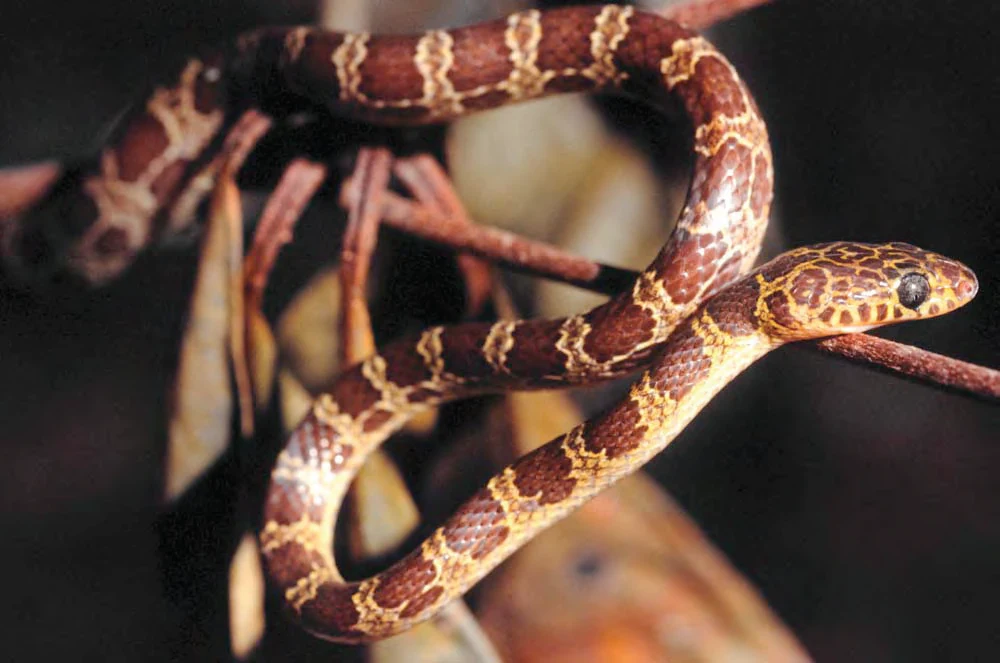 002
Lycodon muelleri
DUMÉRIL, BIBRON & DUMÉRIL 1854
- Length
- Length not yet addedAtlas entry awaiting completion
- Venom status
- Non-venomous
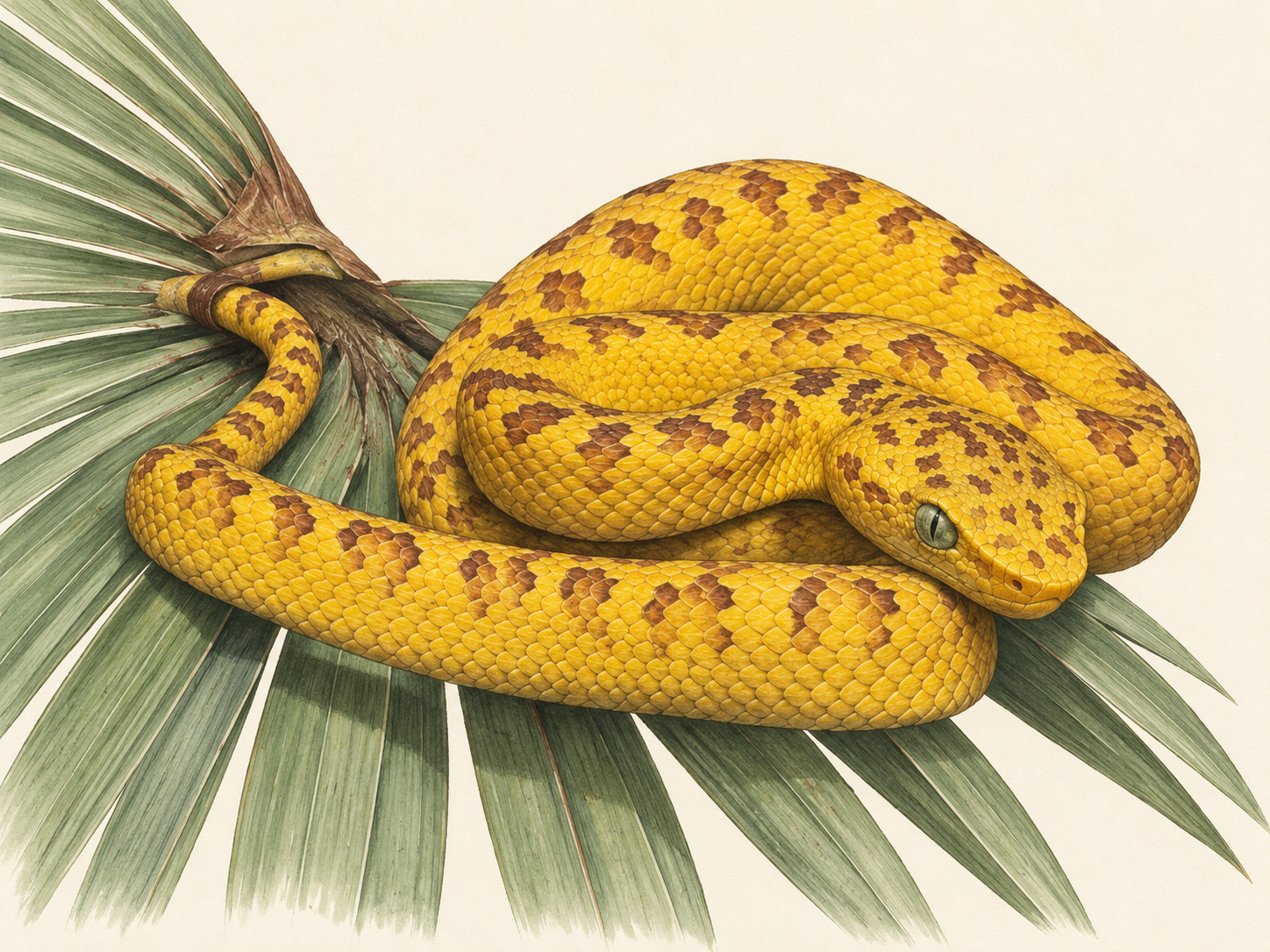 003
Trimeresurus mcgregori
TAYLOR 1919
- Length
- ♀ ~130 cm · ♂ ~85 cmReported adult lengths
- Venom status
- VenomousMedically significant effects