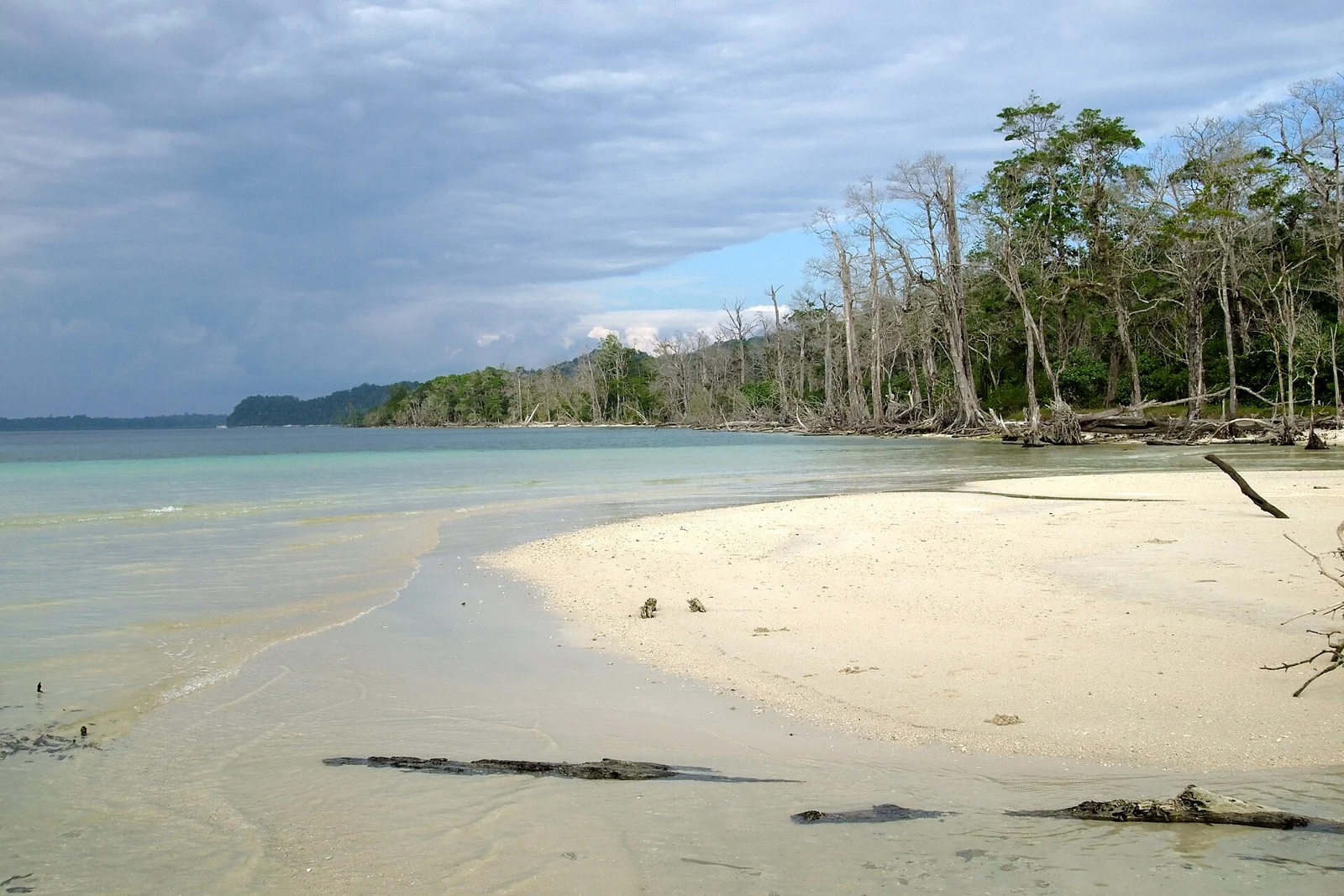
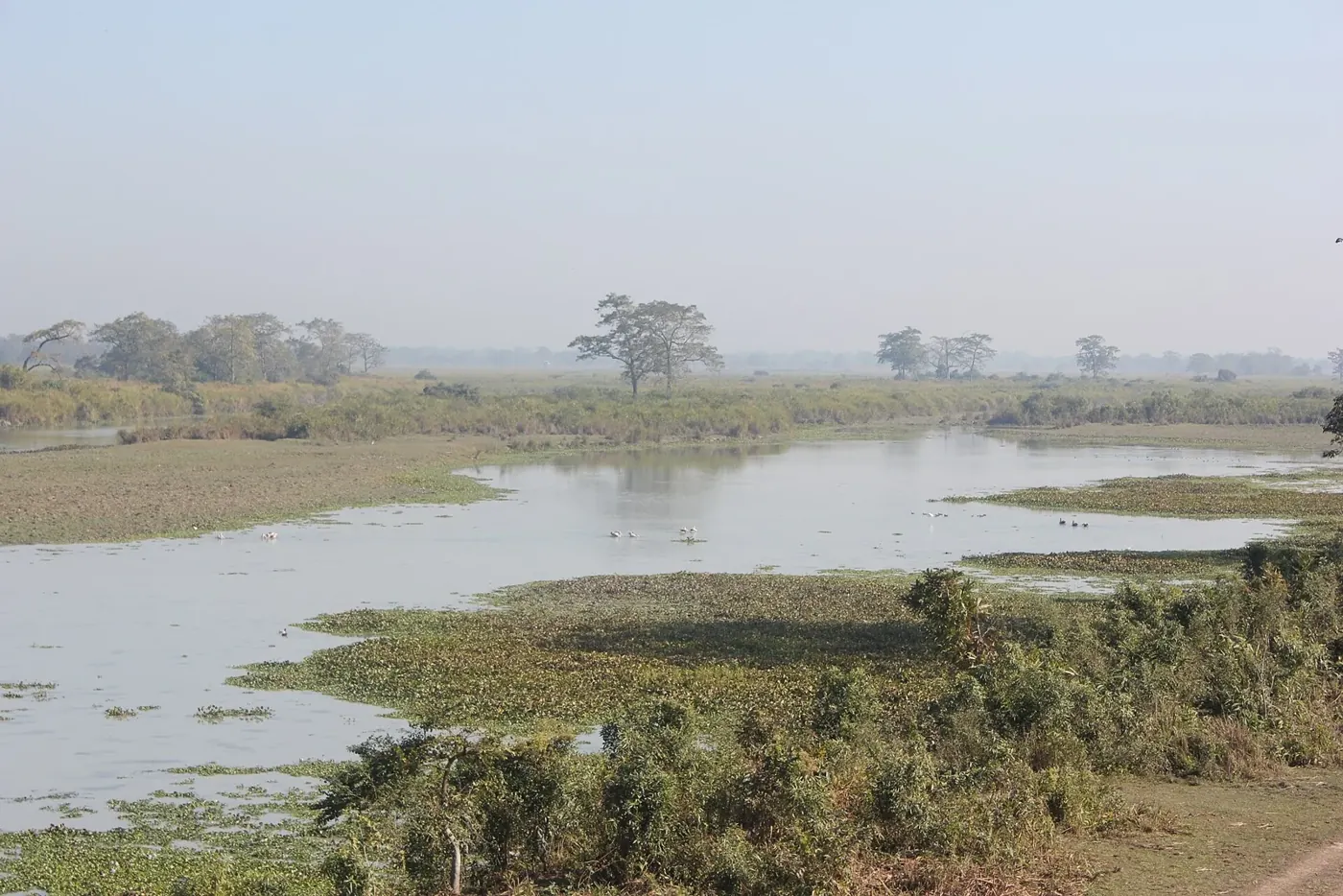
Lagoon at Havelock (Swaraj Dweep), Andaman Islands, India.

India · Place guide

Andaman, Nicobar & Lakshadweep

Andaman–Nicobar and Lakshadweep share a directory, not a single fauna.

36species with extracted evidence
9families
7region guides

Lagoon at Havelock (Swaraj Dweep), Andaman Islands, India.

Photograph: Vyacheslav Argenberg · Image source · CC BY 4.0. Cropped to fill the hero; darkened for text legibility.

Geography & biotopes

Read the landscape.

Andaman–Nicobar and Lakshadweep share a directory, not a single fauna.

Great Nicobar’s evergreen forests, hills and coastal plains provide one island example.

Ecological connections

Do not extend an Andaman or Nicobar record to Lakshadweep; preserve the archipelago and island name.

Explore the setting

Keep the named locality and date with each record. Check official access information and respect local communities; this geographic guide is not an access permit.

This guide indexes these source names: Andaman and Nicobar Islands, Lakshadweep, Andaman, Nicobar, Andamans, Nicobars, Laccadive. A country-only record is not automatically assigned to this place. Map markers identify navigation destinations, not collection sites.

UNESCO · Western Ghats →

geoBoundaries · Open ADM1 boundary provenance →

Geography is part of the record

Find your way through India.

Select a named region to open its evidence page. The complete directory below keeps every guide accessible, including places where locality evidence has not yet been extracted.

346 of 363 listed species have at least one indexed region record. 17 remain country-only. Even a nonzero count is not a complete regional inventory.

Habitats & living landscapes

Explore the living
landscapes.

Explore 7 guides to the environments, places and conservation pressures that shape this country. Each guide connects to the regional map and shared species accounts.

Landscape photographs & credits

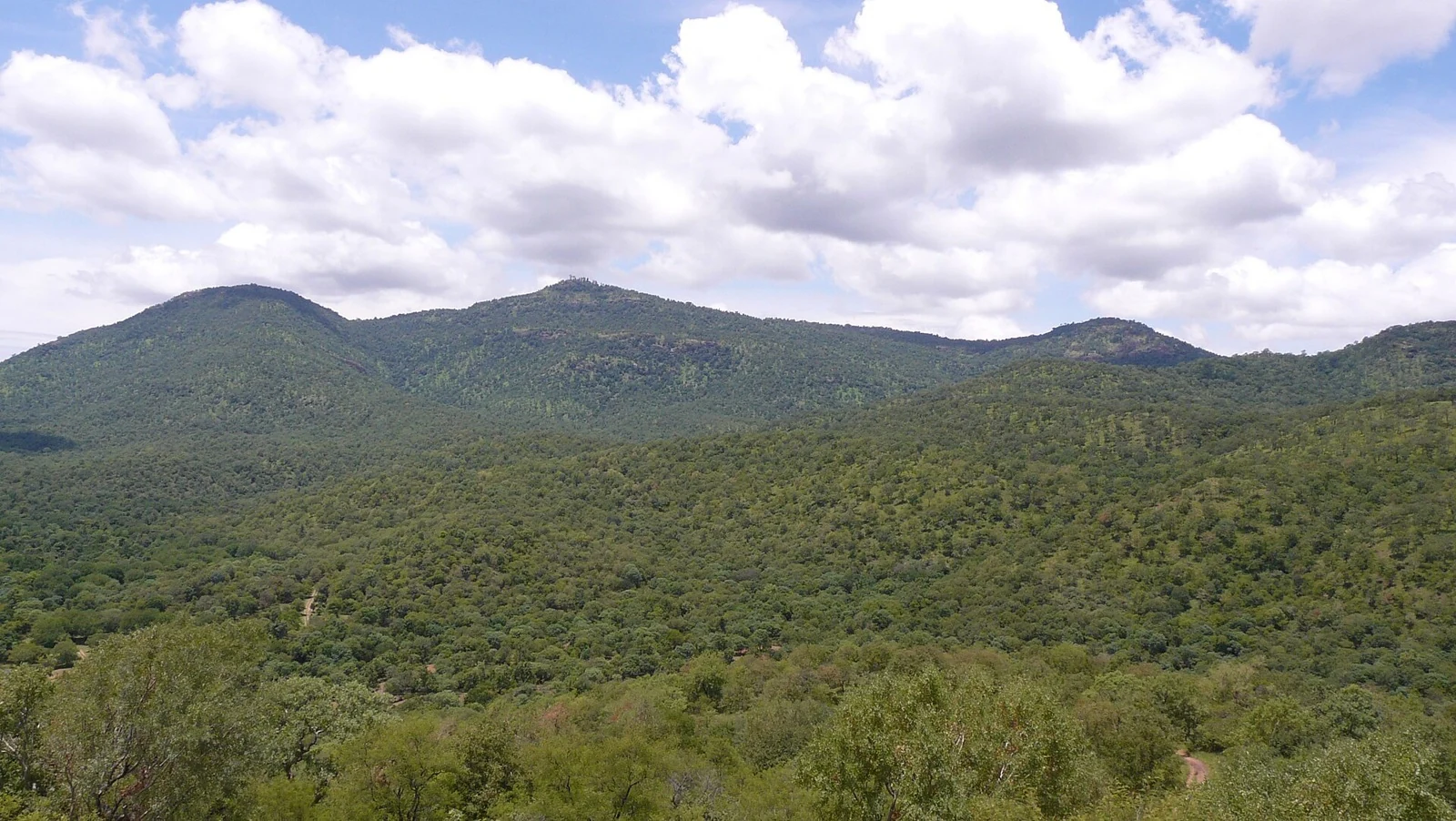
Forested hills near Bheemeshwari in the Cauvery Wildlife Sanctuary, Karnataka, India. — Ashwin Kumar from Bangalore, India. Original photograph · CC BY-SA 2.0. Cropped for the cards; photographs do not establish snake occurrence.

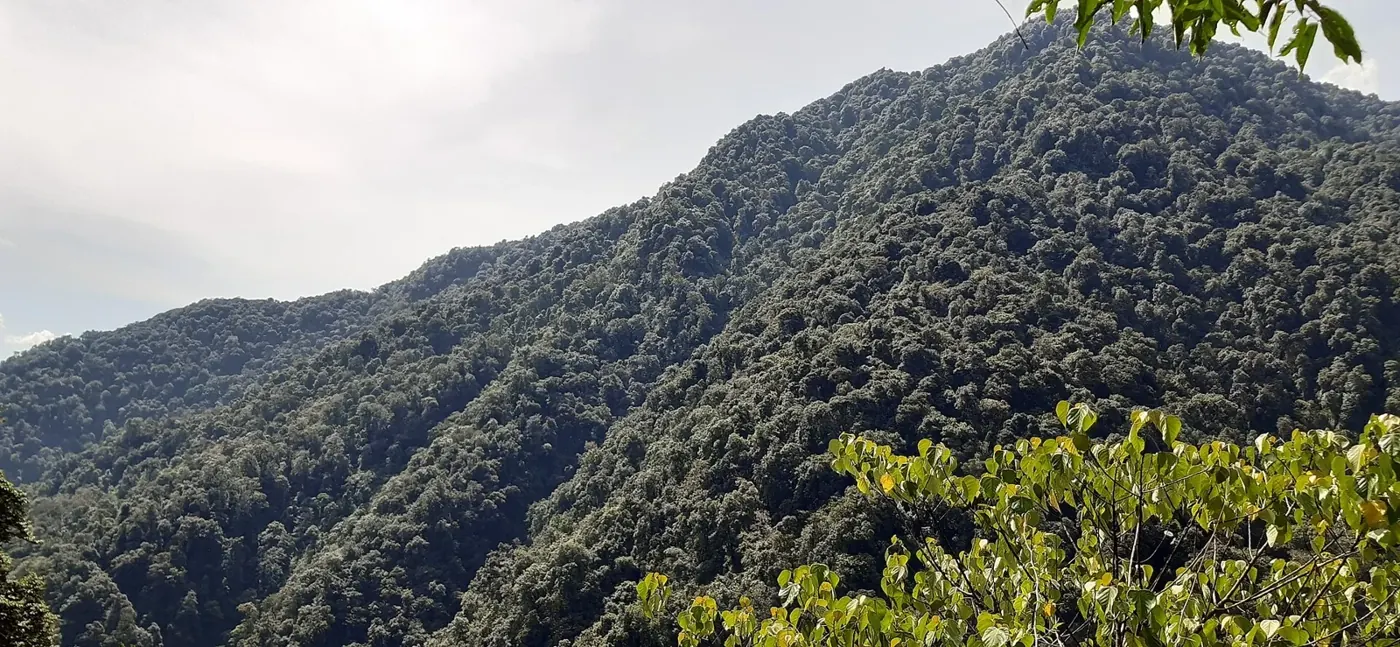
Forested mountain slopes in western Sikkim, India. — Billjones94. Original photograph · CC BY-SA 4.0. Cropped for the cards; photographs do not establish snake occurrence.

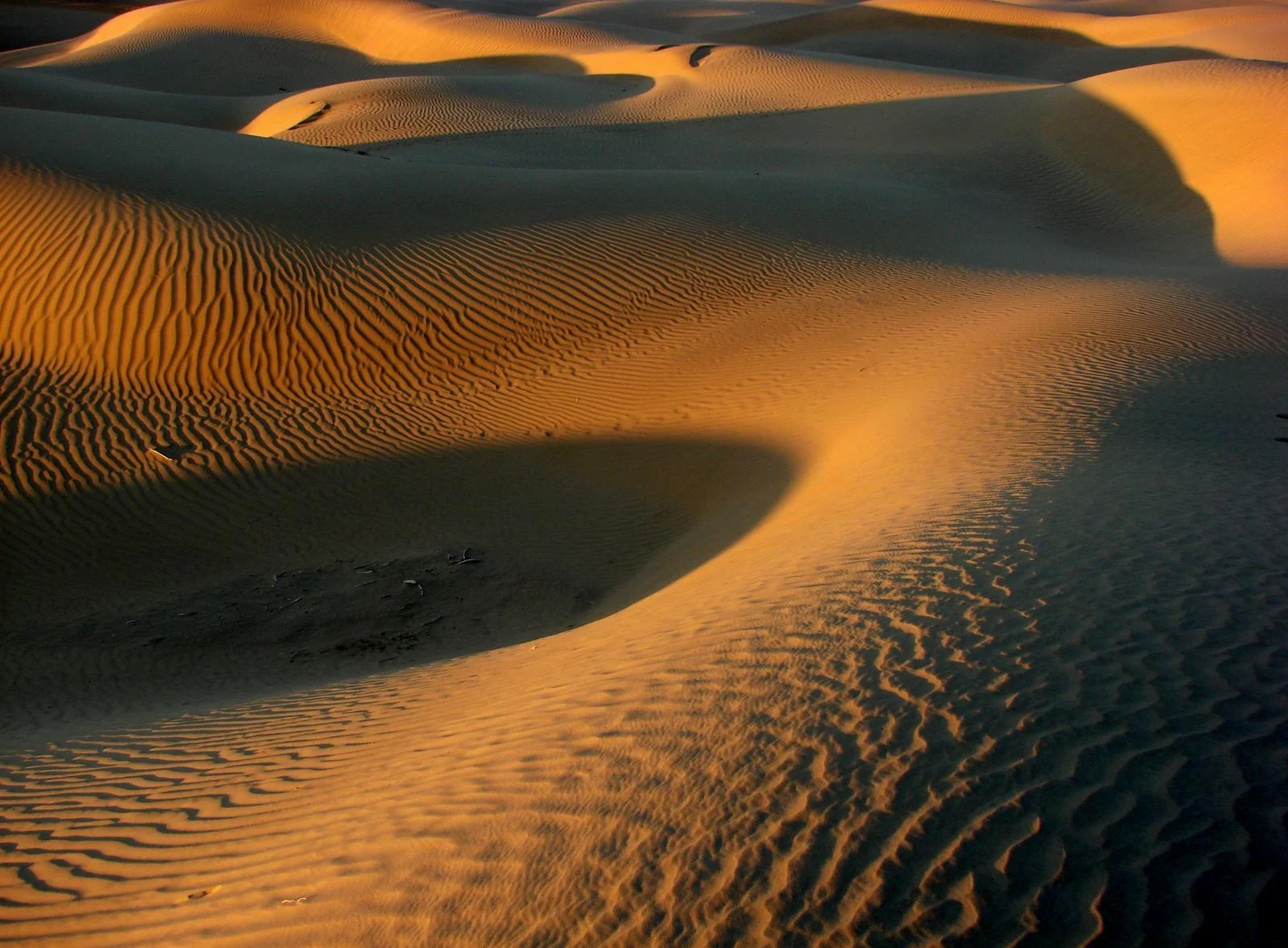
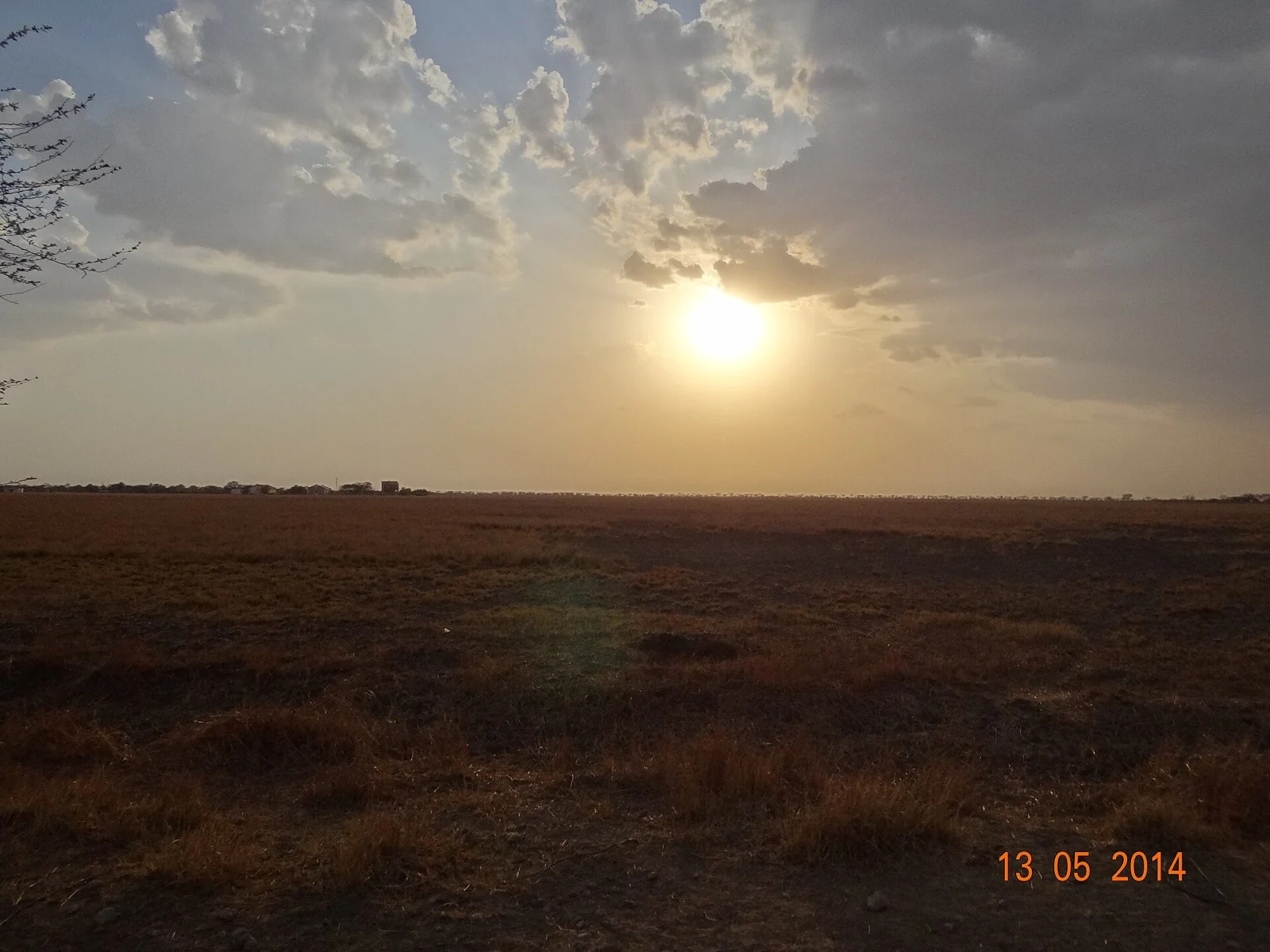
Sand dunes in the Thar Desert, Rajasthan, India. — Sankara Subramanian from Bangalore, India. Original photograph · CC BY 2.0. Cropped for the cards; photographs do not establish snake occurrence.

Grassland in Velavadar Blackbuck National Park, Gujarat, India. — Uday Damodaran. Original photograph · CC BY-SA 4.0. Cropped for the cards; photographs do not establish snake occurrence.

Wetland landscape in Kaziranga National Park, Assam, India. — Joli. Original photograph · CC BY-SA 4.0. Cropped for the cards; photographs do not establish snake occurrence.

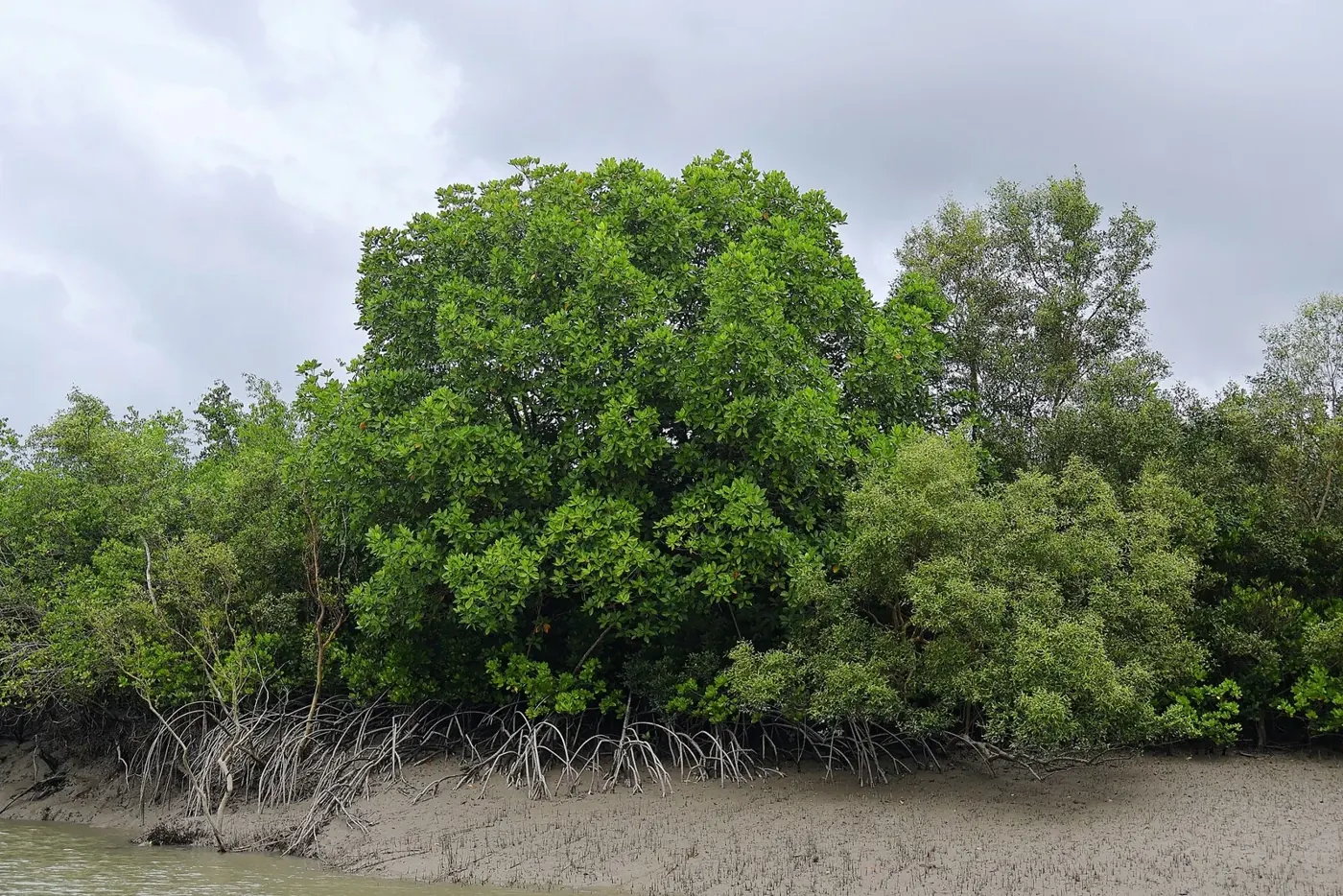
Mangrove vegetation in the Sundarbans, West Bengal, India. — Kingshuk Mondal. Original photograph · CC BY 4.0. Cropped for the cards; photographs do not establish snake occurrence.

Lagoon at Havelock (Swaraj Dweep), Andaman Islands, India. — Vyacheslav Argenberg. Original photograph · CC BY 4.0. Cropped for the cards; photographs do not establish snake occurrence.

The species catalogue

Snakes · Andaman, Nicobar & Lakshadweep.

Only records naming this place appear below. These are extracted locality records, not complete island or regional inventories.

36 species · showing 24

Acrochordus granulatus Portrait

001 · Acrochordidae

Little filesnake

Acrochordus granulatus

(SCHNEIDER, 1799)

Non-venomous

India is explicitly listed in the checked individual taxonomic treatment. The national ZSI checklist independently lists Acrochordus granulatus. Regional evidence: Gujarat; Kerala, Madras; Nicobar. Named records do not imply continuous occurrence throughout a region.

Read the species account →

Mario Lutz · Copyright Mario Lutz. Authorised for display in this atlas; no third-party reuse licence granted.

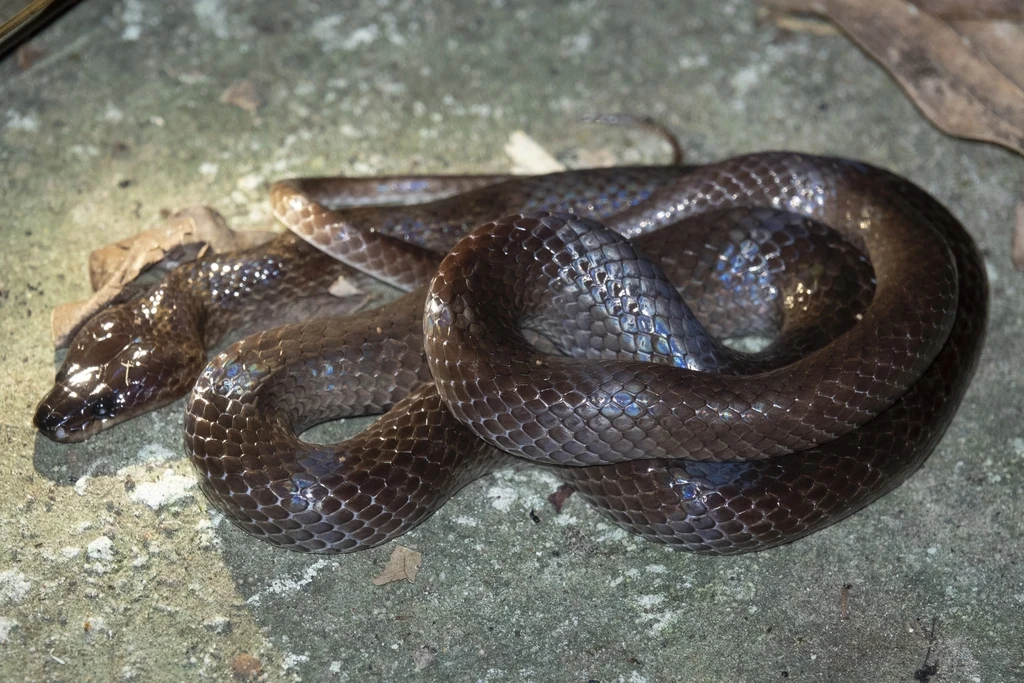
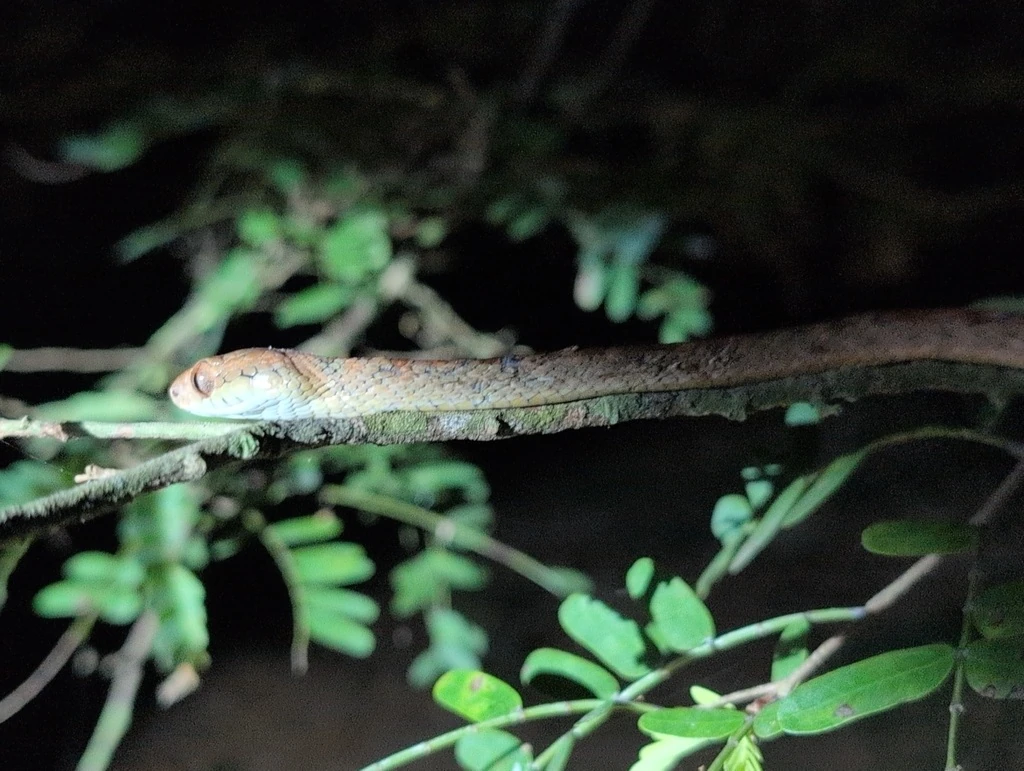
Boiga andamanensis. Identification follows the linked source community.

003 · Colubridae

Andaman Cat Snake

Boiga andamanensis

(WALL, 1909)

VenomousClinical severity not established

India is explicitly listed in the checked individual taxonomic treatment. The national ZSI checklist independently lists Boiga andamanensis. Regional evidence: Andaman. Named records do not imply continuous occurrence throughout a region.

Read the species account →

T R Shankar Raman · CC BY 4.0 · https://creativecommons.org/licenses/by/4.0/

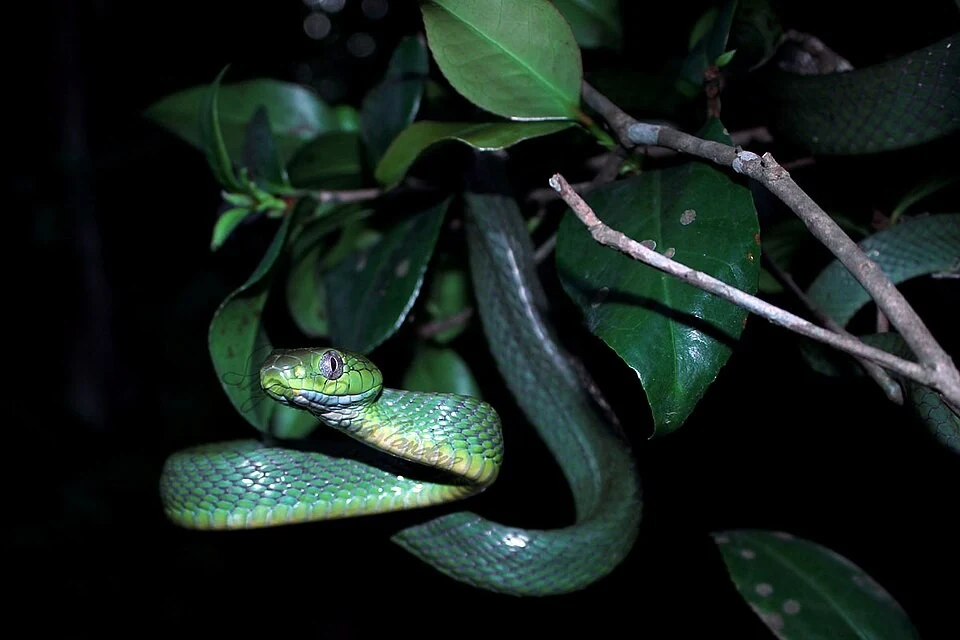
Boiga cyanea — real specimen photograph; identification follows the linked source.

004 · Colubridae

Green Cat Snake

Boiga cyanea

(DUMÉRIL, BIBRON & DUMÉRIL, 1854)

VenomousClinical severity not established

India is explicitly listed in the checked individual taxonomic treatment. The national ZSI checklist independently lists Boiga cyanea. Regional evidence: Assam, Arunachal Pradesh, Meghalaya, Nagaland, Manipur, Mizoram, Sikkim; West Bengal; Nicobar. Named records do not imply continuous occurrence throughout a region.

Read the species account →

Sp.herp · CC BY-SA 3.0 · https://creativecommons.org/licenses/by-sa/3.0

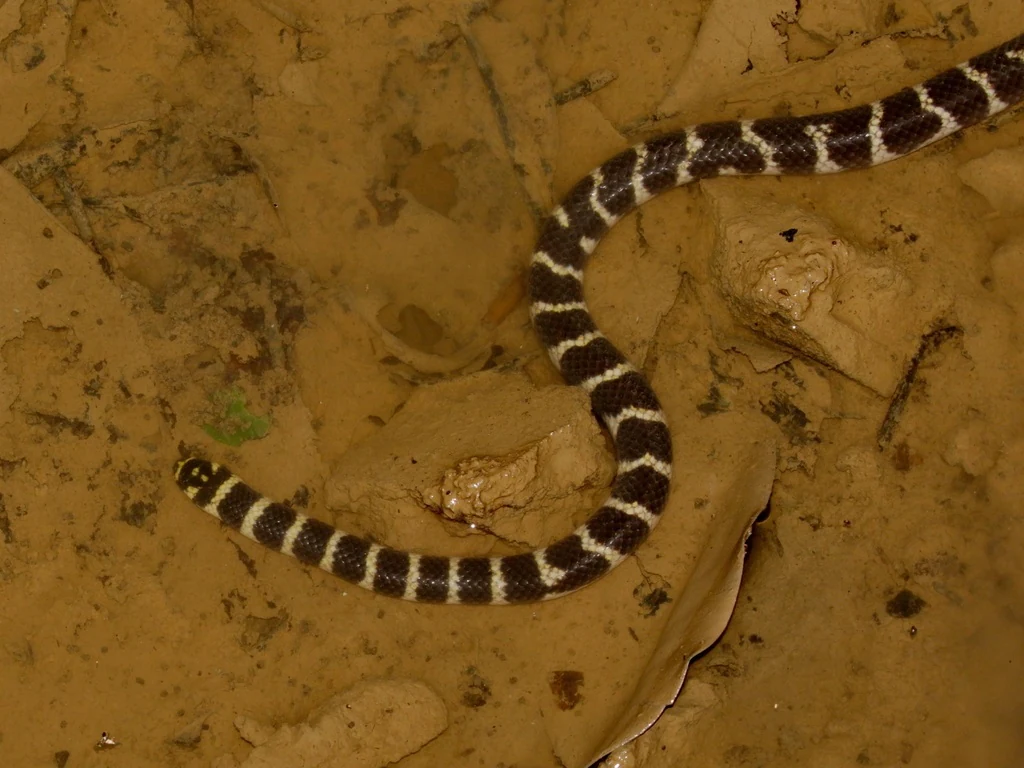
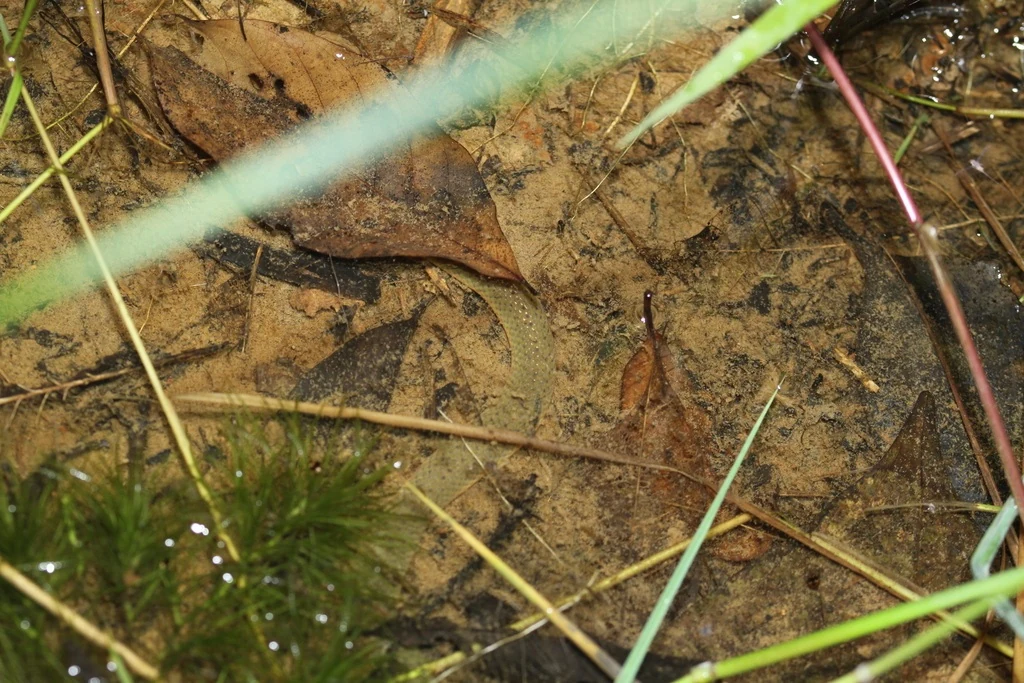
Cantoria violacea — Thailand, 2021-12-17. The head and banded body are visible in shallow muddy water.

007 · Homalopsidae

Cantor's Water Snake

Cantoria violacea

GIRARD, 1858

VenomousClinical severity not established

India is explicitly listed in the checked individual taxonomic treatment. The national ZSI checklist independently lists Cantoria violacea. Regional evidence: Andaman. Named records do not imply continuous occurrence throughout a region.

Read the species account →

Ian Dugdale · CC BY 4.0 · https://creativecommons.org/licenses/by/4.0/

Cerberus rynchops — real specimen photograph; identification follows the linked source.

008 · Homalopsidae

South Asian Bockadam, New Guinea bockadam, Dog-faced Water Snake

Cerberus rynchops

(SCHNEIDER, 1799)

VenomousClinical severity not established

India is explicitly listed in the checked individual taxonomic treatment. The national ZSI checklist independently lists Cerberus rynchops. Regional evidence: Assam; Odisha, Orissa; Gujarat, Maharashtra; Kerala, Tamil Nadu, Telangana; Andaman, Nicobar. Named records do not imply continuous occurrence throughout a region.

Read the species account →

Swati Sidhu · CC BY-SA 4.0 · https://creativecommons.org/licenses/by-sa/4.0

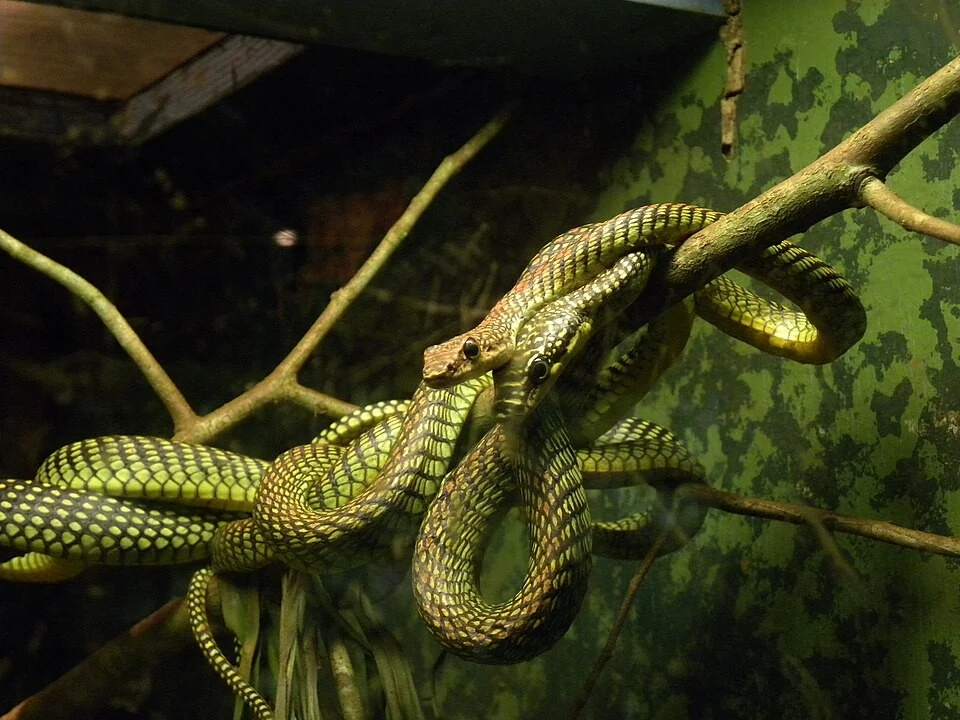
Chrysopelea paradisi — real specimen photograph; identification follows the linked source.

009 · Colubridae

Paradise Tree Snake

Chrysopelea paradisi

BOIE, 1827

VenomousClinical severity not established

India is explicitly listed in the checked individual taxonomic treatment. The national ZSI checklist independently lists Chrysopelea paradisi. Regional evidence: Andaman. Named records do not imply continuous occurrence throughout a region.

Read the species account →

Alan Couch from Australia · CC BY 2.0 · https://creativecommons.org/licenses/by/2.0

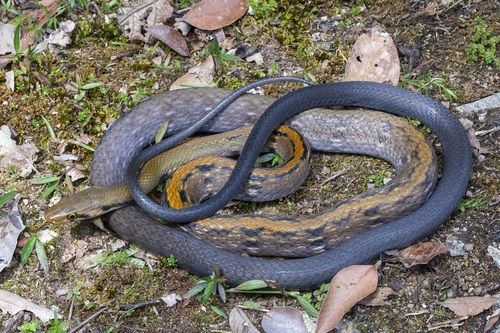
Coelognathus flavolineatus

010 · Colubridae

Black Copper Rat Snake

Coelognathus flavolineatus

(SCHLEGEL, 1837)

Venom unknownNot yet assessed

India is explicitly listed in the checked individual taxonomic treatment. The national ZSI checklist independently lists Coelognathus flavolineatus. Regional evidence: Andaman. Named records do not imply continuous occurrence throughout a region.

Read the species account →

dhfischer · CC-BY · https://www.inaturalist.org/photos/103394963

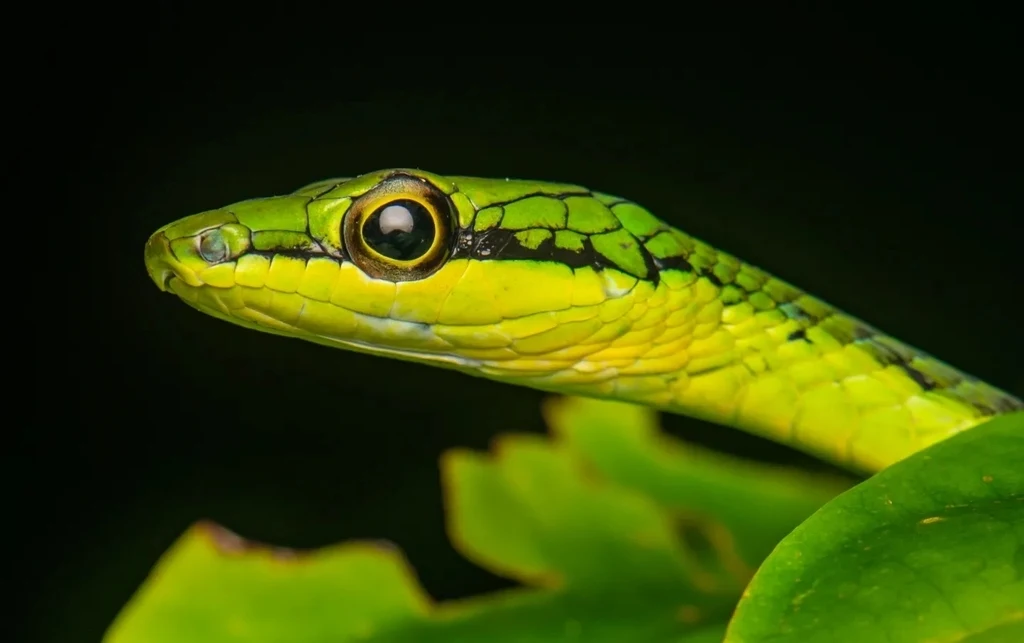
Dendrelaphis andamanensis. Close view of the head and anterior body. Original observation dated 2023-12-09. Photograph identification follows the cited observation; it adds no geographic occurrence record.

011 · Colubridae

Andaman Bronze-back

Dendrelaphis andamanensis

(ANDERSON, 1871)

Non-venomous

India is explicitly listed in the checked individual taxonomic treatment. The national ZSI checklist independently lists Dendrelaphis andamanensis. Regional evidence: Andaman. Named records do not imply continuous occurrence throughout a region.

Read the species account →

Prathamesh Khedwan · CC BY 4.0 · https://creativecommons.org/licenses/by/4.0/

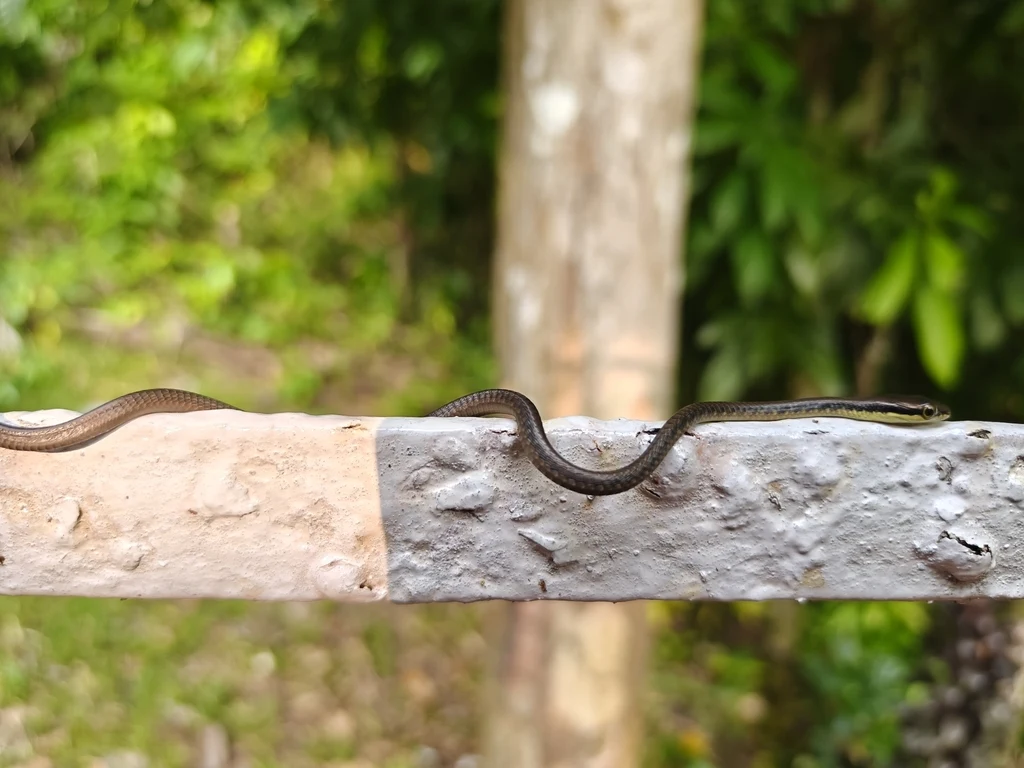
Dendrelaphis humayuni. Whole individual photographed on a wooden rail. Original observation dated 2026-10-17. Photograph identification follows the cited observation; it adds no geographic occurrence record.

012 · Colubridae

Tiwar's Bronzeback

Dendrelaphis humayuni

TIWARI & BISWAS, 1973

Non-venomous

India is explicitly listed in the checked individual taxonomic treatment. The national ZSI checklist independently lists Dendrelaphis humayuni. Regional evidence: Nicobar. Named records do not imply continuous occurrence throughout a region.

Read the species account →

Anon Ray · CC BY 4.0 · https://creativecommons.org/licenses/by/4.0/

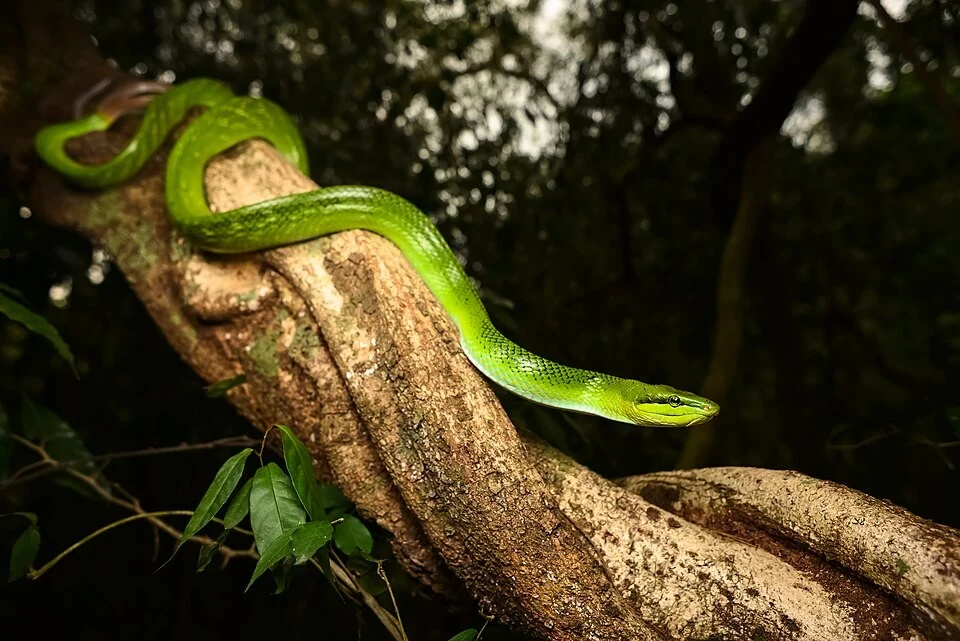
Gonyosoma oxycephalum — real specimen photograph; identification follows the linked source.

015 · Colubridae

Red-tailed Green Ratsnake

Gonyosoma oxycephalum

(BOIE, 1827)

Non-venomous

India is explicitly listed in the checked individual taxonomic treatment. The national ZSI checklist independently lists Gonyosoma oxycephalum. Regional evidence: Andaman. Named records do not imply continuous occurrence throughout a region.

Read the species account →

Rushenb · CC BY-SA 4.0 · https://creativecommons.org/licenses/by-sa/4.0

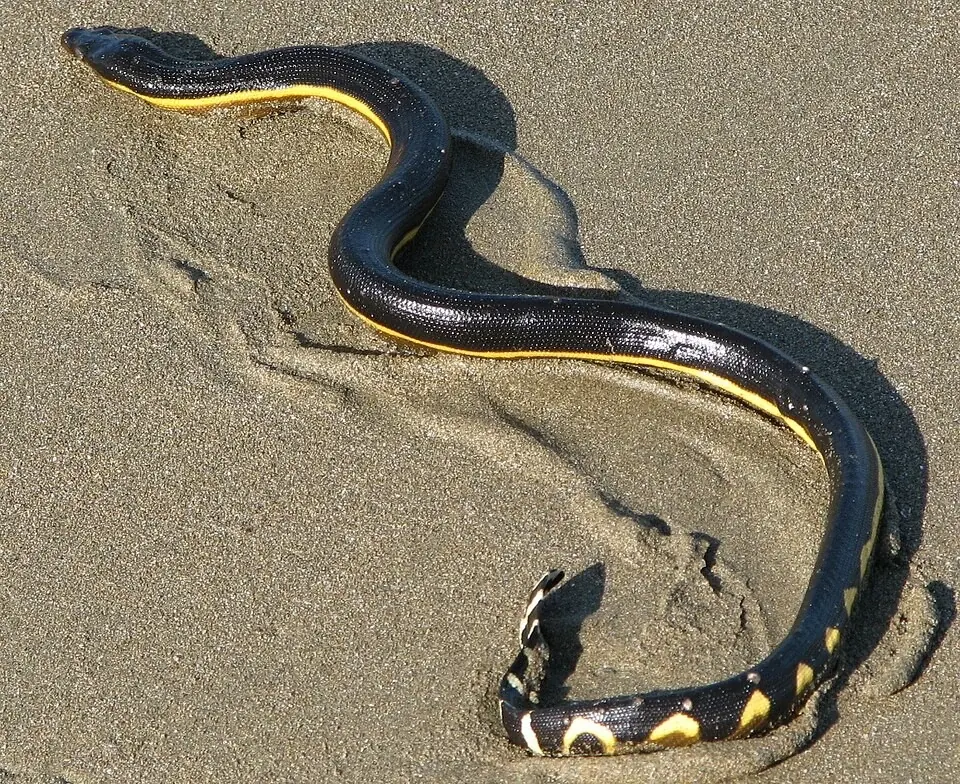
Hydrophis platurus — real specimen photograph; identification follows the linked source.

016 · Elapidae

Yellowbelly Sea Snake

Hydrophis platurus

(LINNAEUS, 1766)

VenomousClinical severity not established

India is explicitly listed in the checked individual taxonomic treatment. The national ZSI checklist independently lists Hydrophis platurus. Regional evidence: Gujarat; Kerala; Andaman, Nicobar. Named records do not imply continuous occurrence throughout a region.

Read the species account →

Aloaiza · CC BY 3.0 · https://creativecommons.org/licenses/by/3.0

Hypsiscopus plumbeus — Indonesia, 2024-01-19.

017 · Homalopsidae

Boie’s Mud Snake

Hypsiscopus plumbeus

(BOIE, 1827)

VenomousClinical severity not established

India is explicitly listed in the checked individual taxonomic treatment. The national ZSI checklist independently lists Hypsiscopus plumbea. Regional evidence: Nicobar. Named records do not imply continuous occurrence throughout a region.

Read the species account →

Samuel GUIRAUDOU · CC BY 4.0 · https://creativecommons.org/licenses/by/4.0/

Indotyphlops braminus — photographed on Ko Pha-ngan, Thailand.

018 · Typhlopidae

Flowerpot Snake

Indotyphlops braminus

(DAUDIN, 1803)

Non-venomous

India is explicitly listed in the checked individual taxonomic treatment. The national ZSI checklist independently lists Indotyphlops braminus. Regional evidence: Jammu and Kashmir, Himachal Pradesh, Himachal; Assam, Arunachal Pradesh, Meghalaya, Mizoram, Tripura, Sikkim; Odisha; Madhya Pradesh; Gujarat, Maharashtra; Kerala, Tamil Nadu, Telangana;…

Read the species account →

Cook-Price, Makchai & Suwanwaree (2026); photographs credited collectively to the author, James Covert and Vikas Kumar · CC BY 4.0 · https://creativecommons.org/licenses/by/4.0/

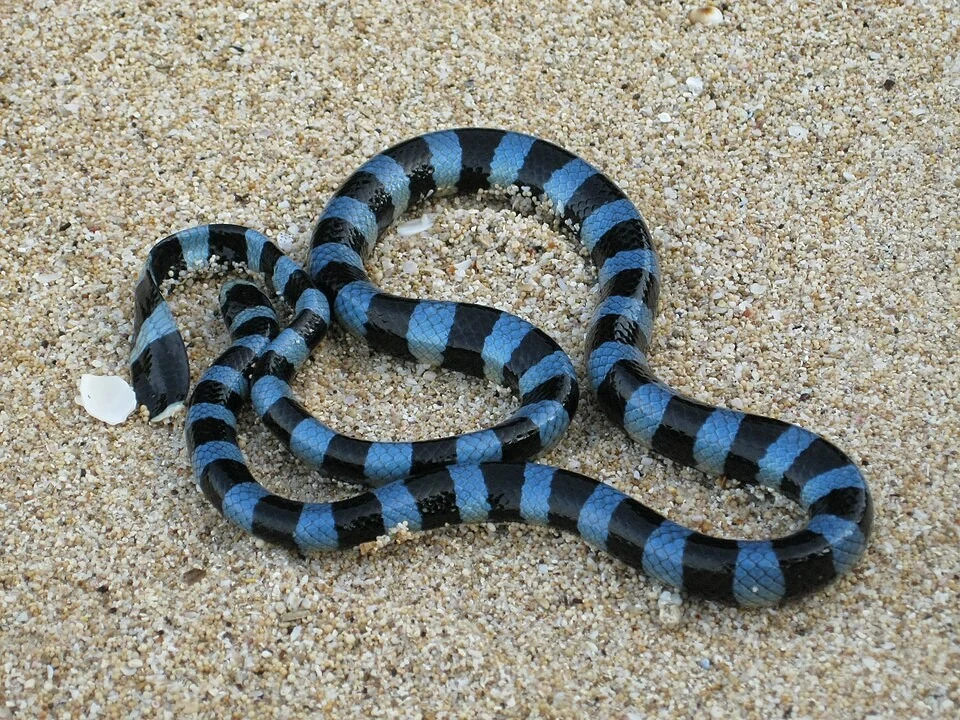
Laticauda laticaudata — real specimen photograph; identification follows the linked source.

019 · Elapidae

Blue-banded Sea Krait

Laticauda laticaudata

(LINNAEUS, 1758)

VenomousClinical severity not established

India is explicitly listed in the checked individual taxonomic treatment. The national ZSI checklist independently lists Laticauda laticaudata. Regional evidence: Andaman, Nicobar. Named records do not imply continuous occurrence throughout a region.

Read the species account →

Bramadi Arya · CC BY-SA 4.0 · https://creativecommons.org/licenses/by-sa/4.0

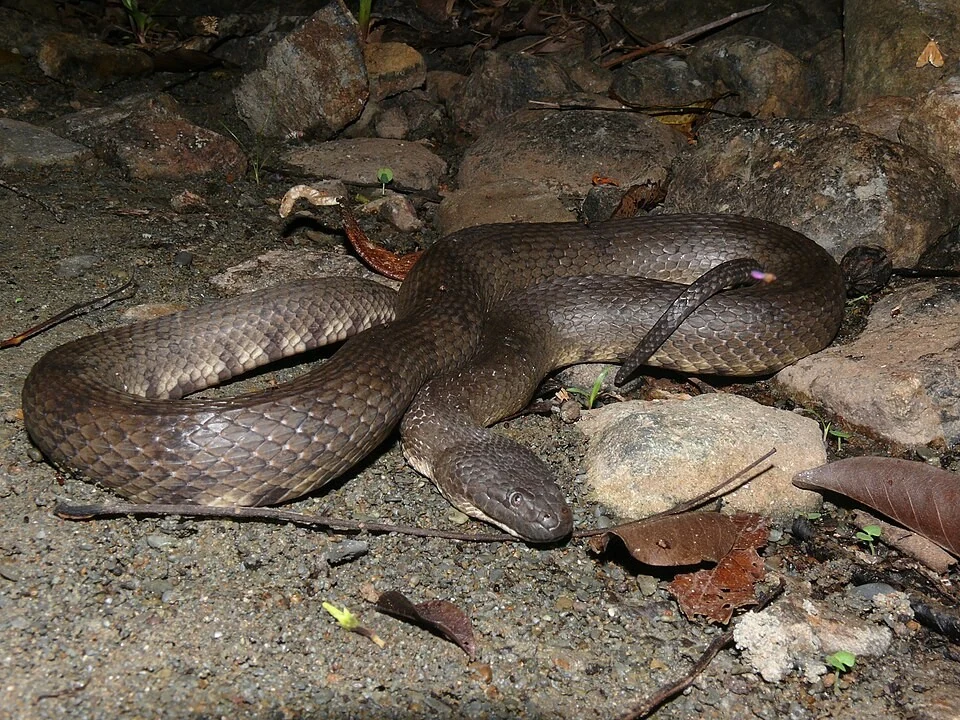
Lycodon hypsirhinoides. Coiled individual photographed on rock. Original observation dated 2023-04-25. Photograph identification follows the cited observation; it adds no geographic occurrence record.

020 · Colubridae

Andaman wolf snake

Lycodon hypsirhinoides

(THEOBALD, 1868)

Non-venomous

India is explicitly listed in the checked individual taxonomic treatment. The national ZSI checklist independently lists Lycodon hypsirhinoides. Regional evidence: Andaman. Named records do not imply continuous occurrence throughout a region.

Read the species account →

Ronith Urs · CC BY 4.0 · https://creativecommons.org/licenses/by/4.0/

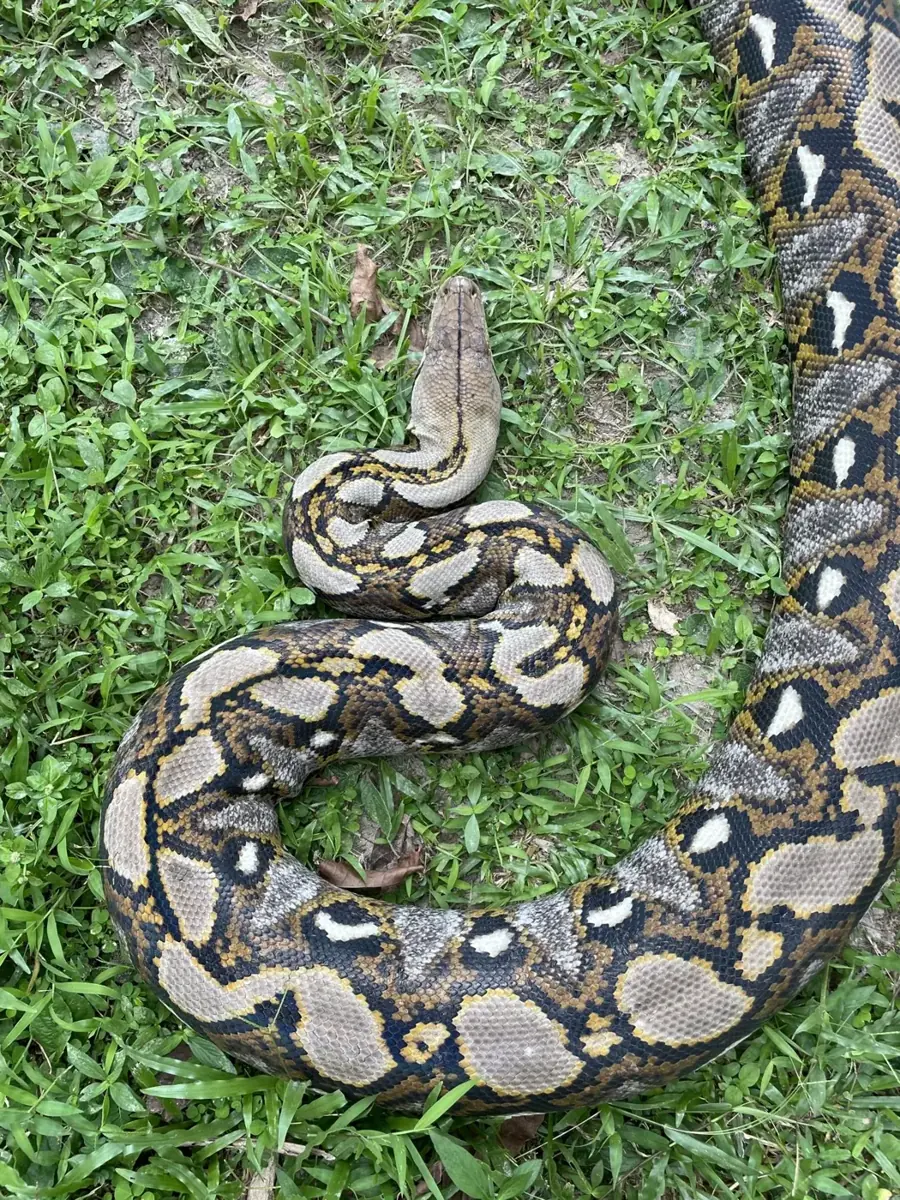
Malayopython reticulatus — photographed on Ko Pha-ngan, Thailand.

023 · Pythonidae

Reticulated Python

Malayopython reticulatus

(SCHNEIDER, 1801)

Non-venomous

India is explicitly listed in the checked individual taxonomic treatment. The national ZSI checklist independently lists Malayopython reticulatus. Regional evidence: Mizoram; Nicobar. Named records do not imply continuous occurrence throughout a region.

Read the species account →

Cook-Price, Makchai & Suwanwaree (2026); photographs credited collectively to the author, James Covert and Vikas Kumar · CC BY 4.0 · https://creativecommons.org/licenses/by/4.0/

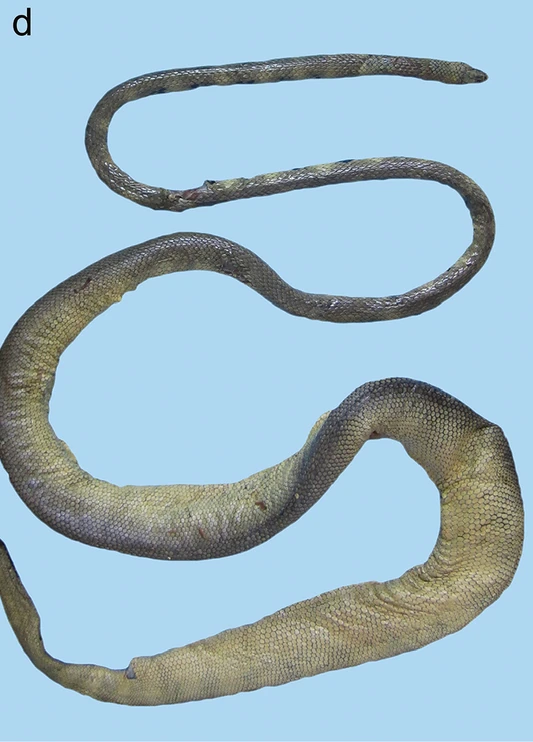
Microcephalophis cantoris. Preserved specimen; colours may have changed in preservative. Figure 26d. Scientific source photograph; no new occurrence record is inferred.

024 · Elapidae

Cantor’s narrow –headed sea snake

Microcephalophis cantoris

(GÜNTHER, 1864)

VenomousClinical severity not established

India is explicitly listed in the checked individual taxonomic treatment. The national ZSI checklist independently lists Microcephalophis cantoris. Regional evidence: Gujarat; Andaman. Named records do not imply continuous occurrence throughout a region.

Read the species account →

Rezaie-Atagholipour, Mohsen; Ghezellou, Parviz; Hesni, Majid Askari; Dakhteh, Seyyed Mohammad Hashem; Ahmadian, Hooman; Vidal, Nicolas · CC BY 4.0 · https://creativecommons.org/licenses/by/4.0/

Explore all 363 country records →

The research library

Sources & the checklist.

This edition lists 363 species with supported country records from checked taxonomic treatments and cited field studies. It is not a claim of a complete national inventory. Each account retains its source and check date; individual evidence entries retain their own review dates.

Independent checklist comparison · 2026-10-11

The country edition compares individual taxonomic treatments with the official 2025 ZSI checklist and retains subsequent documented species treatments. Database searches are discovery only: matches for Indiana, erroneous historical type localities and qualified records do not establish India. Shared species identities are reused across country chapters. This is a sourced atlas inventory, not a claim that all current Indian diversity or natural history is resolved.

Zoological Survey of India: Reptilia checklist (2025) ↗

Review still open

Historical and unverified country assignments

Homalopsis hardwickii and Indotyphlops loveridgei remain unresolved; old Trimeresurus stejnegeri assignments are not promoted to confirmed records.

Geographic precision

A named state supports a record in its editorial region, not continuous occurrence across that region. Offshore sea-snake records are not terrestrial range polygons.

Profile completeness

Many newly added endemic species have a verified distribution and reproductive mode but still lack reviewed photographs and detailed habitat accounts.

Range and taxonomy review

Country links use a single accepted species identity. Revised names and disputed records are kept visible here; uncertain records do not enter the listed collection or regional totals.

Oligodon albocinctus

Supported country occurrence

India is explicitly listed in the checked individual taxonomic treatment. The national ZSI checklist independently lists Oligodon albocinctus. Regional evidence: Assam, Arunachal Pradesh, Meghalaya, Nagaland, Manipur, Mizoram, Tripura, Sikkim. Named records do not imply continuous occurrence throughout a region.

Source 1 ↗

Source 2 ↗

Lycodon laoensis

Supported country occurrence

India is explicitly listed in the checked individual taxonomic treatment. The national ZSI checklist independently lists Lycodon laoensis.

Source 1 ↗

Source 2 ↗

Ophiophagus hannah

Supported country occurrence

India is explicitly listed in the checked individual taxonomic treatment. The national ZSI checklist independently lists Ophiophagus hannah. Regional evidence: Assam, Arunachal Pradesh, Meghalaya, Mizoram, Tripura, Sikkim; Bihar, Odisha, West Bengal, Orissa; Madhya Pradesh; Andhra Pradesh; Andaman. Named records do not imply continuous occurrence throughout a region.

Source 1 ↗

Source 2 ↗

Pareas monticola

Supported country occurrence

India is explicitly listed in the checked individual taxonomic treatment. The national ZSI checklist independently lists Pareas monticola. Regional evidence: Assam, Arunachal Pradesh, Meghalaya, Nagaland, Mizoram, Tripura, Sikkim, Naga Hills. Named records do not imply continuous occurrence throughout a region.

Source 1 ↗

Source 2 ↗

Sinomicrurus macclellandi

Supported country occurrence

India is explicitly listed in the checked individual taxonomic treatment. The national ZSI checklist independently lists Sinomicrurus macclellandi. Regional evidence: Assam, Arunachal Pradesh, Meghalaya, Nagaland, Manipur, Mizoram, Sikkim. Named records do not imply continuous occurrence throughout a region.

Source 1 ↗

Source 2 ↗

Oligodon dorsalis

Supported country occurrence

India is explicitly listed in the checked individual taxonomic treatment. The national ZSI checklist independently lists Oligodon dorsalis. Regional evidence: Assam, Arunachal Pradesh, Meghalaya, Nagaland, Manipur, Mizoram. Named records do not imply continuous occurrence throughout a region.

Source 1 ↗

Source 2 ↗

Oligodon catenatus

Supported country occurrence

India is explicitly listed in the checked individual taxonomic treatment. The national ZSI checklist independently lists Oligodon catenatus. Regional evidence: Mizoram. Named records do not imply continuous occurrence throughout a region.

Source 1 ↗

Source 2 ↗

Pareas macularius

Supported country occurrence

India is listed in the official 2025 ZSI checklist, which supersedes the older checklist omissions or unresolved range strings repeated in some taxonomic treatments. The database questions precise Indian localities, so no state assignment is made.

Source 1 ↗

Source 2 ↗

Dinodon septentrionalis

Supported country occurrence

India is explicitly listed in the checked individual taxonomic treatment. The national ZSI checklist independently lists Lycodon septentrionalis. Regional evidence: Assam, Arunachal Pradesh, Meghalaya, Nagaland, Mizoram, Sikkim, Khasi Hills; West Bengal. Named records do not imply continuous occurrence throughout a region.

Source 1 ↗

Source 2 ↗

Oligodon theobaldi

Supported country occurrence

India is explicitly listed in the checked individual taxonomic treatment. The national ZSI checklist independently lists Oligodon theobaldi. Regional evidence: Meghalaya, Nagaland. Named records do not imply continuous occurrence throughout a region.

Source 1 ↗

Source 2 ↗

Naja kaouthia

Supported country occurrence

India is explicitly listed in the checked individual taxonomic treatment. The national ZSI checklist independently lists Naja kaouthia. Regional evidence: Uttar Pradesh; Assam, Arunachal Pradesh, Meghalaya, Nagaland, Manipur, Mizoram, Tripura, Sikkim; Bihar, Odisha, West Bengal, Orissa. Named records do not imply continuous occurrence throughout a region.

Source 1 ↗

Source 2 ↗

Cerberus rynchops

Supported country occurrence

India is explicitly listed in the checked individual taxonomic treatment. The national ZSI checklist independently lists Cerberus rynchops. Regional evidence: Assam; Odisha, Orissa; Gujarat, Maharashtra; Kerala, Tamil Nadu, Telangana; Andaman, Nicobar. Named records do not imply continuous occurrence throughout a region.

Source 1 ↗

Source 2 ↗

Boiga cyanea

Supported country occurrence

India is explicitly listed in the checked individual taxonomic treatment. The national ZSI checklist independently lists Boiga cyanea. Regional evidence: Assam, Arunachal Pradesh, Meghalaya, Nagaland, Manipur, Mizoram, Sikkim; West Bengal; Nicobar. Named records do not imply continuous occurrence throughout a region.

Source 1 ↗

Source 2 ↗

Hebius khasiensis

Supported country occurrence

India is explicitly listed in the checked individual taxonomic treatment. The national ZSI checklist independently lists Hebius khasiensis. Regional evidence: Arunachal Pradesh, Meghalaya, Nagaland, Mizoram, Khasi Hills. Named records do not imply continuous occurrence throughout a region. A named locality in the cited account; no continuous regional range is inferred.

Source 1 ↗

Source 2 ↗

Source 3 ↗
Microcephalophis cantoris

Supported country occurrence

India is explicitly listed in the checked individual taxonomic treatment. The national ZSI checklist independently lists Microcephalophis cantoris. Regional evidence: Gujarat; Andaman. Named records do not imply continuous occurrence throughout a region.

Source 1 ↗

Source 2 ↗

Protobothrops mucrosquamatus

Supported country occurrence

India is explicitly listed in the checked individual taxonomic treatment. The national ZSI checklist independently lists Protobothrops mucrosquamatus. Regional evidence: Assam, Arunachal Pradesh, Nagaland, Mizoram, Naga Hills. Named records do not imply continuous occurrence throughout a region.

Source 1 ↗

Source 2 ↗

Chrysopelea ornata

Supported country occurrence

India is explicitly listed in the checked individual taxonomic treatment. The national ZSI checklist independently lists Chrysopelea ornata. Regional evidence: Assam, Arunachal Pradesh, Meghalaya, Nagaland, Mizoram, Tripura, Sikkim; Bihar, Odisha, West Bengal, Orissa; Madhya Pradesh; Gujarat; Kerala, Tamil Nadu. Named records do not imply continuous occurrence throughout a region.

Source 1 ↗

Source 2 ↗

Gongylosoma frenata

Supported country occurrence

India is explicitly listed in the checked individual taxonomic treatment. The national ZSI checklist independently lists Gongylosoma frenata. Regional evidence: Arunachal Pradesh, Meghalaya, Nagaland, Mizoram. Named records do not imply continuous occurrence throughout a region.

Source 1 ↗

Source 2 ↗

Hydrophis lapemoides

Supported country occurrence

India is explicitly listed in the checked individual taxonomic treatment. The national ZSI checklist independently lists Hydrophis lapemoides. Regional evidence: Gujarat. Named records do not imply continuous occurrence throughout a region.

Source 1 ↗

Source 2 ↗

Calamaria pavimentata

Supported country occurrence

India is explicitly listed in the checked individual taxonomic treatment. The national ZSI checklist independently lists Calamaria pavimentata. Regional evidence: Assam, Meghalaya, Manipur, Mizoram. Named records do not imply continuous occurrence throughout a region.

Source 1 ↗

Source 2 ↗

Oligodon cinereus

Supported country occurrence

India is explicitly listed in the checked individual taxonomic treatment. The national ZSI checklist independently lists Oligodon cinereus. Regional evidence: Assam, Arunachal Pradesh, Meghalaya, Mizoram. Named records do not imply continuous occurrence throughout a region.

Source 1 ↗

Source 2 ↗

Rhabdophis nuchalis

Uncertain — excluded from the listed total

Reviewed Indian specimens formerly assigned to nuchalis are referred to R. leonardi. The 2024 Manipur paper supports leonardi and excludes a second nuchalis occurrence.

Source 1 ↗

Source 2 ↗

Liopeltis stoliczkae

Supported country occurrence

India is explicitly listed in the checked individual taxonomic treatment. The national ZSI checklist independently lists Liopeltis stoliczkae. Regional evidence: Arunachal Pradesh, Nagaland, Mizoram, Sikkim. Named records do not imply continuous occurrence throughout a region.

Source 1 ↗

Source 2 ↗

Dendrelaphis proarchos

Supported country occurrence

India is explicitly listed in the checked individual taxonomic treatment. The national ZSI checklist independently lists Dendrelaphis proarchos. Regional evidence: Uttar Pradesh; Arunachal Pradesh, Meghalaya, Nagaland, Mizoram, Tripura, Sikkim; Gujarat. Named records do not imply continuous occurrence throughout a region.

Source 1 ↗

Source 2 ↗

Amphiesma stolatum

Supported country occurrence

India is explicitly listed in the checked individual taxonomic treatment. The national ZSI checklist independently lists Amphiesma stolatum. Regional evidence: Jammu and Kashmir, Himachal Pradesh, Uttar Pradesh, Himachal; Assam, Arunachal Pradesh, Meghalaya, Nagaland, Manipur, Mizoram, Tripura, Sikkim; Bihar, Odisha, Orissa; Madhya Pradesh, Chhattisgarh; Gujarat, Maharashtra; Karnataka, Kerala, Tamil Nadu, Andhra Pradesh, Telangana. Named records do not imply continuous occurrence throughout a region.

Source 1 ↗

Source 2 ↗

Protobothrops jerdonii

Supported country occurrence

India is explicitly listed in the checked individual taxonomic treatment. The national ZSI checklist independently lists Protobothrops jerdonii. Regional evidence: Assam, Arunachal Pradesh, Meghalaya, Nagaland, Manipur, Sikkim, Khasi Hills. Named records do not imply continuous occurrence throughout a region.

Source 1 ↗

Source 2 ↗

Pseudoxenodon macrops

Supported country occurrence

India is explicitly listed in the checked individual taxonomic treatment. The national ZSI checklist independently lists Pseudoxenodon macrops. Regional evidence: Assam, Arunachal Pradesh, Meghalaya, Nagaland, Mizoram, Sikkim. Named records do not imply continuous occurrence throughout a region.

Source 1 ↗

Source 2 ↗

Ptyas nigromarginata

Supported country occurrence

India is explicitly listed in the checked individual taxonomic treatment. The national ZSI checklist independently lists Ptyas nigromarginata. Regional evidence: Arunachal Pradesh, Meghalaya, Nagaland, Sikkim. Named records do not imply continuous occurrence throughout a region.

Source 1 ↗

Source 2 ↗

Ovophis monticola

Supported country occurrence

India is explicitly listed in the checked individual taxonomic treatment. The national ZSI checklist independently lists Ovophis monticola. Regional evidence: Assam, Arunachal Pradesh, Meghalaya, Nagaland, Manipur, Mizoram, Sikkim; West Bengal. Named records do not imply continuous occurrence throughout a region.

Source 1 ↗

Source 2 ↗

Gonyosoma frenatum

Supported country occurrence

India is explicitly listed in the checked individual taxonomic treatment. The national ZSI checklist independently lists Gonyosoma frenatum. Regional evidence: Arunachal Pradesh, Meghalaya, Mizoram, Khasi Hills. Named records do not imply continuous occurrence throughout a region.

Source 1 ↗

Source 2 ↗

Boiga siamensis

Supported country occurrence

India is explicitly listed in the checked individual taxonomic treatment. The national ZSI checklist independently lists Boiga siamensis. Regional evidence: Assam, Arunachal Pradesh, Meghalaya, Nagaland, Mizoram, Sikkim; West Bengal. Named records do not imply continuous occurrence throughout a region.

Source 1 ↗

Source 2 ↗

Bungarus bungaroides

Supported country occurrence

India is explicitly listed in the checked individual taxonomic treatment. The national ZSI checklist independently lists Bungarus bungaroides. Regional evidence: Assam, Arunachal Pradesh, Meghalaya, Nagaland, Sikkim, Khasi Hills. Named records do not imply continuous occurrence throughout a region.

Source 1 ↗

Source 2 ↗

Dinodon fasciatus

Supported country occurrence

India is explicitly listed in the checked individual taxonomic treatment. The national ZSI checklist independently lists Lycodon fasciatus. Regional evidence: Assam, Arunachal Pradesh, Nagaland, Mizoram. Named records do not imply continuous occurrence throughout a region.

Source 1 ↗

Source 2 ↗

Rhabdophis helleri

Supported country occurrence

India is explicitly listed in the checked individual taxonomic treatment. The national ZSI checklist independently lists Rhabdophis helleri. Regional evidence: Arunachal Pradesh, Meghalaya, Nagaland, Manipur, Mizoram, Tripura, Sikkim. Named records do not imply continuous occurrence throughout a region. A named locality in the cited account; no continuous regional range is inferred.

Source 1 ↗

Source 2 ↗

Source 3 ↗
Pseudoindotyphlops porrectus

Supported country occurrence

India is explicitly listed in the checked individual taxonomic treatment. The national ZSI checklist independently lists Pseudoindotyphlops porrectus. Regional evidence: Jammu and Kashmir, Himachal Pradesh, Himachal; Gujarat. Named records do not imply continuous occurrence throughout a region.

Source 1 ↗

Source 2 ↗

Dendrelaphis cyanochloris

Supported country occurrence

India is listed in the official 2025 ZSI checklist, which supersedes the older checklist omissions or unresolved range strings repeated in some taxonomic treatments. Regional evidence: Assam, Arunachal Pradesh, Mizoram, Sikkim. Named records do not imply continuous occurrence throughout a region.

Source 1 ↗

Source 2 ↗

Archelaphe bella

Supported country occurrence

India is listed in the official 2025 ZSI checklist, which supersedes the older checklist omissions or unresolved range strings repeated in some taxonomic treatments. Regional evidence: Assam, Arunachal Pradesh, Nagaland. Named records do not imply continuous occurrence throughout a region.

Source 1 ↗

Source 2 ↗

Sibynophis collaris

Supported country occurrence

India is explicitly listed in the checked individual taxonomic treatment. The national ZSI checklist independently lists Sibynophis collaris. Regional evidence: Jammu and Kashmir, Himachal Pradesh, Himachal; Arunachal Pradesh, Meghalaya, Nagaland, Mizoram, Sikkim, Khasi Hills. Named records do not imply continuous occurrence throughout a region.

Source 1 ↗

Source 2 ↗

Gongylosoma scriptum

Supported country occurrence

India is explicitly listed in the checked individual taxonomic treatment. The national ZSI checklist independently lists Gongylosoma scriptum. Regional evidence: Mizoram. Named records do not imply continuous occurrence throughout a region.

Source 1 ↗

Source 2 ↗

Hydrophis obscurus

Supported country occurrence

India is explicitly listed in the checked individual taxonomic treatment. The national ZSI checklist independently lists Hydrophis obscurus.

Source 1 ↗

Source 2 ↗

Euprepiophis mandarinus

Supported country occurrence

India is explicitly listed in the checked individual taxonomic treatment. The national ZSI checklist independently lists Euprepiophis mandarinus. Regional evidence: Arunachal Pradesh, Nagaland, Mizoram. Named records do not imply continuous occurrence throughout a region.

Source 1 ↗

Source 2 ↗

Rhabdophis leonardi

Supported country occurrence

India is listed in the official 2025 ZSI checklist, which supersedes the older checklist omissions or unresolved range strings repeated in some taxonomic treatments. The 2024 Manipur record and reassessed Nagaland material support the modern species identity. Regional evidence: Nagaland, Manipur. Named records do not imply continuous occurrence throughout a region.

Source 1 ↗

Source 2 ↗

Source 3 ↗
Fowlea piscator

Supported country occurrence

India is explicitly listed in the checked individual taxonomic treatment. The national ZSI checklist independently lists Fowlea piscator. Regional evidence: Jammu and Kashmir, Himachal Pradesh, Uttar Pradesh, Himachal; Assam, Arunachal Pradesh, Meghalaya, Nagaland, Manipur, Mizoram, Tripura, Sikkim, Khasi Hills, Garo Hills; Odisha, West Bengal, Orissa; Madhya Pradesh; Gujarat, Maharashtra, Goa; Kerala, Tamil Nadu, Telangana. Named records do not imply continuous occurrence throughout a region.

Source 1 ↗

Source 2 ↗

How the map and counts work

Search results were checked against distribution text and taxonomic qualifications. A geographic name alone does not establish a political country: New Guinea, the Solomon archipelago and Micronesia span more than one country or territory. Introduced and unresolved records require separate interpretation.

Place counts require explicit named localities, including valid type localities. Counts can overlap where sources name multiple places. Regional maps group historical boundary snapshots for navigation, while island outlines use Natural Earth; neither is a species range or an observation map. Small islands can be below the outline dataset’s resolution, so geographic reference markers and the directory remain available.

geoBoundaries gbOpen ADM1 · 2011 snapshot · Creative Commons Attribution 2.5 India (CC BY 2.5 IN). Editorial navigation groups; boundaries are not snake ranges or statements of territorial status. Map provenance →

  1. UNESCO · Great Nicobar Biosphere Reserve ↗

    Island evergreen forest, mountains and coastal plains; not evidence for all Indian islands.

  2. UNESCO · Western Ghats ↗
  3. geoBoundaries · Open ADM1 boundary provenance ↗
  4. The Reptile Database

    Individual treatments and locality evidence are linked from each species account.

  5. Meiri (2024): SquamBase 1.0

    Species-level literature measurements and ecological traits. Exact-name matches only; imputed or ambiguous fields are omitted. These summaries are not local observations.

  6. Natural Earth: public-domain geographic data

Continue through the Asia atlas →