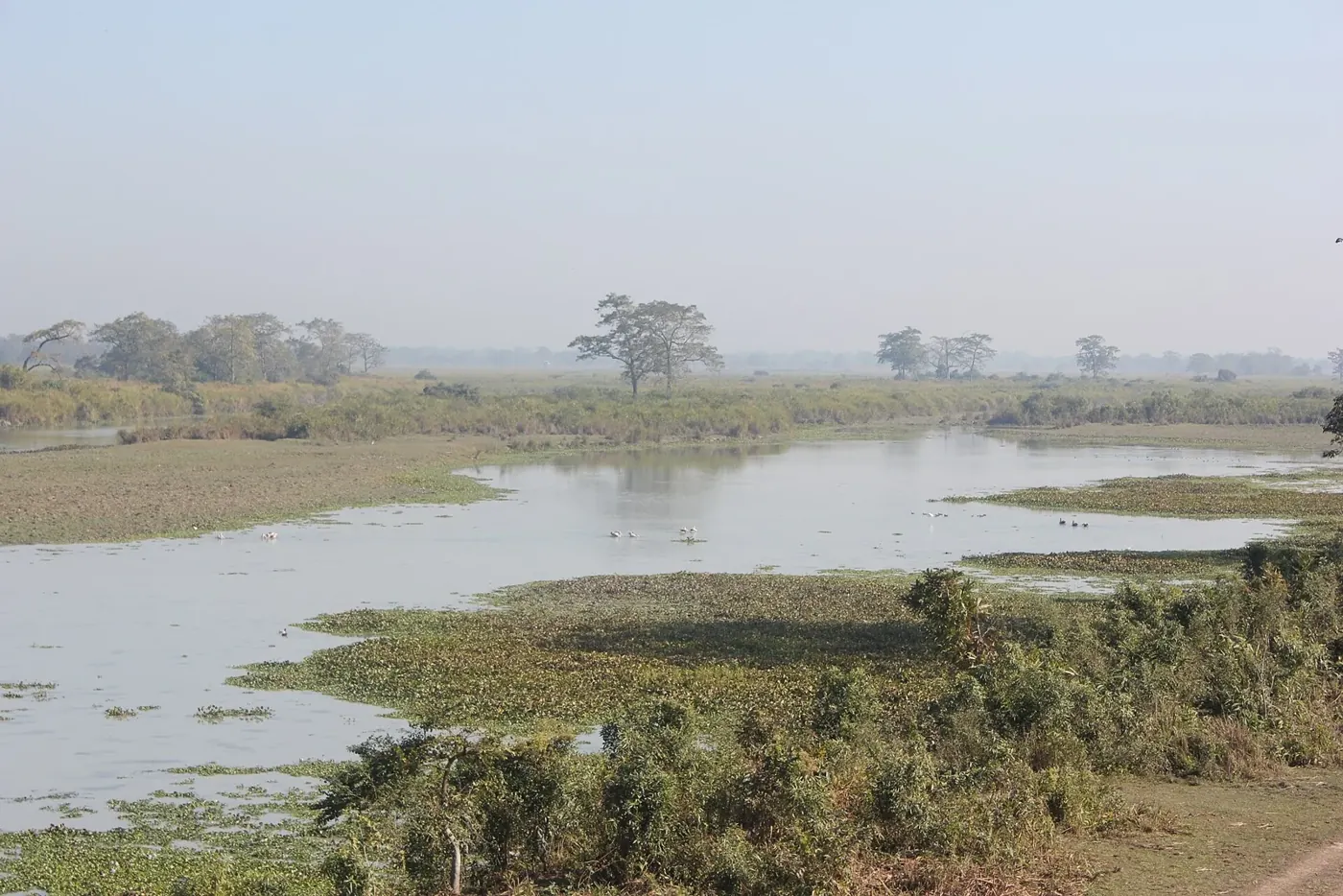
Wetland landscape in Kaziranga National Park, Assam, India.

India · Habitat field guide

Rivers, lakes & wetlands

Large floodplains contain changing water and vegetation mosaics.

Wetland landscape in Kaziranga National Park, Assam, India.

Photograph: Joli · Image source · CC BY-SA 4.0. Cropped to fill the hero; darkened for text legibility.

Understanding the environment

A sense of the habitat.

Large floodplains contain changing water and vegetation mosaics.

Read closely
Vegetation, water and substrate
Local example
Kaziranga
Evidence scale
Named sites, not country-wide occurrence

Explore the structure · Select a zone to compare its structure and details worth recording.

Read the habitat

Select a zone to see what changes.

Name the system

Water body

Distinguish river, lake, pool and managed reservoir.

Observation prompts do not establish that a particular snake occurs in this zone.

Conceptual zones, not a measured transect or a map of snake occurrences.

Sources: UNESCO · Kaziranga National Park

Field notes · 01

Landscape context

At Kaziranga, river processes maintain shallow pools, reed margins, grassland and woodland patches. Read this floodplain as shifting wet and dry places rather than uniform open water.

Sources: UNESCO · Kaziranga National Park

Field notes · 02

From habitat to an observation

Keep the locality, date and habitat description together. A landscape source explains the setting; only a verified species record establishes occurrence. The collection below may be smaller than the variety of environments described here.

Pressures on India’s habitats

What is at risk?

A site-specific assessment of pressures has not yet been extracted for this guide. The landscape sources below provide context; they do not establish a current threat level for each snake species.

What helps this habitat

Retain the local habitat mosaic and its connections. Interpret pressures using the cited site evidence and current local management guidance.

The connected collection

Snakes with habitat evidence.

These 21 species have supported country occurrence and an explicit habitat association in the shared account. The association may come from elsewhere in their range. This is not a complete local habitat inventory; the places above are landscape examples, not asserted collecting sites.

21 species · showing 21

Acrochordus granulatus Portrait

001 · Acrochordidae

Little filesnake

Acrochordus granulatus

(SCHNEIDER, 1799)

Non-venomous

India is explicitly listed in the checked individual taxonomic treatment. The national ZSI checklist independently lists Acrochordus granulatus. Regional evidence: Gujarat; Kerala, Madras; Nicobar. Named records do not imply continuous occurrence throughout a region.

Read the species account →

Mario Lutz · Copyright Mario Lutz. Authorised for display in this atlas; no third-party reuse licence granted.
ColubridaeBoigaPhotograph not yet documented

002 · Colubridae

Arrowback Tree Snake

Boiga gocool

(GRAY, 1834)

VenomousClinical severity not established

India is explicitly listed in the checked individual taxonomic treatment. The national ZSI checklist independently lists Boiga gocool. Regional evidence: Uttar Pradesh; Assam, Arunachal Pradesh, Meghalaya, Nagaland, Manipur, Mizoram, Tripura, Sikkim; Odisha, West Bengal. Named records do not imply continuous occurrence throughout a region.

Read the species account →
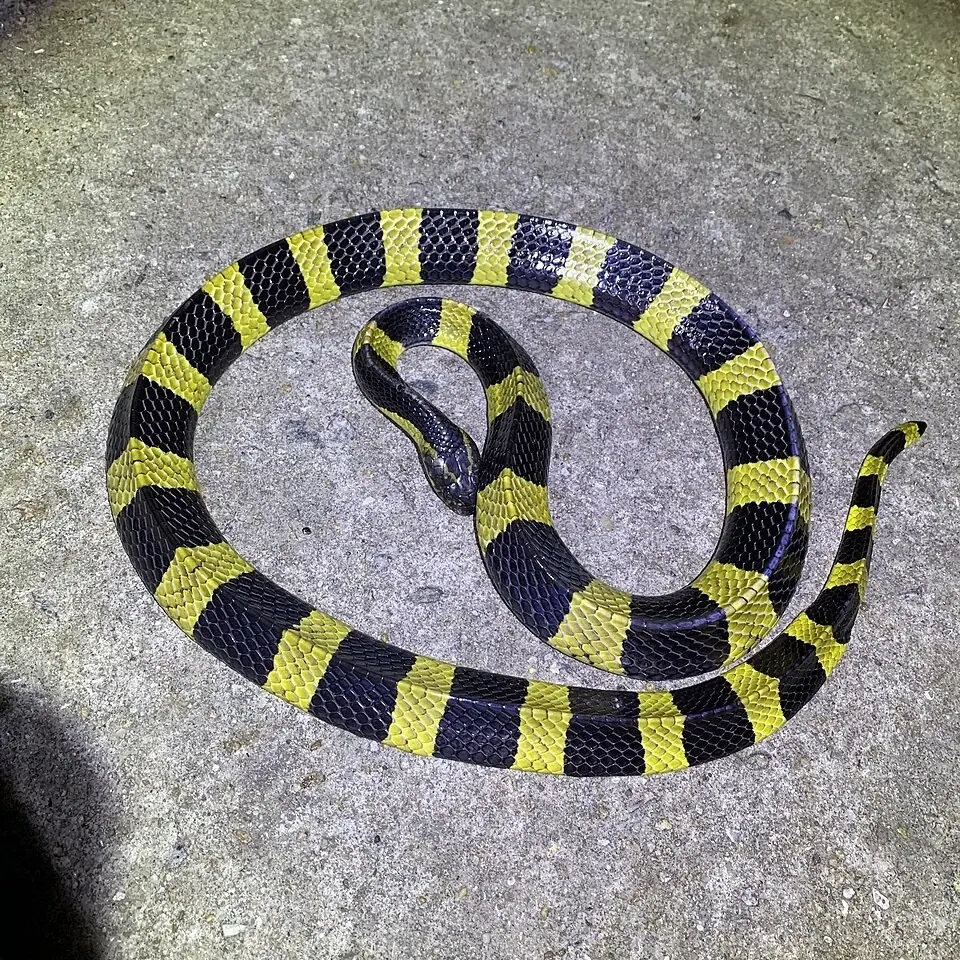
Bungarus fasciatus — real specimen photograph; identification follows the linked source.

003 · Elapidae

Banded Krait

Bungarus fasciatus

(SCHNEIDER, 1801)

VenomousPotentially life-threatening

India is explicitly listed in the checked individual taxonomic treatment. The national ZSI checklist independently lists Bungarus fasciatus. Regional evidence: Haryana, Uttar Pradesh; Assam, Arunachal Pradesh, Meghalaya, Mizoram, Tripura; Bihar, Odisha, West Bengal, Orissa; Madhya Pradesh; Maharashtra; Andhra Pradesh, Telangana. Named records do not…

Read the species account →

灯管儿 · CC BY 4.0 · https://creativecommons.org/licenses/by/4.0

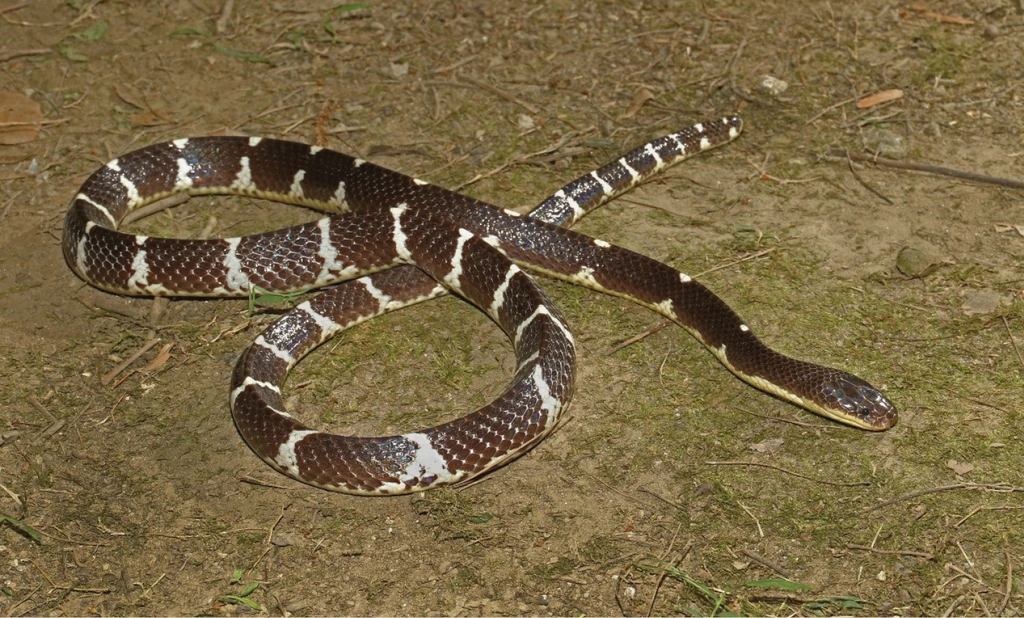
Bungarus suzhenae. Photographed in life. paratype CIB 116090, adult female. Scientific source photograph; no new occurrence record is inferred.

004 · Elapidae

Suzhen’s krait

Bungarus suzhenae

CHEN, SHI, VOGEL, DING & SHI, 2021

VenomousClinical severity not established

India is listed in the official 2025 ZSI checklist, which supersedes the older checklist omissions or unresolved range strings repeated in some taxonomic treatments. Regional evidence: Nagaland, Manipur. Named records do not imply continuous occurrence throughout a region.

Read the species account →

Chen, Ze-Ning; Shi, Sheng-Chao; Vogel, Gernot; Ding, Li; Shi, Jing-Song · CC BY 4.0 · https://creativecommons.org/licenses/by/4.0/

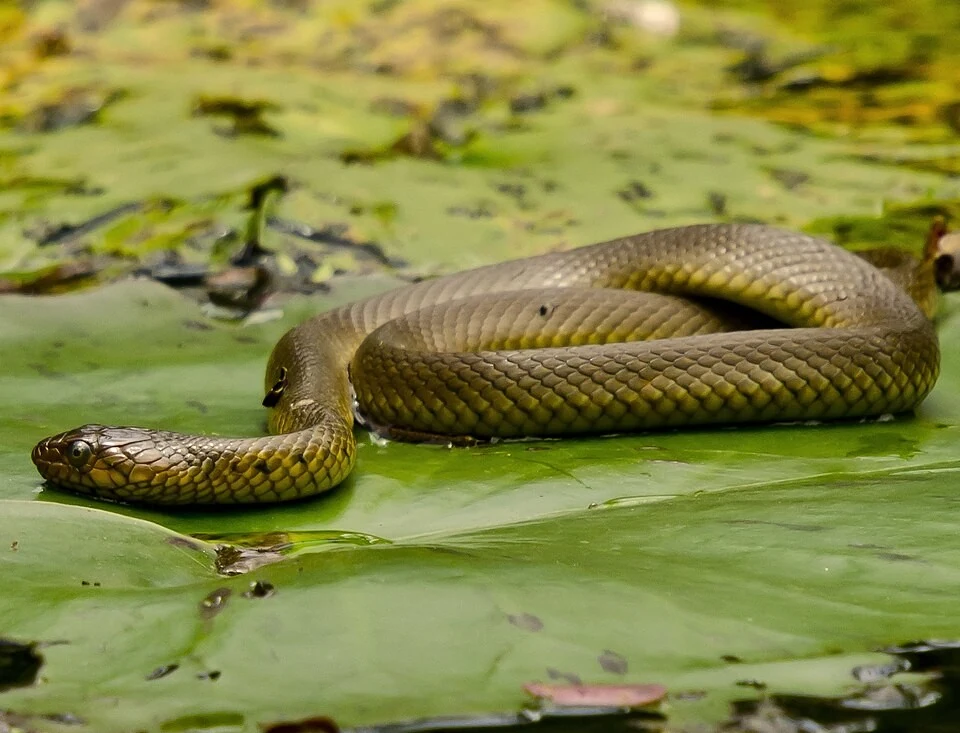
Cerberus rynchops — real specimen photograph; identification follows the linked source.

005 · Homalopsidae

South Asian Bockadam, New Guinea bockadam, Dog-faced Water Snake

Cerberus rynchops

(SCHNEIDER, 1799)

VenomousClinical severity not established

India is explicitly listed in the checked individual taxonomic treatment. The national ZSI checklist independently lists Cerberus rynchops. Regional evidence: Assam; Odisha, Orissa; Gujarat, Maharashtra; Kerala, Tamil Nadu, Telangana; Andaman, Nicobar. Named records do not imply continuous occurrence throughout a region.

Read the species account →

Swati Sidhu · CC BY-SA 4.0 · https://creativecommons.org/licenses/by-sa/4.0

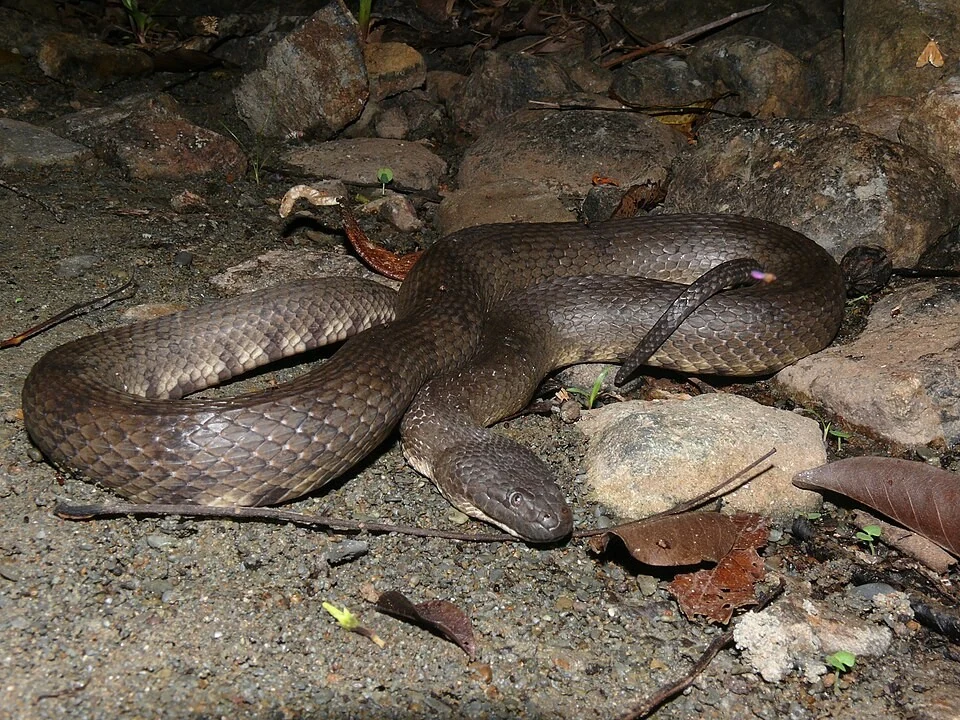
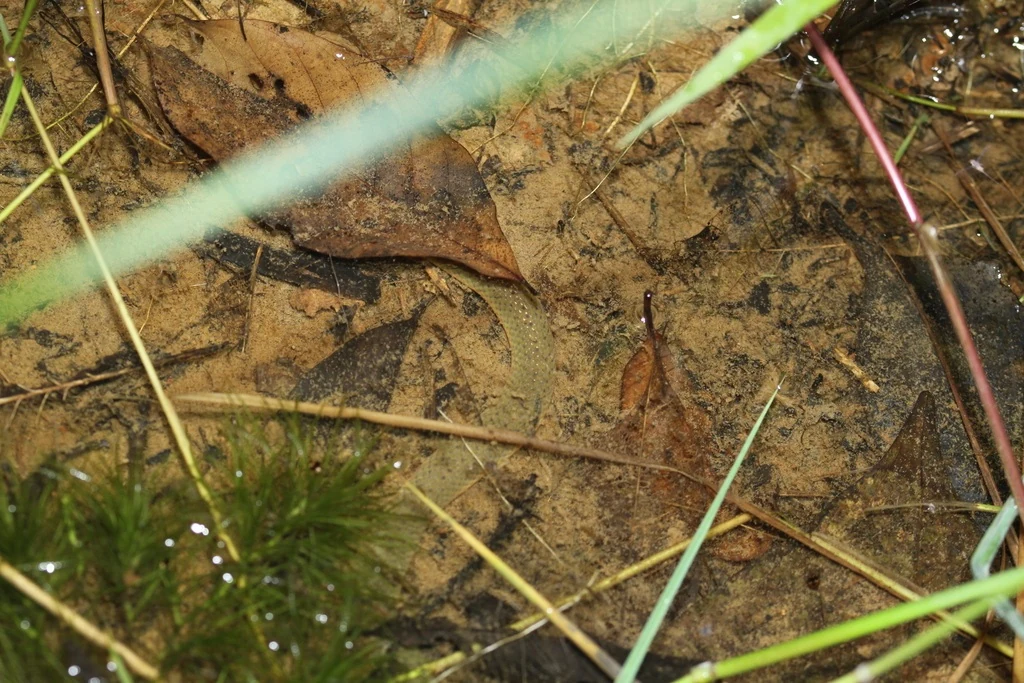
Dieurostus dussumieri. Identification follows the linked source community.

006 · Homalopsidae

Kerala Mud Snake, Dussumier's Water Snake

Dieurostus dussumieri

(DUMÉRIL, BIBRON & DUMÉRIL, 1854)

VenomousClinical severity not established

India is explicitly listed in the checked individual taxonomic treatment. The national ZSI checklist independently lists Dieurostus dussumieri. Regional evidence: Kerala. Named records do not imply continuous occurrence throughout a region.

Read the species account →

renjus box · CC BY 4.0 · https://creativecommons.org/licenses/by/4.0/

Enhydris enhydris — real specimen photograph; identification follows the linked source.

007 · Homalopsidae

Rainbow Mud Snake

Enhydris enhydris

(SCHNEIDER, 1799)

VenomousClinical severity not established

India is explicitly listed in the checked individual taxonomic treatment. The national ZSI checklist independently lists Enhydris enhydris. Regional evidence: Assam, Meghalaya, Nagaland; Telangana. Named records do not imply continuous occurrence throughout a region.

Read the species account →

Srikaanth Sekar · CC BY 2.0 · https://creativecommons.org/licenses/by/2.0

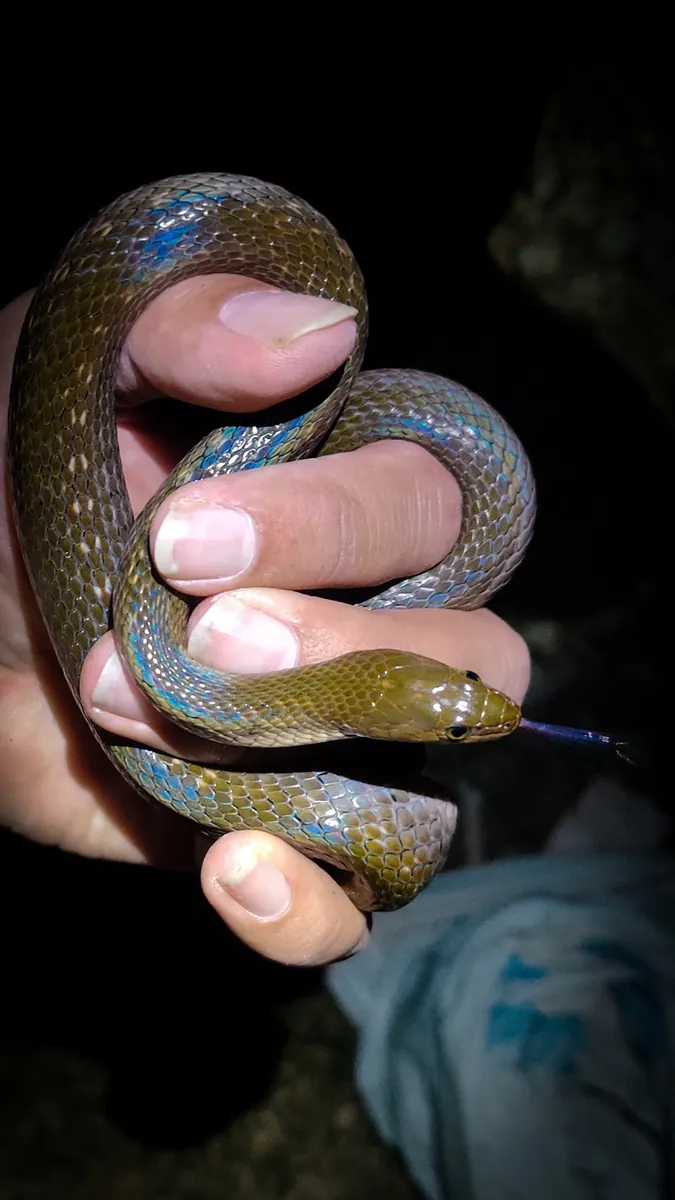
Living animal held by the observer, photographed at Kambipura, Karnataka, India, on 19 January 2021.

008 · Colubridae

Asiatic Water Snakes, Checkered Keelback

Fowlea piscator

(SCHNEIDER, 1799)

Venom unknownNot yet assessed

India is explicitly listed in the checked individual taxonomic treatment. The national ZSI checklist independently lists Fowlea piscator. Regional evidence: Jammu and Kashmir, Himachal Pradesh, Uttar Pradesh, Himachal; Assam, Arunachal Pradesh, Meghalaya, Nagaland, Manipur, Mizoram, Tripura, Sikkim, Khasi Hills, Garo Hills; Odisha, West Bengal, Orissa;…

Read the species account →

Chayant Gonsalves / iNaturalist · CC BY 4.0 · https://creativecommons.org/licenses/by/4.0/

Gerarda prevostiana — India, 2023-10-14.

009 · Homalopsidae

Gerard's Water Snake

Gerarda prevostiana

(EYDOUX & GERVAIS, 1837)

VenomousClinical severity not established

India is explicitly listed in the checked individual taxonomic treatment. The national ZSI checklist independently lists Gerarda prevostiana. Regional evidence: Gujarat, Maharashtra; Kerala. Named records do not imply continuous occurrence throughout a region.

Read the species account →

Ramesh Shenai · CC BY 4.0 · https://creativecommons.org/licenses/by/4.0/

Hebius khasiensis — Thailand, 2015-12-19.

010 · Colubridae

Khasi Hills Keelback, Khasi Keelback

Hebius khasiensis

(BOULENGER, 1890)

Non-venomous

India is explicitly listed in the checked individual taxonomic treatment. The national ZSI checklist independently lists Hebius khasiensis. Regional evidence: Arunachal Pradesh, Meghalaya, Nagaland, Mizoram, Khasi Hills. Named records do not imply continuous occurrence throughout a region. A named locality in the cited account; no continuous regional…

Read the species account →

Ian Dugdale · CC BY 4.0 · https://creativecommons.org/licenses/by/4.0/

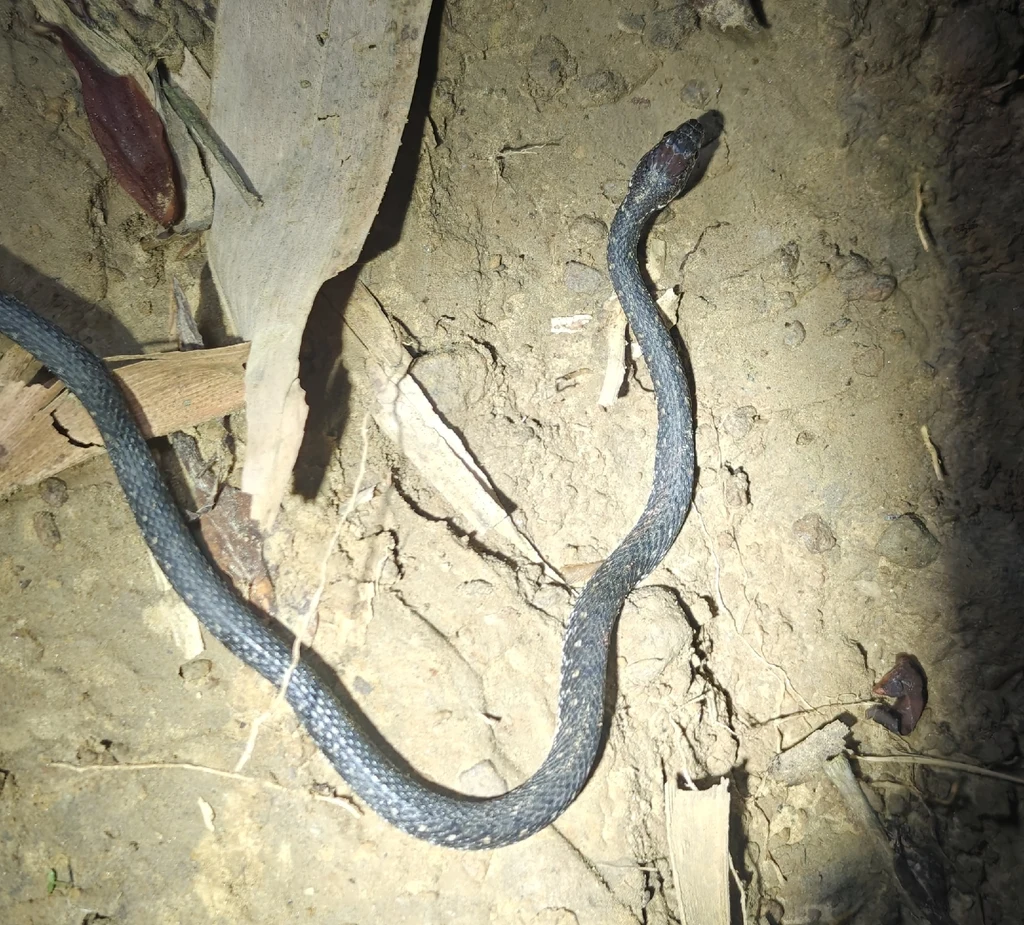
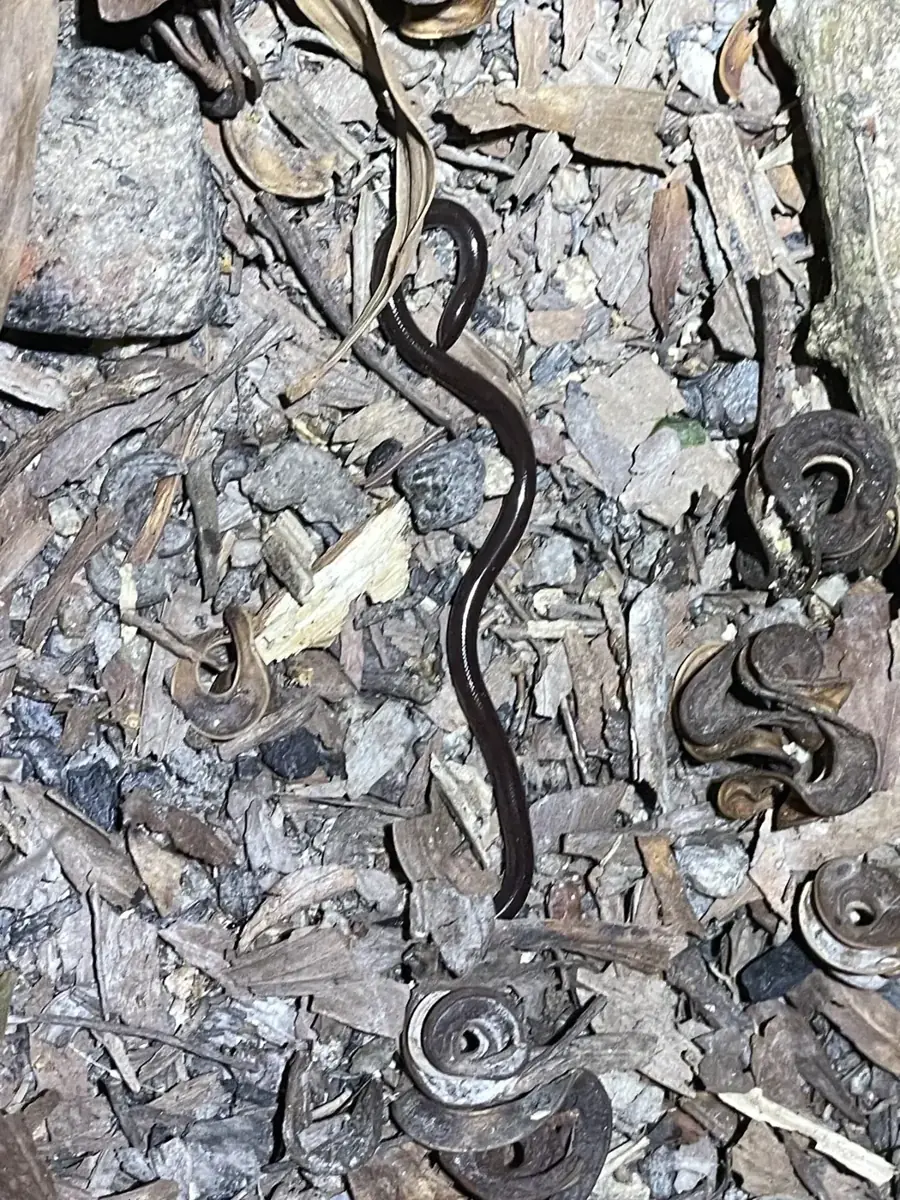
Herpetoreas xenura. Whole individual photographed on soil at night. Original observation dated 2026-05-30. Photograph identification follows the cited observation; it adds no geographic occurrence record.

011 · Colubridae

Wall's Keelback

Herpetoreas xenura

(WALL, 1907)

Venom unknownNot yet assessed

India is explicitly listed in the checked individual taxonomic treatment. The national ZSI checklist independently lists Herpetoreas xenura. Regional evidence: Meghalaya, Mizoram, Tripura. Named records do not imply continuous occurrence throughout a region. A named locality in the cited account; no continuous regional range is inferred.

Read the species account →

Ashwin Viswanathan · CC BY 4.0 · https://creativecommons.org/licenses/by/4.0/

Hydrophis schistosus — real specimen photograph; identification follows the linked source.

012 · Elapidae

Common or beaked seasnake

Hydrophis schistosus

DAUDIN, 1803

VenomousClinical severity not established

India is explicitly listed in the checked individual taxonomic treatment. The national ZSI checklist independently lists Hydrophis schistosus. Regional evidence: Gujarat; Kerala. Named records do not imply continuous occurrence throughout a region.

Read the species account →

Shaunak Modi · CC BY 4.0 · https://creativecommons.org/licenses/by/4.0

Hypsiscopus plumbeus — Indonesia, 2024-01-19.

013 · Homalopsidae

Boie’s Mud Snake

Hypsiscopus plumbeus

(BOIE, 1827)

VenomousClinical severity not established

India is explicitly listed in the checked individual taxonomic treatment. The national ZSI checklist independently lists Hypsiscopus plumbea. Regional evidence: Nicobar. Named records do not imply continuous occurrence throughout a region.

Read the species account →

Samuel GUIRAUDOU · CC BY 4.0 · https://creativecommons.org/licenses/by/4.0/

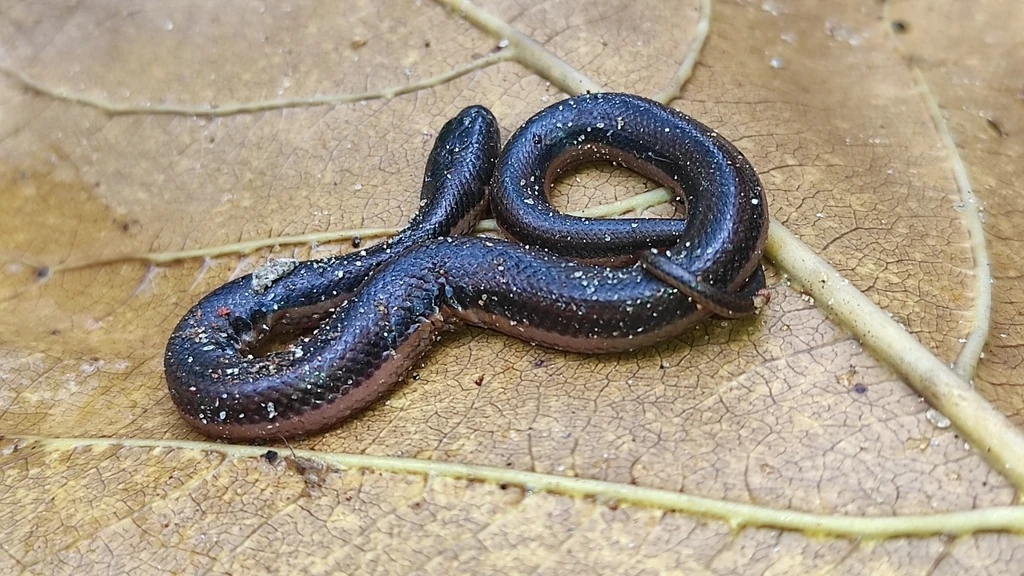
Indotyphlops braminus — photographed on Ko Pha-ngan, Thailand.

014 · Typhlopidae

Flowerpot Snake

Indotyphlops braminus

(DAUDIN, 1803)

Non-venomous

India is explicitly listed in the checked individual taxonomic treatment. The national ZSI checklist independently lists Indotyphlops braminus. Regional evidence: Jammu and Kashmir, Himachal Pradesh, Himachal; Assam, Arunachal Pradesh, Meghalaya, Mizoram, Tripura, Sikkim; Odisha; Madhya Pradesh; Gujarat, Maharashtra; Kerala, Tamil Nadu, Telangana;…

Read the species account →

Cook-Price, Makchai & Suwanwaree (2026); photographs credited collectively to the author, James Covert and Vikas Kumar · CC BY 4.0 · https://creativecommons.org/licenses/by/4.0/

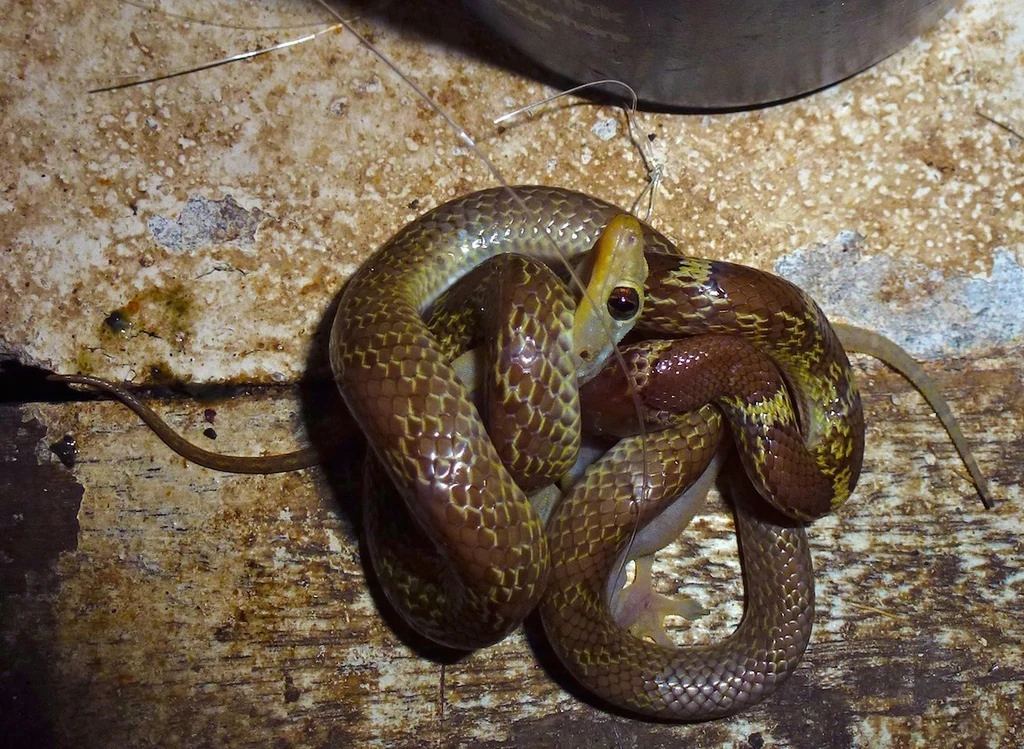
Lycodon aulicus, photographed 2012-05-12. Identification follows the linked research-grade observation.

015 · Colubridae

Indian Wolf Snake, Common Wolf Snake

Lycodon aulicus

(LINNAEUS, 1758)

Non-venomous

India is explicitly listed in the checked individual taxonomic treatment. The national ZSI checklist independently lists Lycodon aulicus. Regional evidence: Jammu and Kashmir, Himachal Pradesh, Uttar Pradesh, Himachal; Assam, Arunachal Pradesh, Meghalaya, Nagaland, Manipur, Mizoram, Tripura, Sikkim; Bihar, Odisha, Orissa; Madhya Pradesh, Chhattisgarh;…

Read the species account →

Eliane Küpfer · CC BY-SA 4.0 · https://creativecommons.org/licenses/by-sa/4.0/

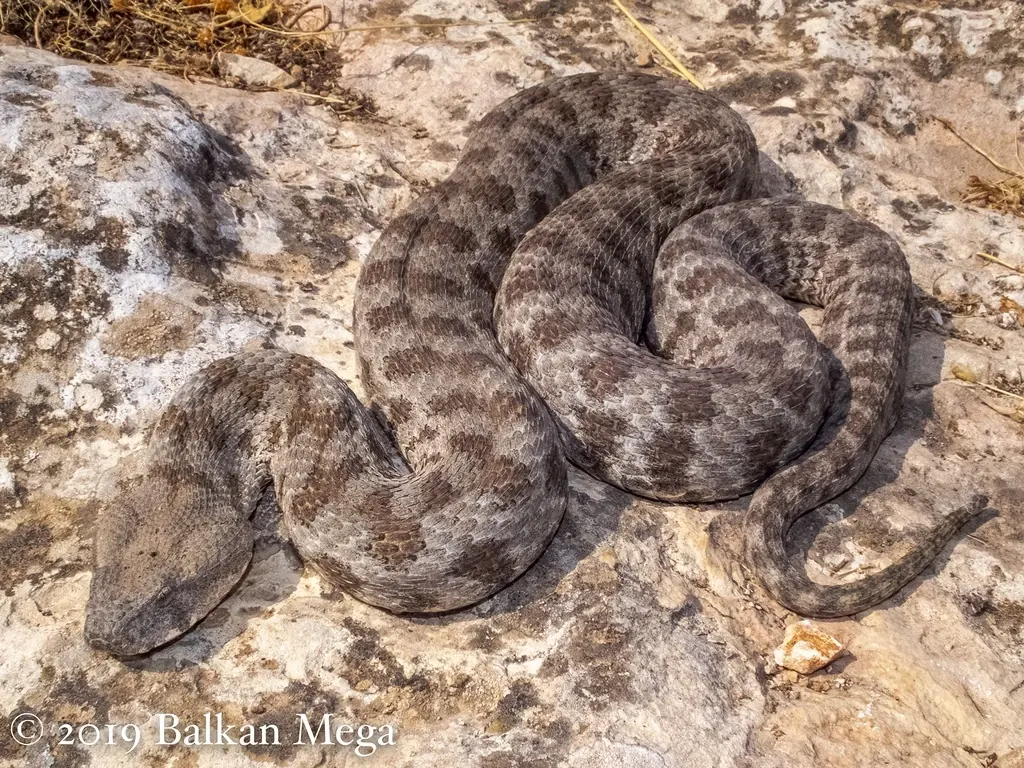
Macrovipera lebetinus. Identification follows the linked source community.

016 · Viperidae

Levantine Viper

Macrovipera lebetinus

(LINNAEUS, 1758)

VenomousClinical severity not established

India is explicitly listed in the checked individual taxonomic treatment. The national ZSI checklist independently lists Macrovipera lebetinus. Regional evidence: Jammu and Kashmir. Named records do not imply continuous occurrence throughout a region.

Read the species account →

Balkan Mega · CC BY 4.0 · https://creativecommons.org/licenses/by/4.0/

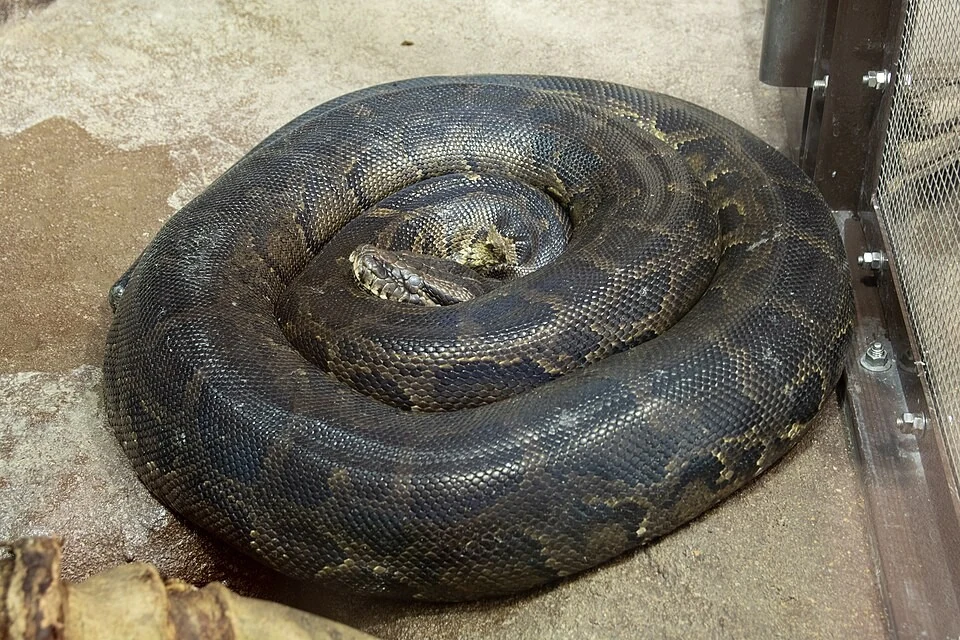
Python bivittatus — real specimen photograph; identification follows the linked source.

017 · Pythonidae

Burmese Python

Python bivittatus

KUHL, 1820

Non-venomous

India is explicitly listed in the checked individual taxonomic treatment. The national ZSI checklist independently lists Python bivittatus. Regional evidence: Uttar Pradesh; Assam, Arunachal Pradesh, Meghalaya, Nagaland, Mizoram, Tripura, Sikkim. Named records do not imply continuous occurrence throughout a region.

Read the species account →

Σ64 · CC BY 4.0 · https://creativecommons.org/licenses/by/4.0

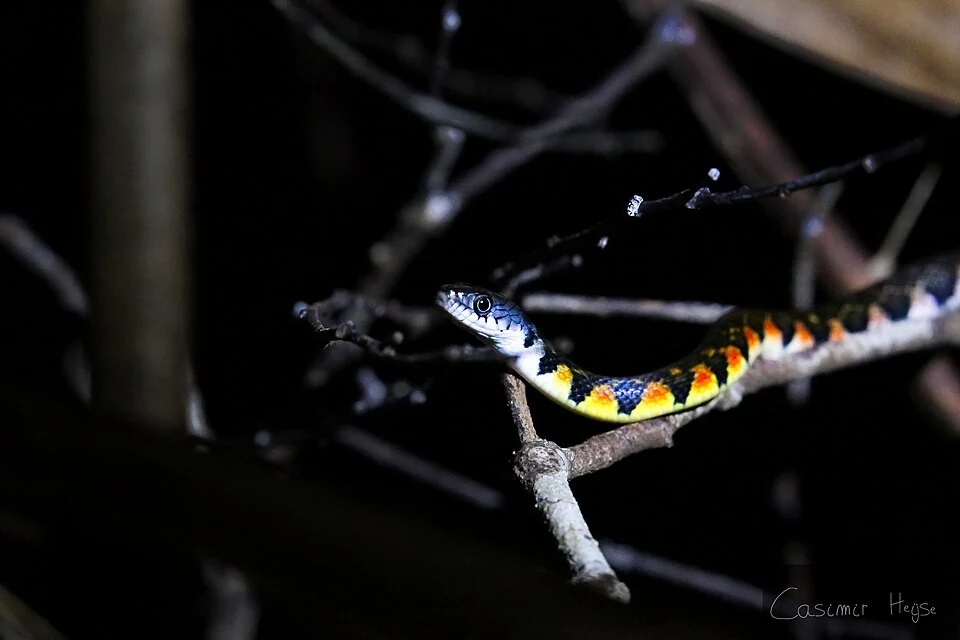
Rhabdophis helleri. An anerythristic individual, as explicitly described by the photographer; this colour variant is not the typical appearance. Original observation dated 2021-06-05. Photograph identification follows the cited observation; it adds no geographic occurrence record.

018 · Colubridae

Heller’s Red-necked Keelback

Rhabdophis helleri

(SCHMIDT, 1925)

VenomousClinical severity not established

India is explicitly listed in the checked individual taxonomic treatment. The national ZSI checklist independently lists Rhabdophis helleri. Regional evidence: Arunachal Pradesh, Meghalaya, Nagaland, Manipur, Mizoram, Tripura, Sikkim. Named records do not imply continuous occurrence throughout a region. A named locality in the cited account; no…

Read the species account →

Lawrence Hylton · CC BY 4.0 · https://creativecommons.org/licenses/by/4.0/

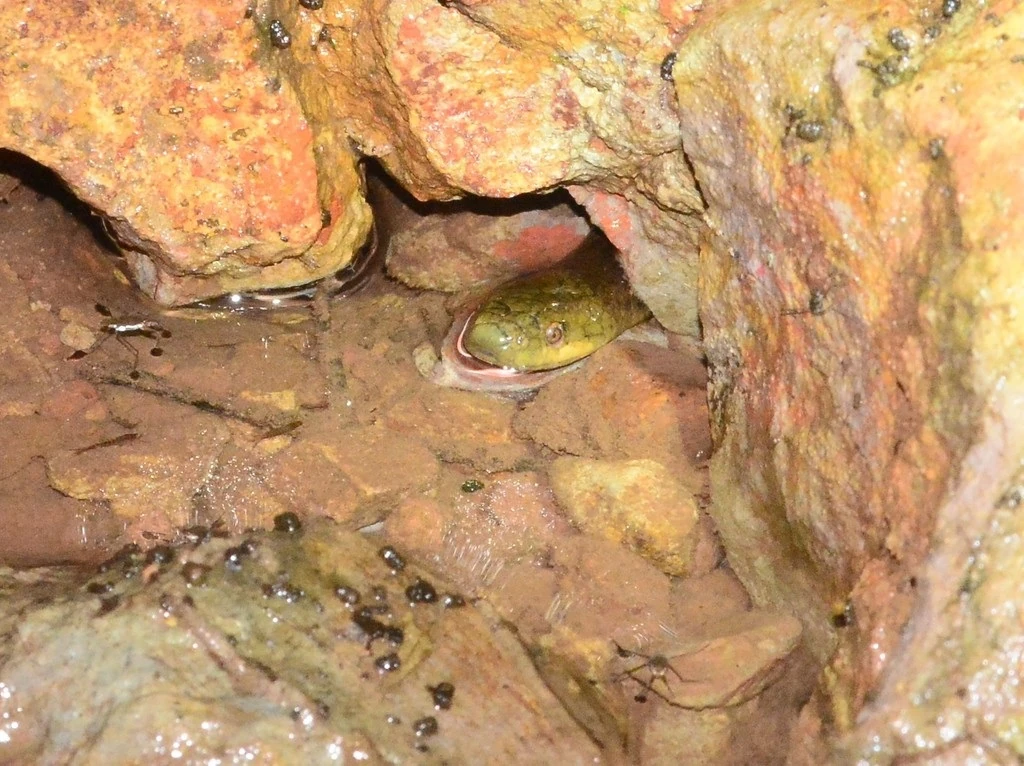
Rhabdops aquaticus. Identification follows the linked source community.

019 · Colubridae

Water Rhabdops, Aquatic Rhabdops

Rhabdops aquaticus

GIRI, DEEPAK, CAPTAIN & GOWER, 2017

Venom unknownNot yet assessed

India is explicitly listed in the checked individual taxonomic treatment. The national ZSI checklist independently lists Rhabdops aquaticus. Regional evidence: Maharashtra; Karnataka. Named records do not imply continuous occurrence throughout a region.

Read the species account →

S.MORE · CC0 1.0 · https://creativecommons.org/publicdomain/zero/1.0/

ColubridaeSmithophisPhotograph not yet documented

020 · Colubridae

Brown Trapezoid Snake, Two-colored Forestsnake

Smithophis bicolor

(BLYTH, 1855)

Venom unknownNot yet assessed

India is explicitly listed in the checked individual taxonomic treatment. The national ZSI checklist independently lists Smithophis bicolor. Regional evidence: Assam, Arunachal Pradesh, Meghalaya, Mizoram; Maharashtra. Named records do not imply continuous occurrence throughout a region. A named locality in the cited account; no continuous regional range…

Read the species account →
Xenochrophis trianguligerus — real specimen photograph; identification follows the linked source.

021 · Colubridae

Triangle Keelback

Xenochrophis trianguligerus

(BOIE, 1827)

Venom unknownNot yet assessed

India is explicitly listed in the checked individual taxonomic treatment. The national ZSI checklist independently lists Xenochrophis trianguligerus. Regional evidence: Nicobar. Named records do not imply continuous occurrence throughout a region.

Read the species account →

Kaasmier · CC BY-SA 4.0 · https://creativecommons.org/licenses/by-sa/4.0

All 363 species in the country collection →

Read further

Evidence & sources.

Guide reviewed 11 October 2026. Source dates and geographic scope matter; landscape photographs do not establish species occurrence.

  1. UNESCO · Kaziranga National Park

    Brahmaputra floodplain grassland, pools and woodland; site-specific context.

Continue through India

Explore another habitat.

01

Forests & woodland

Monsoon forests differ between western mountains, central hills and offshore islands.

02

Mountain habitats

Mountain records need both elevation and vegetation.

03

Drylands & desert

The Thar includes vegetated patches as well as open dry ground.

04

Grassland & open woodland

Open habitats include seasonally wet grassland.

05

Mangroves & tidal forest

Tidal forests connect river sediment, brackish channels and the sea.

06

Coastal & marine landscapes

Reefs, seagrass and island shores need precise habitat descriptions.