Grazing pressure
The Pachmarhi account describes restrictions introduced after overgrazing; it does not supply a current national trend.
Sources: UNESCO · Pachmarhi Biosphere Reserve
India · Habitat field guide
Monsoon forests differ between western mountains, central hills and offshore islands.
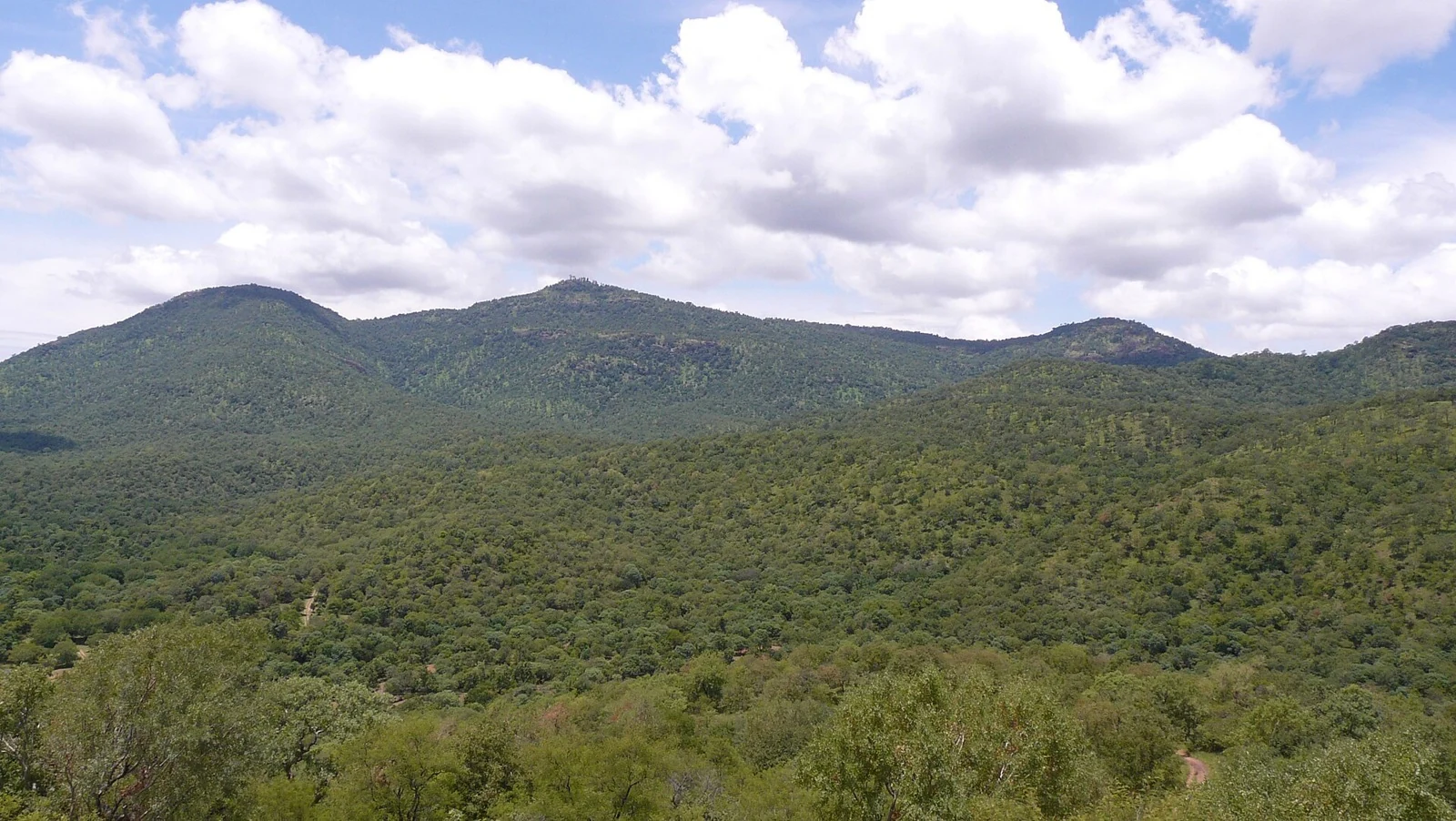
Forested hills near Bheemeshwari in the Cauvery Wildlife Sanctuary, Karnataka, India.
Understanding the environment
Monsoon forests differ between western mountains, central hills and offshore islands.
Explore the structure · Select a zone to compare its structure and details worth recording.
Select a zone to see what changes.
Look upward
Compare canopy continuity, gaps and exposed edges.
Observation prompts do not establish that a particular snake occurs in this zone.
Conceptual zones, not a measured transect or a map of snake occurrences.
Sources: UNESCO · Western Ghats · UNESCO · Pachmarhi Biosphere Reserve
Field notes · 01
The Western Ghats intercept monsoon winds along the western peninsula. Pachmarhi in the Satpura hills combines moist and dry deciduous forest with streams and marshes. Keep those formations distinct in habitat notes.
Sources: UNESCO · Western Ghats · UNESCO · Pachmarhi Biosphere Reserve
Field notes · 02
Keep the locality, date and habitat description together. A landscape source explains the setting; only a verified species record establishes occurrence. The collection below may be smaller than the variety of environments described here.
Pressures on India’s habitats
The Pachmarhi account describes restrictions introduced after overgrazing; it does not supply a current national trend.
Sources: UNESCO · Pachmarhi Biosphere Reserve
Retain the local habitat mosaic and its connections. Interpret pressures using the cited site evidence and current local management guidance.
The connected collection
These 51 species have supported country occurrence and an explicit habitat association in the shared account. The association may come from elsewhere in their range. This is not a complete local habitat inventory; the places above are landscape examples, not asserted collecting sites.
51 species · showing 24
001 · Colubridae
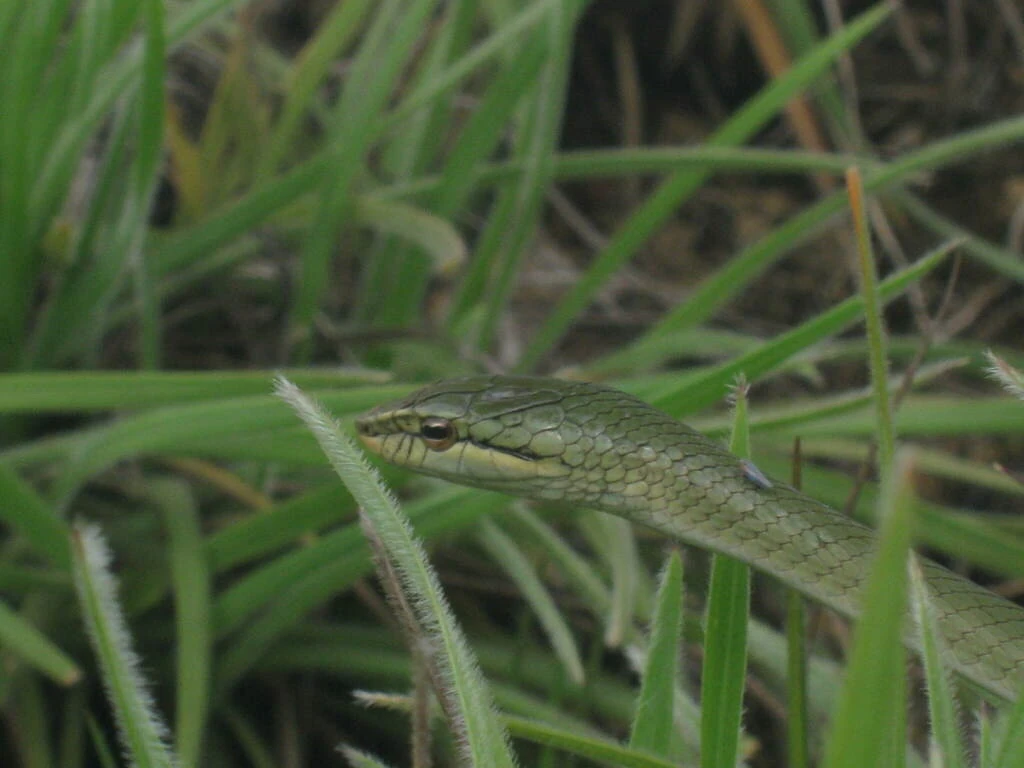
Western Ghats Bronzeback
India is explicitly listed in the checked individual taxonomic treatment. The national ZSI checklist independently lists Ahaetulla perroteti. Regional evidence: Kerala. Named records do not imply continuous occurrence throughout a region.
Read the species account →Siva Naturewild · CC BY 4.0 · https://creativecommons.org/licenses/by/4.0/
002 · Colubridae
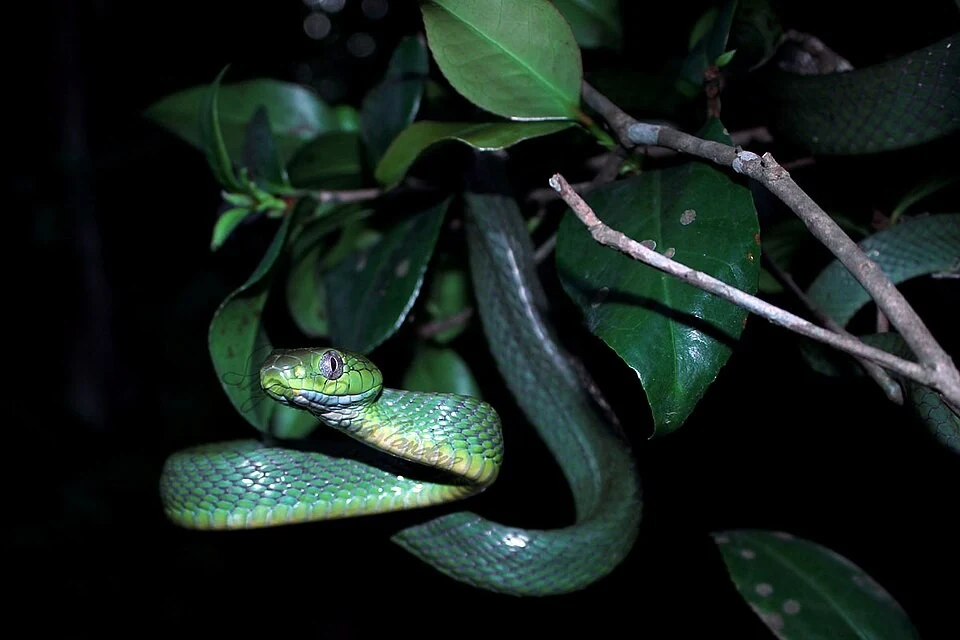
Green Cat Snake
India is explicitly listed in the checked individual taxonomic treatment. The national ZSI checklist independently lists Boiga cyanea. Regional evidence: Assam, Arunachal Pradesh, Meghalaya, Nagaland, Manipur, Mizoram, Sikkim; West Bengal; Nicobar. Named records do not imply continuous occurrence throughout a region.
Read the species account →Sp.herp · CC BY-SA 3.0 · https://creativecommons.org/licenses/by-sa/3.0
003 · Colubridae
Arrowback Tree Snake
India is explicitly listed in the checked individual taxonomic treatment. The national ZSI checklist independently lists Boiga gocool. Regional evidence: Uttar Pradesh; Assam, Arunachal Pradesh, Meghalaya, Nagaland, Manipur, Mizoram, Tripura, Sikkim; Odisha, West Bengal. Named records do not imply continuous occurrence throughout a region.
Read the species account →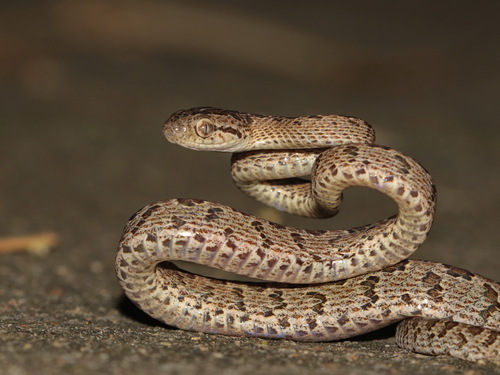
004 · Colubridae
Many-spotted Cat Snake
India is explicitly listed in the checked individual taxonomic treatment. The national ZSI checklist independently lists Boiga multomaculata. Regional evidence: Assam, Arunachal Pradesh, Nagaland. Named records do not imply continuous occurrence throughout a region.
Read the species account →Ian Dugdale · CC-BY · https://www.inaturalist.org/photos/86904174
005 · Colubridae
Assamese Cat Snake
India is explicitly listed in the checked individual taxonomic treatment. The national ZSI checklist independently lists Boiga quincunciata. Regional evidence: Assam, Arunachal Pradesh, Manipur, Mizoram. Named records do not imply continuous occurrence throughout a region. A named locality in the cited account; no continuous regional range is inferred.
Read the species account →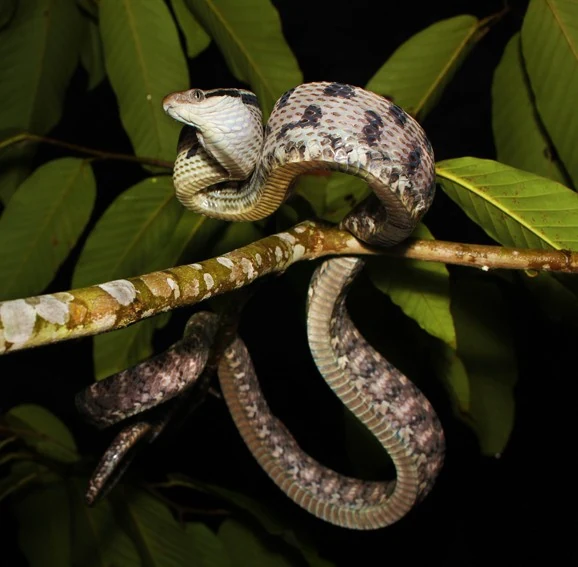
006 · Colubridae
Gray Cat Snake, Eyed Cat Snake
India is explicitly listed in the checked individual taxonomic treatment. The national ZSI checklist independently lists Boiga siamensis. Regional evidence: Assam, Arunachal Pradesh, Meghalaya, Nagaland, Mizoram, Sikkim; West Bengal. Named records do not imply continuous occurrence throughout a region.
Read the species account →1davidfrohlich · CC BY-SA 4.0 · https://creativecommons.org/licenses/by-sa/4.0
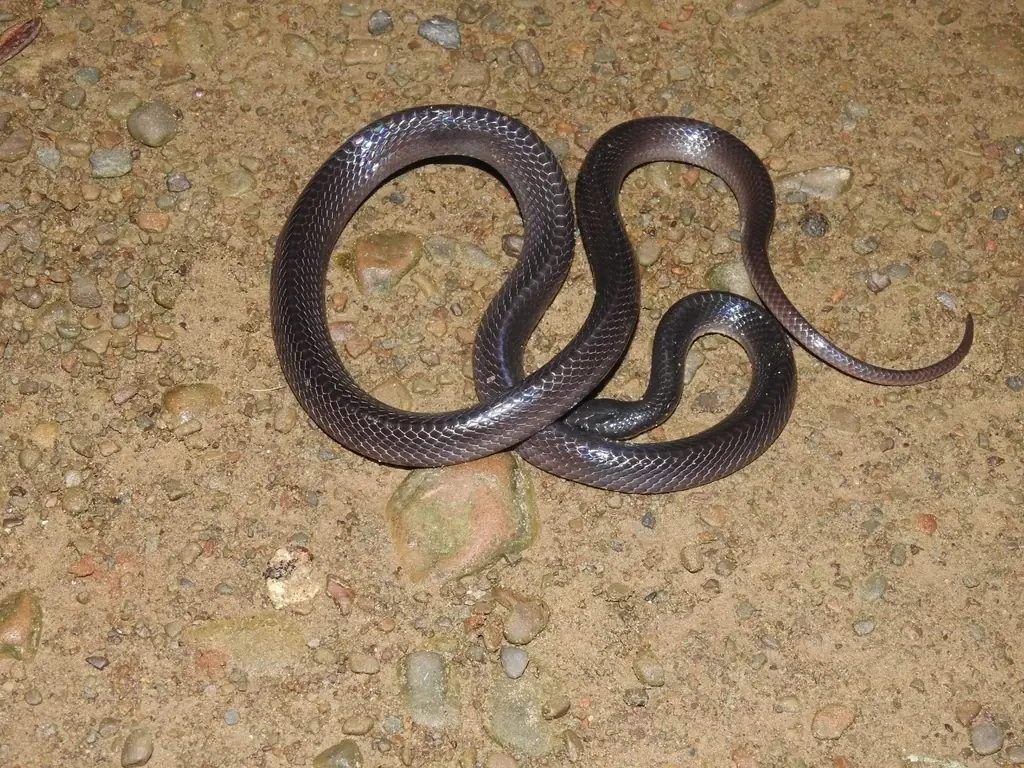
007 · Elapidae
Greater Black Krait
India is explicitly listed in the checked individual taxonomic treatment. The national ZSI checklist independently lists Bungarus niger. Regional evidence: Uttarakhand; Assam, Arunachal Pradesh, Meghalaya, Nagaland, Manipur, Mizoram, Tripura, Sikkim. Named records do not imply continuous occurrence throughout a region.
Read the species account →lovelymon lamin · CC0 1.0 · https://creativecommons.org/publicdomain/zero/1.0/
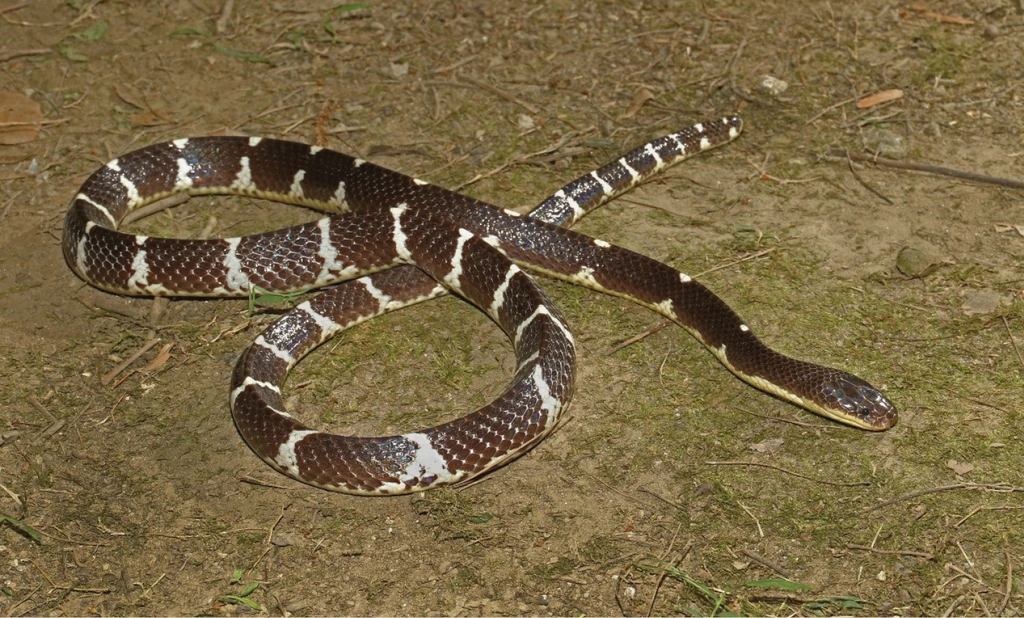
008 · Elapidae
Suzhen’s krait
India is listed in the official 2025 ZSI checklist, which supersedes the older checklist omissions or unresolved range strings repeated in some taxonomic treatments. Regional evidence: Nagaland, Manipur. Named records do not imply continuous occurrence throughout a region.
Read the species account →Chen, Ze-Ning; Shi, Sheng-Chao; Vogel, Gernot; Ding, Li; Shi, Jing-Song · CC BY 4.0 · https://creativecommons.org/licenses/by/4.0/
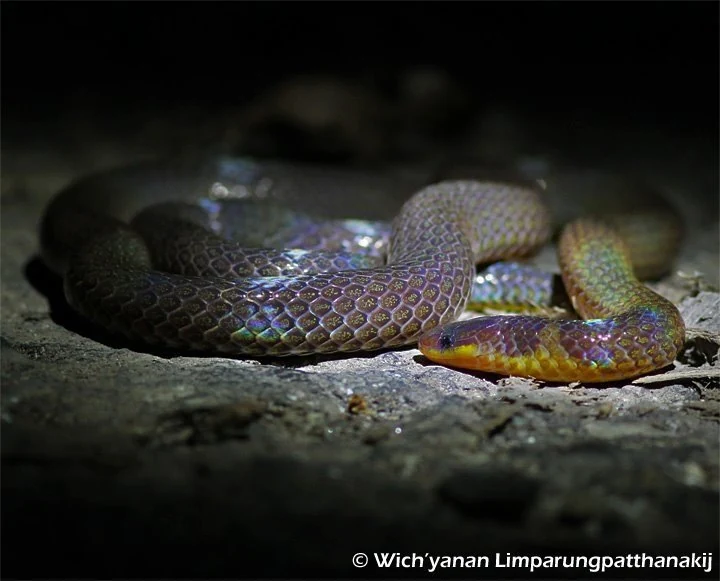
009 · Colubridae
Collared Reed Snake
India is explicitly listed in the checked individual taxonomic treatment. The national ZSI checklist independently lists Calamaria pavimentata. Regional evidence: Assam, Meghalaya, Manipur, Mizoram. Named records do not imply continuous occurrence throughout a region.
Read the species account →Wich'yanan L · CC BY 4.0 · https://creativecommons.org/licenses/by/4.0
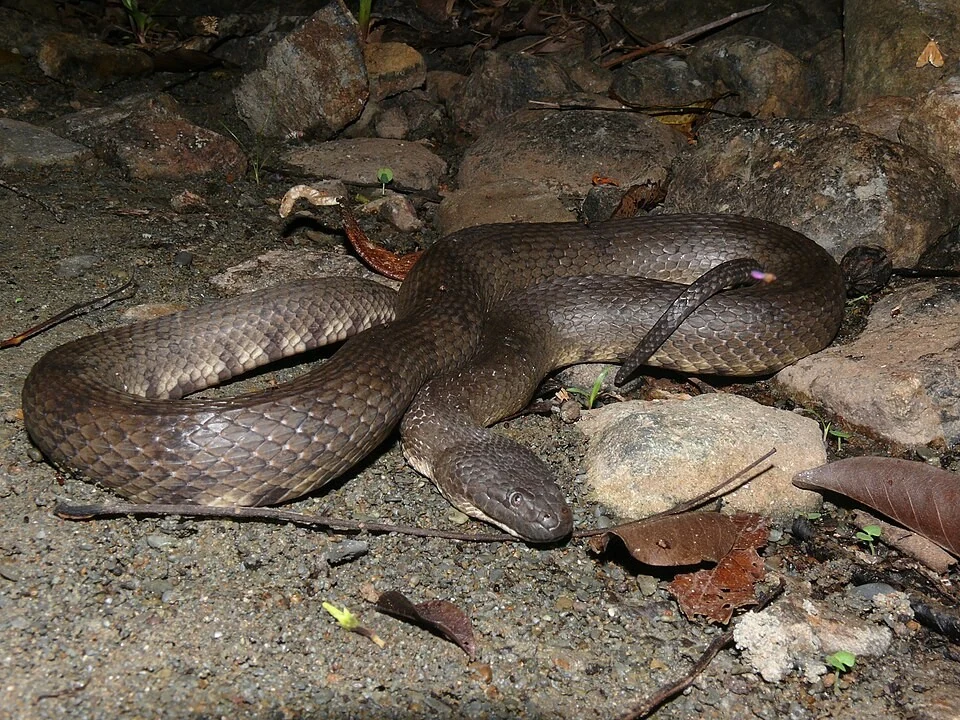
010 · Homalopsidae
South Asian Bockadam, New Guinea bockadam, Dog-faced Water Snake
India is explicitly listed in the checked individual taxonomic treatment. The national ZSI checklist independently lists Cerberus rynchops. Regional evidence: Assam; Odisha, Orissa; Gujarat, Maharashtra; Kerala, Tamil Nadu, Telangana; Andaman, Nicobar. Named records do not imply continuous occurrence throughout a region.
Read the species account →Swati Sidhu · CC BY-SA 4.0 · https://creativecommons.org/licenses/by-sa/4.0
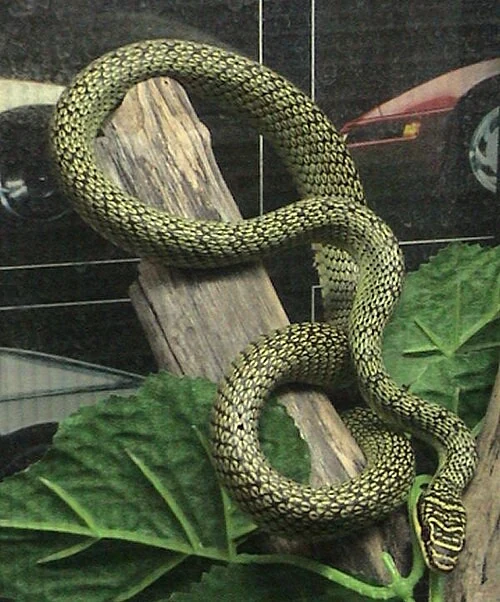
011 · Colubridae
Golden Flying Snake, Indian Flying Snake
India is explicitly listed in the checked individual taxonomic treatment. The national ZSI checklist independently lists Chrysopelea ornata. Regional evidence: Assam, Arunachal Pradesh, Meghalaya, Nagaland, Mizoram, Tripura, Sikkim; Bihar, Odisha, West Bengal, Orissa; Madhya Pradesh; Gujarat; Kerala, Tamil Nadu. Named records do not imply continuous…
Read the species account →LA Dawson · CC BY-SA 2.5 · https://creativecommons.org/licenses/by-sa/2.5
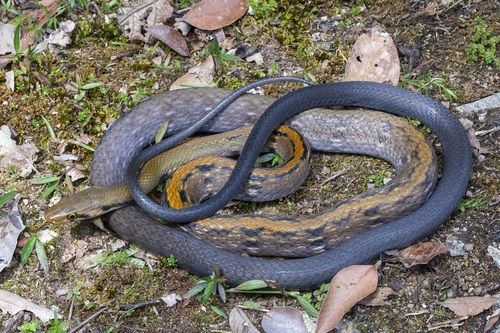
012 · Colubridae
Black Copper Rat Snake
India is explicitly listed in the checked individual taxonomic treatment. The national ZSI checklist independently lists Coelognathus flavolineatus. Regional evidence: Andaman. Named records do not imply continuous occurrence throughout a region.
Read the species account →dhfischer · CC-BY · https://www.inaturalist.org/photos/103394963
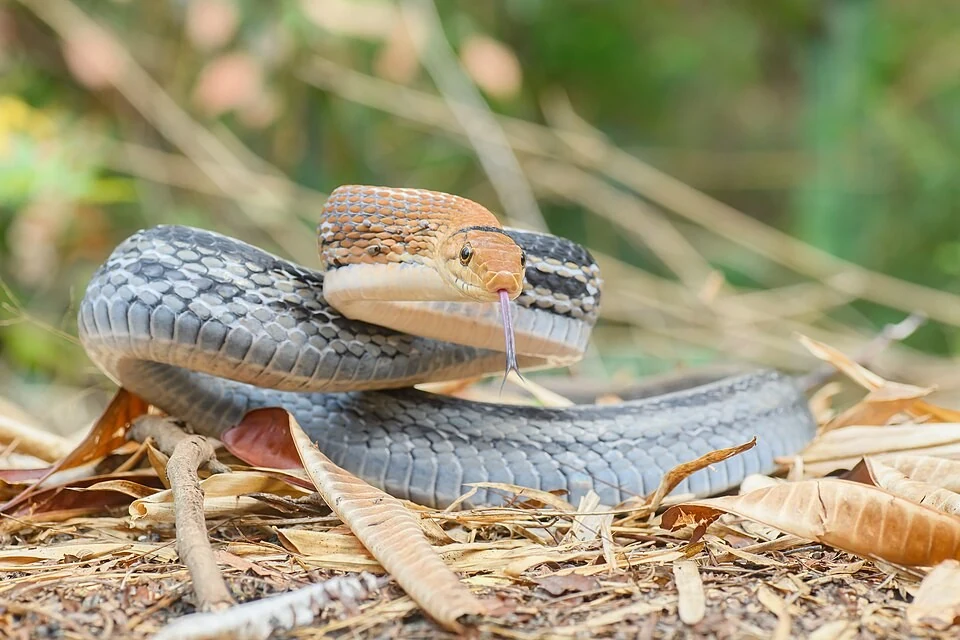
013 · Colubridae
Radiated Ratsnakes
India is explicitly listed in the checked individual taxonomic treatment. The national ZSI checklist independently lists Coelognathus radiatus. Regional evidence: Himachal Pradesh, Uttarakhand, Himachal; Assam, Arunachal Pradesh, Meghalaya, Nagaland, Manipur, Mizoram, Tripura, Sikkim; Bihar, Odisha, West Bengal, Orissa; Madhya Pradesh, Chhattisgarh.…
Read the species account →Rushenb · CC BY-SA 4.0 · https://creativecommons.org/licenses/by-sa/4.0
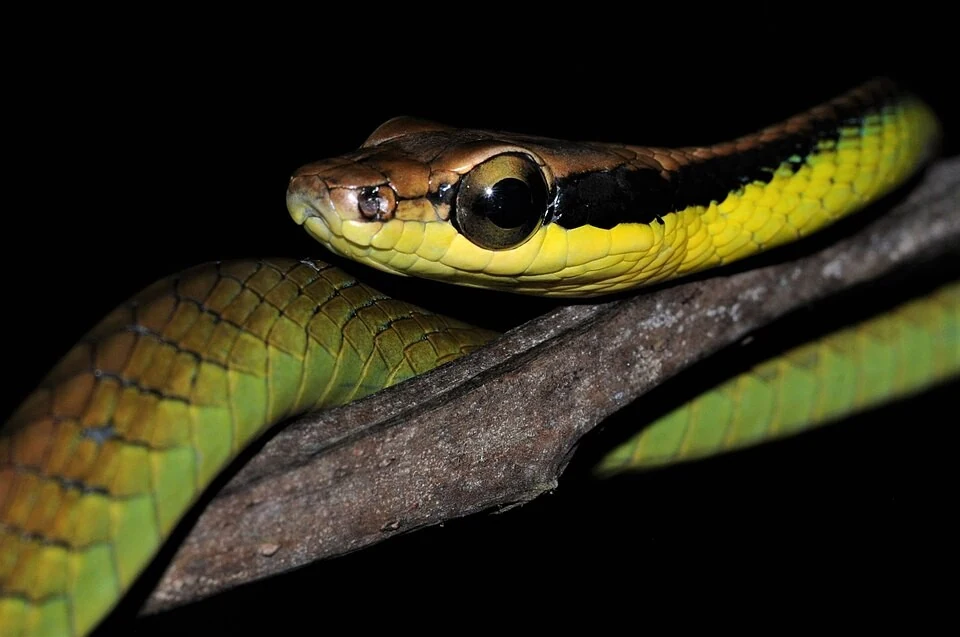
014 · Colubridae
Wall's Bronzeback
India is listed in the official 2025 ZSI checklist, which supersedes the older checklist omissions or unresolved range strings repeated in some taxonomic treatments. Regional evidence: Assam, Arunachal Pradesh, Mizoram, Sikkim. Named records do not imply continuous occurrence throughout a region.
Read the species account →Marius Burger · CC0 · https://creativecommons.org/publicdomain/zero/1.0/deed.en
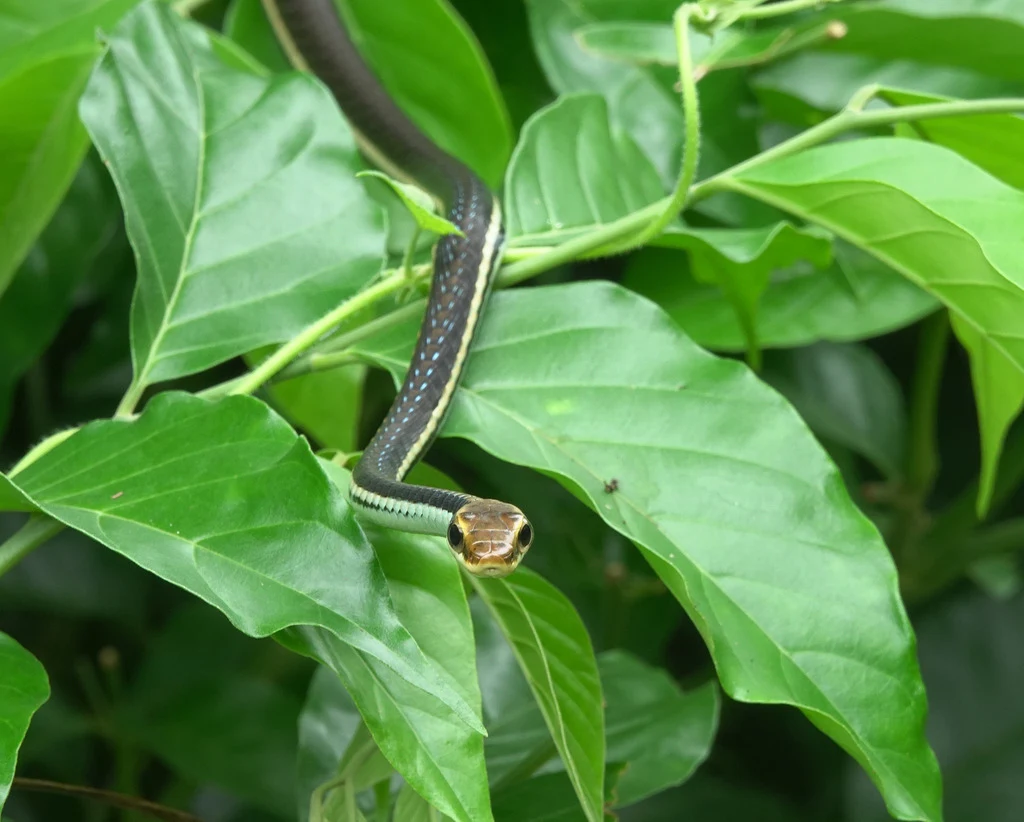
015 · Colubridae
Species account
India is explicitly listed in the checked individual taxonomic treatment. The national ZSI checklist independently lists Dendrelaphis proarchos. Regional evidence: Uttar Pradesh; Arunachal Pradesh, Meghalaya, Nagaland, Mizoram, Tripura, Sikkim; Gujarat. Named records do not imply continuous occurrence throughout a region.
Read the species account →Rejoice Gassah · CC BY 4.0 · https://creativecommons.org/licenses/by/4.0/
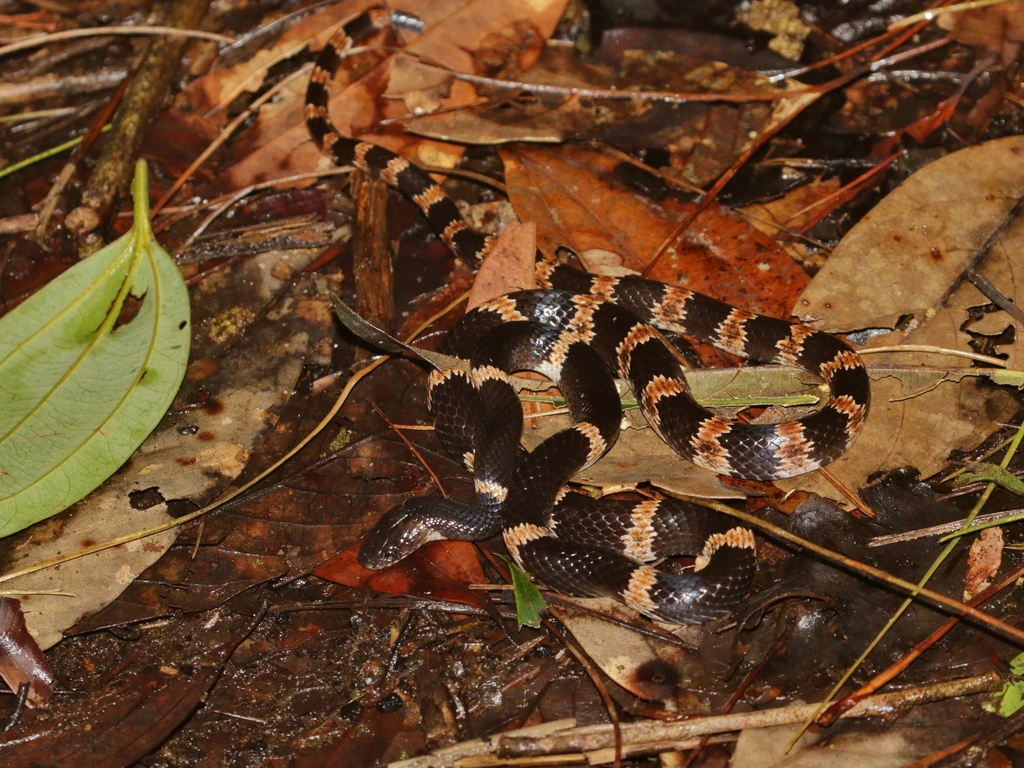
016 · Colubridae
Banded Wolf Snake
India is explicitly listed in the checked individual taxonomic treatment. The national ZSI checklist independently lists Lycodon fasciatus. Regional evidence: Assam, Arunachal Pradesh, Nagaland, Mizoram. Named records do not imply continuous occurrence throughout a region.
Read the species account →Ian Dugdale · CC BY 4.0 · https://creativecommons.org/licenses/by/4.0/
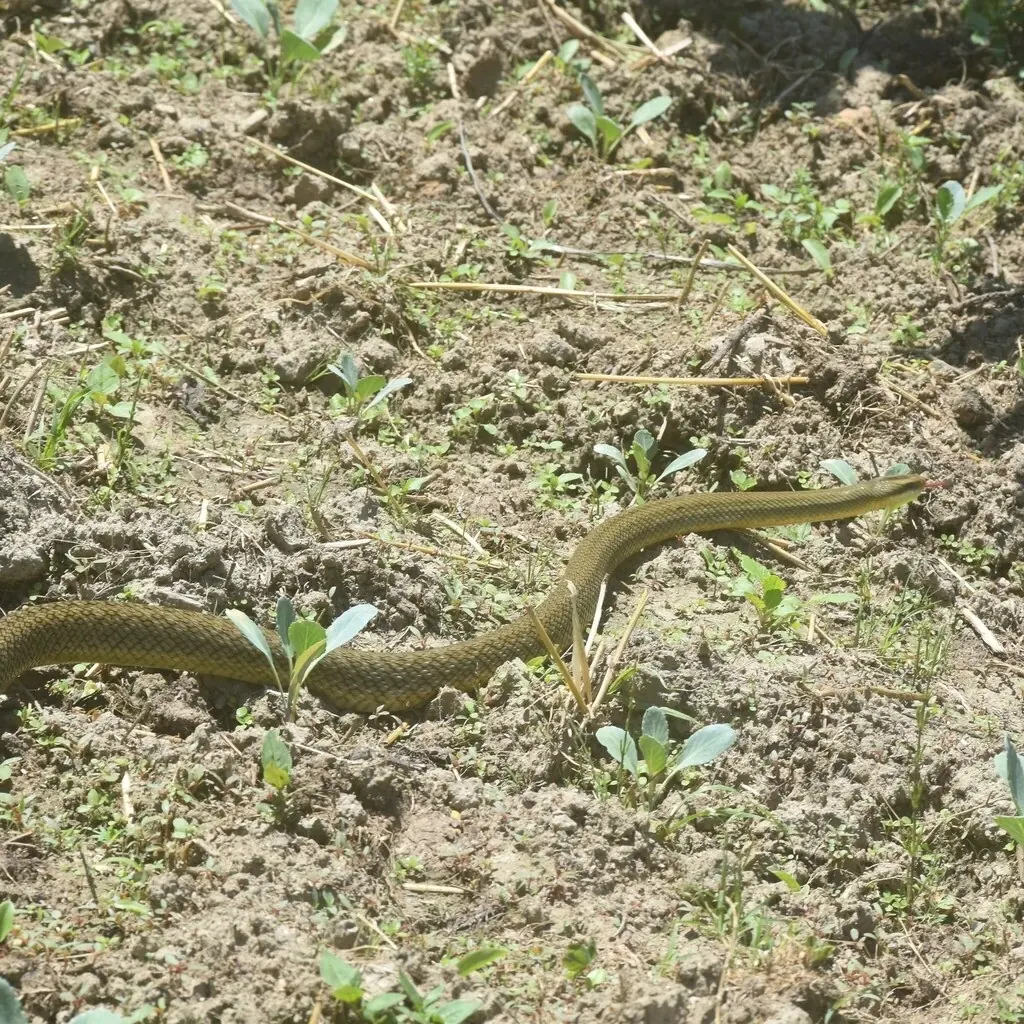
017 · Colubridae
English common name not available
India is explicitly listed in the checked individual taxonomic treatment. The national ZSI checklist independently lists Elaphe hodgsoni. Regional evidence: Jammu and Kashmir, Himachal Pradesh, Himachal; Meghalaya, Sikkim. Named records do not imply continuous occurrence throughout a region.
Read the species account →Name · CC BY 4.0 · https://creativecommons.org/licenses/by/4.0/
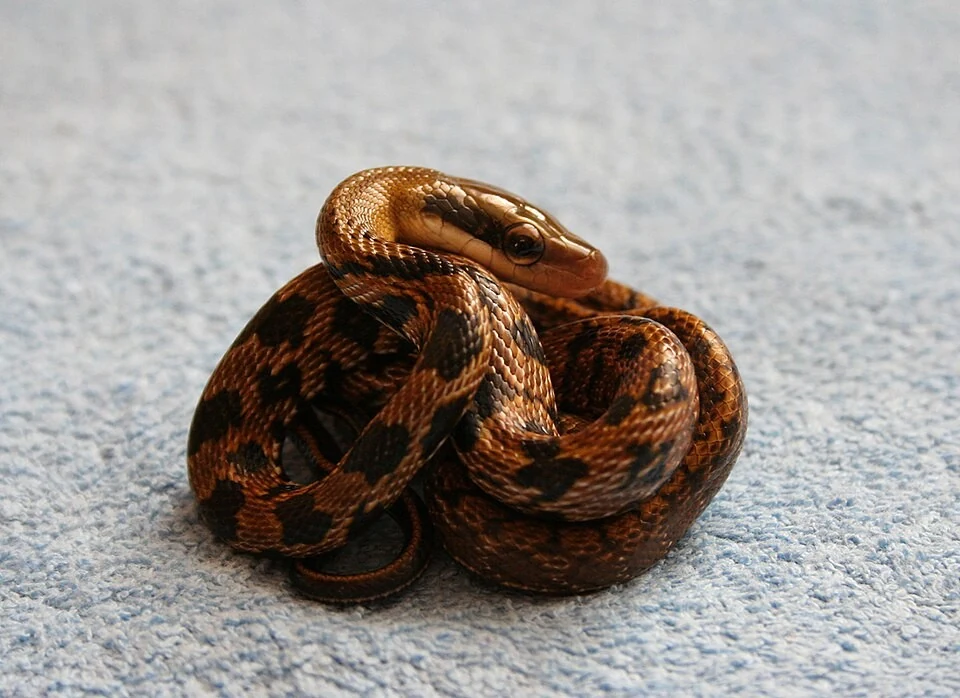
018 · Colubridae
Beauty Snake (friesei: Taiwan Beauty Snake; schmackeri: Sakishima Beauty Snake; callicyanous: Blue Beauty Ratsnake)
India is explicitly listed in the checked individual taxonomic treatment. The national ZSI checklist independently lists Elaphe taeniura. Regional evidence: Assam, Arunachal Pradesh, Mizoram, Sikkim. Named records do not imply continuous occurrence throughout a region.
Read the species account →No machine-readable author provided. Hippocampus~commonswiki assumed (based on copyright claims). · CC BY-SA 2.5 · https://creativecommons.org/licenses/by-sa/2.5
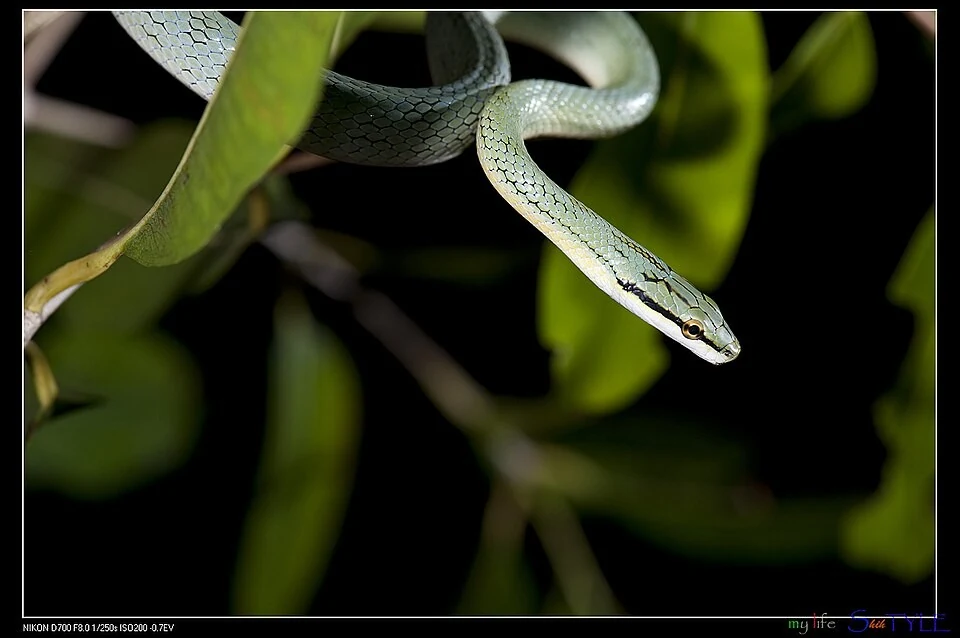
019 · Colubridae
Khasi Hills Trinket snake
India is explicitly listed in the checked individual taxonomic treatment. The national ZSI checklist independently lists Gonyosoma frenatum. Regional evidence: Arunachal Pradesh, Meghalaya, Mizoram, Khasi Hills. Named records do not imply continuous occurrence throughout a region.
Read the species account →LiCheng Shih · CC BY-SA 2.0 · https://creativecommons.org/licenses/by-sa/2.0
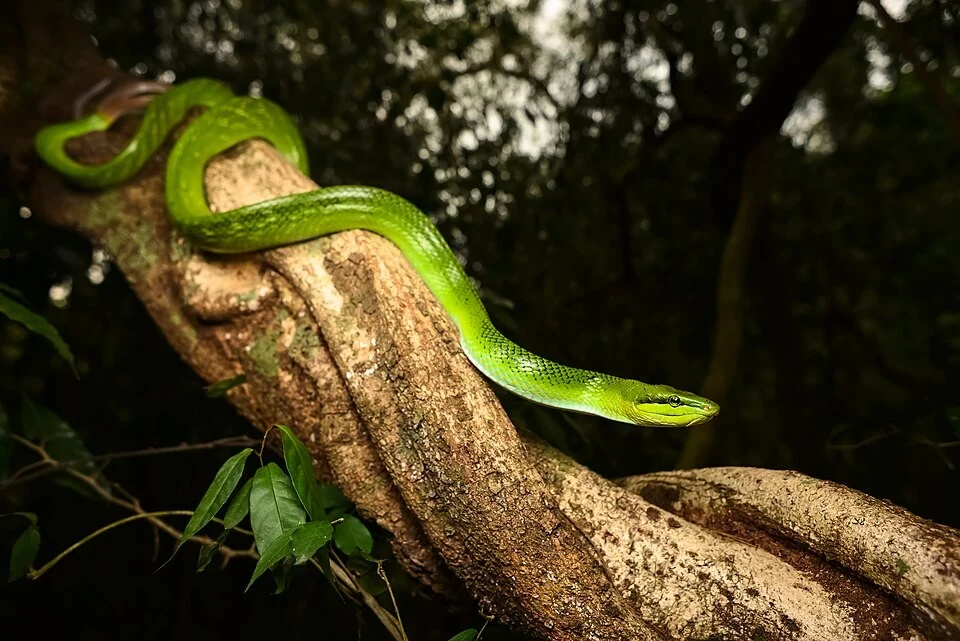
020 · Colubridae
Red-tailed Green Ratsnake
India is explicitly listed in the checked individual taxonomic treatment. The national ZSI checklist independently lists Gonyosoma oxycephalum. Regional evidence: Andaman. Named records do not imply continuous occurrence throughout a region.
Read the species account →Rushenb · CC BY-SA 4.0 · https://creativecommons.org/licenses/by-sa/4.0

021 · Typhlopidae
Flowerpot Snake
India is explicitly listed in the checked individual taxonomic treatment. The national ZSI checklist independently lists Indotyphlops braminus. Regional evidence: Jammu and Kashmir, Himachal Pradesh, Himachal; Assam, Arunachal Pradesh, Meghalaya, Mizoram, Tripura, Sikkim; Odisha; Madhya Pradesh; Gujarat, Maharashtra; Kerala, Tamil Nadu, Telangana;…
Read the species account →Cook-Price, Makchai & Suwanwaree (2026); photographs credited collectively to the author, James Covert and Vikas Kumar · CC BY 4.0 · https://creativecommons.org/licenses/by/4.0/
022 · Colubridae
Stoliczka's Smooth Snake
India is explicitly listed in the checked individual taxonomic treatment. The national ZSI checklist independently lists Liopeltis stoliczkae. Regional evidence: Arunachal Pradesh, Nagaland, Mizoram, Sikkim. Named records do not imply continuous occurrence throughout a region.
Read the species account →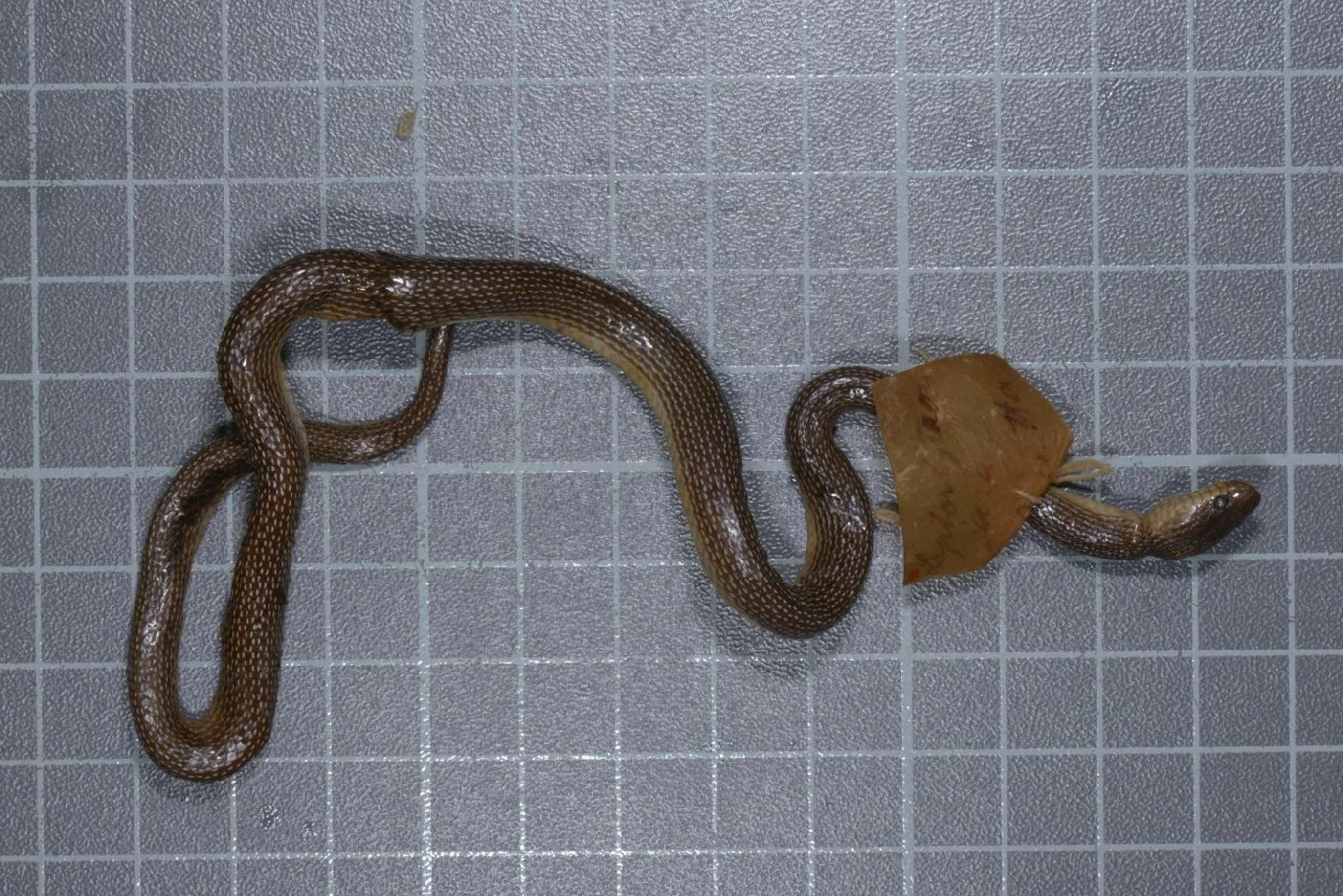
023 · Colubridae
Twin-spotted Wolf Snake
India is explicitly listed in the checked individual taxonomic treatment. The national ZSI checklist independently lists Lycodon jara. Regional evidence: Uttar Pradesh; Assam, Arunachal Pradesh, Meghalaya, Manipur, Mizoram, Tripura, Sikkim; Bihar, Odisha, West Bengal. Named records do not imply continuous occurrence throughout a region.
Read the species account →Wai Yee Cooper / The Trustees of the Natural History Museum, London · CC BY 4.0 · https://creativecommons.org/licenses/by/4.0/
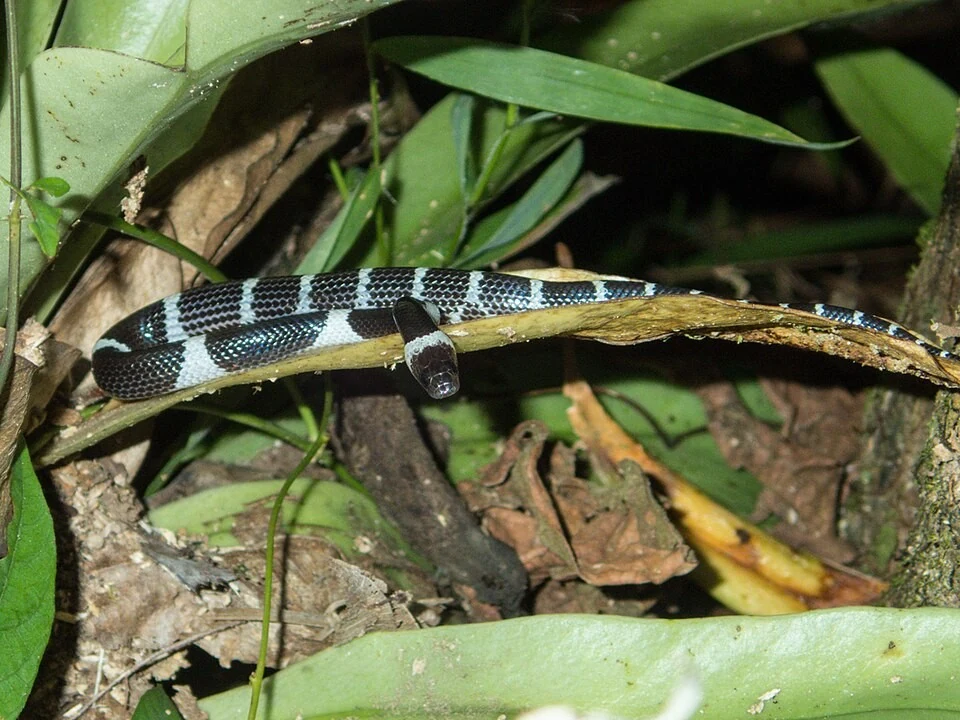
024 · Colubridae
Laotian Wolf Snake
India is explicitly listed in the checked individual taxonomic treatment. The national ZSI checklist independently lists Lycodon laoensis.
Read the species account →Gerard Chartier · CC BY 4.0 · https://creativecommons.org/licenses/by/4.0
Read further
Guide reviewed 11 October 2026. Source dates and geographic scope matter; landscape photographs do not establish species occurrence.
Monsoon mountain forests and geographic extent; not species occurrence evidence.
Satpura deciduous forests and watercourses; regional landscape context.
Continue through India
Mountain records need both elevation and vegetation.
02The Thar includes vegetated patches as well as open dry ground.
03Open habitats include seasonally wet grassland.
04Large floodplains contain changing water and vegetation mosaics.
05Tidal forests connect river sediment, brackish channels and the sea.
06Reefs, seagrass and island shores need precise habitat descriptions.