Prey reported in the studies compiled by SquamBase include reptile eggs and arthropods. The list describes documented food rather than an exclusive diet.
FamilyColubridae
ReproductionEgg-laying
Country chaptersLaos · Vietnam · Malaysia · Thailand · Myanmar · Bangladesh · Cambodia · China · India
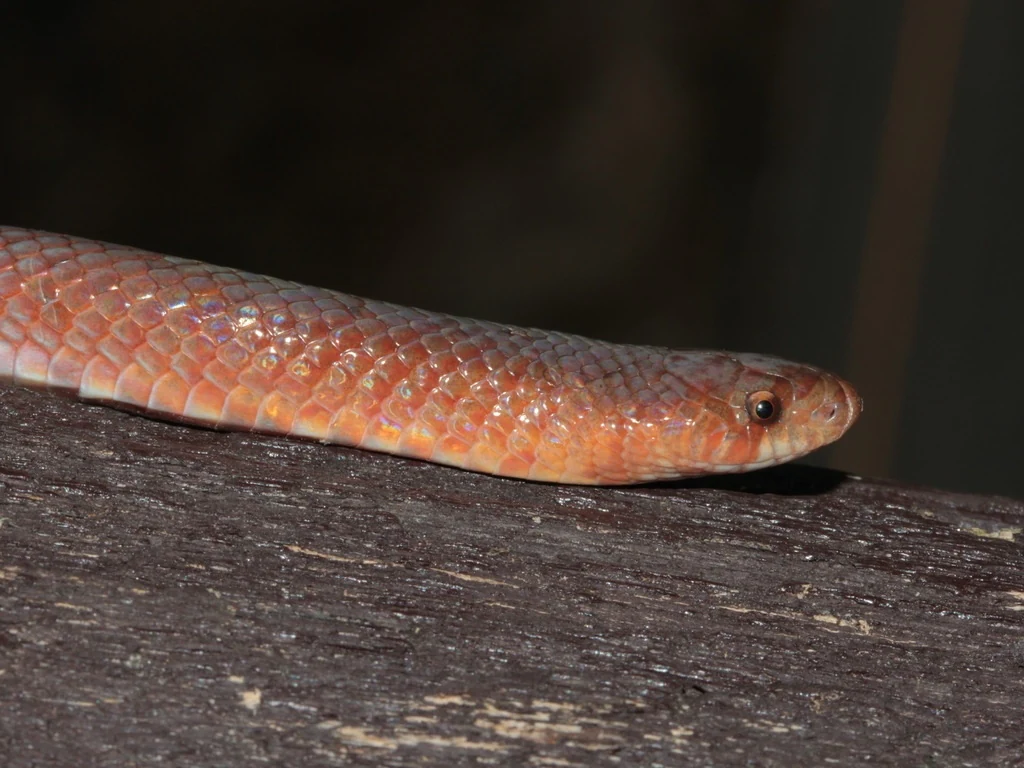
Oligodon cinereus — Thailand, 2014-11-28. The source obscures locality; only the public country label is retained. Ian Dugdale · CC BY 4.0. iNaturalist observation 301466685 has research-grade community identification as Oligodon cinereus (taxon 29267) with 6 current matching identifications when checked. This is a community determination, not an independent taxonomic diagnosis. The actual image was visually inspected for subject visibility and obvious condition; image-specific licensing was verified through the official API. The historical photograph has multiple current exact-name identifications from 2025 or later. Identity follows that community determination, not a new diagnosis from the image or its obscured locality. Resized and converted to WebP; image content and any visible watermark retained.
Venom & human effects
What is documented?
Non-venomous
Classified as non-venomous in the cited description of genus Oligodon; this species’ current membership is verified separately.
Explicit genus-level classification applied to a verified accepted member. The source does not provide a species-specific venom assay or human clinical study.
Evidence & scope · checked 2026-10-30
Neang & Hun (2013), First record of Oligodon annamensis Leviton, 1953 (Squamata: Colubridae) from the Cardamom Mountains of southwest Cambodia, Herpetology Notes 6:271–273. Opening paragraph, p.271, explicitly describes the kukri-snake genus as non-venomous. Current membership: Reptile Database genus search, exact accepted listing Oligodon cinereus, checked 2026-10-30.
The cited human cases reported limited effects. Sparse observations cannot exclude a severe reaction.
Medically significant effects
The cited human cases document clinically important injury or illness. This is not an upper limit on severity.
Potentially life-threatening
Species-specific clinical evidence documents life-threatening illness or deaths after bites. The account explains the affected patients and any uncertainty about the cause.
Clinical severity not established
Venom presence is documented, but the reviewed evidence does not establish a clinical tier. When human effects are reported under an unresolved historical species name, the badge and account say so explicitly.
Venom status uncertain
The reviewed sources are inconclusive or conflicting about venom presence. The account explains the uncertainty.
Venom status not assessed
The atlas lacks a reviewed venom-presence classification for this species.
These are editorial summaries of the linked evidence, not toxicity rankings or WHO antivenom-priority categories. Effects vary with the bite and patient. Non-venomous does not mean safe to handle.
Reliable identification uses the published combination of scale characters, proportions and other diagnostic evidence. Colour or a photograph alone may not separate closely related species.
Names trace the literature, including older combinations and historical usages. Their appearance here does not mean they are all currently accepted synonyms.
From observations & literature
Natural history
Size and ecological traits credited to SquamBase summarize published studies across the species’ range in its 2024 edition. They are complemented by the locality-specific observations below.
Size & measurements
Recorded size
The largest measurements compiled in SquamBase 1.0 are 73 cm total length (including the tail) and 59.1 cm snout-to-vent length (excluding the tail). These are separate literature maxima, not typical adult sizes or necessarily measurements of the same animal.
SquamBase 1.0 records a literature maximum of 73 cm total length, including the tail. This is a compiled maximum, not a typical adult size or a measurement specific to this country.
Prey reported in the studies compiled by SquamBase include reptile eggs and arthropods. The list describes documented food rather than an exclusive diet.
Ground-dwelling activity is reported in the studies compiled by SquamBase. This describes the species across its studied range, not a record from every island.
The compilation records 3–5 eggs per clutch. These published records need not represent the full variation between populations, and are not a separate estimate for Laos or Vietnam.
India is explicitly listed in the checked individual taxonomic treatment. The national ZSI checklist independently lists Oligodon cinereus. Regional evidence: Assam, Arunachal Pradesh, Meghalaya, Mizoram. Named records do not imply continuous occurrence throughout a region.
Confirmed occurrence in the 2025 Bangladesh review, Table 1. The paper explicitly relates its regional labels to the named administrative divisions. Regional evidence: Chattogram; Sylhet. Named records do not imply continuous occurrence throughout a region.
China is explicitly recorded in the checked individual species treatment. The accepted identity is also represented in the 2025 checklist; regional inclusion here is based on explicit locality evidence, not the checklist’s broader geographical scope. Named regional records: Fujian; Guangdong, Guangxi; Yunnan; Hong Kong. These localities do not imply continuous occupation of the entire region.
The Thai government Red Data account (2005, p. 142) documents these named Thai localities. These are historical locality records, not a complete present-day range survey.
The 2026 provincial checklist explicitly lists this species in Ha Tinh. This establishes a provincial record; it does not imply occurrence in every protected area or across the whole editorial region.
A reported observation is not necessarily the full ecological range of a species. Where reproduction is inferred in a source dataset, the account identifies that limitation.
One species · Across borders
Global distribution
Explore the recorded countries and islands. Select a highlighted area to see its distribution evidence.
Recorded distributionN ↑
Loading geographic boundaries…
ListedIntroducedUncertain
Click a highlighted country to zoom in and explore its records.
Shading identifies recorded countries or named islands, not continuous habitat coverage. Uncoloured areas do not establish absence.
Vietnam: Binh Thuan; Dong Nai, Ba Ria Vung Tau, Con Dao, Hon Ba Island; Kien Giang.
The 2026 provincial checklist explicitly lists this species in Ha Tinh. This establishes a provincial record; it does not imply occurrence in every protected area or across the whole editorial region.
Thailand: country-level record; no named guide locality extracted.
The Thai government Red Data account (2005, p. 142) documents these named Thai localities. These are historical locality records, not a complete present-day range survey.
Confirmed occurrence in the 2025 Bangladesh review, Table 1. The paper explicitly relates its regional labels to the named administrative divisions. Regional evidence: Chattogram; Sylhet. Named records do not imply continuous occurrence throughout a region.
Cambodia is explicitly included in the checked species distribution treatment. Country membership reviewed on 11 October 2026; no finer locality is assigned by this record.
China is explicitly recorded in the checked individual species treatment. The accepted identity is also represented in the 2025 checklist; regional inclusion here is based on explicit locality evidence, not the checklist’s broader geographical scope. Named regional records: Fujian; Guangdong, Guangxi; Yunnan; Hong Kong. These localities do not imply continuous occupation of the entire region.
India is explicitly listed in the checked individual taxonomic treatment. The national ZSI checklist independently lists Oligodon cinereus. Regional evidence: Assam, Arunachal Pradesh, Meghalaya, Mizoram. Named records do not imply continuous occurrence throughout a region.
India (Meghalaya, Assam; Arunachal Pradesh [A. Captain, pers. comm.], Mizoram), Bangladesh, Bhutan, Cambodia, Laos, Vietnam (Binh Thuan, Kien Giang etc.), Myanmar (= Burma), Thailand, N West Malaysia, China (westward to Yunnan, incl. Hong Kong and Hainan, Guangxi, Fujian, Guangdong, Hong Kong) [1]
The text retains the source’s geographic qualifications. The map shows countries with atlas occurrence records; it is not a complete global range model. A type locality is a nomenclatural reference, not the only place the species occurs.
Status & its meaning
Conservation
No matching global assessment was verified for this account. This is an unresolved assessment link, not an IUCN “Not Evaluated” classification and not evidence that the species is secure.
Locality coverage in the atlas does not measure abundance, population trends or national legal protection.
Follow the evidence
Sources & further reading
Latest evidence added 2026-10-11. Taxonomic and distribution treatments may change.
The linked taxonomic treatment provides its original descriptions, revisions and bibliography. Observations from other countries are not relabelled as local field studies.