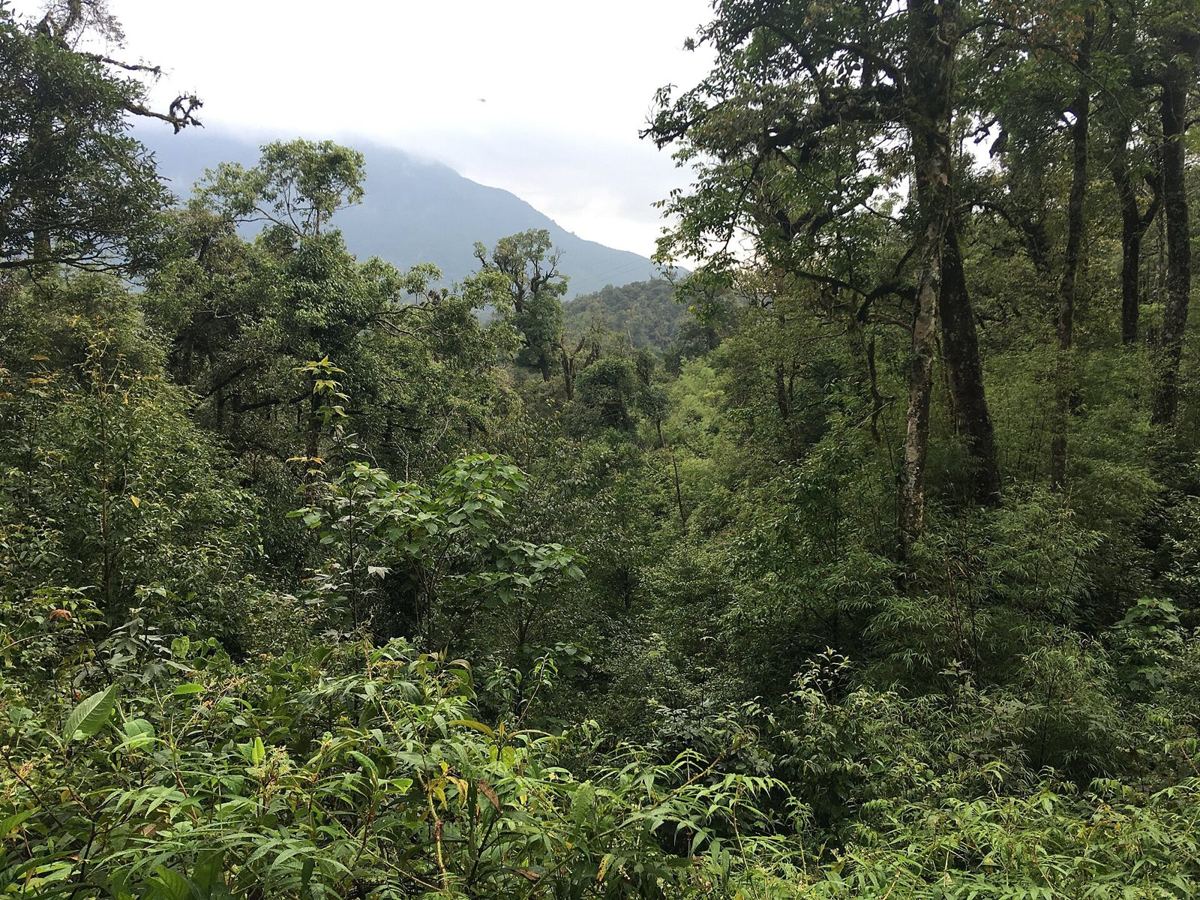
The Hoang Lien mountain landscape in northern Vietnam.

Vietnam · Habitat field guide

Mountain forests

Hoang Lien in the northwest and Langbiang in the Central Highlands offer different mountain environments. Elevation is a starting point, not a complete habitat description.

The Hoang Lien mountain landscape in northern Vietnam.

Photograph: Christophe95 · Image source · CC BY-SA 4.0. Cropped to fill the hero; darkened for text legibility.

Understanding the environment

A sense of the habitat.

Hoang Lien in the northwest and Langbiang in the Central Highlands offer different mountain environments. Elevation is a starting point, not a complete habitat description.

Main gradient
Valley, wooded slope and exposed ridge
Compare
Forest formation and moisture
Local examples
Hoang Lien and Langbiang

Explore the structure · Compare sheltered lower ground with forest and ridge above it.

Follow a mountain slope.

Select a zone to see what changes.

Below the ridge

Valley and stream

Start with the drainage and the vegetation beside it.

A streamside observation describes a microhabitat as well as an elevation.

A conceptual habitat reading guide. The zones are not to scale and do not establish the presence of any snake at a particular site.

Sources: UNESCO · Langbiang Biosphere Reserve · ASEAN Centre for Biodiversity · Biodiversity-based livelihoods
Field notes · 01

The Central Highlands have several forest worlds

UNESCO describes Langbiang’s landscape from about 650 m to nearly 2,300 m, including evergreen mountain forest, mixed conifer–broadleaf forest, mossy forest and dwarf forest. These are vegetation descriptions, not elevation limits for any snake.

Use the actual mountain and observation altitude when available. A record somewhere in the Central Highlands is not evidence for every elevation band.

Sources: UNESCO · Langbiang Biosphere Reserve

Field notes · 02

Mountains connect habitat and livelihoods

At Hoang Lien, ASEAN’s biodiversity programme describes both mountain and valley diversity and pressure from conversion to farms or commercial land. Its account connects conservation with local livelihoods rather than treating the landscape as uninhabited.

An amphibian action plan for the range also prioritises stream protection and monitoring. That is useful catchment guidance; it does not establish the response of a snake population.

Sources: ASEAN Centre for Biodiversity · Biodiversity-based livelihoods · IUCN Amphibian Specialist Group · Hoang Lien action plan (2017–2021)
Pressures on Vietnam’s habitats

What is at risk?

What helps this habitat

Protect slope-to-stream connections, keep visitor infrastructure within carefully assessed limits and support local stewardship. Monitor vegetation and water conditions alongside animal records.

The connected collection

Snakes with habitat evidence.

These 17 species have supported country occurrence and an explicit habitat association in the shared account. The association may come from elsewhere in their range. This is not a complete local habitat inventory; the places above are landscape examples, not asserted collecting sites.

17 species · showing 17

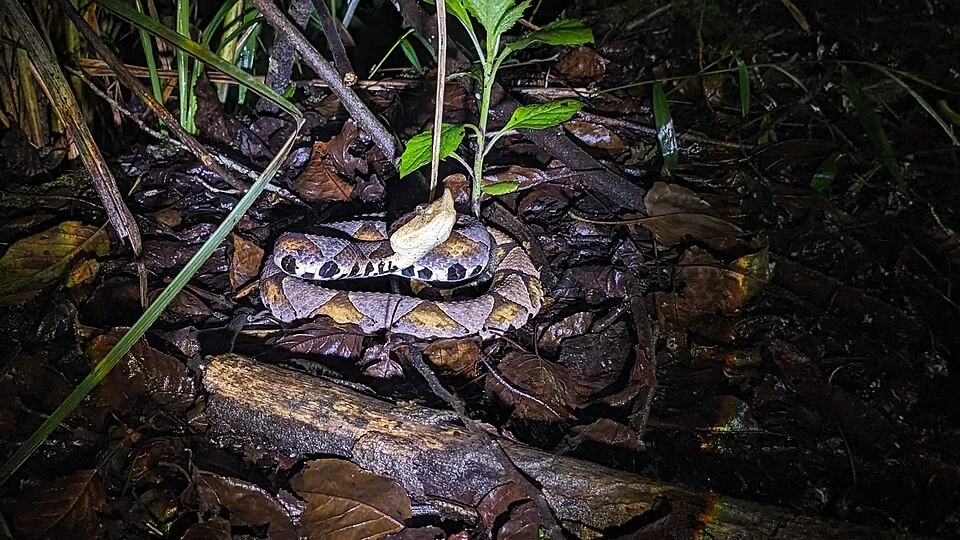
Deinagkistrodon acutus — real specimen photograph; identification follows the linked source.

002 · Viperidae

Chinese Moccasin, Hundred-pace viper, five-pacer viper

Deinagkistrodon acutus

(GÜNTHER, 1888)

VenomousPotentially life-threatening

Vietnam: Yen Bai; Ha Giang.

Read the species account →

Cheng Te Hsu · CC BY-SA 4.0 · https://creativecommons.org/licenses/by-sa/4.0

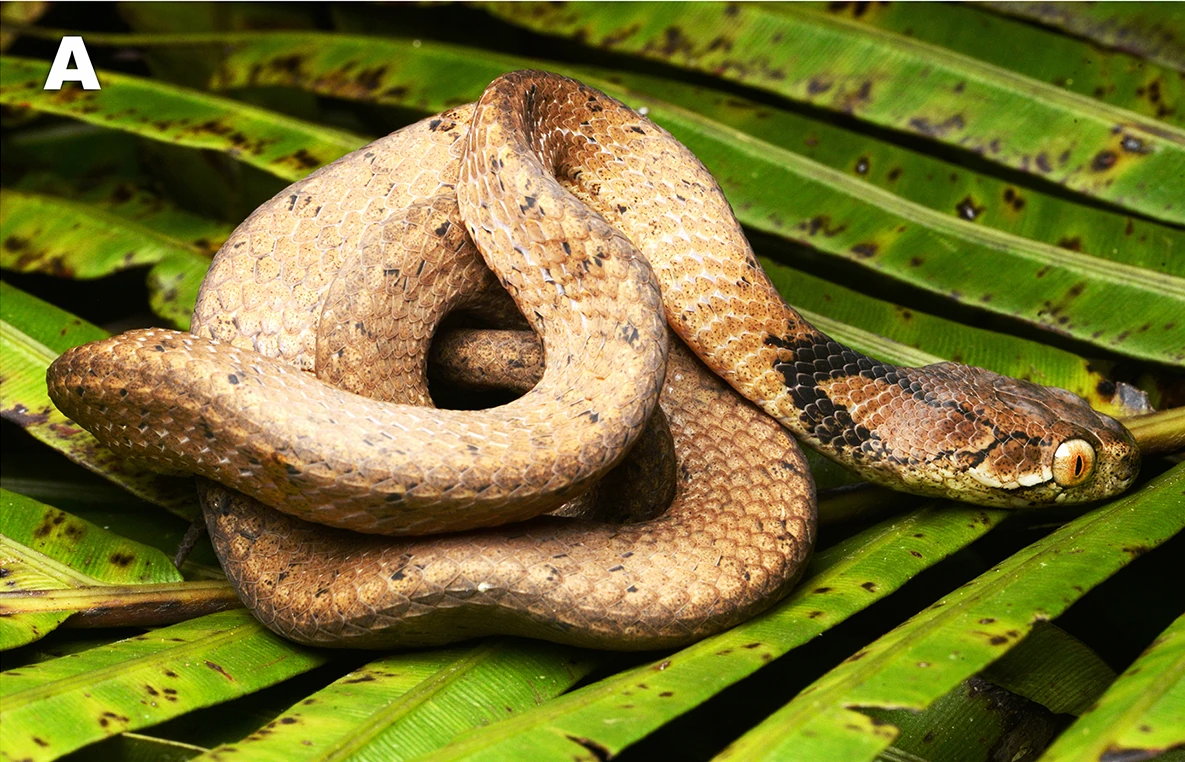
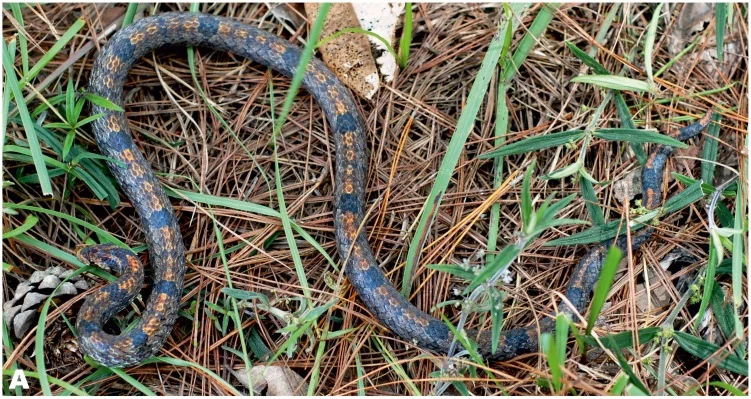
Oligodon rostralis, living male holotype SIEZC 20201 photographed in situ, Bidoup–Nui Ba National Park, Lam Dong Province, Vietnam. Figure 6A in Nguyen et al. (2020), A new species of Oligodon Fitzinger, 1826 from the Langbian Plateau, southern Vietnam, with additional information on Oligodon annamensis Leviton, 1953 (Squamata: Colubridae), PeerJ 8:e8332.

006 · Colubridae

Long-snouted kukri snake

Oligodon rostralis

NGUYEN, TRAN, NGUYEN, NEANG, YUSHCHENKO & POYARKOV, 2020

Non-venomous

Vietnam: Lam Dong, Bidoup.

Read the species account →

Linh Hoang Nguyen · CC BY 4.0 · https://creativecommons.org/licenses/by/4.0/

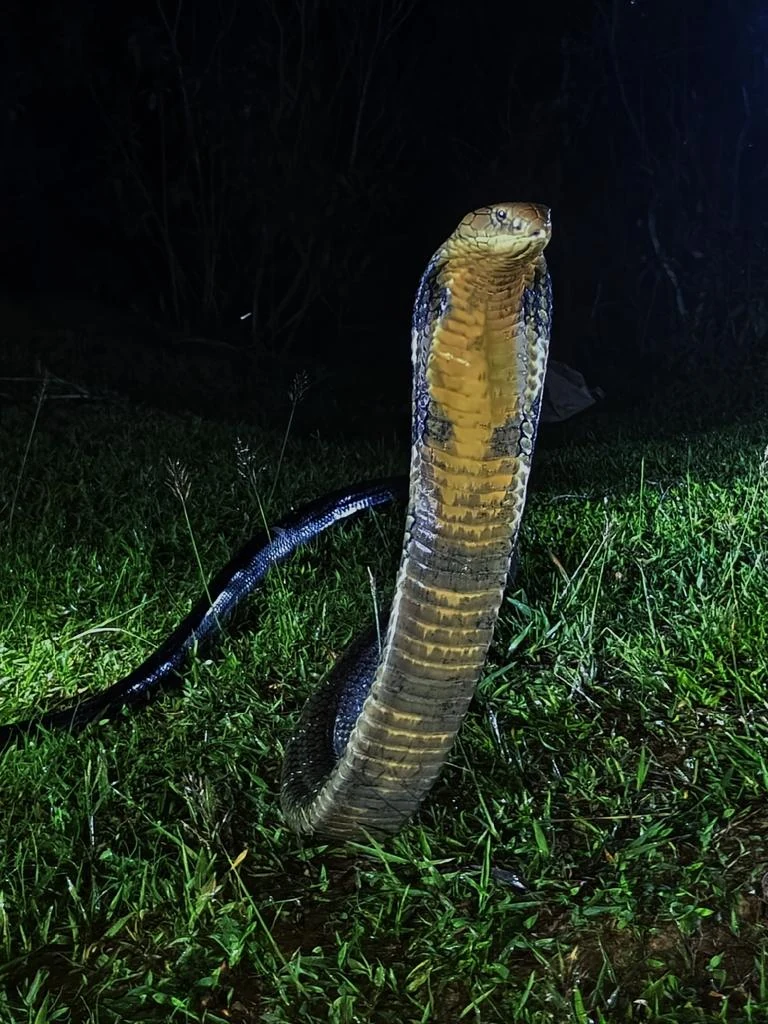
Ophiophagus hannah — India, 2026-05-29.

007 · Elapidae

Hamadryad, King Cobra

Ophiophagus hannah

(CANTOR, 1836)

VenomousPotentially life-threatening

Vietnam: Hoa Binh, Yen Bai. The 2024 provincial checklist explicitly lists this species in Thanh Hoa. The 2026 provincial checklist explicitly lists this species in Ha Tinh. The 2020 provincial checklist explicitly lists this species in Son La. This establishes a provincial record; it does not imply occurrence in every protected area or across the whole…

Read the species account →

Ankur Nandi · CC BY 4.0 · https://creativecommons.org/licenses/by/4.0/

Pareas abros in life, male holotype ZMMU R-16393, Song Thanh National Park, Quang Nam, Vietnam. Poyarkov et al. (2022), An integrative taxonomic revision of slug-eating snakes (Squamata: Pareidae: Pareineae) reveals unprecedented diversity in Indochina, figure 19A (PeerJ). Source: NLM/PMC Article Datasets.

009 · Pareidae

Cute slug-eating snake

Pareas abros

POYARKOV, NGUYEN, VOGEL & ORLOV, 2022

Non-venomous

Vietnam: Thua Thien Hue; Quang Nam.

Read the species account →

Nikolay A. Poyarkov · CC BY 4.0 · https://creativecommons.org/licenses/by/4.0/

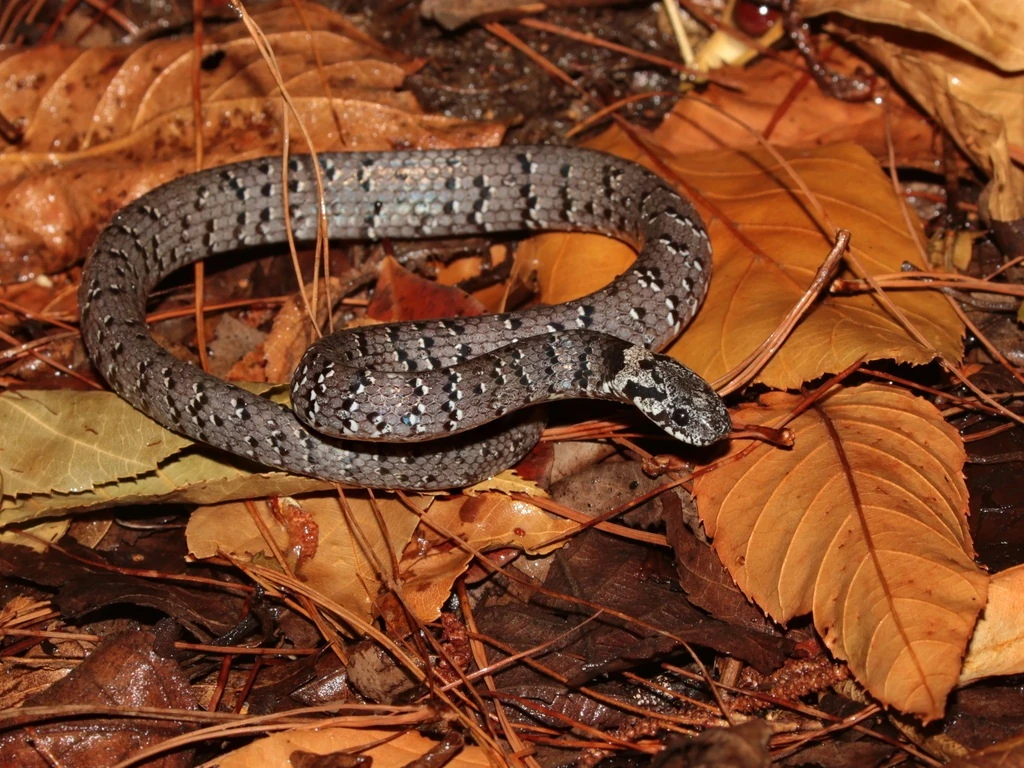
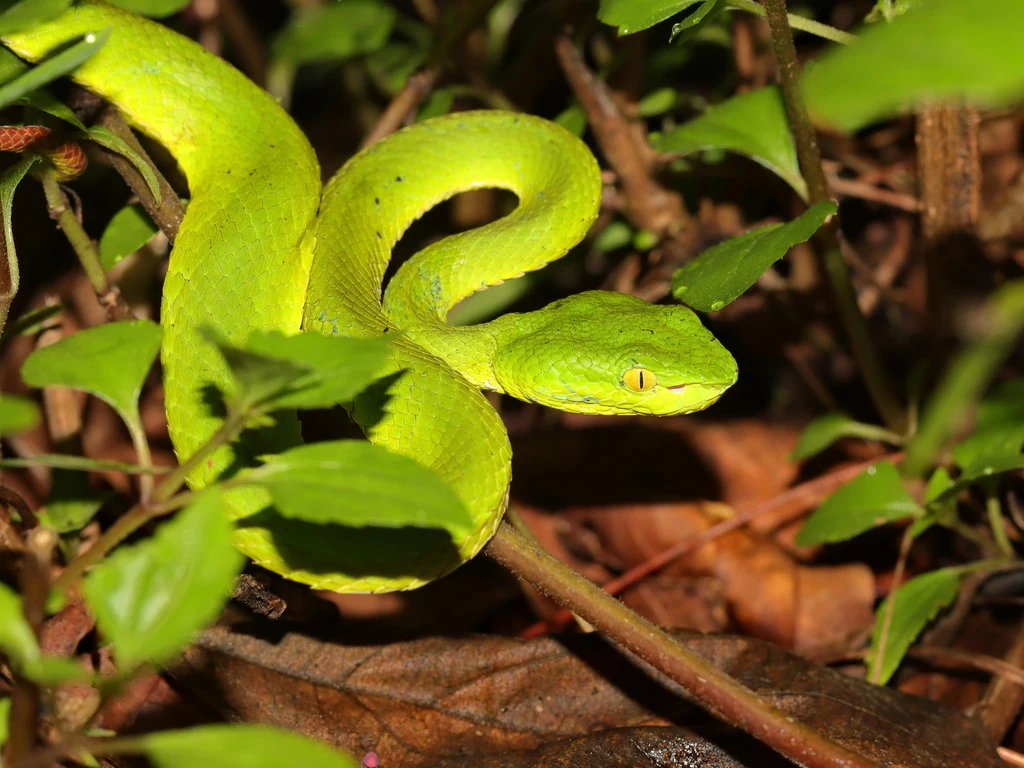
Pareas macularius. Identification follows the linked source community.

010 · Pareidae

Mountain Slug Snake

Pareas macularius

THEOBALD, 1868

Non-venomous

Vietnam: Lai Chau, Hoa Binh; Cao Bang, Bac Kan; Vinh Phuc, Hai Duong; Nghe An, Quang Binh. The 2024 provincial checklist explicitly lists this species in Thanh Hoa. This establishes a provincial record; it does not imply occurrence in every protected area or across the whole editorial region.

Read the species account →

Ian Dugdale · CC BY 4.0 · https://creativecommons.org/licenses/by/4.0/

Pareas margaritophorus — real specimen photograph; identification follows the linked source.

011 · Pareidae

Mountain Slug Snake

Pareas margaritophorus

(JAN, 1866)

Non-venomous

Vietnam: Hoa Binh. The 2024 provincial checklist explicitly lists this species in Thanh Hoa. The 2026 provincial checklist explicitly lists this species in Ha Tinh. This establishes a provincial record; it does not imply occurrence in every protected area or across the whole editorial region.

Read the species account →

Rushenb · CC BY-SA 4.0 · https://creativecommons.org/licenses/by-sa/4.0

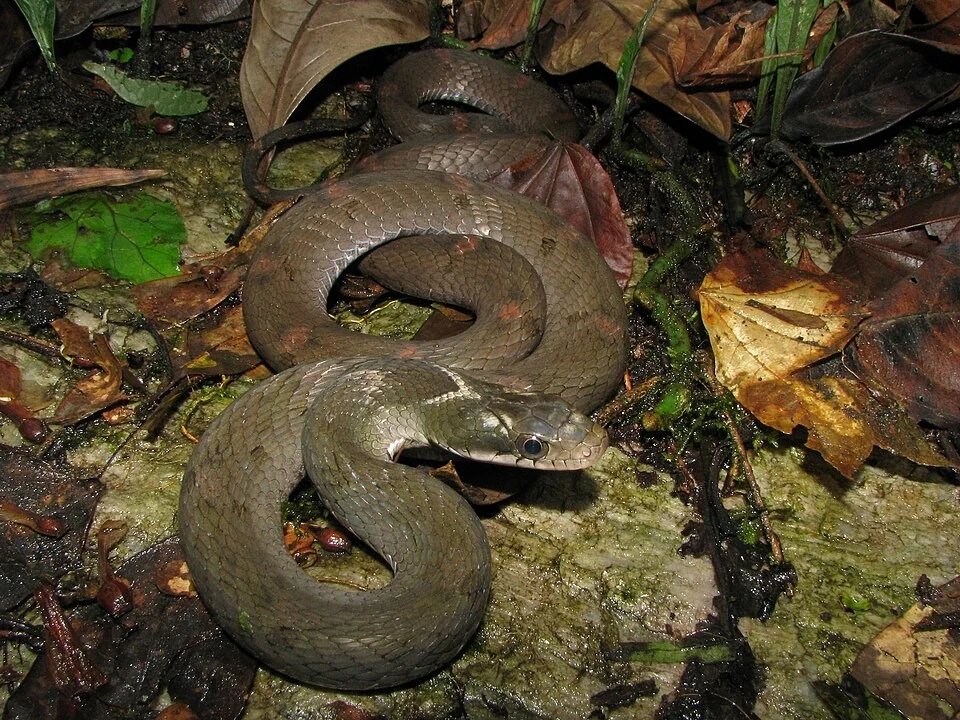
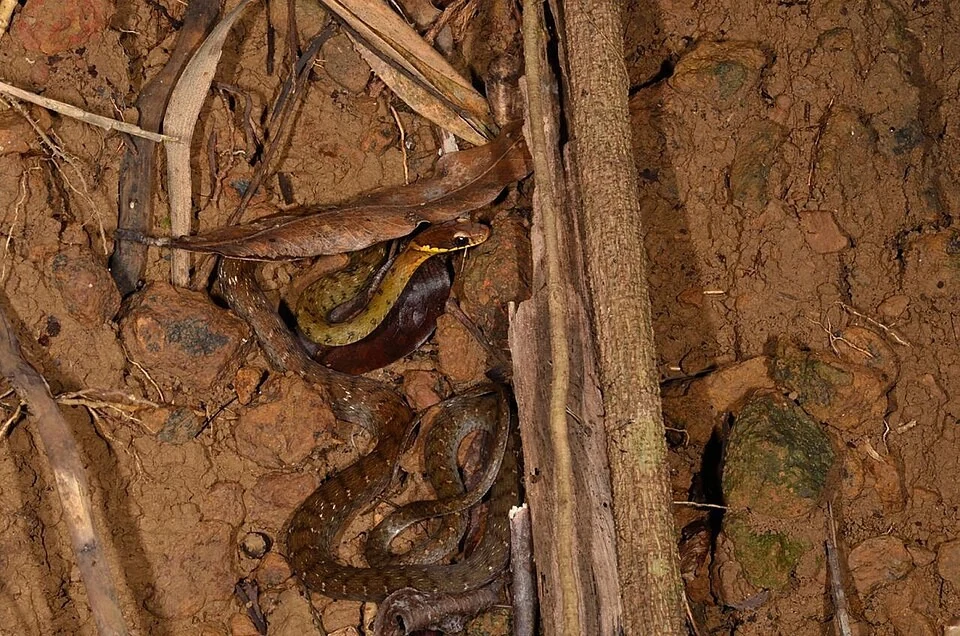
Pseudoxenodon macrops — real specimen photograph; identification follows the linked source.

012 · Colubridae

(Large-eyed or) Big-eyed Bamboo Snake, Mock Cobra

Pseudoxenodon macrops

(BLYTH, 1855)

Venom unknownNot yet assessed

Vietnam: national occurrence; no finer locality is assigned in this atlas. The 2024 provincial checklist explicitly lists this species in Thanh Hoa. The 2020 provincial checklist explicitly lists this species in Son La. This establishes a provincial record; it does not imply occurrence in every protected area or across the whole editorial region.

Read the species account →

Umeshsrinivasan · CC BY-SA 3.0 · https://creativecommons.org/licenses/by-sa/3.0

Rhabdophis chrysargos — real specimen photograph; identification follows the linked source.

014 · Colubridae

Specklebelly Keelback

Rhabdophis chrysargos

(SCHLEGEL, 1837)

Venom unknownNot yet assessed

Vietnam: Hoa Binh. The 2024 provincial checklist explicitly lists this species in Thanh Hoa. The 2026 provincial checklist explicitly lists this species in Ha Tinh. The 2020 provincial checklist explicitly lists this species in Son La. This establishes a provincial record; it does not imply occurrence in every protected area or across the whole editorial…

Read the species account →

Eugene Popov · CC BY 4.0 · https://creativecommons.org/licenses/by/4.0

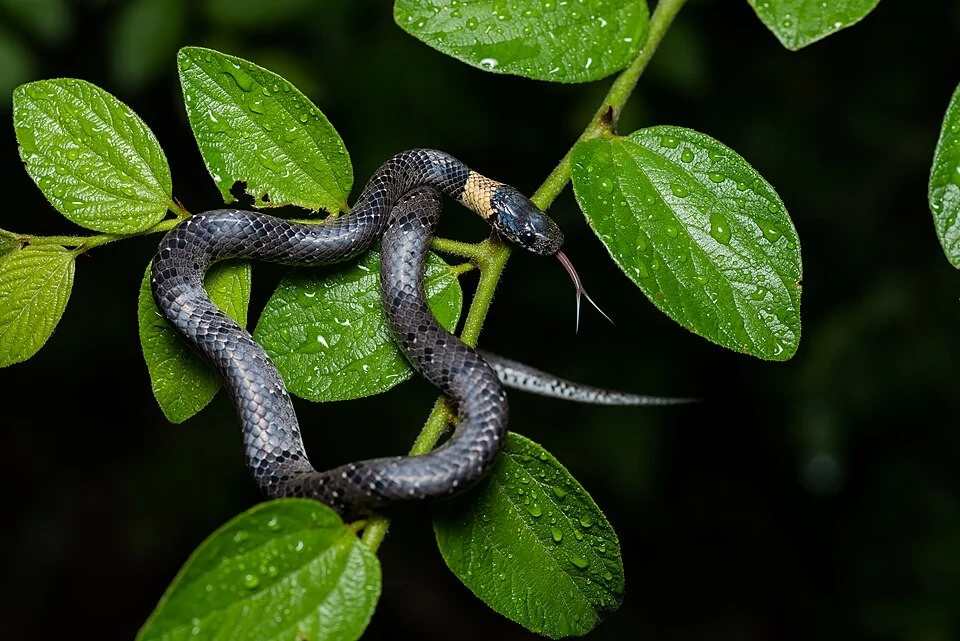
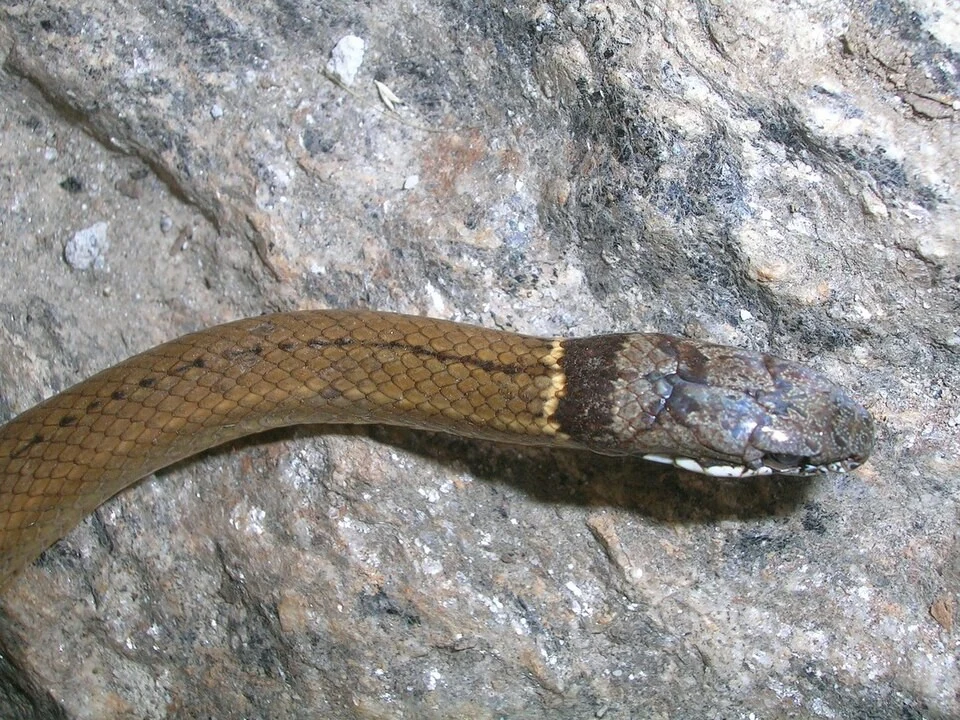
Sibynophis collaris — real specimen photograph; identification follows the linked source.

015 · Colubridae

Common Many-tooth Snake

Sibynophis collaris

(GRAY, 1853)

Non-venomous

Vietnam: Hoa Binh. The 2026 provincial checklist explicitly lists this species in Ha Tinh. The 2020 provincial checklist explicitly lists this species in Son La. This establishes a provincial record; it does not imply occurrence in every protected area or across the whole editorial region.

Read the species account →

L. Shyamal · CC BY-SA 3.0 · https://creativecommons.org/licenses/by-sa/3.0

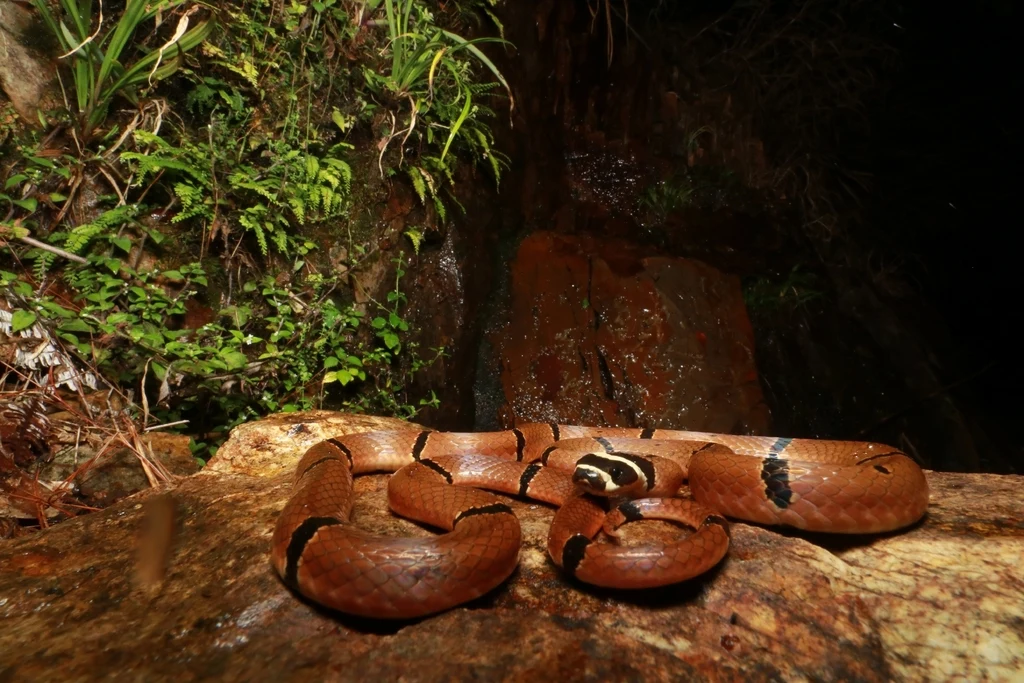
Sinomicrurus kelloggi. Coiled individual photographed on rock. Original observation dated 2026-09-09. Photograph identification follows the cited observation; it adds no geographic occurrence record.

016 · Elapidae

Kellogg's Coral Snake

Sinomicrurus kelloggi

(POPE, 1928)

VenomousClinical severity not established

Vietnam: Quang Ninh; Nghe An. The 2020 provincial checklist explicitly lists this species in Son La. This establishes a provincial record; it does not imply occurrence in every protected area or across the whole editorial region.

Read the species account →

Max Tibby · CC0 1.0 · https://creativecommons.org/publicdomain/zero/1.0/

All 270 species in the country collection →

Read further

Evidence & sources.

Guide reviewed 11 October 2026. Source dates and geographic scope matter; landscape photographs do not establish species occurrence.

  1. UNESCO · Langbiang Biosphere Reserve

    Central Highlands elevation range and different forest formations; not snake elevation limits.

  2. ASEAN Centre for Biodiversity · Biodiversity-based livelihoods
    Hoang Lien landscape and documented land conversion, development and harvesting pressures, p. 19. No national rates inferred.

  3. IUCN Amphibian Specialist Group · Hoang Lien action plan (2017–2021)

    Historical recommendations for upland stream protection and monitoring; amphibian evidence, not a snake population study.

Continue through Vietnam

Explore another habitat.

01

Forests & woodland

Vietnam’s forest story includes wet southern woodland and unusually dry coastal forest. Look inside the vegetation, then ask which landscape surrounds it.

02

Limestone & karst forests

Vietnamese limestone country joins forest, exposed rock, caves and water. The spaces between the towers matter as much as their silhouettes.

03

Rivers, streams & wetlands

A northern lake among limestone mountains and a seasonally flooded Mekong wetland are both freshwater habitats, but their water cycles and vegetation differ.

04

Mangroves & estuaries

Can Gio and the Red River Delta show how sediment, tides and freshwater build coastal habitat. Mangrove trees belong to a wider estuarine mosaic.

05

Coasts & marine waters

Vietnam’s coastal atlas reaches from limestone archipelagos to central reefs and seagrass. A shoreline is a meeting of habitats rather than a single uniform environment.