Land use and extraction
UNESCO identifies exploitation of natural resources and land-use change among pressures on the Phong Nha–Hin Nam No property.
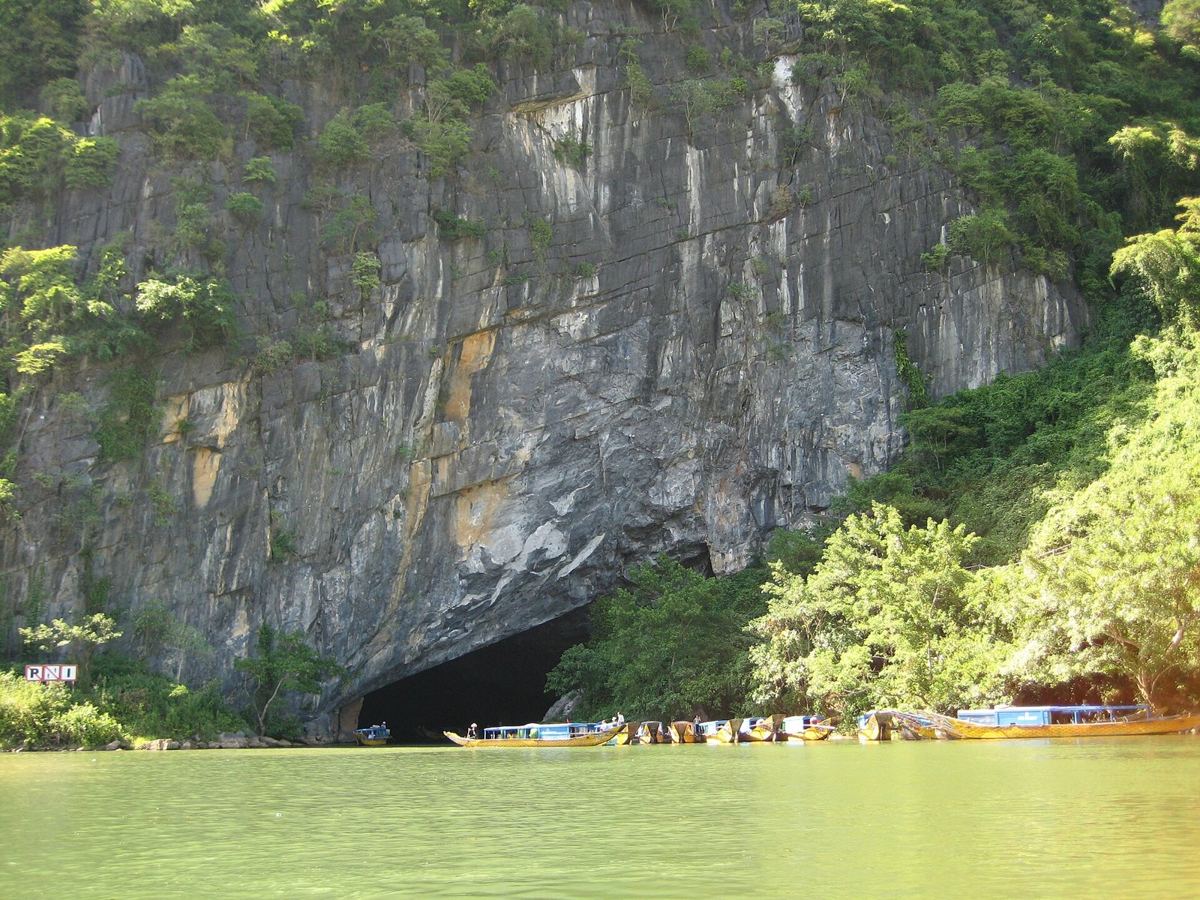
Vietnam · Habitat field guide
Vietnamese limestone country joins forest, exposed rock, caves and water. The spaces between the towers matter as much as their silhouettes.
Forested limestone mountains in Phong Nha-Ke Bang National Park, Vietnam.
Understanding the environment
Vietnamese limestone country joins forest, exposed rock, caves and water. The spaces between the towers matter as much as their silhouettes.
Explore the structure · Move from the wooded surface to rock openings and water.
Select a zone to see what changes.
Above the caves
Describe the vegetation covering the rock and the gaps between wooded patches.
Rocky ground does not imply treeless habitat.
A conceptual habitat reading guide. The zones are not to scale and do not establish the presence of any snake at a particular site.
Sources: UNESCO · Phong Nha-Ke Bang and Hin Nam No · UNESCO · Trang An Landscape Complex
Field notes · 01
Phong Nha-Ke Bang and Hin Nam No form a transboundary karst property spanning Vietnam and Laos. UNESCO distinguishes dry upland karst forest, moist lower forest and subterranean environments.
An international boundary is not an ecological wall. Even so, records on one side cannot be copied into the other country without occurrence evidence.
Field notes · 02
Trang An lies near the southern edge of the Red River Delta, where limestone terrain and waterways form a contrasting lowland karst example. Its visitor-management priorities are part of understanding a heavily visited landscape.
Keep inland limestone, tidal karst and ordinary rocky woodland separate in field descriptions. Similar-looking cliffs can occur beside very different water and vegetation systems.
Sources: UNESCO · Trang An Landscape Complex
Pressures on Vietnam’s habitats
UNESCO identifies exploitation of natural resources and land-use change among pressures on the Phong Nha–Hin Nam No property.
Visitor operations and development need close assessment in karst landscapes. Trang An’s management priorities include monitoring tourism and conserving the setting.
Sources: UNESCO · Trang An Landscape Complex
Protect forest and drainage together, assess development beyond cave entrances, and keep visitor use compatible with sensitive sites. Retain the exact locality behind every restricted-range record.
The connected collection
These 15 species have supported country occurrence and an explicit habitat association in the shared account. The association may come from elsewhere in their range. This is not a complete local habitat inventory; the places above are landscape examples, not asserted collecting sites.
15 species · showing 15
001 · Xenodermidae
Julian’s Burrowing Snake
Vietnam: Cao Bang.
Read the species account →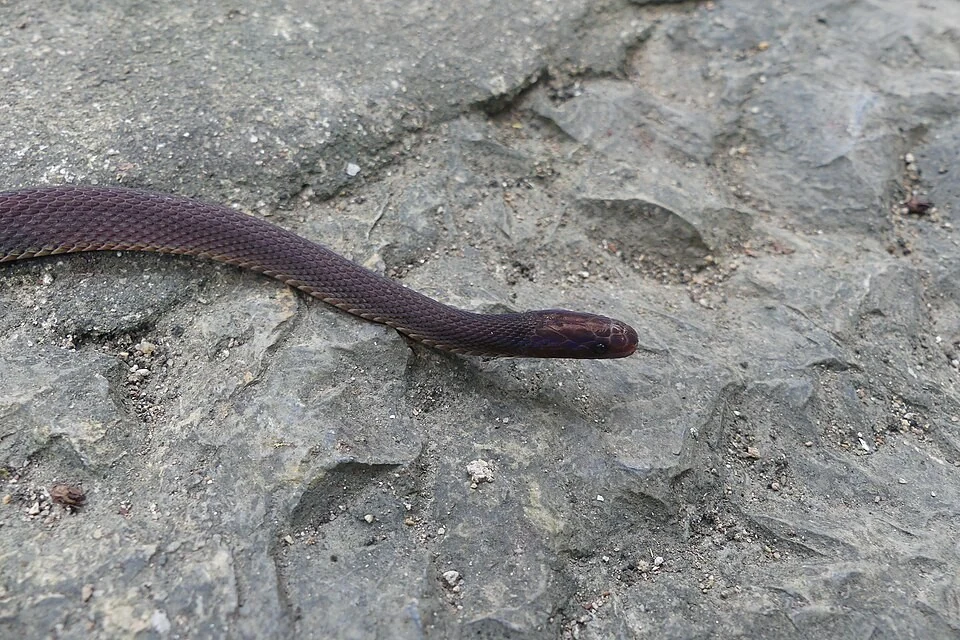
002 · Xenodermidae
Trang An Burrowing Snake
Vietnam: Ninh Binh.
Read the species account →Hà Nghĩa VN · CC BY-SA 4.0 · https://creativecommons.org/licenses/by-sa/4.0
003 · Xenodermidae
Van Ho burrowing snake
Vietnam: Son La.
Read the species account →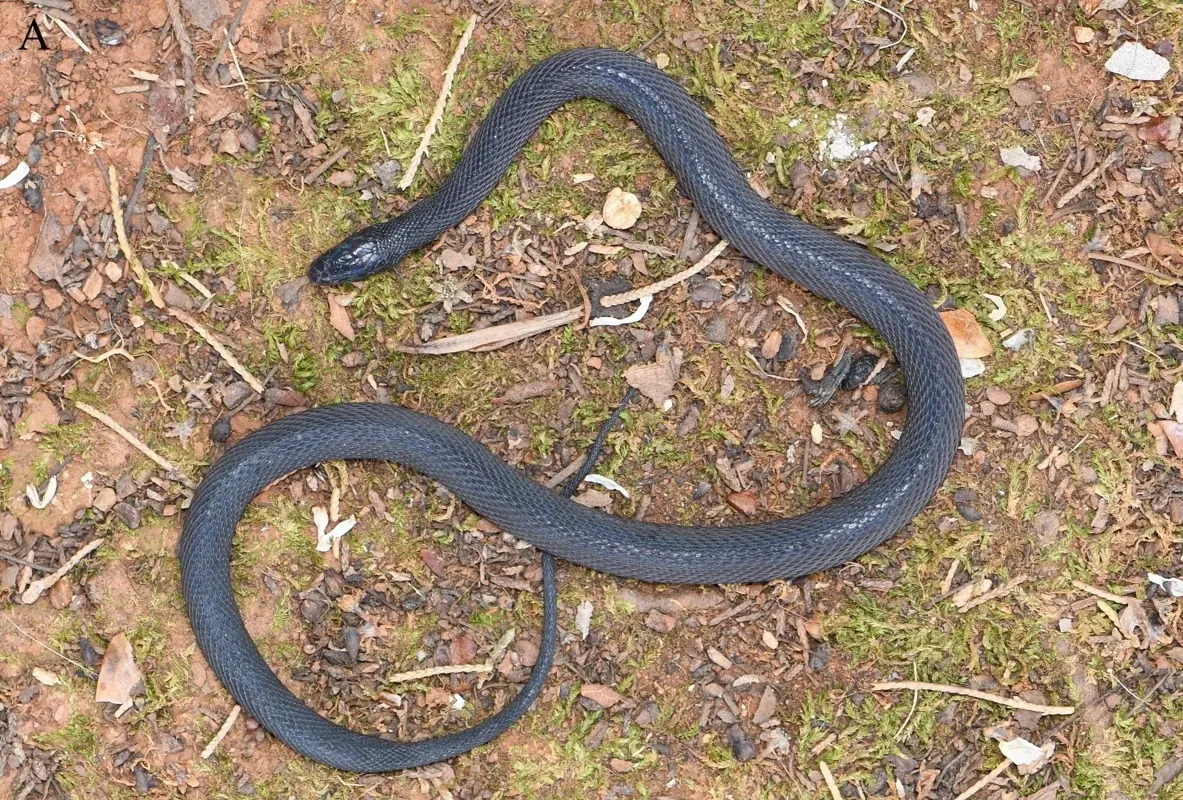
004 · Xenodermidae
Zugs’ Odd-Scaled Snake
Vietnam: Ha Giang.
Read the species account →Liu et al. (2025) · CC BY 4.0 · https://creativecommons.org/licenses/by/4.0/
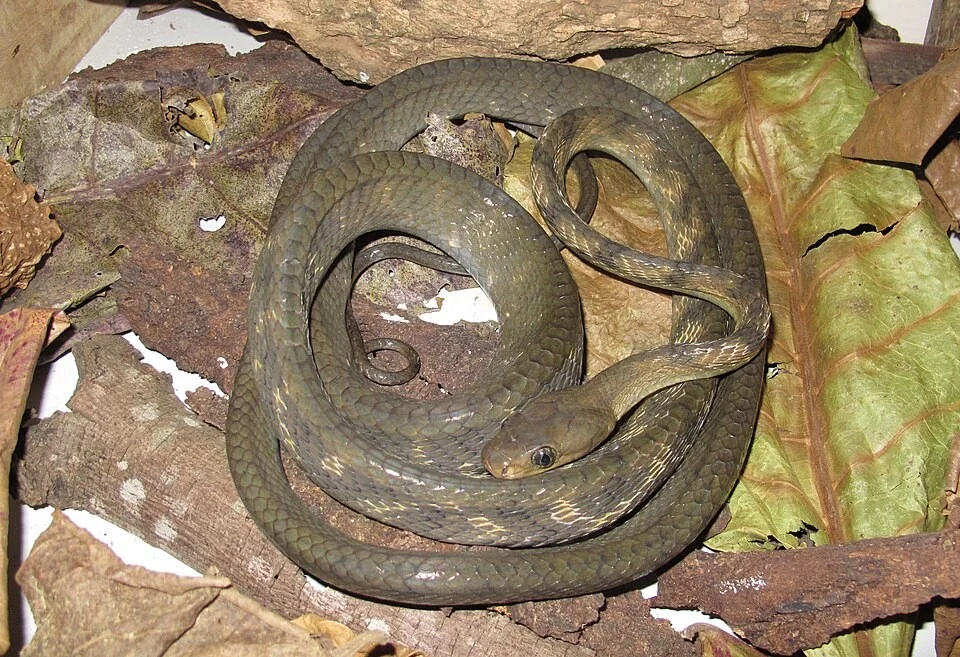
005 · Colubridae
Species account
Vietnam: Lao Cai; Cao Bang, Lang Son, Thai Nguyen, Bac Giang; Vinh Phuc; Quang Binh, Phong Nha; Kon Tum, Gia Lai, Dak Lak, Lam Dong; Tay Ninh, Dong Nai. The 2024 provincial checklist explicitly lists this species in Thanh Hoa. The 2026 provincial checklist explicitly lists this species in Ha Tinh. The 2020 provincial checklist explicitly lists this…
Read the species account →[Photo: A.V. Pham] Pham AV, Ziegler T, Nguyen TQ (2020) New records and an updated checklist of snakes from Son La Province, Vietnam. Biodiversity Data Journal 8: e52779. https://doi.org/10.3897/BDJ.8.e52779 · CC BY 4.0 · https://creativecommons.org/licenses/by/4.0
006 · Colubridae
Thanh’s reed snake
Vietnam: Quang Binh, Phong Nha.
Read the species account →007 · Colubridae
Limestone Wolf Snake
Vietnam: Quang Binh, Phong Nha.
Read the species account →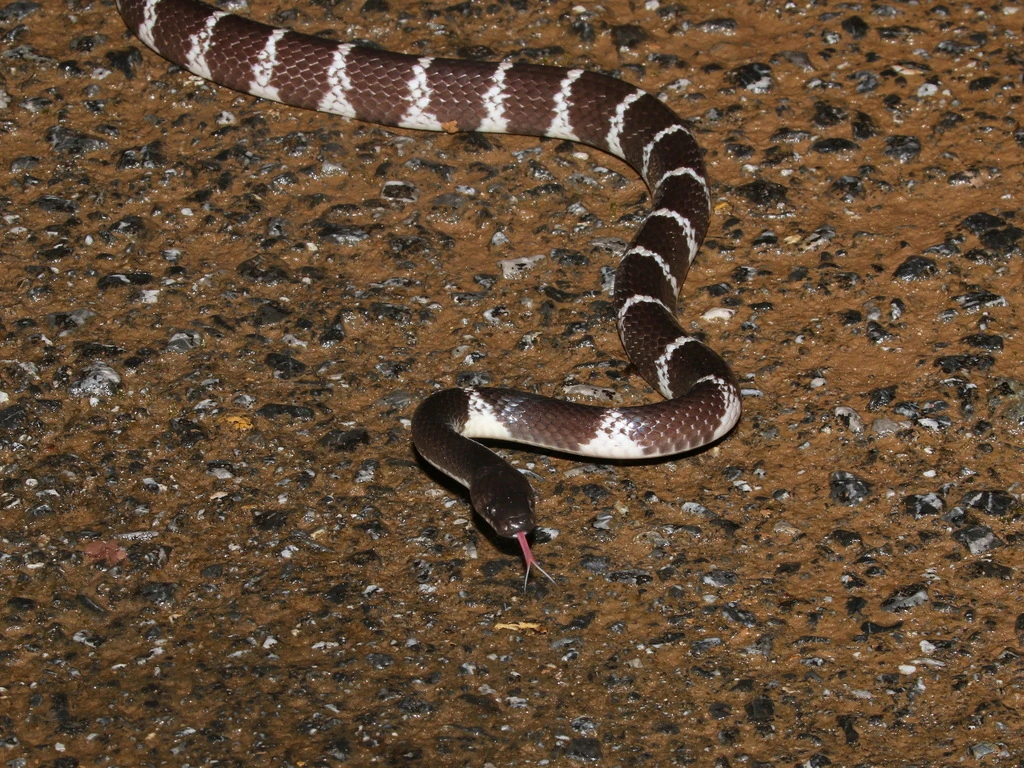
008 · Colubridae
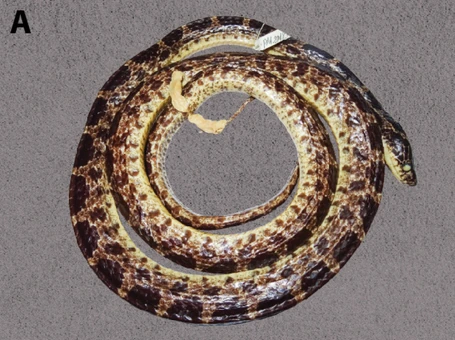
Namdong Wolf Snake
Vietnam: Lao Cai; Thanh Hoa. The 2024 provincial checklist explicitly lists this species in Thanh Hoa. This establishes a provincial record; it does not imply occurrence in every protected area or across the whole editorial region.
Read the species account →Ian Dugdale · CC BY 4.0 · https://creativecommons.org/licenses/by/4.0/
009 · Colubridae
Species account
Vietnam: Ninh Binh; Thanh Hoa, Nghe An, Ha Tinh; Da Nang. The 2026 provincial checklist explicitly lists this species in Ha Tinh. This establishes a provincial record; it does not imply occurrence in every protected area or across the whole editorial region.
Read the species account →Tan Van Nguyen · CC BY 4.0 · https://creativecommons.org/licenses/by/4.0/
010 · Colubridae
Species account
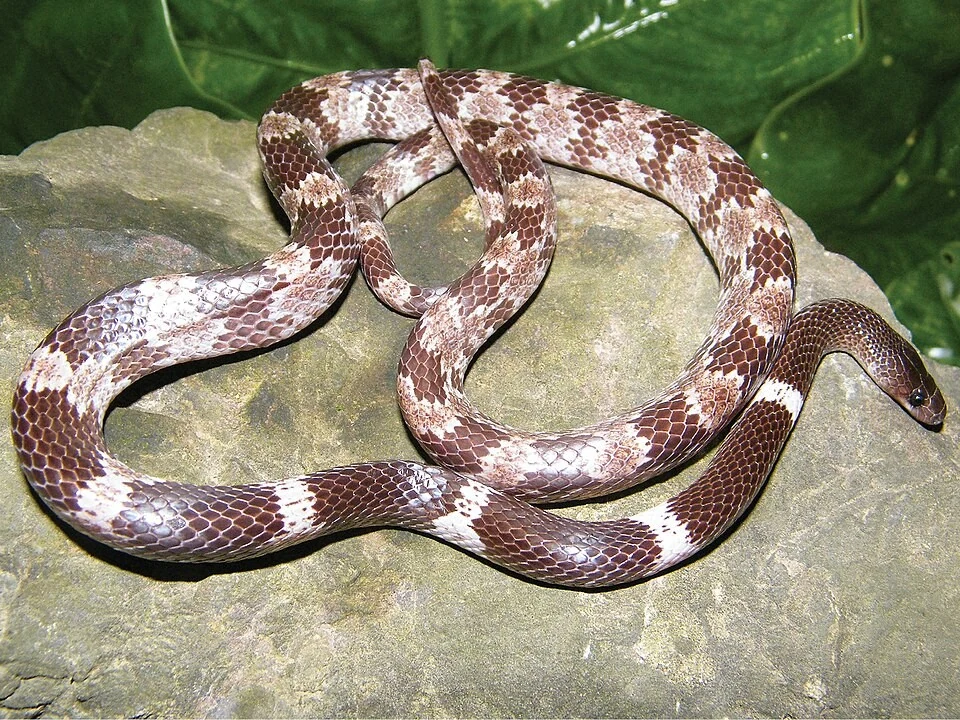
Vietnam: Cao Bang, Trung Khanh.
Read the species account →[Photograph T. Lehmann] Janssen HY, Pham CT, Ngo HT, Le MD, Nguyen TQ, Ziegler T (2019) A new species of Lycodon Boie, 1826 (Serpentes, Colubridae) from northern Vietnam. ZooKeys 875: 1-29. https://doi.org/10.3897/zookeys.875.35933 · CC BY 4.0 · https://creativecommons.org/licenses/by/4.0
011 · Colubridae
Vogel’s Keelback
Vietnam: Phu Tho; Ninh Binh.
Read the species account →012 · Xenodermidae
Species account
Vietnam: Son La. The 2020 provincial checklist explicitly lists this species in Son La. This establishes a provincial record; it does not imply occurrence in every protected area or across the whole editorial region.
Read the species account →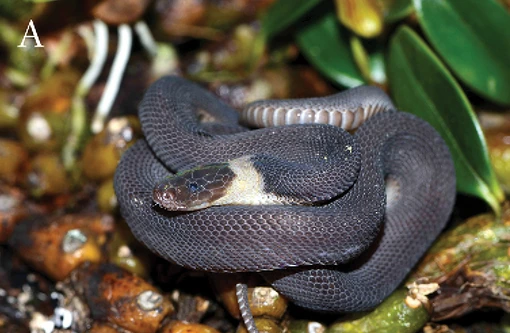
013 · Xenodermidae
Species account
Vietnam: Lai Chau.
Read the species account →Orlov, Nikolai L.; Ermakov, Oleg A.; Nguyen, Tao Thien; Ananjeva, Natalia B. · CC BY 4.0 · https://creativecommons.org/licenses/by/4.0/
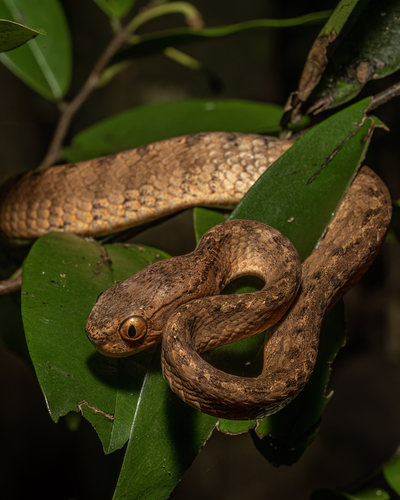
014 · Pareidae
Mengla Snail-eating Snake
Vietnam: national occurrence; no finer locality is assigned in this atlas.
Read the species account →James Hunt · CC-BY · https://www.inaturalist.org/photos/320100175
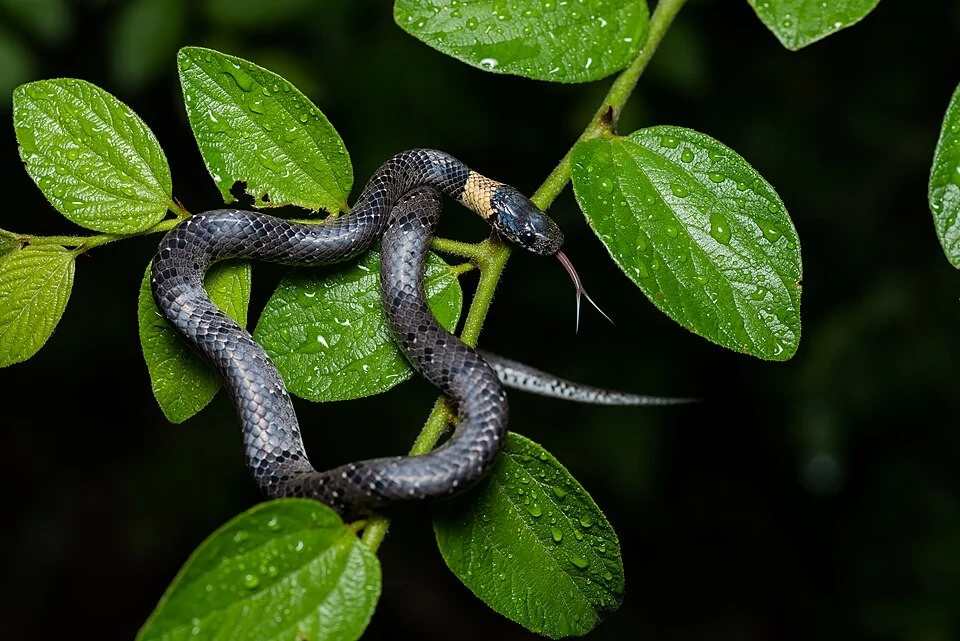
015 · Pareidae
Mountain Slug Snake
Vietnam: Hoa Binh. The 2024 provincial checklist explicitly lists this species in Thanh Hoa. The 2026 provincial checklist explicitly lists this species in Ha Tinh. This establishes a provincial record; it does not imply occurrence in every protected area or across the whole editorial region.
Read the species account →Rushenb · CC BY-SA 4.0 · https://creativecommons.org/licenses/by-sa/4.0
Read further
Guide reviewed 11 October 2026. Source dates and geographic scope matter; landscape photographs do not establish species occurrence.
Transboundary limestone landscape, habitat contrasts and management pressures, including the 2025 extension.
Forested limestone and waterways near the Red River Delta; visitor and development management.
Continue through Vietnam
Vietnam’s forest story includes wet southern woodland and unusually dry coastal forest. Look inside the vegetation, then ask which landscape surrounds it.
02Hoang Lien in the northwest and Langbiang in the Central Highlands offer different mountain environments. Elevation is a starting point, not a complete habitat description.
03A northern lake among limestone mountains and a seasonally flooded Mekong wetland are both freshwater habitats, but their water cycles and vegetation differ.
04Can Gio and the Red River Delta show how sediment, tides and freshwater build coastal habitat. Mangrove trees belong to a wider estuarine mosaic.
05Vietnam’s coastal atlas reaches from limestone archipelagos to central reefs and seagrass. A shoreline is a meeting of habitats rather than a single uniform environment.