Changed river flows
Regulation and water extraction change when and how much water reaches the Macquarie Marshes.
Sources: NSW Environment · Macquarie Marshes
Australia · Habitat field guide
Inland wetlands depend on the timing and pathways of water. Floodplain forest, reed marsh and open channels can change markedly between visits.
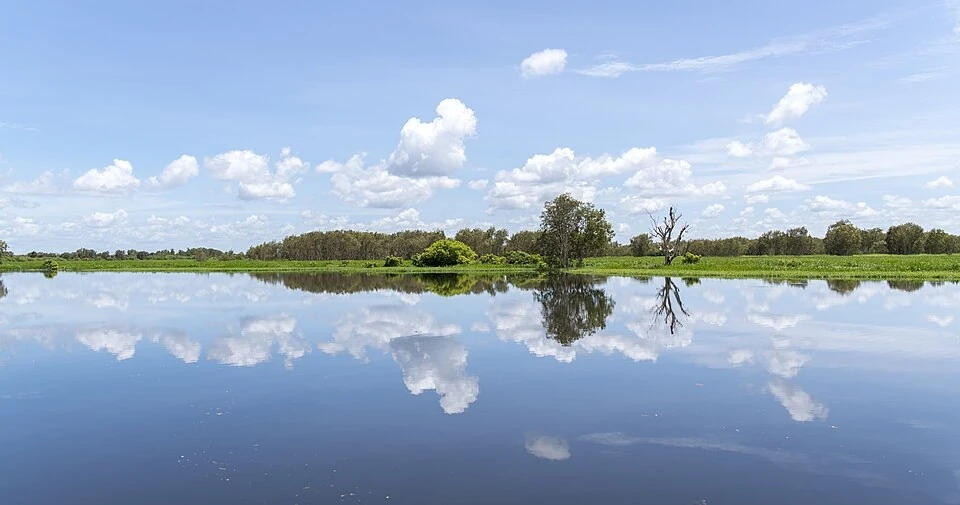
Yellow Water wetland in Kakadu National Park, Northern Territory, Australia.
Understanding the environment
Inland wetlands depend on the timing and pathways of water. Floodplain forest, reed marsh and open channels can change markedly between visits.
Explore the structure · Select a zone to read the landscape at a different scale.
Select a zone to see what changes.
Start with the water body
Distinguish a lake, flowing channel and temporary pool.
Record whether the water is rising, falling, flowing or standing.
Conceptual habitat zones, not a measured transect or a map of snake occurrences.
Sources: NSW Environment · Macquarie Marshes · Parks Victoria · River Red Gum conservation action plan (2020)
Field notes · 01
The Macquarie Marshes support river red gum woodland, reeds and water-couch marsh. NSW reporting links ecological decline to altered river flows and extraction; protecting the wetland requires attention to water arriving from outside its boundary.
Sources: NSW Environment · Macquarie Marshes
Field notes · 02
The Victorian River Red Gum plan describes Gunbower’s floodplain forest, sedge wetlands and tall marsh. Compare wooded ground with adjacent open wetland, rather than assuming all inundated areas have the same structure.
Sources: Parks Victoria · River Red Gum conservation action plan (2020)
Pressures on Australia’s habitats
Regulation and water extraction change when and how much water reaches the Macquarie Marshes.
Sources: NSW Environment · Macquarie Marshes
The NSW assessment also identifies salinity, erosion, pests and climate change among wetland pressures.
Sources: NSW Environment · Macquarie Marshes
Manage water quantity, timing and connections together with vegetation and catchment condition.
The connected collection
These 10 species have supported country occurrence and an explicit habitat association in the shared account. The association may come from elsewhere in their range. This is not a complete local habitat inventory; the places above are landscape examples, not asserted collecting sites.
10 species · showing 10
001 · Elapidae
Kimberley Death Adder
Australia is listed in the individual taxonomic treatment and the ASH national checklist. Named state/territory evidence: Western Australia. These are documented jurisdictions, not continuous range polygons. The 2015 description supplies Kimberley museum-voucher records, including the Theda holotype WAM R174083 and Little Mertens Falls WAM R145216. The…
Read the species account →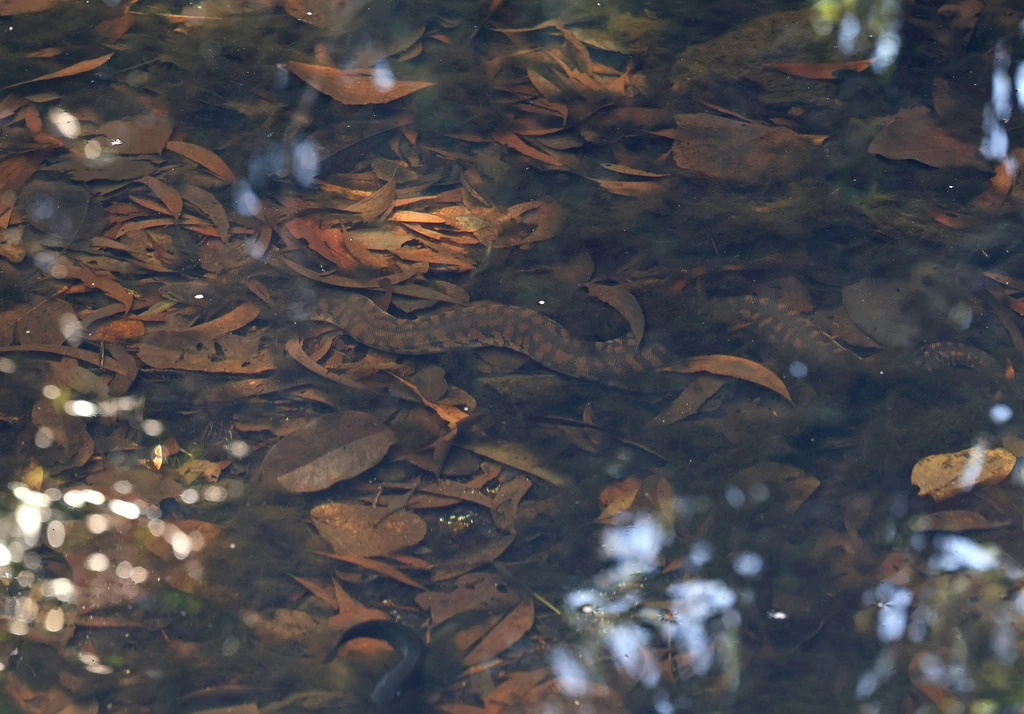
002 · Acrochordidae
Arafura filesnake
Australia is listed in the individual taxonomic treatment and the ASH national checklist. Named state/territory evidence: Western Australia, Northern Territory, Queensland. These are documented jurisdictions, not continuous range polygons.
Read the species account →Lachlan Copeland · CC BY-SA 4.0 · https://creativecommons.org/licenses/by-sa/4.0/
003 · Acrochordidae
Little filesnake
Australia is listed in the individual taxonomic treatment and the ASH national checklist. Named state/territory evidence: Western Australia, Northern Territory, Queensland. These are documented jurisdictions, not continuous range polygons.
Read the species account →Mario Lutz · Copyright Mario Lutz. Authorised for display in this atlas; no third-party reuse licence granted.
004 · Homalopsidae
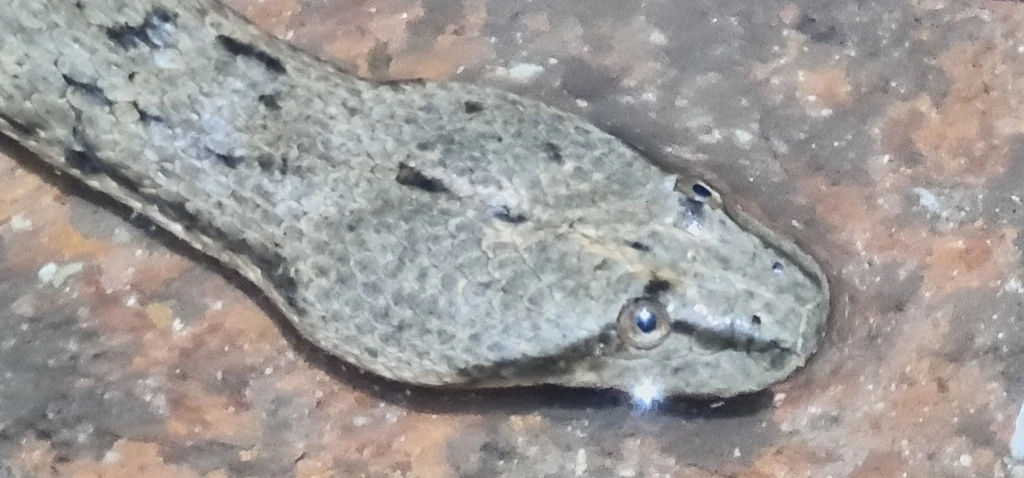
Australian Bockadam
Australia is listed in the individual taxonomic treatment and the ASH national checklist. Named state/territory evidence: Western Australia, Northern Territory, Queensland. These are documented jurisdictions, not continuous range polygons.
Read the species account →Max Tibby · CC0 1.0 · https://creativecommons.org/publicdomain/zero/1.0/
005 · Elapidae
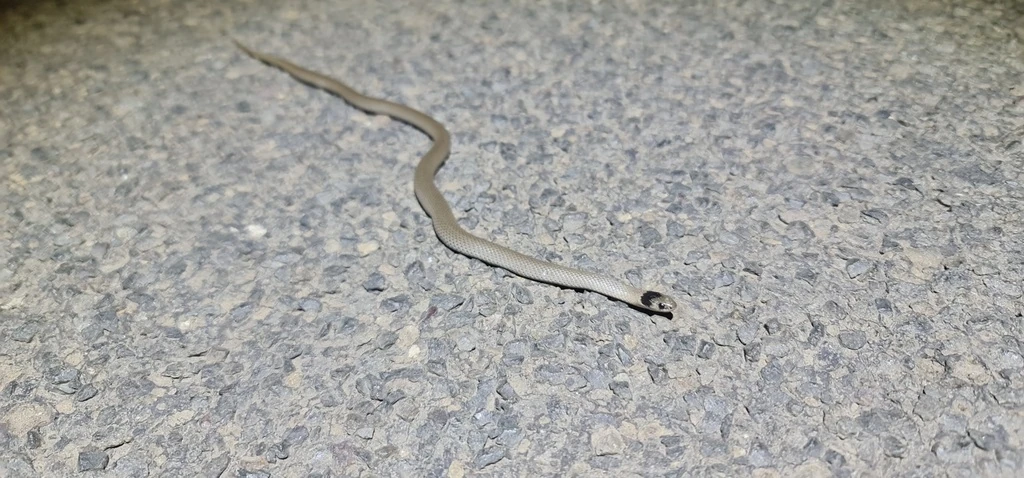
Grey Snake
Australia is listed in the individual taxonomic treatment and the ASH national checklist. Named state/territory evidence: Queensland, New South Wales. These are documented jurisdictions, not continuous range polygons. The NSW government profile identifies these occupied wetland areas among geographically separated subpopulations. Records follow several…
Read the species account →Max Tibby · CC0 1.0 · https://creativecommons.org/publicdomain/zero/1.0/
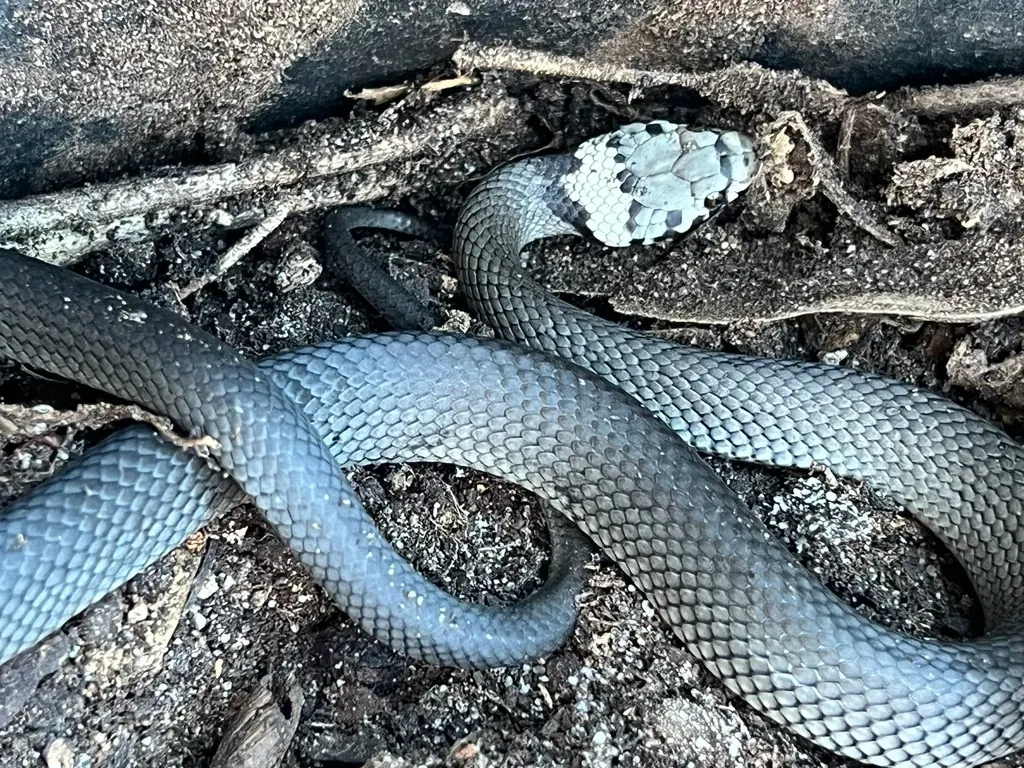
006 · Elapidae
Pale-headed Snake
Australia is listed in the individual taxonomic treatment and the ASH national checklist. Named state/territory evidence: Queensland, New South Wales. These are documented jurisdictions, not continuous range polygons. The NSW profile explicitly treats these named records as historical, including only a few from the New England Tablelands. They document…
Read the species account →Alan Couch · CC BY 4.0 · https://creativecommons.org/licenses/by/4.0/
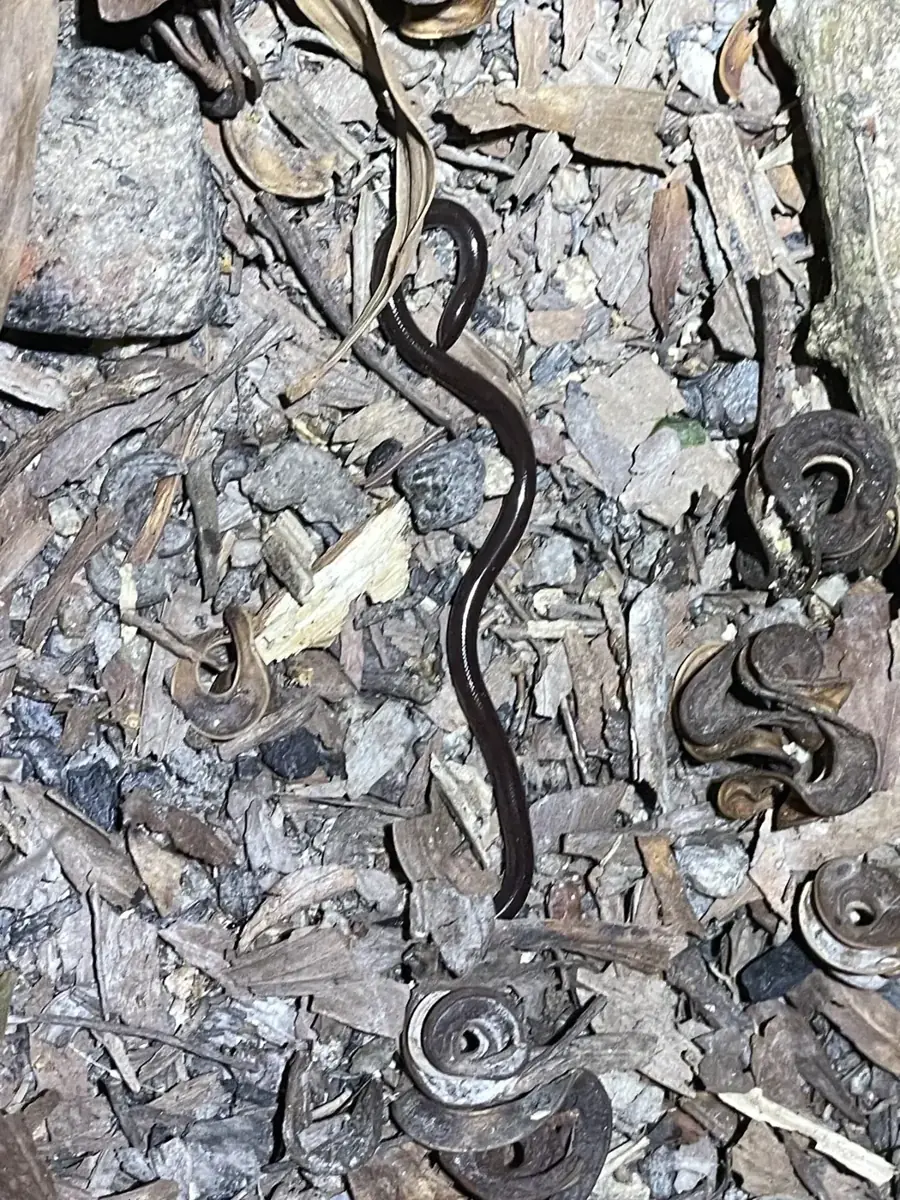
007 · Typhlopidae
Flowerpot Snake
Australia is listed in the individual taxonomic treatment and the ASH national checklist. Named state/territory evidence: Western Australia, Northern Territory, Queensland. These are documented jurisdictions, not continuous range polygons. Australian populations are introduced; this record is not labelled native.
Read the species account →Cook-Price, Makchai & Suwanwaree (2026); photographs credited collectively to the author, James Covert and Vikas Kumar · CC BY 4.0 · https://creativecommons.org/licenses/by/4.0/
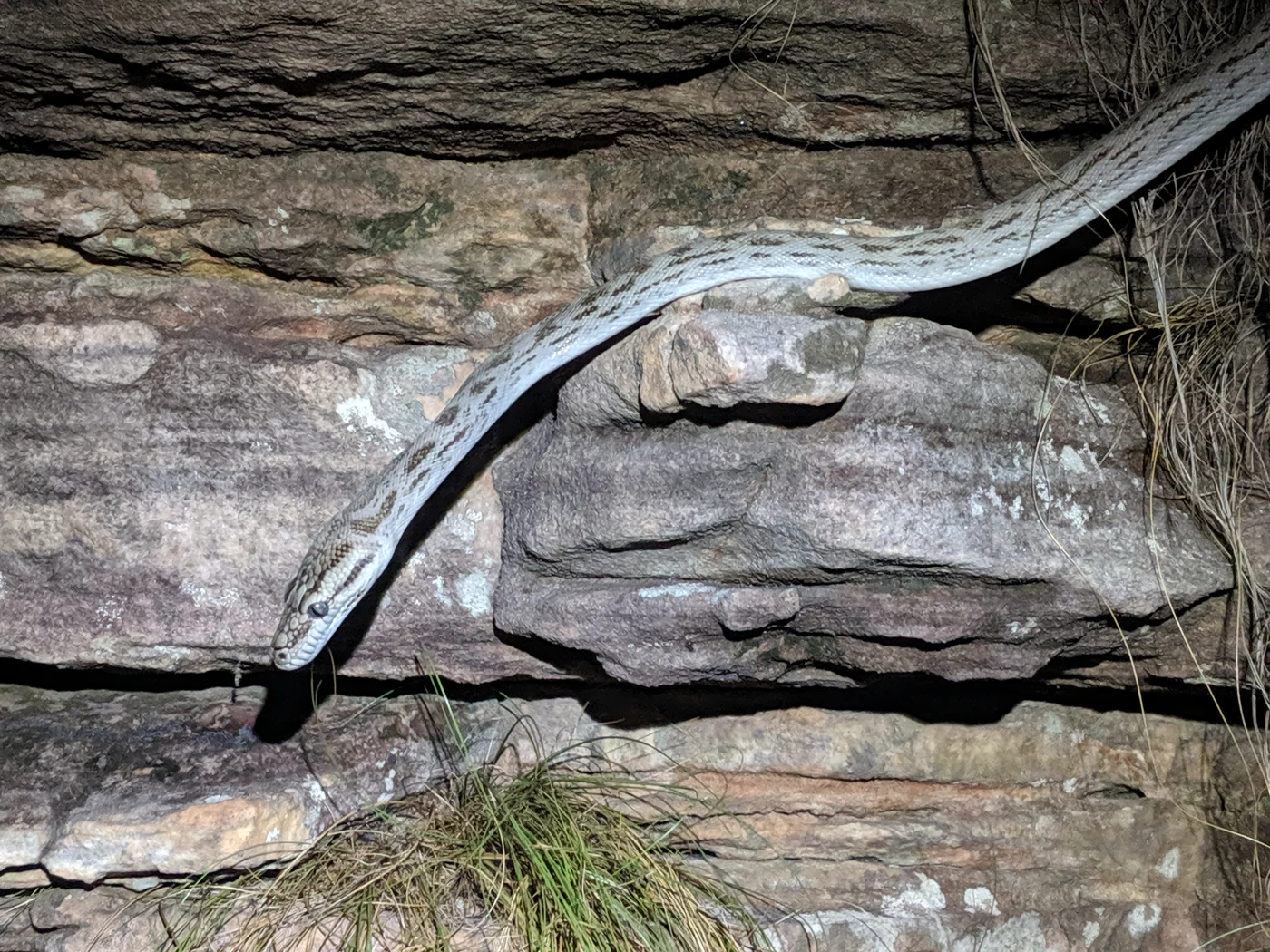
008 · Pythonidae
Oenpelli Python
Australia is listed in the individual taxonomic treatment and the ASH national checklist. Named state/territory evidence: Northern Territory. These are documented jurisdictions, not continuous range polygons. The Northern Territory’s February 2026 factsheet reports the species from these upper catchments and Kakadu, within the western Arnhem Land…
Read the species account →Caitlin Henderson · CC BY 4.0 · https://creativecommons.org/licenses/by/4.0/
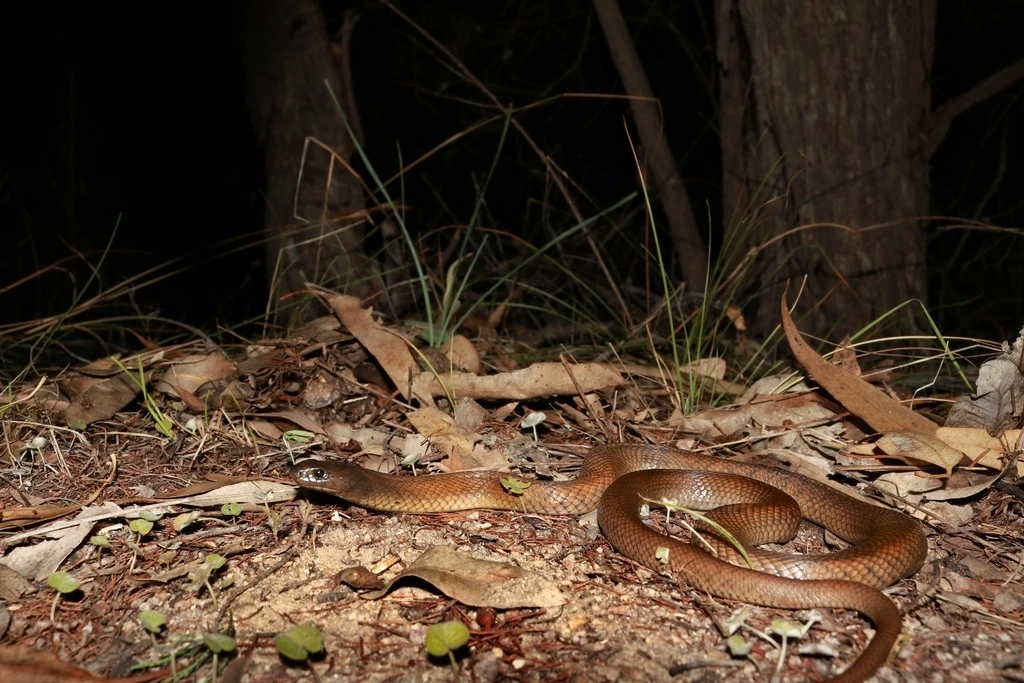
009 · Elapidae
Spotted Black Snake
Australia is listed in the individual taxonomic treatment and the ASH national checklist. Named state/territory evidence: Queensland, New South Wales. These are documented jurisdictions, not continuous range polygons.
Read the species account →Max Tibby · CC0 1.0 · https://creativecommons.org/publicdomain/zero/1.0/
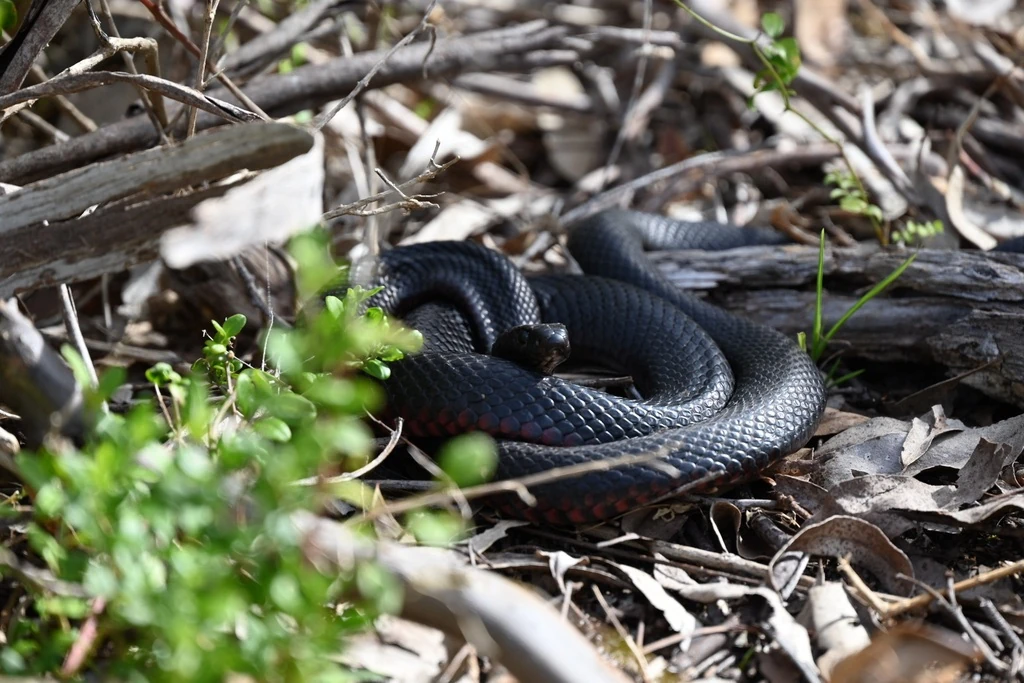
010 · Elapidae
Red-bellied Black Snake
Australia is listed in the individual taxonomic treatment and the ASH national checklist. Named state/territory evidence: South Australia, Queensland, New South Wales, Victoria, Australian Capital Territory. These are documented jurisdictions, not continuous range polygons.
Read the species account →Bryce Watts-Parker · CC BY 4.0 · https://creativecommons.org/licenses/by/4.0/
Read further
Guide reviewed 11 October 2026. Source dates and geographic scope matter; landscape photographs do not establish species occurrence.
Wetland vegetation, changed flow regimes and catchment pressures; source updated 2023.
Historical plan describing Gunbower floodplain forest and wetland habitats.
Continue through Australia
Australian forest varies with climate and terrain. Northeastern rainforest and the eastern escarpment remnants offer two starting points for reading that variety.
02The southeastern Alps contain forested slopes, high plateaus and wetlands. Their comparatively small upland environments make the transitions between habitats especially useful to read.
03Dry country contains dunes, grassy patches, woodland and water-shaped depressions. Read the ground and recent conditions before assuming that every desert site offers the same shelter.
04Northern savannas combine grass with trees, rocky country and seasonal waterways. An open canopy is part of their character, not by itself evidence of forest loss.
05Australia’s mangroves form part of a wider tidal mosaic. Creek edges, wooded flats and neighbouring saltmarsh need to remain visible in the habitat description.
06Australia’s coast brings together reef, seagrass, sand, rock and estuaries. The Queensland and Western Australian examples show why a national marine range needs more precise local evidence.