Weeds and fuel
Gamba and other introduced grasses can alter fire intensity, changing the structure of northern vegetation.
Sources: Australia State of the Environment 2021 · Interacting pressures
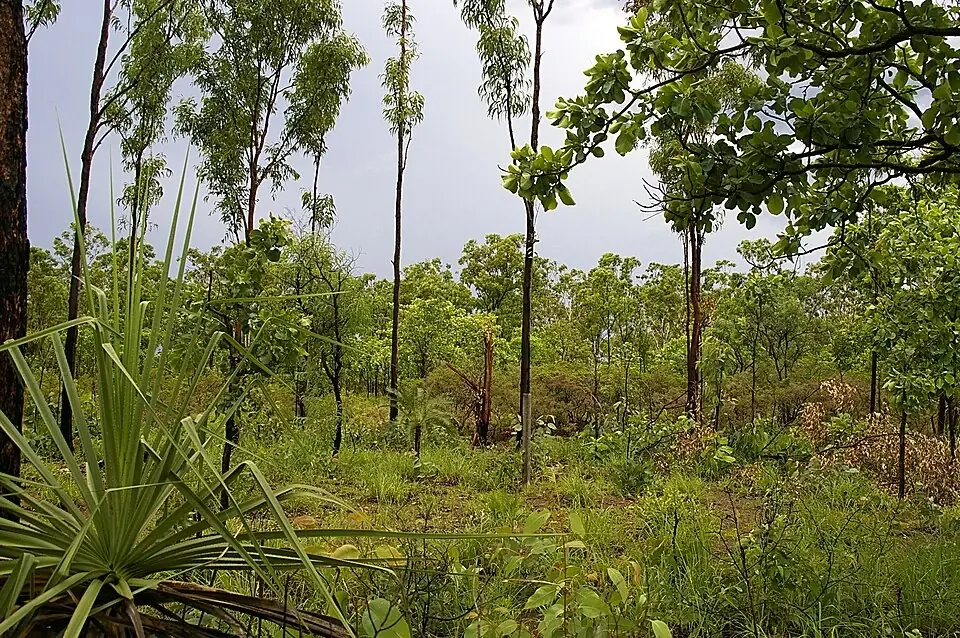
Australia · Habitat field guide
Northern savannas combine grass with trees, rocky country and seasonal waterways. An open canopy is part of their character, not by itself evidence of forest loss.
Tropical savanna near Palmerston in the Northern Territory, Australia.
Understanding the environment
Northern savannas combine grass with trees, rocky country and seasonal waterways. An open canopy is part of their character, not by itself evidence of forest loss.
Explore the structure · Select a zone to read the landscape at a different scale.
Select a zone to see what changes.
Read the ground layer
Compare continuous grass with bare patches and fallen wood.
Grass height changes the view; a single visit is only a seasonal snapshot.
Conceptual habitat zones, not a measured transect or a map of snake occurrences.
Sources: UNESCO · Kakadu National Park · Queensland Parks · Boodjamulla discovery guide
Field notes · 01
Kakadu brings together wooded lowlands, escarpments and floodplains. Reading the edge between them gives a better habitat description than applying one label to the whole park.
Sources: UNESCO · Kakadu National Park
Field notes · 02
At Boodjamulla, dry plains carry spinifex and Mitchell grass, while wooded sandstone hills contrast with palms, pandanus and figs along water. The greener river corridor is a distinct part of the surrounding semi-arid landscape.
Pressures on Australia’s habitats
Gamba and other introduced grasses can alter fire intensity, changing the structure of northern vegetation.
Sources: Australia State of the Environment 2021 · Interacting pressures
Kakadu management programmes target pressures from animals including pigs, buffalo and cats; habitat protection requires more than maintaining tree cover.
Read fire, water and vegetation together, with locally appropriate management and continuing Aboriginal stewardship.
The connected collection
These 4 species have supported country occurrence and an explicit habitat association in the shared account. The association may come from elsewhere in their range. This is not a complete local habitat inventory; the places above are landscape examples, not asserted collecting sites.
4 species · showing 4
001 · Elapidae
Kimberley Death Adder
Australia is listed in the individual taxonomic treatment and the ASH national checklist. Named state/territory evidence: Western Australia. These are documented jurisdictions, not continuous range polygons. The 2015 description supplies Kimberley museum-voucher records, including the Theda holotype WAM R174083 and Little Mertens Falls WAM R145216. The…
Read the species account →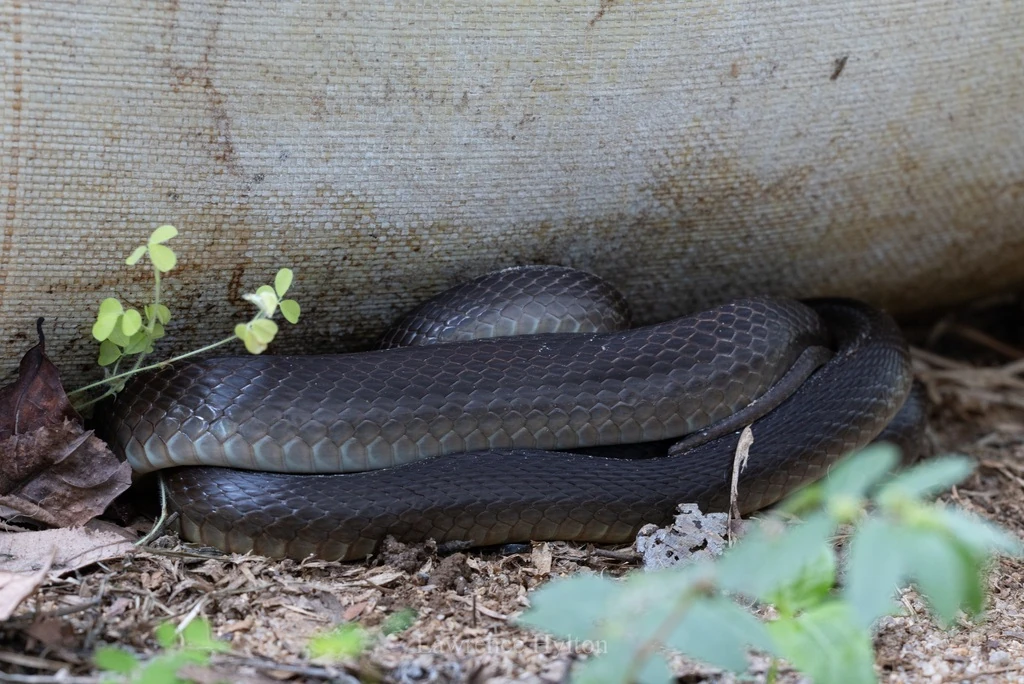
002 · Elapidae
scutellatus: Coastal taipan
Australia is listed in the individual taxonomic treatment and the ASH national checklist. Named state/territory evidence: Western Australia, Northern Territory, Queensland, New South Wales. These are documented jurisdictions, not continuous range polygons.
Read the species account →Lawrence Hylton · CC BY 4.0 · https://creativecommons.org/licenses/by/4.0/
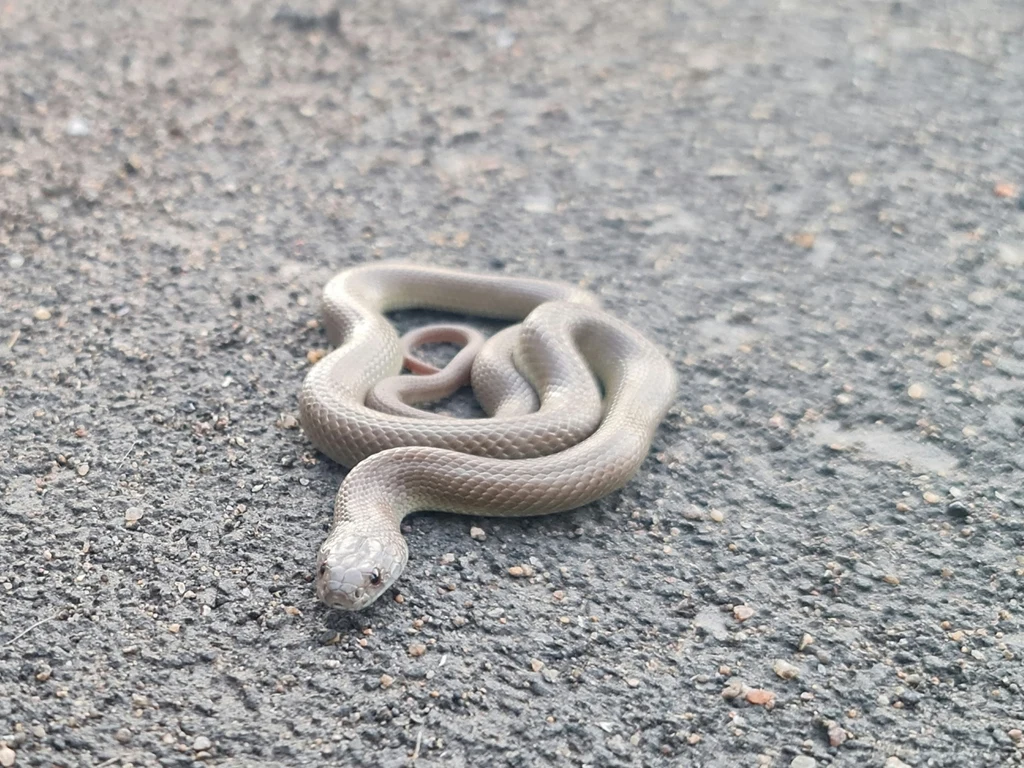
003 · Elapidae
Western Pygmy Mulga Snake
Australia is listed in the individual taxonomic treatment and the ASH national checklist. Named state/territory evidence: Western Australia. These are documented jurisdictions, not continuous range polygons.
Read the species account →Max Tibby · CC0 1.0 · https://creativecommons.org/publicdomain/zero/1.0/
004 · Typhlopidae
Mornington Blind Snake
Australia is listed in the individual taxonomic treatment and the ASH national checklist. Named state/territory evidence: Western Australia. These are documented jurisdictions, not continuous range polygons. Ellis’s 2019 description, under the name Anilios vagurima, is based on holotype WAM R163524 collected at Mornington Wildlife Sanctuary on 21 October…
Read the species account →Read further
Guide reviewed 11 October 2026. Source dates and geographic scope matter; landscape photographs do not establish species occurrence.
Escarpment, woodland and floodplain mosaic and continuing Aboriginal cultural connections.
Dry grassland and wooded hills adjoining a river oasis; check park alerts separately.
Invasive grasses, fuel loads and fire; dated assessment, not a current local fire report.
Historical management programme targeting fire, weeds and introduced animals; does not measure present snake populations.
Continue through Australia
Australian forest varies with climate and terrain. Northeastern rainforest and the eastern escarpment remnants offer two starting points for reading that variety.
02The southeastern Alps contain forested slopes, high plateaus and wetlands. Their comparatively small upland environments make the transitions between habitats especially useful to read.
03Dry country contains dunes, grassy patches, woodland and water-shaped depressions. Read the ground and recent conditions before assuming that every desert site offers the same shelter.
04Inland wetlands depend on the timing and pathways of water. Floodplain forest, reed marsh and open channels can change markedly between visits.
05Australia’s mangroves form part of a wider tidal mosaic. Creek edges, wooded flats and neighbouring saltmarsh need to remain visible in the habitat description.
06Australia’s coast brings together reef, seagrass, sand, rock and estuaries. The Queensland and Western Australian examples show why a national marine range needs more precise local evidence.