Freshwater swamp forest, marsh and reservoirs are distinct habitats. Nee Soon provides a particularly important contrast to more open managed wetlands.
MacRitchie Reservoir and its wooded freshwater margin, Singapore.
Photograph: Erwin Soo from Singapore, Singapore · Image source · CC BY 2.0. Cropped to fill the hero; darkened for text legibility.
Understanding the environment
A sense of the habitat.
Freshwater swamp forest, marsh and reservoirs are distinct habitats. Nee Soon provides a particularly important contrast to more open managed wetlands.
Main contrast
Swamp forest and open marsh
Read closely
Inundation, shade and water flow
Local examples
Nee Soon and Kranji Marshes
Explore the structure · Explore three connected parts of this landscape.
Explore: Singapore’s freshwater wetlands
Select a zone to see what changes.
01
Follow water downhill
Catchment
Look beyond the bank to the vegetation and land draining toward it.
Record whether flow follows rain, managed releases or a permanent stream.
A conceptual reading guide, not a measured transect, access route or snake occurrence map.
NParks describes slow drainage through shallow valleys, periodically waterlogged soils and dark water coloured by decomposing vegetation. Nee Soon retains Singapore’s substantial primary freshwater swamp forest. Its appearance should not be confused with tidal mangrove.
Kranji Marshes is an official freshwater-marsh conservation and restoration site. Compare its open water and marsh vegetation with a wooded swamp. A reservoir margin can support wildlife without being equivalent to the forest that occupies a natural drainage.
The swamp’s periodic inundation is fundamental to its ecology. Protecting drainage is therefore a management priority; this is not a claim that every mapped stream is currently degraded.
The Kranji restoration study describes introduced water plants and vegetation overgrowth reducing open wetland habitat, requiring continuing maintenance.
Manage water and vegetation together, and preserve the difference between accessible viewing routes and sensitive wetland interiors.
Singapore · Choose an areaN ↑
Click a region to explore its snakes and landscapes.
100%
geoBoundaries / Urban Redevelopment Authority · 2016 snapshot · Open Data Commons Open Database License 1.0. Credited navigation boundaries; regional groups are not species ranges. Map provenance ↗
region evidence pages
Choose any named region.
5
dedicated region pages connect the geographic atlas with its source-backed species accounts
Browse all regions ↓Select a labelled place on the map, or use the complete index below. Geographic boundaries are navigation references, not species ranges.
The connected collection
Snakes with habitat evidence.
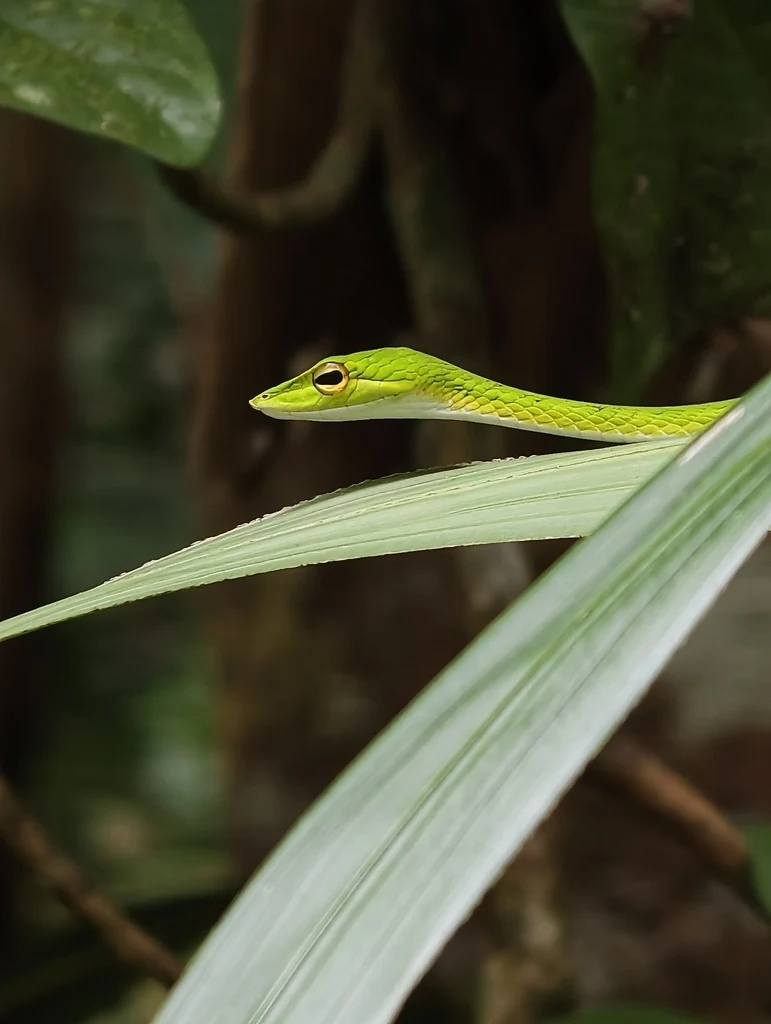
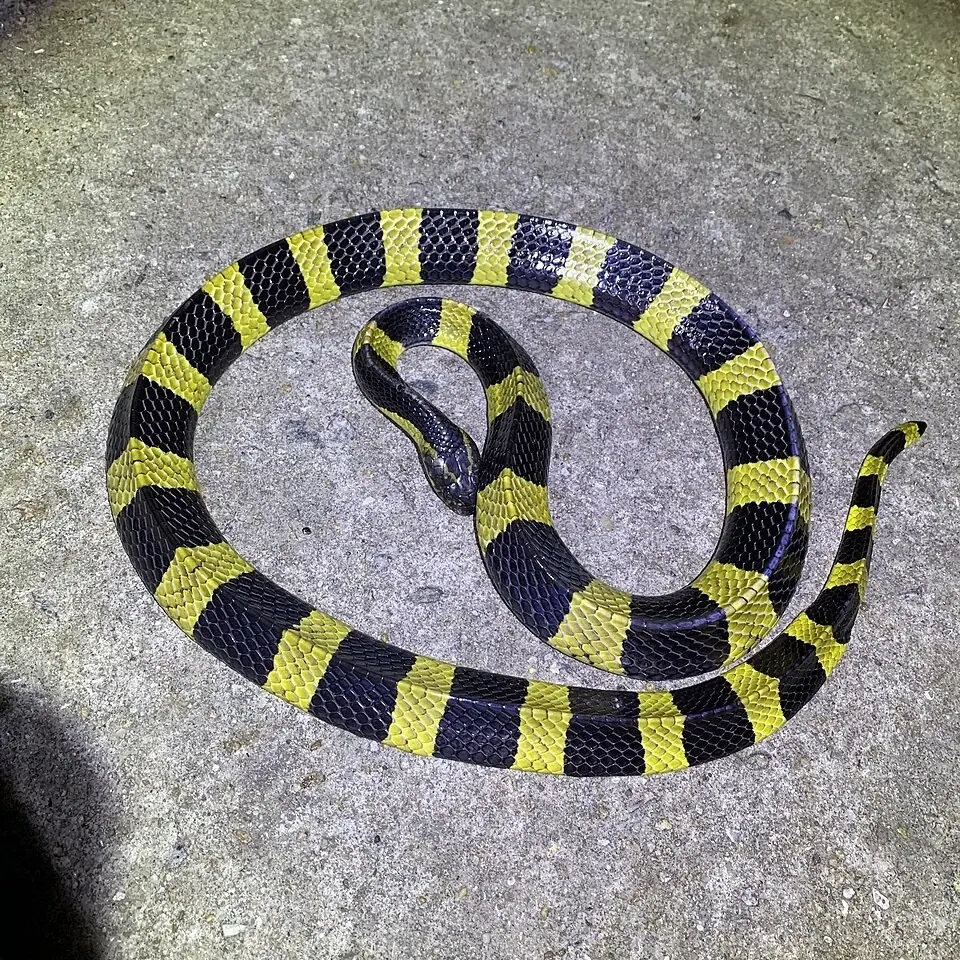
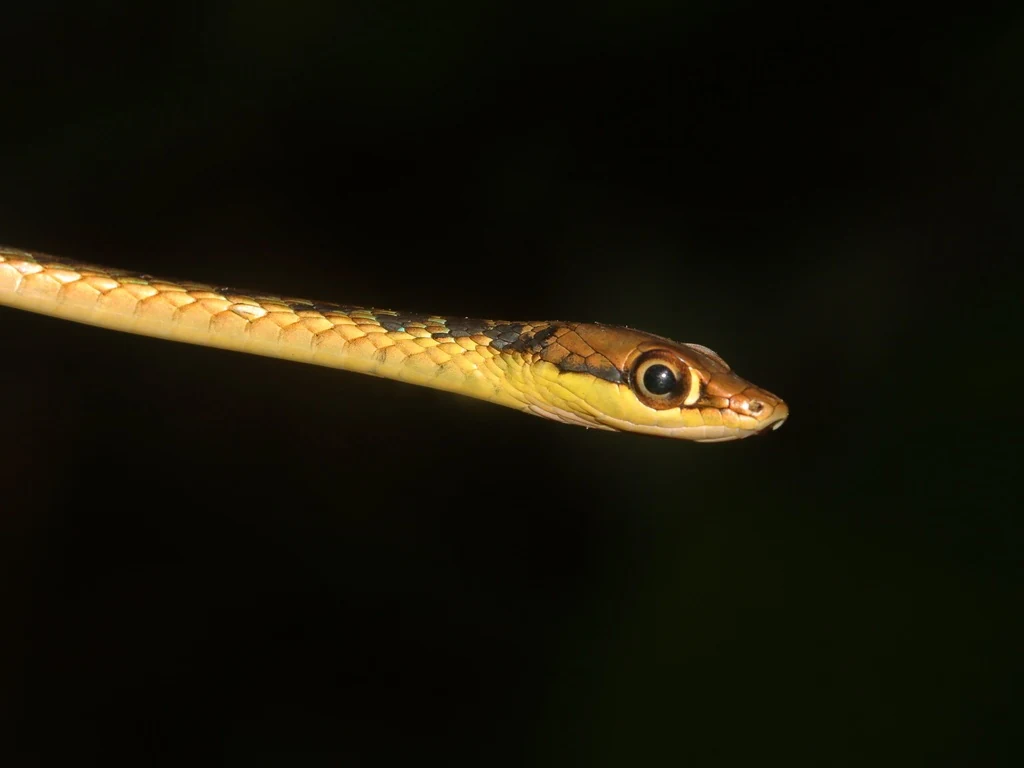
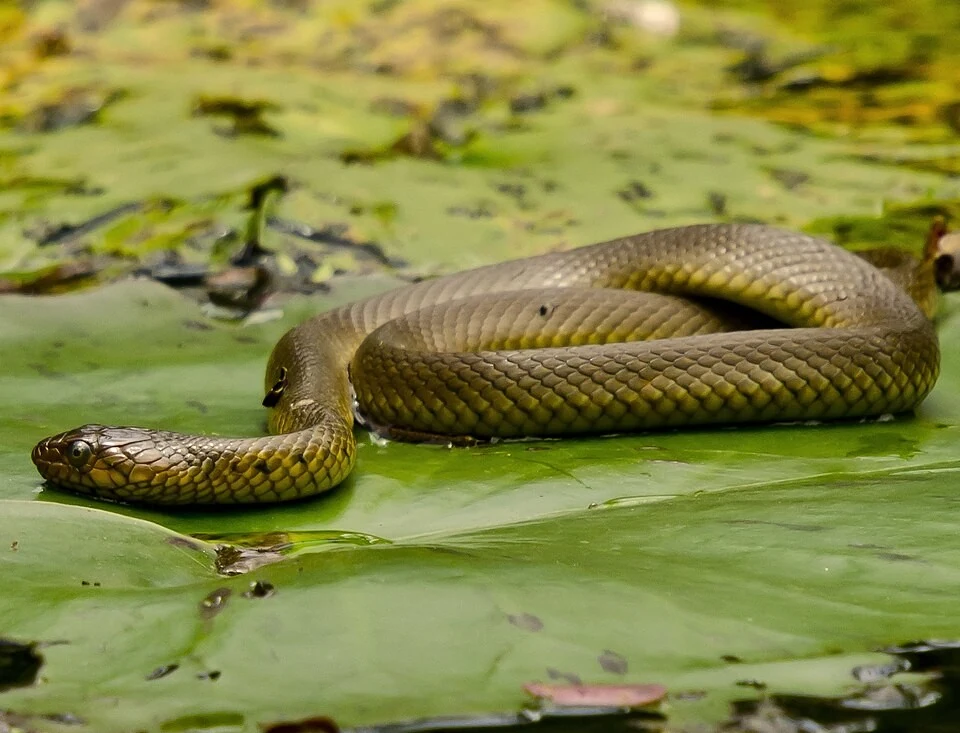
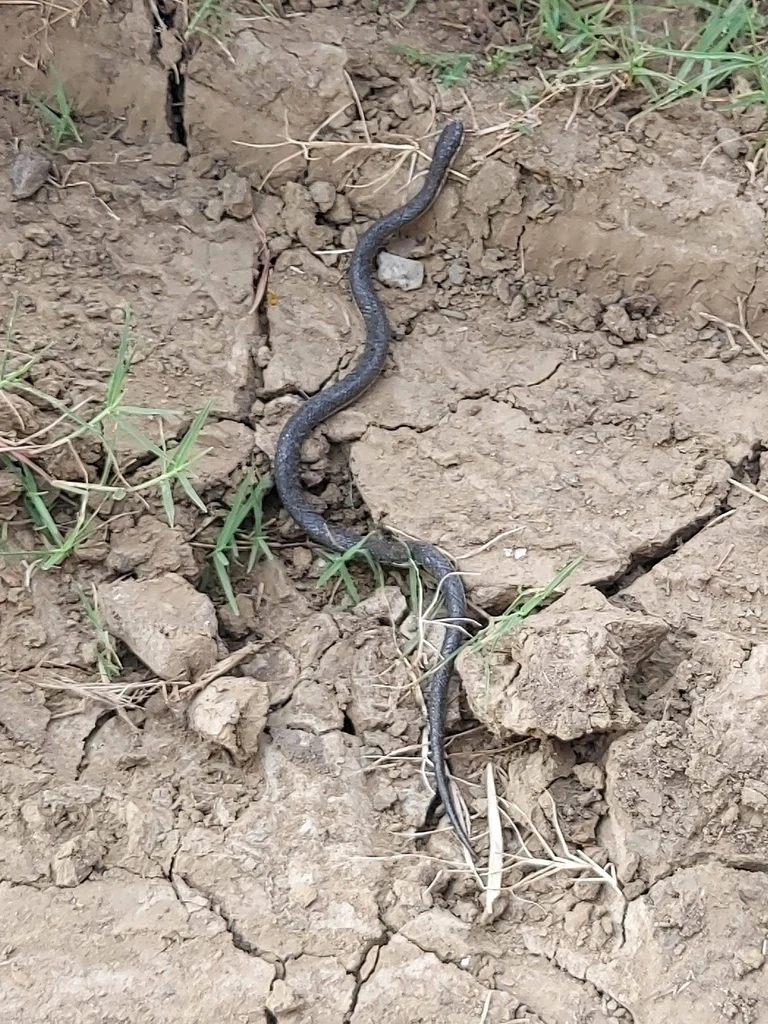
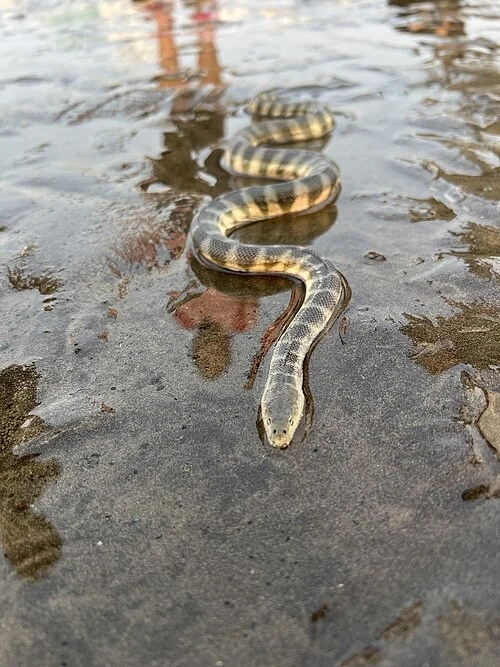
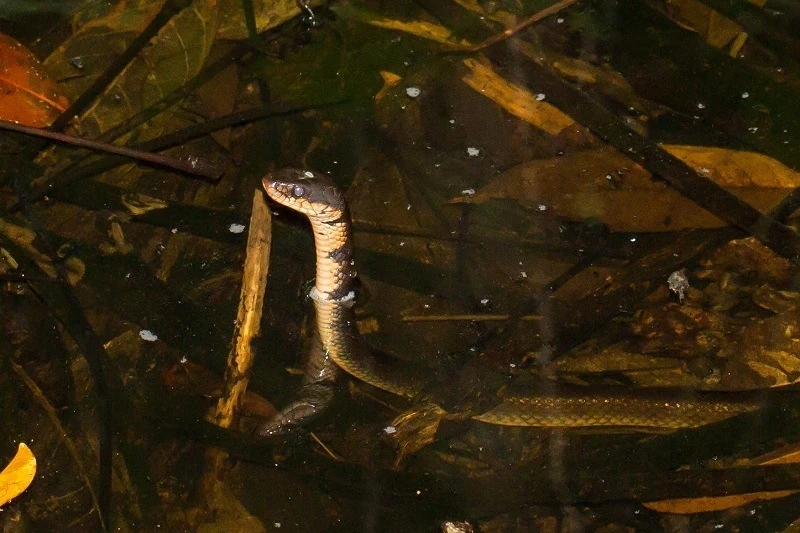
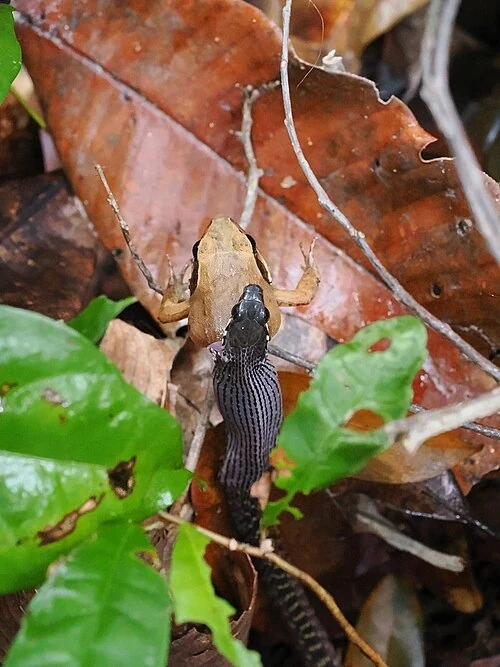
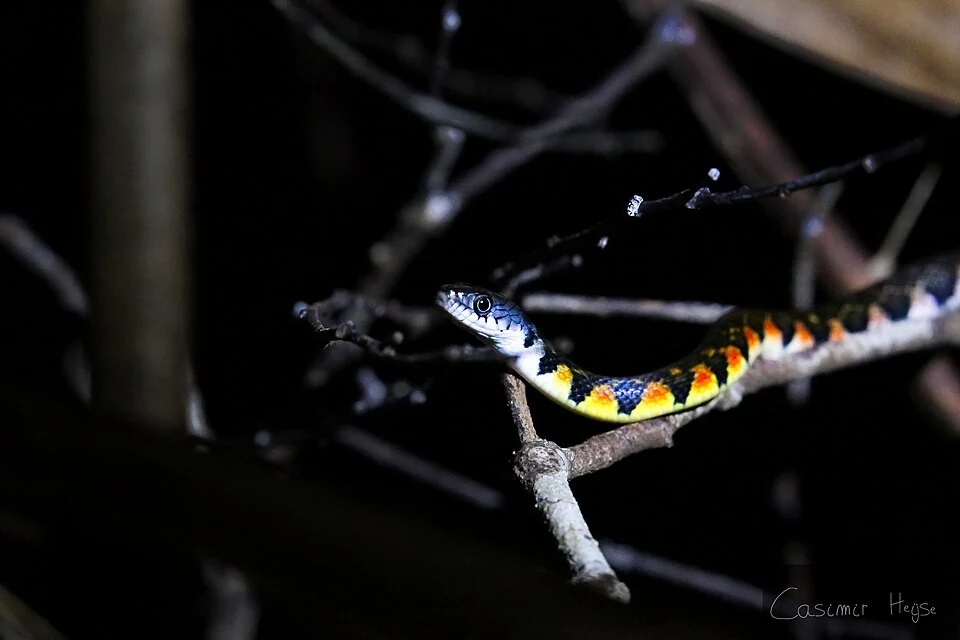
These 17 species have supported country occurrence and an explicit habitat association in the shared account. The association may come from elsewhere in their range. This is not a complete local habitat inventory; the places above are landscape examples, not asserted collecting sites.
Figueroa, Low & Lim (2023), the annotated national review, accepts this species for Singapore. The 2023 annotated review explicitly lists these Singapore sites. They are selected named-locality evidence, not a full range polygon or a guarantee of current presence at every point. Sites marked as historical in that review are omitted from this mapped…
Figueroa, Low & Lim (2023), the annotated national review, accepts this species for Singapore. The 2023 annotated review explicitly lists these Singapore sites. They are selected named-locality evidence, not a full range polygon or a guarantee of current presence at every point. Sites marked as historical in that review are omitted from this mapped…
Figueroa, Low & Lim (2023), the annotated national review, accepts this species for Singapore. The 2023 annotated review explicitly lists these Singapore sites. They are selected named-locality evidence, not a full range polygon or a guarantee of current presence at every point. Sites marked as historical in that review are omitted from this mapped…
Figueroa, Low & Lim (2023), the annotated national review, accepts this species for Singapore. The 2023 annotated review explicitly lists these Singapore sites. They are selected named-locality evidence, not a full range polygon or a guarantee of current presence at every point. Sites marked as historical in that review are omitted from this mapped…
Figueroa, Low & Lim (2023), the annotated national review, accepts this species for Singapore. The 2023 annotated review explicitly lists these Singapore sites. They are selected named-locality evidence, not a full range polygon or a guarantee of current presence at every point. Sites marked as historical in that review are omitted from this mapped…
Figueroa, Low & Lim (2023), the annotated national review, accepts this species for Singapore. The 2023 annotated review explicitly lists these Singapore sites. They are selected named-locality evidence, not a full range polygon or a guarantee of current presence at every point. Sites marked as historical in that review are omitted from this mapped…
Figueroa, Low & Lim (2023), the annotated national review, accepts this species for Singapore. Origin remains disputed: this primary review argues for native status, whereas the Herpetological Society’s 2024 checklist labels it introduced. Country occurrence itself is supported. The 2023 annotated review explicitly lists these Singapore sites. They are…
Figueroa, Low & Lim (2023), the annotated national review, accepts this species for Singapore. The 2023 annotated review explicitly lists these Singapore sites. They are selected named-locality evidence, not a full range polygon or a guarantee of current presence at every point. Sites marked as historical in that review are omitted from this mapped…
Figueroa, Low & Lim (2023), the annotated national review, accepts this species for Singapore. The 2023 annotated review explicitly lists these Singapore sites. They are selected named-locality evidence, not a full range polygon or a guarantee of current presence at every point. Sites marked as historical in that review are omitted from this mapped…
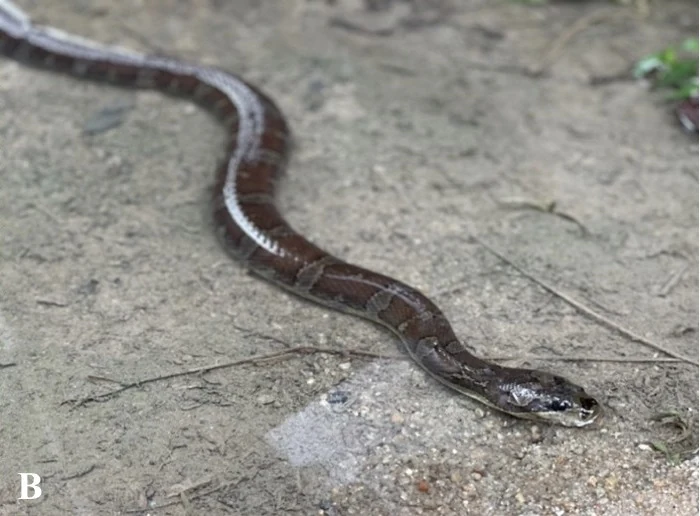
Cook-Price, Makchai & Suwanwaree (2026); photographs credited collectively to the author, James Covert and Vikas Kumar · CC BY 4.0 · https://creativecommons.org/licenses/by/4.0/
Figueroa, Low & Lim (2023), the annotated national review, accepts this species for Singapore. The review retains the historical national record but requests further substantiation; no modern local population is implied.
Figueroa, Low & Lim (2023), the annotated national review, accepts this species for Singapore. The 2023 annotated review explicitly lists these Singapore sites. They are selected named-locality evidence, not a full range polygon or a guarantee of current presence at every point. Sites marked as historical in that review are omitted from this mapped…
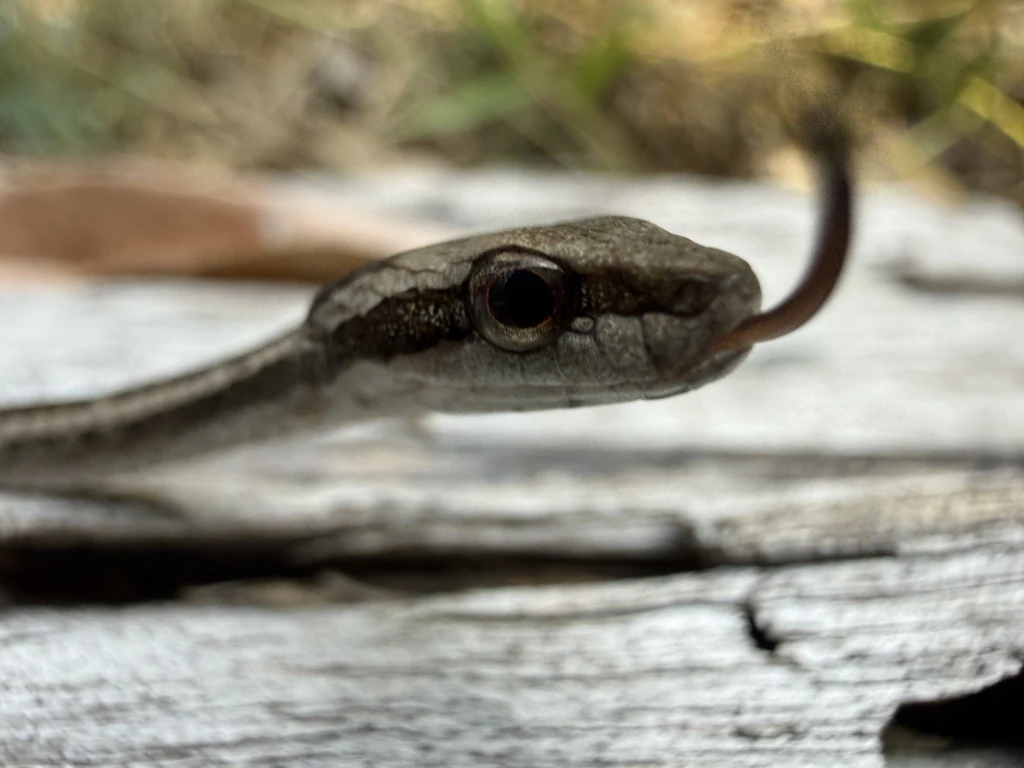
Cook-Price, Makchai & Suwanwaree (2026); photographs credited collectively to the author, James Covert and Vikas Kumar · CC BY 4.0 · https://creativecommons.org/licenses/by/4.0/
Figueroa, Low & Lim (2023), the annotated national review, accepts this species for Singapore. The 2023 annotated review explicitly lists these Singapore sites. They are selected named-locality evidence, not a full range polygon or a guarantee of current presence at every point. Sites marked as historical in that review are omitted from this mapped…
Figueroa, Low & Lim (2023), the annotated national review, accepts this species for Singapore. The 2023 annotated review explicitly lists these Singapore sites. They are selected named-locality evidence, not a full range polygon or a guarantee of current presence at every point. Sites marked as historical in that review are omitted from this mapped…
Figueroa, Low & Lim (2023), the annotated national review, accepts this species for Singapore. The 2023 annotated review explicitly lists these Singapore sites. They are selected named-locality evidence, not a full range polygon or a guarantee of current presence at every point. Sites marked as historical in that review are omitted from this mapped…
Figueroa, Low & Lim (2023), the annotated national review, accepts this species for Singapore. The 2023 annotated review explicitly lists these Singapore sites. They are selected named-locality evidence, not a full range polygon or a guarantee of current presence at every point. Sites marked as historical in that review are omitted from this mapped…
Figueroa, Low & Lim (2023), the annotated national review, accepts this species for Singapore. The 2023 annotated review explicitly lists these Singapore sites. They are selected named-locality evidence, not a full range polygon or a guarantee of current presence at every point. Sites marked as historical in that review are omitted from this mapped…