Visitor and browsing pressure
UNESCO identifies concentrated visitor use and deer impacts on vegetation as management concerns at Yakushima.
Sources: UNESCO · Yakushima
Japan · Habitat field guide
Japan’s forest gradient is both latitudinal and local.
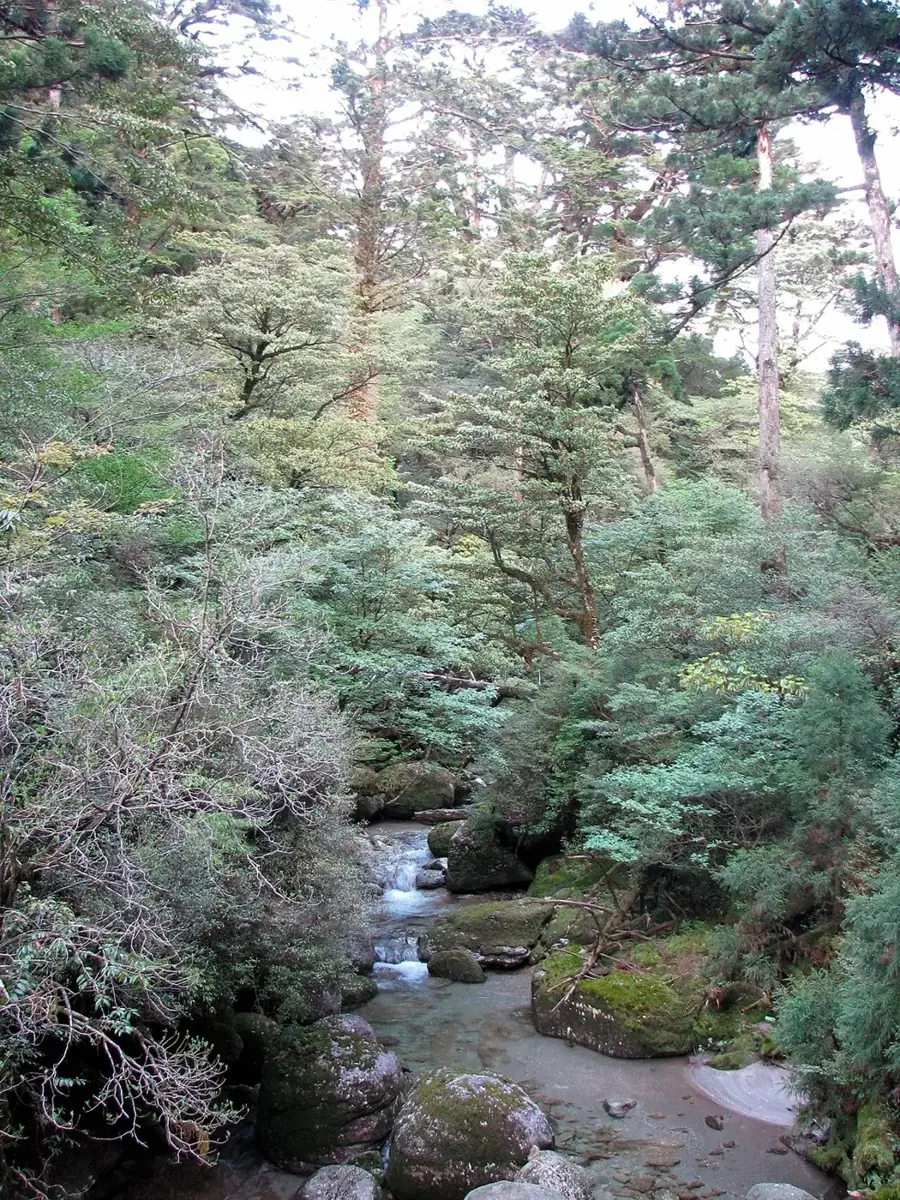
Forested stream in Shiratani Unsuikyo on Yakushima, Japan.
Understanding the environment
Japan’s forest gradient is both latitudinal and local.
Explore the structure · Select a feature to compare
Select a zone to see what changes.
Look upwards
Compare a closed crown layer with a break in the trees.
Use the sourced examples below to place these observations in context.
Conceptual observation prompts, not a measured transect, habitat boundary or snake range.
Field notes · 01
Shirakami-Sanchi in northern Honshu preserves cool-temperate beech forest shaped by a heavy-snow climate. Its old forest contrasts with timber plantations established in parts of the surrounding region.
Sources: UNESCO · Shirakami-Sanchi
Field notes · 02
Yakushima’s temperate rainforest rises towards high moor and bamboo grassland. The island’s coast-to-summit vegetation sequence is its own landscape, not an extension of every mainland Kyushu forest.
Sources: UNESCO · Yakushima
Pressures on Japan’s habitats
UNESCO identifies concentrated visitor use and deer impacts on vegetation as management concerns at Yakushima.
Sources: UNESCO · Yakushima
Support site-led protection of the landscape processes described here. Keep habitat notes precise and use the linked sources before extending a claim to another place.
The connected collection
These 14 species have supported country occurrence and an explicit habitat association in the shared account. The association may come from elsewhere in their range. This is not a complete local habitat inventory; the places above are landscape examples, not asserted collecting sites.
14 species · showing 14
001 · Xenodermidae
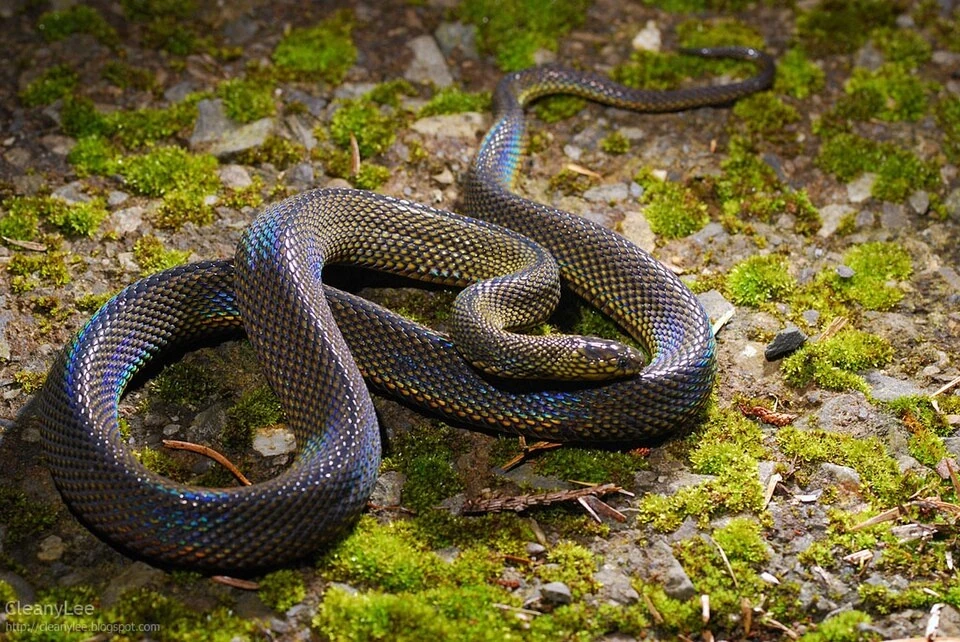
Formosa Odd-scaled Snake
The July 2026 HSJ checklist includes A. formosanus chigirai. It is represented once within the shared species profile; the individual taxonomic treatment identifies Iriomotejima in the Yaeyama Islands. The July 2026 HSJ checklist includes A. formosanus chigirai. It is represented once within the shared species profile; the individual taxonomic treatment…
Read the species account →Sin Syue Li · CC BY 2.0 · https://creativecommons.org/licenses/by/2.0
002 · Xenodermidae
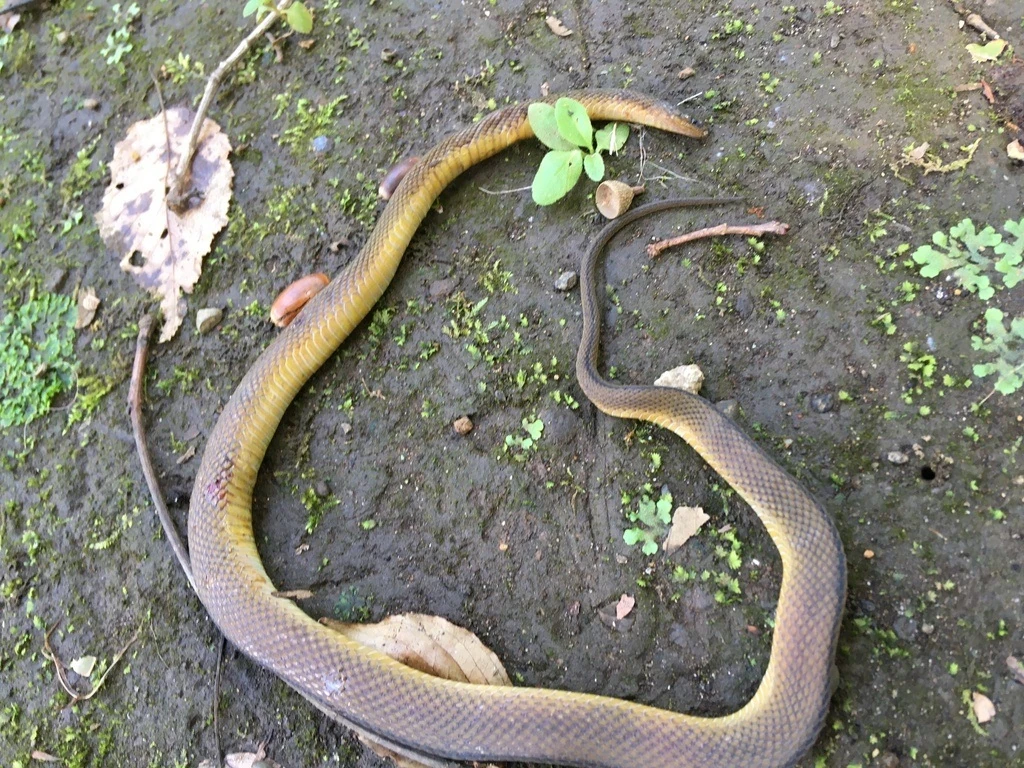
Peters' Odd-scaled Snake, Japanese odd-scaled snake
Japan is explicitly recorded in the checked individual species treatment. The July 2026 HSJ national list independently includes this species or its reconciled synonym/subspecies. Named regional records: Kyushu. These localities do not imply continuous occupation of the entire region. Kaizuka museum records through March 2019; named endpoints do not…
Read the species account →unipon · CC BY 4.0 · https://creativecommons.org/licenses/by/4.0/
003 · Xenodermidae
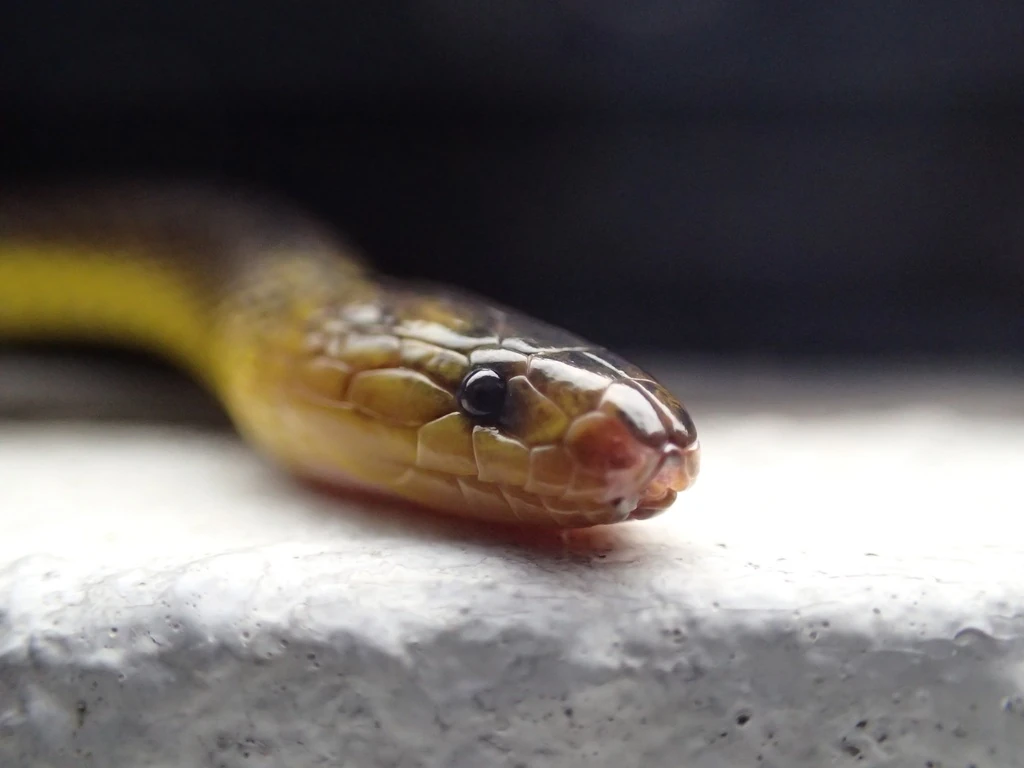
Amami odd-scaled snake
Japan is explicitly recorded in the checked individual species treatment. The July 2026 HSJ national list independently includes this species or its reconciled synonym/subspecies. The 2026 ministry assessment names these Amami and Okinawa-group islands; they are grouped by prefectural region in this atlas.
Read the species account →B. P. White · CC BY-SA 4.0 · https://creativecommons.org/licenses/by-sa/4.0/
004 · Colubridae
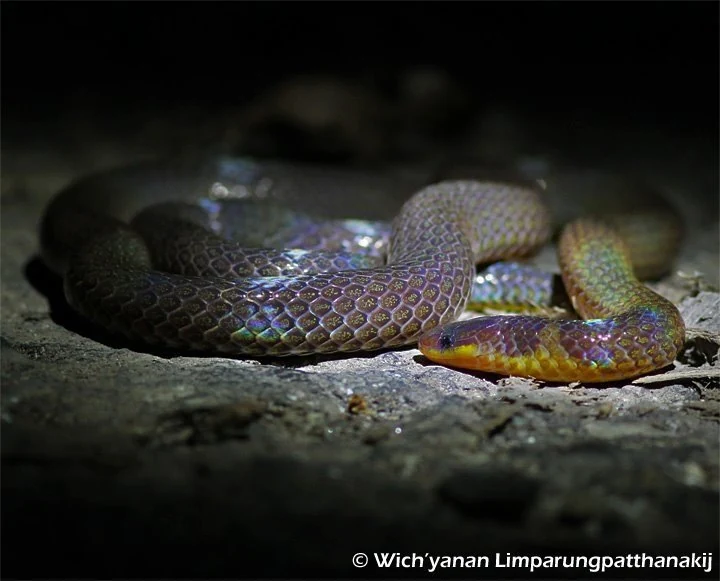
Collared Reed Snake
Japan is explicitly recorded in the checked individual species treatment. The July 2026 HSJ national list independently includes this species or its reconciled synonym/subspecies. Named regional records: Yonaguni. These localities do not imply continuous occupation of the entire region. The ministry names these Yonaguni localities for subspecies miyarai.…
Read the species account →Wich'yanan L · CC BY 4.0 · https://creativecommons.org/licenses/by/4.0
005 · Colubridae
Pfeffer's reed snake
Japan is explicitly recorded in the checked individual species treatment. The July 2026 HSJ national list independently includes this species or its reconciled synonym/subspecies. The 2025 paper confirms four Miyako-group islands, adding voucher-based records from Kurimajima and Shimojijima to Miyakojima and Irabujima. These published additions supersede…
Read the species account →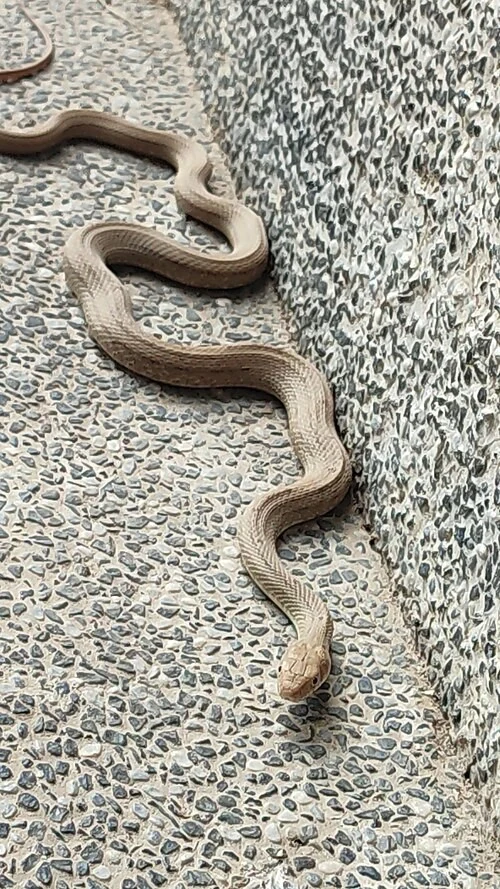
006 · Colubridae
Taiwan Stink Snake
Japan is explicitly recorded in the checked individual species treatment. The July 2026 HSJ national list independently includes this species or its reconciled synonym/subspecies.
Read the species account →Manis Lin · CC0 · https://creativecommons.org/publicdomain/zero/1.0/deed.en
007 · Colubridae
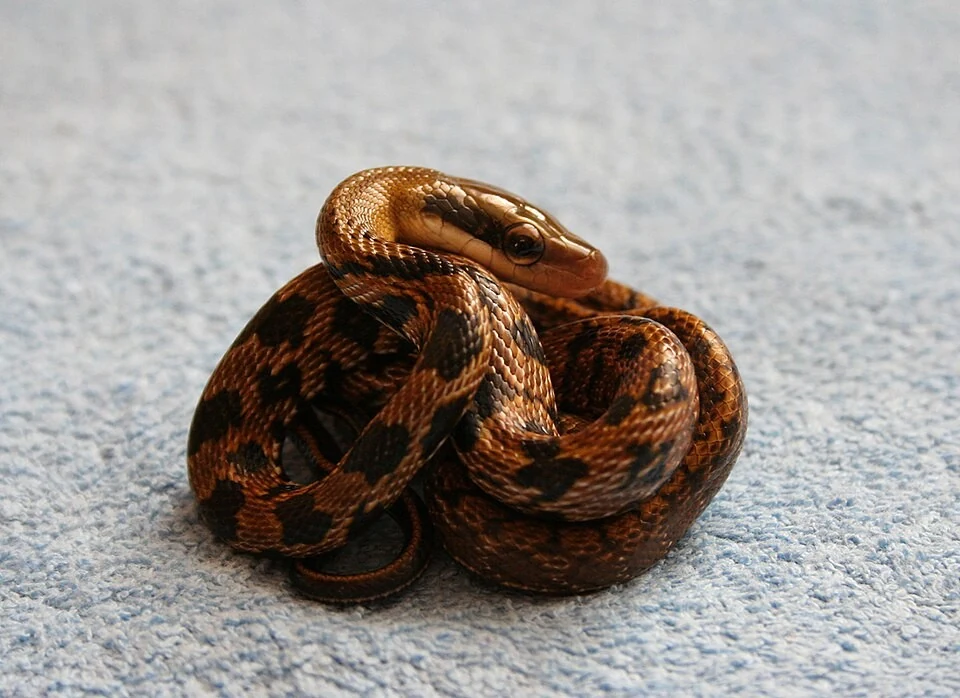
Beauty Snake (friesei: Taiwan Beauty Snake; schmackeri: Sakishima Beauty Snake; callicyanous: Blue Beauty Ratsnake)
Japan has native schmackeri in the southern Ryukyus and introduced friesei on Okinawajima. Both belong to this shared species profile; the species count remains one.
Read the species account →No machine-readable author provided. Hippocampus~commonswiki assumed (based on copyright claims). · CC BY-SA 2.5 · https://creativecommons.org/licenses/by-sa/2.5
008 · Colubridae
Species account
Japan is explicitly recorded in the checked individual species treatment. The July 2026 HSJ national list independently includes this species or its reconciled synonym/subspecies. The assessment lists Miyakojima and Irabujima. Irabu evidence includes specimens from 1959–1960 and a 2011 roadkill; current persistence there is unresolved. Better survey…
Read the species account →
009 · Typhlopidae
Flowerpot Snake
Japan is explicitly recorded in the checked individual species treatment. The July 2026 HSJ national list independently includes this species or its reconciled synonym/subspecies.
Read the species account →Cook-Price, Makchai & Suwanwaree (2026); photographs credited collectively to the author, James Covert and Vikas Kumar · CC BY 4.0 · https://creativecommons.org/licenses/by/4.0/
010 · Viperidae
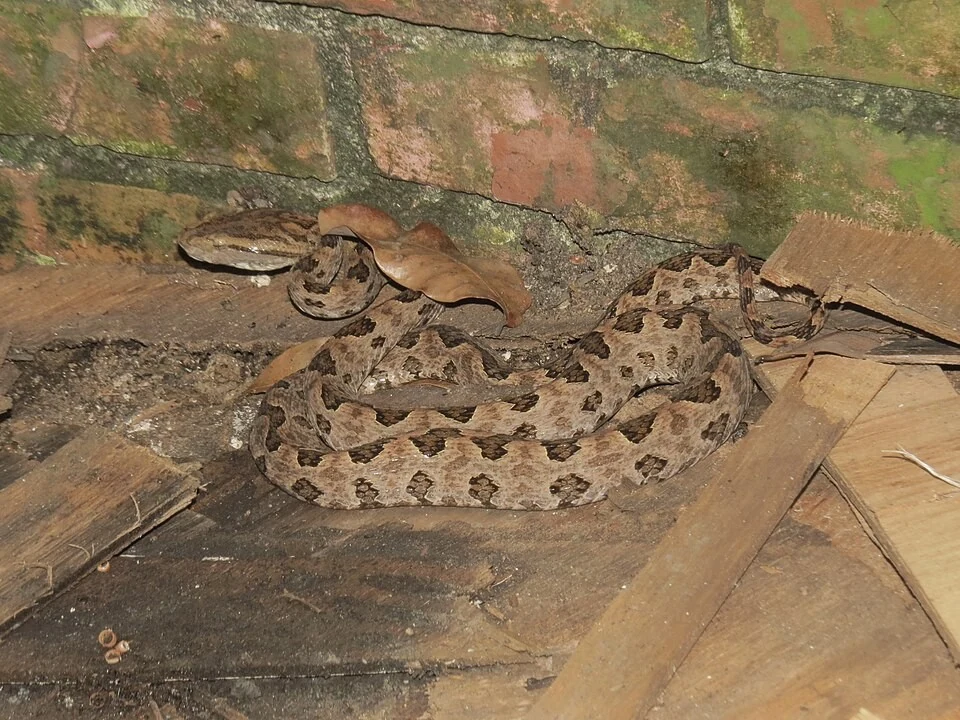
Brown spotted pitviper
NIES documents introduced populations at Nago and Onna on Okinawajima, first recorded in the field in 1993 and 2005. These are introduced Japanese occurrences.
Read the species account →Chen Jia Hong · CC BY 4.0 · https://creativecommons.org/licenses/by/4.0
011 · Colubridae
Sakishima Green Snake
Japan is explicitly recorded in the checked individual species treatment. The July 2026 HSJ national list independently includes this species or its reconciled synonym/subspecies. The ministry names these Yaeyama islands under Cyclophiops herminae. Reports from the Miyako group require specimen or photographic confirmation and are excluded from confirmed…
Read the species account →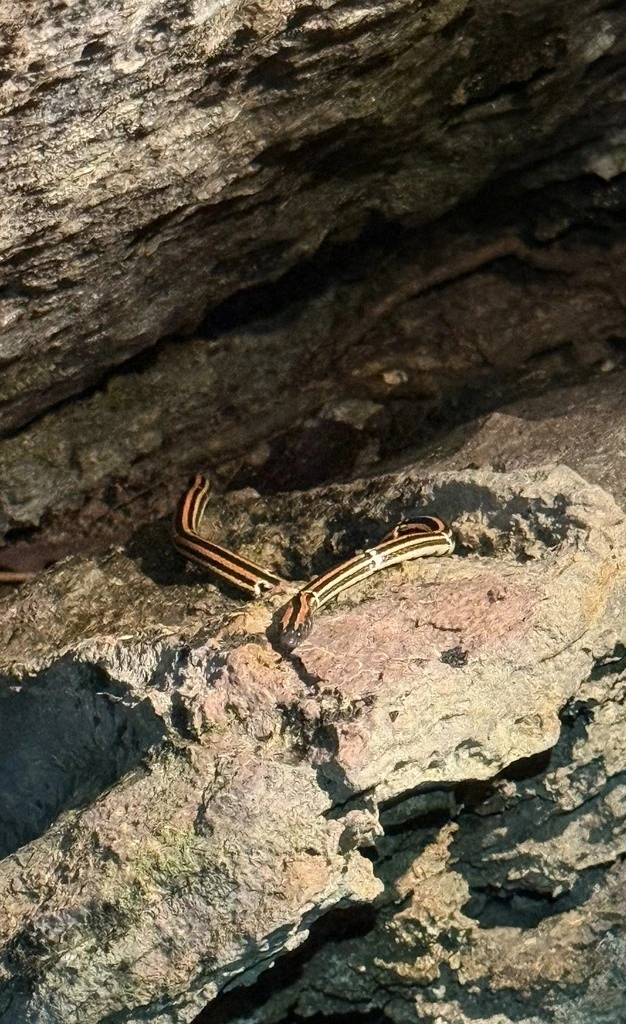
012 · Elapidae
Boettger’s Coral Snake
Japan is explicitly recorded in the checked individual species treatment. The July 2026 HSJ national list independently includes this species or its reconciled synonym/subspecies. Named regional records: Amami, Tokunoshima; Okinawa. These localities do not imply continuous occupation of the entire region. The ministry documents numerous Okinawa-group…
Read the species account →Raymond Fedrick · CC BY 4.0 · https://creativecommons.org/licenses/by/4.0/
013 · Elapidae
Iwasaki's temperate Asian coralsnake
Japan is explicitly recorded in the checked individual species treatment. The July 2026 HSJ national list independently includes this species or its reconciled synonym/subspecies. Named regional records: Ishigaki. These localities do not imply continuous occupation of the entire region. The 2026 account restricts this species to Ishigaki and Iriomote;…
Read the species account →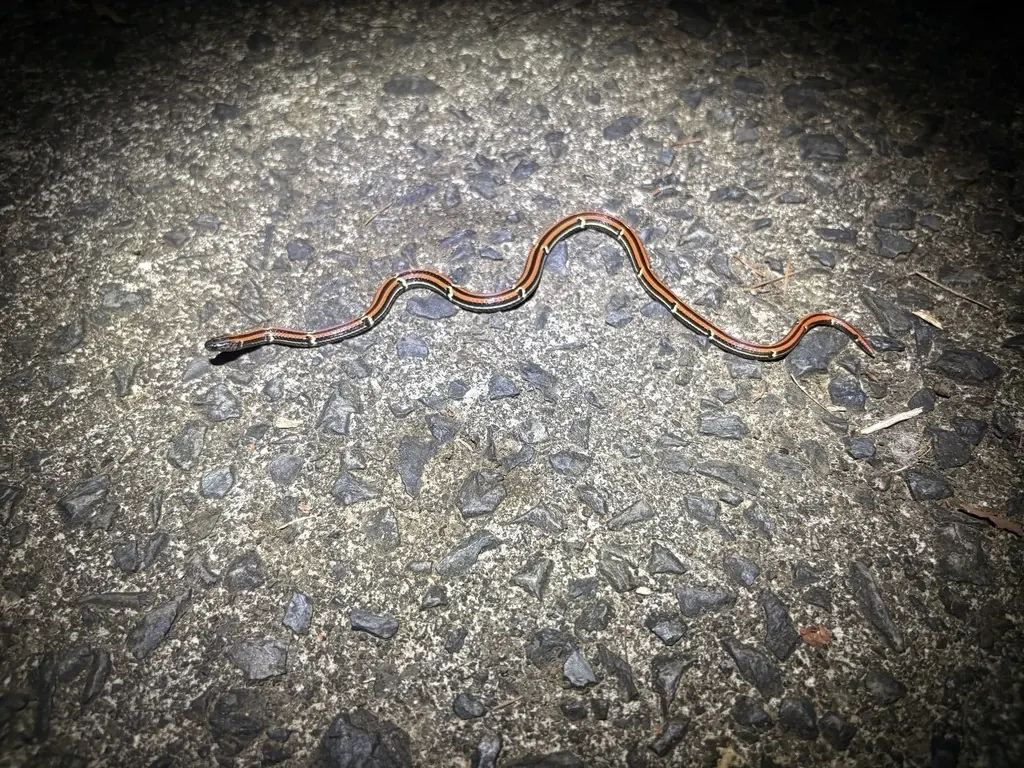
014 · Elapidae
Japanese Coral Snake
Japan is explicitly recorded in the checked individual species treatment. The July 2026 HSJ national list independently includes this species or its reconciled synonym/subspecies. Named regional records: Toyama; Amami; Okinawa. These localities do not imply continuous occupation of the entire region. The ministry lists these five Amami islands. Records…
Read the species account →unipon · CC BY 4.0 · https://creativecommons.org/licenses/by/4.0/
Read further
Guide reviewed 11 October 2026. Source dates and geographic scope matter; landscape photographs do not establish species occurrence.
Northern Honshu beech forests, snow climate and surrounding plantation contrast.
Island rainforest gradient and documented visitor/deer pressures; not evidence for mainland Kyushu.
Continue through Japan
Elevation, lingering snow and valley shelter create contrasting observations.
02Akiyoshidai connects visible rock with less visible drainage.
03Japan’s freshwater habitats include both lowland peat and mountain basins.
04Each river and island is a separate geographic reference.
05Coastal context changes between archipelagos and individual bays.