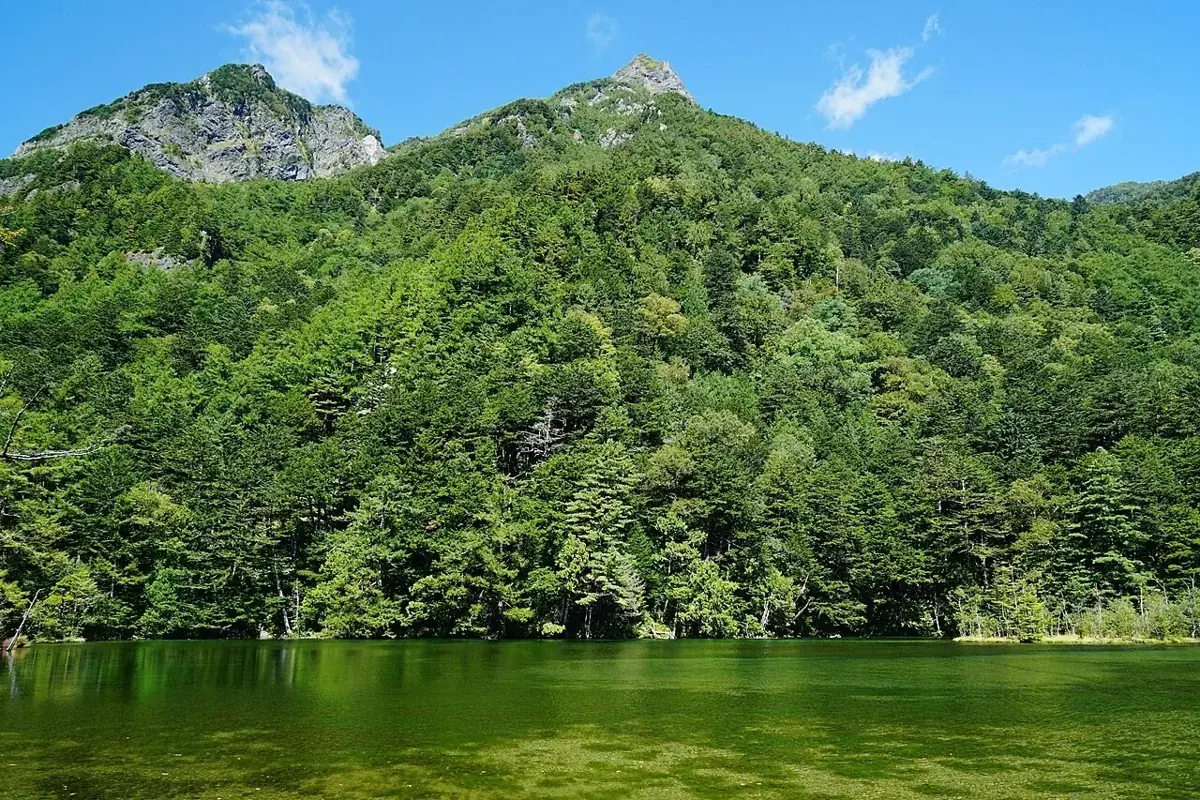
Mount Myojin and the wooded shore of Myojin Pond, Kamikochi, Nagano, Japan.

Japan · Habitat field guide

Alpine ridges above wooded valleys

Elevation, lingering snow and valley shelter create contrasting observations.

Mount Myojin and the wooded shore of Myojin Pond, Kamikochi, Nagano, Japan.

Photograph: 663highland · Image source · CC BY 2.5. Cropped to fill the hero; darkened for text legibility.

Understanding the environment

A sense of the habitat.

Elevation, lingering snow and valley shelter create contrasting observations.

Landscape evidence
Named examples, not complete habitat coverage
Record detail
Locality · elevation · slope

Explore the structure · Select a feature to compare

Read the landscape

Select a zone to see what changes.

Name the catchment

Valley

Distinguish riverbank, settlement and wooded slope.

Use the sourced examples below to place these observations in context.

Conceptual observation prompts, not a measured transect, habitat boundary or snake range.

Field notes · 01

Northern Alps

Chubusangaku combines glacial valleys, lava plateaus, riverside forest and high peaks. Snow remains into early summer in many places; record the actual conditions rather than inferring them from the calendar.

Sources: Japan MOE / JNTO · Explore Chubusangaku

Field notes · 02

Highland water

The Midagahara marshes and the Azusa River valley at Kamikochi illustrate different parts of this mountain landscape. An upland wetland observation and a valley-bank observation need separate locality descriptions.

Sources: Japan MOE / JNTO · Explore Chubusangaku

Pressures on Japan’s habitats

What is at risk?

A site-specific assessment of pressures has not yet been extracted for this guide. The landscape sources below provide context; they do not establish a current threat level for each snake species.

What helps this habitat

Support site-led protection of the landscape processes described here. Keep habitat notes precise and use the linked sources before extending a claim to another place.

The connected collection

Snakes with habitat evidence.

These 3 species have supported country occurrence and an explicit habitat association in the shared account. The association may come from elsewhere in their range. This is not a complete local habitat inventory; the places above are landscape examples, not asserted collecting sites.

3 species · showing 3

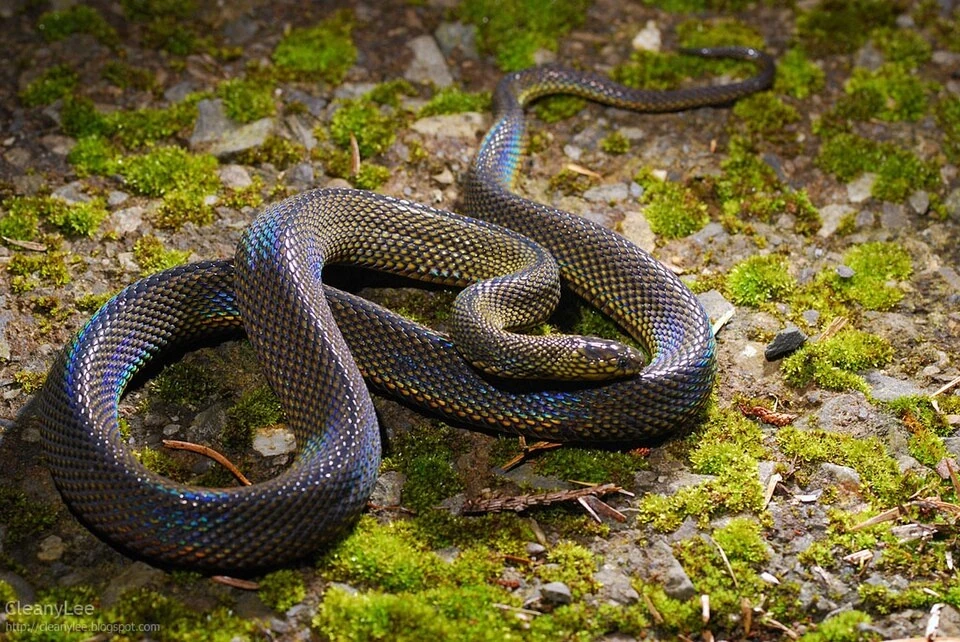
Achalinus formosanus. Identification follows the linked source photograph.

001 · Xenodermidae

Formosa Odd-scaled Snake

Achalinus formosanus

BOULENGER, 1908

Non-venomous

The July 2026 HSJ checklist includes A. formosanus chigirai. It is represented once within the shared species profile; the individual taxonomic treatment identifies Iriomotejima in the Yaeyama Islands. The July 2026 HSJ checklist includes A. formosanus chigirai. It is represented once within the shared species profile; the individual taxonomic treatment…

Read the species account →

Sin Syue Li · CC BY 2.0 · https://creativecommons.org/licenses/by/2.0
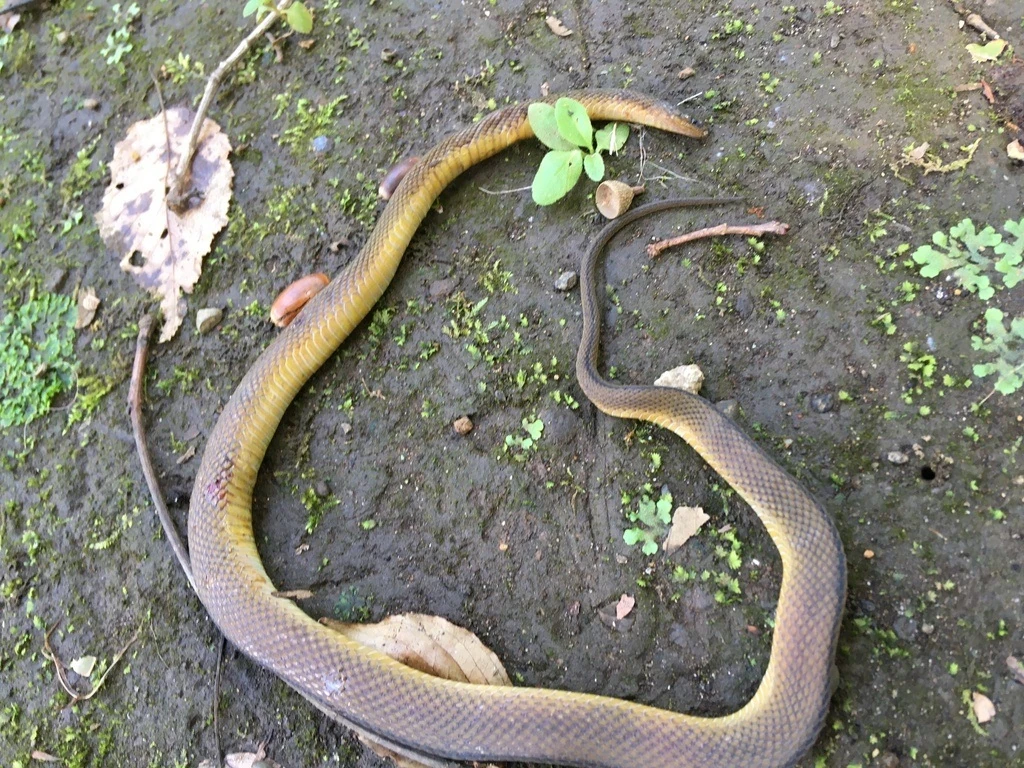
Achalinus spinalis. Identification follows the linked source community.

002 · Xenodermidae

Peters' Odd-scaled Snake, Japanese odd-scaled snake

Achalinus spinalis

PETERS, 1869

Non-venomous

Japan is explicitly recorded in the checked individual species treatment. The July 2026 HSJ national list independently includes this species or its reconciled synonym/subspecies. Named regional records: Kyushu. These localities do not imply continuous occupation of the entire region. Kaizuka museum records through March 2019; named endpoints do not…

Read the species account →

unipon · CC BY 4.0 · https://creativecommons.org/licenses/by/4.0/

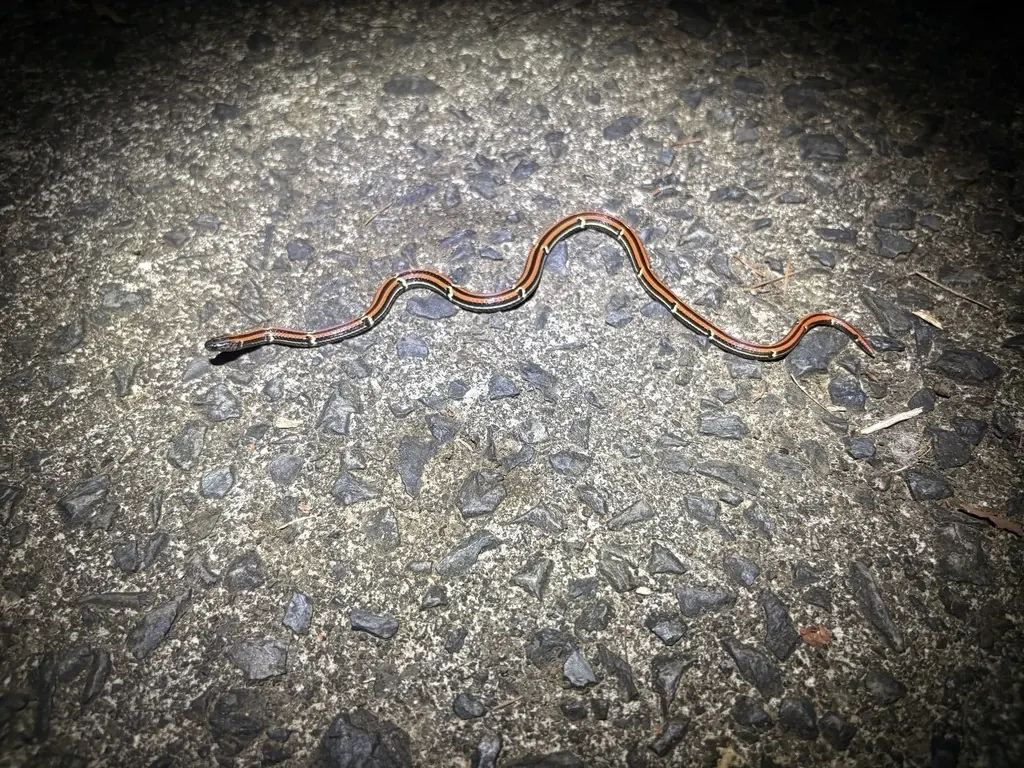
Sinomicrurus japonicus. Identification follows the linked source community.

003 · Elapidae

Japanese Coral Snake

Sinomicrurus japonicus

(GÜNTHER, 1868)

VenomousClinical severity not established

Japan is explicitly recorded in the checked individual species treatment. The July 2026 HSJ national list independently includes this species or its reconciled synonym/subspecies. Named regional records: Toyama; Amami; Okinawa. These localities do not imply continuous occupation of the entire region. The ministry lists these five Amami islands. Records…

Read the species account →

unipon · CC BY 4.0 · https://creativecommons.org/licenses/by/4.0/

All 43 species in the country collection →

Read further

Evidence & sources.

Guide reviewed 11 October 2026. Source dates and geographic scope matter; landscape photographs do not establish species occurrence.

  1. Japan MOE / JNTO · Explore Chubusangaku

    Northern Alps valleys, snow, riverside forest and highland marshes; not snake elevation limits.

Continue through Japan

Explore another habitat.

01

Beech forests and island rainforests

Japan’s forest gradient is both latitudinal and local.

02

Limestone above a wetland underground

Akiyoshidai connects visible rock with less visible drainage.

03

Northern marshes and highland waters

Japan’s freshwater habitats include both lowland peat and mountain basins.

04

Mangroves of the southern islands

Each river and island is a separate geographic reference.

05

Island shores and warm-current coasts

Coastal context changes between archipelagos and individual bays.