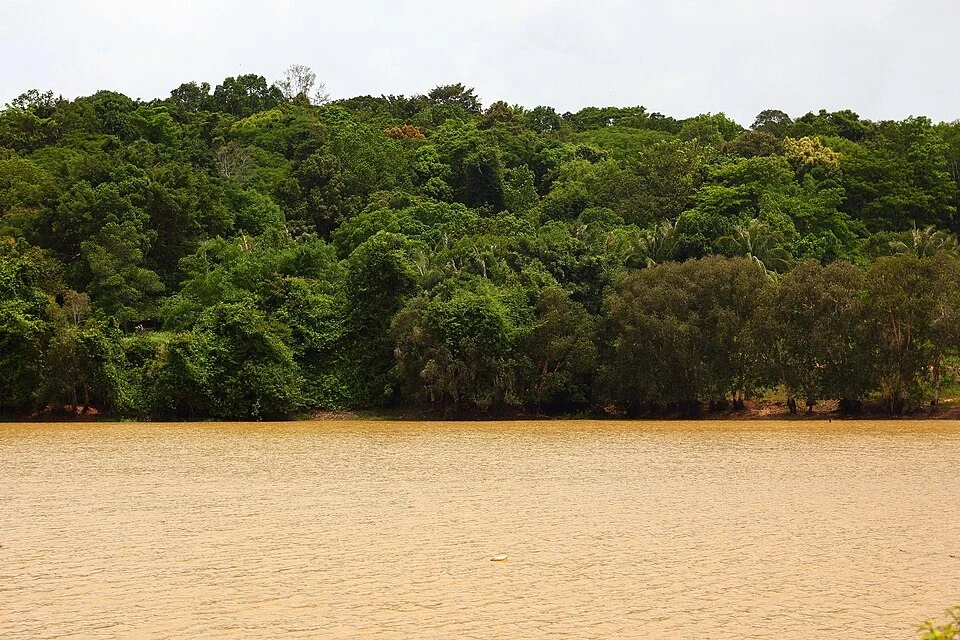
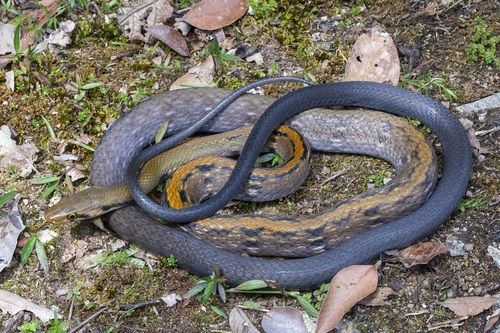
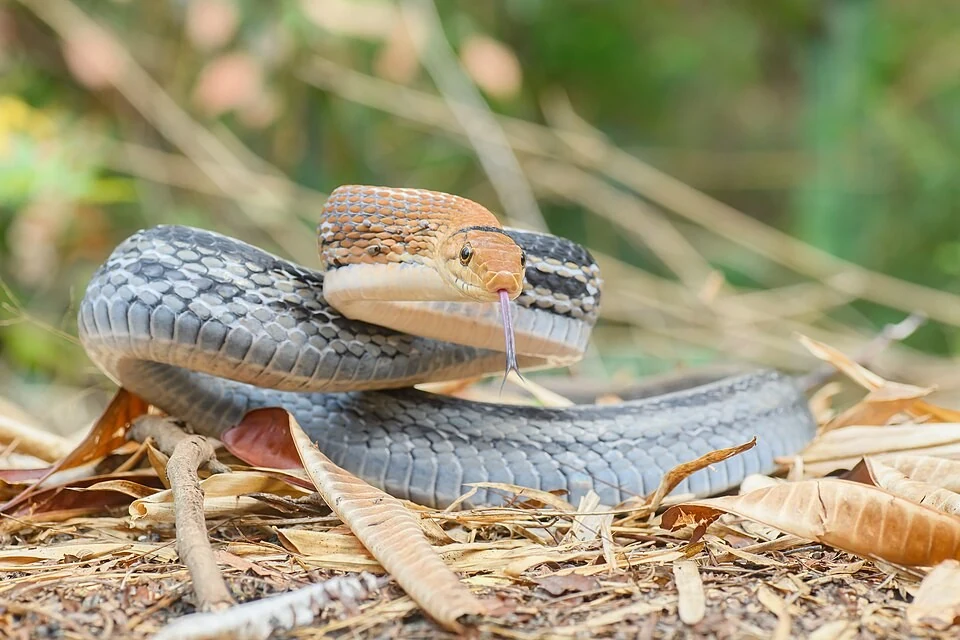
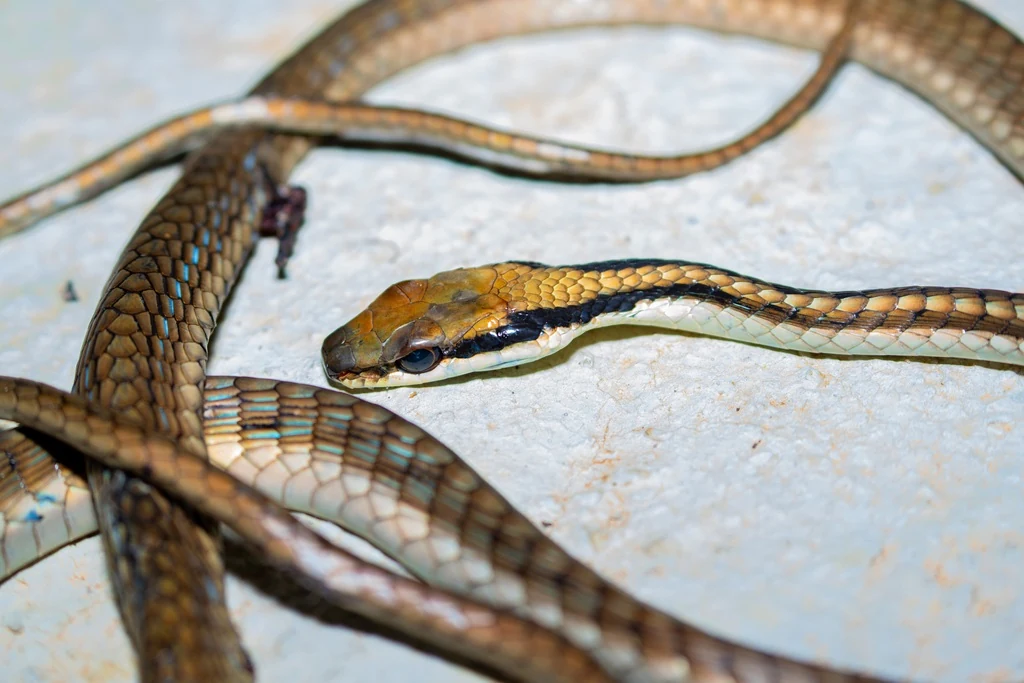
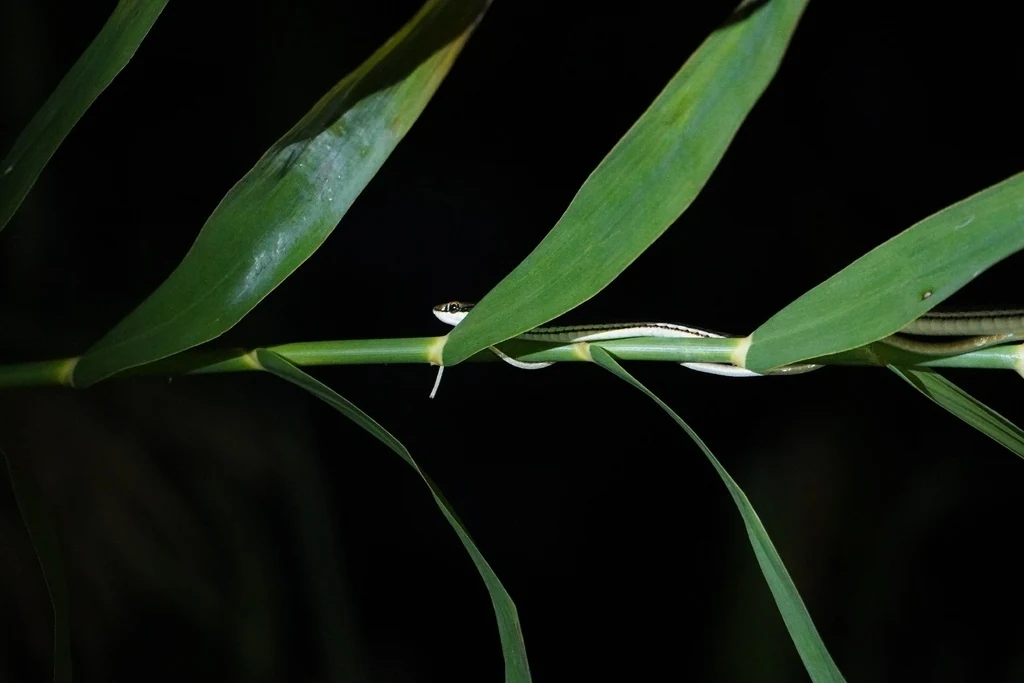
WCS describes evergreen and deciduous formations at Keo Seima, interspersed with grassland, rivers and water sources. Keep those distinctions when comparing observations: a shaded riverbank and an open woodland floor are different settings within the same landscape.
The Northern Plains combine deciduous woodland with grassland and seasonal wetlands. A relatively open canopy can be a natural feature. Compare repeated observations through the seasons before describing a site as degraded solely because its trees carry fewer leaves.
Conservation International documents clearing and illegal logging in the Cardamoms; these are locality-specific pressures, not a measured rate for every Cambodian forest.
Protect the vegetation mosaic and its water sources, and work with the communities whose livelihoods depend on them.
Cambodia · Choose an areaN ↑
Click a region to explore its snakes and landscapes.
100%
geoBoundaries / OpenStreetMap contributors / Wambacher · 2017 snapshot · Open Data Commons Open Database License 1.0. Credited navigation boundaries; regional groups are not species ranges. Map provenance ↗
region evidence pages
Choose any named region.
5
dedicated region pages connect the geographic atlas with its source-backed species accounts
Browse all regions ↓Select a labelled place on the map, or use the complete index below. Geographic boundaries are navigation references, not species ranges.
The connected collection
Snakes with habitat evidence.
These 54 species have supported country occurrence and an explicit habitat association in the shared account. The association may come from elsewhere in their range. This is not a complete local habitat inventory; the places above are landscape examples, not asserted collecting sites.
Cambodia is explicitly included in the checked species distribution treatment. Country membership reviewed on 11 October 2026; no finer locality is assigned by this record.
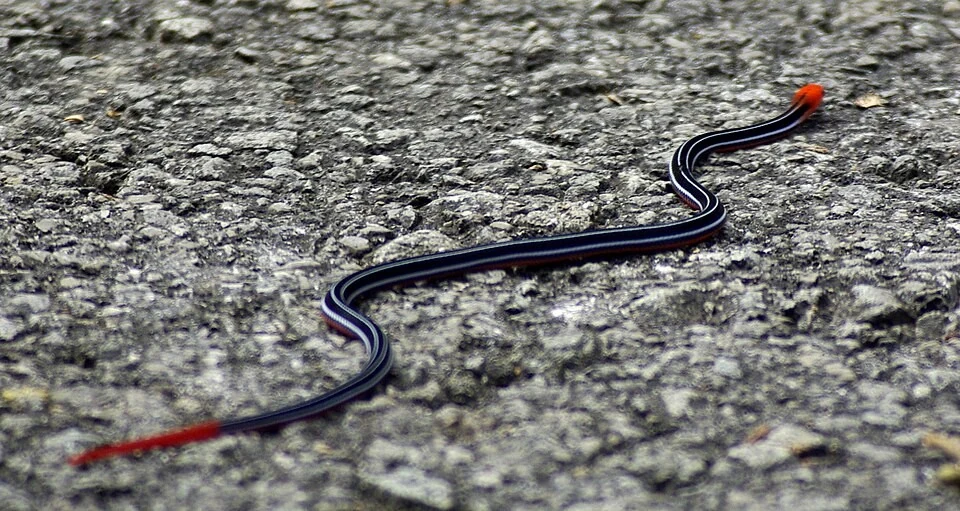
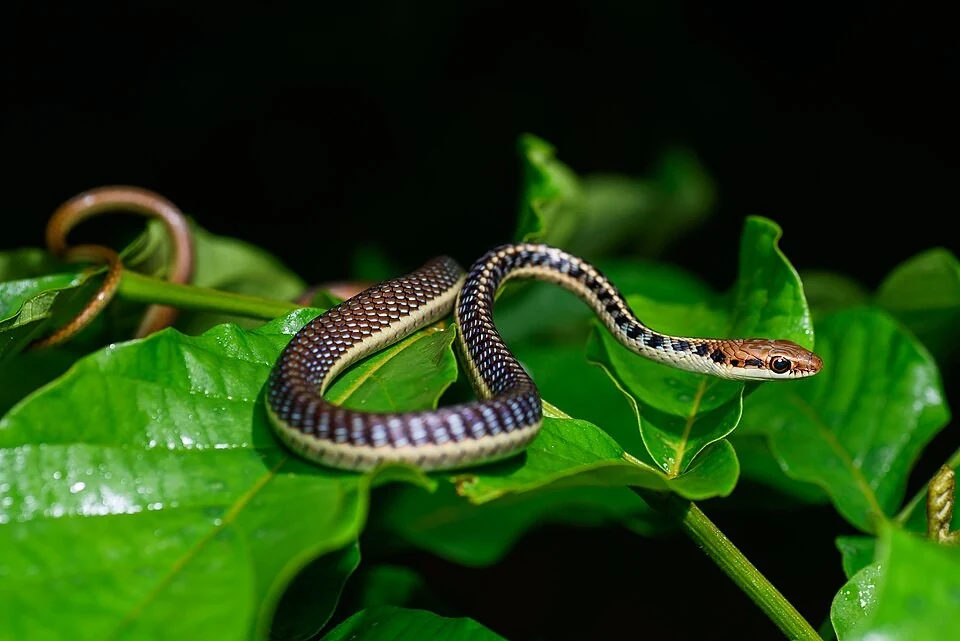
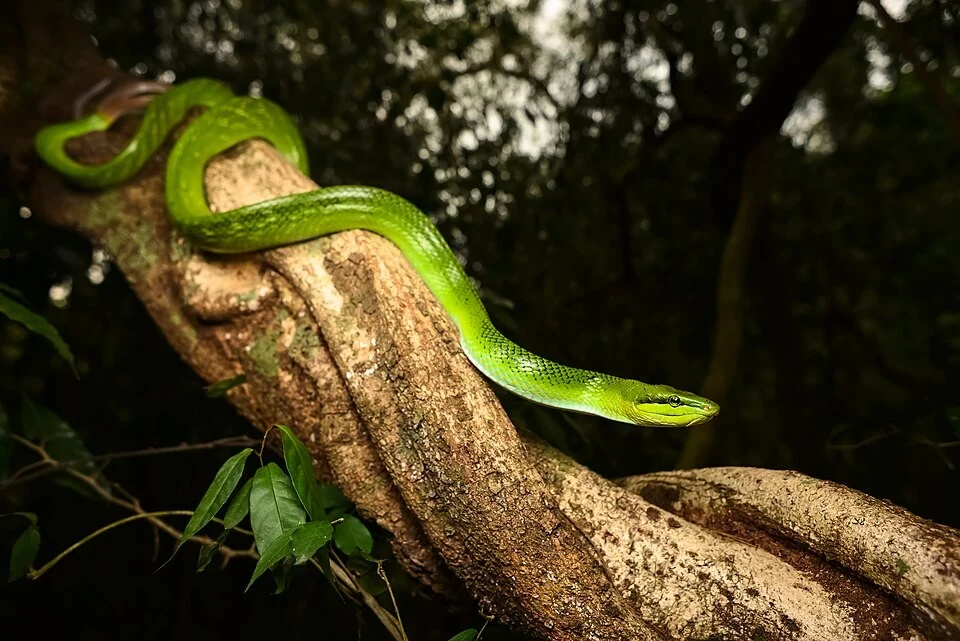
Cook-Price, Makchai & Suwanwaree (2026); photographs credited collectively to the author, James Covert and Vikas Kumar · CC BY 4.0 · https://creativecommons.org/licenses/by/4.0/
Cambodia is explicitly included in the checked species distribution treatment. Country membership reviewed on 11 October 2026; no finer locality is assigned by this record. FMNH 259178; Stuart & Emmett (2006), 19.
Cambodia is explicitly included in the checked species distribution treatment. Country membership reviewed on 11 October 2026; no finer locality is assigned by this record. Grismer et al. (2008), Cambodian Journal of Natural History 1:12–28, document LSUHC 8502 and 8527 from the named 2007 survey locality. The atlas grouping follows the published…
Listed in the checked distribution source. The 2024 Fauna & Flora / Ministry of Environment Virachey biodiversity survey reports this species from the 2021–2023 field programme in Virachey National Park. This is reserve-level evidence, not a claim that every northeastern province is occupied. Williams, Jensen & O’Shea (2009), pp. 16 and 26, report…
Cambodia is explicitly included in the checked species distribution treatment. Country membership reviewed on 11 October 2026; no finer locality is assigned by this record.
Cambodia is explicitly included in the checked species distribution treatment. Country membership reviewed on 11 October 2026; no finer locality is assigned by this record.
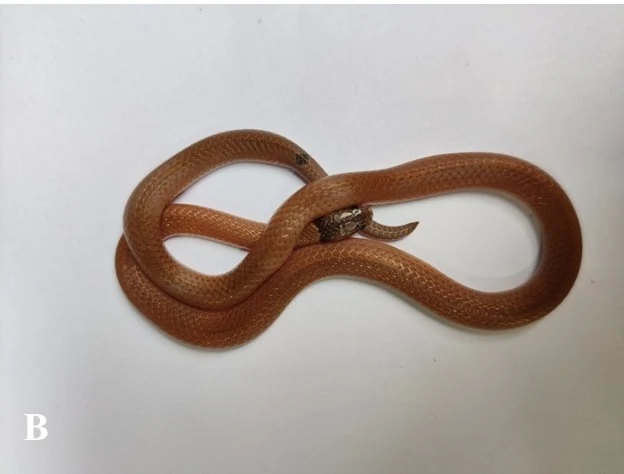
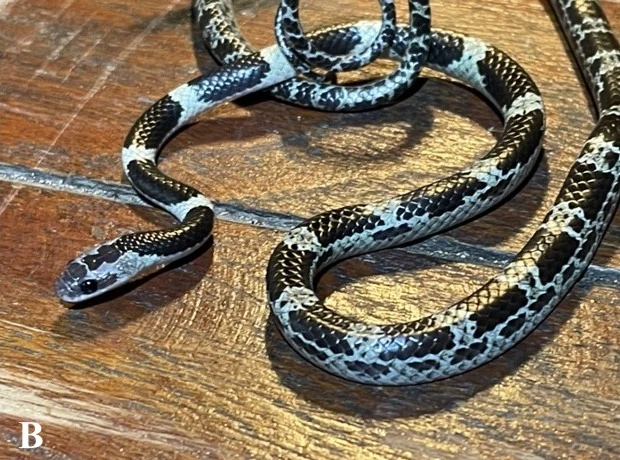
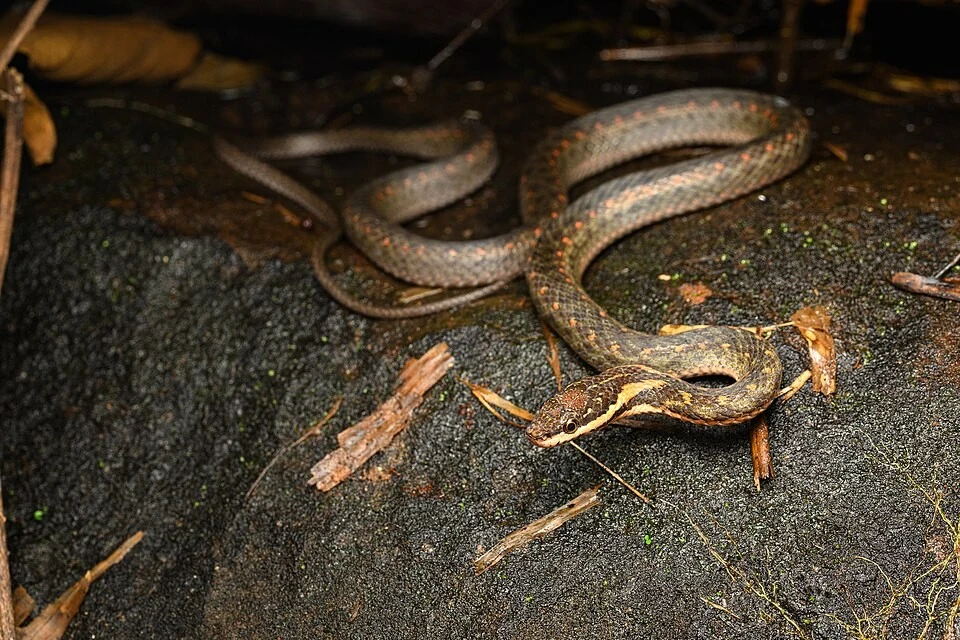
Cook-Price, Makchai & Suwanwaree (2026); photographs credited collectively to the author, James Covert and Vikas Kumar · CC BY 4.0 · https://creativecommons.org/licenses/by/4.0/
Listed in the checked distribution source. FMNH 267722; Stuart & Emmett (2006), 22–23. Saint Girons & Pfeffer (1972), pp. 66–69, document two specimens from Krek plantation in November 1969 under the historical name Agkistrodon rhodostoma. The authors associate their local observations with relatively dry lowland ground, including rubber-growing red…
Cambodia is explicitly included in the checked species distribution treatment. Country membership reviewed on 11 October 2026; no finer locality is assigned by this record. FMNH 259184; Stuart & Emmett (2006), 20. LSUHC 7387; Grismer et al. (2007), August 2005 survey.
Listed in the checked distribution source. Grismer et al. (2008), Cambodian Journal of Natural History 1:12–28, document LSUHC 8693–94 from the named 2007 survey locality. The atlas grouping follows the published province, not the broader Cardamom ecoregion.
Cambodia is explicitly included in the checked species distribution treatment. Country membership reviewed on 11 October 2026; no finer locality is assigned by this record.
Cambodia is explicitly included in the checked species distribution treatment. Country membership reviewed on 11 October 2026; no finer locality is assigned by this record. FMNH 259203, 263389; Stuart & Emmett (2006), 20. LSUHC 8479; Grismer et al. (2008), p.19.
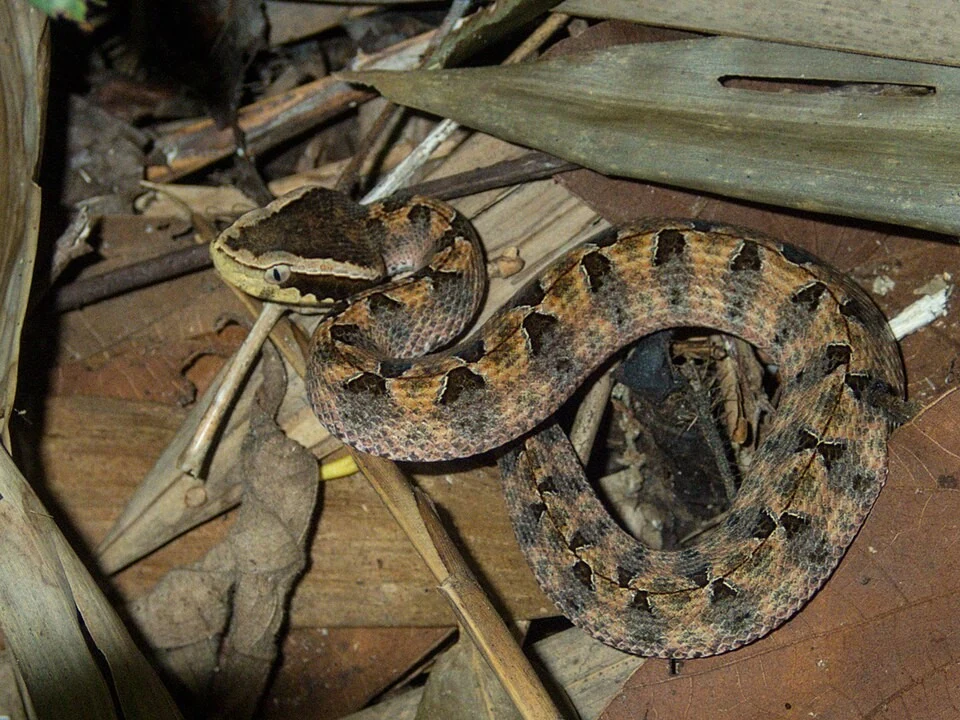
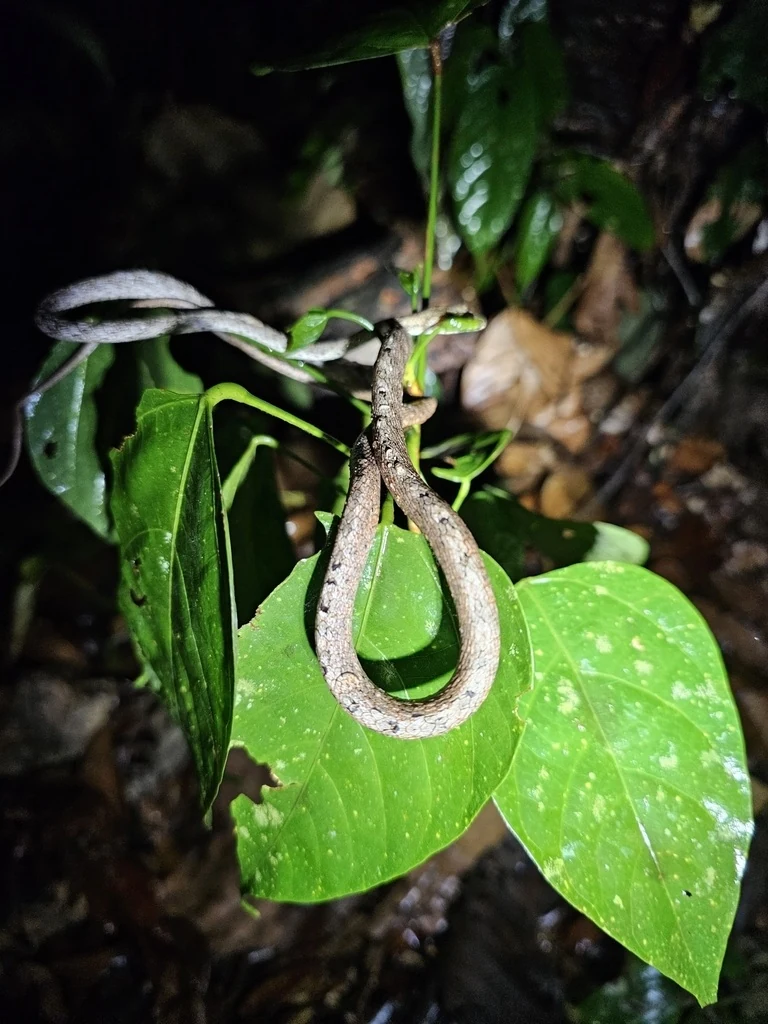
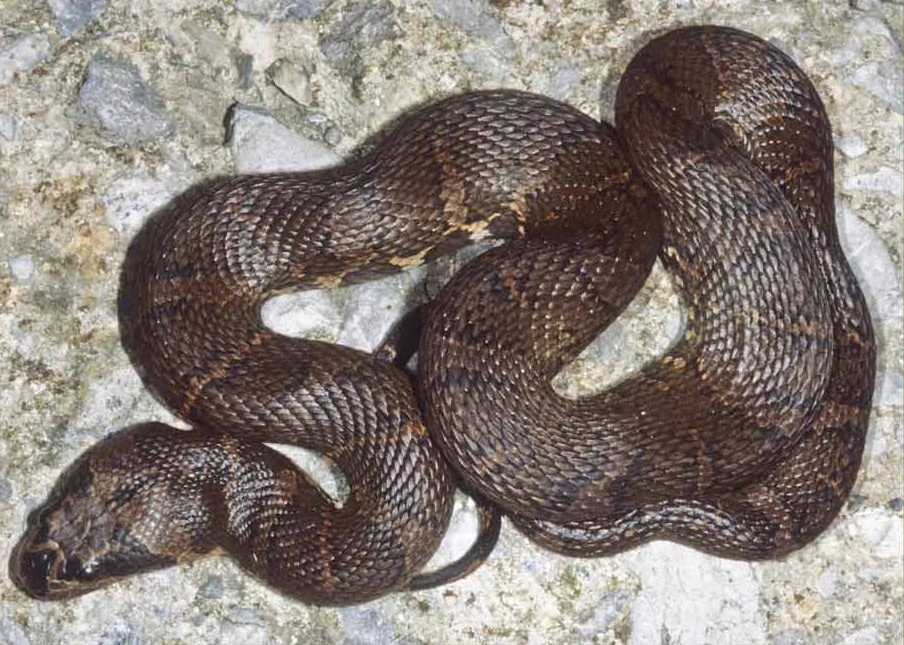
Cook-Price, Makchai & Suwanwaree (2026); photographs credited collectively to the author, James Covert and Vikas Kumar · CC BY 4.0 · https://creativecommons.org/licenses/by/4.0/
Listed in the checked distribution source. The 2024 Fauna & Flora / Ministry of Environment Virachey biodiversity survey reports this species from the 2021–2023 field programme in Virachey National Park. This is reserve-level evidence, not a claim that every northeastern province is occupied. FMNH 267724; Stuart & Emmett (2006), 20.
The 2024 Fauna & Flora / Ministry of Environment Virachey biodiversity survey reports this species from the 2021–2023 field programme in Virachey National Park. This is reserve-level evidence, not a claim that every northeastern province is occupied. The account specifically identifies Veal Thom.
Cambodia is explicitly included in the checked species distribution treatment. Country membership reviewed on 11 October 2026; no finer locality is assigned by this record. Stuart, Sok & Neang (2006), pp. 149–150, document FMNH 263029–263033 from Ta Veng and Siem Pang in November–December 2003. These preserved vouchers support named northeastern…
The western lineage recognized as Hypsiscopus murphyi in the 2024 revision includes Cambodian specimens. Bernstein et al. (2022) paratypes: FMNH 259222 from Phnom Nam Lyr (2000, 700 m); MVZ 258174–177 from Veal Thom (2007, 601–661 m). These identified vouchers resolve older broad Hypsiscopus names.