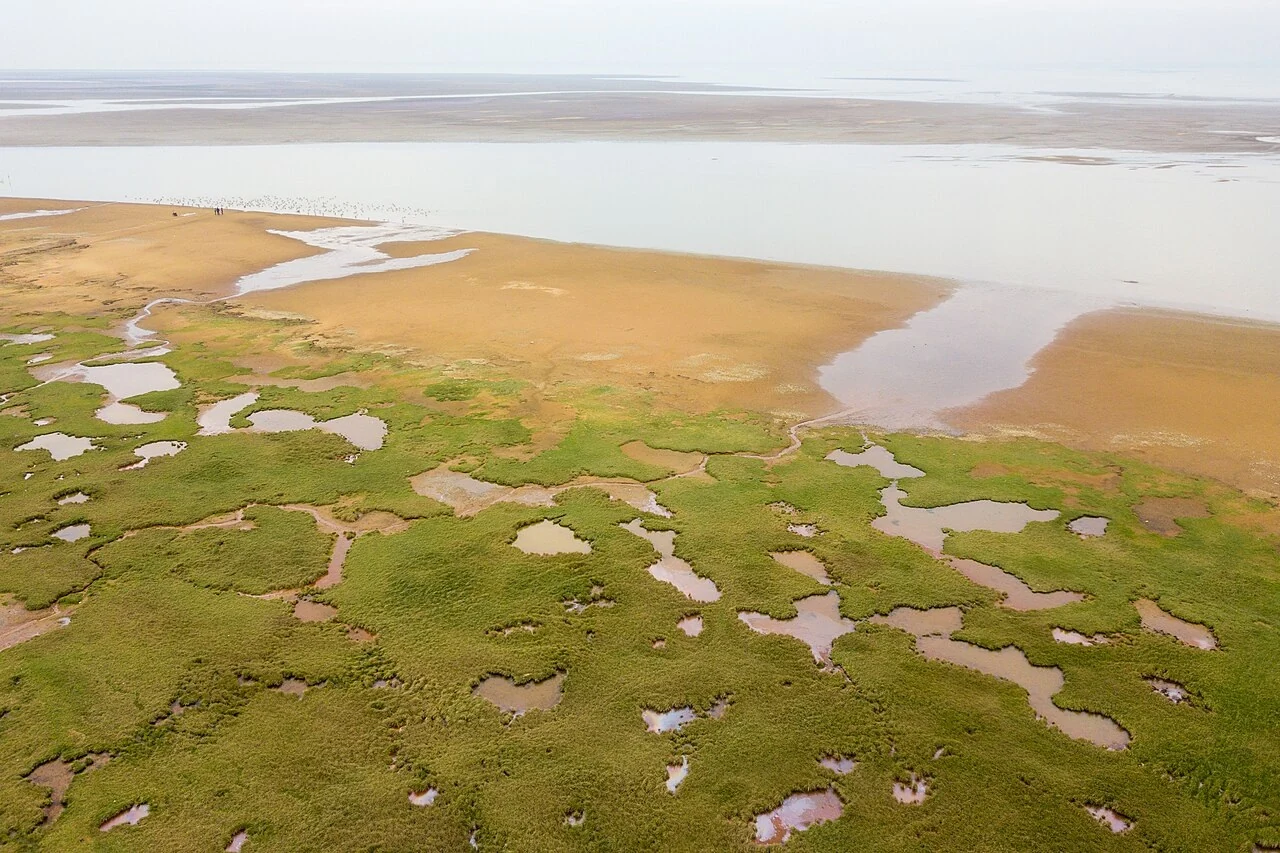
Exposed lake margins and wetland vegetation at Baishazhou, Poyang Lake, Jiangxi, China.

China · Habitat field guide

Flood pulses and wetland mosaics

A seasonal lake margin can change character without changing its name.

Exposed lake margins and wetland vegetation at Baishazhou, Poyang Lake, Jiangxi, China.

Photograph: Zhangzhugang · Image source · CC BY-SA 4.0. Cropped to fill the hero; darkened for text legibility.

Understanding the environment

A sense of the habitat.

A seasonal lake margin can change character without changing its name.

Landscape evidence
Named examples, not complete habitat coverage
Record detail
Locality · season · observed cover

Explore the structure · Select a feature to compare

Read the landscape

Select a zone to see what changes.

Look upstream

Catchment

Identify the named river or lake and any visible management structures.

Use the sourced examples below to place these observations in context.

Conceptual observation prompts, not a measured transect, habitat boundary or snake range.

Field notes · 01

Water that expands and retreats

At Jiangxi Poyang Lake Nanji Wetlands, changing water levels reveal a shifting mixture of channels, lakes, meadows and mudflats. Retain the season and the individual location within the larger lake system.

Sources: Ramsar · China annotated site summaries

Field notes · 02

Managed waters

Mai Po in Hong Kong maintains freshwater ponds and reedbeds alongside tidal gei wai, mangroves and mudflats. These adjoining habitats have different water regimes; a freshwater label should not absorb the whole reserve.

Sources: Hong Kong Countryside Conservation Office · Mai Po

Pressures on China’s habitats

What is at risk?

A site-specific assessment of pressures has not yet been extracted for this guide. The landscape sources below provide context; they do not establish a current threat level for each snake species.

What helps this habitat

Support site-led protection of the landscape processes described here. Keep habitat notes precise and use the linked sources before extending a claim to another place.

The connected collection

Snakes with habitat evidence.

These 39 species have supported country occurrence and an explicit habitat association in the shared account. The association may come from elsewhere in their range. This is not a complete local habitat inventory; the places above are landscape examples, not asserted collecting sites.

39 species · showing 24

XenodermidaeAchalinusPhotograph not yet documented

001 · Xenodermidae

Emily’s Burrowing Snake

Achalinus emilyae

ZIEGLER, NGUYEN, PHAM, NGUYEN, PHAM, VAN SCHINGEN, NGUYEN & LE, 2019

Non-venomous

China is explicitly recorded in the checked individual species treatment. The accepted identity is also represented in the 2025 checklist; regional inclusion here is based on explicit locality evidence, not the checklist’s broader geographical scope. Named regional records: Guangxi. These localities do not imply continuous occupation of the entire region.

Read the species account →
Acrochordus granulatus Portrait

002 · Acrochordidae

Little filesnake

Acrochordus granulatus

(SCHNEIDER, 1799)

Non-venomous

China is explicitly recorded in the checked individual species treatment. The accepted identity is also represented in the 2025 checklist; regional inclusion here is based on explicit locality evidence, not the checklist’s broader geographical scope.

Read the species account →

Mario Lutz · Copyright Mario Lutz. Authorised for display in this atlas; no third-party reuse licence granted.

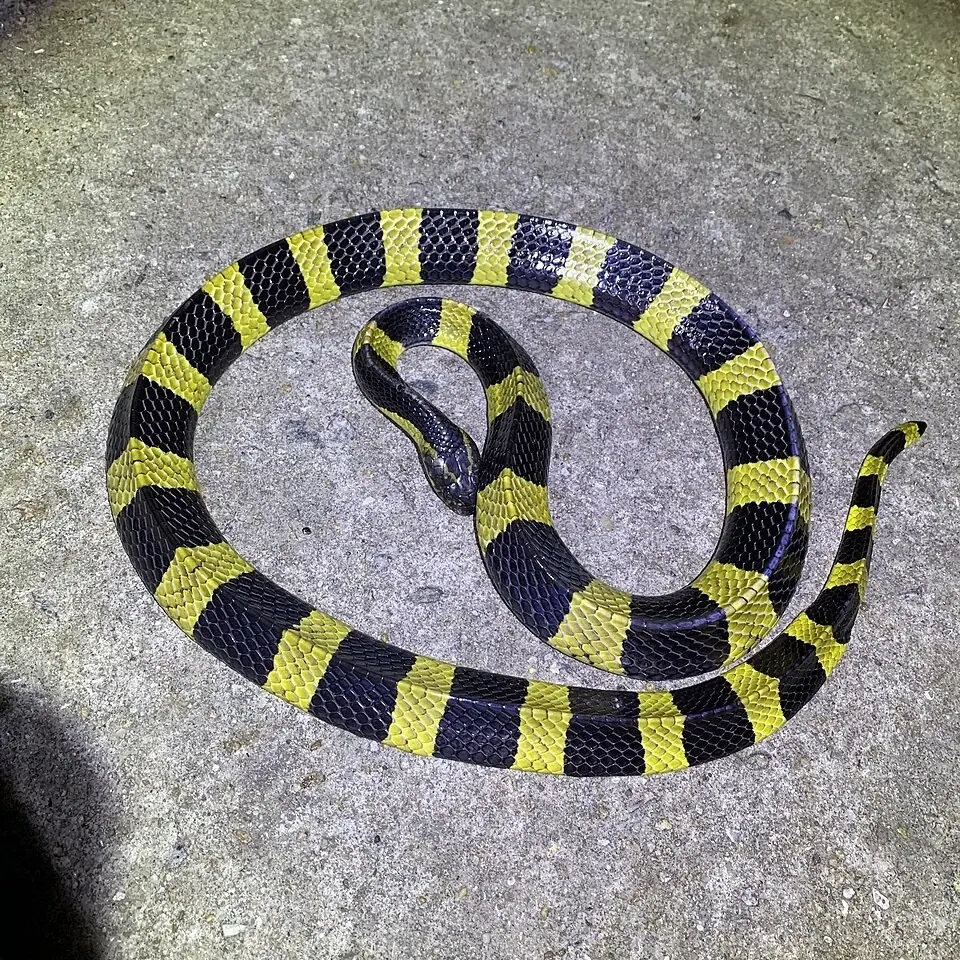
Bungarus fasciatus — real specimen photograph; identification follows the linked source.

003 · Elapidae

Banded Krait

Bungarus fasciatus

(SCHNEIDER, 1801)

VenomousPotentially life-threatening

China is explicitly recorded in the checked individual species treatment. The accepted identity is also represented in the 2025 checklist; regional inclusion here is based on explicit locality evidence, not the checklist’s broader geographical scope. Named regional records: Fujian; Hong Kong. These localities do not imply continuous occupation of the…

Read the species account →

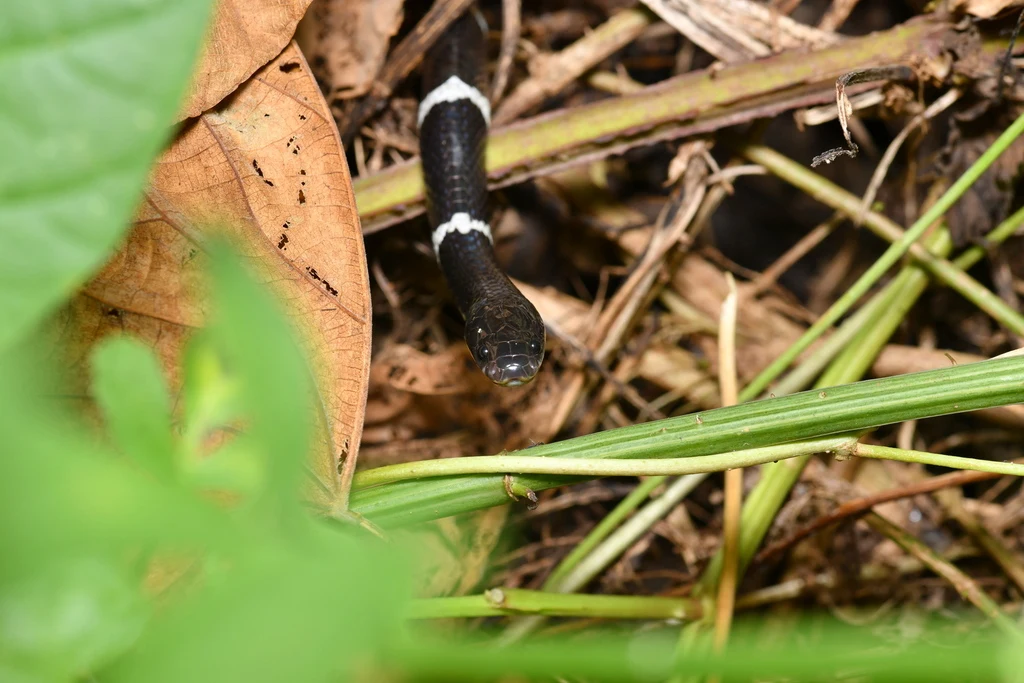
灯管儿 · CC BY 4.0 · https://creativecommons.org/licenses/by/4.0

Bungarus multicinctus. Individual photographed among vegetation. Original observation dated 2026-08-11. Photograph identification follows the cited observation; it adds no geographic occurrence record.

004 · Elapidae

Many-banded Krait

Bungarus multicinctus

BLYTH, 1861

VenomousPotentially life-threatening

China is explicitly recorded in the checked individual species treatment. The accepted identity is also represented in the 2025 checklist; regional inclusion here is based on explicit locality evidence, not the checklist’s broader geographical scope. Named regional records: Fujian; Hong Kong. These localities do not imply continuous occupation of the…

Read the species account →

Yung-Lun Lin · CC BY 4.0 · https://creativecommons.org/licenses/by/4.0/

Bungarus suzhenae. Photographed in life. paratype CIB 116090, adult female. Scientific source photograph; no new occurrence record is inferred.

005 · Elapidae

Suzhen’s krait

Bungarus suzhenae

CHEN, SHI, VOGEL, DING & SHI, 2021

VenomousClinical severity not established

China is explicitly recorded in the checked individual species treatment. The accepted identity is also represented in the 2025 checklist; regional inclusion here is based on explicit locality evidence, not the checklist’s broader geographical scope. Named regional records: Yunnan Province, Yunnan. These localities do not imply continuous occupation of…

Read the species account →

Chen, Ze-Ning; Shi, Sheng-Chao; Vogel, Gernot; Ding, Li; Shi, Jing-Song · CC BY 4.0 · https://creativecommons.org/licenses/by/4.0/

Deinagkistrodon acutus — real specimen photograph; identification follows the linked source.

006 · Viperidae

Chinese Moccasin, Hundred-pace viper, five-pacer viper

Deinagkistrodon acutus

(GÜNTHER, 1888)

VenomousPotentially life-threatening

China is explicitly recorded in the checked individual species treatment. The accepted identity is also represented in the 2025 checklist; regional inclusion here is based on explicit locality evidence, not the checklist’s broader geographical scope. Named regional records: Zhejiang, Chekiang, Fujian, Fukien; Hupeh, Hunan; Kwangtung; Sichuan, Guizhou.…

Read the species account →

Cheng Te Hsu · CC BY-SA 4.0 · https://creativecommons.org/licenses/by-sa/4.0

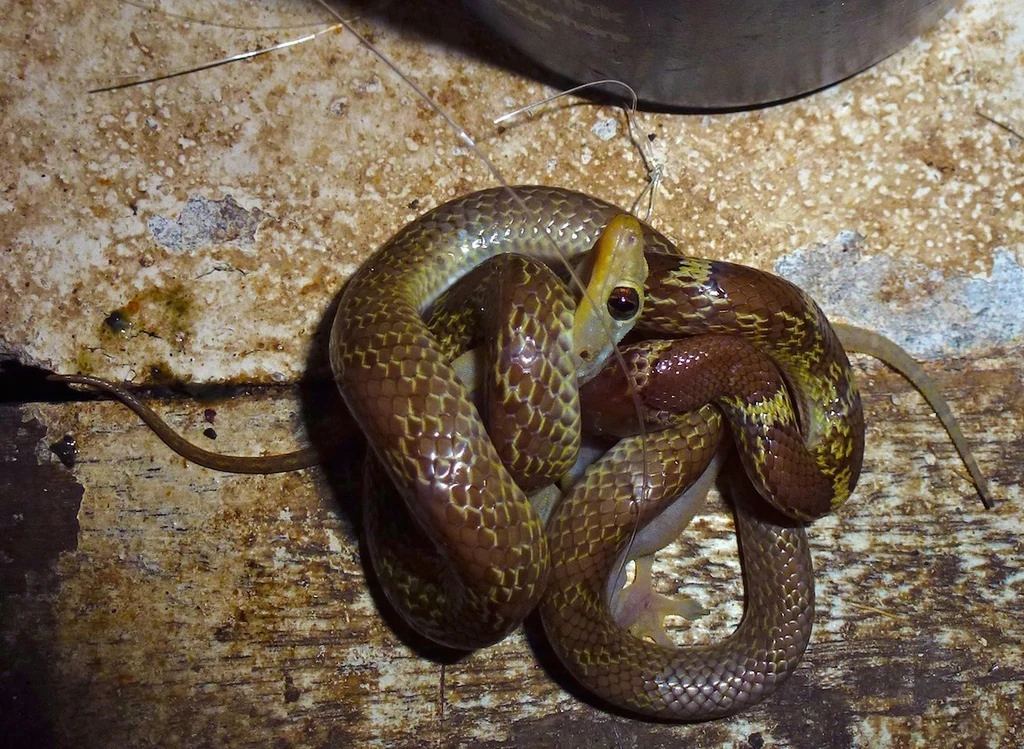
Fowlea flavipunctata — China, 2026-09-16.

007 · Colubridae

Yellow-Spotted Keelback

Fowlea flavipunctata

(HALLOWELL, 1860)

Venom unknownNot yet assessed

China is explicitly recorded in the checked individual species treatment. The accepted identity is also represented in the 2025 checklist; regional inclusion here is based on explicit locality evidence, not the checklist’s broader geographical scope. Named regional records: Yunnan. These localities do not imply continuous occupation of the entire region.

Read the species account →
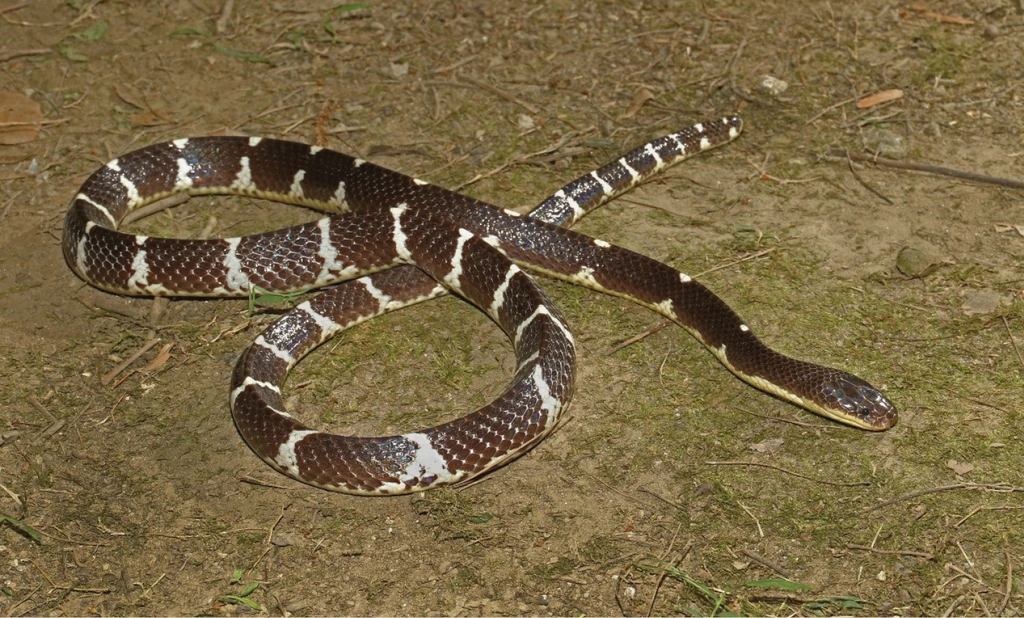
observe-syz · CC0 1.0 · https://creativecommons.org/publicdomain/zero/1.0/

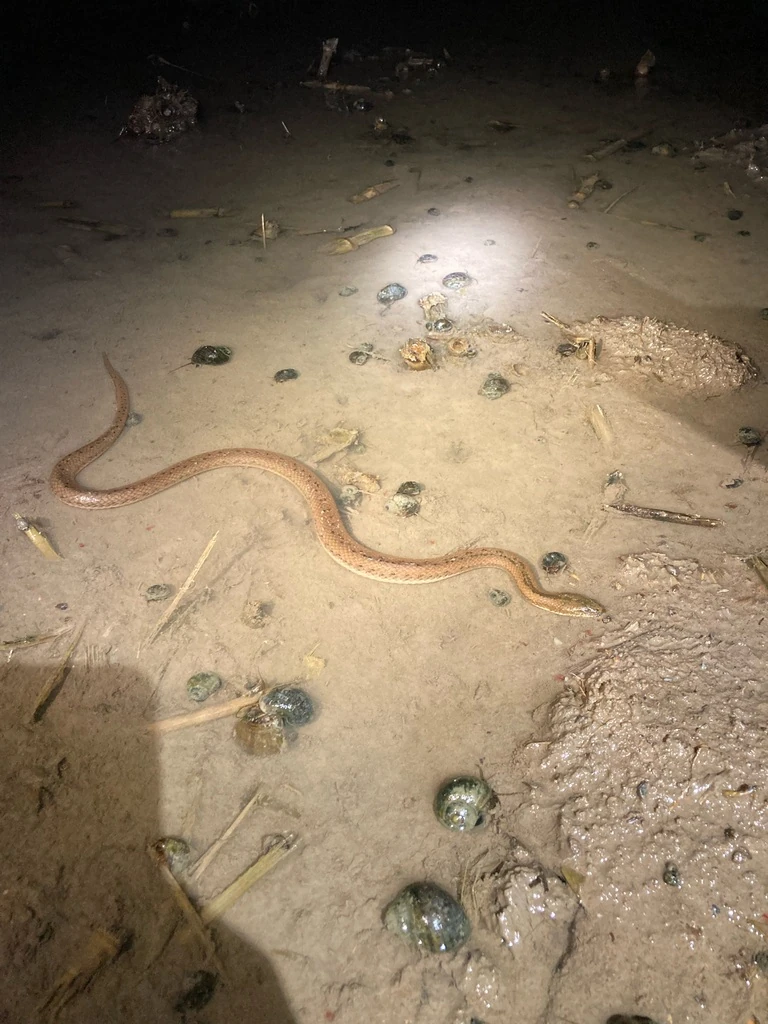
Living animal held by the observer, photographed at Kambipura, Karnataka, India, on 19 January 2021.

008 · Colubridae

Asiatic Water Snakes, Checkered Keelback

Fowlea piscator

(SCHNEIDER, 1799)

Venom unknownNot yet assessed

China is explicitly recorded in the checked individual species treatment. The accepted identity is also represented in the 2025 checklist; regional inclusion here is based on explicit locality evidence, not the checklist’s broader geographical scope. Named regional records: Chekiang, Fujian, Jiangxi; Guangdong, Guangxi; Yunnan. These localities do not…

Read the species account →

Chayant Gonsalves / iNaturalist · CC BY 4.0 · https://creativecommons.org/licenses/by/4.0/

Hebius chapaensis. Photographed alive. Figure 8A, adult observed 27 April 2019, Longcheng District. Nguyen et al. (2020), Amphibian & Reptile Conservation 14(2): 218–249 (e248). No new occurrence record is inferred.

009 · Colubridae

Vietnam Water Snake

Hebius chapaensis

(BOURRET, 1934)

Non-venomous

China is explicitly recorded in the checked individual species treatment. The accepted identity is also represented in the 2025 checklist; regional inclusion here is based on explicit locality evidence, not the checklist’s broader geographical scope. Named regional records: Yunnan. These localities do not imply continuous occupation of the entire region.

Read the species account →
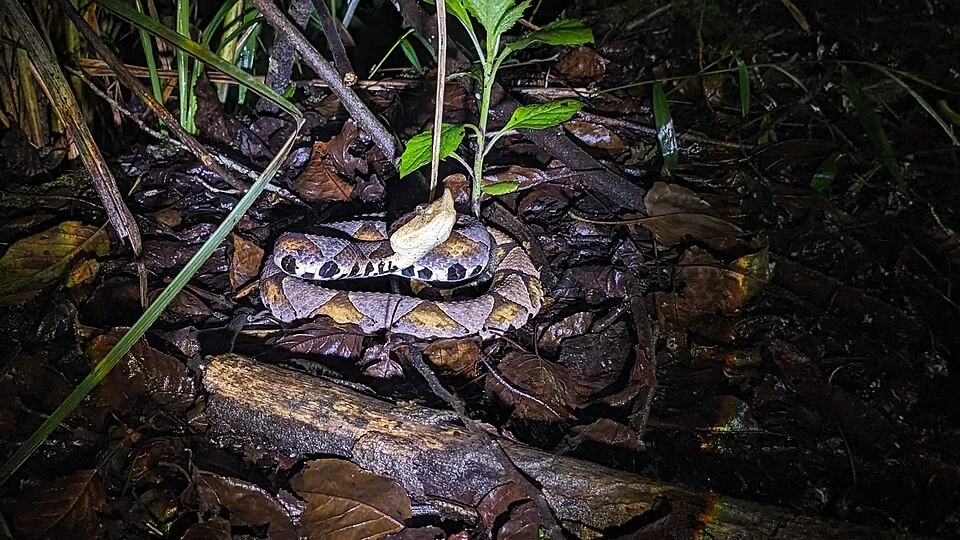
P. Brakels · CC BY 4.0 · https://creativecommons.org/licenses/by/4.0/

Hebius citrinoventer. Fresh holotype ANU20230016, dorsal and ventral views, as described in the original species account. Isolated source photograph; no new occurrence record is inferred.

010 · Colubridae

Yingjiang Keelback Snake

Hebius citrinoventer

XU, YANG, GONG, OUYANG, WENG, DENG, HUANG & PENG, 2024

Venom unknownNot yet assessed

China is explicitly recorded in the checked individual species treatment. The accepted identity is also represented in the 2025 checklist; regional inclusion here is based on explicit locality evidence, not the checklist’s broader geographical scope. Named regional records: Yunnan Province, Yunnan. These localities do not imply continuous occupation of…

Read the species account →

Kai-Chen Ouyang · CC BY 4.0 · https://creativecommons.org/licenses/by/4.0/

Hebius khasiensis — Thailand, 2015-12-19.

011 · Colubridae

Khasi Hills Keelback, Khasi Keelback

Hebius khasiensis

(BOULENGER, 1890)

Non-venomous

China is explicitly recorded in the checked individual species treatment. The accepted identity is also represented in the 2025 checklist; regional inclusion here is based on explicit locality evidence, not the checklist’s broader geographical scope. Named regional records: Yunnan; Xizang. These localities do not imply continuous occupation of the entire…

Read the species account →

Ian Dugdale · CC BY 4.0 · https://creativecommons.org/licenses/by/4.0/

HomalopsidaeHypsiscopusPhotograph not yet documented

013 · Homalopsidae

Wettstein’s Mud Snake

Hypsiscopus wettsteini

(AMARAL, 1929)

VenomousClinical severity not established

China is explicitly recorded in the checked individual species treatment. The accepted identity is also represented in the 2025 checklist; regional inclusion here is based on explicit locality evidence, not the checklist’s broader geographical scope. Named regional records: Fujian; Yunnan; Hong Kong. These localities do not imply continuous occupation of…

Read the species account →
Indotyphlops braminus — photographed on Ko Pha-ngan, Thailand.

014 · Typhlopidae

Flowerpot Snake

Indotyphlops braminus

(DAUDIN, 1803)

Non-venomous

China is explicitly recorded in the checked individual species treatment. The accepted identity is also represented in the 2025 checklist; regional inclusion here is based on explicit locality evidence, not the checklist’s broader geographical scope. Named regional records: Fujian; Hunan; Guangdong; Sichuan, Chongqing, Yunnan; Hong Kong. These localities…

Read the species account →

Cook-Price, Makchai & Suwanwaree (2026); photographs credited collectively to the author, James Covert and Vikas Kumar · CC BY 4.0 · https://creativecommons.org/licenses/by/4.0/

Lycodon aulicus, photographed 2012-05-12. Identification follows the linked research-grade observation.

015 · Colubridae

Indian Wolf Snake, Common Wolf Snake

Lycodon aulicus

(LINNAEUS, 1758)

Non-venomous

China is explicitly recorded in the checked individual species treatment. The accepted identity is also represented in the 2025 checklist; regional inclusion here is based on explicit locality evidence, not the checklist’s broader geographical scope. Named regional records: Fujian; Yunnan. These localities do not imply continuous occupation of the entire…

Read the species account →

Eliane Küpfer · CC BY-SA 4.0 · https://creativecommons.org/licenses/by-sa/4.0/

Myrrophis chinensis. Identification follows the linked source community.

016 · Homalopsidae

Chinese Mud Snake, Chinese water snake

Myrrophis chinensis

(GRAY, 1842)

VenomousClinical severity not established

China is explicitly recorded in the checked individual species treatment. The accepted identity is also represented in the 2025 checklist; regional inclusion here is based on explicit locality evidence, not the checklist’s broader geographical scope. Named regional records: Hong Kong. These localities do not imply continuous occupation of the entire region.

Read the species account →
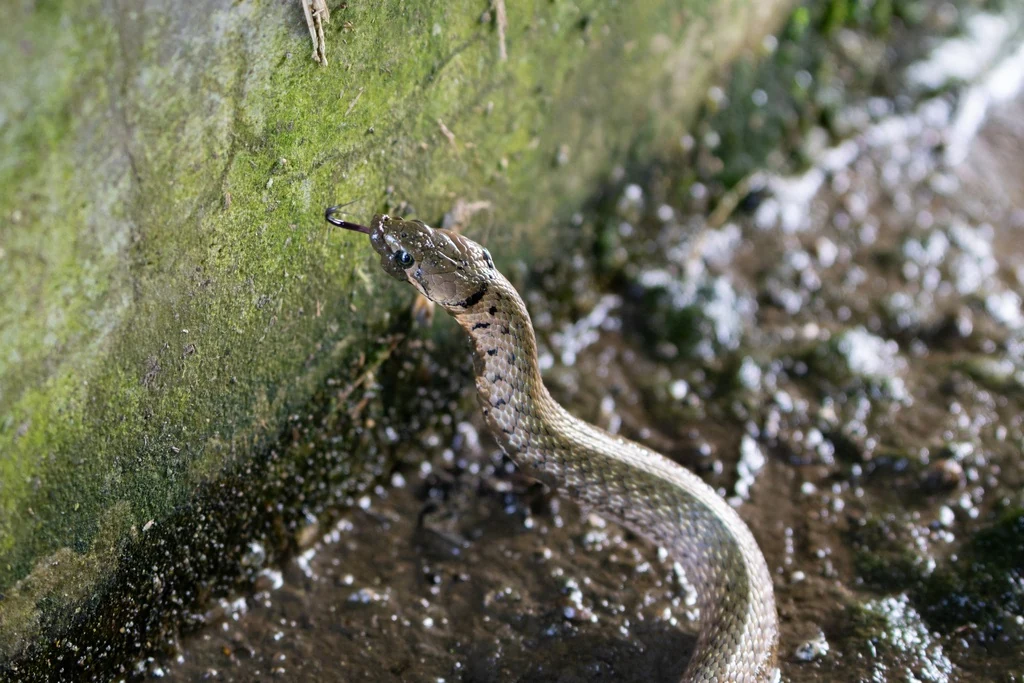
syy55016 · CC0 1.0 · https://creativecommons.org/publicdomain/zero/1.0/

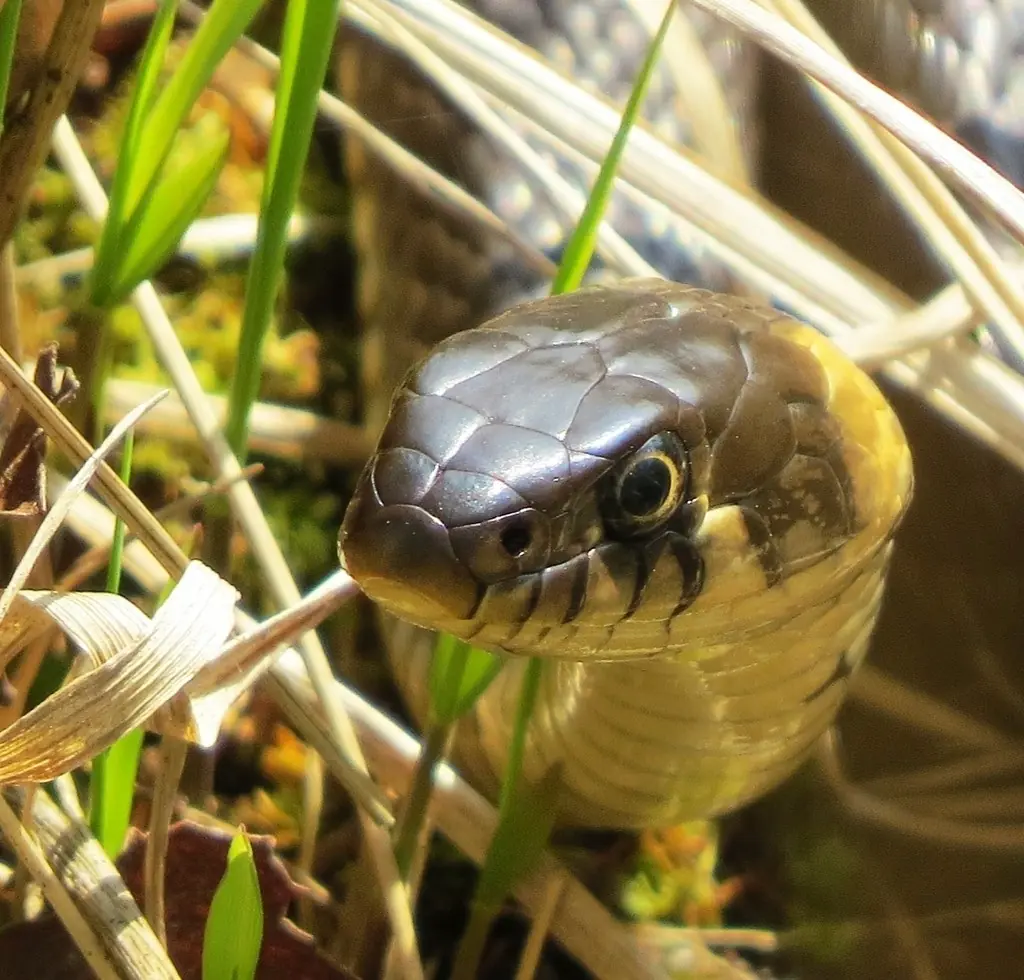
Natrix natrix. Identification follows the linked source community.

017 · Colubridae

Common Grass Snake

Natrix natrix

(LINNAEUS, 1758)

Venom unknownNot yet assessed

China is explicitly recorded in the checked individual species treatment. The accepted identity is also represented in the 2025 checklist; regional inclusion here is based on explicit locality evidence, not the checklist’s broader geographical scope. Named regional records: Xinjiang. These localities do not imply continuous occupation of the entire region.

Read the species account →
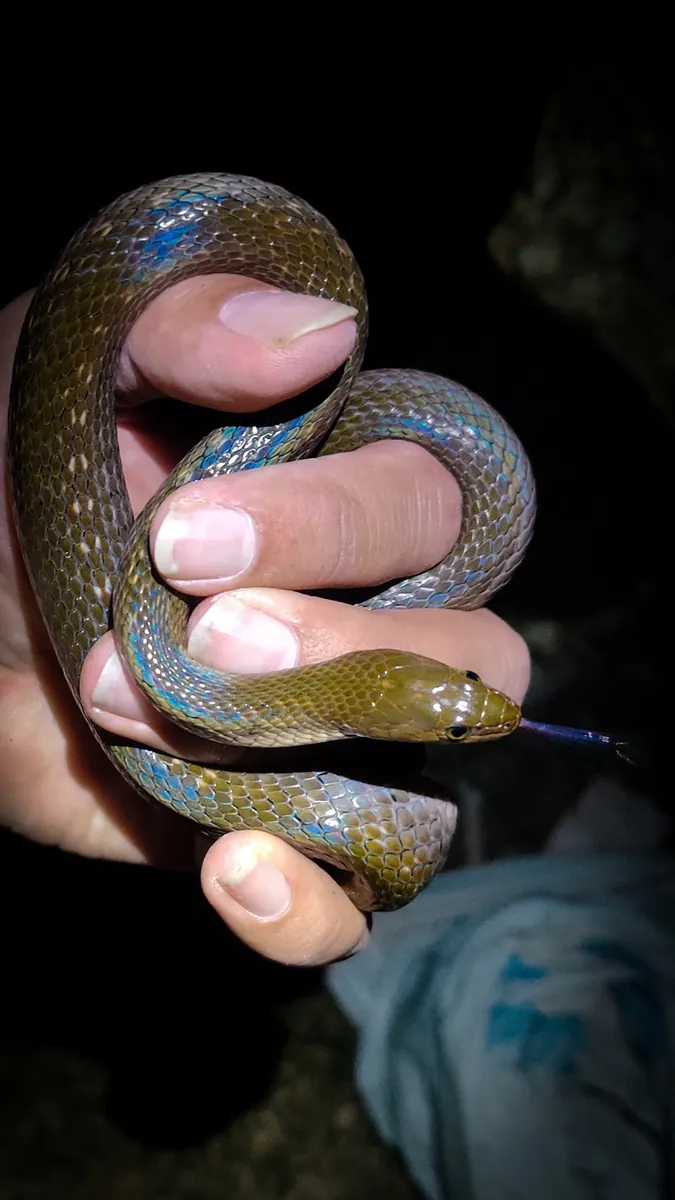
Micha Baum · CC BY-SA 4.0 · https://creativecommons.org/licenses/by-sa/4.0/

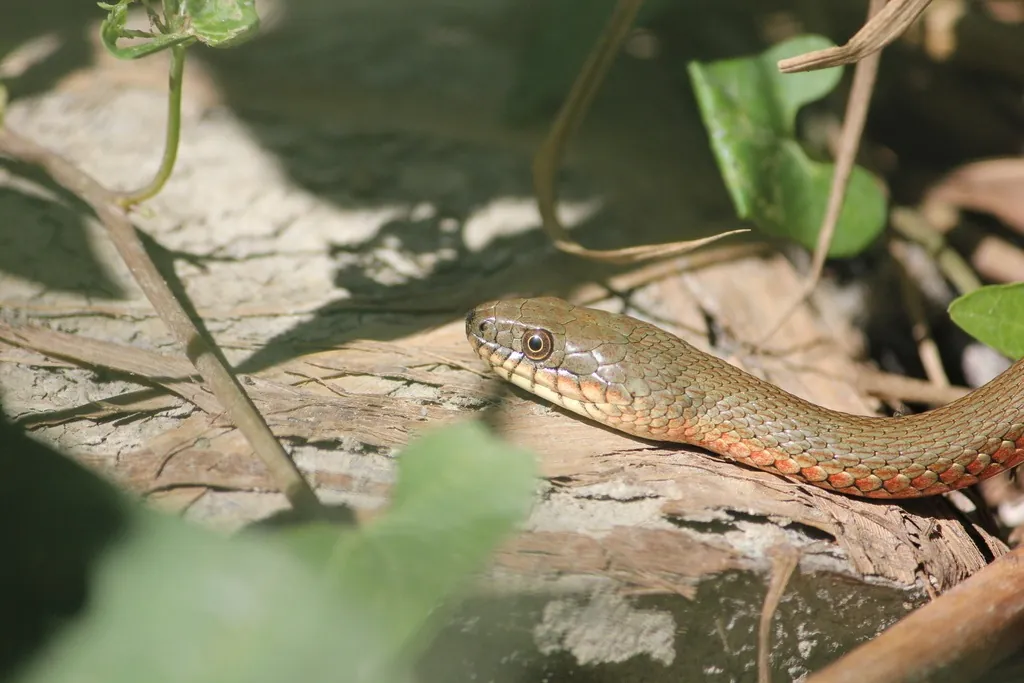
Unspotted dice snake photographed in Dagestan, Russia, in September 2026. Identification follows the linked source community.

018 · Colubridae

Dice Snake

Natrix tessellata

(LAURENTI, 1768)

Venom unknownNot yet assessed

China is explicitly recorded in the checked individual species treatment. The accepted identity is also represented in the 2025 checklist; regional inclusion here is based on explicit locality evidence, not the checklist’s broader geographical scope. Named regional records: Xinjiang. These localities do not imply continuous occupation of the entire region.

Read the species account →
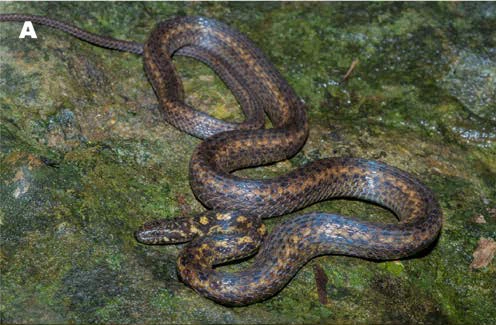
KsenoSnake · CC0 1.0 · https://creativecommons.org/publicdomain/zero/1.0/

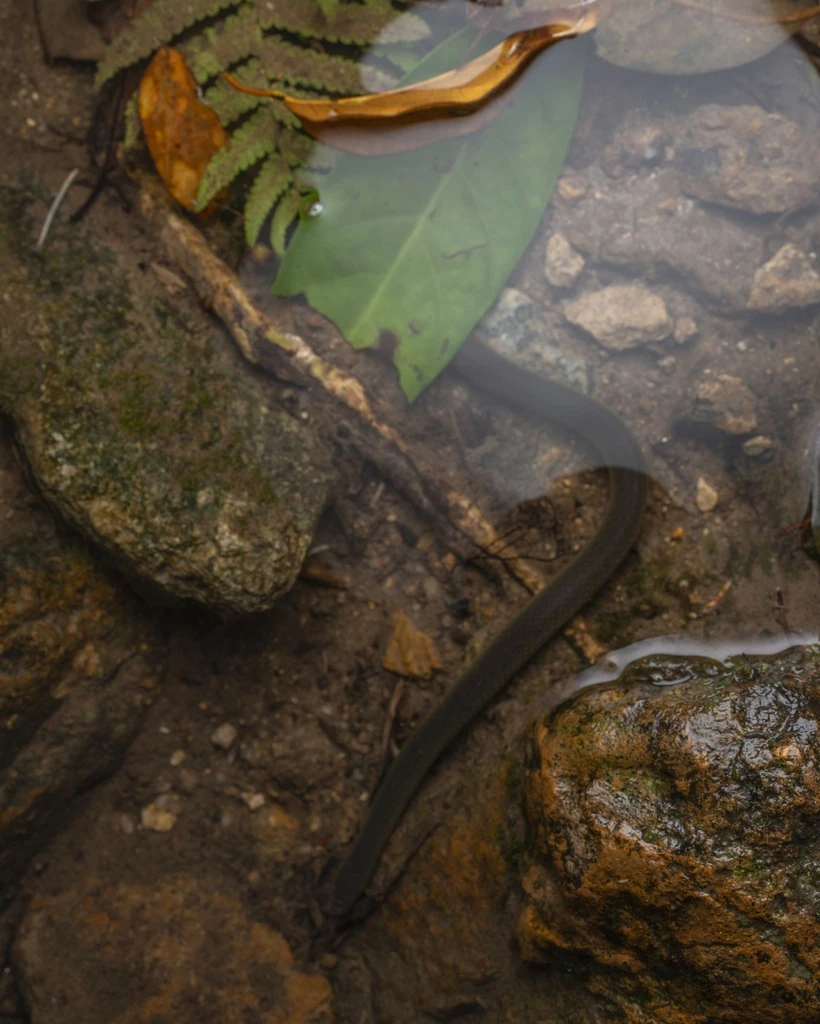
Opisthotropis andersonii. Identification follows the linked source community.

019 · Colubridae

Anderson's Mountain Keelback

Opisthotropis andersonii

(BOULENGER, 1888)

Non-venomous

China is explicitly recorded in the checked individual species treatment. The accepted identity is also represented in the 2025 checklist; regional inclusion here is based on explicit locality evidence, not the checklist’s broader geographical scope. Named regional records: Hong Kong. These localities do not imply continuous occupation of the entire region.

Read the species account →
Lawrence Hylton · CC BY 4.0 · https://creativecommons.org/licenses/by/4.0/

ColubridaeOpisthotropisPhotograph not yet documented

020 · Colubridae

Species account

Opisthotropis cheni

ZHAO, 1999

Venom unknownNot yet assessed

China is explicitly recorded in the checked individual species treatment. The accepted identity is also represented in the 2025 checklist; regional inclusion here is based on explicit locality evidence, not the checklist’s broader geographical scope. Named regional records: Hunan; Guangdong. These localities do not imply continuous occupation of the…

Read the species account →
ColubridaeOpisthotropisPhotograph not yet documented

021 · Colubridae

Guangxi Mountain Keelback

Opisthotropis guangxiensis

ZHAO, JIANG & HUANG, 1978

Venom unknownNot yet assessed

China is explicitly recorded in the checked individual species treatment. The accepted identity is also represented in the 2025 checklist; regional inclusion here is based on explicit locality evidence, not the checklist’s broader geographical scope. Named regional records: Guangxi, Kwangsi. These localities do not imply continuous occupation of the…

Read the species account →
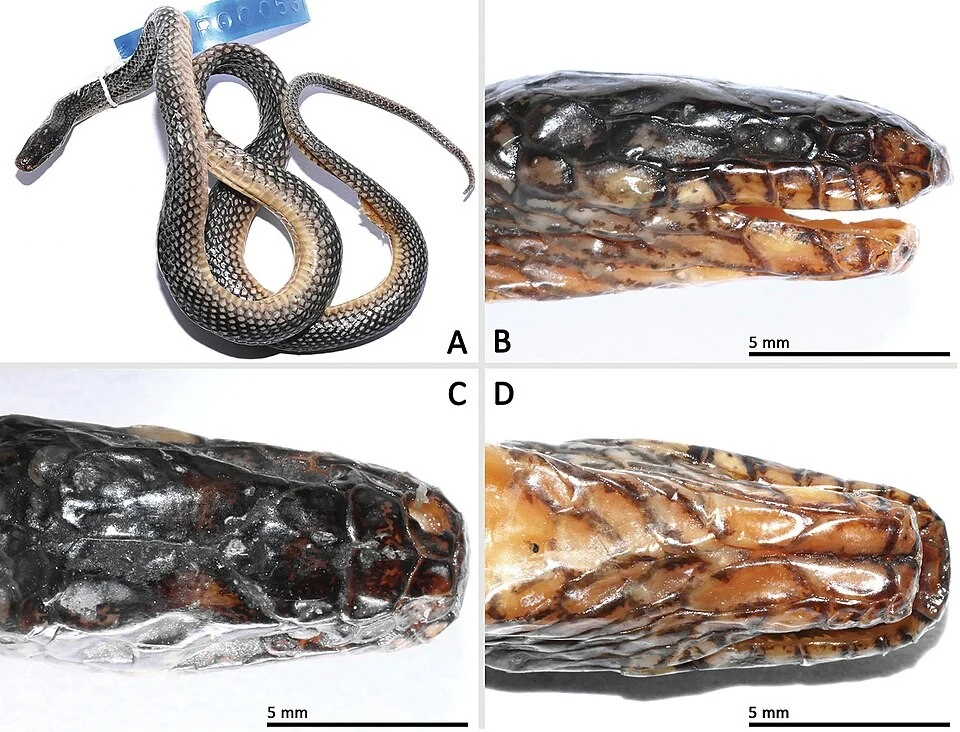
Published specimen photographs and diagnostic detail panels.

022 · Colubridae

Hai Ha Mountain Stream Keelback

Opisthotropis haihaensis

ZIEGLER, PHAM, NGUYEN, NGUYEN, WANG, WANG, STUART, & LE, 2019

Venom unknownNot yet assessed

China is explicitly recorded in the checked individual species treatment. The accepted identity is also represented in the 2025 checklist; regional inclusion here is based on explicit locality evidence, not the checklist’s broader geographical scope.

Read the species account →

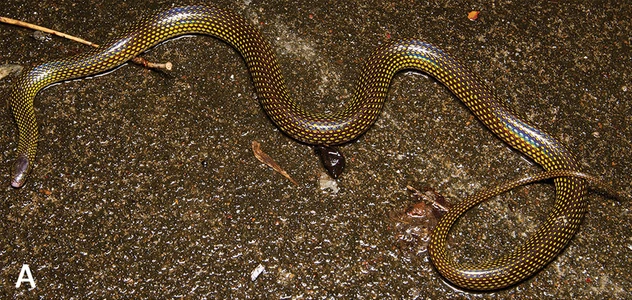
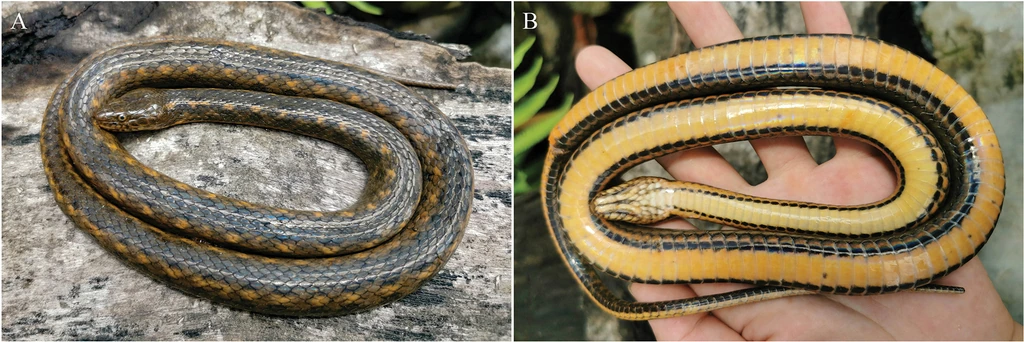
Jian Wang, in Wang et al. (2020) · CC BY 4.0 · https://creativecommons.org/licenses/by/4.0

Opisthotropis hungtai. Photographed in life. Figure 4A. holotype SYS r00946. Scientific source photograph; no new occurrence record is inferred.

023 · Colubridae

Hung-Ta Chang’s mountain Keelback

Opisthotropis hungtai

WANG, LYU, ZENG, LIN, YANG, NGUYEN, LE, ZIEGLER & WANG, 2020

Venom unknownNot yet assessed

China is explicitly recorded in the checked individual species treatment. The accepted identity is also represented in the 2025 checklist; regional inclusion here is based on explicit locality evidence, not the checklist’s broader geographical scope. Named regional records: Guangdong, Guangdong Province. These localities do not imply continuous…

Read the species account →

Jian Zhao and Jian Wang · CC BY 4.0 · https://creativecommons.org/licenses/by/4.0/

ColubridaeOpisthotropisPhotograph not yet documented

024 · Colubridae

Chapa (Sapa) Mountain Keelback, Jacob’s Mountain Stream Keelback

Opisthotropis jacobi

ANGEL & BOURRET, 1933

Venom unknownNot yet assessed

China is explicitly recorded in the checked individual species treatment. The accepted identity is also represented in the 2025 checklist; regional inclusion here is based on explicit locality evidence, not the checklist’s broader geographical scope. Named regional records: Yunnan. These localities do not imply continuous occupation of the entire region.

Read the species account →
All 342 species in the country collection →

Read further

Evidence & sources.

Guide reviewed 11 October 2026. Source dates and geographic scope matter; landscape photographs do not establish species occurrence.

  1. Ramsar · China annotated site summaries

    Poyang Nanji flood pulse and Dongzhaigang mangroves. Dongzhaigang description is a 1997/1999 baseline.

  2. Hong Kong Countryside Conservation Office · Mai Po

    Managed gei wai, mangrove, mudflat, freshwater pond and reedbed mosaic.

Continue through China

Explore another habitat.

01

Forests across climatic zones

A southern evergreen forest and a northeastern mountain forest belong in different field notes.

02

Mountains, slopes and high plateaus

Height alone does not describe a mountain habitat.

03

Limestone from plateau to river basin

Rock form and water pathways matter as much as the word forest.

04

Dry basins beside living mountains

Northwestern drylands include strong local contrasts in moisture and vegetation.

05

Tidal forest and open flats

Mangroves occupy part of an estuarine mosaic, not every coastal wetland.

06

Coasts with different tidal landscapes

Retain the named coast and substrate when comparing records.