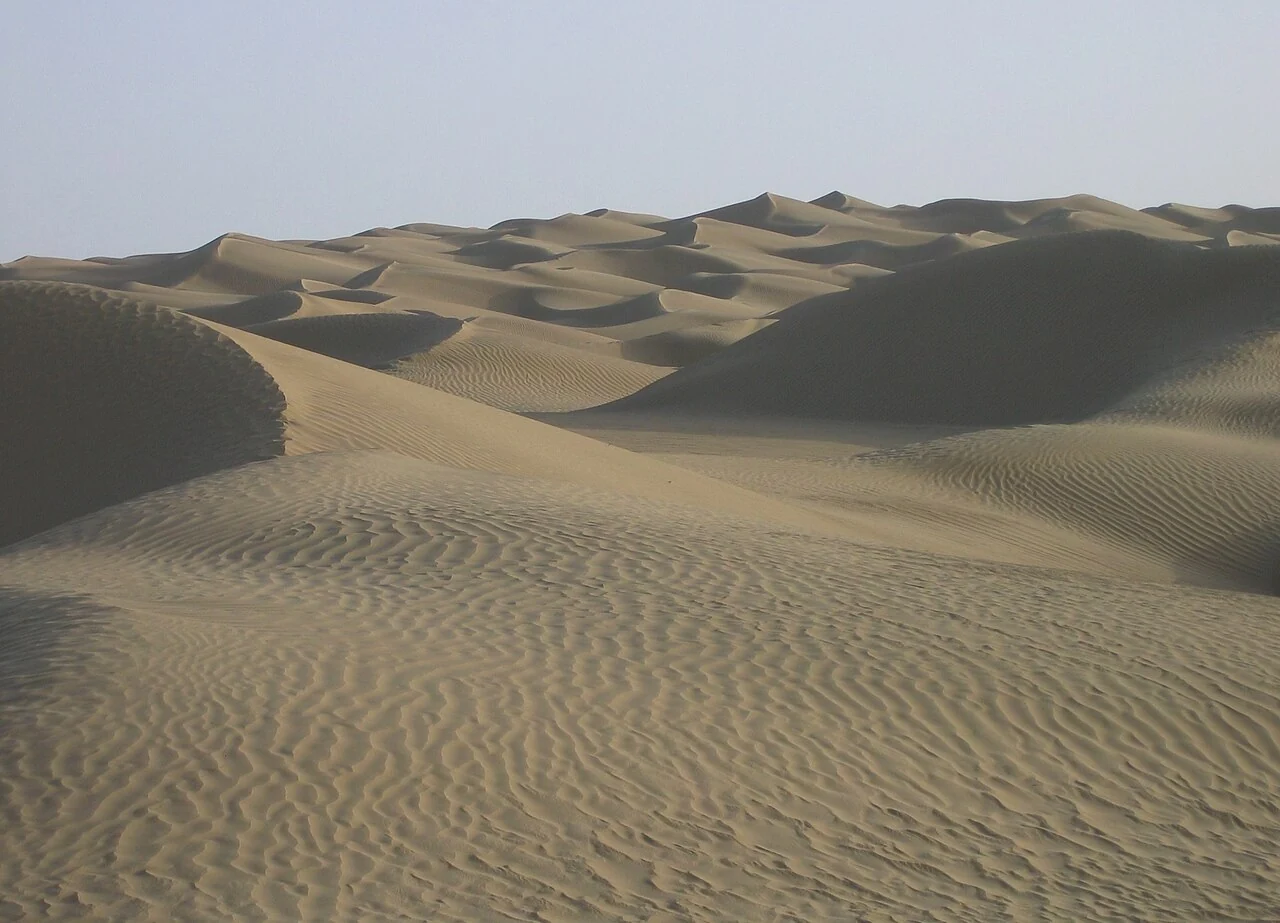
Sand dunes in the Taklamakan Desert, China.

China · Habitat field guide

Dry basins beside living mountains

Northwestern drylands include strong local contrasts in moisture and vegetation.

Sand dunes in the Taklamakan Desert, China.

Photograph: 6-A04-W96-K38-S41-V38 · Image source · CC BY-SA 4.0. Cropped to fill the hero; darkened for text legibility.

Understanding the environment

A sense of the habitat.

Northwestern drylands include strong local contrasts in moisture and vegetation.

Landscape evidence
Named examples, not complete habitat coverage
Record detail
Locality · season · observed cover

Explore the structure · Select a feature to compare

Read the landscape

Select a zone to see what changes.

Look at the surface

Open substrate

Distinguish mobile sand, gravel, rock and salt crust.

Use the sourced examples below to place these observations in context.

Conceptual observation prompts, not a measured transect, habitat boundary or snake range.

Field notes · 01

Mountain and desert

Xinjiang Tianshan contrasts forest, meadow, rivers and glaciers with neighbouring desert landscapes, including the Taklimakan. UNESCO also distinguishes the drier southern slopes from wetter northern slopes.

Sources: UNESCO · Xinjiang Tianshan

Field notes · 02

Steppe is not empty ground

Xilin Gol in Inner Mongolia combines typical steppe, meadow grassland, sandy land and valley wetlands. This is a vegetated dryland example, not a claim that the whole northern region is desert.

Sources: UNESCO · Xilin Gol Biosphere Reserve

Pressures on China’s habitats

What is at risk?

A site-specific assessment of pressures has not yet been extracted for this guide. The landscape sources below provide context; they do not establish a current threat level for each snake species.

What helps this habitat

Support site-led protection of the landscape processes described here. Keep habitat notes precise and use the linked sources before extending a claim to another place.

The connected collection

Snakes with habitat evidence.

These 3 species have supported country occurrence and an explicit habitat association in the shared account. The association may come from elsewhere in their range. This is not a complete local habitat inventory; the places above are landscape examples, not asserted collecting sites.

3 species · showing 3

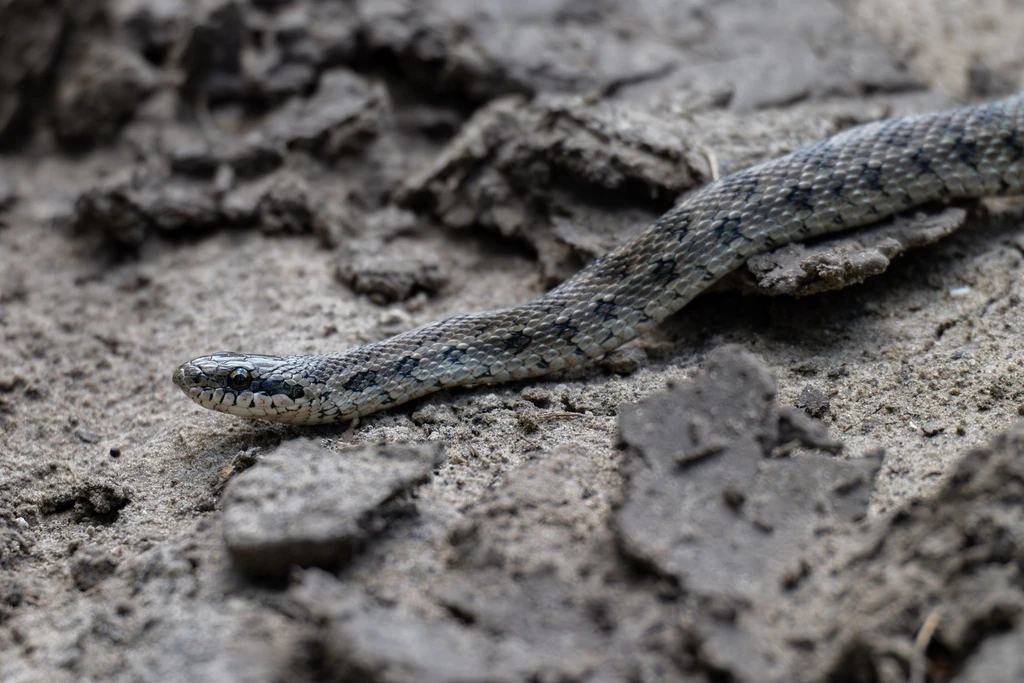
Elaphe dione. Identification follows the linked source community.

001 · Colubridae

Steppes Ratsnakes

Elaphe dione

(PALLAS, 1773)

Non-venomous

China is explicitly recorded in the checked individual species treatment. The accepted identity is also represented in the 2025 checklist; regional inclusion here is based on explicit locality evidence, not the checklist’s broader geographical scope. Named regional records: Shansi; Jiangsu, Kiangsu, Shandong, Shantung; Sichuan; Shensi, Gansu. These…

Read the species account →

Stanislav Murashkin · CC BY 4.0 · https://creativecommons.org/licenses/by/4.0/
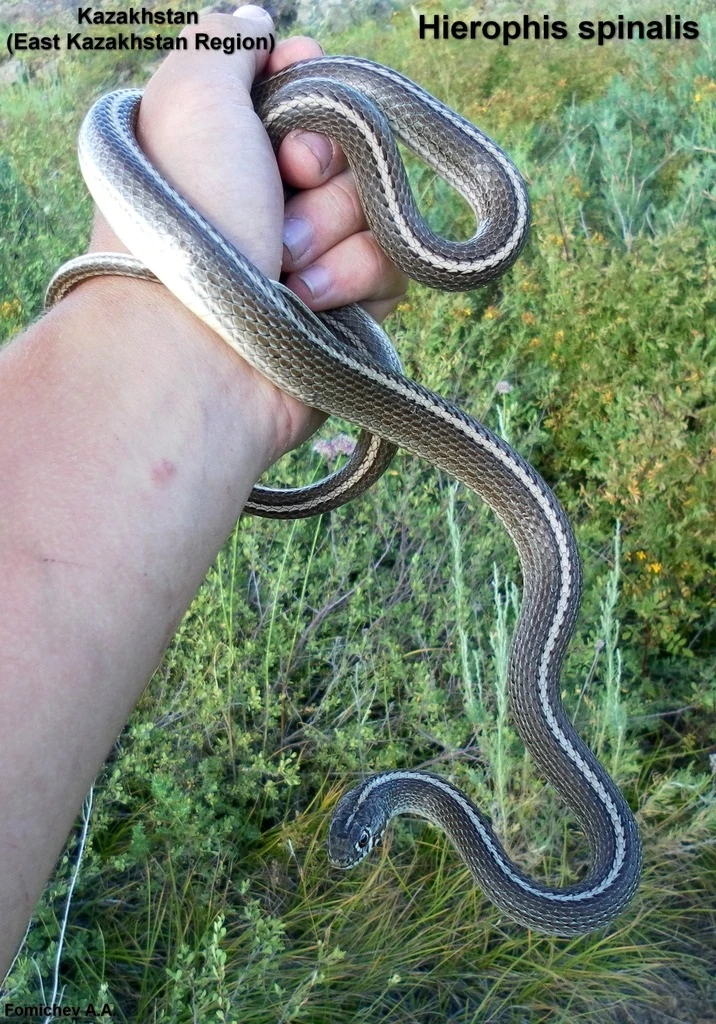
Orientocoluber spinalis. Identification follows the linked source community.

002 · Colubridae

Slender Racer

Orientocoluber spinalis

(PETERS, 1866)

Venom unknownNot yet assessed

China is explicitly recorded in the checked individual species treatment. The accepted identity is also represented in the 2025 checklist; regional inclusion here is based on explicit locality evidence, not the checklist’s broader geographical scope. Named regional records: Hopei, Shansi; Jiangsu, Anhui, Shandong, Shantung; Honan; Gansu, Xinjiang. These…

Read the species account →

Alexander A. Fomichev · CC BY 4.0 · https://creativecommons.org/licenses/by/4.0/
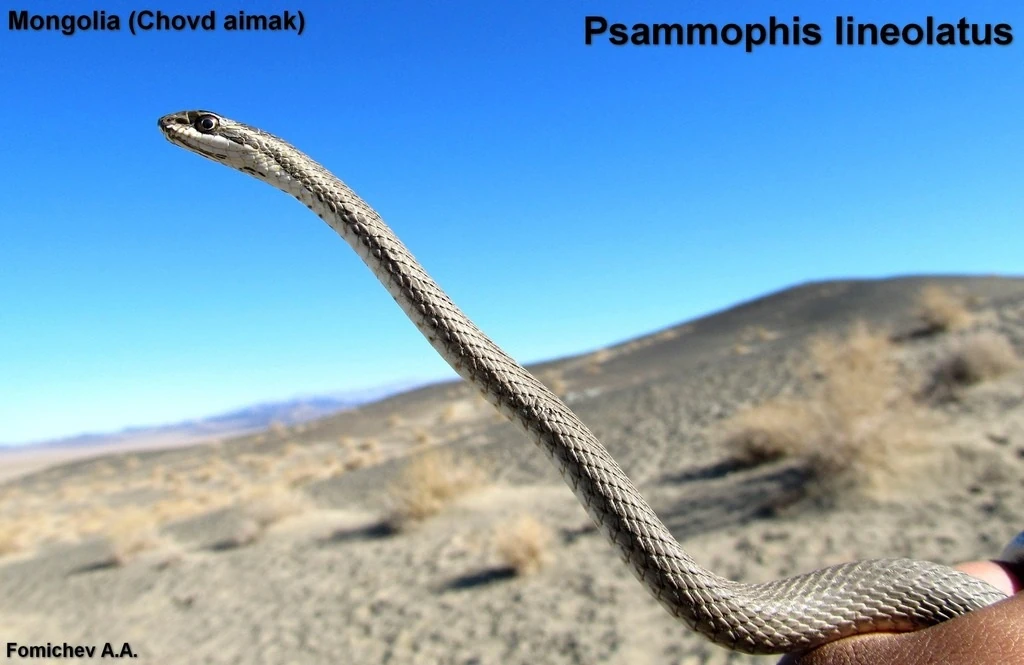
Psammophis lineolatus. Identification follows the linked source community.

003 · Psammophiidae

Steppe Ribbon Racer

Psammophis lineolatus

(BRANDT, 1838)

VenomousClinical severity not established

China is explicitly recorded in the checked individual species treatment. The accepted identity is also represented in the 2025 checklist; regional inclusion here is based on explicit locality evidence, not the checklist’s broader geographical scope. Named regional records: Gansu, Ningxia, Xinjiang. These localities do not imply continuous occupation of…

Read the species account →

Alexander A. Fomichev · CC BY 4.0 · https://creativecommons.org/licenses/by/4.0/

All 342 species in the country collection →

Read further

Evidence & sources.

Guide reviewed 11 October 2026. Source dates and geographic scope matter; landscape photographs do not establish species occurrence.

  1. UNESCO · Xinjiang Tianshan

    Mountain/desert contrasts and slope moisture differences in Xinjiang.

  2. UNESCO · Xilin Gol Biosphere Reserve

    Inner Mongolian steppe, sandy land and valley wetlands.

Continue through China

Explore another habitat.

01

Forests across climatic zones

A southern evergreen forest and a northeastern mountain forest belong in different field notes.

02

Mountains, slopes and high plateaus

Height alone does not describe a mountain habitat.

03

Limestone from plateau to river basin

Rock form and water pathways matter as much as the word forest.

04

Flood pulses and wetland mosaics

A seasonal lake margin can change character without changing its name.

05

Tidal forest and open flats

Mangroves occupy part of an estuarine mosaic, not every coastal wetland.

06

Coasts with different tidal landscapes

Retain the named coast and substrate when comparing records.