Catchment protection
UNESCO calls for protection of upstream and underground water pathways from pollution and harmful development.
Sources: UNESCO · South China Karst
China · Habitat field guide
Rock form and water pathways matter as much as the word forest.
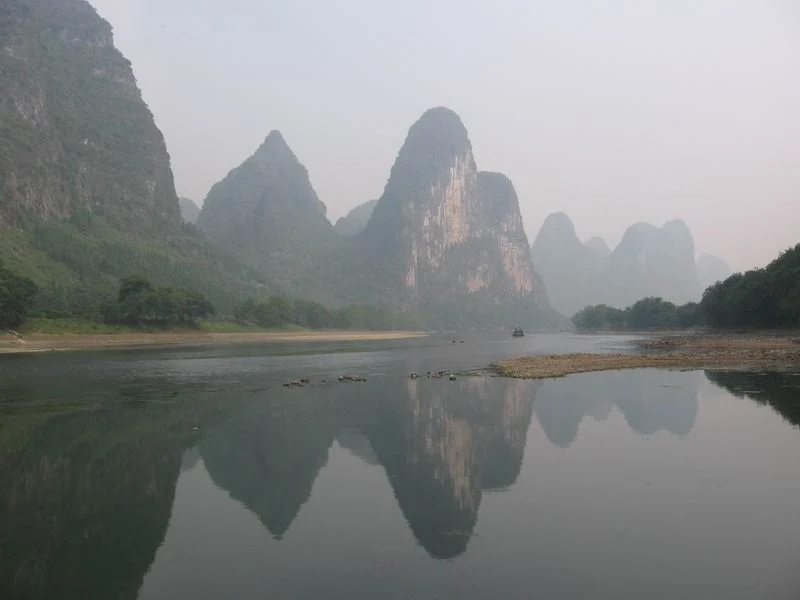
Limestone karst towers beside the Li River near Yangshuo, Guangxi, China.
Understanding the environment
Rock form and water pathways matter as much as the word forest.
Explore the structure · Select a feature to compare
Select a zone to see what changes.
Look for carbonate rock
Distinguish exposed limestone from the vegetation covering it.
Use the sourced examples below to place these observations in context.
Conceptual observation prompts, not a measured transect, habitat boundary or snake range.
Field notes · 01
South China Karst includes Shilin’s pinnacles in Yunnan, Libo’s cone karst in Guizhou and Guilin’s tower-and-cone landscape in Guangxi. These are separate localities within a serial heritage property.
Sources: UNESCO · South China Karst
Field notes · 02
Sinking streams, caves and surface catchments belong to the same water system. A cave name is geographic context; it does not establish cave use by a snake.
Sources: UNESCO · South China Karst
Pressures on China’s habitats
UNESCO calls for protection of upstream and underground water pathways from pollution and harmful development.
Sources: UNESCO · South China Karst
Support site-led protection of the landscape processes described here. Keep habitat notes precise and use the linked sources before extending a claim to another place.
The connected collection
These 7 species have supported country occurrence and an explicit habitat association in the shared account. The association may come from elsewhere in their range. This is not a complete local habitat inventory; the places above are landscape examples, not asserted collecting sites.
7 species · showing 7
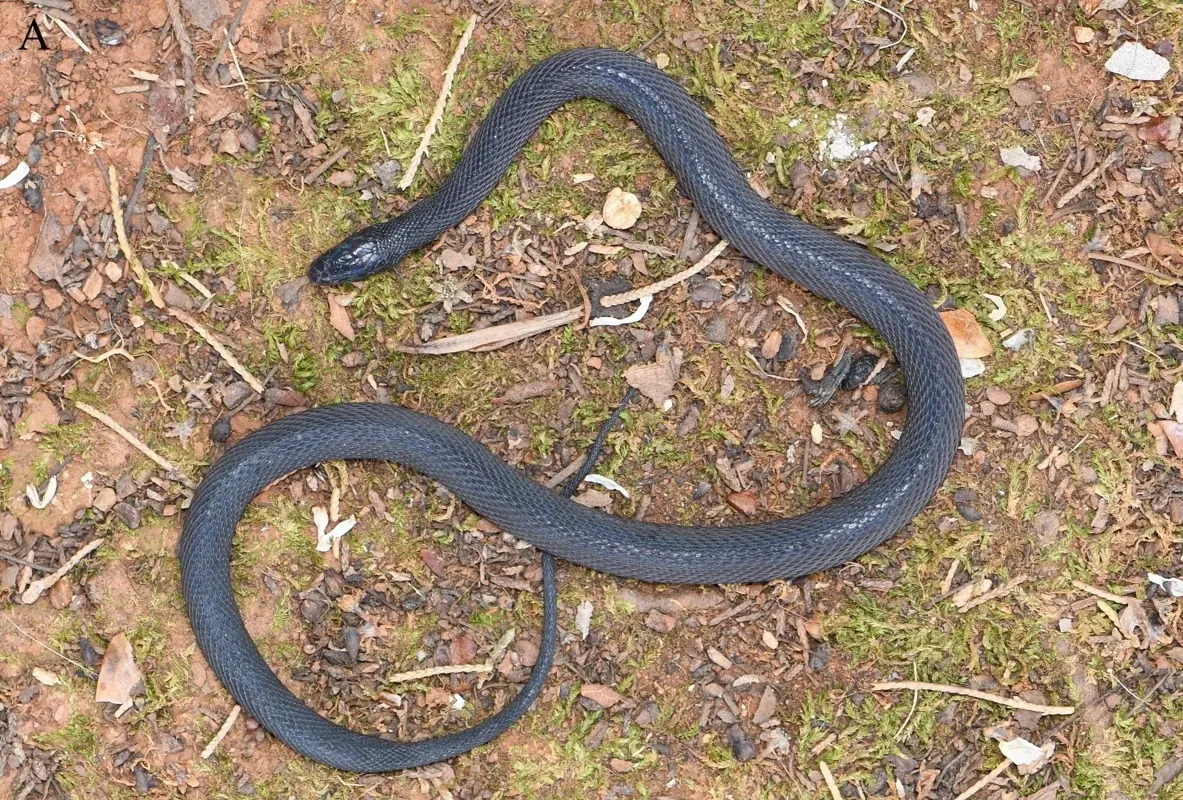
001 · Xenodermidae
Zugs’ Odd-Scaled Snake
China is explicitly recorded in the checked individual species treatment. Named regional records: Yunnan. These localities do not imply continuous occupation of the entire region. China: The Chinese voucher is from Xiajinchang Township, Malipo County, Yunnan. This is the first Chinese record in the paper and is separate from the Vietnamese type locality.
Read the species account →Liu et al. (2025) · CC BY 4.0 · https://creativecommons.org/licenses/by/4.0/
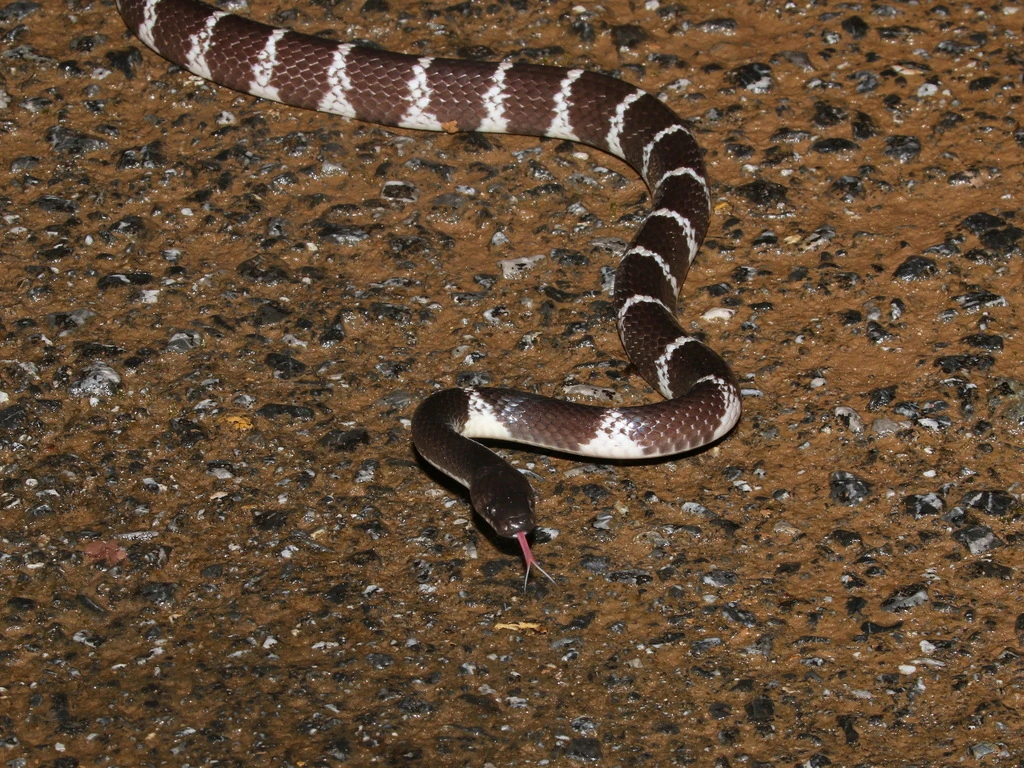
002 · Colubridae
Namdong Wolf Snake
China is explicitly recorded in the checked individual species treatment. The accepted identity is also represented in the 2025 checklist; regional inclusion here is based on explicit locality evidence, not the checklist’s broader geographical scope. Named regional records: Yunnan. These localities do not imply continuous occupation of the entire region.
Read the species account →Ian Dugdale · CC BY 4.0 · https://creativecommons.org/licenses/by/4.0/
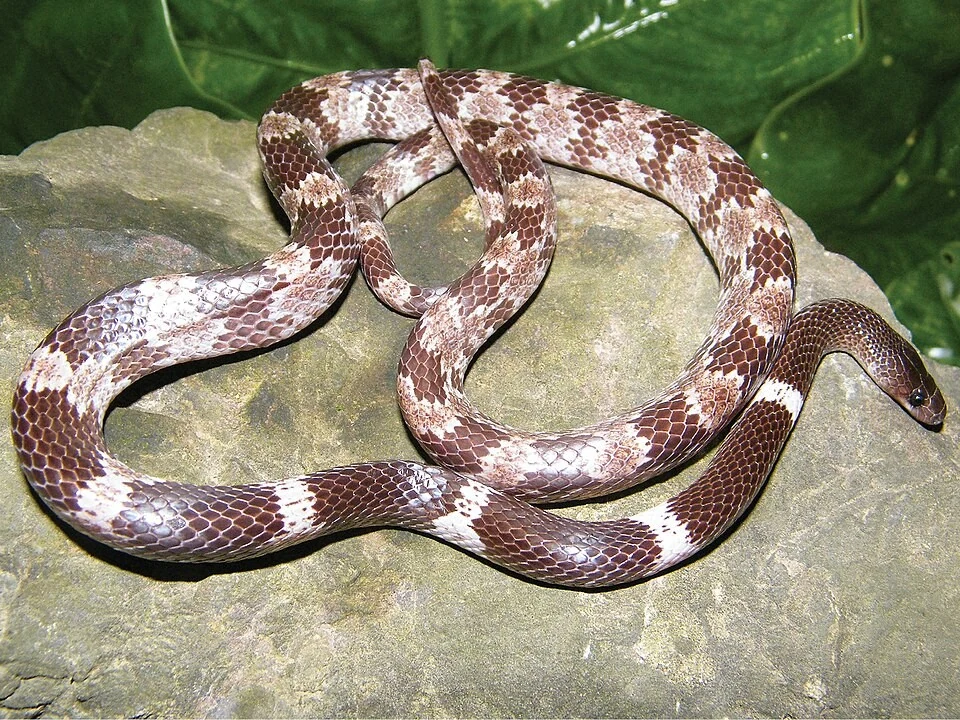
003 · Colubridae
Species account
China is explicitly recorded in the checked individual species treatment. The accepted identity is also represented in the 2025 checklist; regional inclusion here is based on explicit locality evidence, not the checklist’s broader geographical scope. Named regional records: Guangxi. These localities do not imply continuous occupation of the entire region.
Read the species account →[Photograph T. Lehmann] Janssen HY, Pham CT, Ngo HT, Le MD, Nguyen TQ, Ziegler T (2019) A new species of Lycodon Boie, 1826 (Serpentes, Colubridae) from northern Vietnam. ZooKeys 875: 1-29. https://doi.org/10.3897/zookeys.875.35933 · CC BY 4.0 · https://creativecommons.org/licenses/by/4.0
004 · Colubridae
Vogel’s Keelback
China is explicitly recorded in the checked individual species treatment. Named regional records: Guangxi. These localities do not imply continuous occupation of the entire region.
Read the species account →005 · Xenodermidae
Species account
China is explicitly recorded in the checked individual species treatment. The accepted identity is also represented in the 2025 checklist; regional inclusion here is based on explicit locality evidence, not the checklist’s broader geographical scope. Named regional records: Yunnan. These localities do not imply continuous occupation of the entire region.
Read the species account →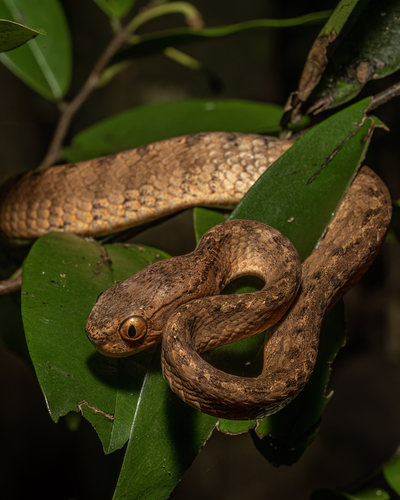
006 · Pareidae
Mengla Snail-eating Snake
China is explicitly recorded in the checked individual species treatment. The accepted identity is also represented in the 2025 checklist; regional inclusion here is based on explicit locality evidence, not the checklist’s broader geographical scope.
Read the species account →James Hunt · CC-BY · https://www.inaturalist.org/photos/320100175
007 · Pareidae
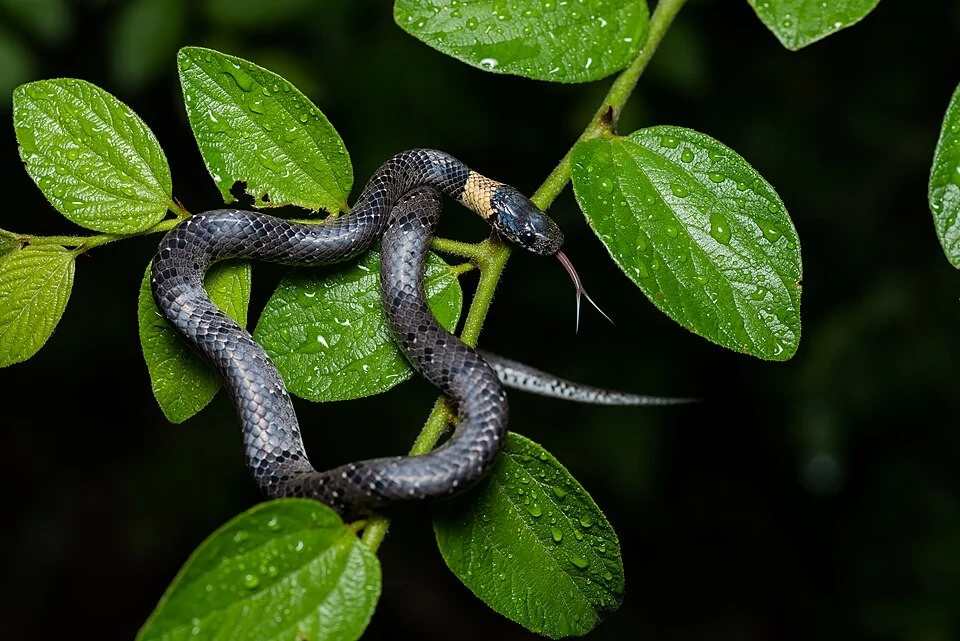
Mountain Slug Snake
China is explicitly recorded in the checked individual species treatment. The accepted identity is also represented in the 2025 checklist; regional inclusion here is based on explicit locality evidence, not the checklist’s broader geographical scope. Named regional records: Guangdong; Hong Kong. These localities do not imply continuous occupation of the…
Read the species account →Rushenb · CC BY-SA 4.0 · https://creativecommons.org/licenses/by-sa/4.0
Read further
Guide reviewed 11 October 2026. Source dates and geographic scope matter; landscape photographs do not establish species occurrence.
Named limestone clusters, surface/underground water and catchment management.
Continue through China
A southern evergreen forest and a northeastern mountain forest belong in different field notes.
02Height alone does not describe a mountain habitat.
03Northwestern drylands include strong local contrasts in moisture and vegetation.
04A seasonal lake margin can change character without changing its name.
05Mangroves occupy part of an estuarine mosaic, not every coastal wetland.
06Retain the named coast and substrate when comparing records.