Hydrological connections
The Mai Po restoration account identifies channel siltation and exotic vegetation on mudflat as management issues. Its project results are historical.
China · Habitat field guide
Mangroves occupy part of an estuarine mosaic, not every coastal wetland.
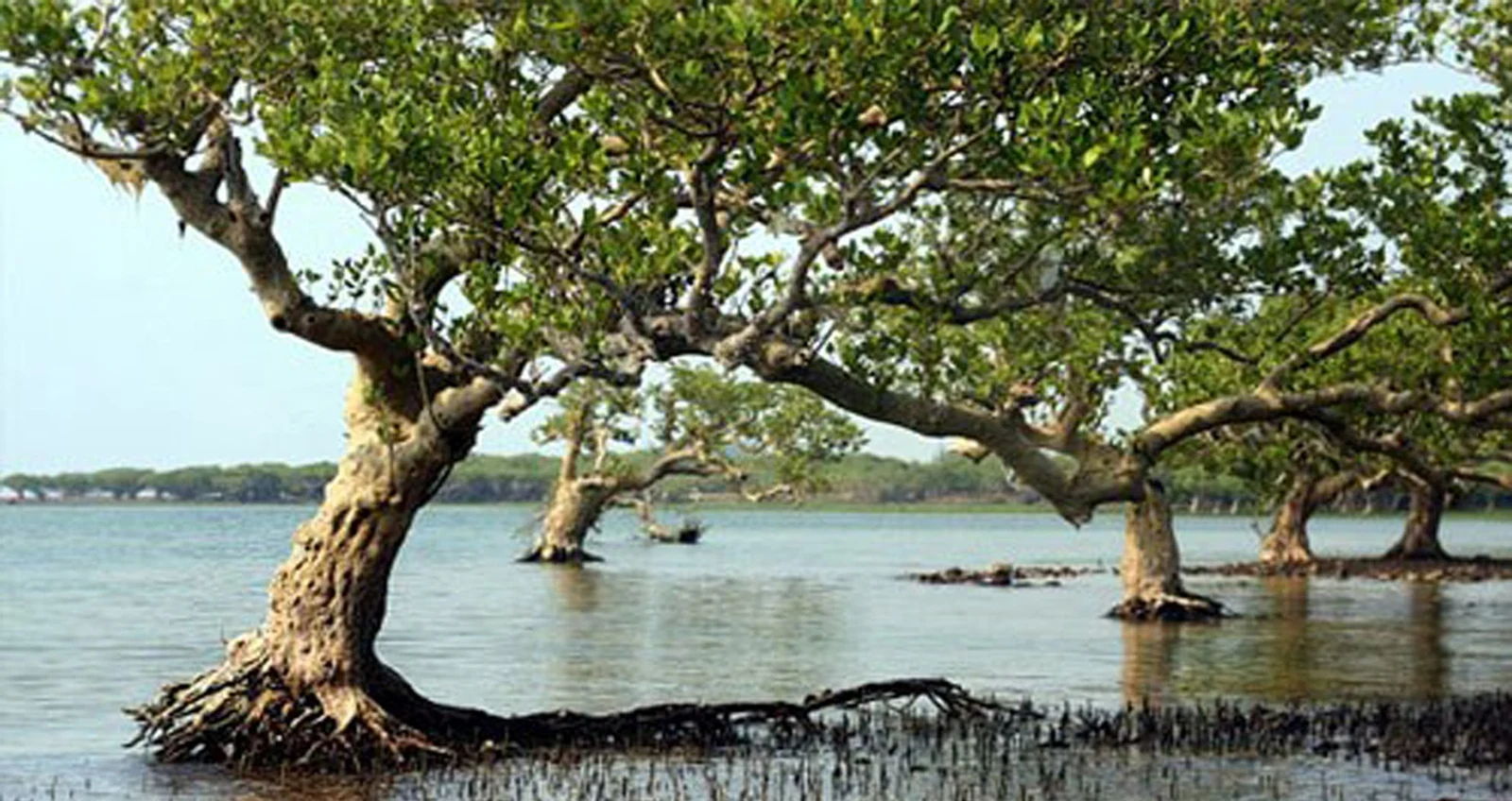
Mangroves at Dongzhai Harbour, Haikou, Hainan, China.
Understanding the environment
Mangroves occupy part of an estuarine mosaic, not every coastal wetland.
Explore the structure · Select a feature to compare
Select a zone to see what changes.
Name the transition
Describe the adjoining habitat and any embankment.
Use the sourced examples below to place these observations in context.
Conceptual observation prompts, not a measured transect, habitat boundary or snake range.
Field notes · 01
The designation-era Dongzhaigang account describes a shallow bay with mangrove swamps and broad intertidal mudflats. It is an older landscape baseline, not a present-day measure of forest condition.
Field notes · 02
AFCD’s Mai Po account describes restoring channel exchange and removing exotic plants from mudflat. In that case, keeping some ground open was itself a wetland-conservation action.
Pressures on China’s habitats
The Mai Po restoration account identifies channel siltation and exotic vegetation on mudflat as management issues. Its project results are historical.
Support site-led protection of the landscape processes described here. Keep habitat notes precise and use the linked sources before extending a claim to another place.
The connected collection
These 4 species have supported country occurrence and an explicit habitat association in the shared account. The association may come from elsewhere in their range. This is not a complete local habitat inventory; the places above are landscape examples, not asserted collecting sites.
4 species · showing 4
001 · Acrochordidae
Little filesnake
China is explicitly recorded in the checked individual species treatment. The accepted identity is also represented in the 2025 checklist; regional inclusion here is based on explicit locality evidence, not the checklist’s broader geographical scope.
Read the species account →Mario Lutz · Copyright Mario Lutz. Authorised for display in this atlas; no third-party reuse licence granted.
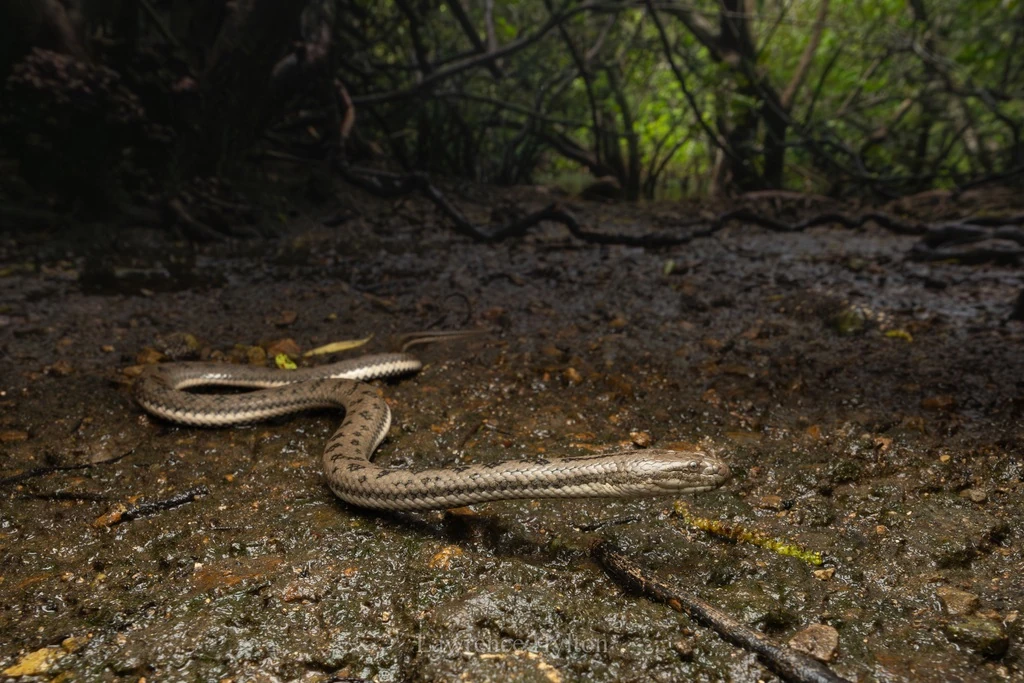
002 · Homalopsidae
Bennett's Mud Snake
China is explicitly recorded in the checked individual species treatment. The accepted identity is also represented in the 2025 checklist; regional inclusion here is based on explicit locality evidence, not the checklist’s broader geographical scope. Named regional records: Fujian; Guangdong; Hong Kong. These localities do not imply continuous occupation…
Read the species account →Lawrence Hylton · CC BY 4.0 · https://creativecommons.org/licenses/by/4.0/
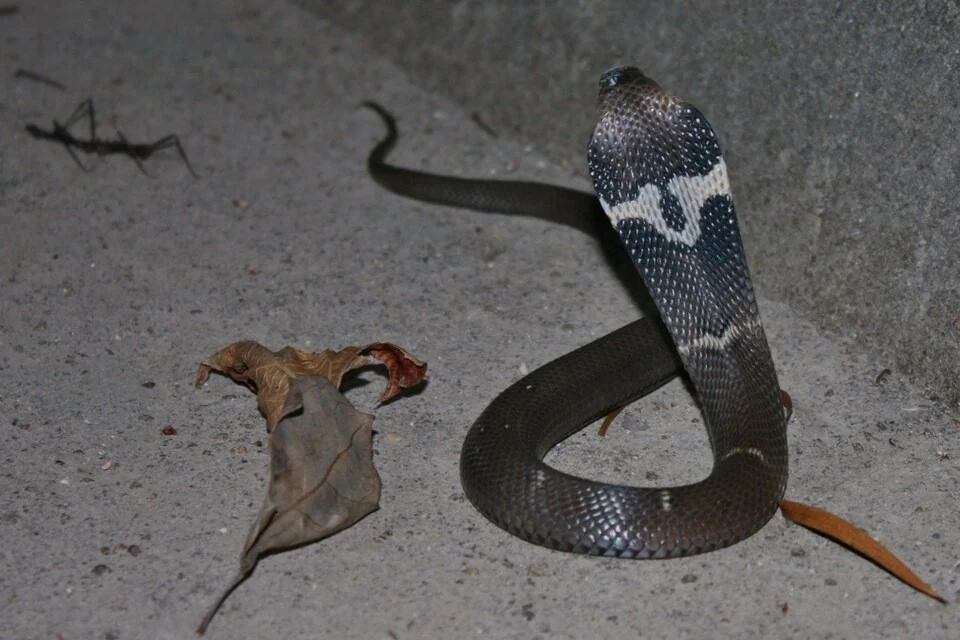
003 · Elapidae
Chinese Cobra
China is explicitly recorded in the checked individual species treatment. The accepted identity is also represented in the 2025 checklist; regional inclusion here is based on explicit locality evidence, not the checklist’s broader geographical scope. Named regional records: Zhejiang, Anhui, Fujian, Jiangxi; Hubei, Hunan; Guangdong, Guangxi; Guizhou.…
Read the species account →Thomas Brown · CC BY 2.0 · https://creativecommons.org/licenses/by/2.0
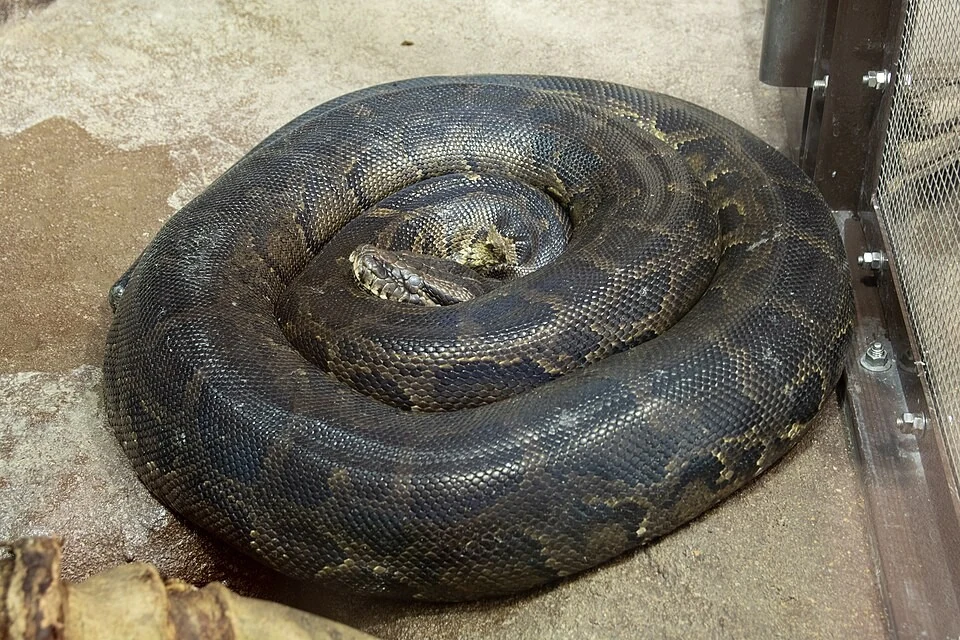
004 · Pythonidae
Burmese Python
China is explicitly recorded in the checked individual species treatment. The accepted identity is also represented in the 2025 checklist; regional inclusion here is based on explicit locality evidence, not the checklist’s broader geographical scope. Named regional records: Fujian; Guangdong, Guangxi; Sichuan, Yunnan; Hong Kong. These localities do not…
Read the species account →Σ64 · CC BY 4.0 · https://creativecommons.org/licenses/by/4.0
Read further
Guide reviewed 11 October 2026. Source dates and geographic scope matter; landscape photographs do not establish species occurrence.
Poyang Nanji flood pulse and Dongzhaigang mangroves. Dongzhaigang description is a 1997/1999 baseline.
Historical channel restoration and exotic-plant removal; not a current impact estimate.
Continue through China
A southern evergreen forest and a northeastern mountain forest belong in different field notes.
02Height alone does not describe a mountain habitat.
03Rock form and water pathways matter as much as the word forest.
04Northwestern drylands include strong local contrasts in moisture and vegetation.
05A seasonal lake margin can change character without changing its name.
06Retain the named coast and substrate when comparing records.