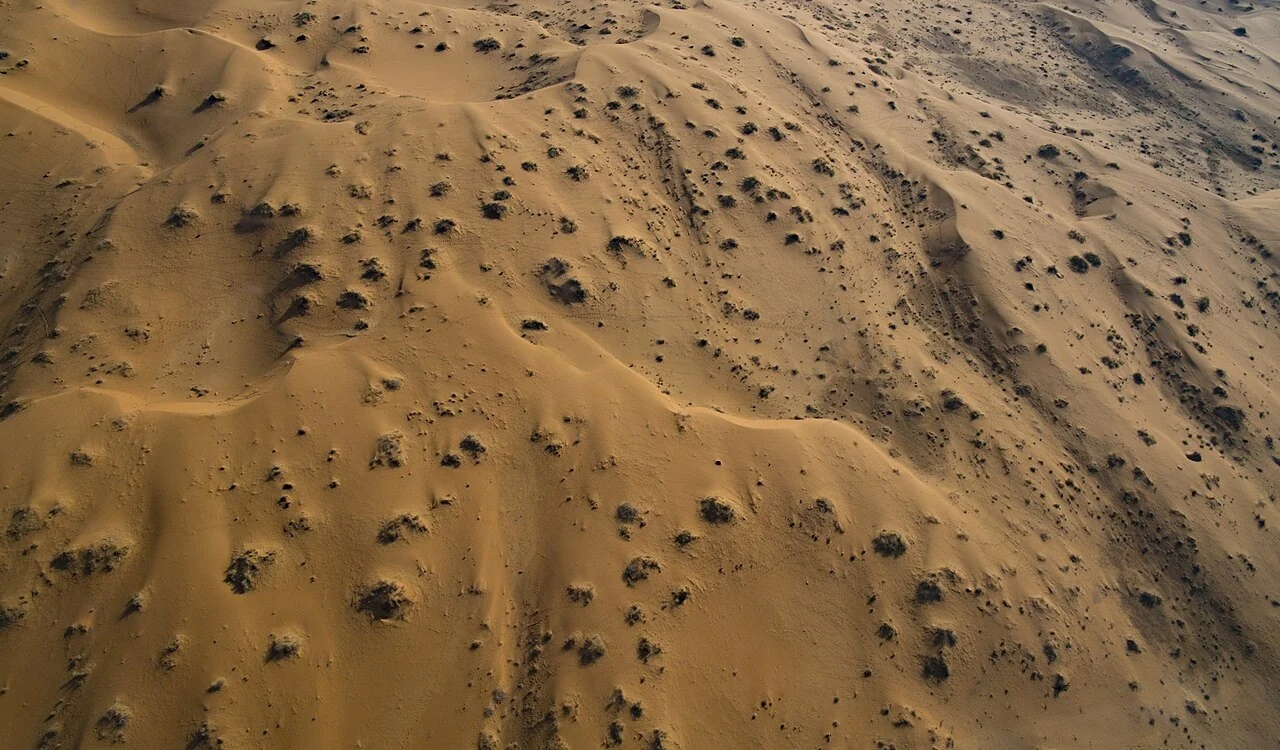
Aerial view of desert dunes in Reg District, Kandahar Province, Afghanistan.

Afghanistan · Habitat field guide

Desert, semi-desert and seasonal growth

Dry landscapes can contain sparse vegetation and short periods of growth.

Aerial view of desert dunes in Reg District, Kandahar Province, Afghanistan.

Photograph: Staff Sgt. Clayton Cupit · Image source · Public domain. Cropped to fill the hero; darkened for text legibility.

Understanding the environment

A sense of the habitat.

Dry landscapes can contain sparse vegetation and short periods of growth.

Landscape evidence
Named examples, not complete habitat coverage
Record detail
Locality · season · observed cover

Explore the structure · Select a feature to compare

Read the landscape

Select a zone to see what changes.

Look at the surface

Open substrate

Distinguish mobile sand, gravel, rock and salt crust.

Use the sourced examples below to place these observations in context.

Conceptual observation prompts, not a measured transect, habitat boundary or snake range.

Field notes · 01

Southern drylands

The national strategy places the Registan and Sistan basin within southern Afghanistan’s desert and semi-desert landscape. Substrate and water availability still need to be recorded locally.

Sources: Afghanistan · National Biodiversity Strategy (2014)

Field notes · 02

Beyond bare sand

FAO’s historical synthesis describes widespread Artemisia steppe and a brief spring flush of annual plants. It also distinguishes western and southwestern deserts from wetter eastern vegetation. Avoid describing all Afghan open country as one habitat.

Sources: FAO · Transhumant grazing systems, chapter IX

Pressures on Afghanistan’s habitats

What is at risk?

A site-specific assessment of pressures has not yet been extracted for this guide. The landscape sources below provide context; they do not establish a current threat level for each snake species.

What helps this habitat

Support site-led protection of the landscape processes described here. Keep habitat notes precise and use the linked sources before extending a claim to another place.

The connected collection

Snakes with habitat evidence.

These 7 species have supported country occurrence and an explicit habitat association in the shared account. The association may come from elsewhere in their range. This is not a complete local habitat inventory; the places above are landscape examples, not asserted collecting sites.

7 species · showing 7

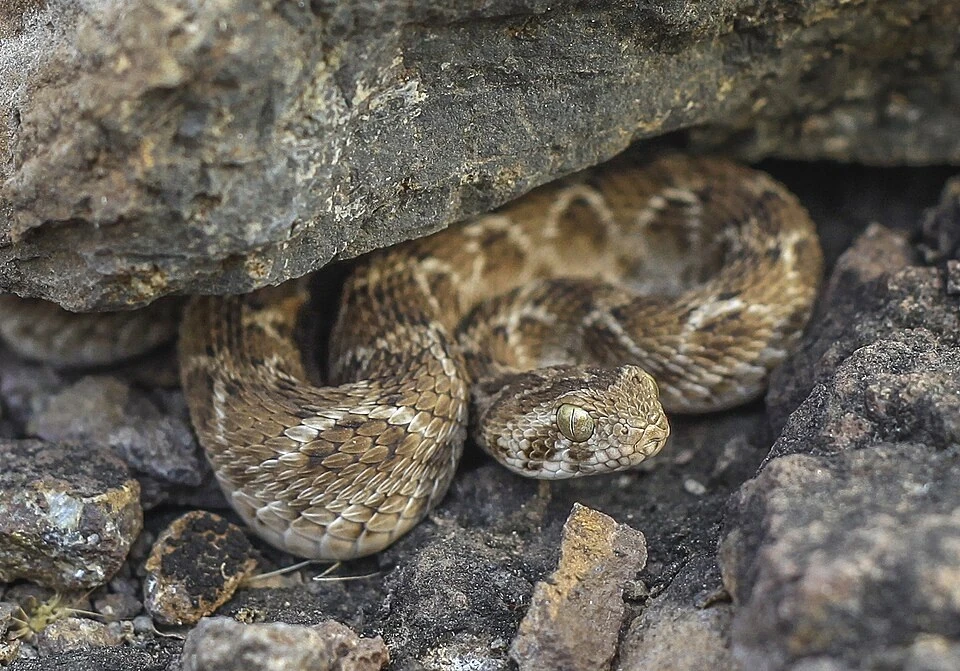
Echis carinatus. Identification follows the linked source photograph.

001 · Viperidae

Saw-scaled Viper, Phoorsa

Echis carinatus

(SCHNEIDER, 1801)

VenomousClinical severity not established

The 2025 field-study Table 1 documents Chamkani, Paktia, at 1,787 m, with archived photographic vouchers from 2012.

Read the species account →

Sagar khunte · CC BY-SA 4.0 · https://creativecommons.org/licenses/by-sa/4.0
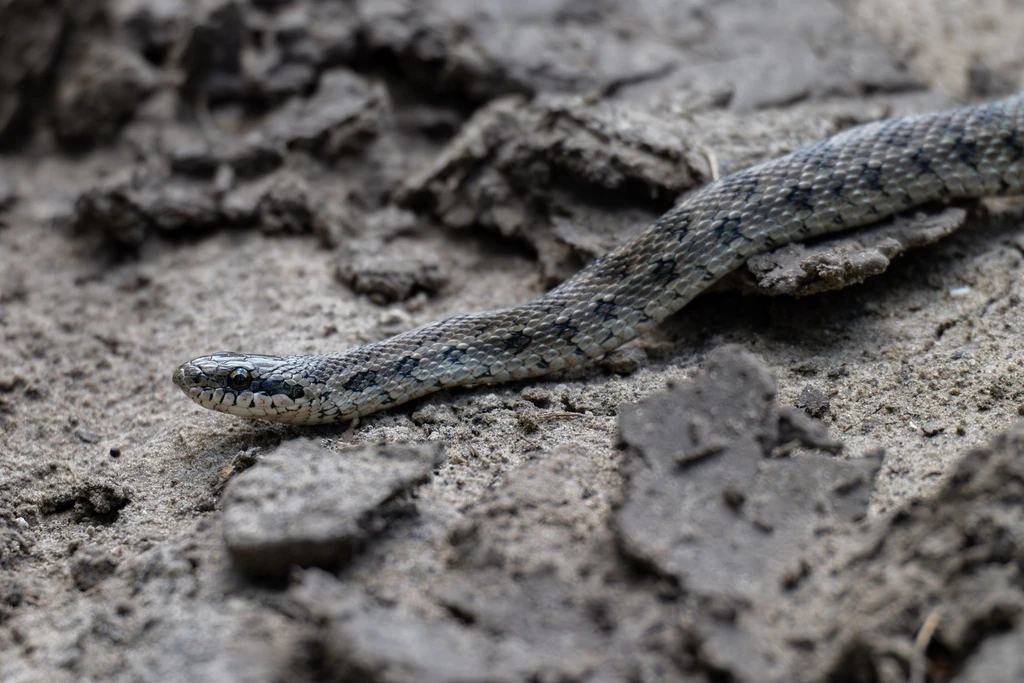
Elaphe dione. Identification follows the linked source community.

002 · Colubridae

Steppes Ratsnakes

Elaphe dione

(PALLAS, 1773)

Non-venomous

Afghanistan is explicitly recorded in the checked individual species treatment. The 2025 revised Afghan colubrid checklist independently corroborates the identity.

Read the species account →

Stanislav Murashkin · CC BY 4.0 · https://creativecommons.org/licenses/by/4.0/

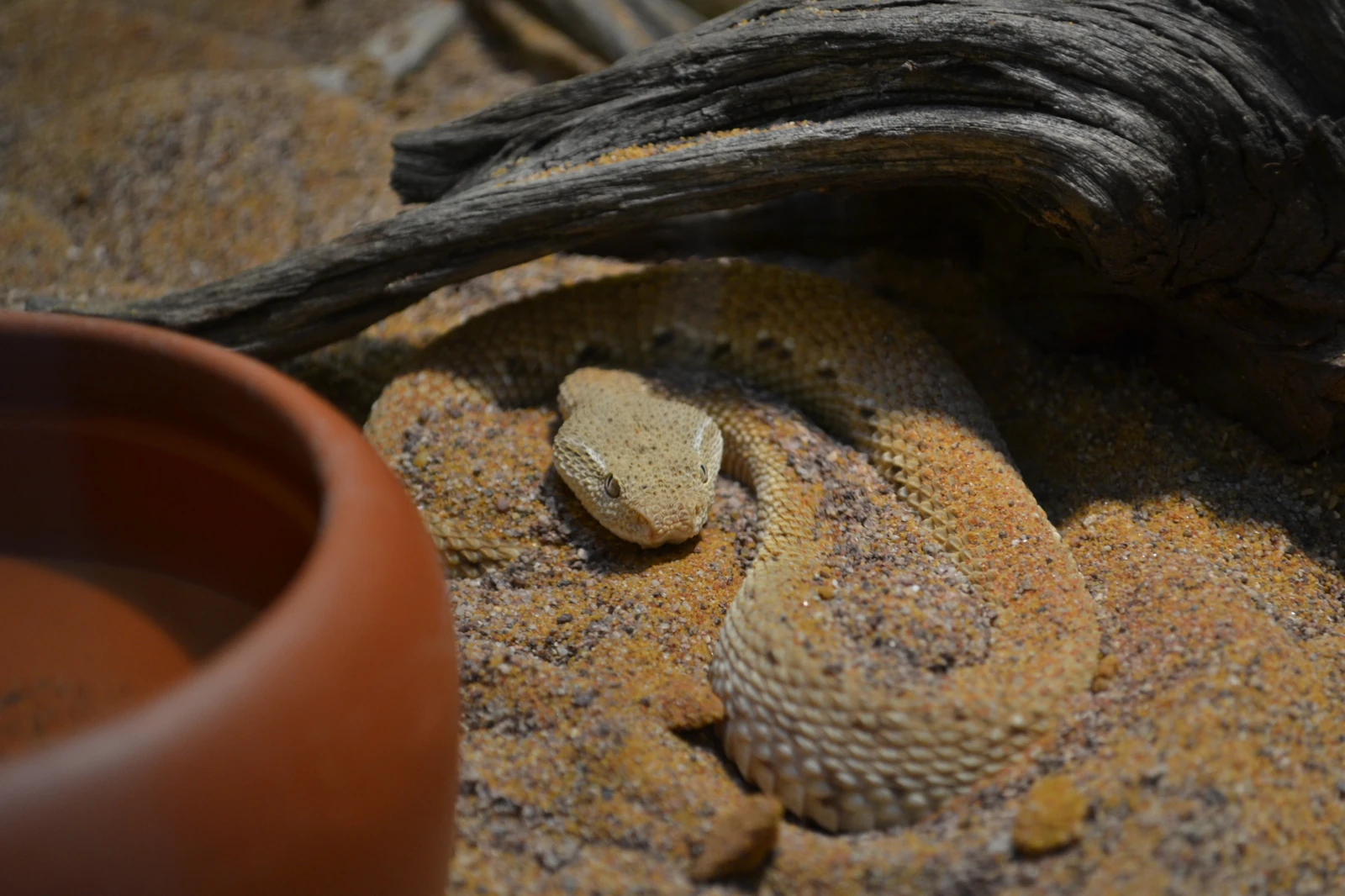
Eristicophis macmahoni photographed in captivity in Genoa, Italy, on 17 May 2015.

003 · Viperidae

McMahons Desert Viper, Asian sand viper

Eristicophis macmahoni

ALCOCK & FINN, 1897

VenomousClinical severity not established

Afghanistan is explicitly recorded in the checked individual species treatment.

Read the species account →

Luca Napelo · CC BY 4.0 · https://creativecommons.org/licenses/by/4.0/

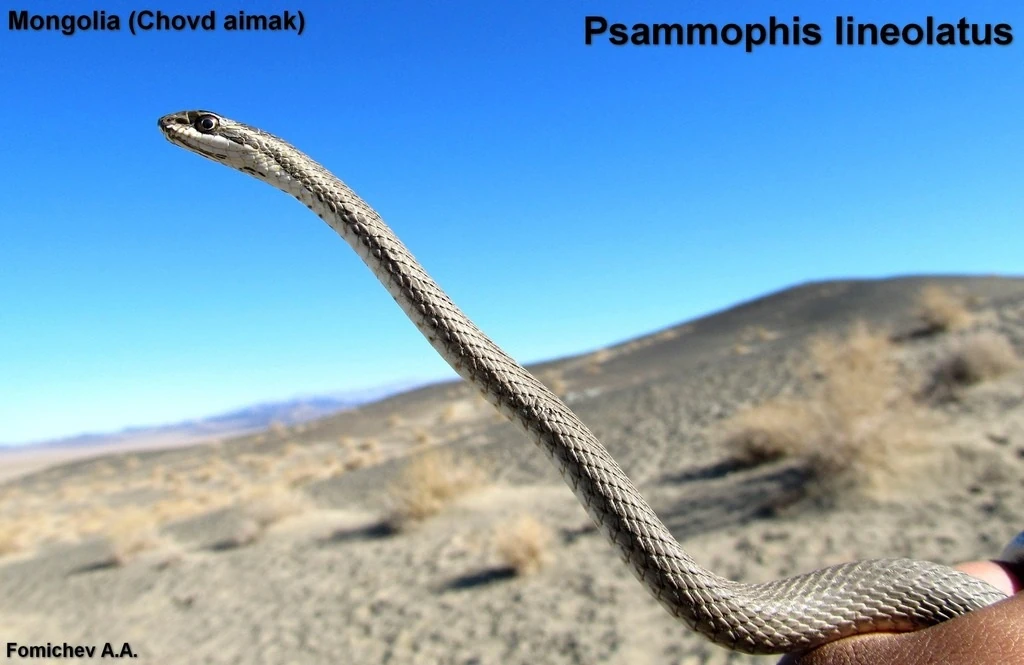
Psammophis lineolatus. Identification follows the linked source community.

005 · Psammophiidae

Steppe Ribbon Racer

Psammophis lineolatus

(BRANDT, 1838)

VenomousClinical severity not established

Afghanistan is explicitly recorded in the checked individual species treatment.

Read the species account →

Alexander A. Fomichev · CC BY 4.0 · https://creativecommons.org/licenses/by/4.0/

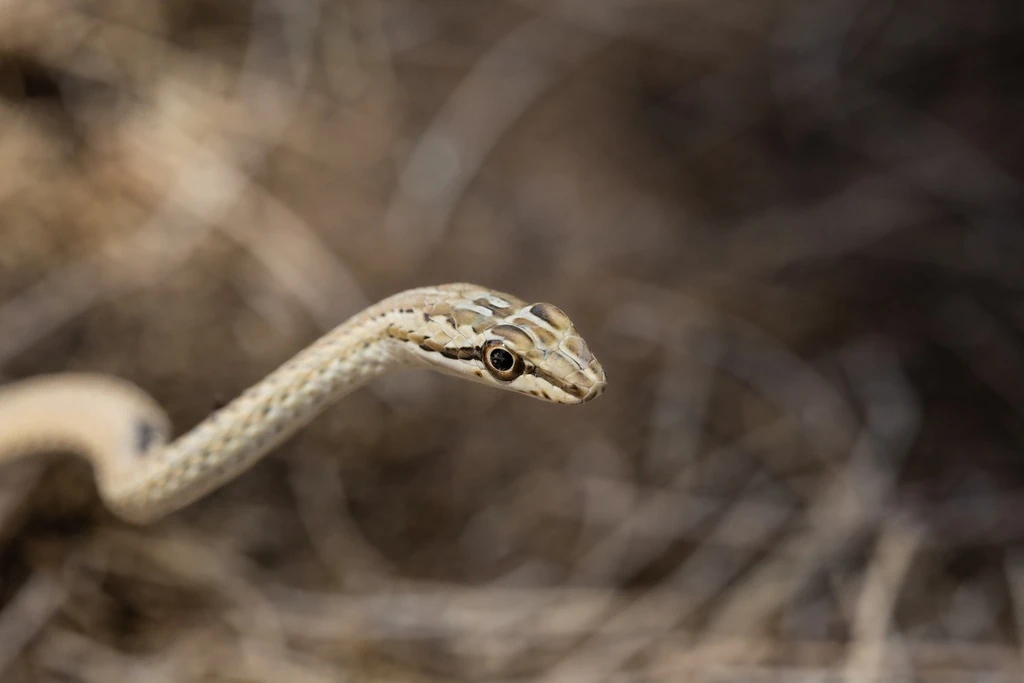
Psammophis schokari. Identification follows the linked source community.

006 · Psammophiidae

Schokari Sand Racer, Forskal Sand Snake

Psammophis schokari

(FORSKÅL, 1775)

VenomousClinical severity not established

Afghanistan is explicitly recorded in the checked individual species treatment. Photographed on 3 May 2011 at 1,865 m.

Read the species account →

Mahomed Desai · CC BY 4.0 · https://creativecommons.org/licenses/by/4.0/

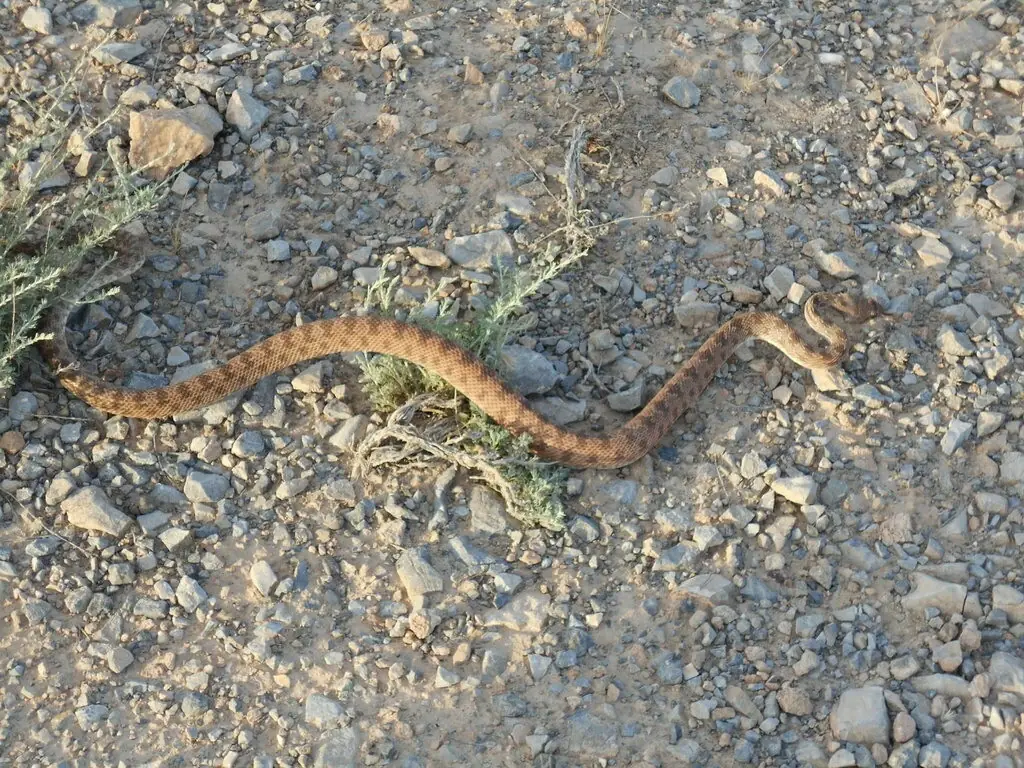
Spalerosophis diadema. Identification follows the linked source community.

007 · Colubridae

Diadem Snake, Royal Snake

Spalerosophis diadema

(SCHLEGEL, 1837)

Venom unknownNot yet assessed

The 2025 field-study Table 1 documents Chamkani, Paktia, at 1,787 m, with archived photographic vouchers from 2012. The 2025 field-study Table 1 documents Chamkani, Paktia, at 1,787 m, with archived photographic vouchers from 2012. Records: Kabul, 25 June 2011, 1,865 m; Spin Boldak, 20 November 2010, 1,193 m.

Read the species account →

Askar Akhmedov · CC BY 4.0 · https://creativecommons.org/licenses/by/4.0/

All 32 species in the country collection →

Read further

Evidence & sources.

Guide reviewed 11 October 2026. Source dates and geographic scope matter; landscape photographs do not establish species occurrence.

  1. Afghanistan · National Biodiversity Strategy (2014)

    Printed pp. 24–25, 32–35: Registan, Wakhan, lake basins and historical pressures. No old protected-status or fauna totals imported.

  2. FAO · Transhumant grazing systems, chapter IX

    Historical vegetation and seasonal-pasture synthesis. Old percentages, political context and livestock totals are not used.

Continue through Afghanistan

Explore another habitat.

01

Eastern forests and open pistachio woodland

Afghanistan’s wooded landscapes include markedly different formations.

02

Valleys, summer pasture and high ground

A mountain landscape contains both inhabited valleys and ground above the forest zone.

03

Upland lakes and dry-basin wetlands

Water-body names need a season and a catchment to be useful.