Rangeland pressure
WCS identifies overstocking and climate change as drivers of rangeland degradation in its Afghan programme. This is not a local snake trend.
Sources: WCS · Afghanistan climate and rangeland work (2023)
Afghanistan · Habitat field guide
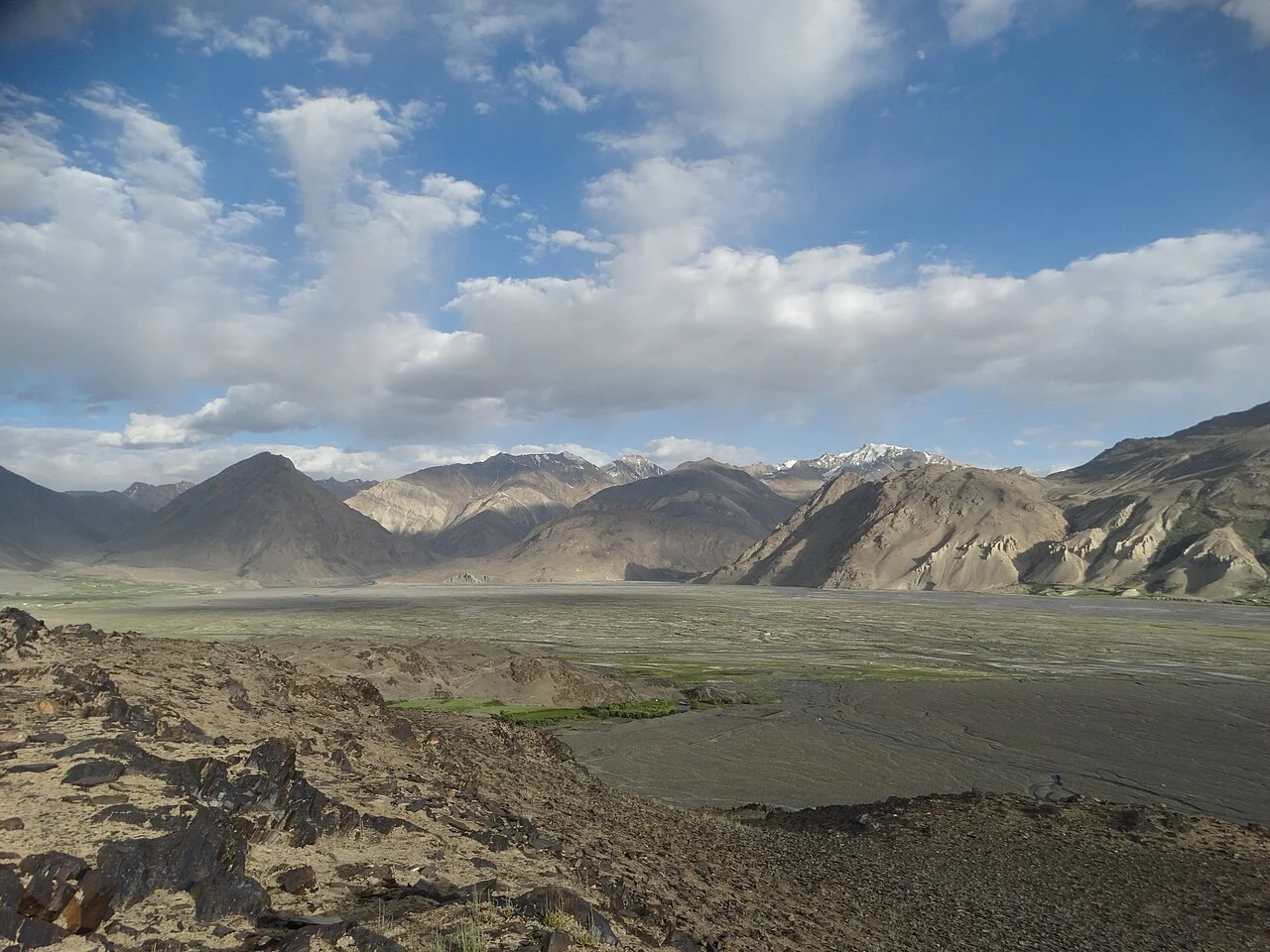
A mountain landscape contains both inhabited valleys and ground above the forest zone.
Mountain valley near Sarhad-e Broghil in the Wakhan Corridor, Afghanistan.
Understanding the environment
A mountain landscape contains both inhabited valleys and ground above the forest zone.
Explore the structure · Select a feature to compare
Select a zone to see what changes.
Name the catchment
Distinguish riverbank, settlement and wooded slope.
Use the sourced examples below to place these observations in context.
Conceptual observation prompts, not a measured transect, habitat boundary or snake range.
Field notes · 01
The 2014 biodiversity strategy describes Wakhan’s alpine valleys and high mountains, with grasses and sedges in Big Pamir valley bottoms. These are landscape observations, not evidence for snakes at the highest elevations.
Sources: Afghanistan · National Biodiversity Strategy (2014)
Field notes · 02
FAO’s grazing synthesis describes movement from lower wintering areas to mountain pastures in summer. WCS’s 2023 account reports rangeland restoration and climate-related livelihood work in high-elevation Wakhan.
Sources: FAO · Transhumant grazing systems, chapter IX · WCS · Afghanistan climate and rangeland work (2023)
Pressures on Afghanistan’s habitats
WCS identifies overstocking and climate change as drivers of rangeland degradation in its Afghan programme. This is not a local snake trend.
Sources: WCS · Afghanistan climate and rangeland work (2023)
Support site-led protection of the landscape processes described here. Keep habitat notes precise and use the linked sources before extending a claim to another place.
The connected collection
These 0 species have supported country occurrence and an explicit habitat association in the shared account. The association may come from elsewhere in their range. This is not a complete local habitat inventory; the places above are landscape examples, not asserted collecting sites.
No species-level association has yet been resolved for this habitat in the collection. That does not mean snakes are absent.
0 species · showing 0
Try another name or clear the filters. Absence from a regional list does not establish absence in nature.
Read further
Guide reviewed 11 October 2026. Source dates and geographic scope matter; landscape photographs do not establish species occurrence.
Printed pp. 24–25, 32–35: Registan, Wakhan, lake basins and historical pressures. No old protected-status or fauna totals imported.
Historical vegetation and seasonal-pasture synthesis. Old percentages, political context and livestock totals are not used.
High-elevation Wakhan and rangeland degradation/restoration; not a snake survey.
Continue through Afghanistan
Afghanistan’s wooded landscapes include markedly different formations.
02Dry landscapes can contain sparse vegetation and short periods of growth.
03Water-body names need a season and a catchment to be useful.