Changing climate and water conditions
UNESCO’s 2026 Mae Ka account identifies increasing climate vulnerability and a need for local hydrological monitoring. Species responses remain a separate research question.
Thailand · Habitat field guide
Northern Thailand’s mountain forests change with elevation, landform and moisture. Doi Inthanon and Doi Chiang Dao provide two different ways to read that gradient.
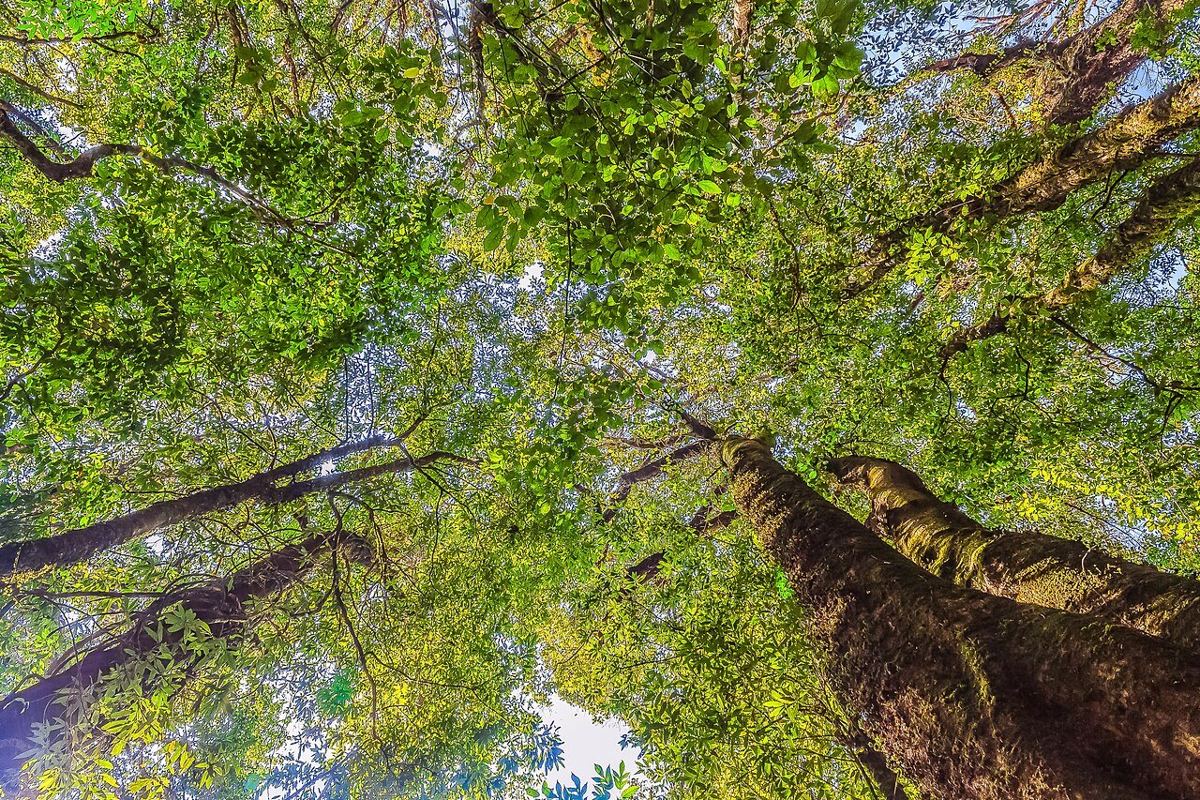
Forest on the Kiew Mae Pan nature trail, Doi Inthanon National Park, northern Thailand.
Understanding the environment
Northern Thailand’s mountain forests change with elevation, landform and moisture. Doi Inthanon and Doi Chiang Dao provide two different ways to read that gradient.
Explore the structure · Start below the cloud-prone woodland and work toward the ridge.
Select a zone to see what changes.
Seasonal woodland
Compare leaf cover and surrounding land use before moving uphill.
The lower forest belongs in the mountain account too.
A conceptual habitat reading guide. The zones are not to scale and do not establish the presence of any snake at a particular site.
Sources: Smithsonian ForestGEO · Doi Inthanon · UNESCO · Doi Chiang Dao Biosphere Reserve
Field notes · 01
Smithsonian ForestGEO’s 1,700 m study plot represents montane evergreen forest. Its site description contrasts lower deciduous forest with frequently clouded evergreen woodland above about 1,500 m.
These are local vegetation observations. They should not become a single altitude threshold for mountain habitat throughout Thailand or for the range of a snake.
Sources: Smithsonian ForestGEO · Doi Inthanon
Field notes · 02
Doi Chiang Dao combines limestone with several elevation-related ecosystems. Recent UNESCO work in its Mae Ka watershed studies soil water retention, stream flow and climate vulnerability.
This is a useful reason to observe soil, vegetation and headwaters together. It does not provide a model predicting how each snake will respond to future climate.
Sources: UNESCO · Doi Chiang Dao Biosphere Reserve · UNESCO · Soil and water at Doi Chiang Dao (2026)
Pressures on Thailand’s habitats
UNESCO’s 2026 Mae Ka account identifies increasing climate vulnerability and a need for local hydrological monitoring. Species responses remain a separate research question.
The Doi Inthanon ecotourism study treats visitors, infrastructure, communities and conservation as an interdependent system. This supports careful planning, rather than assuming that an ecotourism label guarantees no impact.
Sources: Hvenegaard & Dearden (1998) · Doi Inthanon ecotourism
Protect soils and headwater vegetation, monitor moisture and stream flow, and assess trails and facilities with local communities and conservation managers.
The connected collection
These 11 species have supported country occurrence and an explicit habitat association in the shared account. The association may come from elsewhere in their range. This is not a complete local habitat inventory; the places above are landscape examples, not asserted collecting sites.
11 species · showing 11
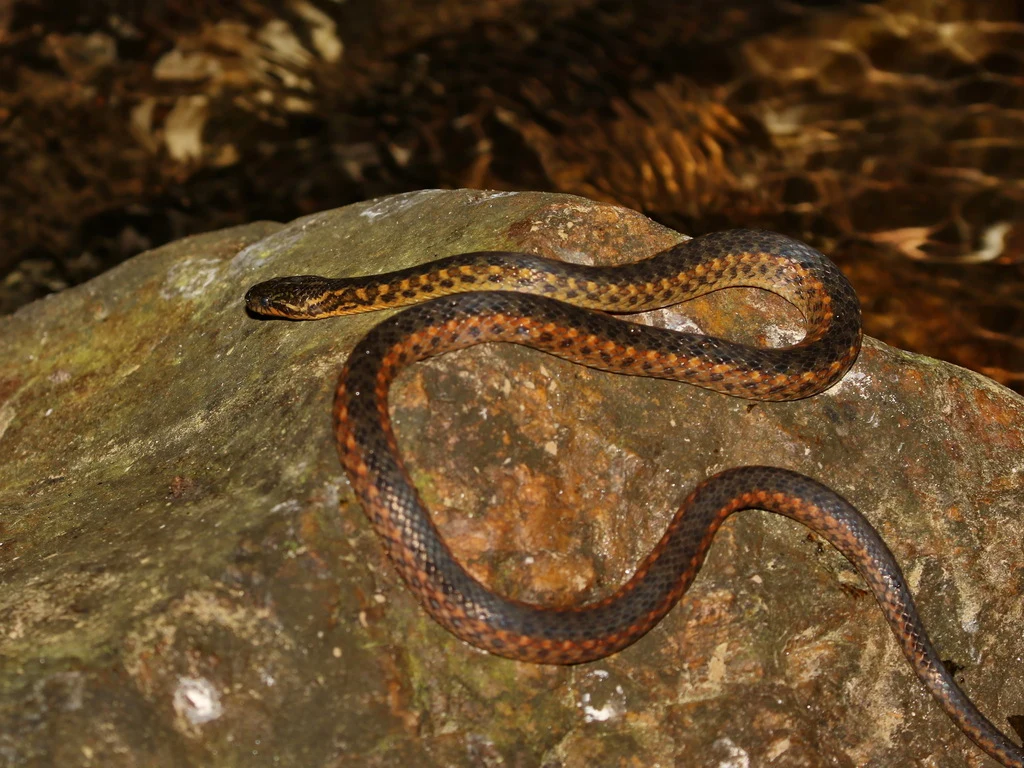
001 · Colubridae
Species account
Thailand: Chiang Mai, Mae Hong Son; Kanchanaburi, Tak.
Read the species account →Ian Dugdale · CC BY 4.0 · https://creativecommons.org/licenses/by/4.0/
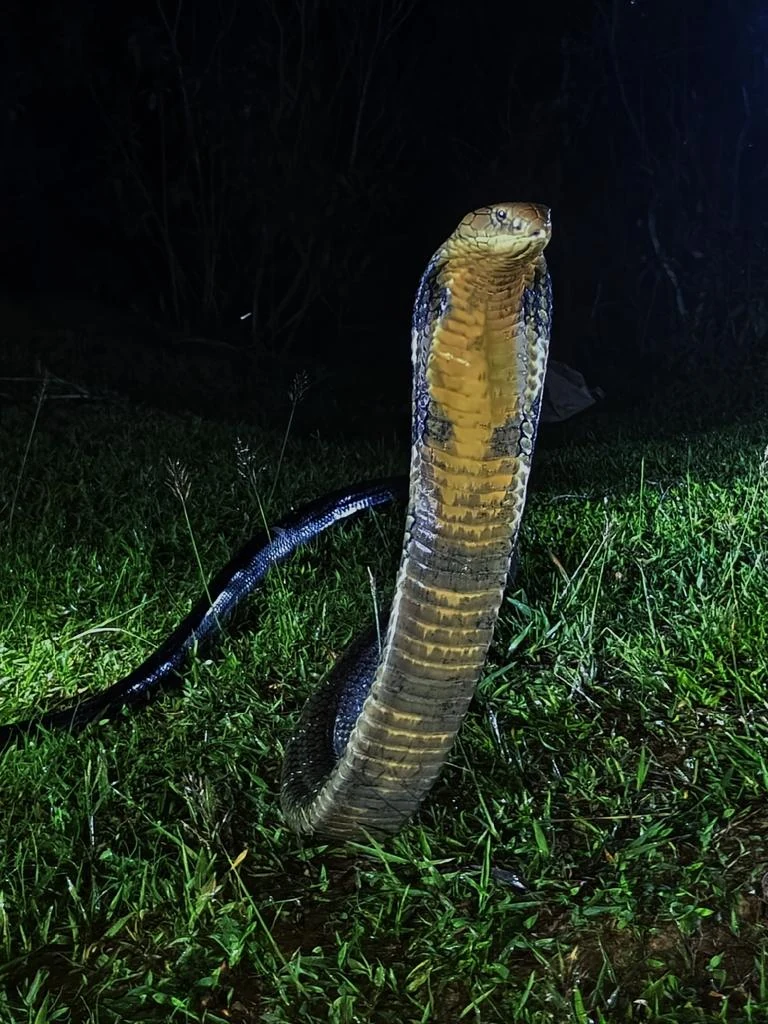
002 · Elapidae
Hamadryad, King Cobra
Thailand: country-level record; no named guide locality extracted.
Read the species account →Ankur Nandi · CC BY 4.0 · https://creativecommons.org/licenses/by/4.0/
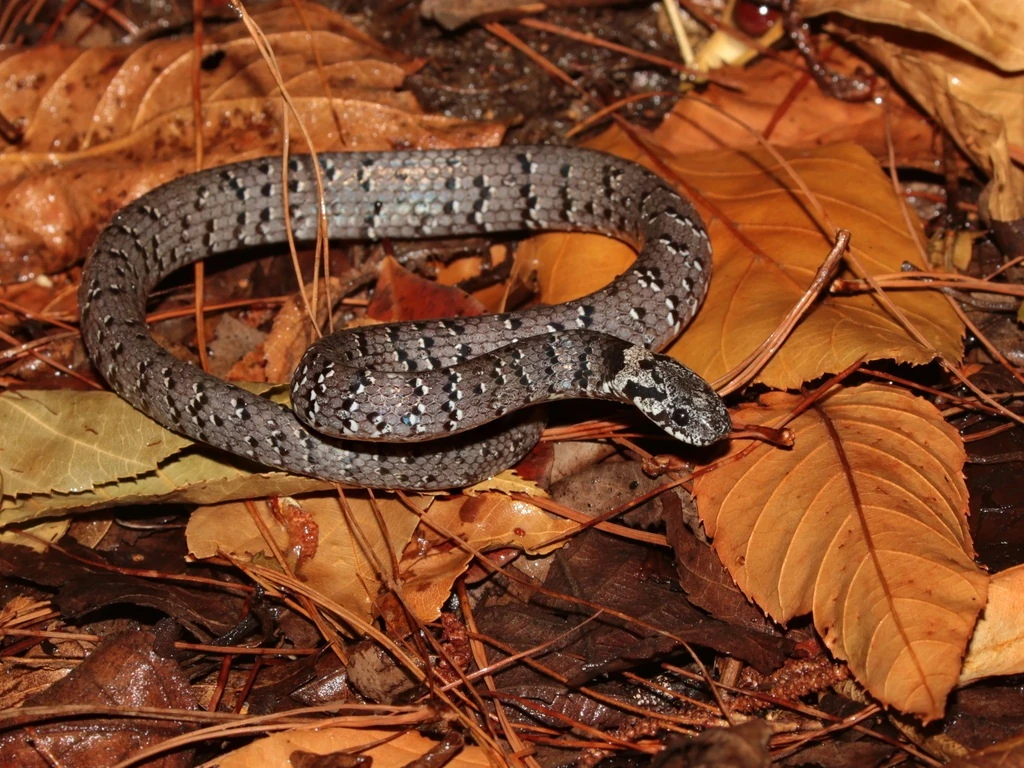
003 · Pareidae
Mountain Slug Snake
Thailand: Chiang Mai.
Read the species account →Ian Dugdale · CC BY 4.0 · https://creativecommons.org/licenses/by/4.0/
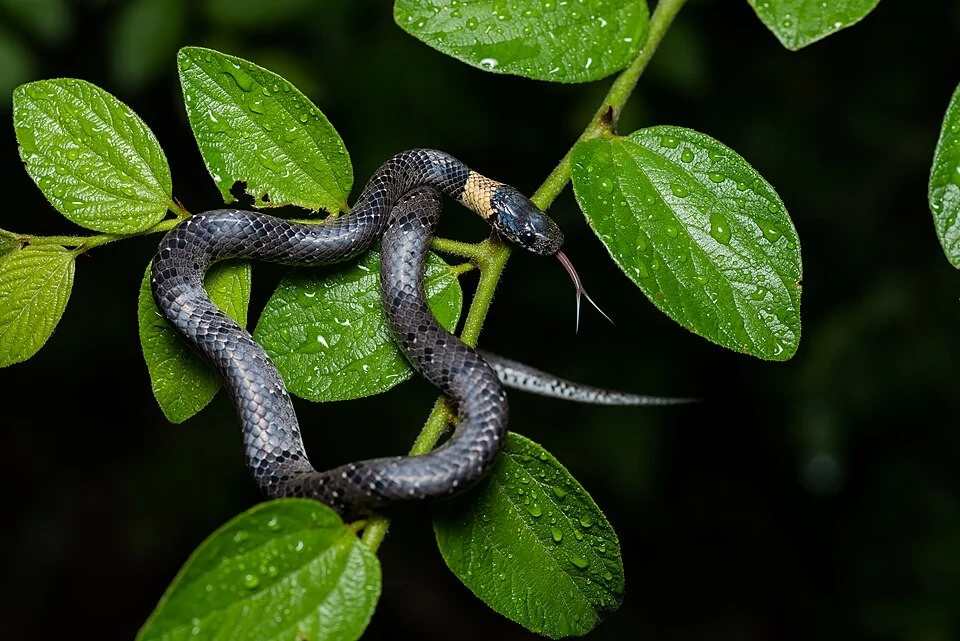
004 · Pareidae
Mountain Slug Snake
Thailand: country-level record; no named guide locality extracted. The 2021–2023 field survey documented this species on Ko Pha-ngan, Surat Thani (published 2026, Table 1 and species treatment). This island record does not delimit its wider Thai range.
Read the species account →Rushenb · CC BY-SA 4.0 · https://creativecommons.org/licenses/by-sa/4.0
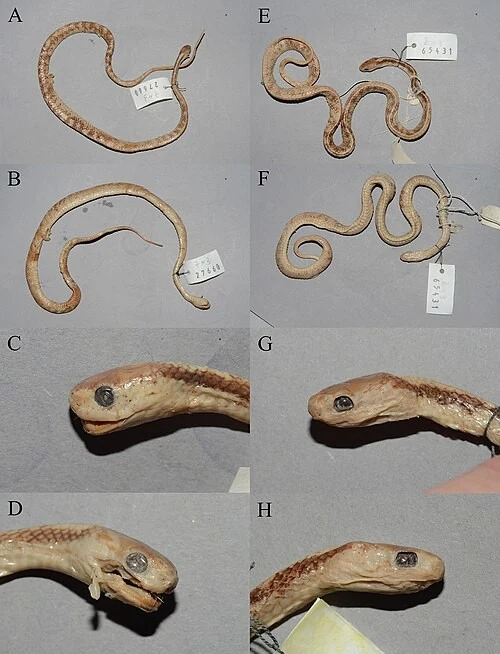
005 · Pareidae
Yunnan Slug Snake
Thailand: Chiang Mai.
Read the species account →Gernot Vogel, in Liu et al. (2023) · CC BY 4.0 · https://creativecommons.org/licenses/by/4.0
006 · Viperidae
Omkoi Lance-headed Pit Viper
Thailand: Chiang Mai.
Read the species account →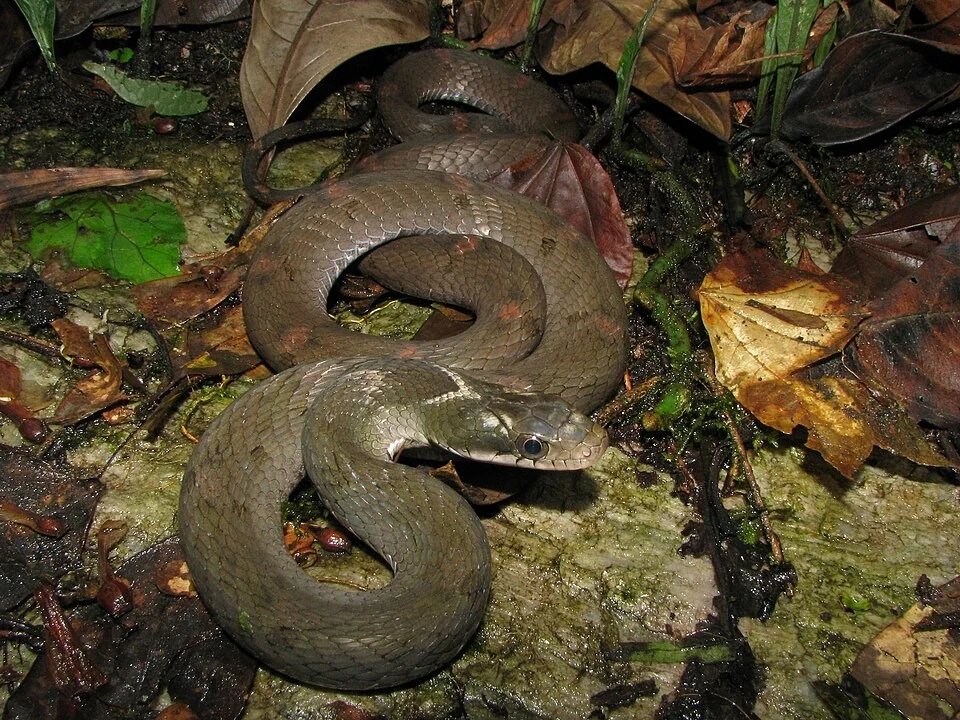
007 · Colubridae
(Large-eyed or) Big-eyed Bamboo Snake, Mock Cobra
Thailand: country-level record; no named guide locality extracted. The Thai government Red Data account (2005, p. 151) documents these named Thai localities. These are historical locality records, not a complete present-day range survey.
Read the species account →Umeshsrinivasan · CC BY-SA 3.0 · https://creativecommons.org/licenses/by-sa/3.0
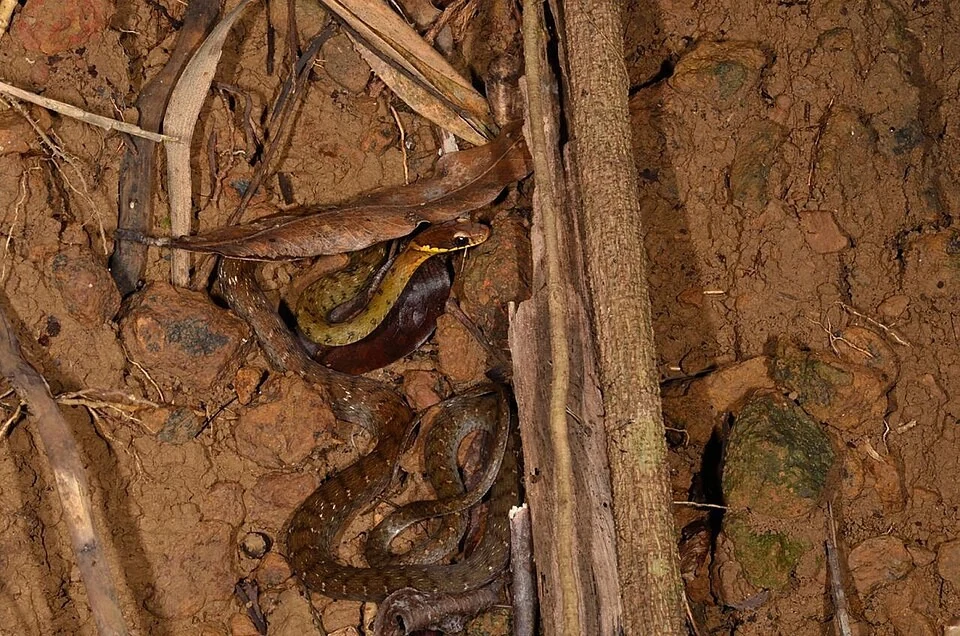
008 · Colubridae
Specklebelly Keelback
Thailand: country-level record; no named guide locality extracted. The 2021–2023 field survey documented this species on Ko Pha-ngan, Surat Thani (published 2026, Table 1 and species treatment). This island record does not delimit its wider Thai range.
Read the species account →Eugene Popov · CC BY 4.0 · https://creativecommons.org/licenses/by/4.0
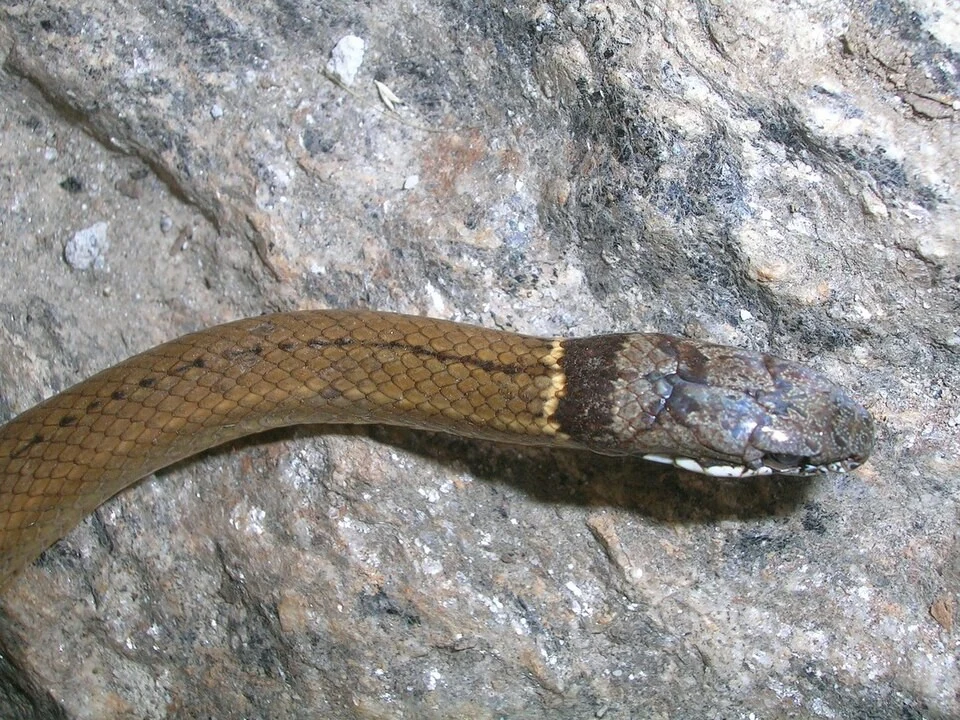
009 · Colubridae
Common Many-tooth Snake
Thailand: country-level record; no named guide locality extracted. The Thai government Red Data account (2005, p. 144) documents these named Thai localities. These are historical locality records, not a complete present-day range survey.
Read the species account →L. Shyamal · CC BY-SA 3.0 · https://creativecommons.org/licenses/by-sa/3.0
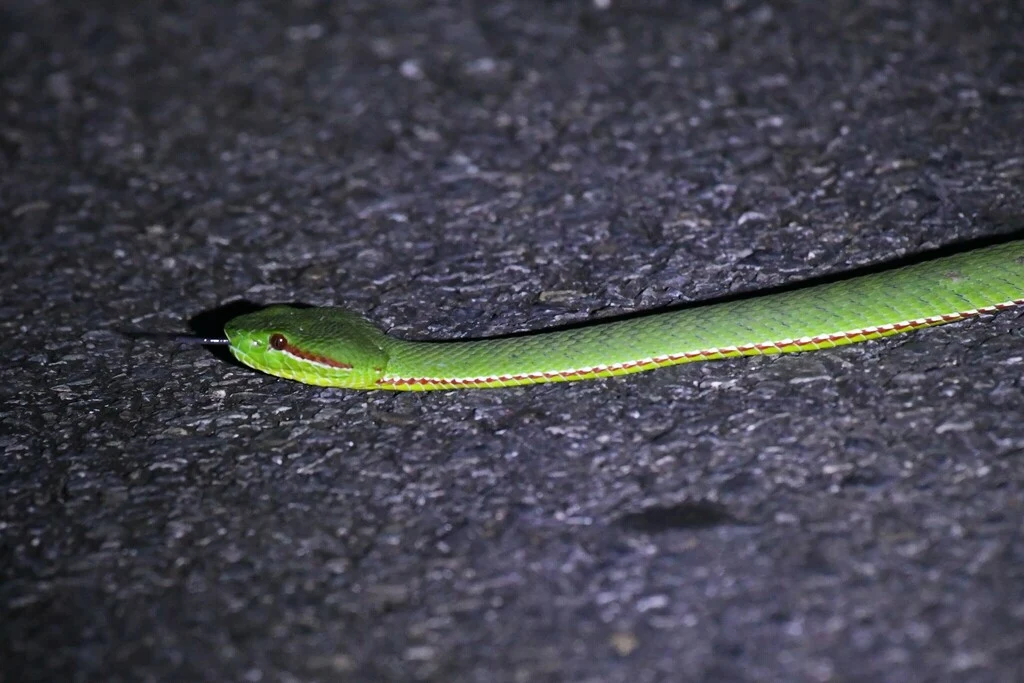
010 · Viperidae
Lanna green pitviper
Thailand: Chiang Mai.
Read the species account →Tristan Jobin · CC BY 4.0 · https://creativecommons.org/licenses/by/4.0/
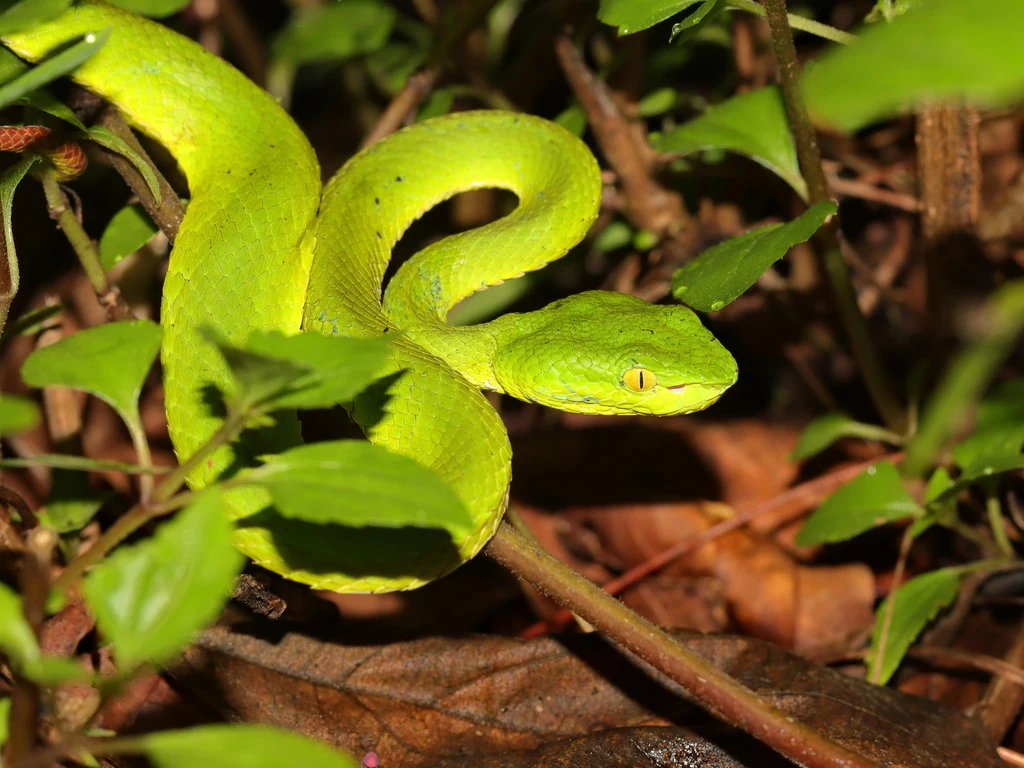
011 · Viperidae
Yunnan Bamboo pitviper
Thailand: Chaiyaphum, Loei; Phetchabun, Phitsanulok.
Read the species account →Ian Dugdale · CC BY 4.0 · https://creativecommons.org/licenses/by/4.0/
Read further
Guide reviewed 11 October 2026. Source dates and geographic scope matter; landscape photographs do not establish species occurrence.
Long-term forest plot at 1,700 m and the local contrast between deciduous and montane evergreen forest.
Limestone, elevation zones and Upper Ping watershed. Local habitat descriptions do not define snake ranges.
Mae Ka watershed monitoring, soil water retention and climate vulnerability. No prediction of individual snake responses.
Case study on relationships between conservation, tourism infrastructure and communities; not a current visitor-impact measurement.
Continue through Thailand
Thailand’s forests include evergreen stands, seasonal woodland and dry dipterocarp formations. Reading their differences is more useful than expecting one national rainforest.
02Thailand’s karst includes northern mountain massifs and southern limestone coasts. Forest, drainage and the position of the sea give the rock its ecological context.
03Thailand’s river habitats include seasonal floodplains, marshes and managed lowlands. Their ecological boundaries move with water.
04The Andaman coast’s mangroves sit among river mouths, limestone, mudflats and seagrass. Tides and catchments keep those habitats connected.
05Thailand faces both the Gulf of Thailand and the Andaman Sea. Their islands, shores and seabeds must retain their own locality evidence.