Destructive fishing
The 2013 Ramsar island announcement reports destructive fishing around these coastal sites. The account is historical and does not quantify current effects on snakes.
Thailand · Habitat field guide
Thailand faces both the Gulf of Thailand and the Andaman Sea. Their islands, shores and seabeds must retain their own locality evidence.
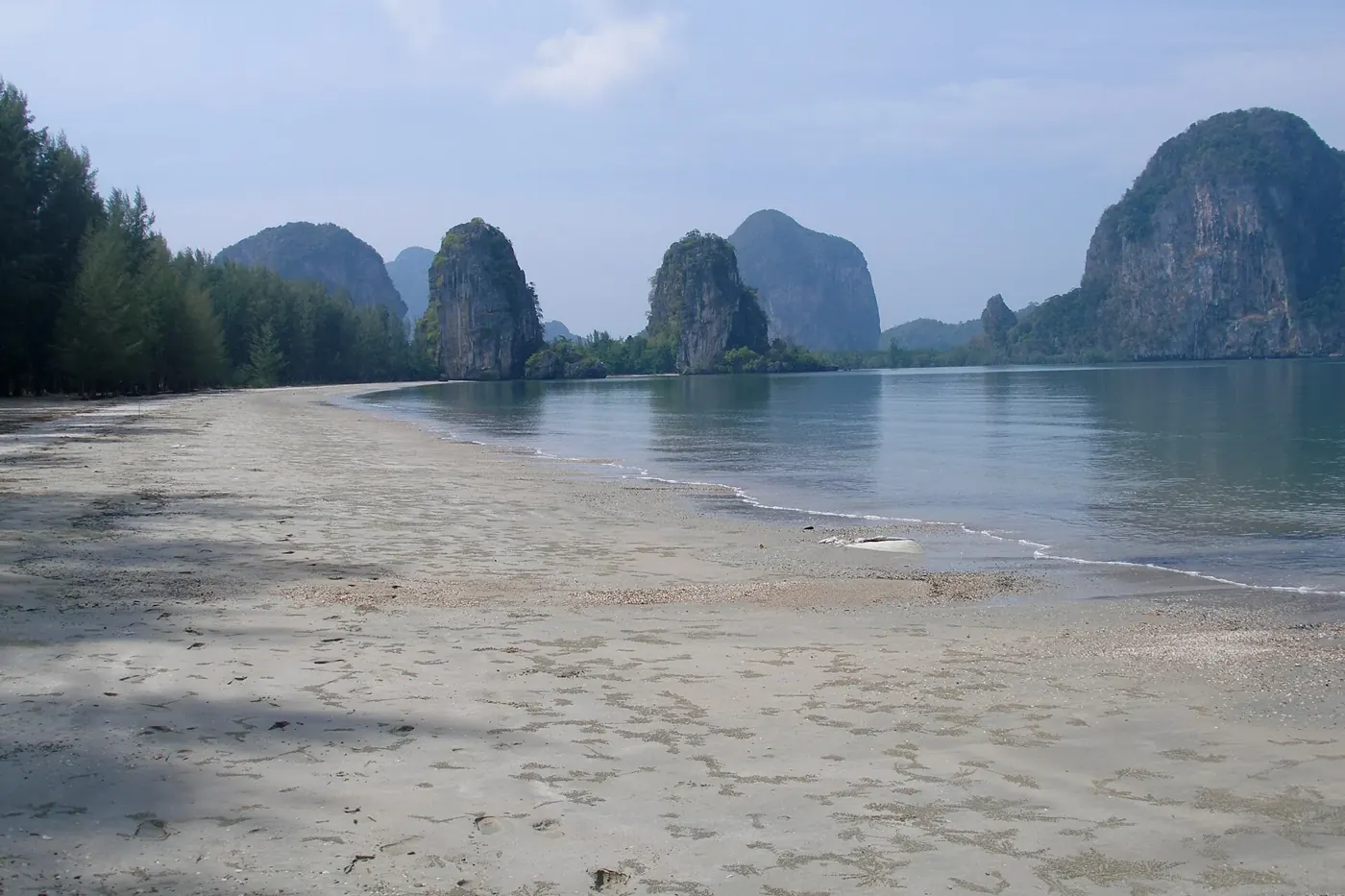
Rajamangala Bay on the Andaman coast of Trang, Thailand.
Understanding the environment
Thailand faces both the Gulf of Thailand and the Andaman Sea. Their islands, shores and seabeds must retain their own locality evidence.
Explore the structure · Follow the shore into shallow habitats and the surrounding sea.
Select a zone to see what changes.
The landward edge
Record rock, sand and shelter above the waterline.
Land use remains relevant to amphibious coastal animals.
A conceptual habitat reading guide. The zones are not to scale and do not establish the presence of any snake at a particular site.
Sources: Ramsar · Thailand’s two island designations (2013) · Ramsar · Ko Kra Archipelago Information Sheet
Field notes · 01
Ko Kra is a small Gulf archipelago with rocky shores, forested land and coral habitat. Ko Ra–Ko Phra Thong lies on the Andaman side and includes a wider mosaic of wetlands, forest, seagrass and reef.
These examples anchor the geography. They should not be treated as substitute surveys for Thailand’s marine snake fauna.
Sources: Ramsar · Ko Kra Archipelago Information Sheet · Ramsar · Thailand’s two island designations (2013)
Field notes · 02
The Ko Ra–Ko Phra Thong designation illustrates how freshwater pools, tidal vegetation and marine habitats can be close neighbours. Keep those environments distinct when reading an animal record.
Use the shared species account for reproductive mode and land dependence. Sea-snake and sea-krait common names are not sufficient evidence to assign one life history to all marine snakes.
Pressures on Thailand’s habitats
The 2013 Ramsar island announcement reports destructive fishing around these coastal sites. The account is historical and does not quantify current effects on snakes.
The same announcement identifies unsustainable tourism, reclamation and encroachment at Ko Ra–Ko Phra Thong. Habitat connections can be affected on land as well as underwater.
Assess islands and adjacent waters together, address damaging fishing and shore development, and retain accurate capture locations in biodiversity records.
The connected collection
These 38 species have supported country occurrence and an explicit habitat association in the shared account. The association may come from elsewhere in their range. This is not a complete local habitat inventory; the places above are landscape examples, not asserted collecting sites.
38 species · showing 24
001 · Acrochordidae
Little filesnake
Thailand: country-level record; no named guide locality extracted. The Thai government Red Data account (2005, p. 135) documents these named Thai localities. These are historical locality records, not a complete present-day range survey.
Read the species account →Mario Lutz · Copyright Mario Lutz. Authorised for display in this atlas; no third-party reuse licence granted.
002 · Elapidae
Spine-tailed seasnake
Thailand: country-level record; no named guide locality extracted. The 2012 revision lists museum voucher BMNH 1987.37 from Sai Buri, Thailand. This is a coastal specimen locality, not an inland or entire-province habitat claim.
Read the species account →003 · Homalopsidae
Keel-bellied Water Snake
Thailand: country-level record; no named guide locality extracted.
Read the species account →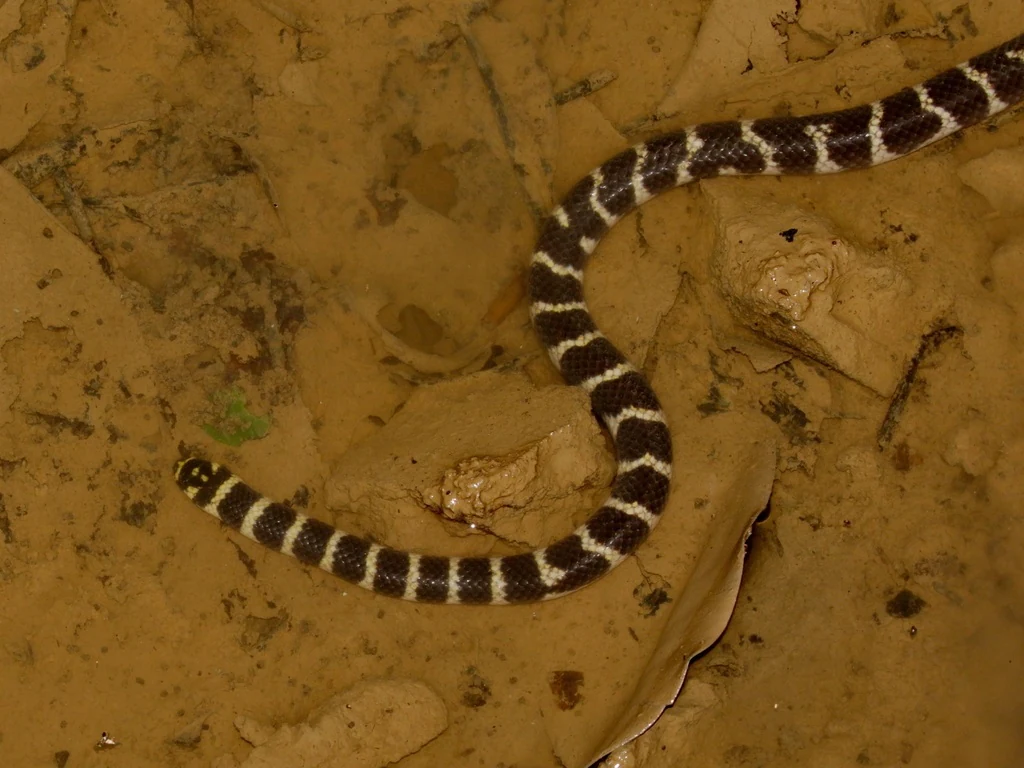
004 · Homalopsidae
Cantor's Water Snake
Thailand: country-level record; no named guide locality extracted. The Thai government Red Data account (2005, p. 163) documents these named Thai localities. These are historical locality records, not a complete present-day range survey.
Read the species account →Ian Dugdale · CC BY 4.0 · https://creativecommons.org/licenses/by/4.0/
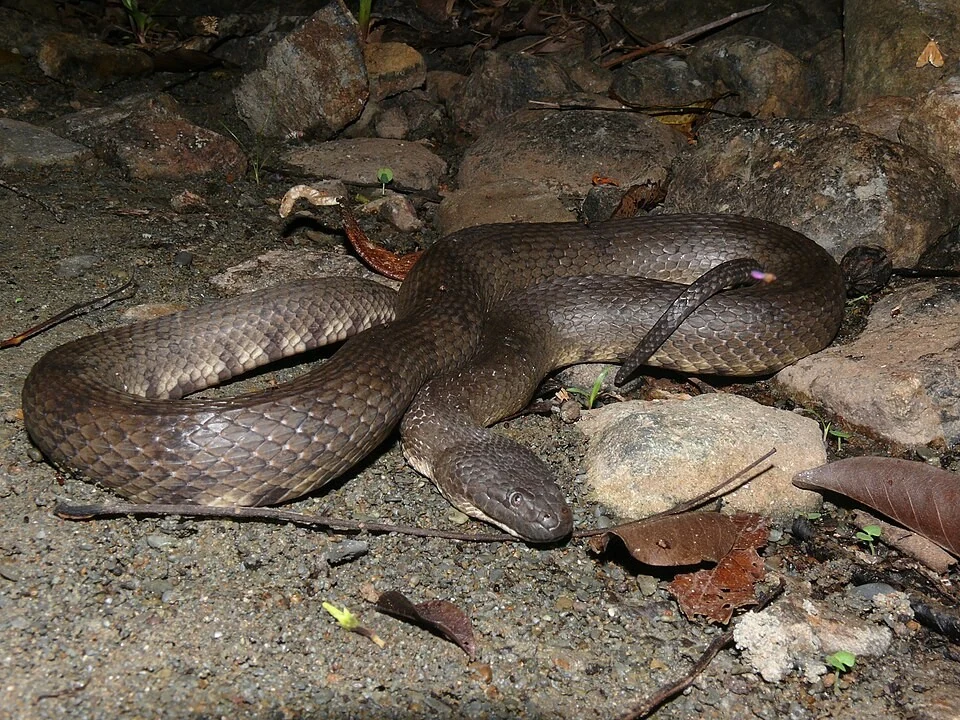
005 · Homalopsidae
South Asian Bockadam, New Guinea bockadam, Dog-faced Water Snake
Thailand: country-level record; no named guide locality extracted.
Read the species account →Swati Sidhu · CC BY-SA 4.0 · https://creativecommons.org/licenses/by-sa/4.0
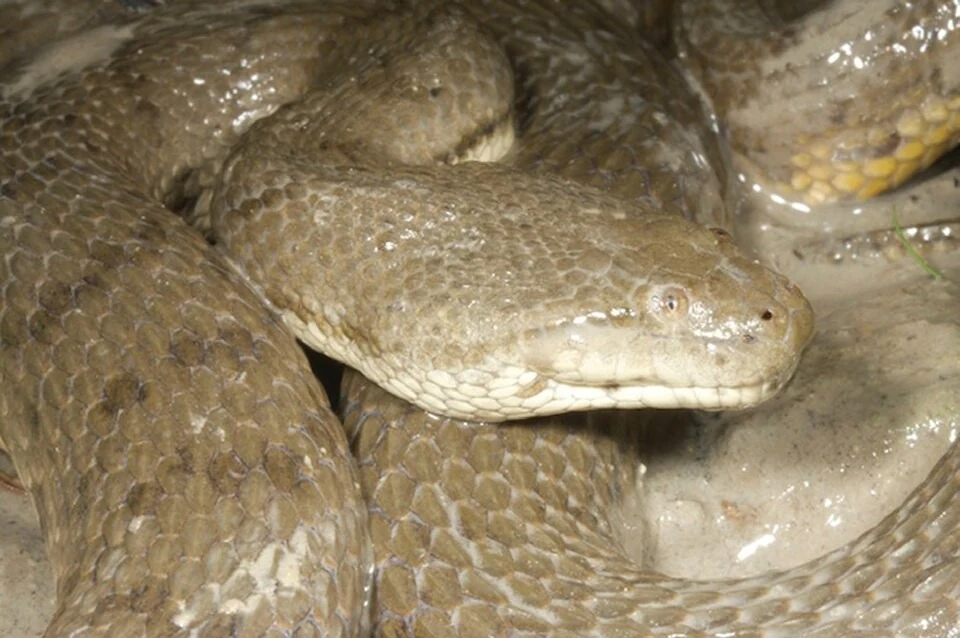
006 · Homalopsidae
Southeast Asian Bockadam
Thailand: country-level record; no named guide locality extracted.
Read the species account →Mark O’Shea · CC BY 3.0 · https://creativecommons.org/licenses/by/3.0
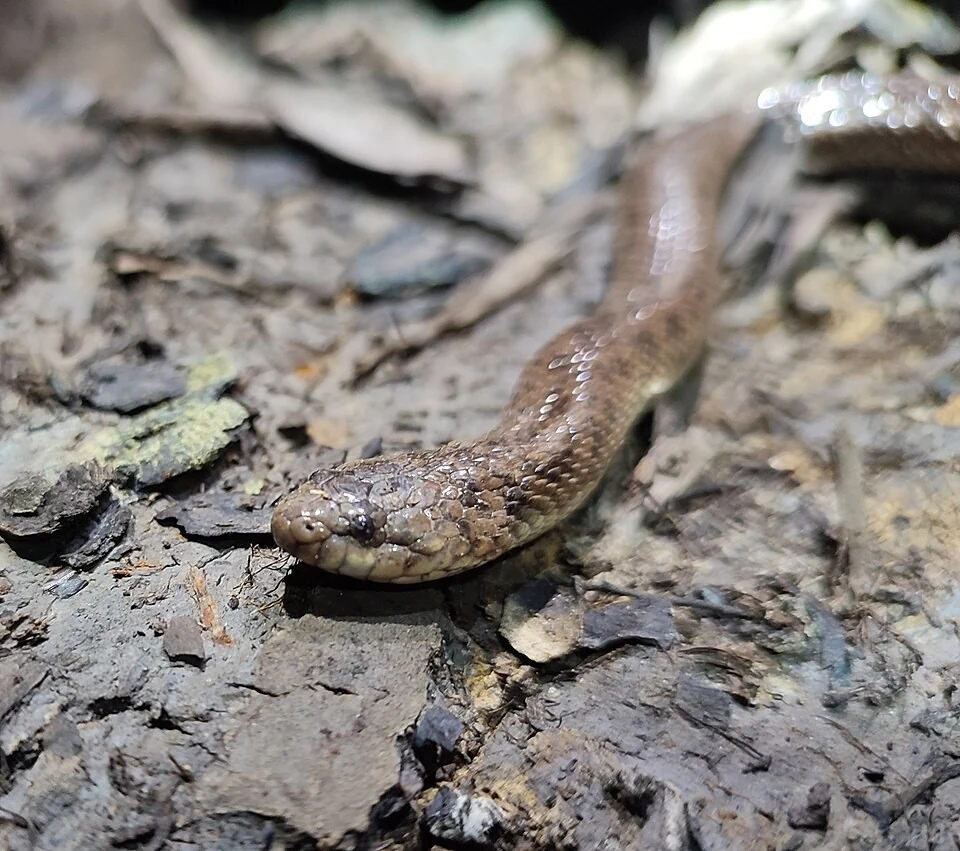
007 · Homalopsidae
Crab-eating (Water) Snake
Thailand: country-level record; no named guide locality extracted. The Thai government Red Data account (2005, p. 163) documents these named Thai localities. These are historical locality records, not a complete present-day range survey.
Read the species account →Samuel GUIRAUDOU · CC BY 4.0 · https://creativecommons.org/licenses/by/4.0
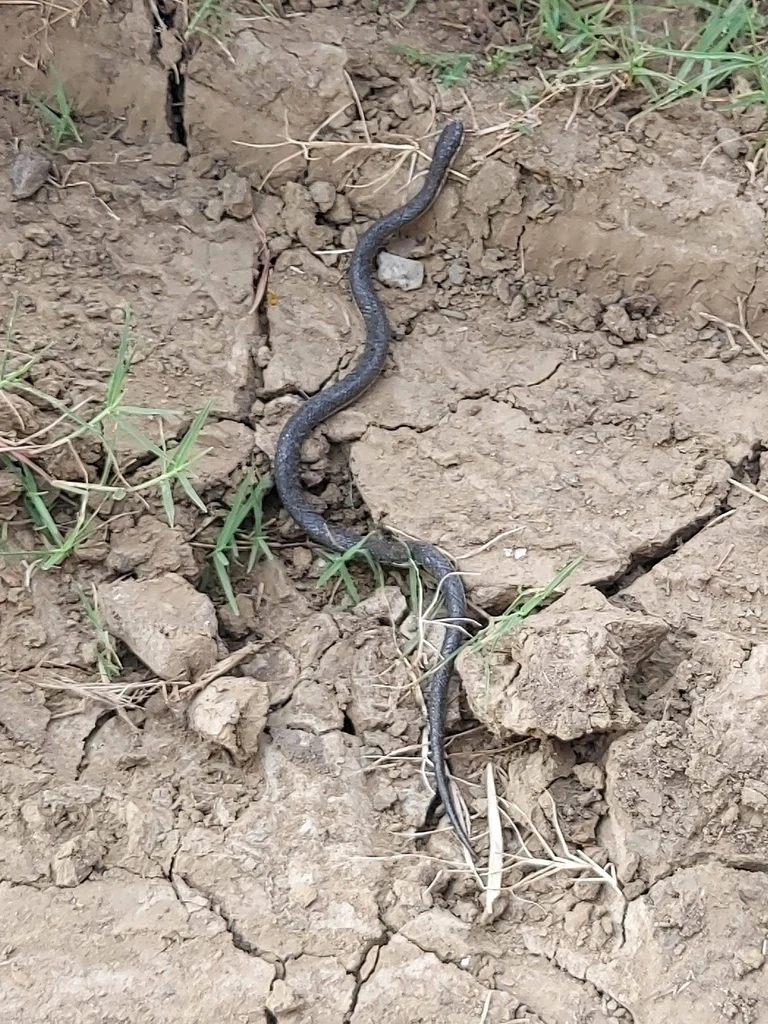
008 · Homalopsidae
Gerard's Water Snake
Thailand: country-level record; no named guide locality extracted. The Thai government Red Data account (2005, p. 163) documents these named Thai localities. These are historical locality records, not a complete present-day range survey.
Read the species account →Ramesh Shenai · CC BY 4.0 · https://creativecommons.org/licenses/by/4.0/
009 · Elapidae
Bighead Sea Snake
Thailand: country-level record; no named guide locality extracted. The Thai government Red Data account (2005, p. 167) documents these named Thai localities. The source uses the name Kolpophis annandalei. These are historical locality records, not a complete present-day range survey.
Read the species account →
010 · Elapidae
Anomalous Sea Snake
Thailand: country-level record; no named guide locality extracted.
Read the species account →Creator:Unknown · CC-BY-SA · https://www.inaturalist.org/photos/658296
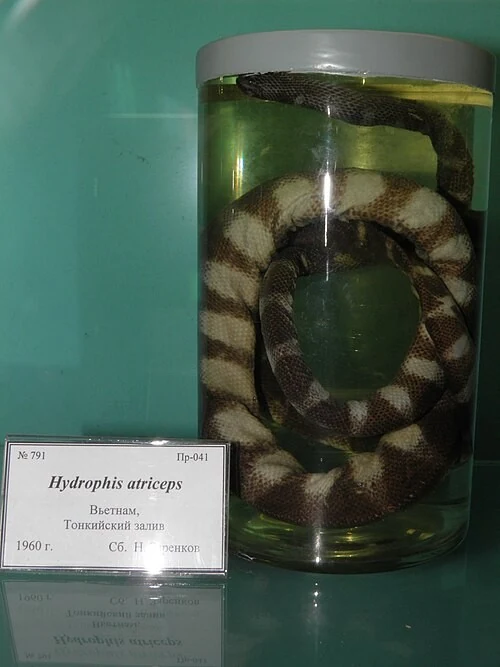
011 · Elapidae
Black-headed seasnake
Thailand: country-level record; no named guide locality extracted.
Read the species account →A. C. Tatarinov · CC0 · https://creativecommons.org/publicdomain/zero/1.0/deed.en
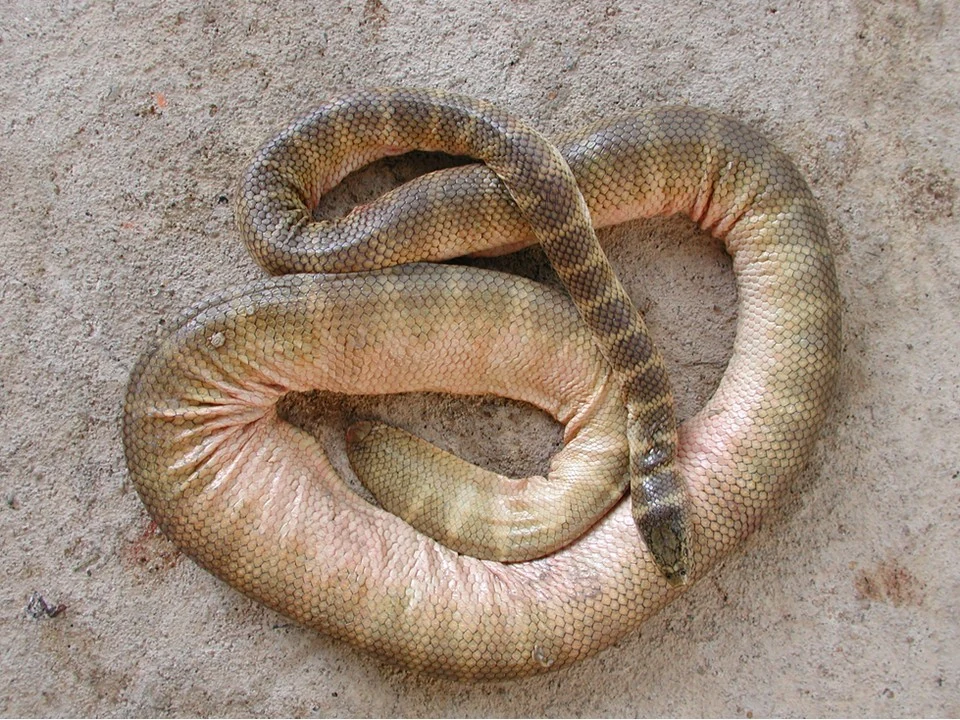
012 · Elapidae
Faint-banded Seasnake
Thailand: country-level record; no named guide locality extracted.
Read the species account →Rasmussen AR, Murphy JC, Ompi M, Gibbons JW, Uetz P (2011) · CC BY 2.5 · https://creativecommons.org/licenses/by/2.5
013 · Elapidae
Peters' Sea Snake
Thailand: country-level record; no named guide locality extracted.
Read the species account →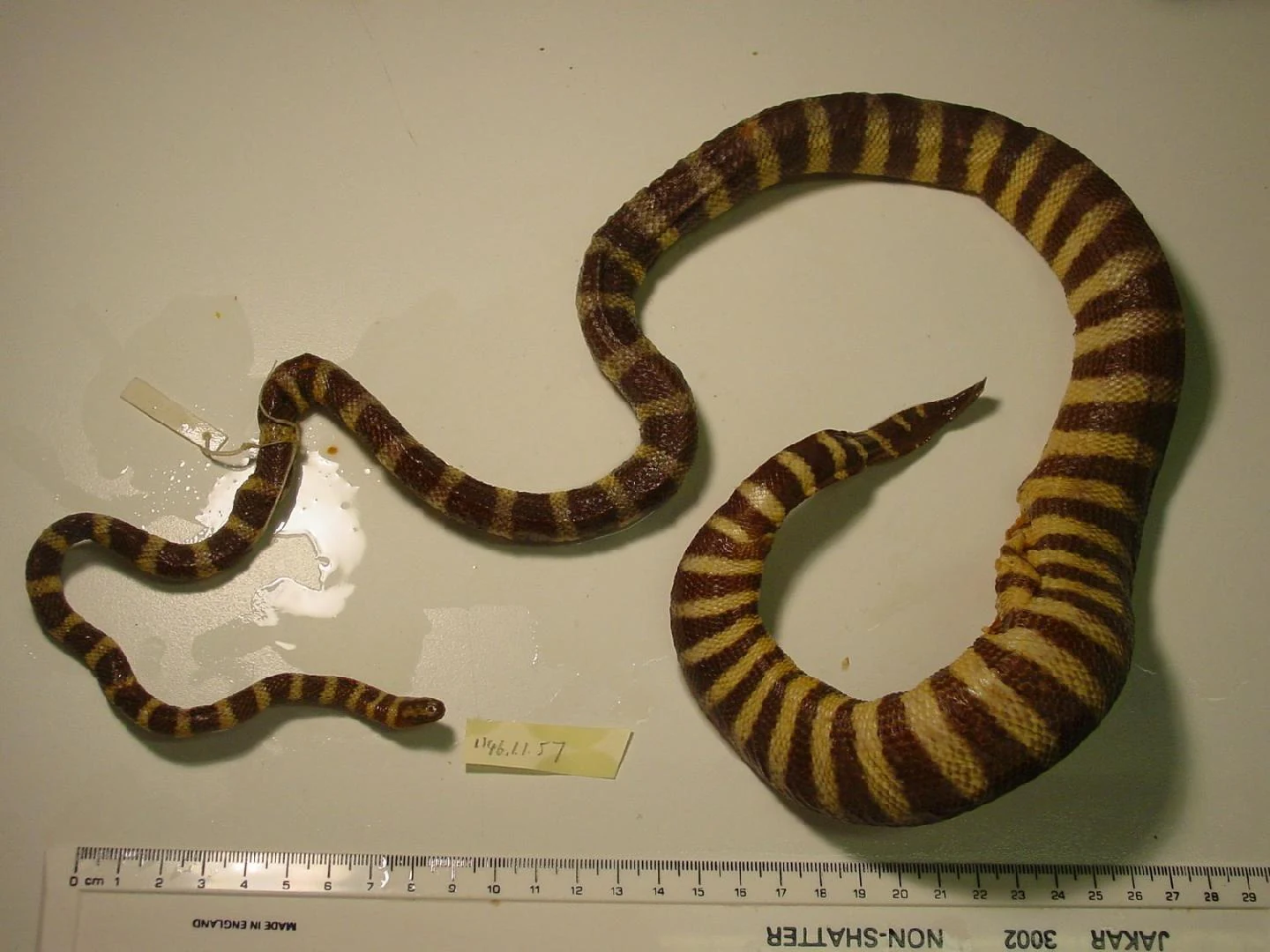
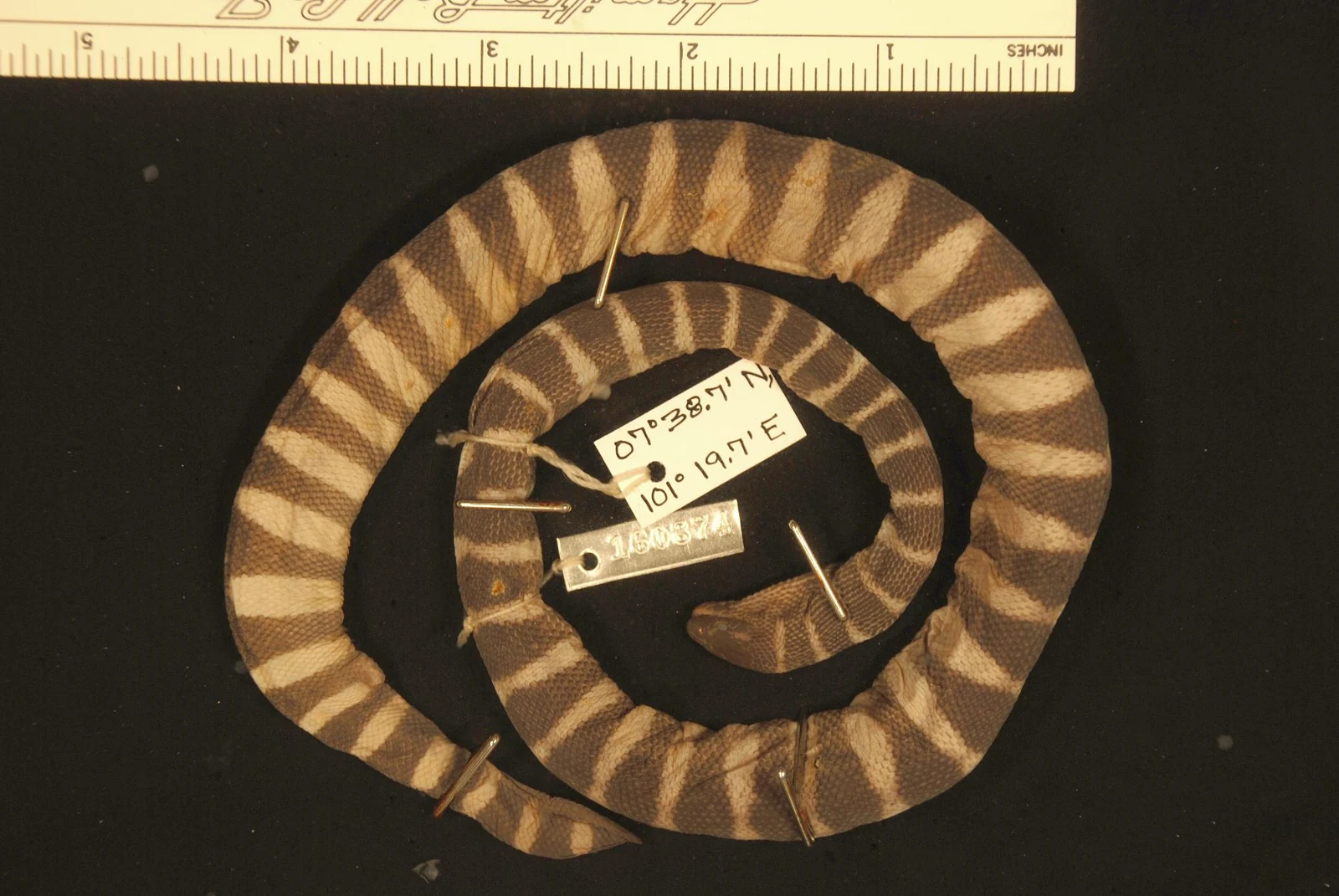
014 · Elapidae
Species account
Thailand: country-level record; no named guide locality extracted.
Read the species account →Patrick Campbell / The Trustees of the Natural History Museum, London · CC BY 4.0 · https://creativecommons.org/licenses/by/4.0/
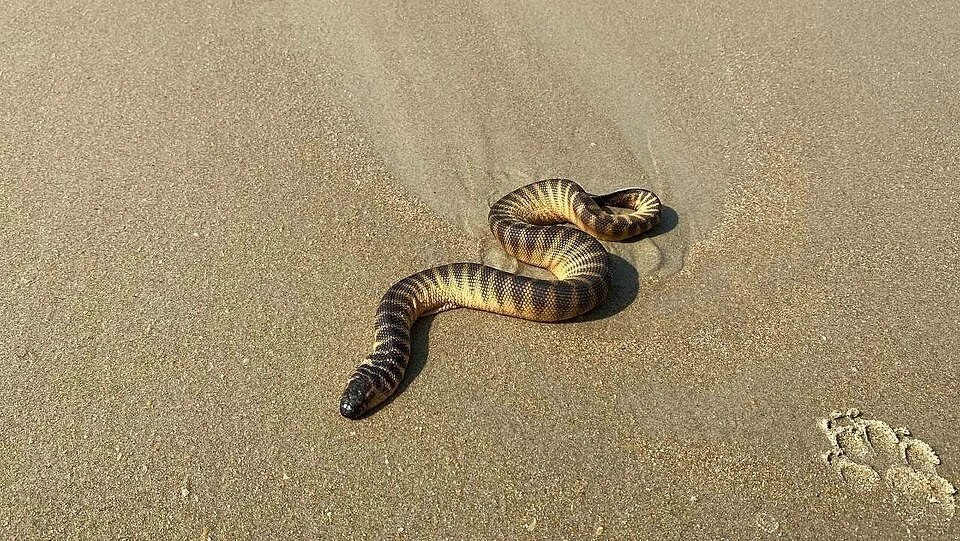
015 · Elapidae
Dwarf Seasnake
Thailand: country-level record; no named guide locality extracted.
Read the species account →Brittany Rogers · CC0 1.0 · https://creativecommons.org/publicdomain/zero/1.0/
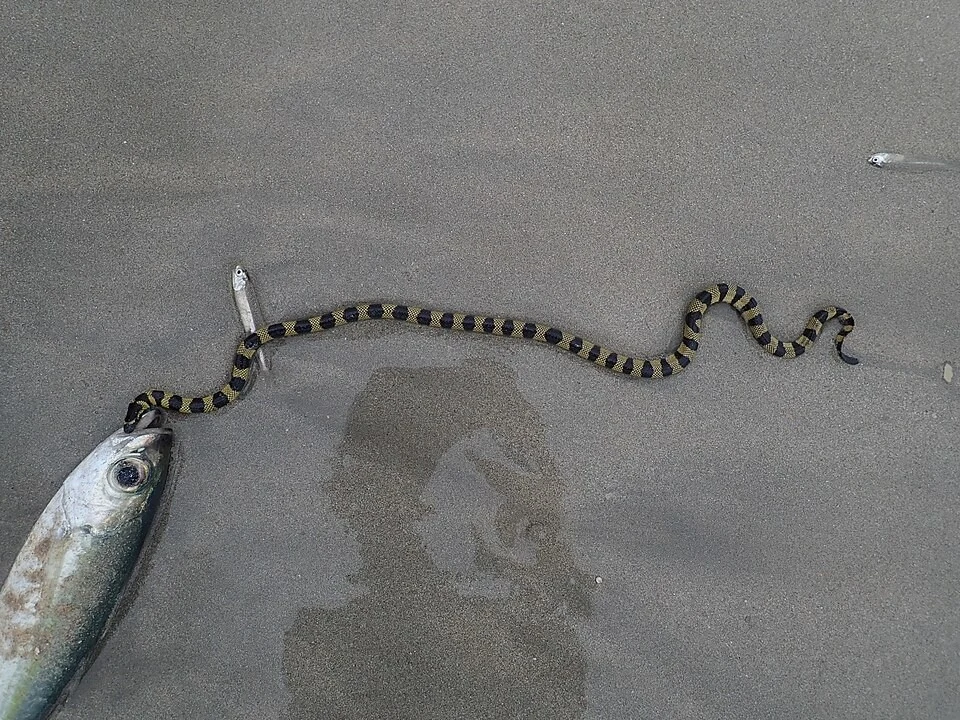
016 · Elapidae
Shaw's Sea Snake
Thailand: country-level record; no named guide locality extracted.
Read the species account →Светлана Царахова · CC0 · https://creativecommons.org/publicdomain/zero/1.0/deed.en
017 · Elapidae
Annulated Sea Snake
Thailand: country-level record; no named guide locality extracted. The Thai government Red Data account (2005, p. 166) documents these named Thai localities. These are historical locality records, not a complete present-day range survey.
Read the species account →evannazareth · CC BY 4.0 · https://creativecommons.org/licenses/by/4.0
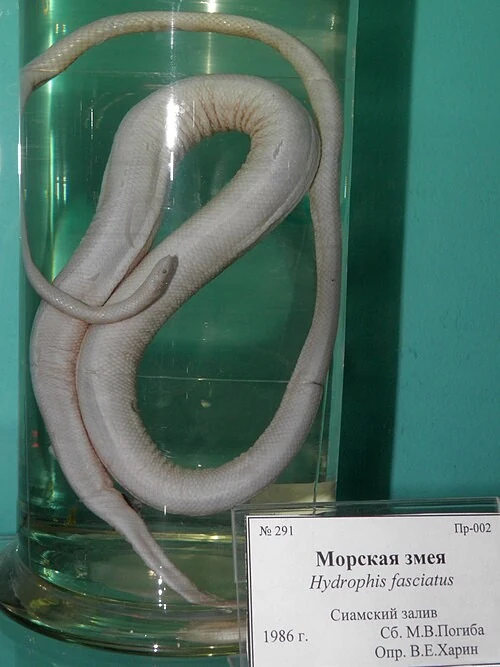
018 · Elapidae
Striped Sea Snake
Thailand: country-level record; no named guide locality extracted.
Read the species account →A. C. Tatarinov · CC0 · https://creativecommons.org/publicdomain/zero/1.0/deed.en
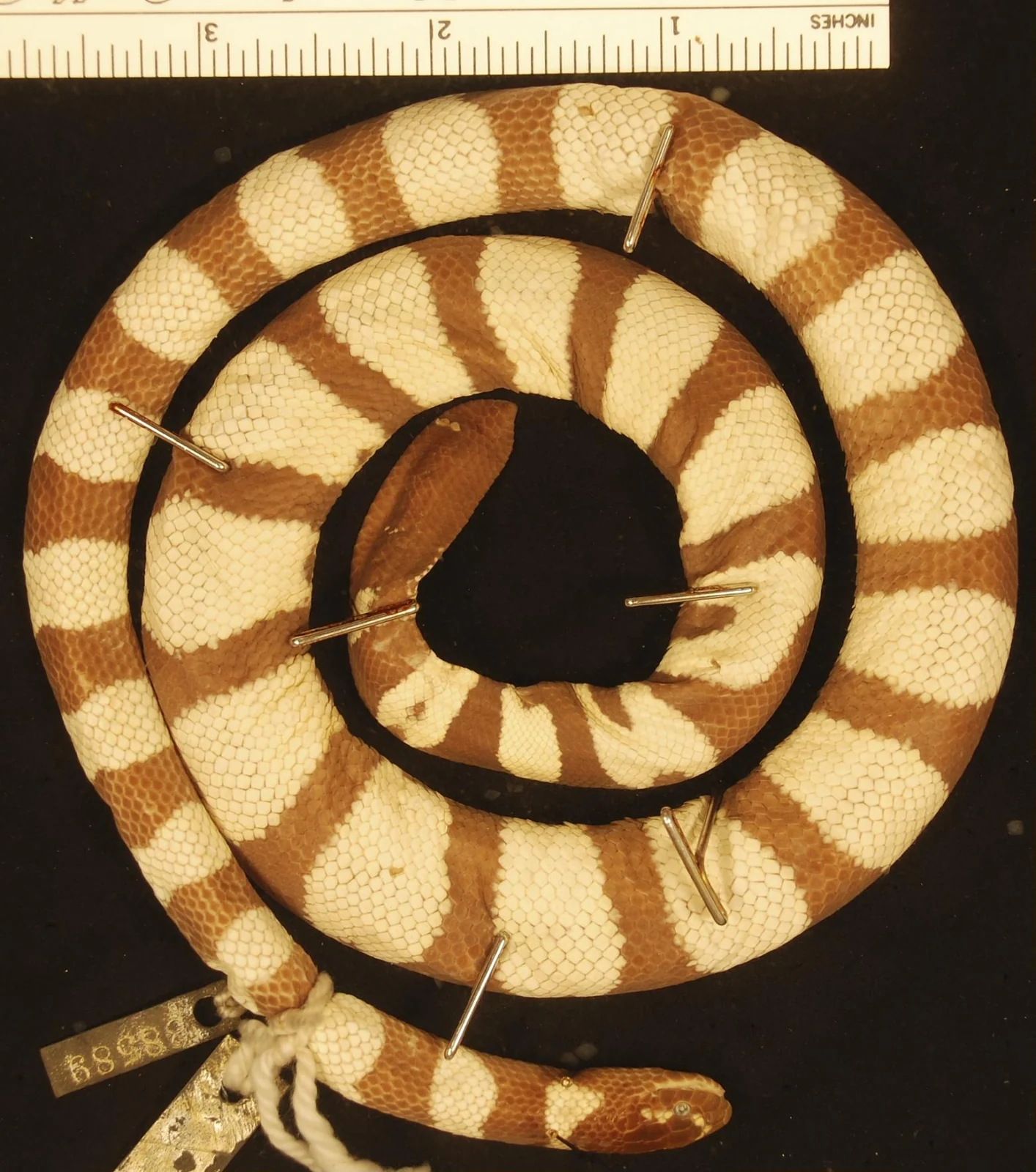
019 · Elapidae
Hardwicke’s spine-bellied seasnake
Thailand: country-level record; no named guide locality extracted.
Read the species account →Brittany Rogers / Smithsonian Institution, National Museum of Natural History · CC0 1.0 · https://creativecommons.org/publicdomain/zero/1.0/
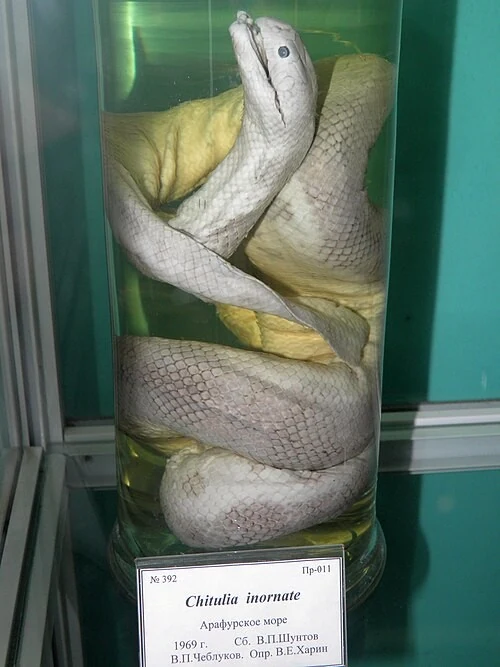
020 · Elapidae
Plain Seasnake
Thailand: country-level record; no named guide locality extracted.
Read the species account →A. C. Tatarinov · CC0 · https://creativecommons.org/publicdomain/zero/1.0/deed.en
021 · Elapidae
Saddle-backed sea snake
Thailand: country-level record; no named guide locality extracted. The Thai government Red Data account (2005, p. 167) documents these named Thai localities. The source uses the name Kerilia jerdonii. These are historical locality records, not a complete present-day range survey.
Read the species account →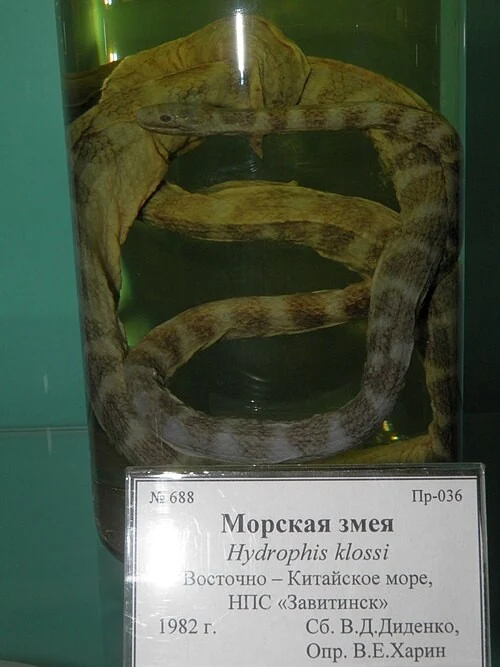
022 · Elapidae
Kloss' Sea Snake
Thailand: Phuket.
Read the species account →A. C. Tatarinov · CC0 · https://creativecommons.org/publicdomain/zero/1.0/deed.en
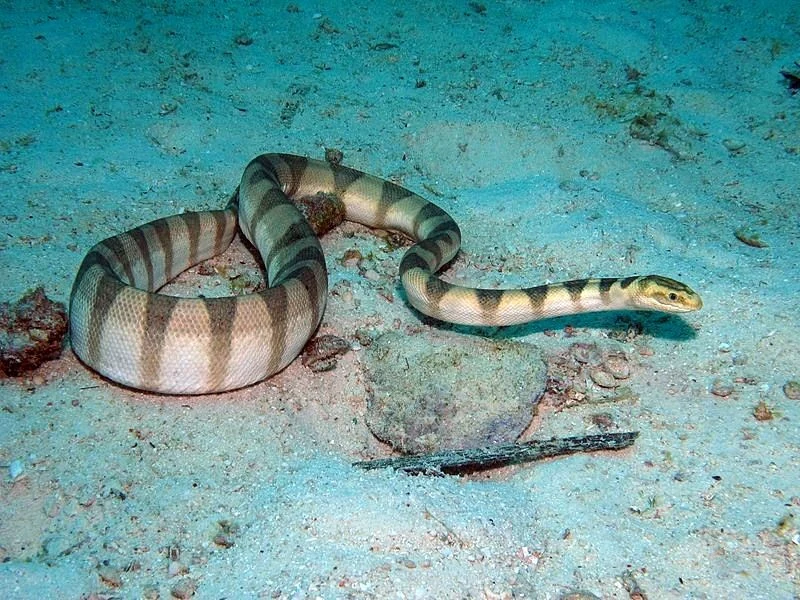
023 · Elapidae
Lambert's Sea Snake
Thailand: country-level record; no named guide locality extracted.
Read the species account →Franco Colnago · CC BY 4.0 · https://creativecommons.org/licenses/by/4.0
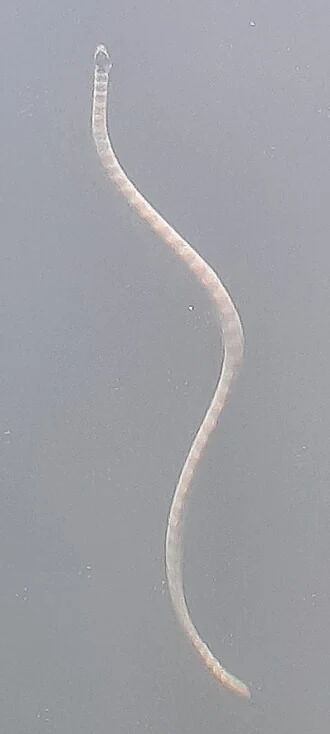
024 · Elapidae
Persian Gulf Sea Snake
Thailand: country-level record; no named guide locality extracted. The Thai government Red Data account (2005, p. 166) documents these named Thai localities. These are historical locality records, not a complete present-day range survey.
Read the species account →purperlibel · CC BY-SA 4.0 · https://creativecommons.org/licenses/by-sa/4.0
Read further
Guide reviewed 11 October 2026. Source dates and geographic scope matter; landscape photographs do not establish species occurrence.
Ko Kra and Ko Ra–Ko Phra Thong habitat mosaics and reported fishing/development threats.
Gulf of Thailand rocky shores, forested islands and reef setting; not a sea-snake survey.
Continue through Thailand
Thailand’s forests include evergreen stands, seasonal woodland and dry dipterocarp formations. Reading their differences is more useful than expecting one national rainforest.
02Northern Thailand’s mountain forests change with elevation, landform and moisture. Doi Inthanon and Doi Chiang Dao provide two different ways to read that gradient.
03Thailand’s karst includes northern mountain massifs and southern limestone coasts. Forest, drainage and the position of the sea give the rock its ecological context.
04Thailand’s river habitats include seasonal floodplains, marshes and managed lowlands. Their ecological boundaries move with water.
05The Andaman coast’s mangroves sit among river mouths, limestone, mudflats and seagrass. Tides and catchments keep those habitats connected.