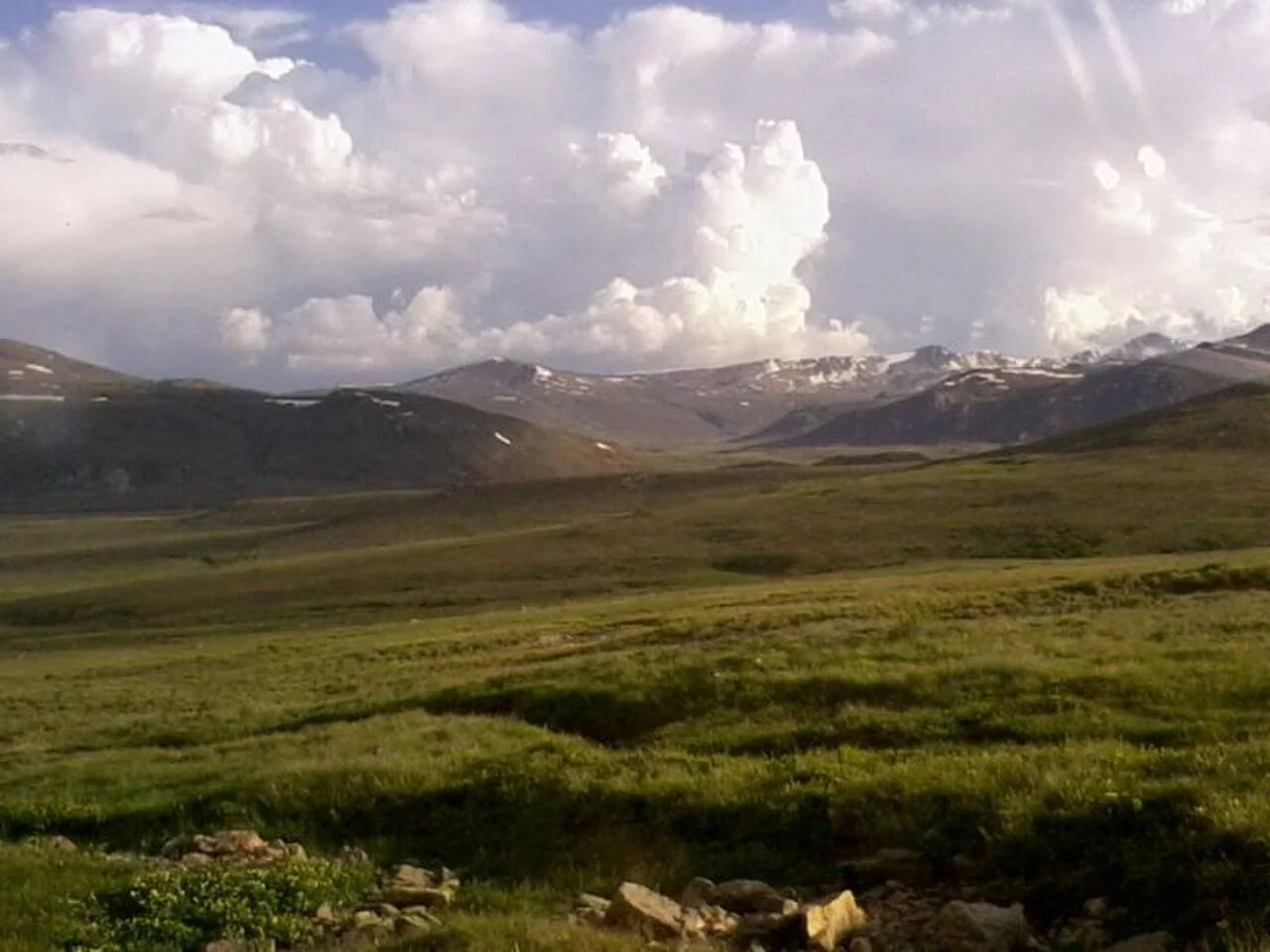
High plateau landscape in Deosai National Park, Gilgit-Baltistan.

Pakistan · Habitat field guide

High mountains and their lower slopes

Keep glacier scenery separate from the actual elevation of a wildlife record.

High plateau landscape in Deosai National Park, Gilgit-Baltistan.

Photograph: M kashi1 · Image source · CC BY-SA 3.0. Cropped to fill the hero; darkened for text legibility.

Understanding the environment

A sense of the habitat.

Keep glacier scenery separate from the actual elevation of a wildlife record.

Landscape evidence
Named examples, not complete habitat coverage
Record detail
Locality · elevation · slope

Explore the structure · Select a feature to compare

Read the landscape

Select a zone to see what changes.

Name the catchment

Valley

Distinguish riverbank, settlement and wooded slope.

Use the sourced examples below to place these observations in context.

Conceptual observation prompts, not a measured transect, habitat boundary or snake range.

Field notes · 01

Karakoram terrain

The 2016 Central Karakorum proposal concerns the extreme mountain landscape between Skardu and Gilgit. Its peaks and glaciers orient the reader; the nomination is not a high-altitude snake survey.

Sources: Pakistan / UNESCO · Central Karakorum proposal

Field notes · 02

Hindu Kush contrast

Chitral Bashkar Garmchashm includes juniper and deodar forest alongside dry-alpine and cold-desert ground. A single regional label therefore conceals substantial habitat differences.

Sources: UNESCO · Chitral Bashkar Garmchashm

Pressures on Pakistan’s habitats

What is at risk?

A site-specific assessment of pressures has not yet been extracted for this guide. The landscape sources below provide context; they do not establish a current threat level for each snake species.

What helps this habitat

Support site-led protection of the landscape processes described here. Keep habitat notes precise and use the linked sources before extending a claim to another place.

The connected collection

Snakes with habitat evidence.

These 3 species have supported country occurrence and an explicit habitat association in the shared account. The association may come from elsewhere in their range. This is not a complete local habitat inventory; the places above are landscape examples, not asserted collecting sites.

3 species · showing 3

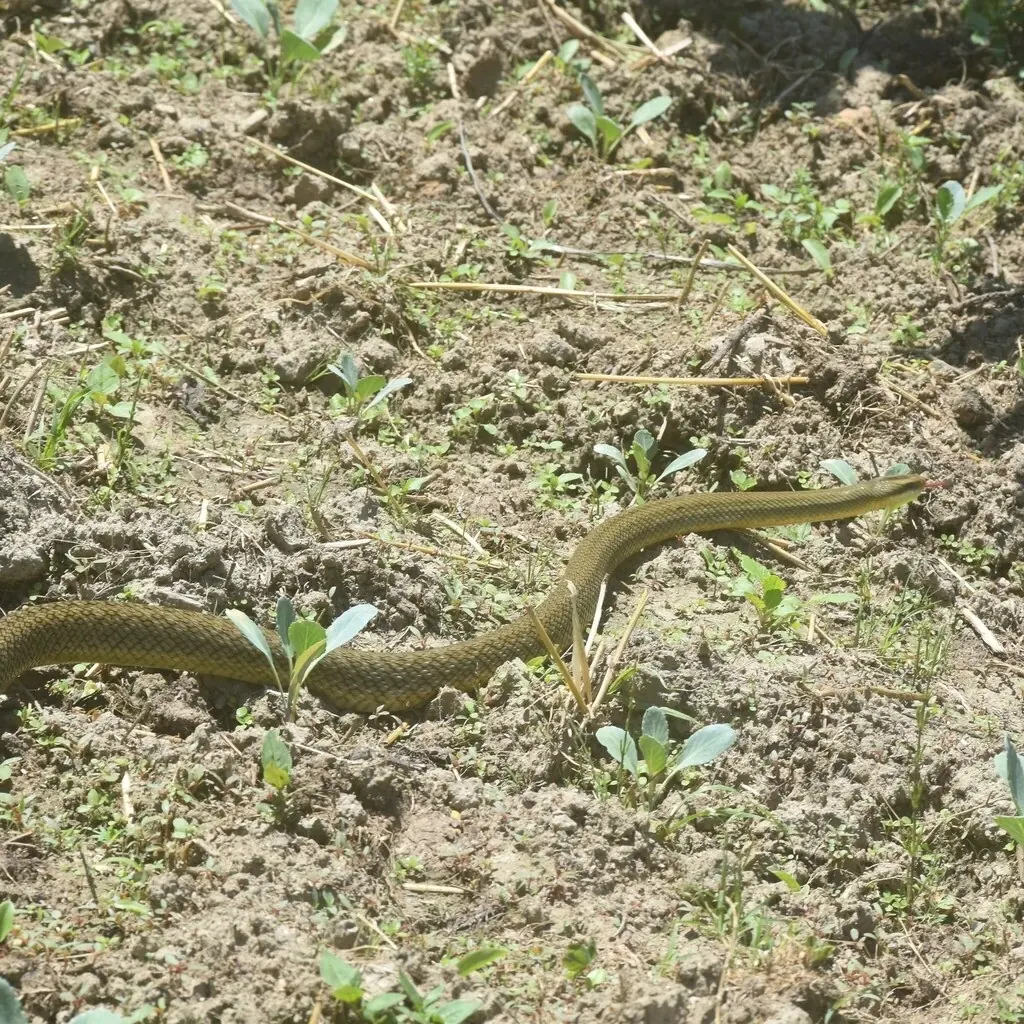
Elaphe hodgsonii. Identification follows the linked source community.

001 · Colubridae

English common name not available

Elaphe hodgsonii

(GÜNTHER, 1860)

Non-venomous

The first verified Pakistani records published in 2025 include Sundhi/Baffa Pakhal (2,994 m), Khanspur Road at Ayubia (2,372 m), and Nagdar Kanari in Neelum (1,863–2,700 m). Voucher PMNH 5164 supports the Neelum record.

Read the species account →

Name · CC BY 4.0 · https://creativecommons.org/licenses/by/4.0/
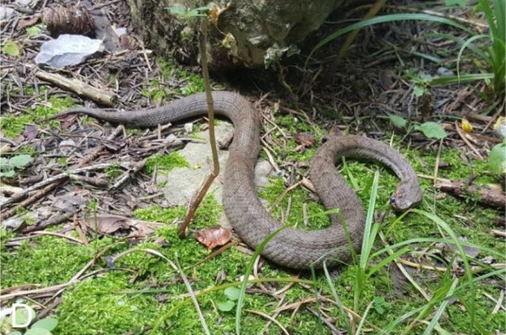
Gloydius hazarensis. Adult specimen from Naran Valley, Khyber Pakhtunkhwa, Pakistan. Figure20D. Isolated source photograph; no new occurrence record is inferred.

002 · Viperidae

Hazara Pitviper

Gloydius hazarensis

JABLONSKI, TILLACK, TILLACK, PETZOLD, WILZO, DAS, IDREES, BANIYA, MASROOR & HOFMANN, 2026

VenomousClinical severity not established

The 2026 integrative revision identifies northern Pakistani populations east of the Indus as G. hazarensis, with documented districts in Khyber Pakhtunkhwa, Punjab and Pakistan-administered Azad Jammu and Kashmir. The contact zone farther east remains unresolved. The 2026 integrative revision identifies northern Pakistani populations east of the Indus as…

Read the species account →

Rafaqat Masroor · CC BY 4.0 · https://creativecommons.org/licenses/by/4.0/
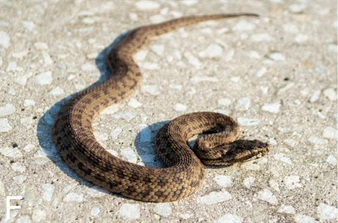
Gloydius hindukushensis. Specimen PMNH5149 from Lal Qilla, Lower Dir, Khyber Pakhtunkhwa, Pakistan, collected16October2023. Figure17F. Isolated source photograph; no new occurrence record is inferred.

003 · Viperidae

Hindu Kush Pitviper

Gloydius hindukushensis

JABLONSKI, TILLACK, TILLACK, PETZOLD, WILZO, DAS, IDREES, BANIYA, MASROOR & HOFMANN, 2026

VenomousClinical severity not established

The 2026 revision confirms this lineage in the Pakistani Hindu Kush, with genetic and morphological records from Chitral, Swat, Dir, Gilgit and Diamer. Occurrence across the Afghan border remains unconfirmed. The 2026 revision confirms this lineage in the Pakistani Hindu Kush, with genetic and morphological records from Chitral, Swat, Dir, Gilgit and…

Read the species account →

Muhammad Idrees · CC BY 4.0 · https://creativecommons.org/licenses/by/4.0/

All 72 species in the country collection →

Read further

Evidence & sources.

Guide reviewed 11 October 2026. Source dates and geographic scope matter; landscape photographs do not establish species occurrence.

  1. Pakistan / UNESCO · Central Karakorum proposal

    2016 Tentative List landscape account for Gilgit-Baltistan; not inscription or proof of snakes on glaciers.

  2. UNESCO · Chitral Bashkar Garmchashm

    Named Khyber Pakhtunkhwa mountain, forest and cold-desert setting.

Continue through Pakistan

Explore another habitat.

01

Juniper, moist forest and valley woodland

Pakistan’s forest examples span both dry uplands and moister mountain slopes.

02

Dunes, thorn vegetation and watered patches

The boundary between dry ground and managed water can be conspicuous.

03

The Indus and managed wetland margins

A reservoir, a river channel and a shallow lagoon are related but different habitats.

04

Mangroves in an arid coastal setting

Tidal water and freshwater supply meet in Pakistan’s delta forests.

05

Creeks, flats and Arabian Sea beaches

A named shore is more informative than a national marine label.