Freshwater and pollution
The department’s account identifies reduced freshwater supply, pollution and coastal development as stresses. It provides no current rate of habitat change.
Sources: Sindh Forest Department · Mangroves
Pakistan · Habitat field guide
Tidal water and freshwater supply meet in Pakistan’s delta forests.
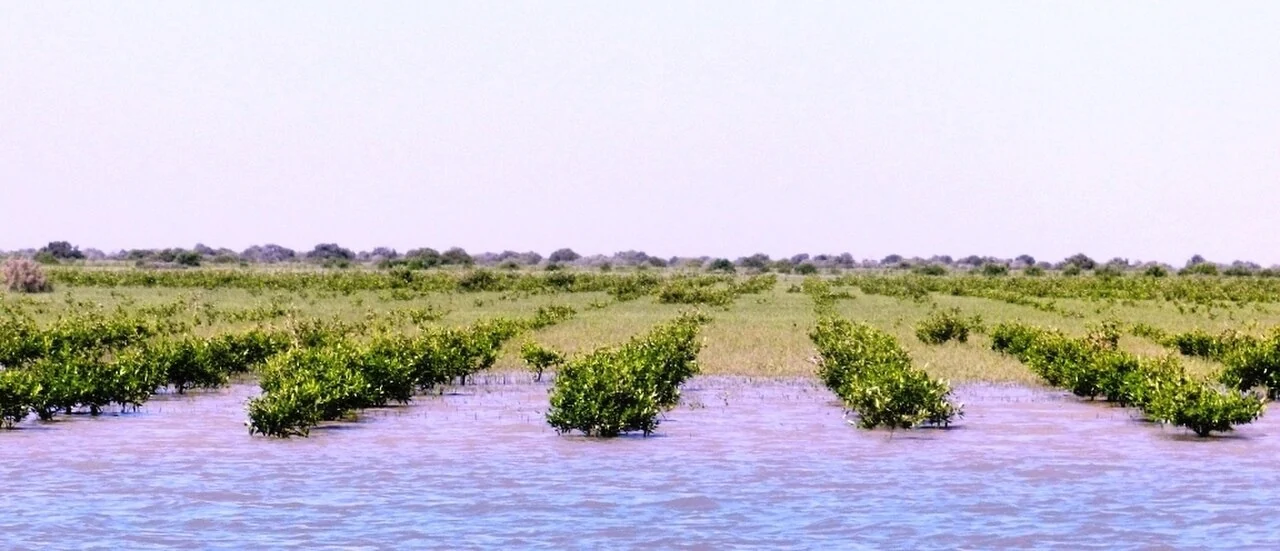
Young mangrove plantation in the Indus Delta, Pakistan.
Understanding the environment
Tidal water and freshwater supply meet in Pakistan’s delta forests.
Explore the structure · Select a feature to compare
Select a zone to see what changes.
Name the transition
Describe the adjoining habitat and any embankment.
Use the sourced examples below to place these observations in context.
Conceptual observation prompts, not a measured transect, habitat boundary or snake range.
Field notes · 01
Sindh’s Forest Department describes mangroves in an arid delta climate and their dependence on freshwater inputs. The surrounding landscape includes both tidal channels and land-derived water connections.
Sources: Sindh Forest Department · Mangroves
Field notes · 02
Jiwani’s 2001 information sheet places mangroves around the Dasht River’s entry into Gawater Bay. That Balochistan locality remains separate from an Indus Delta record in Sindh.
Pressures on Pakistan’s habitats
The department’s account identifies reduced freshwater supply, pollution and coastal development as stresses. It provides no current rate of habitat change.
Sources: Sindh Forest Department · Mangroves
Support site-led protection of the landscape processes described here. Keep habitat notes precise and use the linked sources before extending a claim to another place.
The connected collection
These 1 species have supported country occurrence and an explicit habitat association in the shared account. The association may come from elsewhere in their range. This is not a complete local habitat inventory; the places above are landscape examples, not asserted collecting sites.
1 species · showing 1
001 · Elapidae
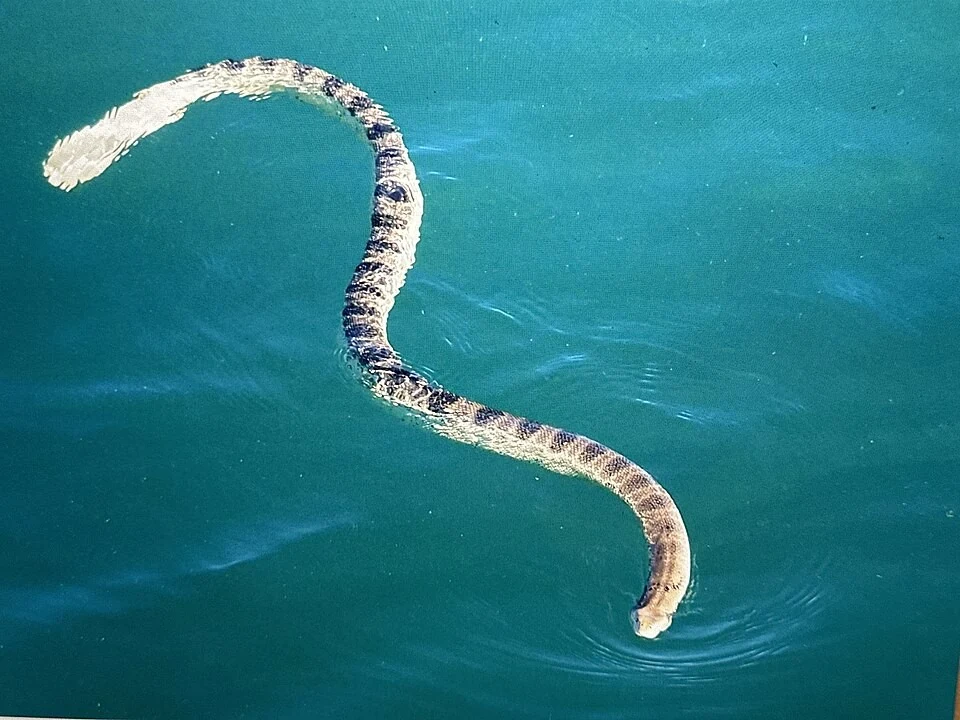
Stoke’s seasnake
Pakistan is explicitly recorded in the checked individual species treatment.
Read the species account →Rosario · CC BY 4.0 · https://creativecommons.org/licenses/by/4.0
Read further
Guide reviewed 11 October 2026. Source dates and geographic scope matter; landscape photographs do not establish species occurrence.
Arid delta climate, freshwater dependence and pressures; indexed first-party text read because direct fetch is blocked. Historical totals and contradictory species counts are excluded.
Dasht River estuary, Gawater Bay, mangroves and beaches in Balochistan.
Continue through Pakistan
Pakistan’s forest examples span both dry uplands and moister mountain slopes.
02Keep glacier scenery separate from the actual elevation of a wildlife record.
03The boundary between dry ground and managed water can be conspicuous.
04A reservoir, a river channel and a shallow lagoon are related but different habitats.
05A named shore is more informative than a national marine label.