Visitor and resource management
The Sagarmatha account calls for better tourism management, sustainable resource use and reduced pollution. Its historical visitor figures are not reused.
Sources: UNESCO · Sagarmatha National Park
Nepal · Habitat field guide
Mountain habitat needs more detail than a summit name.
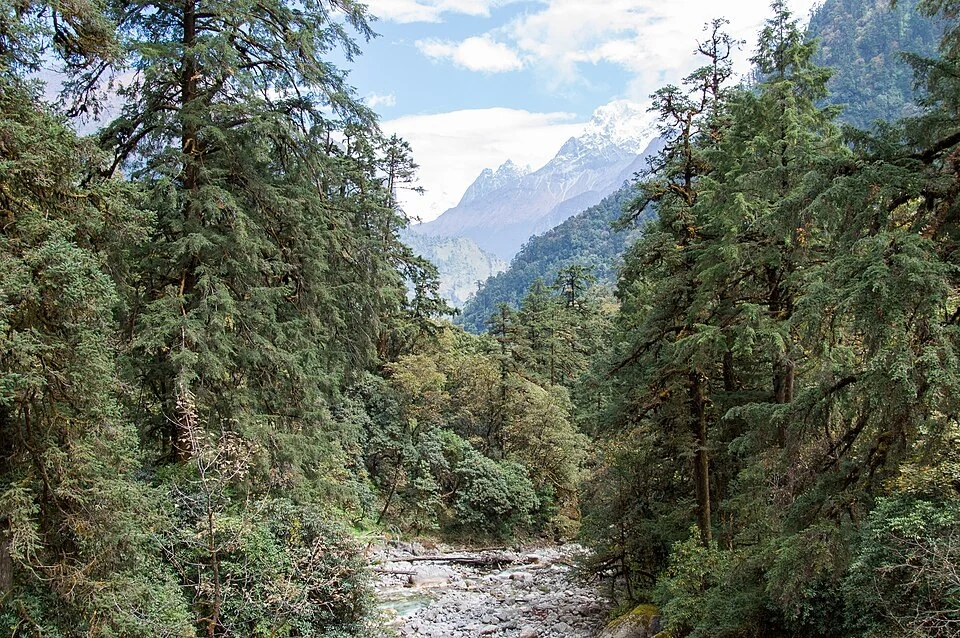
Mountain forest near Timang on the Annapurna Circuit, Nepal.
Understanding the environment
Mountain habitat needs more detail than a summit name.
Explore the structure · Select a zone to compare its structure and details worth recording.
Select a zone to see what changes.
Start with elevation
Keep valley and slope records separate.
Observation prompts do not establish that a particular snake occurs in this zone.
Conceptual zones, not a measured transect or a map of snake occurrences.
Sources: UNESCO · Sagarmatha National Park · Ramsar · Nepal annotated wetland summaries
Field notes · 01
Sagarmatha illustrates a strong Himalayan terrain gradient. The Ramsar summary places Rara in the Karnali highlands. These sources orient the landscape; neither supplies snake records for its highest ground.
Sources: UNESCO · Sagarmatha National Park · Ramsar · Nepal annotated wetland summaries
Field notes · 02
Keep the locality, date and habitat description together. A landscape source explains the setting; only a verified species record establishes occurrence. The collection below may be smaller than the variety of environments described here.
Pressures on Nepal’s habitats
The Sagarmatha account calls for better tourism management, sustainable resource use and reduced pollution. Its historical visitor figures are not reused.
Sources: UNESCO · Sagarmatha National Park
Retain the local habitat mosaic and its connections. Interpret pressures using the cited site evidence and current local management guidance.
The connected collection
These 5 species have supported country occurrence and an explicit habitat association in the shared account. The association may come from elsewhere in their range. This is not a complete local habitat inventory; the places above are landscape examples, not asserted collecting sites.
5 species · showing 5
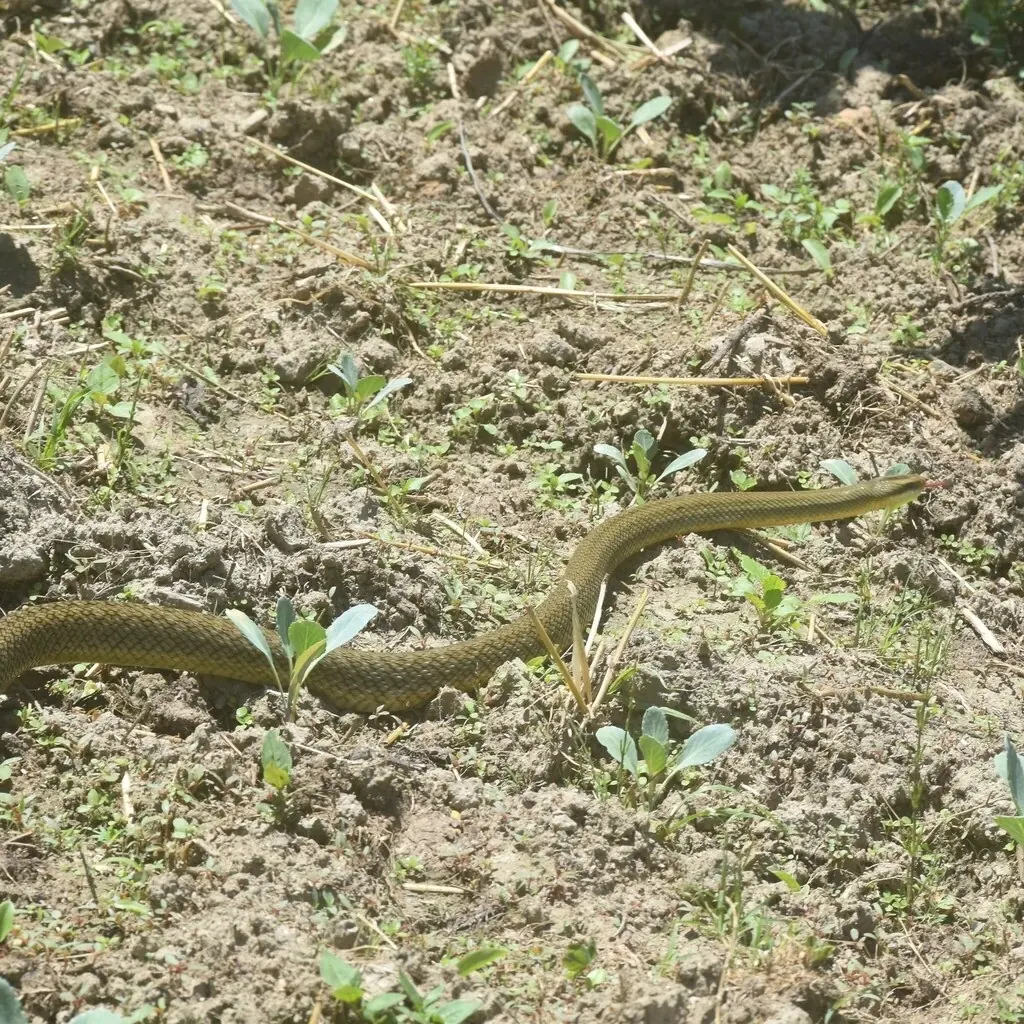
001 · Colubridae
English common name not available
Nepal is explicitly listed in the checked individual taxonomic treatment. The 2026 Dang survey supplies an independent Lumbini record. Regional evidence: Dang Valley / Deukhuri. Named records do not imply continuous occurrence throughout a region. Nepal: Dang Valley, Banglachuli. Subedi et al. (2026) document these localities from their 2018–2024 study;…
Read the species account →Name · CC BY 4.0 · https://creativecommons.org/licenses/by/4.0/
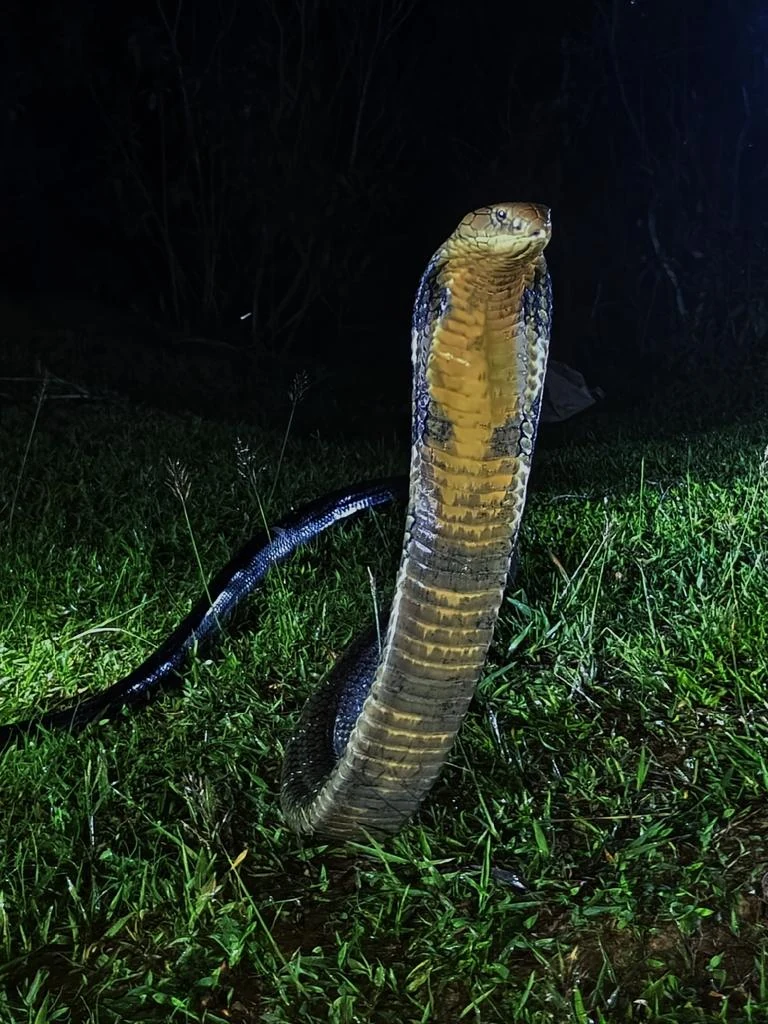
002 · Elapidae
Hamadryad, King Cobra
Nepal is explicitly listed in the checked individual taxonomic treatment.
Read the species account →Ankur Nandi · CC BY 4.0 · https://creativecommons.org/licenses/by/4.0/
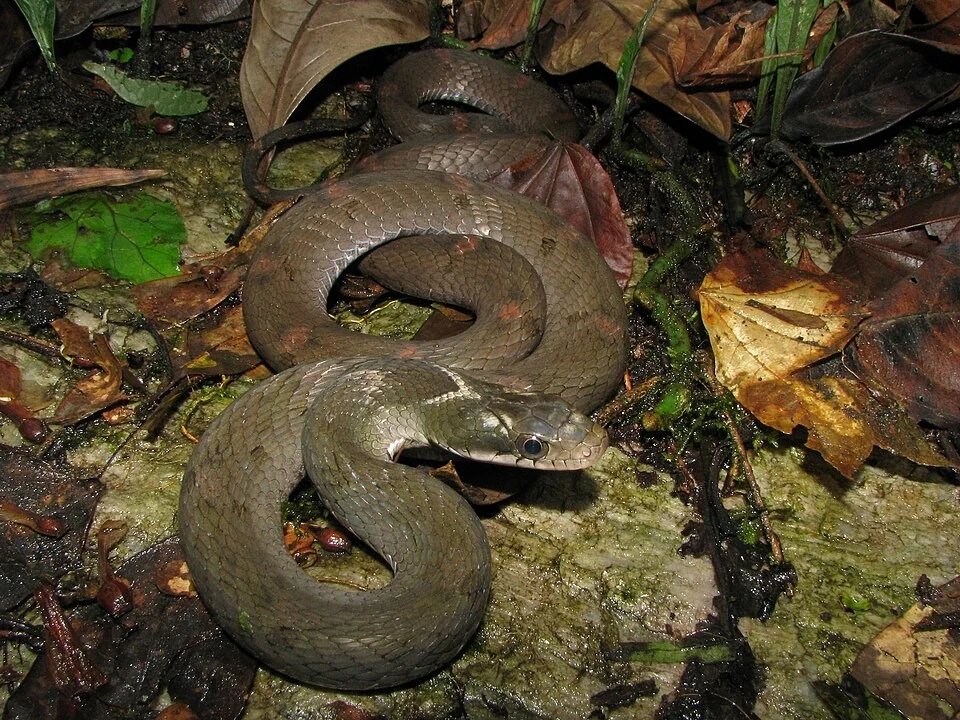
003 · Colubridae
(Large-eyed or) Big-eyed Bamboo Snake, Mock Cobra
Nepal is explicitly listed in the checked individual taxonomic treatment. Nepal: historical vouchers from Gandrung forest (1973; 2,360 m) and Ulleri (1954; 2,000 m).
Read the species account →Umeshsrinivasan · CC BY-SA 3.0 · https://creativecommons.org/licenses/by-sa/3.0
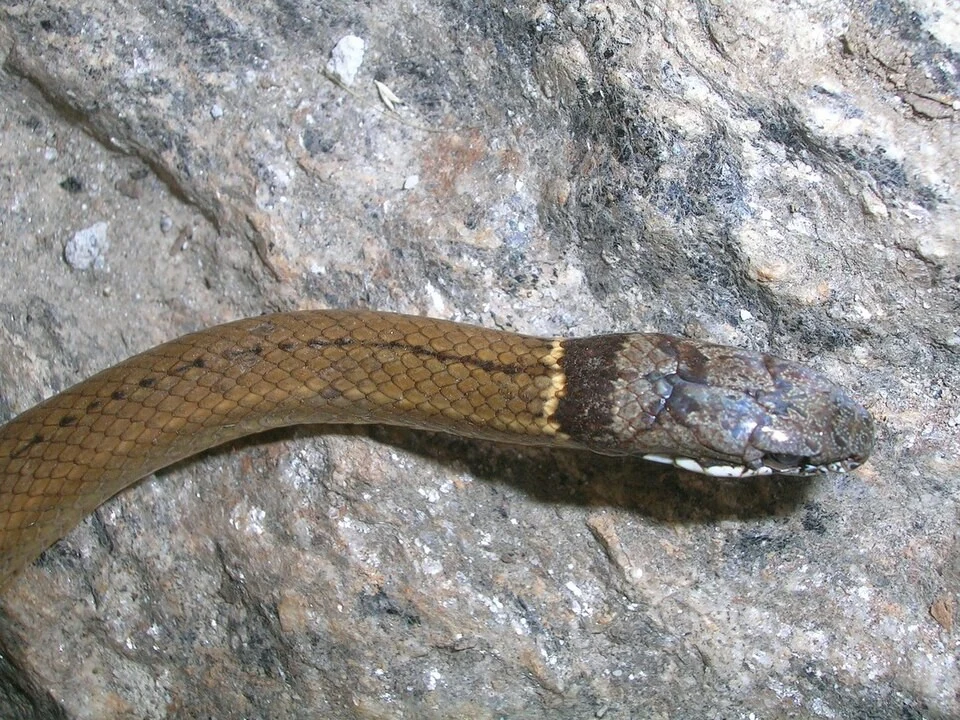
004 · Colubridae
Common Many-tooth Snake
Nepal is explicitly listed in the checked individual taxonomic treatment. Nepal: named specimen and observation sites from 1973–1981 in the 1987 monograph.
Read the species account →L. Shyamal · CC BY-SA 3.0 · https://creativecommons.org/licenses/by-sa/3.0
005 · Colubridae
Blackbelly Worm-eating Snake
Nepal is explicitly listed in the checked individual taxonomic treatment. Nepal: six specimens collected at Kyumnu Khola, 1,900 m, in May 1973 (ZSM 141/1973).
Read the species account →Read further
Guide reviewed 11 October 2026. Source dates and geographic scope matter; landscape photographs do not establish species occurrence.
High mountain vegetation and visitor-management context; not evidence of snakes at summits.
Named lakes and district locations; designation summaries, not snake evidence.
Continue through Nepal