Land & water
Savannakhet, Salavan, Xekong, Champasak and Attapeu encompass plateau slopes, tributary valleys and lowland plains. Waterfalls and forested catchments contrast with seasonally dry lowland landscapes.
Laos · Regional field guide
The Bolaven Plateau rises above warm river lowlands and the southern Mekong basin.
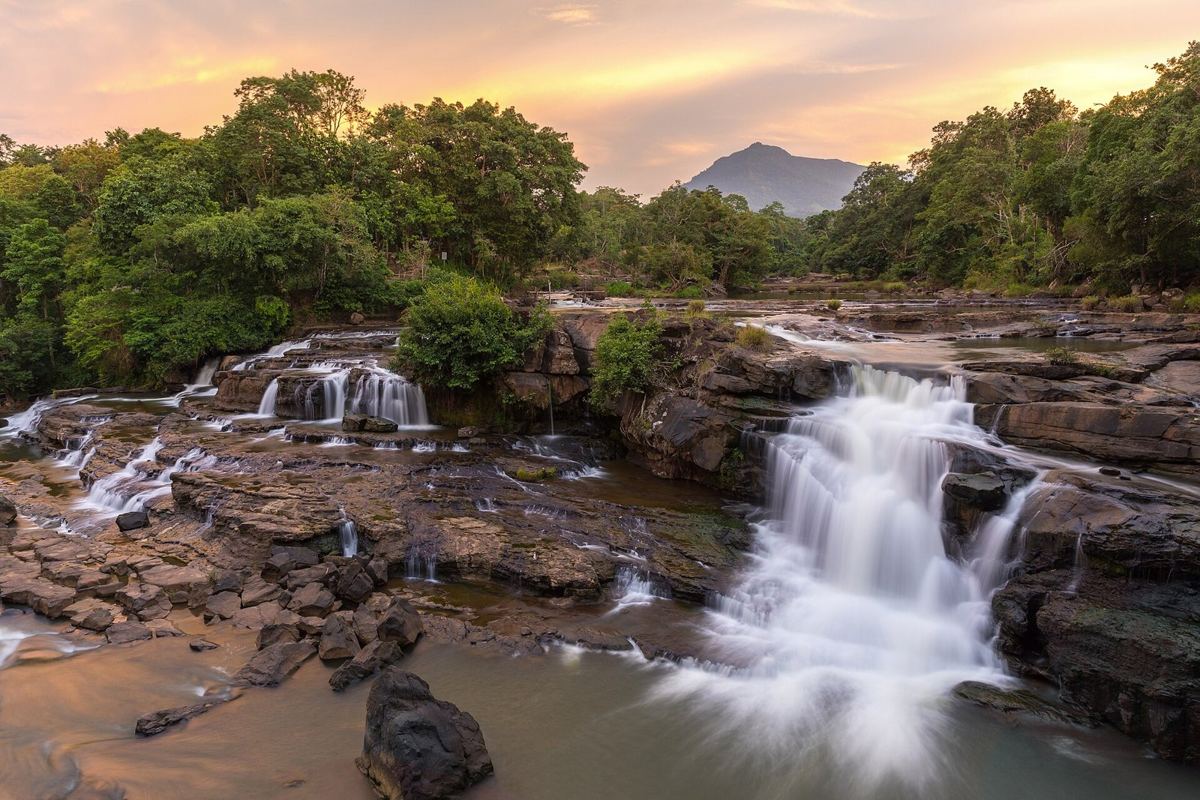
Tad Hang waterfall at Tad Lo, on the Bolaven Plateau, southern Laos.
Geography & biotopes
The Bolaven Plateau rises above warm river lowlands and the southern Mekong basin.
Savannakhet, Salavan, Xekong, Champasak and Attapeu encompass plateau slopes, tributary valleys and lowland plains. Waterfalls and forested catchments contrast with seasonally dry lowland landscapes.
The juxtaposition of seasonal woodland, wet forest and freshwater creates opportunities for very different snake communities. Survey coverage is uneven, and a small regional list can reflect limited reporting.
Explore the connection between plateau headwaters and the lowland Mekong landscape. Published southern records are retained with their named provinces rather than extrapolated to the whole region.
Savannakhet · Salavan · Xekong · Champasak · Attapeu
These are geographic groupings of historical provincial areas used to interpret the literature. They do not represent current administrative divisions.
Different environments
From the canopy to the leaf litter, forest structure matters as much as the word “forest”.
Explore the habitat →Rocky ridges, caves and forest patches create a landscape full of small environmental contrasts.
Explore the habitat →Fast forest streams and still lowland water support very different ways of life.
Explore the habitat →The species collection
Species assigned from explicitly named localities. The complete national collection also includes records without finer geographic resolution.
15 species · showing 15
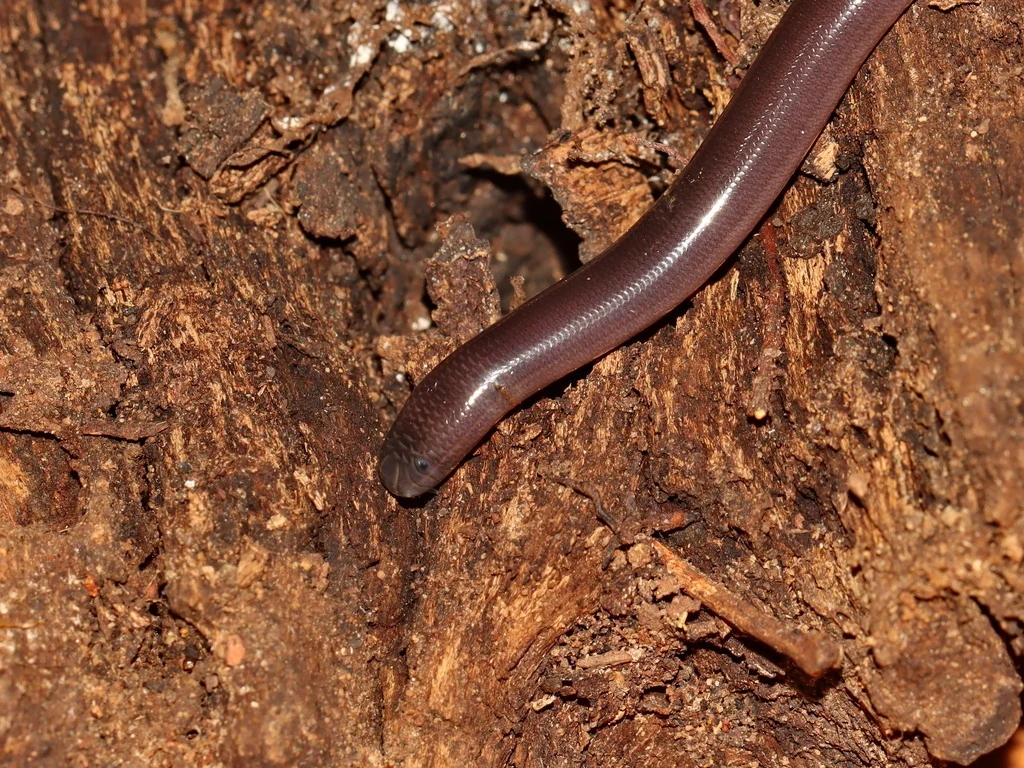
001 · Typhlopidae
Diard’s blindsnake
Laos: Houaphan, Xiangkhoang; Bolikhamxai; Champasak.
Read the species account →Ian Dugdale · CC BY 4.0 · https://creativecommons.org/licenses/by/4.0/
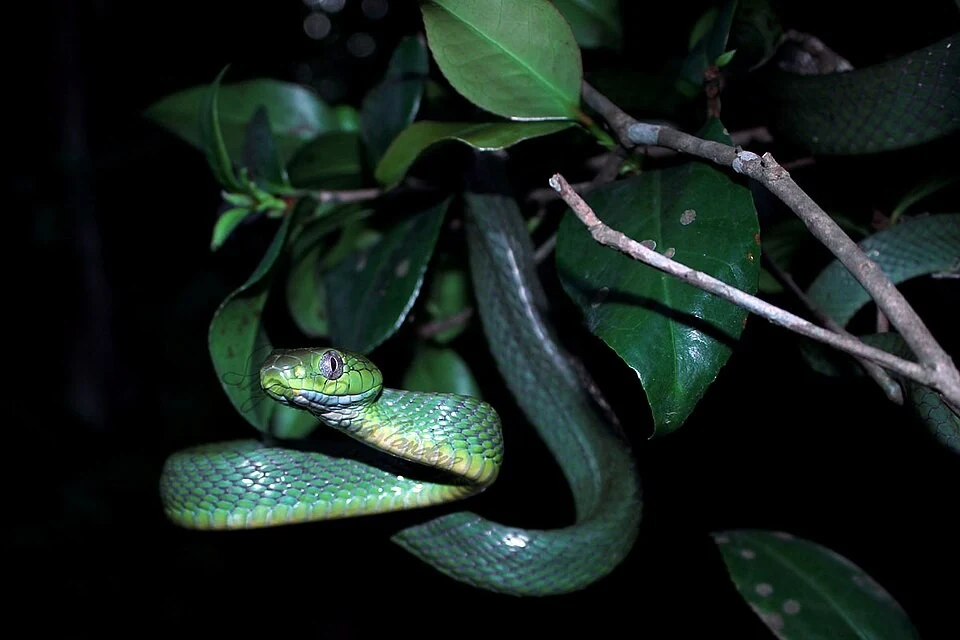
002 · Colubridae
Green Cat Snake
Laos: Oudomxay, Bokeo, Xaignabouli; Vientiane, Vientiane Prefecture, Khammouan; Savannakhet, Xekong, Champasak.
Read the species account →Sp.herp · CC BY-SA 3.0 · https://creativecommons.org/licenses/by-sa/3.0
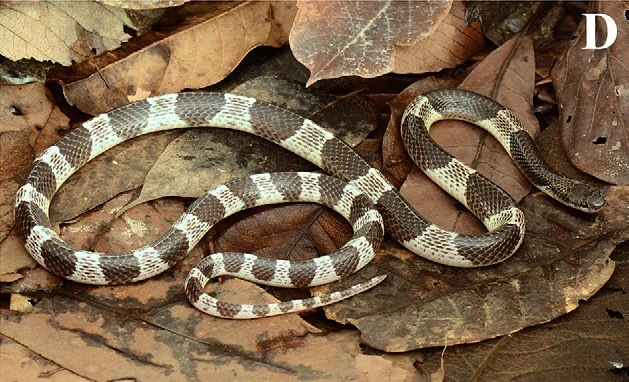
003 · Elapidae
Blue Krait
Laos: Vientiane; Salavan, Champasak.
Read the species account →Zijia Hong, Shahrul Anuar, L. Lee Grismer and Evan S. H. Quah (2021) · CC BY 4.0 · https://creativecommons.org/licenses/by/4.0/
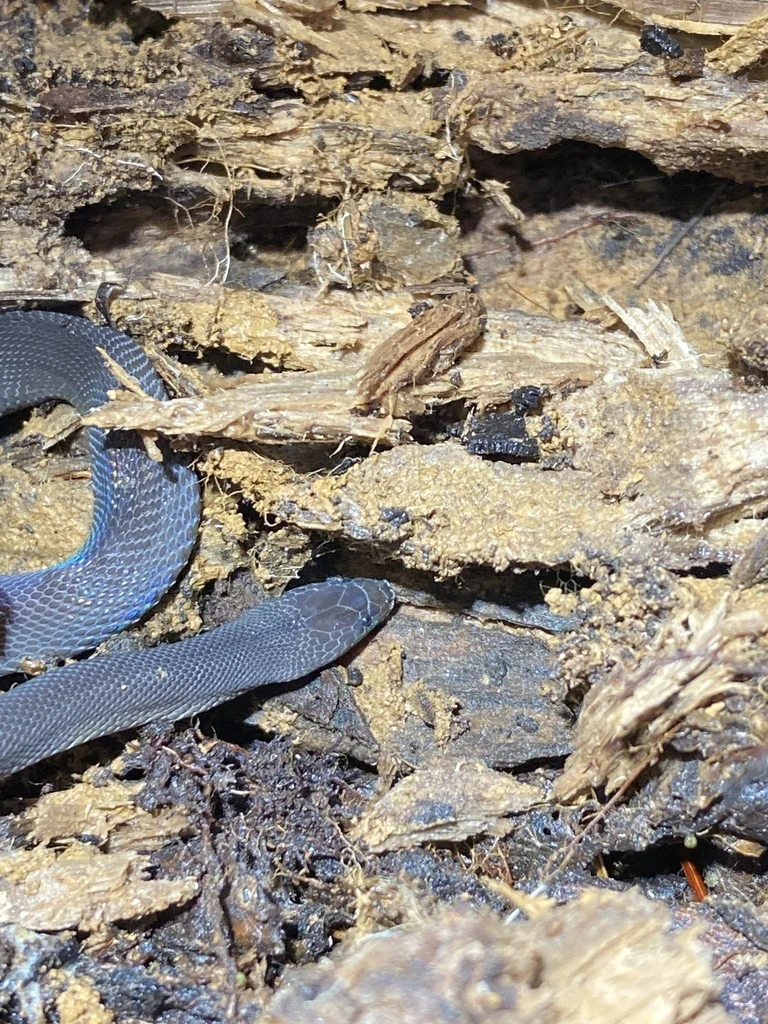
004 · Xenodermidae
Bearded Snake
Laos: Champasak.
Read the species account →Nadezhda Bortnikova · CC BY 4.0 · https://creativecommons.org/licenses/by/4.0/
005 · Colubridae
Annam Keelback
Laos: Xekong, Champasak.
Read the species account →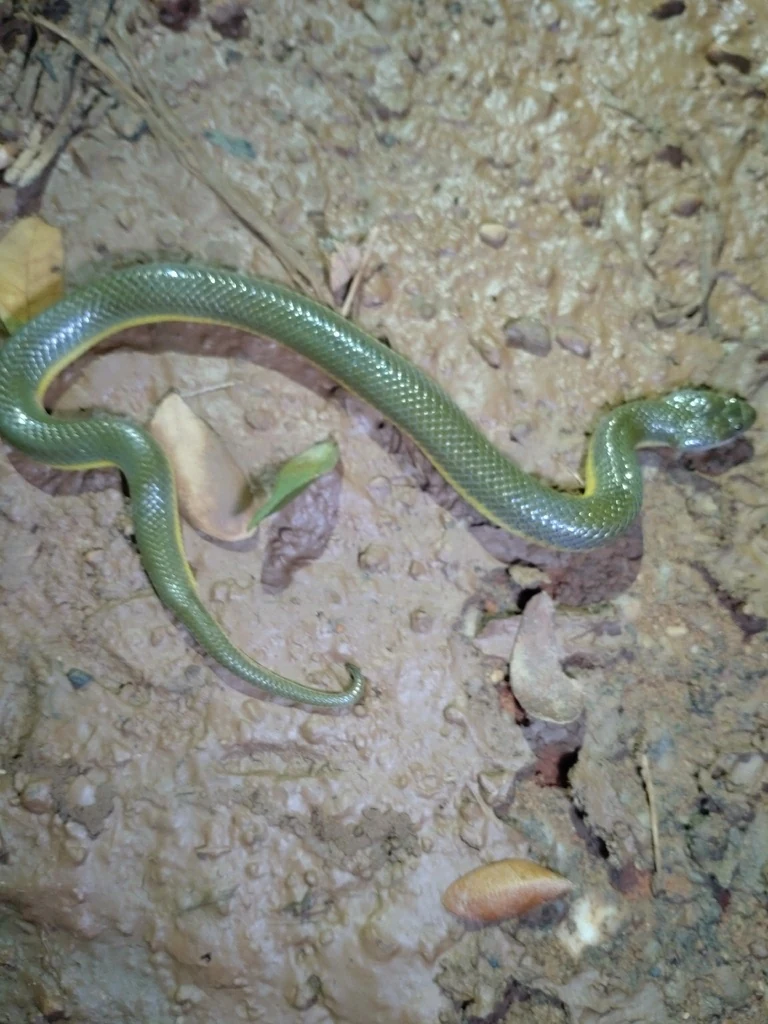
006 · Homalopsidae
Murphy’s Mud Snake
Laos: Vientiane, Bolikhamxay, Khammouan; Savannakhet, Champasak.
Read the species account →Utain Pummarin · CC BY 4.0 · https://creativecommons.org/licenses/by/4.0/
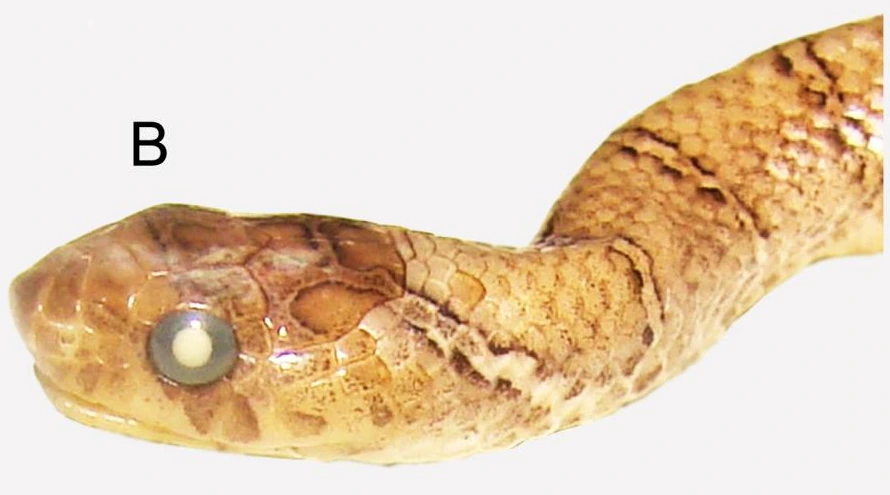
007 · Colubridae
Teynié’s Kukri Snake
Laos: Champasak.
Read the species account →Patrick David; David, Hauser and Vogel (2022) · CC BY 4.0 · https://creativecommons.org/licenses/by/4.0/
008 · Pareidae
Narrow-headed Snail-eating Snake
Laos: Xekong.
Read the species account →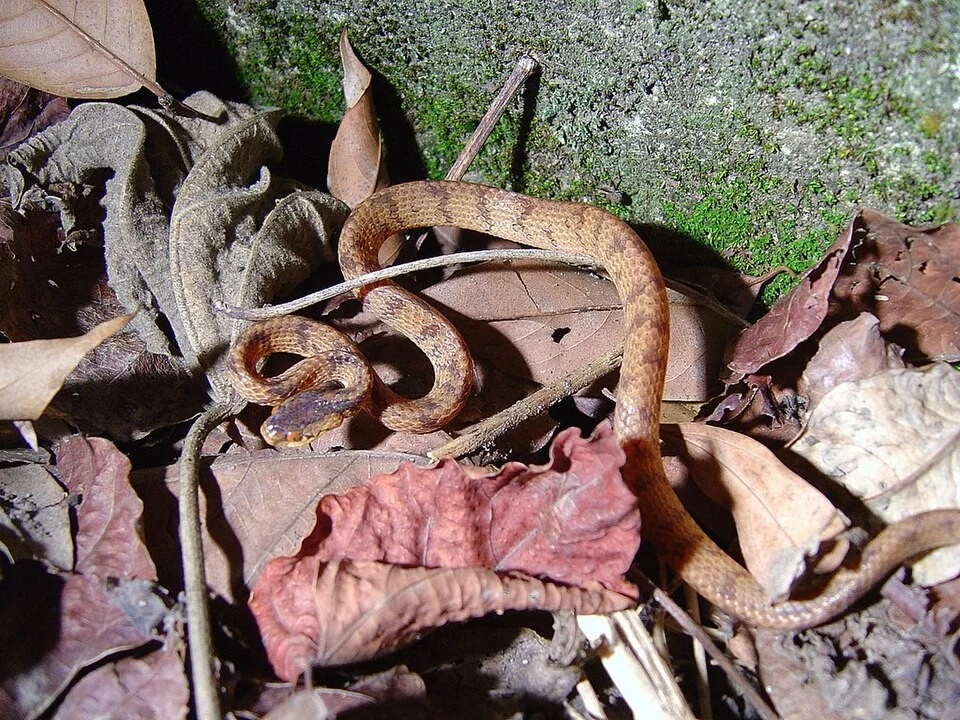
009 · Pareidae
Formosa Slug Snake, Taiwan Slug Snake
Laos: Khammouan; Xekong, Champasak.
Read the species account →張廖年鴻 · CC BY-SA 2.5 · https://creativecommons.org/licenses/by-sa/2.5
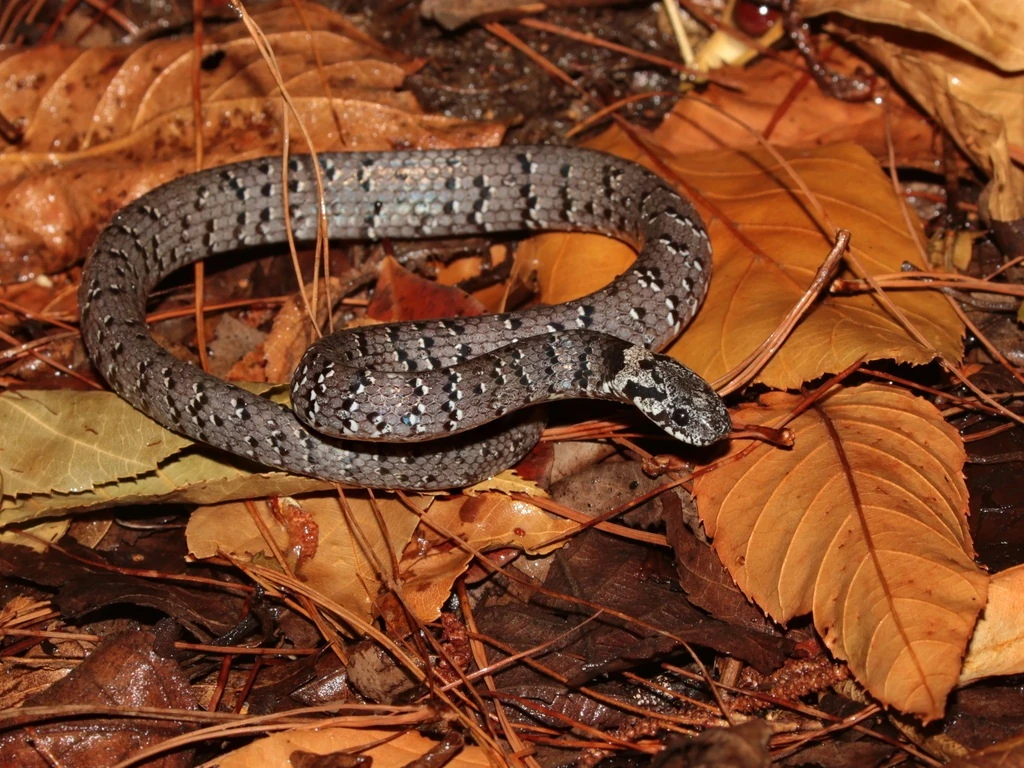
010 · Pareidae
Mountain Slug Snake
Laos: Oudomxay, Houaphan, Xiangkhouang, Phongsali, Louangphrabang, Xiangkhoang; Xaisomboun; Champasak.
Read the species account →Ian Dugdale · CC BY 4.0 · https://creativecommons.org/licenses/by/4.0/
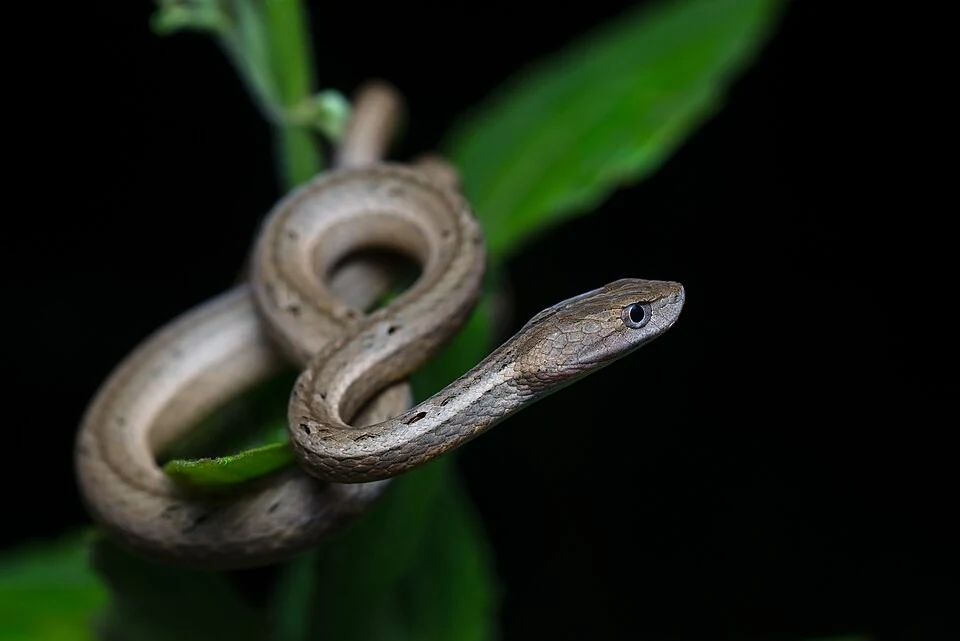
011 · Psammodynastidae
Common Mock Viper
Laos: Louangphrabang, Xiangkhoang; Vientiane, Khammouan; Savannakhet, Champasak, Attapu.
Read the species account →Rushenb · CC BY-SA 4.0 · https://creativecommons.org/licenses/by-sa/4.0
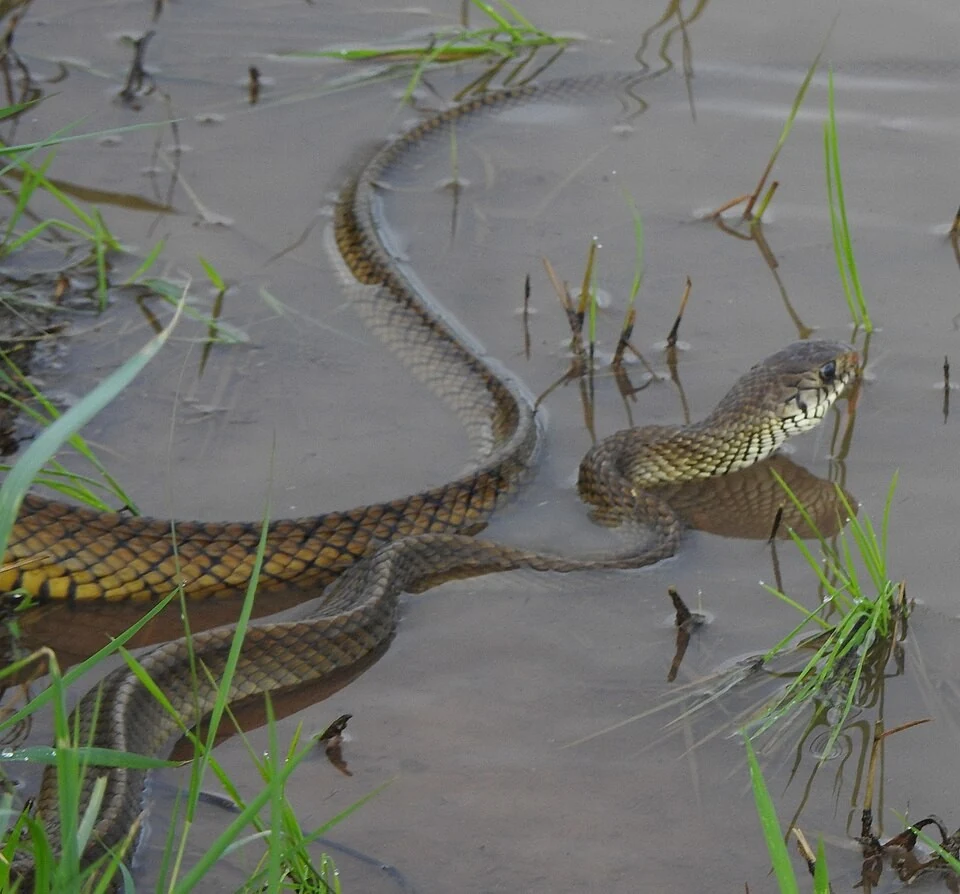
012 · Colubridae
Dhaman
Laos: Louangphrabang, Xiangkhoang; Vientiane, Bolikhamxai, Khammouan; Champasak.
Read the species account →Afsar Nayakkan · CC BY 4.0 · https://creativecommons.org/licenses/by/4.0
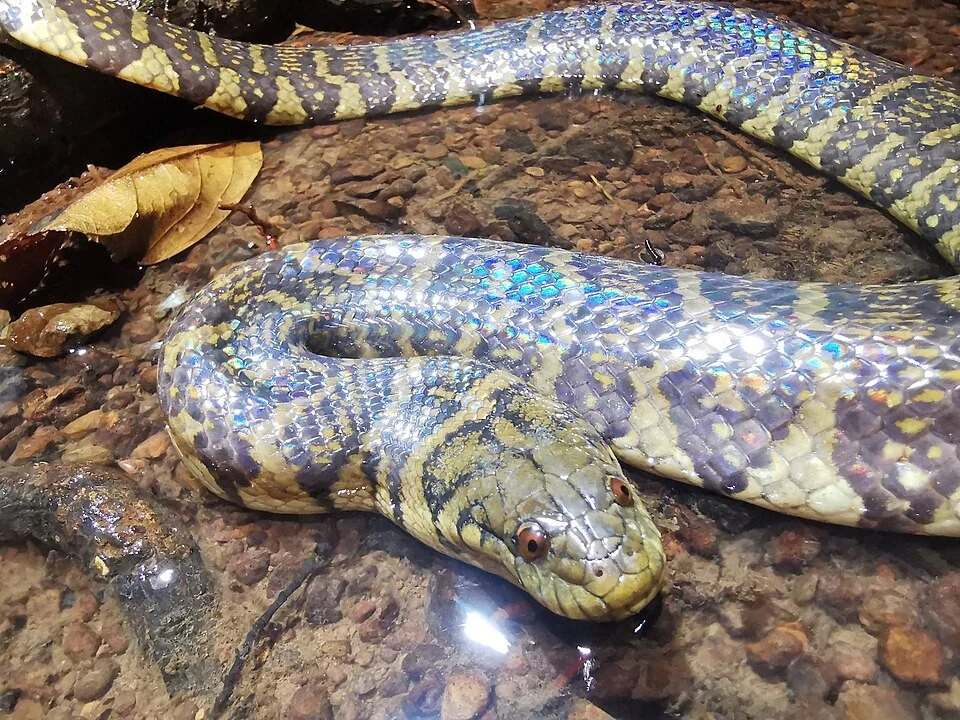
013 · Homalopsidae
Bocourt’s Mud Snake, Bocourt's Water Snake
Nguyen et al. (2020) confirm photographed animals from Savannakhet and Champasak, with an earlier record from Vientiane.
Read the species account →Chris Oldnall · CC BY-SA 4.0 · https://creativecommons.org/licenses/by-sa/4.0
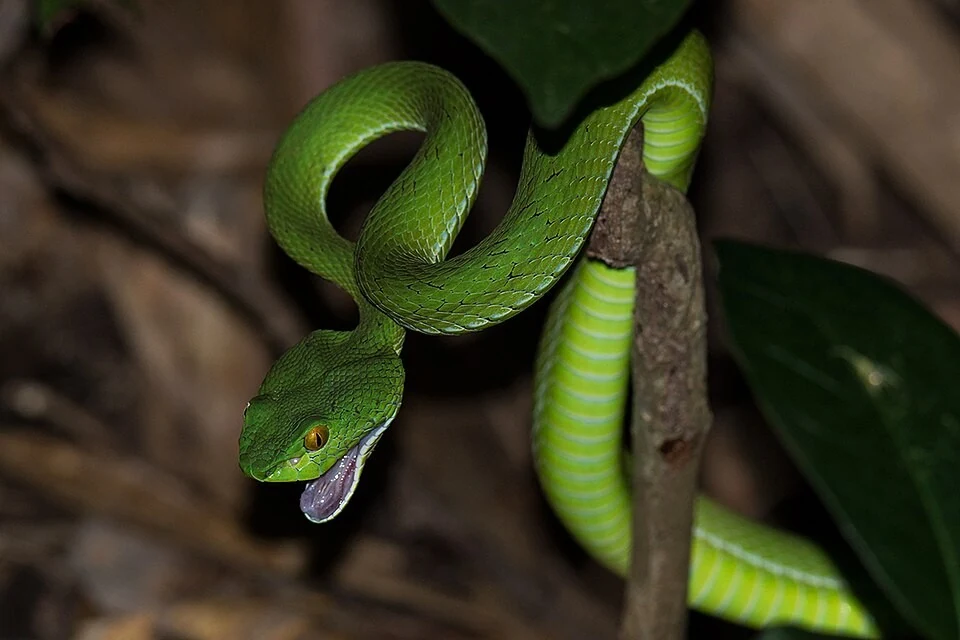
014 · Viperidae
Kramer's Pit Viper, large-eyed pitviper, Big-Eyed Green Pit Viper
Laos: Xaignabouli; Vientiane, Bolikhamxai, Khammouan; Xekong, Champasak.
Read the species account →Wich'yanan L · CC BY 4.0 · https://creativecommons.org/licenses/by/4.0
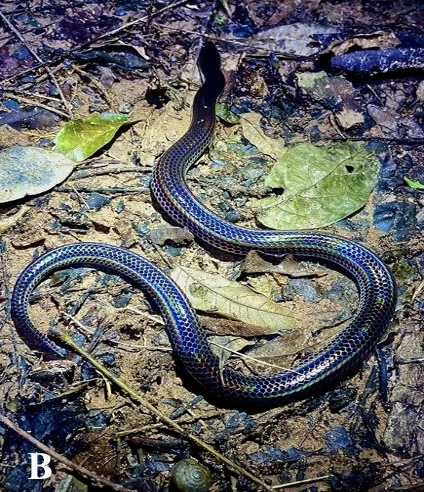
015 · Xenopeltidae
Sunbeam Snake
Laos: Xaignabouli, Phongsali, Louangphrabang, Xiangkhoang; Vientiane, Vientiane Prefecture, Bolikhamxai; Salavan, Xekong, Champasak.
Read the species account →Cook-Price, Makchai & Suwanwaree (2026); photographs credited collectively to the author, James Covert and Vikas Kumar · CC BY 4.0 · https://creativecommons.org/licenses/by/4.0/
Living landscapes
New descriptions and revised identifications continue to change these collections. A species known from few localities may be poorly surveyed; the number of records alone is not a population estimate.
A global Red List assessment is not a national census. Where an assessment is linked in a species account, follow its date, geographic scope and taxonomic treatment before interpreting it locally.
Forest loss, altered wetlands and collection pressure are discussed in the national biodiversity literature. The significance of each pressure differs between species and localities.
National reports & studies →The research library
The national collection contains 125 listed species in this edition. Names and country occurrences were checked on 7–8 October 2026 against individual taxonomic treatments, with a country-range and synonymy review on 11 October 2026 and disputed records and synonymies reviewed separately.
Maury, David & Sudavanh reported 126 known snake species in 2022, drawing partly on their unpublished data and excluding several unsupported country records. This is a dated literature baseline, not a verified 2026 total.
The current atlas count uses its documented taxonomic decisions; it is not a claim that every species in nature has been discovered. Regional counts require named localities. Habitat collections require explicit habitat evidence. Neither is calculated by assigning every national species to every landscape.
Country links use a single accepted species identity. Revised names and disputed records are kept visible here; uncertain records do not enter the listed collection or regional totals.
Uncertain — excluded from the listed total
Balchan et al. (2025) questions Lao occurrence after the Naja fuxi split; the remaining Vientiane-area records are probable but unconfirmed.
Uncertain — excluded from the listed total
The treatment warns that Lao reports may be misidentified Boiga siamensis (formerly B. ocellata).
Uncertain — excluded from the listed total
The checked distribution explicitly questions the Lao record.
Uncertain — excluded from the listed total
The distribution treatment explicitly questions the Lao record.
Uncertain — excluded from the listed total
The distribution treatment explicitly questions the Lao record.
Liang et al. (2025) synonymized Trimeresurus gumprechti with T. yunnanensis. Historical names, locality evidence and the old URL are retained under one accepted species.
Taxonomic revision ↗Country occurrence unresolved
The database explicitly marks Laos with a question mark; no confirmed Lao locality is used.
Source 1 ↗Excluded from the listed total
Maury, David & Sudavanh (2022) exclude the Lao record as unsubstantiated or misidentified.
Source 1 ↗ Source 2 ↗Country occurrence unresolved
The taxonomic account warns that Lao reports often represent misidentified Boiga siamensis (formerly B. ocellata).
Source 1 ↗Excluded from the listed total
Maury, David & Sudavanh (2022) reject the unsupported Lao record.
Source 1 ↗ Source 2 ↗Country occurrence unresolved
Lee (2021) reassigned the documented Lao specimen formerly identified as C. yunnanensis to C. nebulosa. No independent Lao record reconciled with that revision was verified; this name is not counted a second time.
Source 1 ↗ Source 2 ↗Country occurrence unresolved
Laos is queried in the checked distribution treatment.
Source 1 ↗Country occurrence unresolved
Laos is queried in the checked distribution treatment.
Source 1 ↗Country occurrence unresolved
Northern Indochinese populations formerly called plumbeus were separated as murphyi. A verified Lao record of plumbeus in the narrower sense was not established.
Source 1 ↗ Source 2 ↗Excluded from the listed total
The 2024 revision restricts wettsteini to the Red River basin and eastward. Lao records under the formerly broader name belong to murphyi.
Source 1 ↗ Source 2 ↗Excluded from the listed total
The taxonomic treatment restricts cyclurus to India, Bangladesh and Myanmar; the similar fasciolatus is retained for Laos.
Source 1 ↗Excluded from the listed total
The 2022 revision assigns mainland records in this complex to other species, including berdmorei; carinatus is not carried over from older broad treatments.
Source 1 ↗ Source 2 ↗Excluded from the listed total
The search matched Palaos, the historical name for Palau. This is not a record from Laos.
Source 1 ↗Counted under the accepted name: Trimeresurus yunnanensis
Counted within Trimeresurus yunnanensis following the synonymy of Liang et al. (2025).
Source 1 ↗National count and its exclusions: pp. 84–85; geography and survey habitats: introduction and methods. Surveys do not constitute a complete current national checklist.
Physical geography, seasonal climate and broad ecological regions. Historical report; no current forest-cover percentages inferred.
Transboundary karst geography and habitats, including the 2025 extension. Not a national snake inventory.
Individual species treatments supply taxonomy, distribution, type localities and cited natural-history observations. Each account links its own source.
Used to separate revised species concepts around the Red River and interpret older country records.