Land & water
This region connects Vientiane and its surrounding valleys with Bolikhamxai and Khammouane. Karst, river corridors and the Nakai–Nam Theun landscape create a close mosaic of rocky terrain, wet forest and cultivated lowland.
Laos · Regional field guide
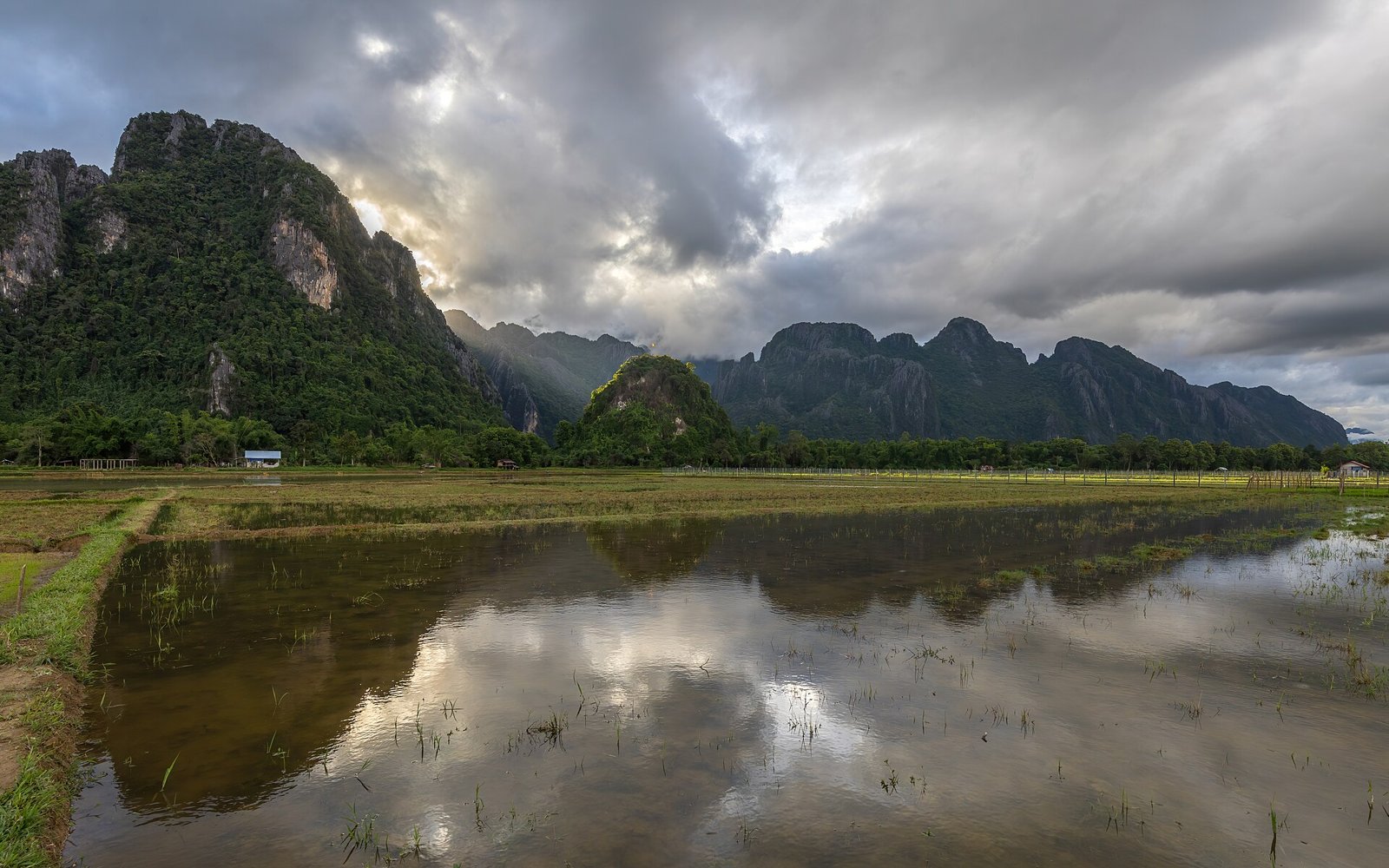
Mekong lowlands meet limestone towers and the forested western slopes of the Annamites.
Sunlight over the karst mountains of Vang Vieng, Laos.
Geography & biotopes
Mekong lowlands meet limestone towers and the forested western slopes of the Annamites.
This region connects Vientiane and its surrounding valleys with Bolikhamxai and Khammouane. Karst, river corridors and the Nakai–Nam Theun landscape create a close mosaic of rocky terrain, wet forest and cultivated lowland.
Limestone caves and forest streams recur in descriptions of recently documented snakes. Rice-field records of mud snakes belong to a different ecological setting from records in upland evergreen forest.
Hin Nam No continues the karst system protected across the border at Phong Nha-Ke Bang. The map groups older provincial names so the places in scientific descriptions remain findable.
Vientiane · Vientiane Capital · Xaisomboun · Bolikhamsai · Khammouane
These are geographic groupings of historical provincial areas used to interpret the literature. They do not represent current administrative divisions.
Different environments
From the canopy to the leaf litter, forest structure matters as much as the word “forest”.
Explore the habitat →Rocky ridges, caves and forest patches create a landscape full of small environmental contrasts.
Explore the habitat →Fast forest streams and still lowland water support very different ways of life.
Explore the habitat →The species collection
Species assigned from explicitly named localities. The complete national collection also includes records without finer geographic resolution.
24 species · showing 24
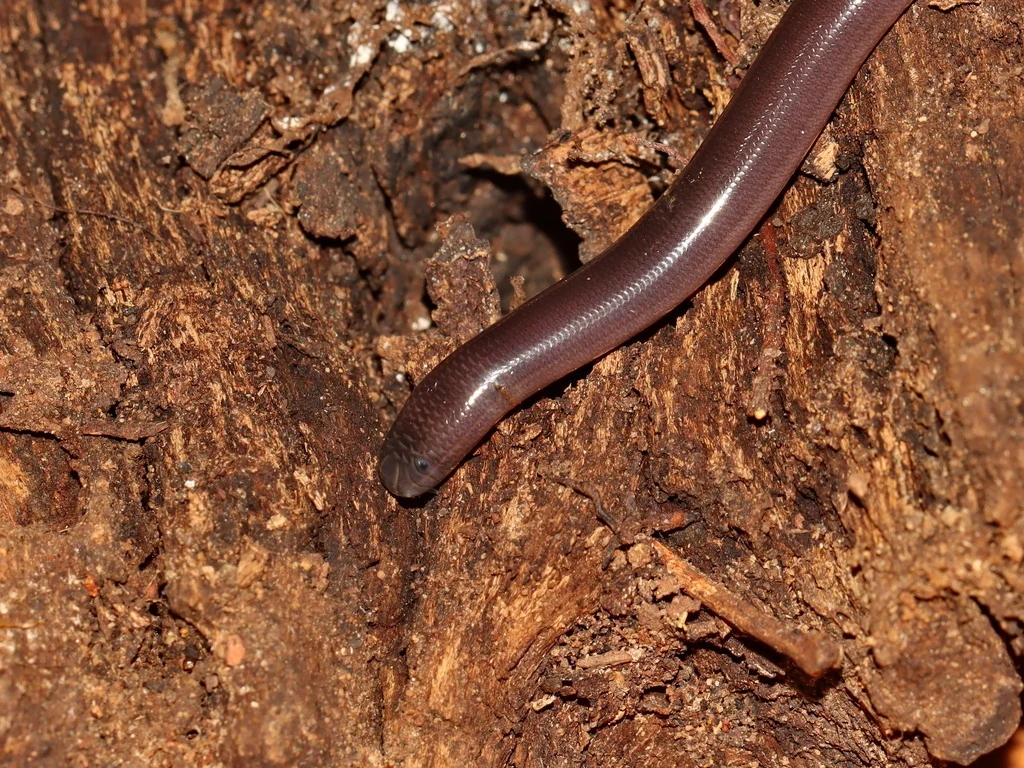
001 · Typhlopidae
Diard’s blindsnake
Laos: Houaphan, Xiangkhoang; Bolikhamxai; Champasak.
Read the species account →Ian Dugdale · CC BY 4.0 · https://creativecommons.org/licenses/by/4.0/
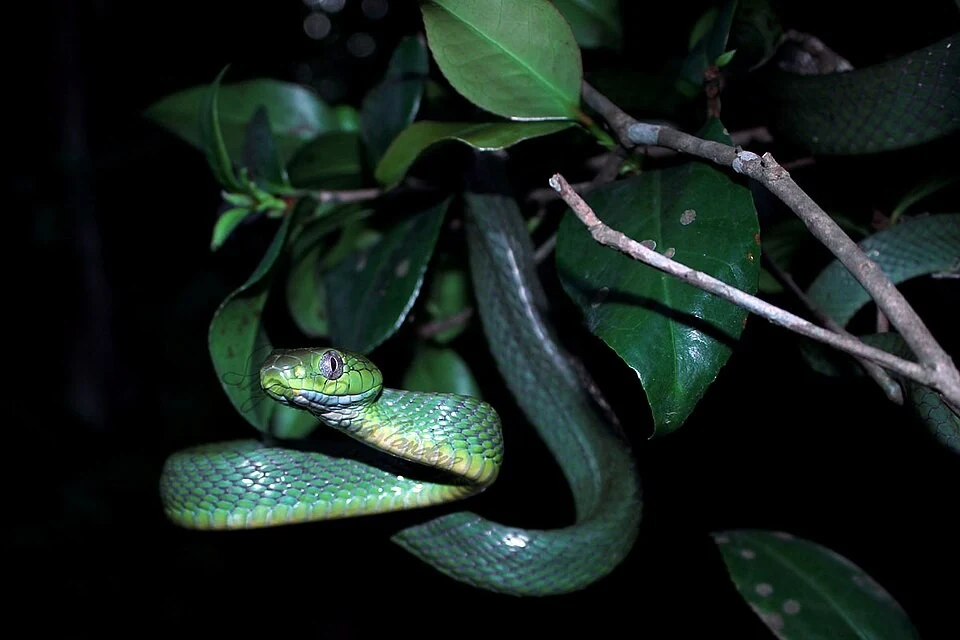
002 · Colubridae
Green Cat Snake
Laos: Oudomxay, Bokeo, Xaignabouli; Vientiane, Vientiane Prefecture, Khammouan; Savannakhet, Xekong, Champasak.
Read the species account →Sp.herp · CC BY-SA 3.0 · https://creativecommons.org/licenses/by-sa/3.0
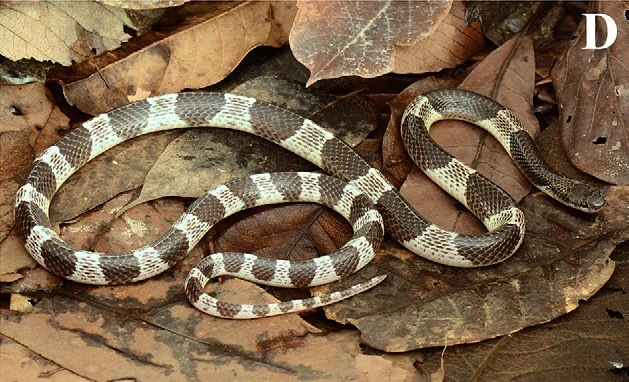
003 · Elapidae
Blue Krait
Laos: Vientiane; Salavan, Champasak.
Read the species account →Zijia Hong, Shahrul Anuar, L. Lee Grismer and Evan S. H. Quah (2021) · CC BY 4.0 · https://creativecommons.org/licenses/by/4.0/
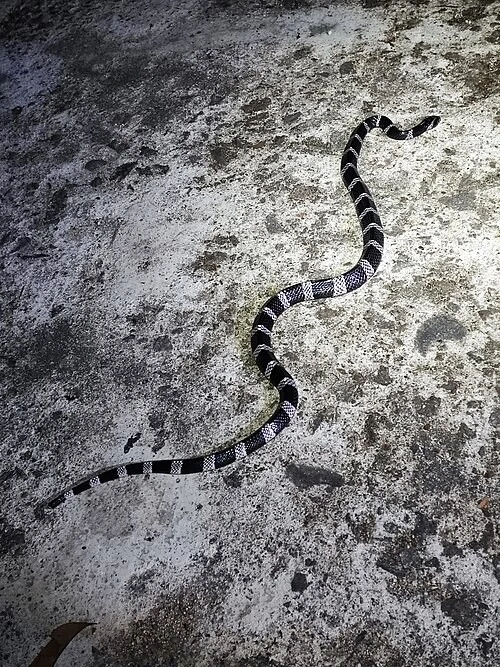
004 · Elapidae
Red River Krait
Laos: Khammouane.
Read the species account →Chris Oldnall · CC BY-SA 4.0 · https://creativecommons.org/licenses/by-sa/4.0
005 · Colubridae
Banks’ Wolf Snake
Laos: Khammouane.
Read the species account →006 · Colubridae
David’s Wolf Snake
Laos: Vientiane.
Read the species account →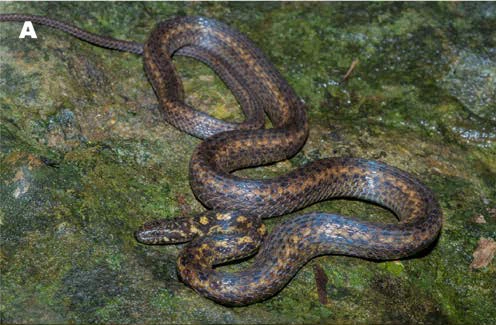
007 · Colubridae
Vietnam Water Snake
Laos: Houaphan, Luangphrabang; Vientiane, Xaisomboun.
Read the species account →P. Brakels · CC BY 4.0 · https://creativecommons.org/licenses/by/4.0/
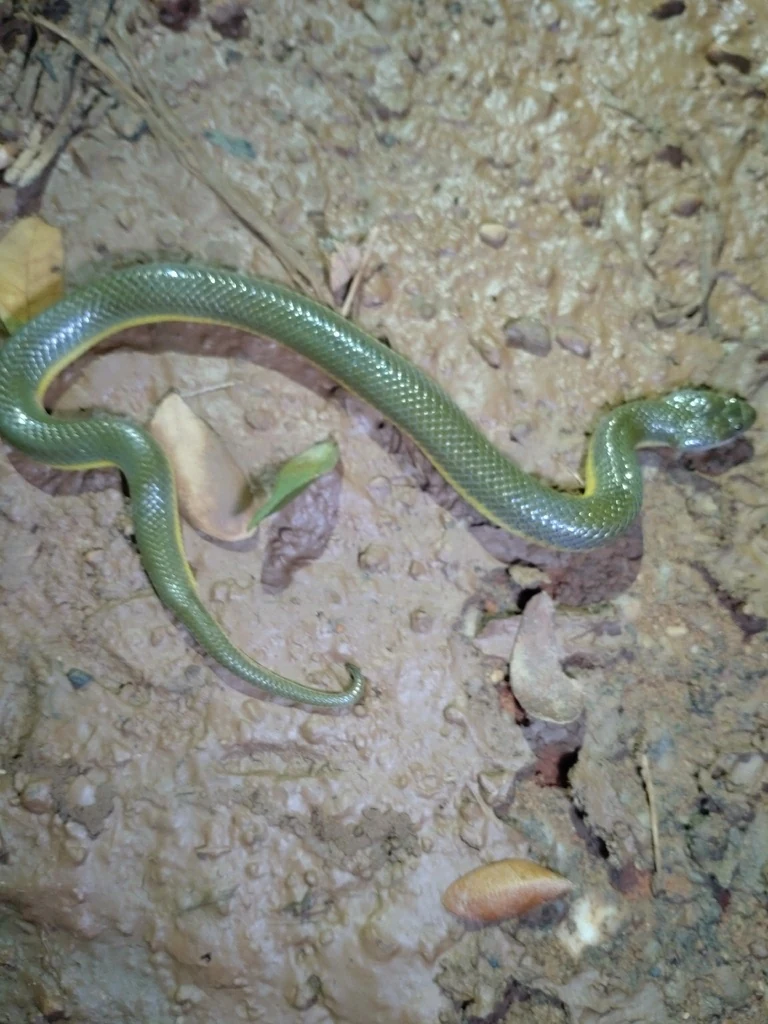
008 · Homalopsidae
Murphy’s Mud Snake
Laos: Vientiane, Bolikhamxay, Khammouan; Savannakhet, Champasak.
Read the species account →Utain Pummarin · CC BY 4.0 · https://creativecommons.org/licenses/by/4.0/
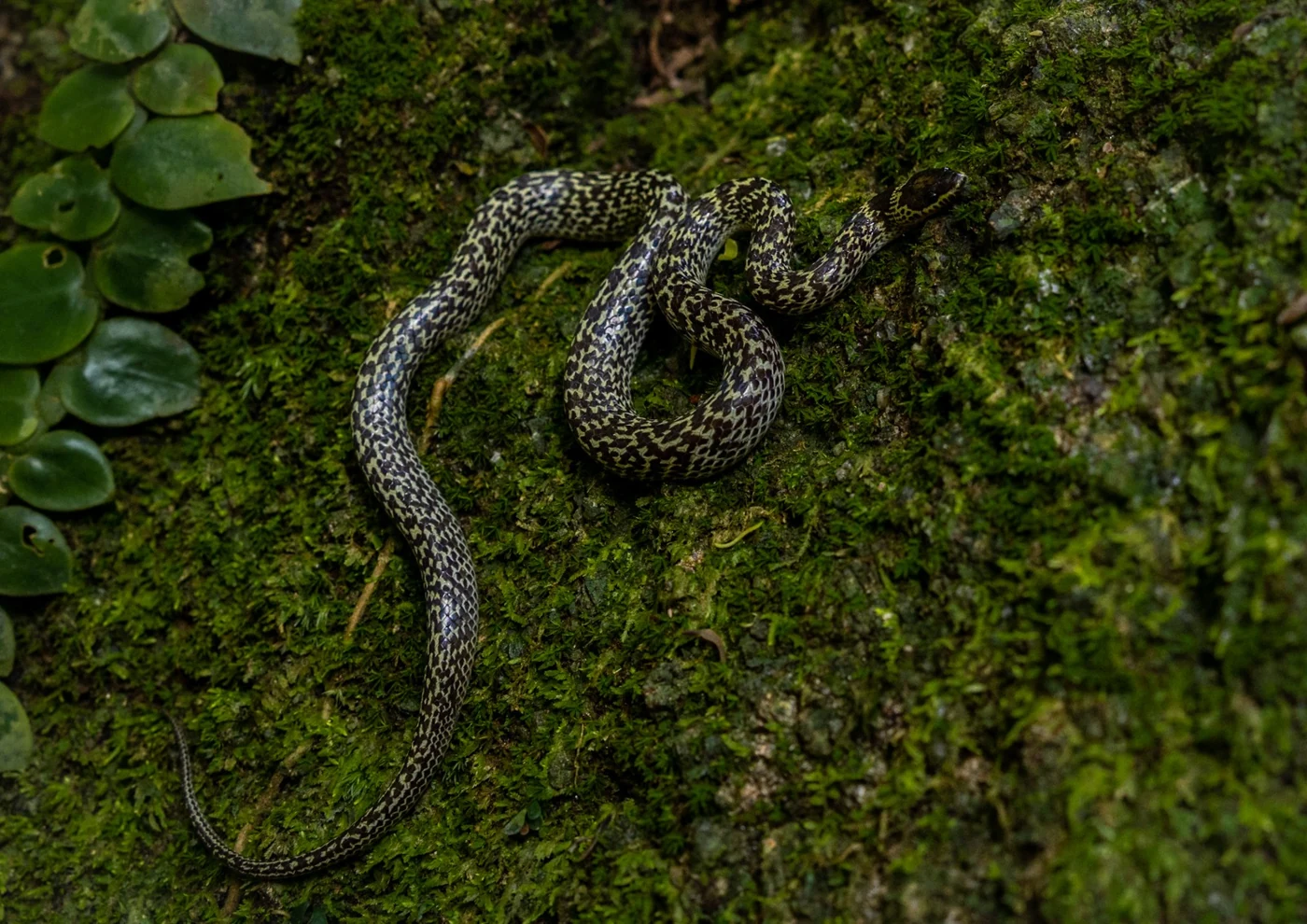
009 · Colubridae
Common Wolf Snake
Laos: Vientiane, Bolikhamxai.
Read the species account →Cook-Price, Makchai & Suwanwaree (2026); photographs credited collectively to the author, James Covert and Vikas Kumar · CC BY 4.0 · https://creativecommons.org/licenses/by/4.0/
010 · Colubridae
Nagao Kukri Snake
Laos: Khammouane.
Read the species account →011 · Colubridae
Hansel’s Mountain Stream keelback
Laos: Xaysomboun.
Read the species account →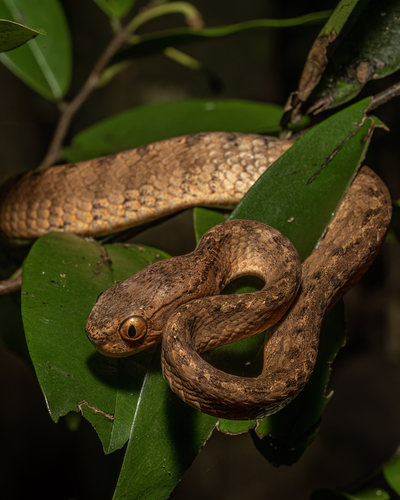
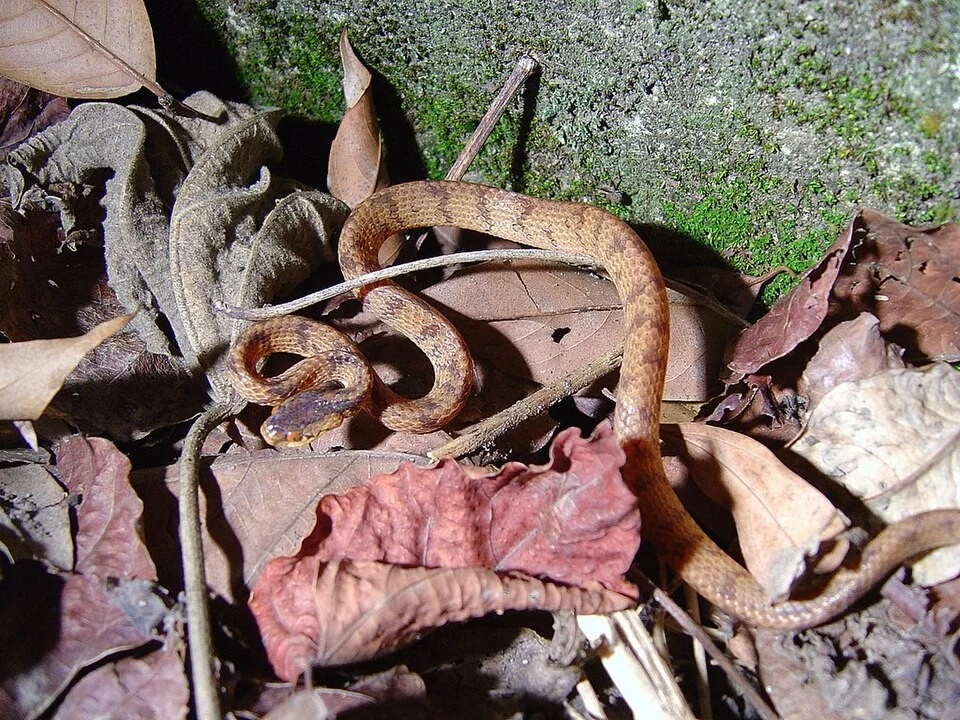
012 · Pareidae
Mengla Snail-eating Snake
Laos: Khammouan.
Read the species account →James Hunt · CC-BY · https://www.inaturalist.org/photos/320100175
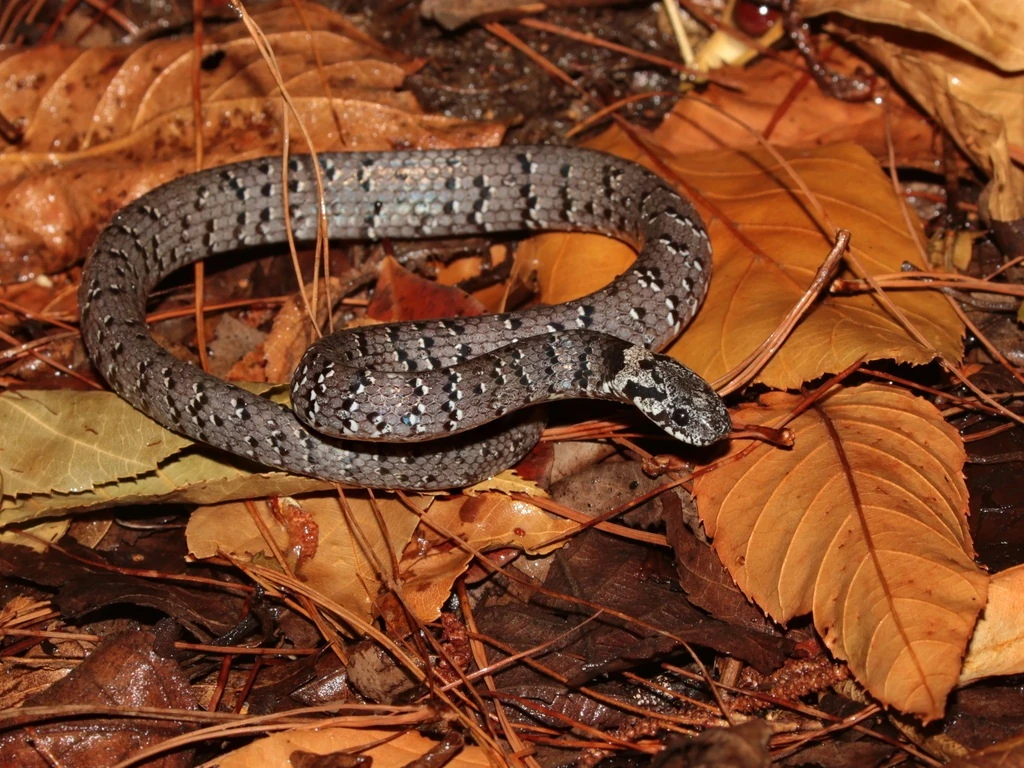
013 · Pareidae
Formosa Slug Snake, Taiwan Slug Snake
Laos: Khammouan; Xekong, Champasak.
Read the species account →張廖年鴻 · CC BY-SA 2.5 · https://creativecommons.org/licenses/by-sa/2.5
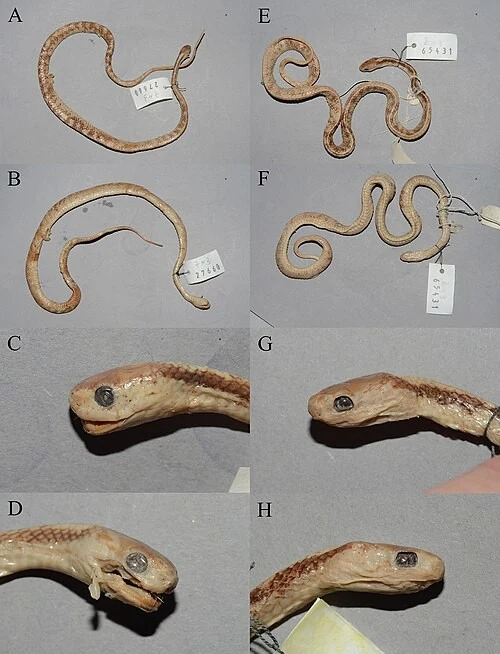
014 · Pareidae
Mountain Slug Snake
Laos: Oudomxay, Houaphan, Xiangkhouang, Phongsali, Louangphrabang, Xiangkhoang; Xaisomboun; Champasak.
Read the species account →Ian Dugdale · CC BY 4.0 · https://creativecommons.org/licenses/by/4.0/
015 · Pareidae
Yunnan Slug Snake
Laos: Xaisomboun.
Read the species account →Gernot Vogel, in Liu et al. (2023) · CC BY 4.0 · https://creativecommons.org/licenses/by/4.0
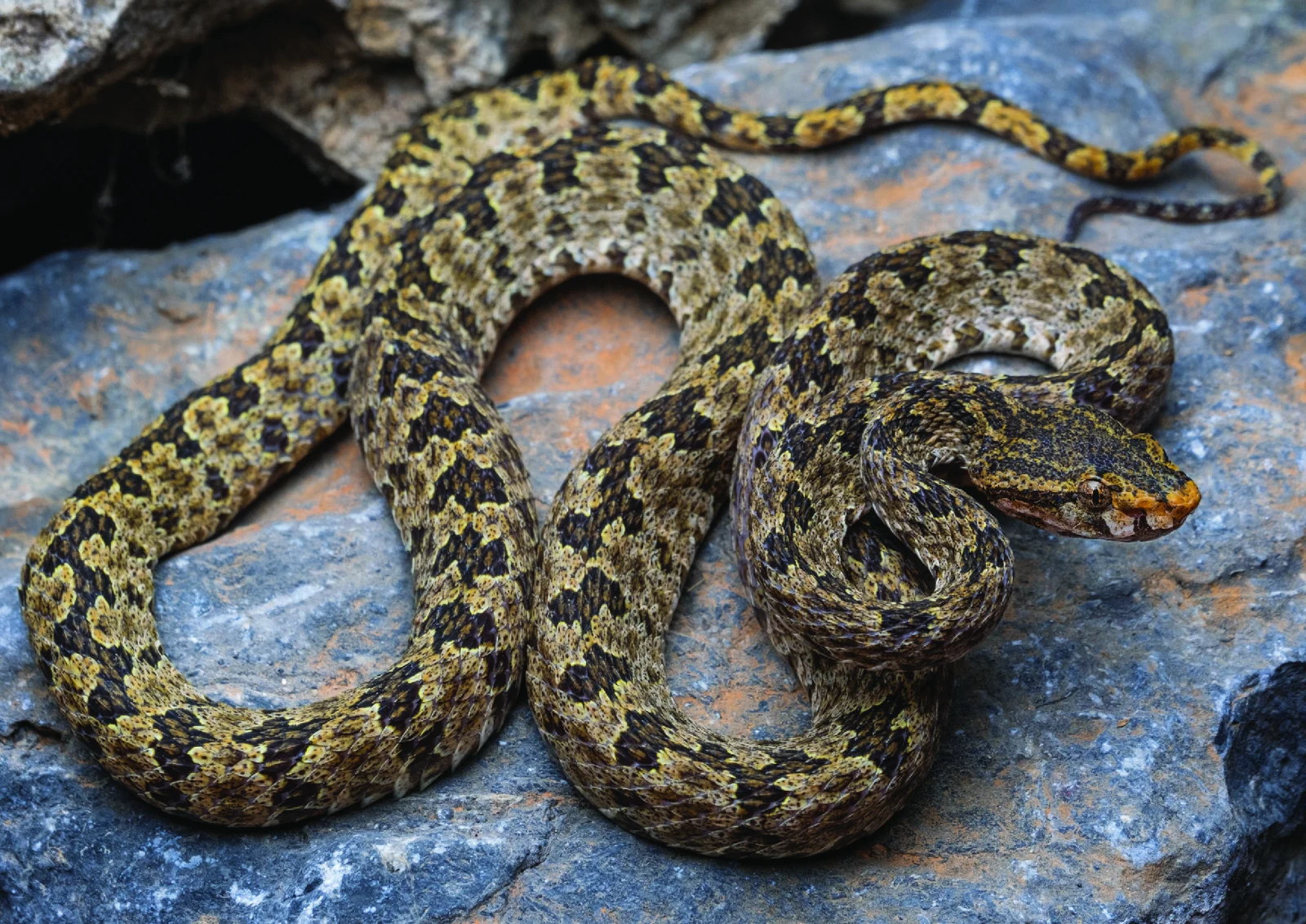
016 · Viperidae
Vang Vieng lance-headed pit viper
Laos: Vientiane.
Read the species account →Rupert J. Grassby-Lewis · CC BY 4.0 · https://creativecommons.org/licenses/by/4.0/
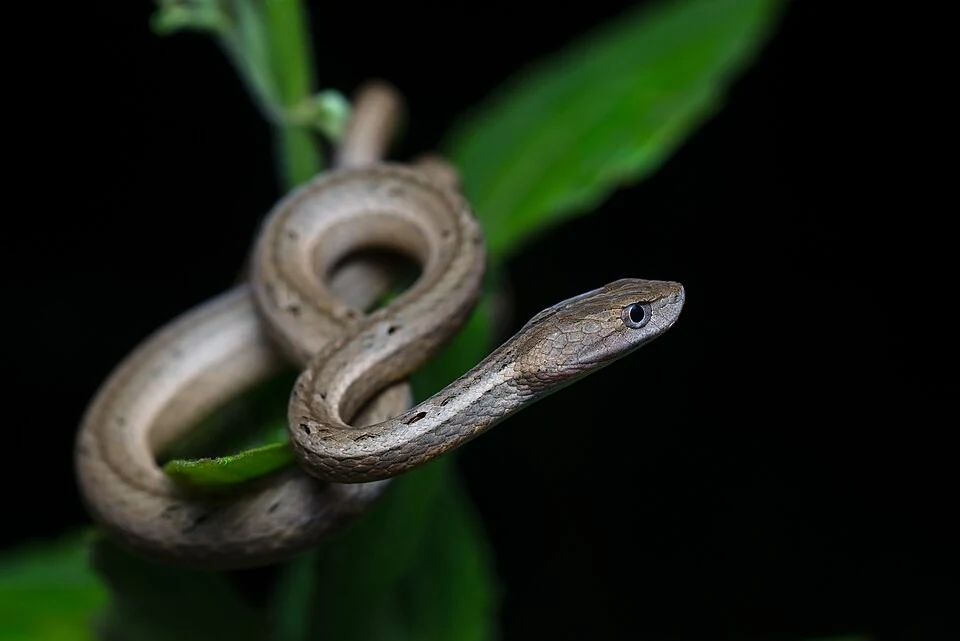
017 · Psammodynastidae
Common Mock Viper
Laos: Louangphrabang, Xiangkhoang; Vientiane, Khammouan; Savannakhet, Champasak, Attapu.
Read the species account →Rushenb · CC BY-SA 4.0 · https://creativecommons.org/licenses/by-sa/4.0
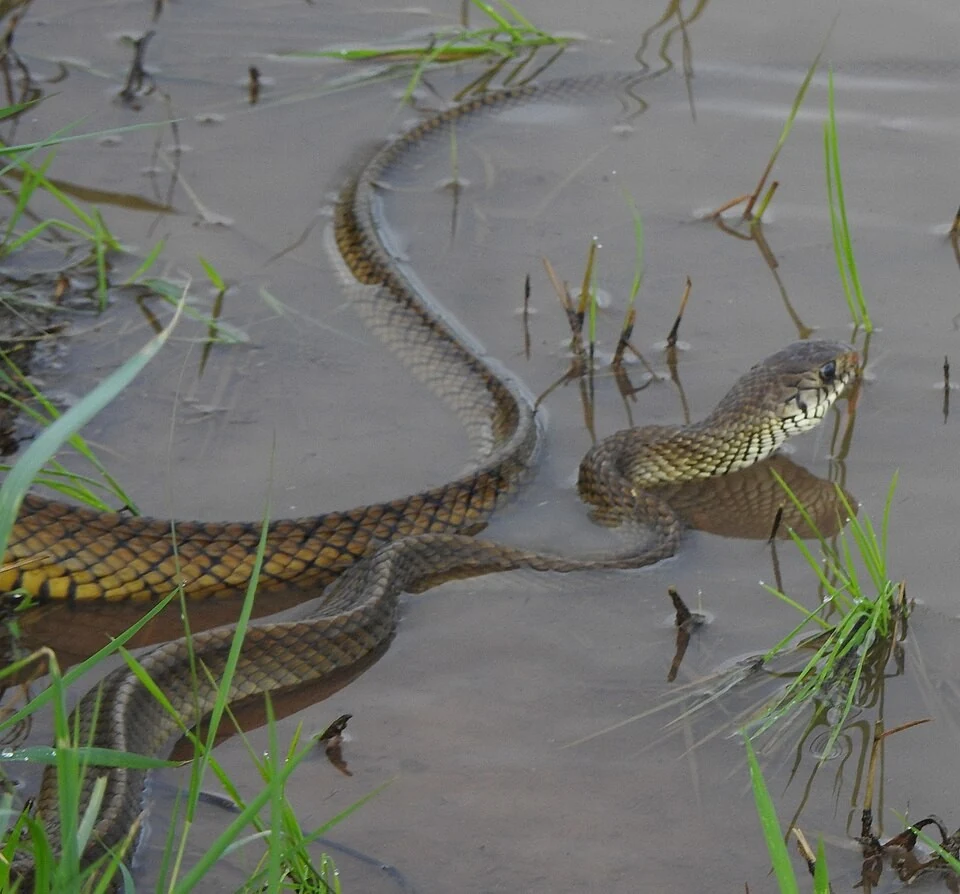
018 · Colubridae
Dhaman
Laos: Louangphrabang, Xiangkhoang; Vientiane, Bolikhamxai, Khammouan; Champasak.
Read the species account →Afsar Nayakkan · CC BY 4.0 · https://creativecommons.org/licenses/by/4.0
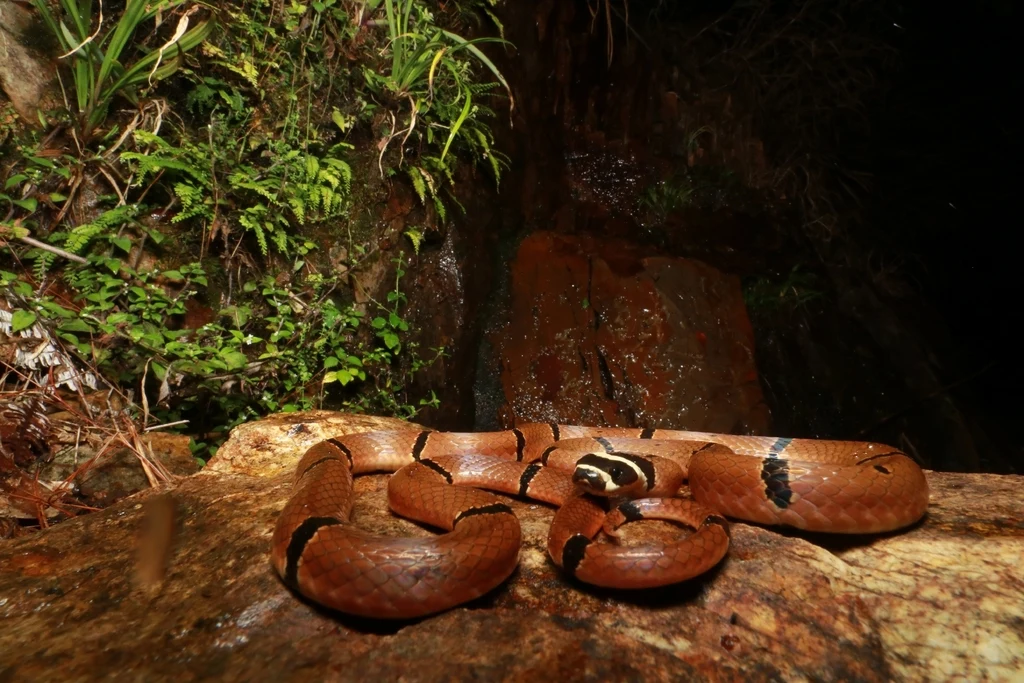
019 · Elapidae
Kellogg's Coral Snake
Laos: Khammouan.
Read the species account →Max Tibby · CC0 1.0 · https://creativecommons.org/publicdomain/zero/1.0/
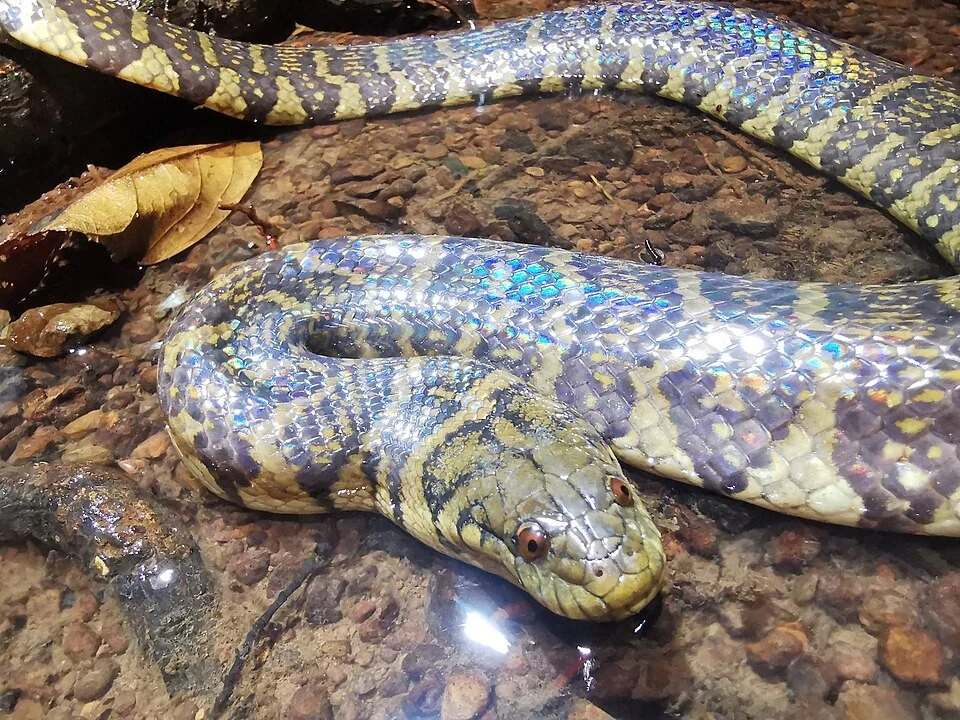
020 · Homalopsidae
Bocourt’s Mud Snake, Bocourt's Water Snake
Nguyen et al. (2020) confirm photographed animals from Savannakhet and Champasak, with an earlier record from Vientiane.
Read the species account →Chris Oldnall · CC BY-SA 4.0 · https://creativecommons.org/licenses/by-sa/4.0
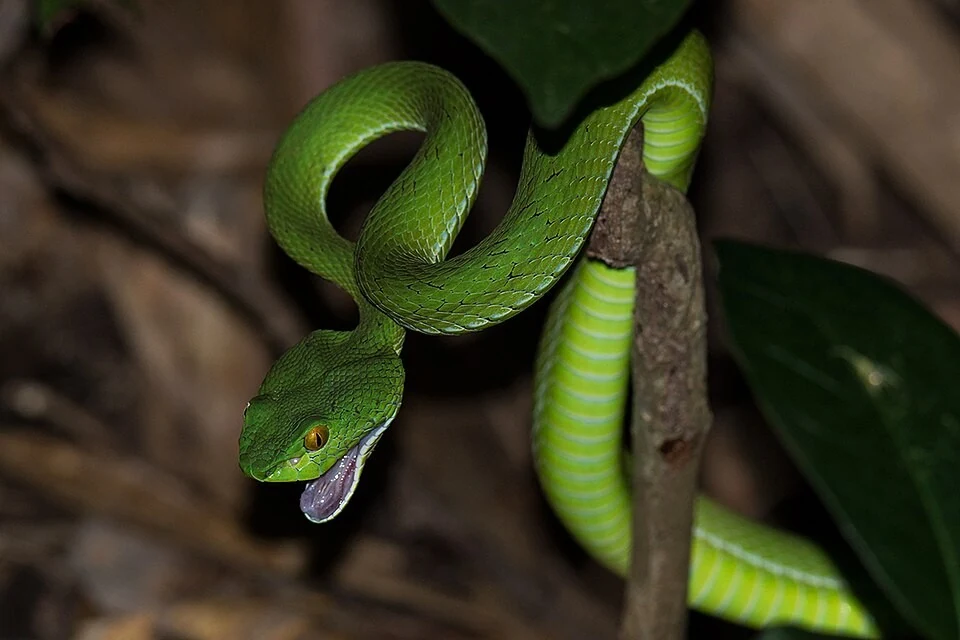
021 · Viperidae
Kramer's Pit Viper, large-eyed pitviper, Big-Eyed Green Pit Viper
Laos: Xaignabouli; Vientiane, Bolikhamxai, Khammouan; Xekong, Champasak.
Read the species account →Wich'yanan L · CC BY 4.0 · https://creativecommons.org/licenses/by/4.0
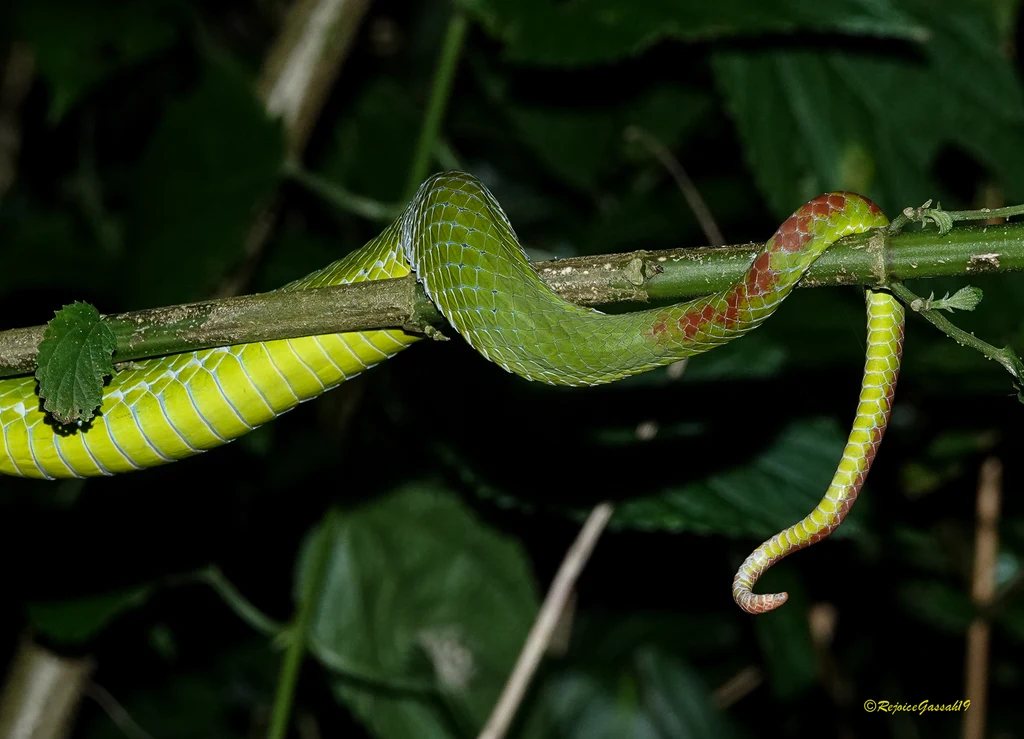
022 · Viperidae
Pope’s Tree Viper
Laos: Oudomxay, Xaignabouli, Phongsali, Louangphrabang; Vientiane.
Read the species account →Rejoice Gassah · CC BY 4.0 · https://creativecommons.org/licenses/by/4.0/
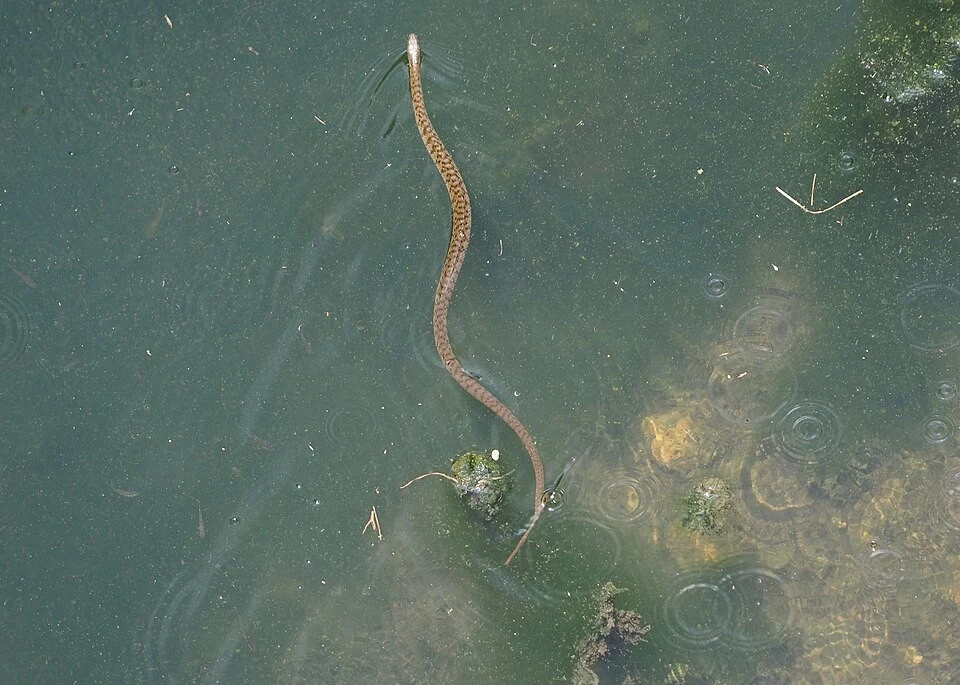
023 · Colubridae
Olive Annulate Keelback, Eastern Water Snake, Olive Keelback
Stuart & Heatwole (2008) document a vouchered Lao country record under the former combination Sinonatrix percarinata.
Read the species account →Cynthia Su · CC BY 4.0 · https://creativecommons.org/licenses/by/4.0
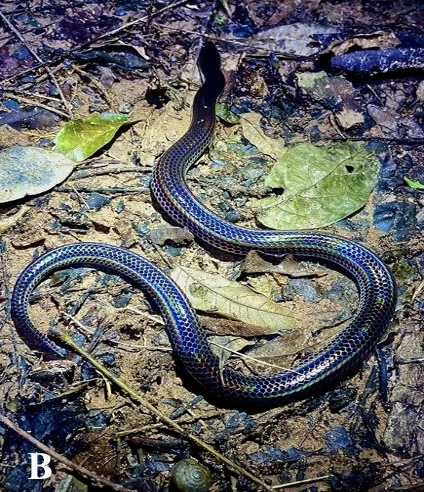
024 · Xenopeltidae
Sunbeam Snake
Laos: Xaignabouli, Phongsali, Louangphrabang, Xiangkhoang; Vientiane, Vientiane Prefecture, Bolikhamxai; Salavan, Xekong, Champasak.
Read the species account →Cook-Price, Makchai & Suwanwaree (2026); photographs credited collectively to the author, James Covert and Vikas Kumar · CC BY 4.0 · https://creativecommons.org/licenses/by/4.0/
Living landscapes
New descriptions and revised identifications continue to change these collections. A species known from few localities may be poorly surveyed; the number of records alone is not a population estimate.
A global Red List assessment is not a national census. Where an assessment is linked in a species account, follow its date, geographic scope and taxonomic treatment before interpreting it locally.
Forest loss, altered wetlands and collection pressure are discussed in the national biodiversity literature. The significance of each pressure differs between species and localities.
National reports & studies →The research library
The national collection contains 125 listed species in this edition. Names and country occurrences were checked on 7–8 October 2026 against individual taxonomic treatments, with a country-range and synonymy review on 11 October 2026 and disputed records and synonymies reviewed separately.
Maury, David & Sudavanh reported 126 known snake species in 2022, drawing partly on their unpublished data and excluding several unsupported country records. This is a dated literature baseline, not a verified 2026 total.
The current atlas count uses its documented taxonomic decisions; it is not a claim that every species in nature has been discovered. Regional counts require named localities. Habitat collections require explicit habitat evidence. Neither is calculated by assigning every national species to every landscape.
Country links use a single accepted species identity. Revised names and disputed records are kept visible here; uncertain records do not enter the listed collection or regional totals.
Uncertain — excluded from the listed total
Balchan et al. (2025) questions Lao occurrence after the Naja fuxi split; the remaining Vientiane-area records are probable but unconfirmed.
Uncertain — excluded from the listed total
The treatment warns that Lao reports may be misidentified Boiga siamensis (formerly B. ocellata).
Uncertain — excluded from the listed total
The checked distribution explicitly questions the Lao record.
Uncertain — excluded from the listed total
The distribution treatment explicitly questions the Lao record.
Uncertain — excluded from the listed total
The distribution treatment explicitly questions the Lao record.
Liang et al. (2025) synonymized Trimeresurus gumprechti with T. yunnanensis. Historical names, locality evidence and the old URL are retained under one accepted species.
Taxonomic revision ↗Country occurrence unresolved
The database explicitly marks Laos with a question mark; no confirmed Lao locality is used.
Source 1 ↗Excluded from the listed total
Maury, David & Sudavanh (2022) exclude the Lao record as unsubstantiated or misidentified.
Source 1 ↗ Source 2 ↗Country occurrence unresolved
The taxonomic account warns that Lao reports often represent misidentified Boiga siamensis (formerly B. ocellata).
Source 1 ↗Excluded from the listed total
Maury, David & Sudavanh (2022) reject the unsupported Lao record.
Source 1 ↗ Source 2 ↗Country occurrence unresolved
Lee (2021) reassigned the documented Lao specimen formerly identified as C. yunnanensis to C. nebulosa. No independent Lao record reconciled with that revision was verified; this name is not counted a second time.
Source 1 ↗ Source 2 ↗Country occurrence unresolved
Laos is queried in the checked distribution treatment.
Source 1 ↗Country occurrence unresolved
Laos is queried in the checked distribution treatment.
Source 1 ↗Country occurrence unresolved
Northern Indochinese populations formerly called plumbeus were separated as murphyi. A verified Lao record of plumbeus in the narrower sense was not established.
Source 1 ↗ Source 2 ↗Excluded from the listed total
The 2024 revision restricts wettsteini to the Red River basin and eastward. Lao records under the formerly broader name belong to murphyi.
Source 1 ↗ Source 2 ↗Excluded from the listed total
The taxonomic treatment restricts cyclurus to India, Bangladesh and Myanmar; the similar fasciolatus is retained for Laos.
Source 1 ↗Excluded from the listed total
The 2022 revision assigns mainland records in this complex to other species, including berdmorei; carinatus is not carried over from older broad treatments.
Source 1 ↗ Source 2 ↗Excluded from the listed total
The search matched Palaos, the historical name for Palau. This is not a record from Laos.
Source 1 ↗Counted under the accepted name: Trimeresurus yunnanensis
Counted within Trimeresurus yunnanensis following the synonymy of Liang et al. (2025).
Source 1 ↗National count and its exclusions: pp. 84–85; geography and survey habitats: introduction and methods. Surveys do not constitute a complete current national checklist.
Physical geography, seasonal climate and broad ecological regions. Historical report; no current forest-cover percentages inferred.
Transboundary karst geography and habitats, including the 2025 extension. Not a national snake inventory.
Individual species treatments supply taxonomy, distribution, type localities and cited natural-history observations. Each account links its own source.
Used to separate revised species concepts around the Red River and interpret older country records.