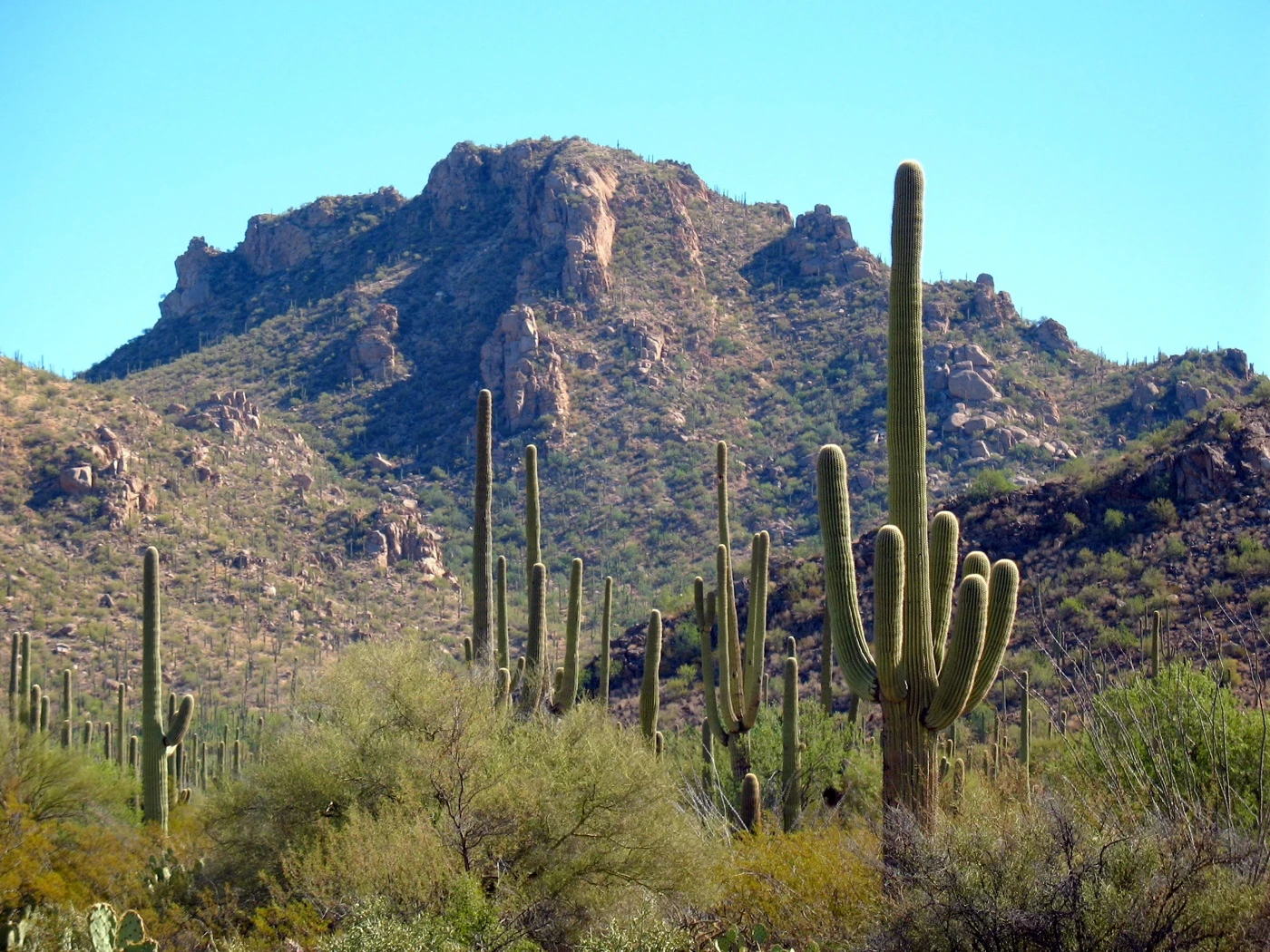
Cacti and rocky Sonoran desert slopes in Saguaro National Park, Arizona, United States.

United States of America · Habitat field guide

Scrubland & dry country

In Arizona, Saguaro National Park contrasts Sonoran desert scrub with desert grassland. Cacti and drought-adapted shrubs are part of a vegetated desert, with rocky slopes and drainage channels adding local variation.

Cacti and rocky Sonoran desert slopes in Saguaro National Park, Arizona, United States.

Photograph: Luke Jones from Yucca Valley · Image source · CC BY 2.0. Cropped to fill the hero; darkened for text legibility.

Understanding the environment

A sense of the habitat.

In Arizona, Saguaro National Park contrasts Sonoran desert scrub with desert grassland. Cacti and drought-adapted shrubs are part of a vegetated desert, with rocky slopes and drainage channels adding local variation.

Geographic scope
United States of America; source locality matters.
Evidence scale
Landscape descriptions are separate from species records.
Source date
Retain the cited publication date; reviewed 16 October 2026.

Explore the structure · Select a layer to compare details retained in a field record.

Read the locality in three layers.

Select a zone to see what changes.

Substrate

Substrate

Separate sand, rock and soil.

Check this detail in the original record before assigning a species to the habitat.

These reading prompts are conceptual, not a transect or an occurrence map.

Sources: US National Park Service · Saguaro: Diversity in the Desert

Field notes · 01

The documented setting

In Arizona, Saguaro National Park contrasts Sonoran desert scrub with desert grassland. Cacti and drought-adapted shrubs are part of a vegetated desert, with rocky slopes and drainage channels adding local variation.

Sources: US National Park Service · Saguaro: Diversity in the Desert

Field notes · 02

Connect the setting to a species

A habitat description and a country record answer different questions. Follow the linked species account for evidence of habitat use; an empty filtered collection indicates missing extracted evidence, not biological absence.

Pressures on United States of America’s habitats

What is at risk?

A site-specific assessment of pressures has not yet been extracted for this guide. The landscape sources below provide context; they do not establish a current threat level for each snake species.

What helps this habitat

Consult the source’s own conservation context and dates before interpreting habitat change. A broad landscape pressure does not establish a measured decline for every snake.

The connected collection

Snakes with habitat evidence.

These 59 species have supported country occurrence and an explicit habitat association in the shared account. The association may come from elsewhere in their range. This is not a complete local habitat inventory; the places above are landscape examples, not asserted collecting sites.

59 species · showing 24

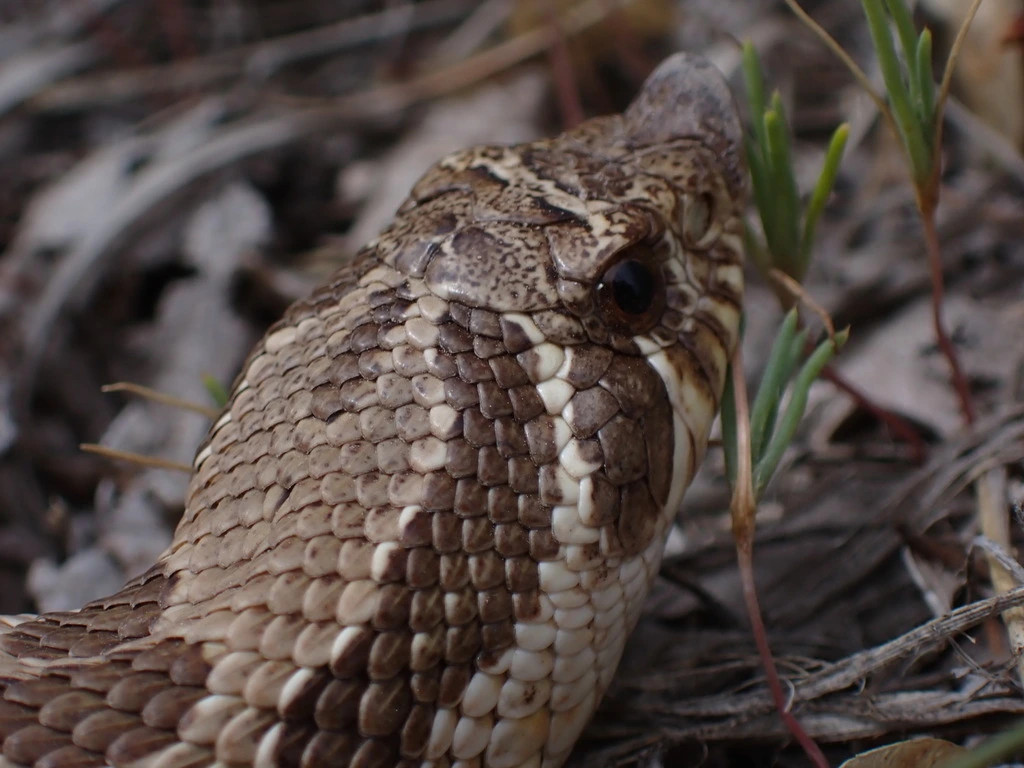
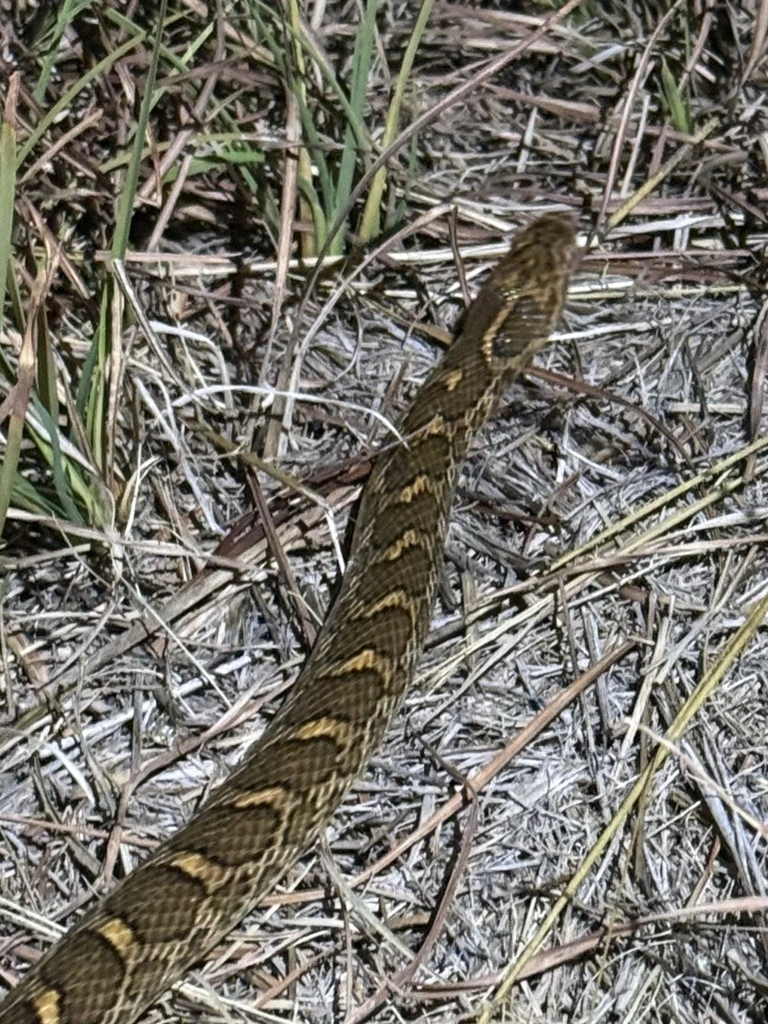
Arizona elegans. Species portrait; the complete source frame is retained. Original observation dated 2026-10-09. This photograph does not establish occurrence in any additional state or province.

001 · Colubridae

Glossy Snake

Arizona elegans

KENNICOTT, 1859

Venom unknownNot yet assessed

The checked taxonomic distribution account explicitly lists United States of America. Country-level evidence does not establish continuous occupancy or a complete national inventory. The treatment names these subdivisions in its United States of America distribution clause: Oklahoma, Nebraska, New Mexico, Texas, Colorado, Utah, Kansas, Arizona. They are…

Read the species account →

ashleyrsteel · CC BY 4.0 · https://creativecommons.org/licenses/by/4.0/
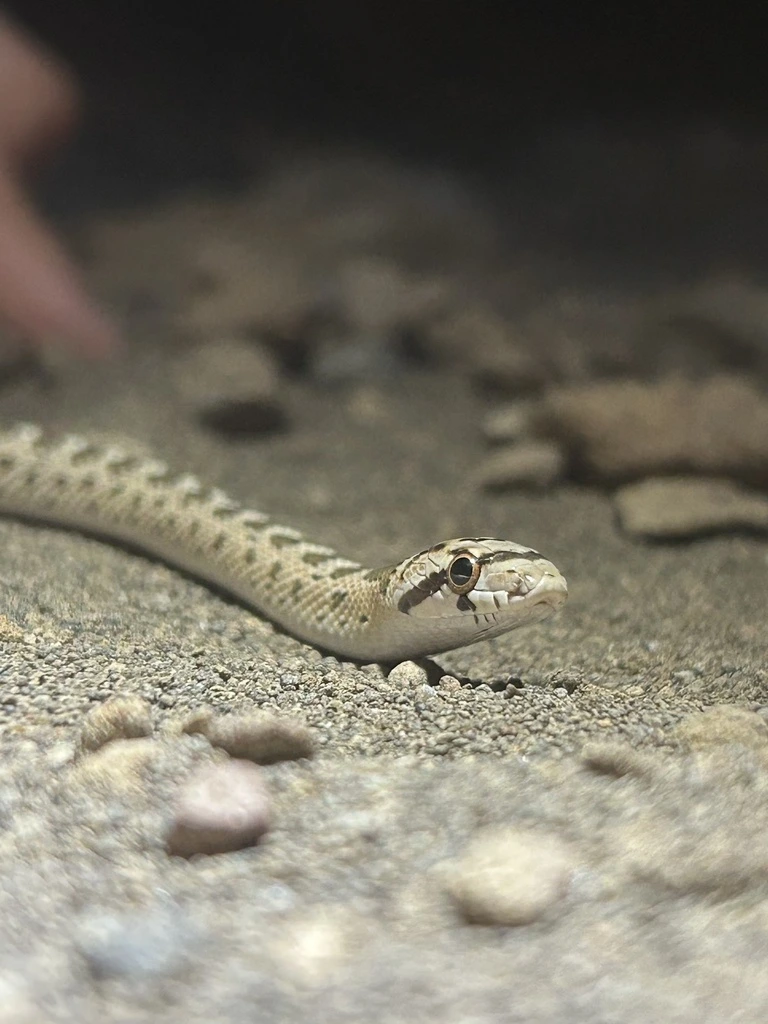
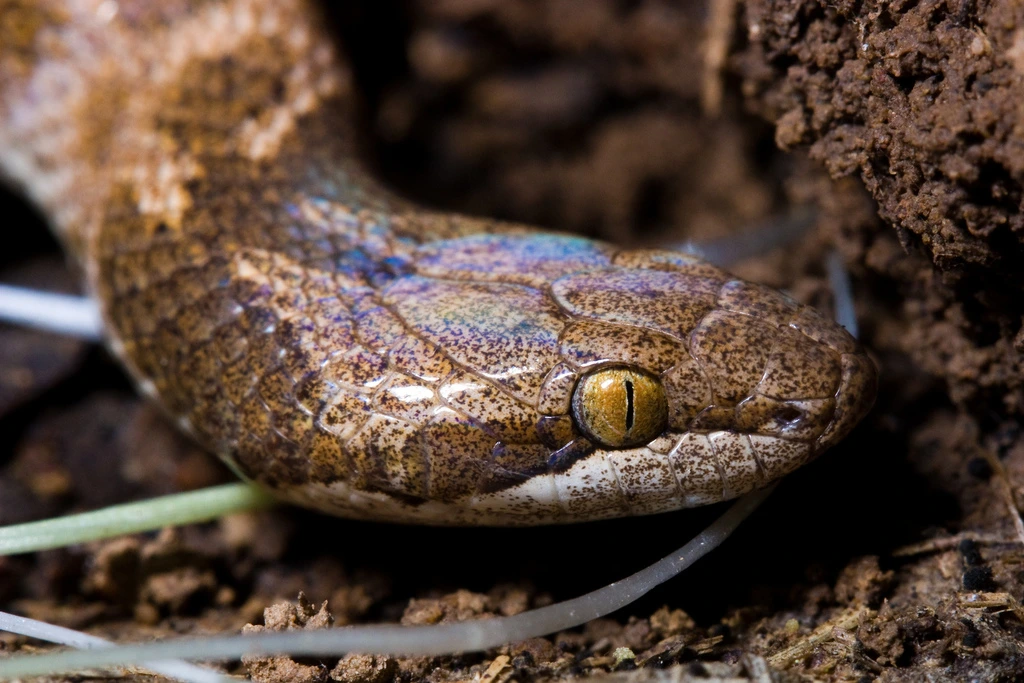
Arizona occidentalis. Species portrait; the complete source frame is retained. Original observation dated 2025-05-08. This photograph does not establish occurrence in any additional state or province.

002 · Colubridae

California Glossy Snake

Arizona occidentalis

BLANCHARD, 1924

Venom unknownNot yet assessed

The checked taxonomic distribution account explicitly lists United States of America. Country-level evidence does not establish continuous occupancy or a complete national inventory. The treatment names these subdivisions in its United States of America distribution clause: Utah, Nevada, Arizona. They are assigned to the declared atlas navigation groups;…

Read the species account →

Brooke J. · CC BY 4.0 · https://creativecommons.org/licenses/by/4.0/
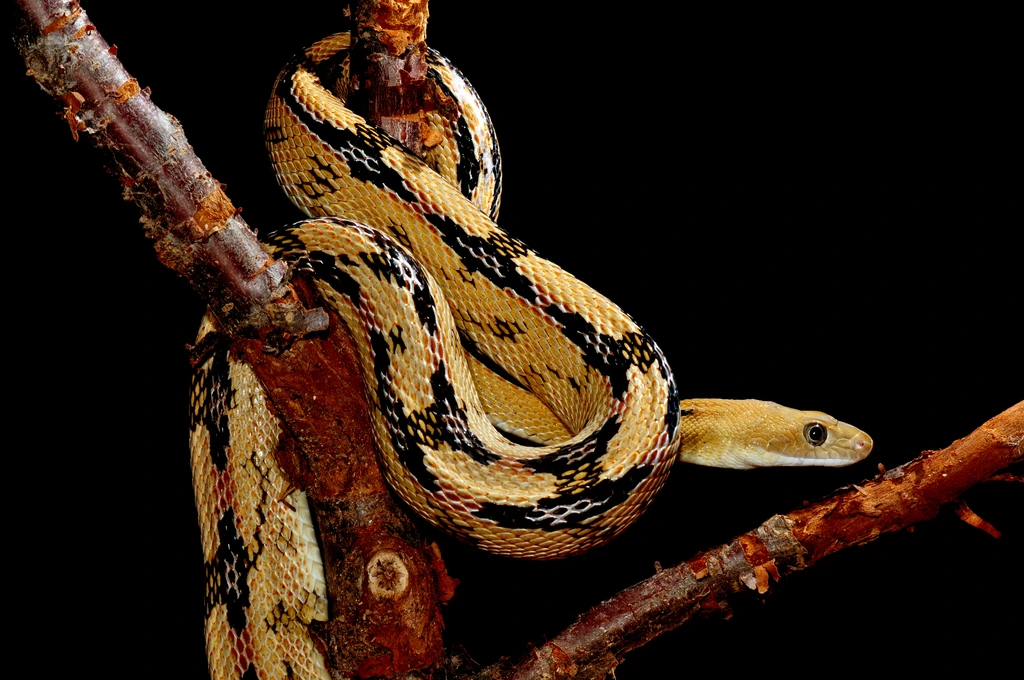
Bogertophis subocularis. Species portrait; the complete source frame is retained. Original observation dated 2010-07-17. This photograph does not establish occurrence in any additional state or province.

003 · Colubridae

Species account

Bogertophis subocularis

(BROWN, 1902)

Venom unknownNot yet assessed

The checked taxonomic distribution account explicitly lists United States of America. Country-level evidence does not establish continuous occupancy or a complete national inventory. The treatment names these subdivisions in its United States of America distribution clause: New Mexico, Texas. They are assigned to the declared atlas navigation groups;…

Read the species account →

Tom Kennedy · CC BY 4.0 · https://creativecommons.org/licenses/by/4.0/
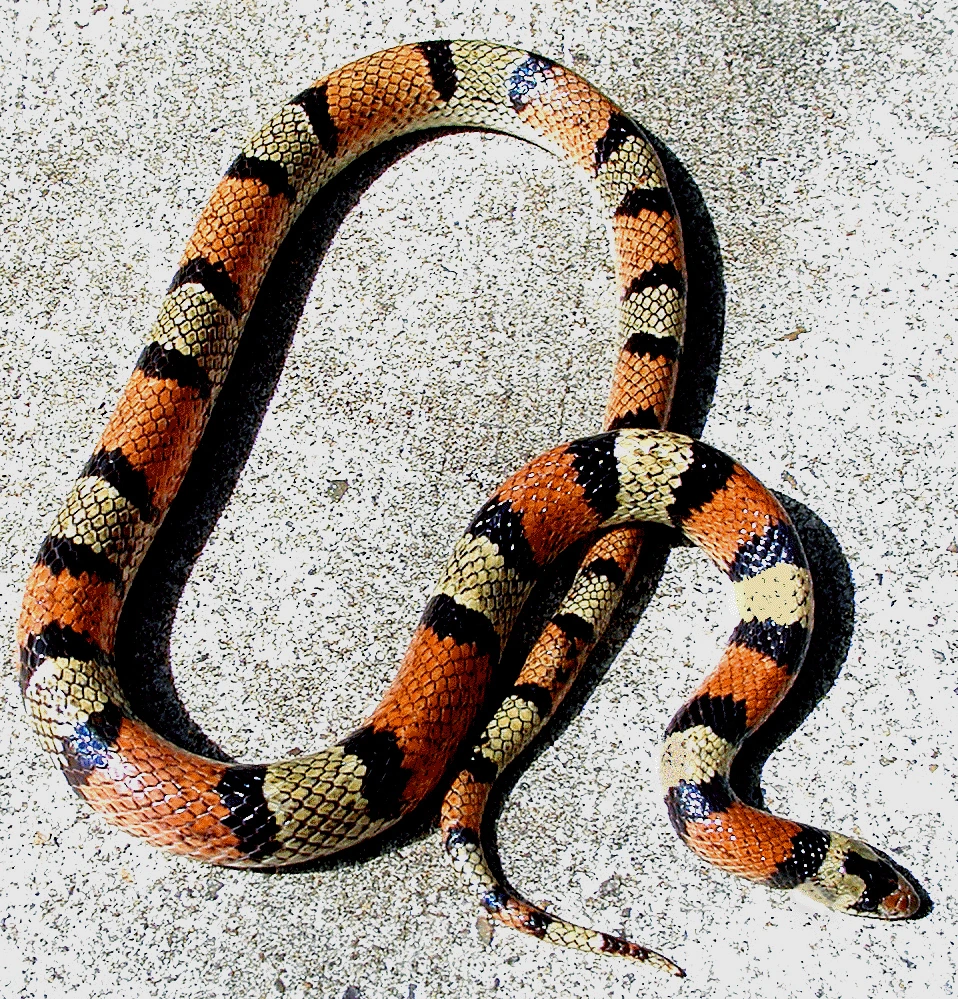
Cemophora lineri. Species portrait; the complete source frame is retained. Original observation dated 2002-08-14. This photograph does not establish occurrence in any additional state or province.

004 · Colubridae

Texas Scarlet Snake

Cemophora lineri

WILLIAMS, BROWN & WILSON, 1966

Venom unknownNot yet assessed

The checked taxonomic distribution account explicitly lists United States of America. Country-level evidence does not establish continuous occupancy or a complete national inventory. The treatment names these subdivisions in its United States of America distribution clause: Texas. They are assigned to the declared atlas navigation groups; this is not a…

Read the species account →

Mike Duran · CC BY 4.0 · https://creativecommons.org/licenses/by/4.0/
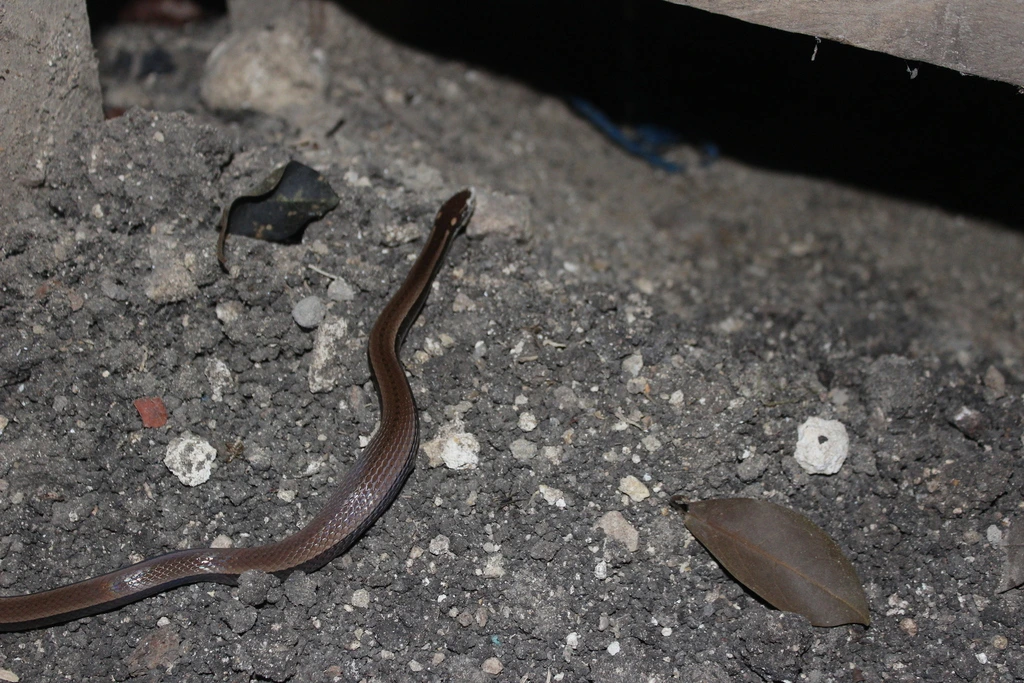
Coniophanes imperialis. Species portrait; the complete source frame is retained. Original observation dated 2023-03-26. This photograph does not establish occurrence in any additional state or province.

005 · Colubridae

Black-striped Snake

Coniophanes imperialis

(BAIRD & GIRARD, 1859)

Venom unknownNot yet assessed

The checked taxonomic distribution account explicitly lists United States of America. Country-level evidence does not establish continuous occupancy or a complete national inventory. The treatment names these subdivisions in its United States of America distribution clause: Texas. They are assigned to the declared atlas navigation groups; this is not a…

Read the species account →

Ricard Busquets Reverte · CC BY 4.0 · https://creativecommons.org/licenses/by/4.0/
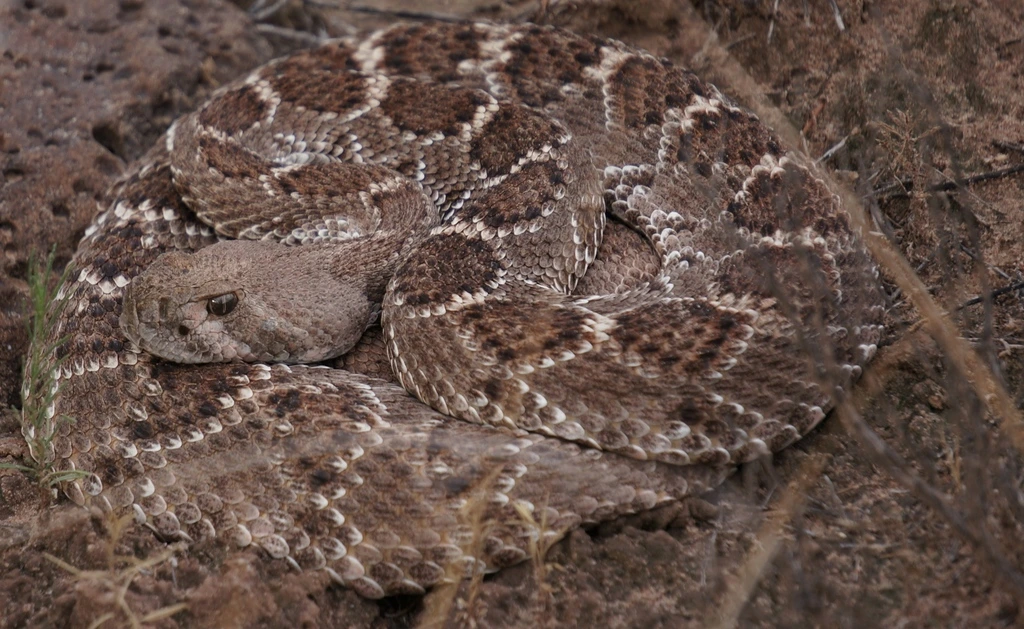
Crotalus atrox. Species portrait; the complete source frame is retained. Original observation dated 2012-08-22. This photograph does not establish occurrence in any additional state or province.

006 · Viperidae

Western Diamond-backed Rattlesnake

Crotalus atrox

BAIRD & GIRARD, 1853

VenomousPotentially life-threatening

The checked taxonomic distribution account explicitly lists United States of America. Country-level evidence does not establish continuous occupancy or a complete national inventory. The treatment names these subdivisions in its United States of America distribution clause: Oklahoma, New Mexico, Texas, California, Nevada, Arizona, Arkansas. They are…

Read the species account →

Mike Lewinski · CC BY 4.0 · https://creativecommons.org/licenses/by/4.0/
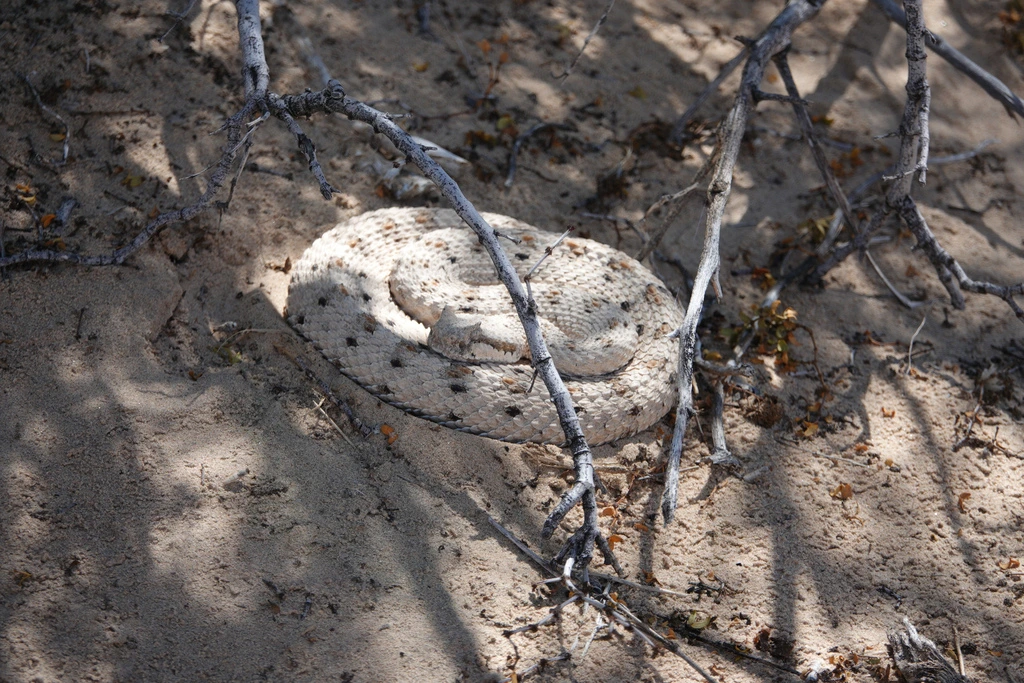
Crotalus cerastes. Species portrait; the complete source frame is retained. Original observation dated 2024-04-20. This photograph does not establish occurrence in any additional state or province.

007 · Viperidae

Sidewinder

Crotalus cerastes

HALLOWELL, 1854

VenomousClinical severity not established

The checked taxonomic distribution account explicitly lists United States of America. Country-level evidence does not establish continuous occupancy or a complete national inventory. The treatment names these subdivisions in its United States of America distribution clause: California, Utah, Nevada, Arizona. They are assigned to the declared atlas…

Read the species account →

iNaturalist contributor (CC0; creator not supplied) · CC0 1.0 · https://creativecommons.org/publicdomain/zero/1.0/

Crotalus concolor. Portrait identified under the historical subspecies name; the observer corrected the original location before the current identification. Original observation dated 2025-04-19. This photograph does not establish occurrence in any additional state or province.

008 · Viperidae

Midget Faded Rattlesnake

Crotalus concolor

WOODBURY, 1929

VenomousClinical severity not established

The checked taxonomic distribution account explicitly lists United States of America. Country-level evidence does not establish continuous occupancy or a complete national inventory. The treatment names these subdivisions in its United States of America distribution clause: Colorado, Utah. They are assigned to the declared atlas navigation groups; this…

Read the species account →

Suhei Castro · CC BY 4.0 · https://creativecommons.org/licenses/by/4.0/
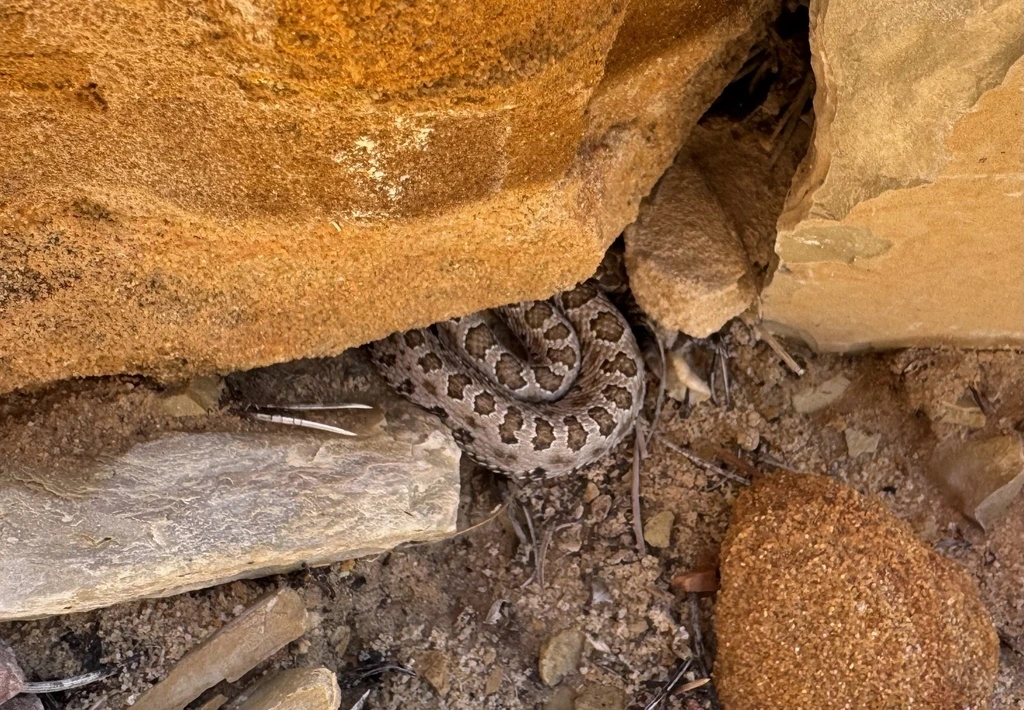
Crotalus helleri. Specimen beside a building, identified under the historical subspecies name. Original observation dated 2026-10-13. This photograph does not establish occurrence in any additional state or province.

009 · Viperidae

Southern Pacific Rattlesnake

Crotalus helleri

MEEK, 1905

VenomousClinical severity not established

The checked taxonomic distribution account explicitly lists United States of America. Country-level evidence does not establish continuous occupancy or a complete national inventory. The treatment names these subdivisions in its United States of America distribution clause: California. They are assigned to the declared atlas navigation groups; this is…

Read the species account →

iNaturalist contributor (CC0; creator not supplied) · CC0 1.0 · https://creativecommons.org/publicdomain/zero/1.0/

Crotalus lutosus. Species portrait; the complete source frame is retained. Original observation dated 2012-06-02. This photograph does not establish occurrence in any additional state or province.

010 · Viperidae

Great Basin Rattlesnake

Crotalus lutosus

KLAUBER, 1930

VenomousClinical severity not established

The checked taxonomic distribution account explicitly lists United States of America. Country-level evidence does not establish continuous occupancy or a complete national inventory. The treatment names these subdivisions in its United States of America distribution clause: Nevada. They are assigned to the declared atlas navigation groups; this is not a…

Read the species account →

Rolf Lawrenz · CC BY 4.0 · https://creativecommons.org/licenses/by/4.0/
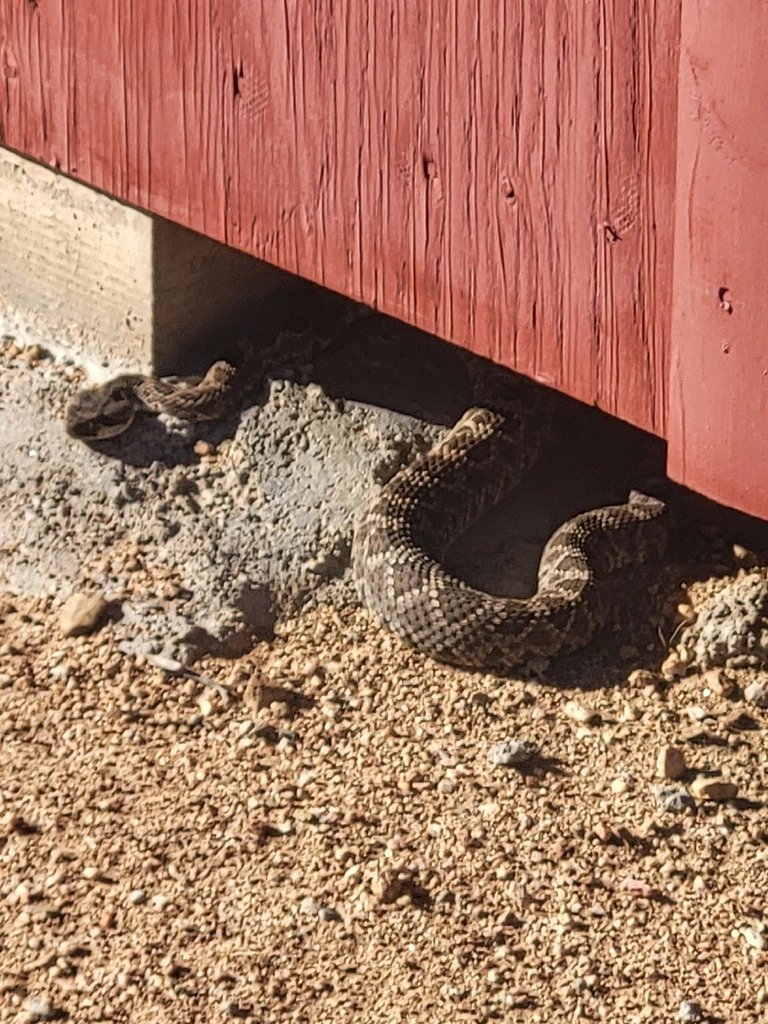
Crotalus molossus. Species portrait; the complete source frame is retained. Original observation dated 2023-07-24. This photograph does not establish occurrence in any additional state or province.

011 · Viperidae

Black Tailed Rattlesnake, Northern Black Tailed Rattlesnake; nigrescens: Mexican black-tailed Rattlesnake; oaxacus: Oaxacan Black-tailed Rattlesnake)

Crotalus molossus

BAIRD & GIRARD, 1853

VenomousClinical severity not established

The checked taxonomic distribution account explicitly lists United States of America. Country-level evidence does not establish continuous occupancy or a complete national inventory. The treatment names these subdivisions in its United States of America distribution clause: New Mexico, Texas, Arizona. They are assigned to the declared atlas navigation…

Read the species account →

Brandon Bourassa · CC BY 4.0 · https://creativecommons.org/licenses/by/4.0/
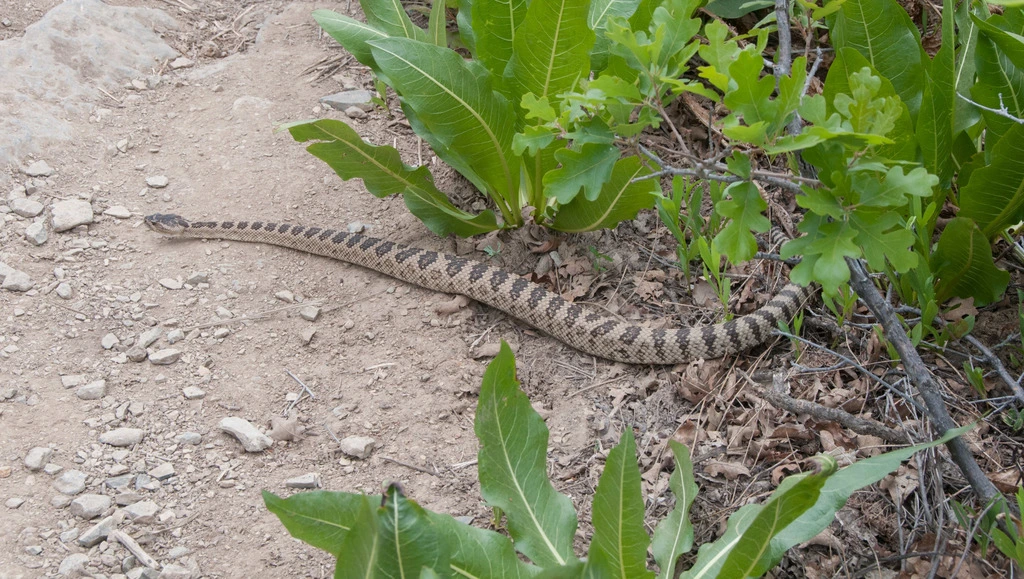
Crotalus oreganus. Specimen photographed in a container; identified as the nominate subspecies. Original observation dated 2024-08-02. This photograph does not establish occurrence in any additional state or province.

012 · Viperidae

Northern Pacific Rattlesnake

Crotalus oreganus

HOLBROOK, 1840

VenomousClinical severity not established

The checked taxonomic distribution account explicitly lists United States of America. Country-level evidence does not establish continuous occupancy or a complete national inventory. The Washington wildlife account explicitly documents the species in the state. Only Washington membership is added; no county or site occurrence is inferred.

Read the species account →

iNaturalist contributor (CC0; creator not supplied) · CC0 1.0 · https://creativecommons.org/publicdomain/zero/1.0/

Crotalus ornatus. Species portrait; the complete source frame is retained. Original observation dated 2023-09-20. This photograph does not establish occurrence in any additional state or province.

013 · Viperidae

Ornate Black- tailed Rattlesnake, Black-tailed Rattlesnake

Crotalus ornatus

HALLOWELL, 1854

VenomousClinical severity not established

The checked taxonomic distribution account explicitly lists United States of America. Country-level evidence does not establish continuous occupancy or a complete national inventory. The treatment names these subdivisions in its United States of America distribution clause: New Mexico, Texas. They are assigned to the declared atlas navigation groups;…

Read the species account →

Sam Kieschnick · CC BY 4.0 · https://creativecommons.org/licenses/by/4.0/
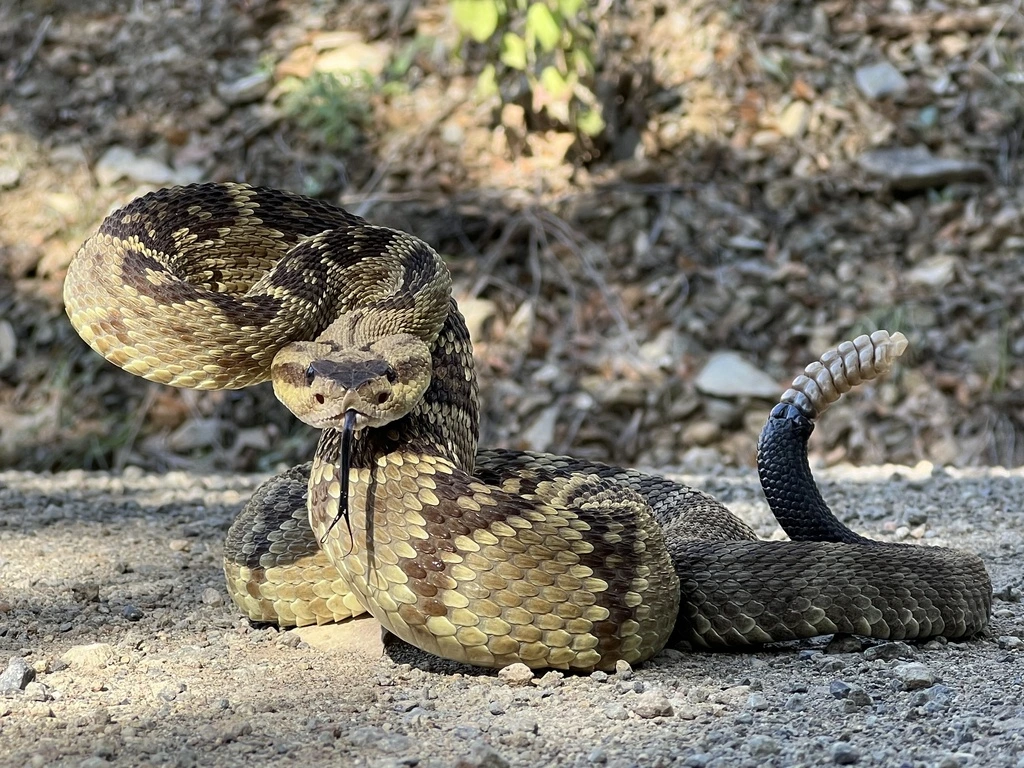
Crotalus pyrrhus. Species portrait; the complete source frame is retained. Original observation dated 2025-07-14. This photograph does not establish occurrence in any additional state or province.

014 · Viperidae

Southwestern Speckled Rattlesnake

Crotalus pyrrhus

(COPE, 1866)

VenomousClinical severity not established

The checked taxonomic distribution account explicitly lists United States of America. Country-level evidence does not establish continuous occupancy or a complete national inventory. The treatment names these subdivisions in its United States of America distribution clause: California, Utah, Nevada, Arizona. They are assigned to the declared atlas…

Read the species account →

arya natarajan · CC BY 4.0 · https://creativecommons.org/licenses/by/4.0/
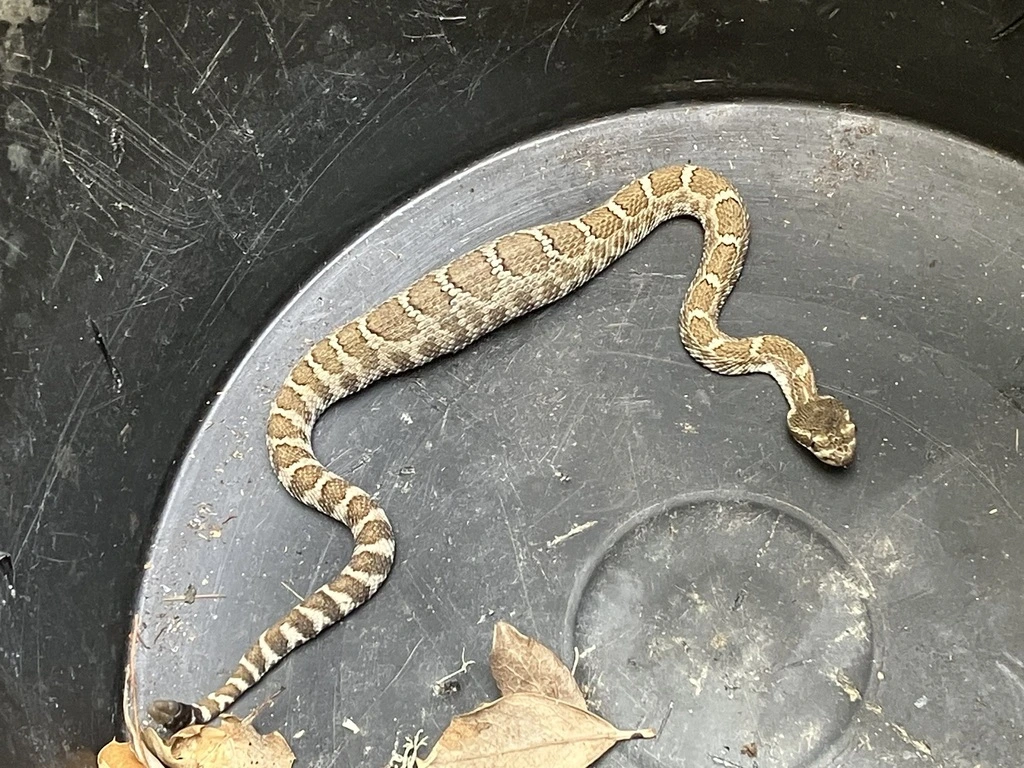
Crotalus ruber. Species portrait; the complete source frame is retained. Original observation dated 2019-03-08. This photograph does not establish occurrence in any additional state or province.

015 · Viperidae

Red Diamond Rattlesnake

Crotalus ruber

COPE, 1892

VenomousClinical severity not established

The checked taxonomic distribution account explicitly lists United States of America. Country-level evidence does not establish continuous occupancy or a complete national inventory. The treatment names these subdivisions in its United States of America distribution clause: California. They are assigned to the declared atlas navigation groups; this is…

Read the species account →

Alan Rockefeller · CC BY 4.0 · https://creativecommons.org/licenses/by/4.0/
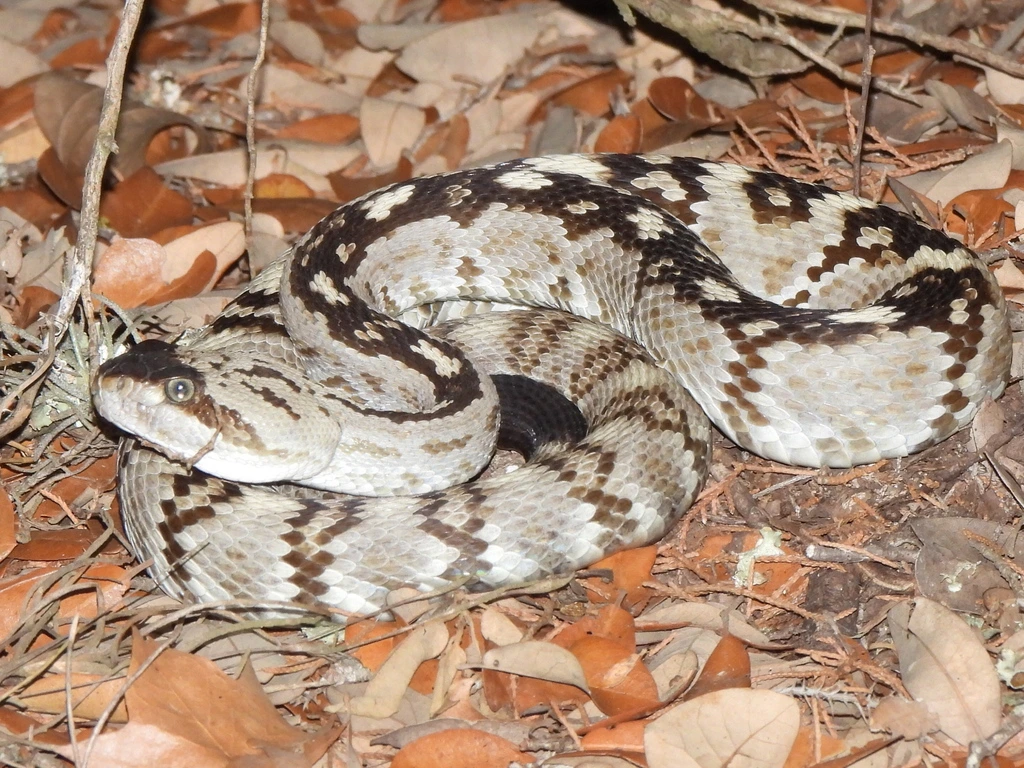
Crotalus scutulatus. Species portrait; the complete source frame is retained. Original observation dated 2022-07-12. This photograph does not establish occurrence in any additional state or province.

016 · Viperidae

Species account

Crotalus scutulatus

(KENNICOTT, 1861)

VenomousClinical severity not established

The checked taxonomic distribution account explicitly lists United States of America. Country-level evidence does not establish continuous occupancy or a complete national inventory. The treatment names these subdivisions in its United States of America distribution clause: New Mexico, Texas, California, Utah, Nevada, Arizona. They are assigned to the…

Read the species account →

Jeremiah Degenhardt · CC BY 4.0 · https://creativecommons.org/licenses/by/4.0/
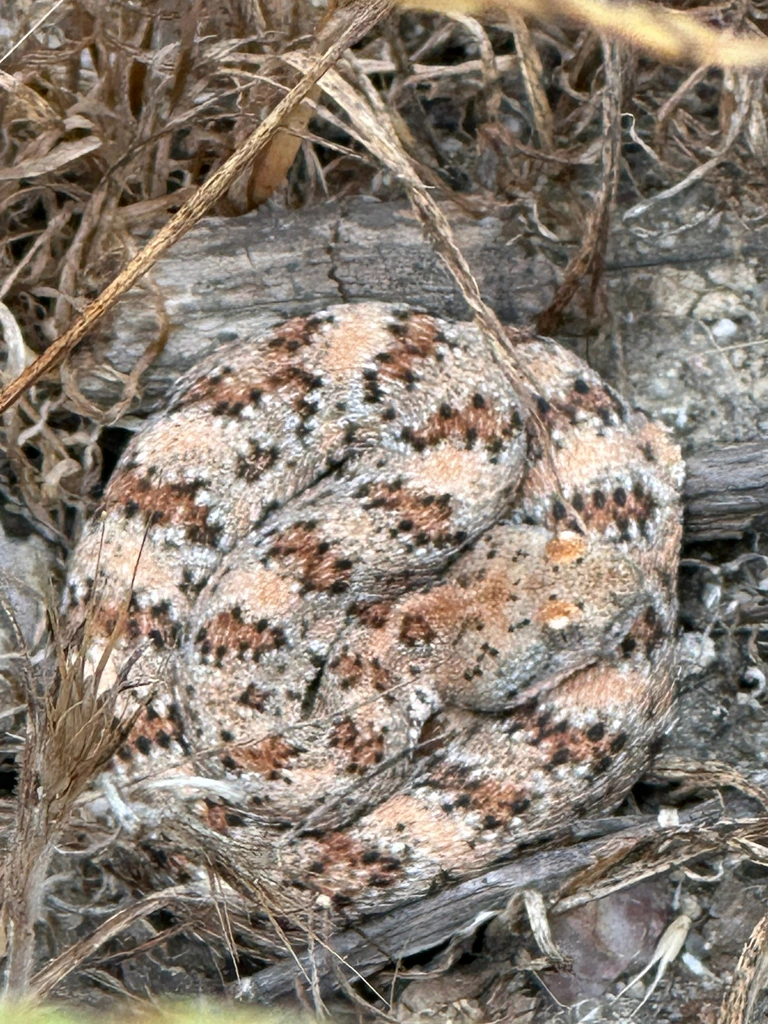
Crotalus stephensi. Identification corroborated by diagnostic nasal and supraocular scales in the original review. Original observation dated 2015-09-06. This photograph does not establish occurrence in any additional state or province.

017 · Viperidae

Panamint Rattlesnake

Crotalus stephensi

KLAUBER, 1930

VenomousClinical severity not established

The checked taxonomic distribution account explicitly lists United States of America. Country-level evidence does not establish continuous occupancy or a complete national inventory. The treatment names these subdivisions in its United States of America distribution clause: California, Nevada. They are assigned to the declared atlas navigation groups;…

Read the species account →

Dominic Gentilcore · CC BY 4.0 · https://creativecommons.org/licenses/by/4.0/
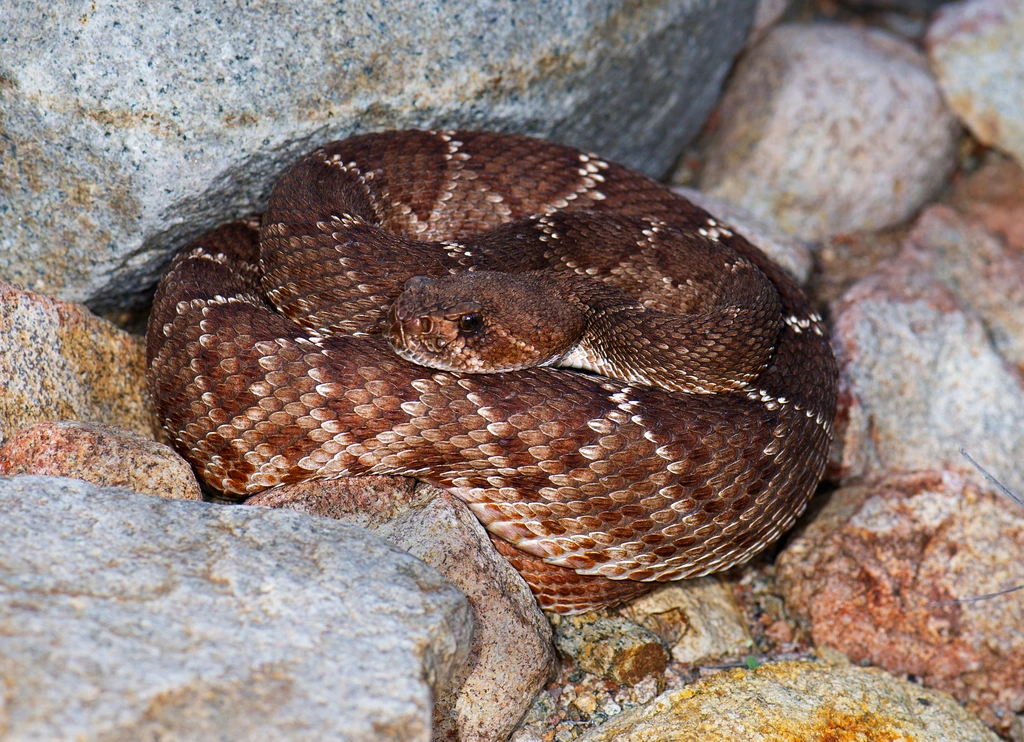
Crotalus tigris. Species portrait; the complete source frame is retained. Original observation dated 2021-08-02. This photograph does not establish occurrence in any additional state or province.

018 · Viperidae

Tiger Rattlesnake

Crotalus tigris

KENNICOTT, 1859

VenomousClinical severity not established

The checked taxonomic distribution account explicitly lists United States of America. Country-level evidence does not establish continuous occupancy or a complete national inventory. The treatment names these subdivisions in its United States of America distribution clause: Arizona. They are assigned to the declared atlas navigation groups; this is not a…

Read the species account →

Mike Ostrowski · CC BY-SA 4.0 · https://creativecommons.org/licenses/by-sa/4.0/

Drymarchon melanurus. Feeding portrait; the snake is pulling prey from a tree cavity. Original observation dated 2019-02-17. This photograph does not establish occurrence in any additional state or province.

019 · Colubridae

Blacktail Cribo

Drymarchon melanurus

(DUMÉRIL, BIBRON & DUMÉRIL, 1854)

Venom unknownNot yet assessed

The checked taxonomic distribution account explicitly lists United States of America. Country-level evidence does not establish continuous occupancy or a complete national inventory. The treatment names these subdivisions in its United States of America distribution clause: Texas. They are assigned to the declared atlas navigation groups; this is not a…

Read the species account →

John Rosford · CC BY 4.0 · https://creativecommons.org/licenses/by/4.0/
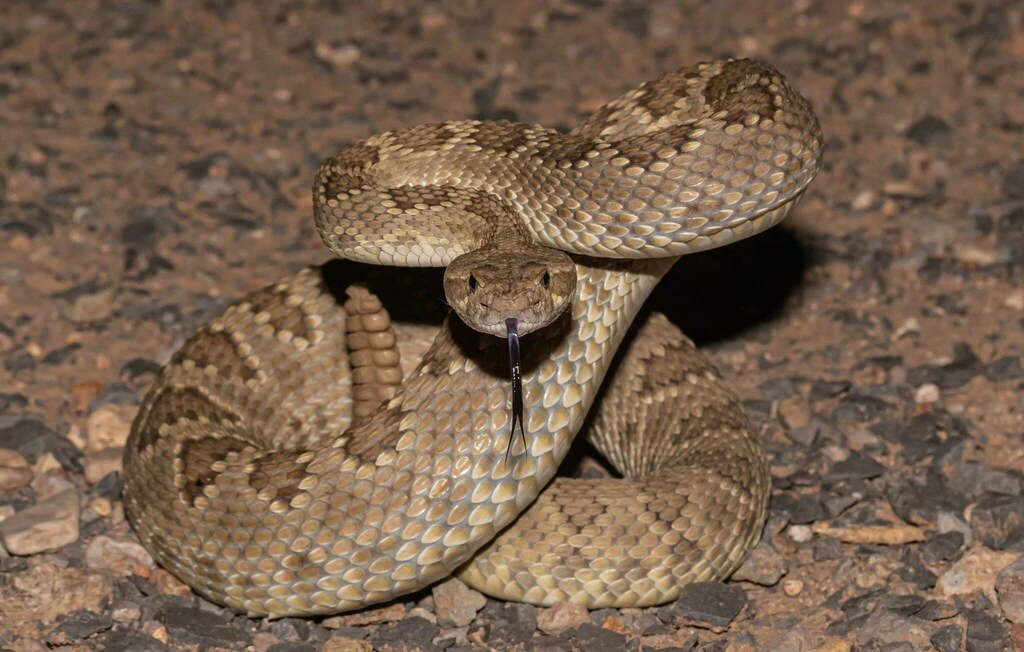
Gyalopion canum. Species portrait; the complete source frame is retained. Original observation dated 2019-05-26. This photograph does not establish occurrence in any additional state or province.

020 · Colubridae

Western Hooknose Snake, Chihuahuan Hook-nosed Snake

Gyalopion canum

(COPE, 1860)

Venom unknownNot yet assessed

The checked taxonomic distribution account explicitly lists United States of America. Country-level evidence does not establish continuous occupancy or a complete national inventory. The treatment names these subdivisions in its United States of America distribution clause: New Mexico, Texas, Arizona. They are assigned to the declared atlas navigation…

Read the species account →

L. Miles Horne · CC BY 4.0 · https://creativecommons.org/licenses/by/4.0/
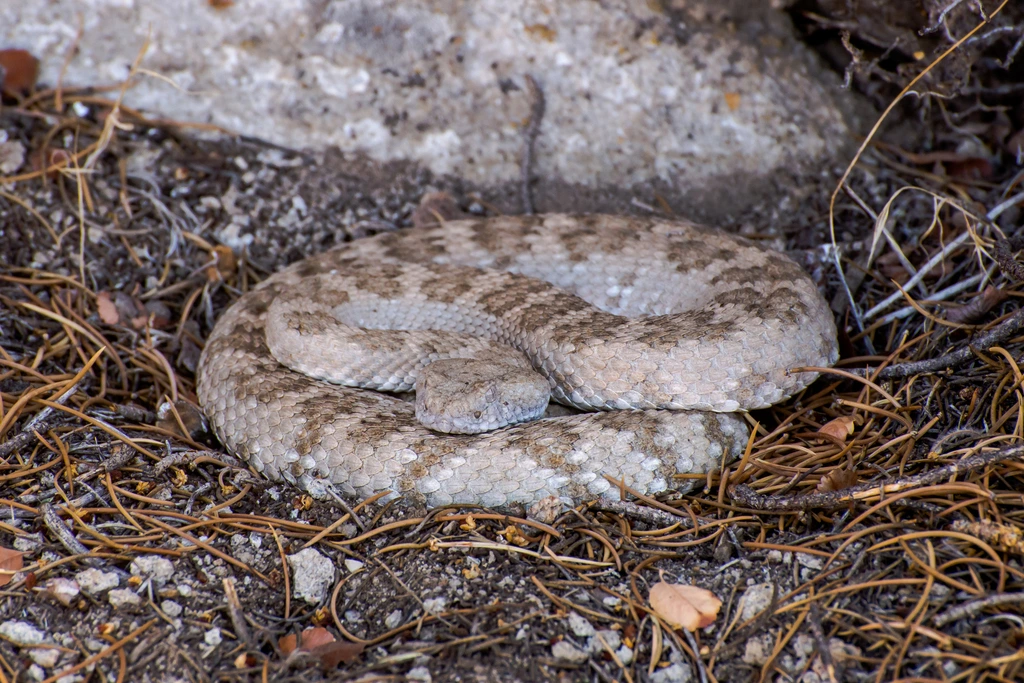
Heterodon kennerlyi. Species portrait; the complete source frame is retained. Original observation dated 2022-07-15. This photograph does not establish occurrence in any additional state or province.

021 · Colubridae

Mexican Hognose Snake

Heterodon kennerlyi

KENNICOTT, 1860

Venom unknownNot yet assessed

The checked taxonomic distribution account explicitly lists United States of America. Country-level evidence does not establish continuous occupancy or a complete national inventory. The treatment names these subdivisions in its United States of America distribution clause: New Mexico, Texas, Arizona. They are assigned to the declared atlas navigation…

Read the species account →

Jeremiah Degenhardt · CC BY 4.0 · https://creativecommons.org/licenses/by/4.0/
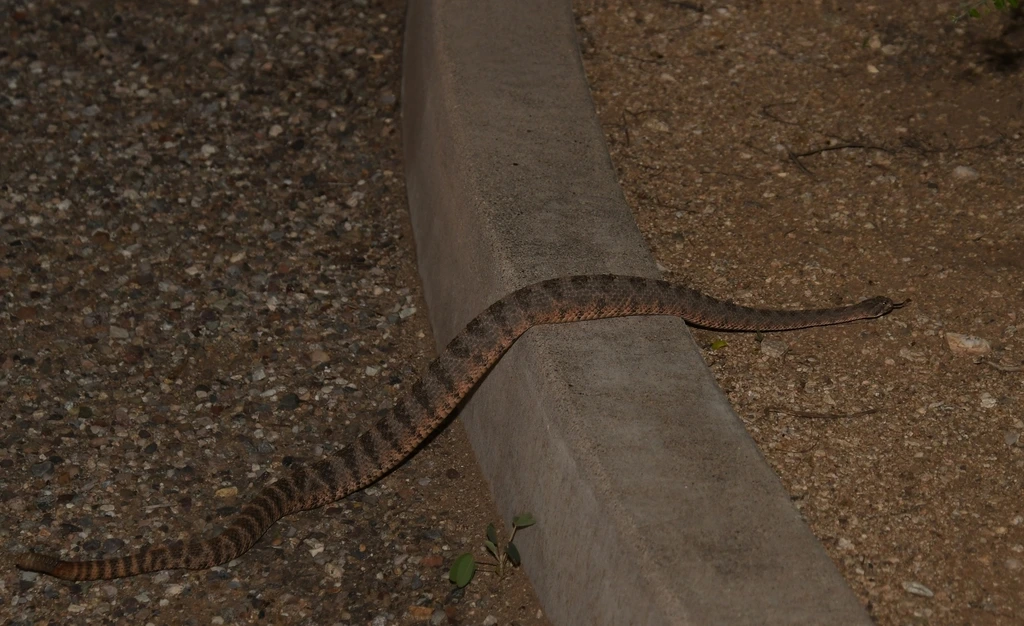
Heterodon nasicus. Species portrait; the complete source frame is retained. Original observation dated 2024-04-19. This photograph does not establish occurrence in any additional state or province.

022 · Colubridae

Western Hognose Snake, Plains Hognose Snake

Heterodon nasicus

BAIRD & GIRARD, 1852

VenomousMedically significant effects

The checked taxonomic distribution account explicitly lists United States of America. Country-level evidence does not establish continuous occupancy or a complete national inventory. The treatment names these subdivisions in its United States of America distribution clause: Oklahoma, Nebraska, New Mexico, South Dakota, Texas, Colorado, Wyoming, Kansas,…

Read the species account →

Jared Shorma · CC BY 4.0 · https://creativecommons.org/licenses/by/4.0/
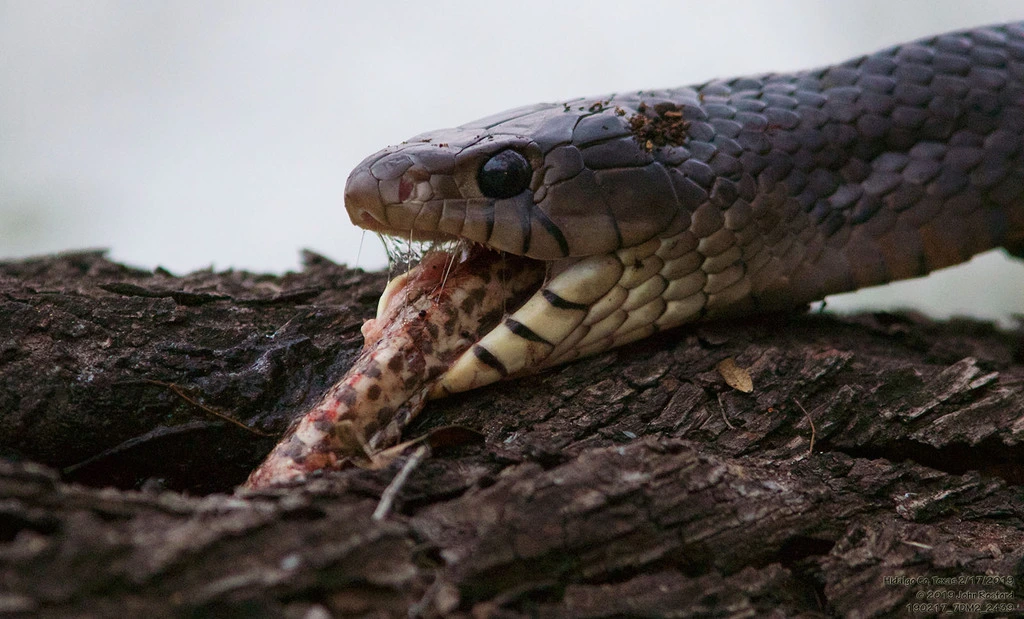
Hypsiglena ochrorhynchus. Species portrait; the complete source frame is retained. Original observation dated 2009-10-31. This photograph does not establish occurrence in any additional state or province.

023 · Colubridae

Species account

Hypsiglena ochrorhynchus

COPE, 1860

Venom unknownNot yet assessed

The checked taxonomic distribution account explicitly lists United States of America. Country-level evidence does not establish continuous occupancy or a complete national inventory. The treatment names these subdivisions in its United States of America distribution clause: California, Nevada. They are assigned to the declared atlas navigation groups;…

Read the species account →

Ken-ichi Ueda · CC BY 4.0 · https://creativecommons.org/licenses/by/4.0/
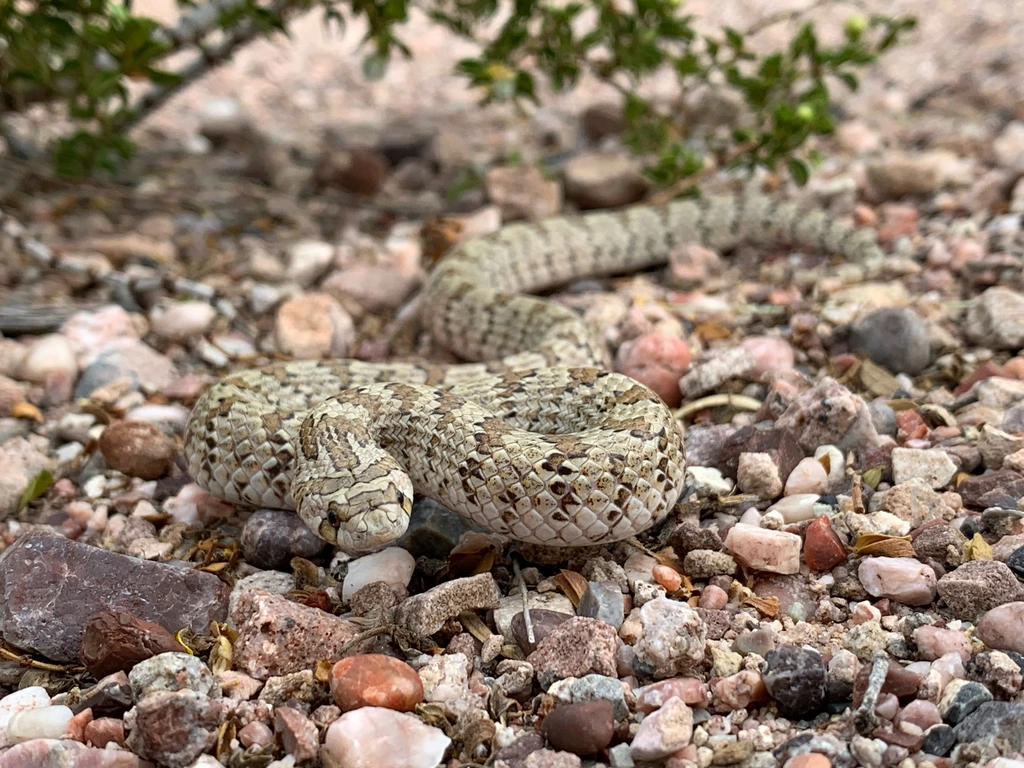
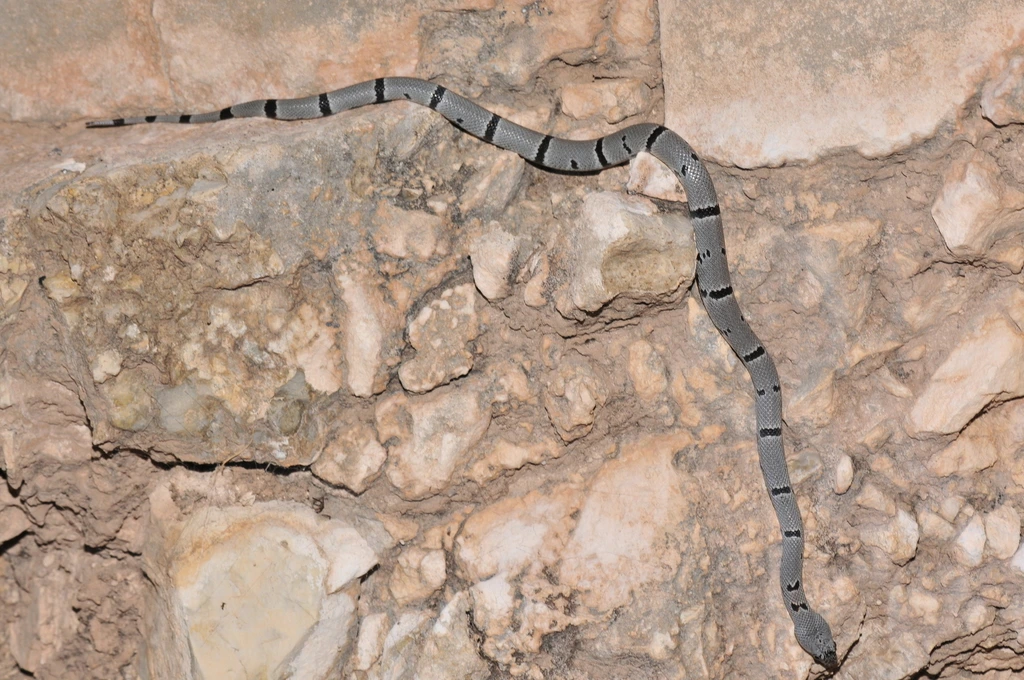
Lampropeltis alterna. Species portrait; the complete source frame is retained. Original observation dated 2015-06-26. This photograph does not establish occurrence in any additional state or province.

024 · Colubridae

Grey-banded Kingsnake

Lampropeltis alterna

(BROWN, 1901)

Non-venomous

The checked taxonomic distribution account explicitly lists United States of America. Country-level evidence does not establish continuous occupancy or a complete national inventory. The treatment names these subdivisions in its United States of America distribution clause: Texas. They are assigned to the declared atlas navigation groups; this is not a…

Read the species account →

Tom Kennedy · CC BY 4.0 · https://creativecommons.org/licenses/by/4.0/
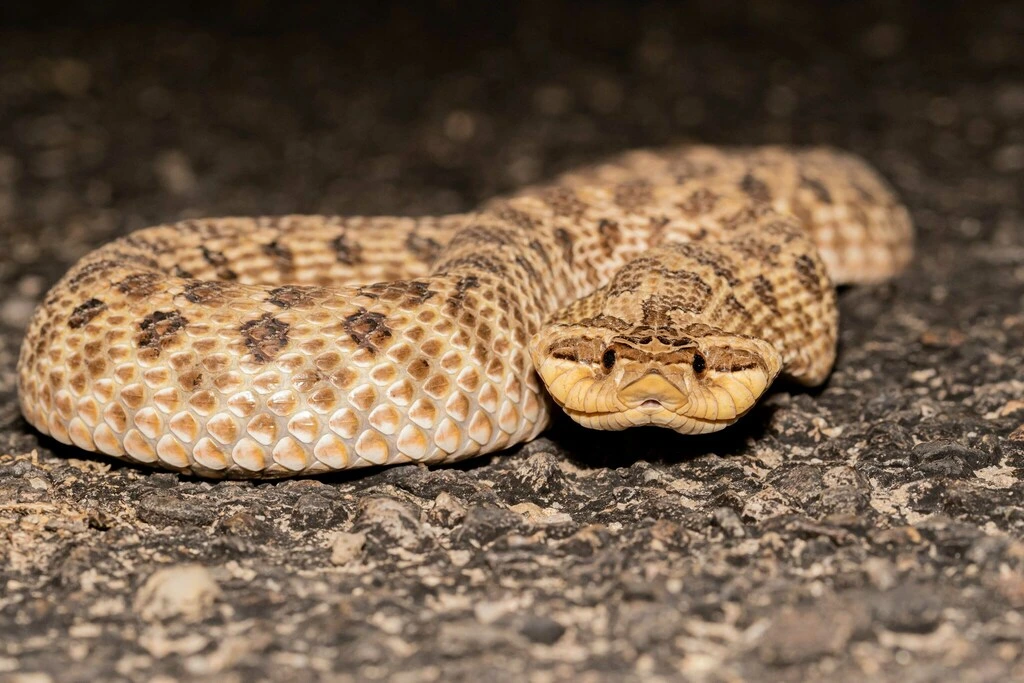
All 177 species in the country collection →

Read further

Evidence & sources.

Guide reviewed 16 October 2026. Source dates and geographic scope matter; landscape photographs do not establish species occurrence.

  1. US National Park Service · Saguaro: Diversity in the Desert

    Named Arizona landscape and vegetation gradient; no species occupancy inferred.

Continue through United States of America

Explore another habitat.

01

Forest & woodland

The Everglades example distinguishes hardwood hammocks and pine rocklands. Small changes in local setting can separate wooded habitats within the wider wetland landscape.

02

Highland environments

In the Rincon Mountains of Saguaro National Park, desert vegetation gives way with elevation to oak woodland, pine-oak woodland, pine forest and mixed conifer forest. This Arizona example is an elevation gradient, not a description of all US mountains.

03

Grassland & savanna

The mixed-grass prairie of Badlands National Park, South Dakota, sits between wetter tall-grass country and the drier short-grass plains. Different grass heights and open ground create a changing surface-level landscape.

04

Rivers & wetlands

The Everglades example includes freshwater marshes, sloughs and wet prairies. Water depth, timing and duration help distinguish these habitats; this Florida example does not describe all US wetlands.

05

Mangroves & estuaries

Everglades mangroves occupy a tidal coastal setting. Their saltwater–freshwater context is retained separately from inland marshes and the terrestrial forest examples.